June 19, 2023
Shimizu is considered one of Japan’s three most beautiful ports. On a clear day, you can see Mount Fuji but our day was not clear enough to spot it. It is a UNESCO World Heritage site and is 10,000 meters high. The last eruption was 300 years ago. It is the snow covered picture with cherry blossoms in the background that is on most tourist brochures.
Here are some pictures of our sail in. It seems every city has a ferris wheel! We arrived at noon.
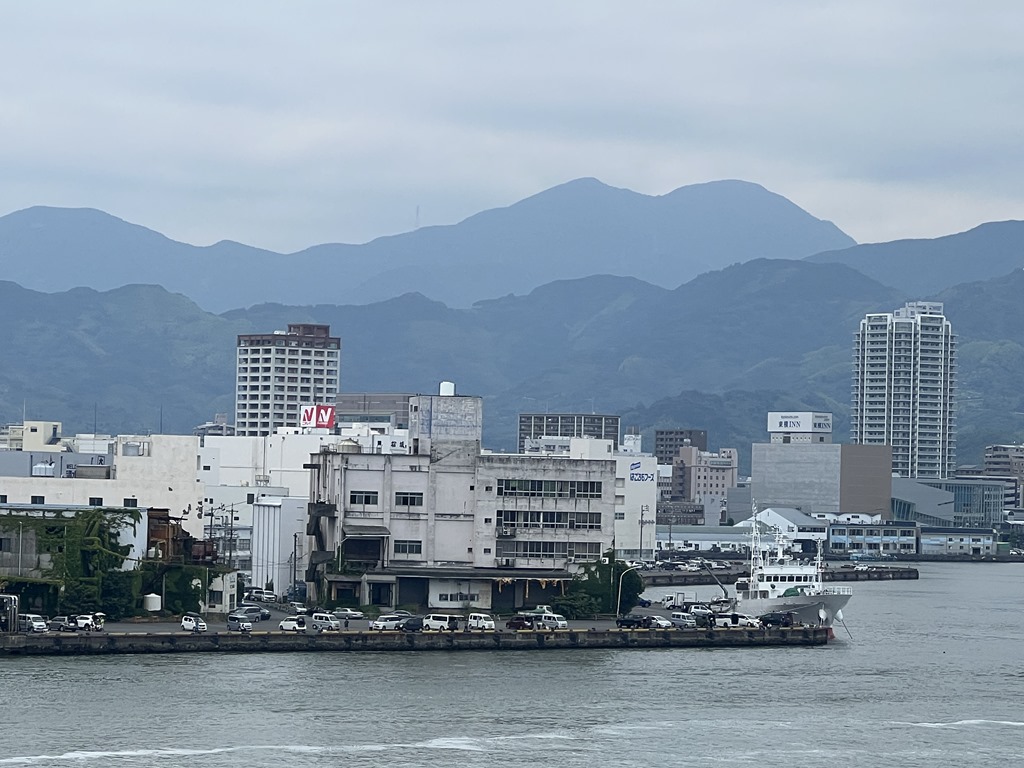
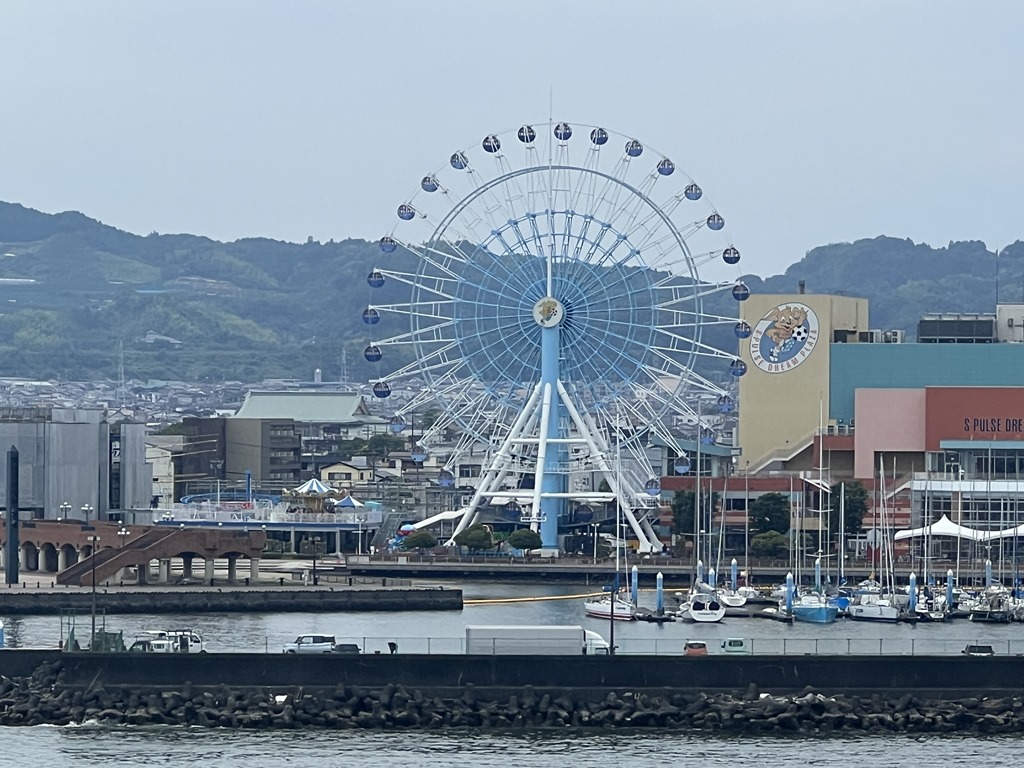
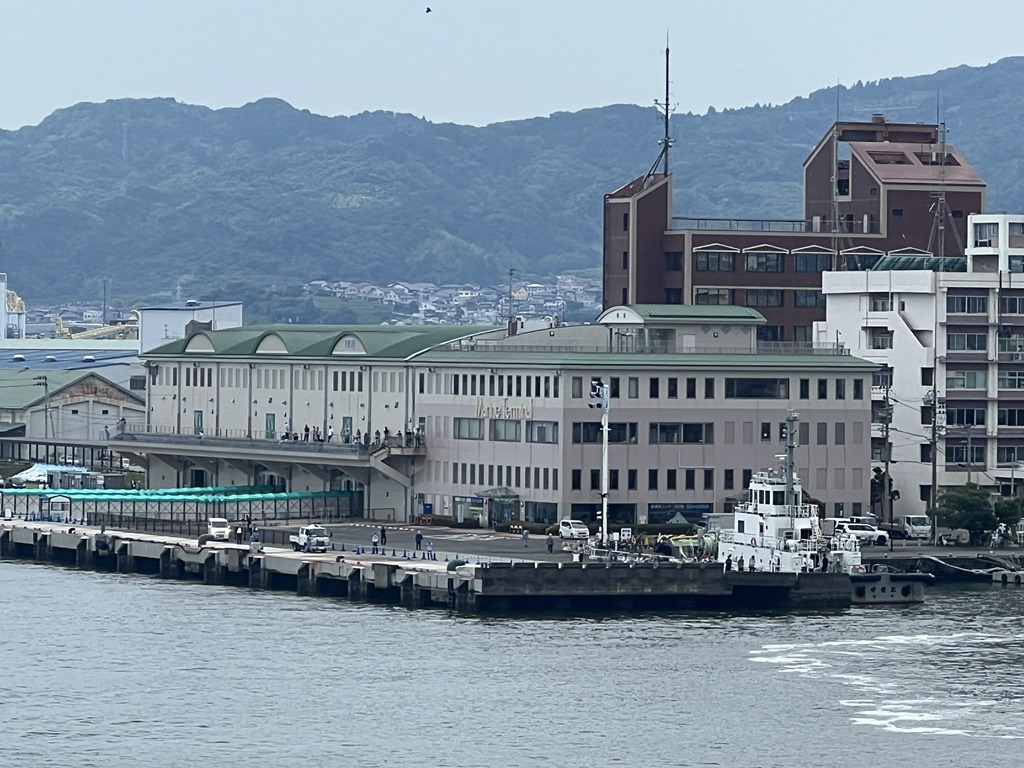
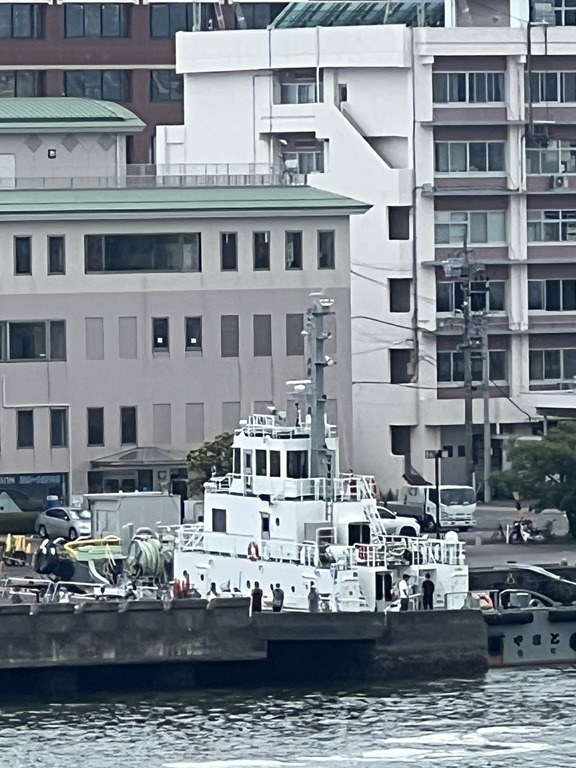
Our guide today was Sitsko and she said the meaning of her name is “prudence”. She talked a lot about the aging of the society and concern for the future. Our tour today is to the Kunozan Toshugo Shrine and the Kashinoichi Fish Market.

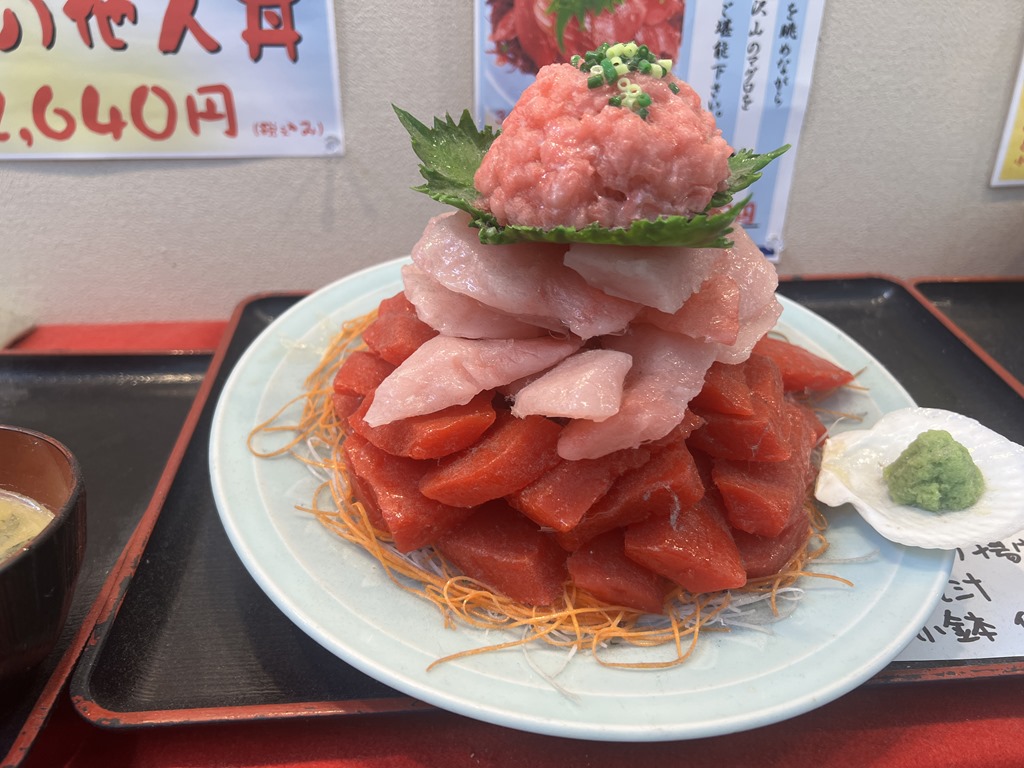
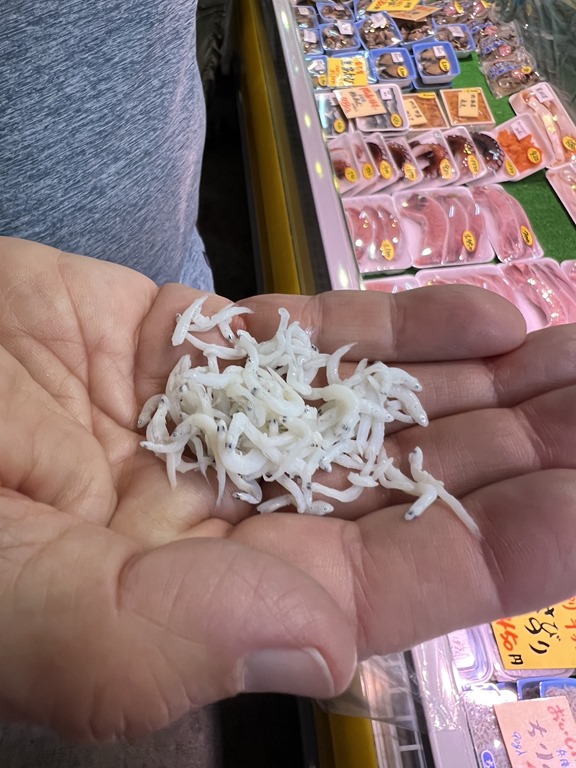
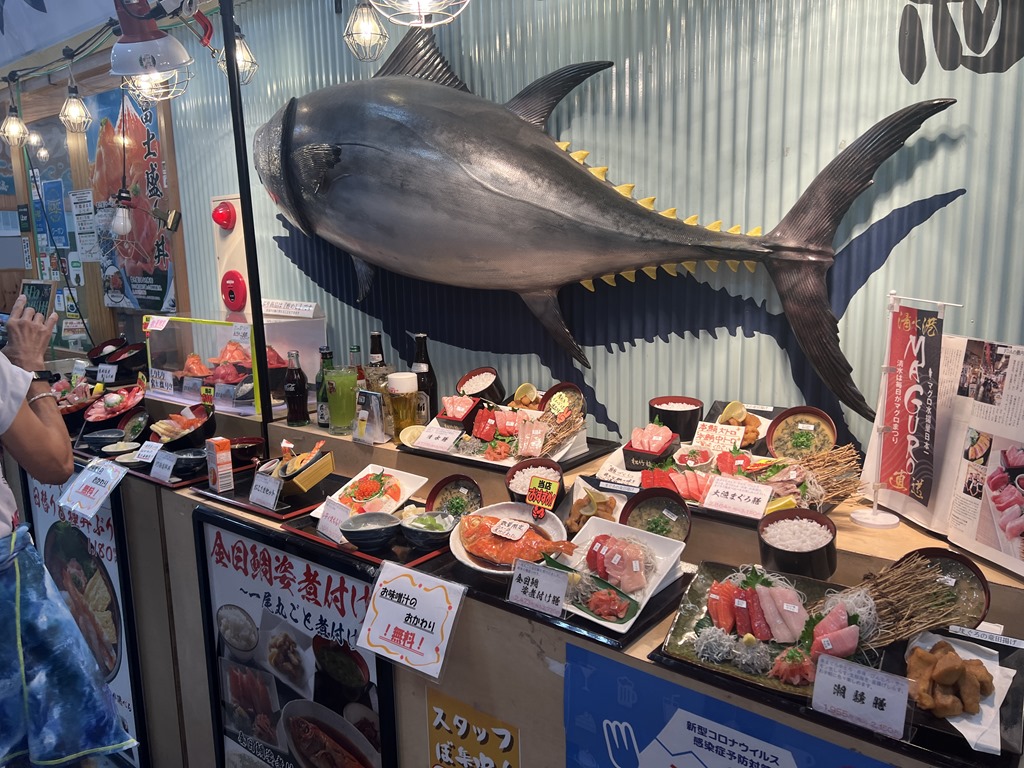
The fish market was the first stop on the tour. The area supplies half of all the tuna in Japan, the number one haul in the country. Other local delights are the sakura shrimp (a small, crunchy variety found only in the area) and young sardines called shirasu.
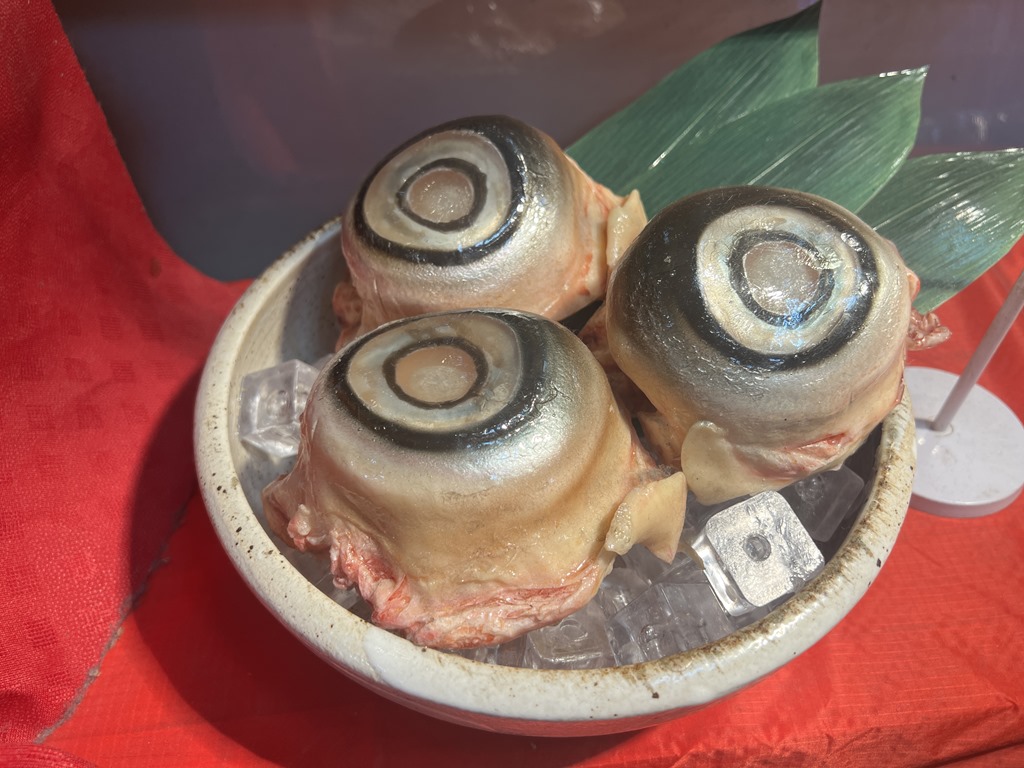
The market, like everything in Japan, was spotless. All of the cut fish or fish for sale was wrapped. There was no smell at all. Here are some of the beautiful displays of fish, oysters, shellfish, etc.

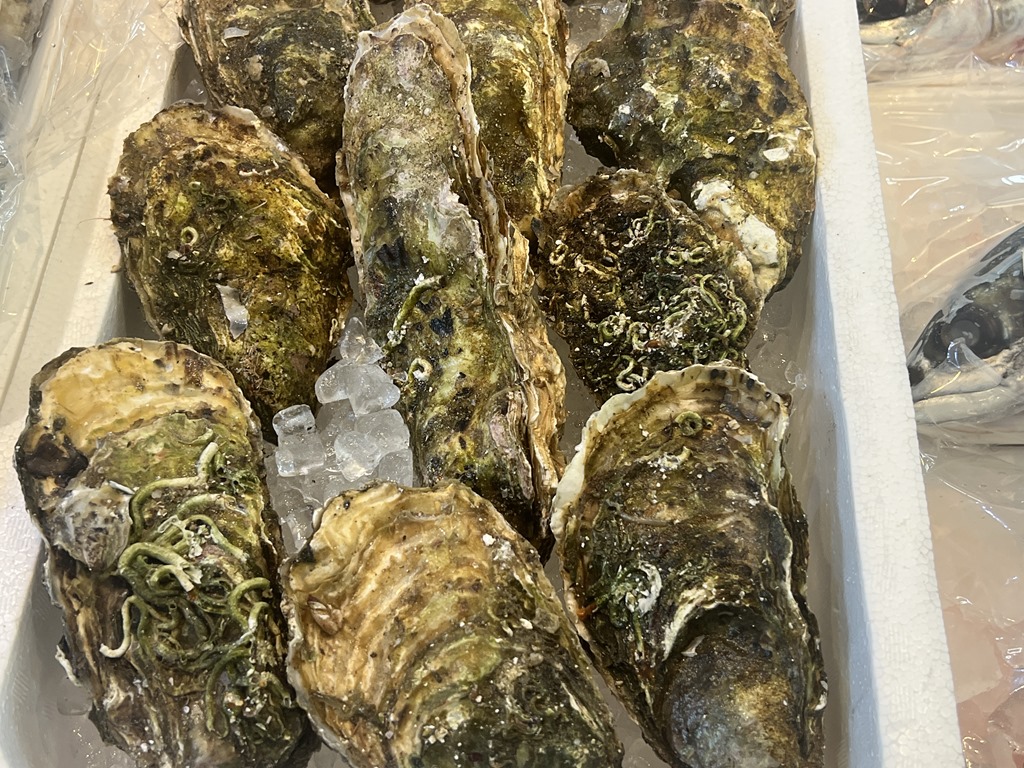

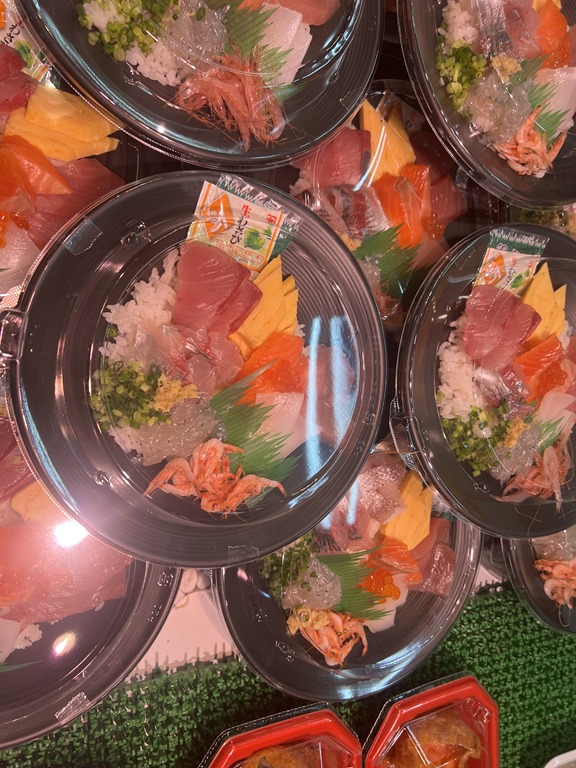
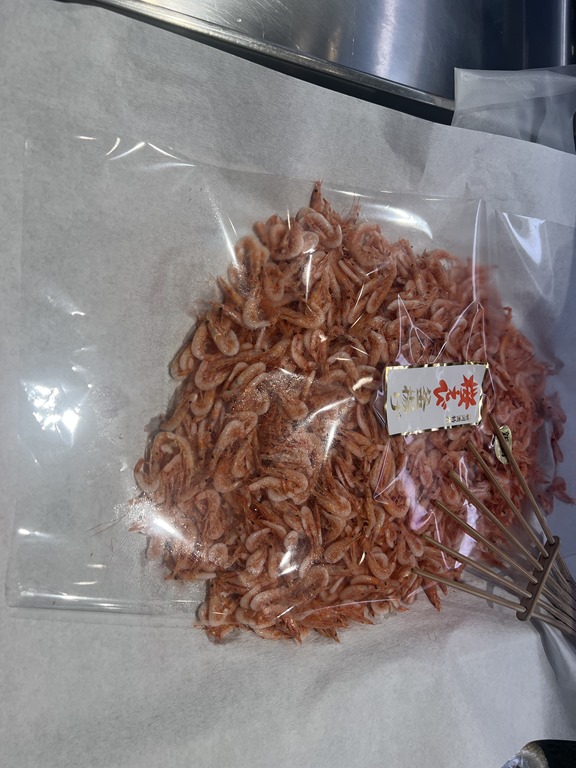
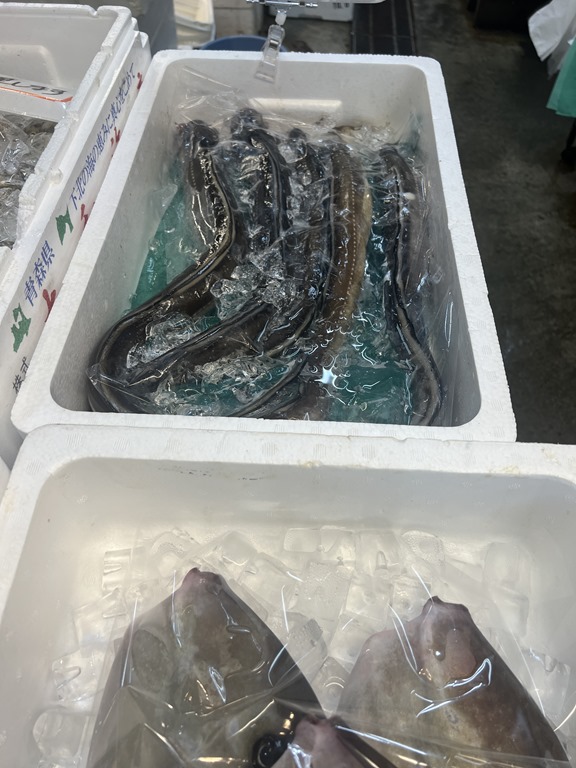
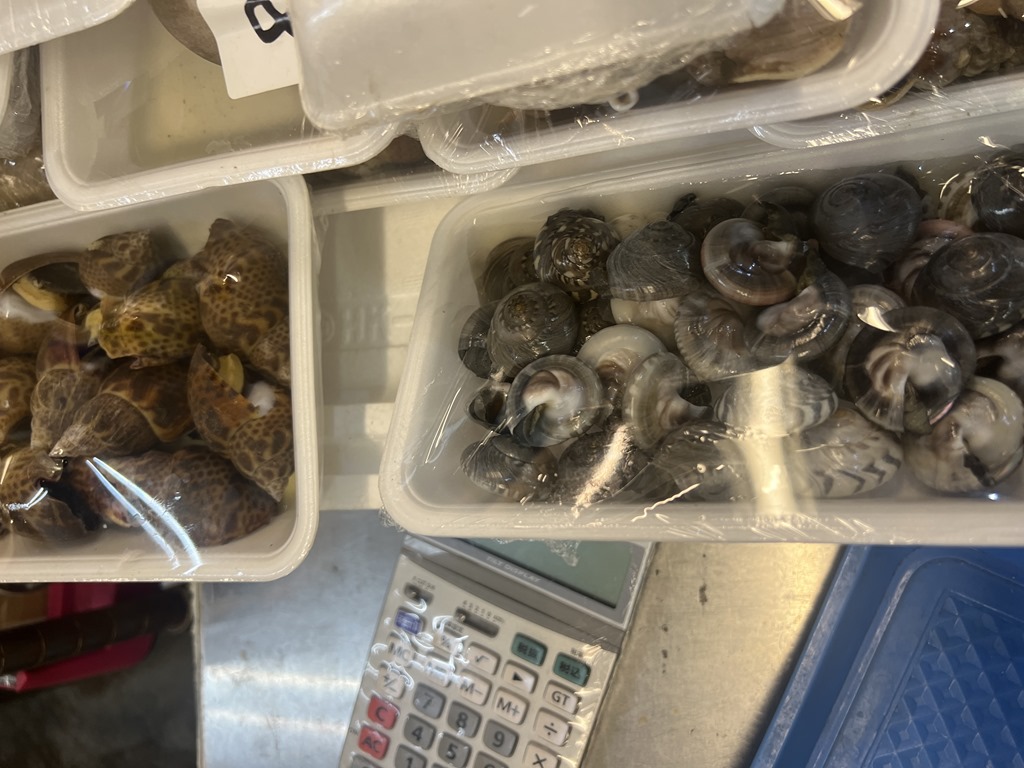
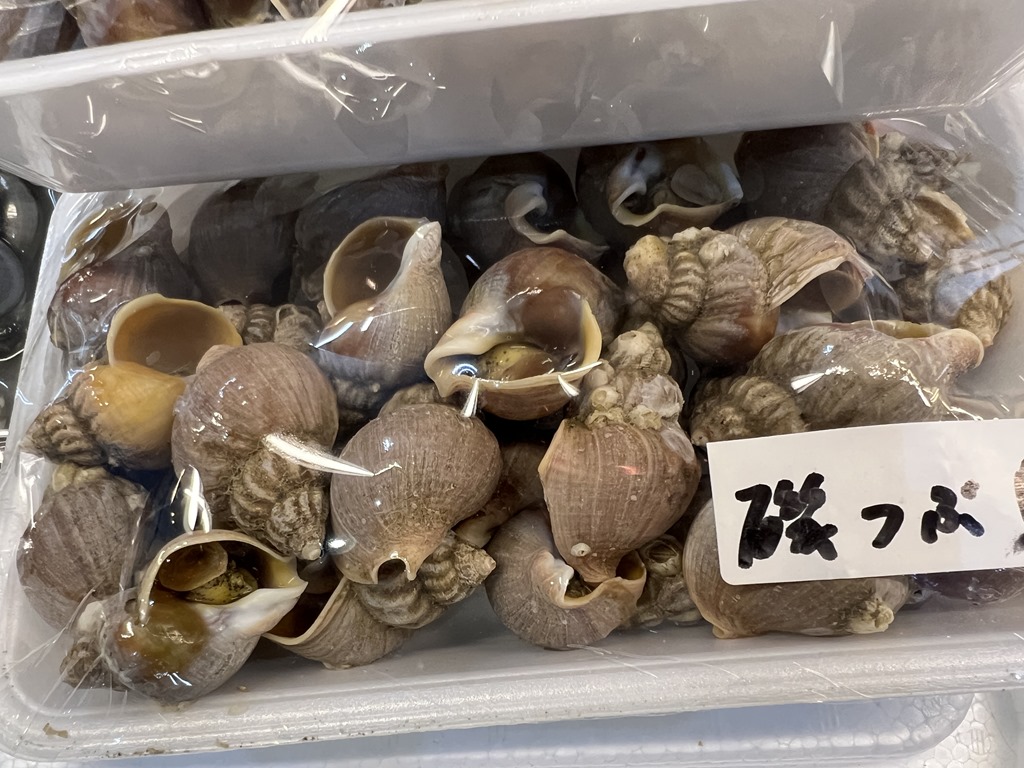
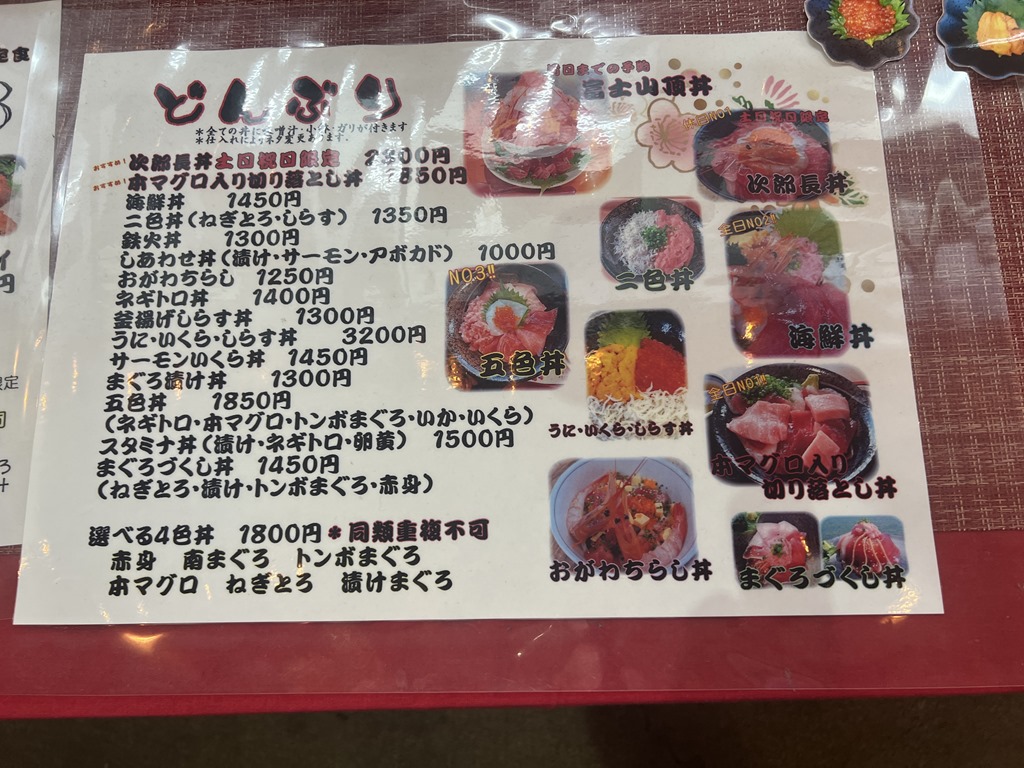
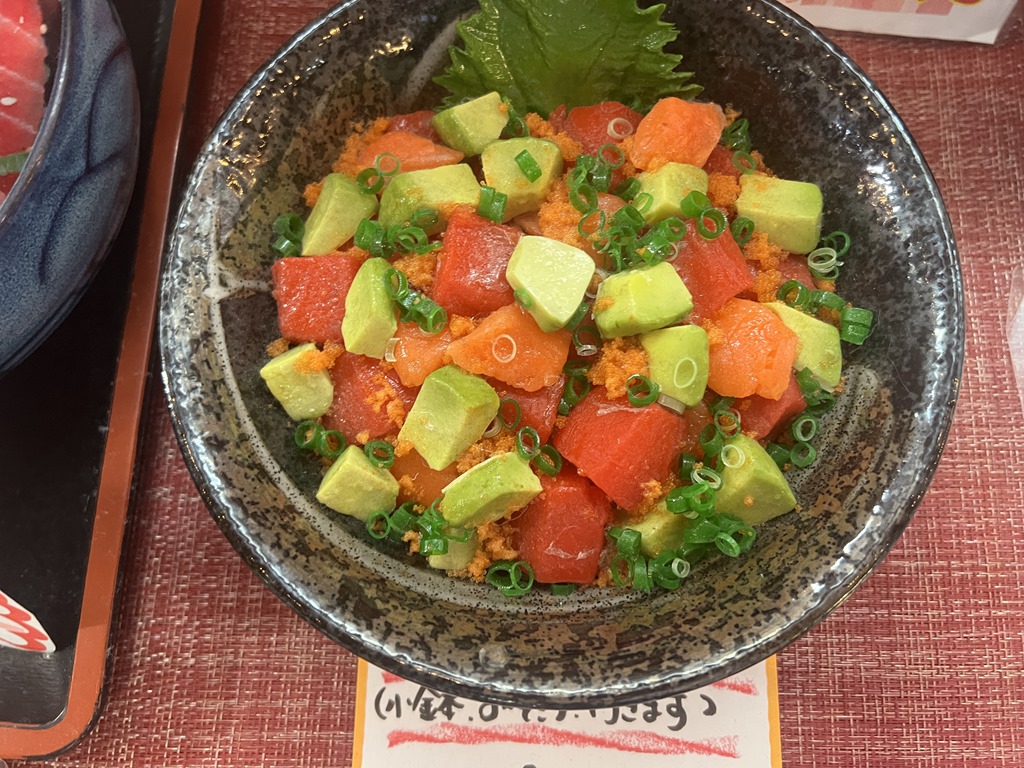
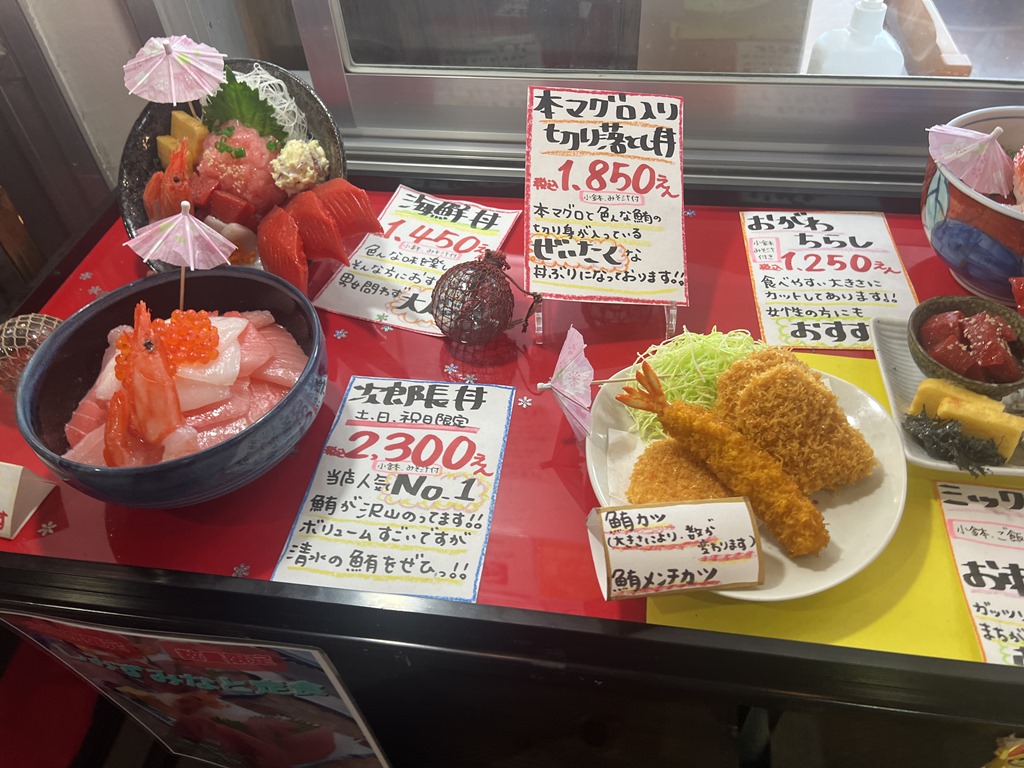
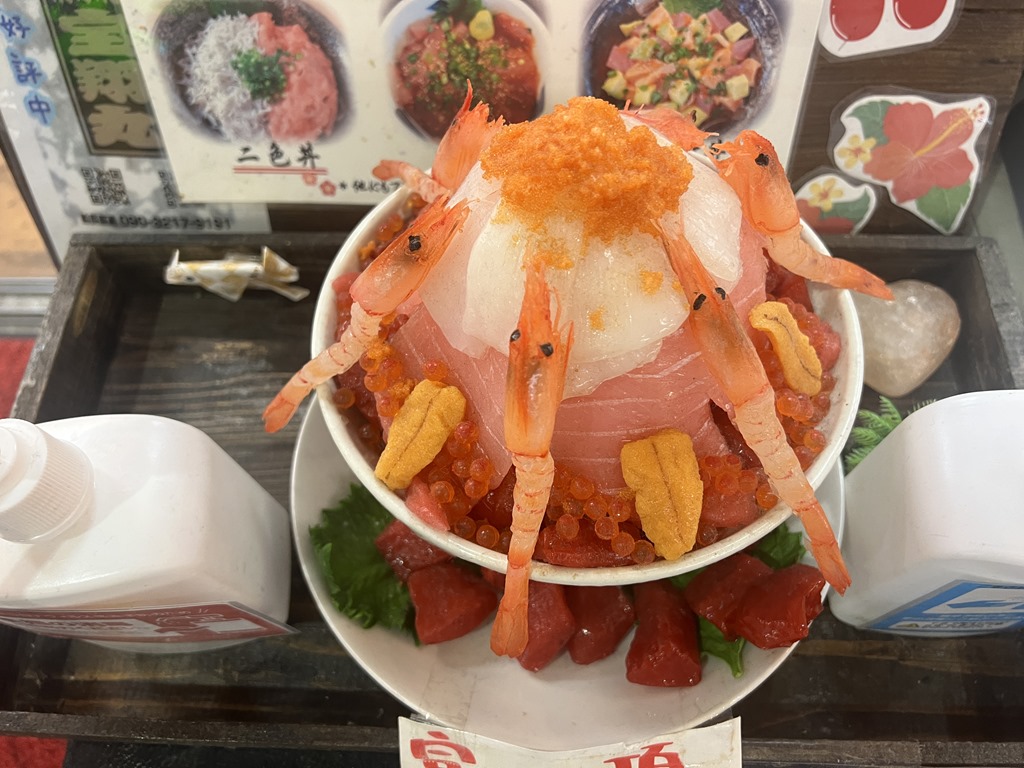
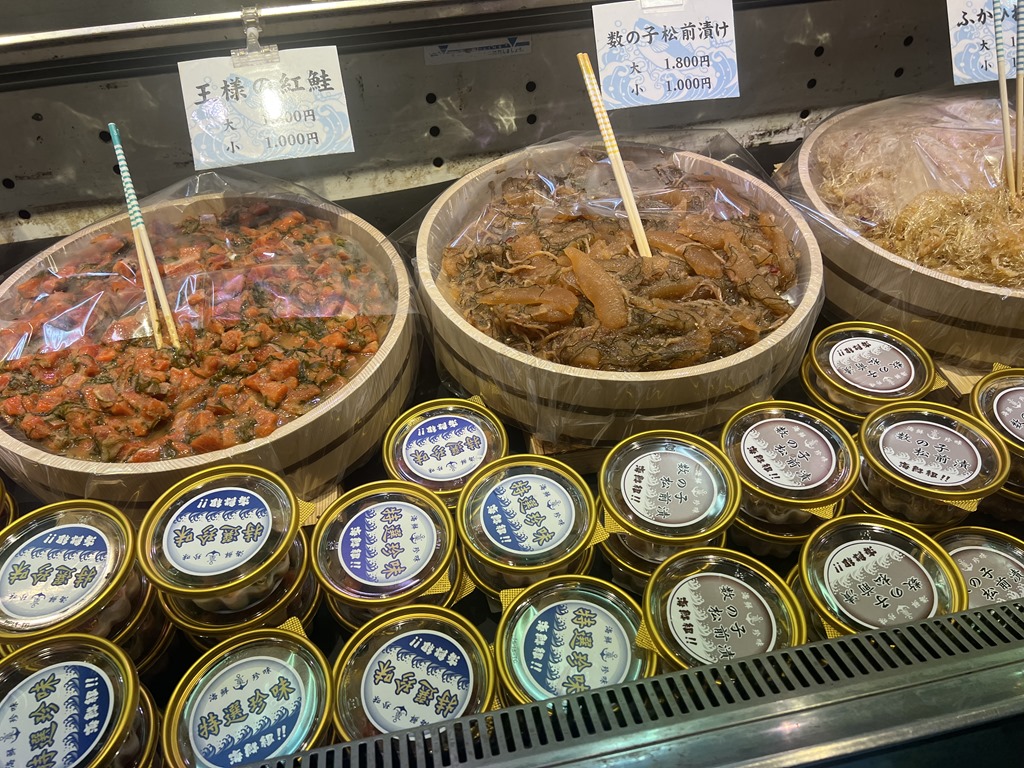
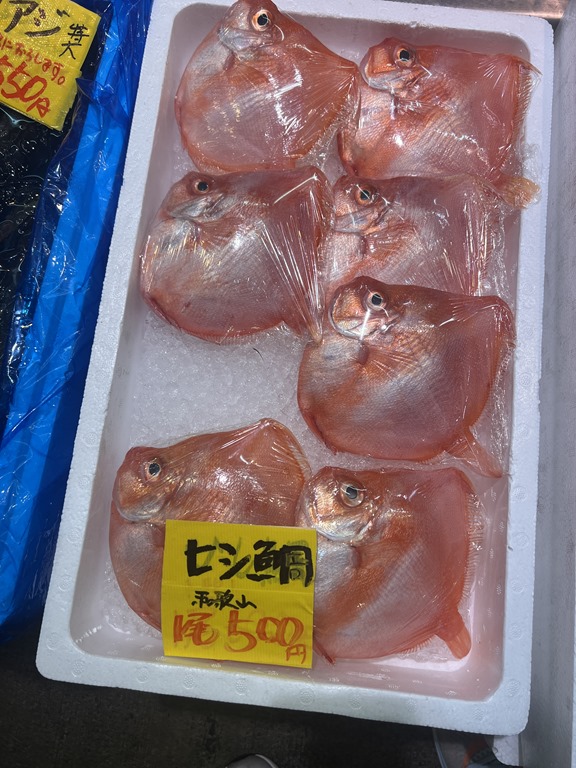
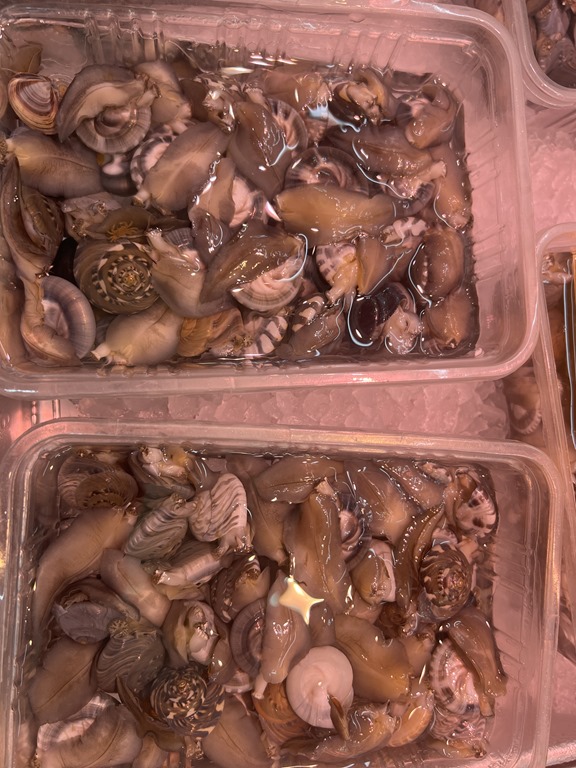
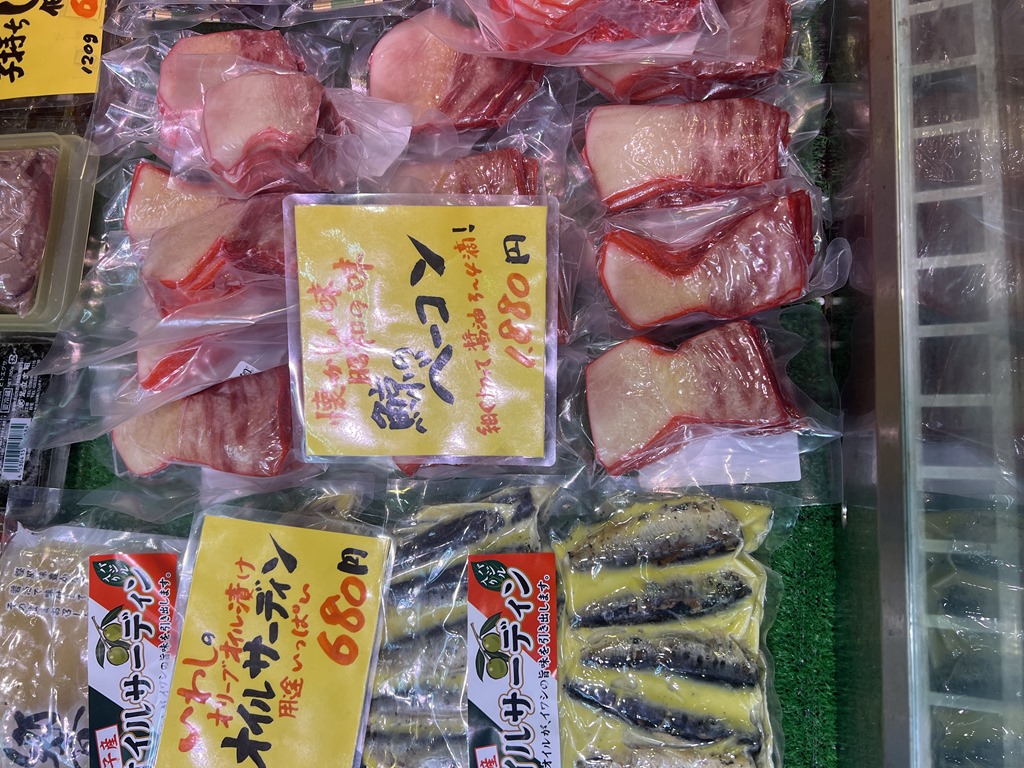

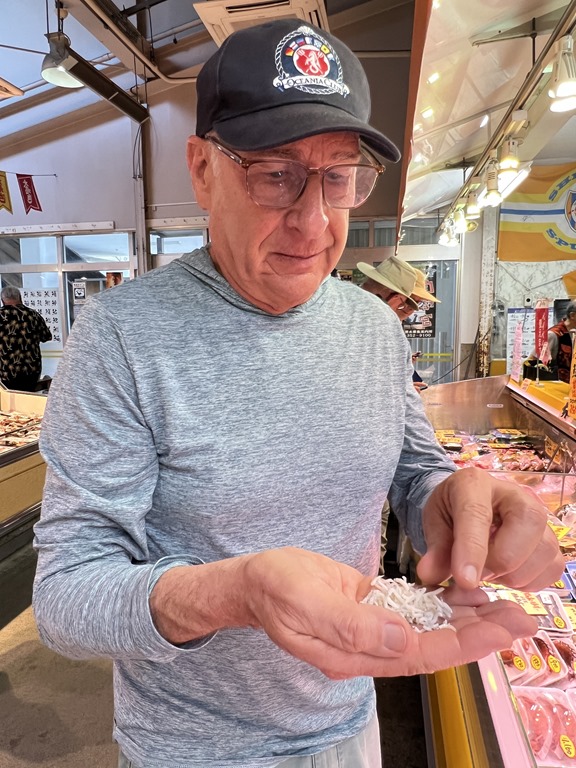
This is the shirasu. Norm tasted it and offered it to others. I passed on that one. He said it was salty and crunchy.
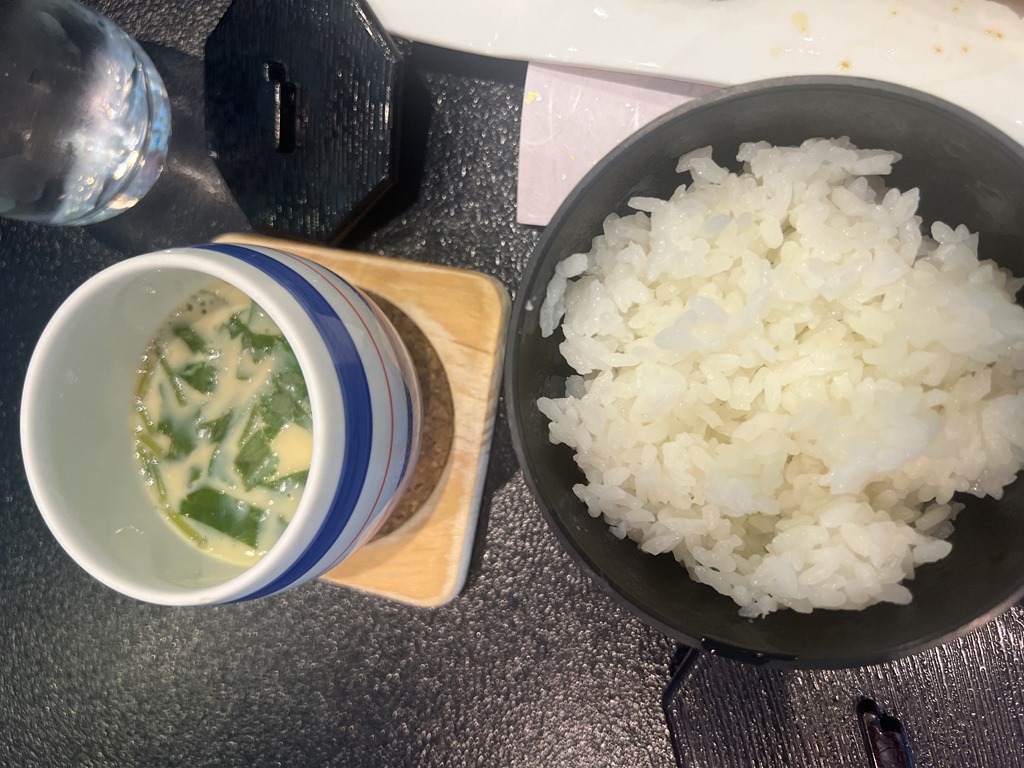
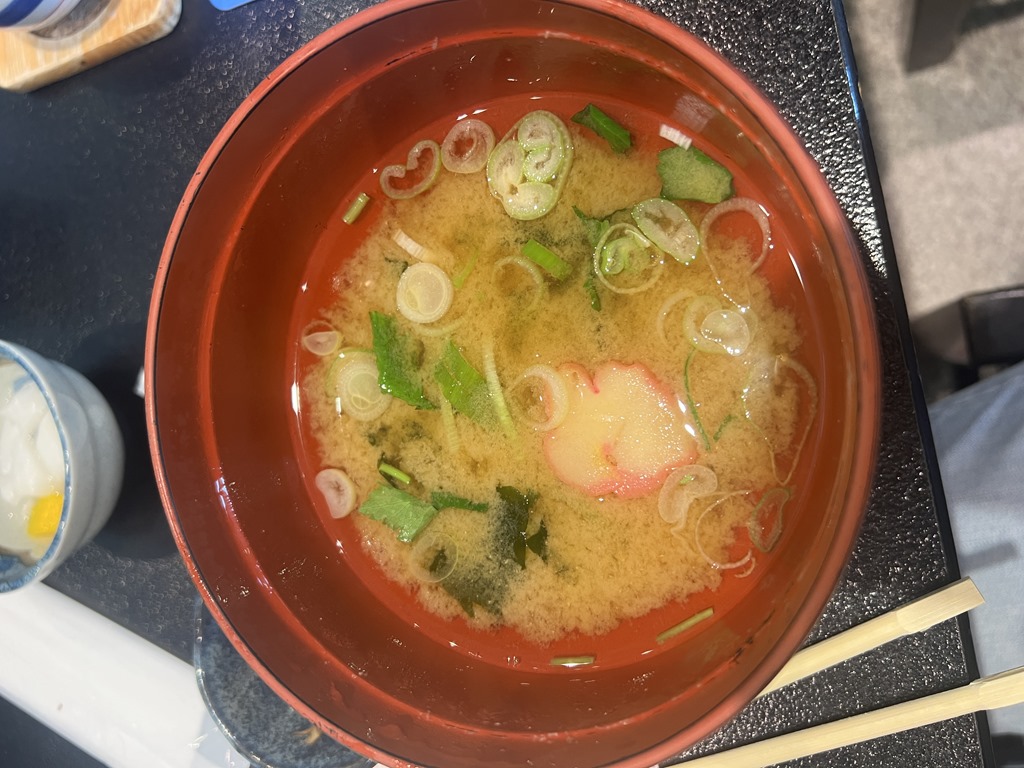
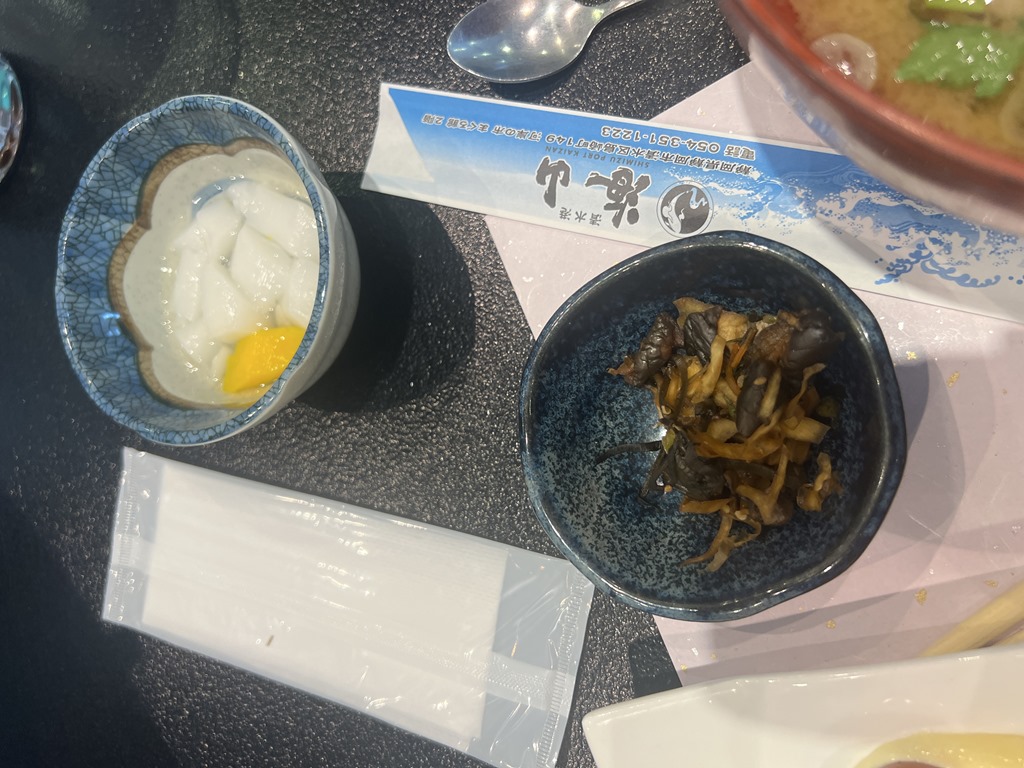
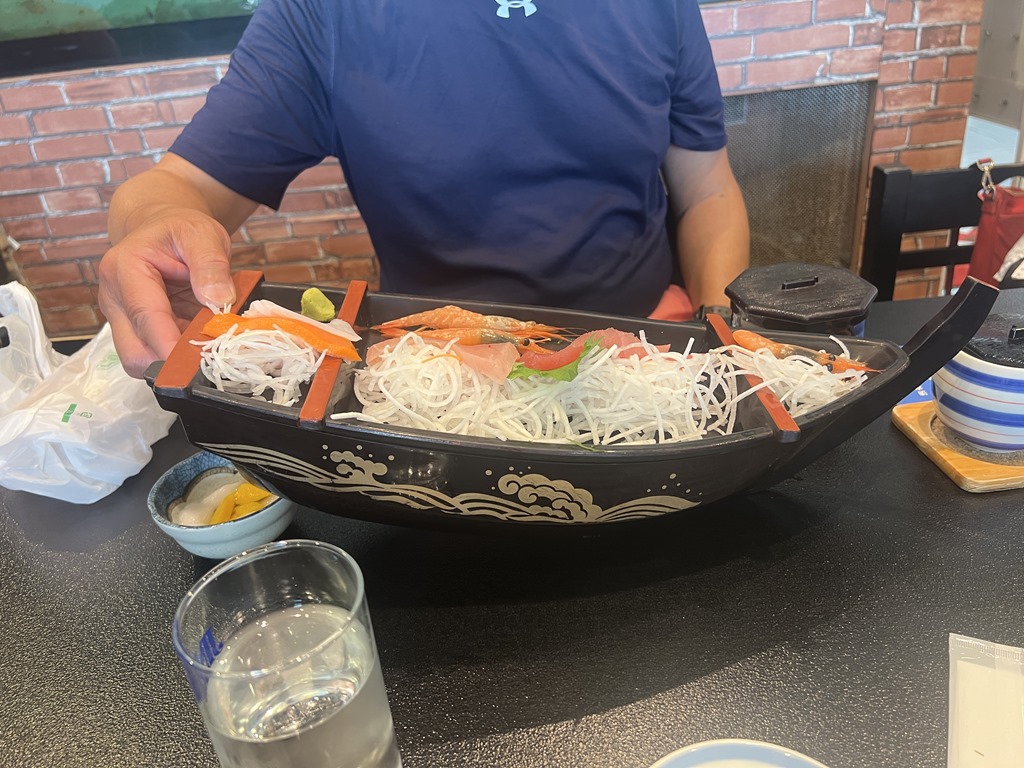
After our walk through the market, we went to the restaurant upstairs and enjoyed a wonderful meal. You could choose to have sake if you wanted it.

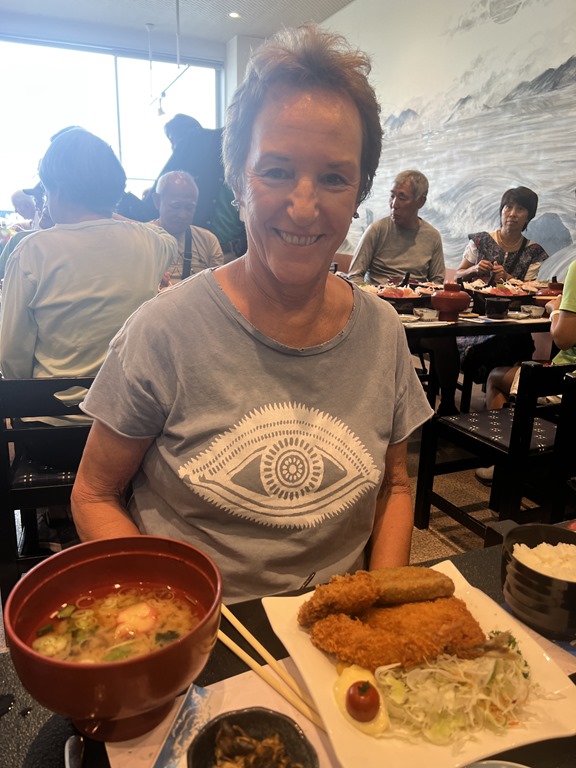
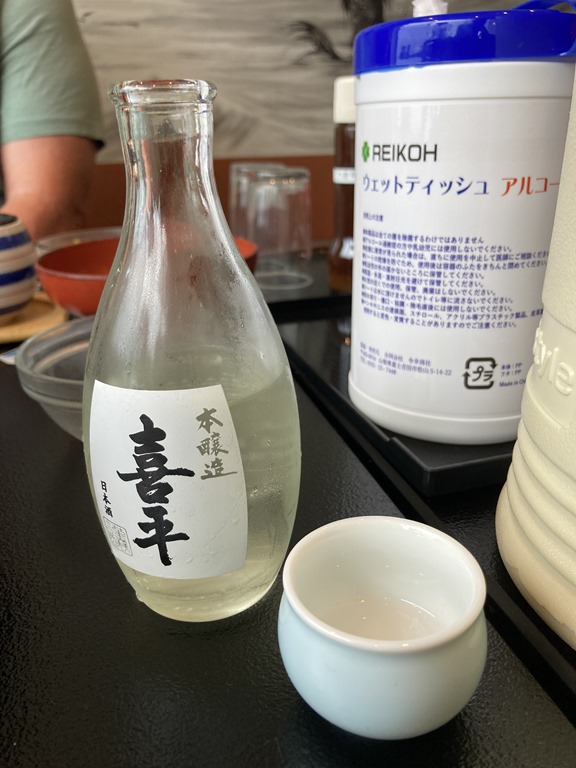
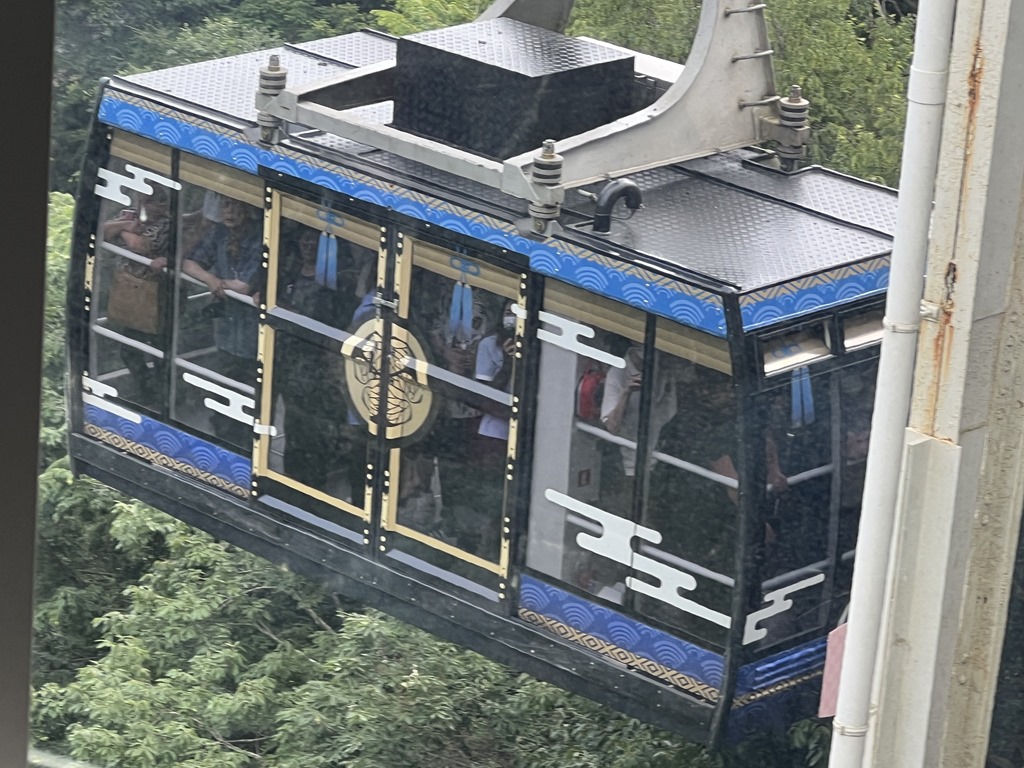
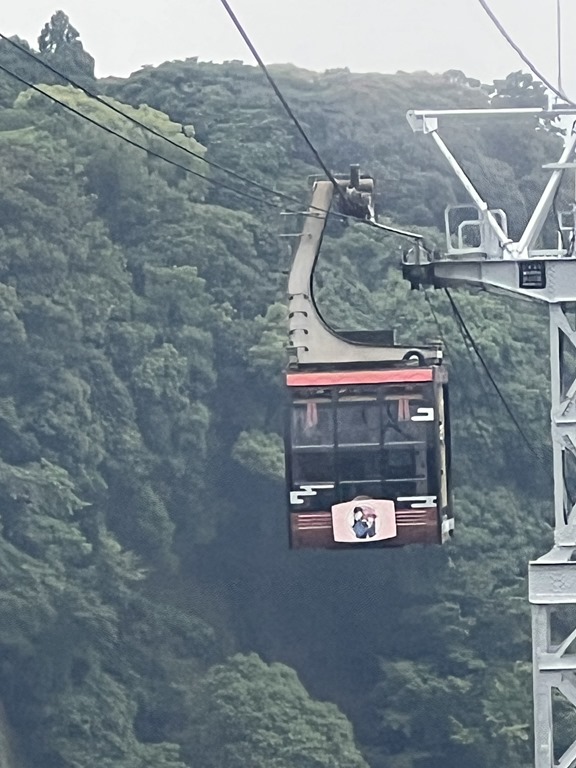
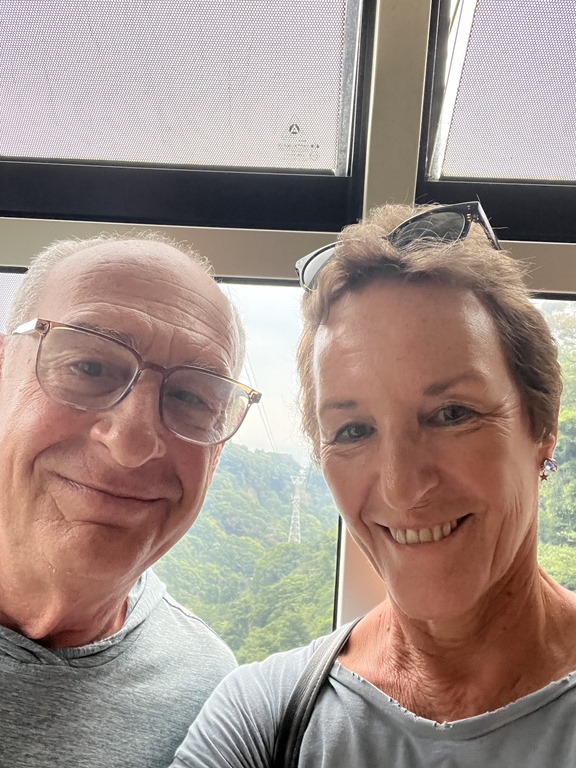
Our next stop was at the Kunozan Toshugo Shrine. We took a cable car down the mountain to the shrine.

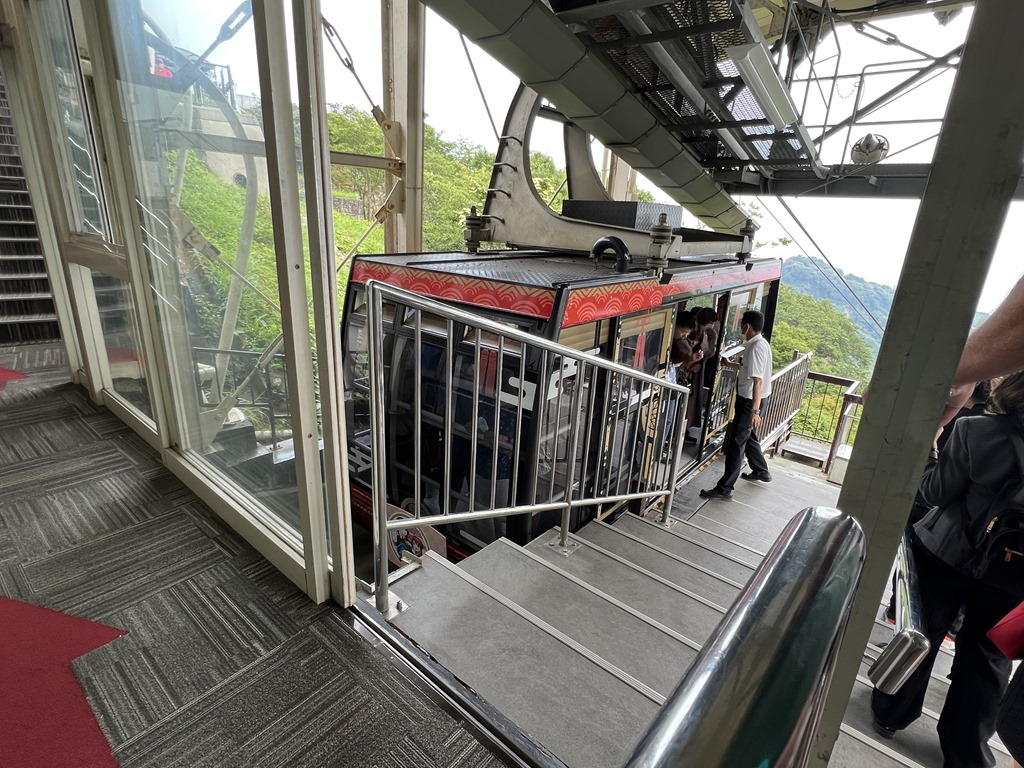

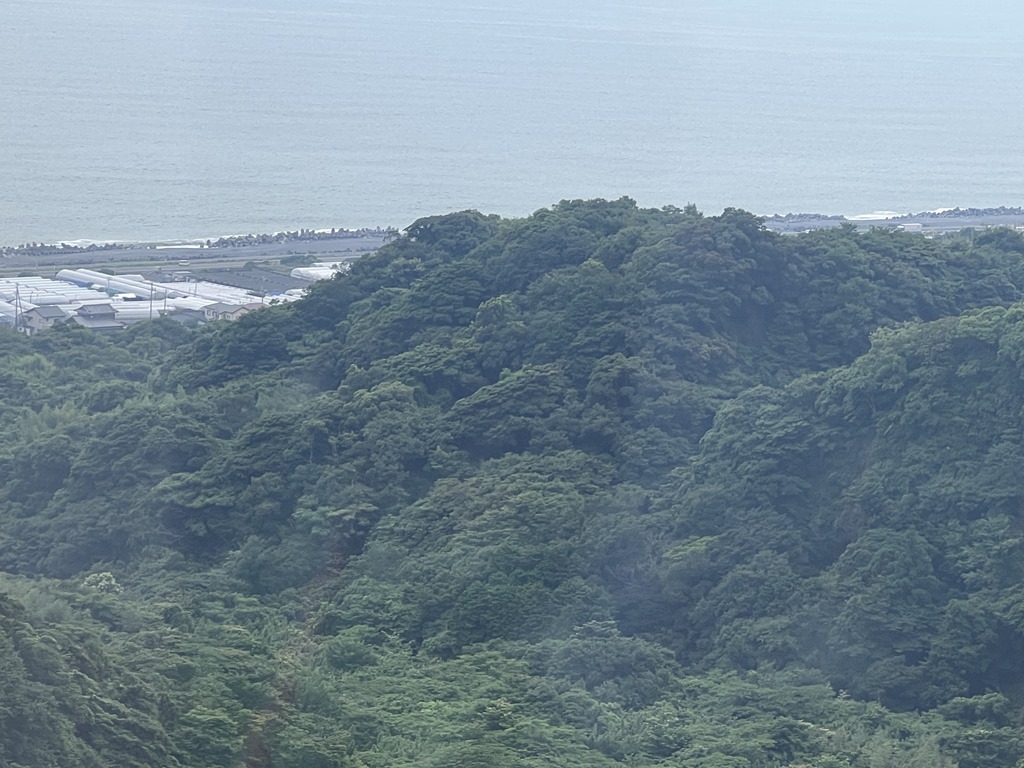
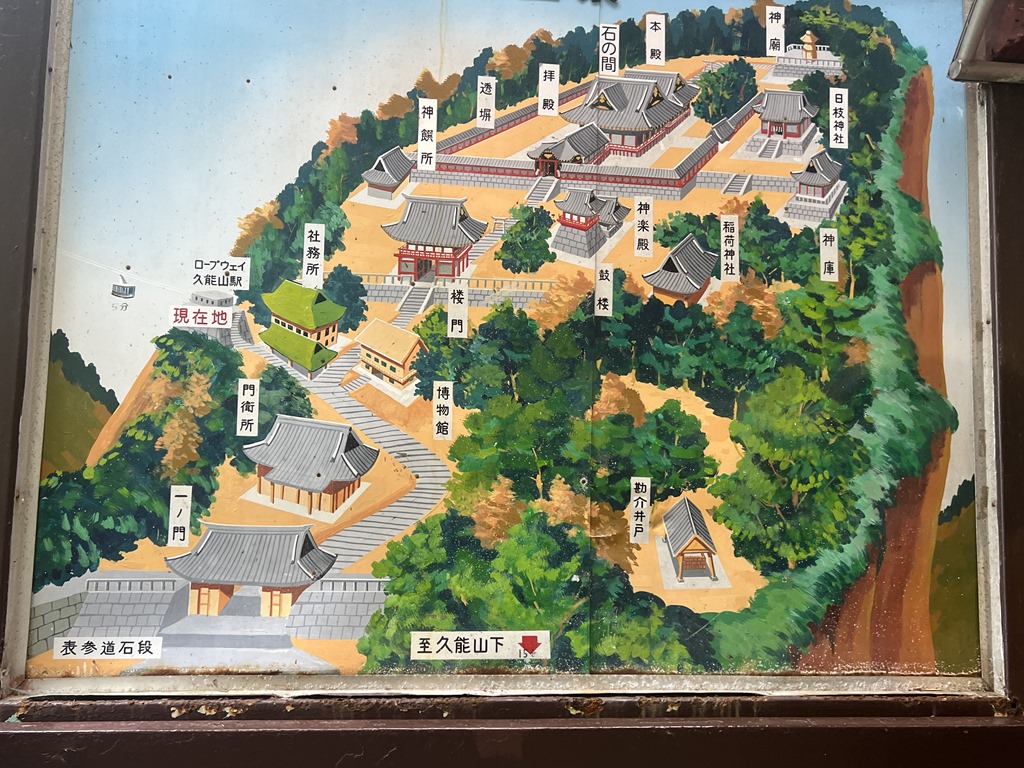
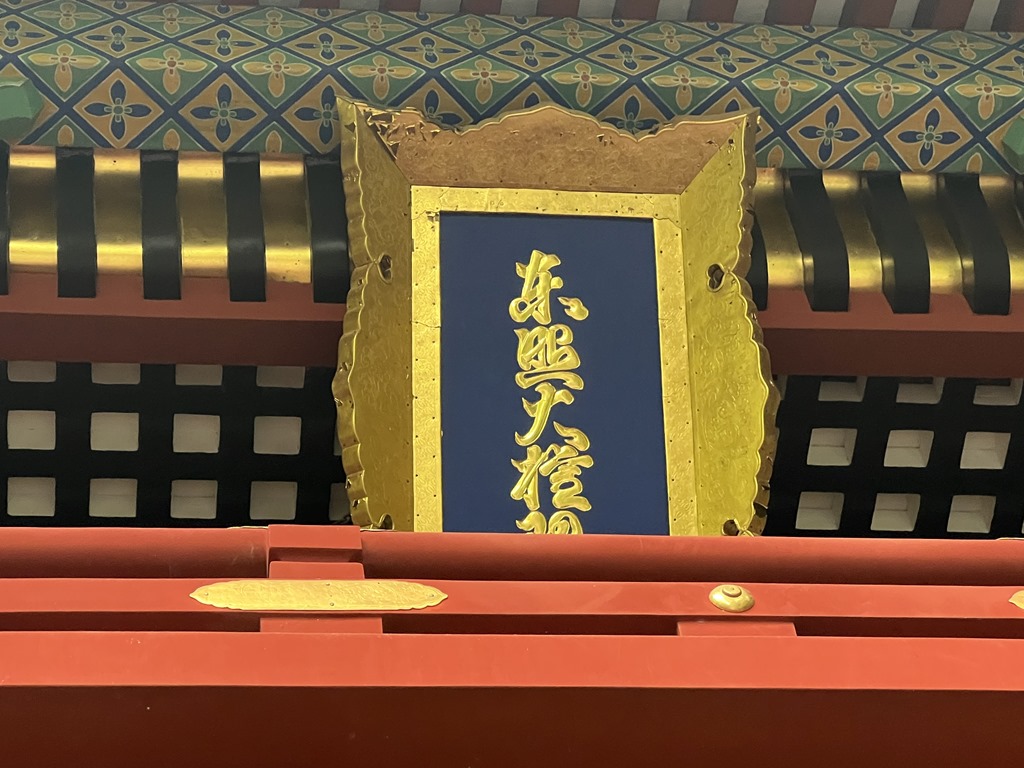
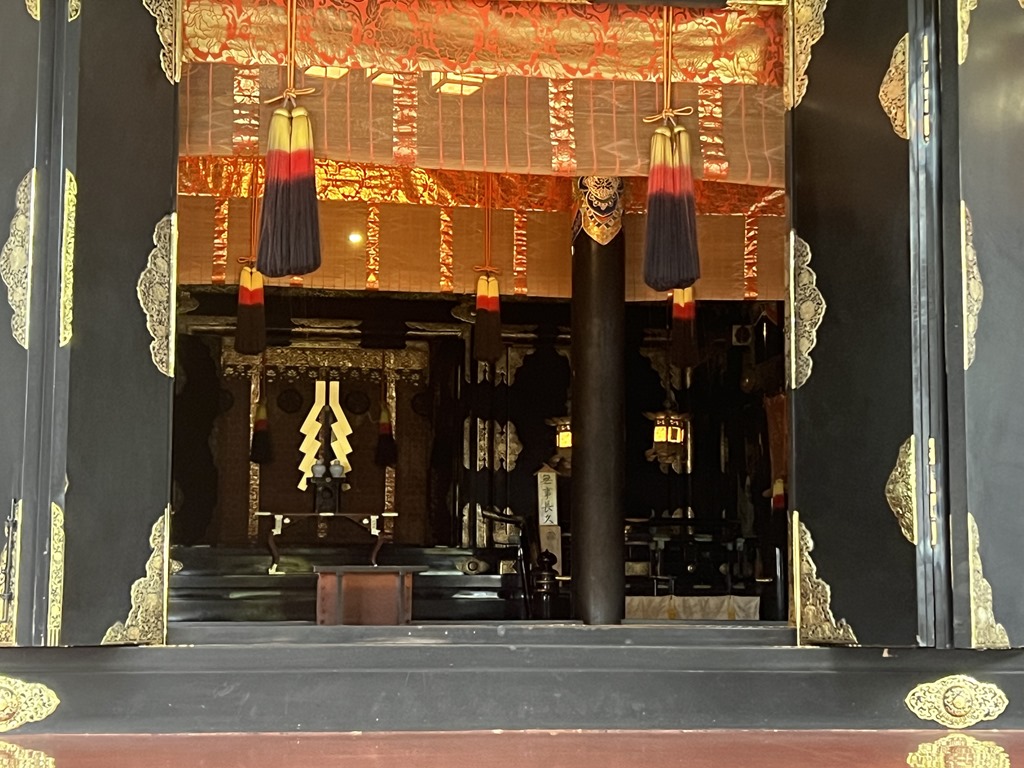
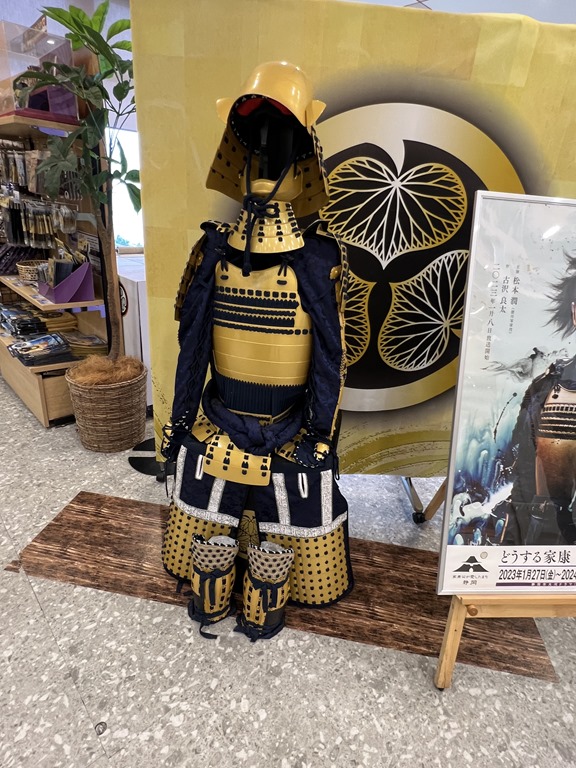
The shrine itself was built in 1617 for Ieyasu Tokugawa to be enshrined by the order of his son Hidetada. The shrine includes the main building which was designated as a national treasure, as well as 13 other buildings designated as important national cultural properties. Some of the buildings are beautifully painted with lacquers and decorated with gold foils. They have remained since they were built and the wooden materials including pillars are original. They have been repainted every 50 years to preserve them.
Interesting that Sitsko said that the temples are mostly historical sites, Japanese people are generally not religious.
There is a carved picture at the front of the main building. It depicts the ancient Chinese story of Shiba Onko, an ancient Chinese politician that is called “A story of broken pot.” When Shiba Onko was a child, he was playing with some of his friends and one fell into a large pot full of water. Although he knew that his father treasured the pot, Shiba Onko broke the pot with a stone to save his friend. Later the father praised his son, saying “you can buy another pot with money but you can’t buy your friend’s life. The story can be interpreted as a message to tell us that there’s nothing more important than human life.
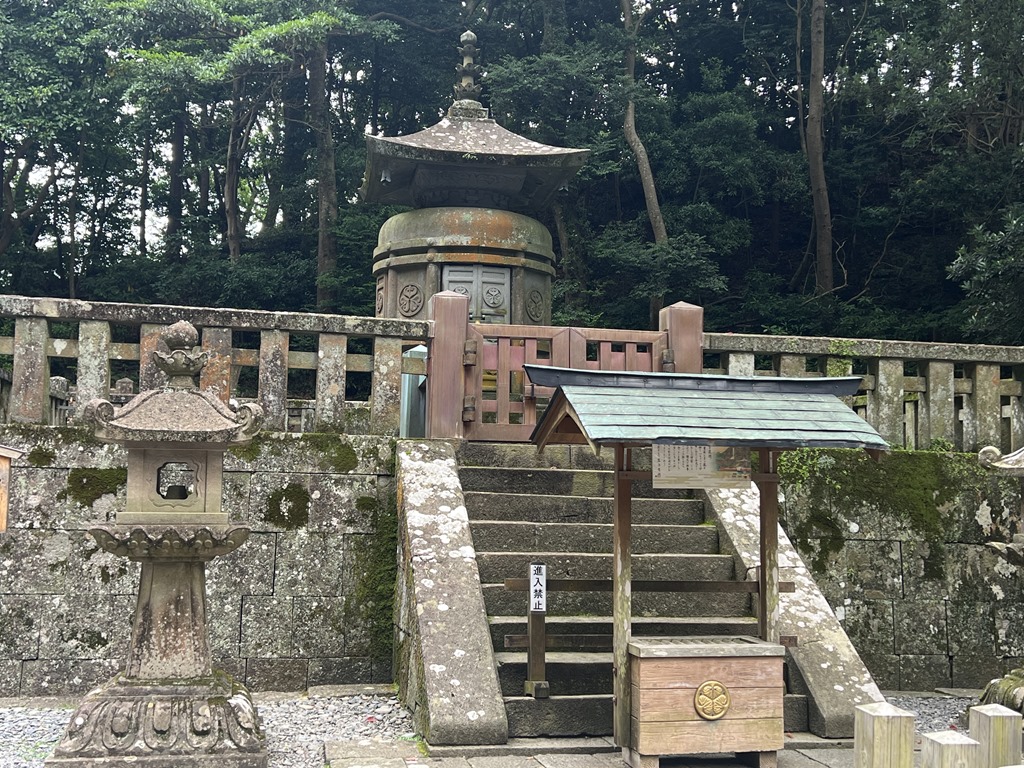
The father, Ieyasu, was buried according to his will farther up behind the main building of the shrine.
The white papers hanging from the rope (made of rice fiber) are made to look like lightning to signify the importance of rain to their main food, rice. You see them at almost all temples.

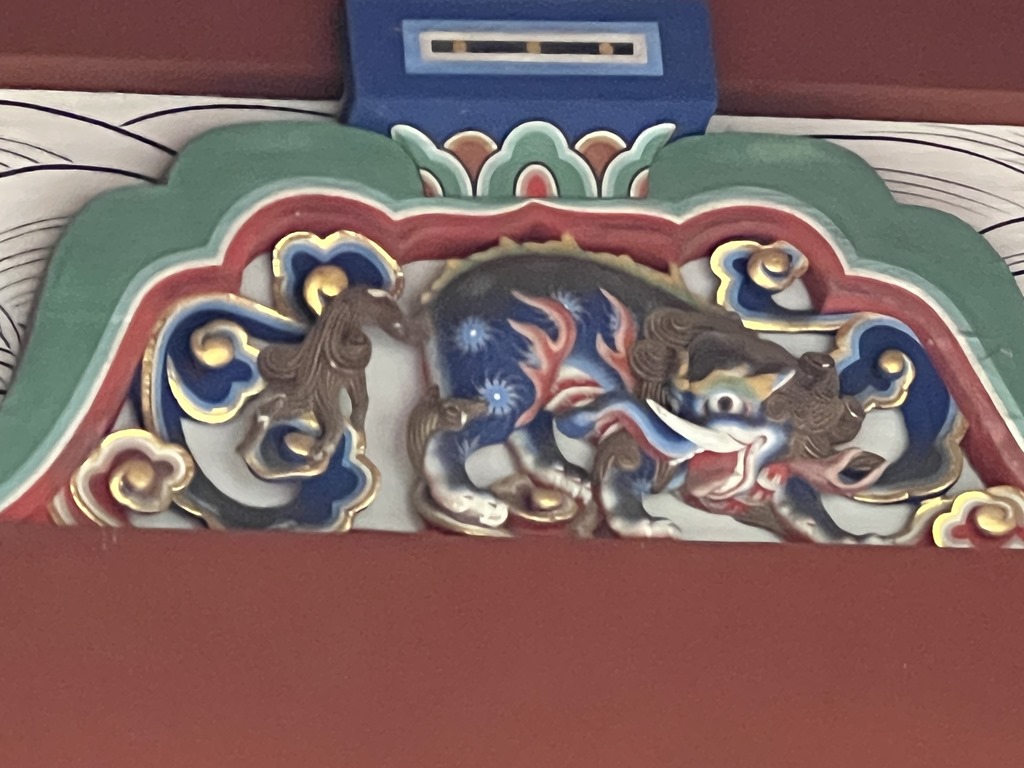

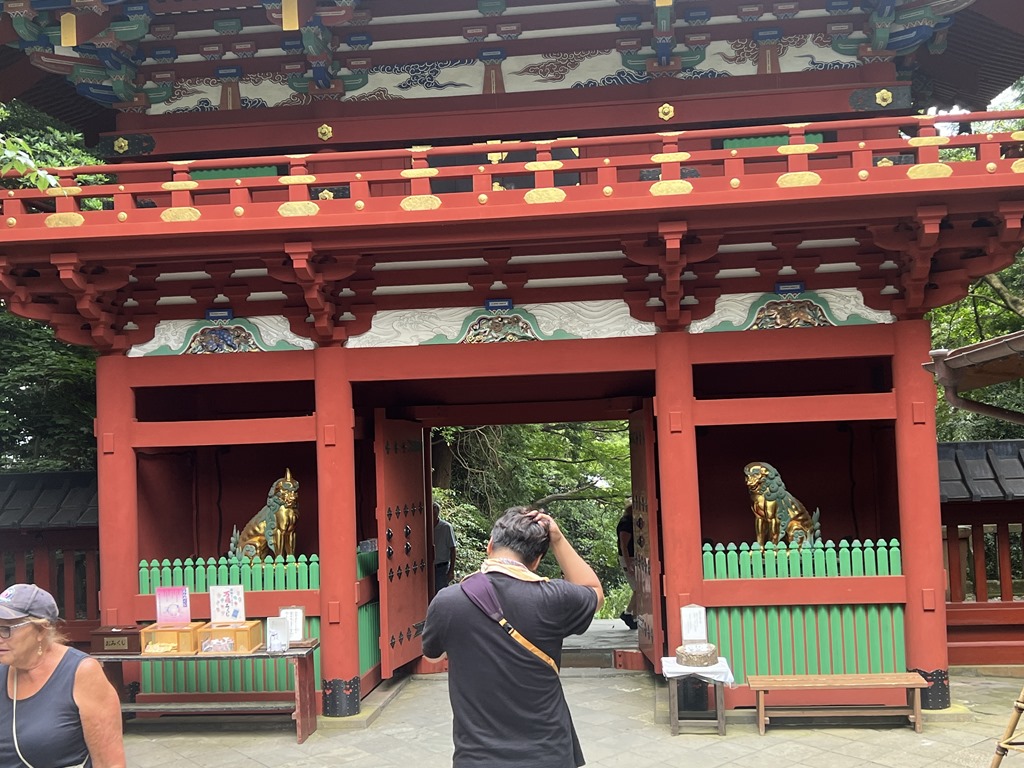
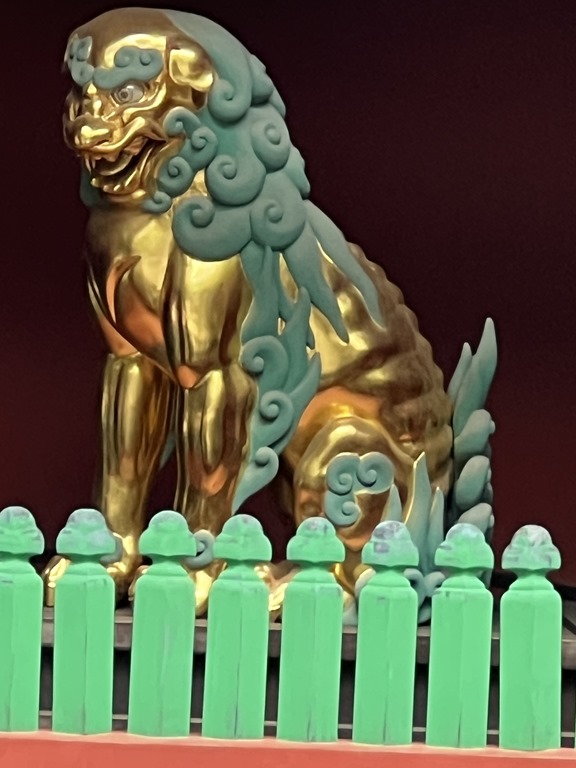
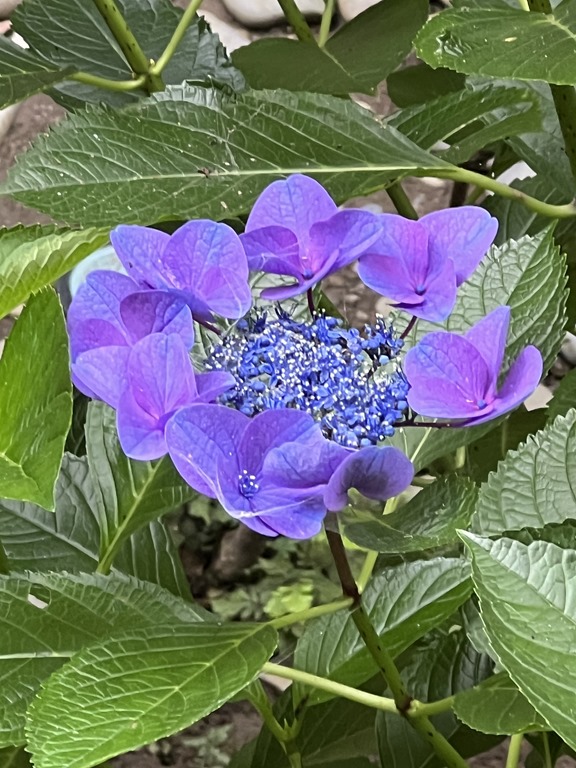
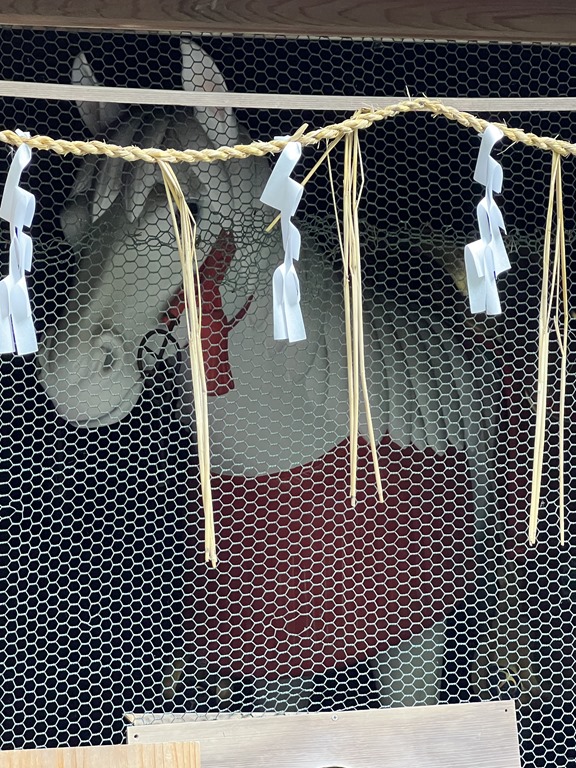
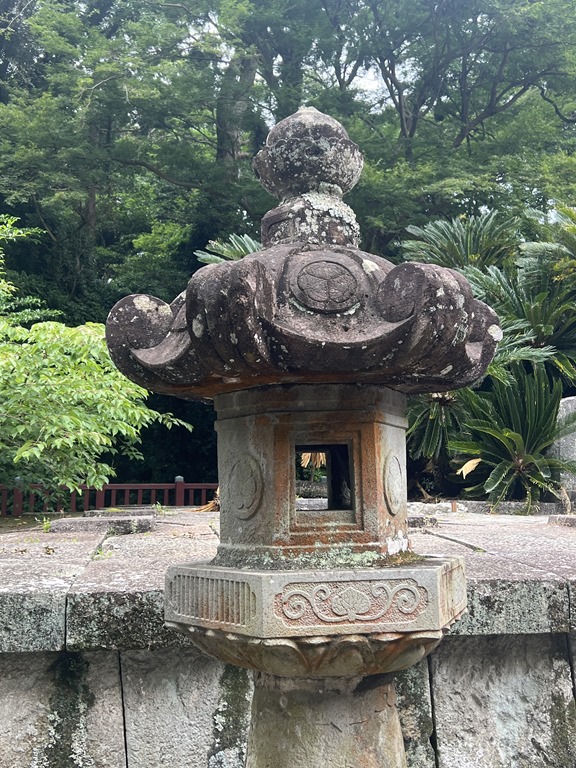
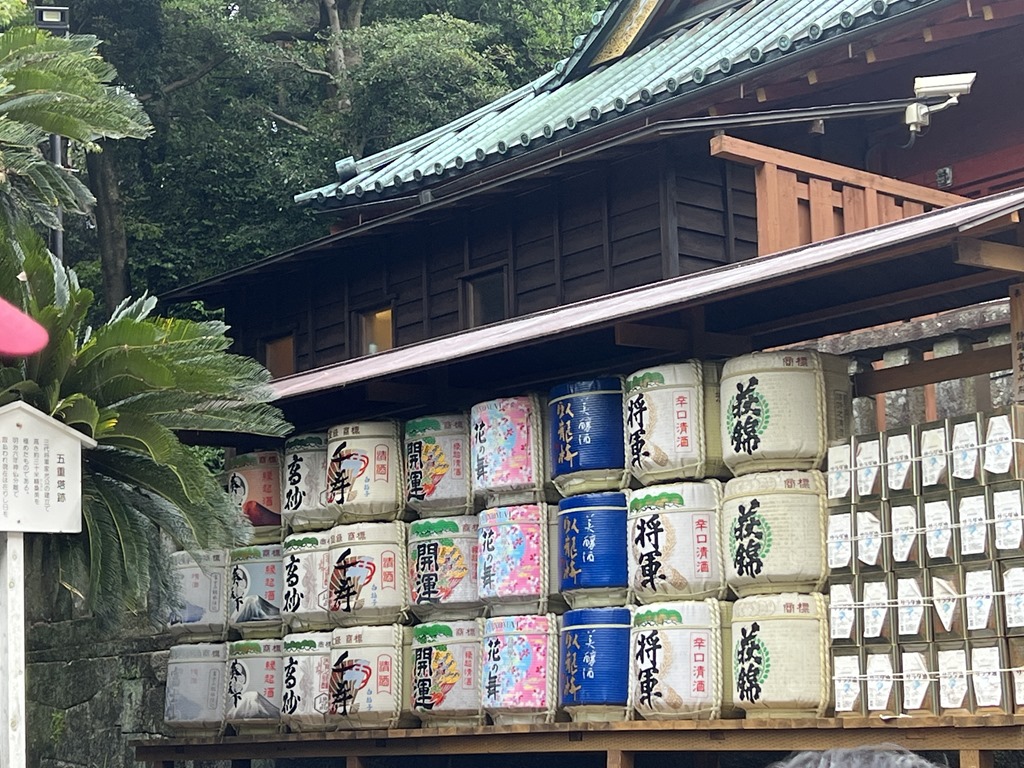
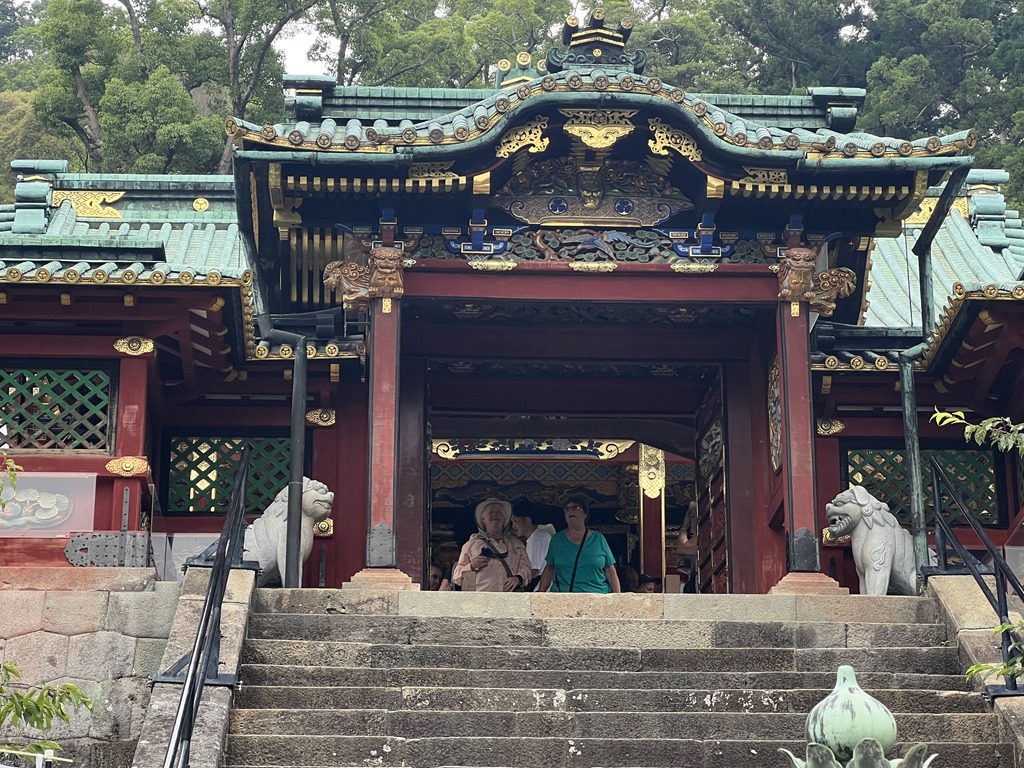
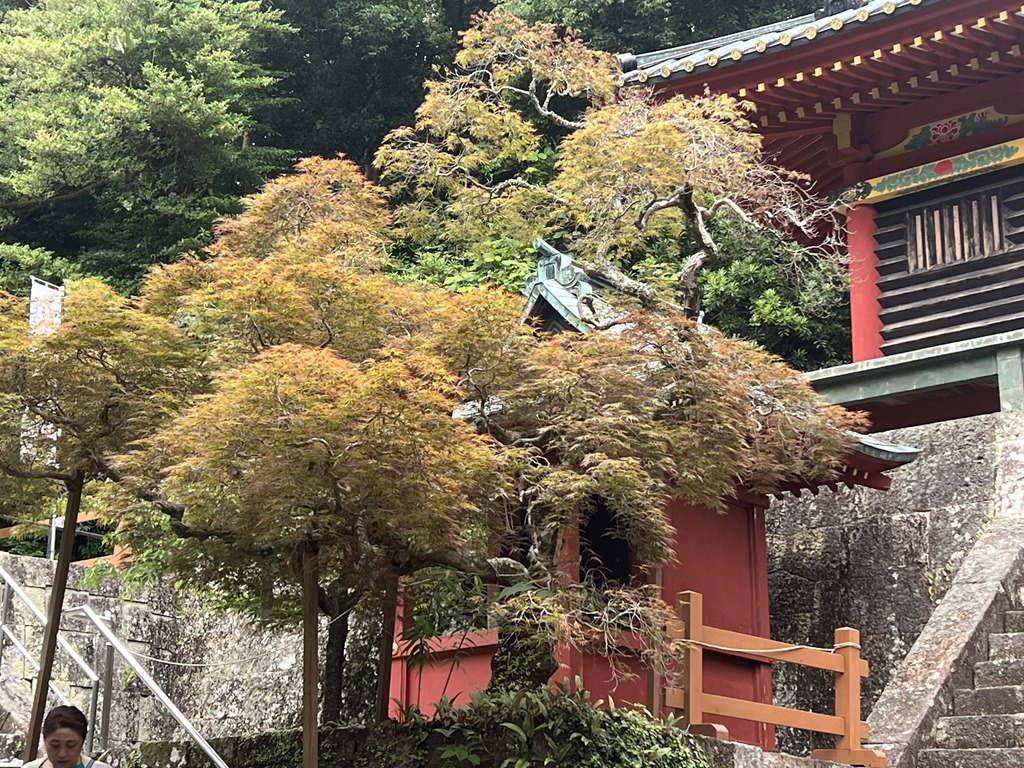
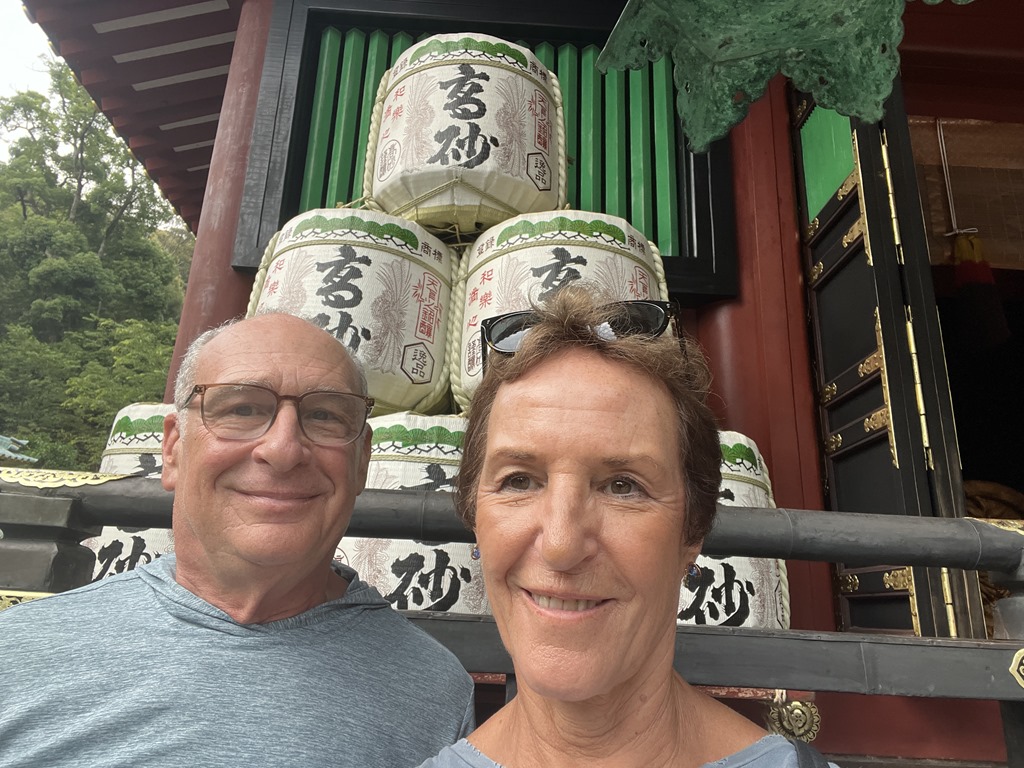



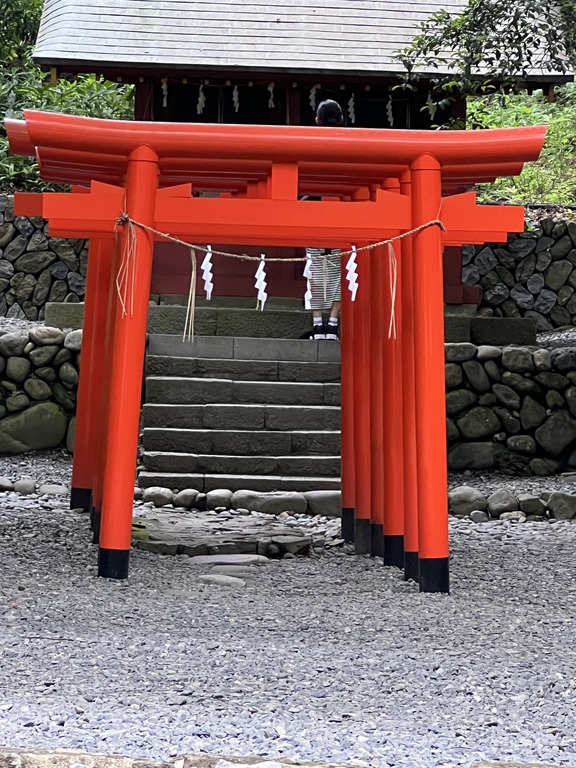

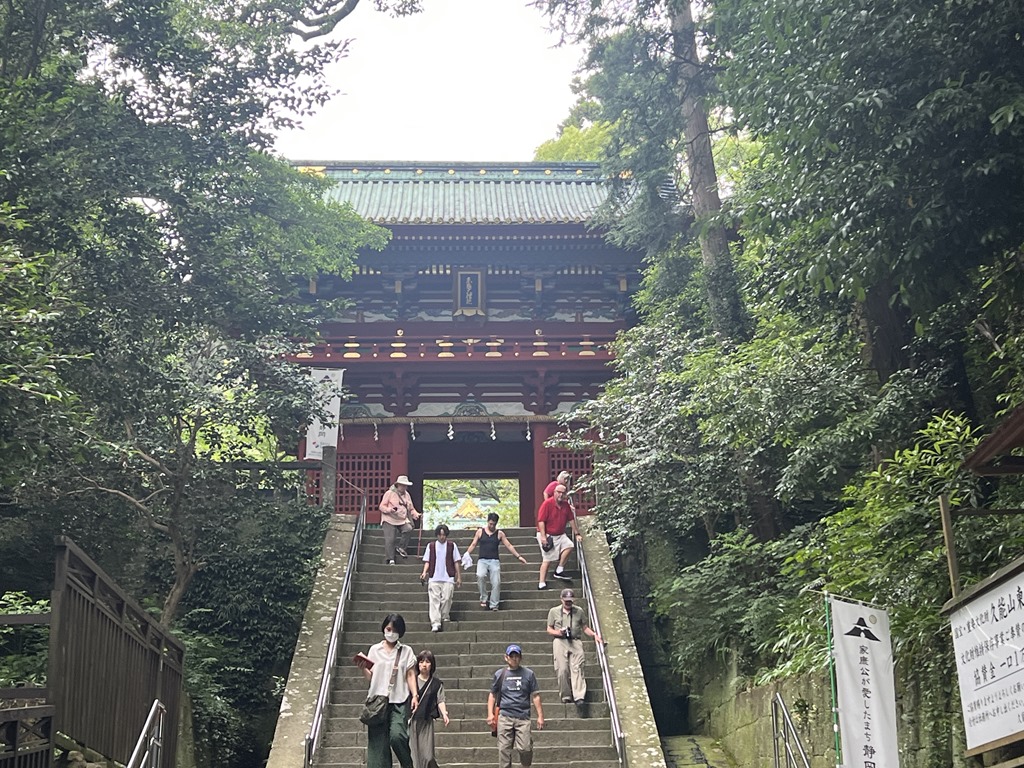
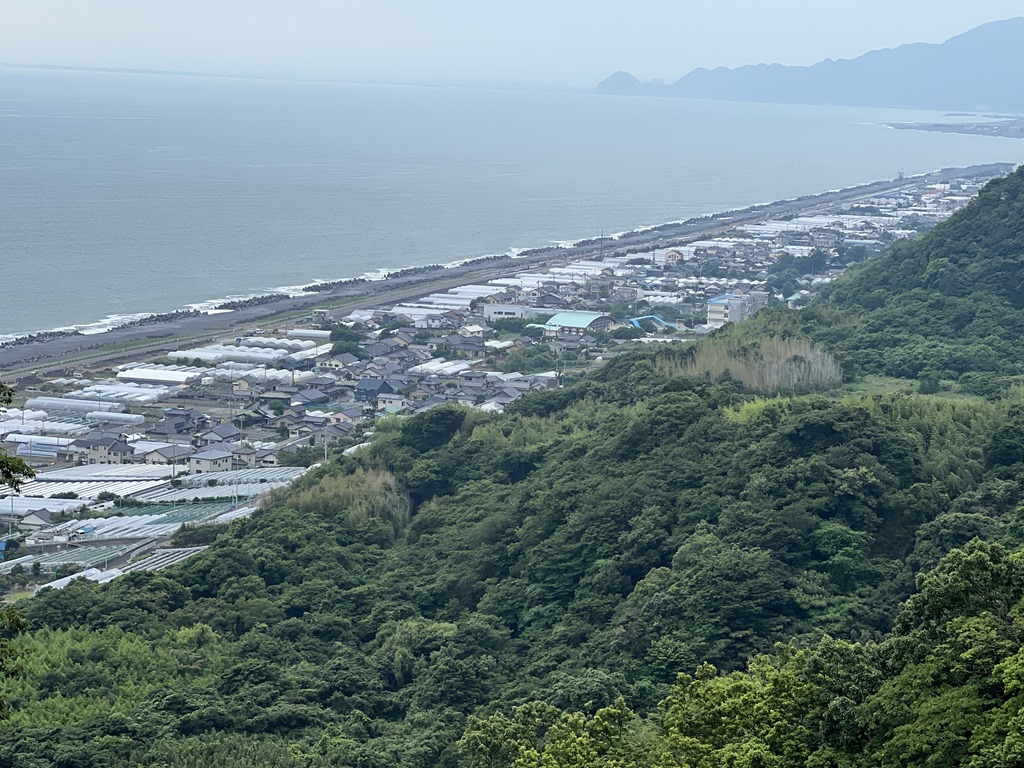

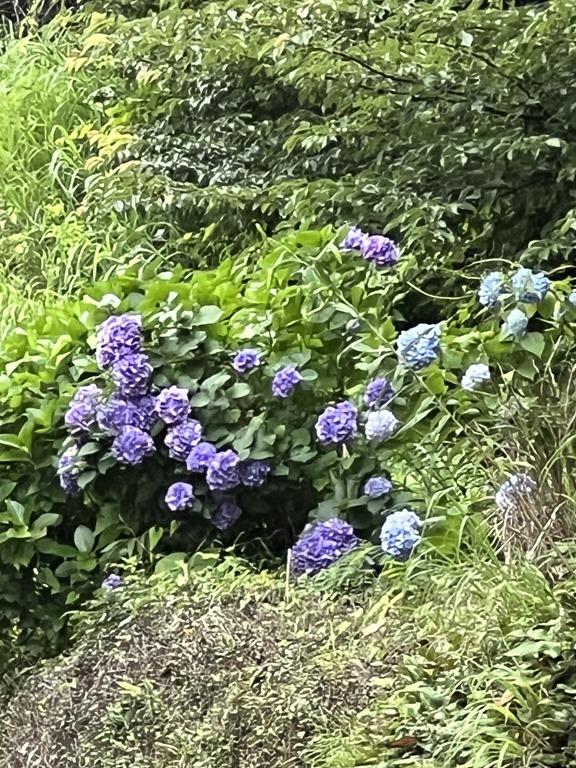
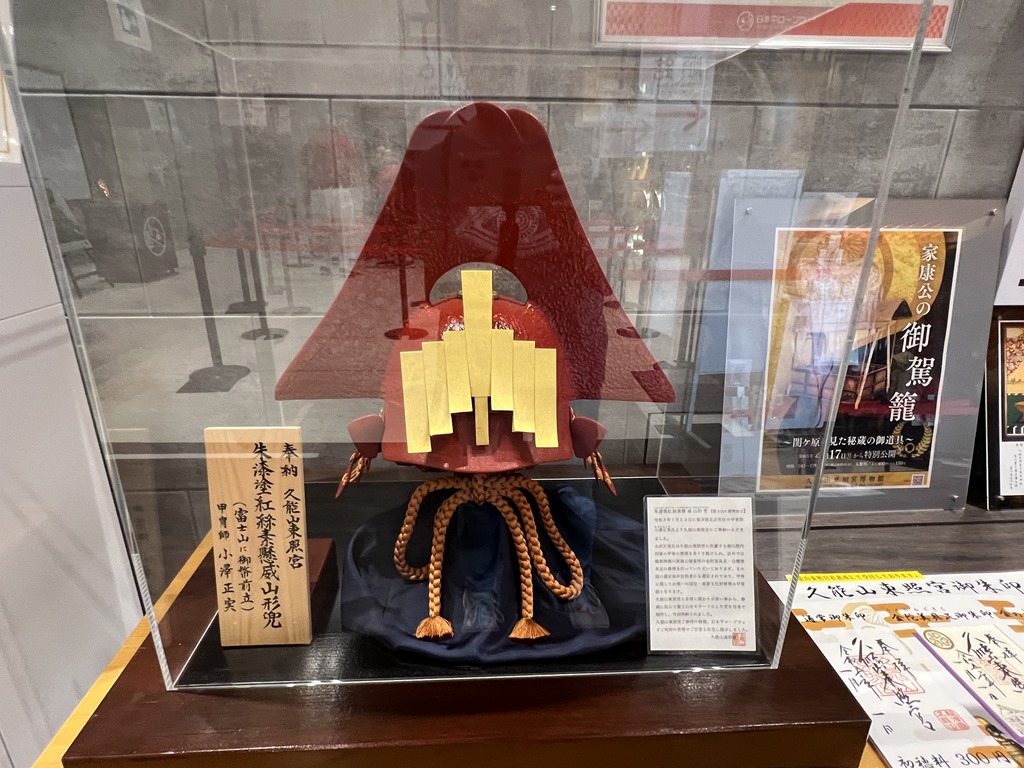
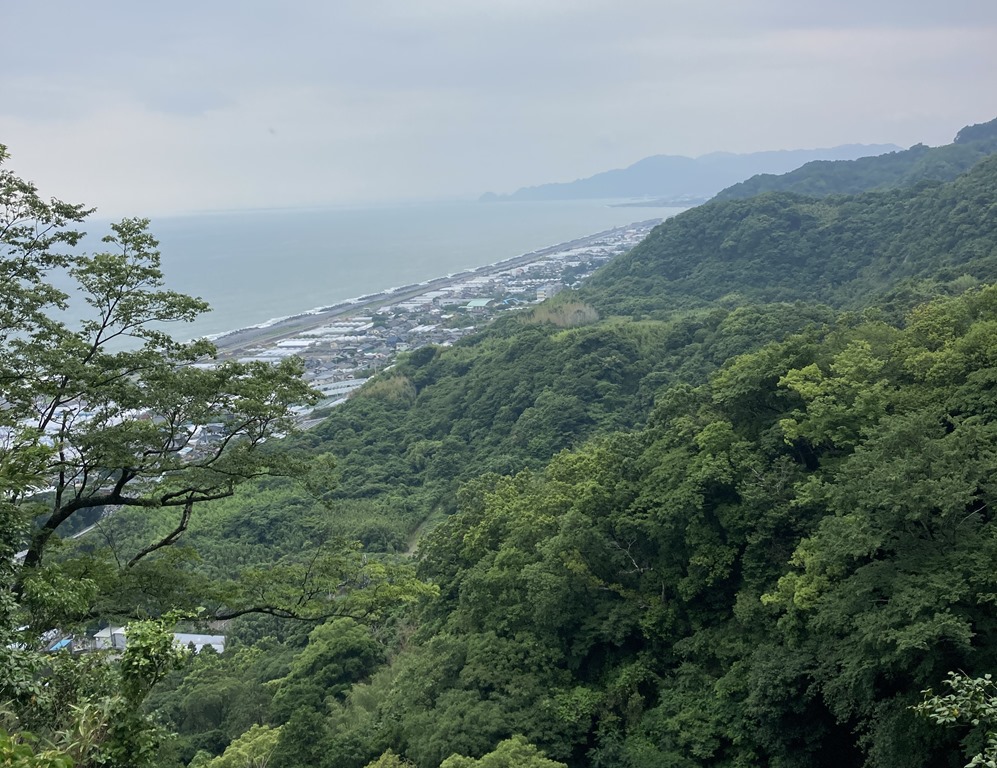

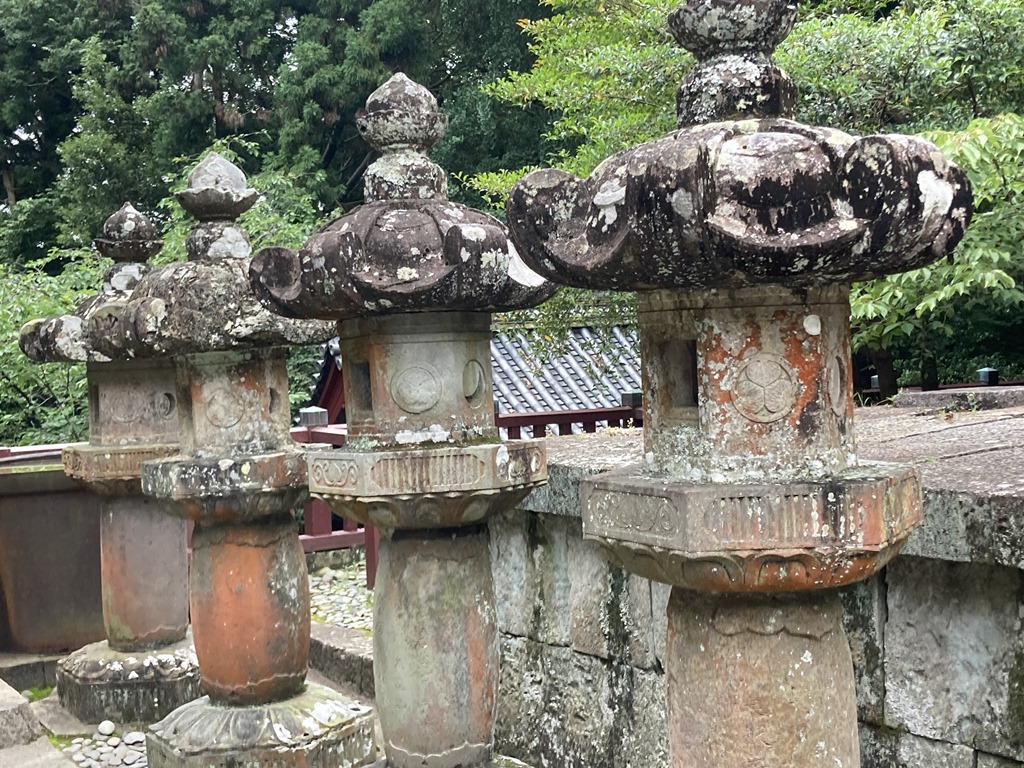
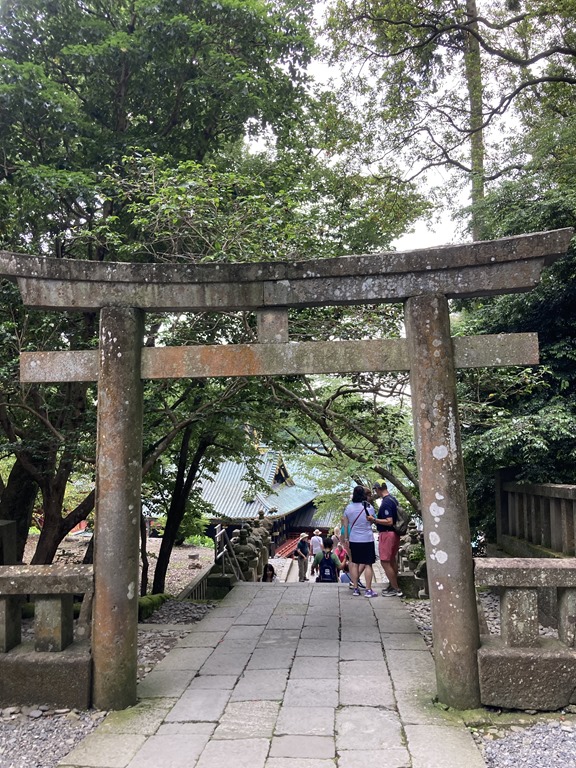
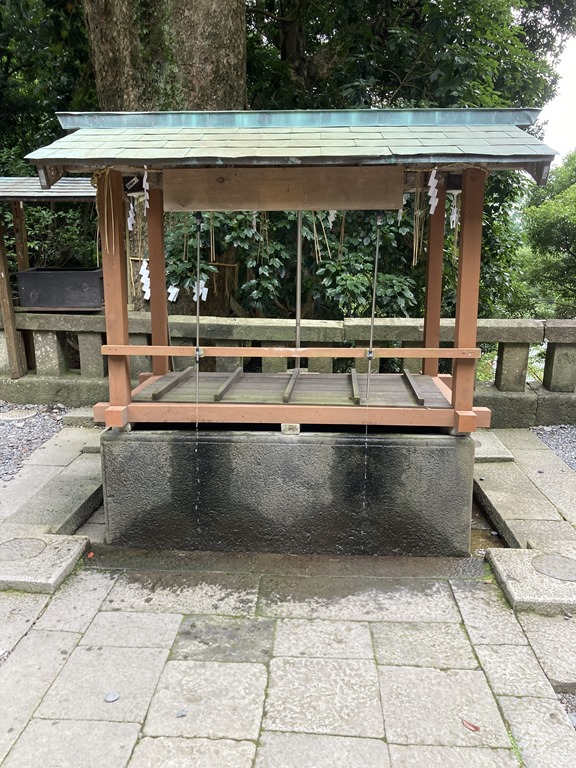

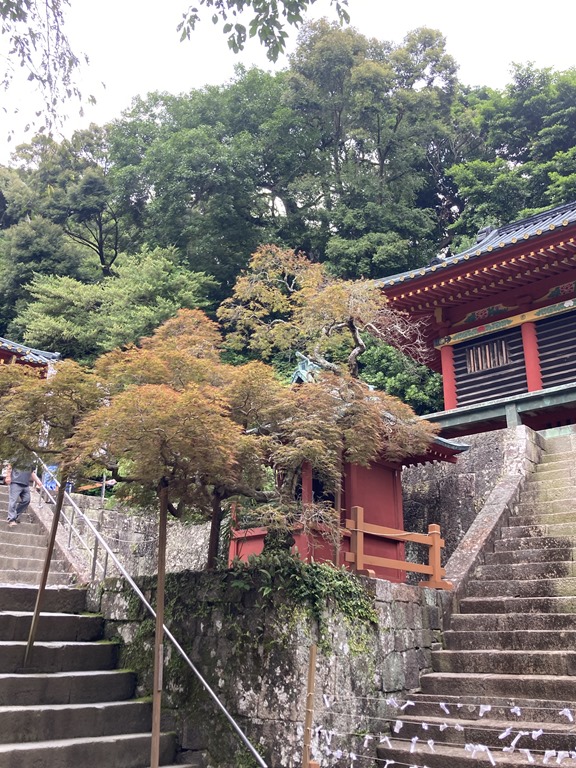

All of the sites we visited are very lush and green, and it is hydrangea season so we saw a lot of beautiful flowers.
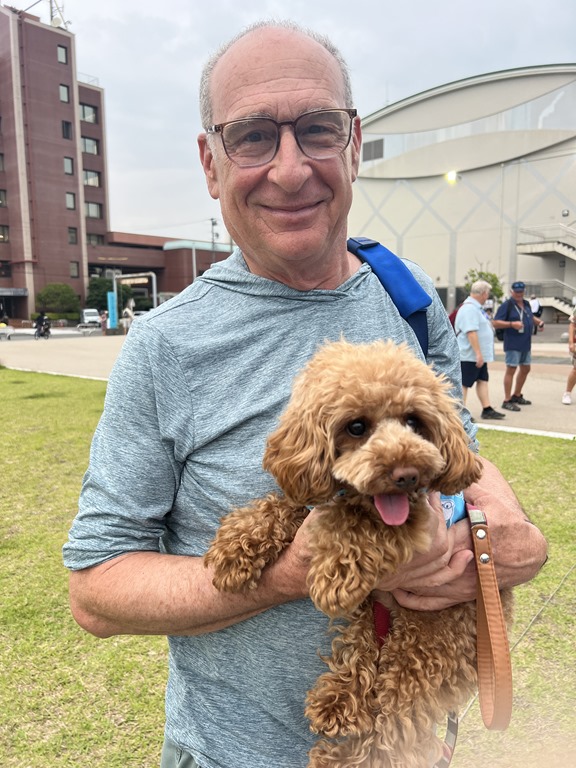
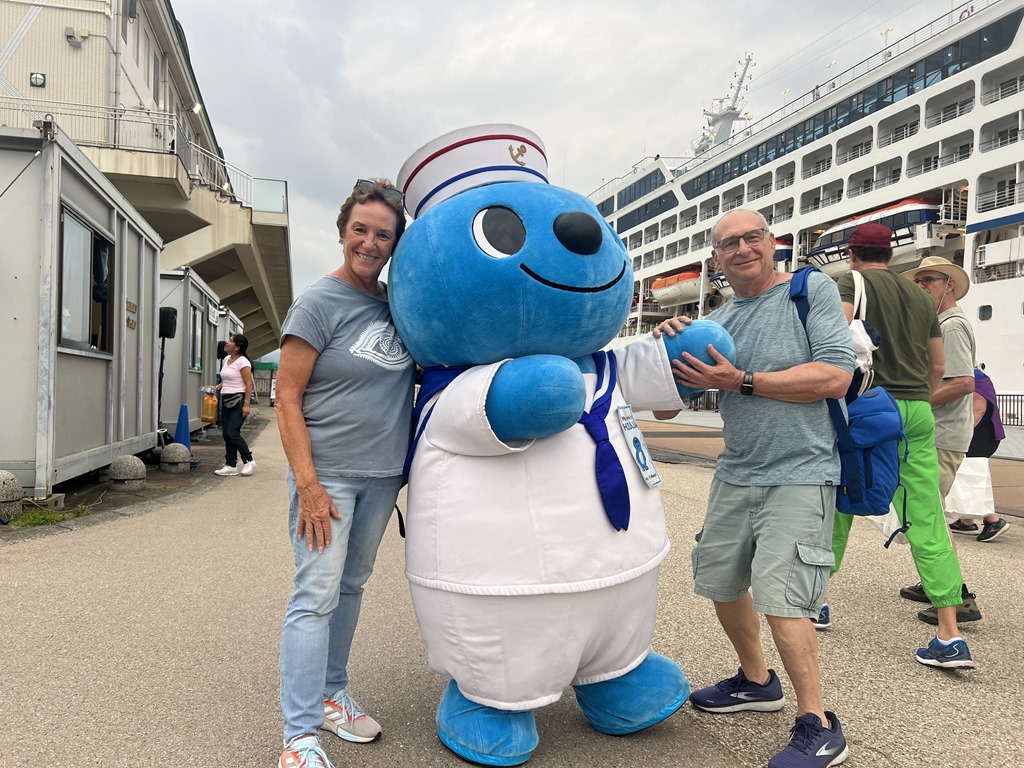
When we returned to the pier, there was a character walking around and a narrator asking us to say hello. And we saw a dog that looked a lot like our “granddog” Echo. The owner let Norm hold her. There are many small dogs here, some in strollers. We even saw some with visors on. There are also many pet stores. Large dogs are not allowed in the cities.
The next port is Tokyo.

 Pat and Norm's World Cruises and other adventures
Thank you for sharing your visit to Kobe, Osaka etc. We will be taking all of these similar tours on our visit on next year’s ATW trip. Thanks for the preview; all historic artifacts look so interesting and amazingly maintained. I look forward to visit the fish market that does not smell fishy.
LikeLike