May 2, 2024
Sad to say this is our last port on our trip before we disembark in Southampton, UK. We haven’t been to Plymouth before and it is a tender port. Our trip is an afternoon one, so we spent the morning getting our bags mostly packed, had lunch and headed to the tender platform to make our way to shore.
Our sail in this morning was very rainy and so we decided not to go out before our excursion.
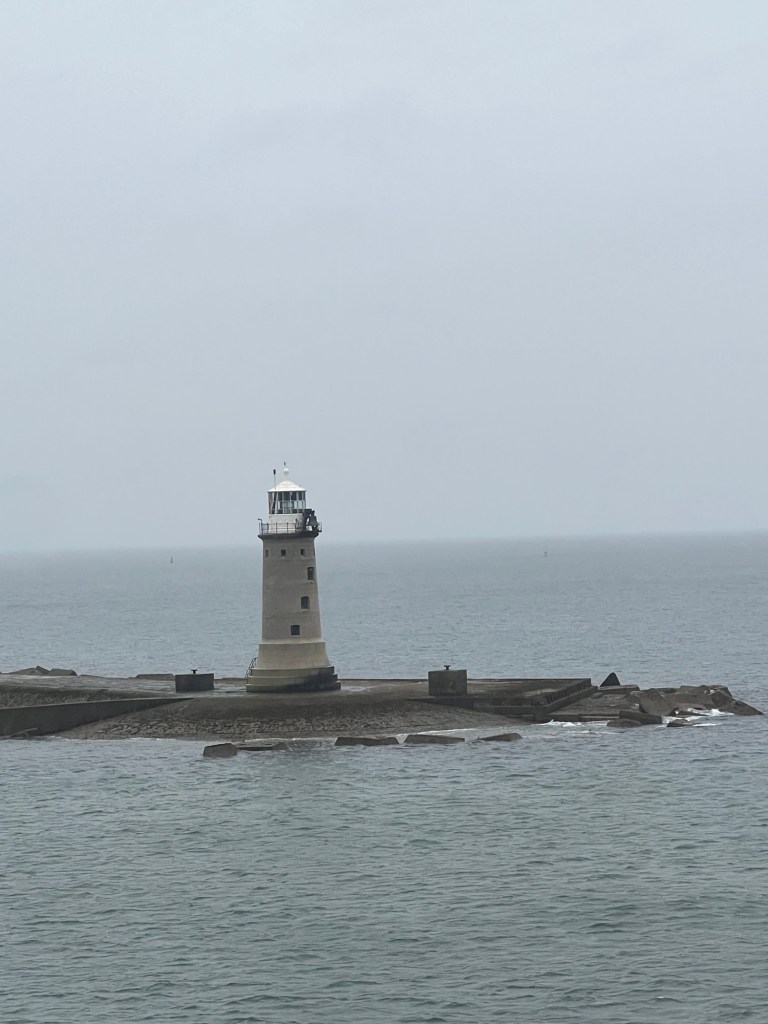
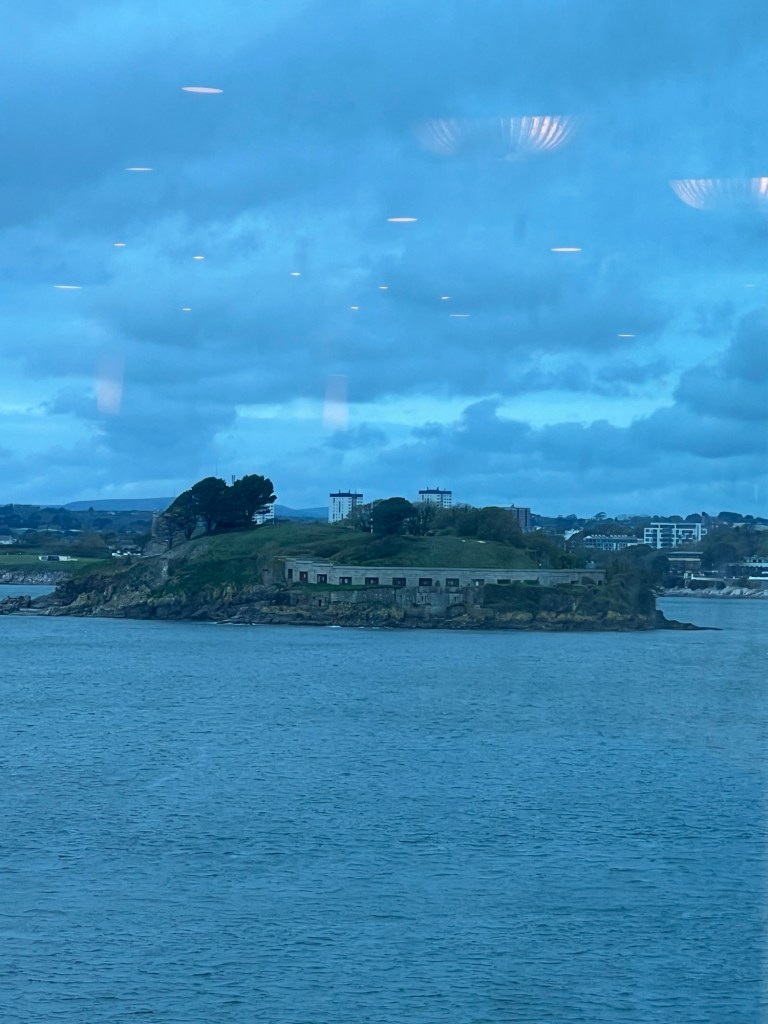
Our tour today was A Taste of Devon: Devonshire Cream Tea.
Our guide was Demaris and our bus driver was Mark. Again, driving on the narrow winding roads is really an art!
Demaris told us a lot about Plymouth and the surrounding area. You could tell she was passionate about her homeland.
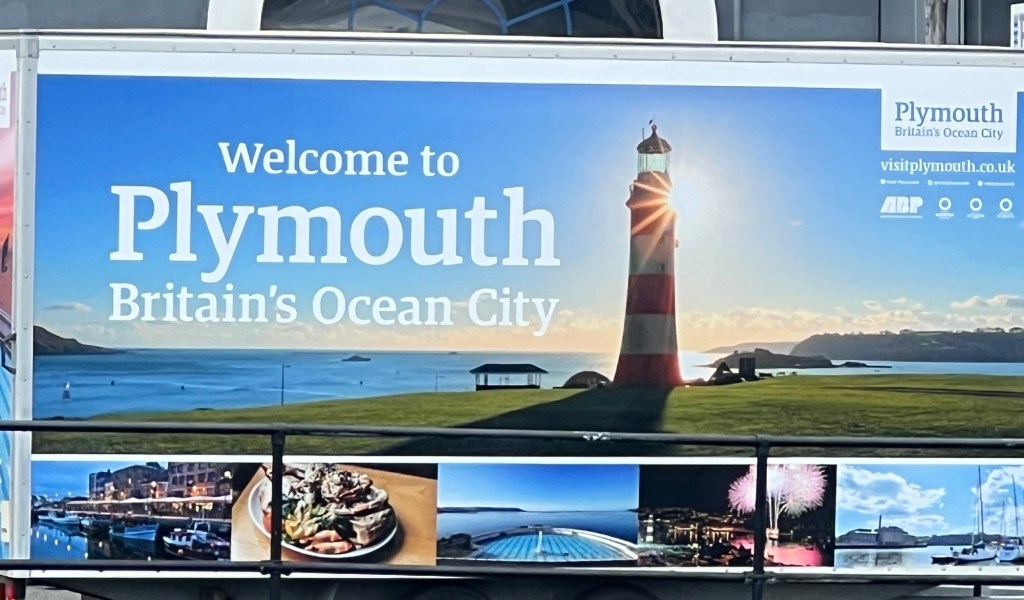
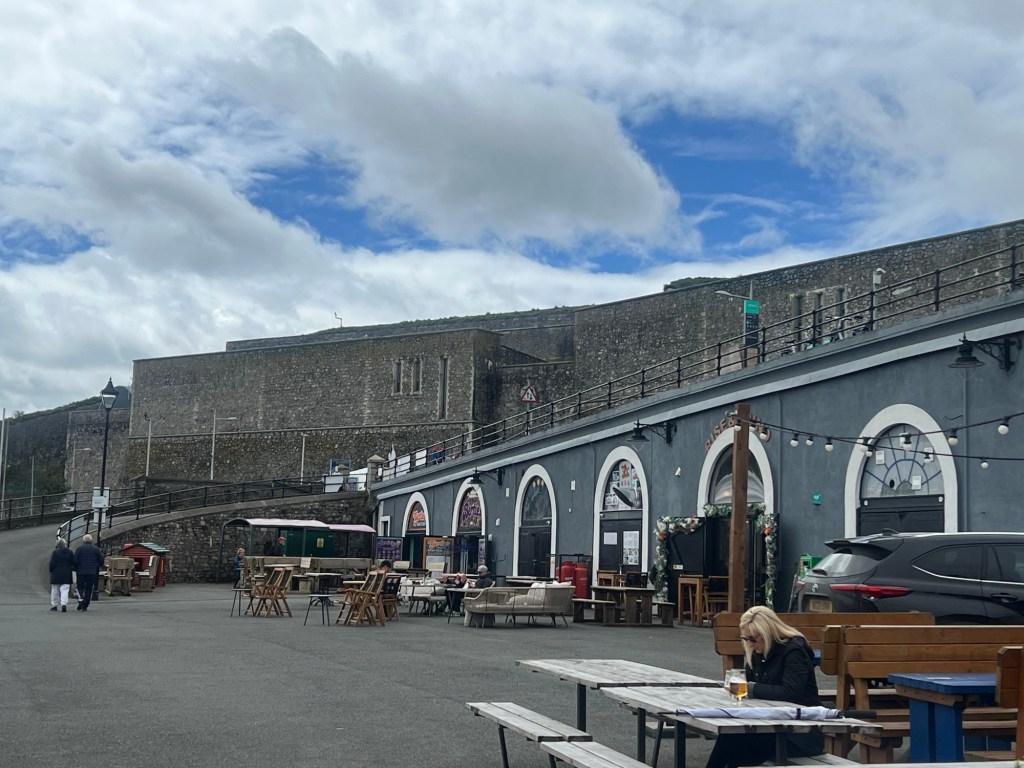
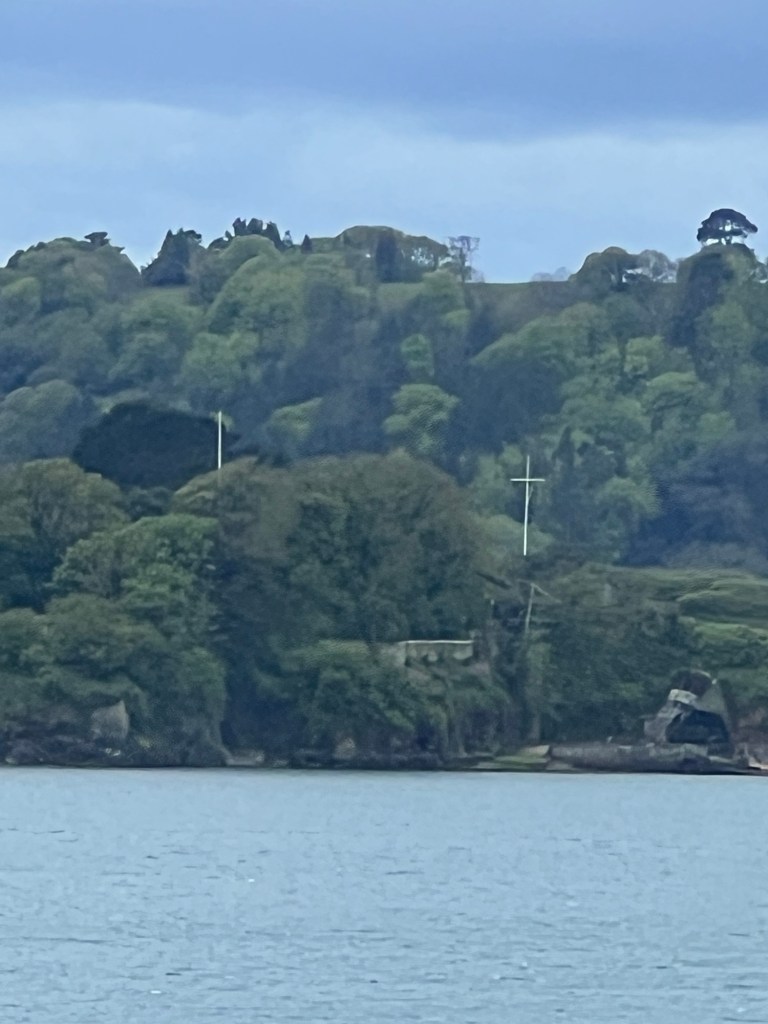
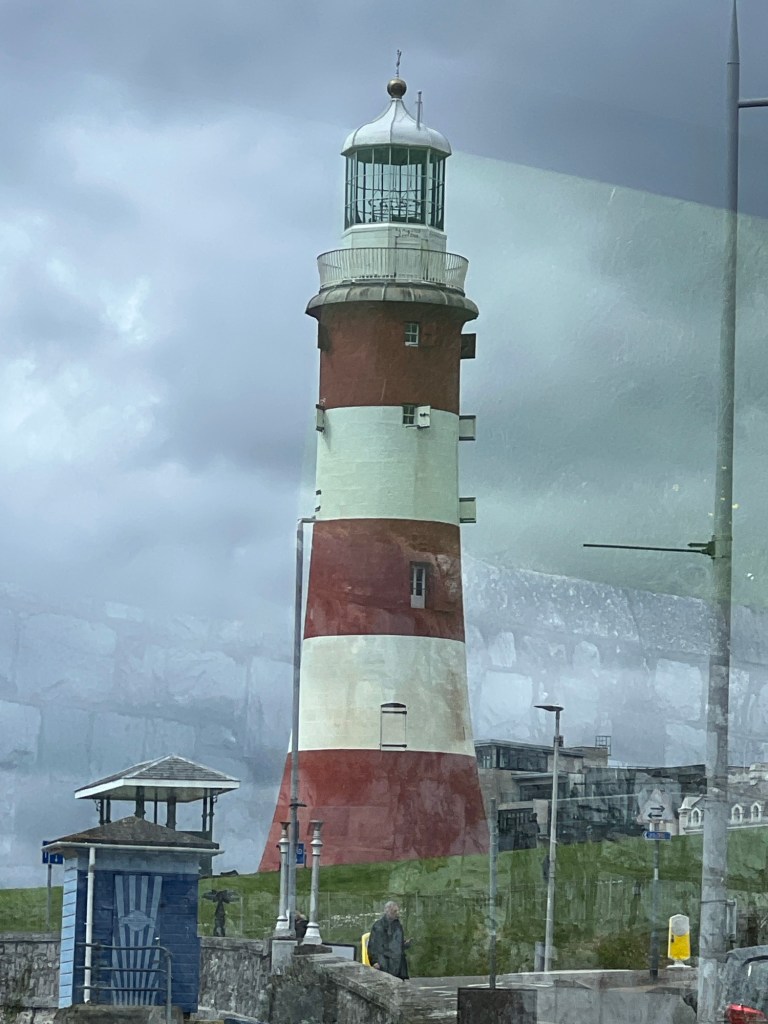

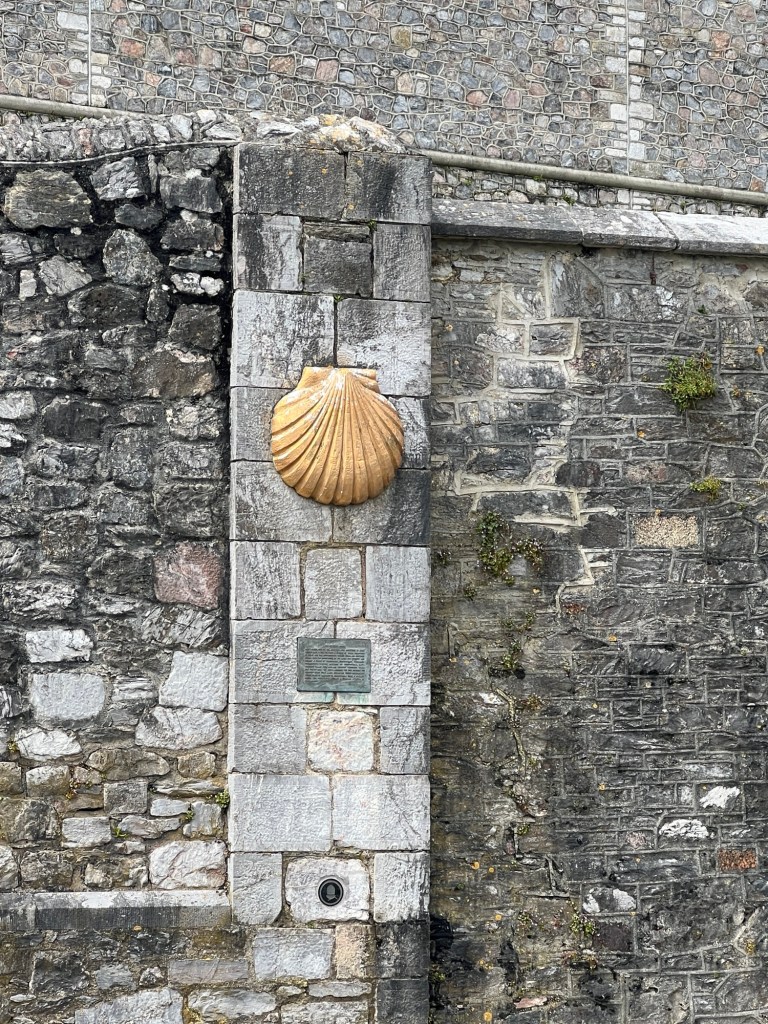
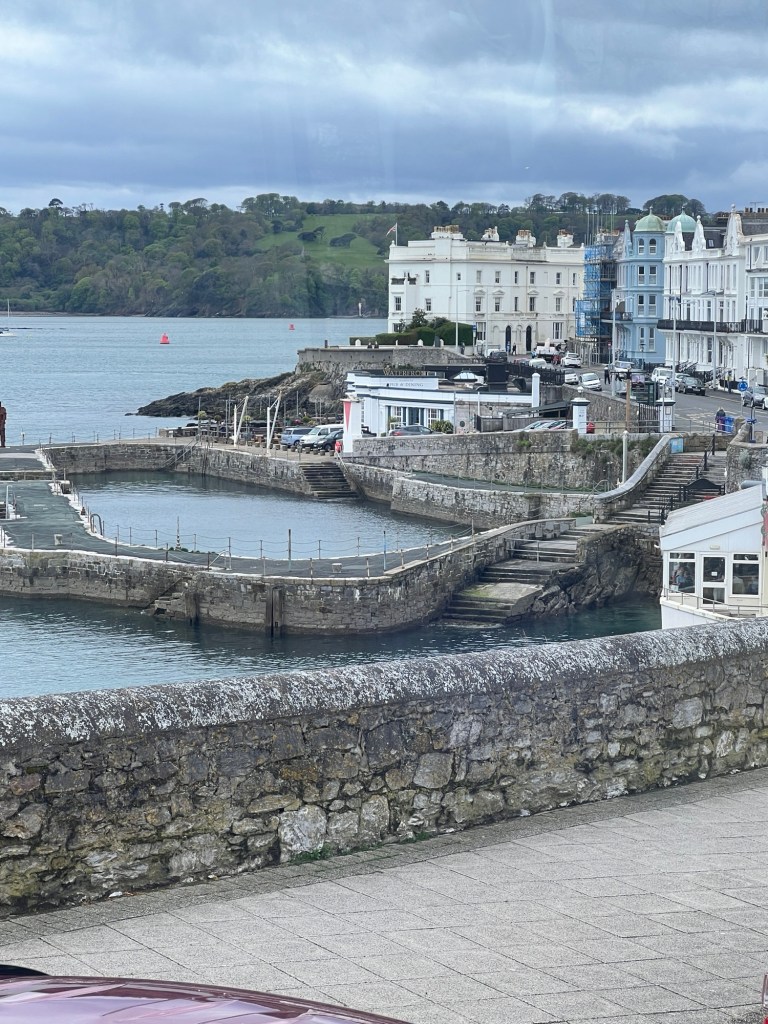
Plymouth was granted city status in 1928. In 1588 the English Navy, which was led in part by Sir Francis Drake, set sail from Plymouth to defeat the Spanish Armada.
Plymouth has a long and historic seafaring tradition. It was in 1620 that the Pilgrim Fathers finally left Plymouth after repairs on their escape from religious persecution to the New World, eventually setting up Plymouth Colony, Massachusetts.
Plymouth is the home of Princess Yachts. Boating is big here and the marinas seem very full of both yachts and sailboats.
Plymouth was heavily bombed during the war, most took place in 1941 and Demaris pointed out the few buildings that survived. Now the town is built back up and tourism is a major part of the economy. Nearly 12 million people visit Plymouth every year. The population is 265,000.
Demaris just spent several weeks in California and she was amazed that we Americans complain about the price of gas. Here it is an average of $1.60 per liter which is about $6.40 a gallon, almost double what she saw in California.
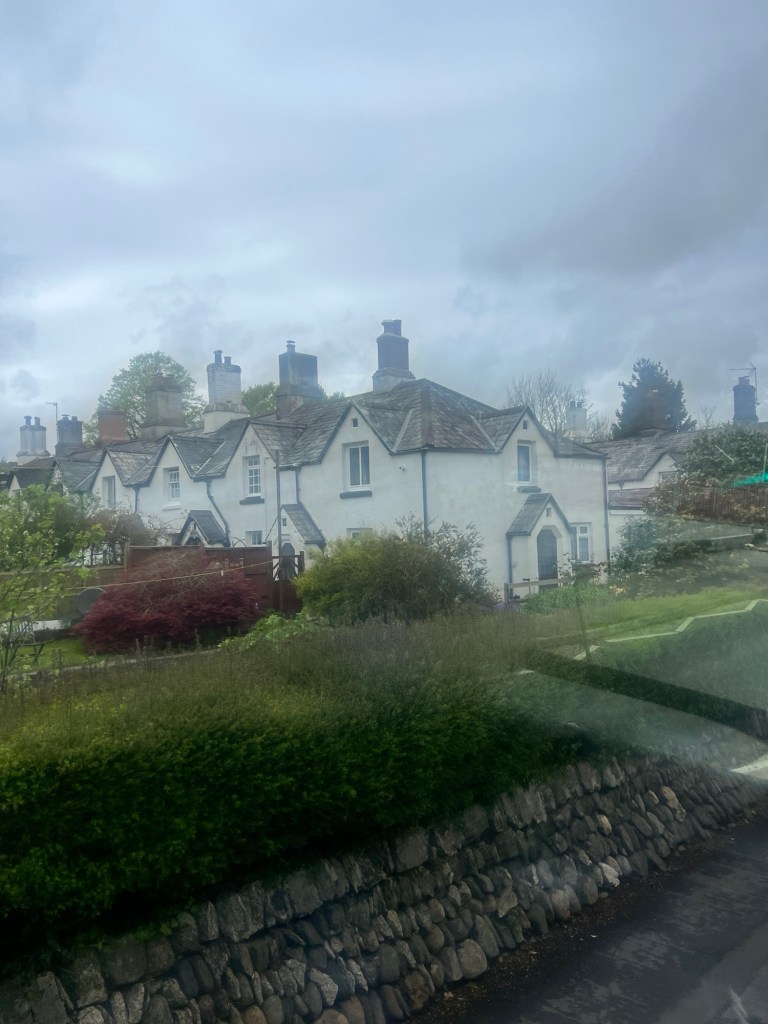
Before the tea, we headed out to Dartmoor which is a batholith (big lump) of granite. It is a stunning national park located in Devon, England. It’s known for its rugged landscape, granite tors, rolling hills, and vast open moorland. The area is rich in history, with prehistoric remains, medieval villages, and evidence of copper and tin mining. Dartmoor is also famous for its ponies, which roam freely across the moors. It’s a popular destination for outdoor activities like hiking, rock climbing, and horseback riding, offering breathtaking views and a sense of wilderness.
There is a golf course on both sides of the road and the ponies, cows and sheep freely roam on the course. Golfers must cross the road to complete the course.
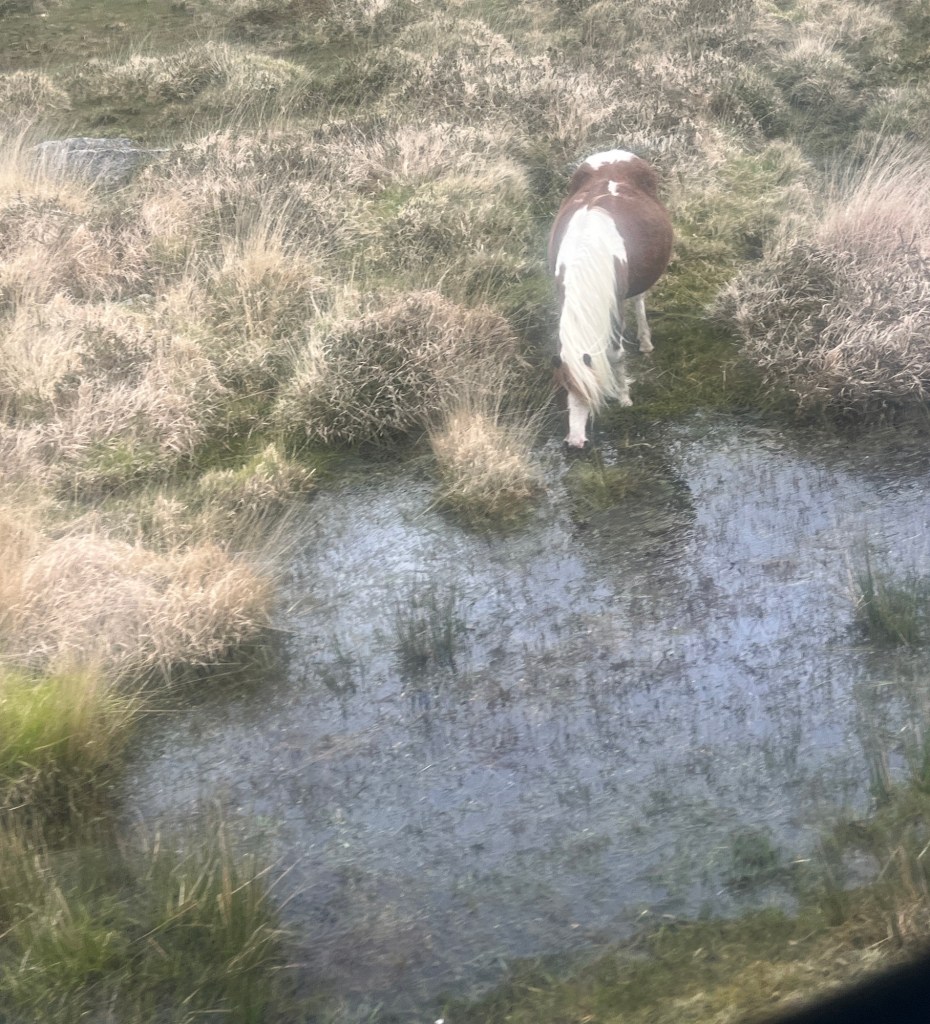
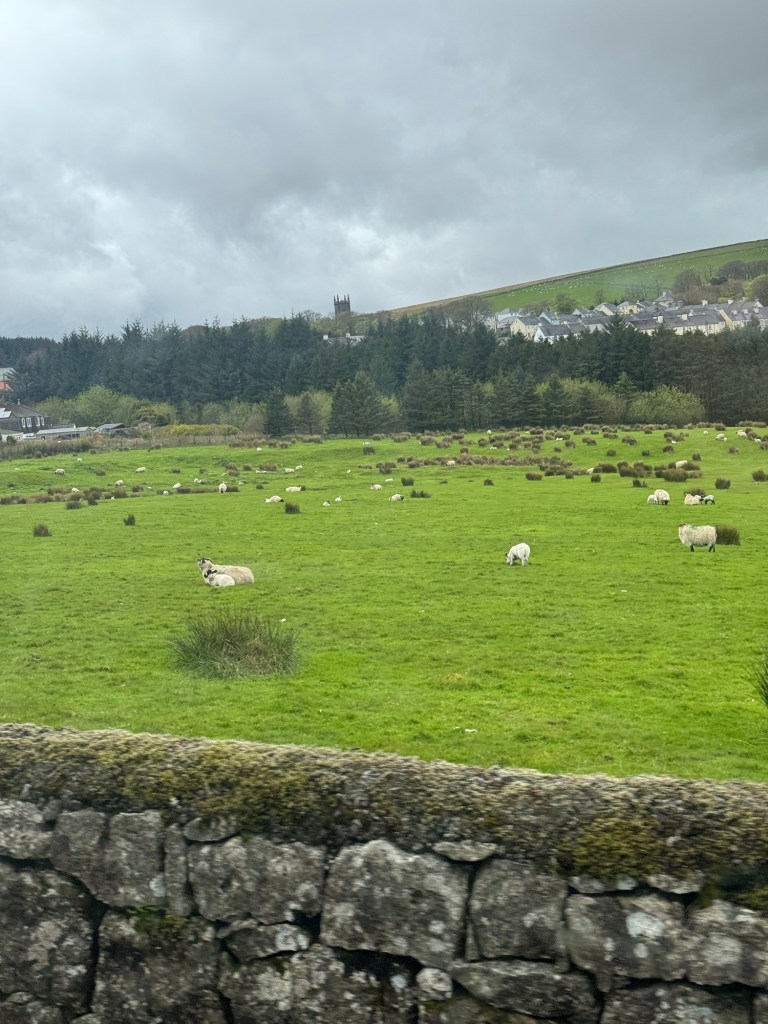
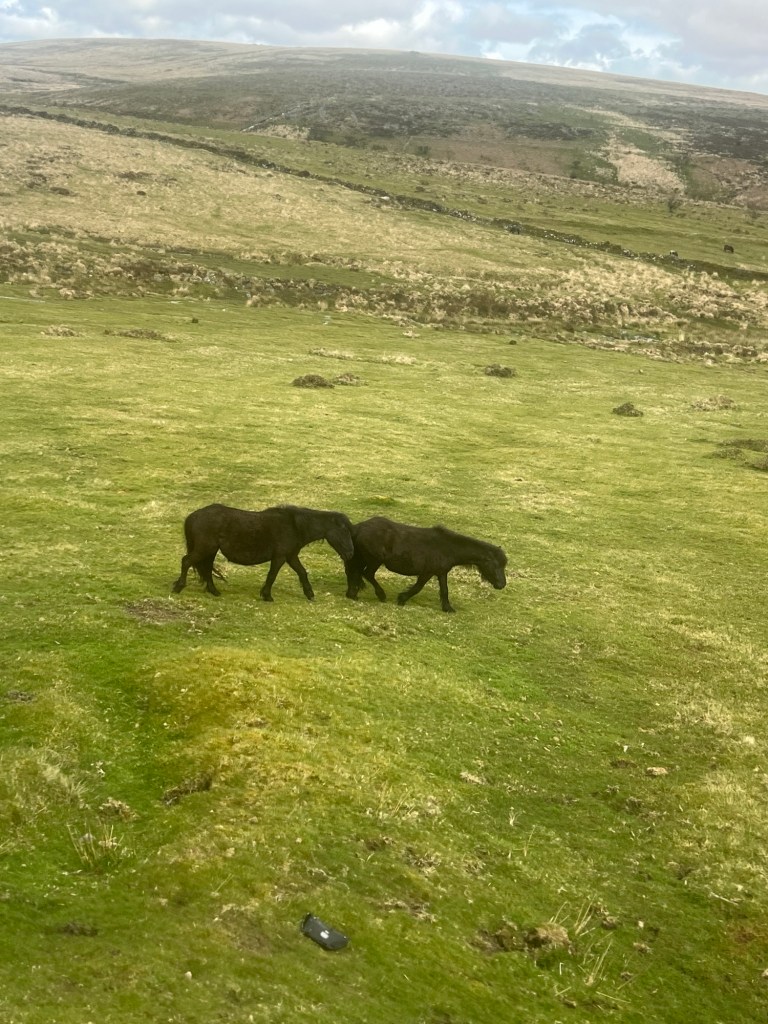
The area if full of bogs because the granite doesn’t allow for much drainage.
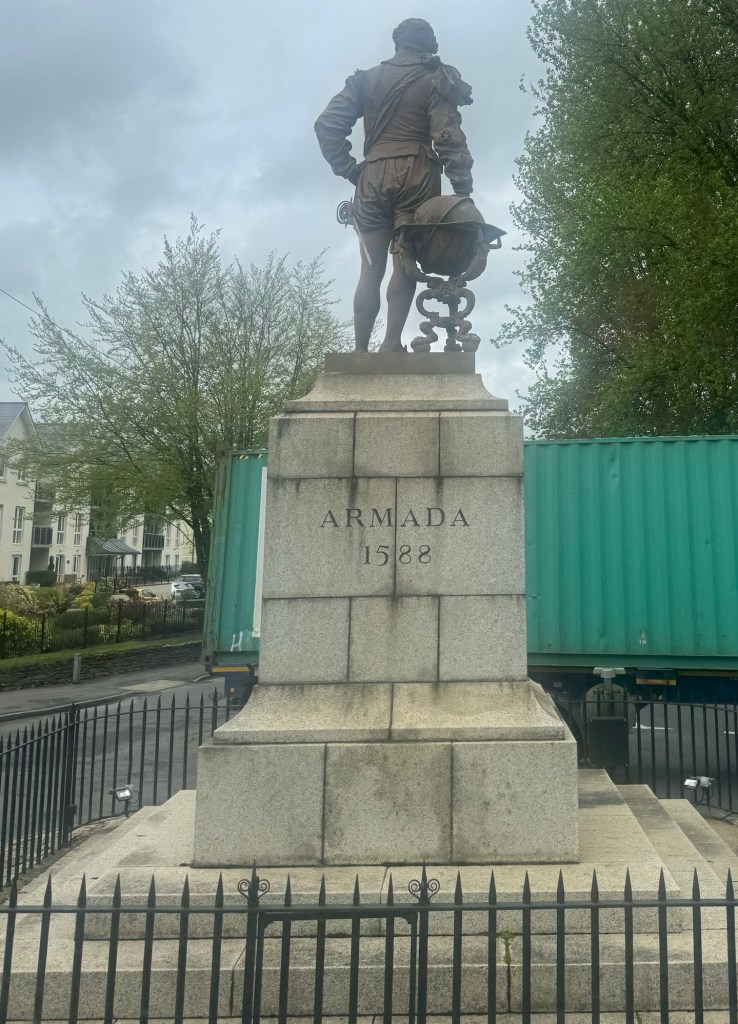
We drove through the moors and the village of Tavistock where Sir Francis Drake was born. There is a statue in his honor.
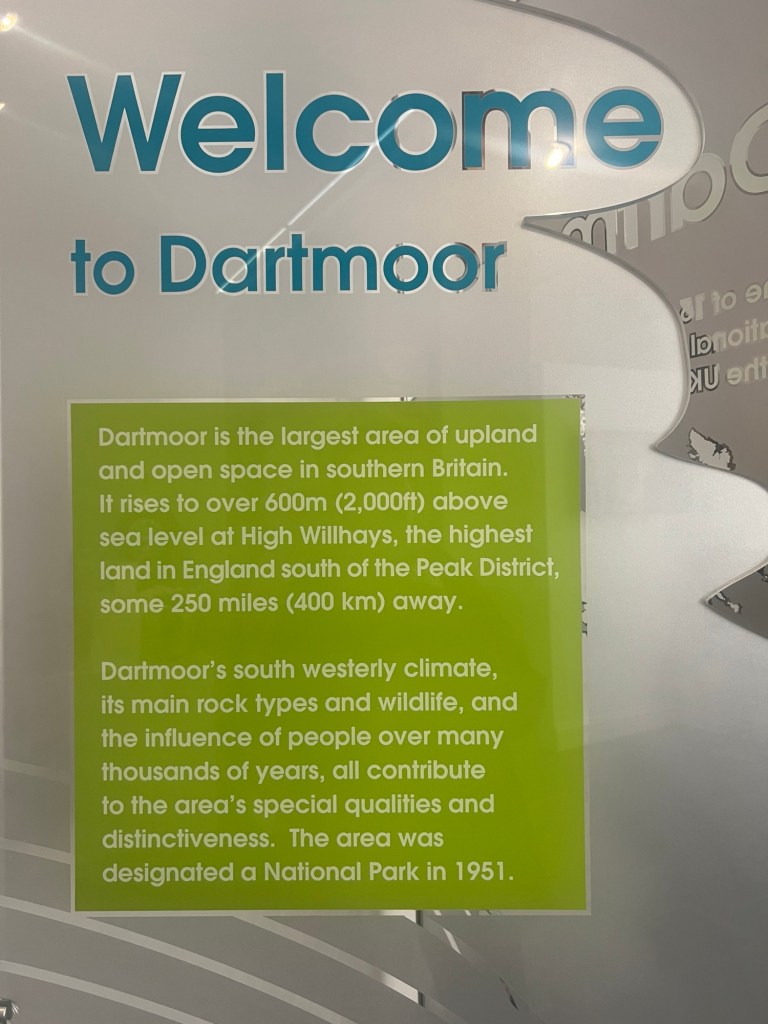
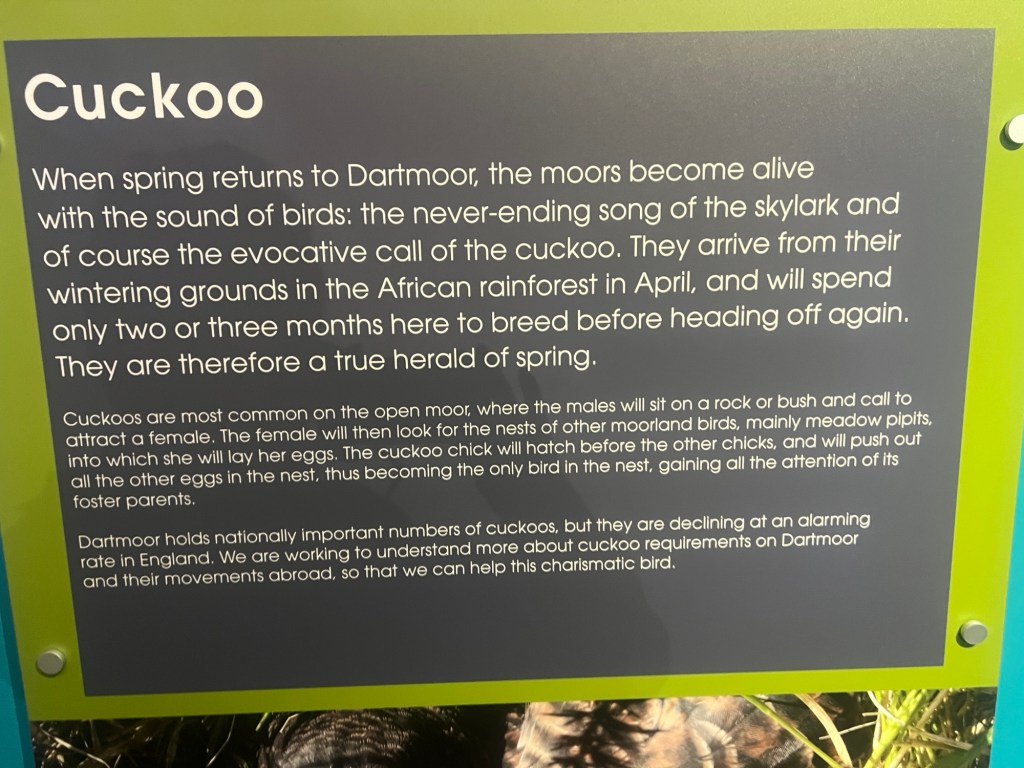
We went to the visitors center in Princetown where there was a small exhibit about Dartmoor and the National Park. Here I learned just how deep a bog is! And I learned that cuckoos are mean.


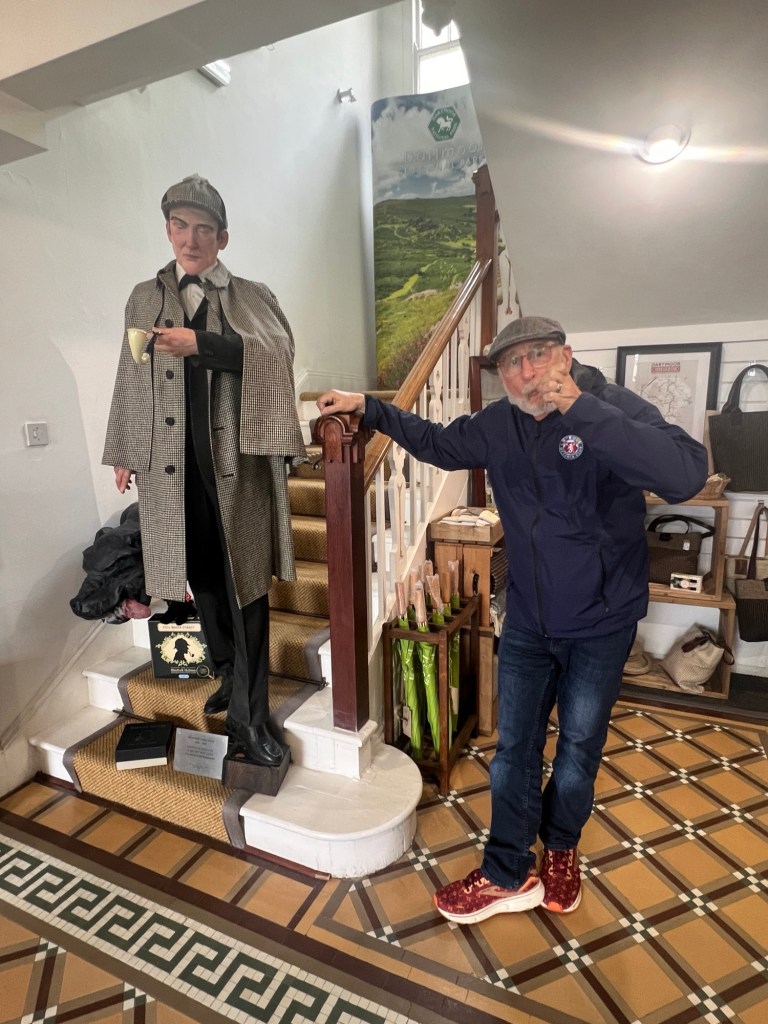
Sir Arthur Ignatius Conan Doyle was a British writer and physician in Plymouth. He created the character Sherlock Holmes in 1887 for A Study in Scarlet. He is most known in the US for The Hound of the Baskervillles. He wrote four novels and fifty-six short stories about Holmes and Dr. Watson. The Sherlock Holmes stories are milestones in the field of crime fiction. He is often referred to as Conan Doyle.
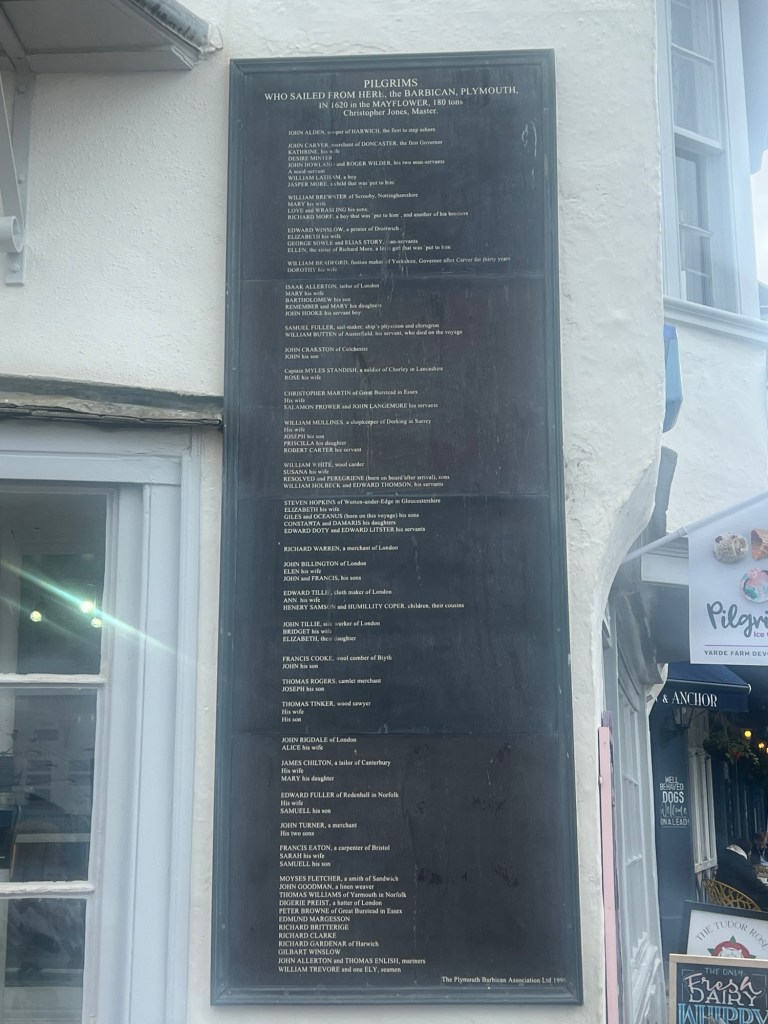
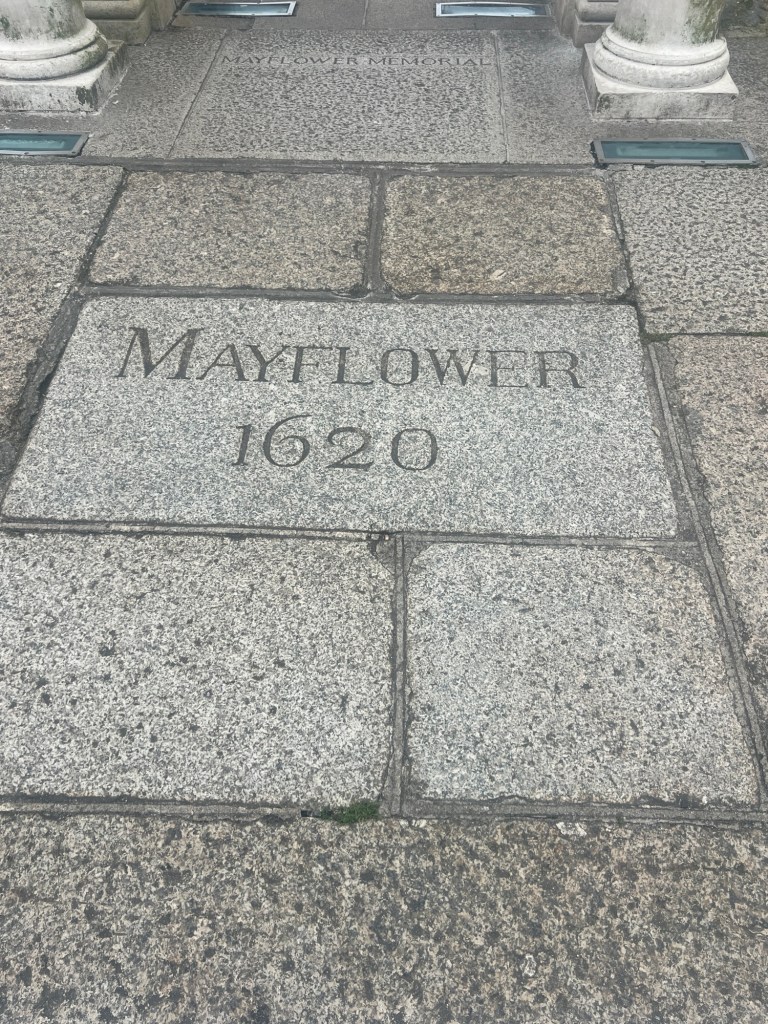
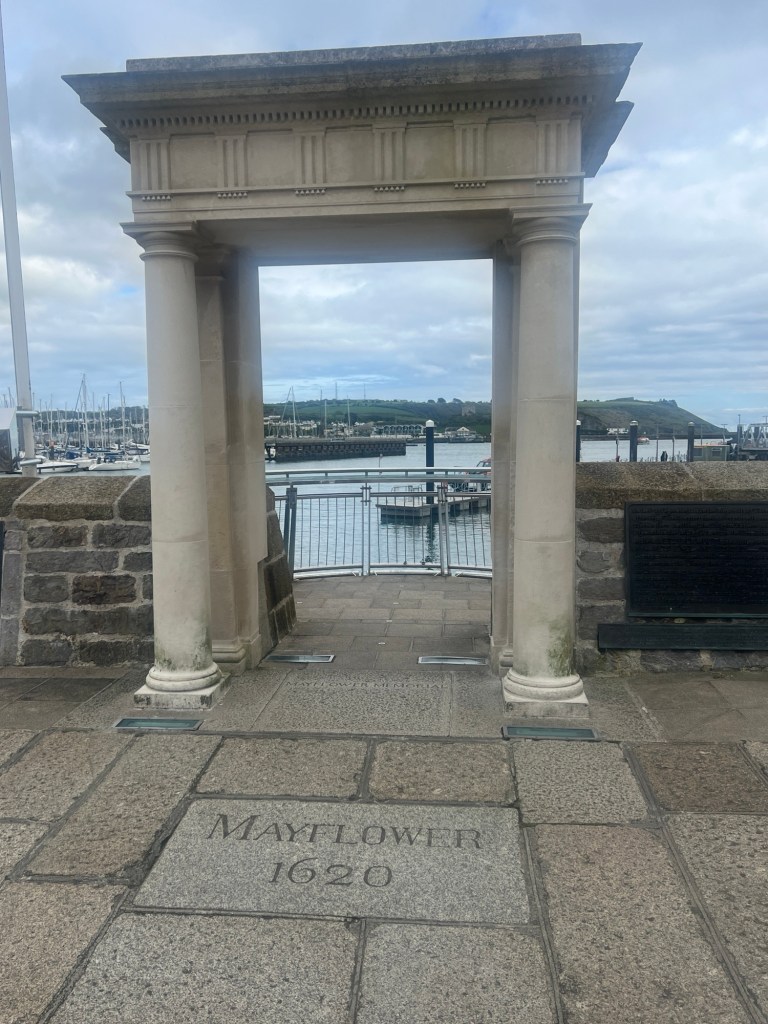
We went back to Plymouth for the Devonshire Cream Tea. We passed a plaque listing all of the Pilgrims on the Mayflower.
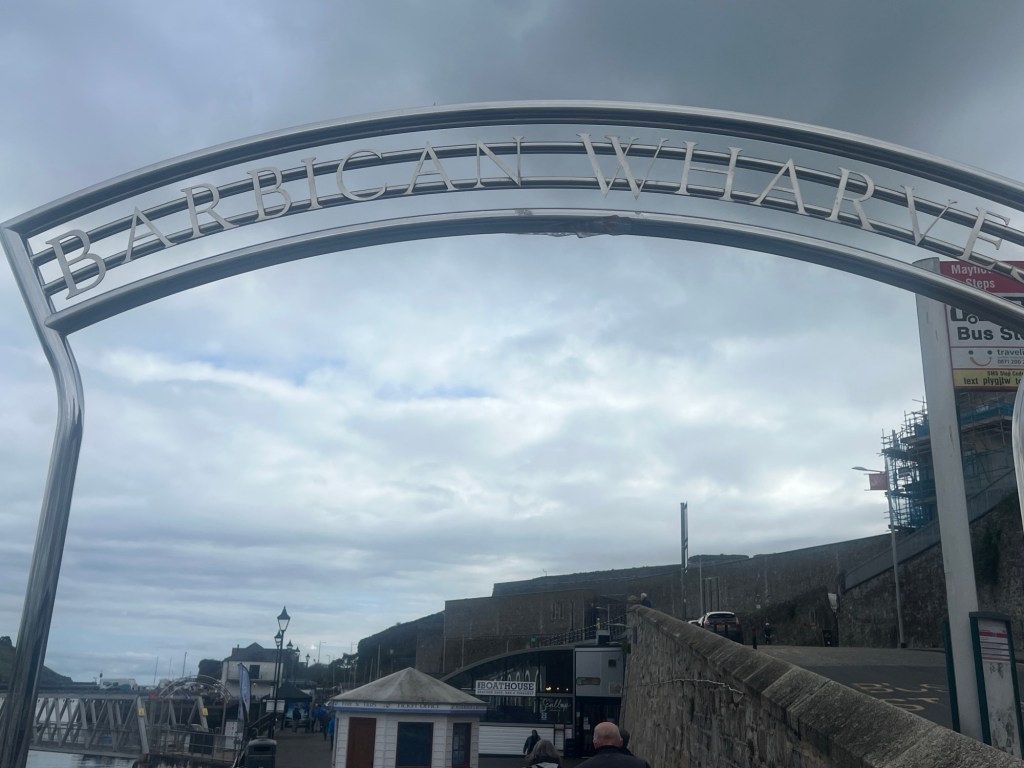
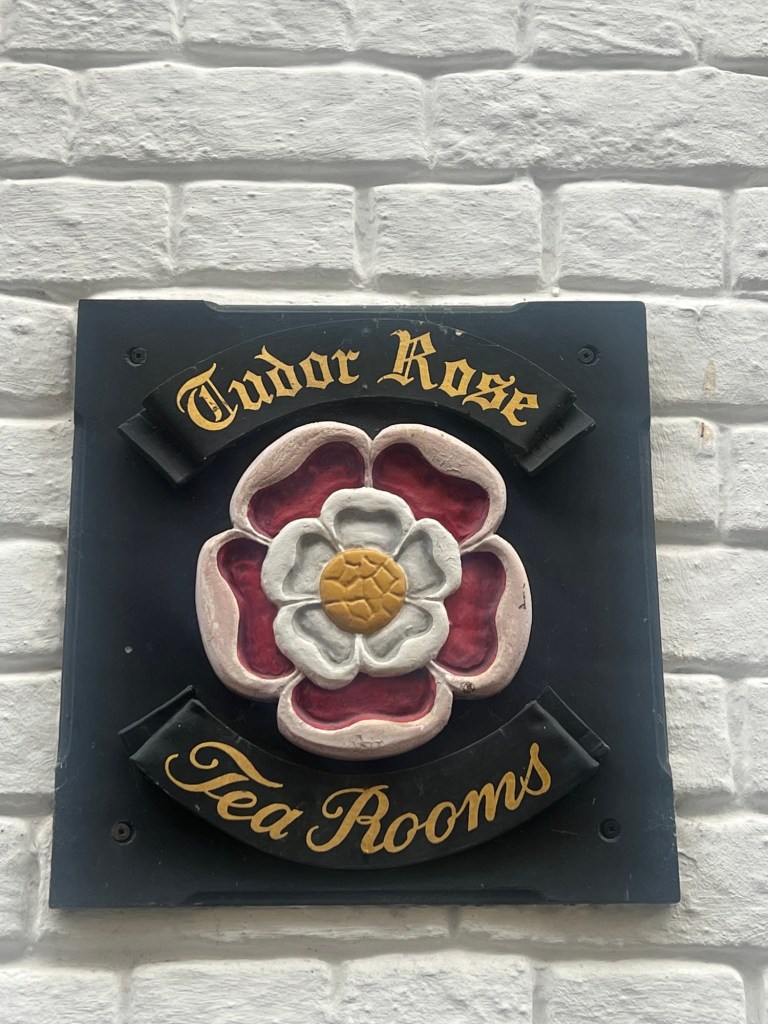
The tea was in the Tudor Rose, a delightful tea room near the Barbican Wharf. It is on the oldest street in Plymouth, inexplicably named “New Street”!

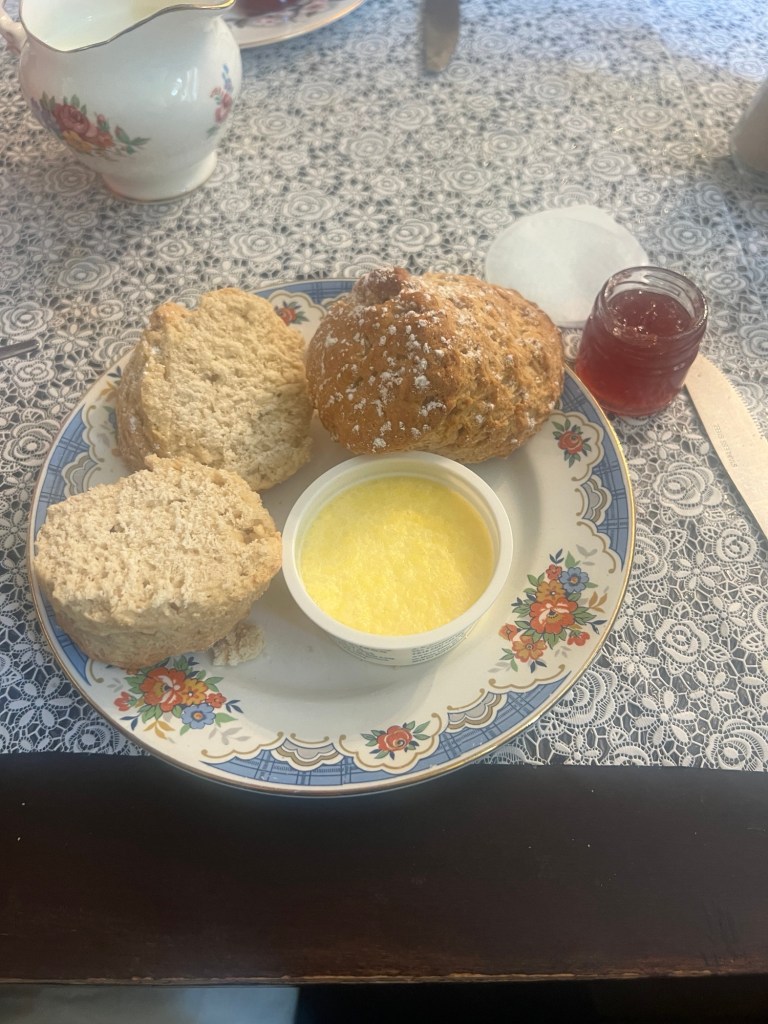
We learned that there is a big rivalry between Devon and Cornwall about how to eat the scones and clotted cream. In Devon (where we are), they put the clotted cream on the scone first and top it with jam, usually strawberry. In Cornwall they do it the opposite, jam first followed by clotted cream. Of course, each thinks theirs is the right way.
Norm wasn’t sure what clotted cream was (I have had it before and loved it!) For those who don’t know, here is the description Demaris gave us. Clotted cream is a thick, rich, and indulgent dairy product with a high fat content, typically made by heating unpasteurized cow’s milk and then allowing it to cool slowly. This process causes the cream to rise to the surface and form “clots” or thick cream. It has a smooth, velvety texture and a slightly sweet flavor. Clotted cream is a traditional accompaniment to scones and jam in the English tradition of cream tea, and it’s also used in desserts and baking.
There is no cream in the tea – Cream tea refers to tea with the scones and clotted cream.
We each got two freshly baked scones, the clotted cream and the jam. The tea was hot and served in tea pots covered with tea cozies that are hand knotted by the owner’s grandmother. They are designed to insulate the teapot, helping to keep the tea inside warm for a longer period of time. Each table had a different one and there were many others on display, including the ones representing the Royal Family!


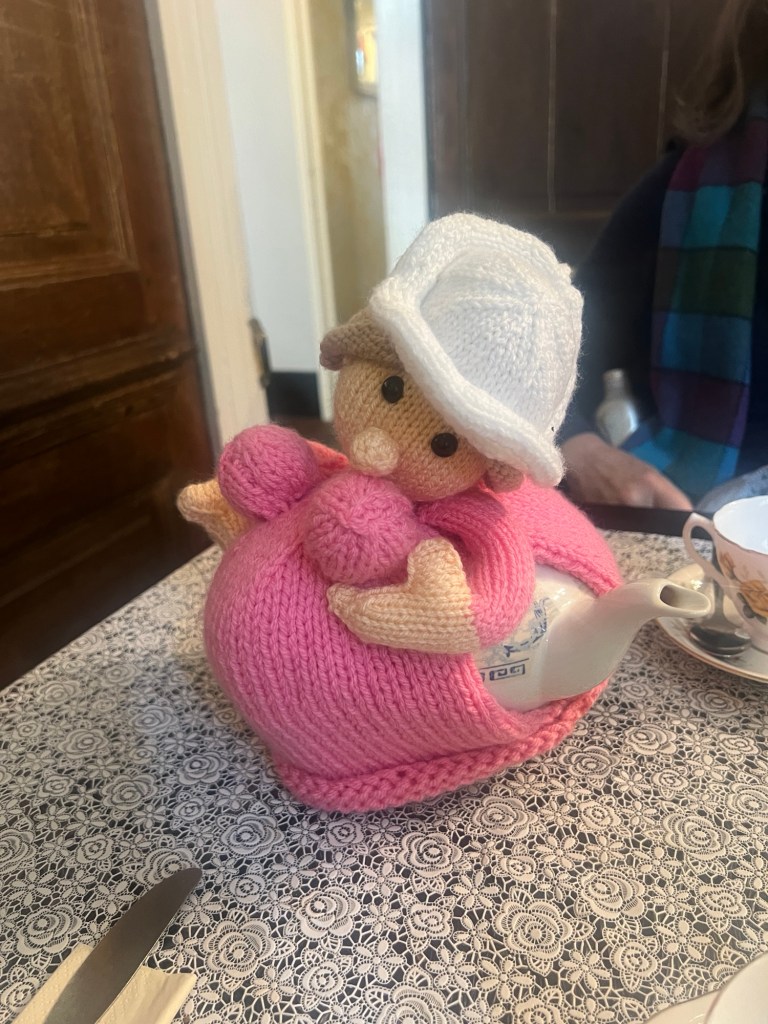

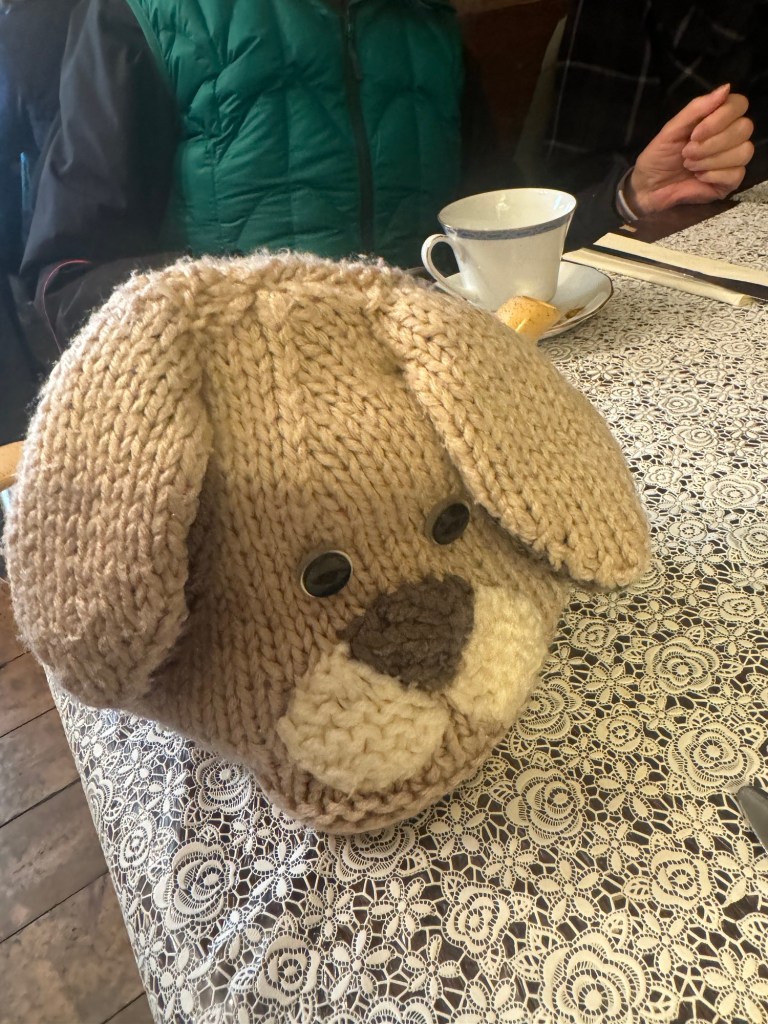
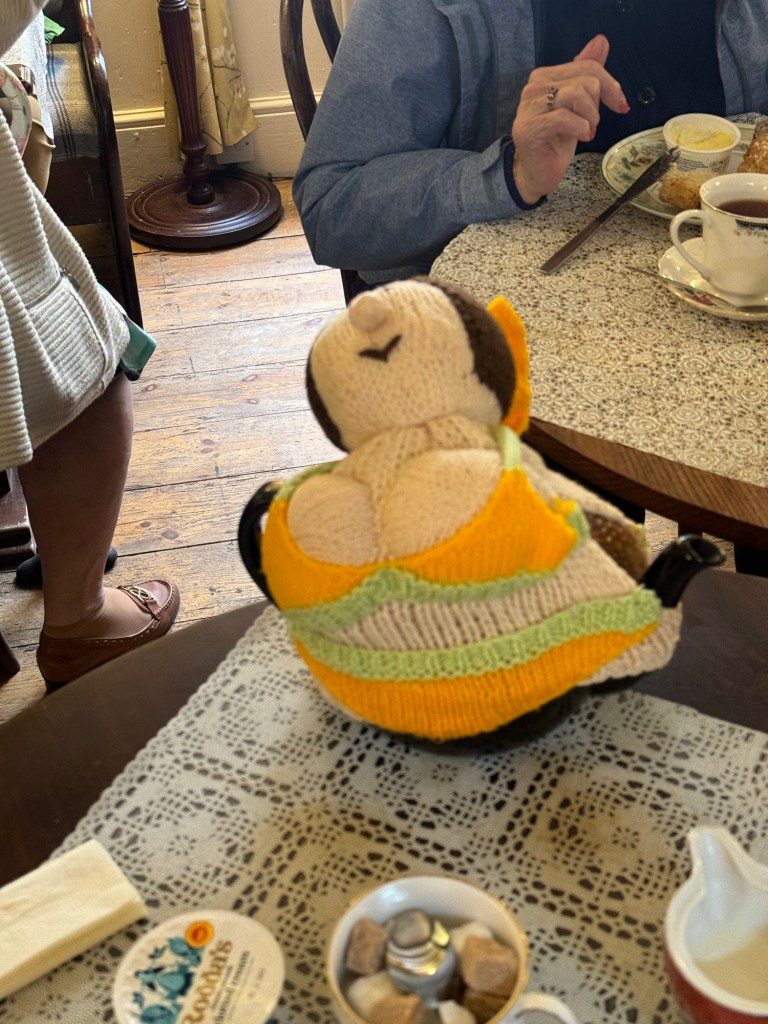

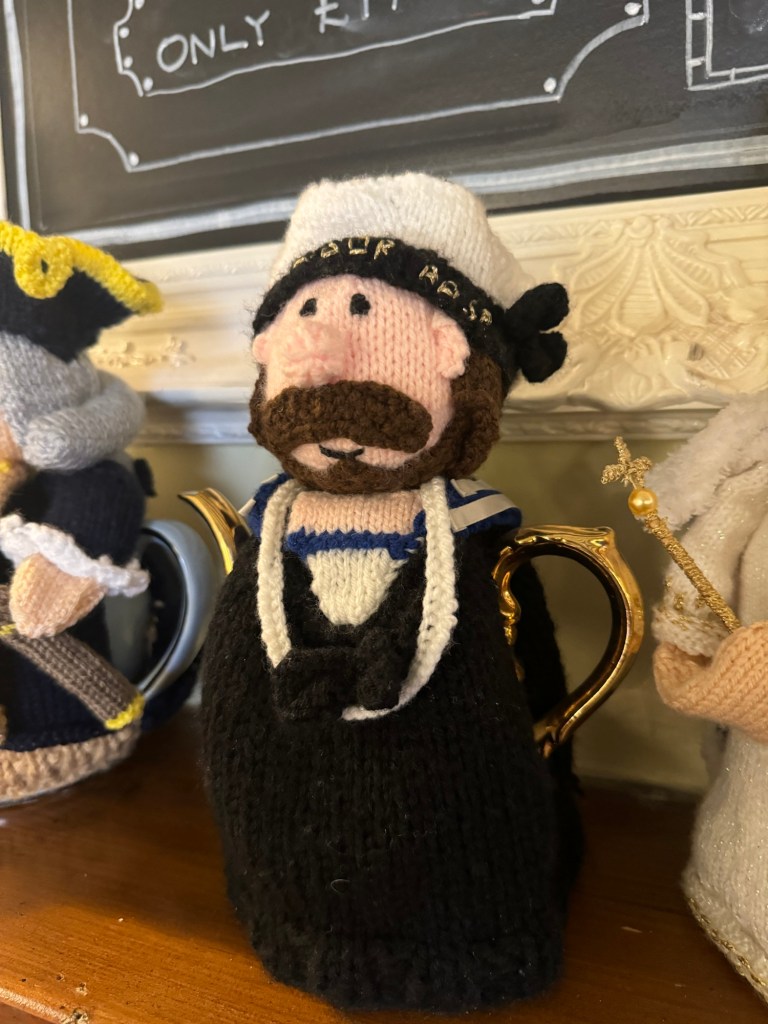
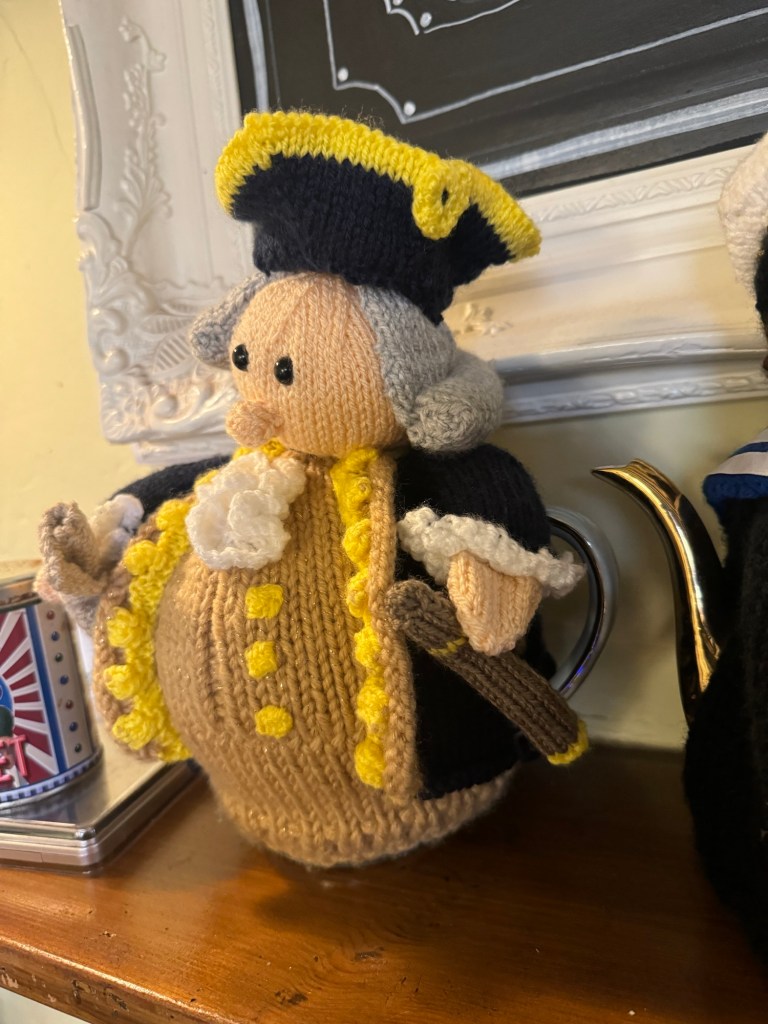
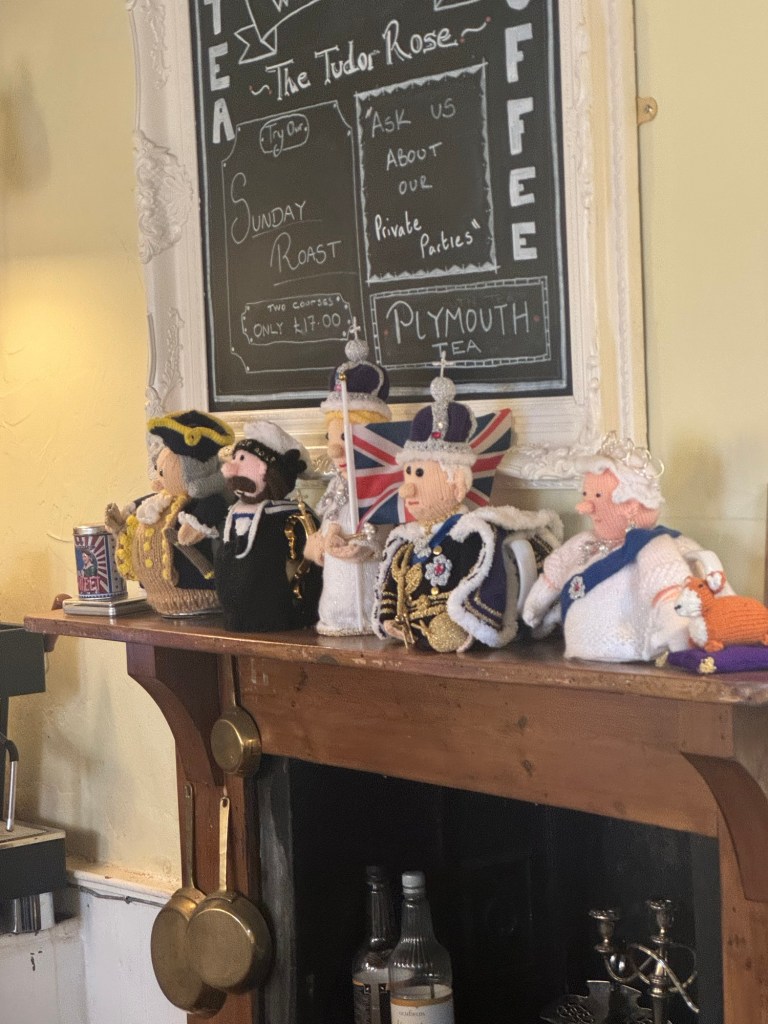
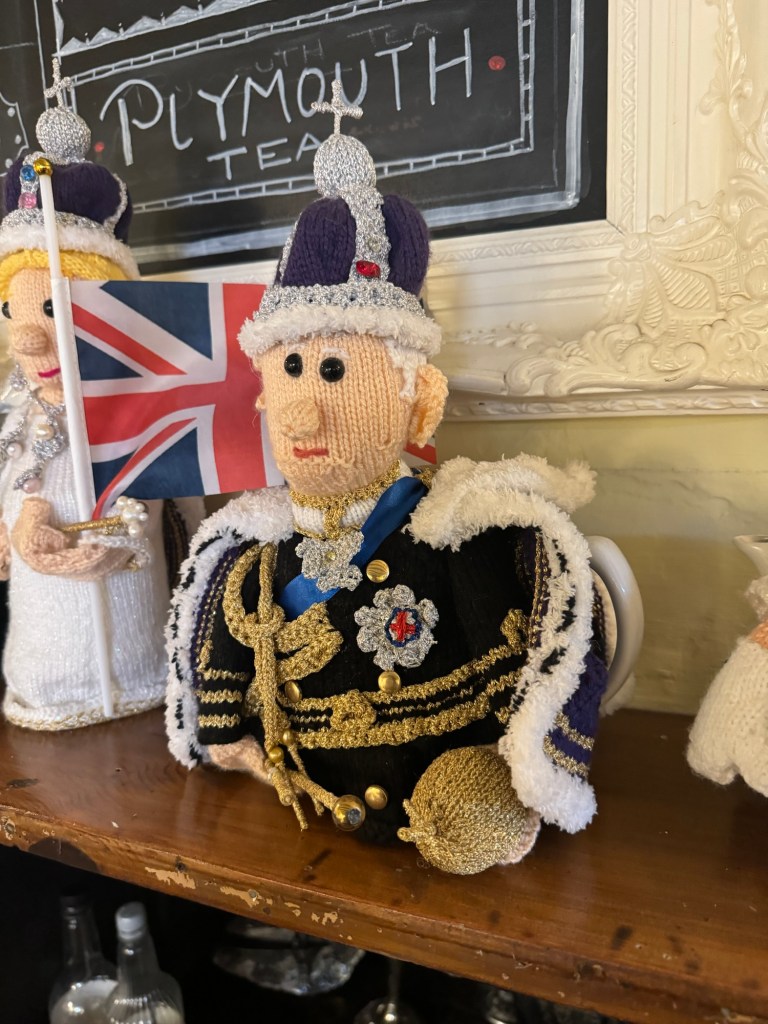
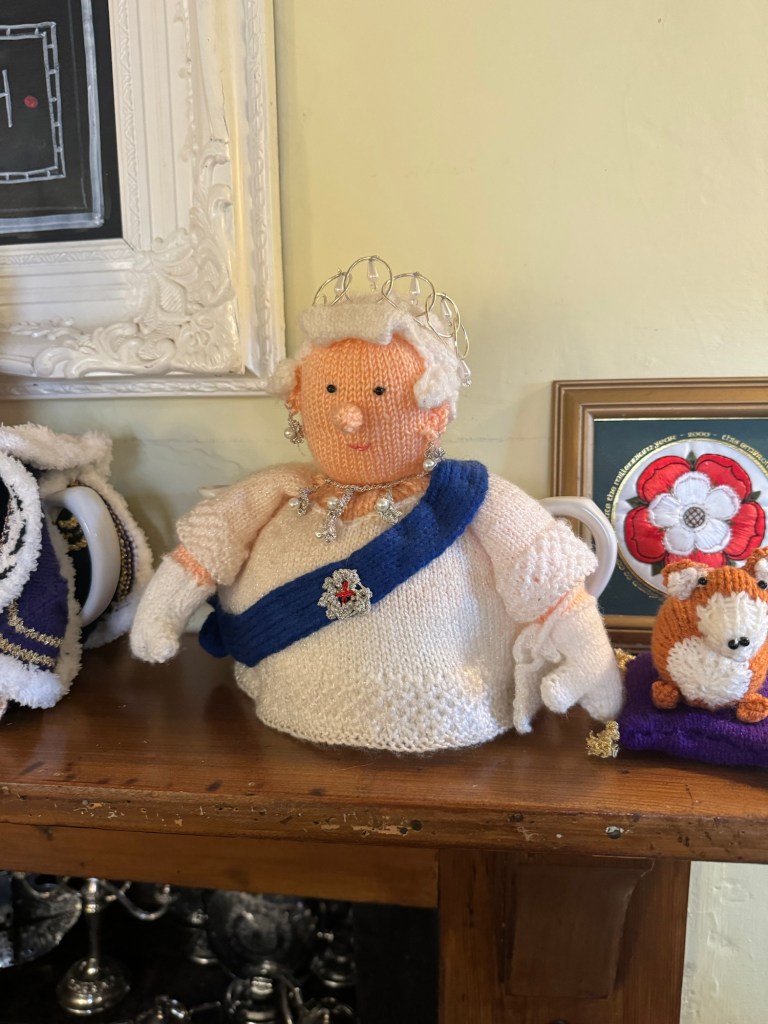
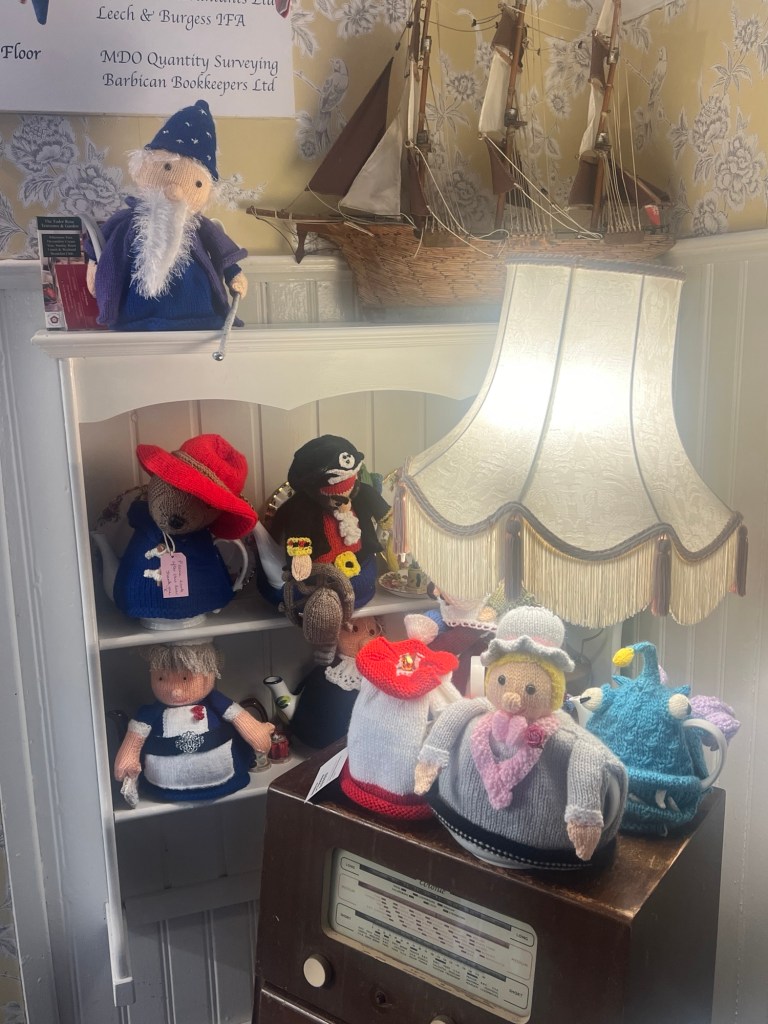
The tea room was delightful, inside and out!

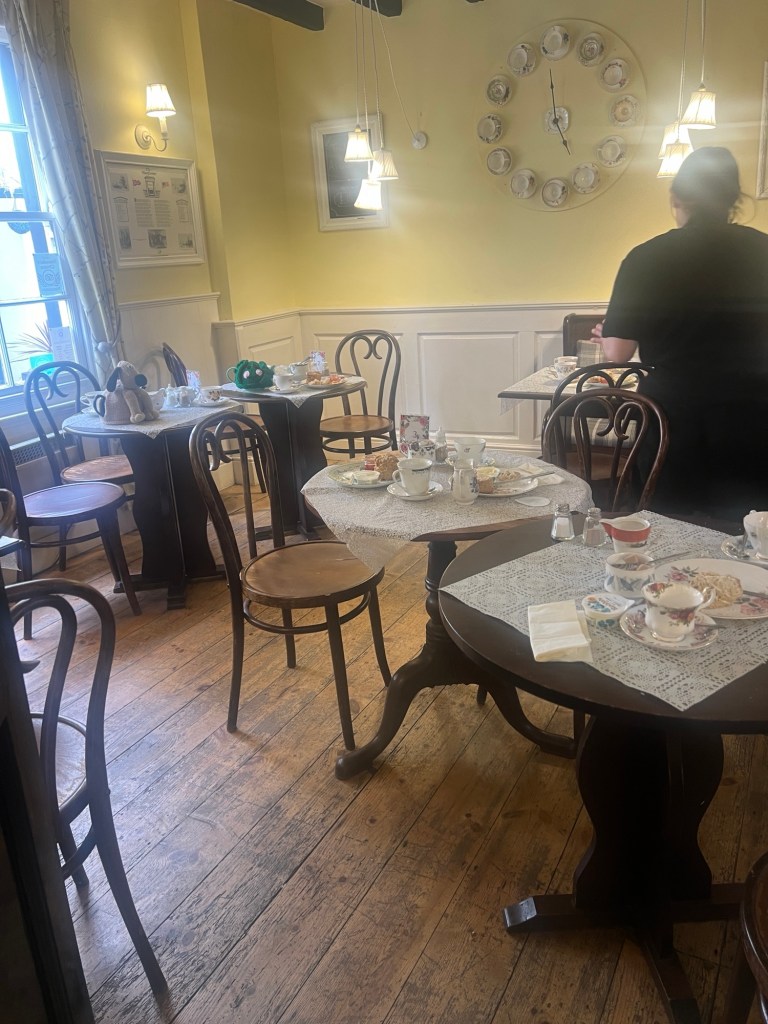
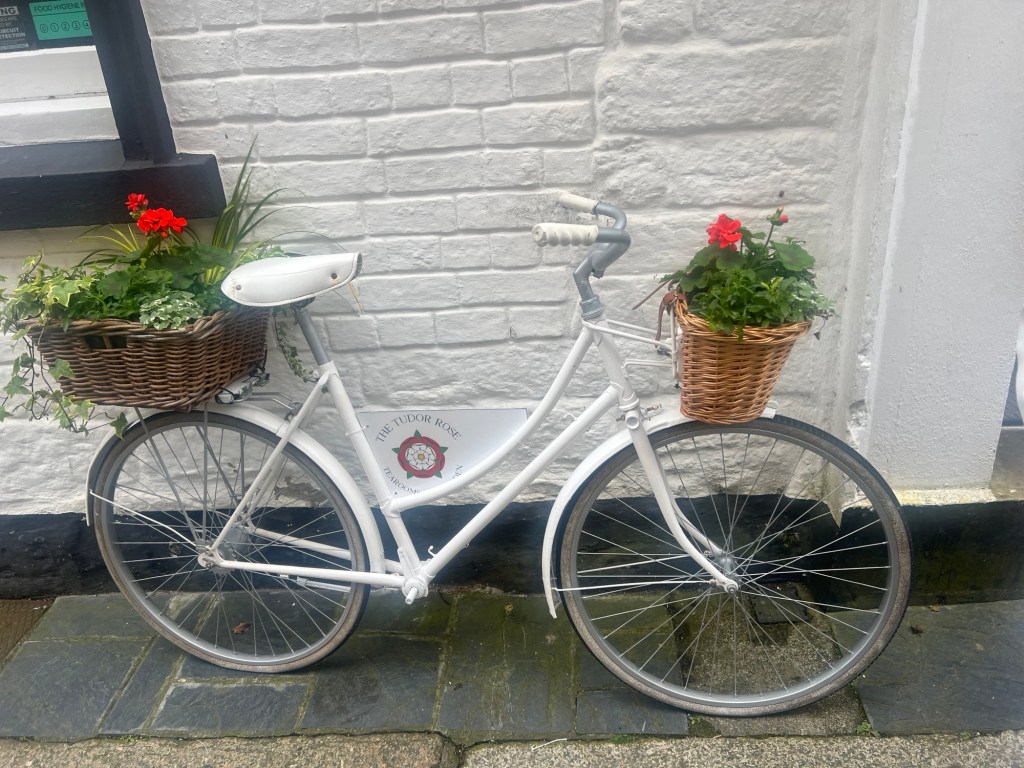
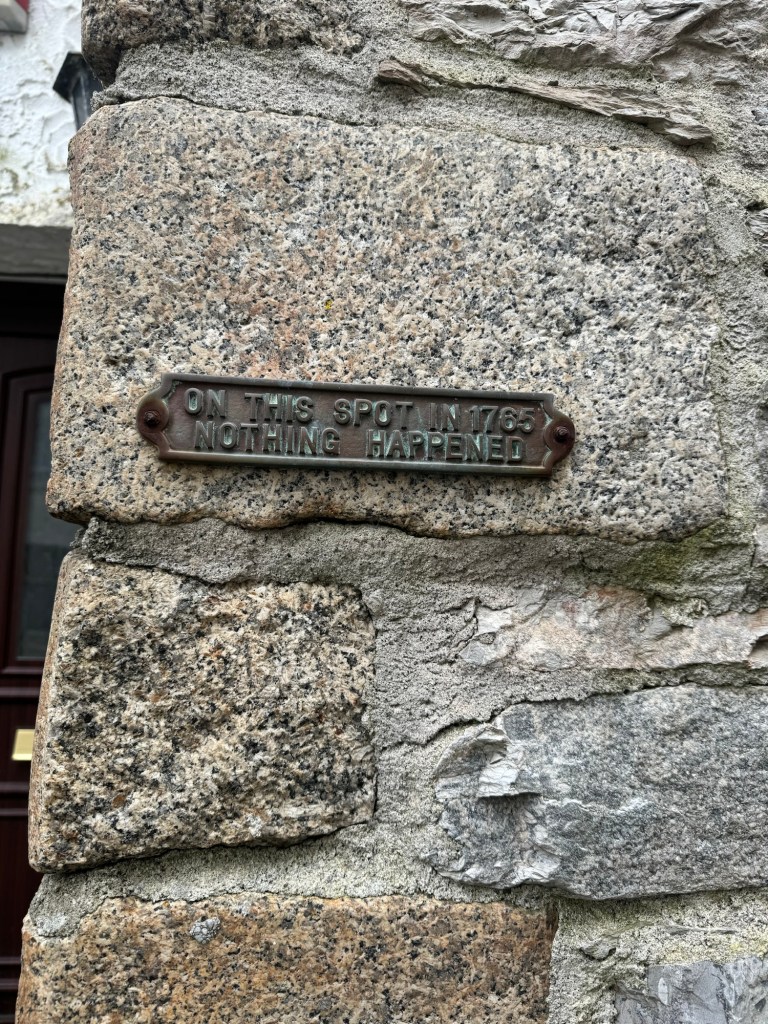
We calked back to the ship, finished our packing, had a very light dinner and watched Michelle Montuori’s show. Tomorrow we disembark in Southampton at around 7 to take the coach to Heathrow where Norm will fly back to West Palm Beach and I will head to Madrid for an ICF leadership meeting. I have the weekend free before the meeting starts and didn’t think it would be smart to fly home and turn right around and fly back to Madrid. Lucky me, I snagged tickets to the Madrid Open doubles final and women’s singles final!
And just like that, our 37 day adventure ends. Goodbye Sirena, friends and crew still aboard and those leaving for home. I know we will meet again somewhere around the world.

 Pat and Norm's World Cruises and other adventures
Safe travels you two! We have so enjoyed the accounts of your 31-day sail. Thank you for sharing and enjoy your continuing adventures in Spain!
Marie & Ed
LikeLike