April 16, 2026
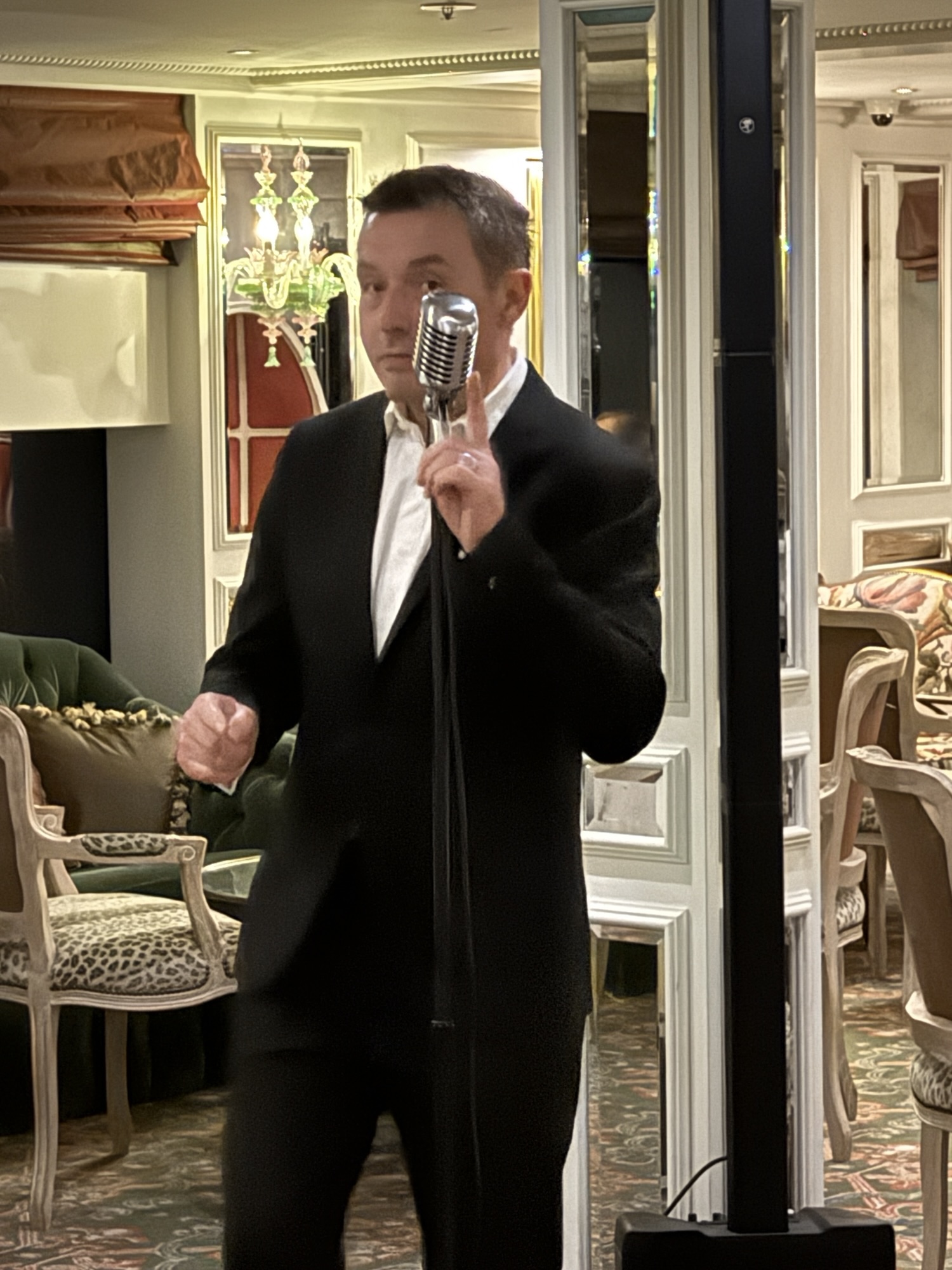
Last night, after dinner, we were entertained in the lounge by Chris the Crooner. He had a really good voice and did a lot of Buble, Sinatra and Great American Songbook selections.
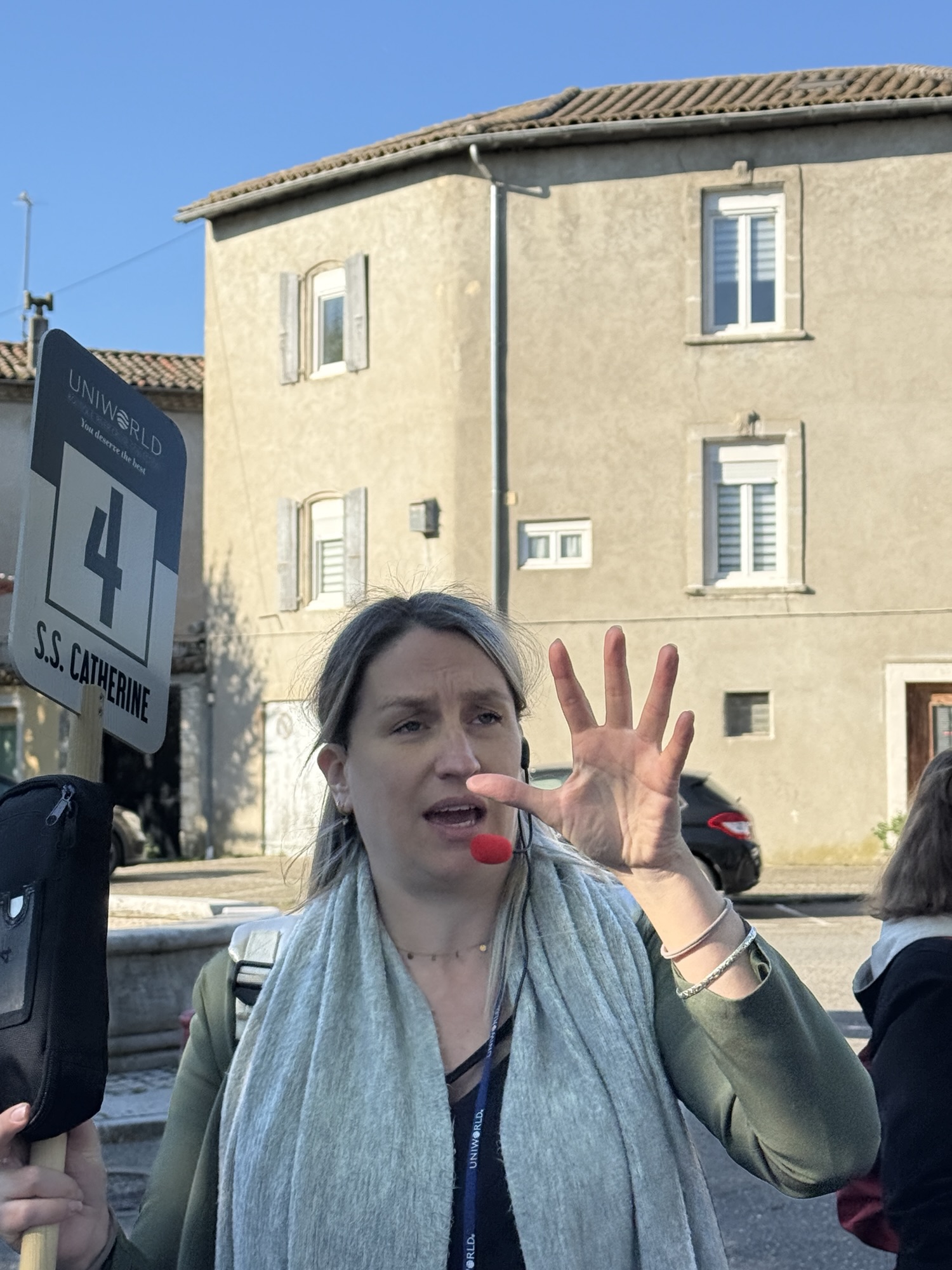
Our day in Viviers started with a walk in the Ardeche village. We had Elsa as our guide again and she was terrific. Uniworld keeps the groups small, has a “soft walker” or as some call it “gentle walker” group for those who want to go slower, skip some of the big staircases, etc. They also use the quiet box system where all of the guides have a set with a microphone and we all have rechargeable devices that we charge every day when we return from tours. This makes the tours very easy for all to hear even when we are in crowds.
Viviers is a beautifully preserved medieval town overlooking the Rhône. Elsa again mentioned the sides of the river rivalry and said that on this side is the farmers and the other side is the posh! All in good fun it seems. She said that a lot of people she meets wonder what there is to see in Viviers – and she certainly showed us. Only about 6000 people live here so it is very quiet compared to Paris or Lyon.
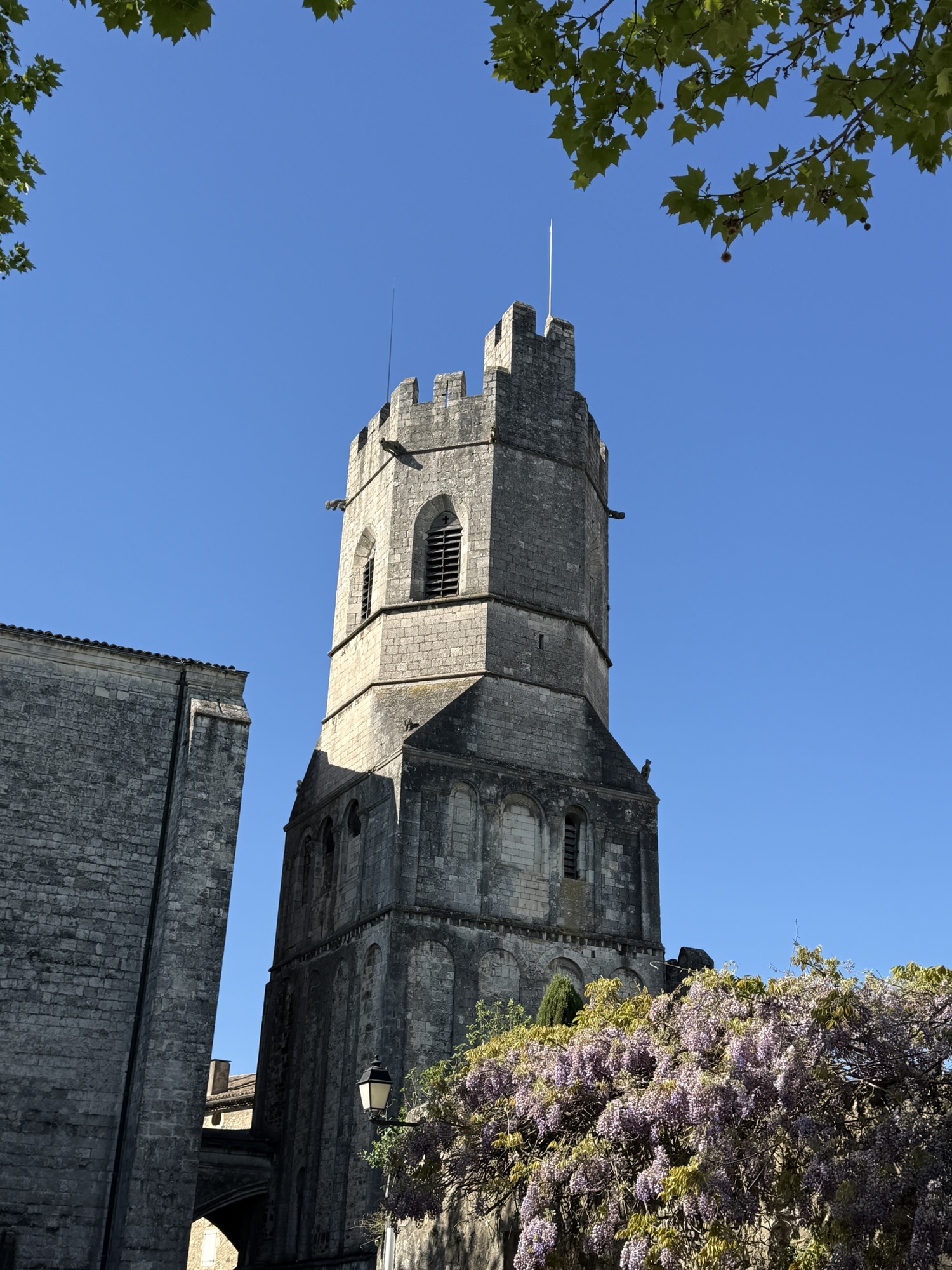
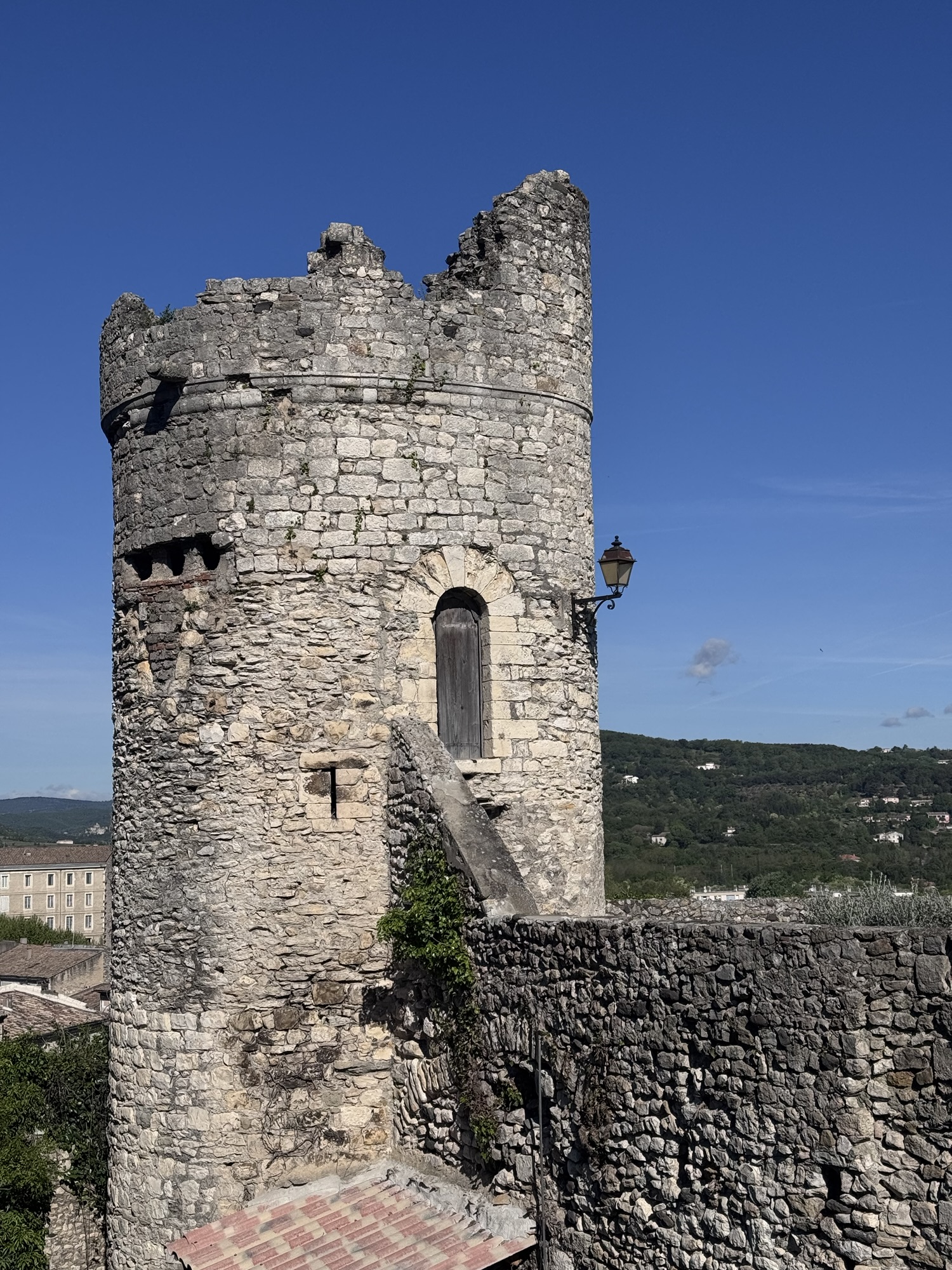
The town is more than 1600 years old and still features the smallest cathedral in France and winding stone streets that seem frozen in time. Historically the town was divided between the clergy in the upper quarter and the laity in the lower one.
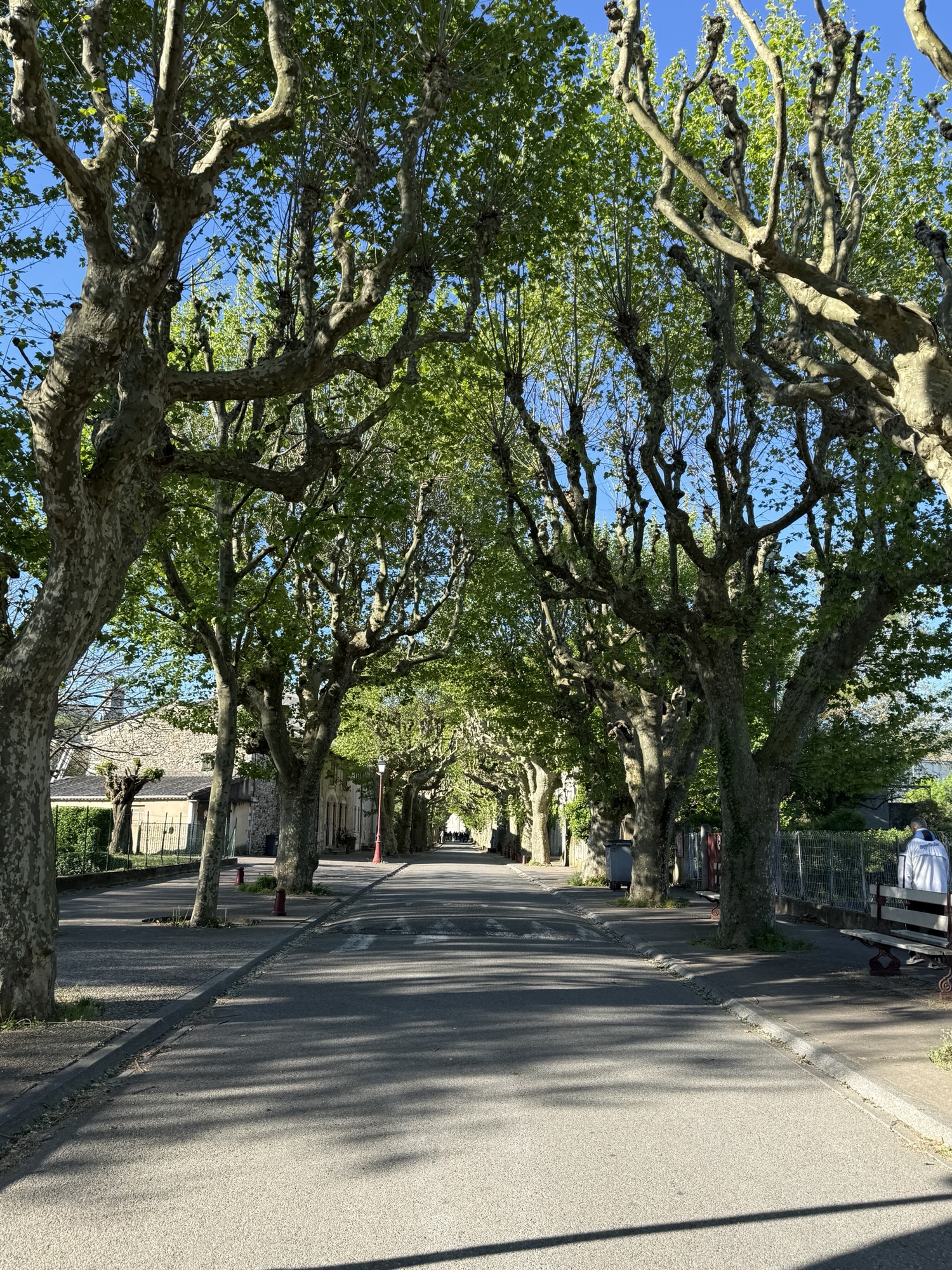
Sycamores line the streets and the houses here bear the watermarks of floods over the years.
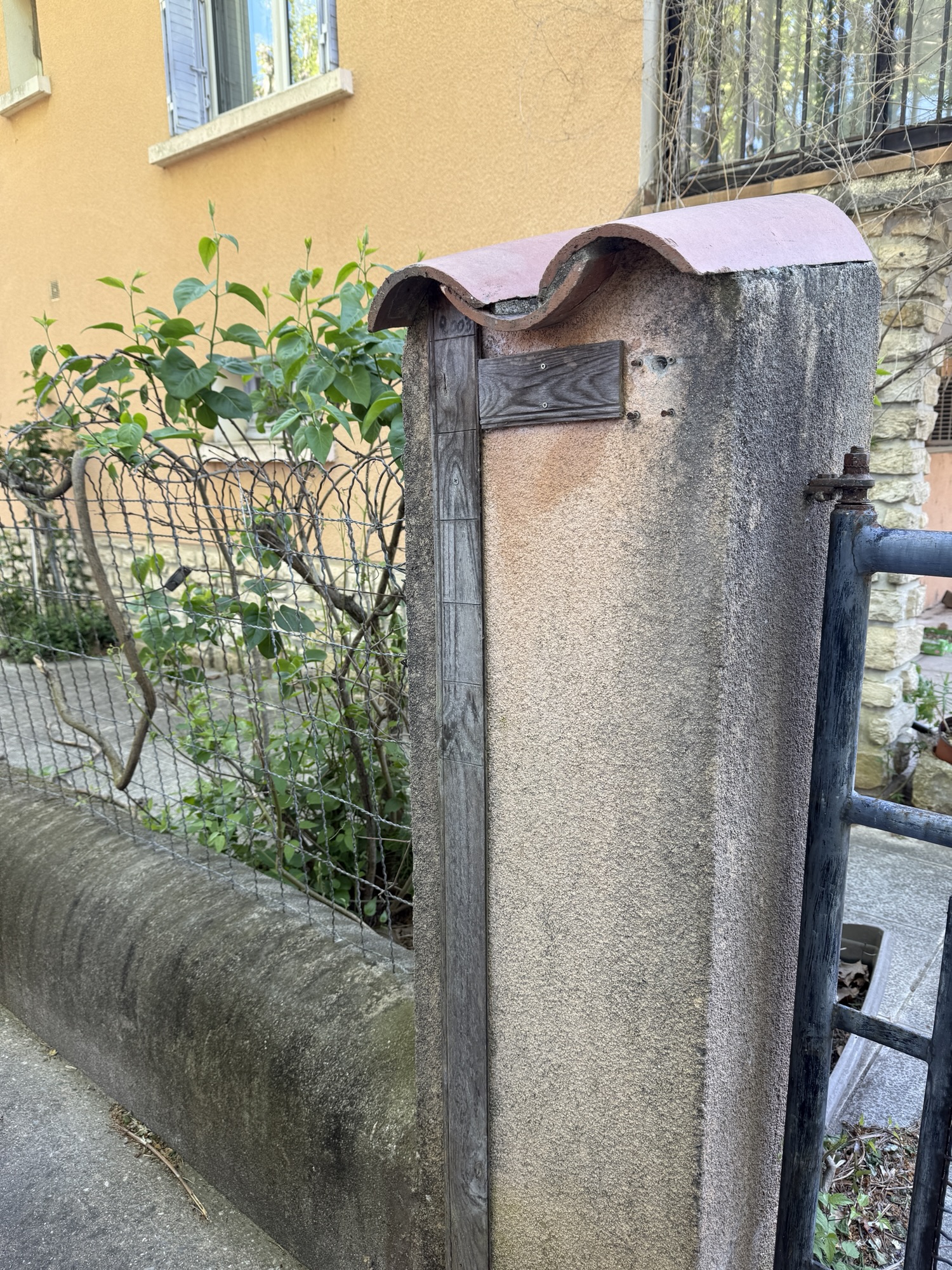
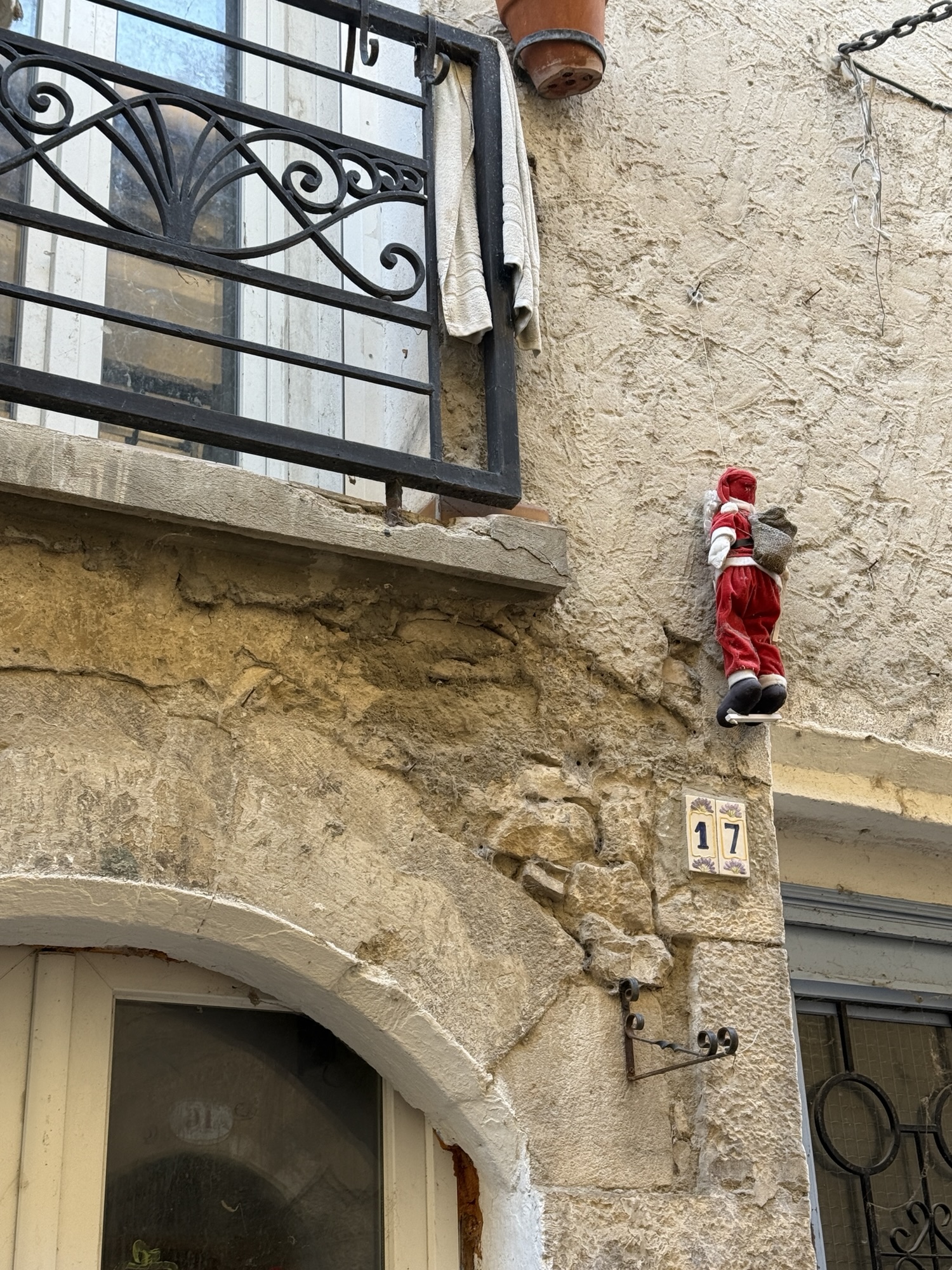
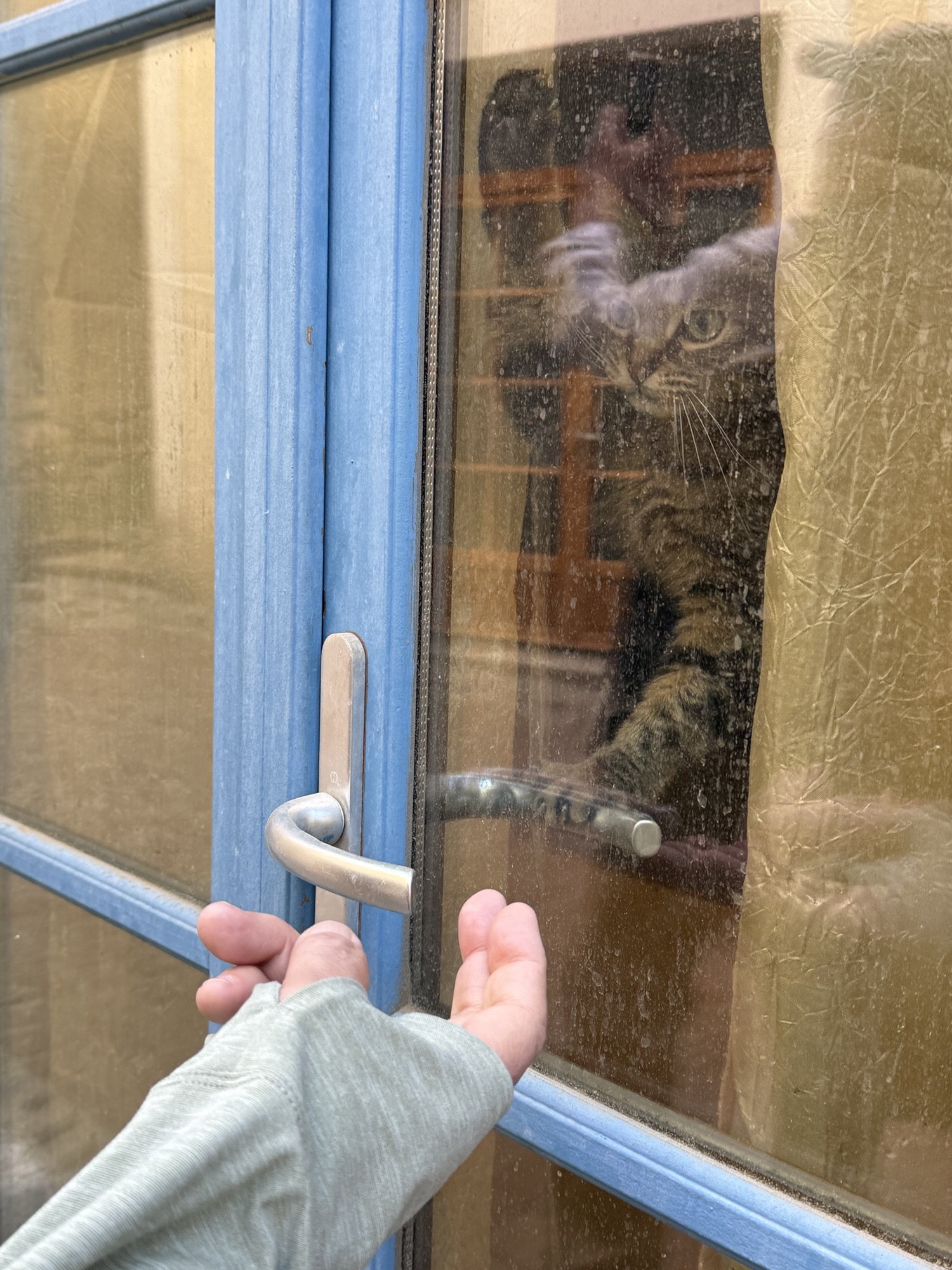
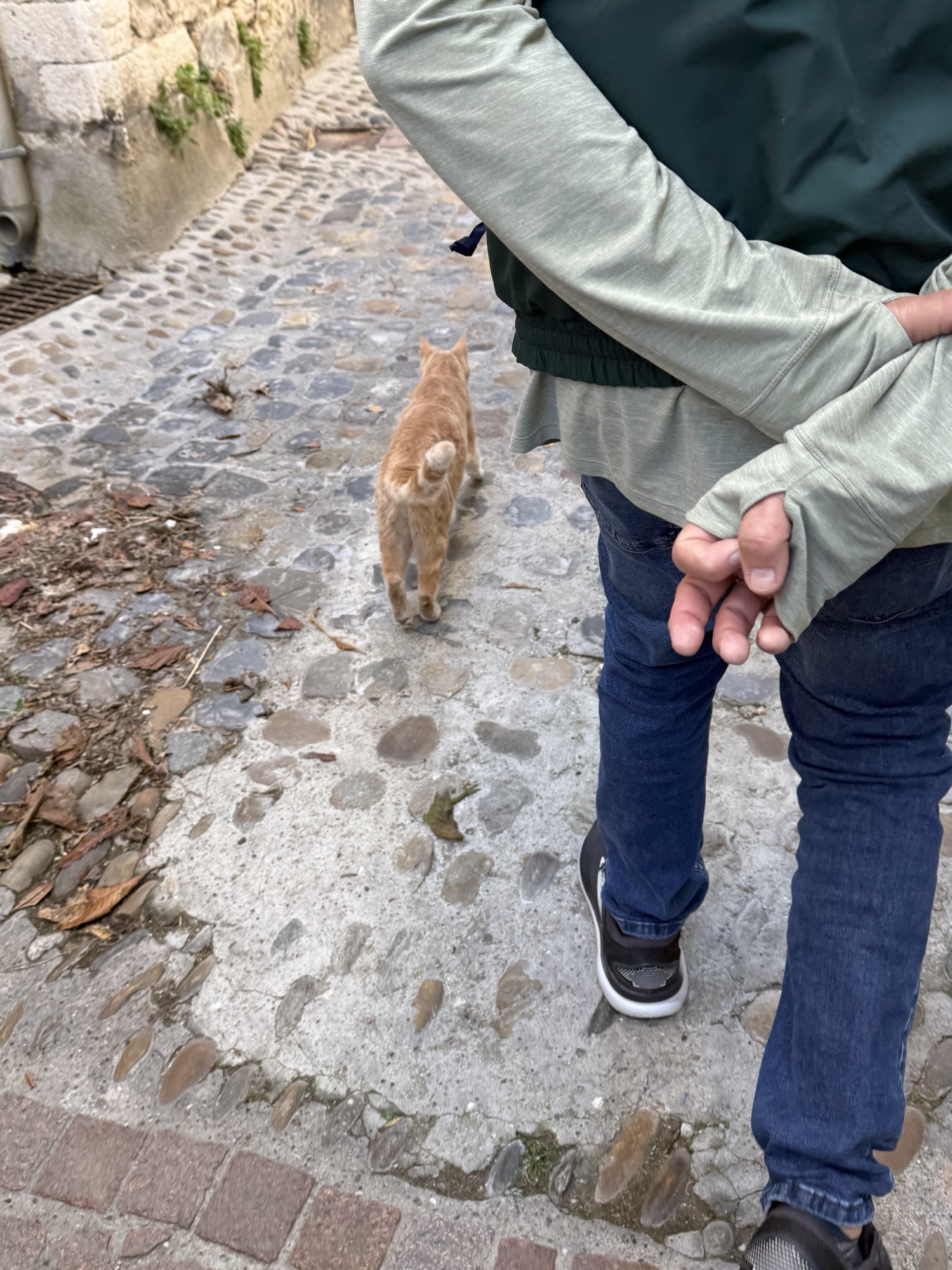
There are some beautifully painted walls and doors on our walk up the steep hills.
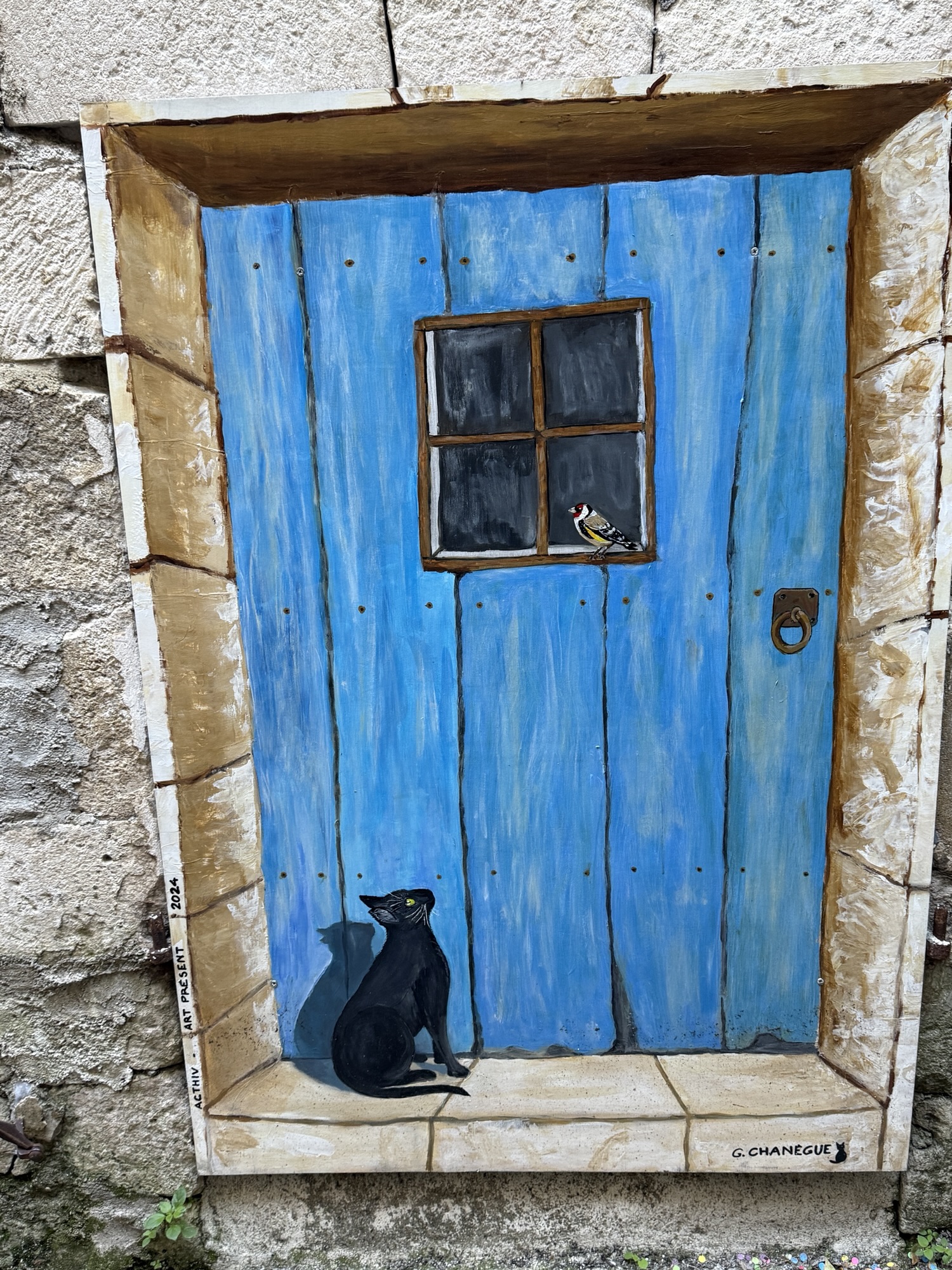
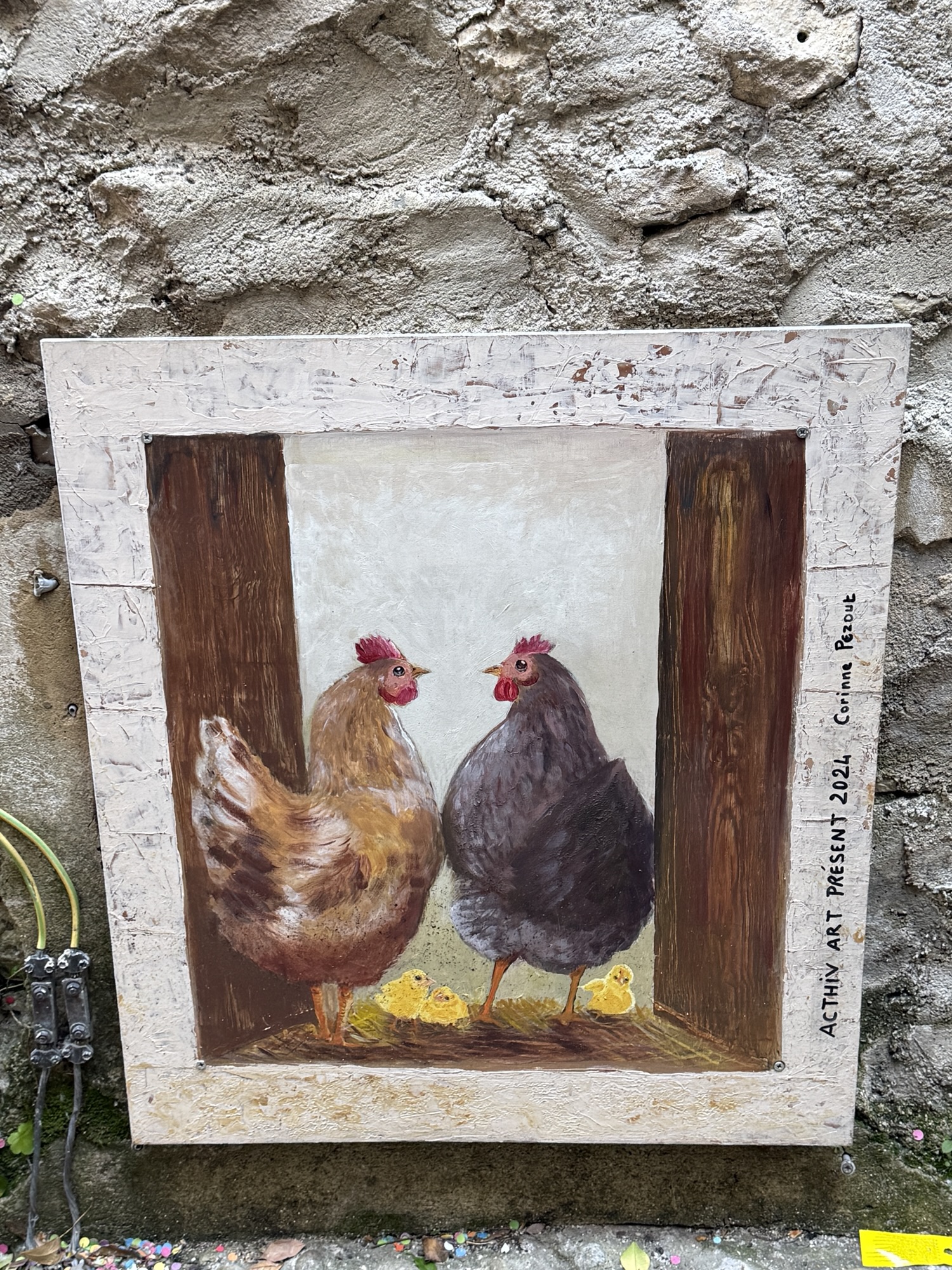
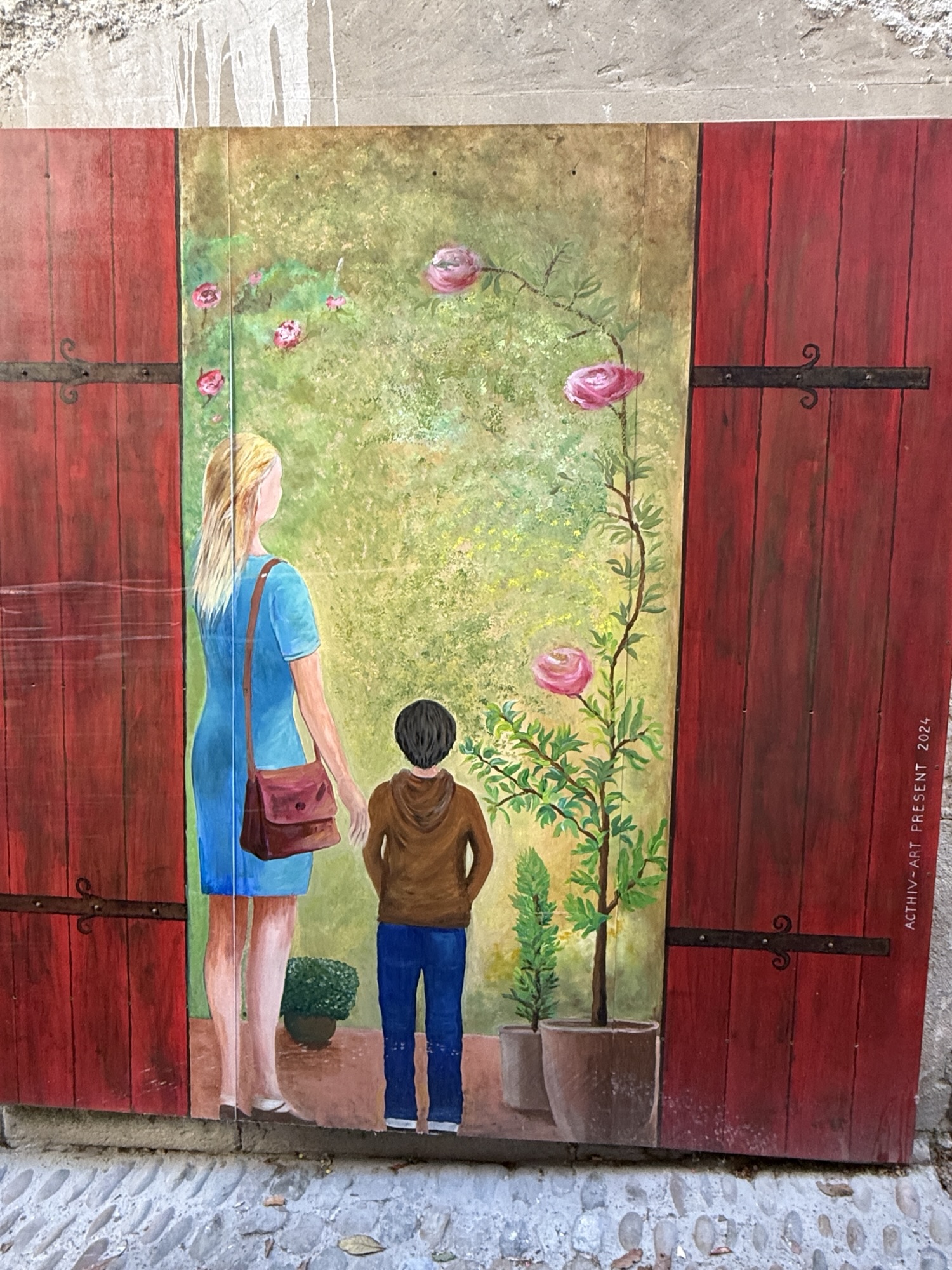
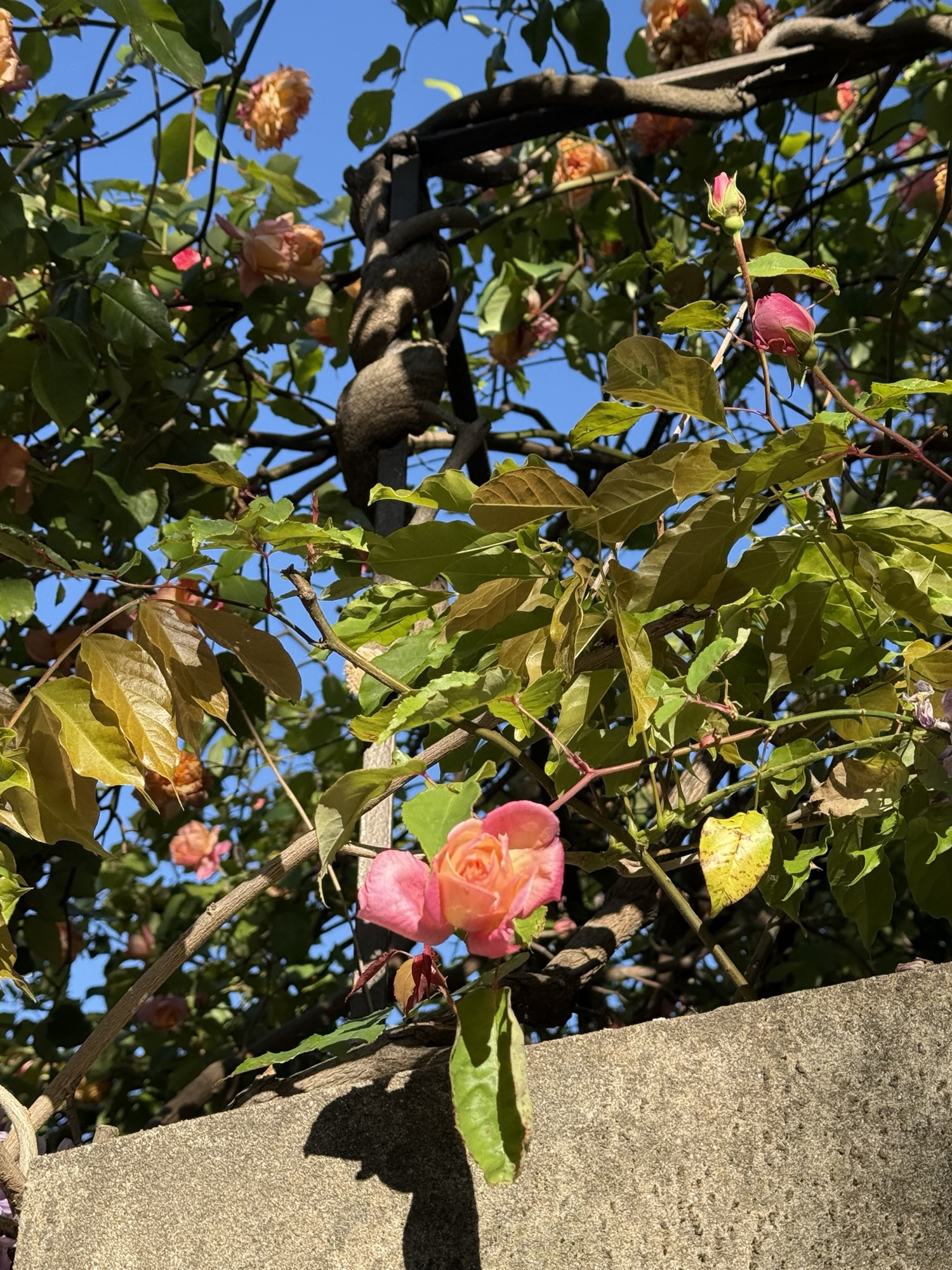
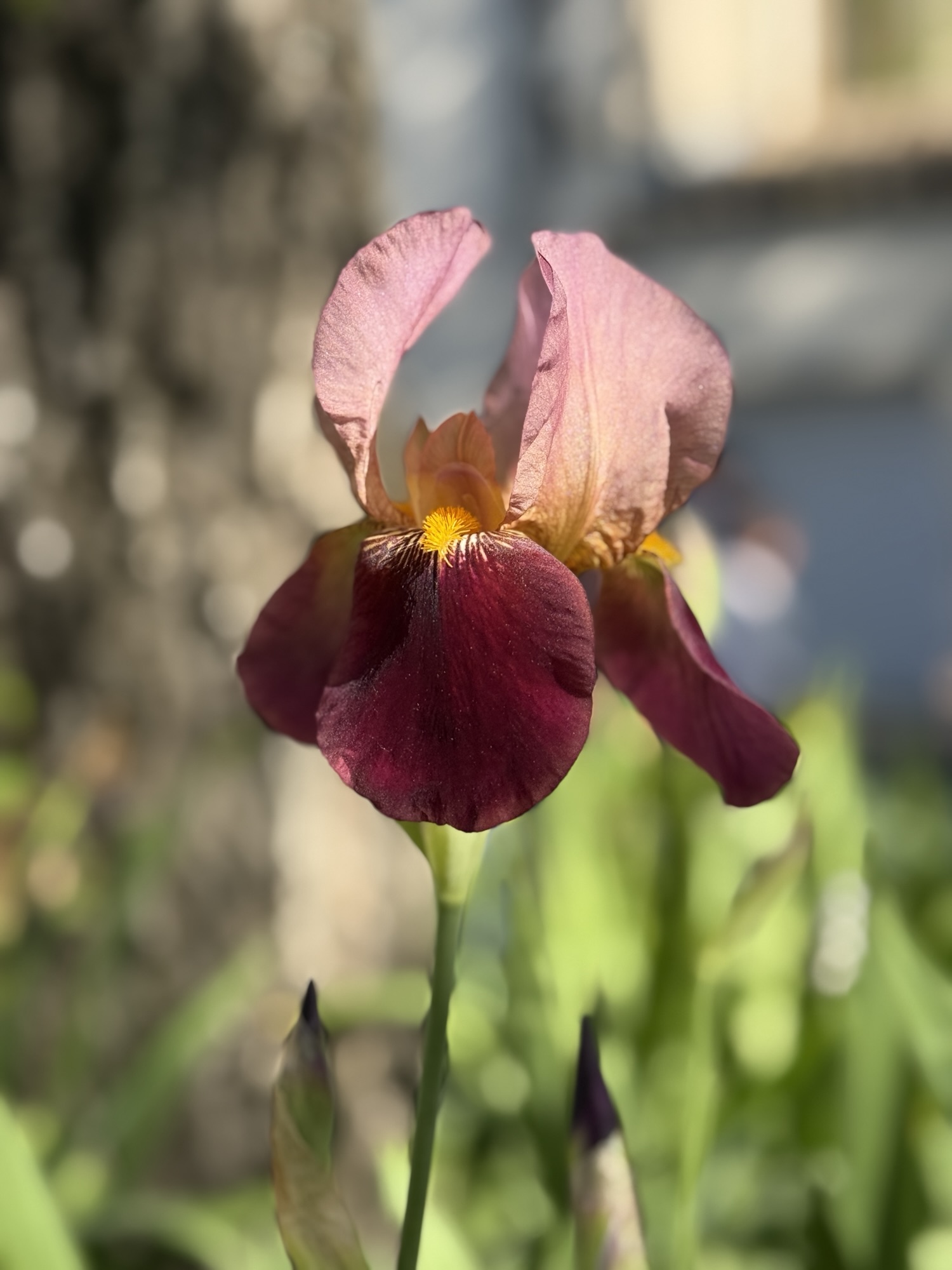
And the flowers are nice too.
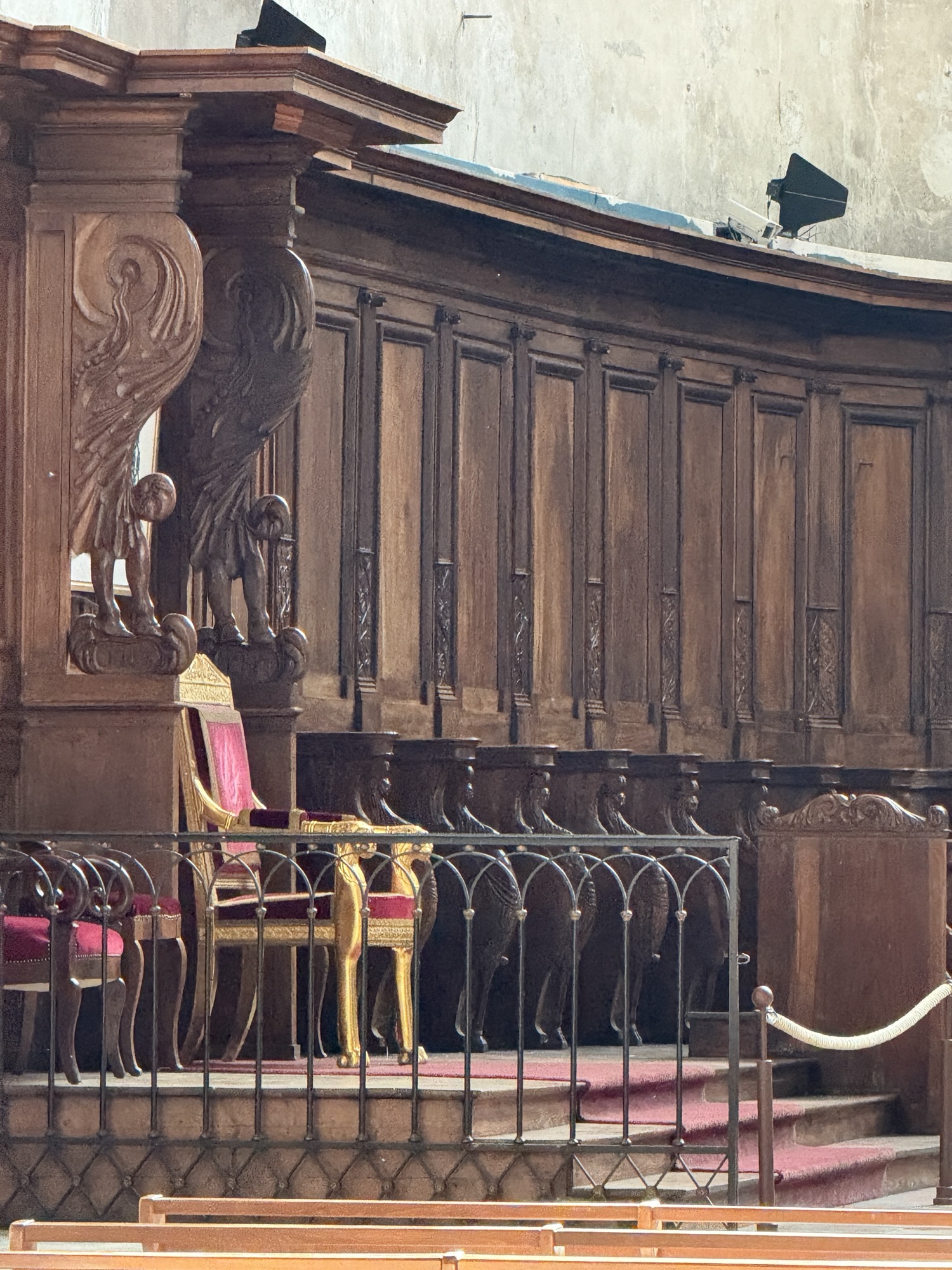
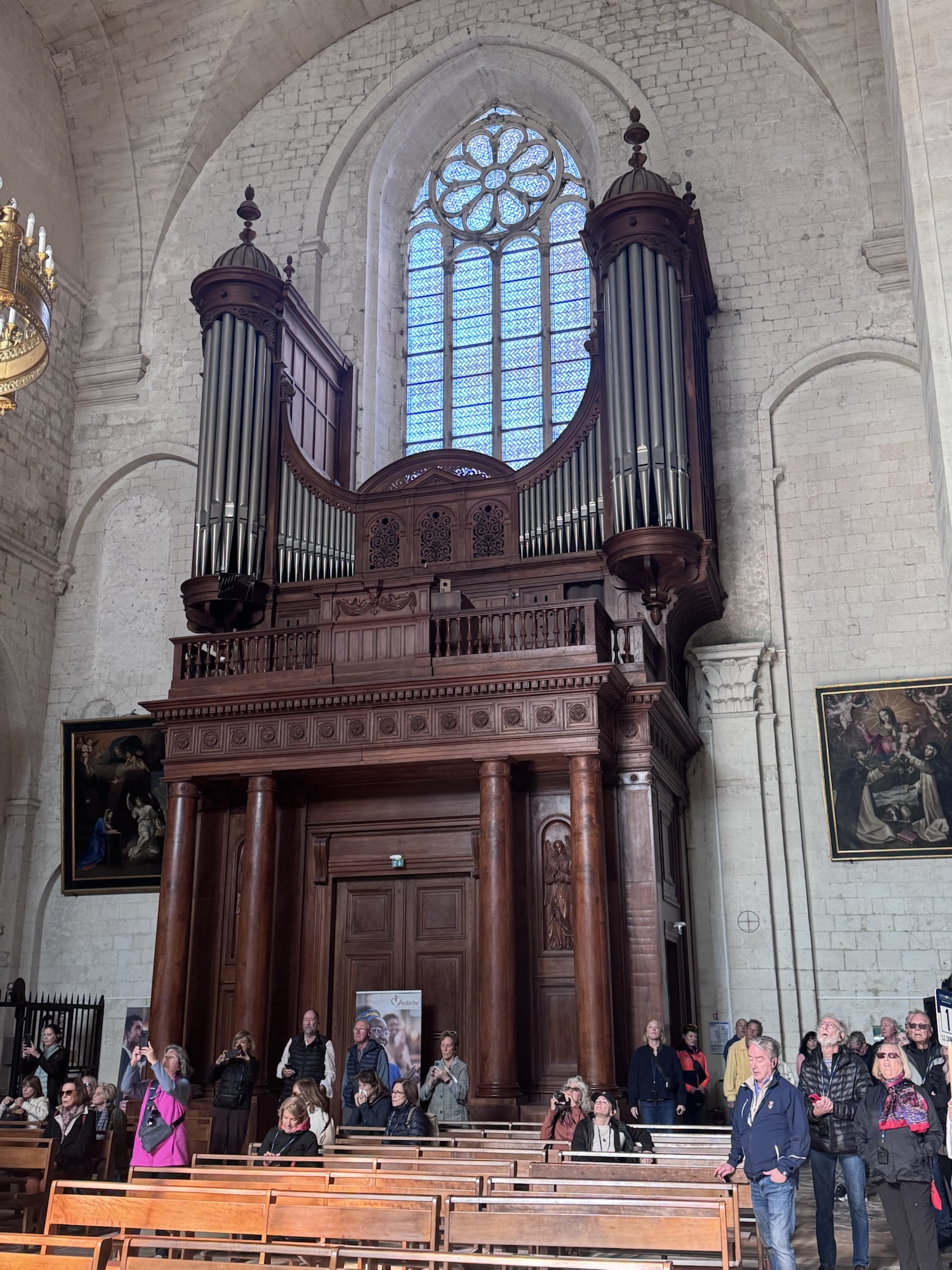
We visited St. Vincent’s Cathedral which was built in the 12th century – he is the patron saint of wine, Elsa informed us.
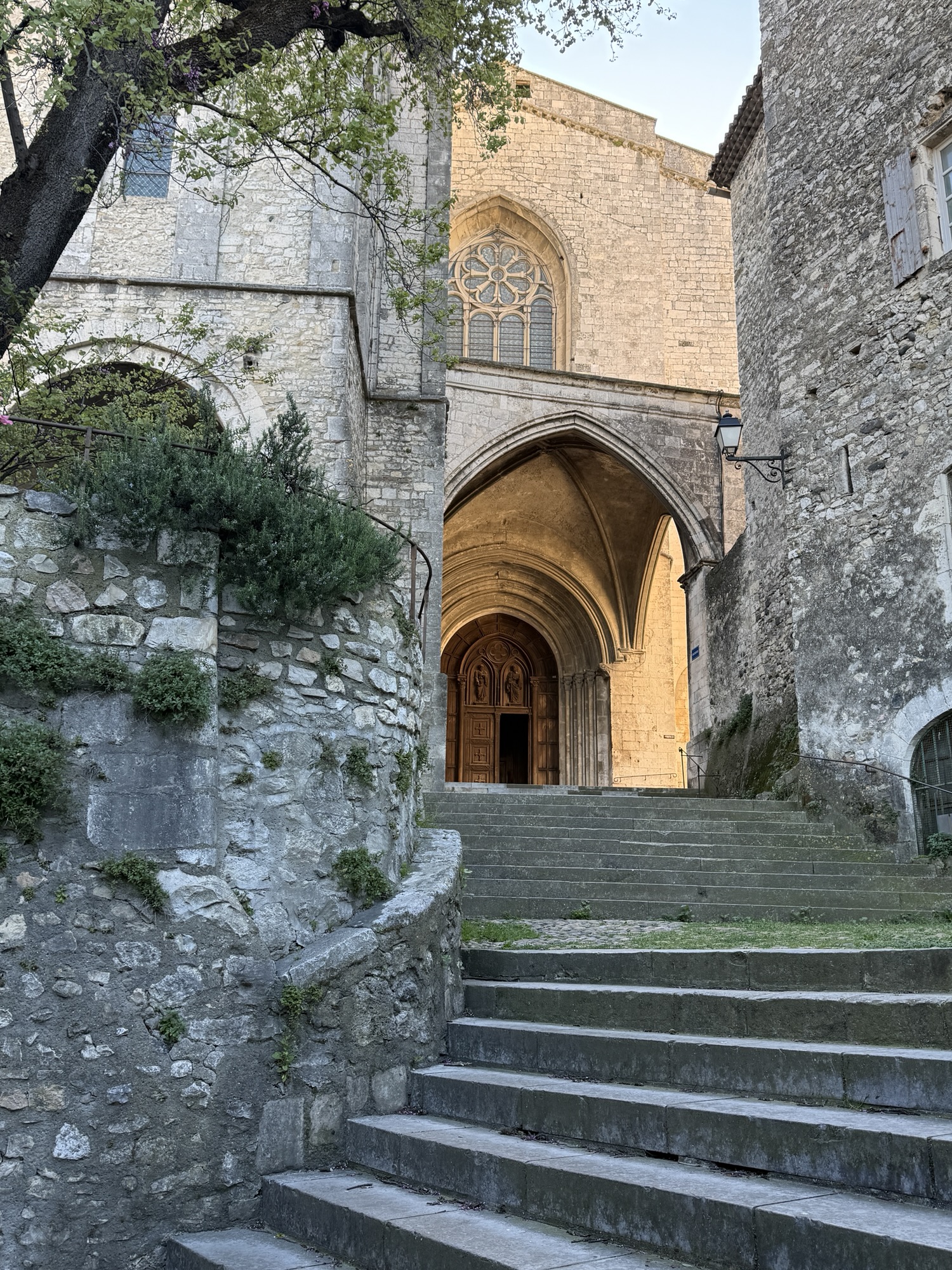
The walk through the town took us up the hill on very winding and narrow roads. The people who live in this area either park at the bottom and walk up or at the top and walk down. It is very hard to maneuver a car through the streets.
Elsa told us about some of the bad history and the beheadings that took place. She used a term “they rest in pieces”!
After our walk through town, we were taken to the home of a local resident who also operates a home share. He served us wine, a violet syrup which is mixed with water, local cheese, ham and baguettes and a type of pound cake while we listened to a local beekeeper and tasted the honey from her hives.
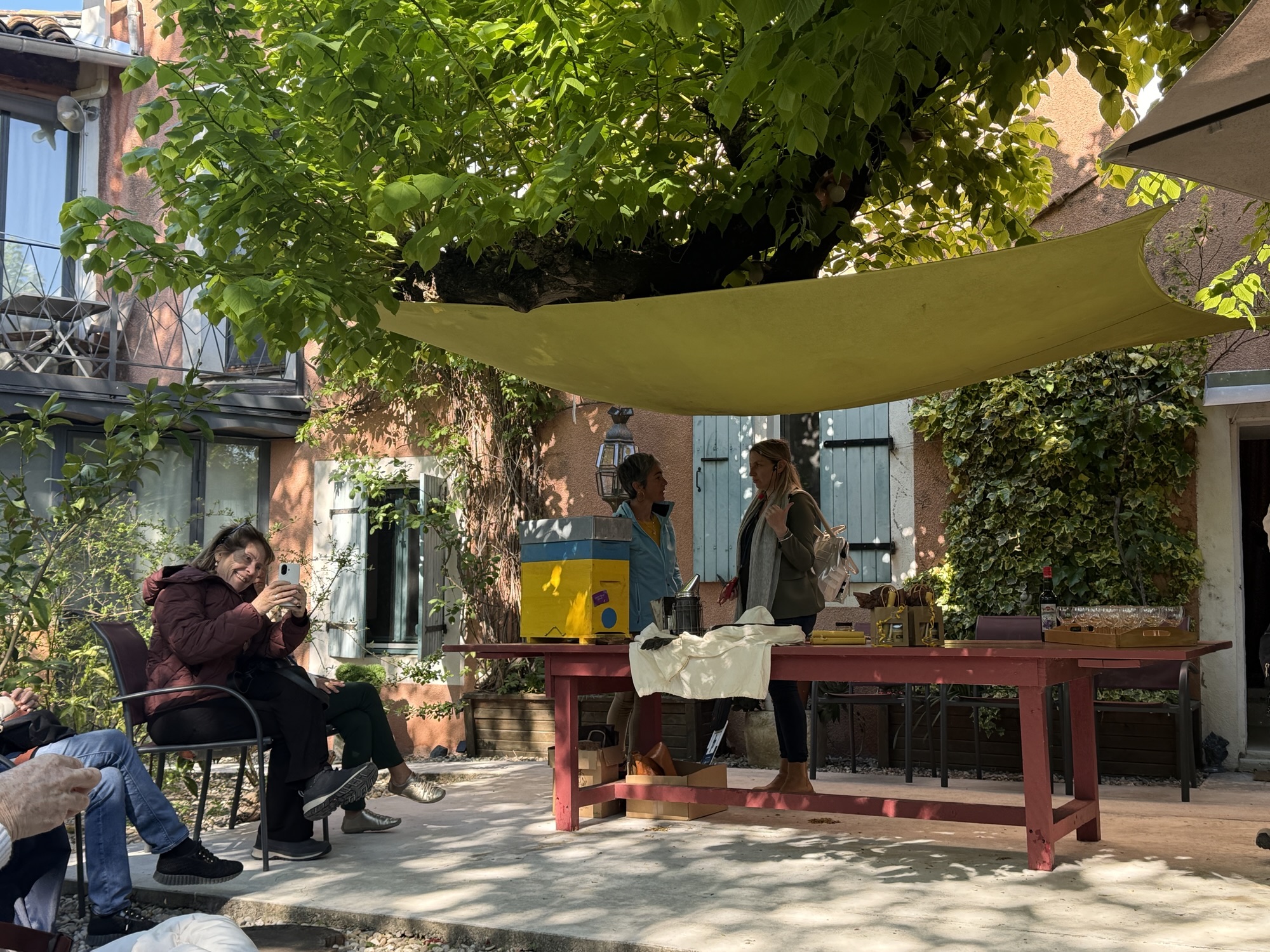
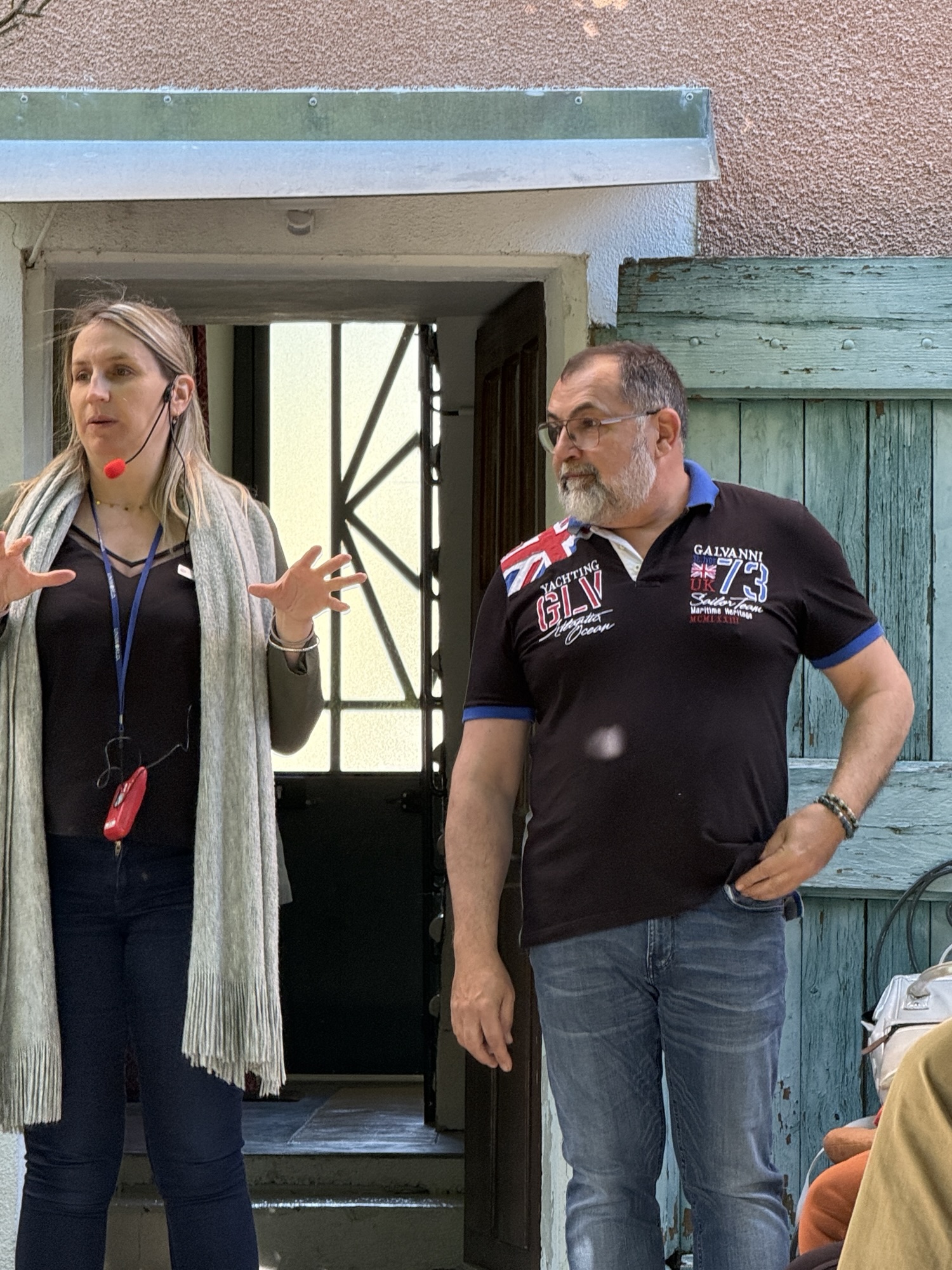
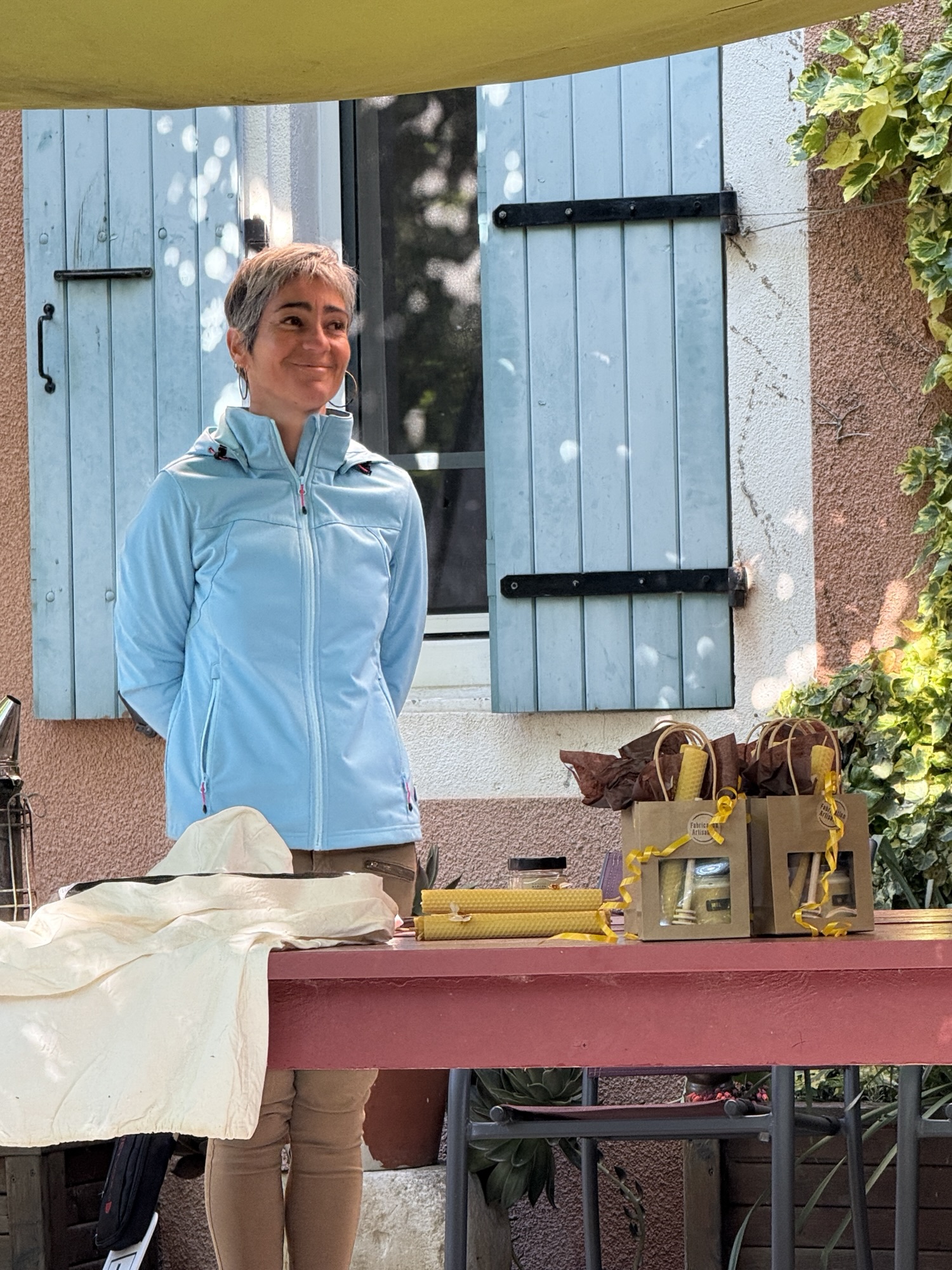
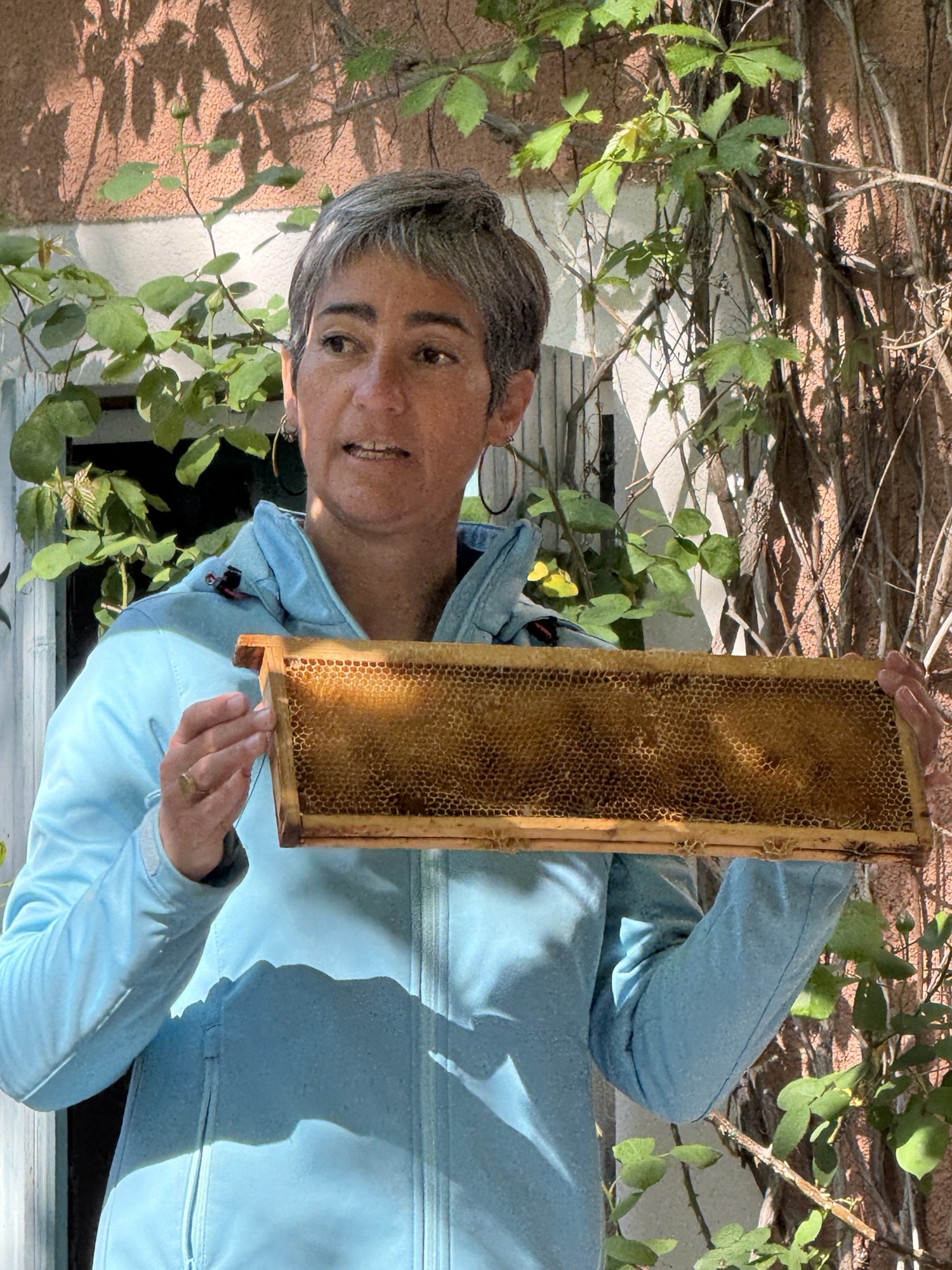
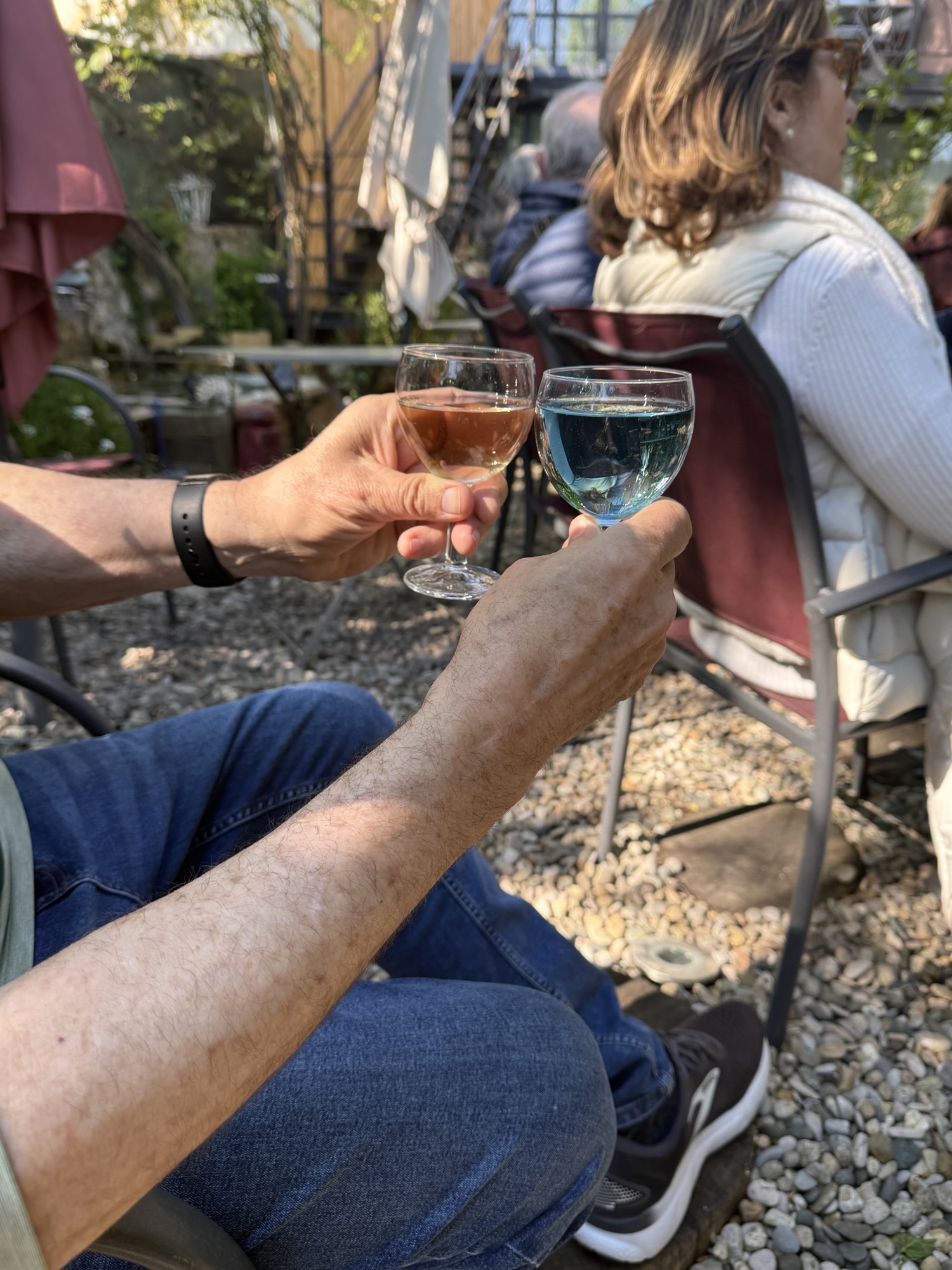
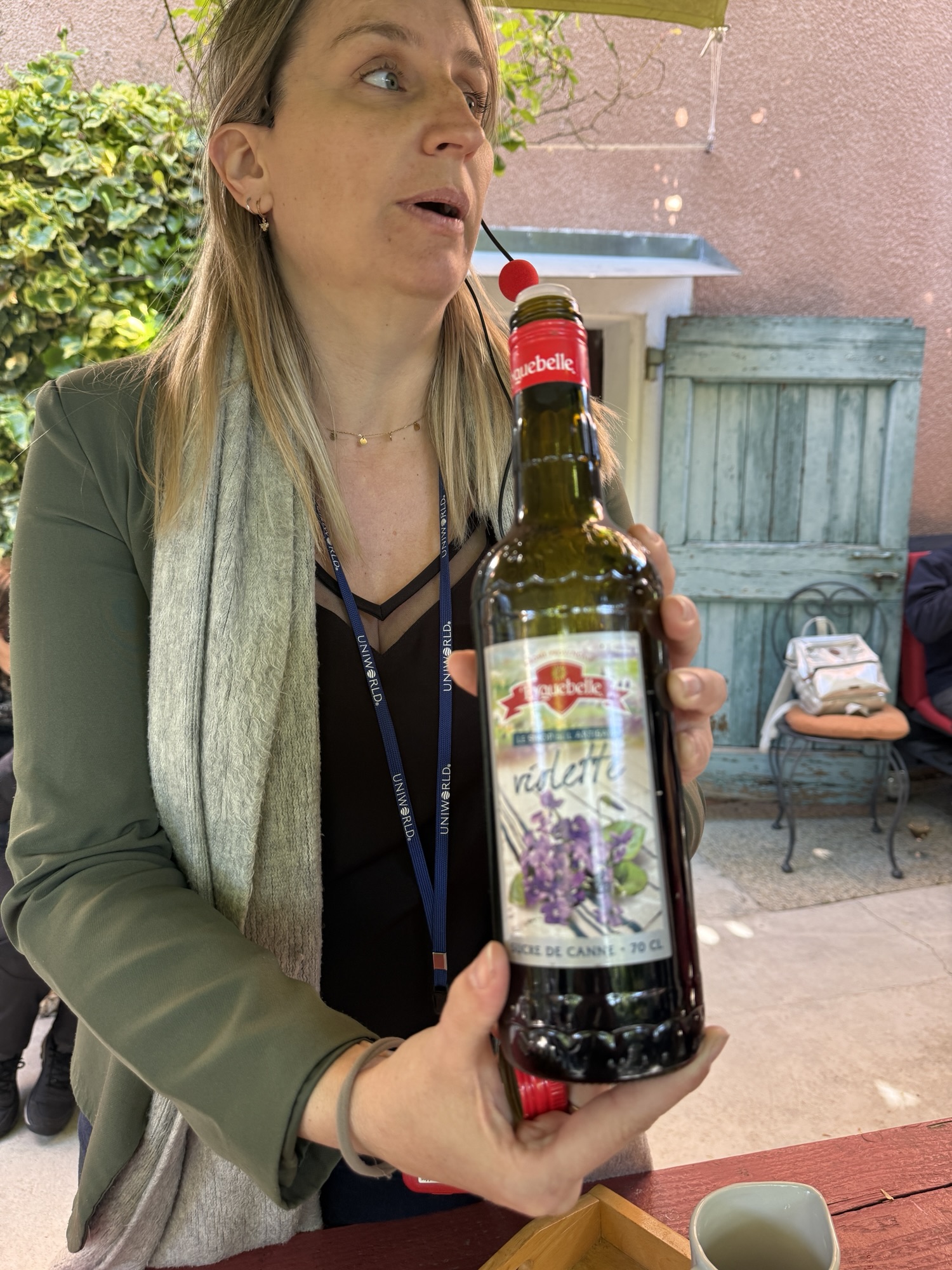
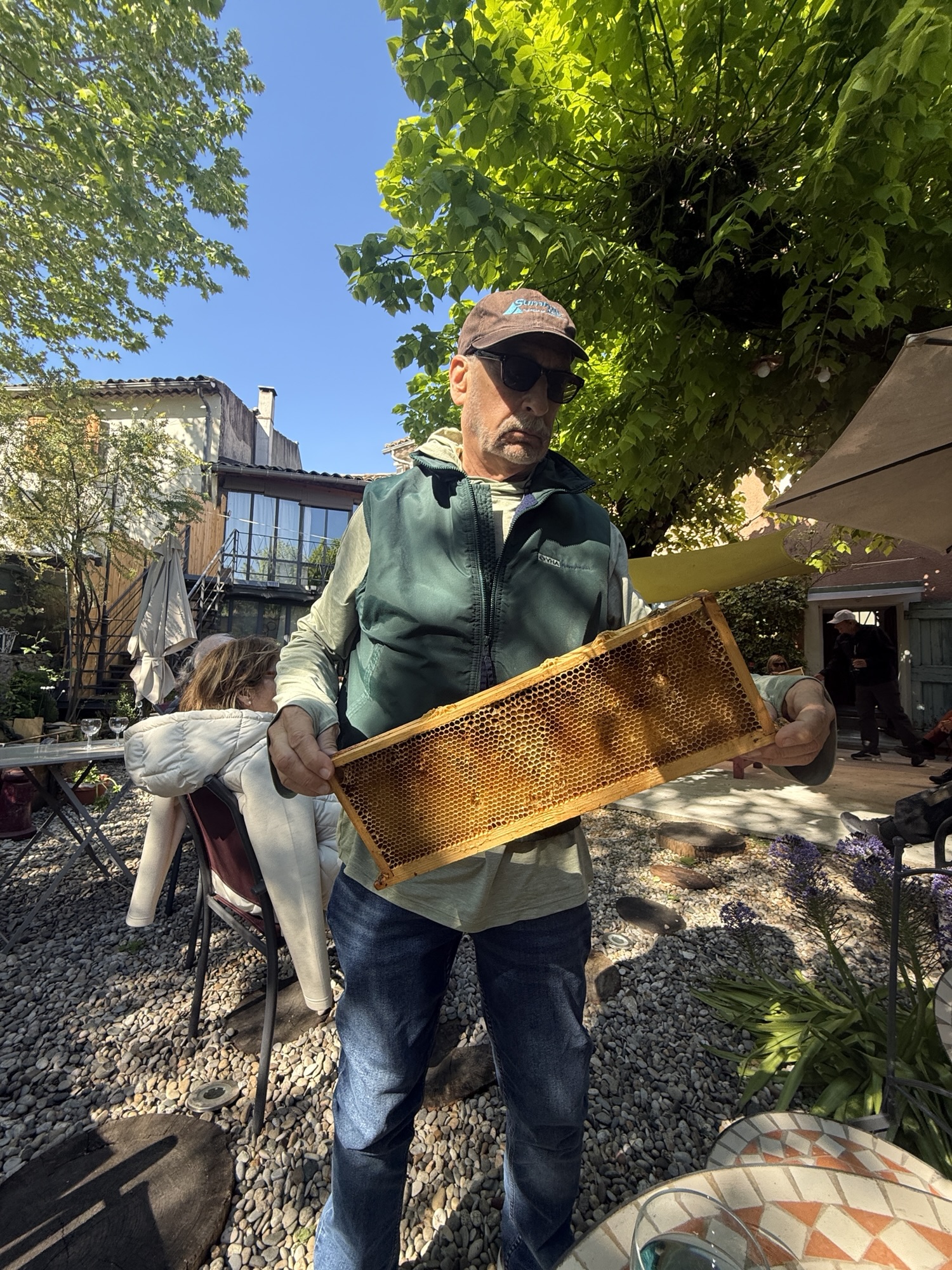
Their courtyard is very pretty.
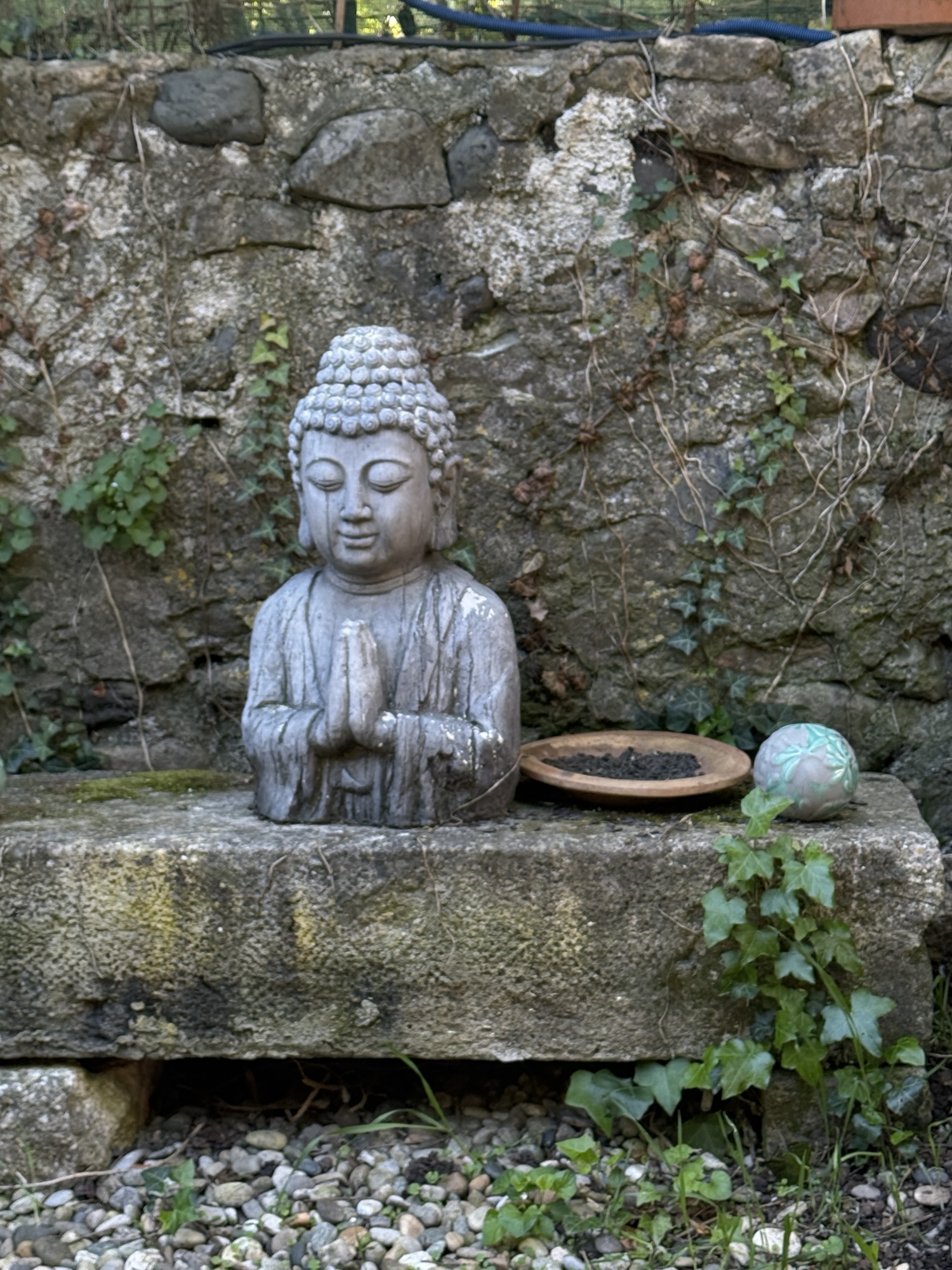
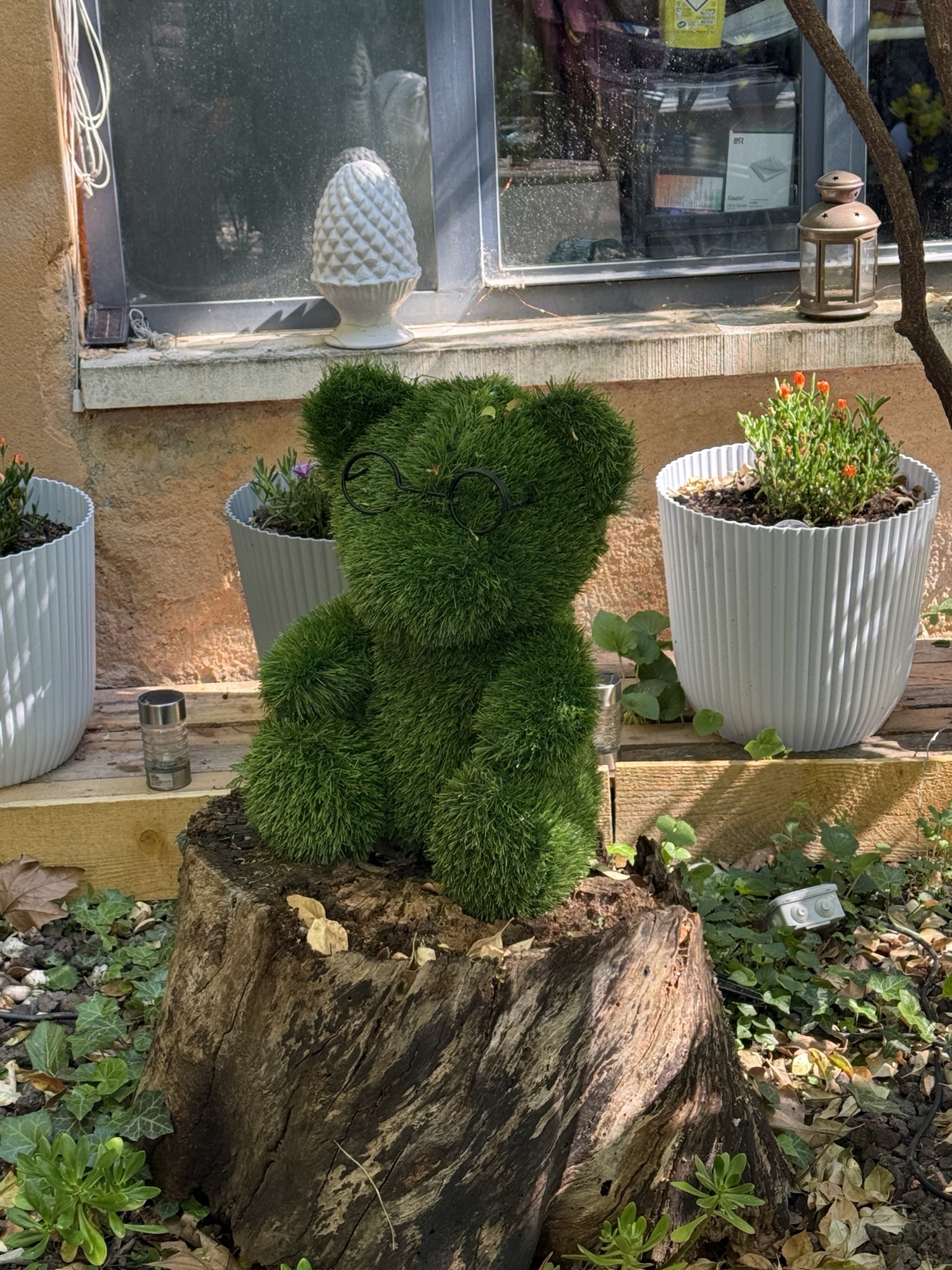
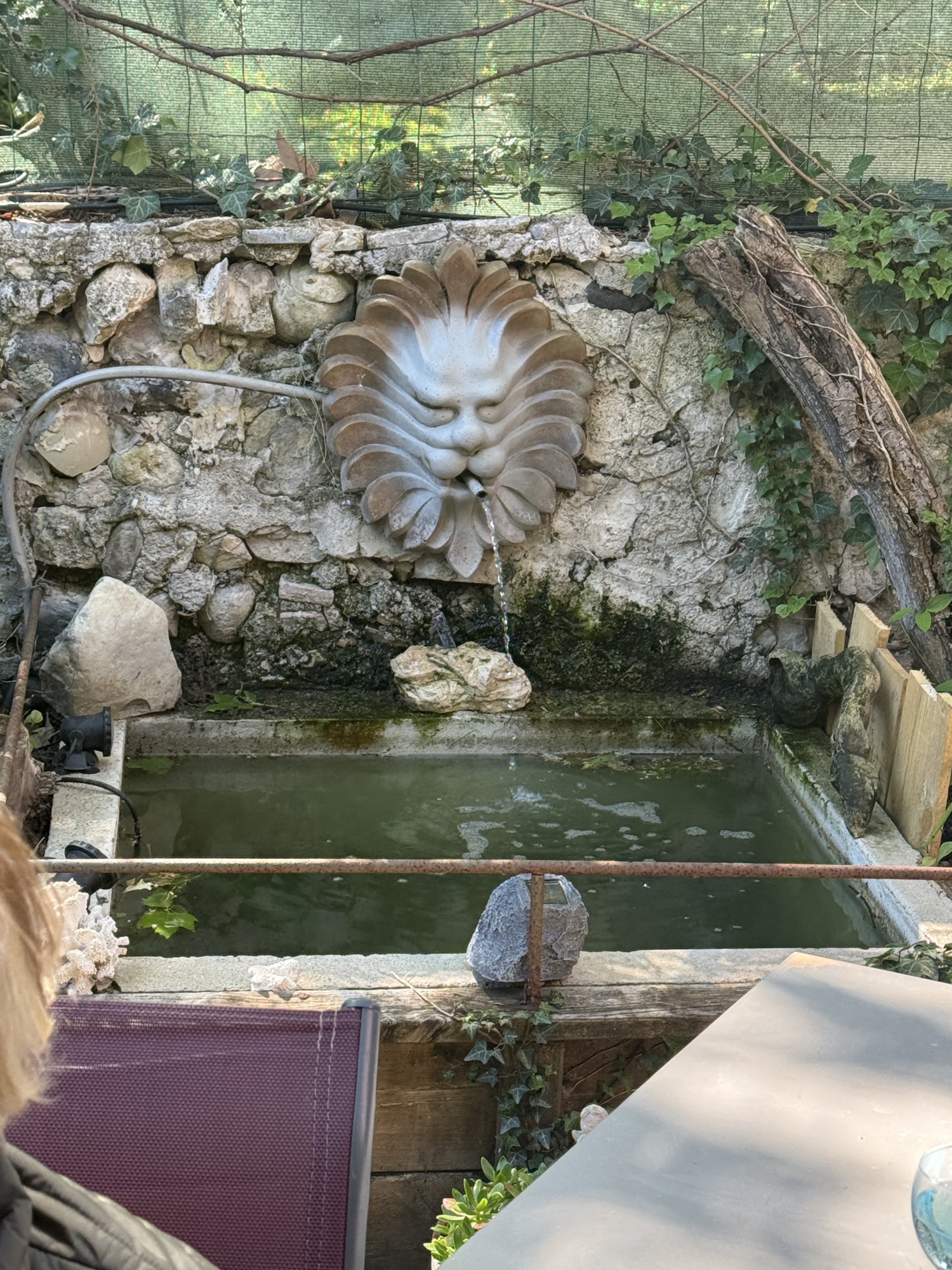
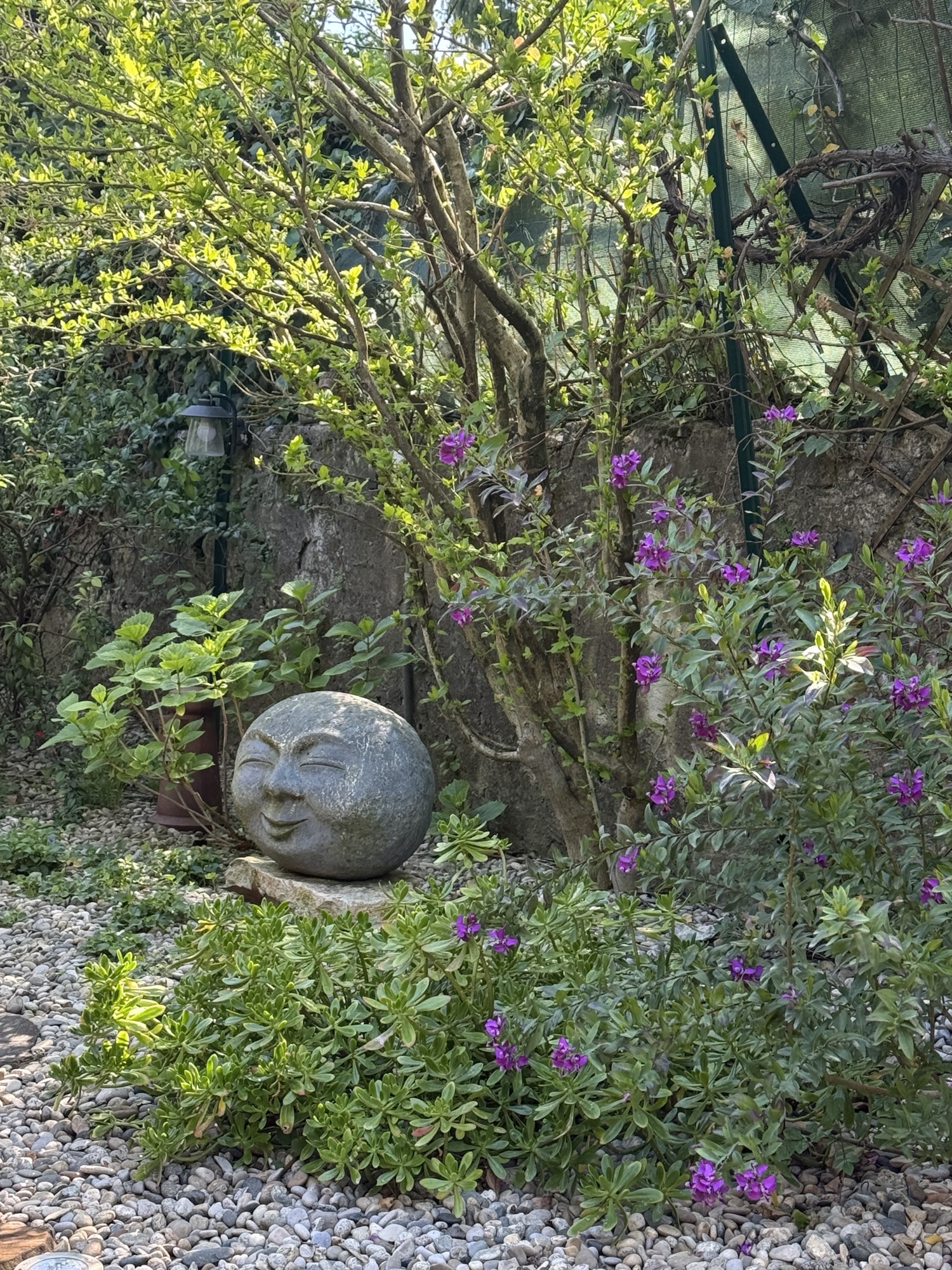
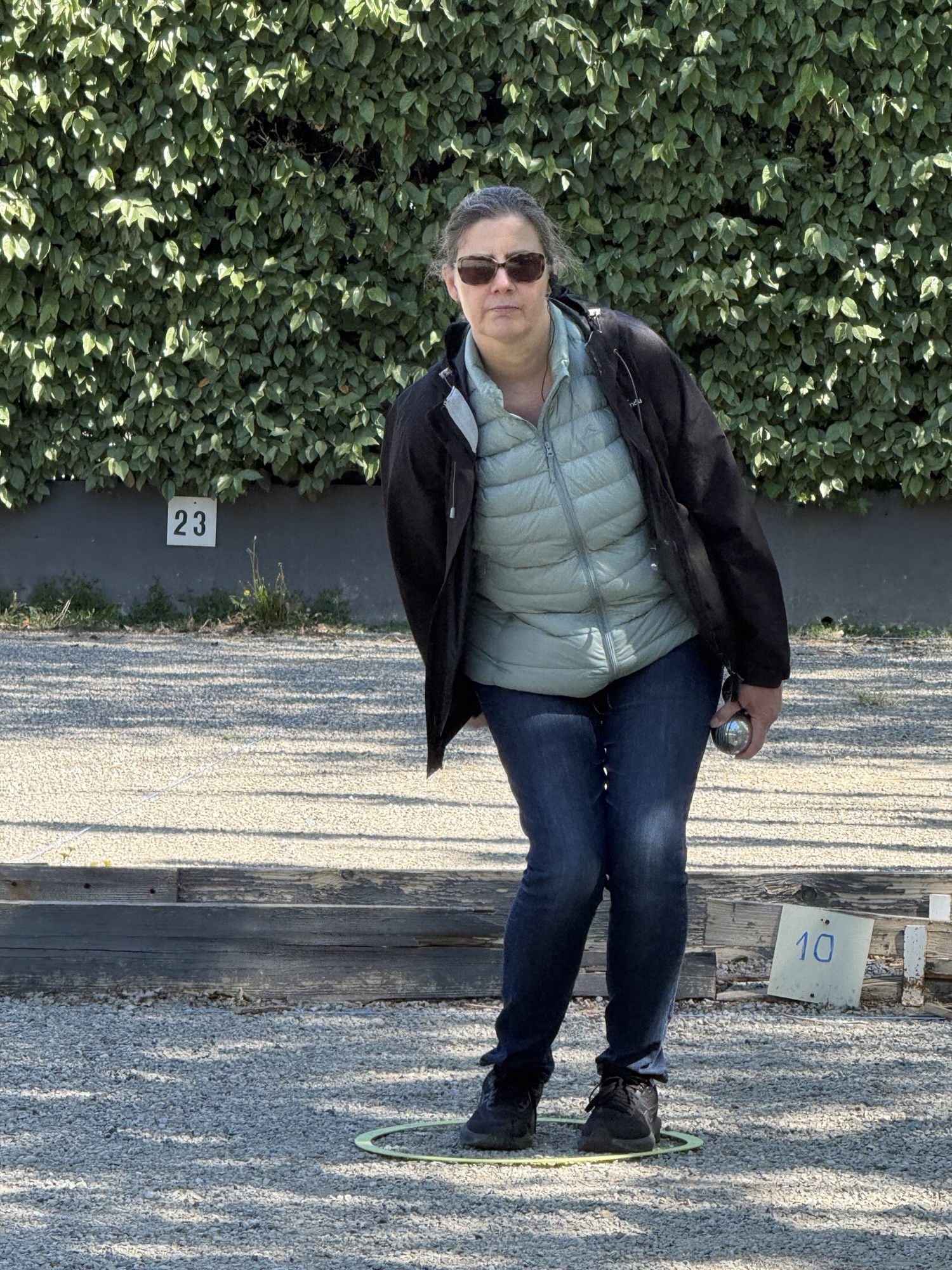
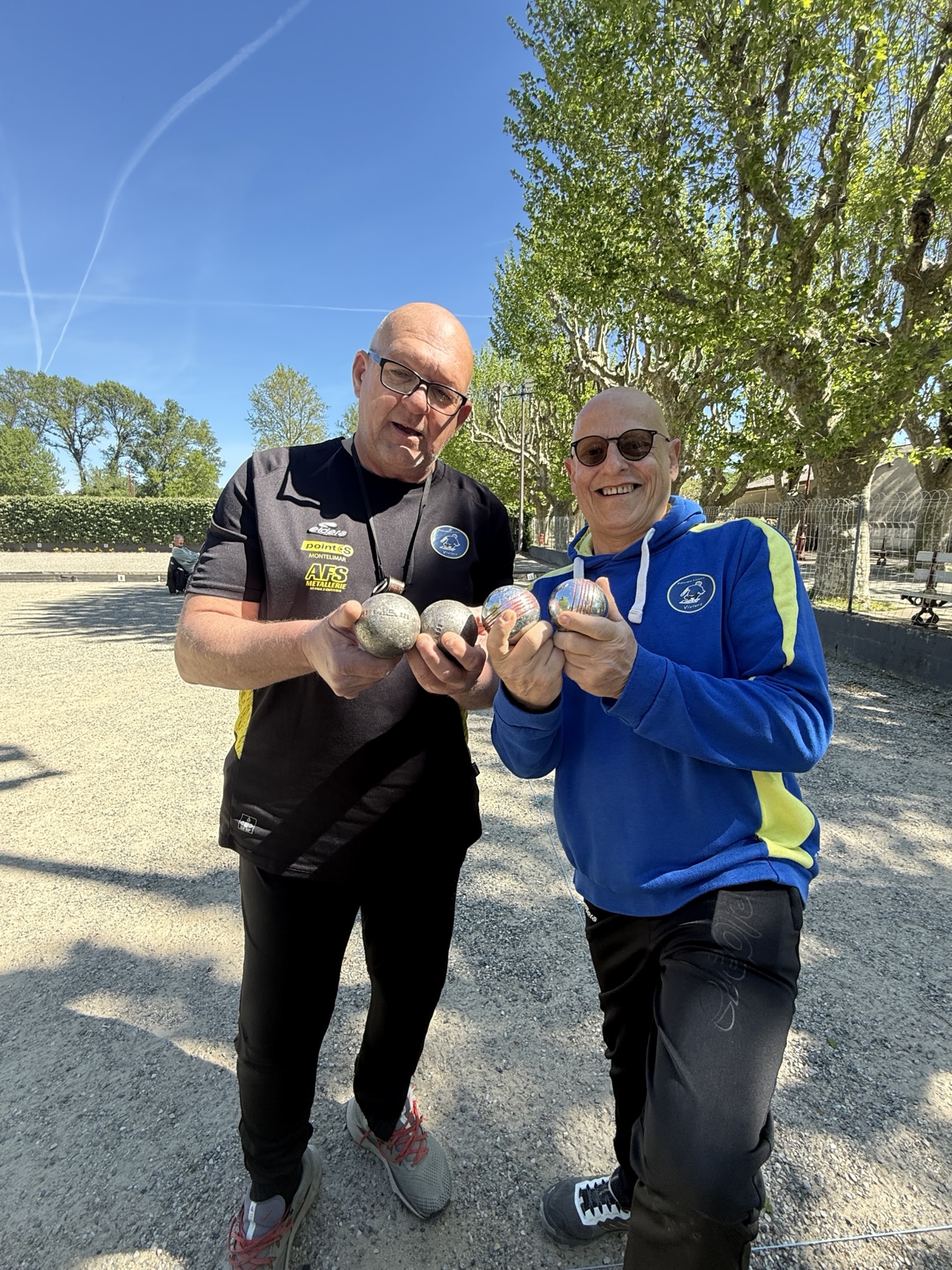
Uniworld tries to provide local experiences in many ports. After this visit, we started our walk back to the ship where we could watch or participate in a game of pétanque, a game that is kind of like bocce or horseshoes.
After lunch we had booked the truffle hunting and village of Grignan which is an extra “masterpiece collection” trip that you pay extra for. There are some choices like this in many ports and this is one that we didn’t want to miss. We were taken to the village by bus with our guide, Jeannine (who was a real hoot!)
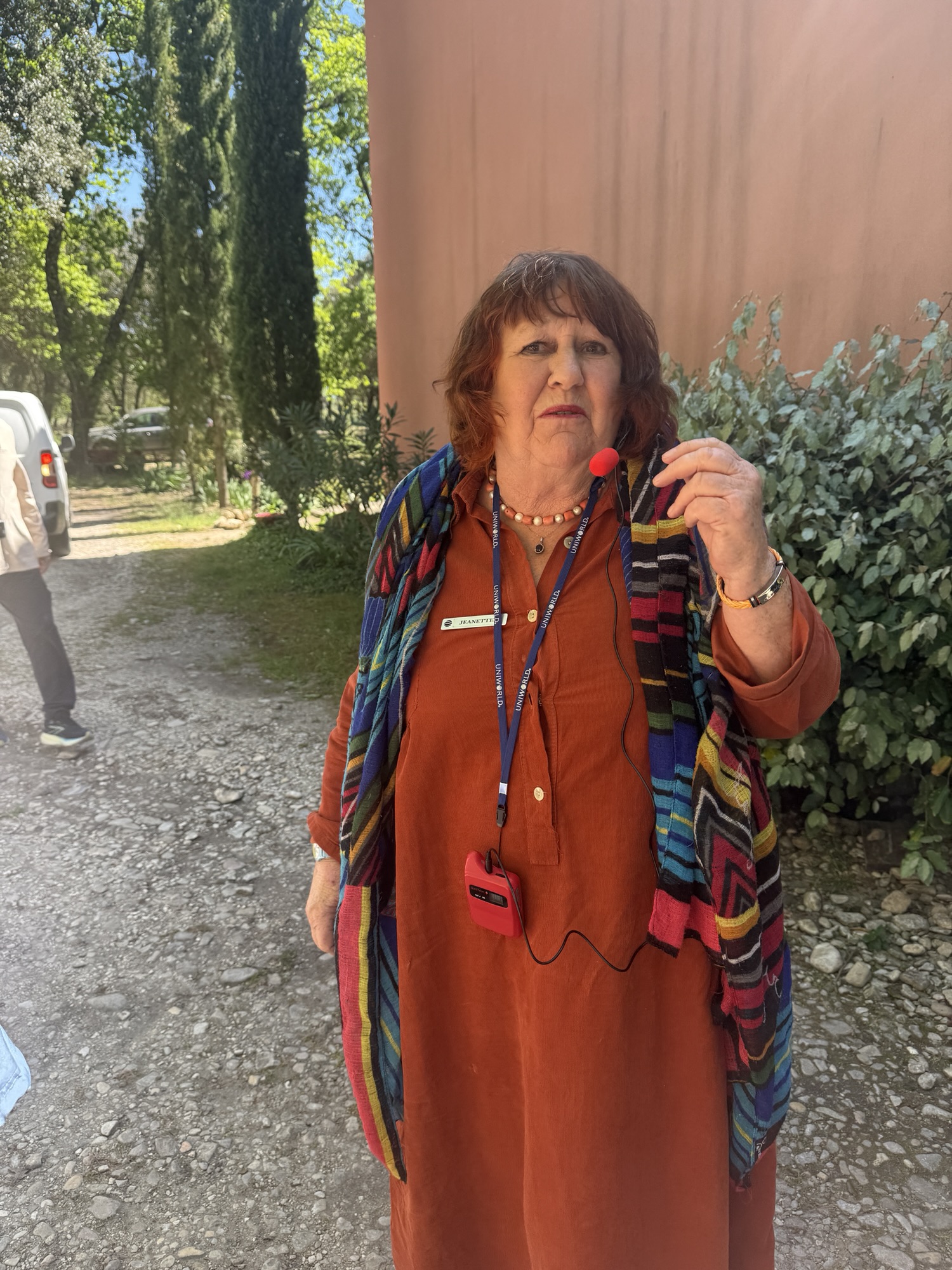
Grignan is a medieval village in the Provençal countryside. We met the owner and Jeannette had to translate for the owner of the truffle farm, Christian. Both have very good senses of humor!
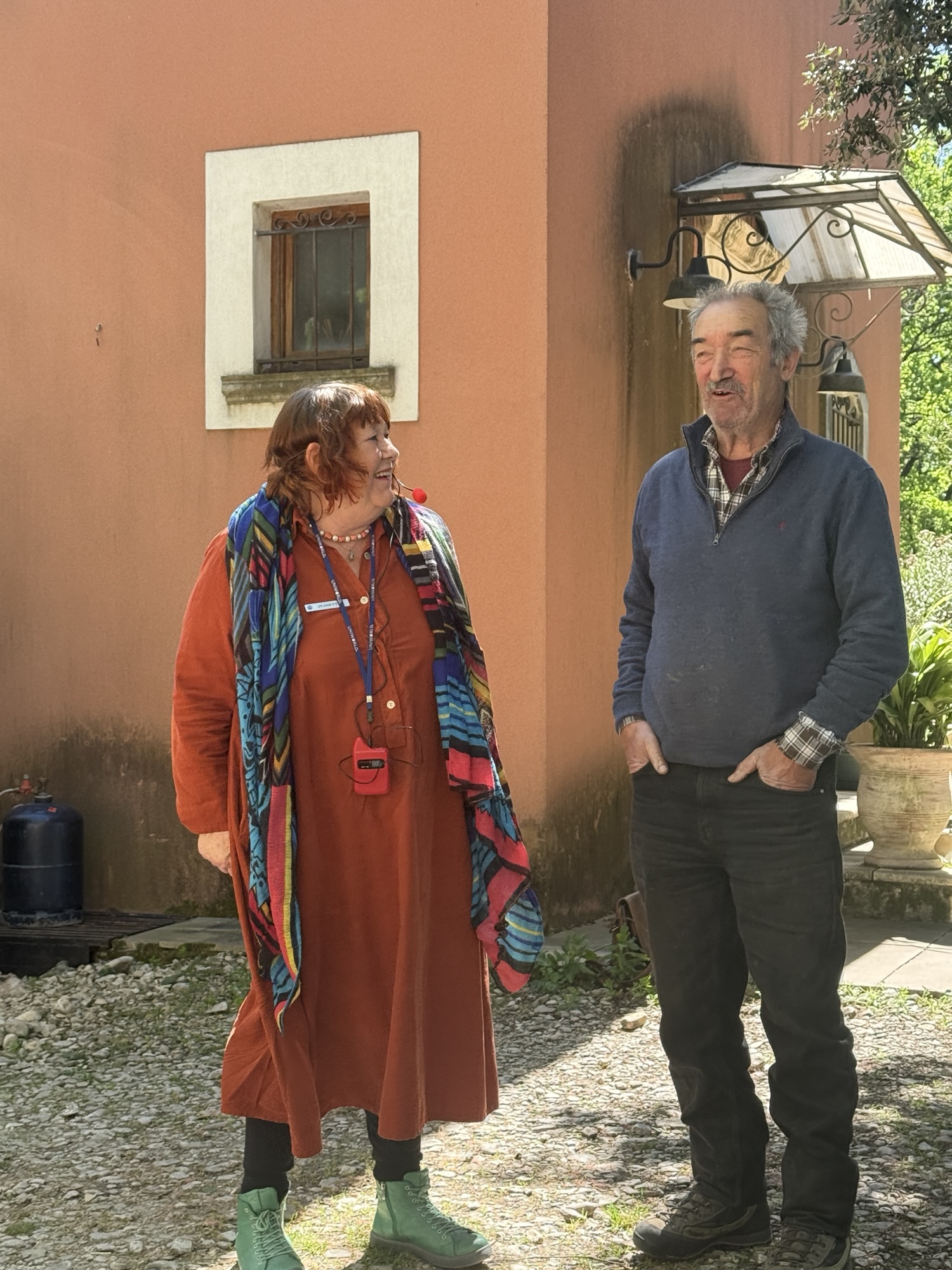
Christian explained the process of truffle farming. It is handed down through generations and he is now teaching his 10 year old grandson who he is proud to say knows almost all he needs to know about truffle farming.
Truffles grow on the roots of oak trees and you never know which trees will produce. It can take 8 – 10 years for trees to develop truffles. The roots of the trees travel into the earth until they hit the bedrock and then reverse themselves to get closer to the surface. There are summer truffles and winter truffles and also one that is farmed in between. The winter ones are the most valuable – they are called the black diamonds of France – and are sold at the daily auctions for $1000-$1300 Euros per kilo and 1.5 kilos can be sold in a day. He also has a broker that sells on his behalf. Trees produce for about 30 years. Acorns are infused and used to try to grow truffles but it is not always successful. After harvesting, the truffles checked for pests.
Pigs were used to find the truffles in the past but they got too big and hard to work with so these days dogs are used. Christian described how they train the dogs. The pigs didn’t need to be trained, it was an innate ability for them.
Christian’s dog, Ollie, led us through the area near the building where he was very successful in finding truffles. It isn’t really the best season for it so Christian wasn’t sure how many Ollie would find.
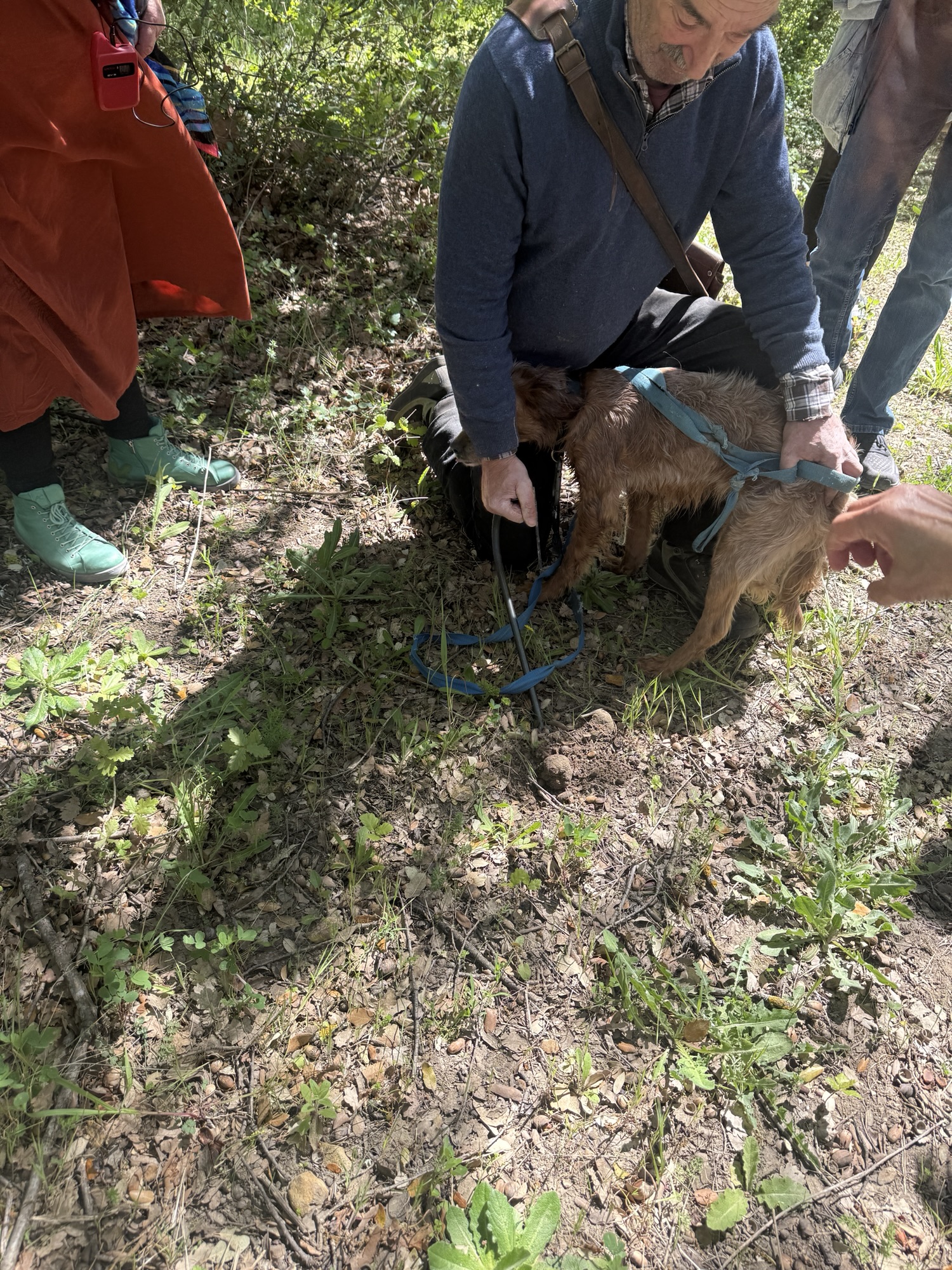
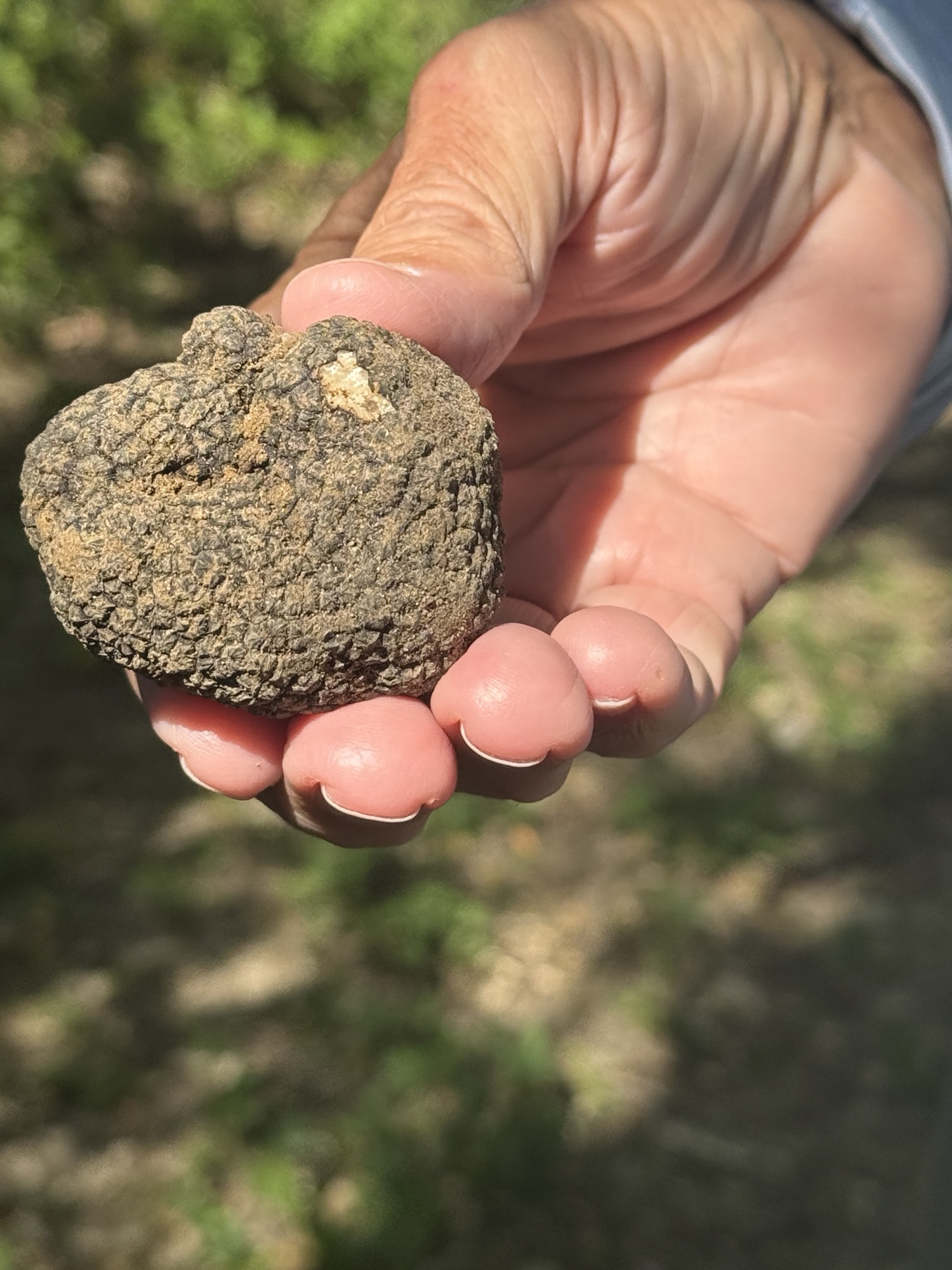
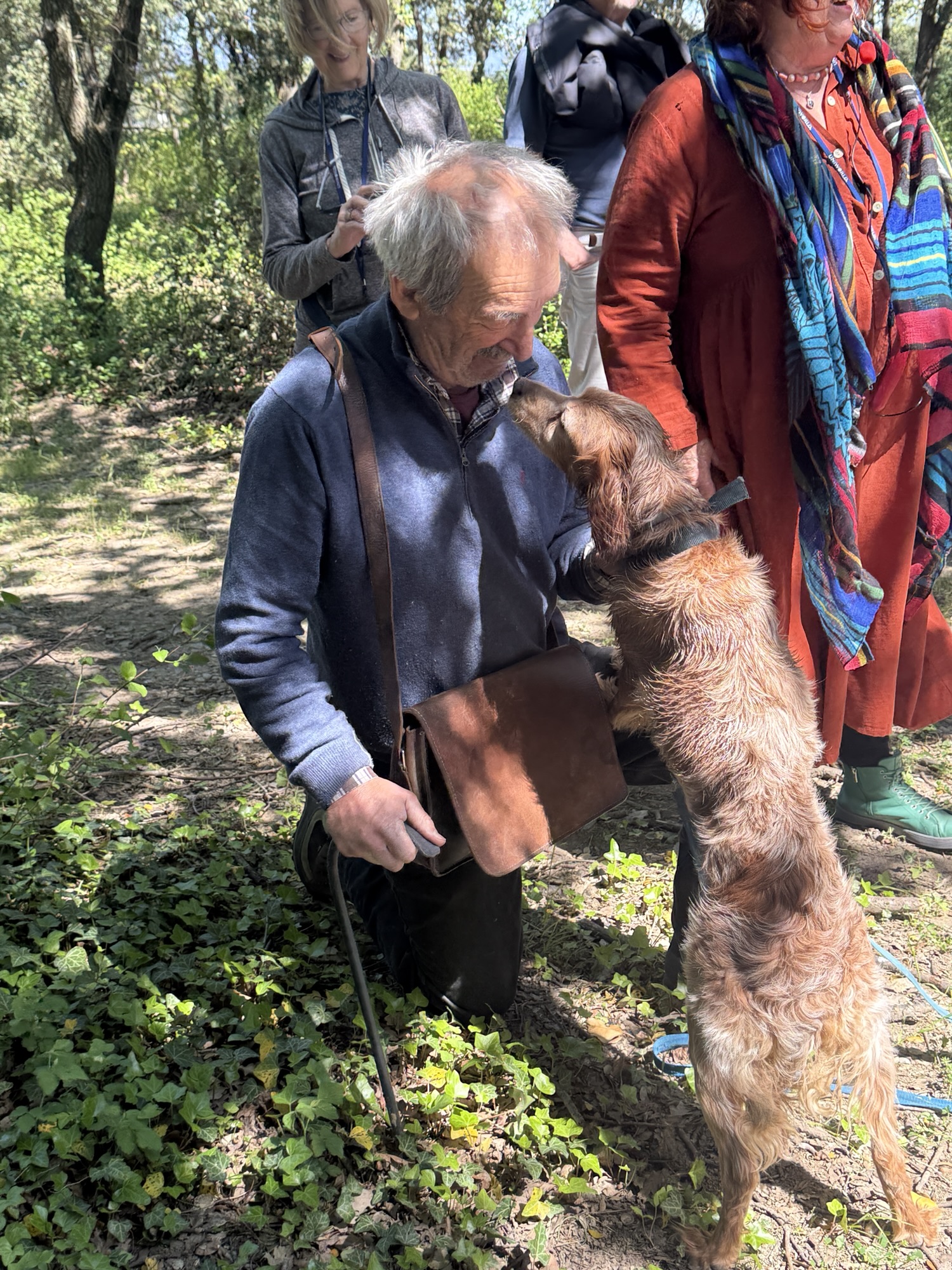
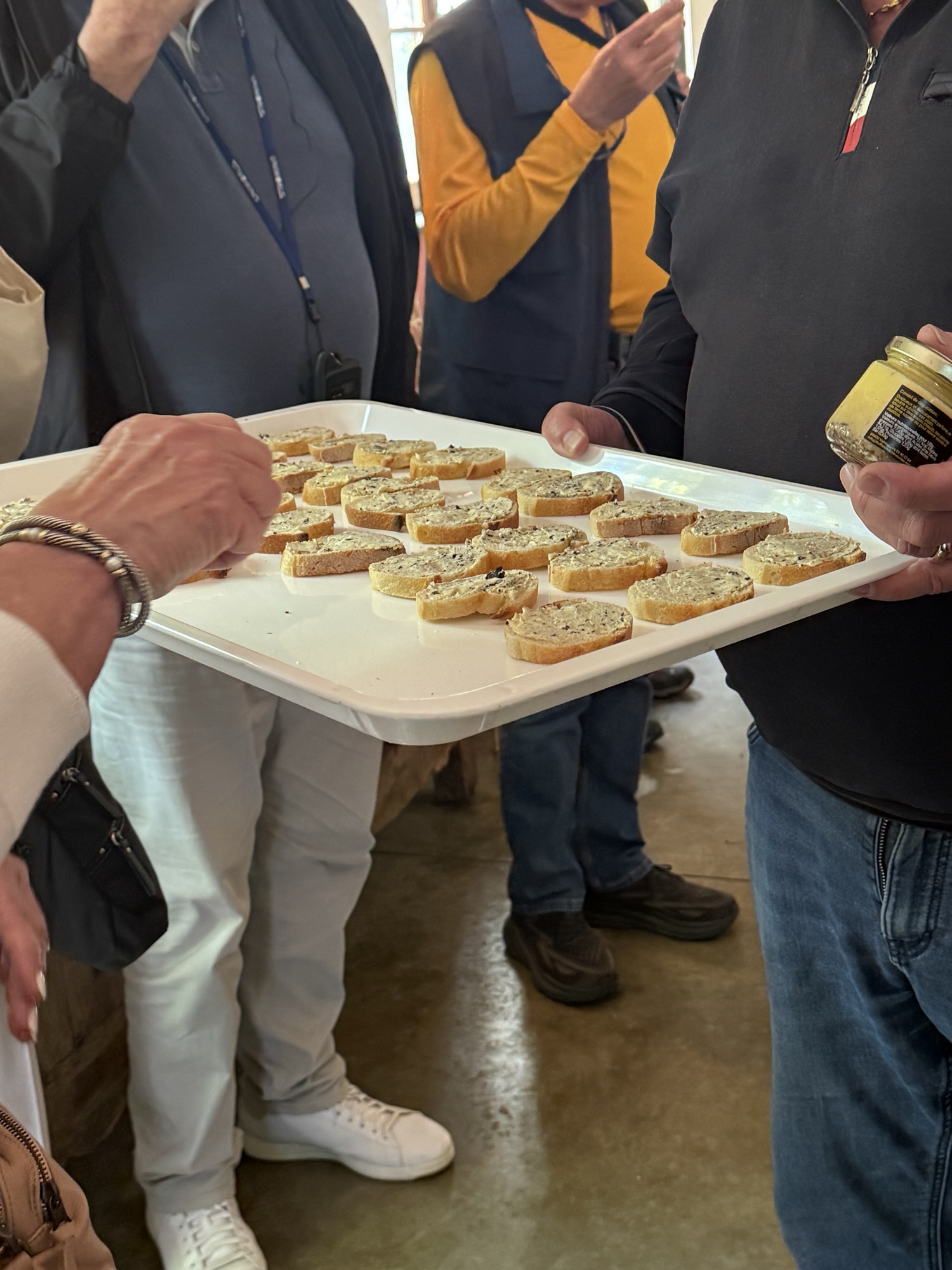
It was such a fascinating tour! We finished with local wine and samples of many types of truffle based products on baguette slices.
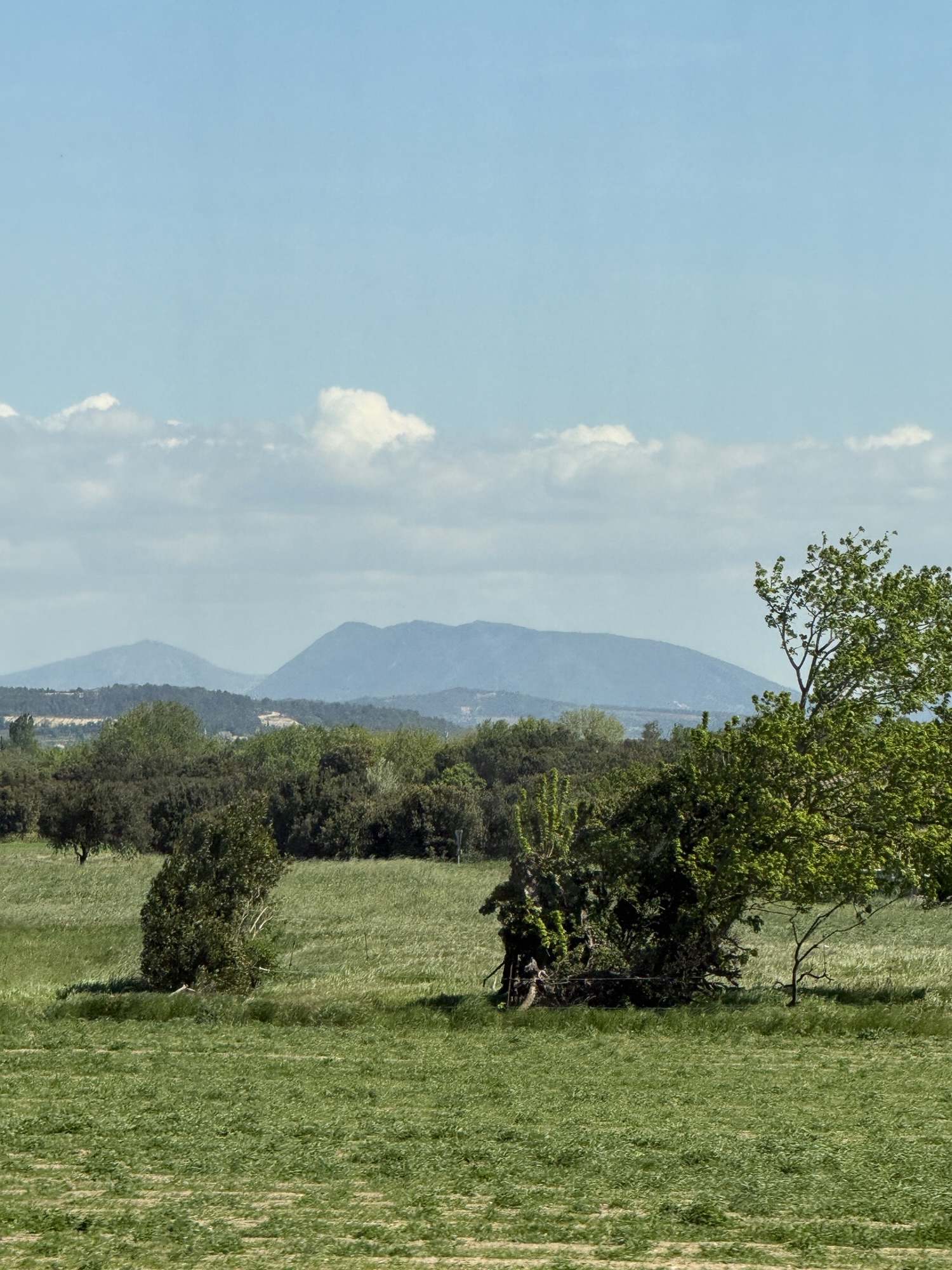
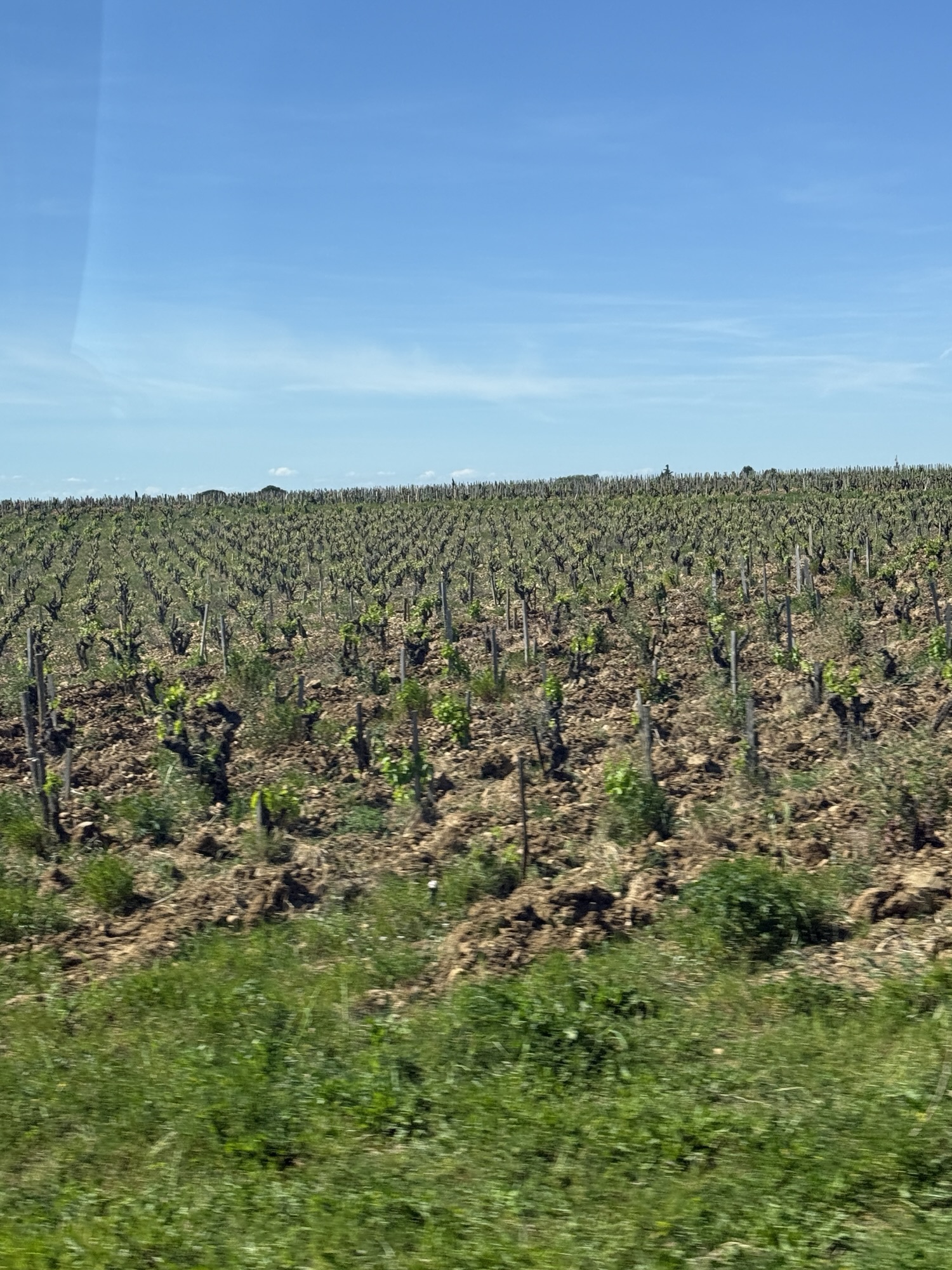
Jeannine gave us some other information about the area. Of course, Provence is famous for its lavender fields and you smell lavender everywhere. There are 3 varieties grown here. Wine is a famous product too and there are over 350 cellars in the area. You don’t see a lot of gardens because the vines are too valuable. Garlic and peaches are two other products of the area.
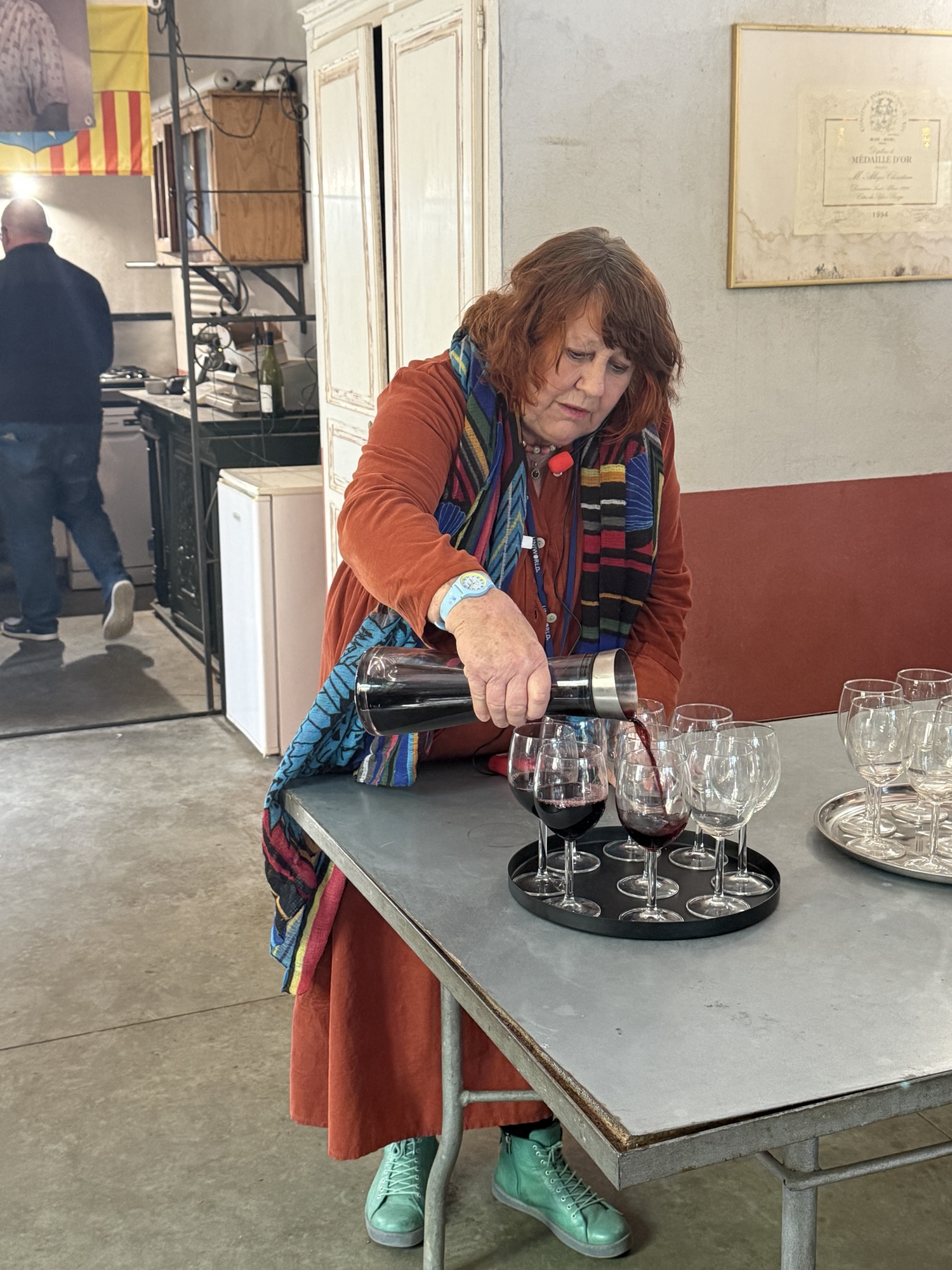
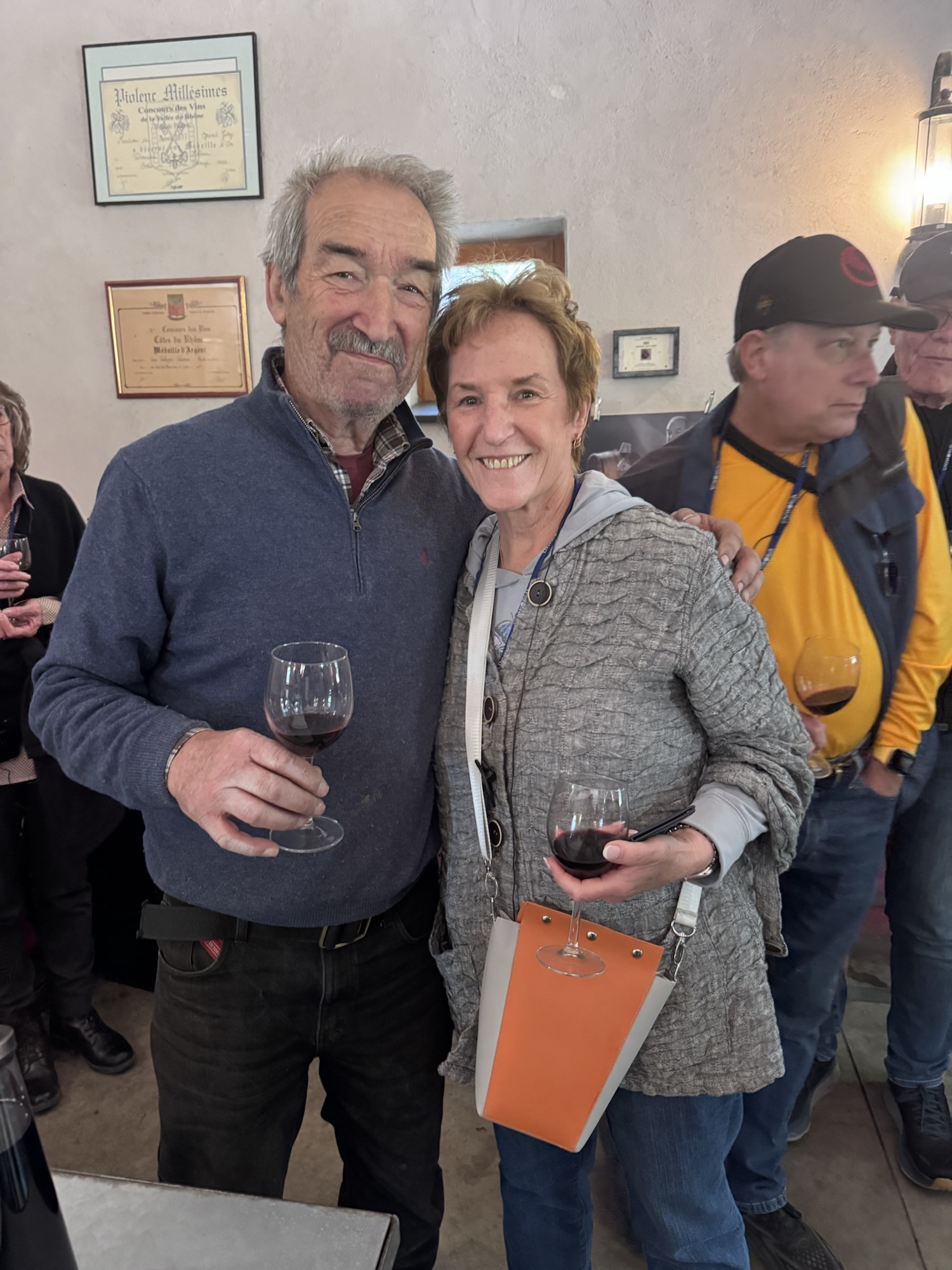
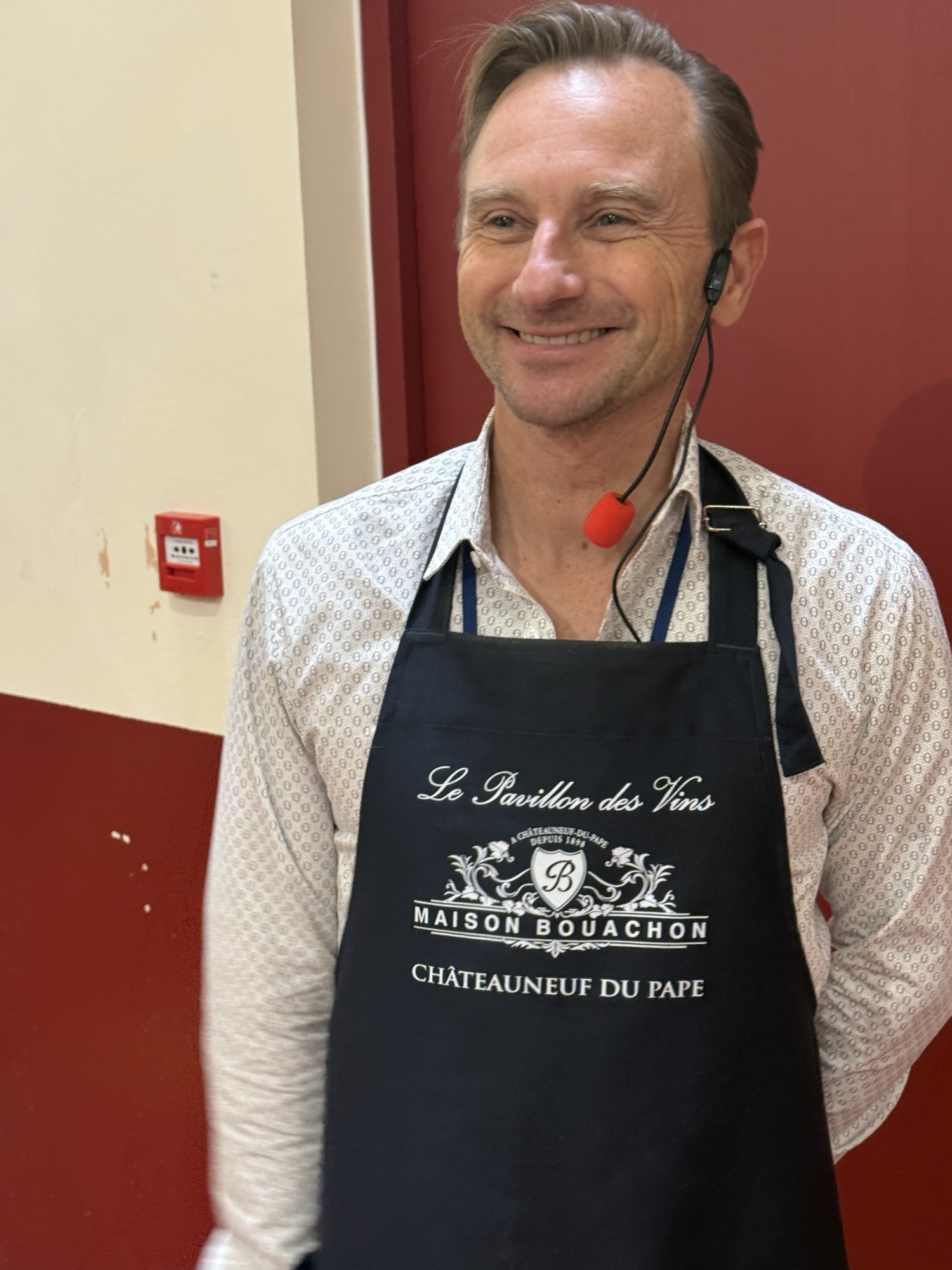
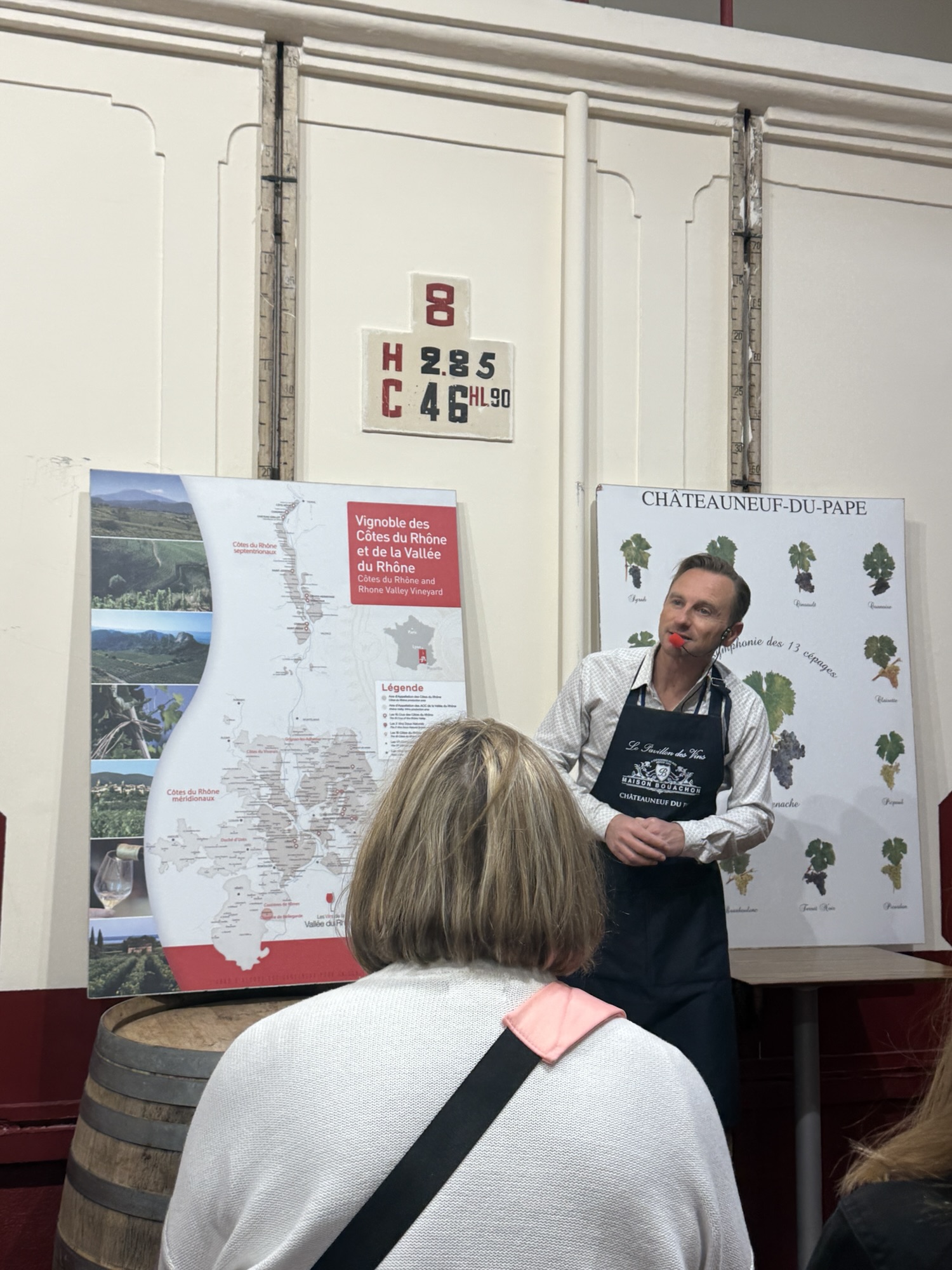
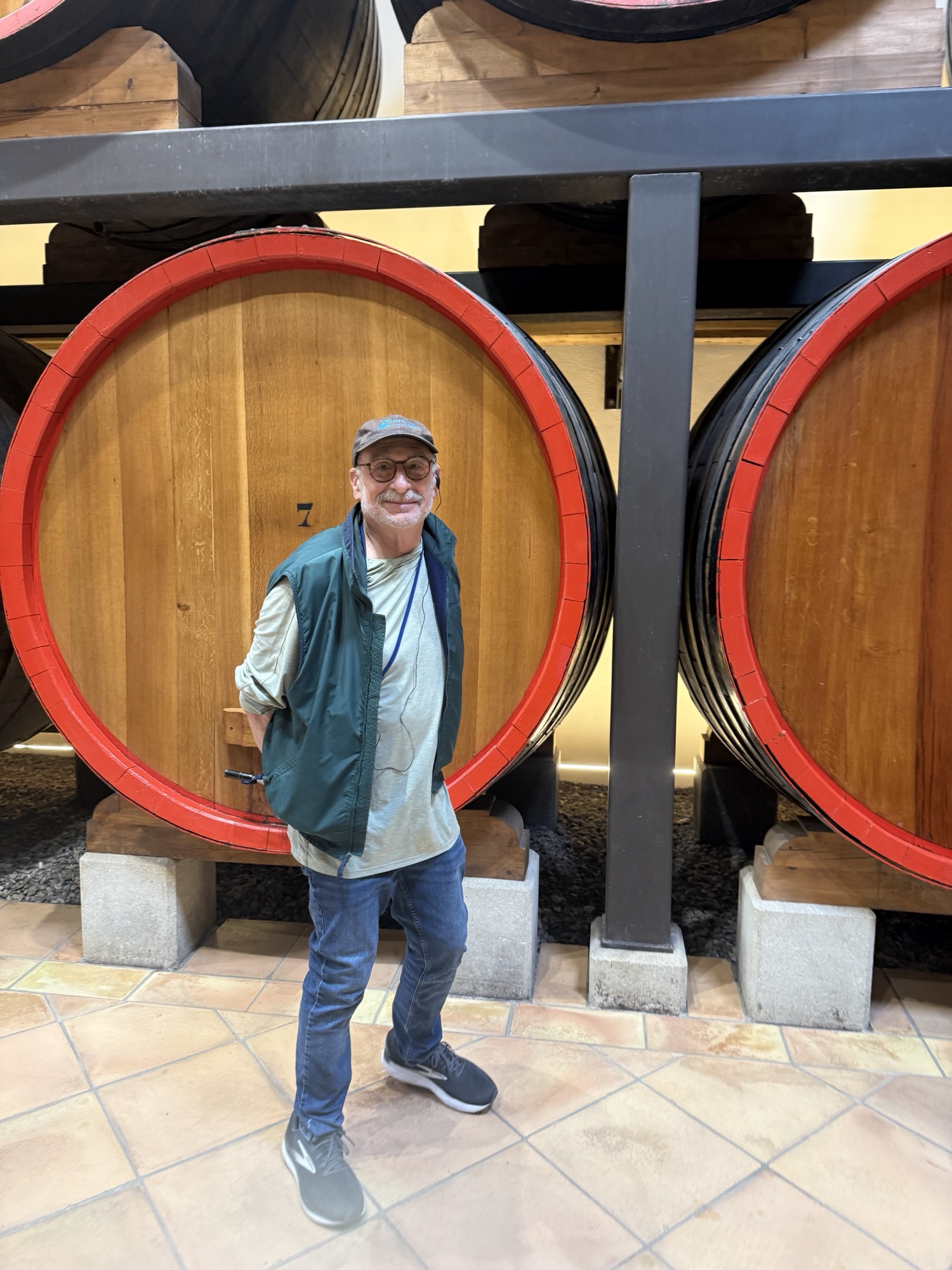
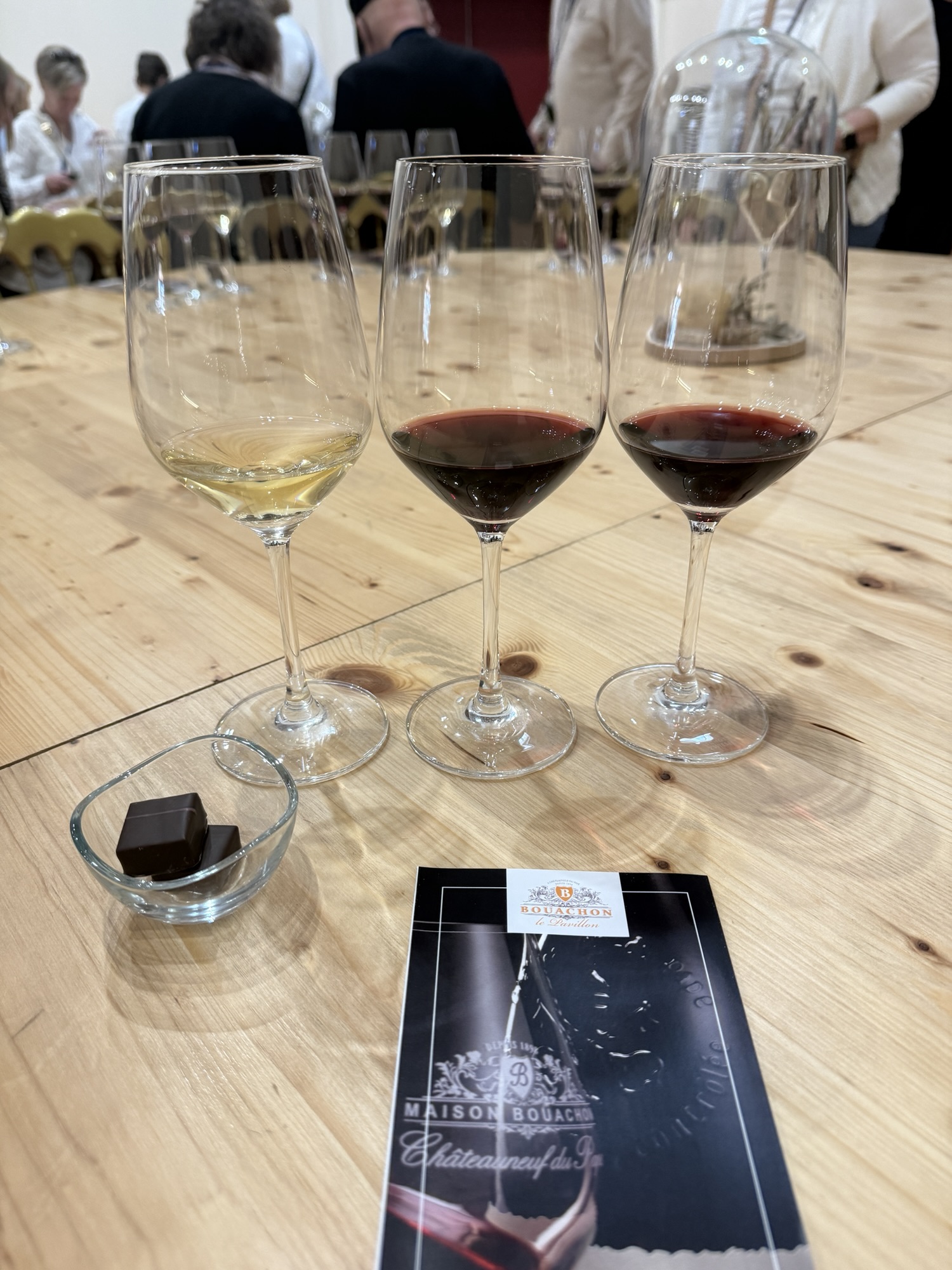
We had our next stop at Madison Bouachon in Chateaneuf du Pape for a wine tasting. We had a tour through some of the cellars and went on to a room for the tasting. The sommelier was very thorough in his explanation of how to taste the wines. We tasted one white and two reds. The reds were each paired with a chocolate.
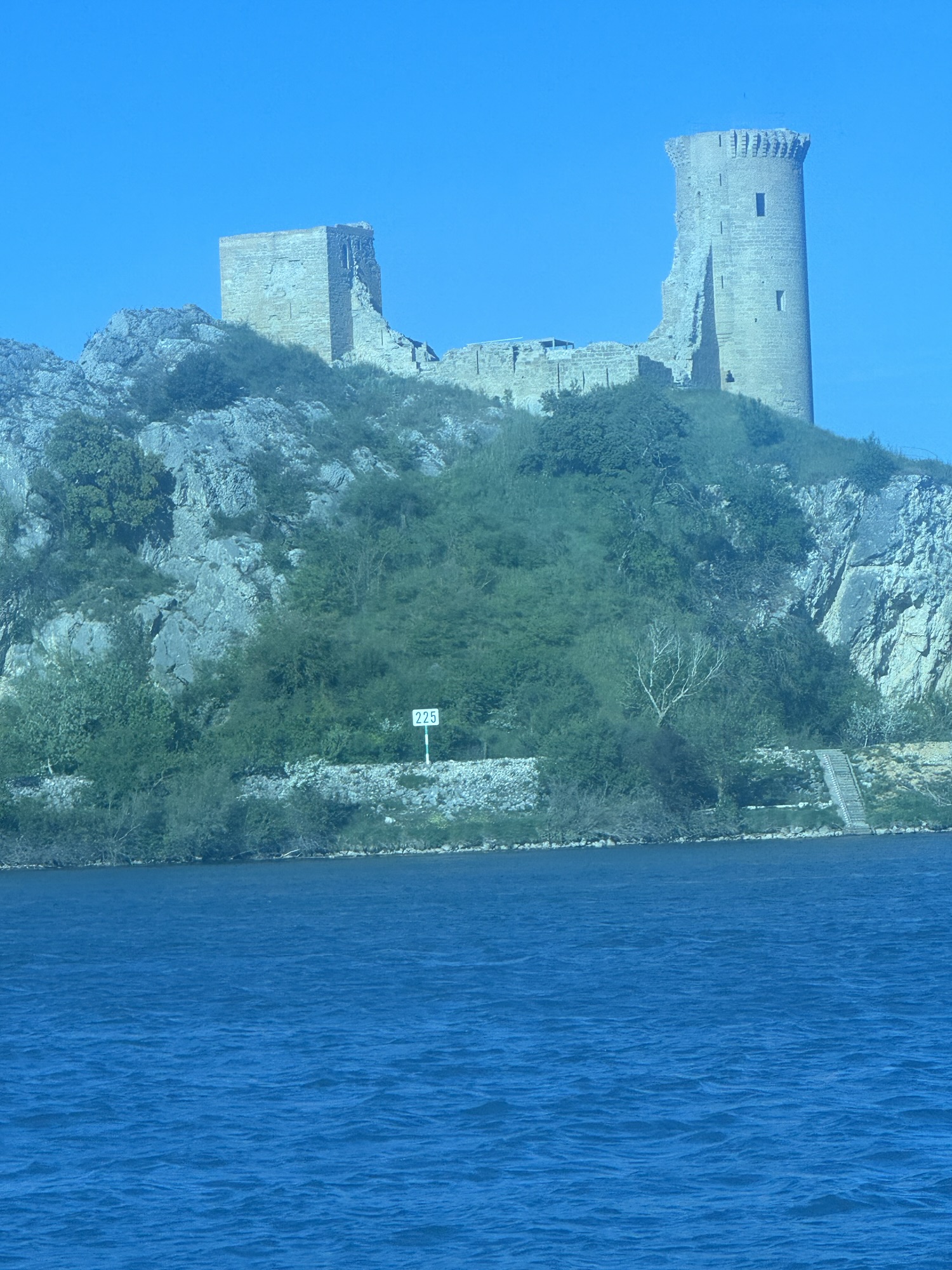
While we were on our tour, the ship moved from Viviers to Chateauneuf de Pape where we met it in time for dinner. Those who didn’t do the tour sailed with the ship which could have been kind of confusing.
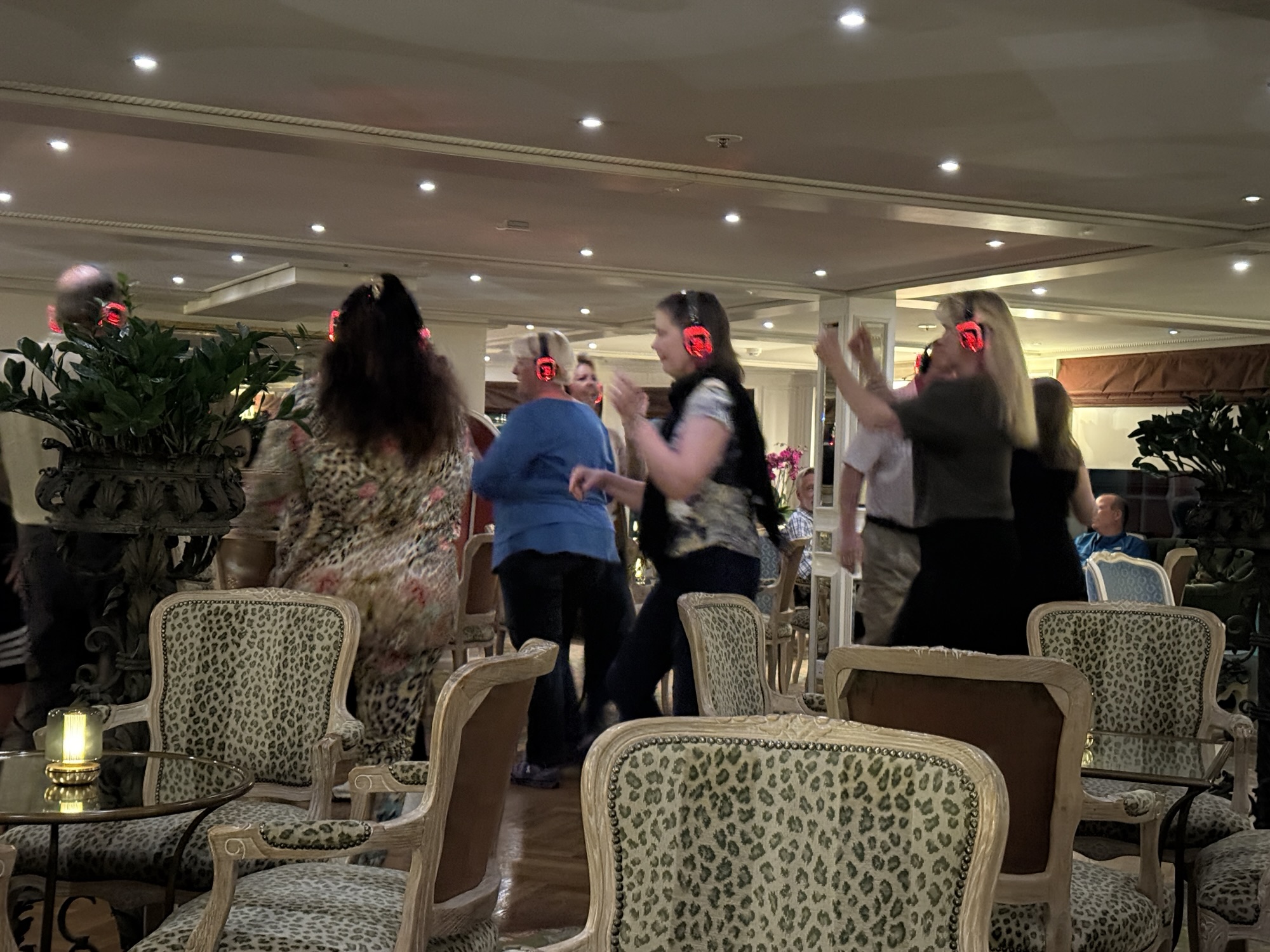
After dinner there was something called “Silent Disco” in the lounge. We had never heard of it so had to check it out.
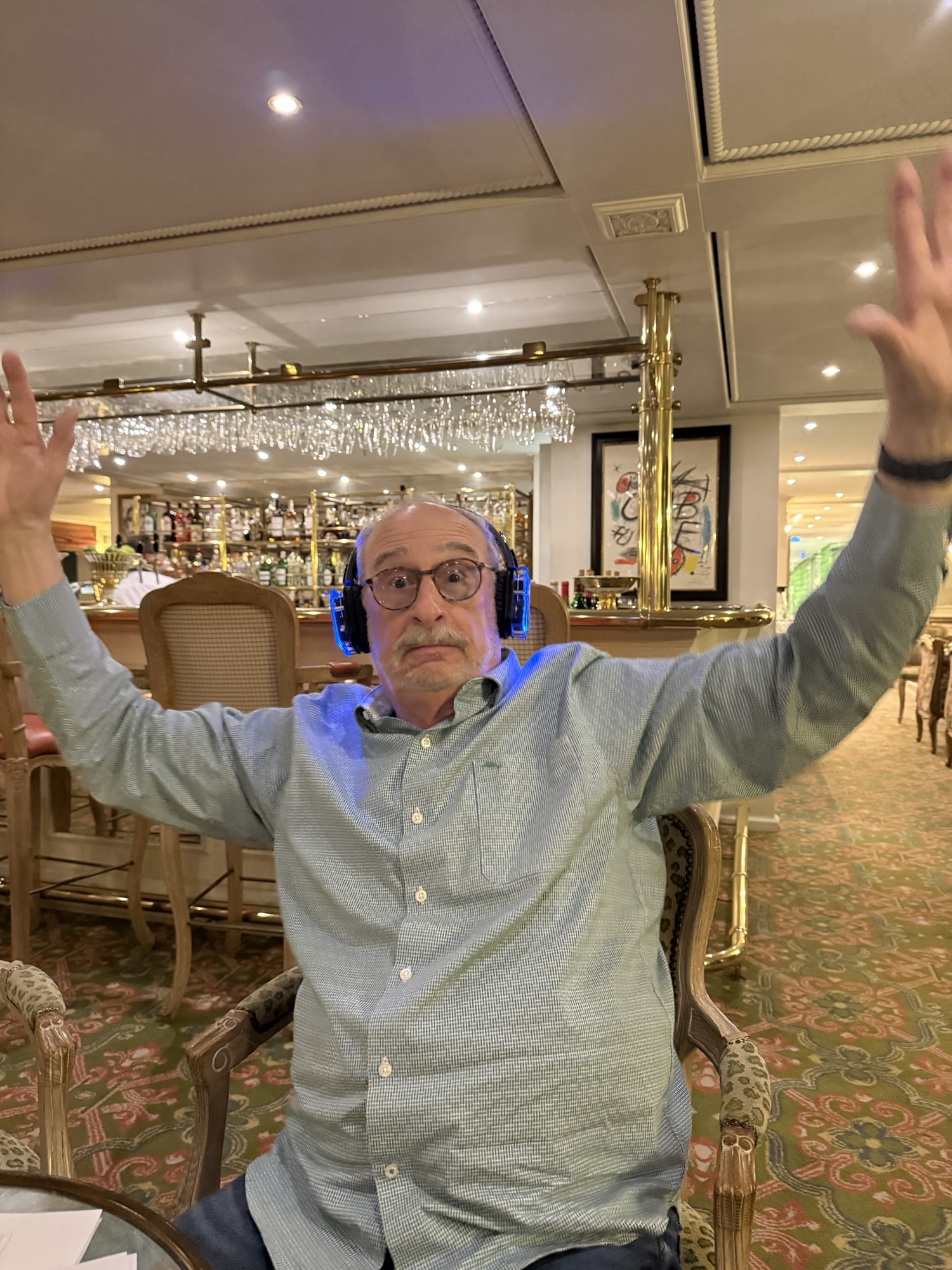
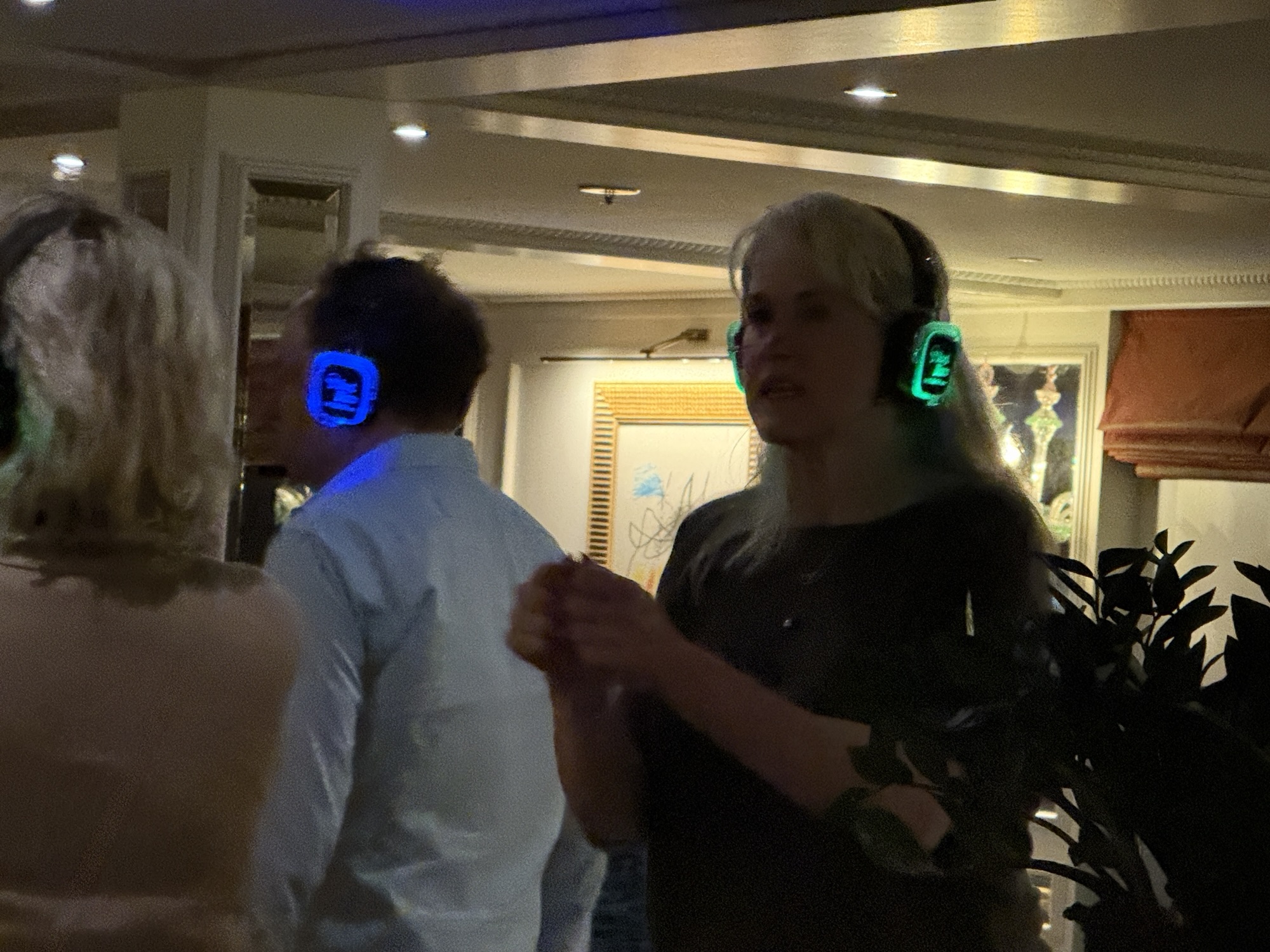
Basically you got a set of headphones that had three colors, each playing a different selection of music. And then you danced or moved to your own music which no one could hear but you. Very fun to watch and participate in.
The ship sailed to Avignon tonight and we will be on tour there tomorrow.


