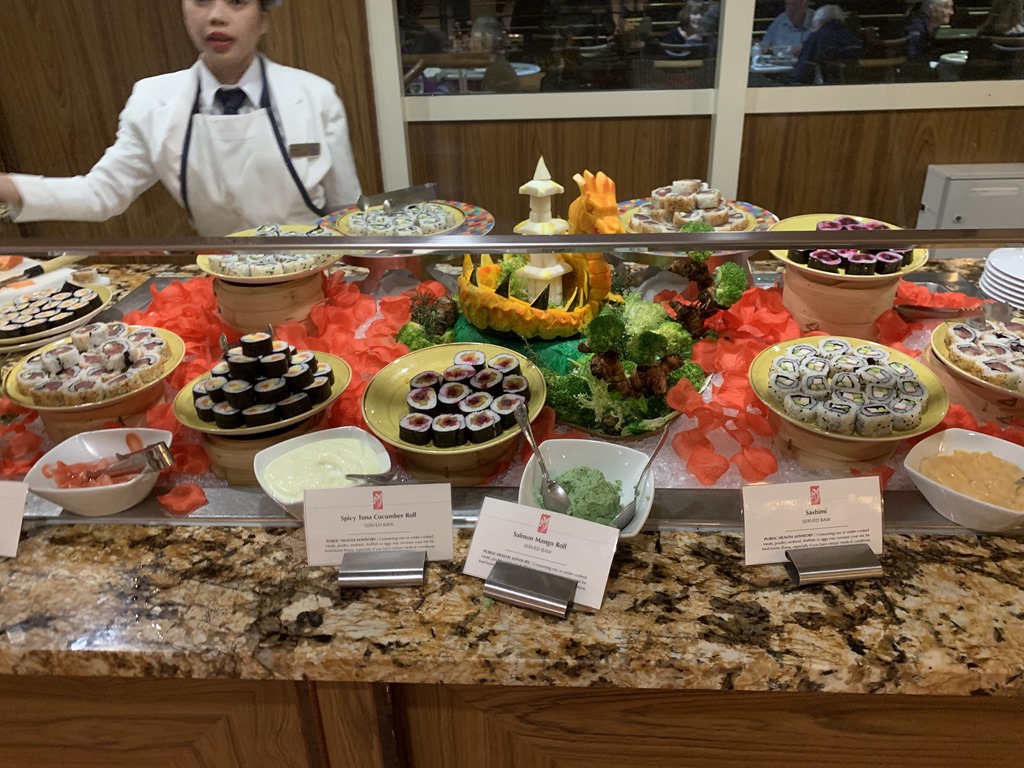
Day 2, Tokyo, Japan

March 31, 2019

Our second day in Tokyo, and we had a full day tour. Today our guide was Himoto. She was really amazing – good English speaker and full of facts about Japan and Tokyo. She even showed us the meaning of some of the alphabet figures by holding up the symbol and having us guess what they were.  And she showed statistics and had us also guess the meanings.  Very interesting approach.  Real estate in Japan is expensive as is almost everything else.  A small condo is about $700,000 US.  But they do not pay as much in taxes.  She pays 10% of her income in taxes and she said only the very rich pay about 20%.   Public university is about $5000/year but private universities are about the same cost as in the US.  Medical schools are much more expensive.

The most serious issue, as I mentioned before, is the aging of the population. They have always resisted bringing in foreigners but a law was passed and goes into effect on April 1 to allow it as they need the workers and caregivers.

IMG_4778

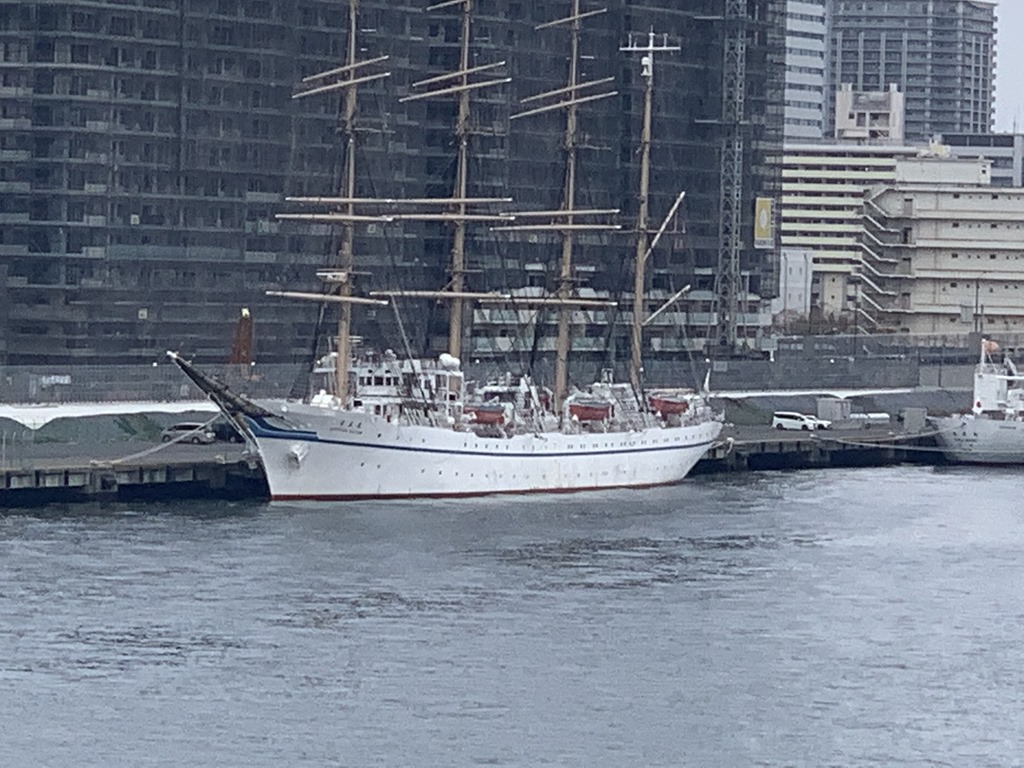
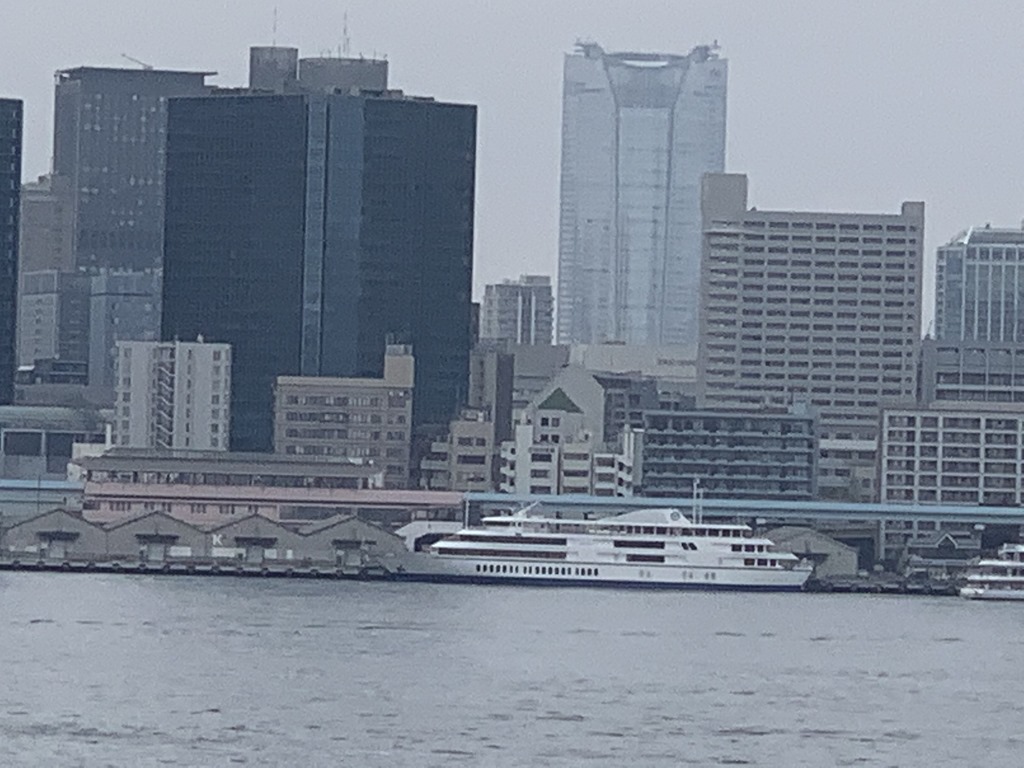
Tokyo is the capital of Japan (it was formerly known as Edo). The word Tokyo means eastern capital. The bay is 18 miles long which is why it took us some time to get into the port.

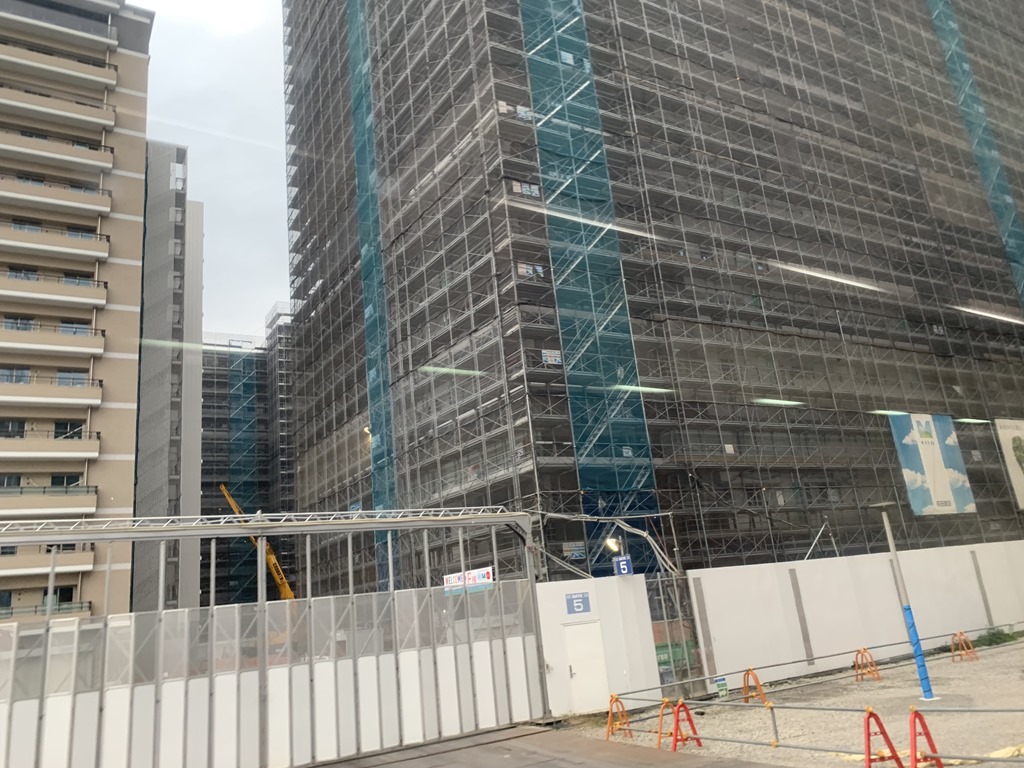
We again passed by the Olympic Village under construction.  Himoto says it will be very hot during the Olympics – their summers are quite hot and humid but winters are quite mild.  It was very chilly this morning, started at 41 degrees but warmed to 50 as we started our tour. Still, jackets, jeans and scarves were the wardrobe of the day.

IMG_4775

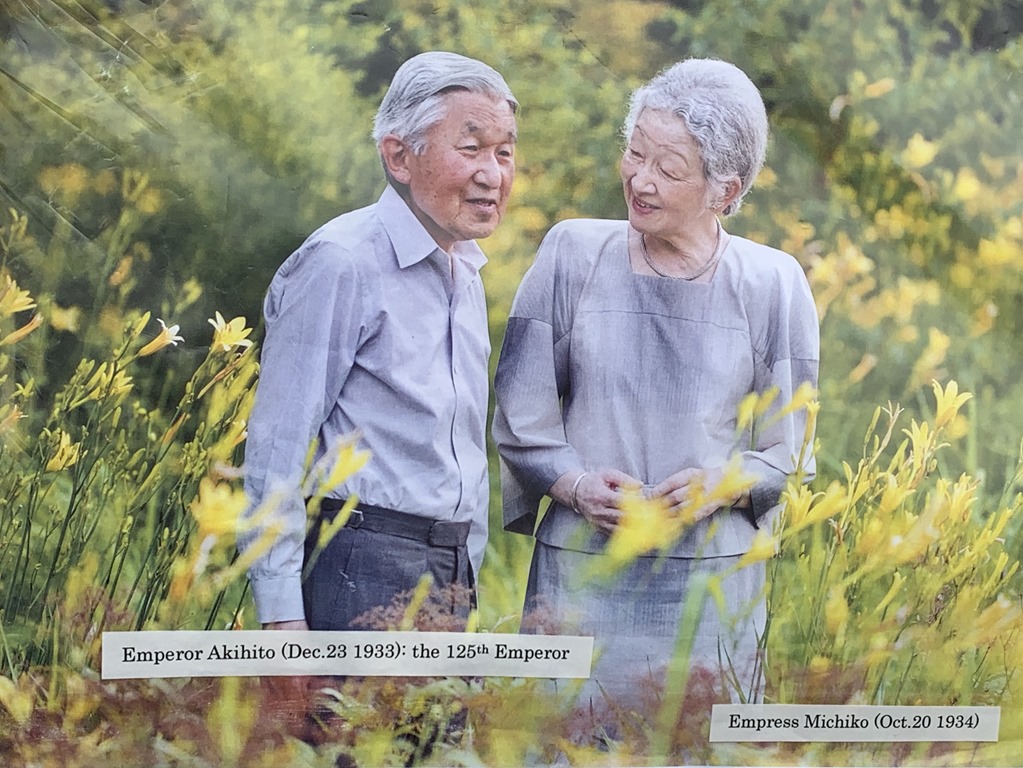
Our first visit was to the Imperial Palace, home of the emperor of Japan.  This is in the heart of the city.  For 2 weeks each spring and fall, the palace is open to visitors.  This is the spring open time, but the overwhelming crowds enabled us to just have time to see the outside of the palace and hear about the government.  The current emperor is 86 years old and is  retiring in April and the crown prince will take his place on May 1.  The new era will be called “Good fortune with peace”. The emperor and his wife live here at the Palace, but the crown prince now lives in a separate residence surrounded by gardens.  This is for security reasons.  The emperor has no real power, the government is run by a prime minister.  Here are pictures of Emperor Akihito and his family.
IMG_4790IMG_4791

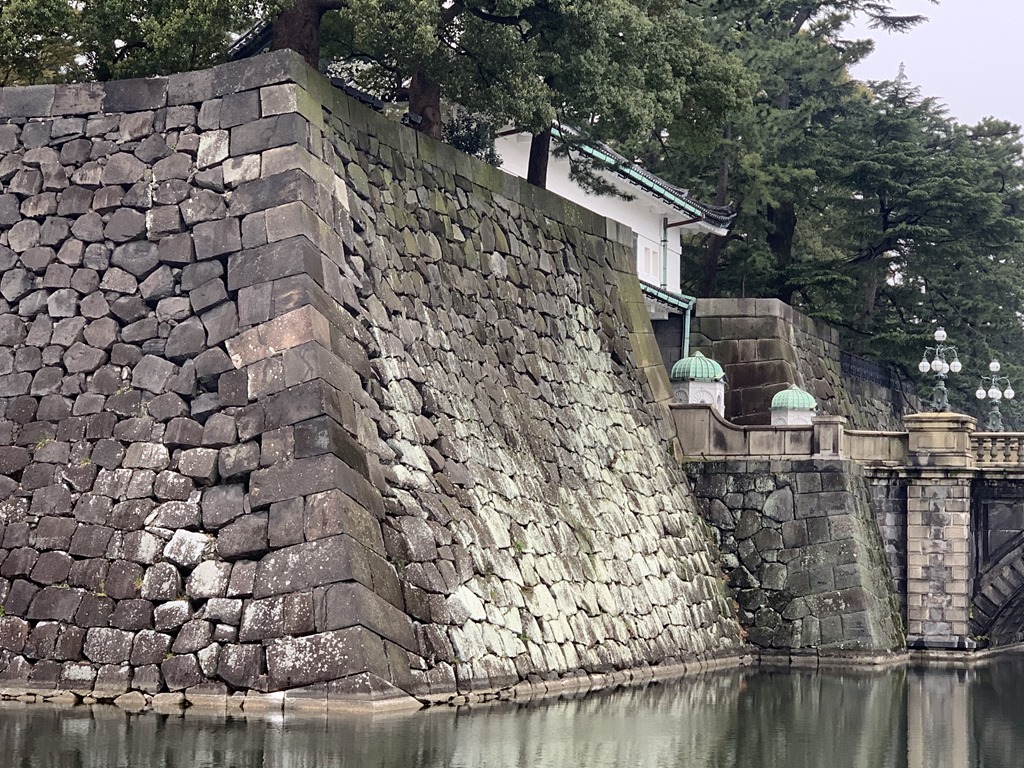
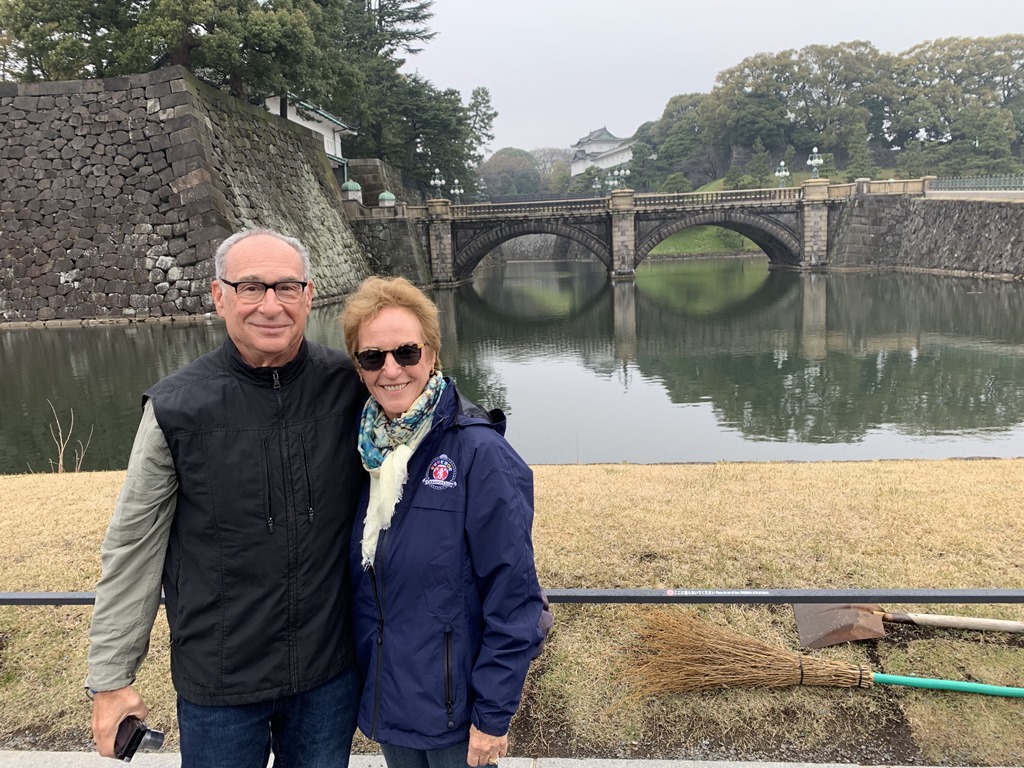
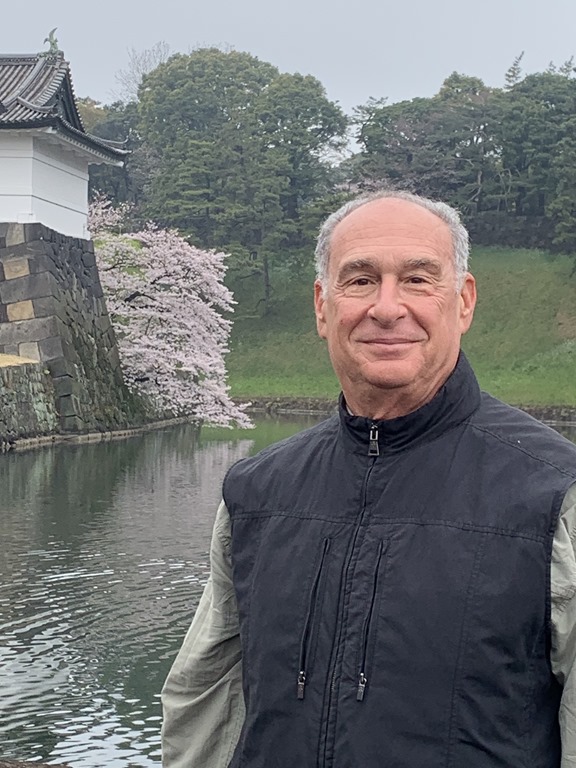
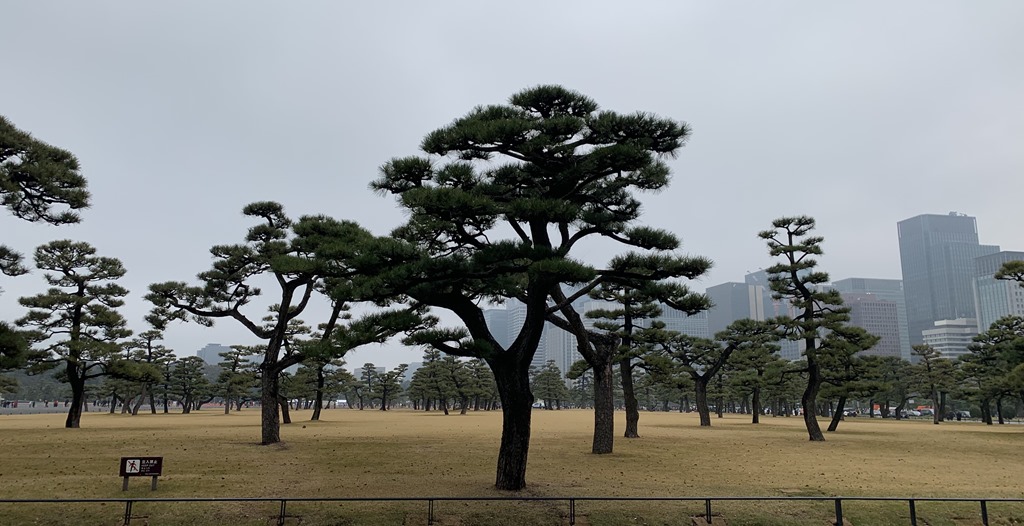
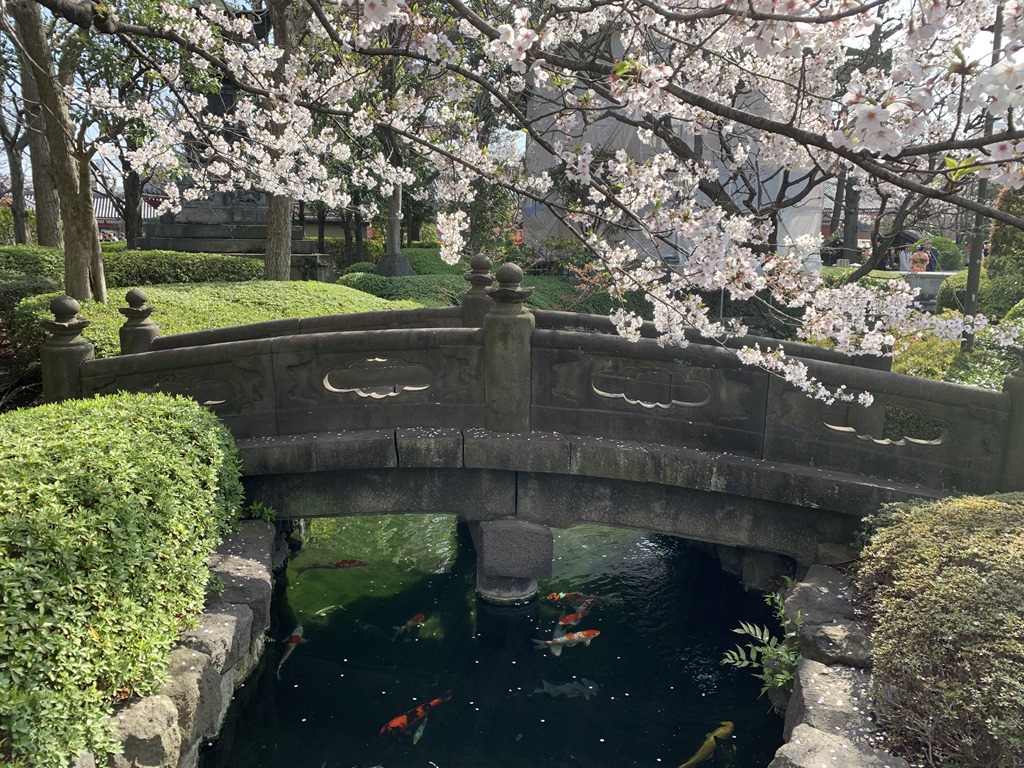
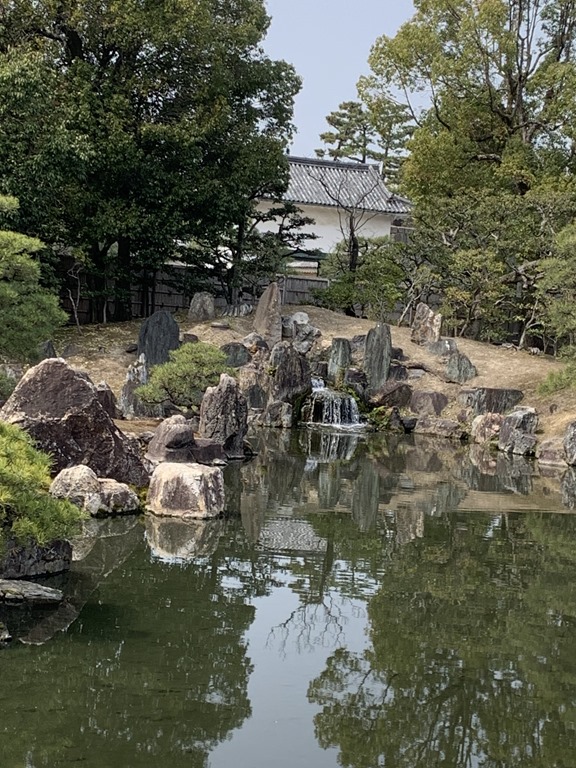
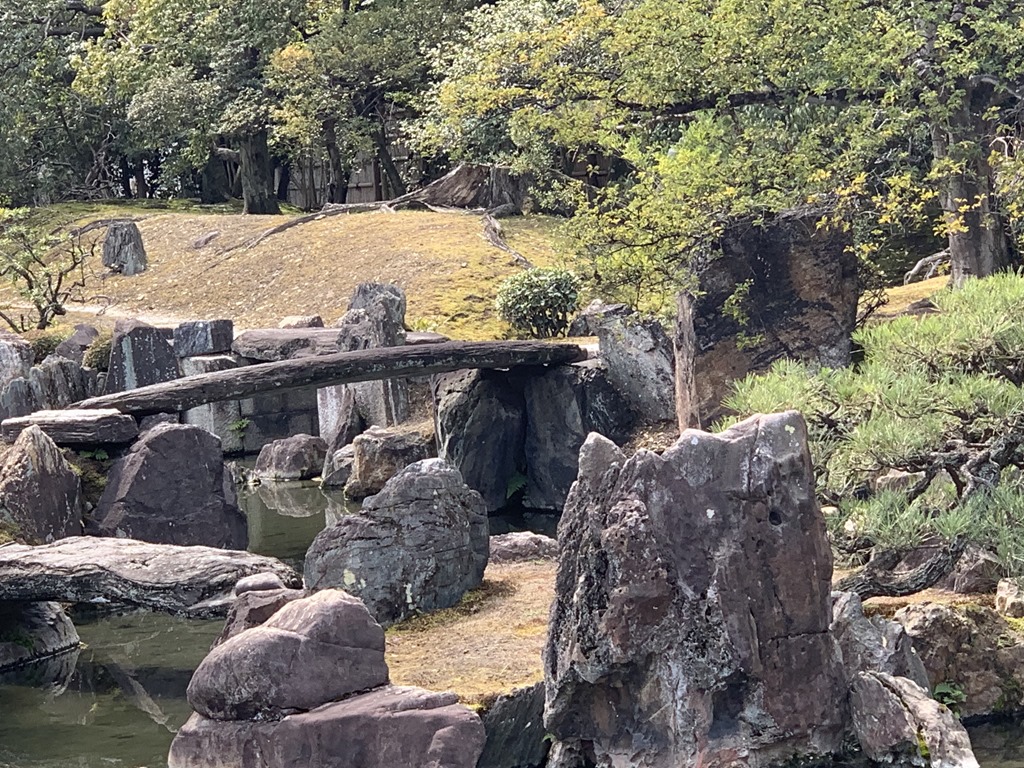
The palace grounds and waterways are beautiful. The bridge is called the Nijubashi Bridge and spans the moat.
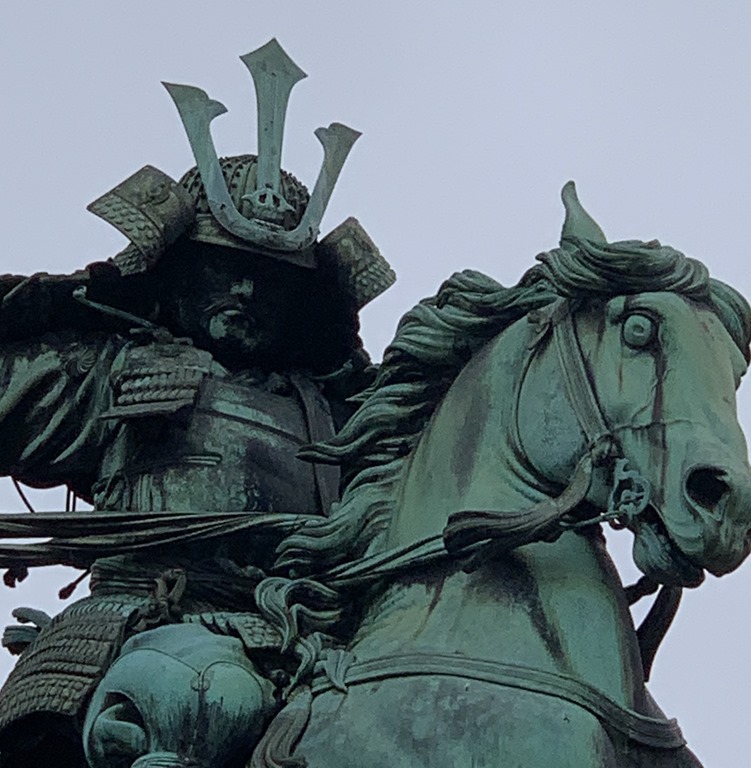
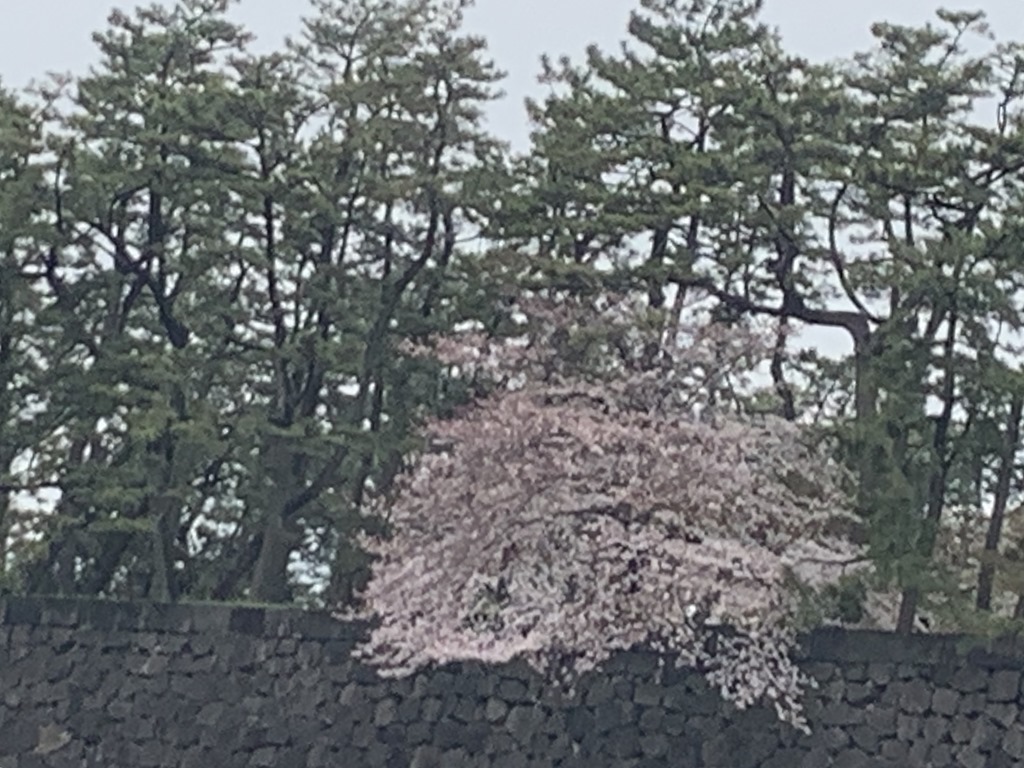
IMG_4780IMG_4781IMG_4783IMG_4784IMG_4786IMG_4788IMG_5085IMG_4789IMG_4797IMG_4799

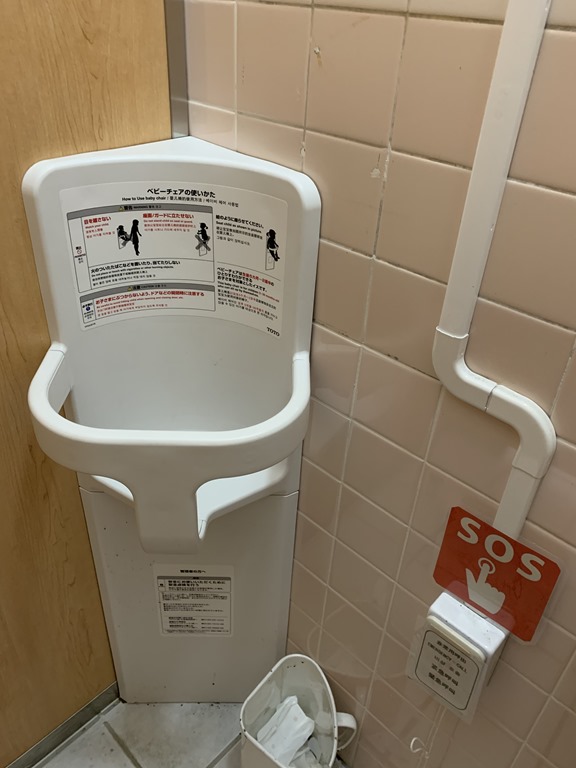
I can’t stop writing about the bathrooms, I guess.  All with the amazing toilets.  As I have mentioned before, all of the restrooms are ultra modern and spotless.  Many even have solution in them to clean them. But here was a first for me – what do you do with your baby when you are in the stall?  toilet seat.
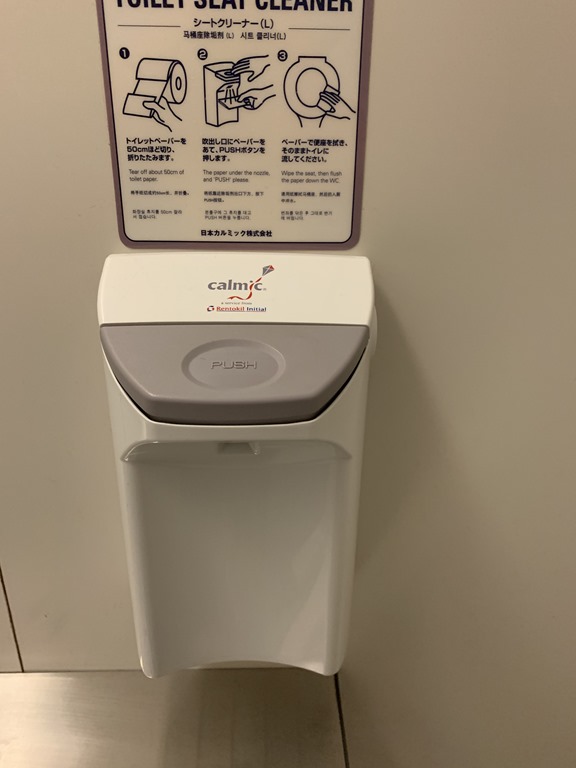
IMG_4940IMG_4798

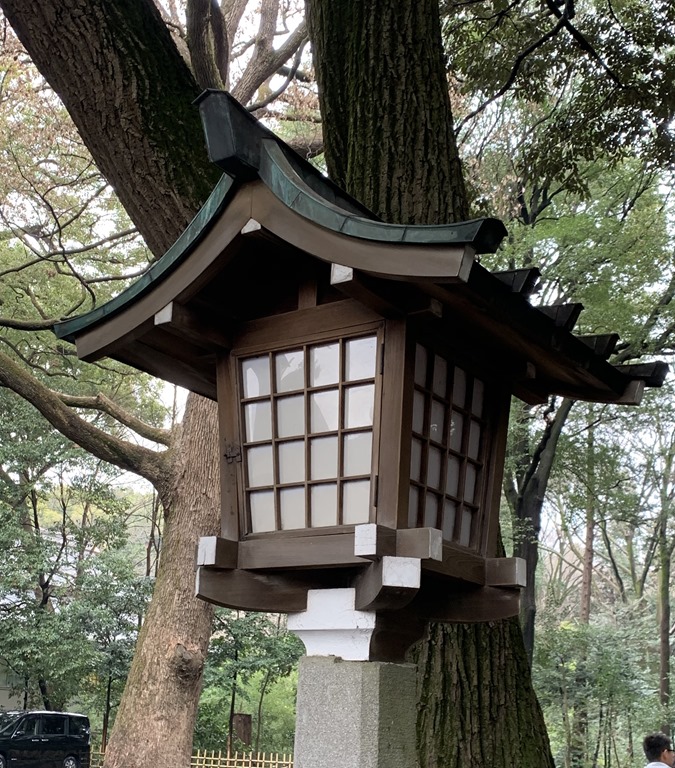
Our next stop was the Meiji Shrine which is the most renowned Shinto shrine in Tokyo.  People here generally practice Shinto or Buddhist religions – Himoto said 80 % Shinto and 90% Buddhist which adds up to more than 100% because many people practice both.  Shinto is quite interesting. Shinto or kami-no-michi (as well as other names) is the traditional religion of Japan that focuses on ritual practices to be carried out diligently to establish a connection between present-day Japan and its ancient past. They believe that spirits live in natural places. As I mentioned in the Kyoto post, when at a shrine, you bow twice, clap hands twice, pray then bow again.  They believe in many spirits who are quite busy so you have to get their attention before you pray!  There is no founder, no holy book and not even the concept of religious conversion. Shinto values harmony with nature and a sincere heart.  Ancestors are revered and tied to many of the celebrations.

The Meiji Shrine is surrounded by a 200 acre park and while somewhat crowded, it was nothing like what we saw on the streets and in the Palace area.

IMG_4807IMG_4808IMG_4809IMG_4810

Here, you pay respect at the font.  First you rinse your left hand, then your right hand. You pour water into your left hand and rinse your mouth.  Last you rinse your left hand and rinse the dipper.

IMG_4813IMG_5083

Emperor Meiji passed away in 1912 and Empress Shoken in 1914.  After their deaths, people wished to commemorate their virtues and to venerate them forever, so they donated 100,000 trees from all over Japan and overseas and they worked voluntarily to create the forest.  The shrine was established in 1920 so will celebrate 100 years next year.

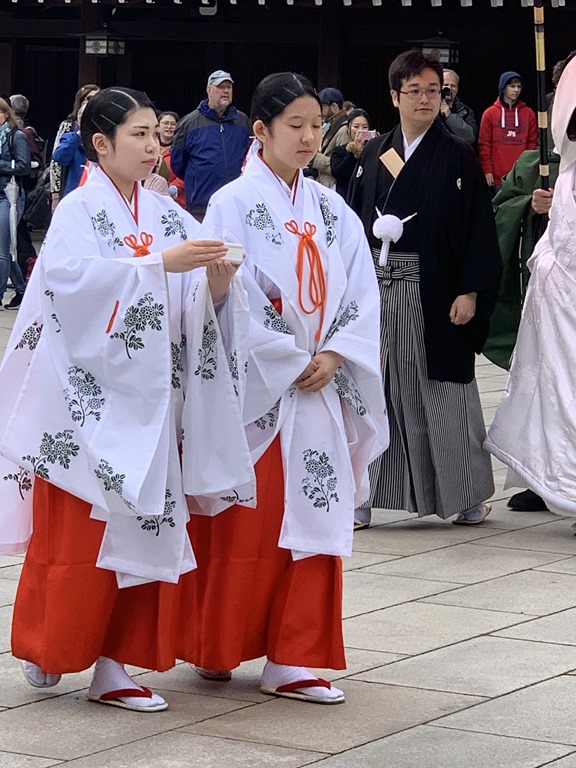
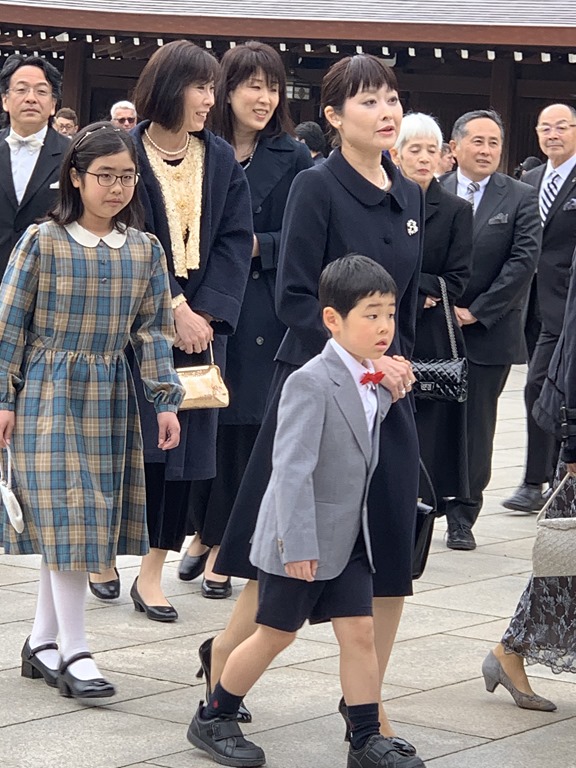
We were lucky to see two wedding processions while in the shrine. Notice the hair covering on the brides.

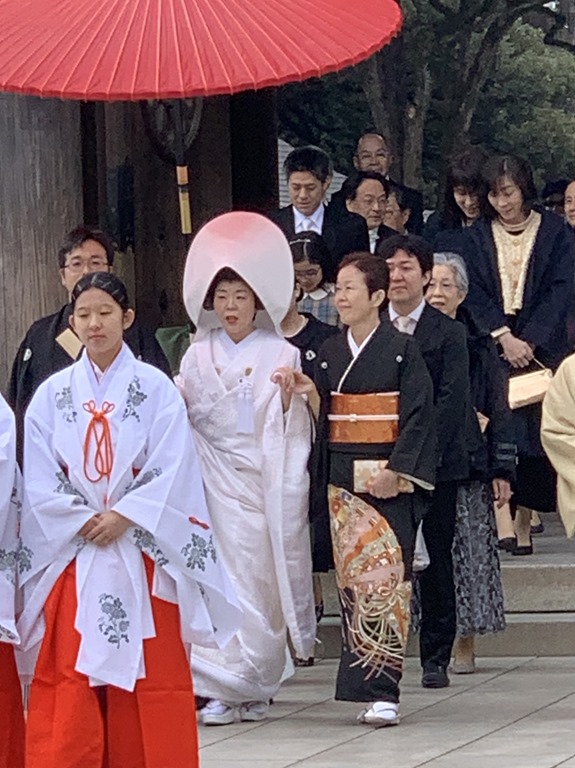
IMG_4816IMG_4833IMG_4834IMG_4835IMG_4836IMG_4837IMG_4838IMG_4840IMG_4842

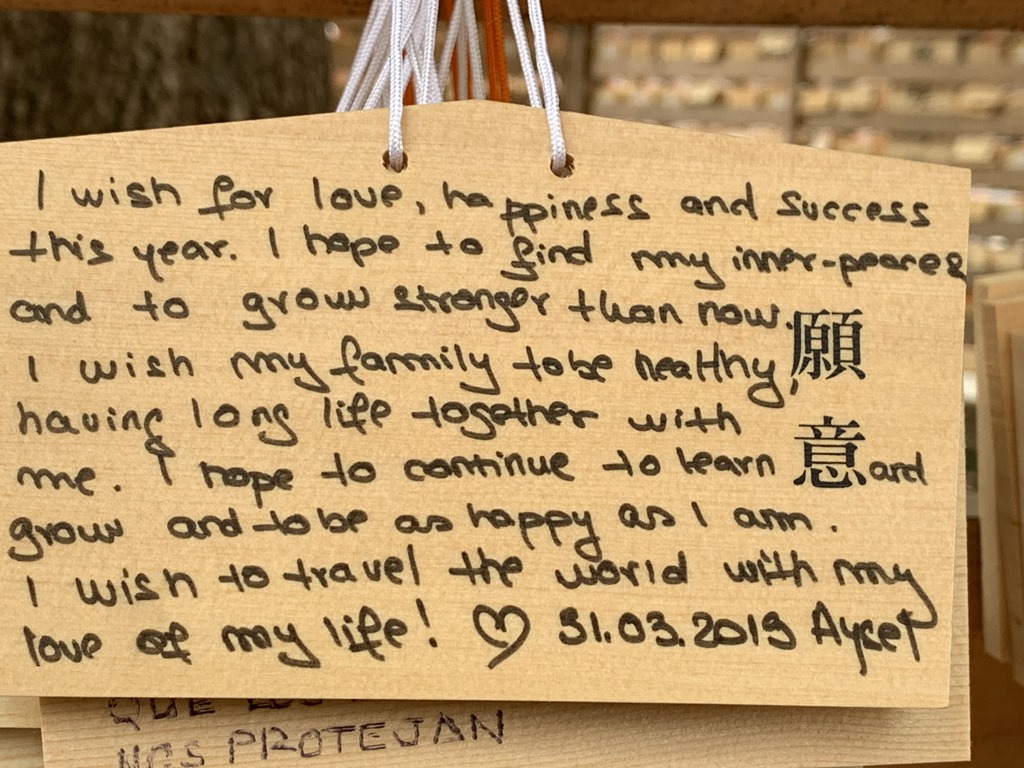
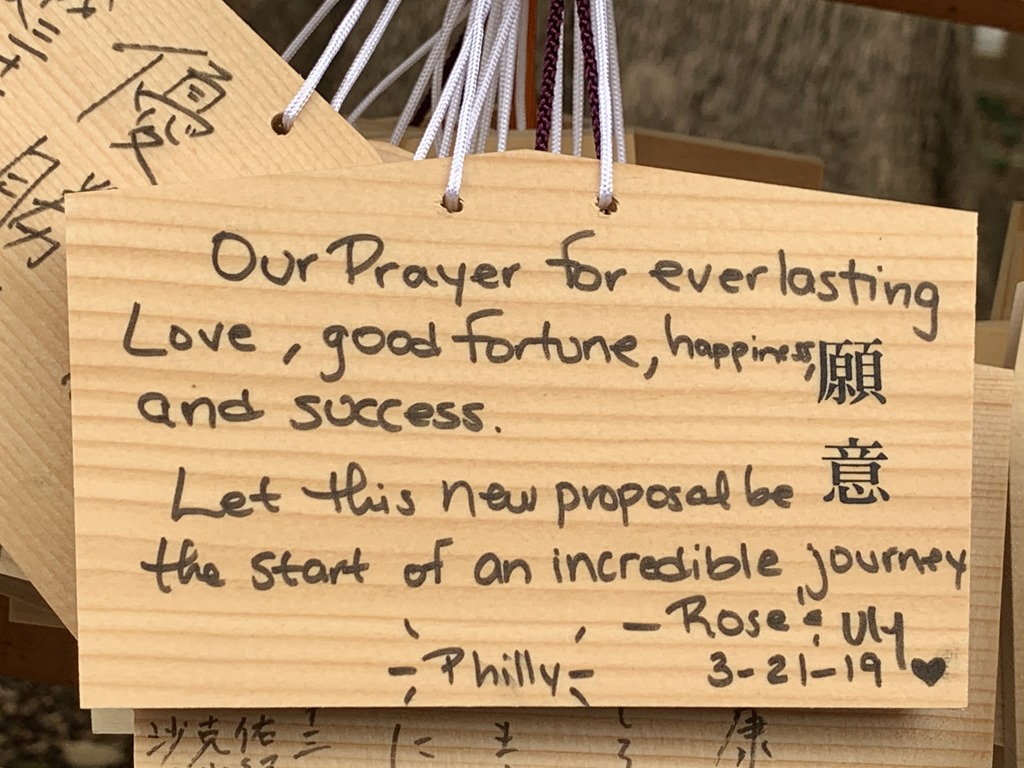
Another interesting thing we noticed here is the wishes that people wrote – they are all displayed openly and are in many languages. They are on what is called Ema boards or Japanese wishing planks.  Here is what the area looks like and here are some of the wishes in English. Had to include one I spotted from “Philly”!
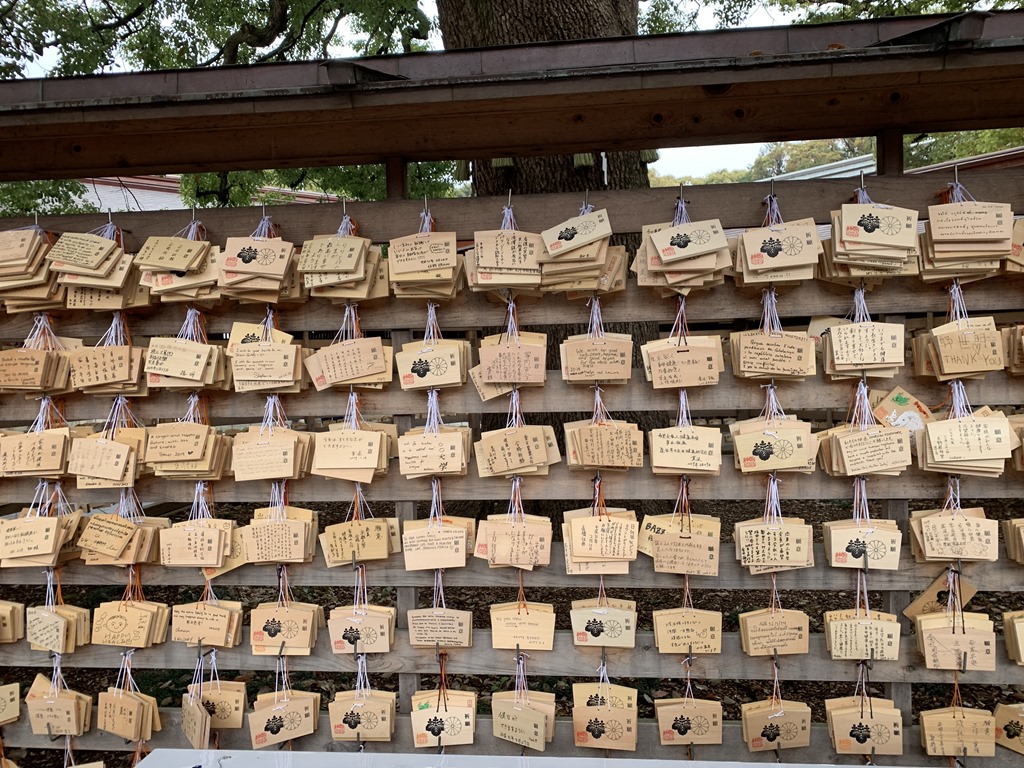
IMG_4820IMG_4821IMG_4847IMG_4848IMG_4849IMG_4852IMG_4853

This rope between the trees is the marriage tree and you are supposed to have your picture taken under it. The lightning symbols are lucky because lightning signifies rain which is needed for rice to grow.

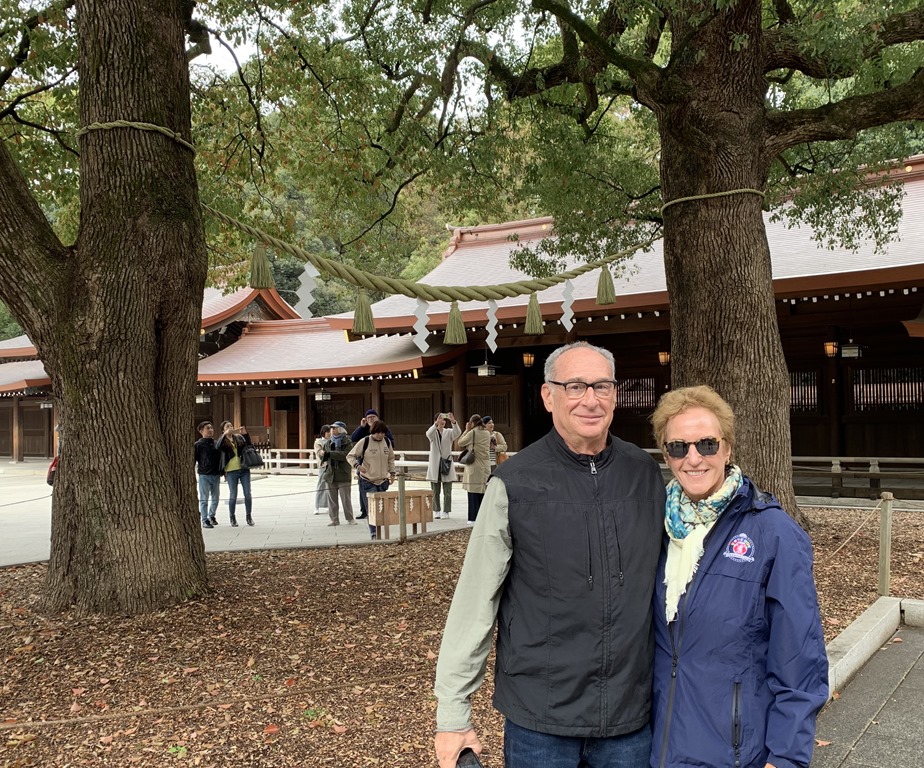
IMG_4827IMG_4829

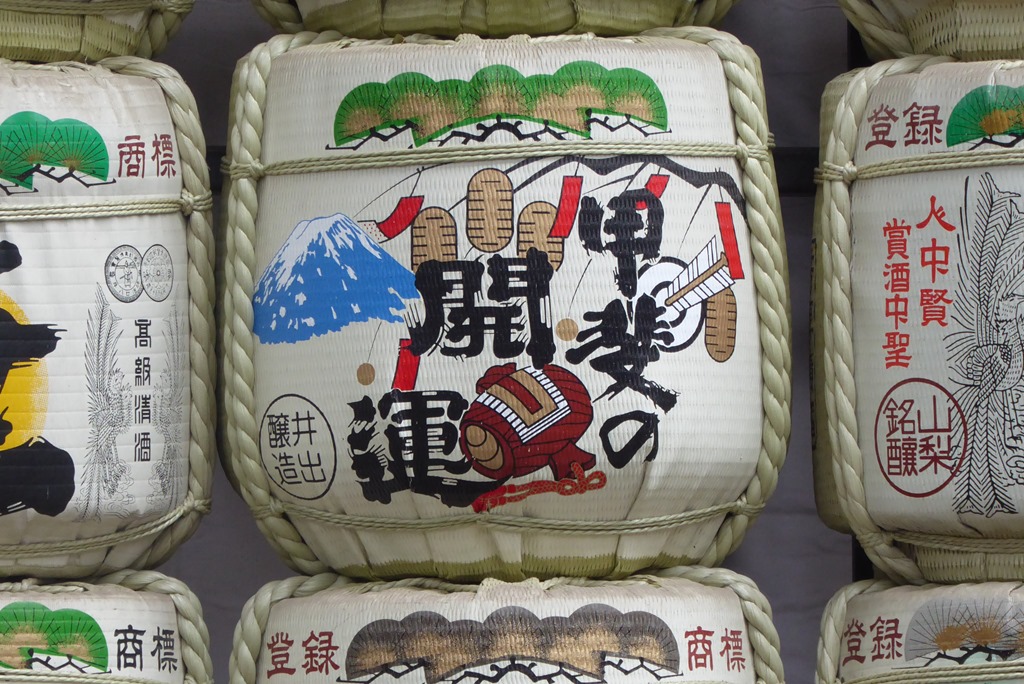
There was a display of these colorful sake barrels and also wine barrels as we left the shrine area.

IMG_4856IMG_4857IMG_5071IMG_5073

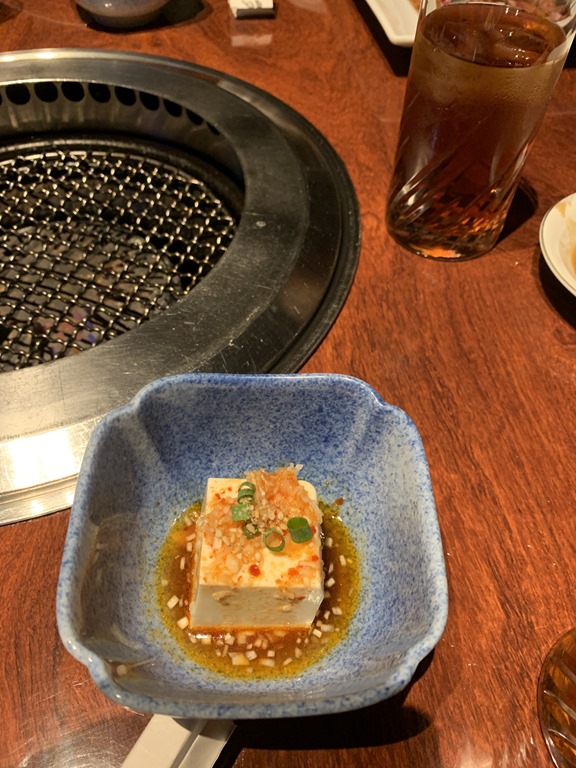
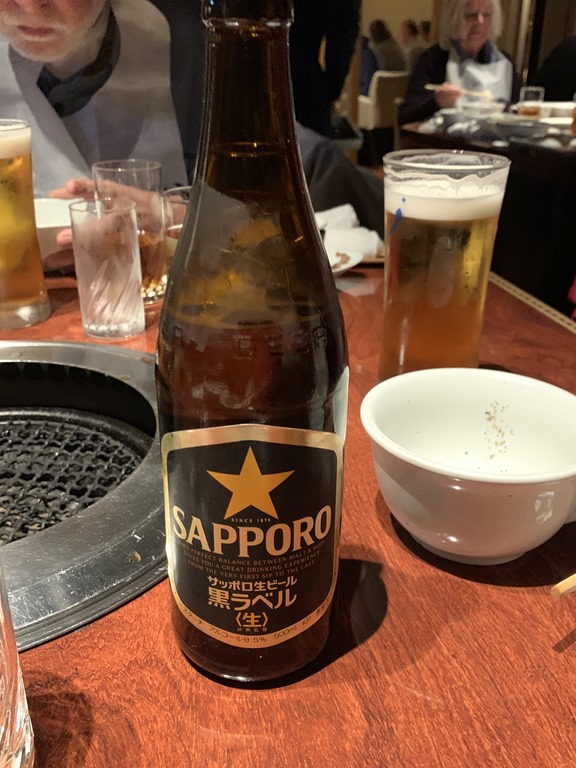
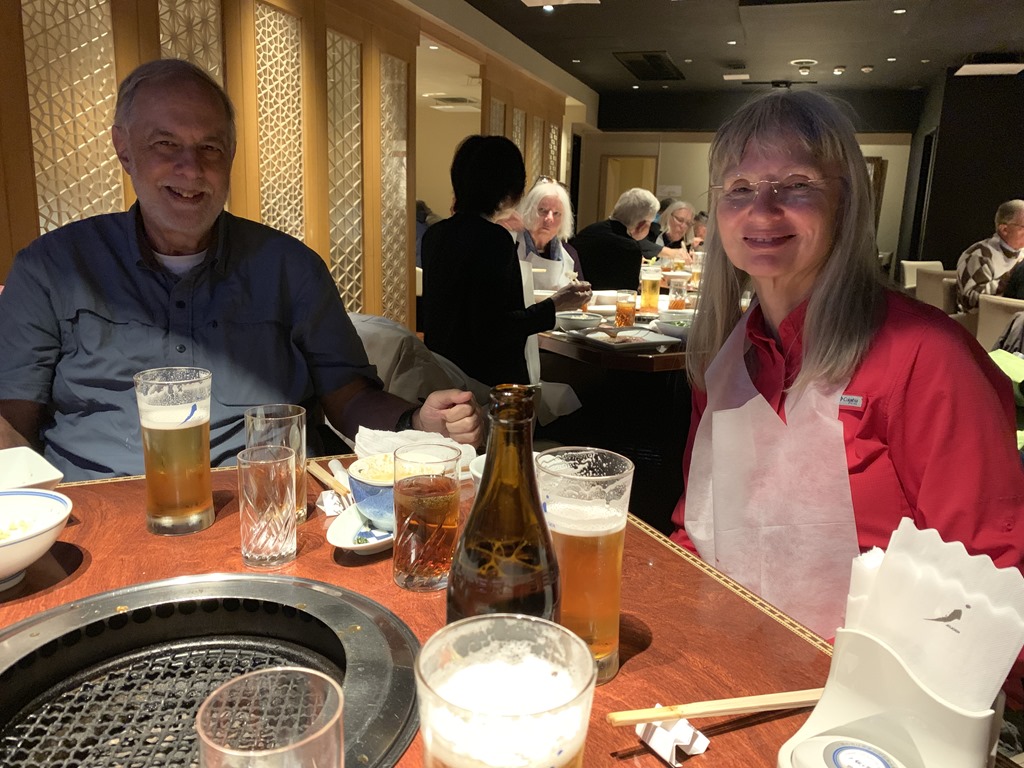
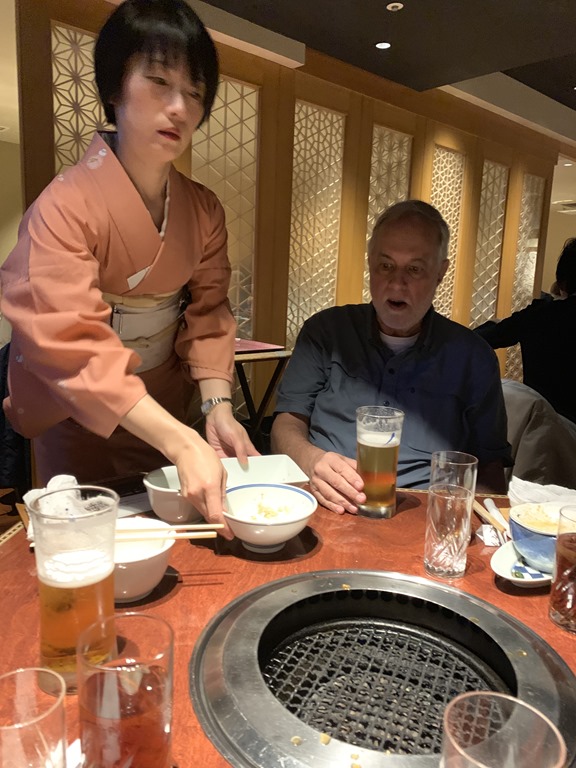
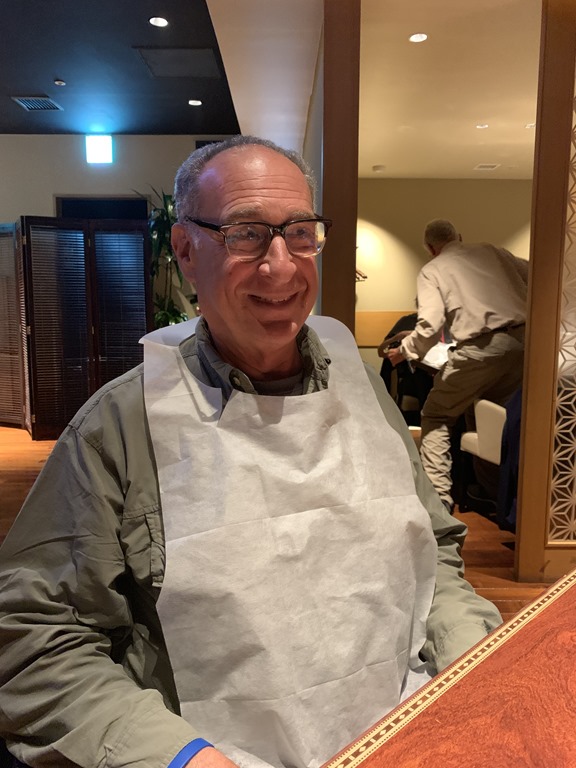
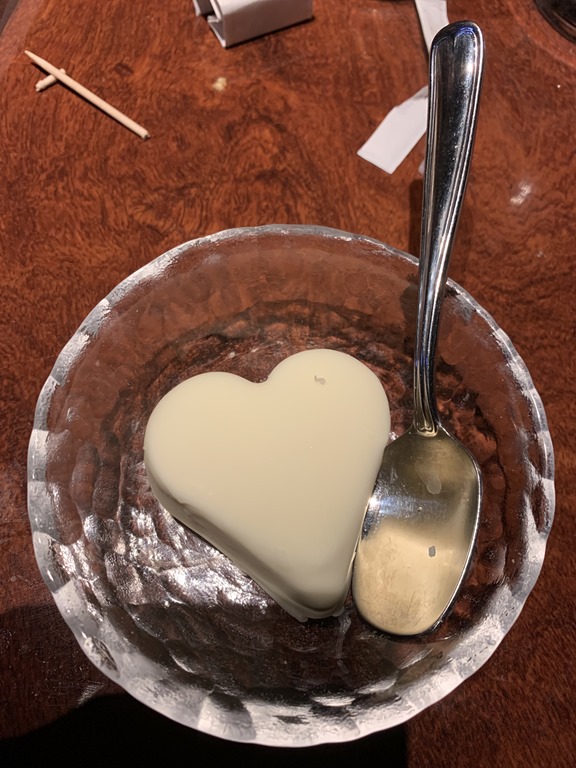
After our visit here, it was time to go to the Jojoen restaurant for our Japanese lunch.  It was both interesting and delicious. We were seated at tables for 4 (Ken and Ellen were with us).  The center of the table had a fire grill and we were each presented with a plate of well marbled beef and one piece of pork to grill.  We also had beer, salad, appetizers, tofu, rice and soup and a heart shaped ice cream for dessert.  What fun!

IMG_4878IMG_4875IMG_4877IMG_4879IMG_4882IMG_4883IMG_4884IMG_4885IMG_4886IMG_4890IMG_4893IMG_4894IMG_4895IMG_4896IMG_4897IMG_4898

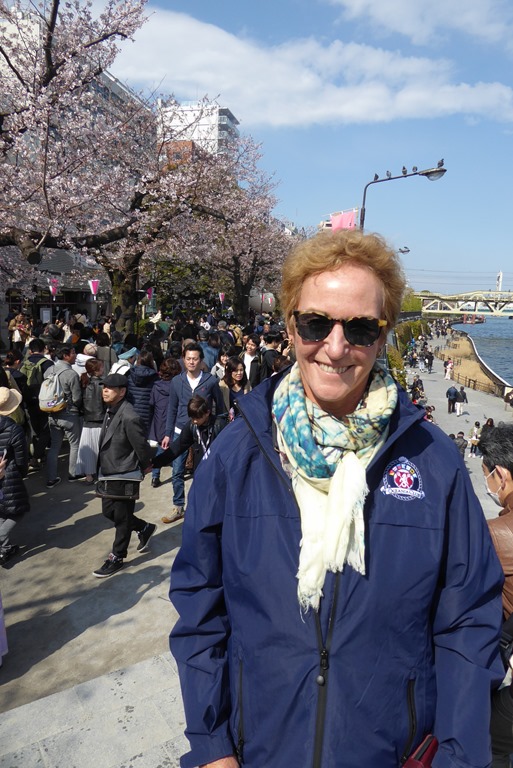
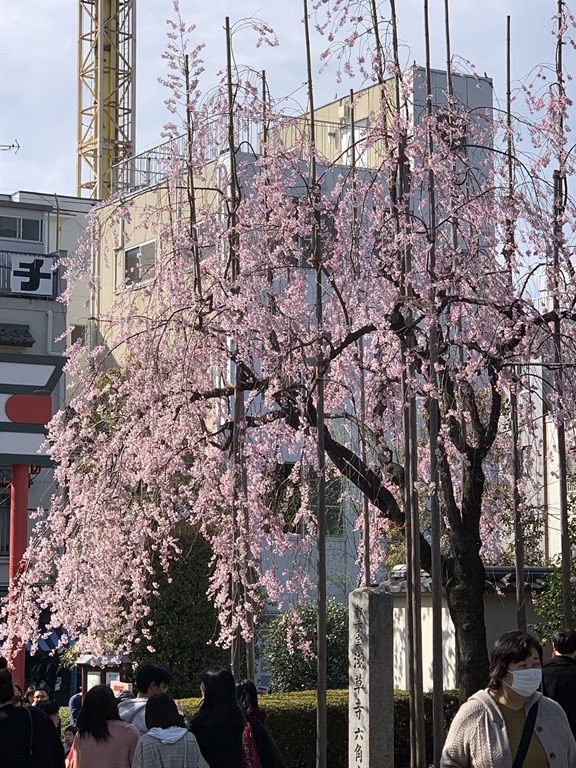
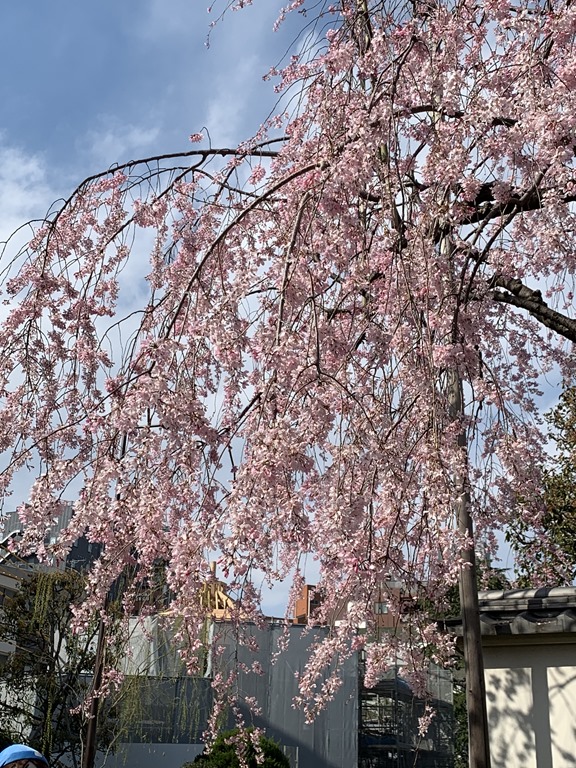
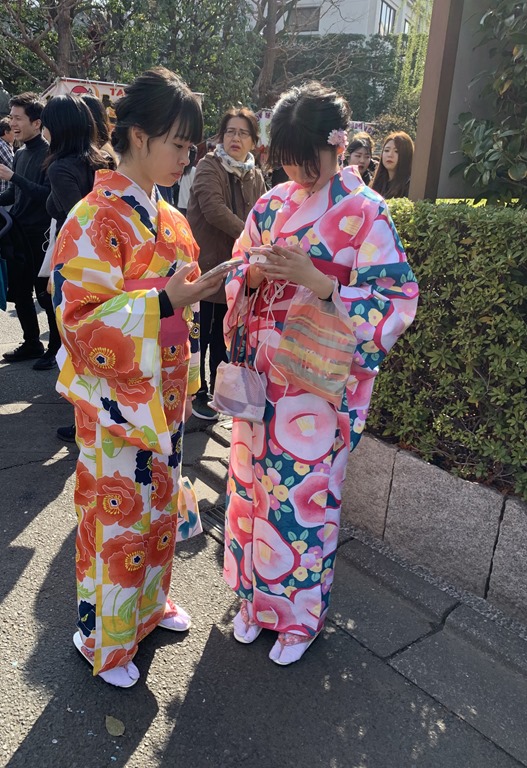
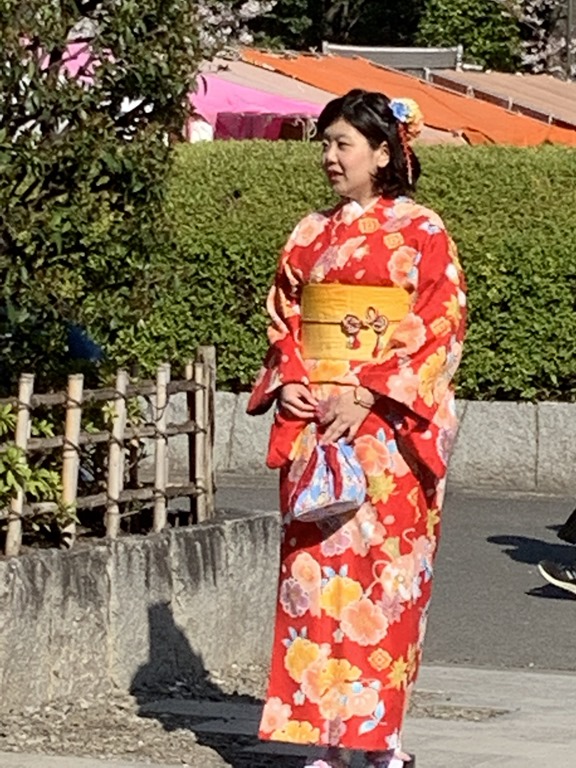
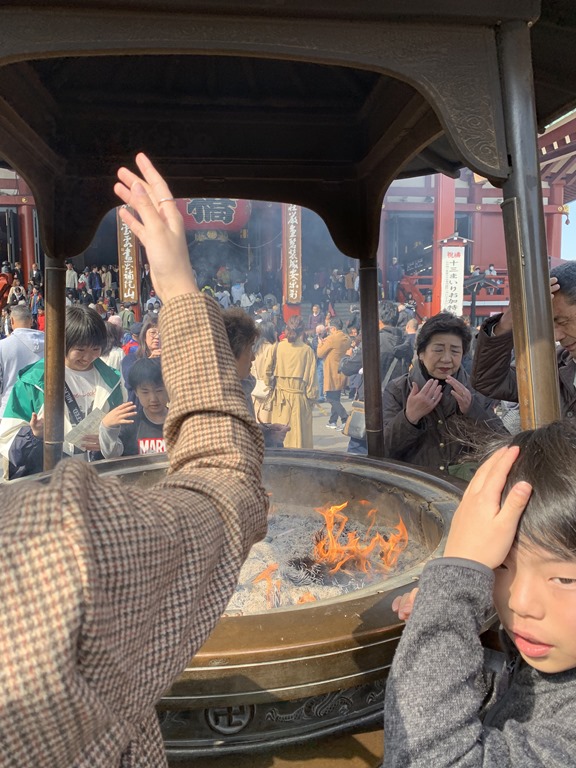
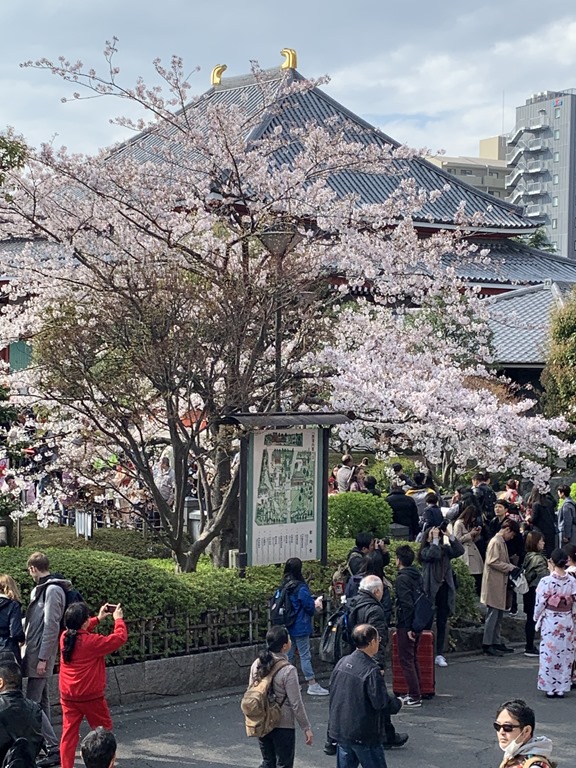
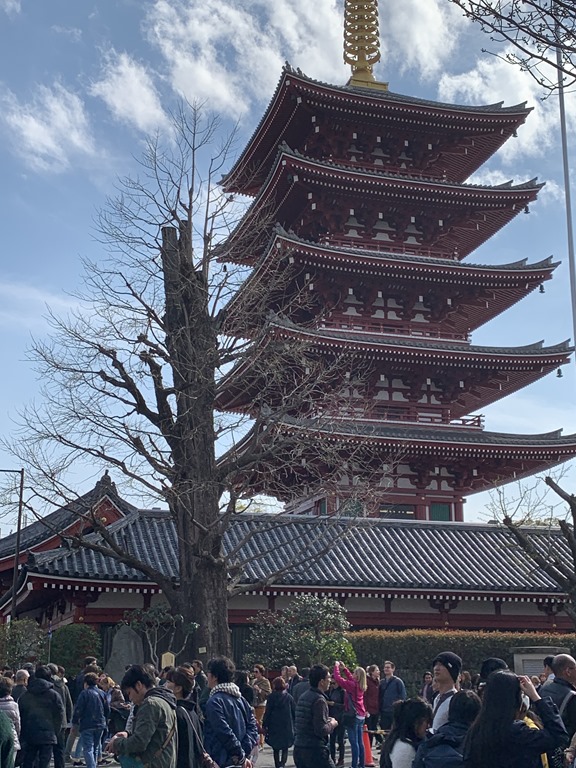
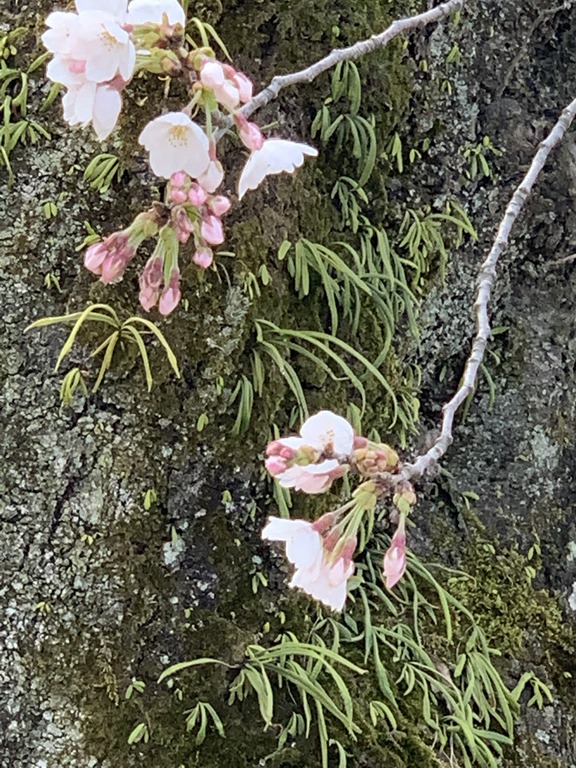
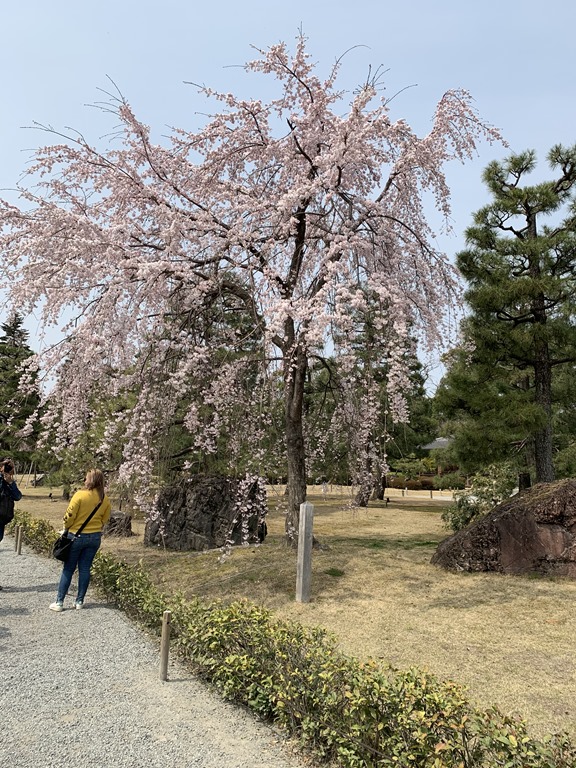
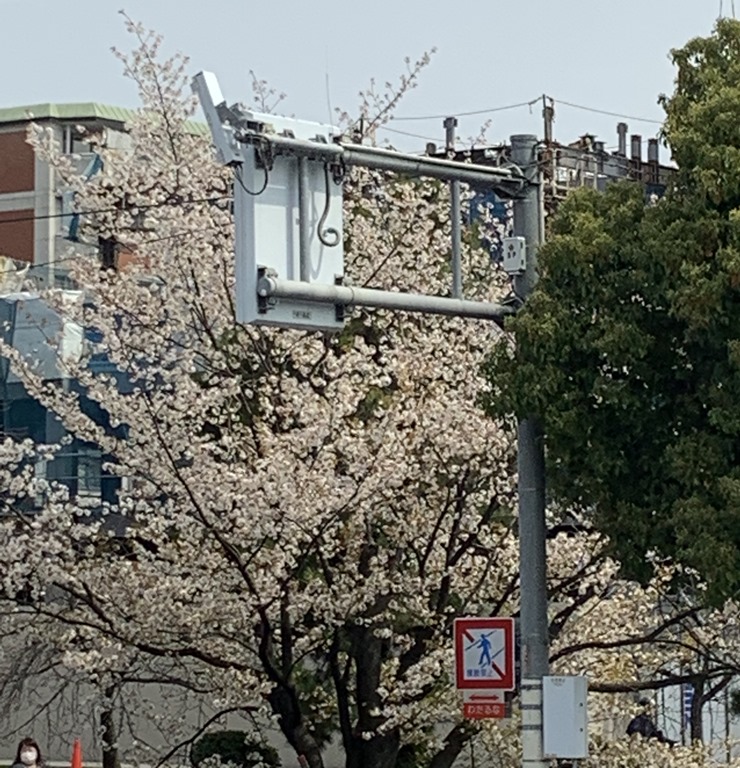
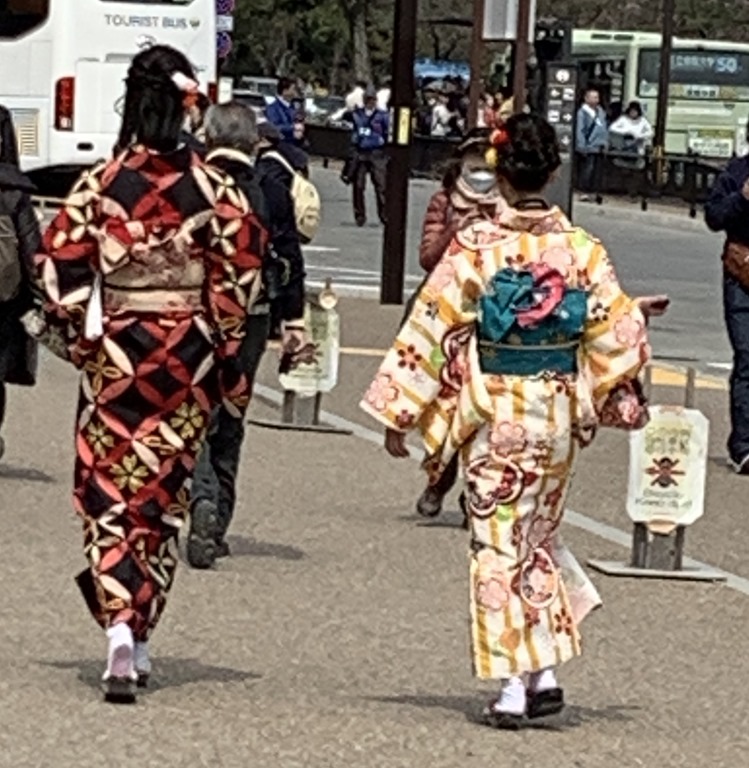
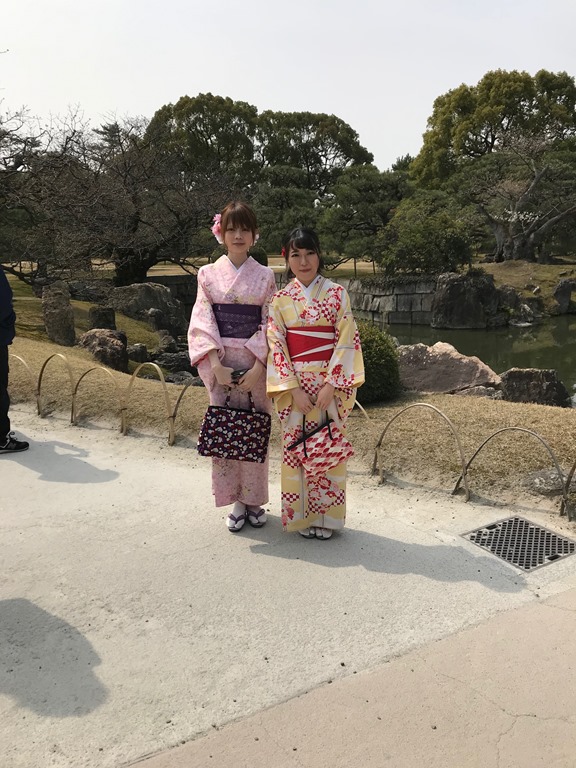
After lunch we traveled to the Asakusa Kannon, the oldest temple in Japan dating to the 7th century.  It is dedicated to Kannon, the Buddhist goddess of compassion. First we took a walk along the river where there were so many beautiful cherry trees in bloom.  Here we saw a lot of young girls in their own or rented kimonos.  These are not geishas in training (who avoid photos) but girls who want to be seen in their traditional dress.  Some boys were seen in samurai dress as well.

IMG_4931IMG_4946IMG_5064IMG_5066IMG_4994IMG_4996IMG_4997IMG_5003IMG_5006IMG_5007IMG_5013IMG_5014IMG_5018IMG_5022

The temple area was VERY crowded and we actually got separated in the crowds.  Lucky to have text messages in that situation.

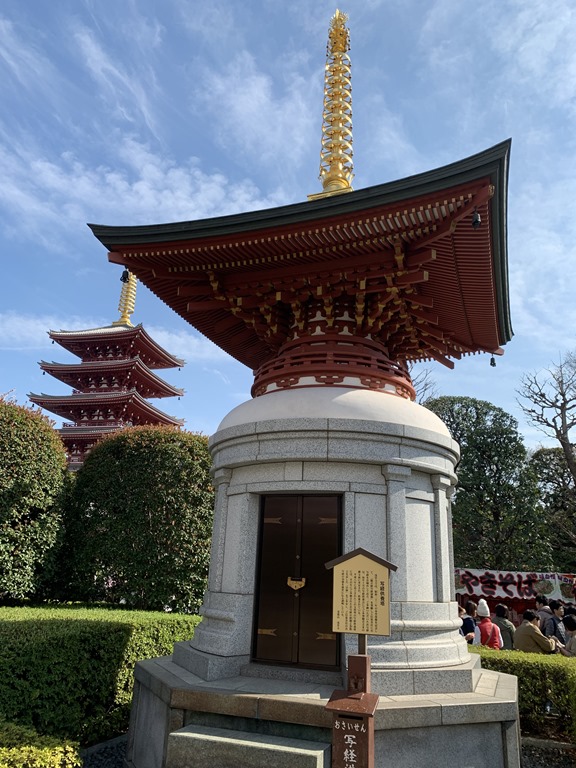
You could not take pictures in the Shinto shrine or in the temple. Here are some of the outside of the temple.
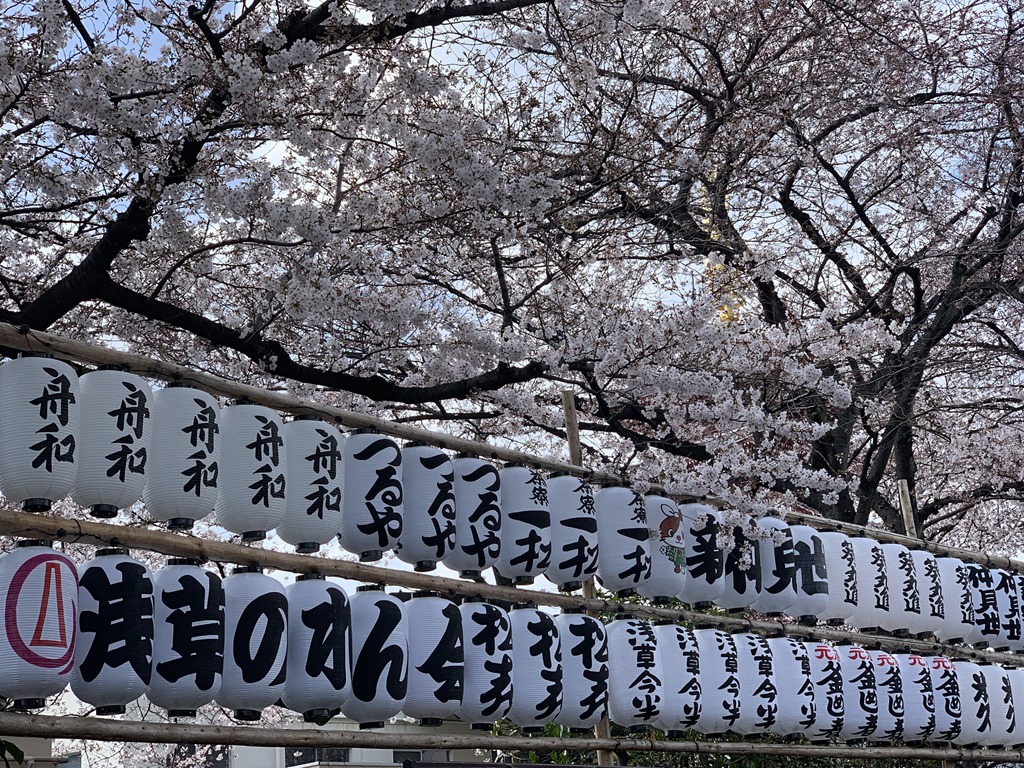
IMG_4968IMG_4969IMG_4970IMG_4972IMG_4976IMG_4979IMG_4986IMG_4987IMG_4988IMG_4989IMG_4990IMG_4995IMG_5001IMG_5002IMG_5012IMG_5016

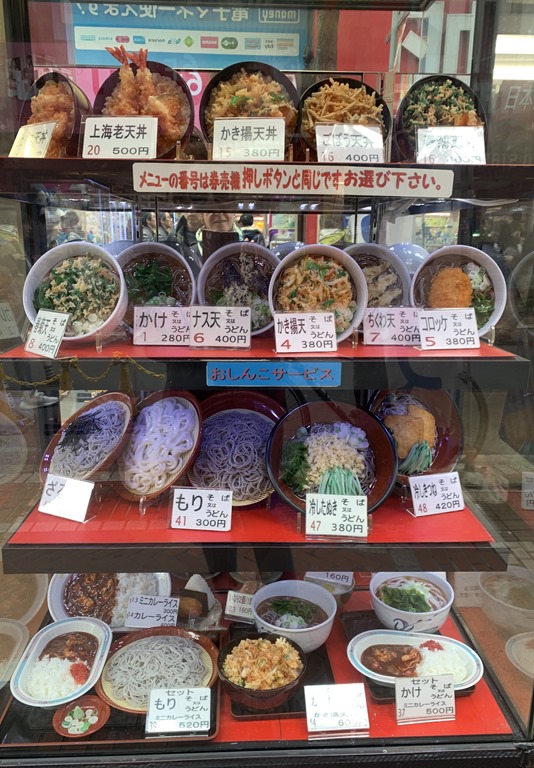
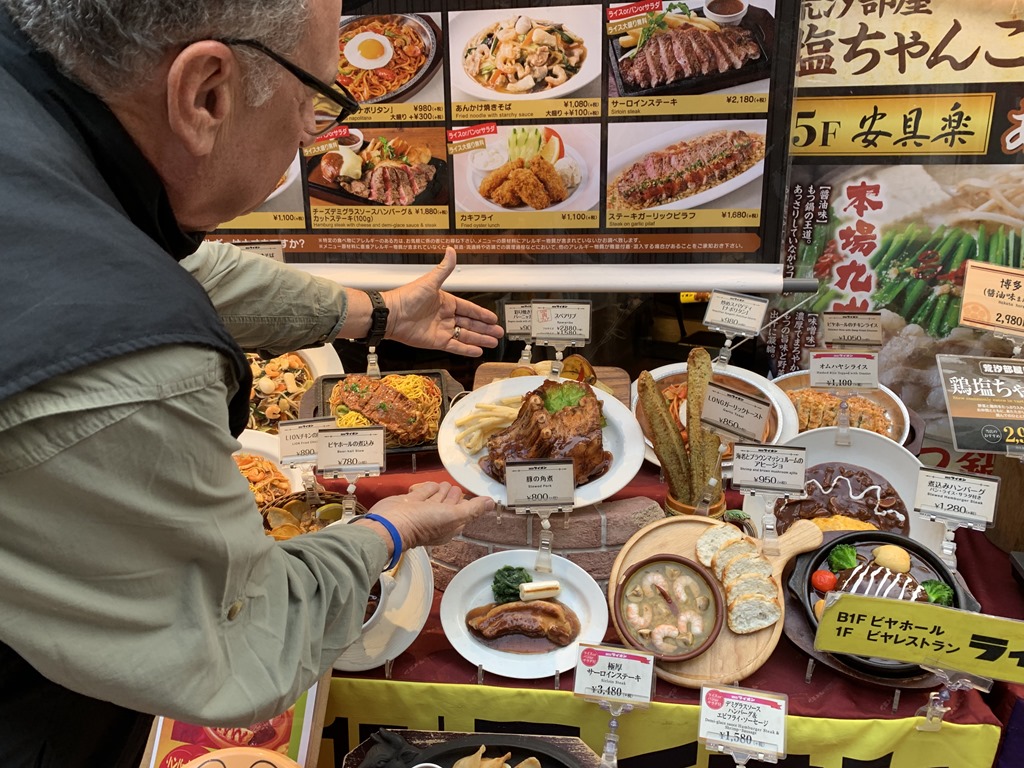
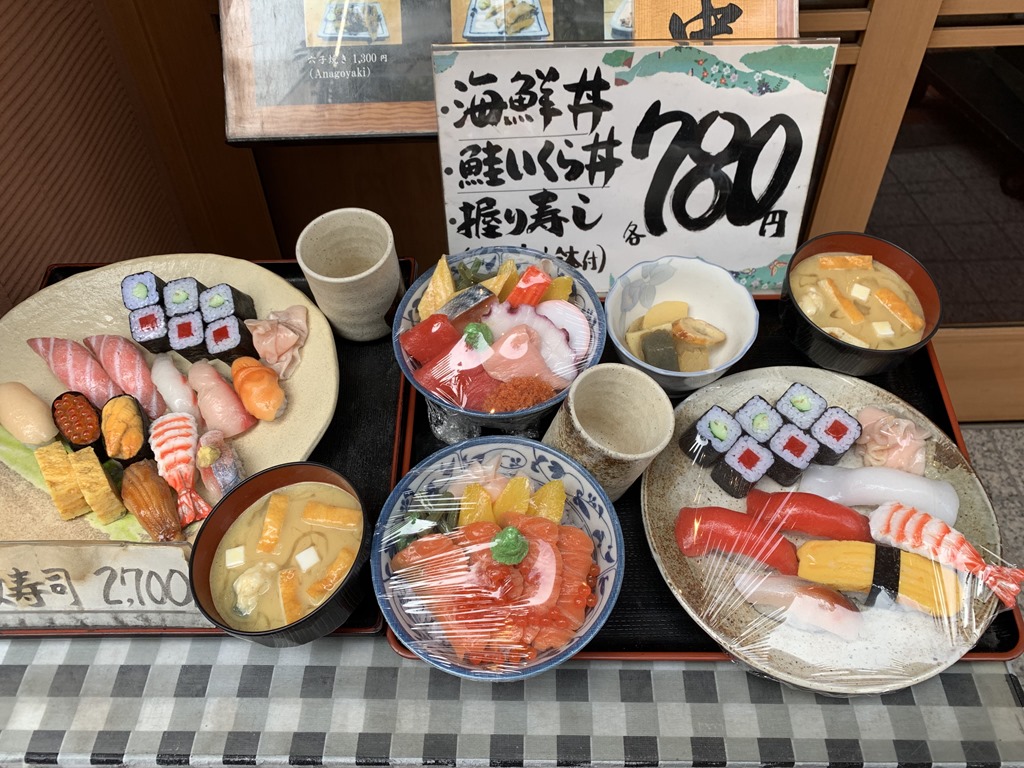
After our temple visit, we braved the crowds and did some wandering around the shops.  I was looking for some of the Japanese cookies which I finally found in a store called Family Food Mart. They also have a 100 yen store which is our “dollar store”!  The city streets and markets were very crowded with people but no motorbikes like in other Asian cities.  Many of the streets are closed off on weekends, so since it was Sunday, we were walking in the streets.  Many of the restaurants here have “fake food” on display so that people can point to what they want.  Many vending machines are everywhere.  Empty sake containers are for sale and many people use them for stools or just for decoration. The liquor stores have the full ones.
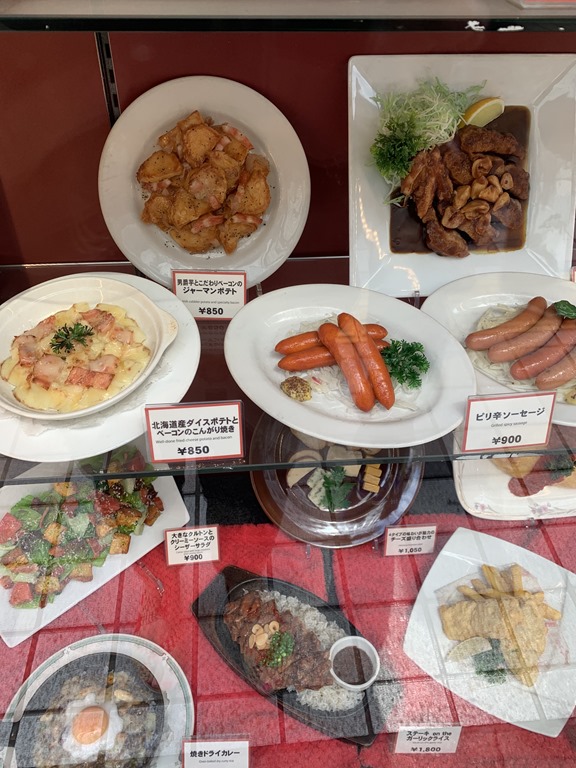
IMG_4900IMG_4901IMG_4907IMG_4913IMG_4919IMG_4921IMG_4937IMG_4939IMG_4948IMG_4949IMG_5024IMG_5028IMG_5032IMG_5033

The building behind us is meant to look like a glass of beer with the foam on top!

IMG_4954IMG_5067

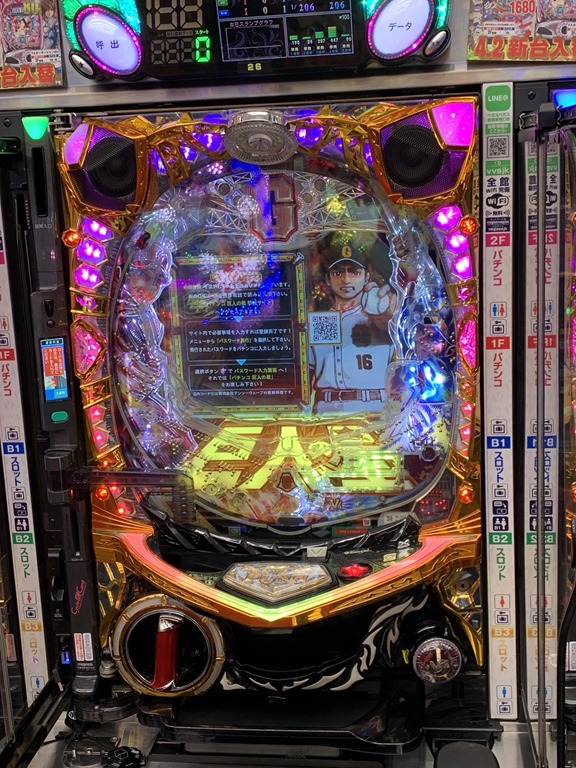
We stopped in to a pachinko parlor – there are many gaming parlors in this area of the city.

IMG_4903IMG_4904

They have Uber here.

IMG_4943

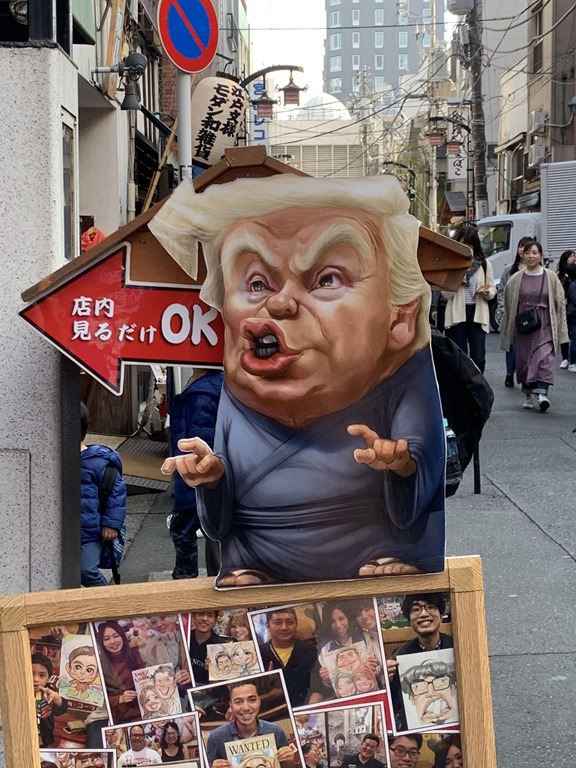
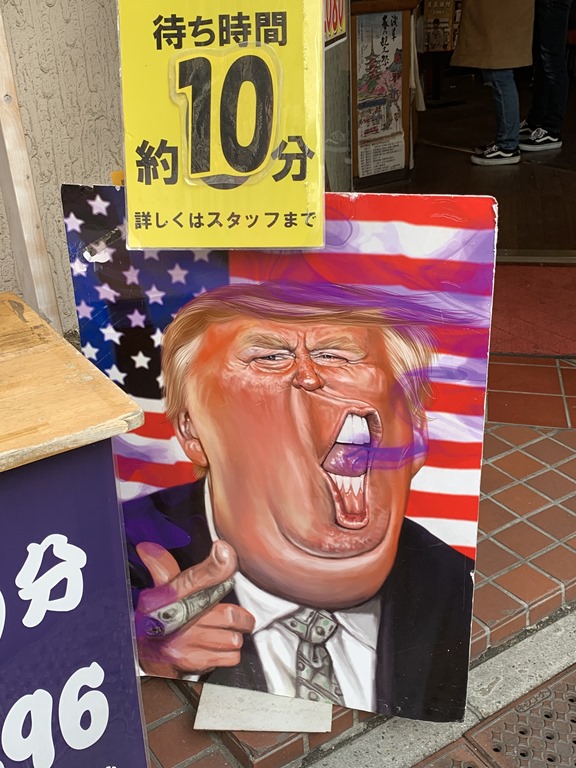
And yes, they make fun of our president.
IMG_5030IMG_5031

There were lots of families out and about, and having picnics along the river too.

Most of the buildings in the shopping areas have signs on the side to let you know what is on each of the floors. The worst earthquake was in 1923 when 140,000 people died so now most buildings are designed to withstand the worst.  They have had many.

IMG_4922

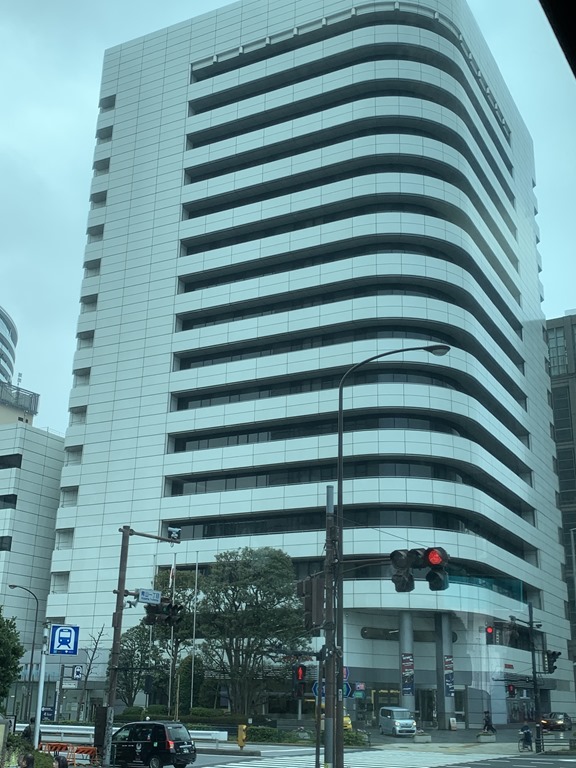
This is the Honda headquarters which is designed so that if windows break in an earthquake, the glass will fall into the balconies and not onto the street.
IMG_4804

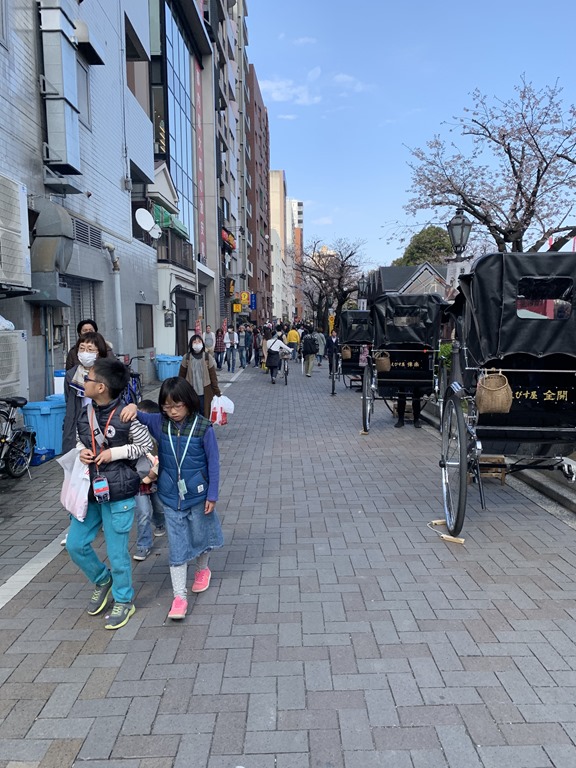
Ginza area is like 5th Avenue in New York, every high end store you can imagine is located here. There are plenty of Starbucks and all kinds of other American chain stores and restaurants. Here are some other sights of the city.
IMG_4944IMG_4945IMG_4991IMG_5021IMG_5026IMG_5068IMG_5069IMG_5070IMG_4941IMG_5027IMG_5051

No overtime is allowed at work on Wednesdays.  The main subway station has 40, yes, 40 different entrances.  There are 13 subway lines but we didn’t try to use them – apparently they are not so easy to figure out. During rush hour, professional pushers are employed to push people along into the cars!

Our sail away was in the dark – here is the city by night as we left.
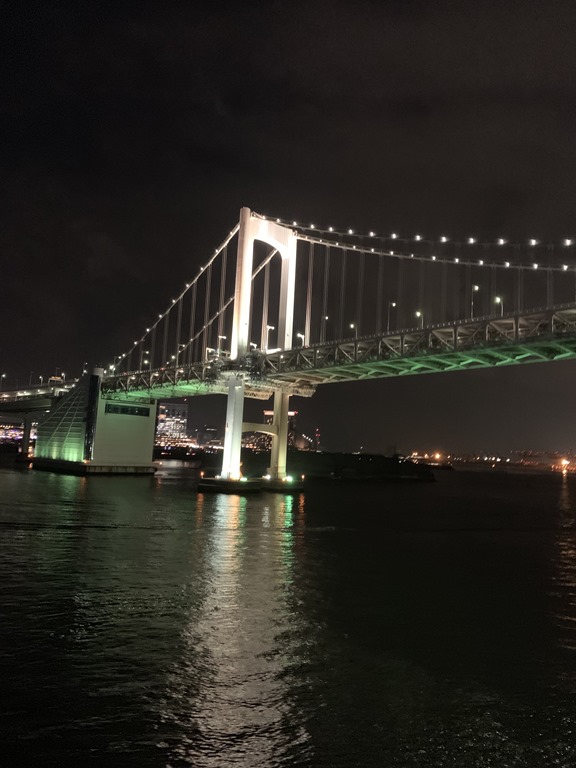
IMG_5042IMG_5045IMG_5046IMG_5047IMG_5050

Tokyo is very clean and safe yet very crowded. We can’t wait to spend more time here next year!


Posted in Asia, Excursions, Food, March, World Cruise 3 | 4 Comments

Tokyo, Japan

March 30, 2019

Our arrival in Tokyo was quite spectacular.  We didn’t know that it was the first time that the Insignia was in this port of call and there was a ceremony with the captain which our friends Karin and Bill got to attend.  They are the most traveled passengers on Oceania.

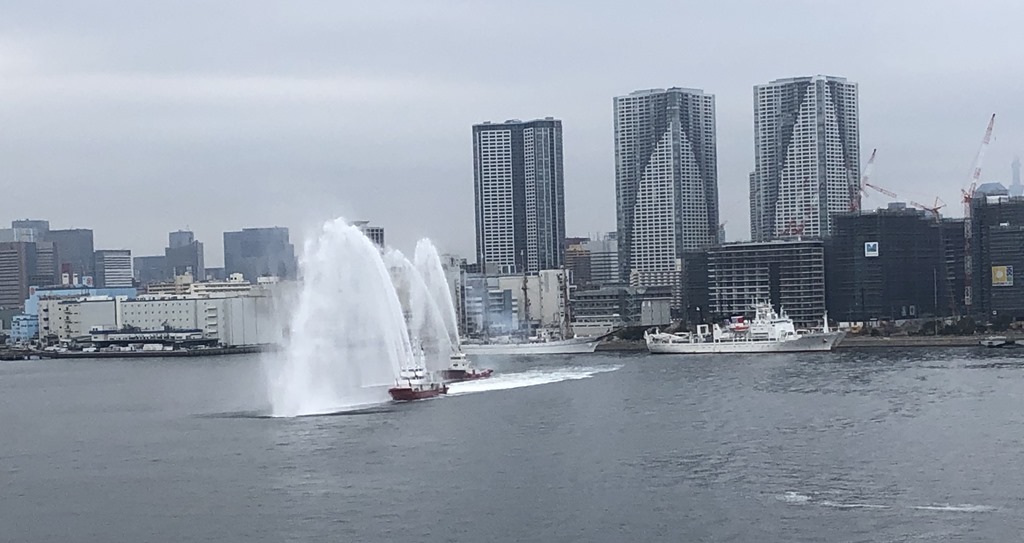
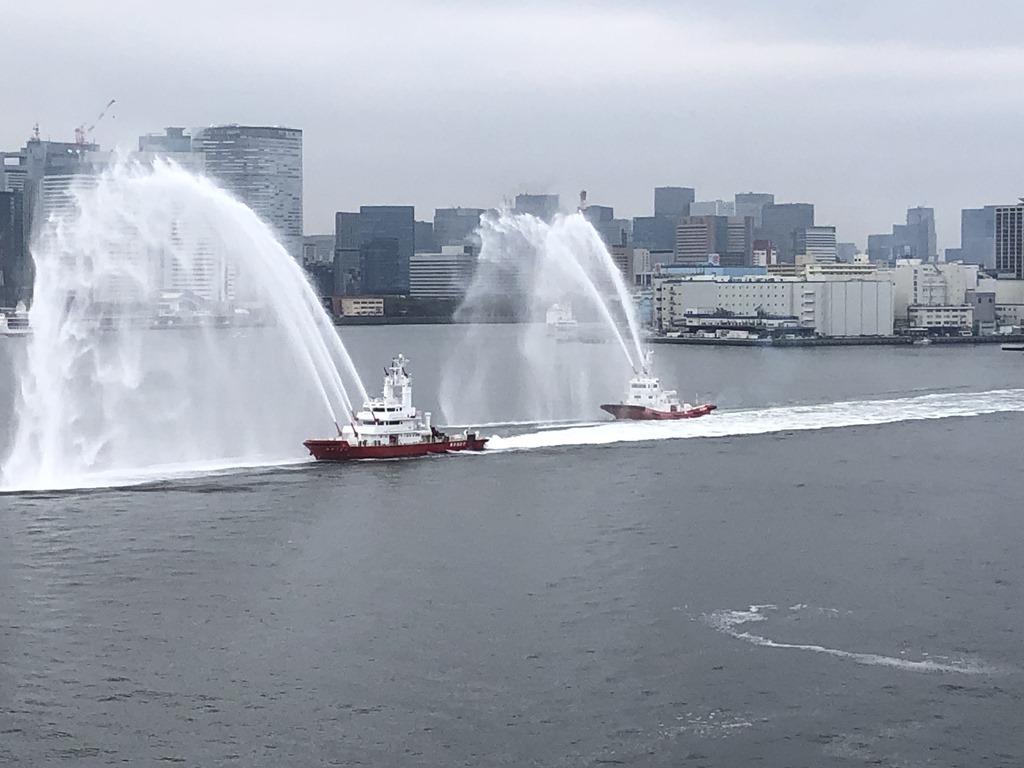
Fireboats greeted us at around 3:30 with the spray of their hoses. I did put a video that Norm took on Facebook while on shore. But here are the photos.

IMG_4578IMG_4579

Arrival had been planned for 4 PM and we were just a little later than that.  The temperature is only in the 50’s!

Here are some other pictures of our approach.

IMG_4568IMG_4569IMG_4570IMG_4571IMG_4572IMG_4573

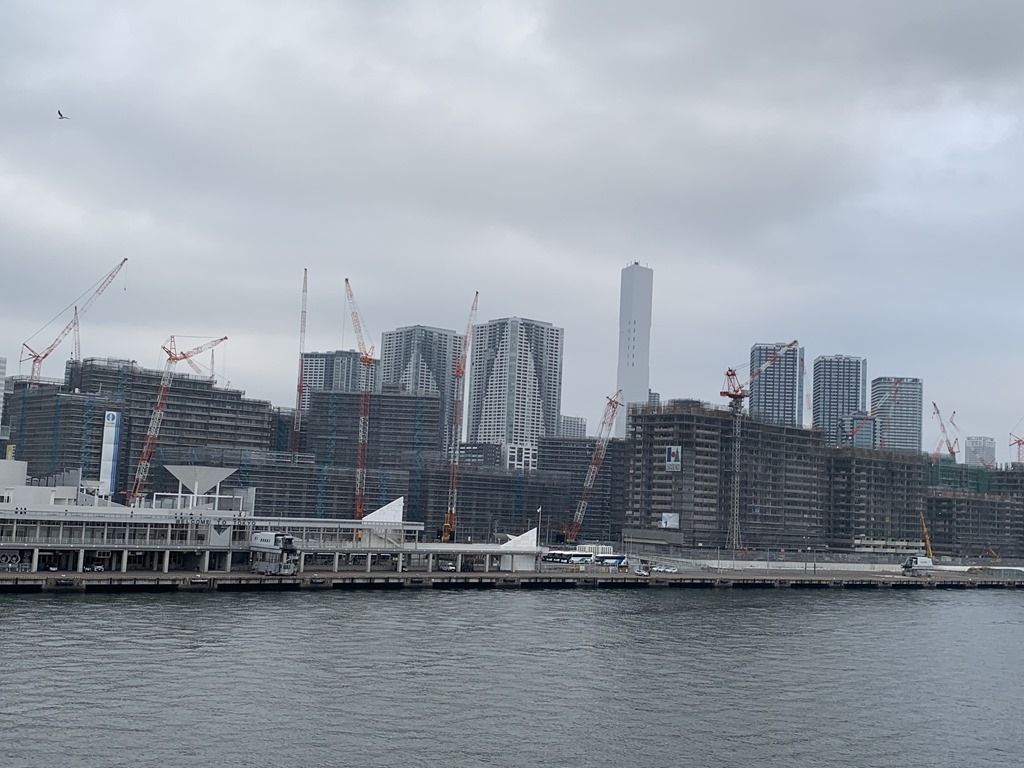
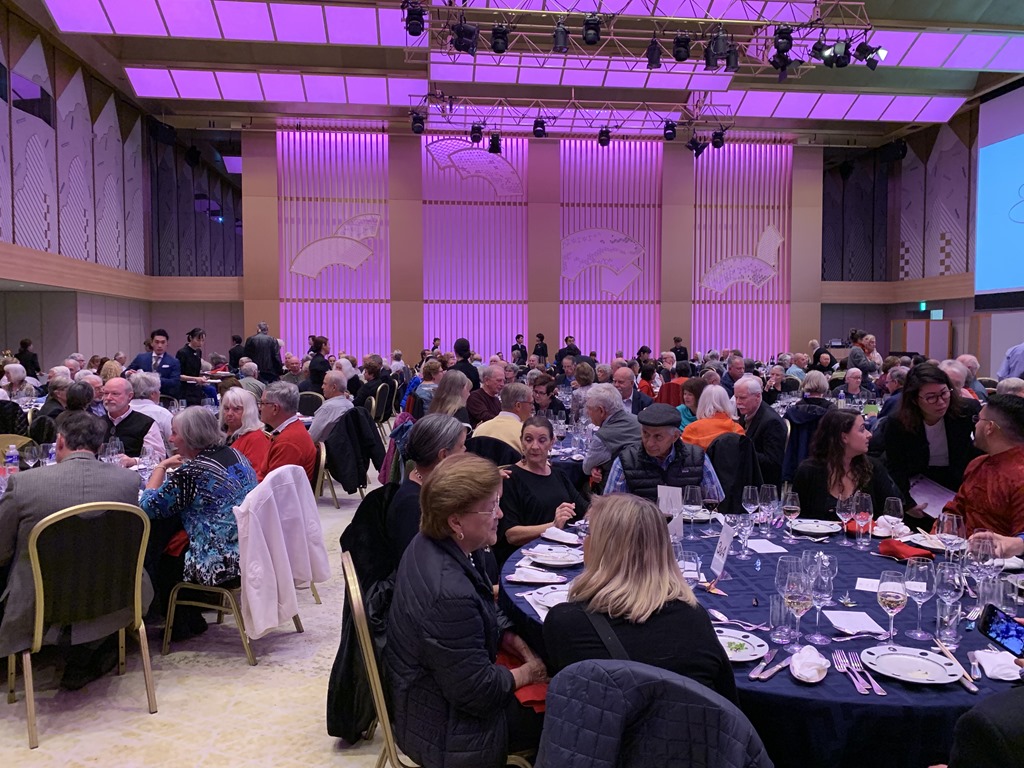
We had a wonderful Around the World special event tonight at the Hotel Gajoen Tokyo.  It was a 30 minute bus ride to get there and we had a guide on the bus named Kitty.  We passed the Olympic Village which is under construction for the 2020 Tokyo Olympics.  There will be 10,000 condominium units built there and guess what – they are already sold to people who will move in after the Olympics. The village is very close to the port.

IMG_4582IMG_4583IMG_4584IMG_4587

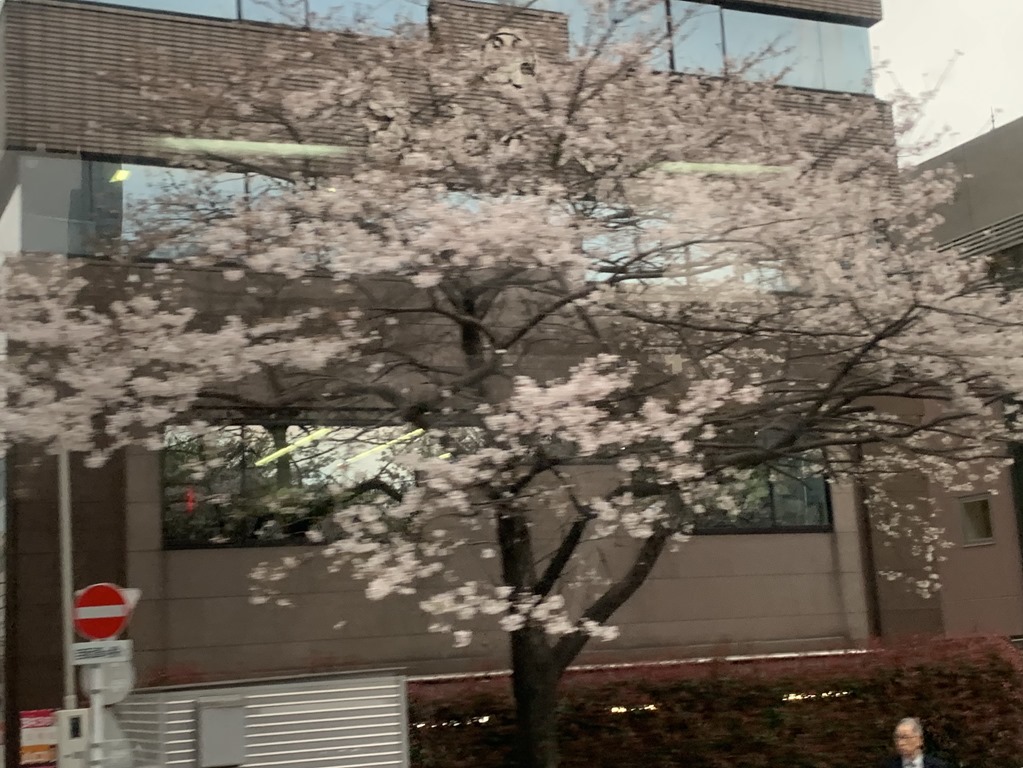
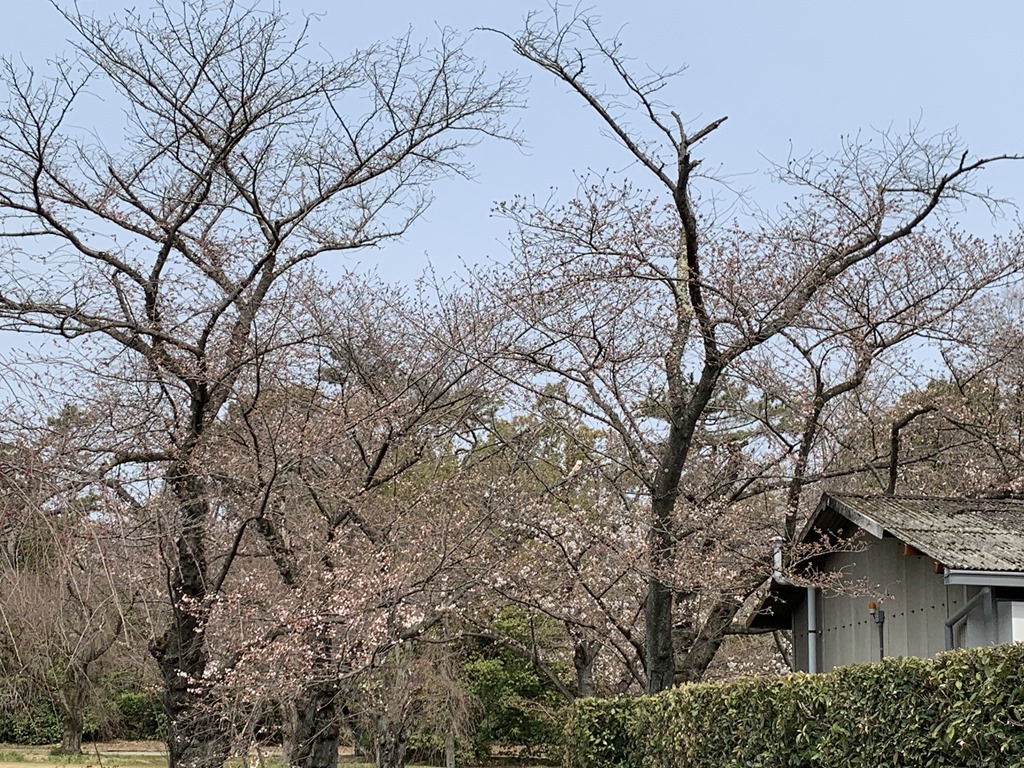
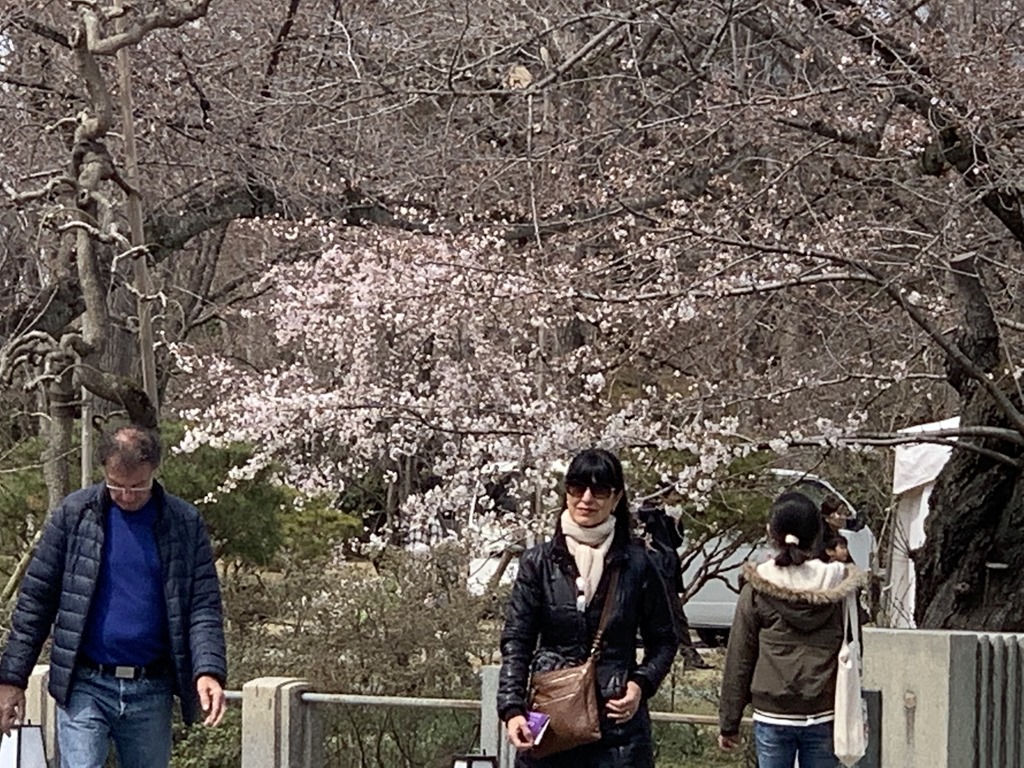
127 million people live in Japan and 13 million live in Tokyo.  It is very crowded.  Many people are wearing masks here too, and unlike Kyoto, here in Tokyo the cherry blossoms are in full bloom.  The cherry blossom season is very significant in Japan and means new beginnings to them.  School starts in early April, university graduates get their first jobs, and this year, the emperor will abdicate the throne and the crown prince will become the new emperor.

IMG_4591IMG_4594

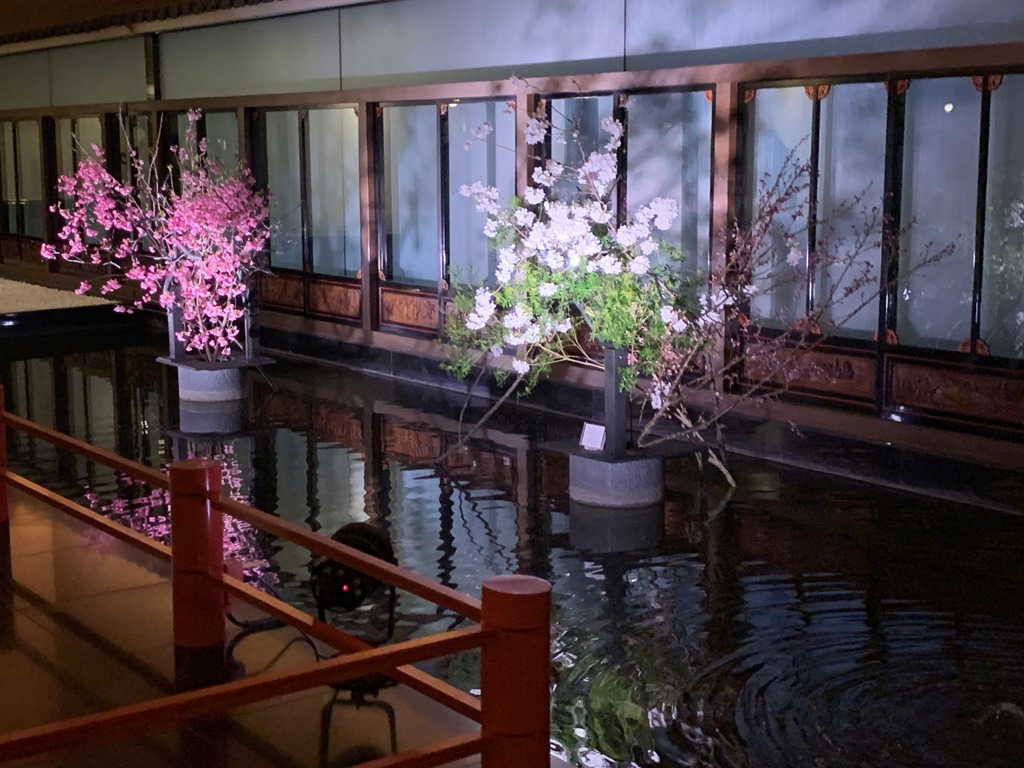
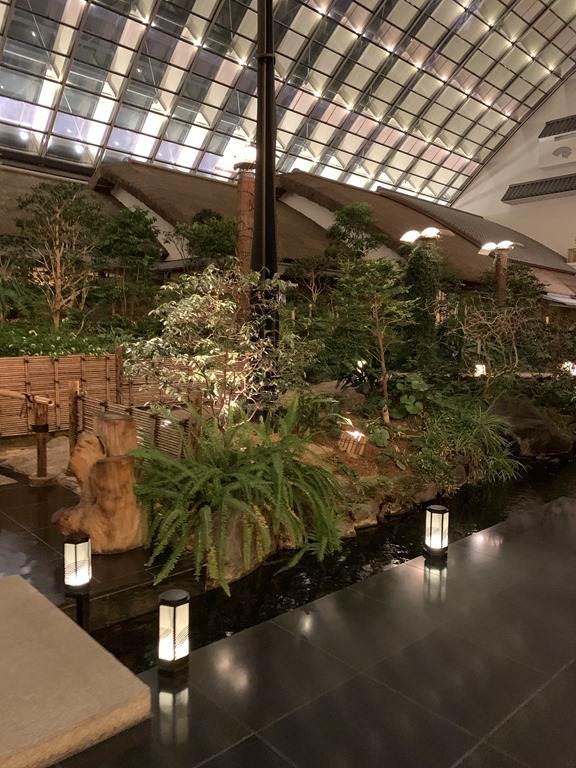
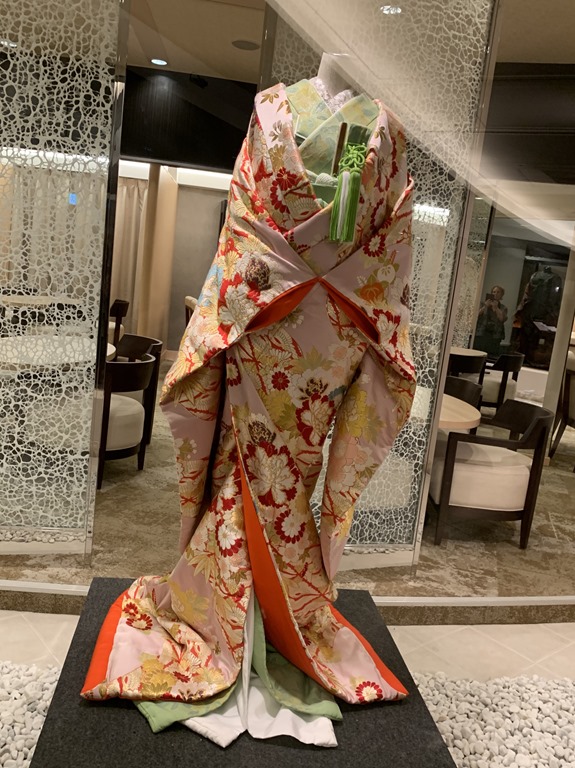
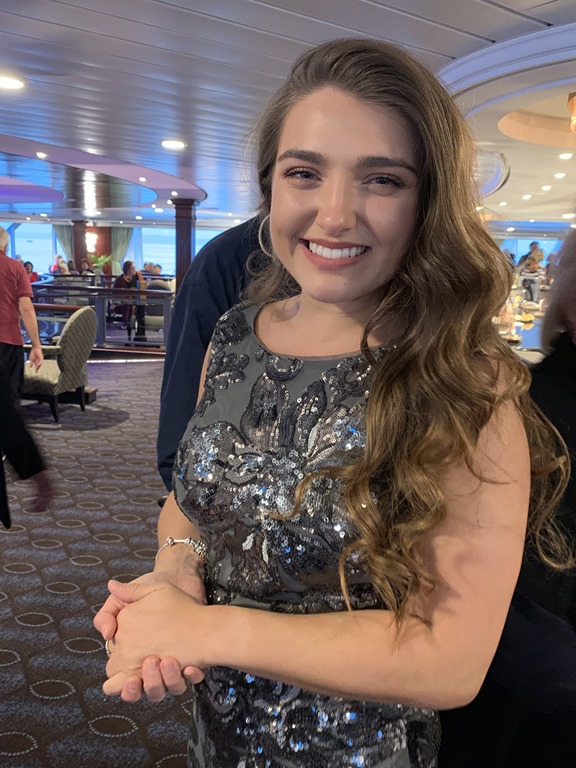
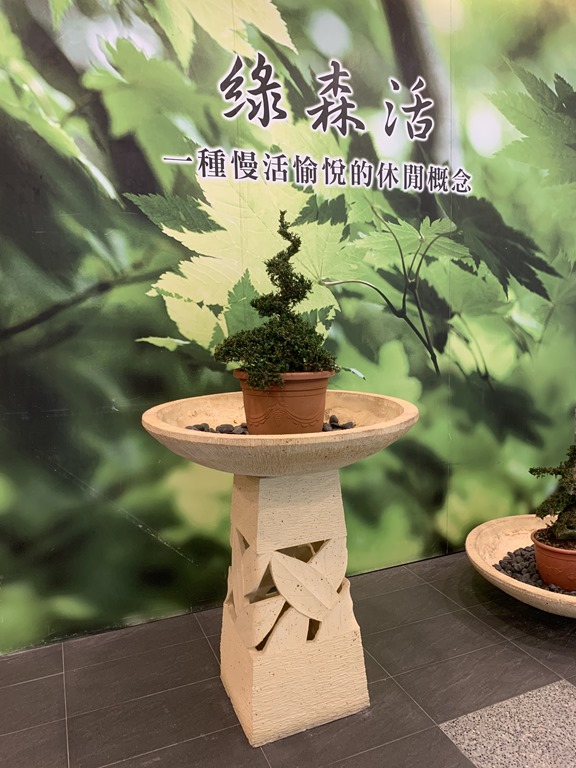
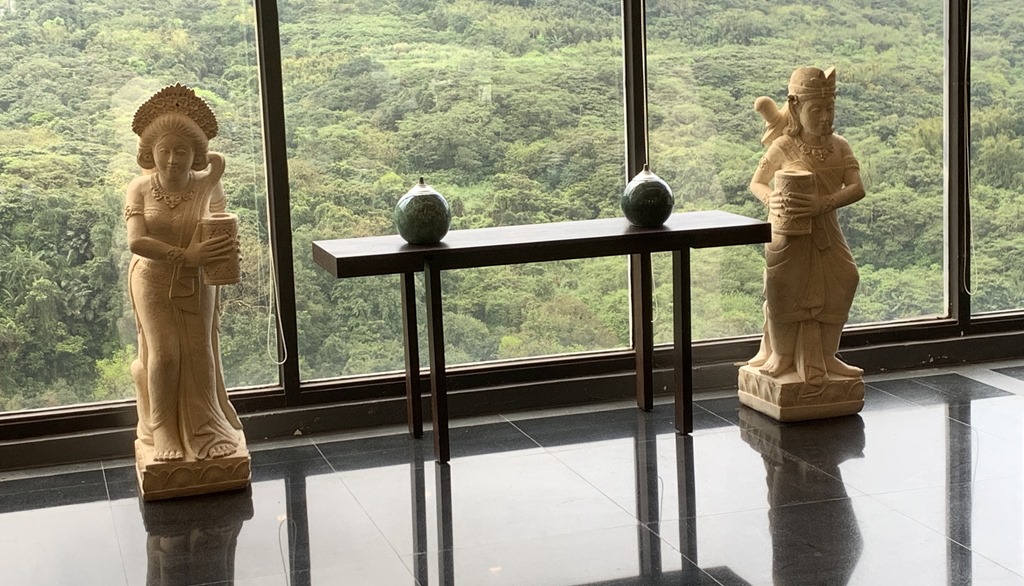
When we arrived at the hotel for the special event (and remember, there are over 340 world cruise passengers, so this was a real feat to pull off), we were mesmerized by the beauty and the size of the hotel.  Just walking to the ballroom where we would have our dinner and entertainment was a delight.  Here are some of the beautiful sights.

IMG_4773IMG_4599IMG_4600IMG_4601IMG_4602IMG_4603IMG_4604IMG_4605IMG_4606IMG_4760IMG_4761IMG_4763IMG_4764IMG_4765IMG_4768IMG_4769IMG_4770IMG_4771

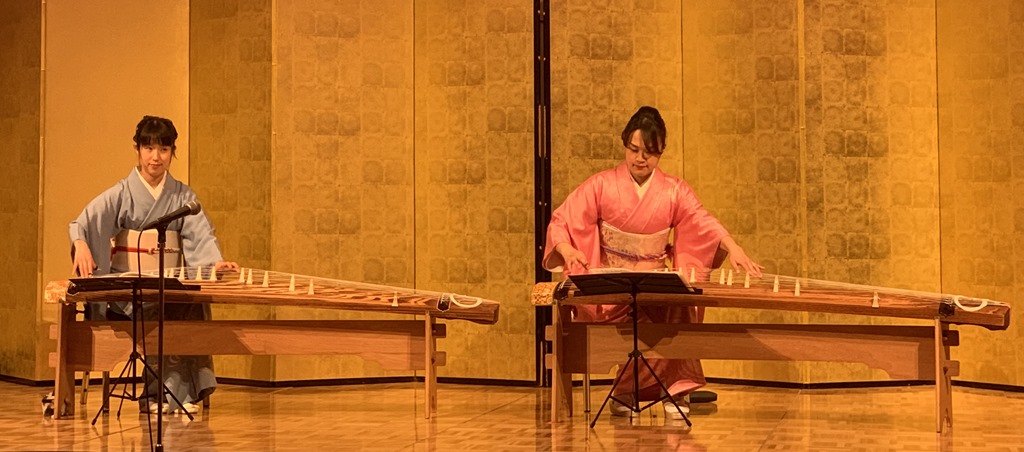
We were welcomed by performers on the Japanese harp.

IMG_4611

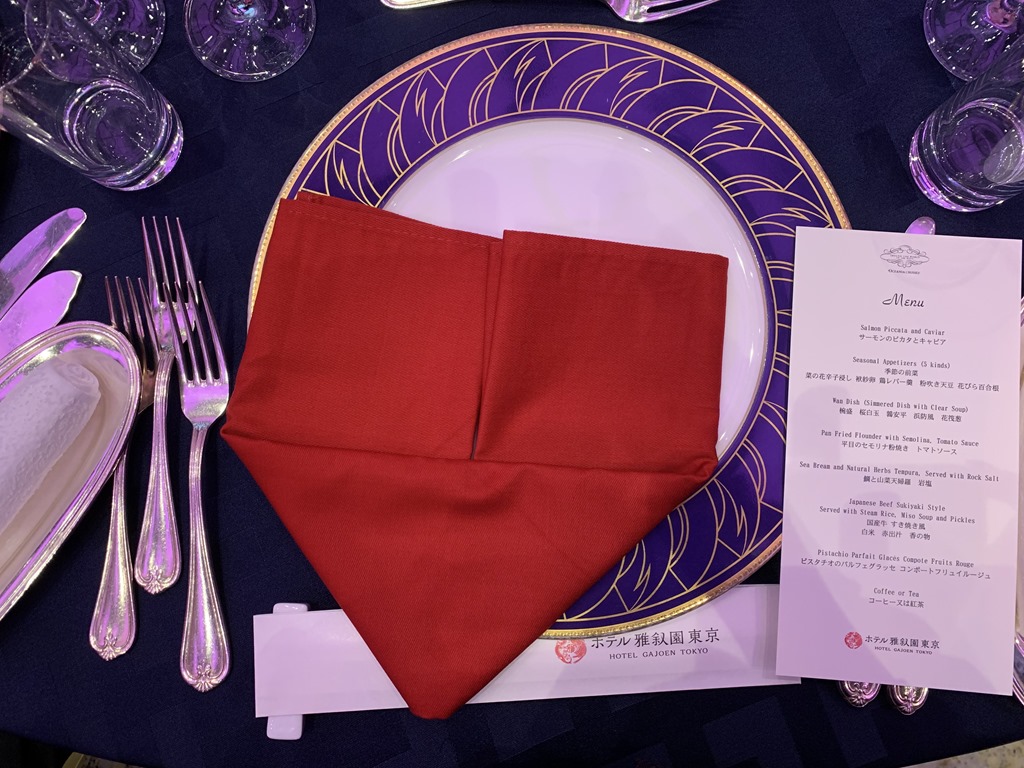
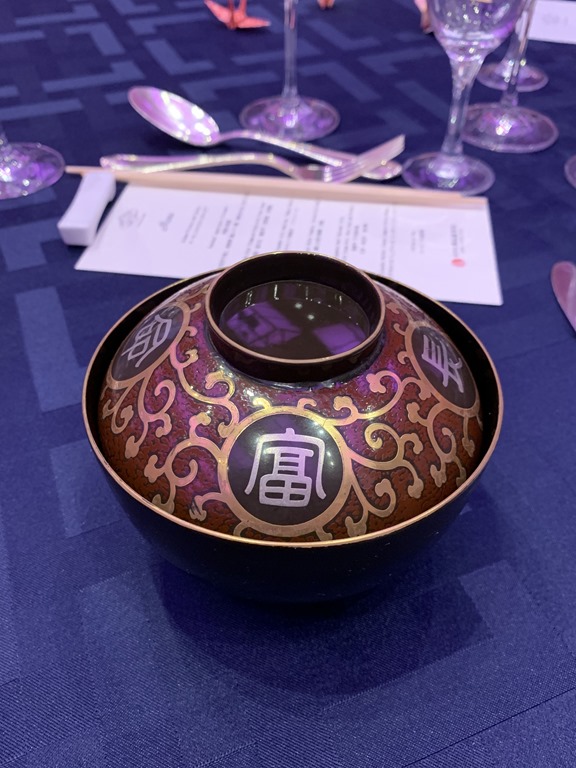
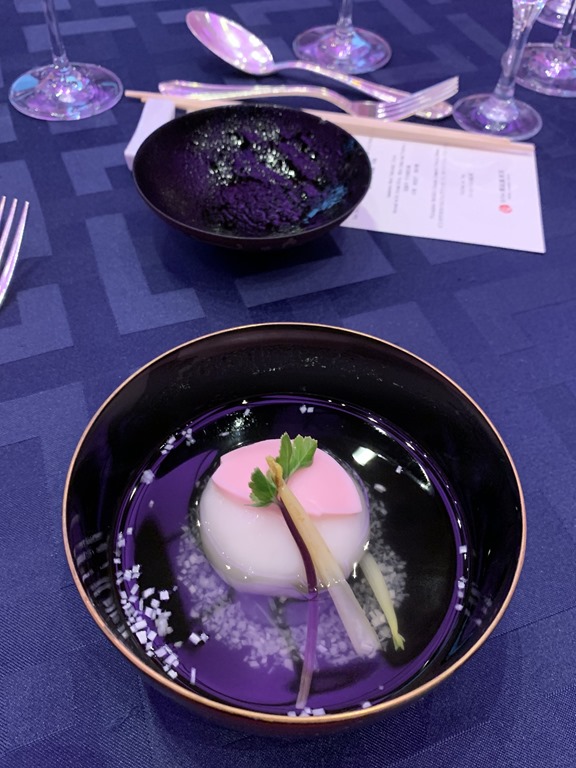
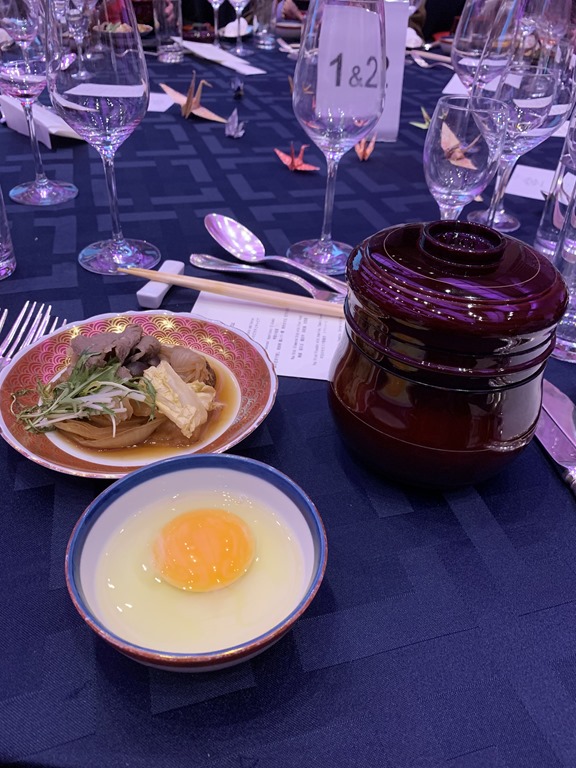
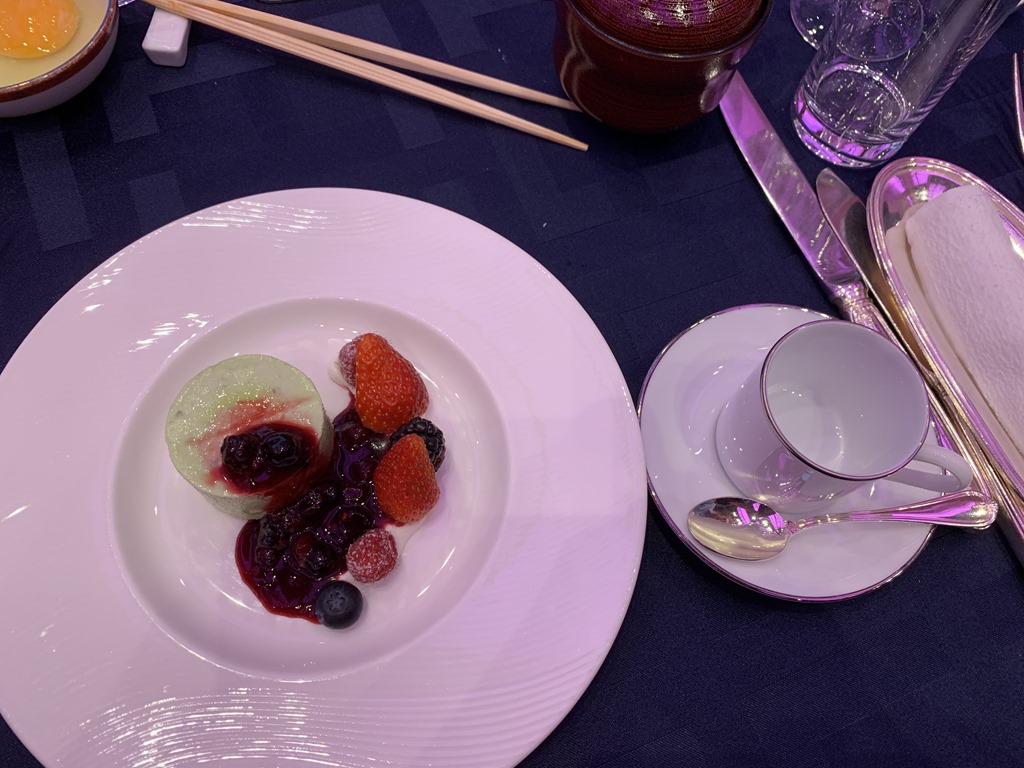
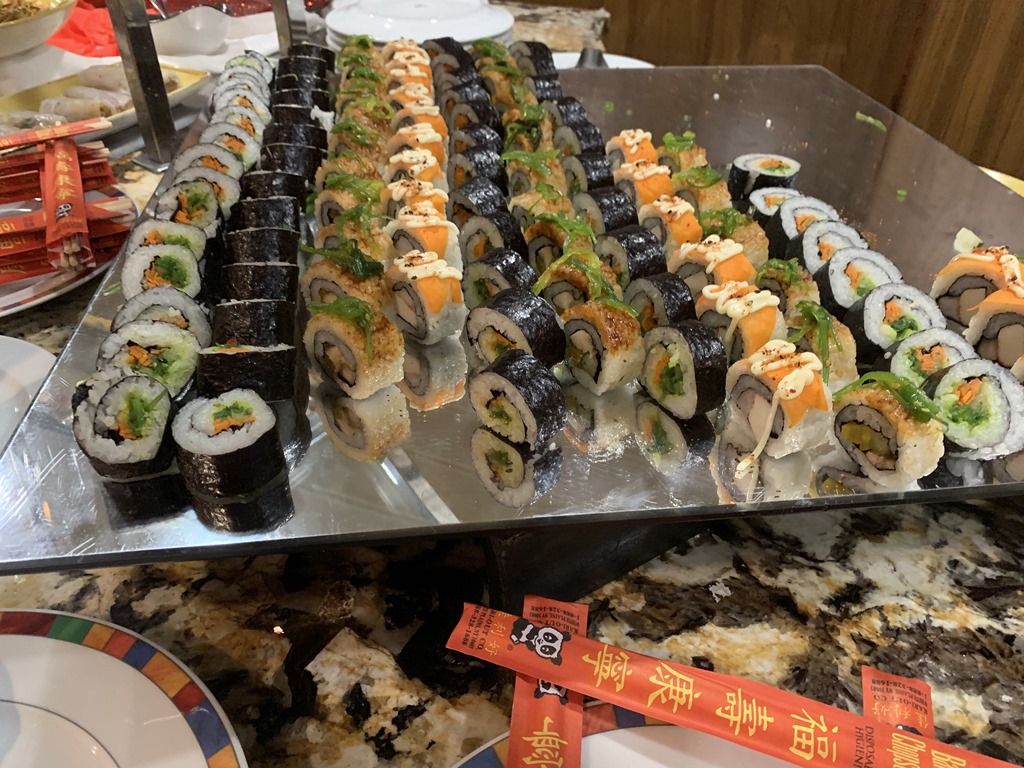
We had a traditional Japanese meal – of 8 small courses.  Here is the menu.  The sushi was not listed on the menu.

IMG_4607

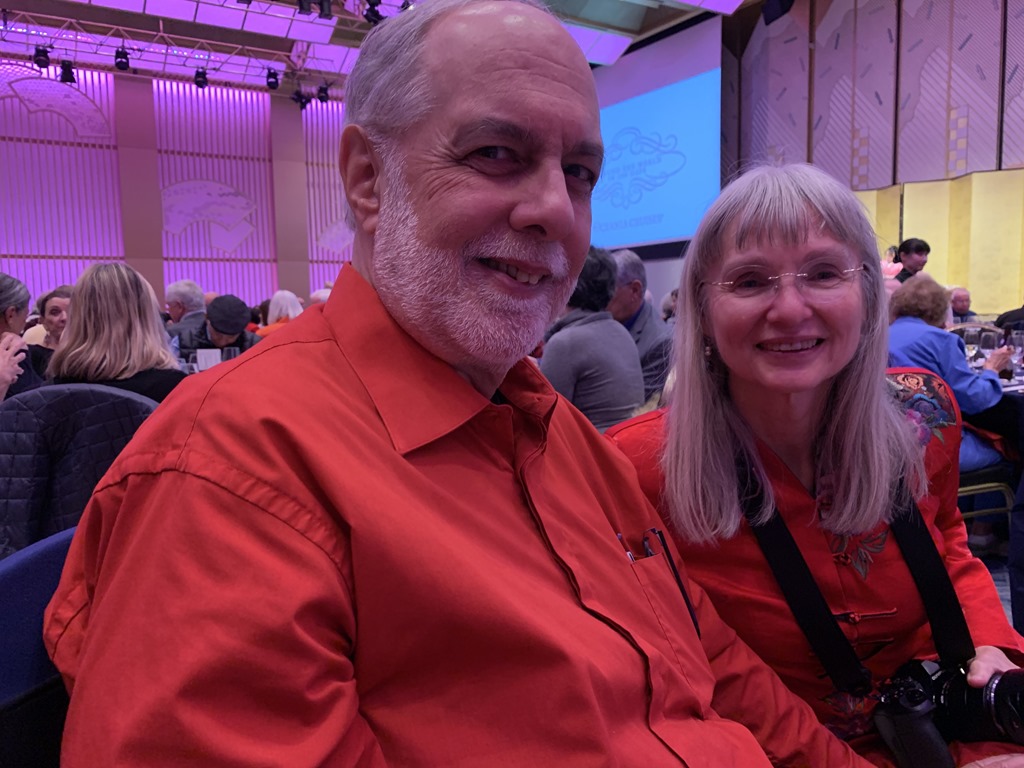
And some pictures of our friends,  the venue and the food.

IMG_4612IMG_4613IMG_4614IMG_4615IMG_4616IMG_4617IMG_4618IMG_4631IMG_4608IMG_4635IMG_4636IMG_4637IMG_4643IMG_4651IMG_4663IMG_4684IMG_4739IMG_4741IMG_4742

You can bet I didn’t put that raw egg in my dish.  But Norm did… We also had wine and saki with our meal. We could watch the sushi making demonstration, although we can see that every day on the ship!

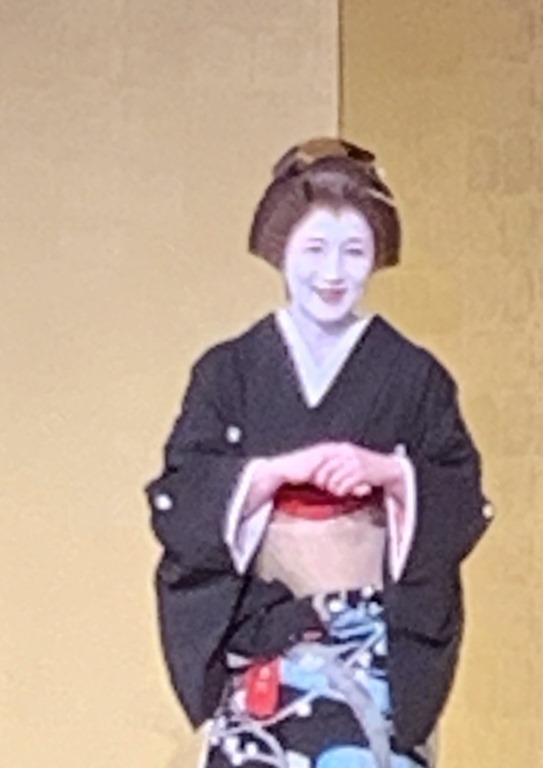
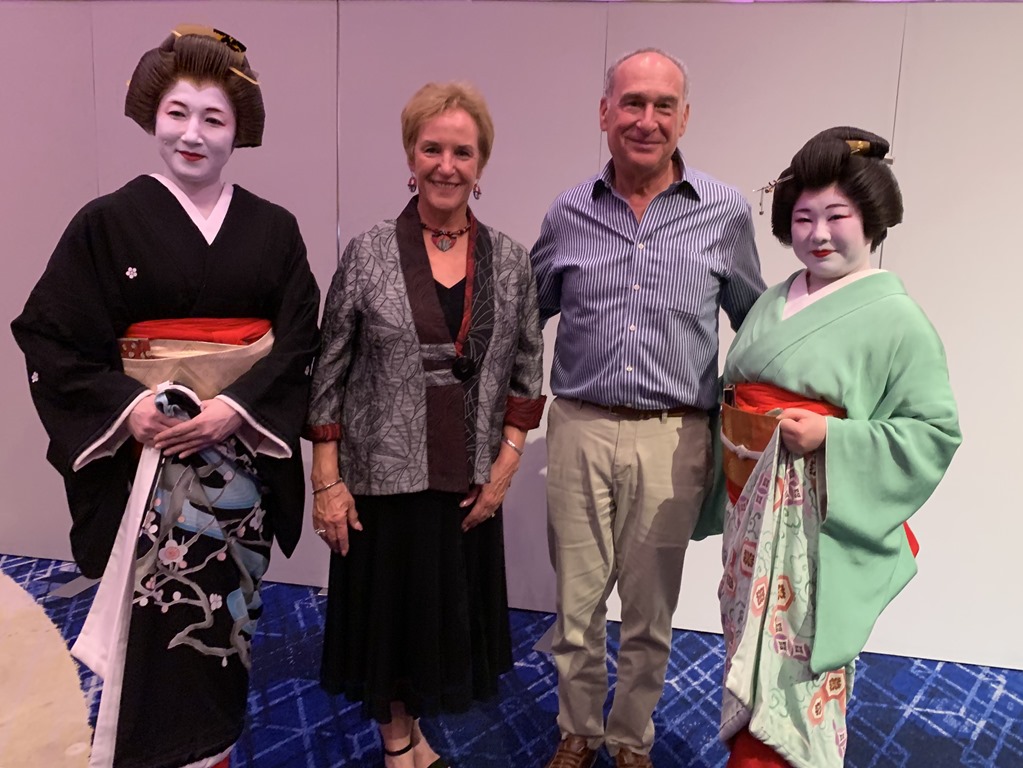
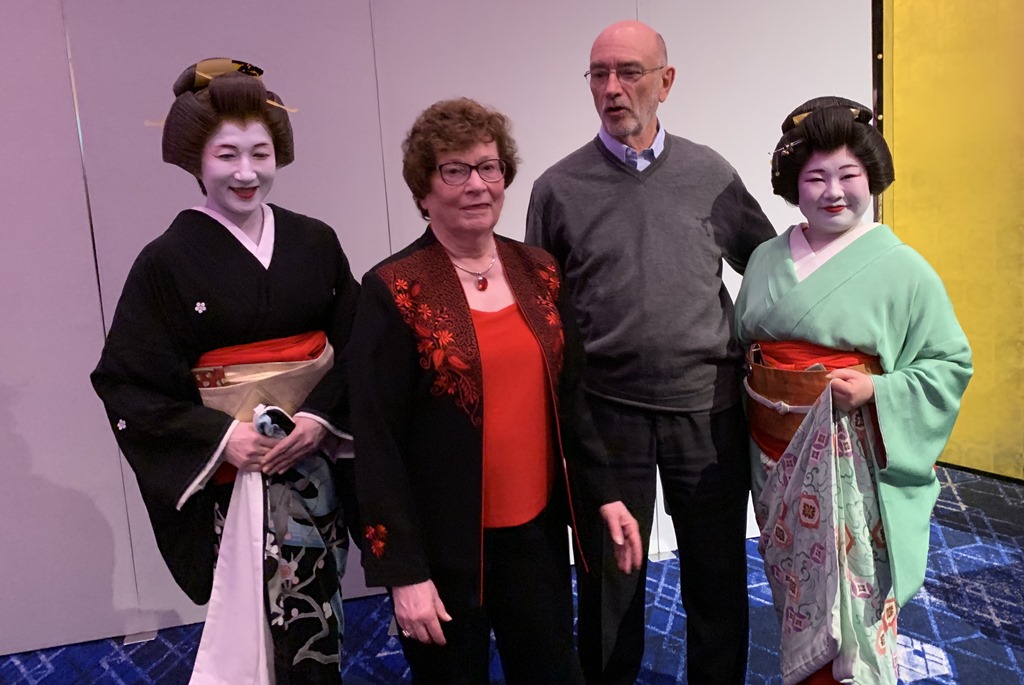
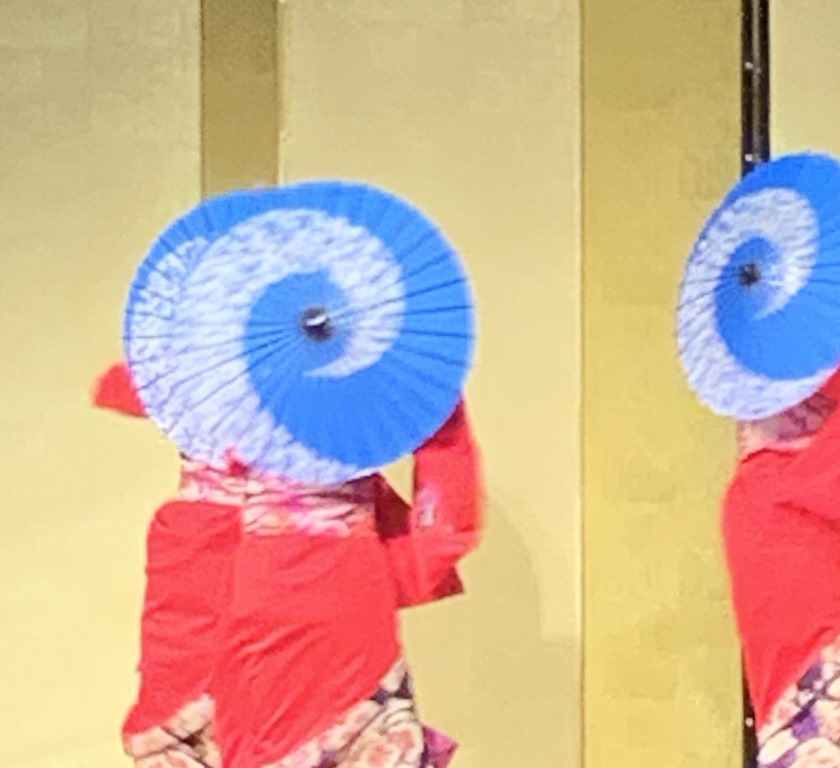
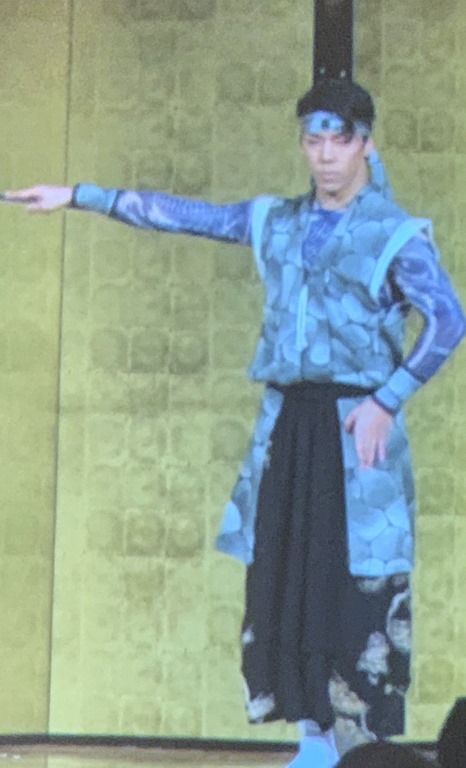
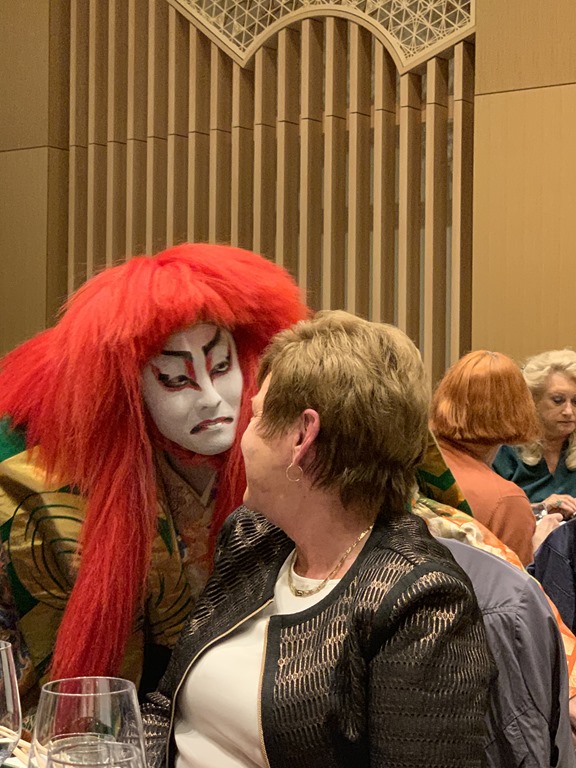
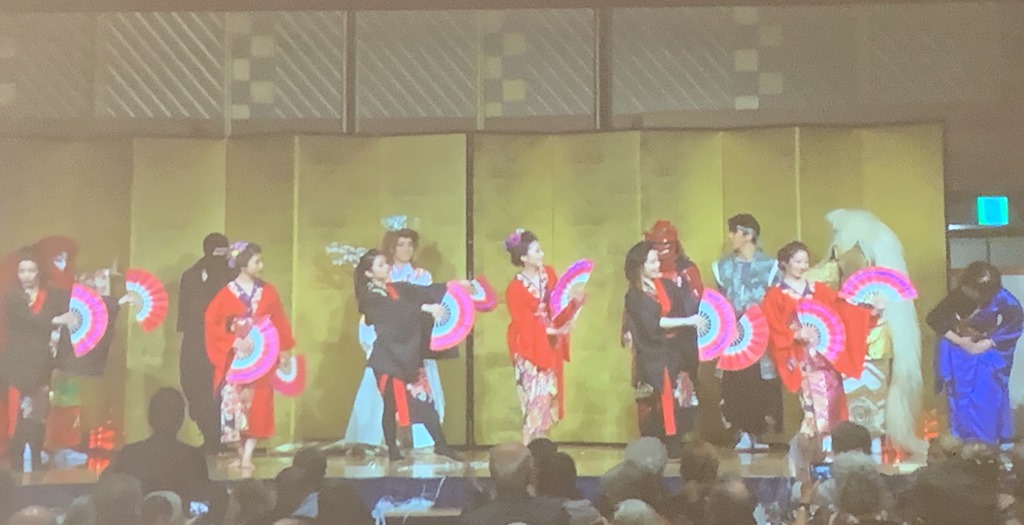
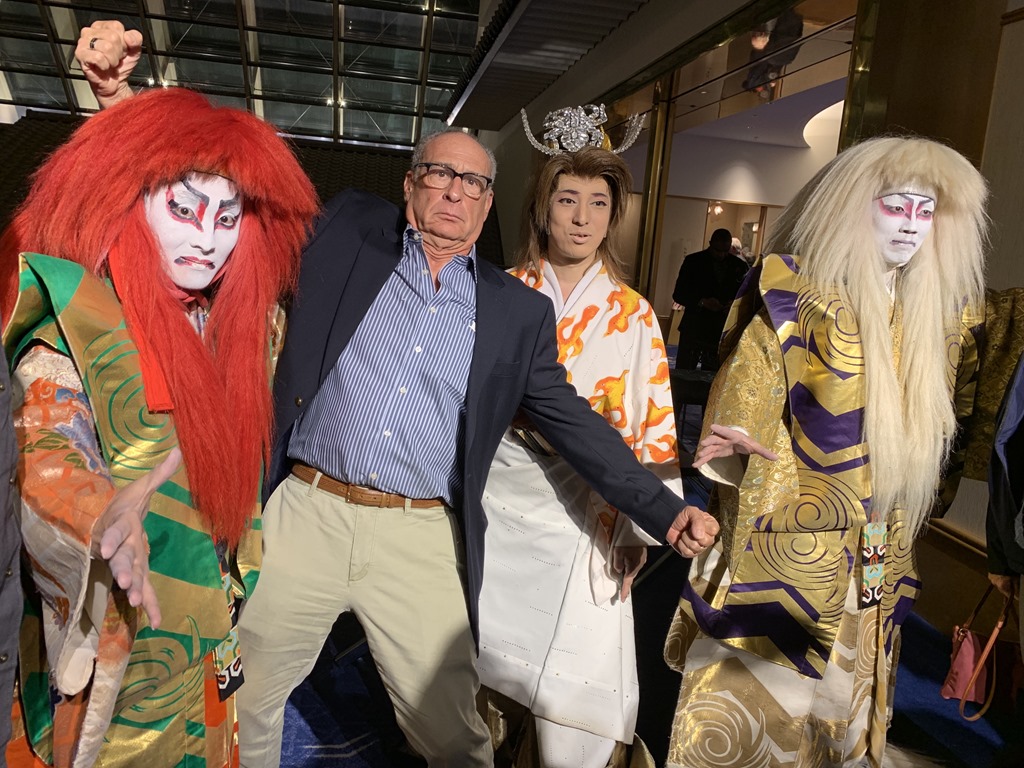
During and after the meal, we were entertained by Miyabiya Japan Show which consisted of kabuki (only men are allowed to do kabuki dancing), geisha, ninja, samurai, shamisen, Japanese magic and more.  Some of the dances go back as far as the 17th century in Japan. And of course we could have photos taken.

IMG_4620IMG_4629IMG_4634IMG_4644IMG_4649IMG_4653IMG_4655IMG_4658IMG_4662IMG_4665IMG_4666IMG_4668IMG_4685IMG_4738IMG_4747IMG_4753IMG_4755IMG_4757IMG_4758

After the event, we went back to the ship – it was too late already for the evening show which was from Tokyo, flute and Japanese harp.  Luckily we had the harp at our event.

Early departure tomorrow for our tour of Tokyo.

Posted in Asia, Excursions, Food, March, World Cruise 3 | Leave a comment

Kobe, Japan

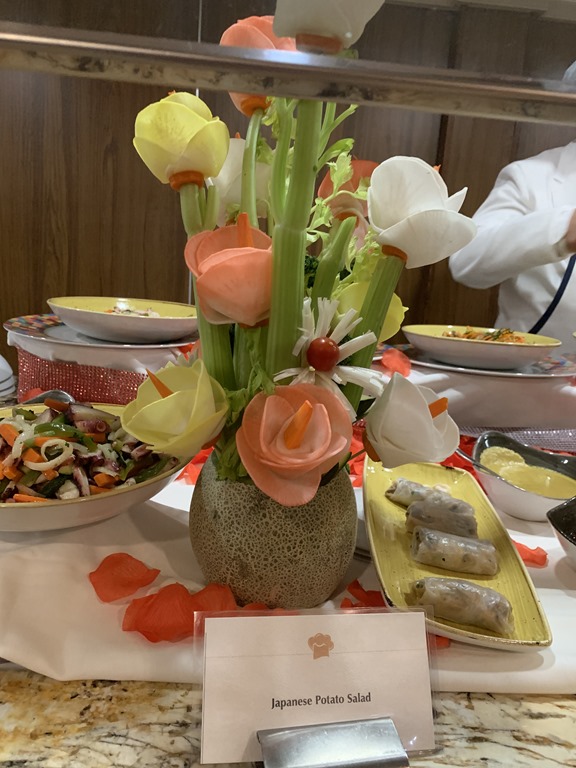
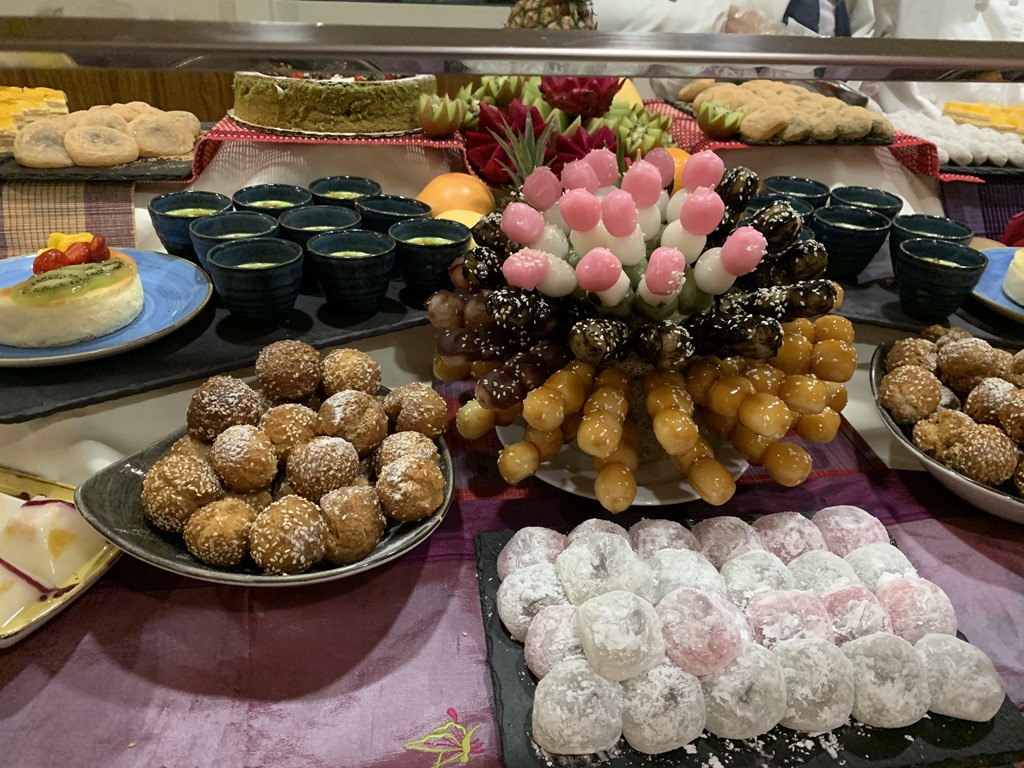
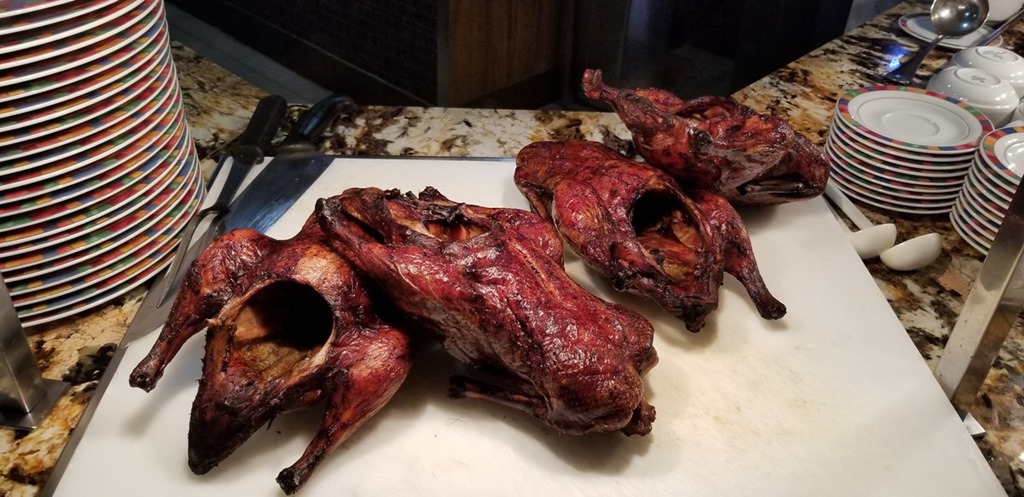
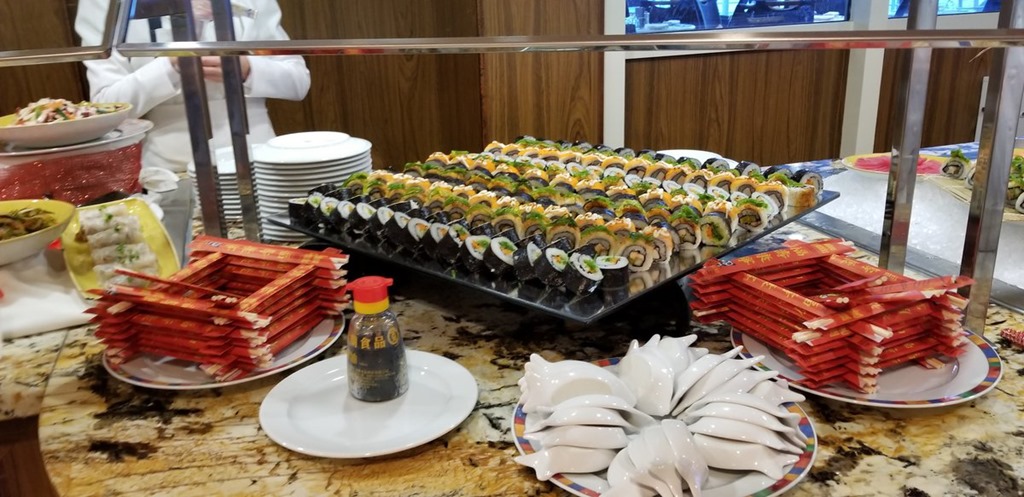
Last night we had a Japanese dinner in the Terrace Café and I have to say that Mario again outdid himself.  Both the food and the decorations were outstanding.

IMG_4388IMG_4389IMG_4391IMG_4392IMG_4393IMG_4394IMG_4395IMG_4444IMG_4446

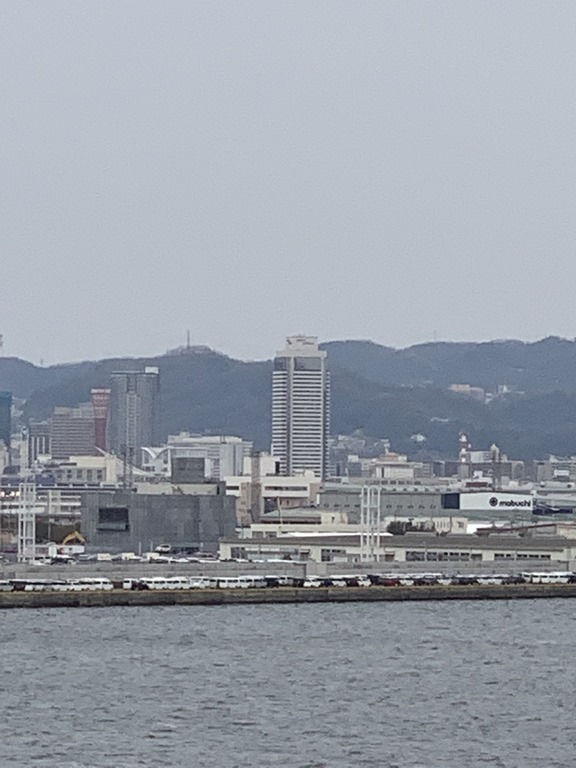
Our port today, Kobe, is the fifth largest city in Japan with a population of about 1.5 million people.  It is where the famous Kobe beef is raised.  It is also famous for good saki because of the quality of the water coming from the mountains. Many international corporations have their Japanese headquarters here, including Procter and Gamble, Asics,  Nestle and Eli Lilly.  It is a huge port.  Here is a picture as we arrived.

IMG_4396IMG_4397 

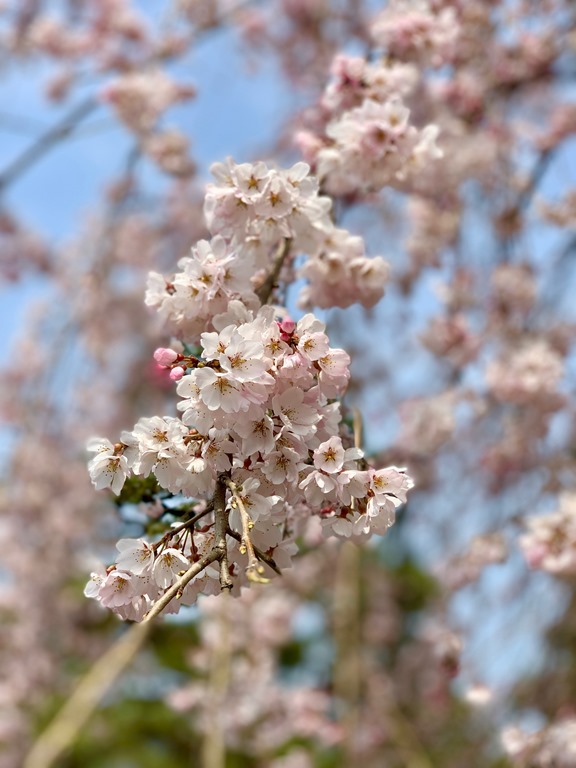
The tour we chose today was to Kyoto which was the imperial capital of Japan for over a thousand years.  It is known as the cultural and artistic heart of the nation, best known for its Buddhist temples, Shinto shrines, beautiful gardens and historically priceless buildings. There are no high rise buildings in the city and no freeways run through it.  There is also no smoke in the city. We got out our jackets and jeans as the temperature was only 59 F.  A delight after our hot weather days.

Our tour guide was Mari.  She was both delightful and informative. Kyoto is 47 miles northeast of the cruise port so our bus ride was about 1 1/2 hours long.  The bus driver had to take an alternate route due to an accident on the road.  This gave Mari plenty of time to tell us about Kobe, Kyoto and Japanese traditions. We have learned a lot about Japan from our guides and from Becky who does the book club and Japanese culture discussions.  More about that later, but first, here is what we did in Kyoto.

IMG_4459 

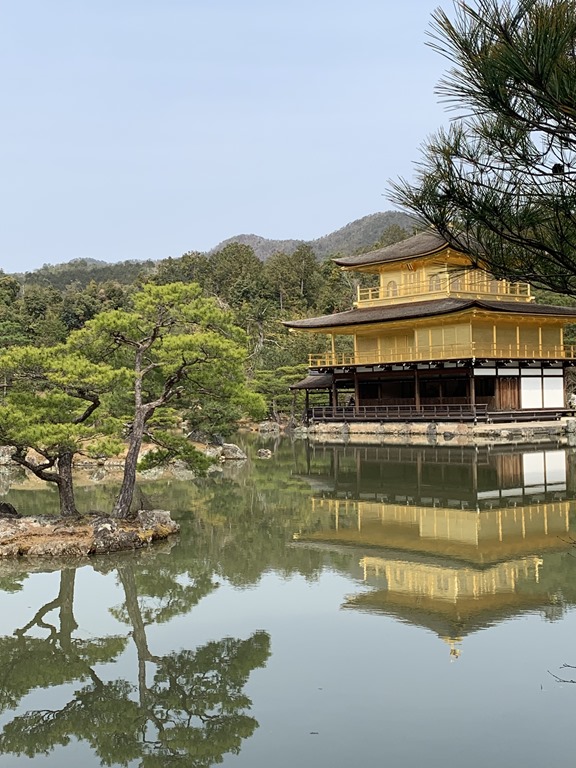
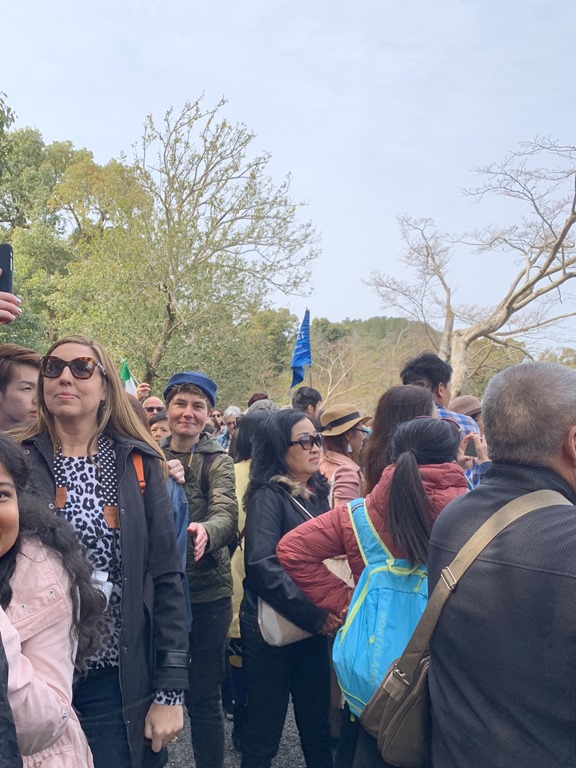
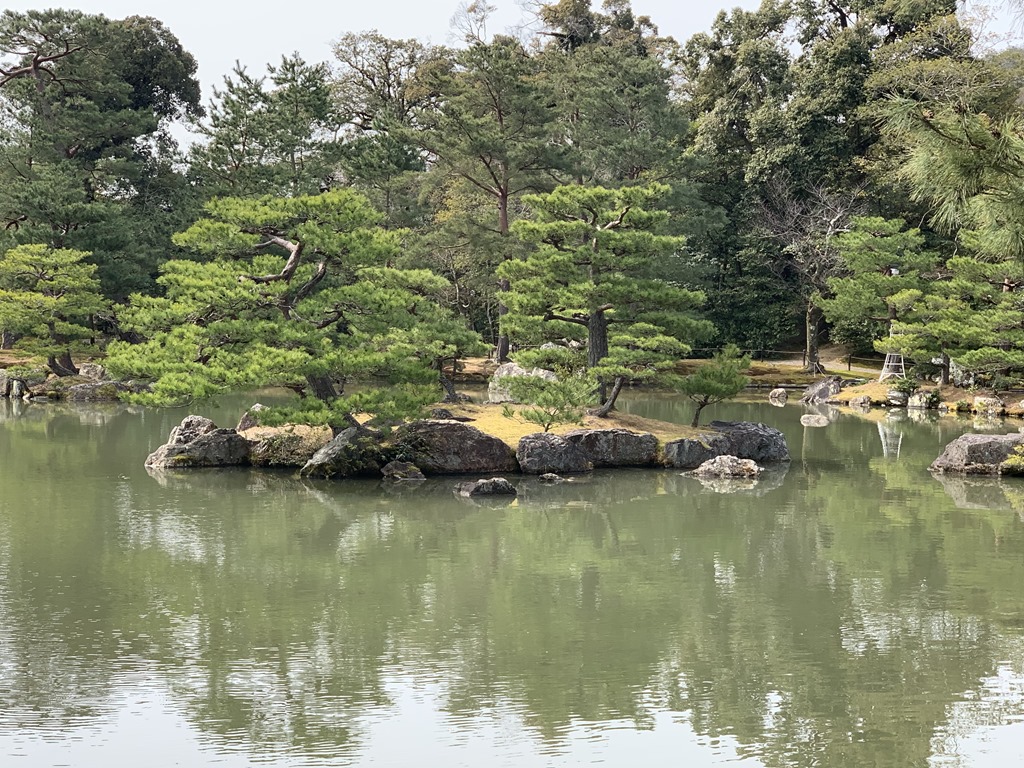
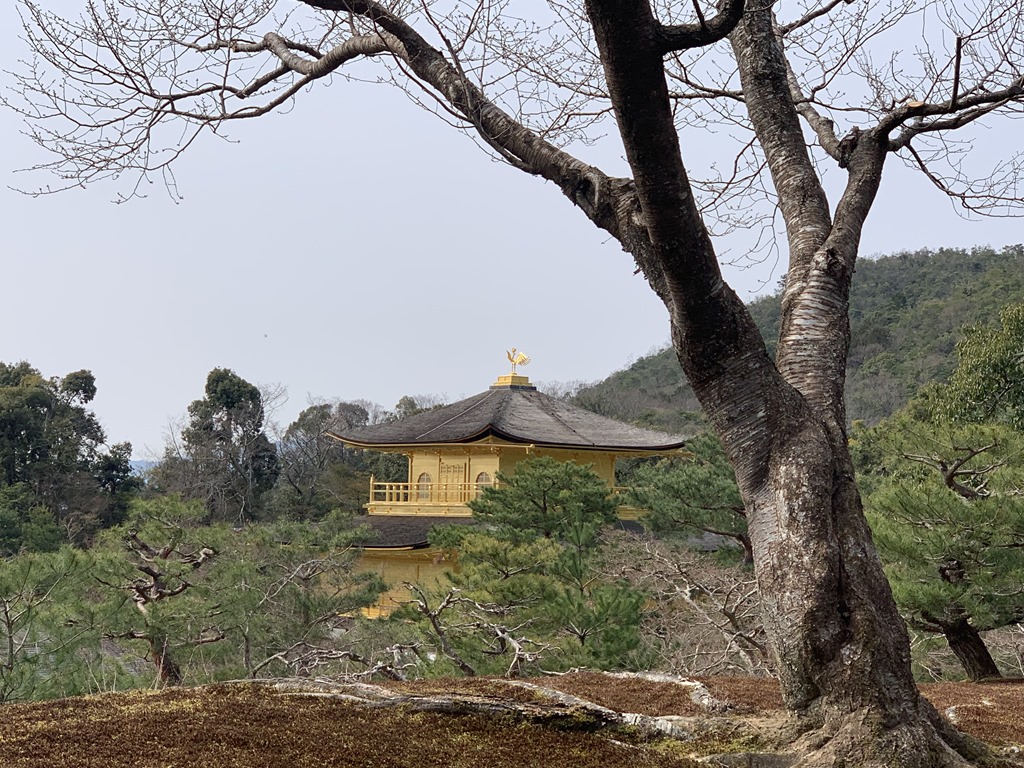
Our first visit was to the Golden Pavilion – Rokuon-Ji Temple.  This was built by Shogun Ashikaga Yoshimutsu in 1397.  It was a three story home and was converted to a temple by his son.  It is, as many temples are, positioned at the edge of a tranquil pond.  The walls and eaves of the second and third stories are covered in shimmering gold leaf.  No one is allowed into the Golden Pavilion but just seeing it, the peaceful gardens and the reflections in the pond are simply spectacular.  It was VERY crowded there and so some of our pictures have other people in them and I took one of the crowds. I can only imagine what it must be like when there are fewer people there. Does this sign remind you of Trader Joe’s?

IMG_4460

IMG_4407IMG_4409IMG_4410IMG_4417IMG_4423IMG_4425IMG_4426IMG_4427IMG_4428IMG_4429IMG_4430IMG_4431IMG_4434IMG_4435

At the shrine, you pull the ropes, clap two times and bow to get the attention of the gods before your prayer. There were also candles and incense for offerings.

IMG_4440IMG_4441IMG_4443IMG_4449IMG_4450IMG_4451

We don’t know what kind of bird this was but Norm tried hard to get a picture.

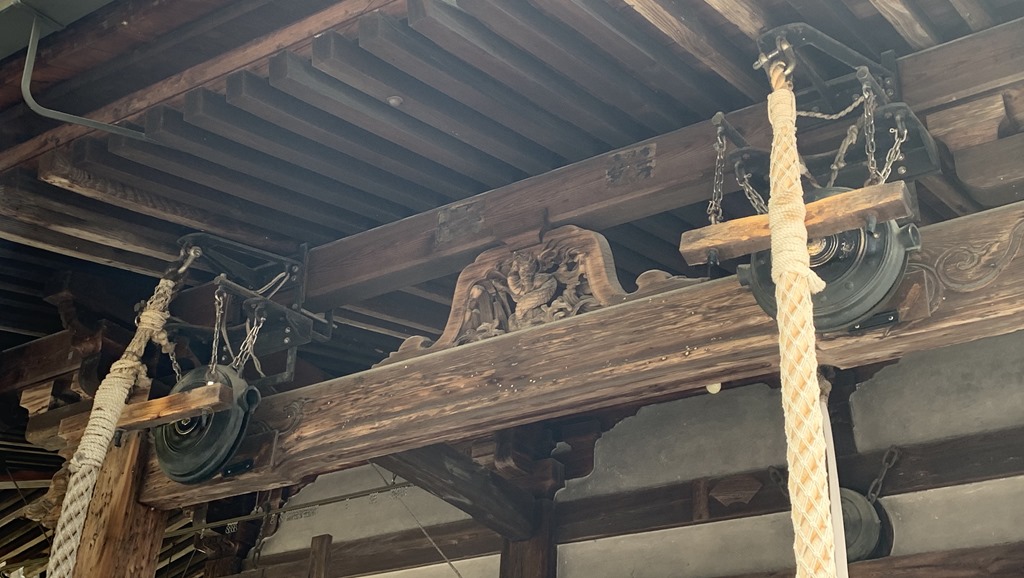
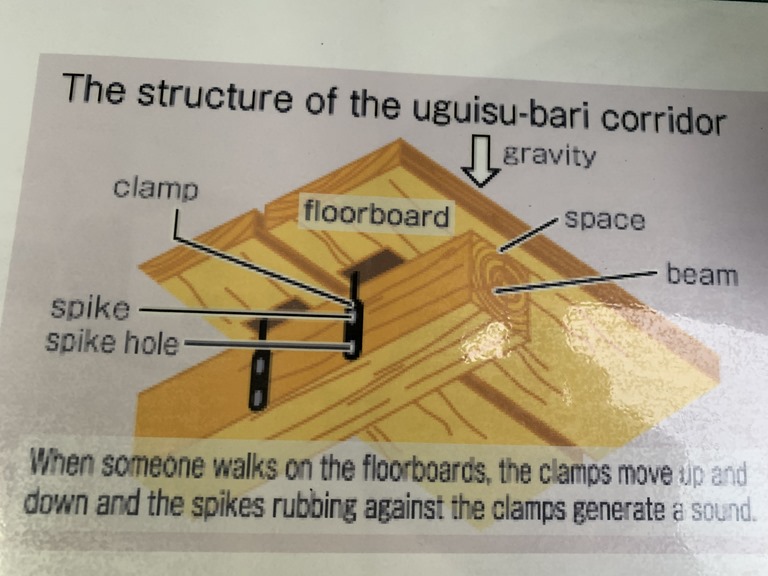
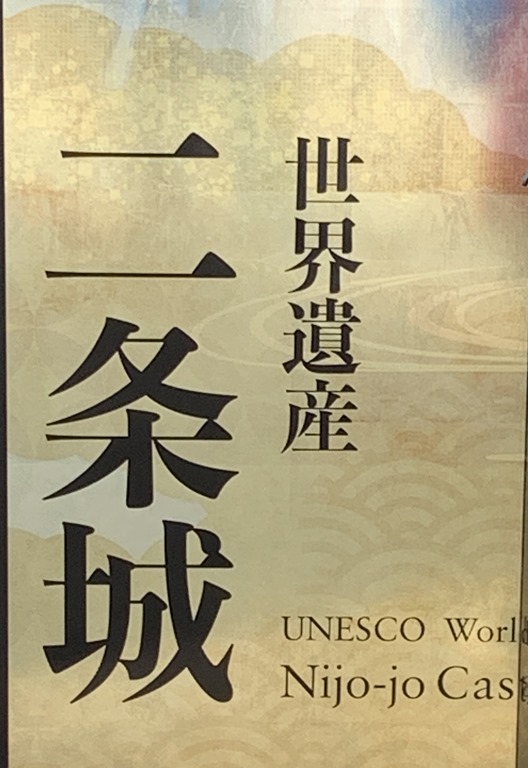
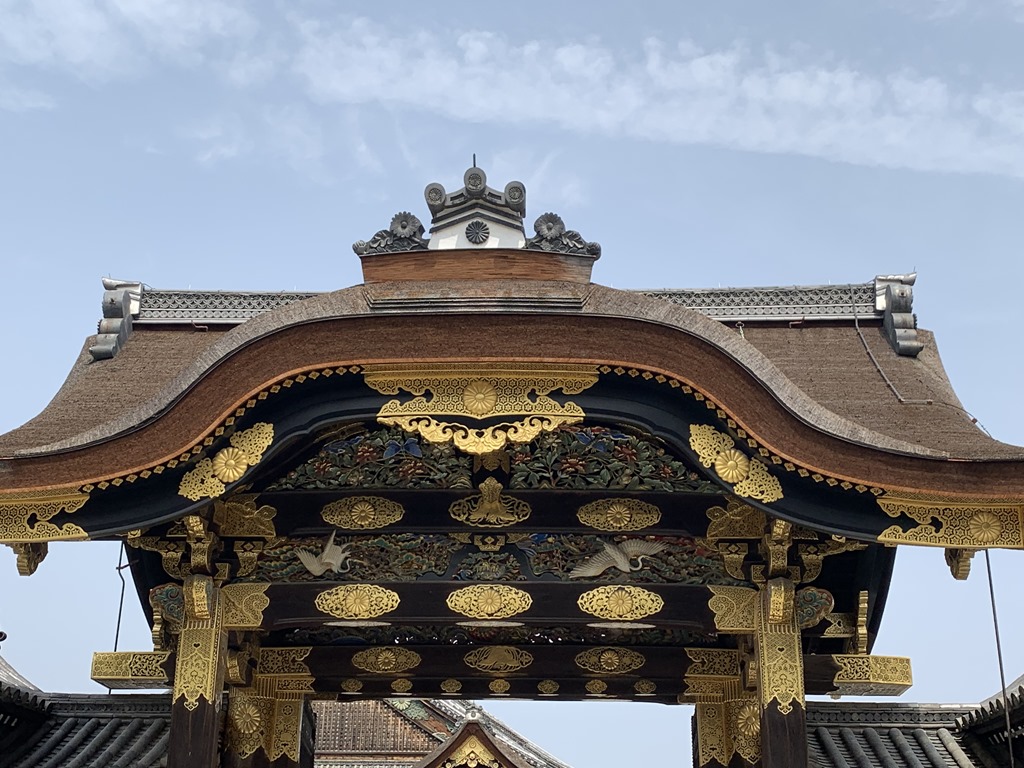
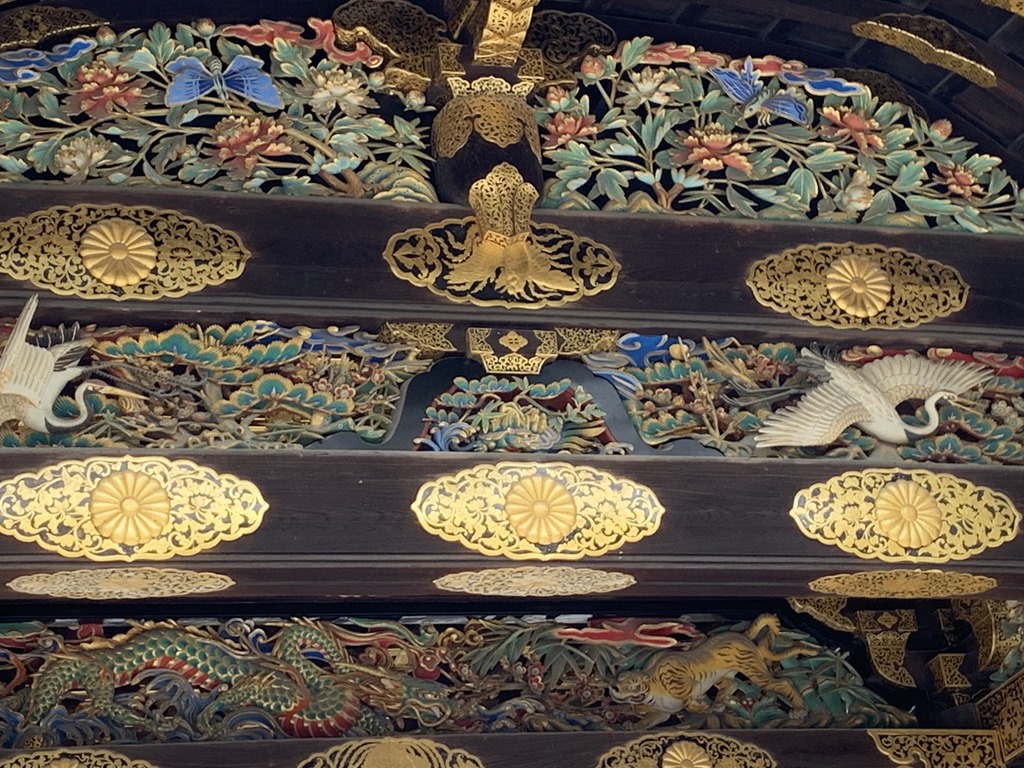
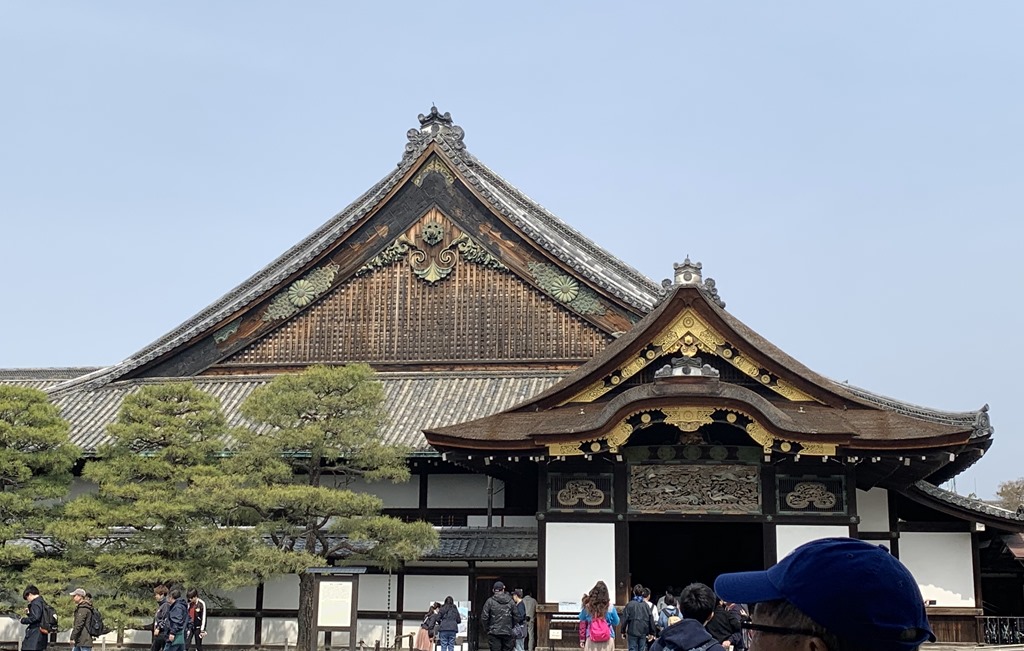
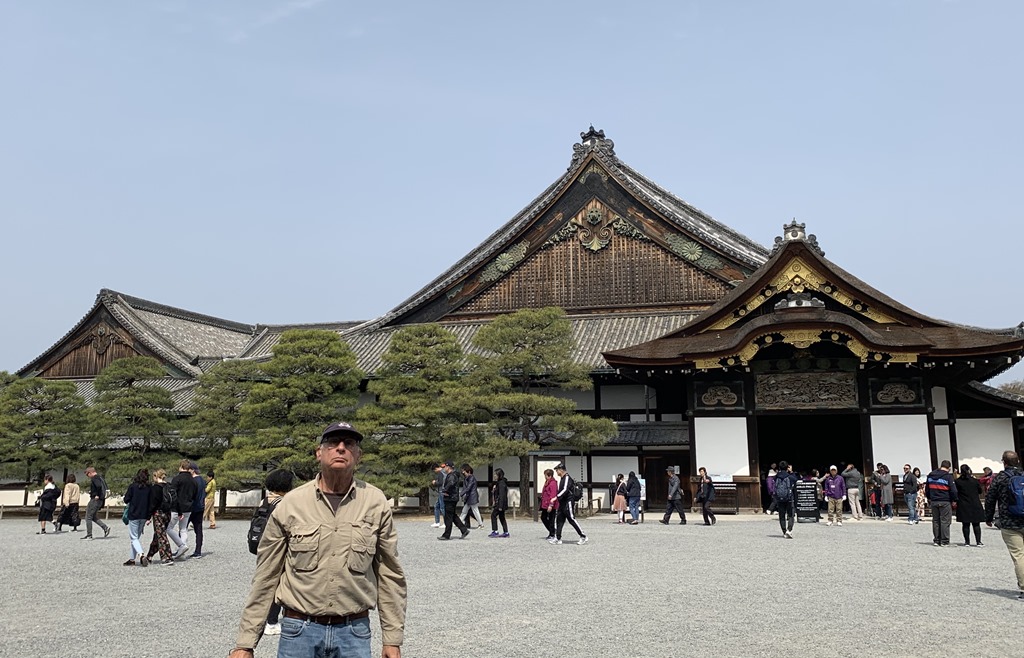
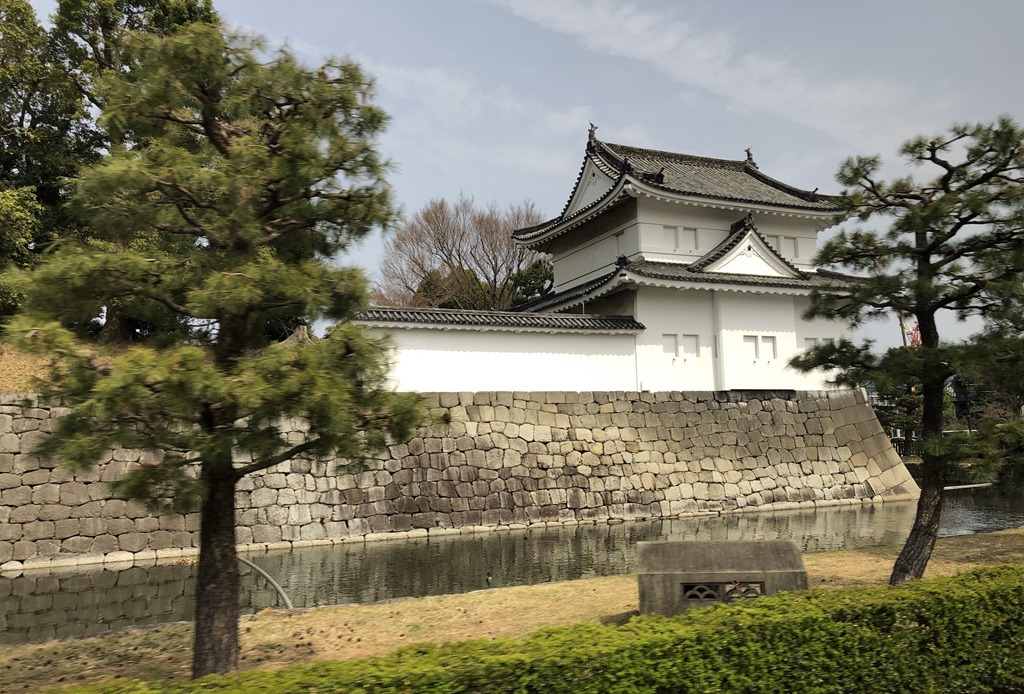
After our visit to the Golden Pavilion, we went to the Nijo Castle, a fortification of cypress wood built in 1603 as the residence of the Tokugawa clan.  It is a UNESCO World Heritage site.  It is protected by a moat, stone walls and most interestingly, nightingale floors, which chirp like a bird when walked upon to alert the guards of potential intruders!!

 IMG_4531

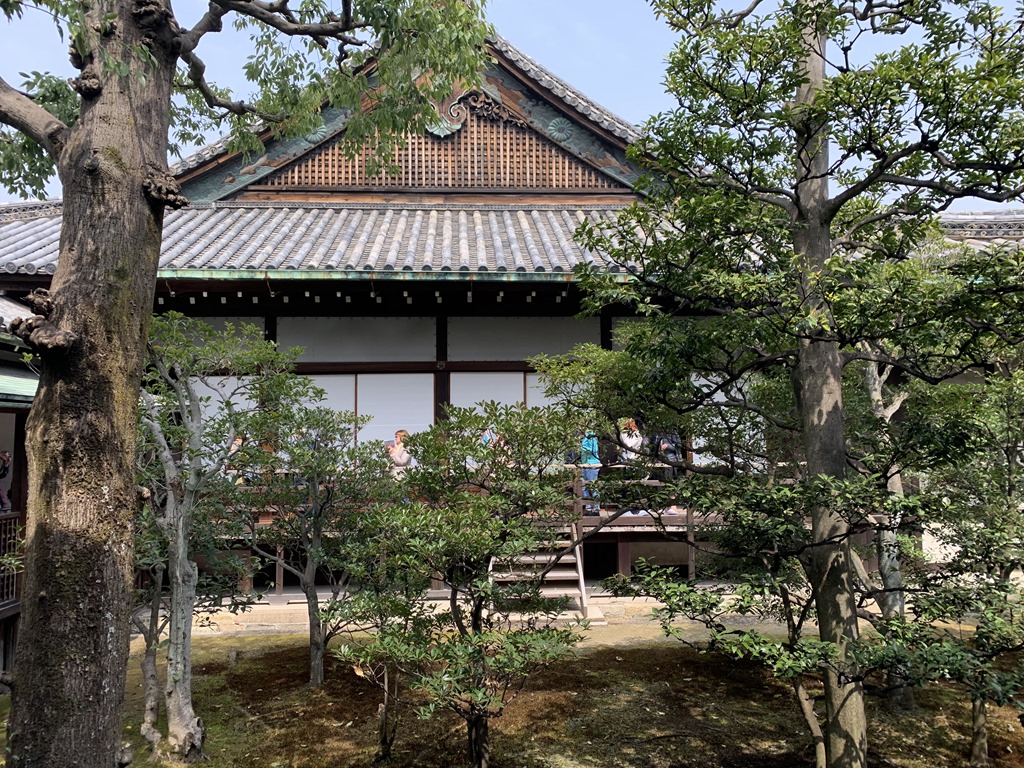
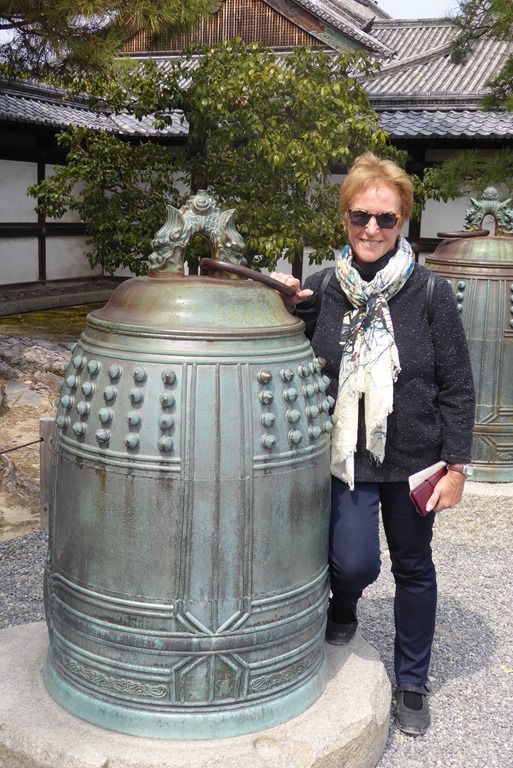
Despite its defensive elements, the castle was primarily a home.  It is adorned with wooden carvings, artistically painted sliding doors and rooms decorated with extensive paintings.  Unfortunately no pictures are allowed inside so all of these photos are of the outside. As we toured the inside, Mari explained each room and the significance of the drawings.  The ceilings are also quite beautiful.  Many of the wall paintings are reproductions with the originals in the museums.

IMG_4458IMG_4463IMG_4464IMG_4466IMG_4468IMG_4469IMG_4470IMG_4472IMG_4475IMG_4476

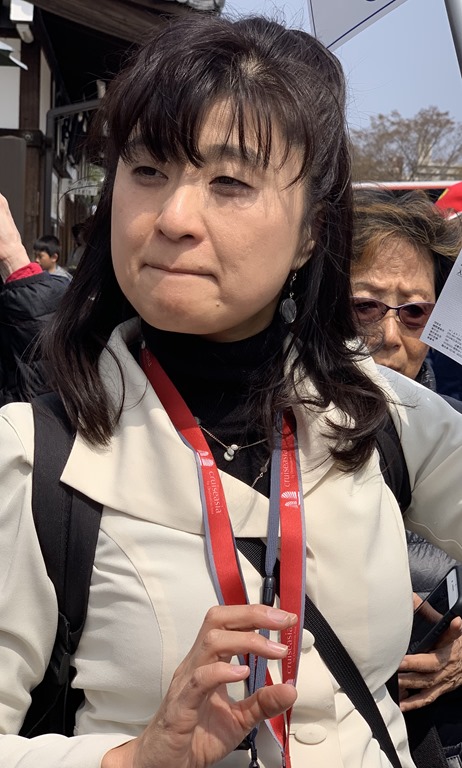
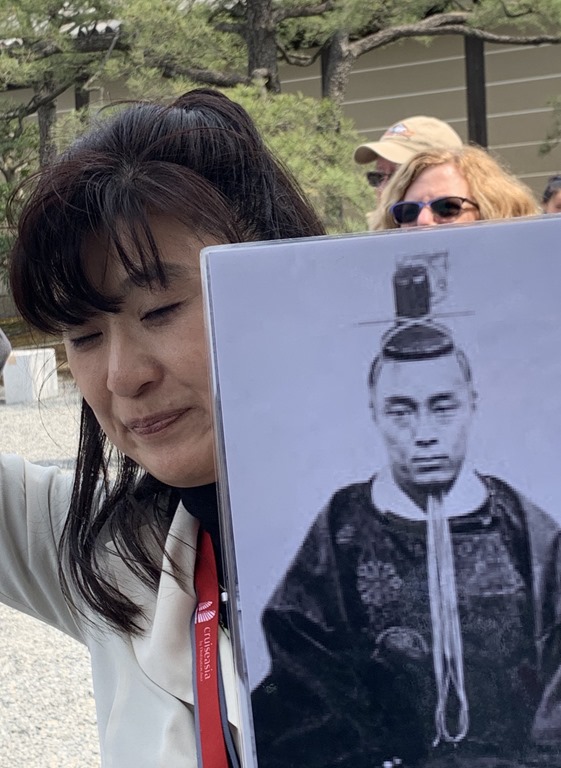
Mari is holding a picture of the Shogun at the time he was at the castle.  It was not a residence, just a place to conduct business and receive visitors.

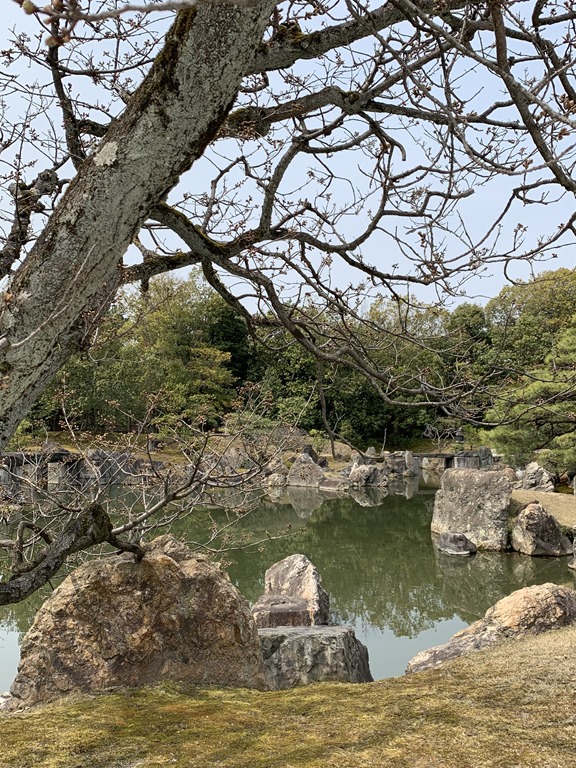
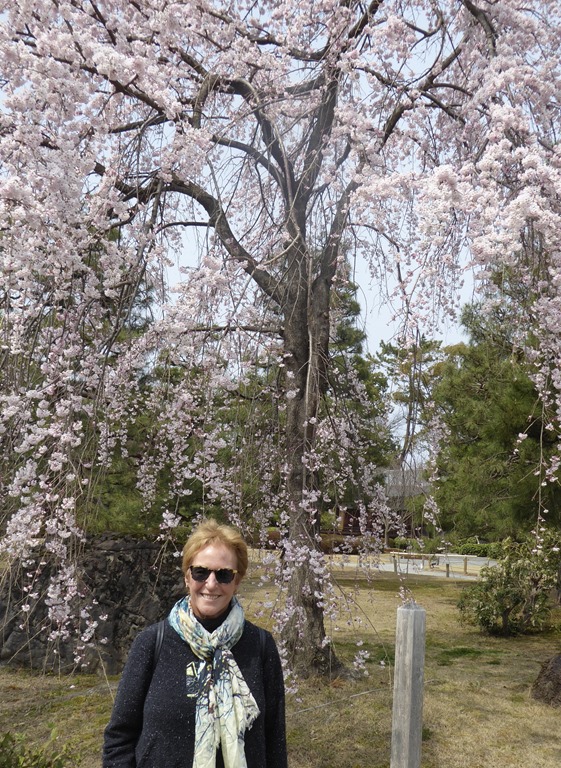
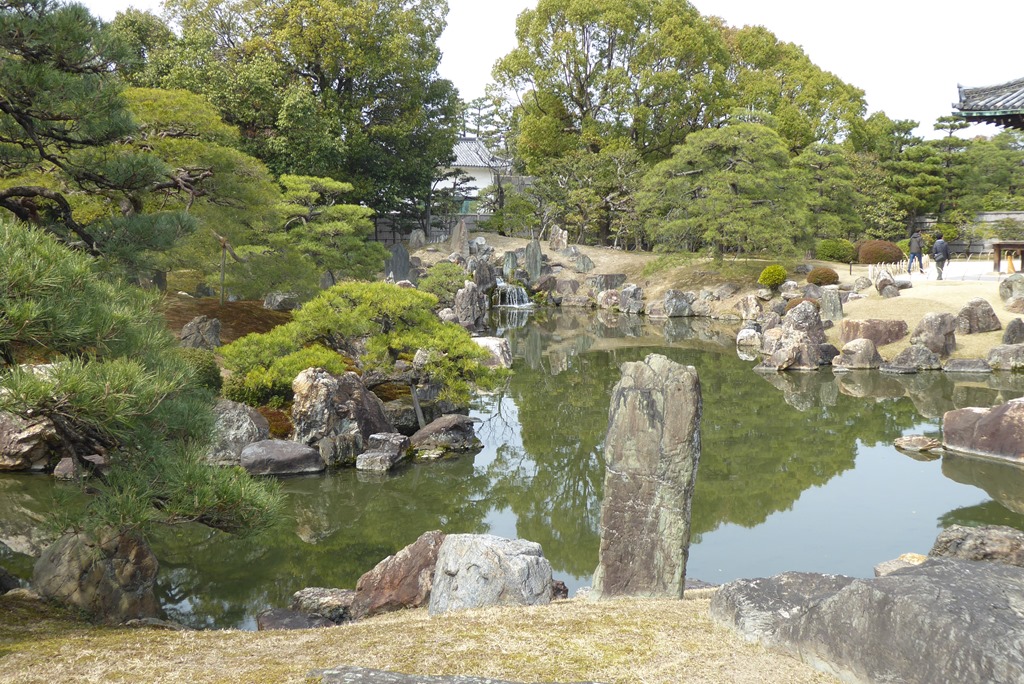
We had time for a walk through just two of the extensive gardens. It is just the beginning of the cherry blossom season so we wanted to see the ones that were in bloom.

IMG_4478IMG_4481IMG_4482IMG_4485IMG_4489IMG_4490IMG_4492IMG_4494IMG_4495IMG_4496IMG_4498IMG_4499

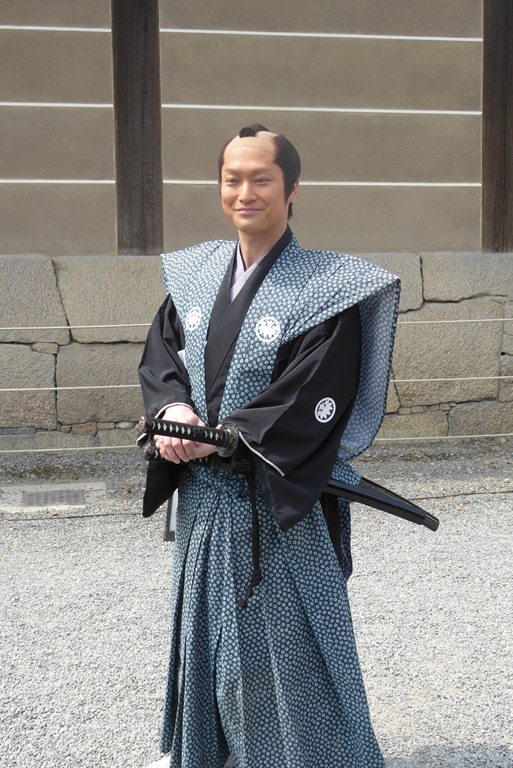
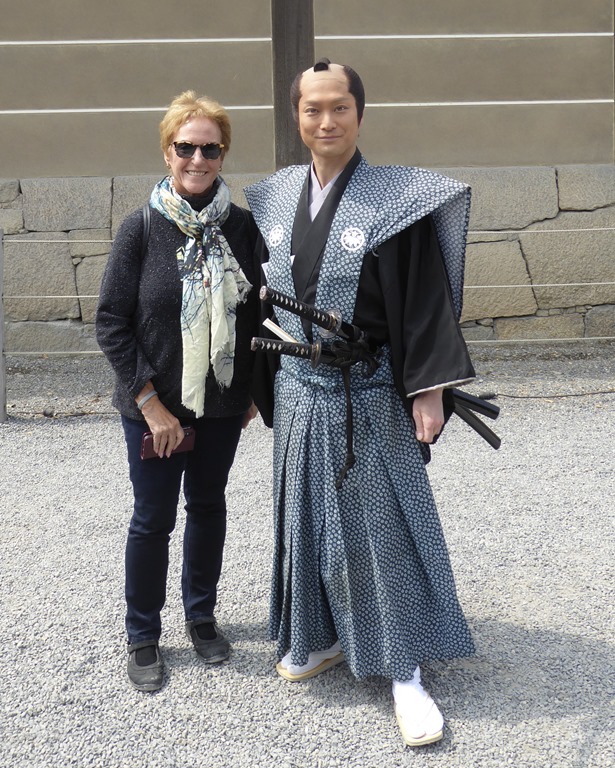
Some of our other sights at the castle. Including one of the people dressed like the Shogun and some tourists in kimonos. 

IMG_4457IMG_4465IMG_4500IMG_4501IMG_4502IMG_4508IMG_4509IMG_4511IMG_4512IMG_4515IMG_4517IMG_4519IMG_4524IMG_0939

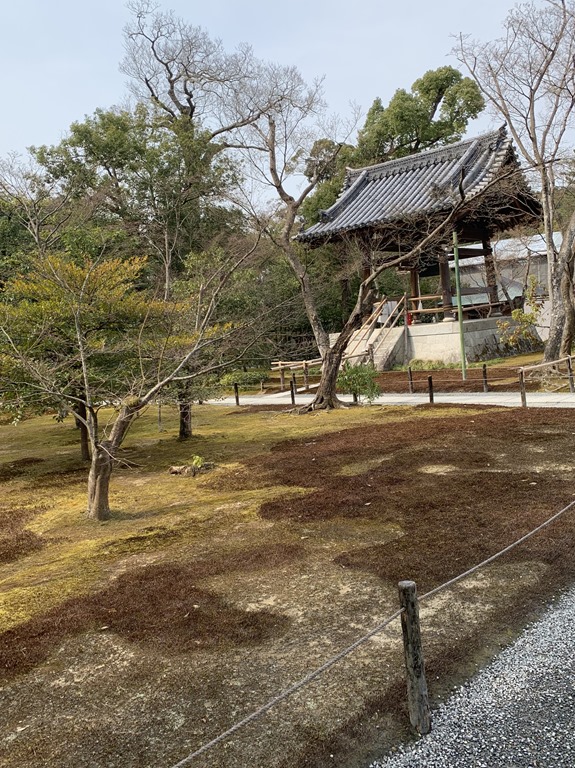
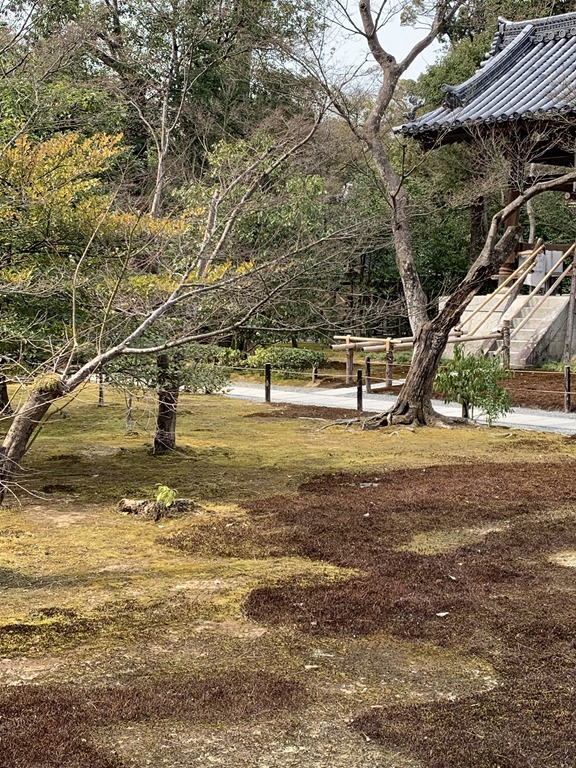
They have lots of moss on their grass here and some of it is quite decorative.

IMG_4403IMG_4404

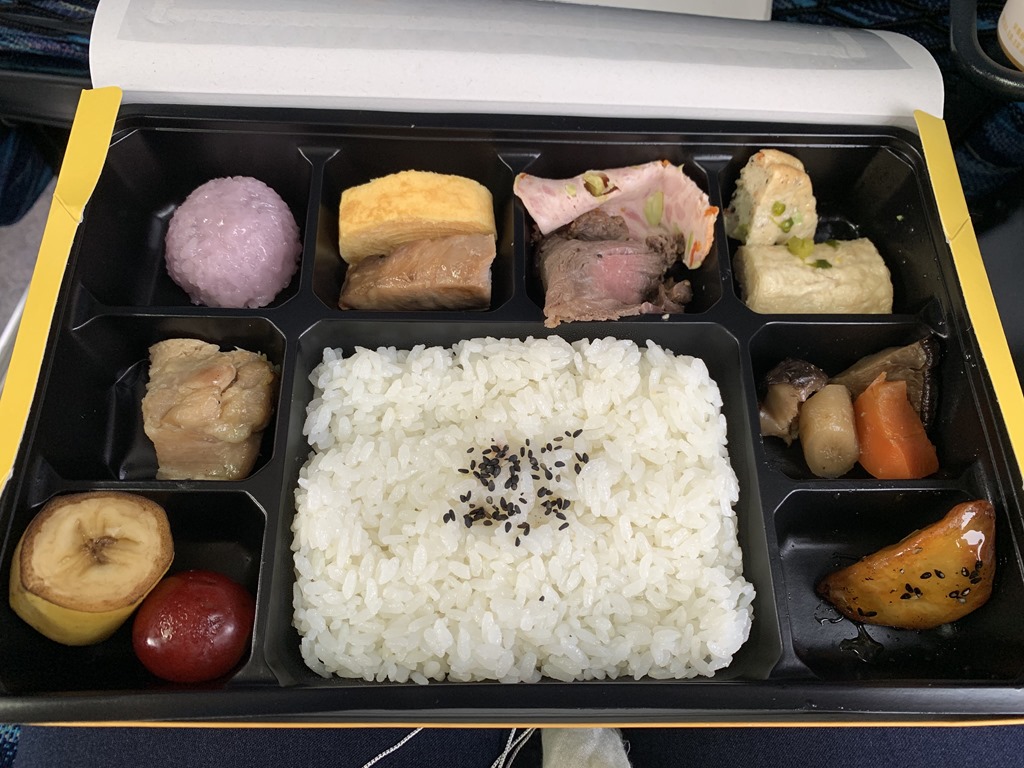
After our tour of the castle, we went back to the port and were given a bento box lunch to eat on the bus trip back.  Mari was pleased when we took the chopsticks instead of the fork.

IMG_4503IMG_4504

Here are some of the sights from the bus, including pavilions and shots of the mountains.

IMG_4524IMG_4525IMG_4530IMG_4533IMG_4539

Now for some of the Japanese culture.  Mari talked about the geisha culture.  Young women start their training at about 16 years old.  They do not finish high school but attend a separate school where they learn dance, conversation and the manners and dress of a geisha.  They train until about 20 – until then they are apprentices.  As apprentices, they have their own hair adorned with flowers.  They live in a group home.  When they become full geishas, they wear wigs with kinds of combs but no flowers.

Geisha parties are by invitation only.  They often cost 50,000 yen ($500 US) to attend so Mari says it is primarily older rich men who are there.  There is dancing, drinking games and conversation.  Geishas are not prostitutes but are there to entertain the guests. 

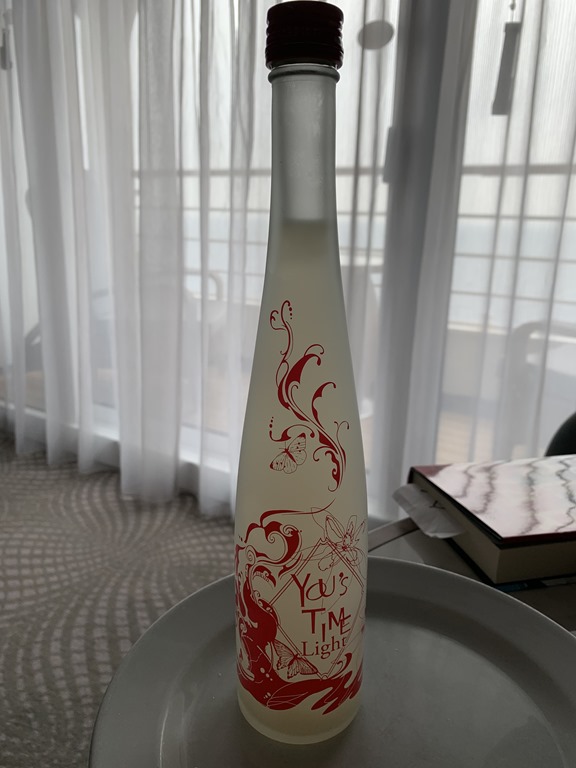
We bought some Eikun lemon and also plum saki, it was served to us cold and it was delicious.  We will need to have a saki party when back on board.

IMG_4567

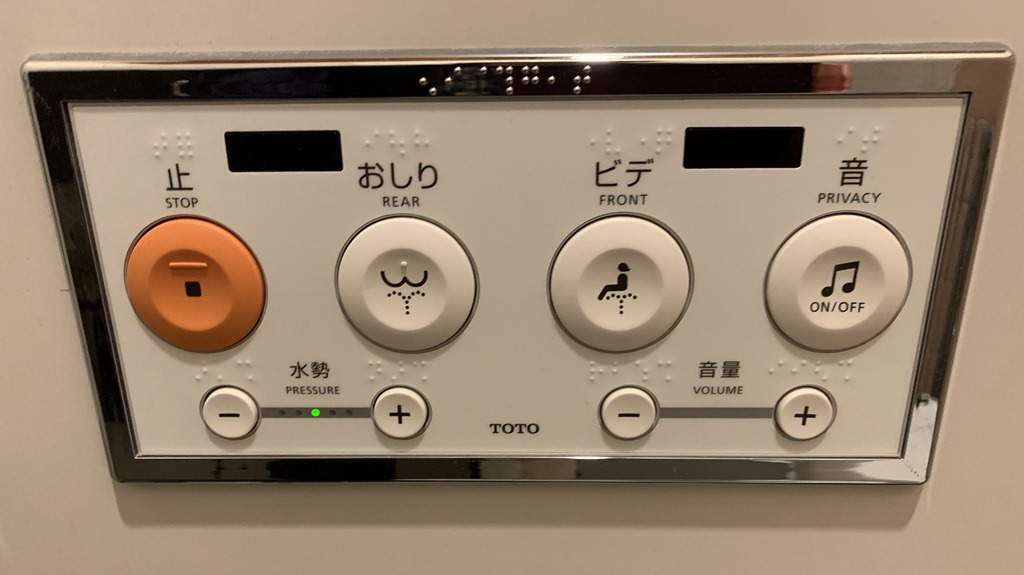
Again with the toilets, they are all heated and even have a music setting in case you don’t want anyone to hear you while in the stall.  And all have the water features.

IMG_4400

There are vending machines everywhere and Coke is big.  The machines even dispense hot drinks. And we heard that in places, they dispense puppies.  Yes, puppies.

IMG_4399

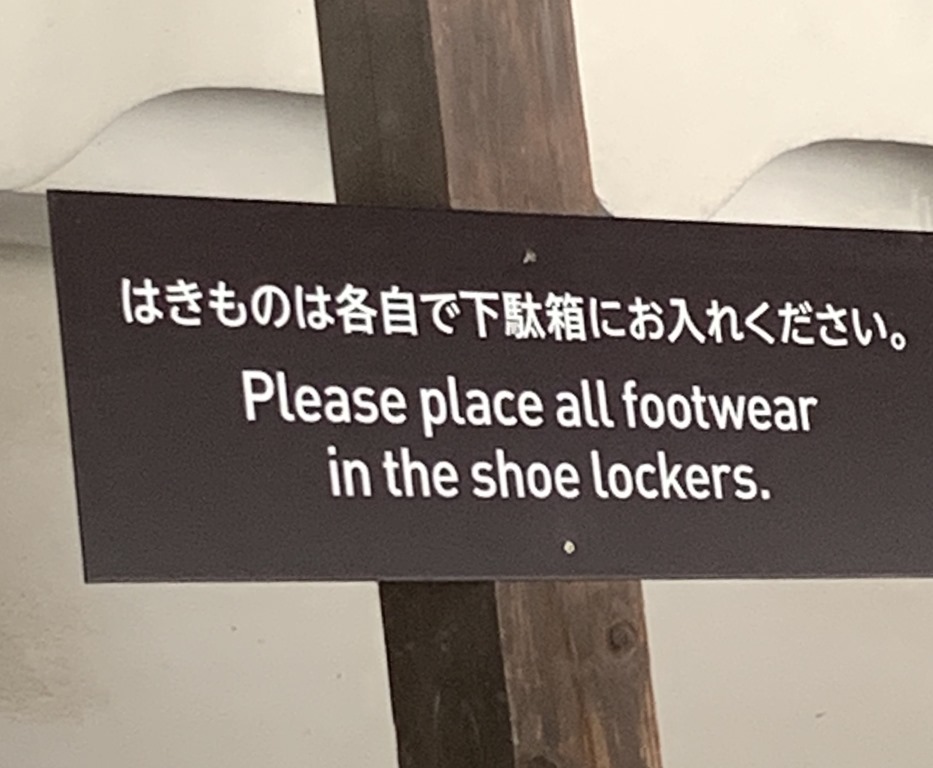
This is a very clean and orderly society.  One of the passengers saw a woman walking her dog. The dog peed on a tree and the woman got out a spray bottle with some solution in it and sprayed the tree. You don’t see garbage anywhere and you can leave your belongings out in plain sight and no one touches them.  You see bikes not locked up with the helmets just in a basket and all kinds of examples of the formality of the culture. There is virtually no crime and the police have to find things to do.  Shoes must be removed in most places and put in a specific assigned spot. If you are doing something wrong in a restaurant or shop,  someone will chase after you to try to let you know.IMG_4477

98% of the adoptions in Japan are of men aged 26-35 years of age! The reasons are #1 to pass on businesses and #2 to have someone to care for you. They have a significant problem in that there are fewer children and the population is aging.

26% of people are over 65 in Japan as compared with 16% in the US.  The largest population of people over 100 years of age live in Japan.

English is taught in the schools but they are not good at it here and rarely speak it.  Mari and Becky say that is because English is taught by Japanese teachers in most cases so it isn’t really user friendly.

The post offices here are also banks so all business can be done there.  They have stacks of these brochures that show you what you can order directly from the post office and have sent to yourself or anyone else. And they sell everything from soup to very valuable gold pieces!

IMG_4566

Yes, they do eat horse meat here.

You see a lot of people wearing face masks.  In some other countries it is because of pollution.  They face some of that here, but it is mostly because of allergies.  Becky’s husband David couldn’t believe how effective they were – he resisted for years and has bad allergies – now he is convinced.  One of the guides said sometimes women wear the large ones if they don’t have time to put their makeup on!

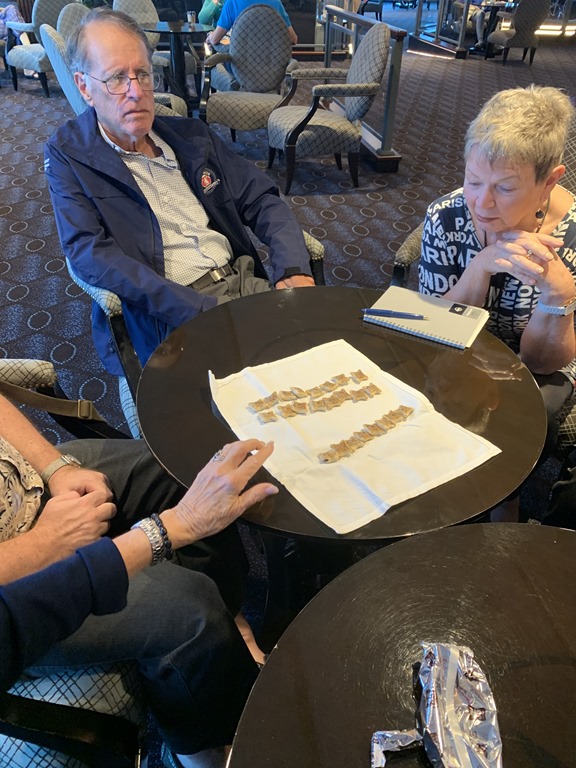
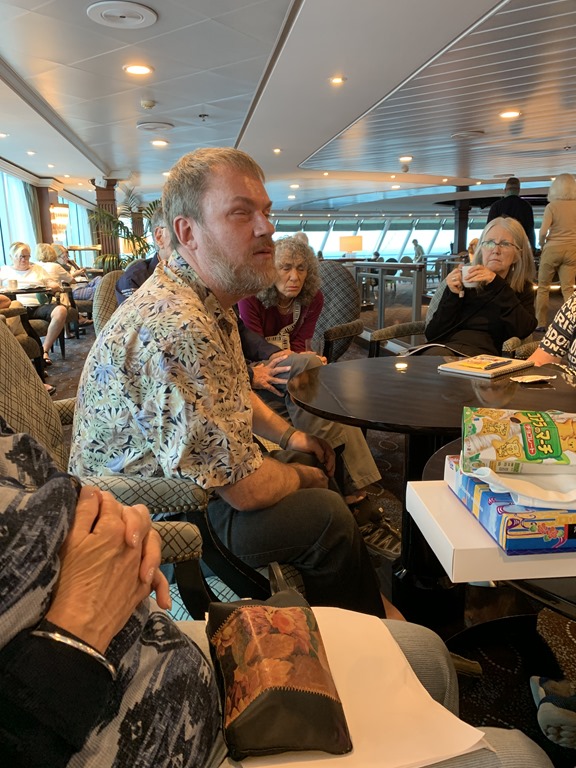
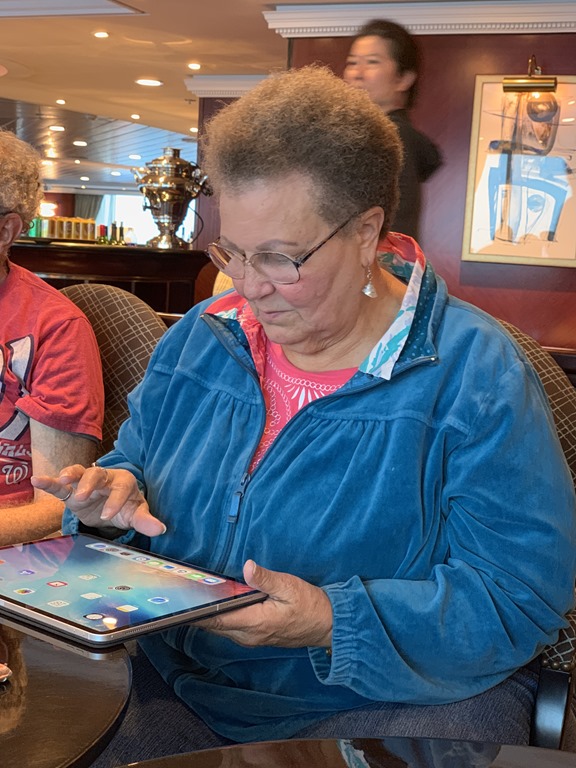
Becky brought all kinds of snacks for us to taste.  The tall package contains a kind of small cookie with chocolate in the center, shown in the first picture.  They have a picture on each of them and one is different.  Kids love to get them and I hope the kids are better at spotting the different one.  We needed all kinds of hints before we got it.  The last two pictures are of Becky and David.

IMG_4382IMG_4384IMG_4385IMG_4386IMG_4387

David told us a lot about work culture in Japan. Again it is very regimented  Cleaning is not done by a service, everyone does it, including the CEO.  They get vacations but almost no one takes them.  You can’t leave the workplace before the boss.  You are seated by length of service, with the CEO always furthest from the door and your place moves as new people join. You are expected to be working at the time your shift starts so people have to come in early so they are working at the exact correct time.  There is a morning briefing, at David’s place of work, it happened 5 minutes into the shift.  The boss talks about what is going on, including detailed descriptions of why someone is not there and why.  If ill, the illness and recuperation is discussed.  Lots more to tell, but will save some for future posts.

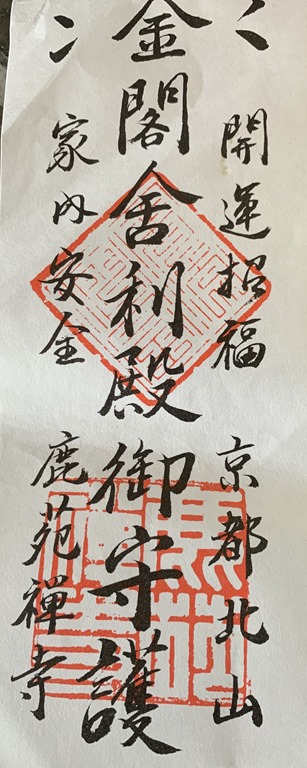
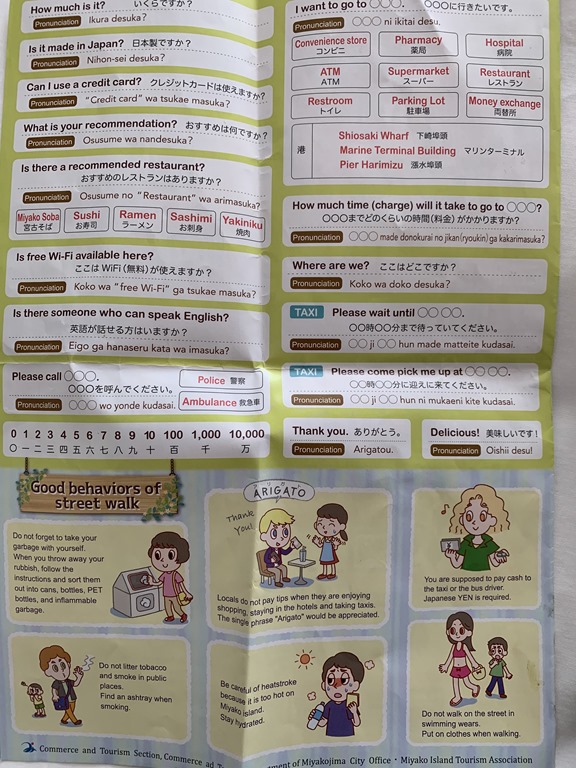
This first picture is the ticket into the castle.  Beautiful!  The second picture is a brochure we got in one port with very helpful English/Japanese phrases.

IMG_4541IMG_4542

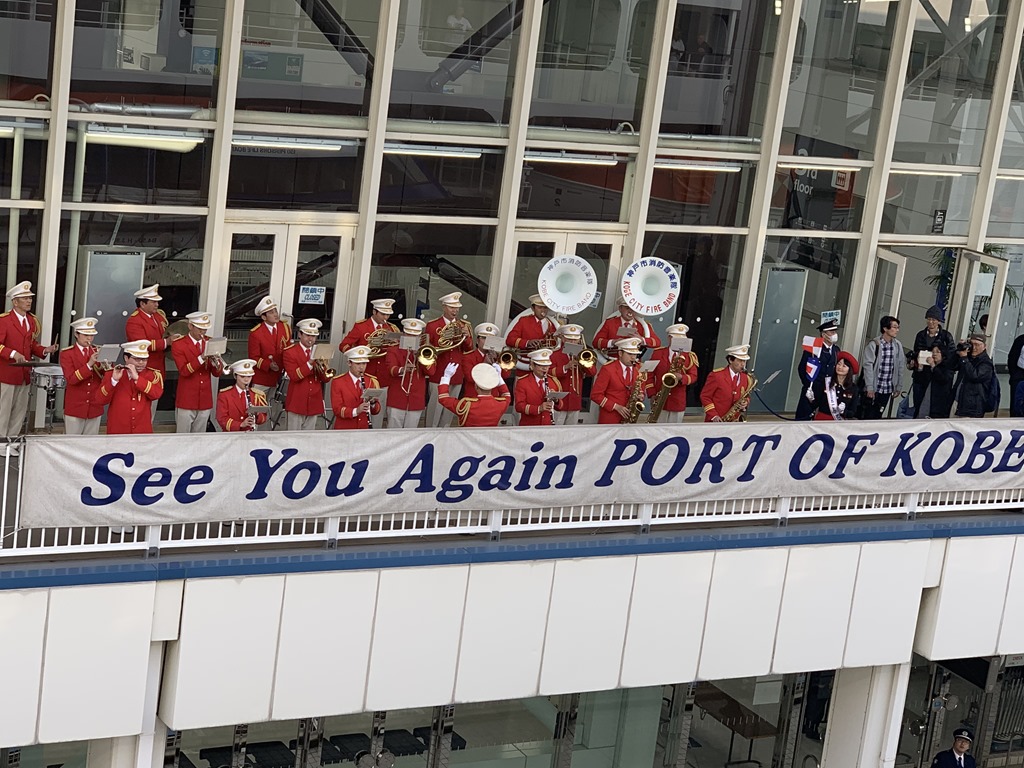
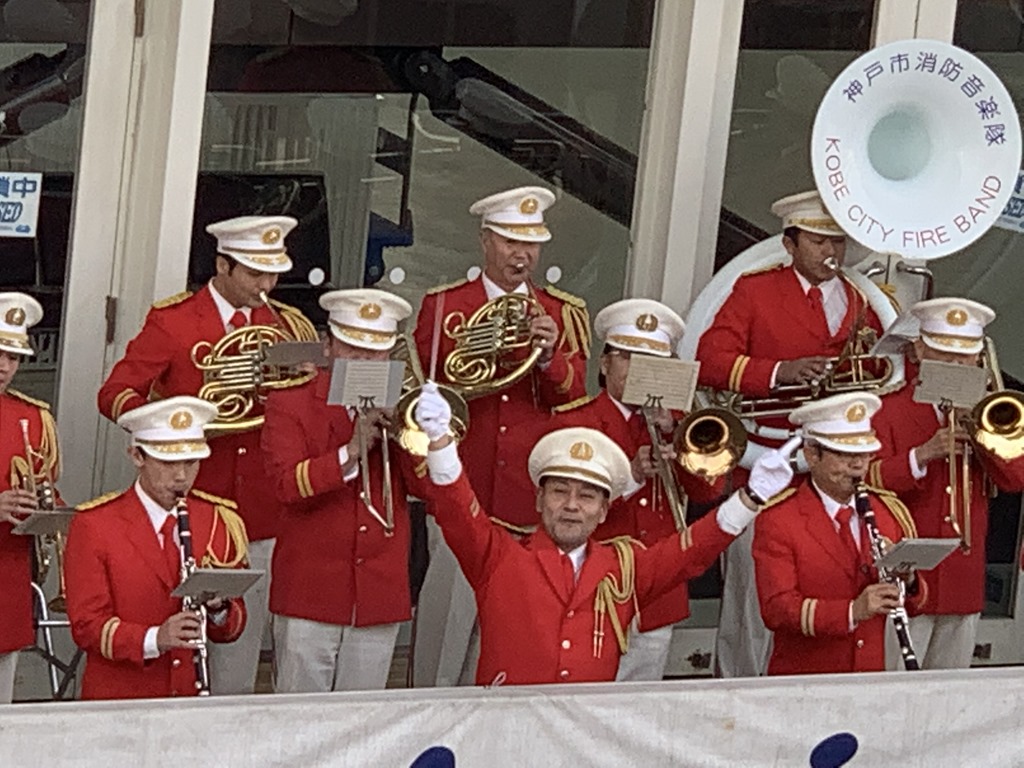
When we were ready to leave the port, a band came out and played several songs including “It’s a small world after all, stars and stripes forever, YMCA (and people on the balconies on the ship and on the pier acted it out) and when we pulled away from the pier – Anchors Aweigh. I did take video but sadly can’t upload it so pictures will have to do.  And these young ladies were not tourists and neither were the ones on the pier.

IMG_0957IMG_4544IMG_4545IMG_4550IMG_4551IMG_4555

Then it was up to the cabaret in Horizons where Stephanie had her last performance – she will leave us in Tokyo, as will Damien and many of the guests who have traveled on this segment.

IMG_4563

On to Tokyo where we arrive at 4 PM and have an overnight stay.  We have an ATW event the first evening and a full day tour the second day.  I have mentioned that we like to be off the ship when it is an embarkation day and the next segment guests will join on our second day in Tokyo.

Oh, and due to local regulations, the casino is closed when we are at sea around the Japanese ports.

After that we have three more ports in Japan so I will save some of the culture discussions for those posts.  It is a fascinating place and very different in many ways than most of the places we have visited in the world. 


Posted in Asia, Excursions, Food, March, World Cruise 3 | 1 Comment

Naha, Okinawa, Japan

March 27,2019

First, here are a few pictures from Norm’s camera from yesterday’s adventures.

IMG_4256IMG_4258IMG_4259IMG_4261IMG_4264IMG_4266

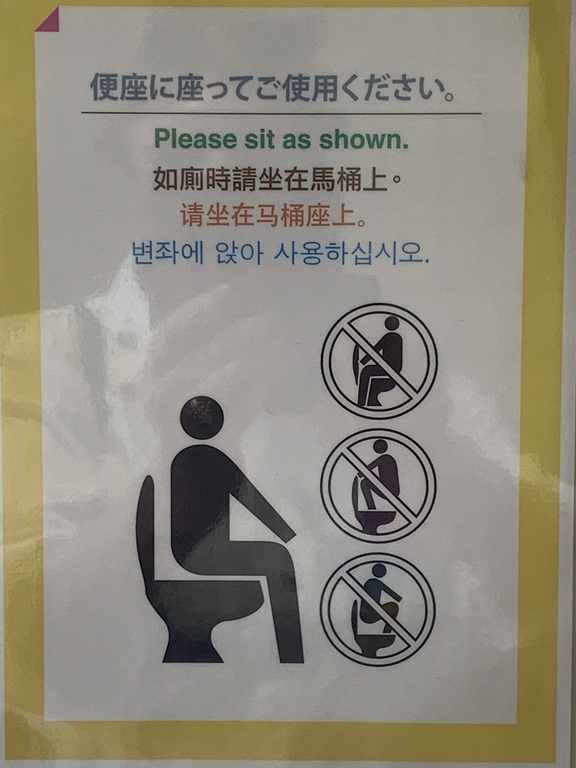
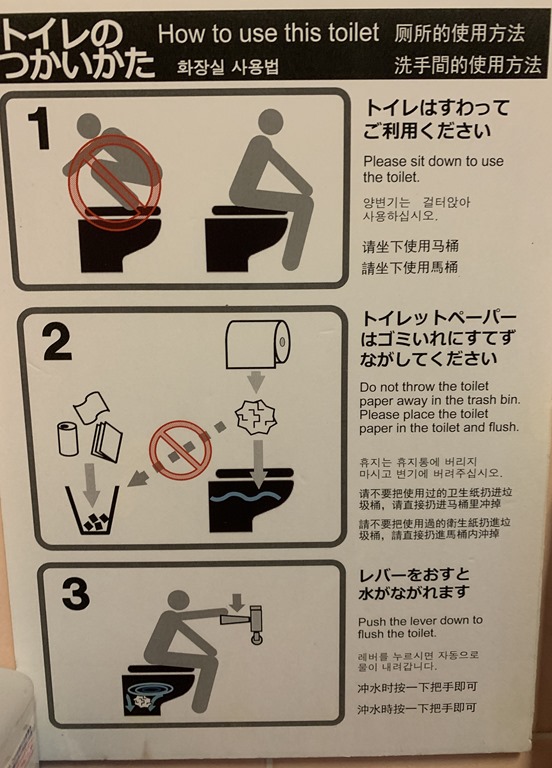
And yes, I guess they have to have instructions on using western style toilets here?

IMG_4267

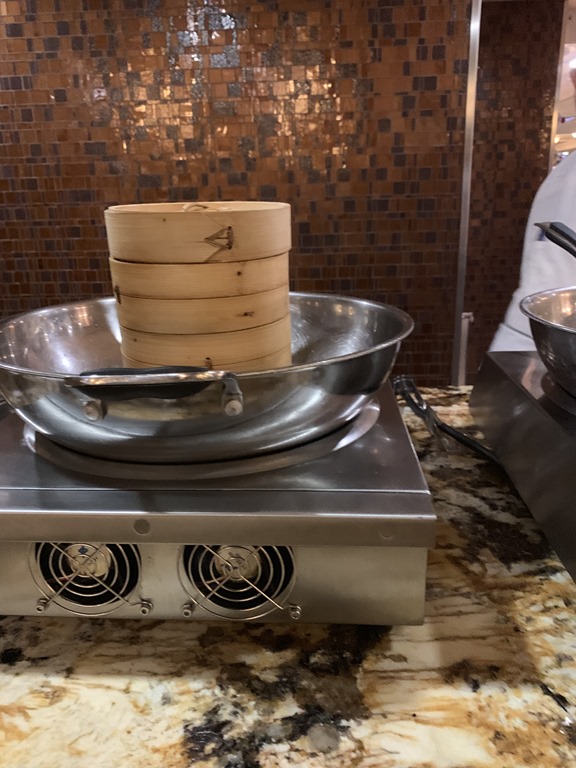
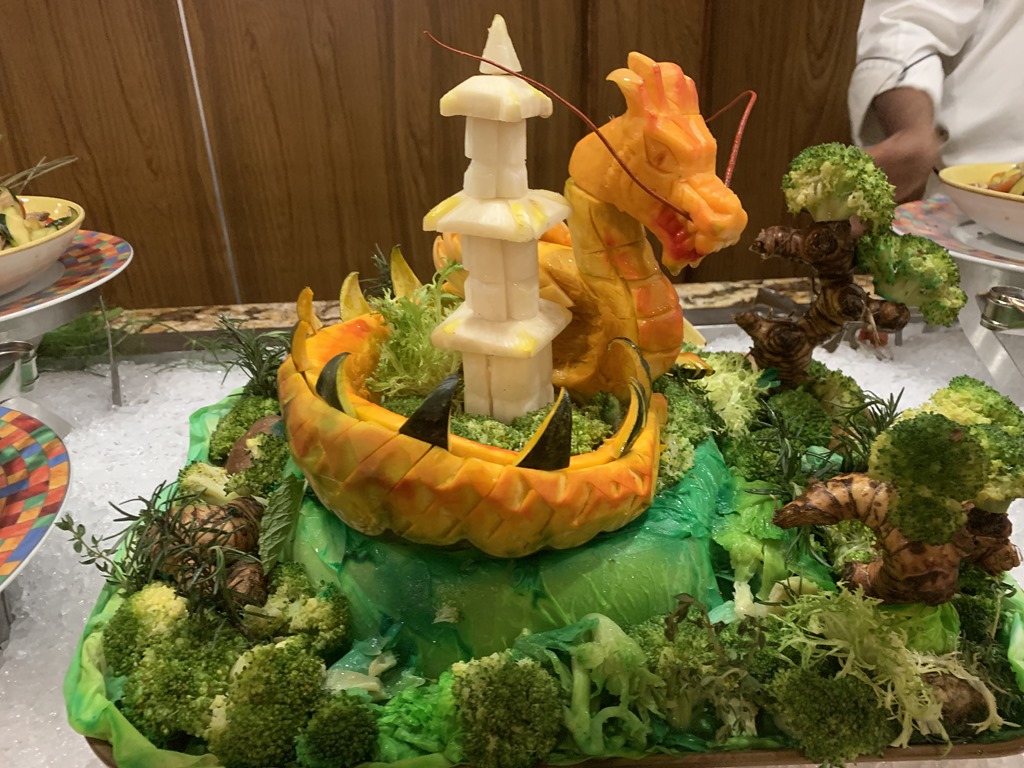
A work of art at the pan Asian dinner last night. And one of the waiters with the dumplings.

IMG_4268IMG_4270IMG_4272

Our first view of Okinawa and breakfast on the terrace.

IMG_4273IMG_4274

IMG_4376IMG_4377

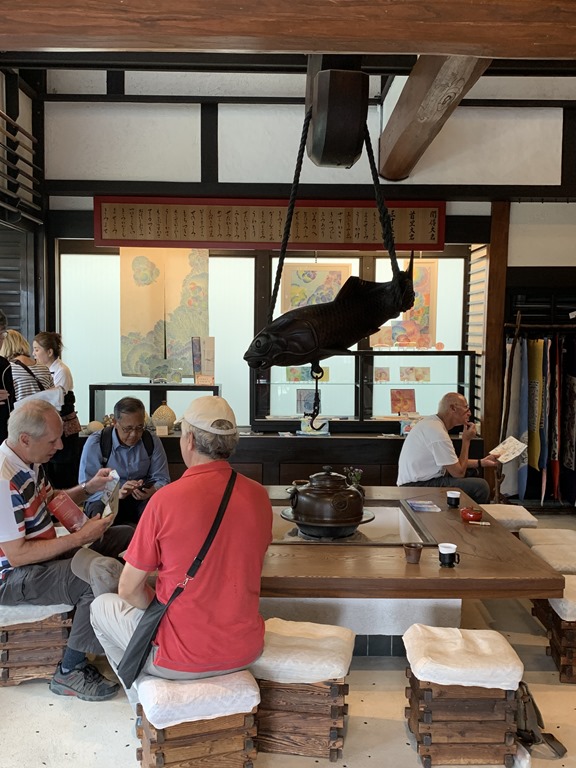
Today we chose to go with Becky (our book club leader and Japanese culture expert) to do a project using coral to dye fabric.

Twelve of us gathered in the terminal and decided to take a taxi to the workshop.  One group took a large van and the other took a regular taxi.  Becky’s husband is blind – both are fluent in Japanese so he went with the smaller group and she went with most of us in the van.  It was about a 20 minute ride.  We made sure to get the paper with the cruise terminal info written in Japanese in case we needed it to get back.  Most people here are not fluent in English.  The small taxi took short cuts through very narrow streets and the van had a bit of trouble navigating the corners but we all made it!

IMG_4381

What a fascinating place and process. 

IMG_4275IMG_4277IMG_4278IMG_4279

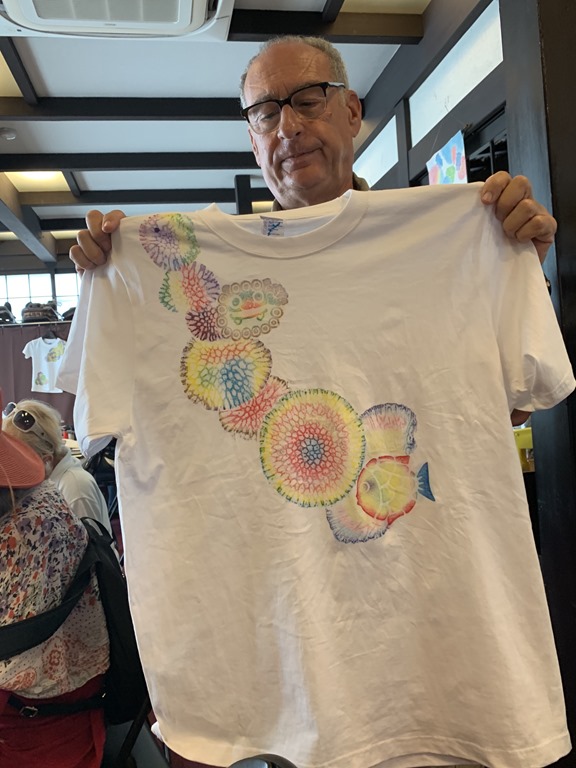
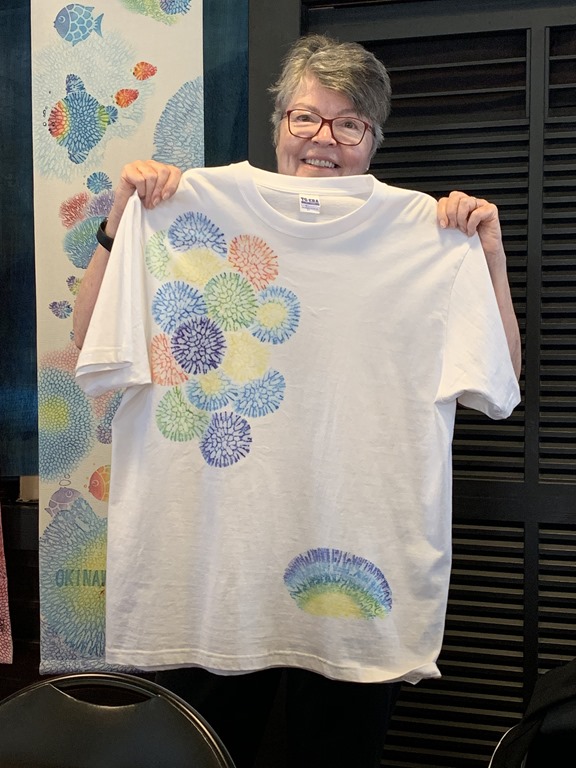
Our instructions were in Japanese and Becky translated for us.  Basically you used paint (4 colors which could be mixed) and rubbed it over the fabric after stretching it over various pieces of coral, fish and Okinawa symbols. 

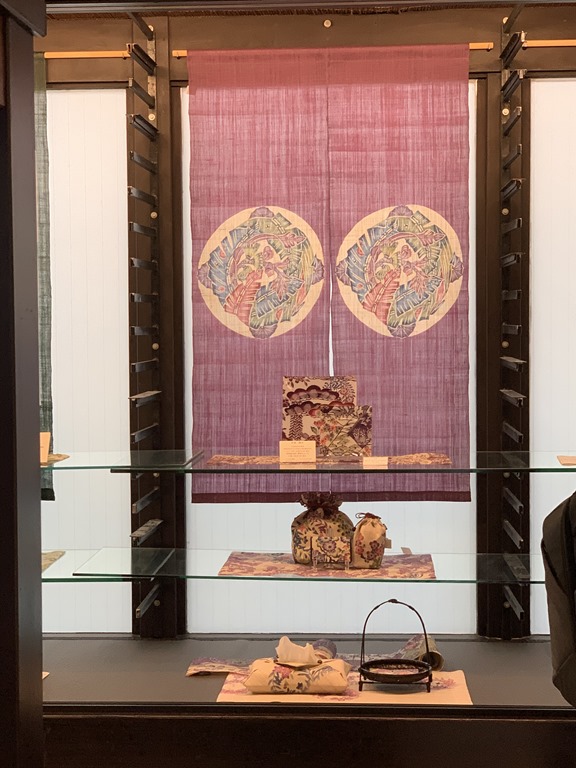
Shuri Ryusen has 43 years of history and plays a big part of Okinawan dyeing culture. Coral dyeing uses the natural shapes of coral to create your own pattern. Corals are believed to bring happiness and had meaning of “prosperity of descendants” and “longevity”.

Nine of the group chose to do this while Becky’s husband David and two other men stayed downstairs for coffee. 

IMG_4292

Norm joined the working group as you can see.  This workshop also taught the bingata fabric dying process but we chose not to stay on for that as they only took 6 and there were other people there.  We had to be back on board at 2:30 so it was a short day here.

Here we are doing the work and showing our finished products.

IMG_4282IMG_4284IMG_4285IMG_4286IMG_4287IMG_4288IMG_4289

Here is my creation, front and back.

IMG_4379IMG_4380

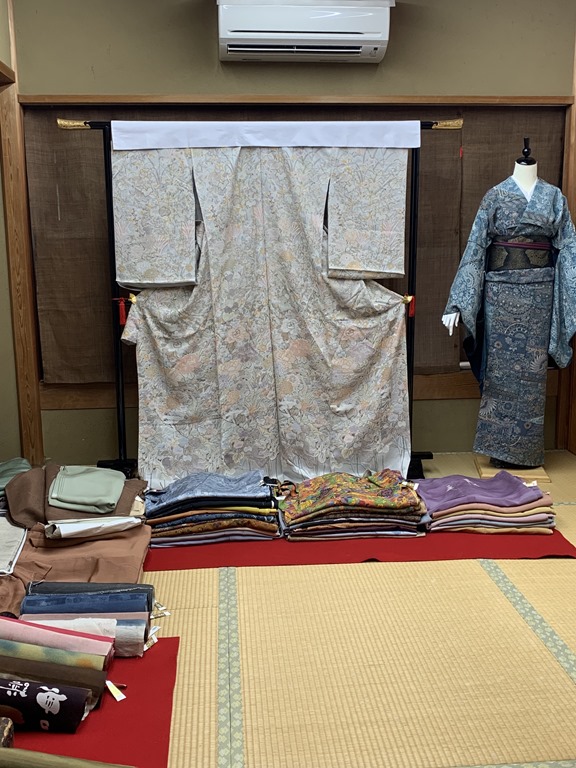
And here are a few more pictures of the beautiful place.

IMG_4280IMG_4281IMG_4283IMG_4293IMG_4294IMG_4295IMG_4296IMG_4297IMG_4298IMG_4299

Here they had the fancy Japanese Toto toilets that have heated seats, bidet capabilities, etc.  And we still need instructions!

IMG_4290IMG_4291

If you plan to visit Shuri Ryusen dying studio (and we would highly recommend it) here is the address:

1-54, Shuriyamagawacho, Naha, Japan.

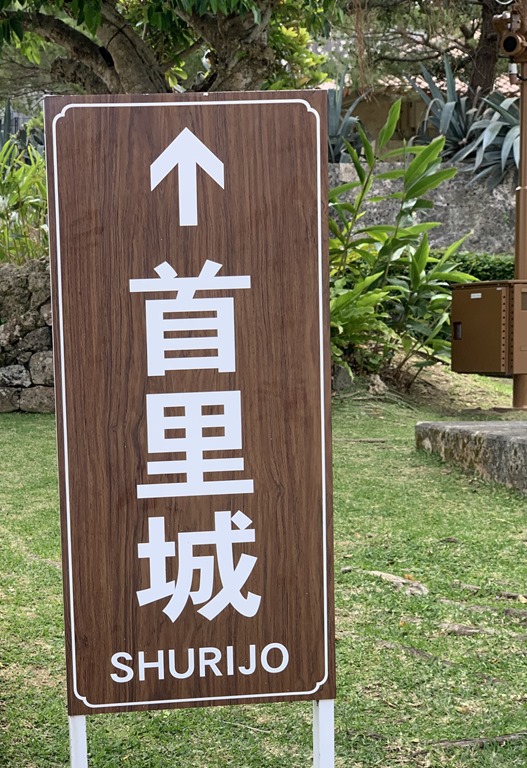
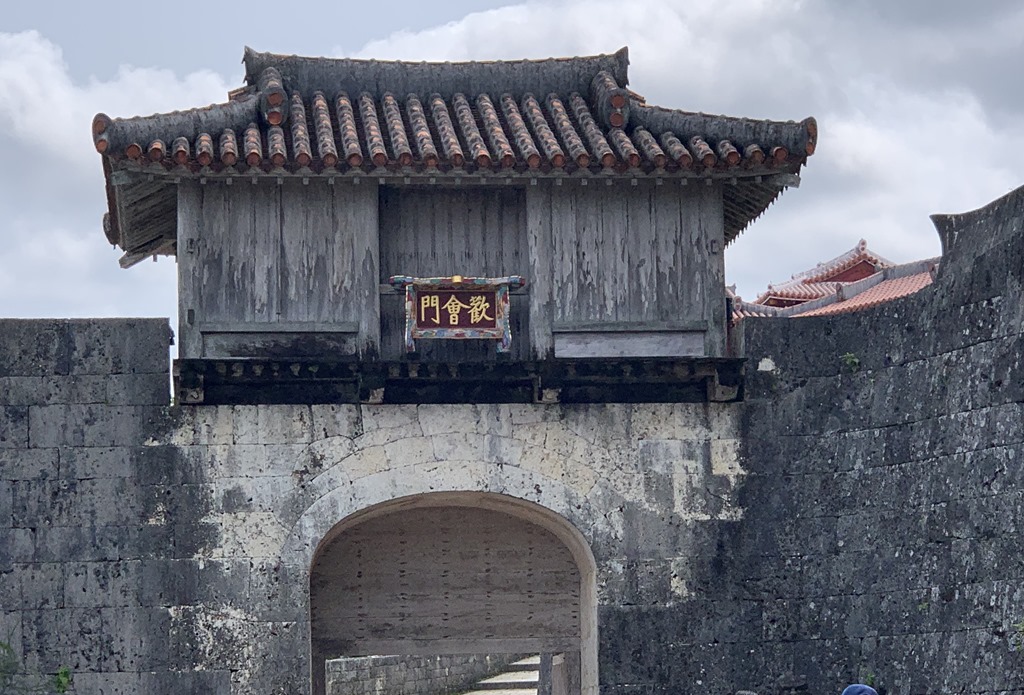
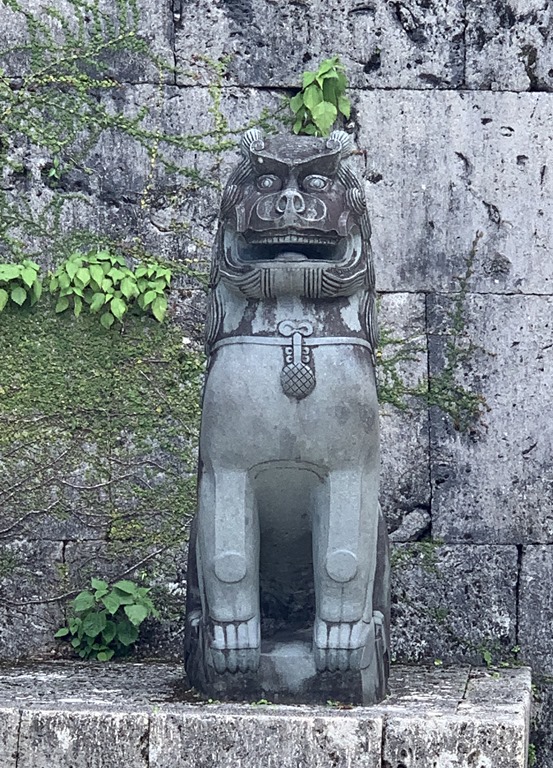
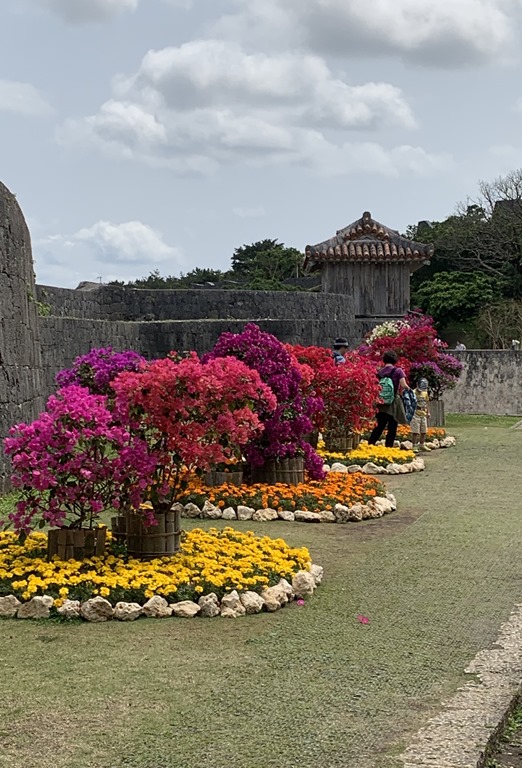
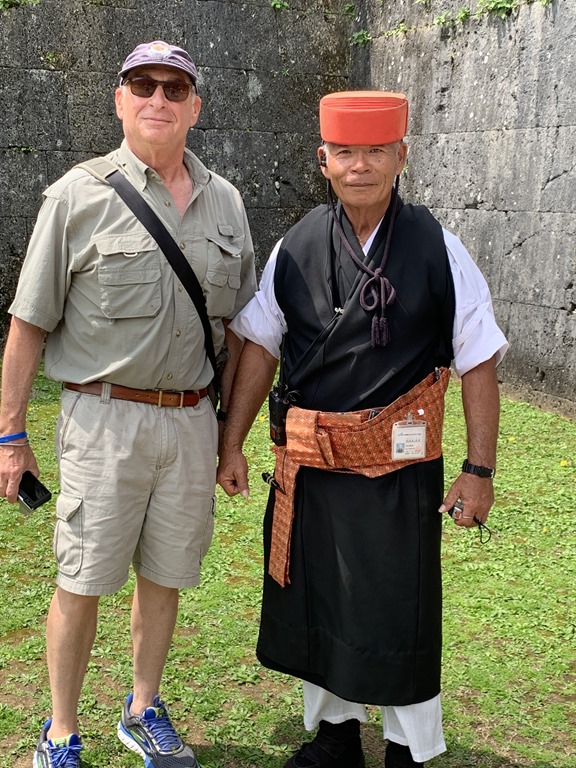
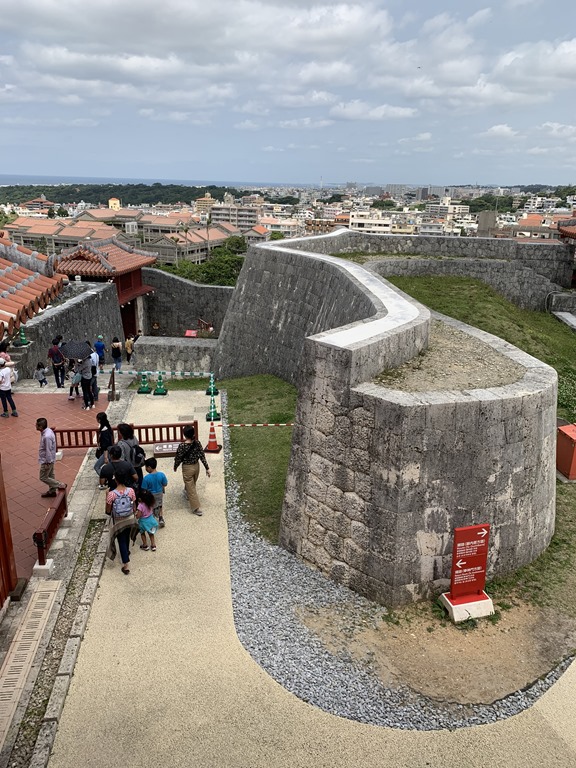
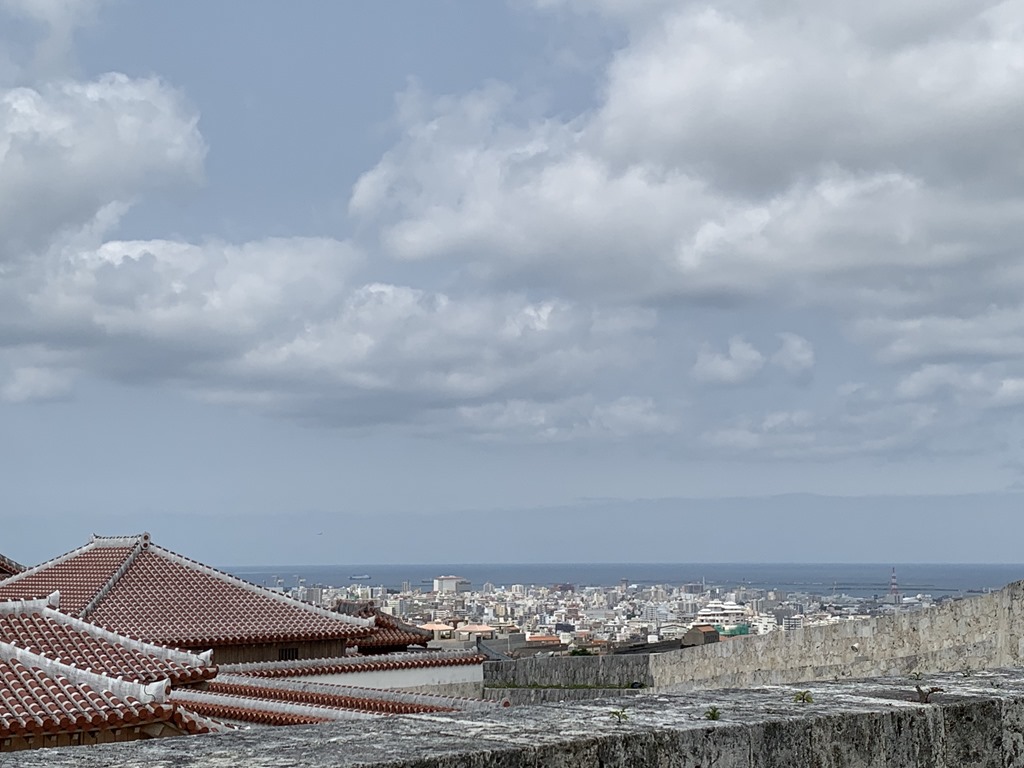
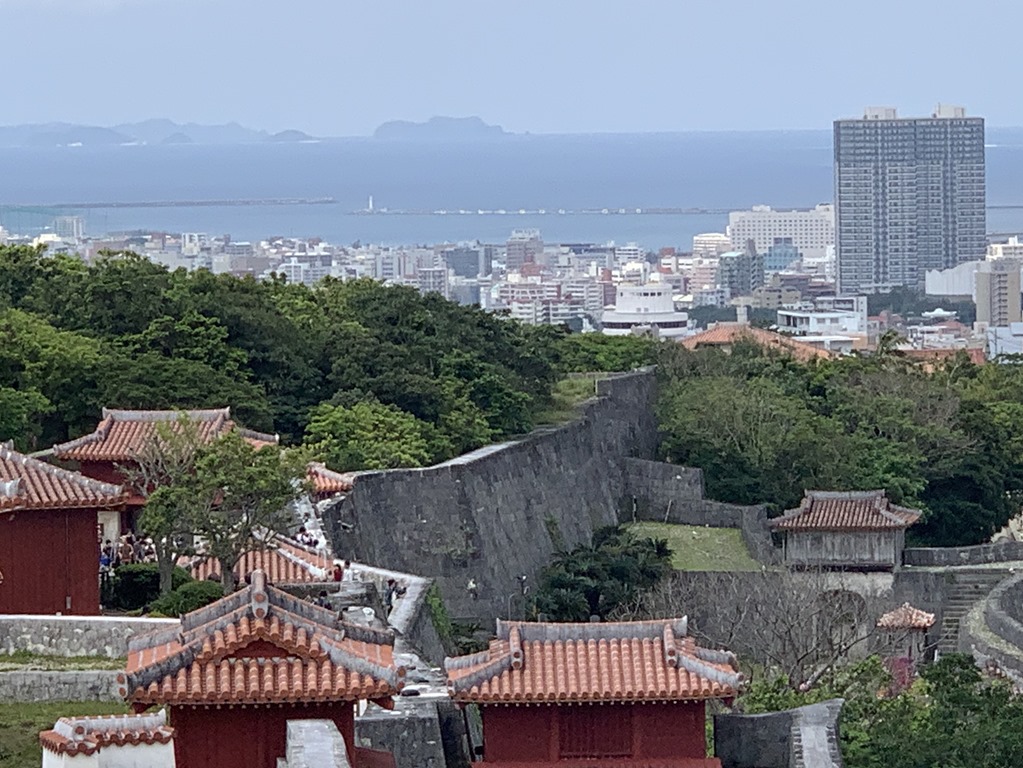
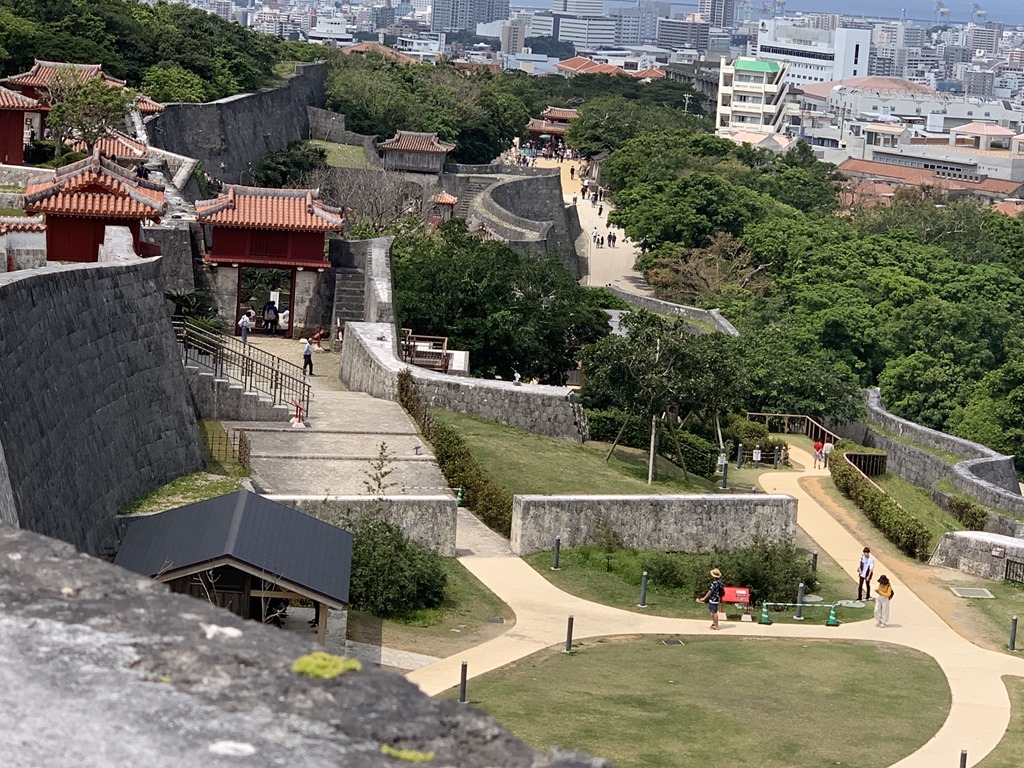
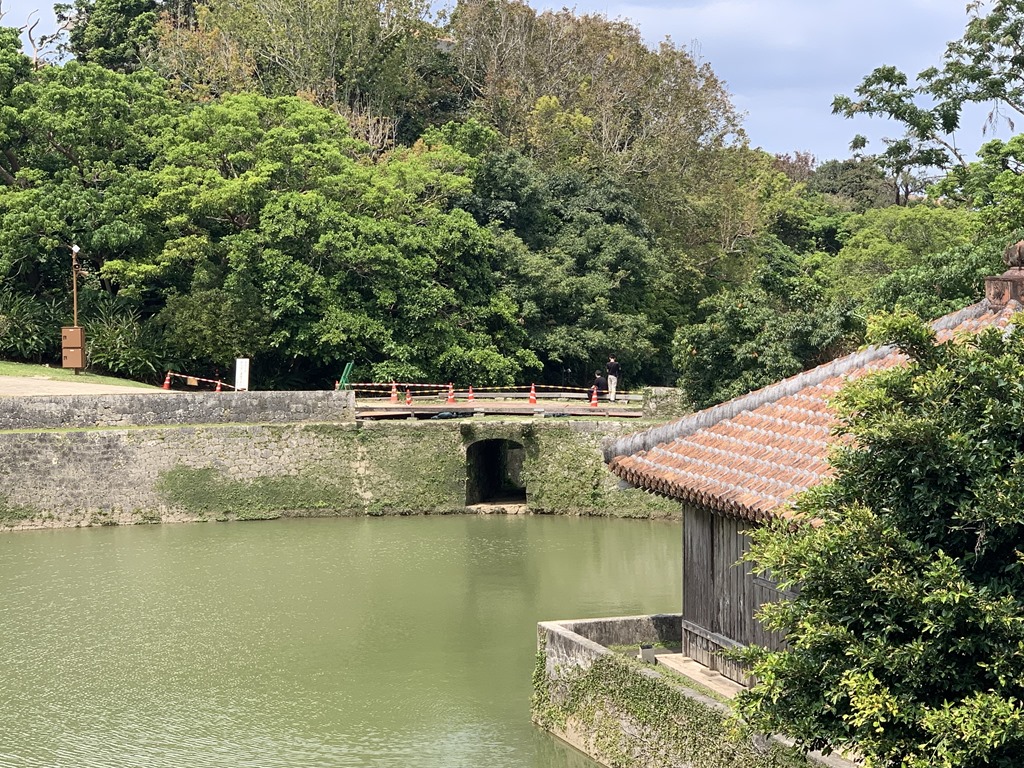
After we finished our projects (and paid about $30 US), Norm and I walked to the Shuri Castle. This was the administrative center and residence of the Ryukyu royal family for over 450 years until Okinawa became a Japanese prefecture in 1879.  It is a UNESCO World Heritage site.  It rests on a hill providing outstanding views of Naha and the sea.  It is surrounded by tall curved walls and the castle is a mixture of Japanese and Chinese architectural styles.  The simplicity is striking when you compare it to ornate palaces we have seen in many other countries. It was a beautiful day and we enjoyed walking through the castle and the surrounding gardens.

And, by the way, there is free wi-fi all throughout the city.

IMG_4300IMG_4301IMG_4302IMG_4304IMG_4305IMG_4306IMG_4309IMG_4310IMG_4312IMG_4313IMG_4315IMG_4317IMG_4318IMG_4319IMG_4321IMG_4324IMG_4325IMG_4330IMG_4334IMG_4337IMG_4339IMG_4342

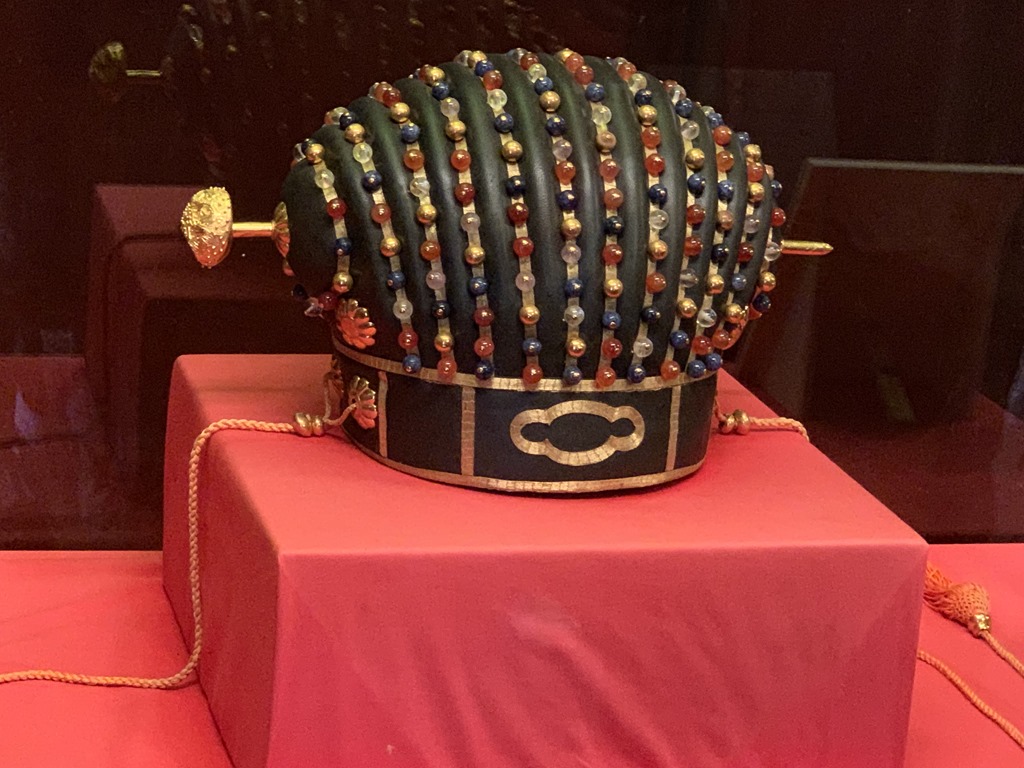
This is the crown of the Japanese emperor.

IMG_4328

This is the Shurei gate which serves as a symbol of Okinawa

IMG_4303

After our castle visit, we walked to the monorail so we could take it back to the shopping area where the shuttle bus stop was.  We wanted to find a noodle shop to have lunch before heading back to the ship.

IMG_4349IMG_4350IMG_4352

It was a fast and easy trip.

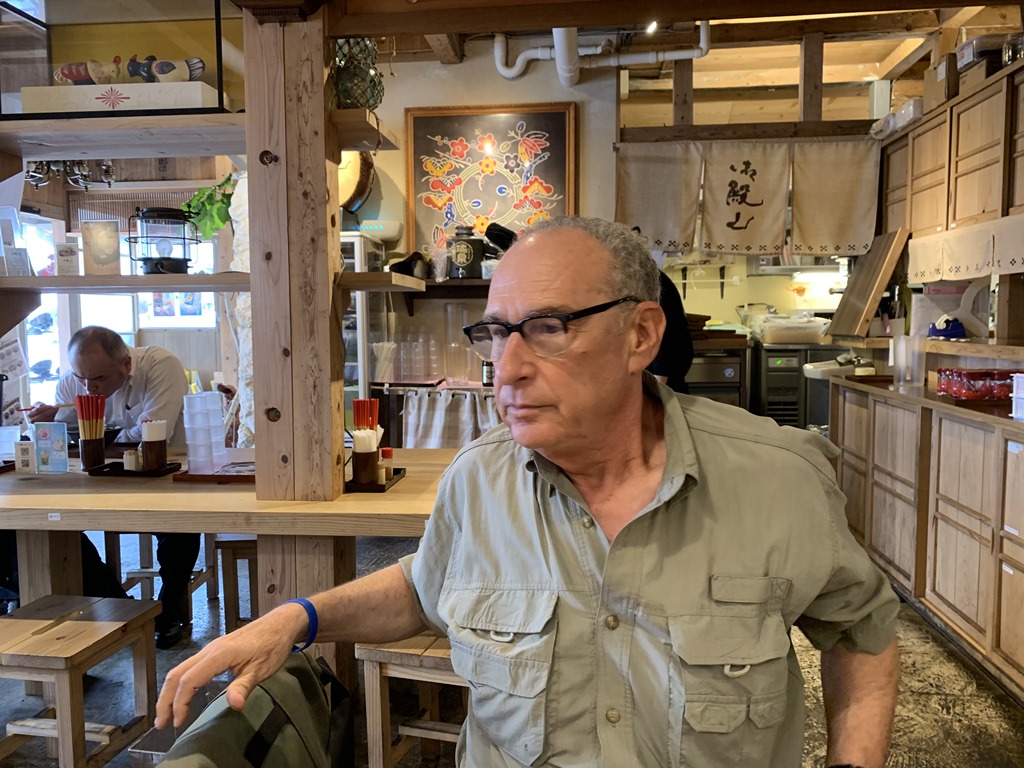
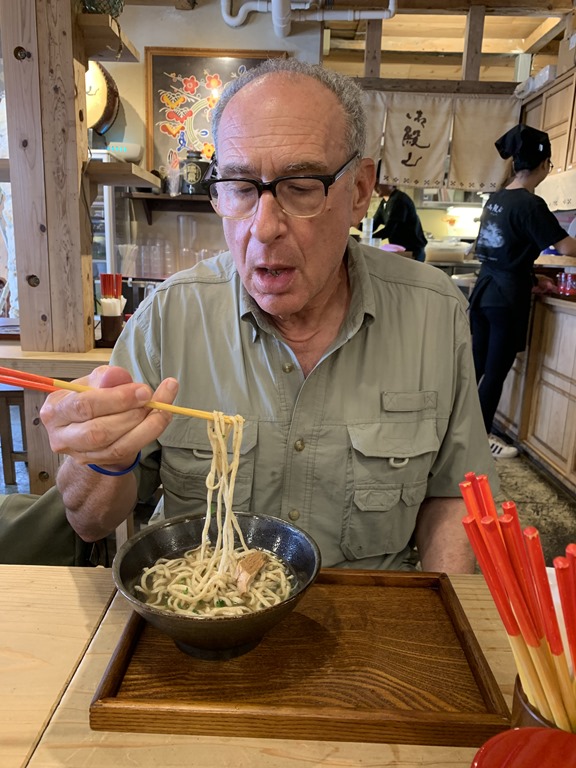
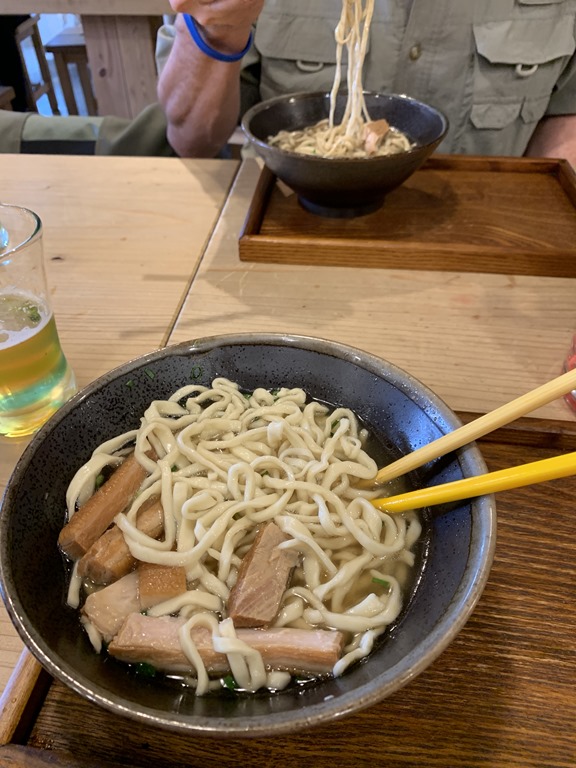
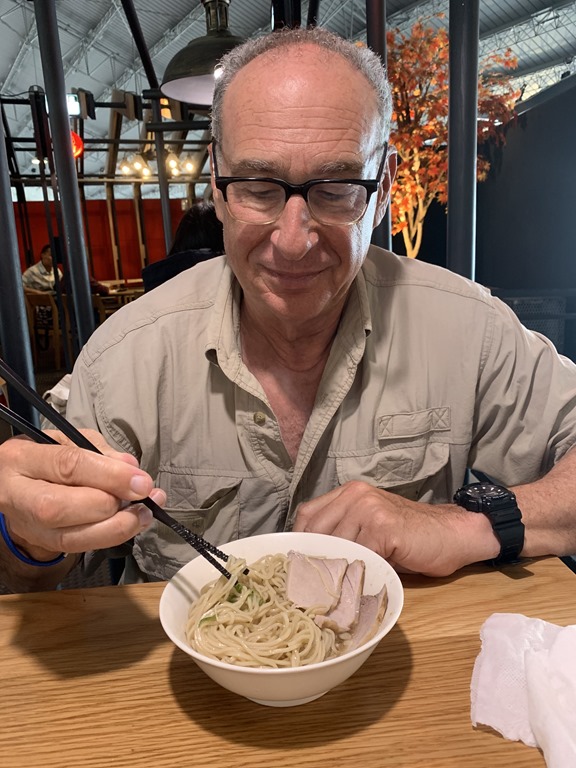
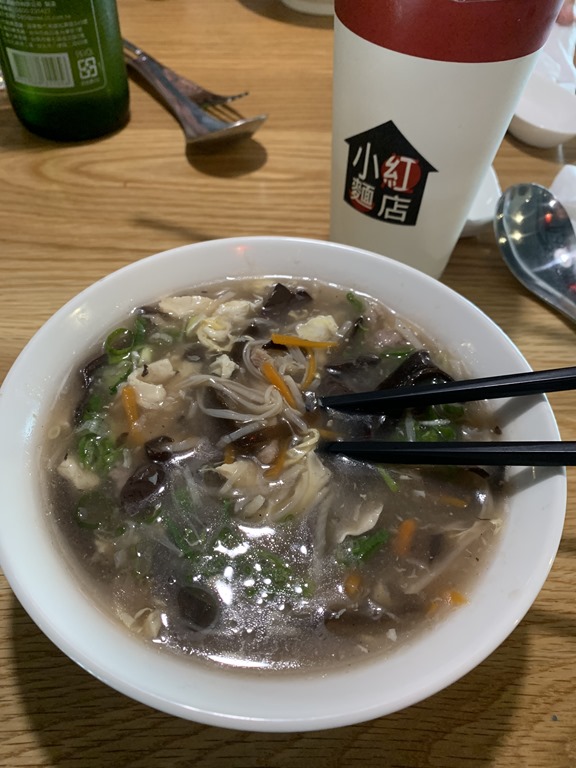
We found a noodle shop where you paid on entrance by choosing the picture of what you wanted to eat and were given tickets to present to the waiter.  That makes it easy when you can’t read Japanese.  Google translate works but this was even easier!

IMG_4366IMG_4362

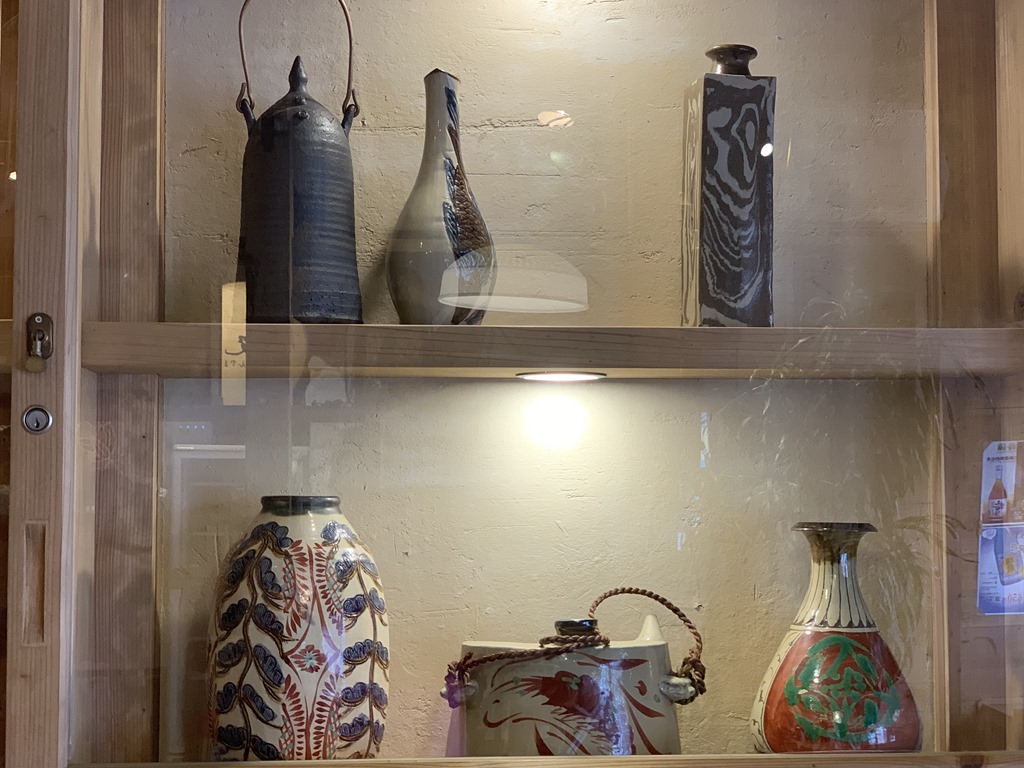
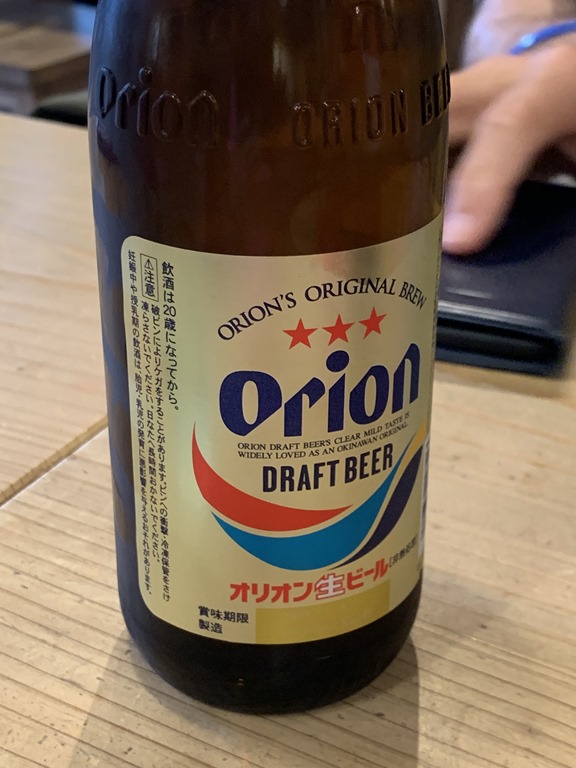
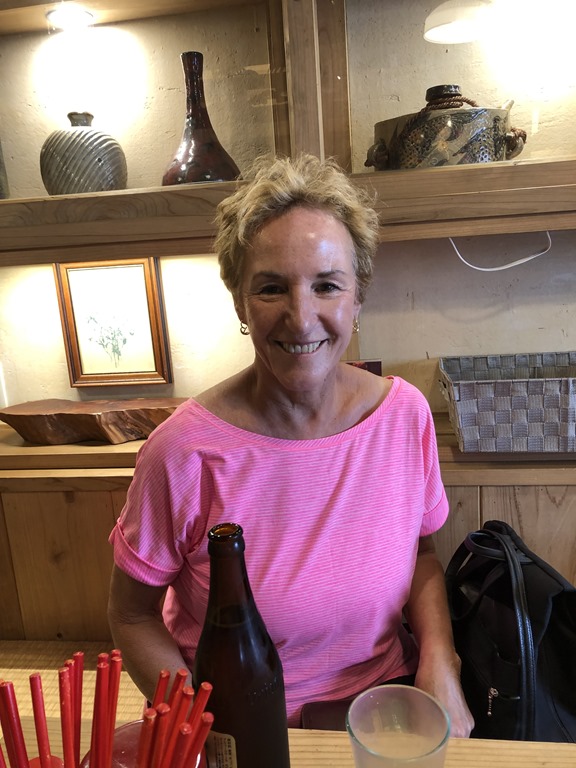
This place had a lot of displays of pottery, etc.  We enjoyed our noodle lunch and beer as you can see!

IMG_4358IMG_4360IMG_4361

IMG_4354IMG_4364IMG_4365IMG_4357IMG_4378

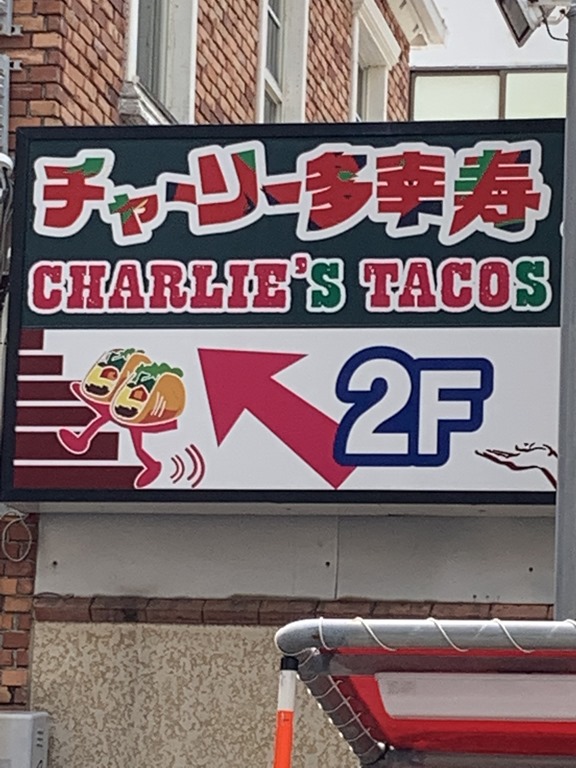
So glad we didn’t choose Charlie’s Tacos.  And was Charlie’s place open or closed??

IMG_4367IMG_4368

After lunch, we just had time to catch the last shuttle bus back to the port.  When we got to the stop, there were already 45 people waiting so we had the choice of a taxi or walking back.  We love to walk, so we headed back and our friend Joe joined us.  Here are a couple of the sights on the way back.  Are these dogs praying??

IMG_4369

We passed some pretty gardens and the directions were good.  Turn right at the dragon!

IMG_4371IMG_4372IMG_4373IMG_4374IMG_4375

On the schedule for tonight – an early show with pianist and singer Bradley McCaw and the main attraction – the International Battle of the Chefs with our executive chef, Mario and Farid, who was the chef on our other ATW cruises and is now here on a few days vacation with his partner Jennifer who is our Oceania Ambassador after Carol went on vacation.  We know them both quite well and it is fun of Farid to “work” while on this week long vacation on the ship.  If you read the blog from 2017, Farid is the chef that made our cake for our vow renewal ceremony.

Now a sea day before getting to Kobe where we will take a tour to Kyoto.  Really looking forward to that.


Posted in Asia, Food, March, World Cruise 3 | Leave a comment

Miyako-Jima, Japan

March 26, 2019

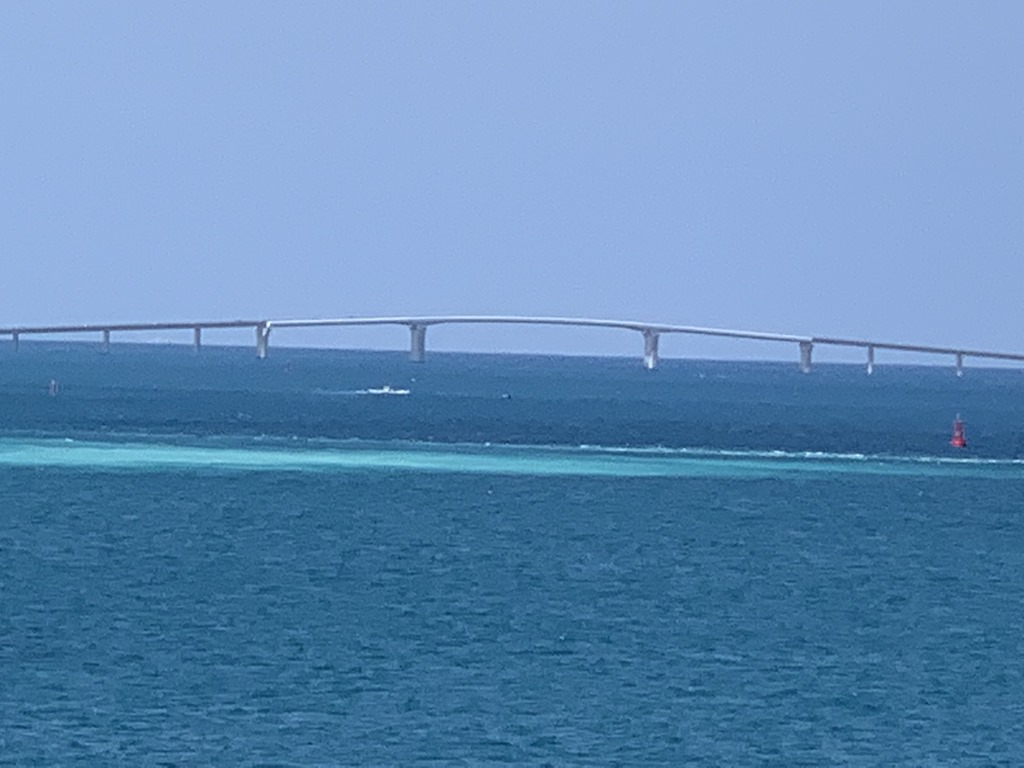
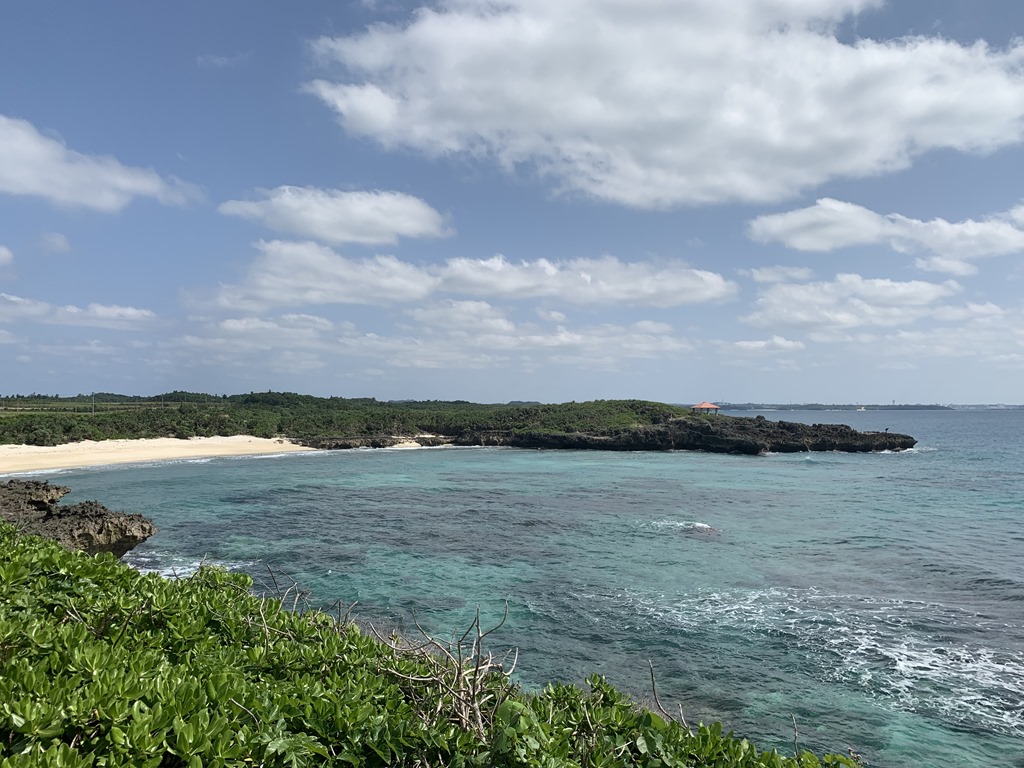
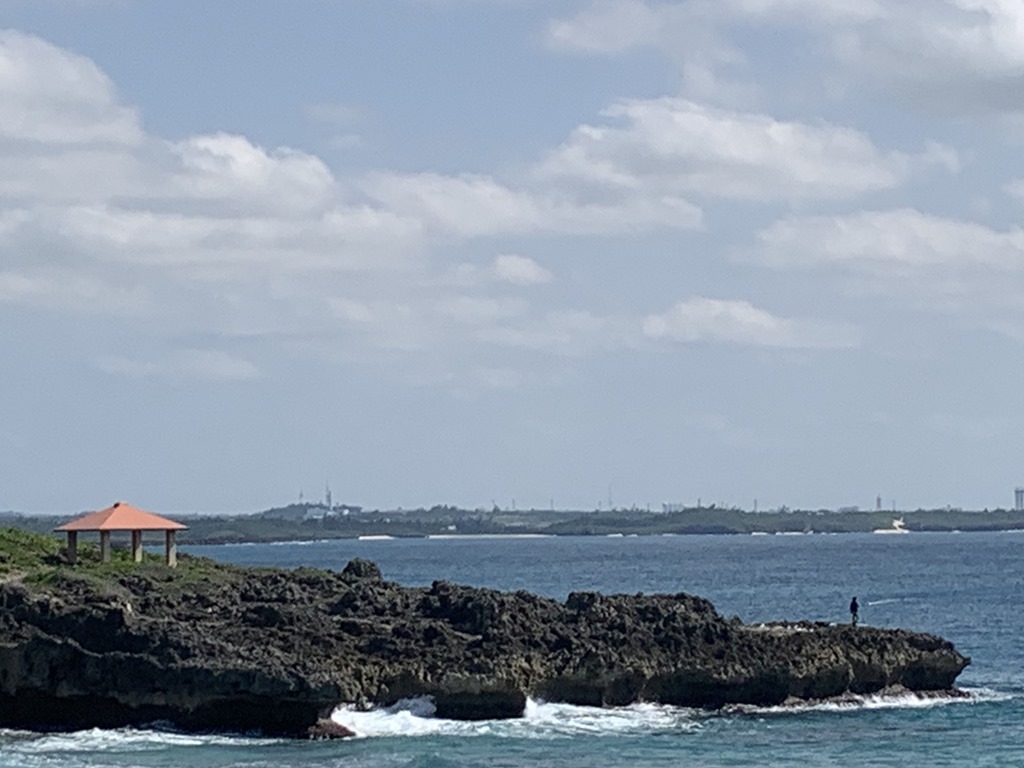
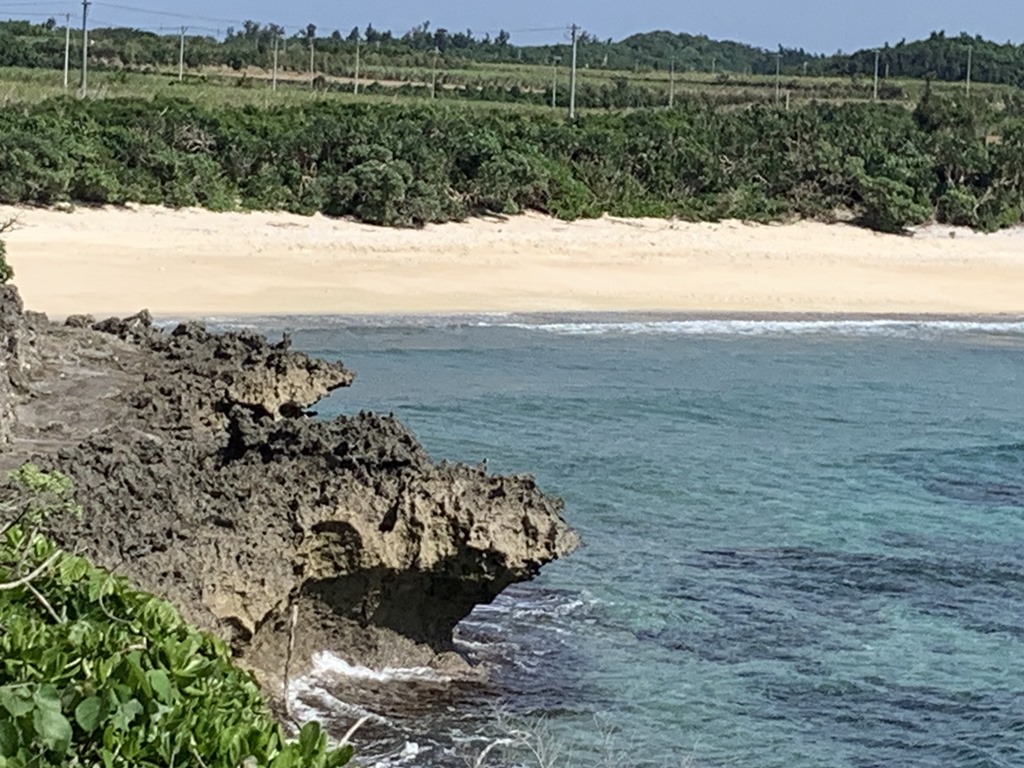
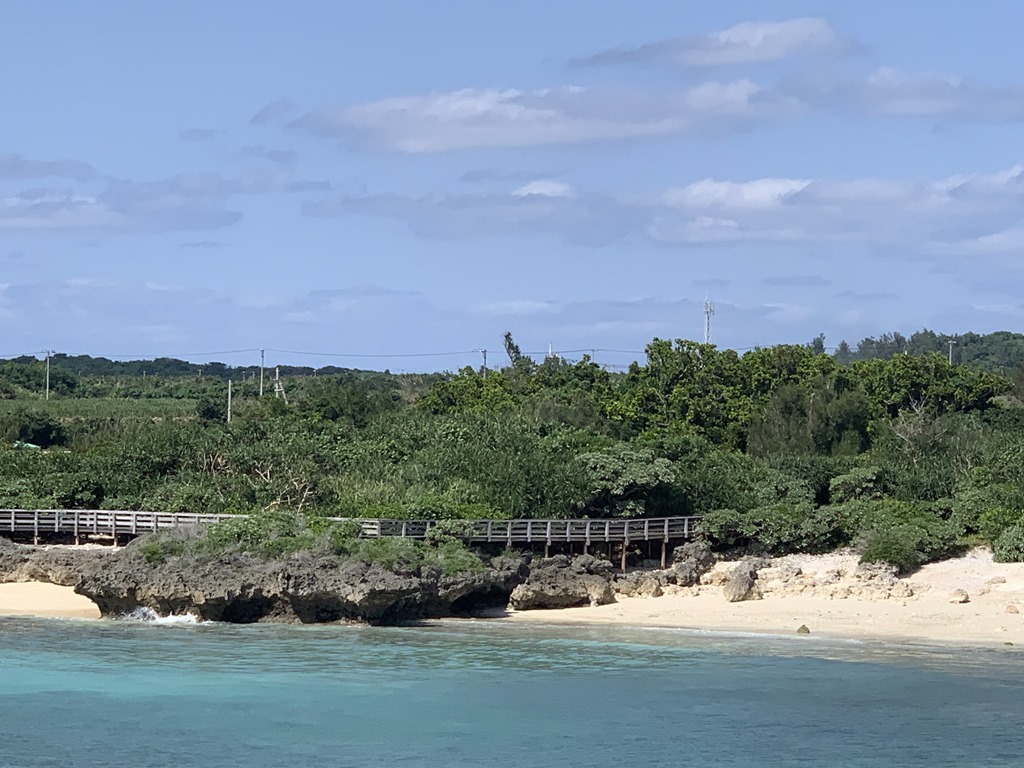
Miyako-Jima is our first port in Japan. Here is the view as we were docking.  The water is so blue and crystal clear and is known to be the most beautiful in Japan. This island is the fourth largest in Okinawa and is known for its beautiful clear ocean and untouched nature.  It is not too common for tourists to visit here. We had some thoughts of snorkeling but it is still a bit too cold for that and we didn’t pack our wetsuits.

IMG_4168-copyIMG_4169-copy

The bridge is the Irabu Ohashi Bridge which was constructed in 2015 and is Japan’s longest toll free bridge at 11,614 feet.  It has several unusual dips as it stretches across the sea. It is said to be “Bridge of Dream” because it has been 40 years from the planning stage, cost 39.5 billion yen (359 million US dollars) and took 9 years to complete.

Before we could disembark the ship, we had to go up to Horizons lounge for Japanese immigration.  We were instructed to wait until our deck was called, which for deck 8 should have been at 11.  Being the obedient passengers we are, we waited and there were no announcements made except for the people who were on organized tours.  So, at about 11:45, we decided to go to Horizons only to find that people from all decks had been going up for hours.  We had to wind through a long line, our temperatures were scanned and we had to report to an immigration officer who scanned our passports, took our fingerprints and pictures, collected our immigration forms and only then could we get off the ship!

We took the shuttle bus to town with the intention of having lunch there and then doing some shopping.  Well, there are only 60,000 people on the island and hardly anything was open. Even the public market was closed.  And, really everything was in Japanese.  We did get a map with some translations on it and I used Google translate, but it isn’t as easy as some places that at least have street signs in both English and local language.

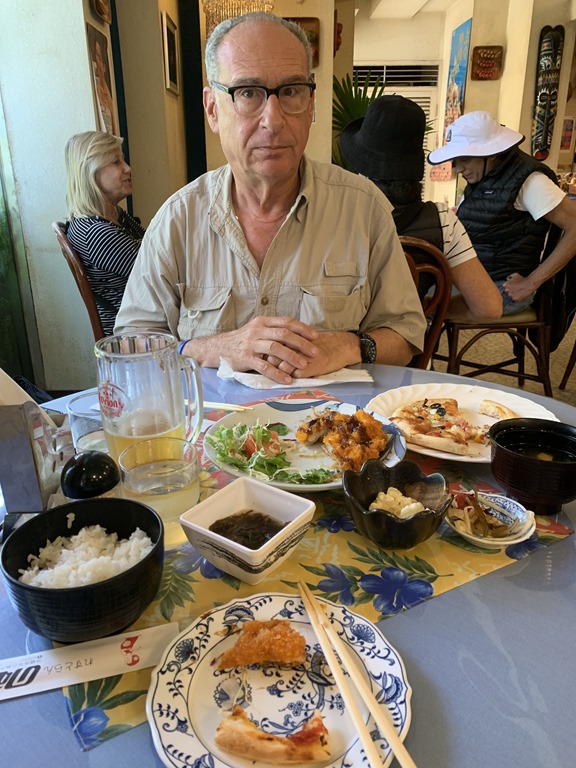
We finally found a restaurant that was open, Nomura, where we had a lunch with both American and Japanese foods, and beer. We paid $19.49 for both lunches.

IMG_4170-copyIMG_4172-copy

The next place we visited was a shop that has the special salt called “Yukishio”, “snow salt” that can only be found here.  I bought 4 kinds.

After lunch and the shopping stop we hailed a cab and showed him the Google translated name for the Miyakojima Kaichukoen Underwater Park.  If we weren’t going to snorkel, we wanted to visit this park.  The cab driver took us there and said he would wait for us.  We only hoped that we understood him correctly!

In the park, the cashier told us (in pretty acceptable English) that we wouldn’t see any big fish because it was too windy.  But we would see the smaller ones.  She wanted to know if we still wanted to go inside, and we did.

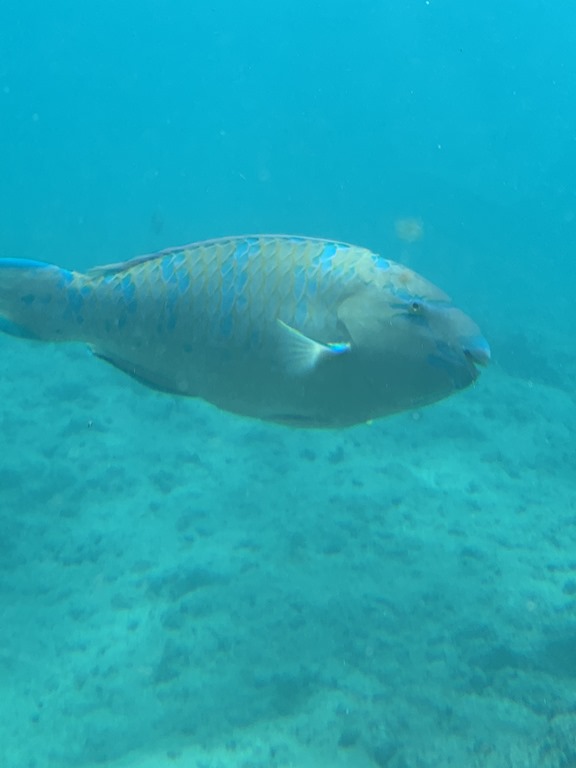
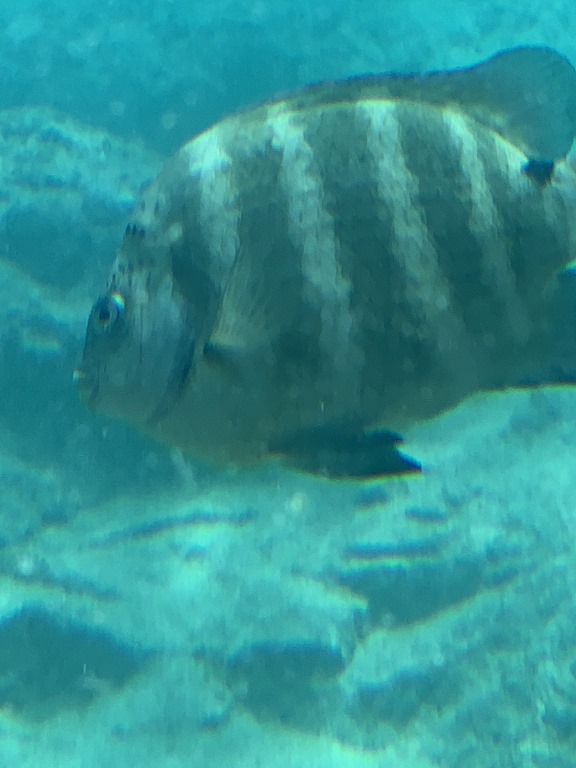
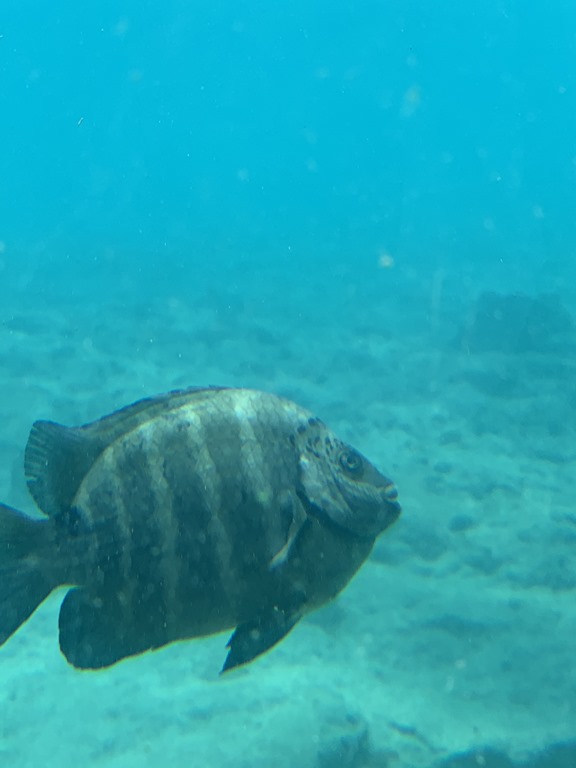
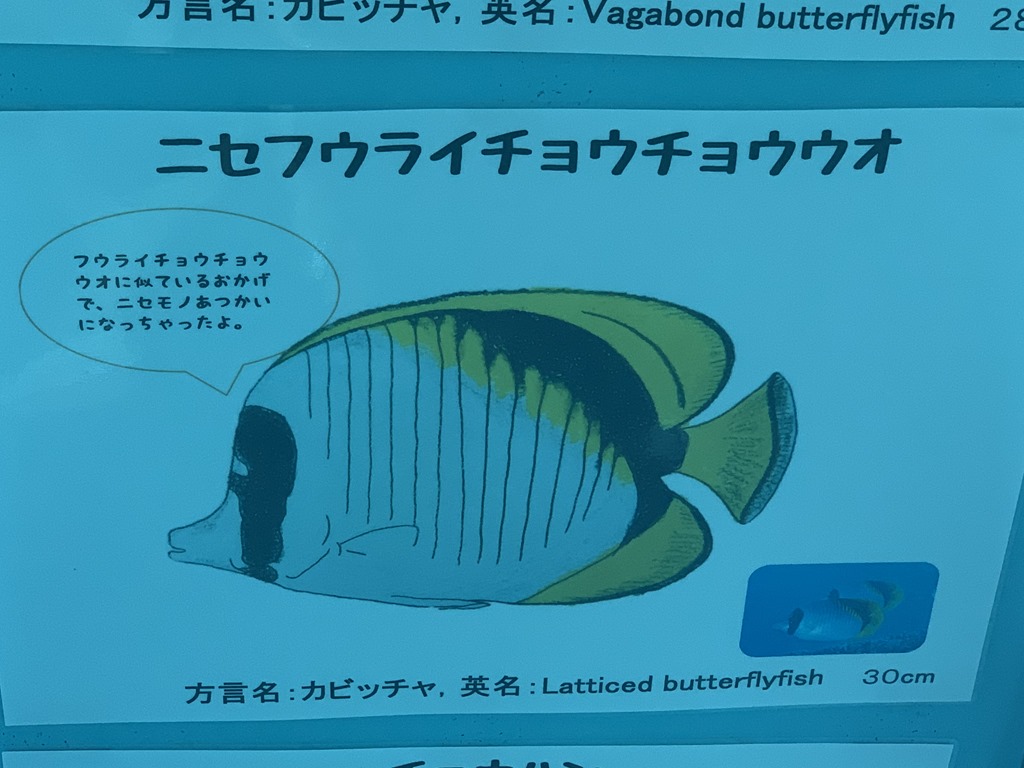
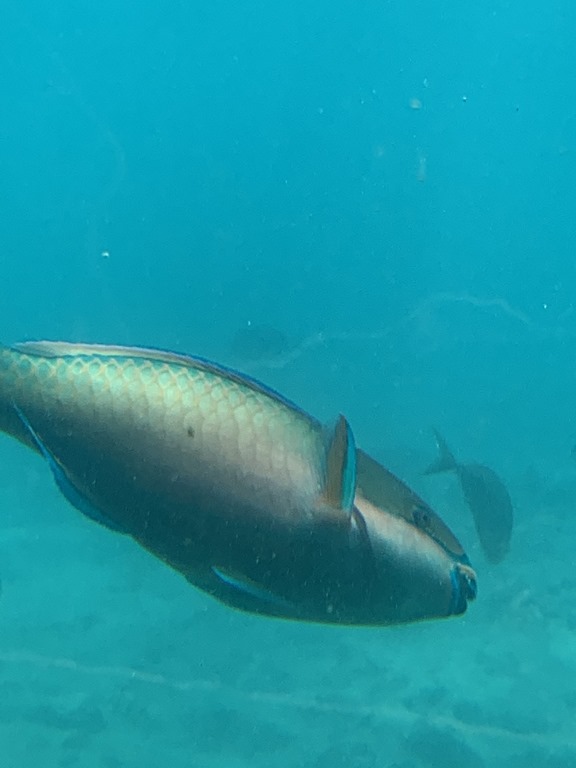
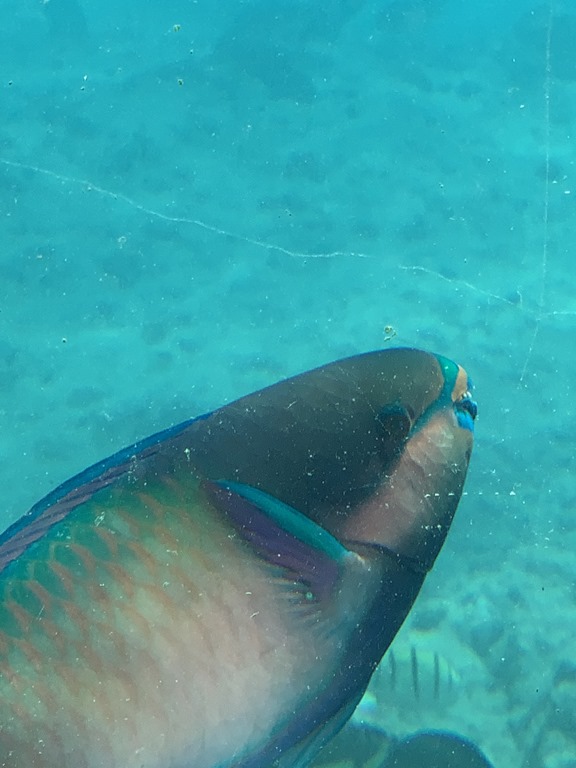
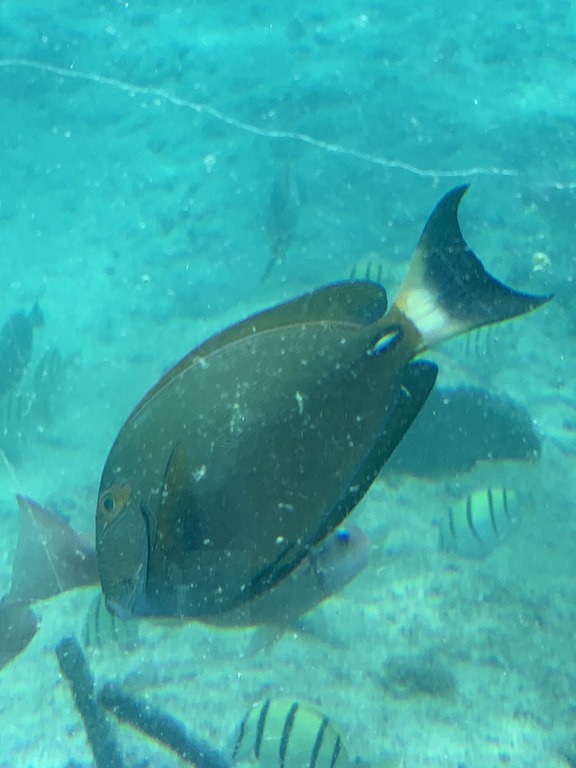
It was a pretty beautiful sight.  You go down many steps to a chamber with 24 installed windows and you can observe many types of tropical fish. They have pictures of them on the walls to help with identification. I got some pictures but in many cases the fish were just too quick (or shy??) A nice way to spend the afternoon.

IMG_4182-copyIMG_4190IMG_4191IMG_4208IMG_4210IMG_4220IMG_4221IMG_4223IMG_4231IMG_4233IMG_4235IMG_4236IMG_4237

The area surrounding the park is also beautiful. And the weather was great.  Long sleeves and jeans were a welcome wardrobe change after the hot weather we have had.  All of Japan should be about this same temperature and China might even be chillier! And, yes, the cab driver waited for us.
IMG_4173-copyIMG_4247IMG_4248IMG_4251IMG_4252IMG_4253

Tomorrow we will be in Okinawa (Naha) Japan and will be doing an excursion with Becky and other passengers from the book club. She is fluent in Japanese so that will be very helpful.

Posted in Asia, Food, March, World Cruise 3 | 1 Comment

Keelung (Taipei) Taiwan

March 25, 2019

Keelung is a major port city located in the northeastern part of Taiwan.  It forms a metropolitan area with Taipei.  It is nicknamed the “rainy port” and we could immediately see why.  It was raining on our arrival and remained rainy in the morning and cloudy most of the day. Taipei is the capital of the Republic of China (Taiwan) and its largest city. The population is 23.5 million and 40% live in this area.

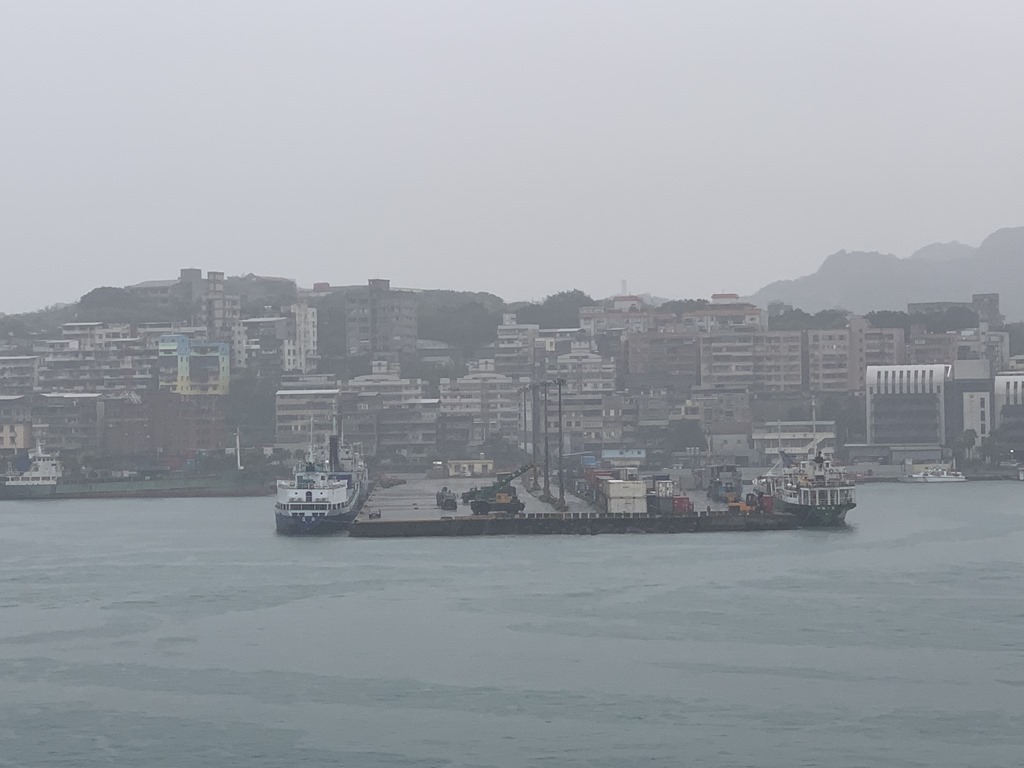
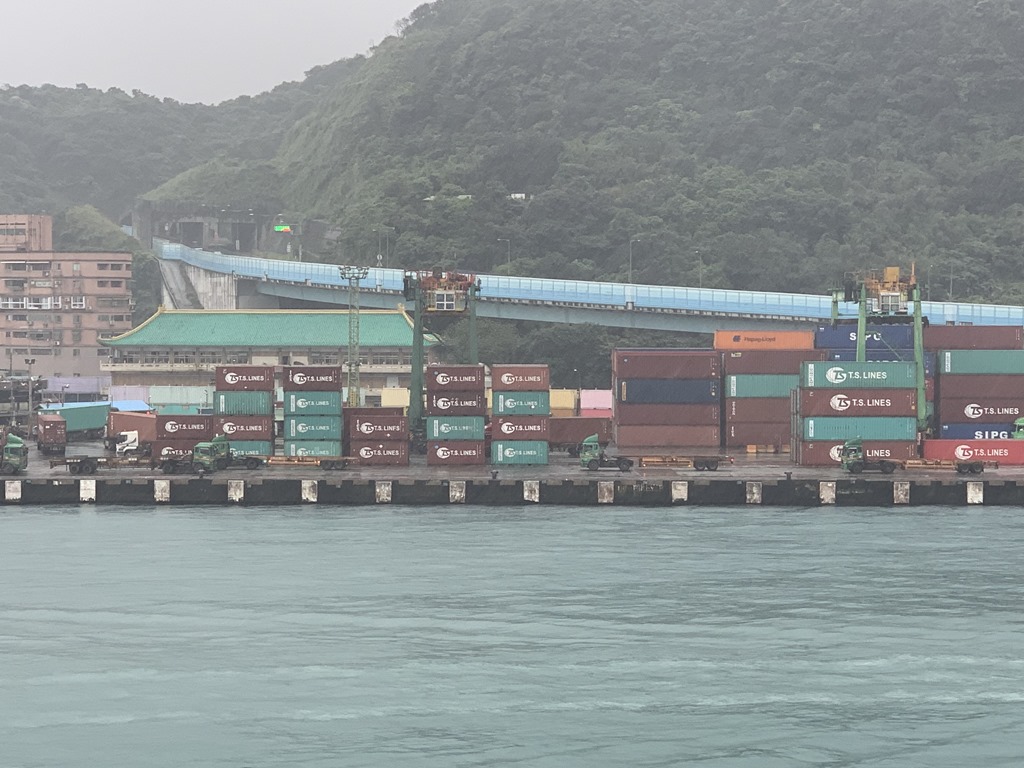
We joined our tour shortly after we reached the port.  The port itself is very large and many containers are on land and being loaded onto ships. Here’s the view as we sailed in.

IMG_4060IMG_4061IMG_4062

Our tour was to the Yangmingshan National Park and the mineral hot springs – a full day tour.  Our guide was Jesse.  He lived in the US from 1978 – 1992 and is a USC graduate.

IMG_4134

He told us that they get 3000 earthquakes a MONTH here in Taiwan and most of them are not even able to be felt by people – they are just detected by the equipment.  They did have a very big one in February 2018.

Taiwan is very clean, as I mentioned in yesterday’s post.  Jesse said that we would not find any trash containers on the streets, people have to bring their trash home with them and it is collected twice a day.  Imagine that..They have a 56% recycling rate.

People are quite poor in general. A salary for a typical worker is about $1500 US/ month and rents range about $600 US.  So there isn’t much left for them to spend once their expenses come out of their salaries.  On the other hand, his prescriptions and all doctor’s visits costs him $10 for 3 months.

There are lots of motorbikes here too, on a workday between 8:30 – 9 there are 1.3 million motorbikes on the road. But not too many on weekends.

A Mercedes vehicle costs about $100,000 US here and parking spots cost about that amount too. 

Taiwan is #1 in building yachts, but most of the other industries (such as athletic shoes) have moved to mainland China which is a problem for the Taiwanese. There is still a healthy biotech industry.

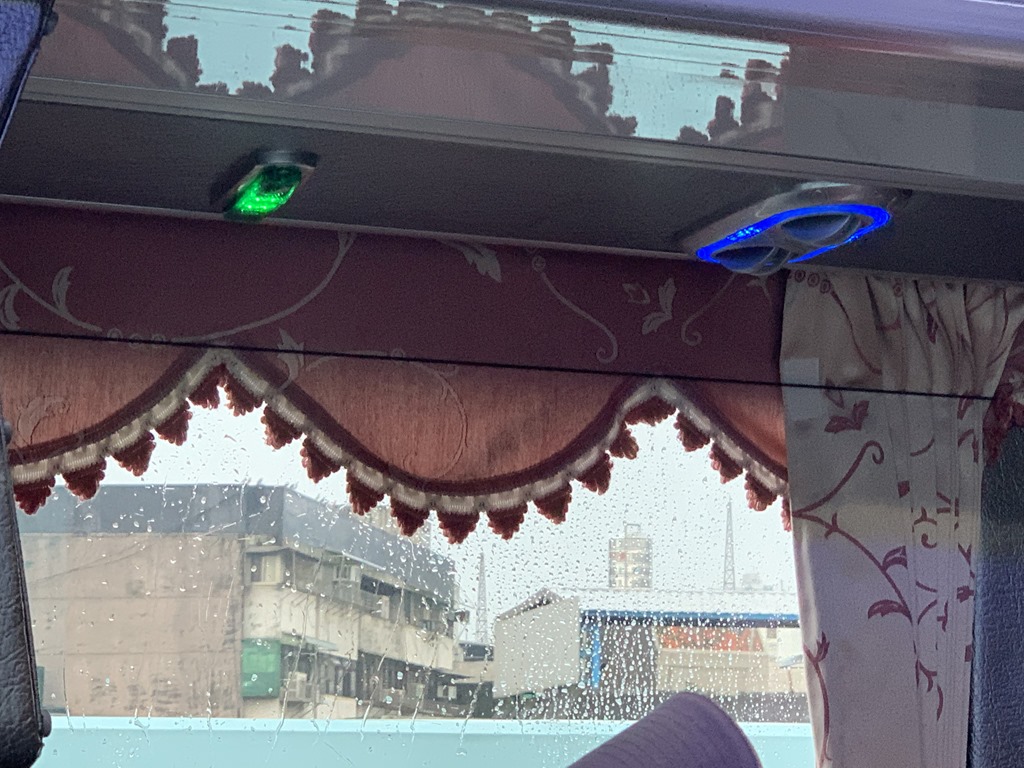
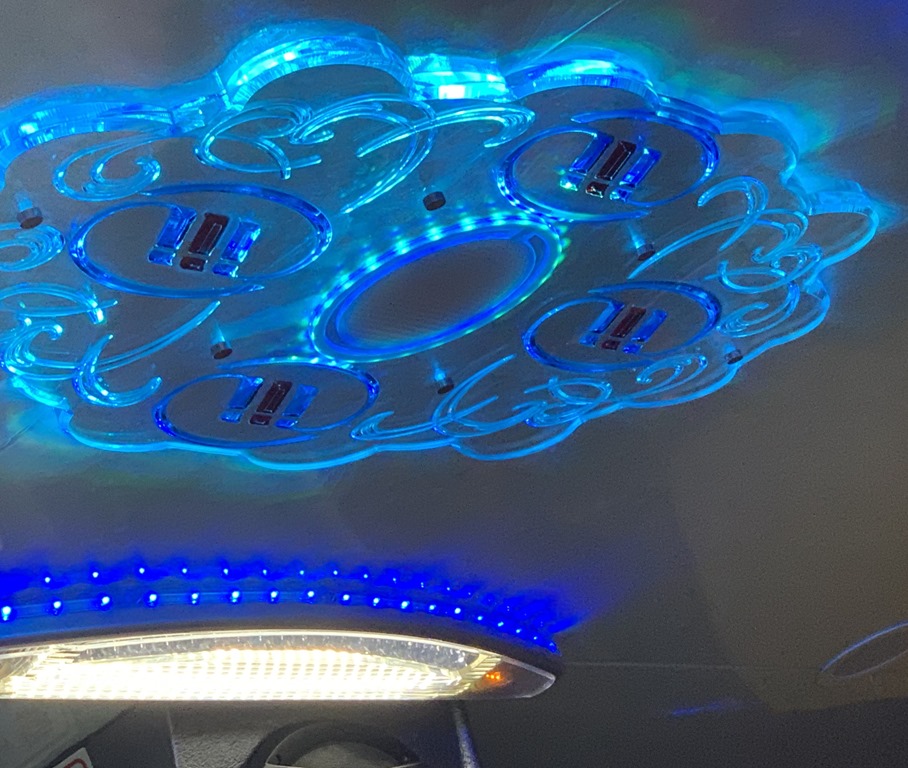
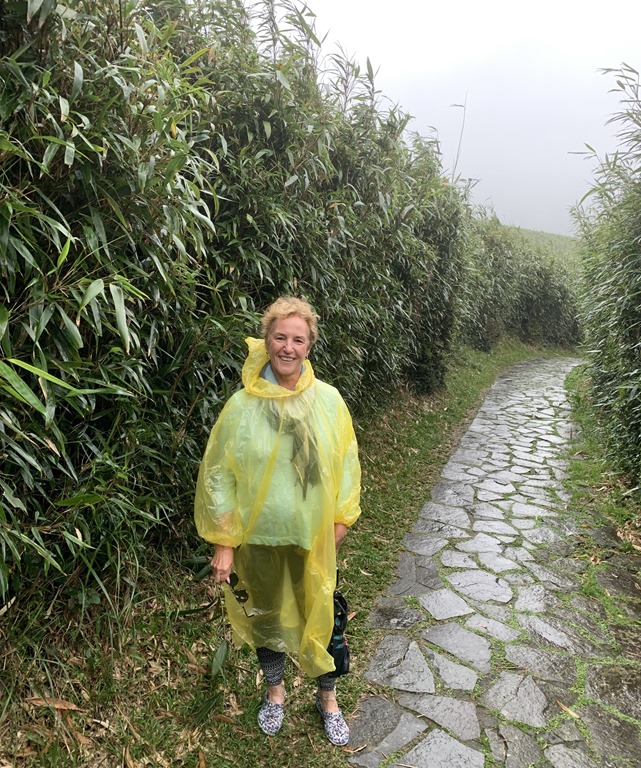
It took about an hour to get to the park and on the way, Jesse gave us all yellow ponchos to wear in the rain.  By the way, the bus was equipped with wifi and usb ports too.  I was able to back up my iPhone while we traveled. The buses are quite fancy here, lots of lights and even curtains!

IMG_4066IMG_4067IMG_4068

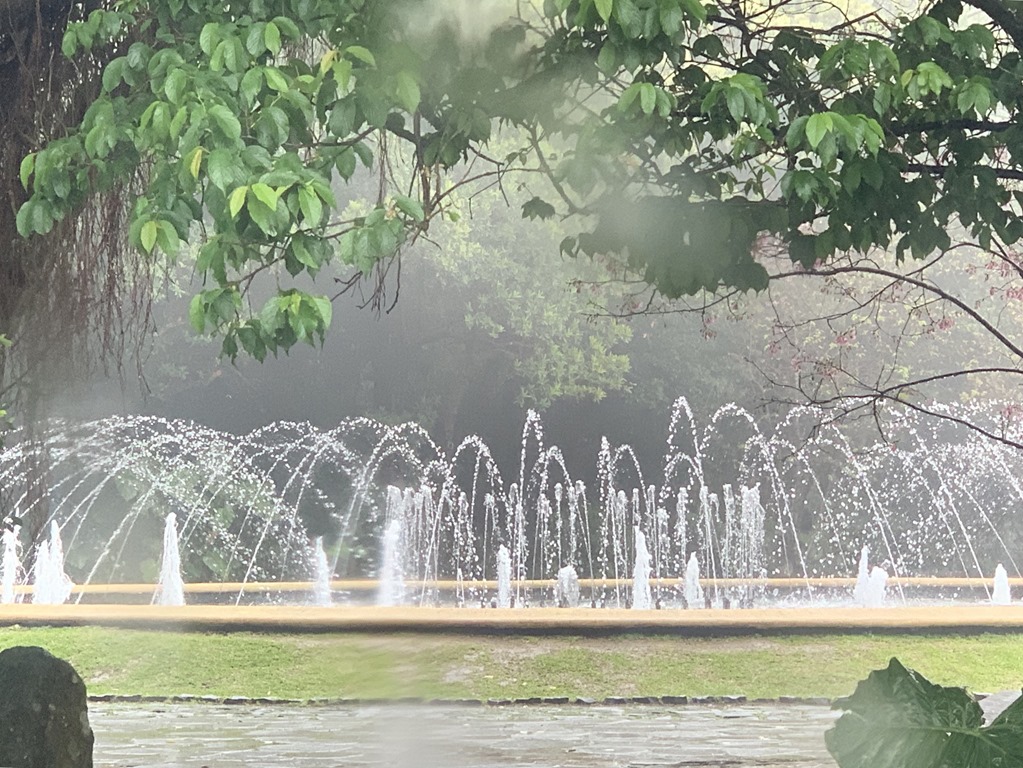
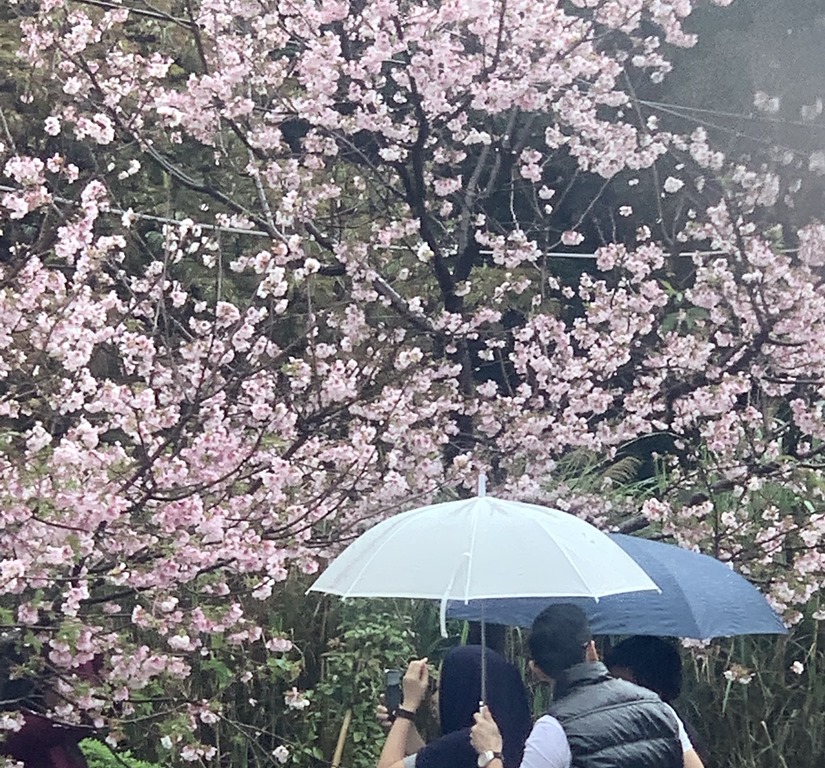
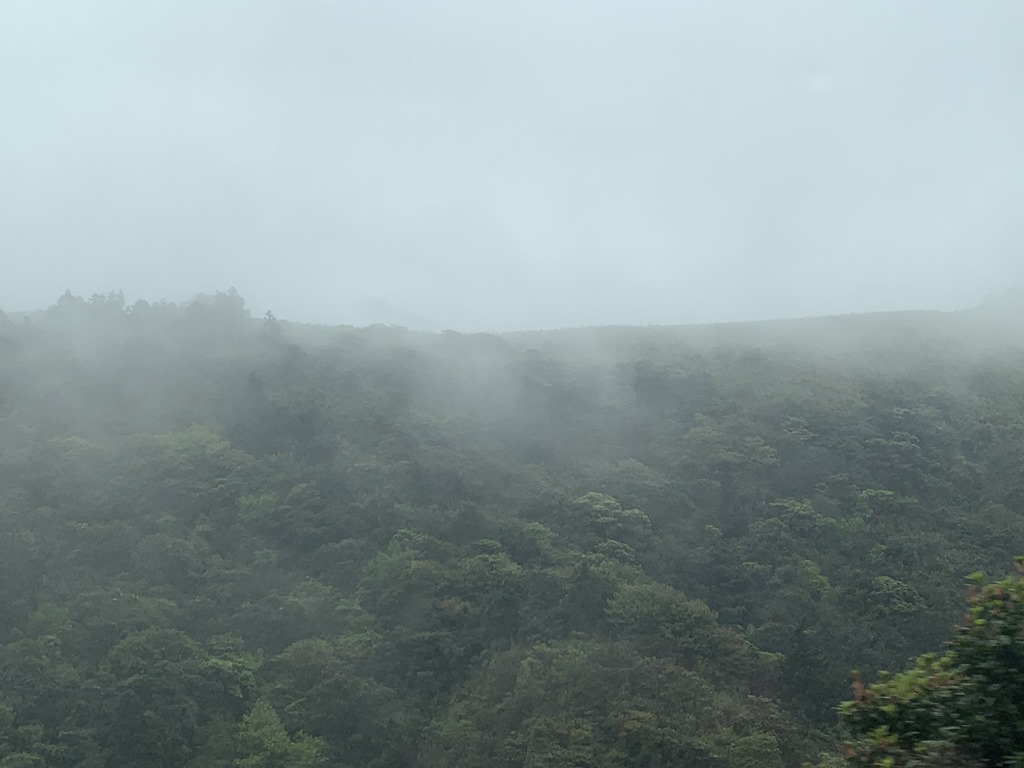
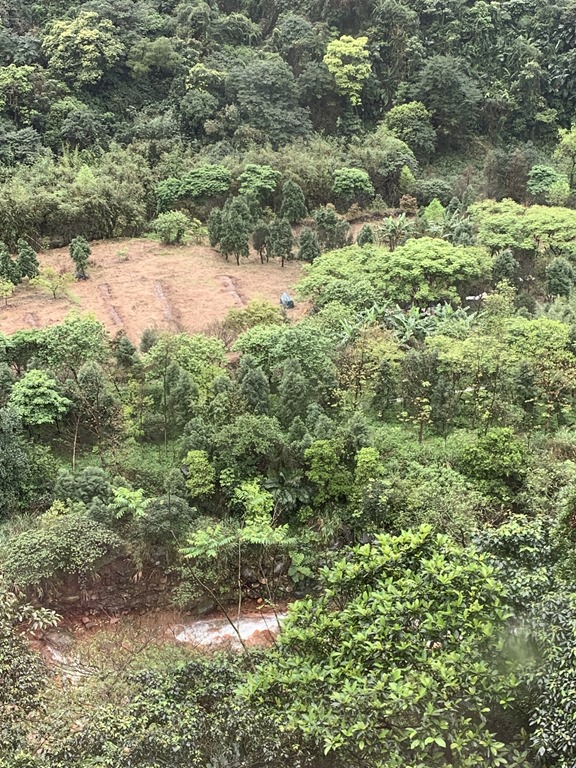
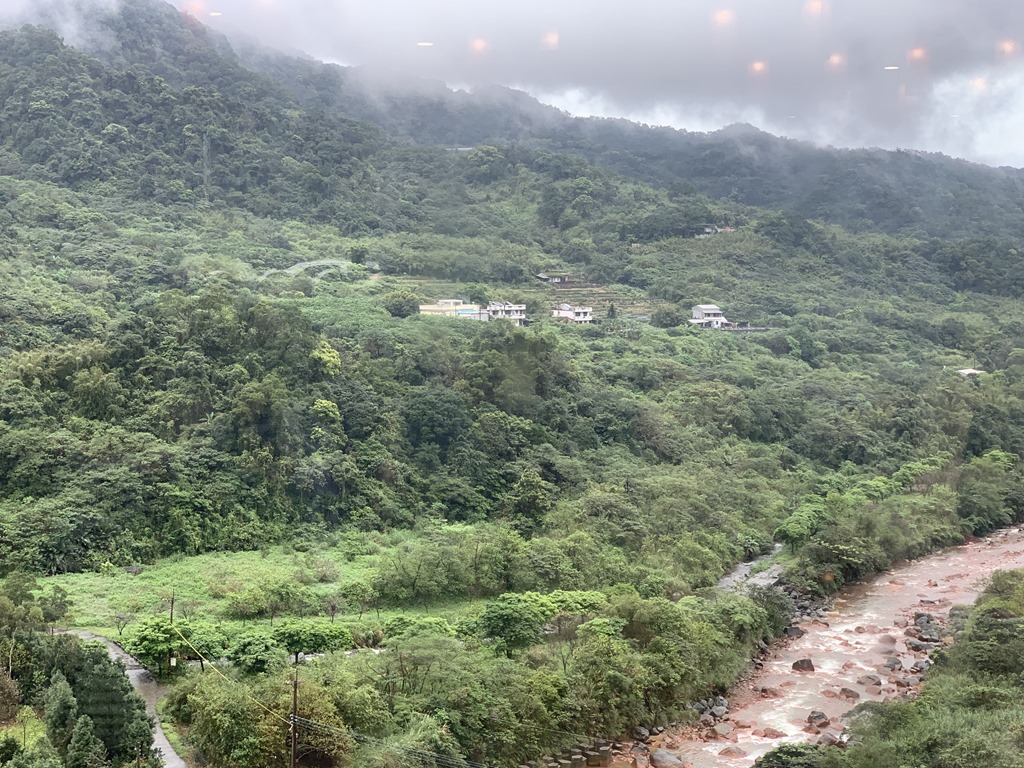
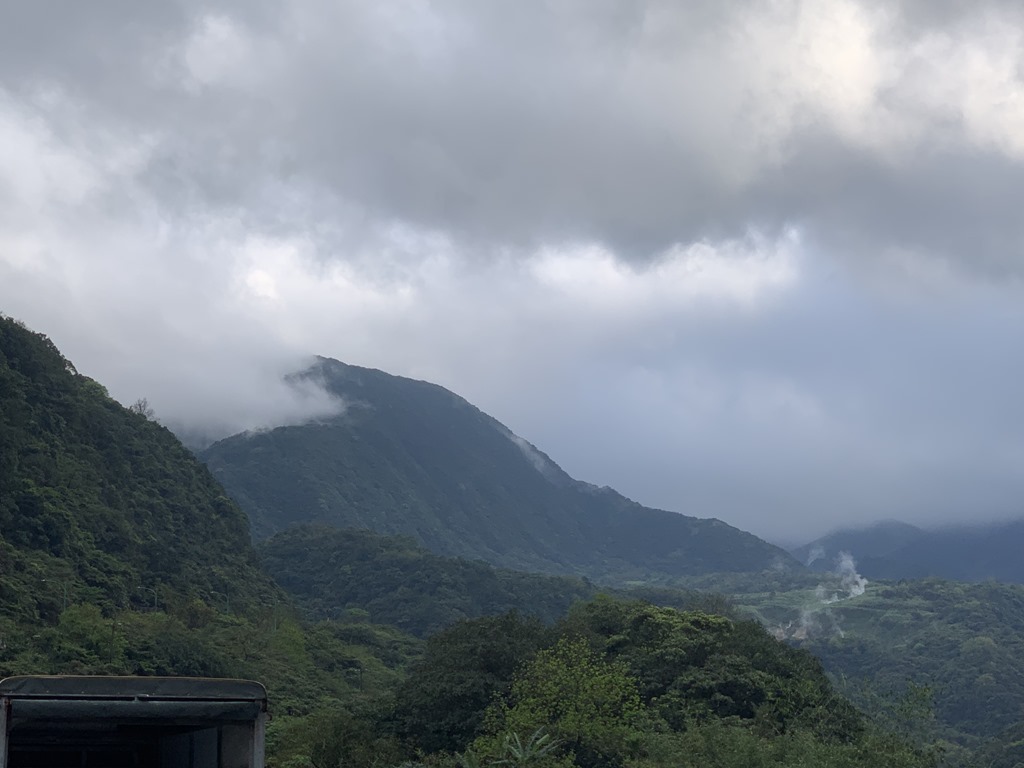
The drive to and through the park was just stunningly beautiful.  Forests, mountains and hot springs are all part of this park.  Here are some pictures of our walk.  The cherry blossoms were still out but at the end of their blossoming. But the azaleas were beautiful.

IMG_4073IMG_4076IMG_4079IMG_4080IMG_4081IMG_4084IMG_4086IMG_4089IMG_4091IMG_4092IMG_4095IMG_4096IMG_4097

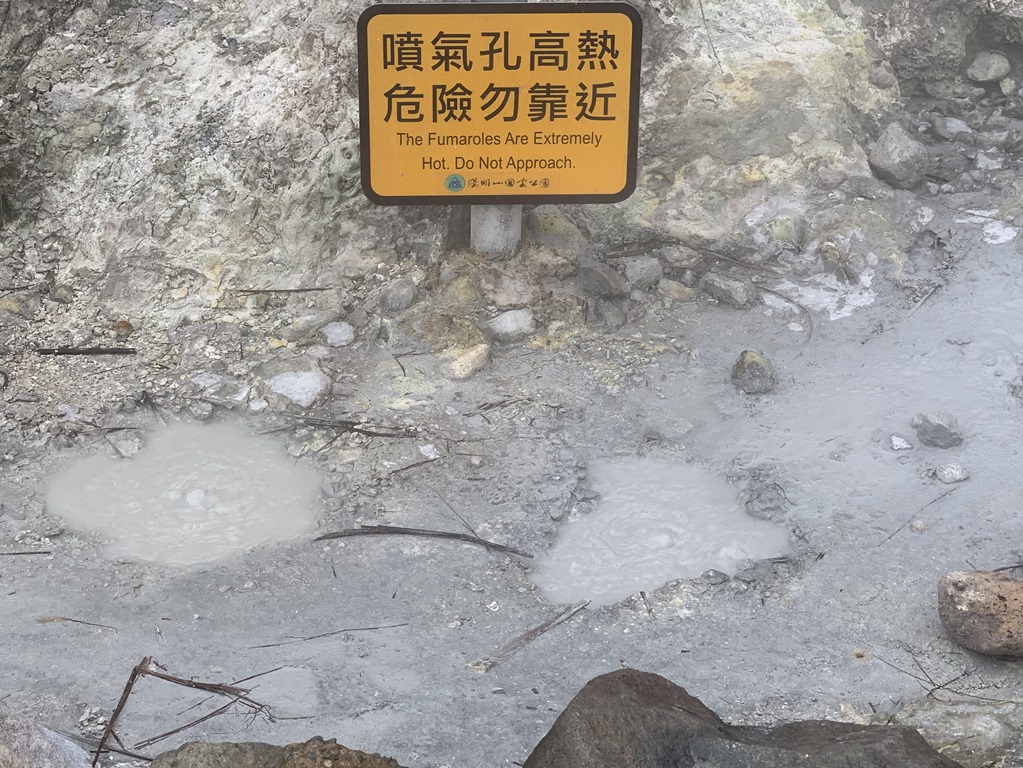
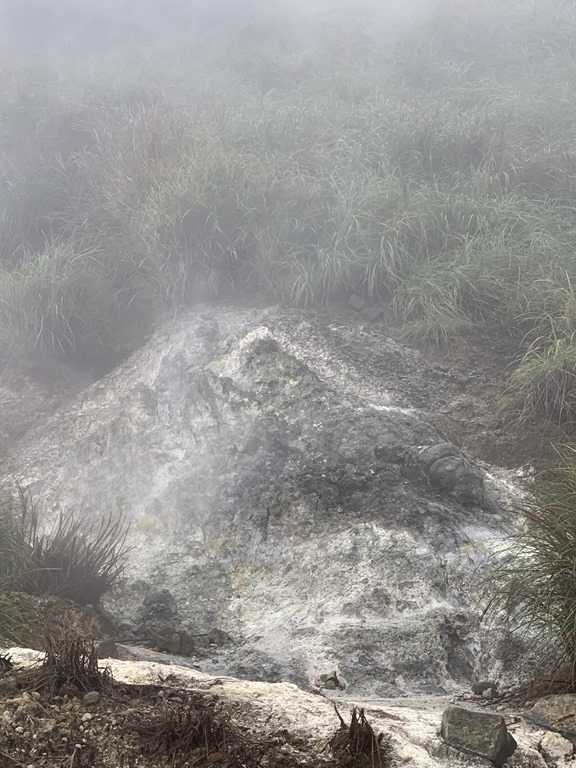
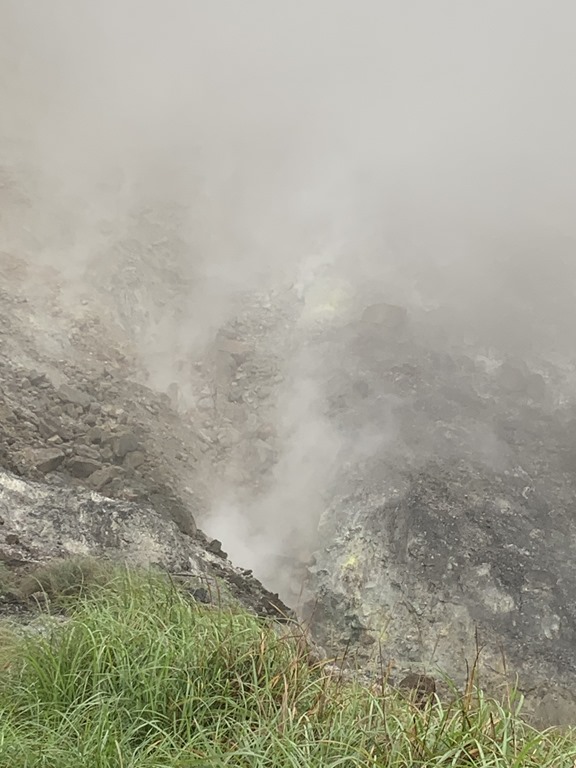
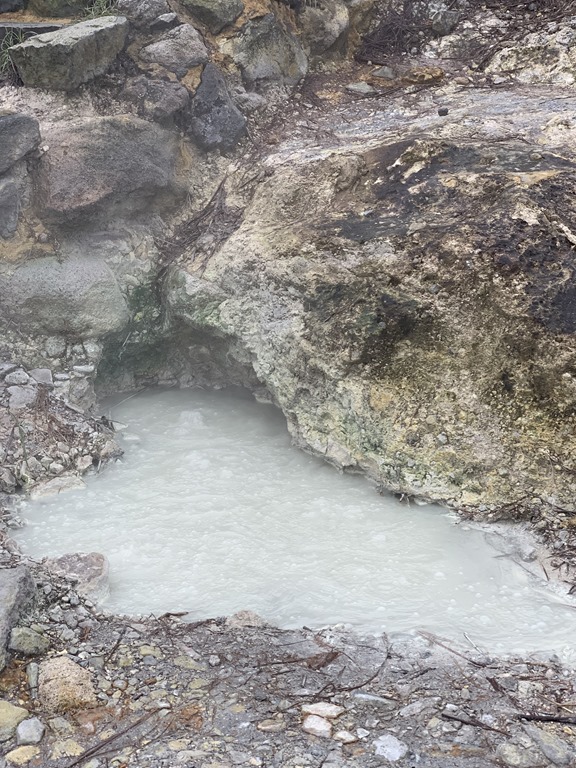
After that part of the park, we went to the area of the bubbling hot springs.  It was pretty overcast still but you can see some of these hot springs in these next shots. There was also a long walkway with lush bamboo on both sides.  How do you like the poncho??

IMG_4099IMG_4101IMG_4106IMG_4110IMG_4113IMG_4114IMG_4116

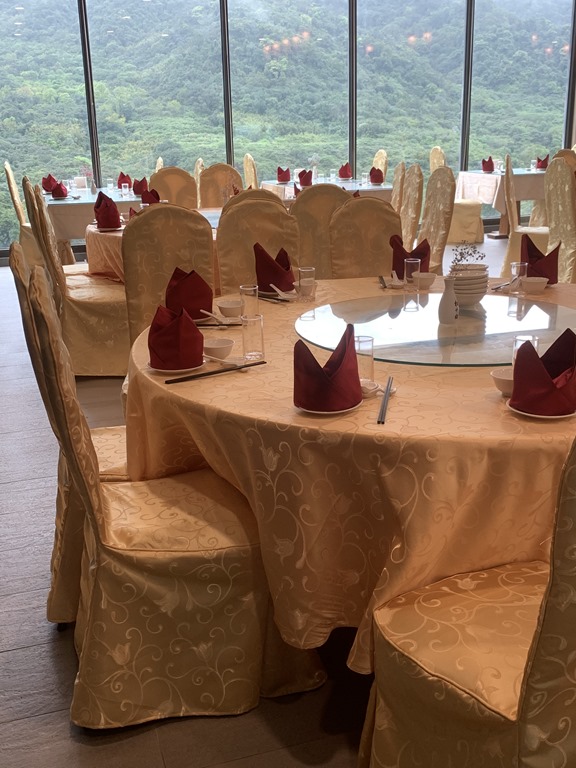
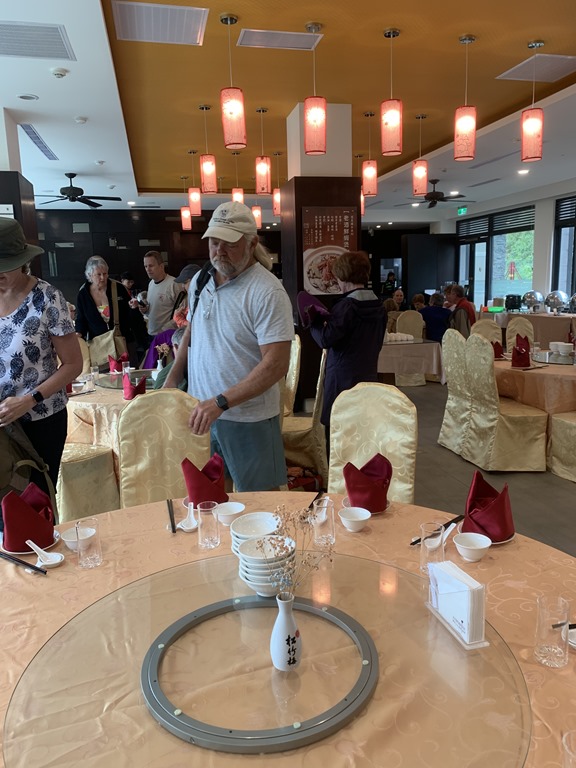
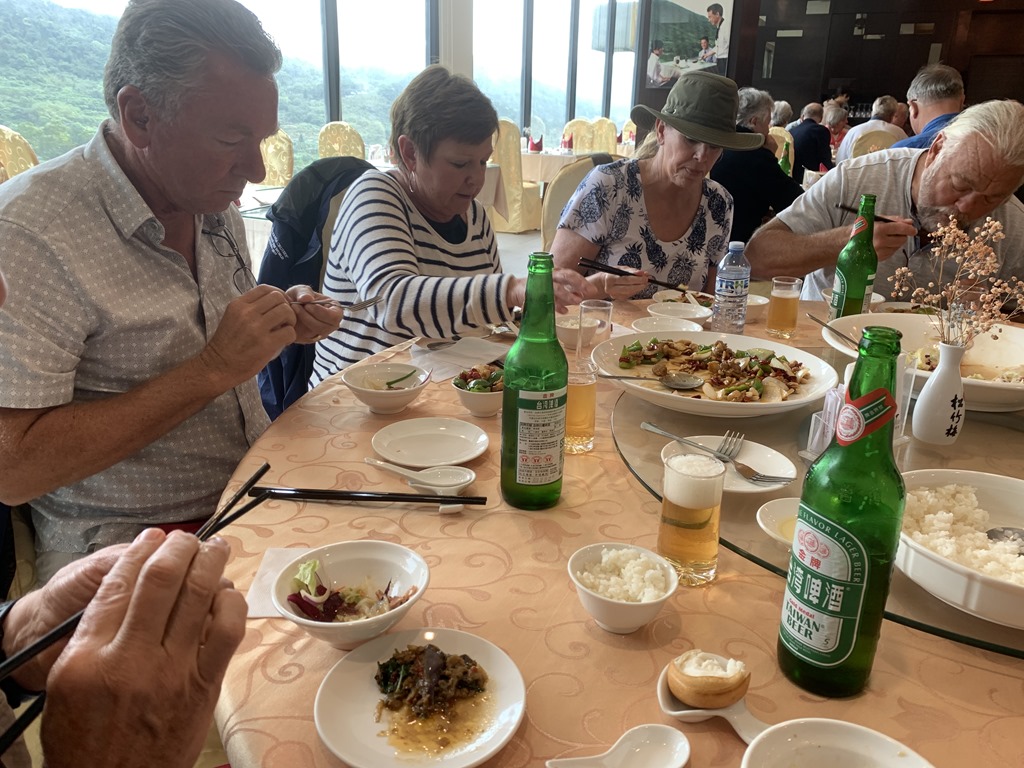
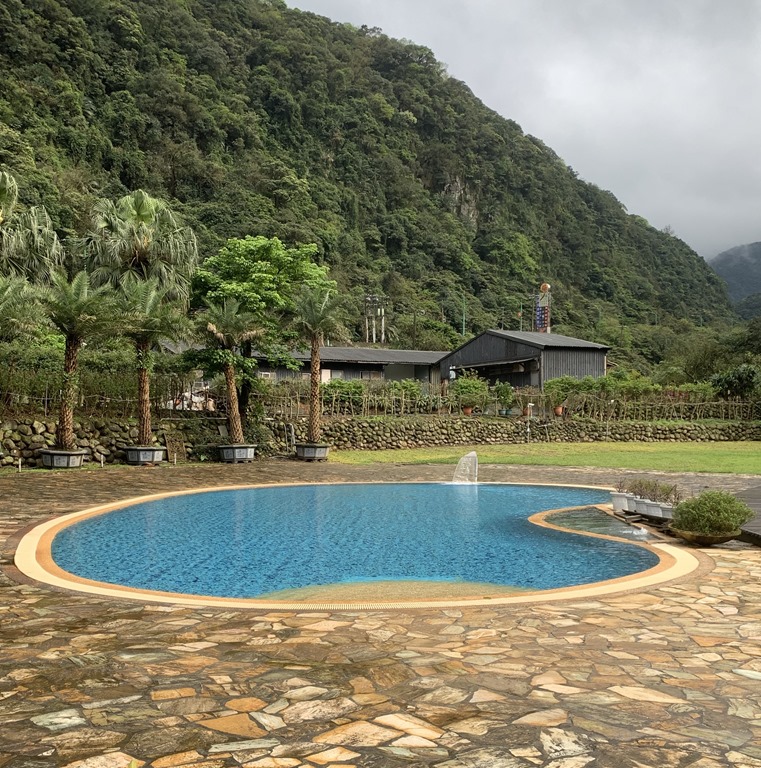
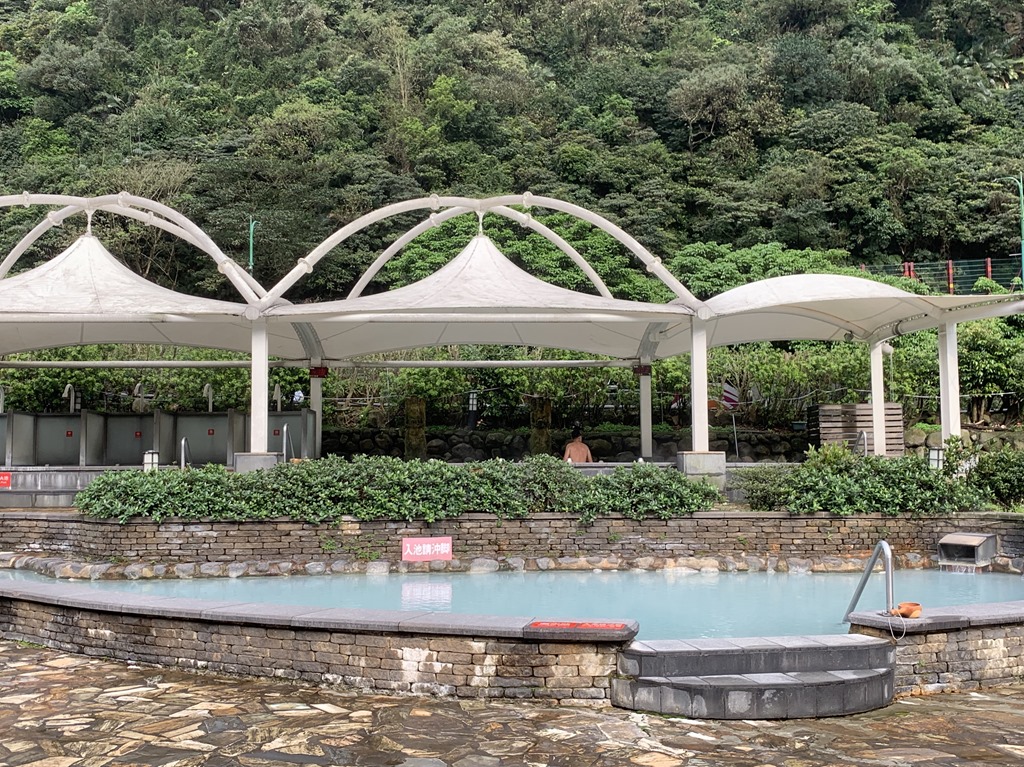
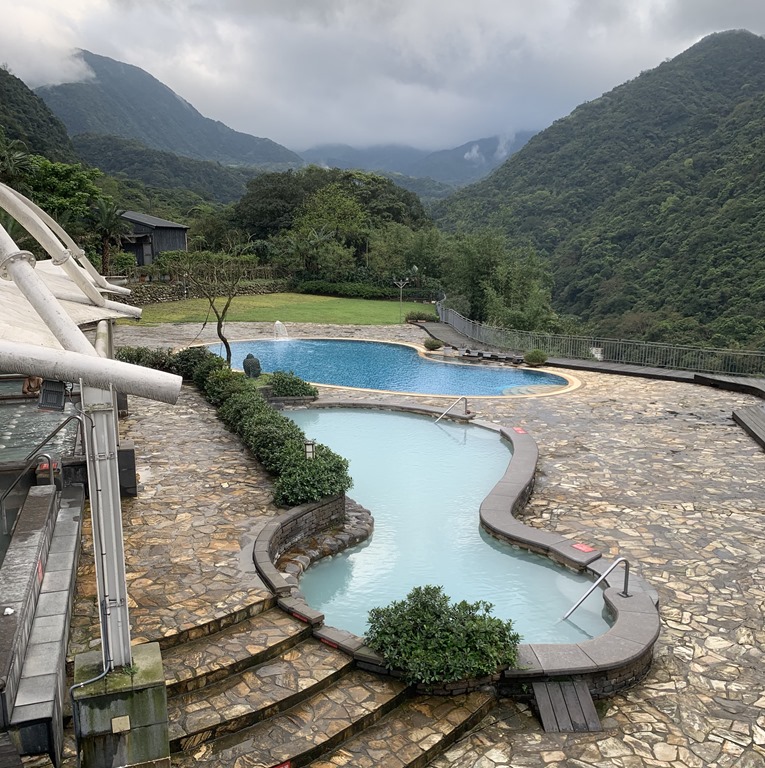
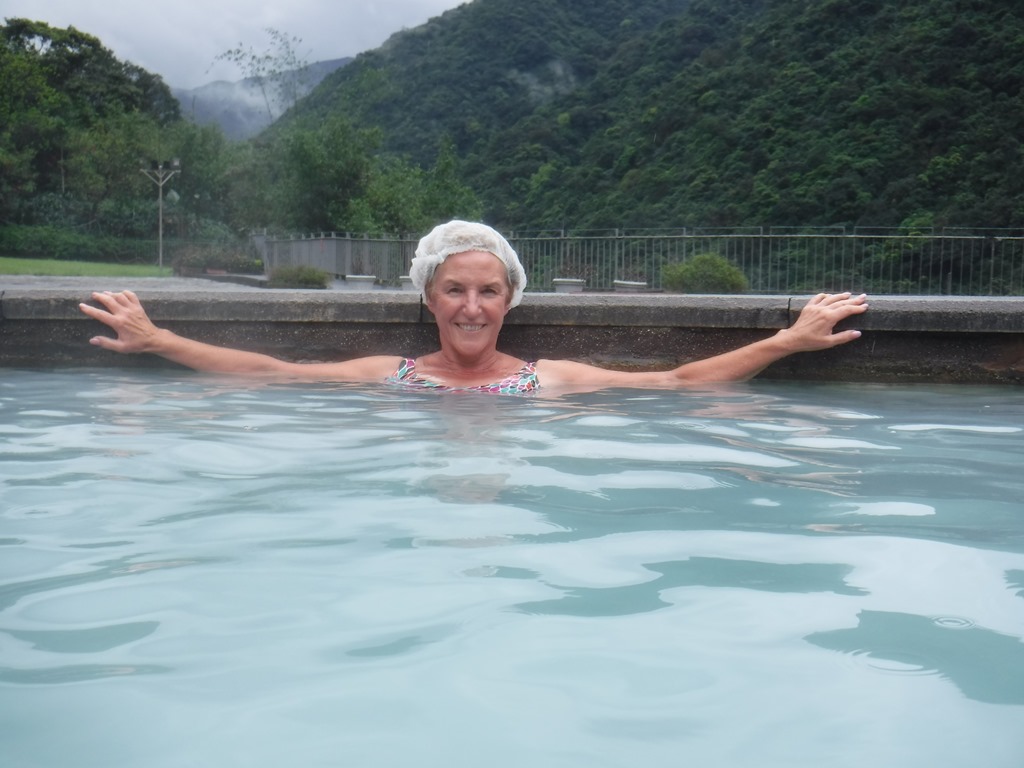
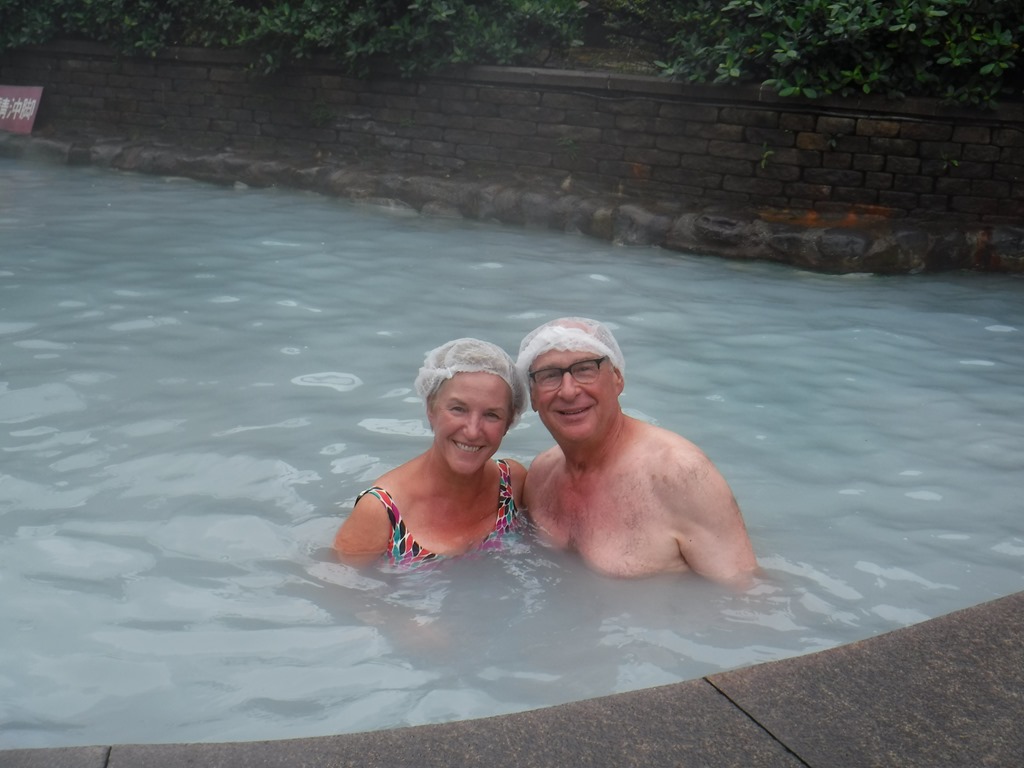
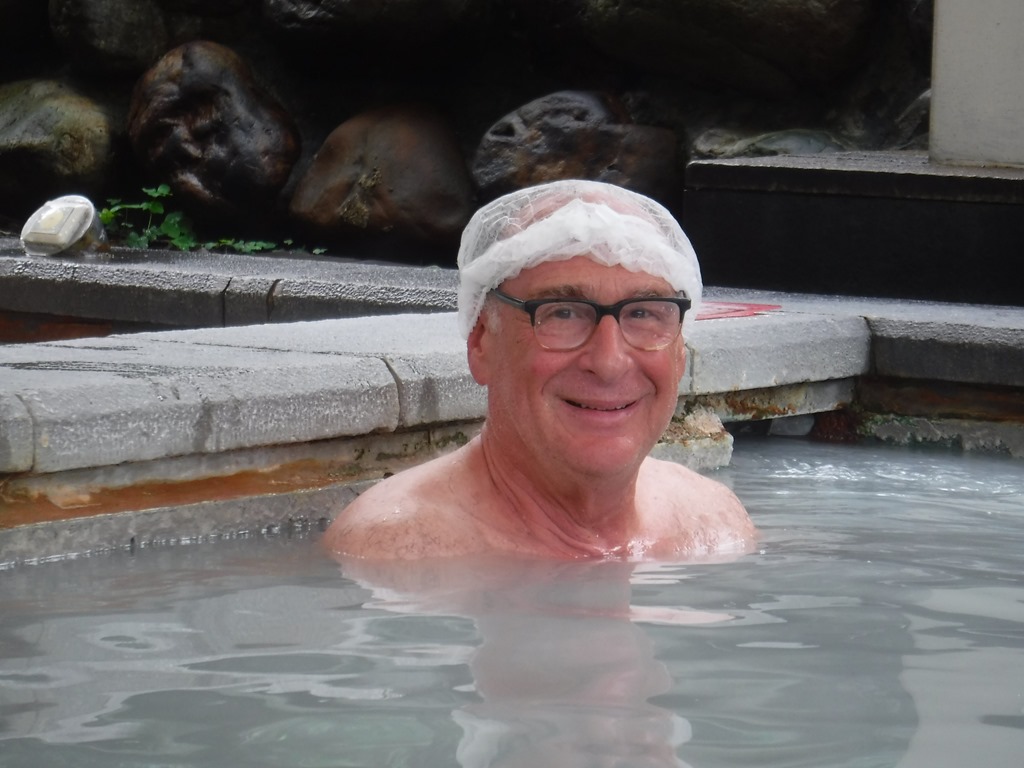
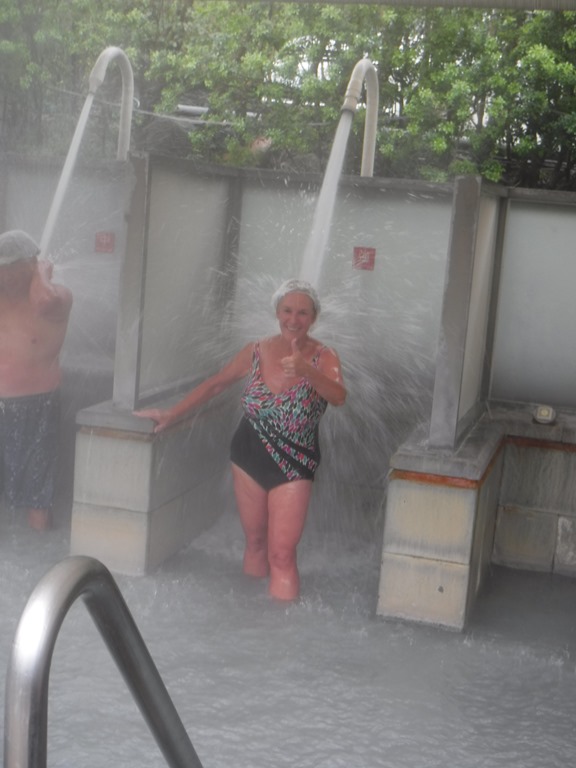
After the park we went to the Cal La Yong Garden Resort. Here we had a delicious Taiwanese lunch and then had several hours in the mineral hot springs.  There was also a cold pool, high speed hot mineral showers and one pool with jets.  Amazing afternoon.  We were soooo relaxed at the end of the day.  We even had a tea before we got on the bus to go back to the ship.

IMG_4120IMG_4121IMG_4122IMG_4123IMG_4124IMG_4125IMG_4127IMG_4128IMG_4129IMG_4130IMG_4131IMG_4133IMG_4135IMG_4137IMG_4138IMG_4140IMG_4142IMG_4143IMG_4145DSCF0467DSCF0469DSCF0472DSCF0478

Yes, we did need to wear those dumb caps!

Here are some pictures as we traveled back to the port after a wonderful day.

IMG_4148IMG_4150IMG_4151IMG_4152IMG_4153

You can see that this is an area of contrasts in economic levels.

Tonight in the terrace it was a pan Asian dinner and it was, as usual, fabulous. There were plenty of dumplings and noodle dishes too but I didn’t take pictures of those.

IMG_4160IMG_4161IMG_4162IMG_4163IMG_4164

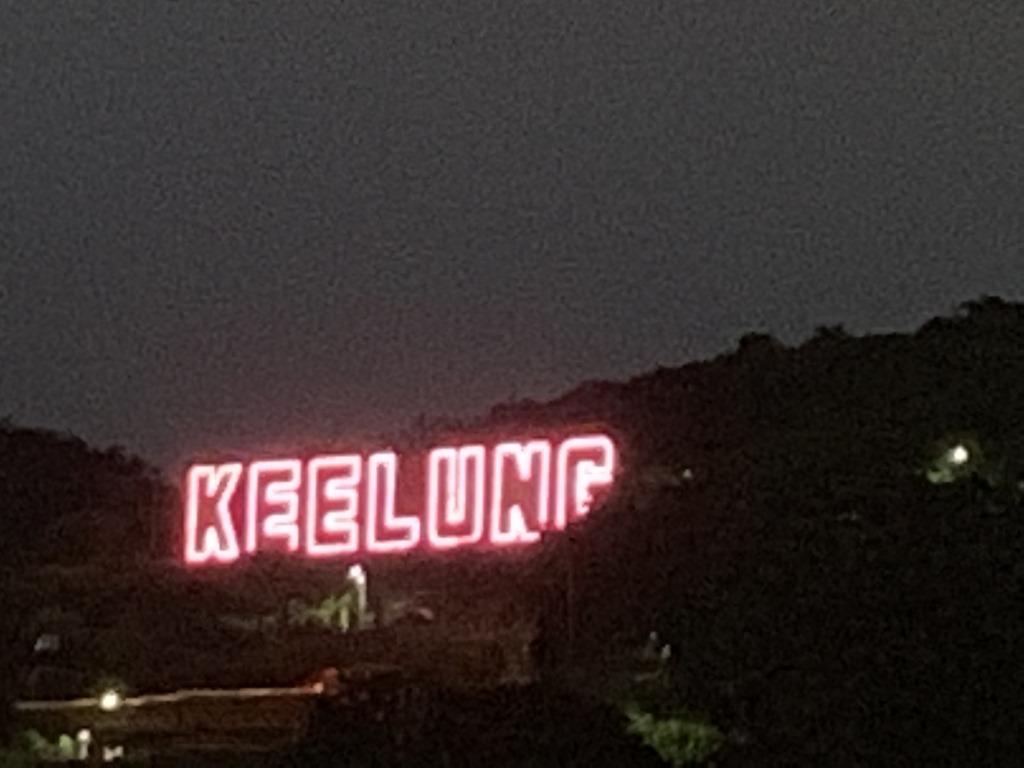
As we sailed away, the Keelung sign lit up the sky.

IMG_4159

Posted in Asia, Excursions, Food, March, World Cruise 3 | 4 Comments

Kaohsiung, Taiwan

March 24, 2019

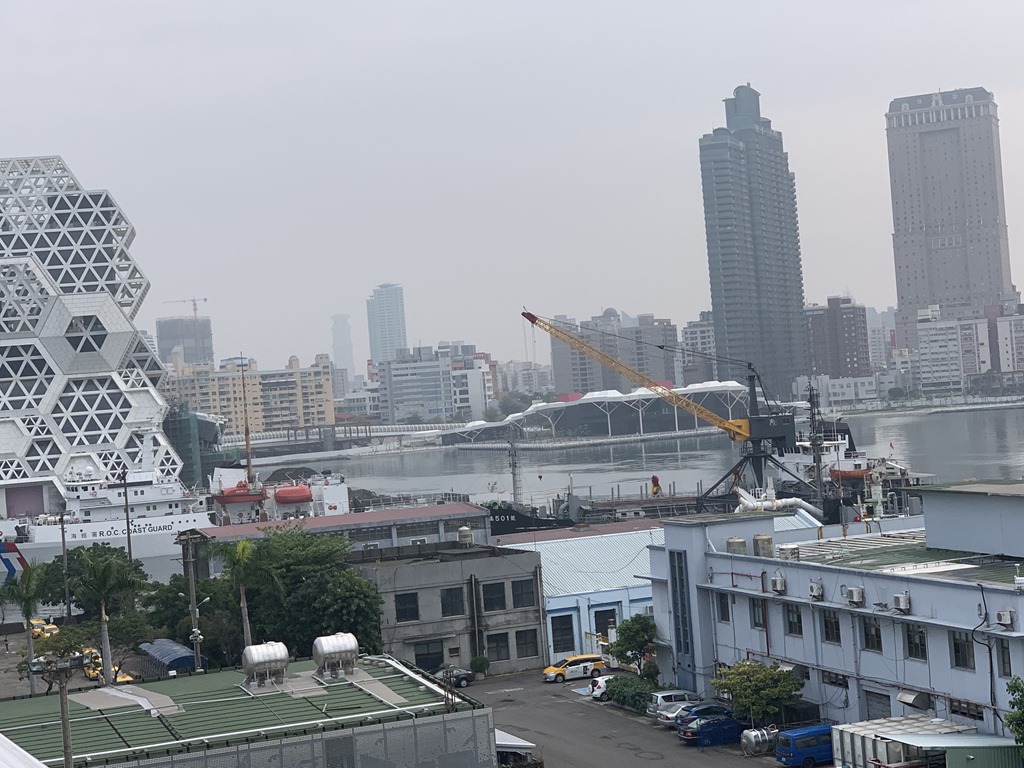
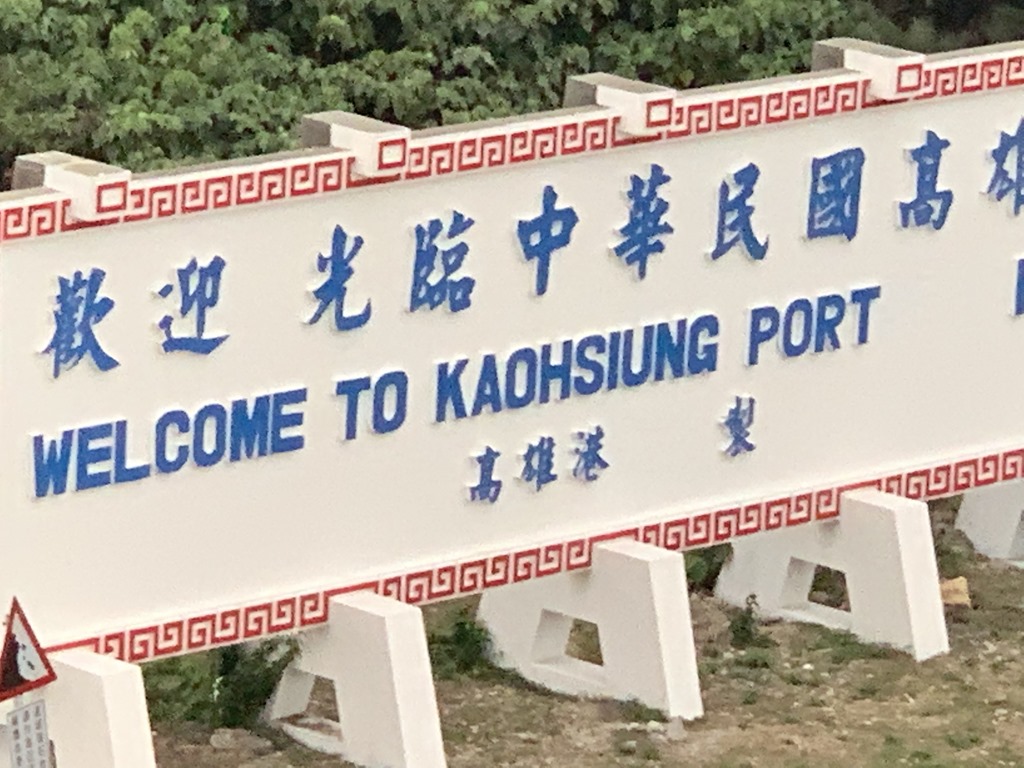
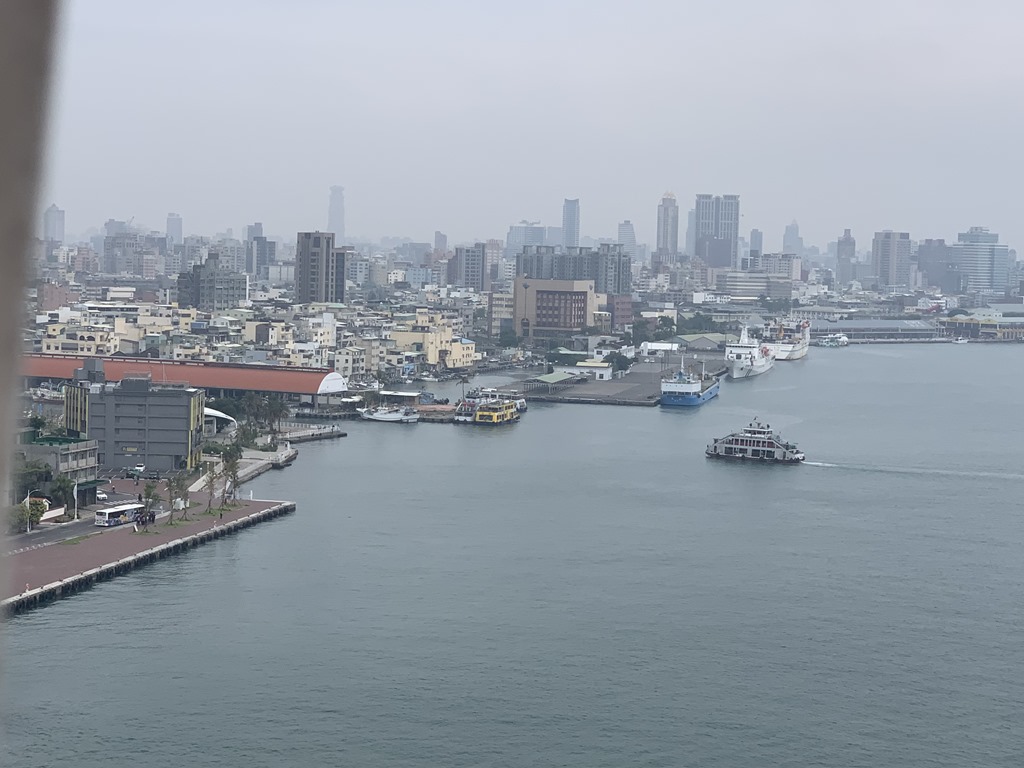
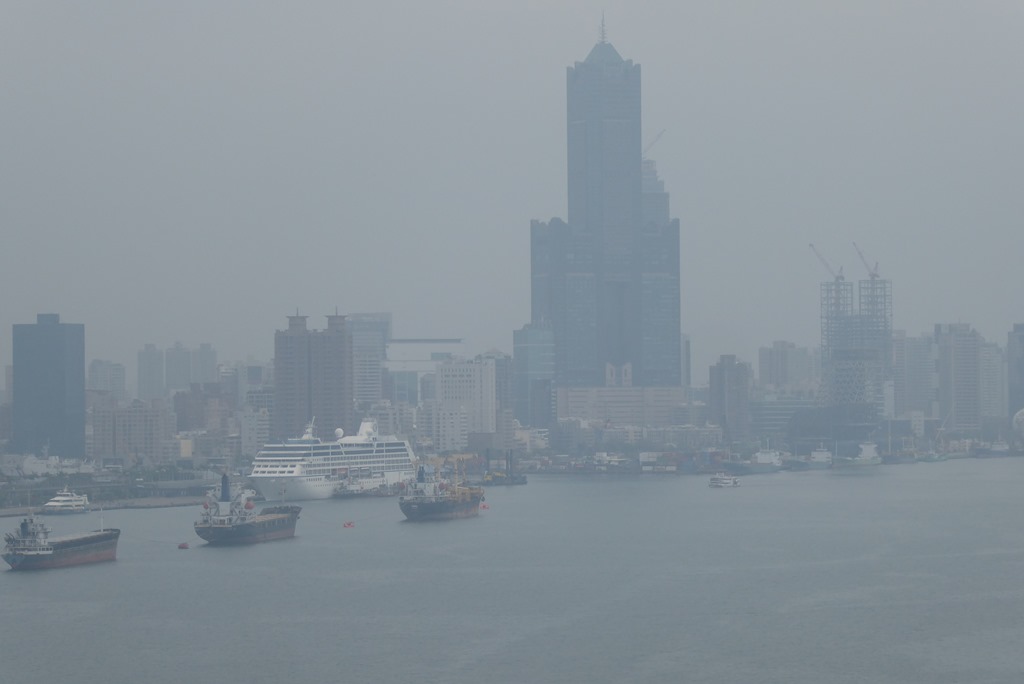
Here is our sail in to this busy commercial port.  They are building a huge new passenger terminal which will probably be finished by our next visit. Very smoggy here too as you can see.

IMG_3881IMG_3882IMG_4054

Today we explored Kaohsiung mostly by foot.  Last time we were here we saw the two main sights, the Fokuangshan
Buddhist monastery and Lotus Pond.  If you plan to visit Taiwan, these are really special.  You can read my 2017 blog post about them here.

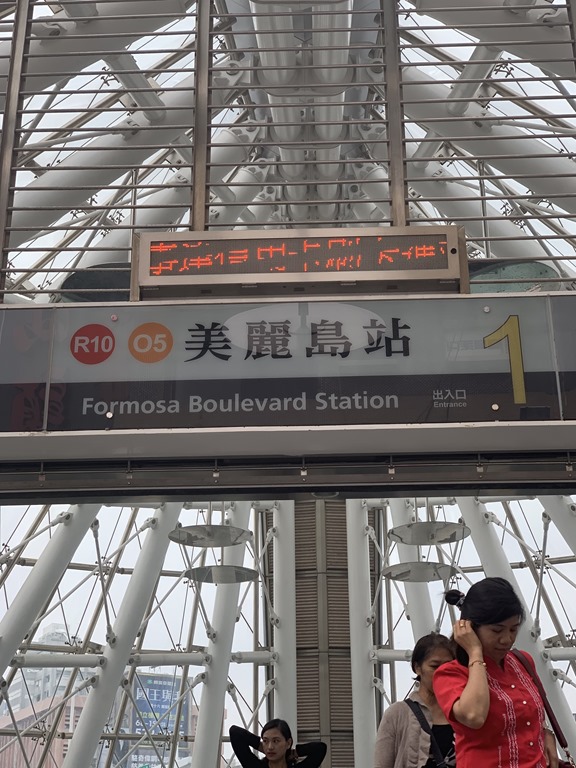
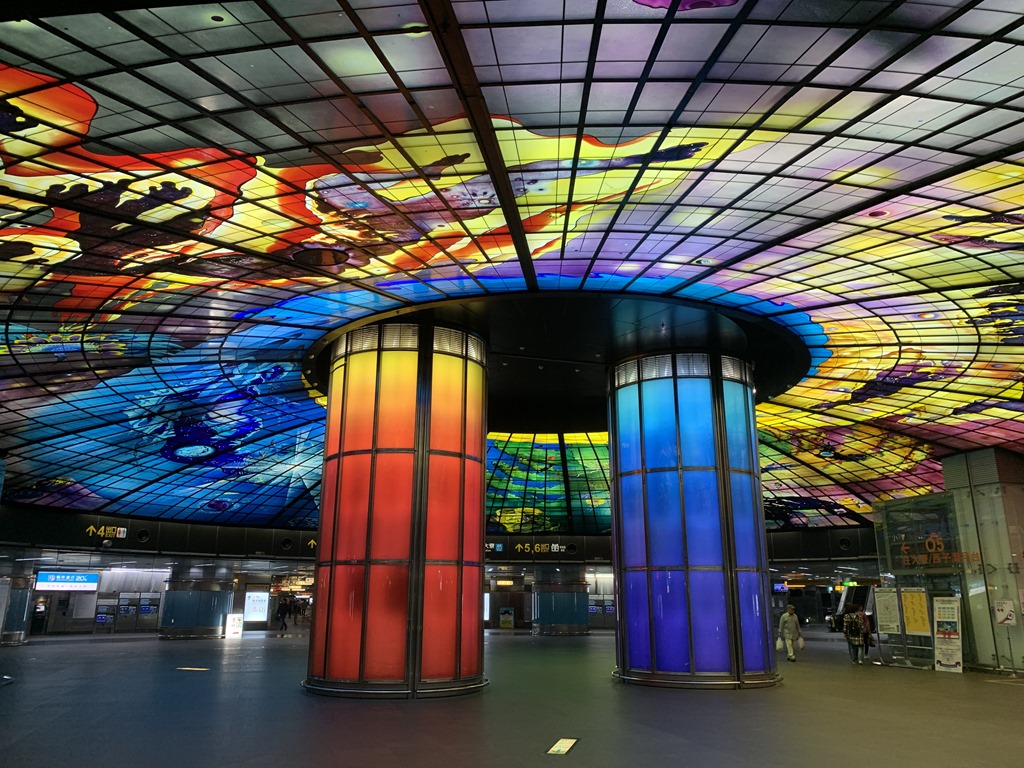
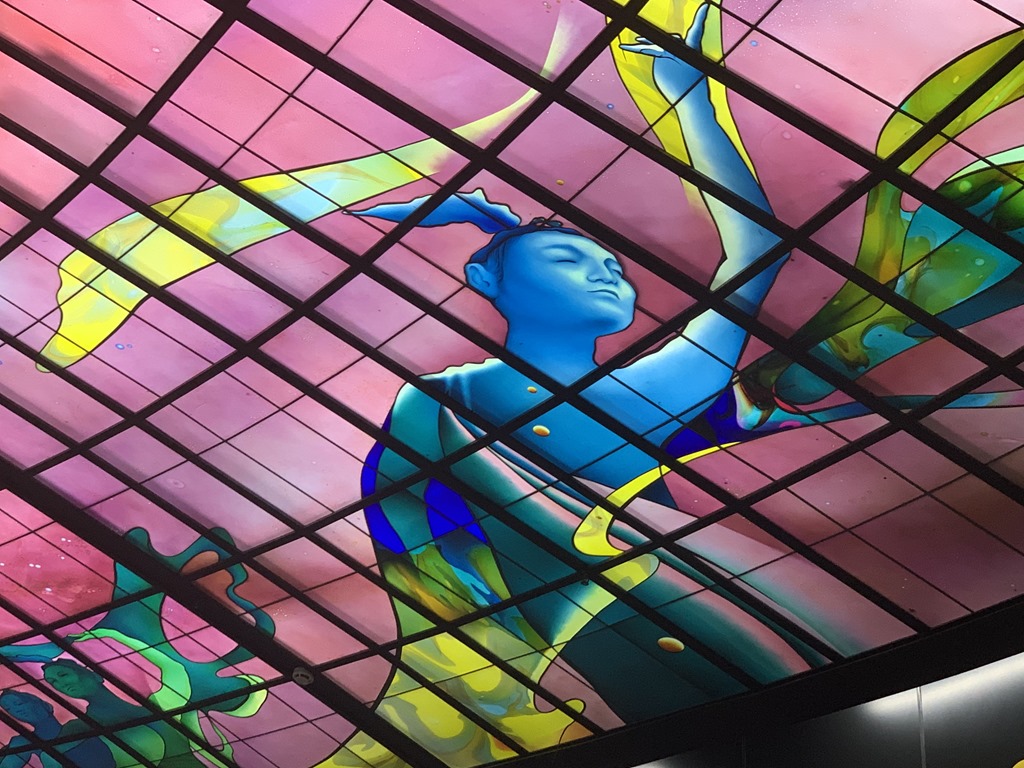
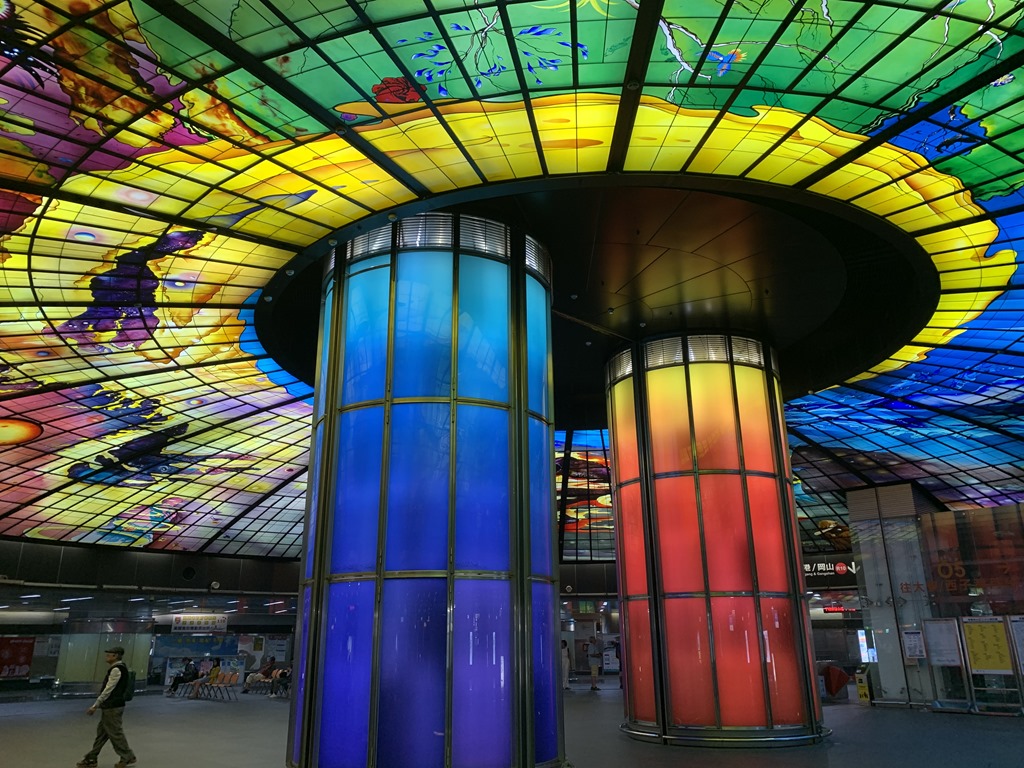
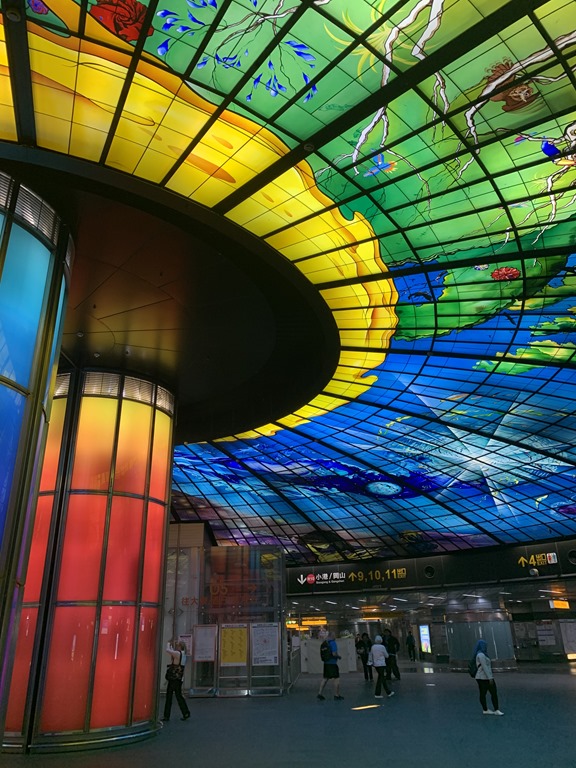
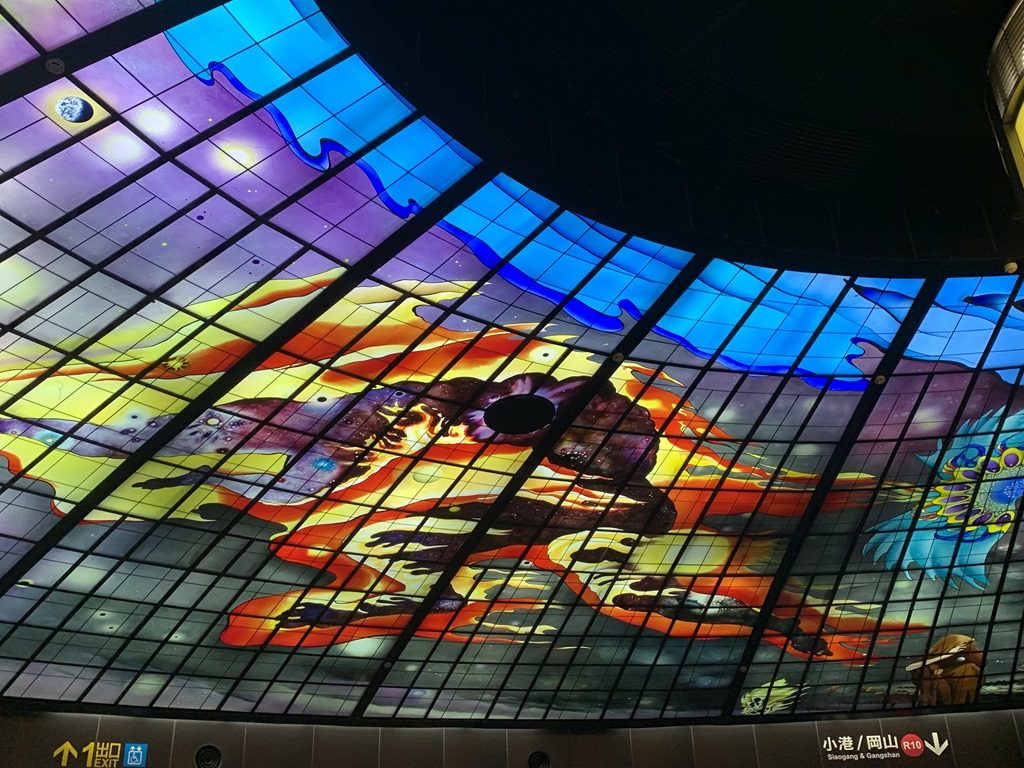
So today we set out to explore the city and surroundings.  We met with a local representative before leaving the ship and got information about transportation, sights to see, etc.  We took the shuttle to the Formosa Boulevard MRT station which has unique public art displays.  It was rated second of the most beautiful subway stops in the world.  The glass masterpiece “Dome of Light” is the world’s largest glass masterpiece and features penetrating light through evolving scenes. There is even a grand piano in the lobby of this station.  Pictures really cannot even do it justice.

IMG_3885IMG_3887IMG_3888IMG_3889IMG_3891IMG_3892IMG_3894

And we see 7-Eleven everywhere.

IMG_3893

Here is one of the outside MRT entrances.

IMG_3924

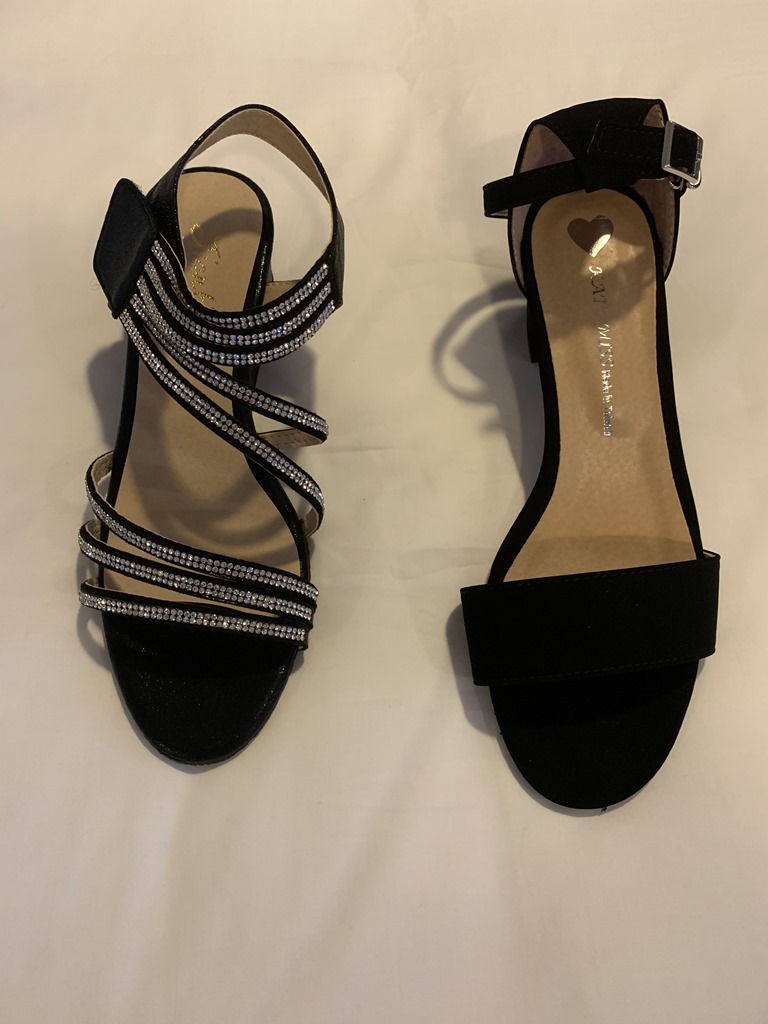
Readers of this blog know that we love to explore markets.  Today was no exception as we walked through the Nanhue night market which did have some of the stalls open.  My first purchase:  Two pairs of shoes, and what a bargain,  in US dollars, they were $12.60/pair.  Here is a photo of one of each.

IMG_3896IMG_4058

There was a lot to see in the market, one of the cleanest we have ever been in.  Yes, lots of motorbikes driving right through the narrow alleys, and some people but not the crowds we expected.  Of course we were out and about by 8:30 AM and it is Sunday.

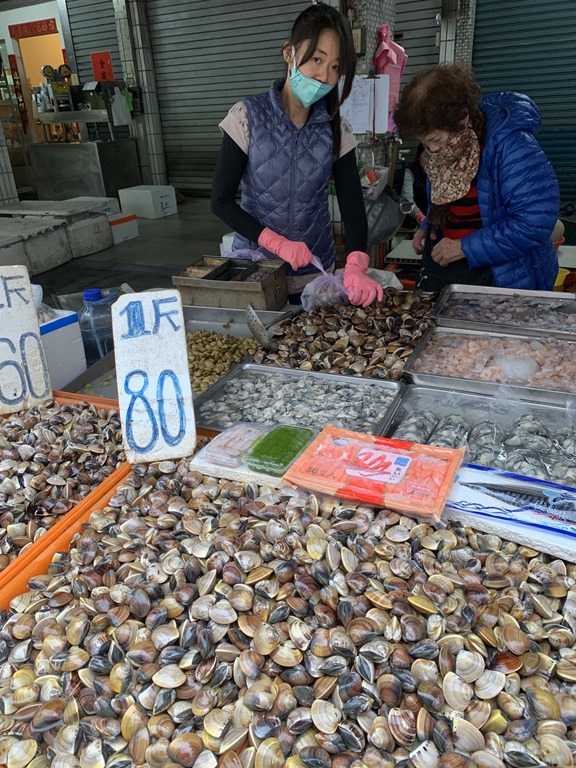
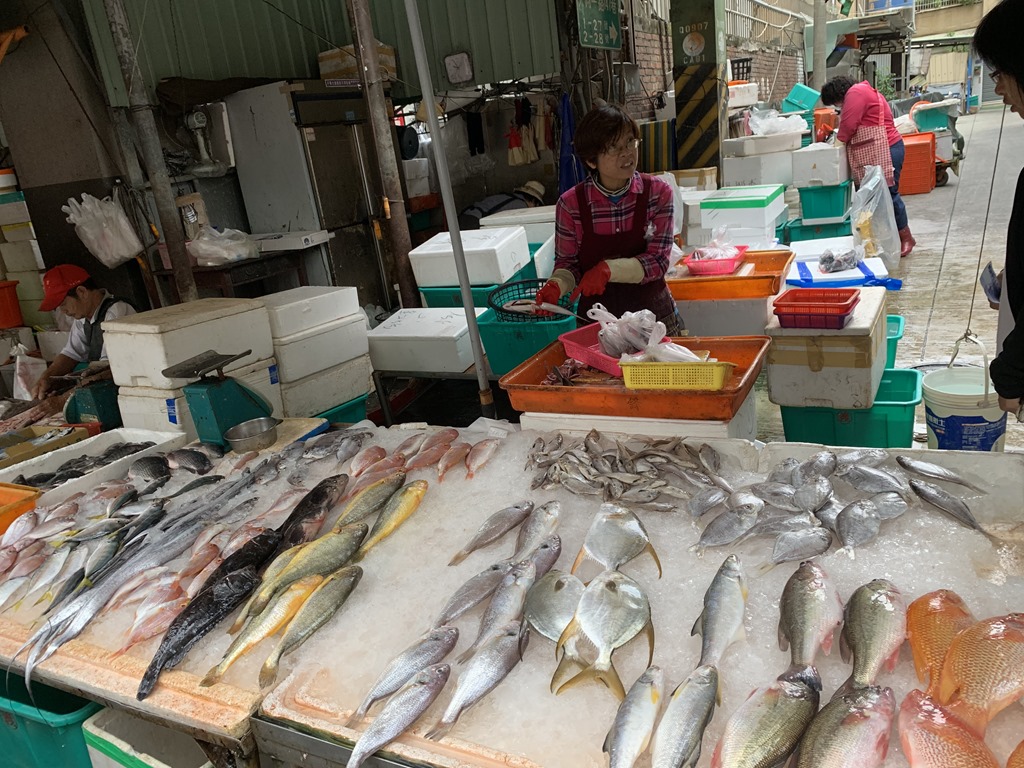
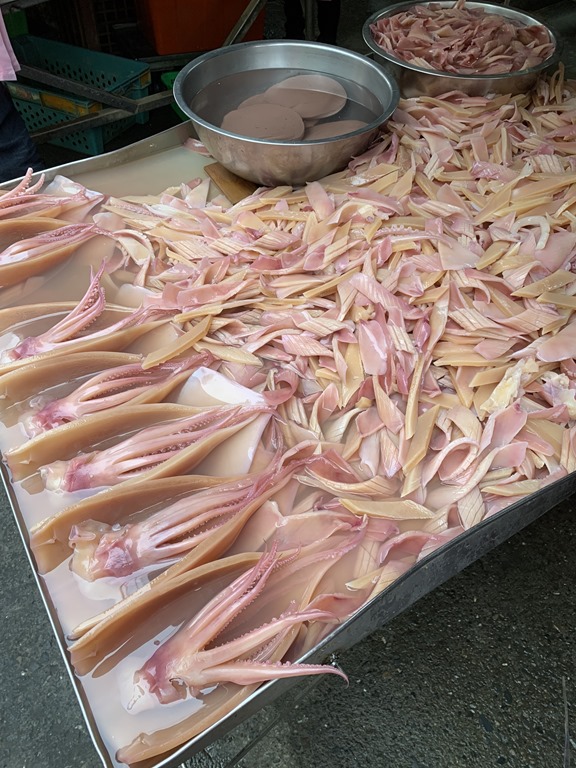
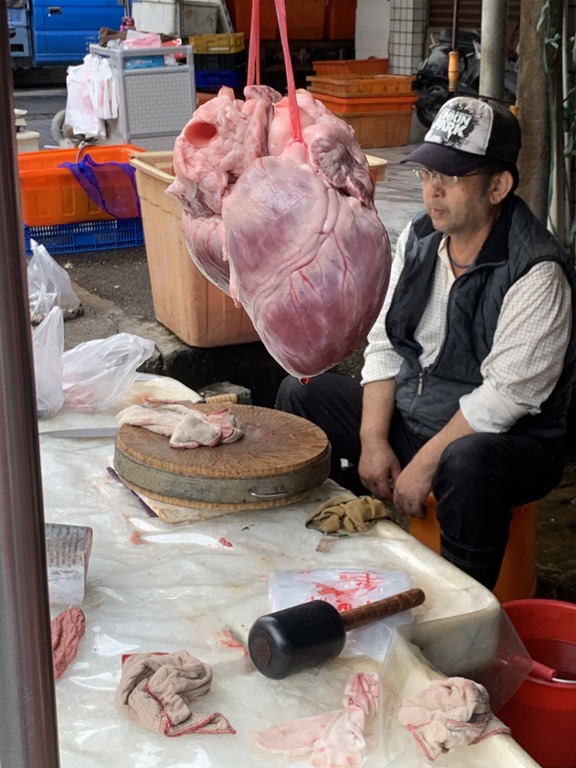
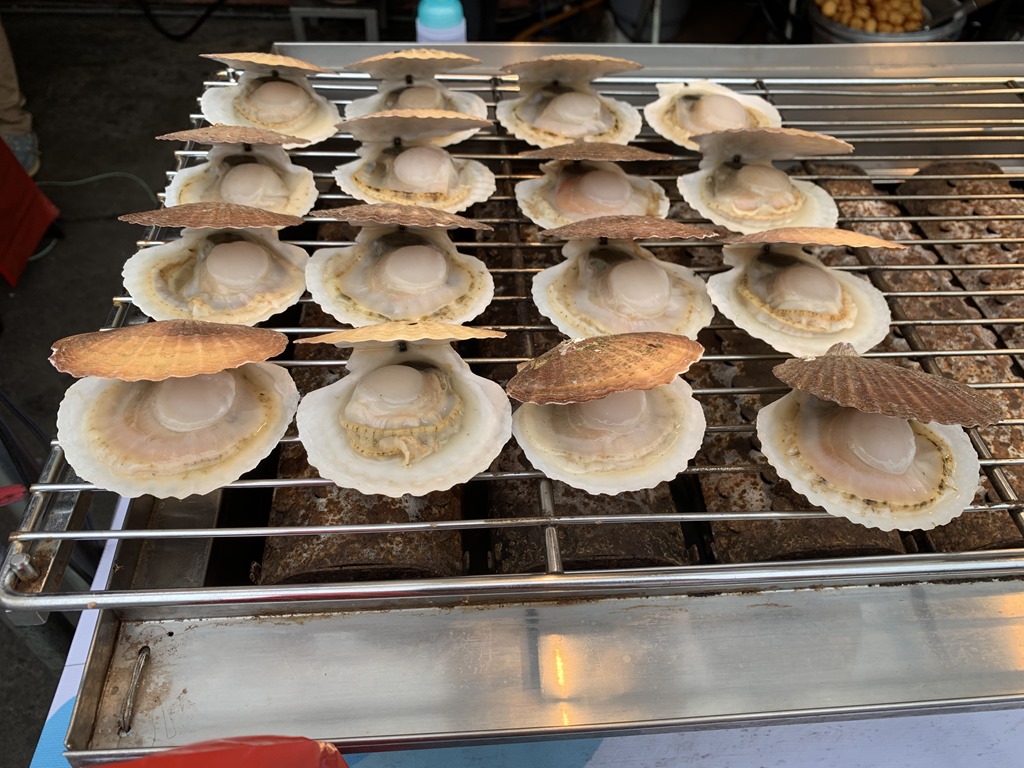
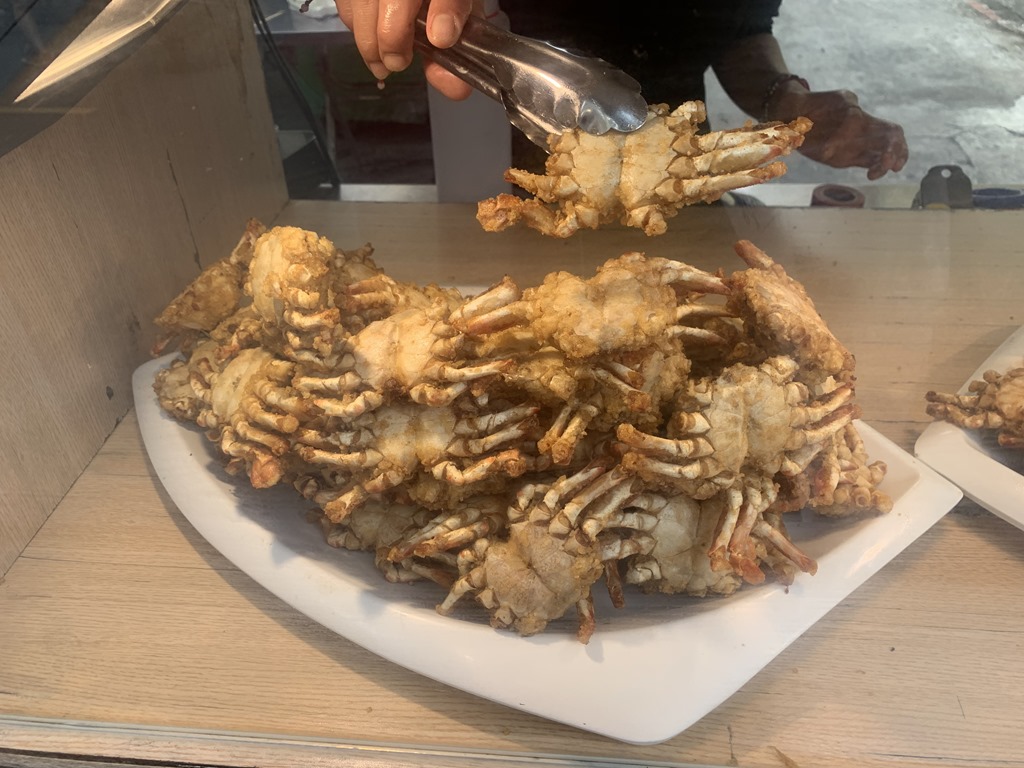
They do love their seafood here and we saw almost everything you could imagine.  They grill squid on sticks everywhere.  There are all kinds of clams, snails, fish, and shrimp, both fresh and dried.

IMG_3915IMG_3897IMG_3907IMG_3908IMG_3906

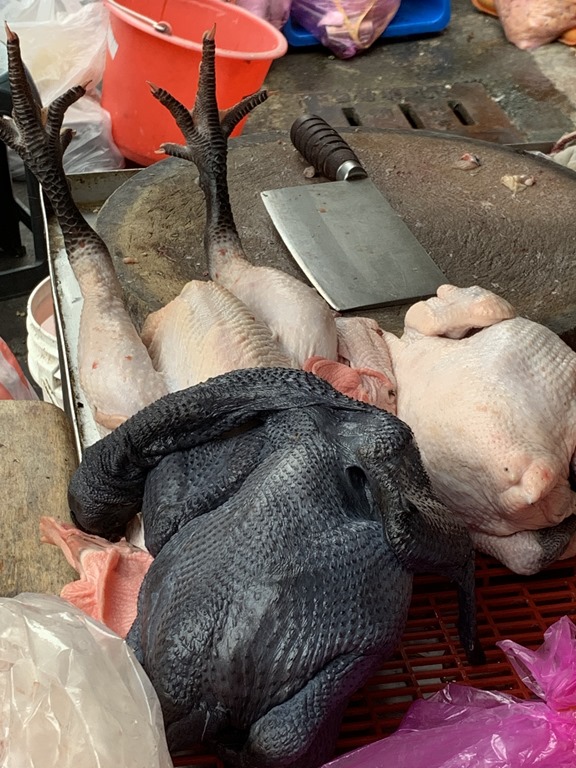
There were all kinds of meats too, and chicken.  Did you ever see a black chicken?  It was a first for us.

IMG_3921

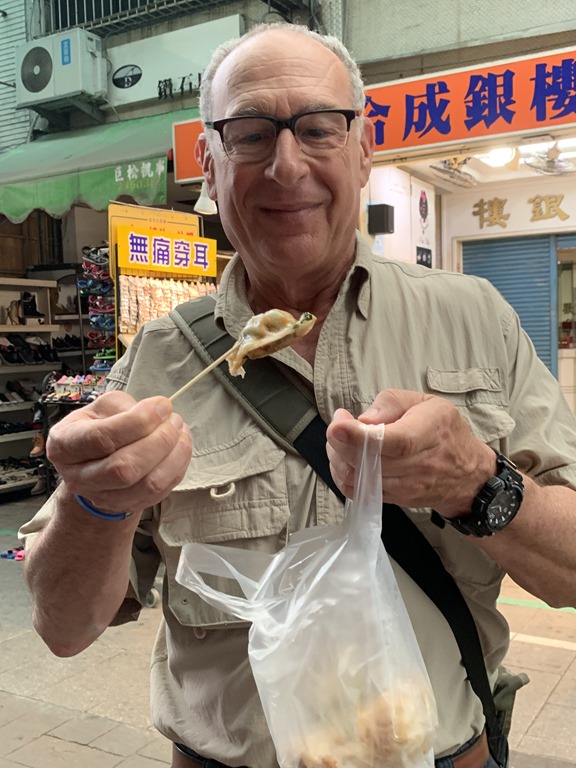
We passed a woman making dumplings and bought a bag of them for a snack.  It was $1.62 for 10 dumplings.  Delicious.

IMG_3905IMG_3923

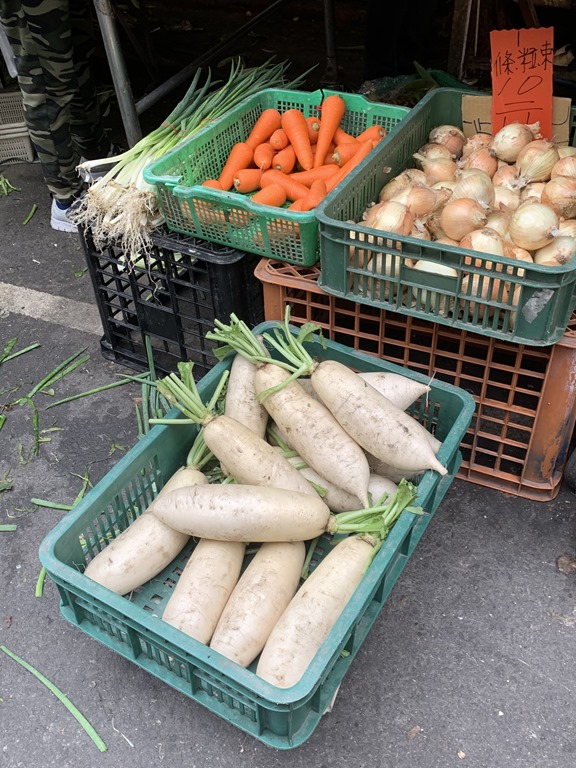
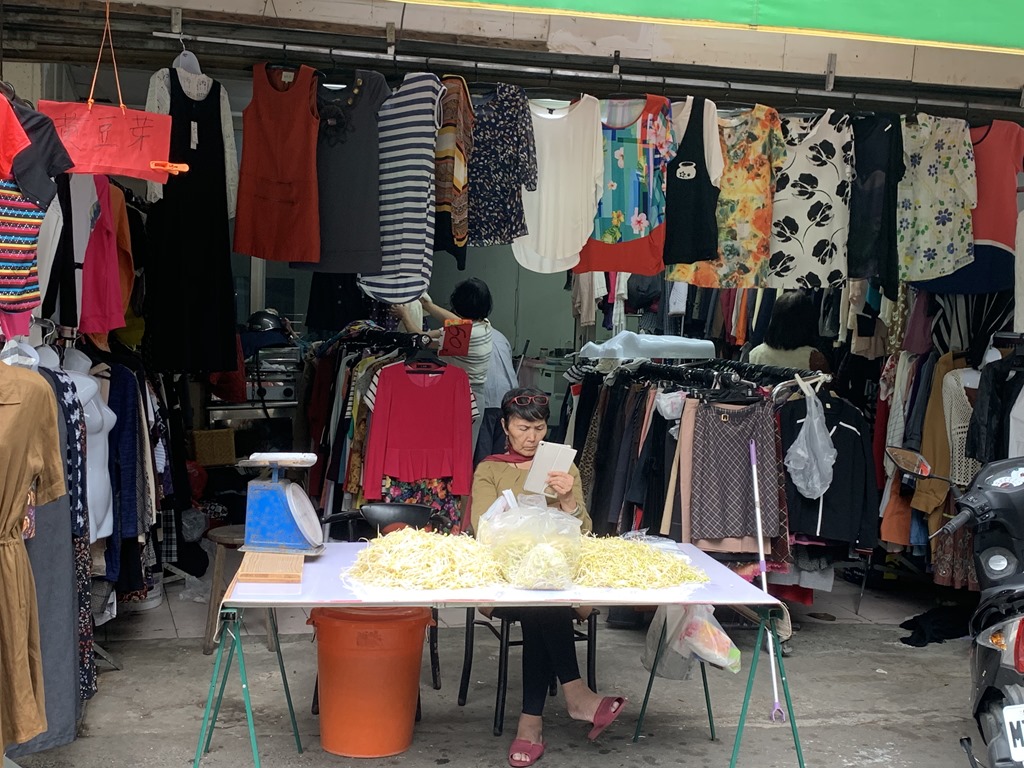
Here are some other market scenes.  The vegetables also looked fresh and delicious.

IMG_3900IMG_3901IMG_3903IMG_3911IMG_3912IMG_3913

Yes, that is a heart hanging up in the picture above.  We saw legs, livers, hearts and lungs all in the meat markets.

IMG_3914IMG_3916IMG_3918IMG_3919

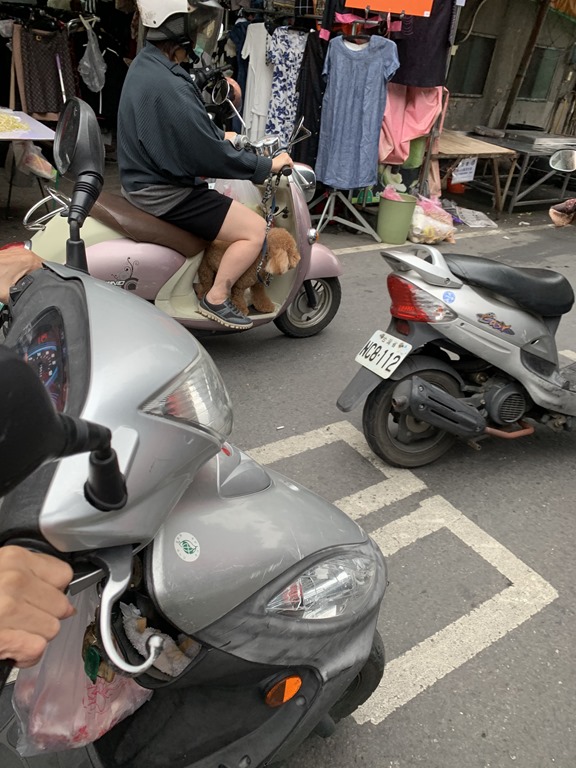
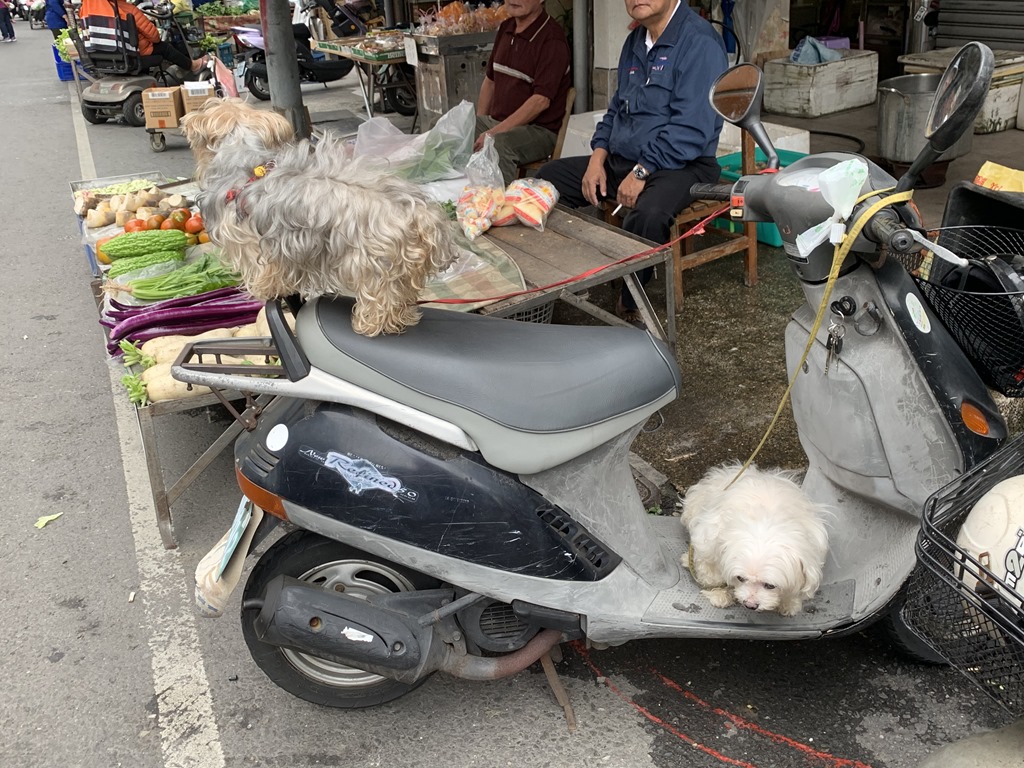
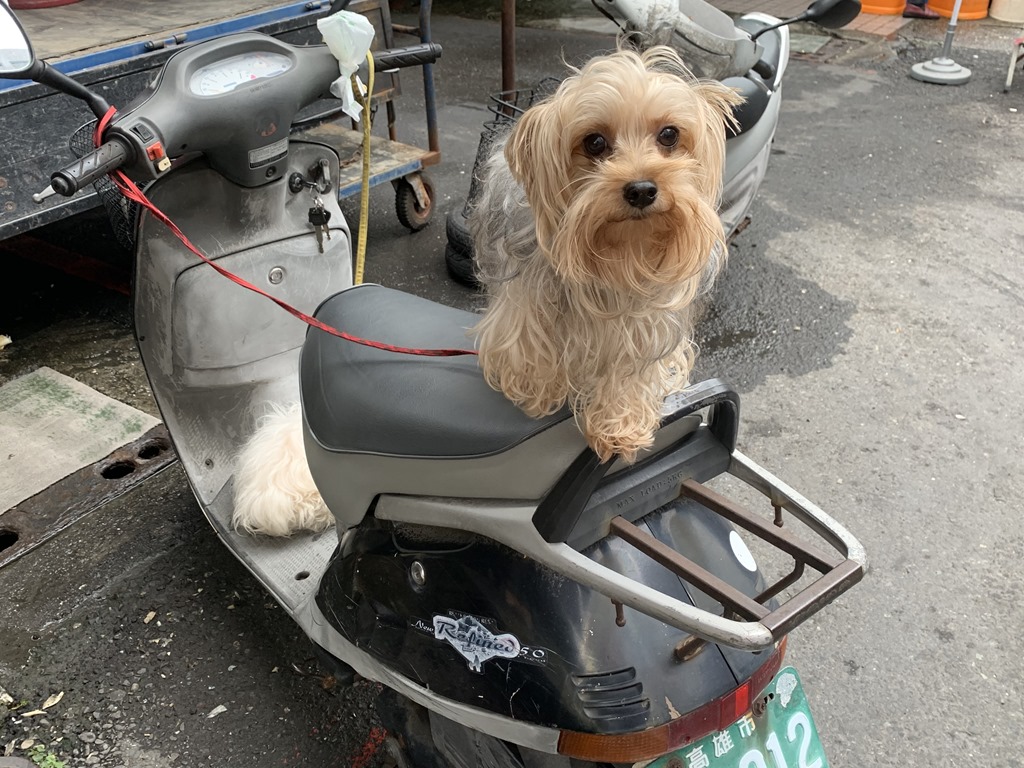
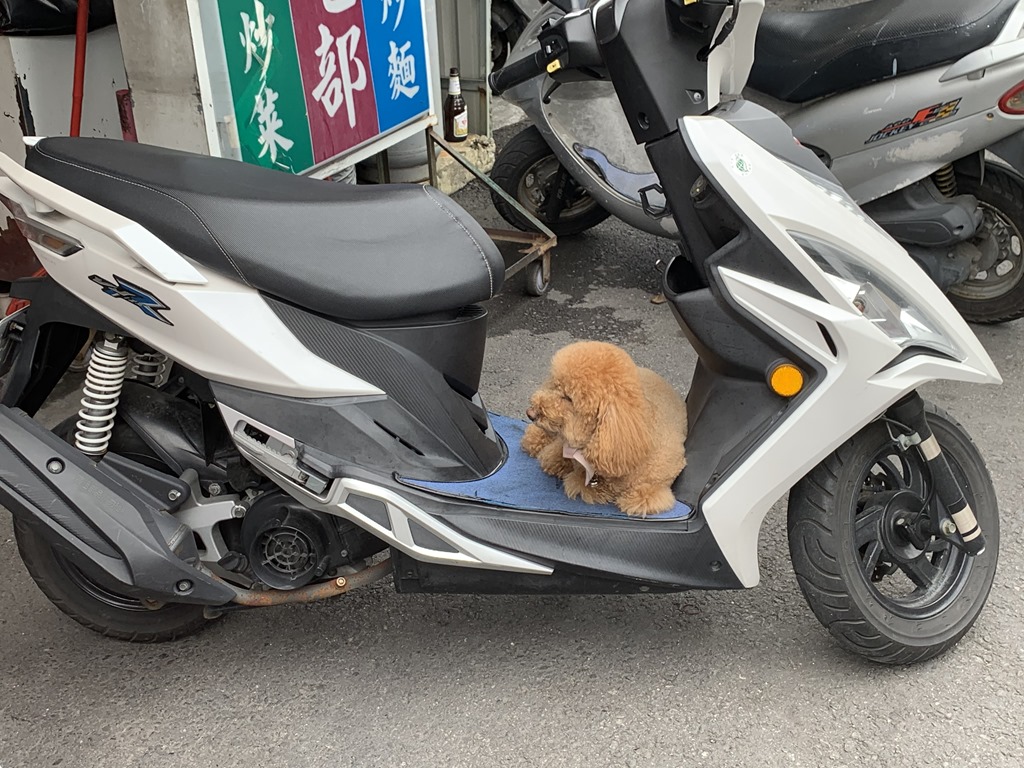
We saw a lot of animals on scooters, both while they were parked and also with people who were driving around with them.

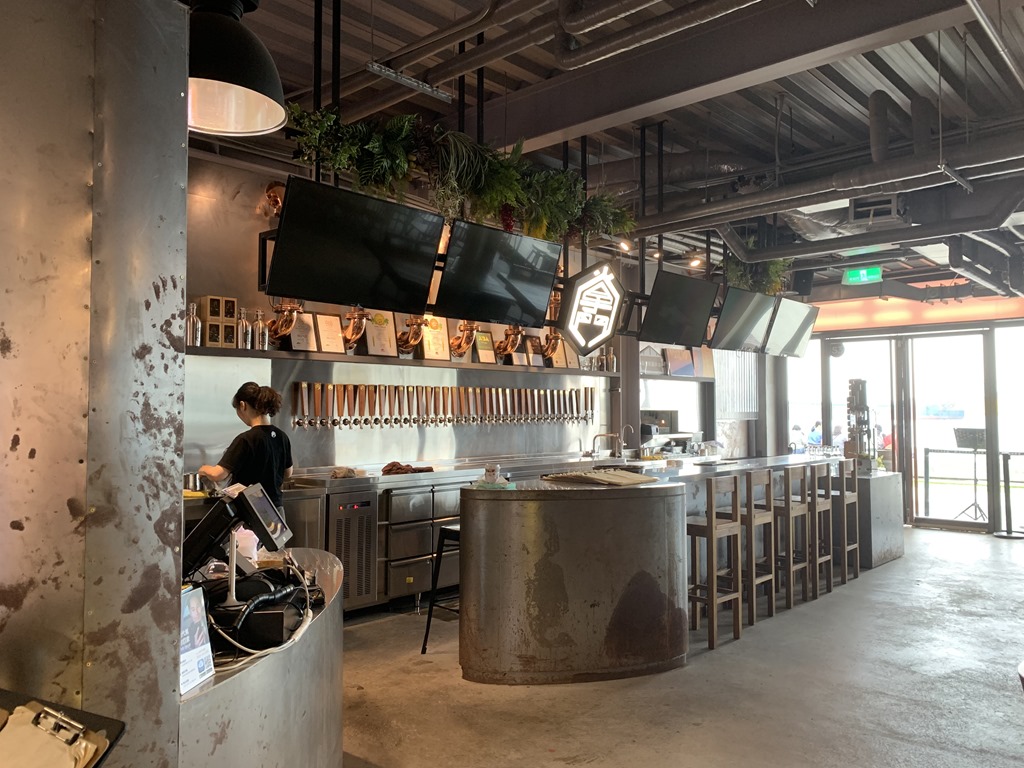
There is a place near the ferry station called Warehouse 2 which had lots of food places and shops, even a craft brewery. 

IMG_3925IMG_3927IMG_3932IMG_3933IMG_3934IMG_3935IMG_3937

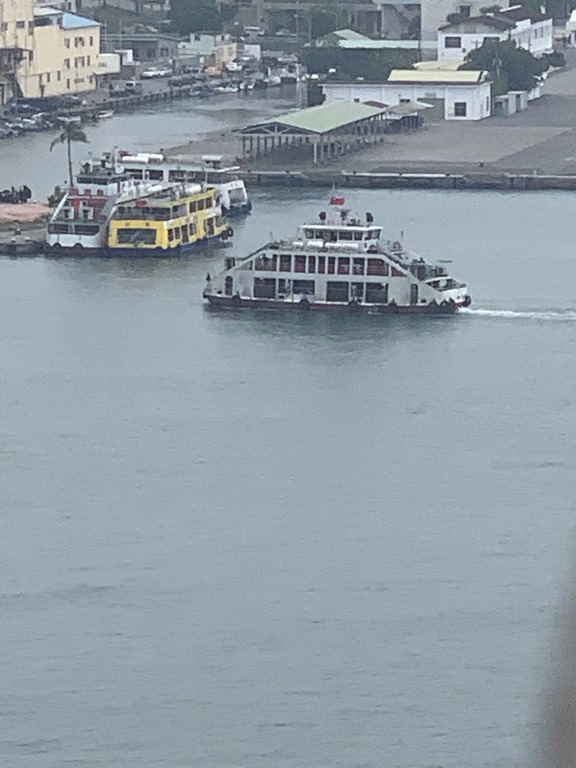
Next we decided to take the shuttle back to the Banana pier and take the ferry to Cijin (Qijin) District.  This is where the city was first developed and shows traditional Taiwanese architecture and sculpture.  It is a barrier island.  The ferry cost 30 Taiwan dollars or about $1 US.  When we bought the return fare, the ticket agent gave us the senior rate which was 15 Taiwan dollars!  Don’t know why the first agent didn’t recognize our age.  Smile

We really enjoyed walking around the streets of this district.  There were lots of food stalls and many families out for a Sunday morning/afternoon. Here are some of those sights. I couldn’t get enough of the little kids – adorable.

IMG_3930IMG_3940IMG_3943IMG_3945IMG_3946IMG_3949IMG_3951IMG_3954IMG_3955IMG_3958IMG_3959IMG_3960IMG_3962

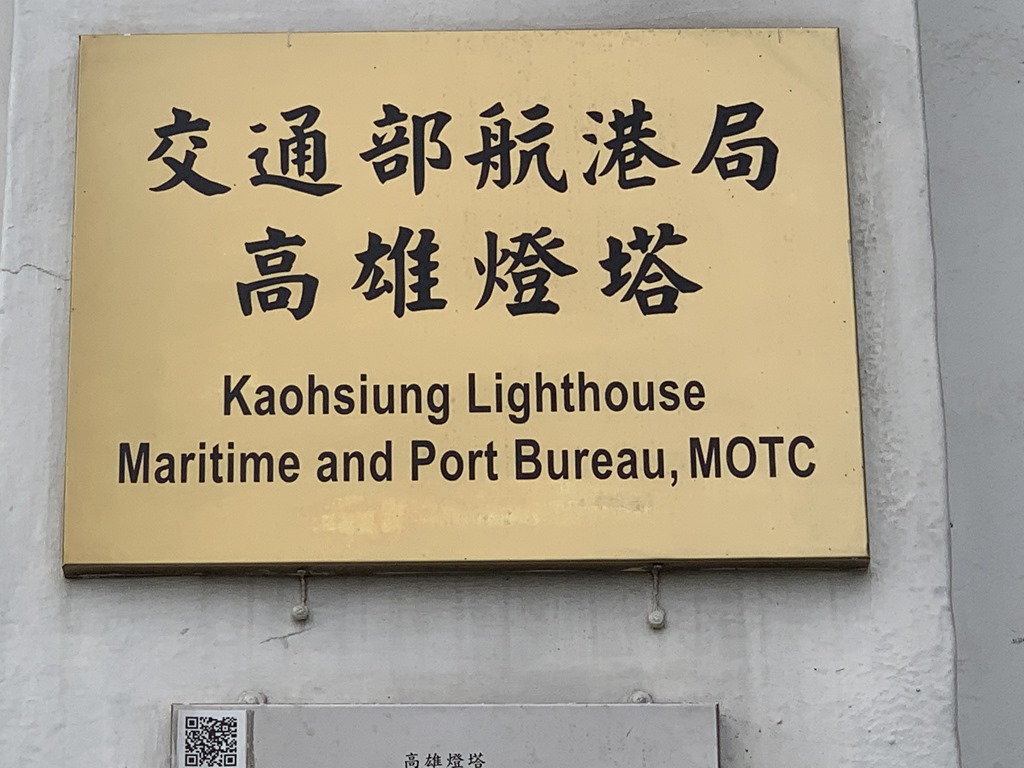
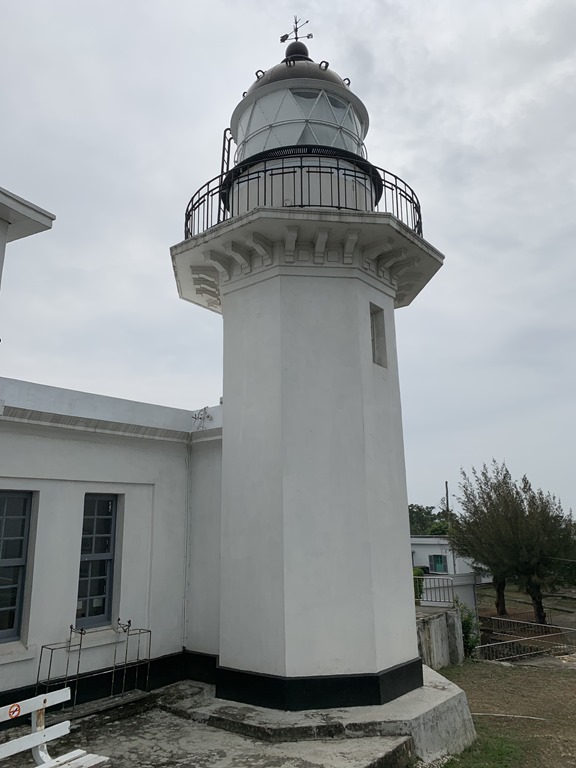
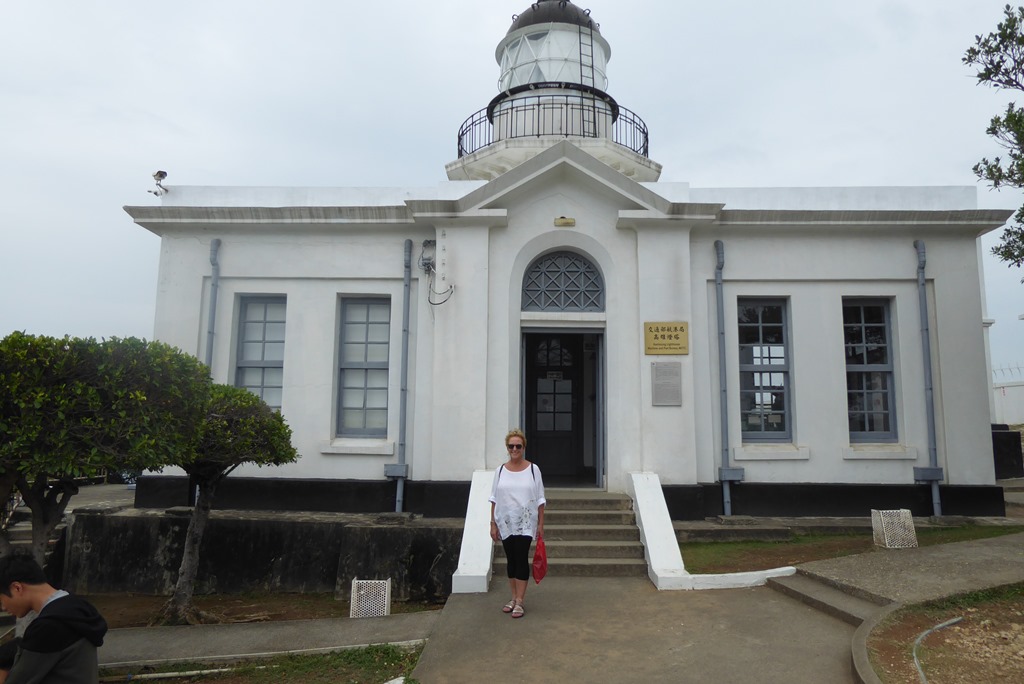
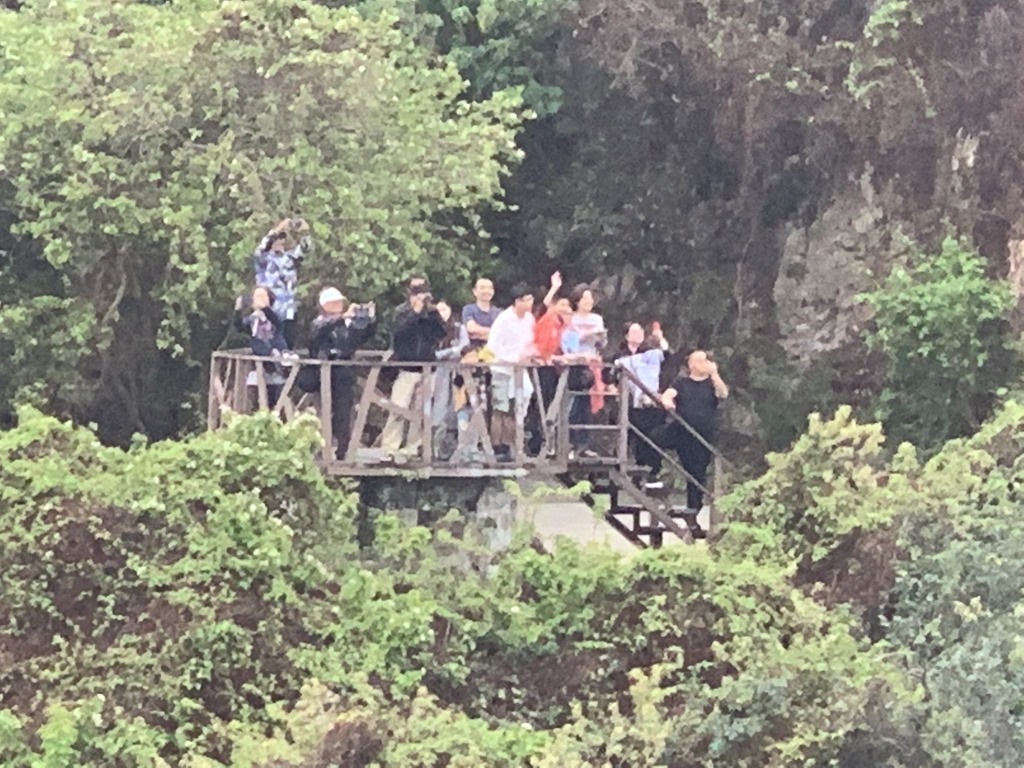
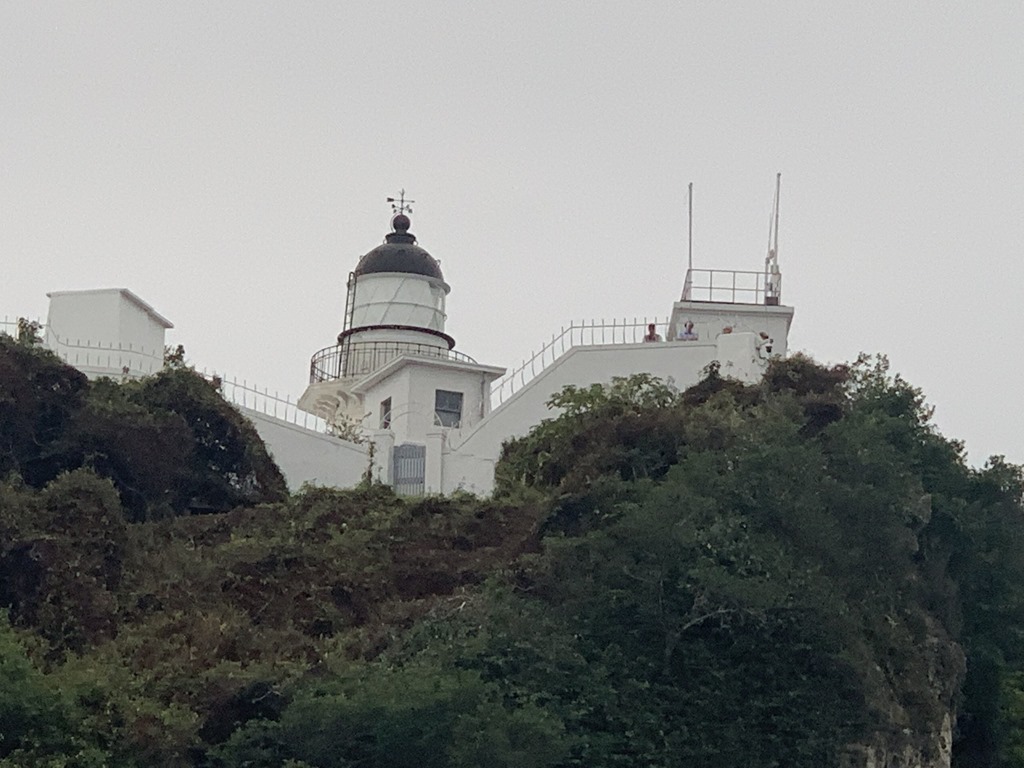
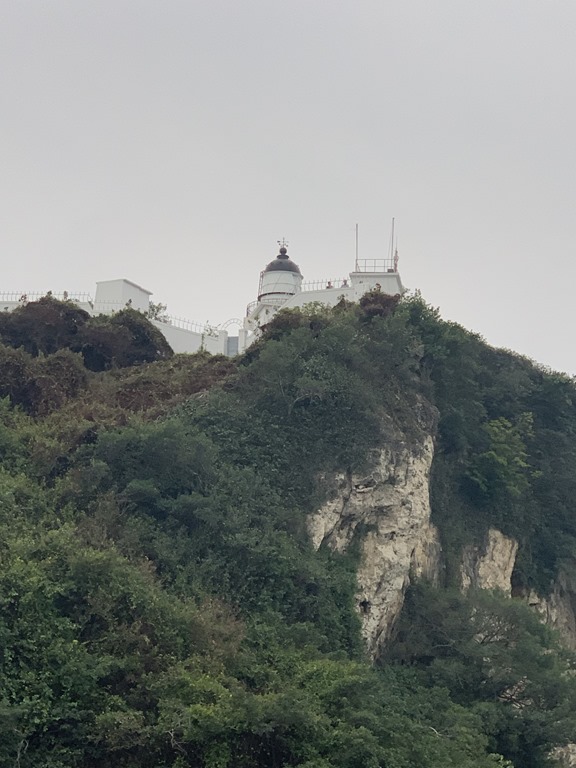
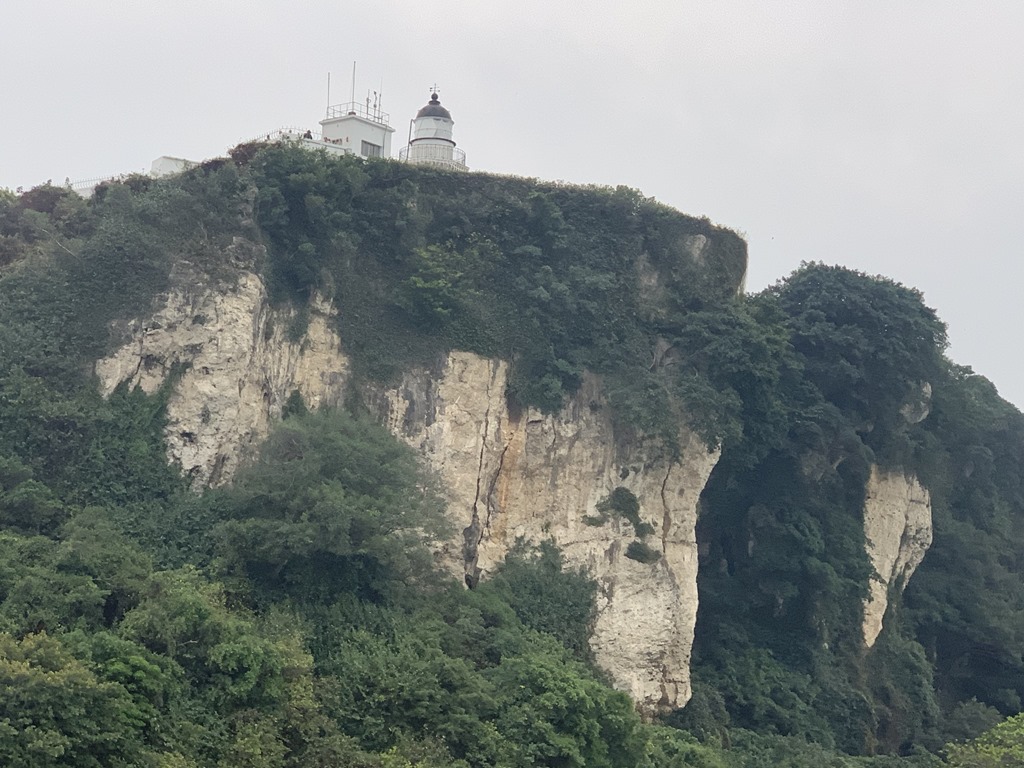
We climbed up a hill to see the Kaohsuing (Qihou) lighthouse which was built in 1918 and is still functioning. The views from here are beautiful but yes, smoggy.

IMG_3964IMG_3966IMG_3971IMG_3972IMG_3974IMG_3975IMG_3991IMG_3994IMG_3995

More sights from our walk…

IMG_3977IMG_3978IMG_3980IMG_3987IMG_3988IMG_3989IMG_3997IMG_3998IMG_4002

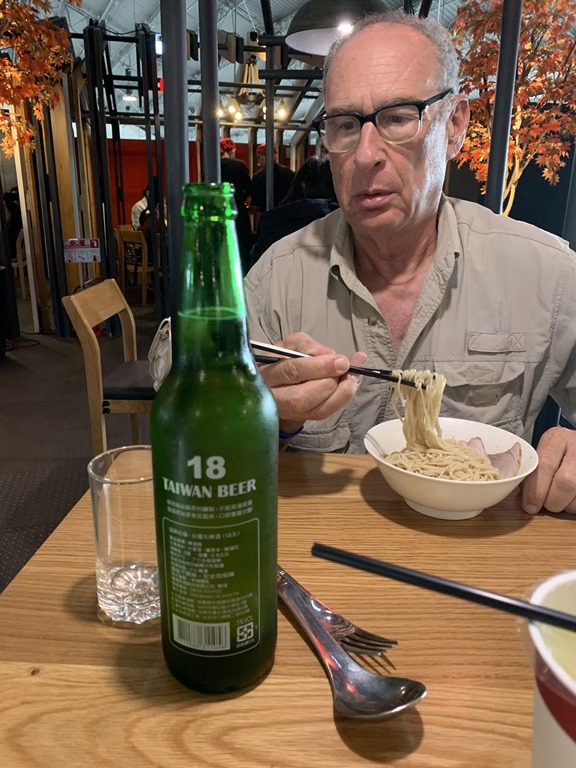
We took the ferry back and had lunch in a place with only a Chinese name so I can’t tell you what it was. But the food was great. They had plenty of Coke and very large Taiwanese beers.

IMG_4009IMG_4010IMG_4011IMG_4012

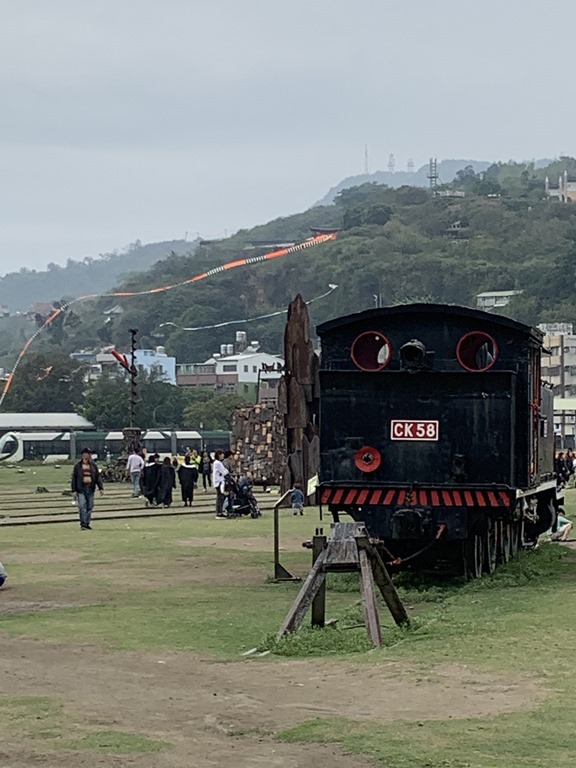
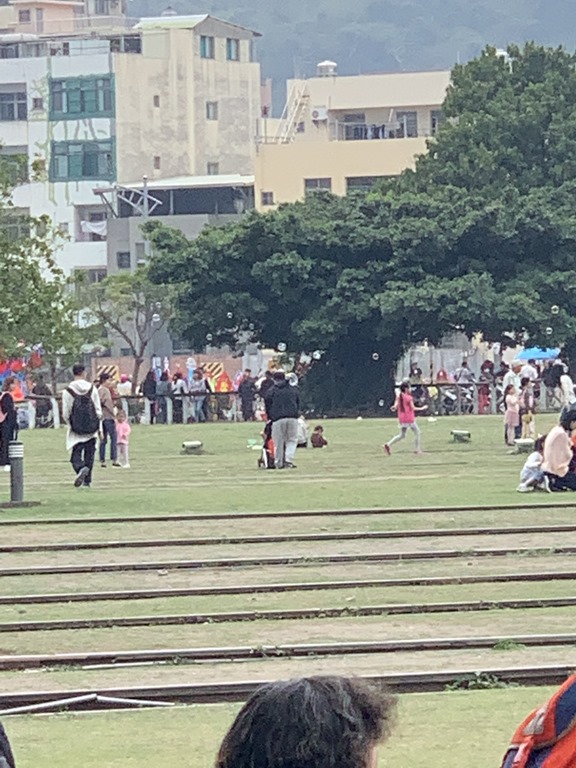
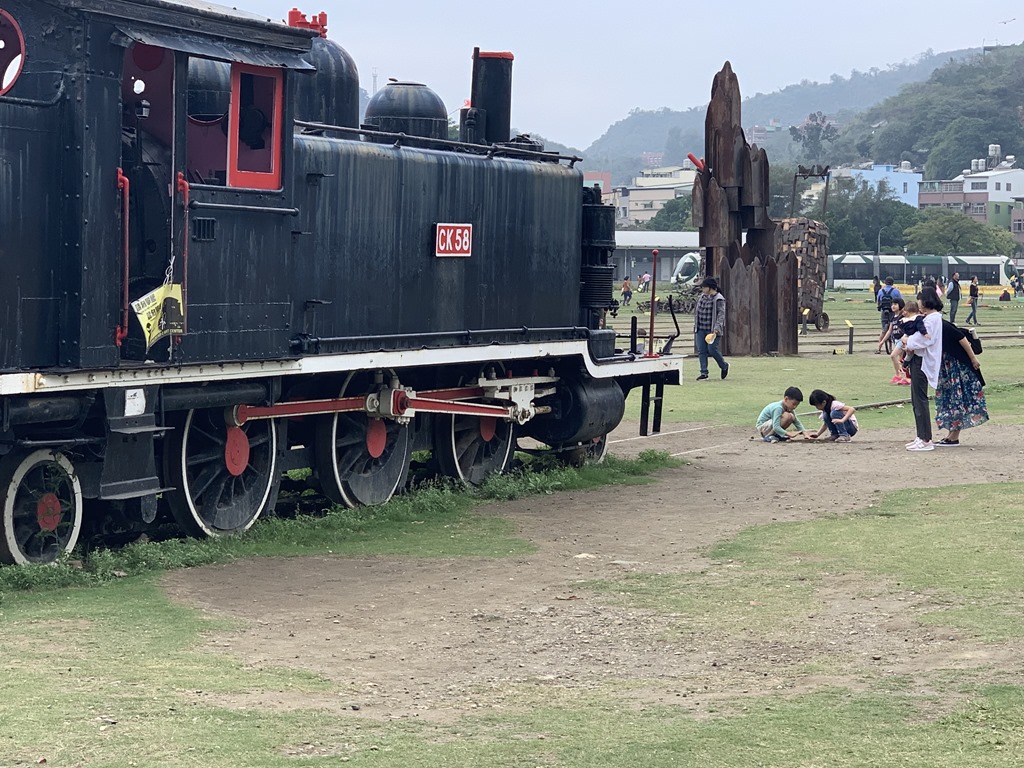
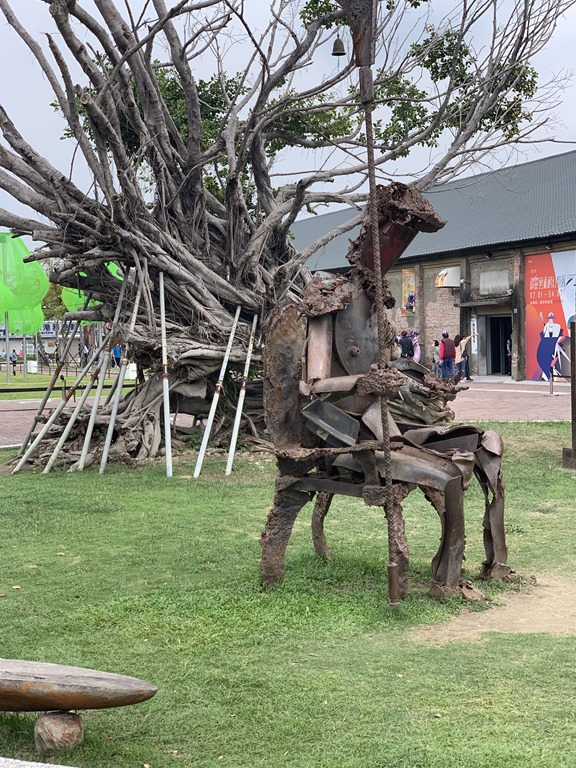
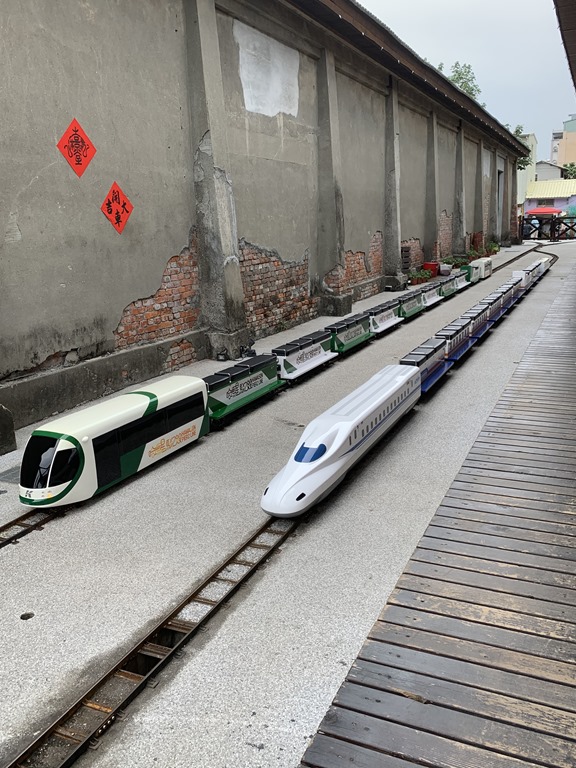
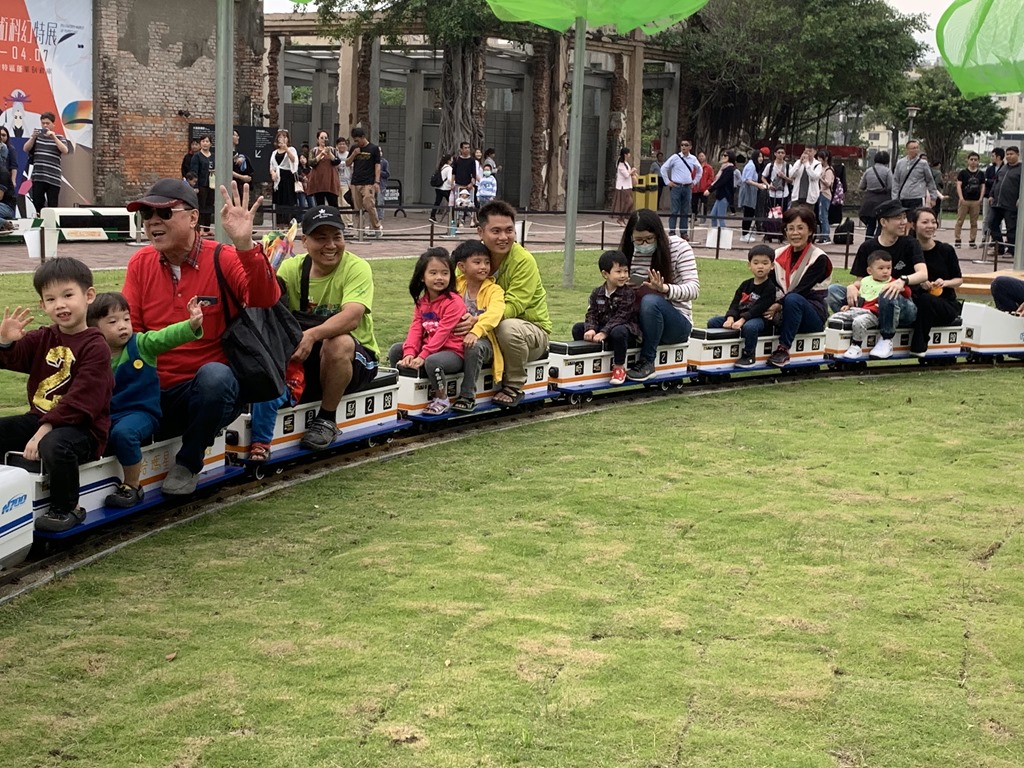
Last, we went to the Pier 2 Art Center which is not far from the ferry pier.  This is an open art space on the seaside that was once the second connecting pier of the harbor and was then wasted space.  Now it houses a puppet museum, the Takao Railway Museum and a vintage train remade in a ratio of 1.84 that runs on a five inch wide track.

Lots of families and their children were here, and in an adjoining park.  There were lots of kites and bubbles.

IMG_4013IMG_4014IMG_4016IMG_4018IMG_4019IMG_4024IMG_4025IMG_4026IMG_4027IMG_4033IMG_4039IMG_4043

A great day.  Here is our sail away with a nice view of the lighthouse up on the cliff.  Yes, it was a steep walk up there.

IMG_4049IMG_4051IMG_4052IMG_4053IMG_4055IMG_4056


Posted in Asia, Food, March, World Cruise 3 | 1 Comment

Manila, Philippines

March 22, 2019

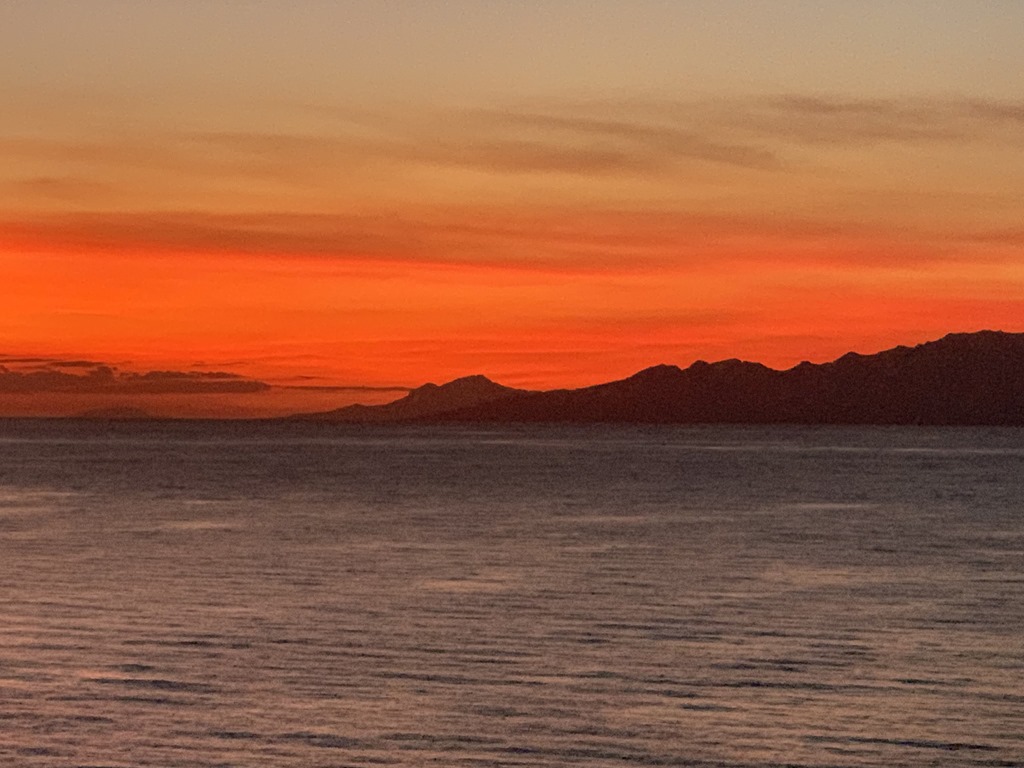
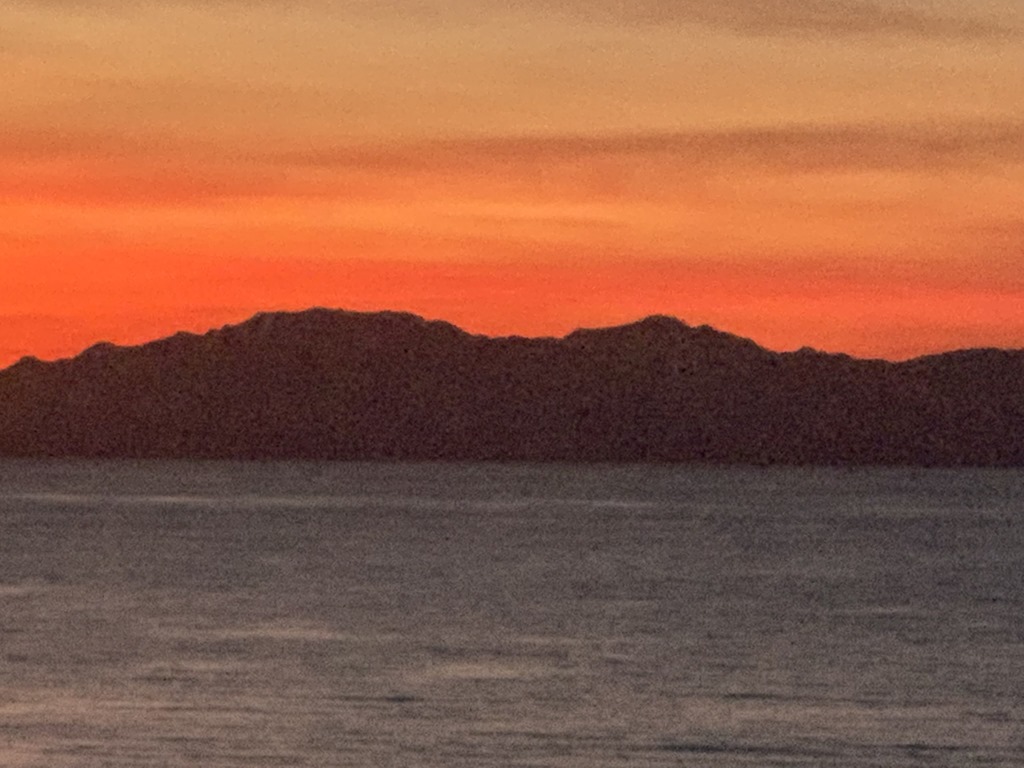
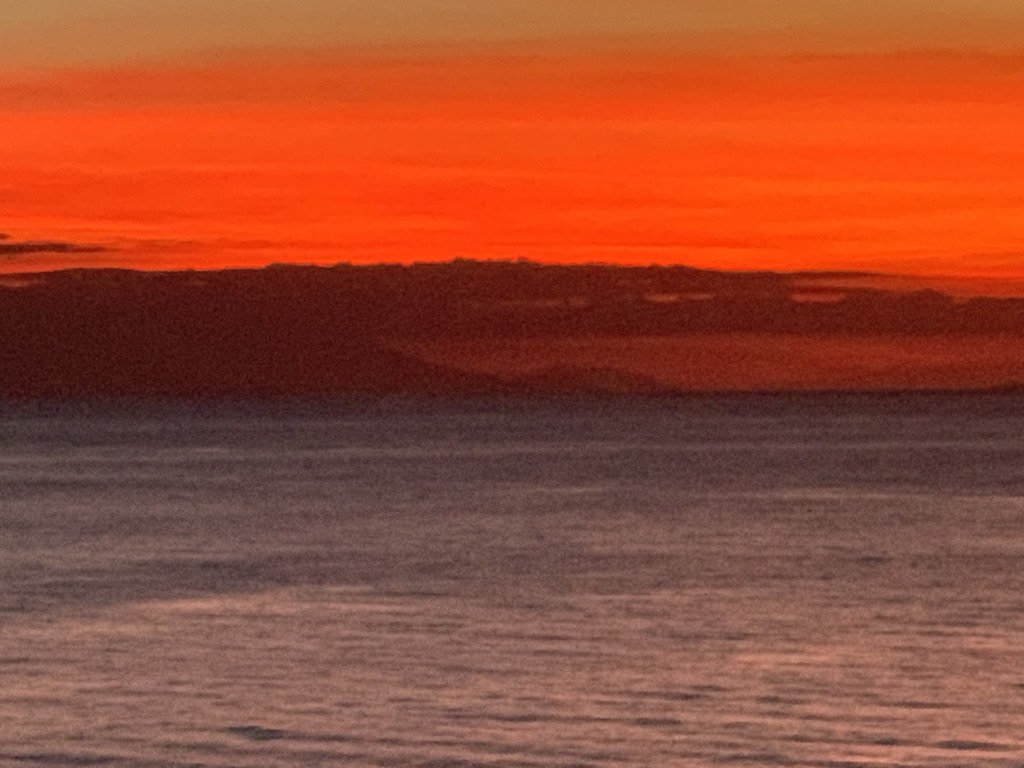
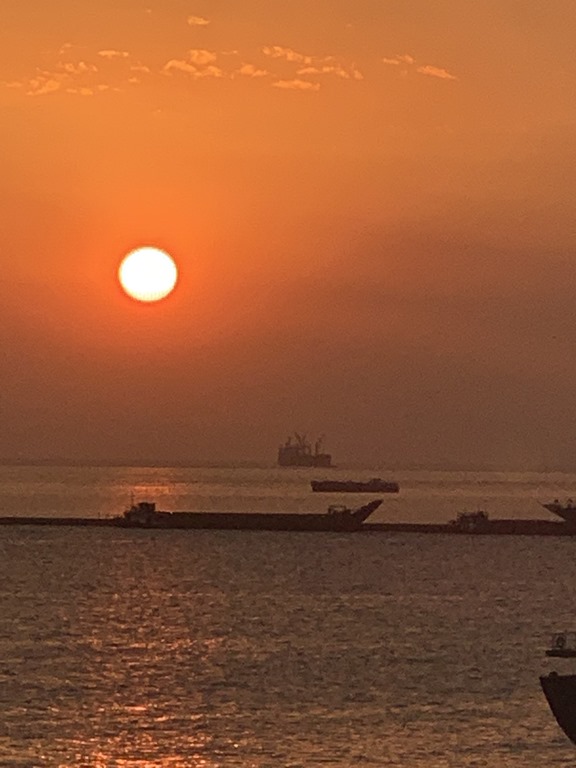
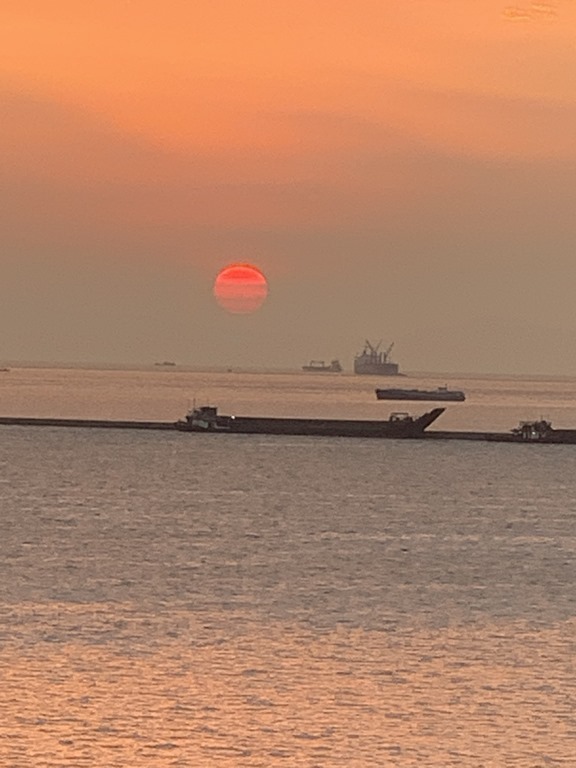
We were disappointed to miss Boracay Island, and we did hear that it is not uncommon to miss it due to unpredictable winds and seas. Even if it is not terrible when we arrive, in a tender port, it is equally important to be able to get people out of the port in the tenders safely.  So we enjoyed our sea day on Thursday.  We had dinner in Polo.  Before dinner, there was the most beautiful sky after sunset.  These shots are from our balcony.

IMG_3671IMG_3672IMG_3673

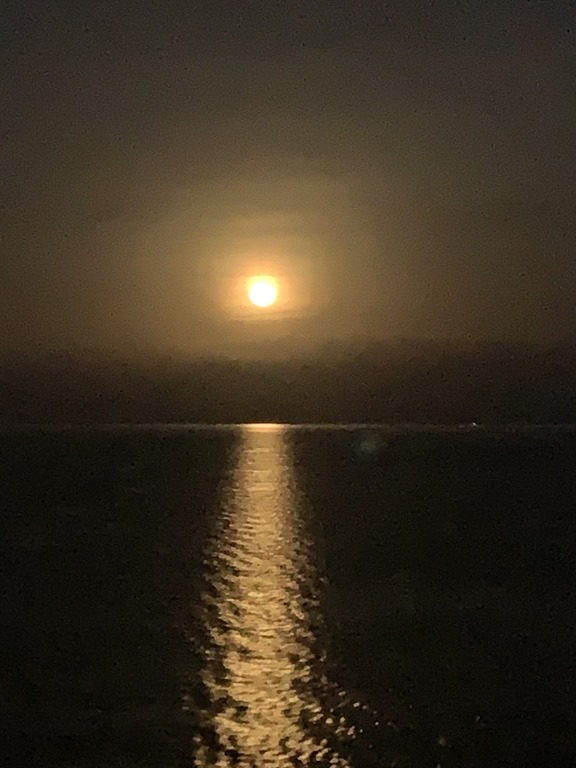
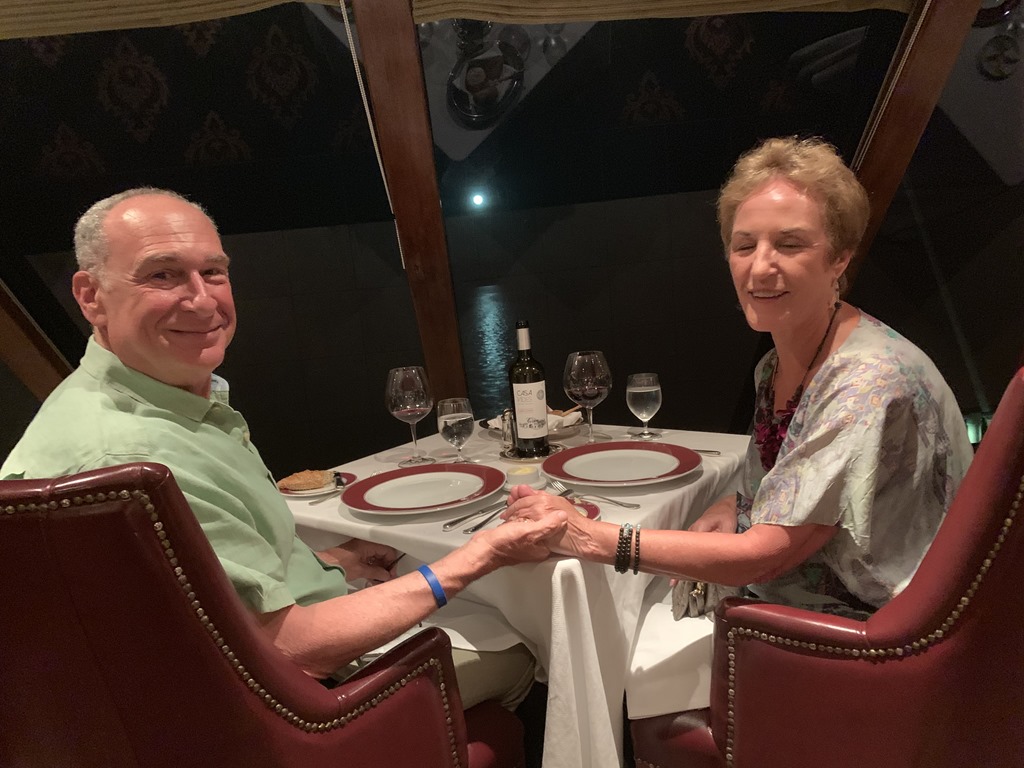
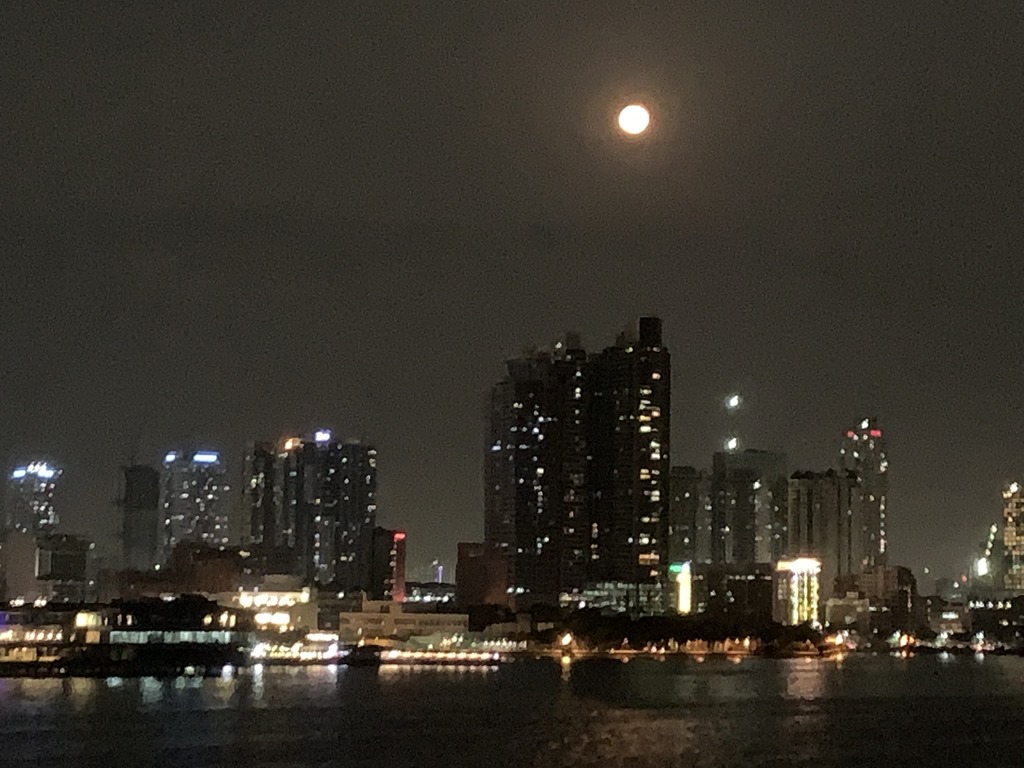
Then, at dinner, we had a table at the very back of the restaurant where the moon was in a perfect position.  Unfortunately I had my eyes closed when our friend took this picture and he took only one.  Oh well..I didn’t see it till after dinner.

IMG_3676IMG_3677

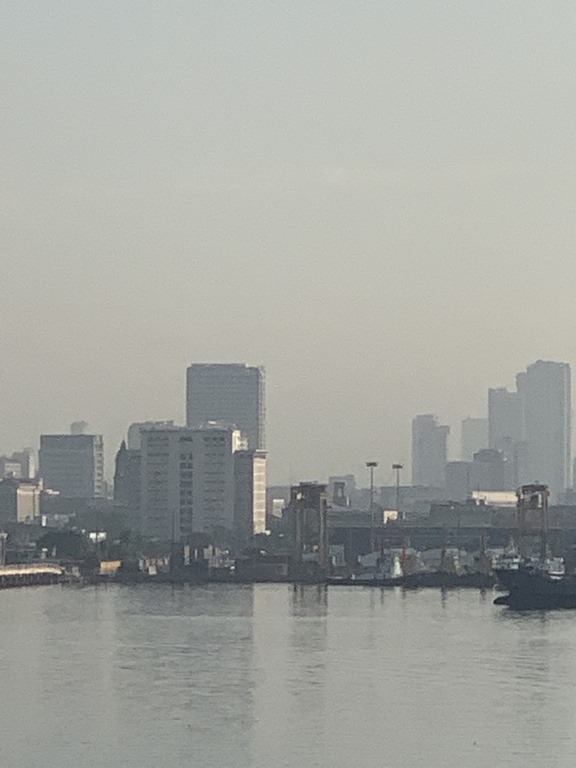
On Friday, we went to Manila.  The port is a busy shipping port, so not much to see as we came in. This was our third visit to Manila so this time we went outside the city having toured it and Corregidor in the past.

IMG_3678

Our tour today was to Tagaytay Ridge which was a 2 1/2 hour bus ride south of Manila.  But first we had to get out of Manila in the Friday traffic.  We did have a police escort for the 3 buses, but honestly it didn’t seem to help too much, the traffic in the city was very bad.  Our guide was Melanie, and she was VERY good.  She told us that to try to cut down on traffic they use a number coding system (we remember this from China), where on Monday, no cars with license plates that end in 1 or 2 are allowed on the roads, 3 and 4 on Tuesday, 5 and 6 on Wednesday, 7 and 8 on Thursday and 9 and 0 on Friday.  That didn’t seem to help much either!

IMG_3764

Melanie told us that there are 7641 islands in the Philippines.  Now that we have been to two, we have 7639 reasons to come back!

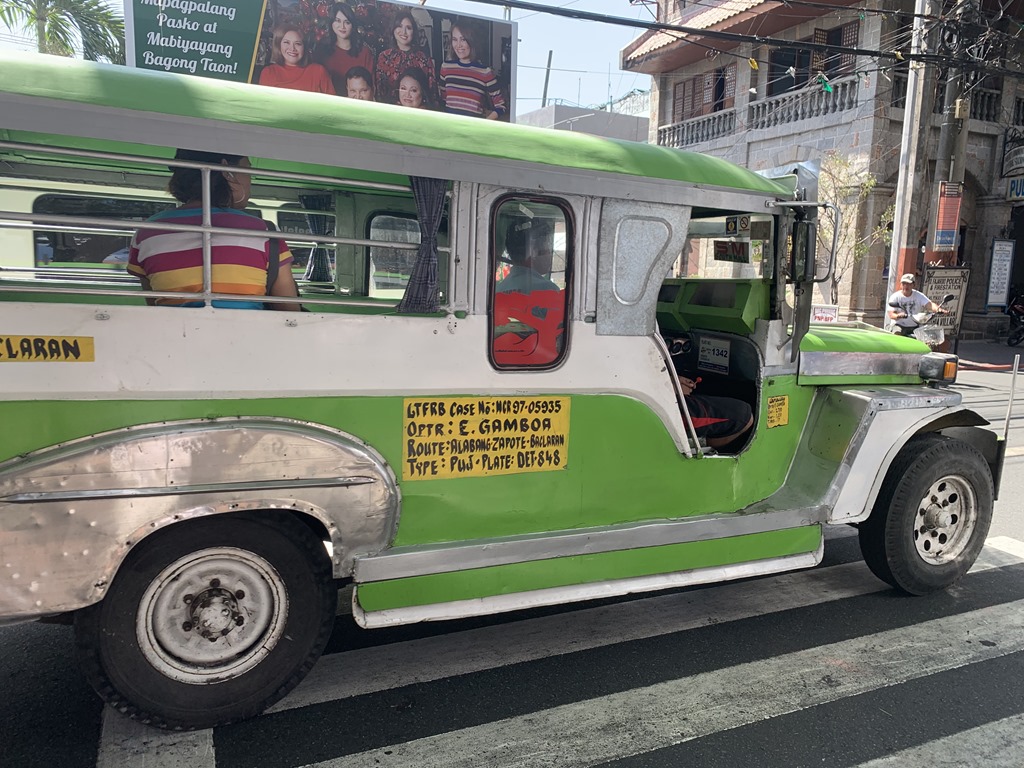
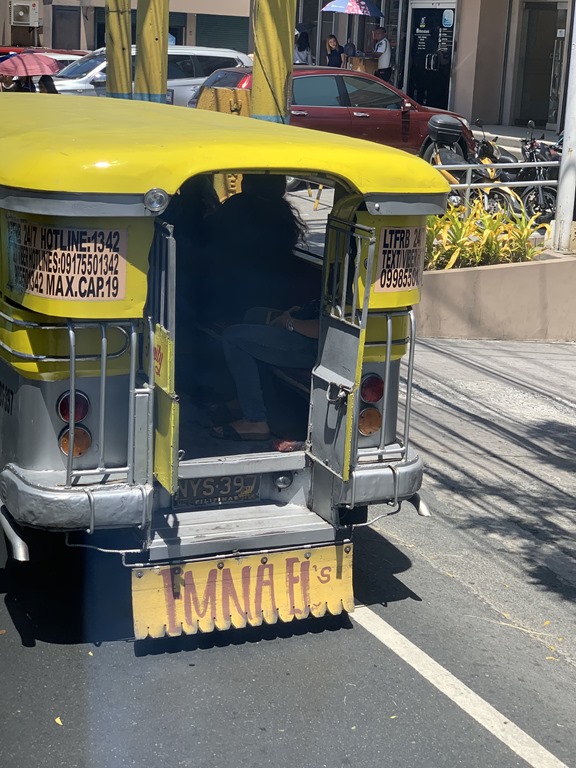
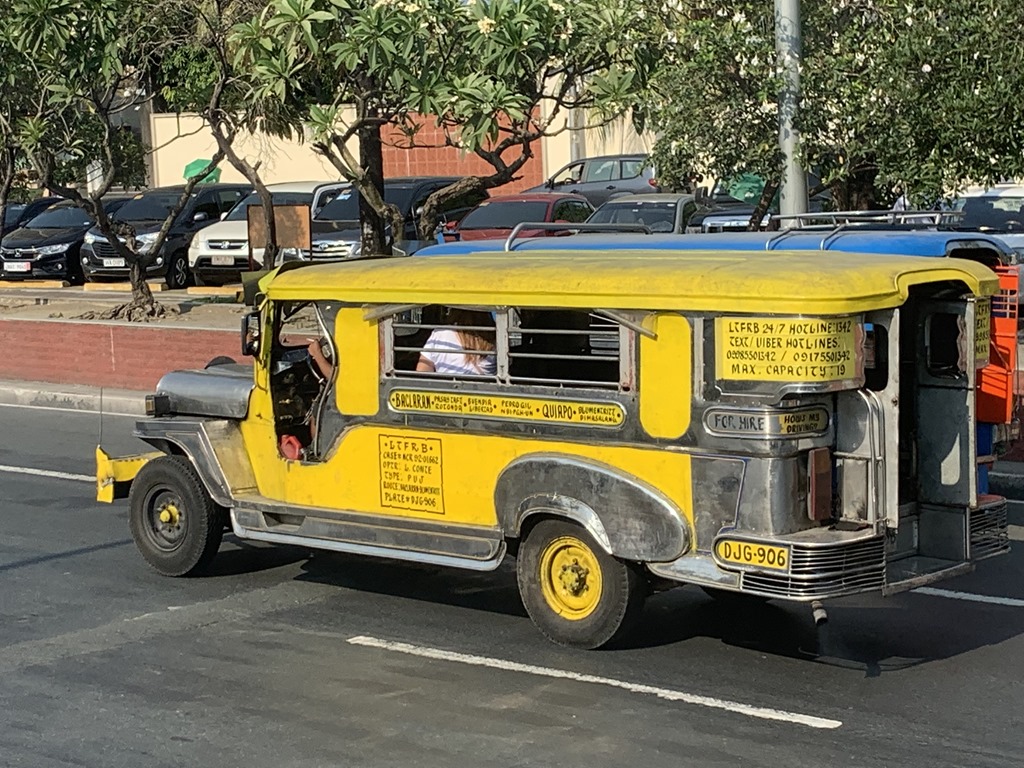
One common method of transportation is the jeepney.  These are small buses that originally made from US jeeps that were left over from WWII.  The word jeepney could be from combining jeep with jitney, but Melanie said that the explanation that most people believe is the combination of jeep and knee because the vehicles are so tightly cramped. They are very colorful but often not well maintained or safe.  They are also a source of traffic congestion because passengers get in and out from a rear door, and seem to do it almost anywhere, even in heavy traffic. The government is trying to do away with the old jeepneys and introduce new generation ones with air conditioning, padded seats and more room, but the owners of these older ones do not want to give up their livelihood and also do not have the money to purchase the new ones so the effort is not taking off. New ones cost 1.8 million Philippine pesos ($34,190 US).

IMG_3729IMG_3733IMG_3742IMG_3830IMG_3832IMG_3834IMG_3860

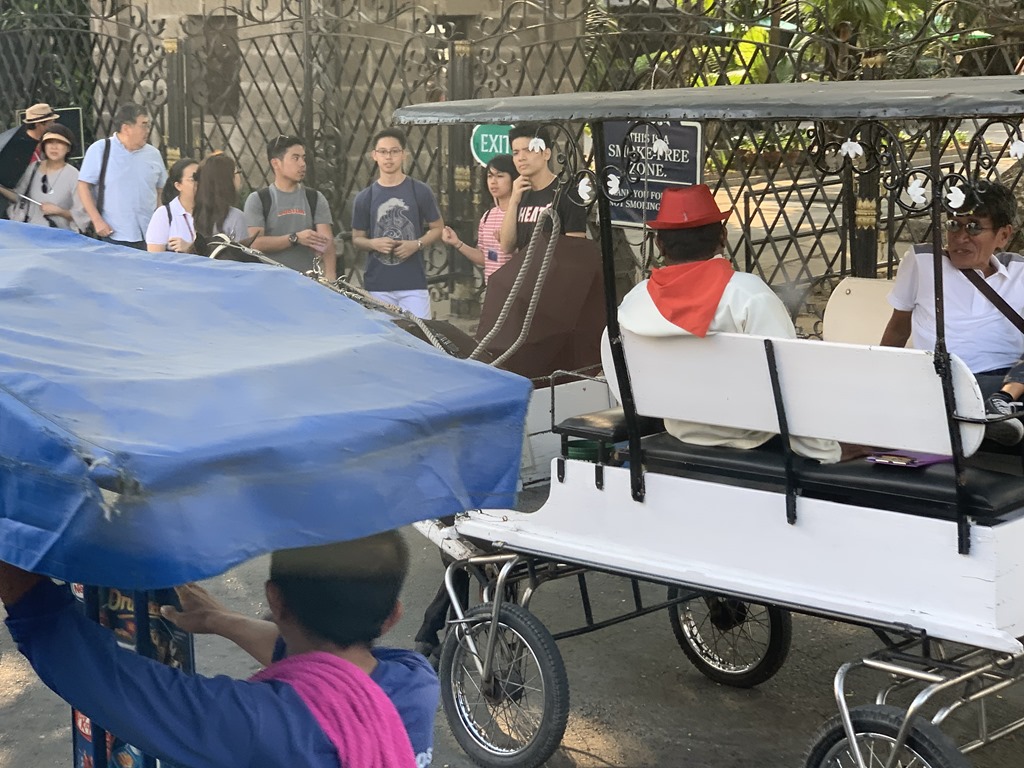
They also have the motorbikes, tuk-tuks, pedicabs and horse drawn carriages – those are mostly near the Rizal park.

IMG_3726IMG_3727IMG_3731IMG_3810IMG_3873

On the trip to Tagaytay, Melanie told us a lot about the history and customs of the Philippines.  We learned that there are 1800 employees at the US Embassy which we passed on our trip. This is our largest embassy.The Philippines has 105 million people and 12 million live in Manila. 

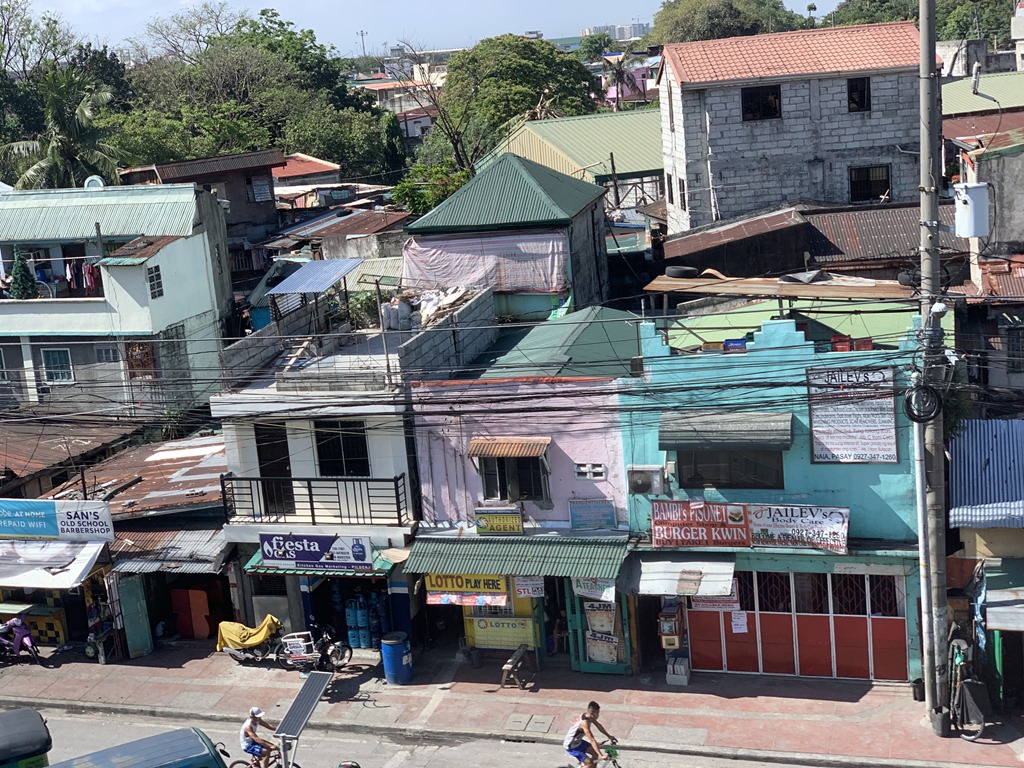
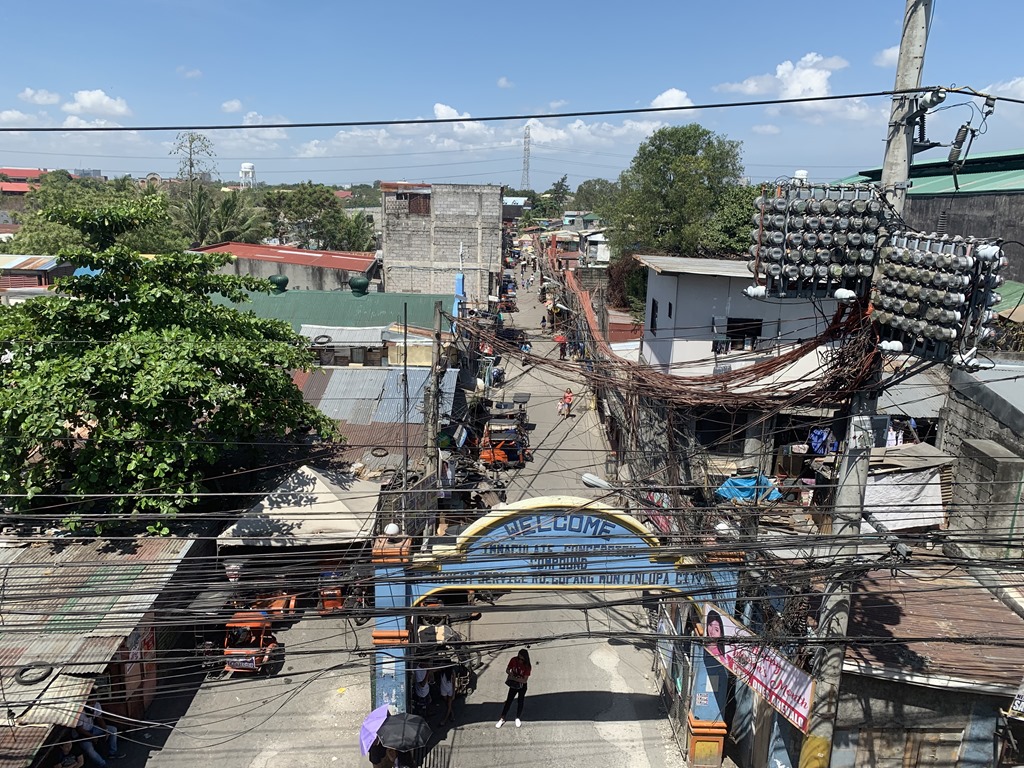
There are some beautiful homes and enormous casinos but a lot of the city is slum like.  We heard that the government tries to relocate people but they keep coming back, even the homeless population does not go down. There is also a problem of squatters who get chased out but always return.  Now they want to be called “informal settlers”!

IMG_3682IMG_3736IMG_3821IMG_3827

This is a real challenge in the country where the average wage is $150 US a week.  Melanie said that many workers make 595 pesos/day which is about $11.30 US.  She works as a cook in addition to being a travel guide to make ends meet.

One of the casinos we passed was the City of Dreams with a casino and 3 hotels.  There is something called DreamPlay for children which allows the adults to drop their children off there while they gamble or do other hotel activities.

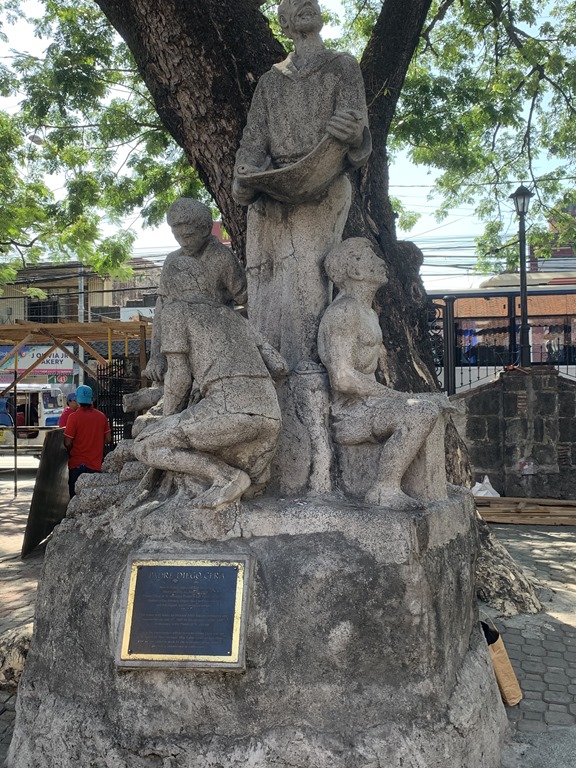
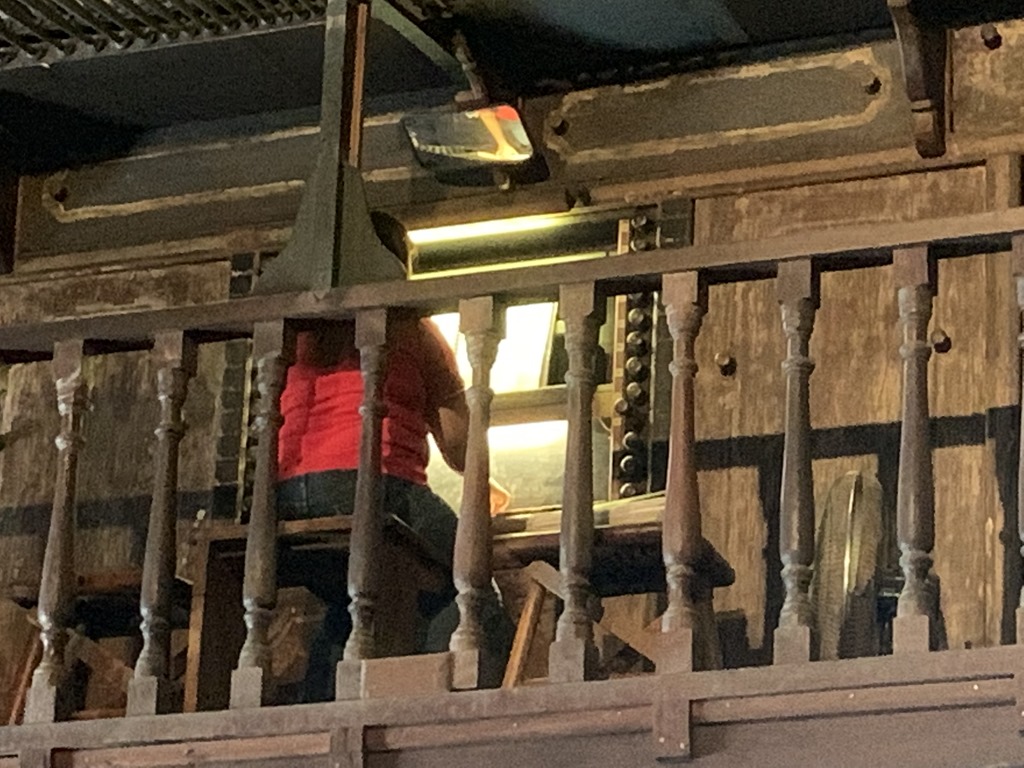
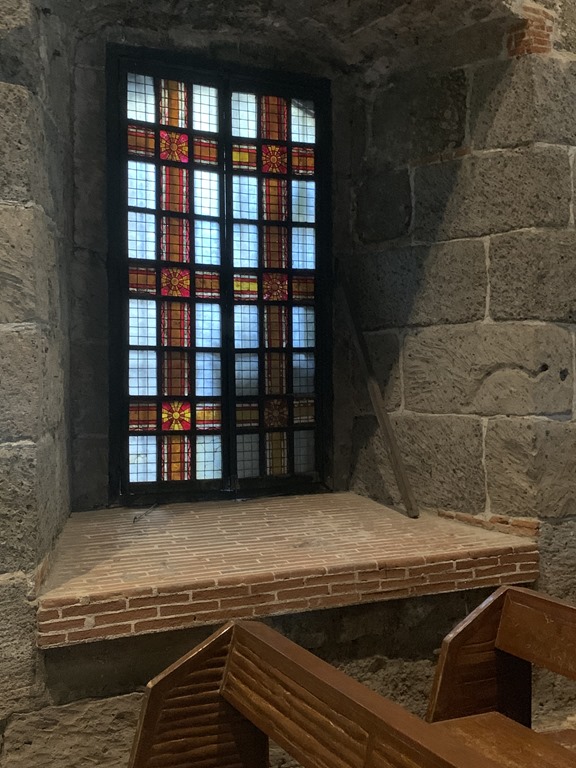
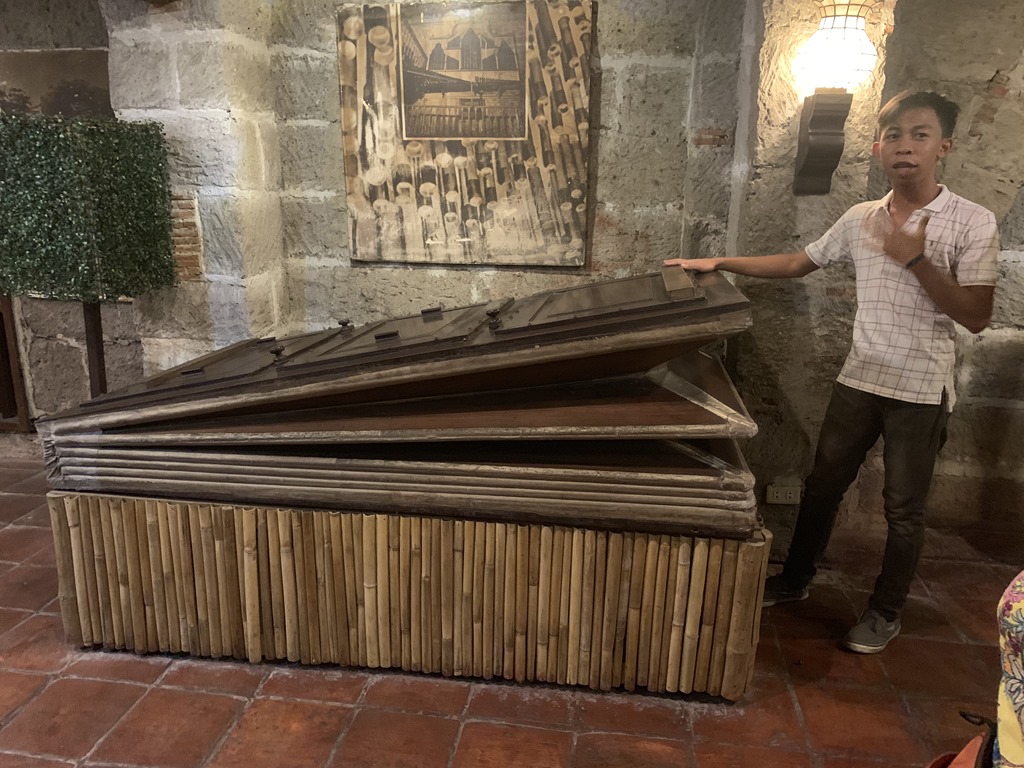
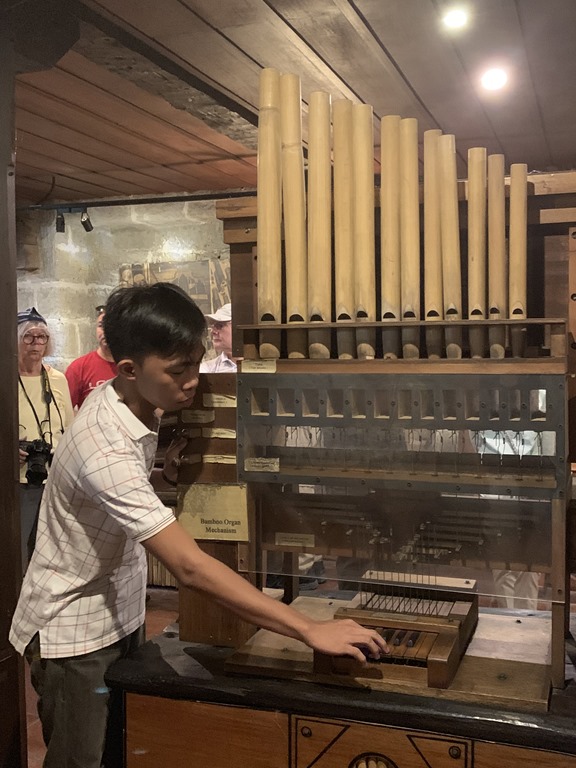
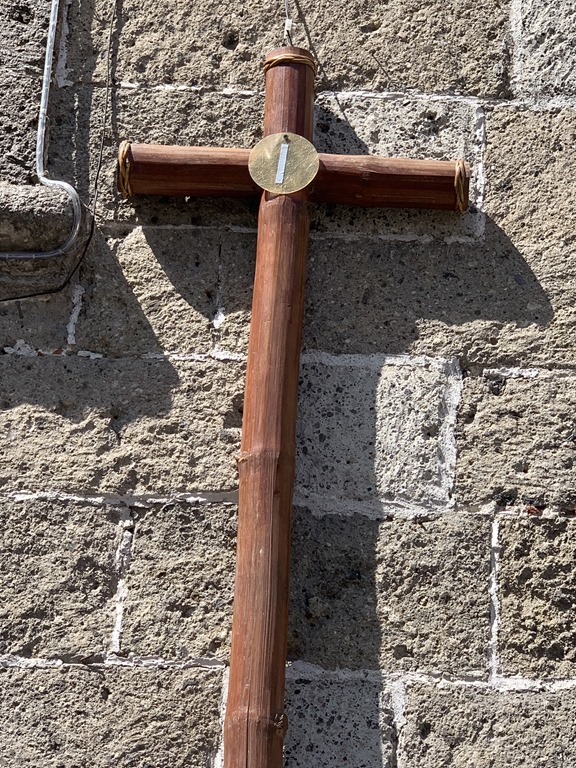
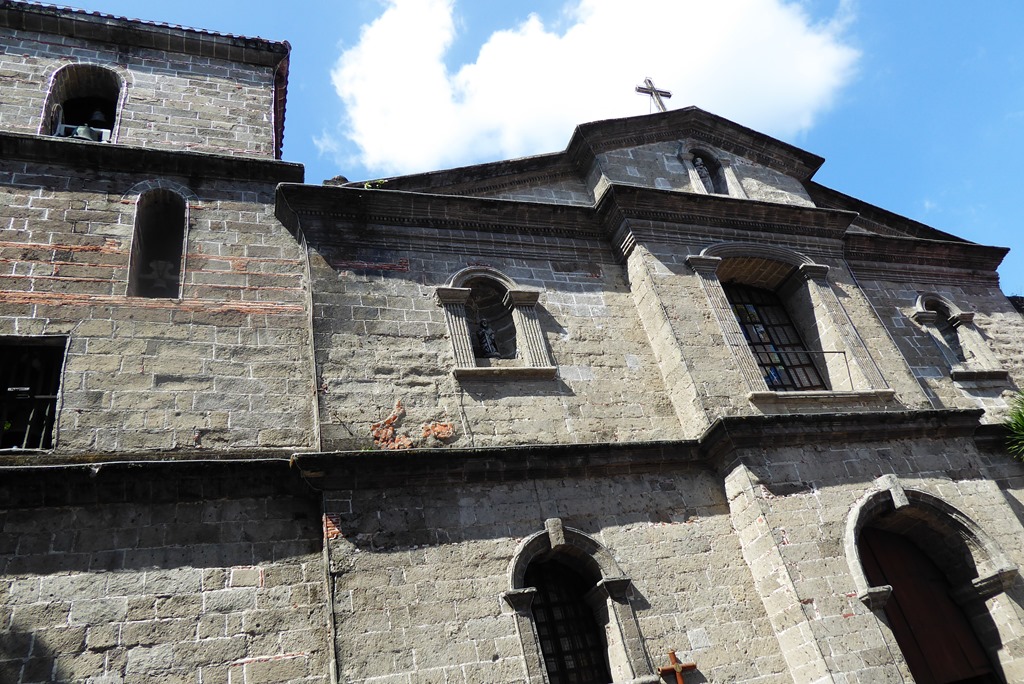
Our first stop was at La Pinas, St. Joseph Parish Church which houses the world’s only bamboo organ which was built in 1824 and has become a national cultural treasure. It took Fr. Diego Cera 8 years to finish the organ. We visited the church with its very thick stone walls and even had the pleasure to hear the organist play several songs.  Then we went to the adjoining museum where we saw and heard about the construction of the organ.  Very interesting. The stations of the cross are all around the outside of the church and are bamboo crosses.

IMG_3704 IMG_3693IMG_3694IMG_3697IMG_3701IMG_3702IMG_3703IMG_3705IMG_3709IMG_3712IMG_3717IMG_3719IMG_3812IMG_3813

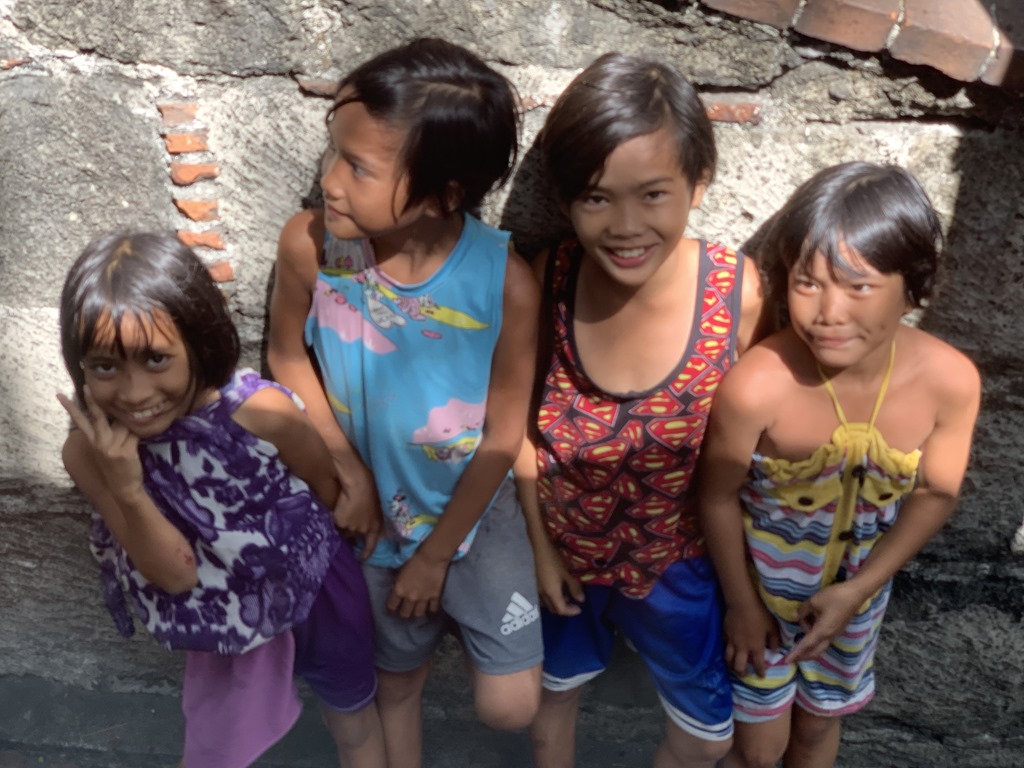
There is a school next door and we saw these girls outside.

IMG_3734

Another interesting thing Melanie told us is that most young people live together for even up to 5 or 10 years before getting married because there is no divorce in the Philippines.  You can get an annulment but it is very expensive and can also take many years to obtain.

We heard about past political leaders and that Imelda Marcos still is a congresswoman in a Philippine district at age 89.  Her 3300 pairs of shoes were confiscated and 800 of them are in a shoe museum.  The ones with the diamonds in them are in the central bank!

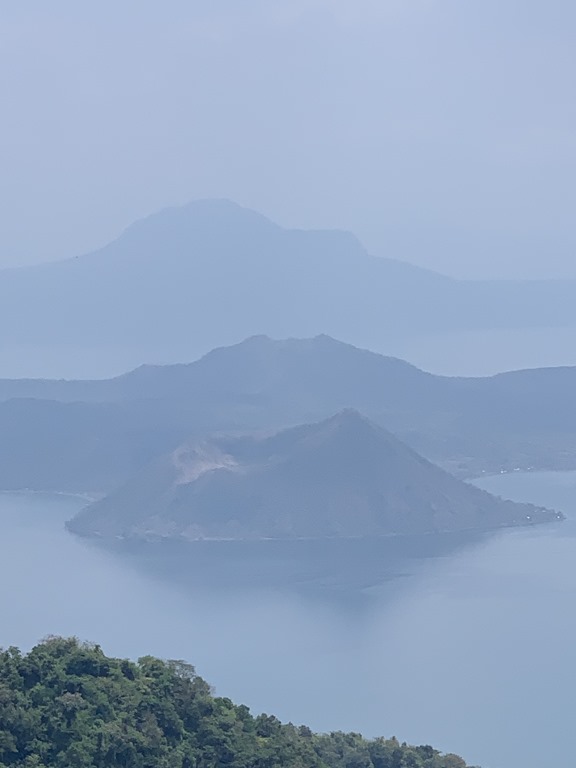
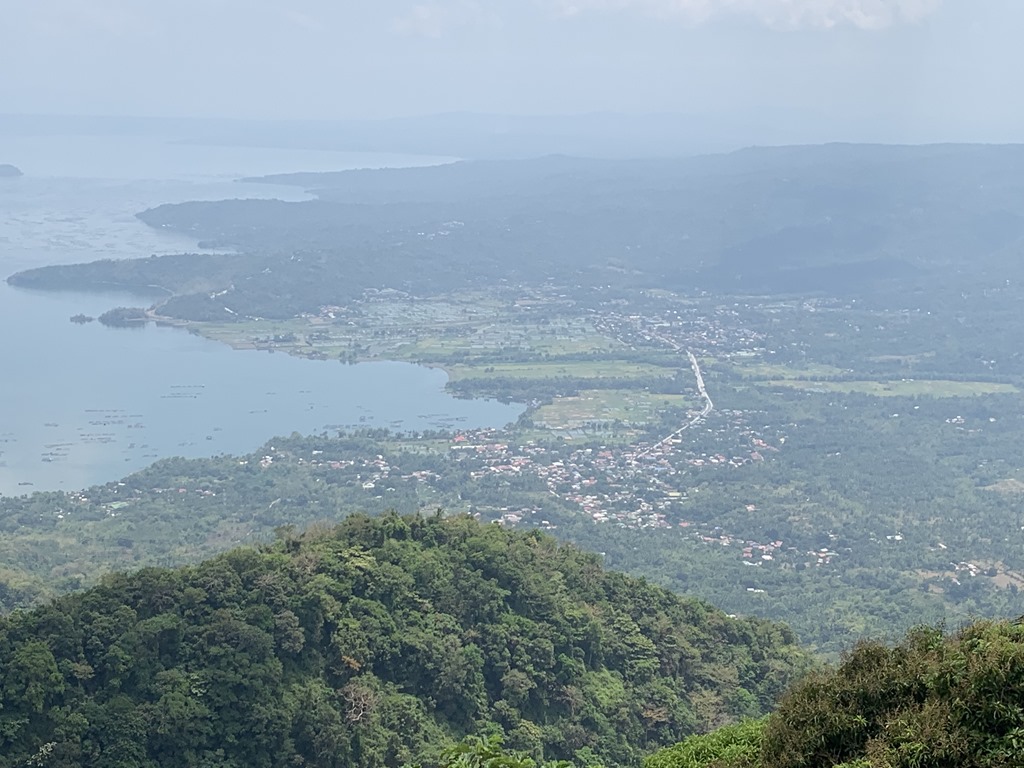
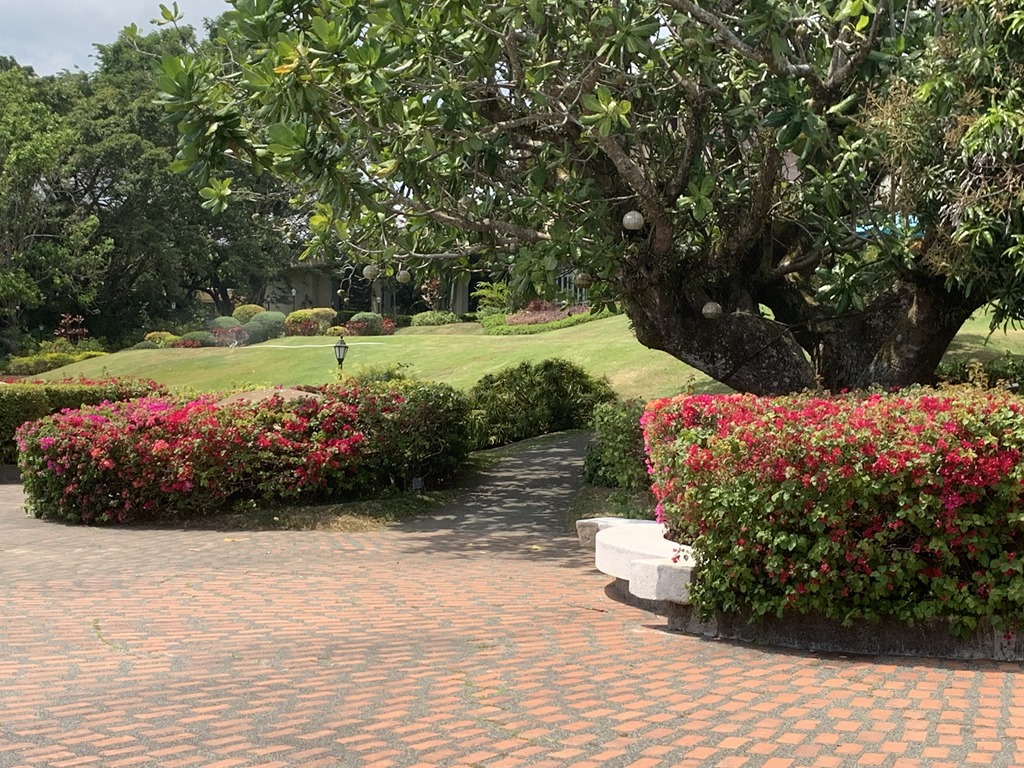
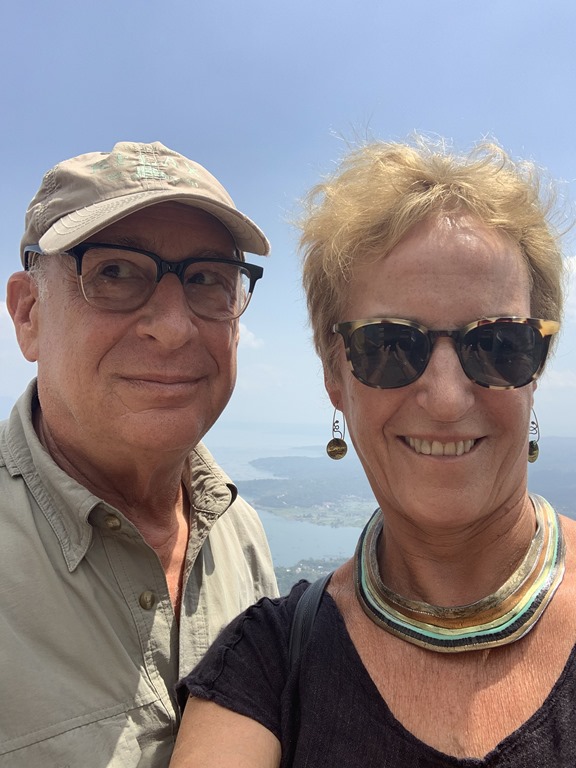
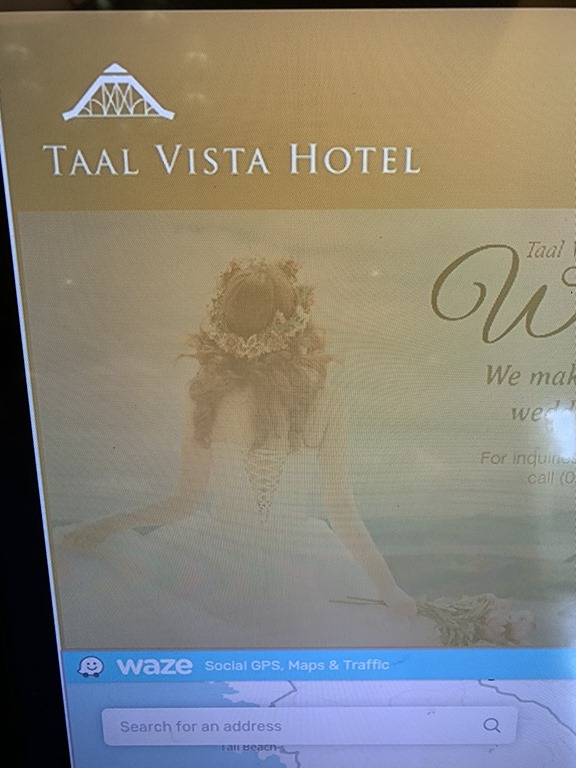
Our destination in Tagaytay was the Taal Vista Hotel which overlooks the volcano district and smallest active volcano in the world. It is 2000 feet above sea level and we thought it would be much cooler, but it still felt pretty warm. The views of the volcanoes, the mountains and lakes were beautiful but the air was very smoggy and it would have been nicer if it was clear.  Many people come here from Manila in the summer – it is actually called the summer capital of the south.

IMG_3767IMG_3769IMG_3775IMG_3776IMG_3783IMG_3803

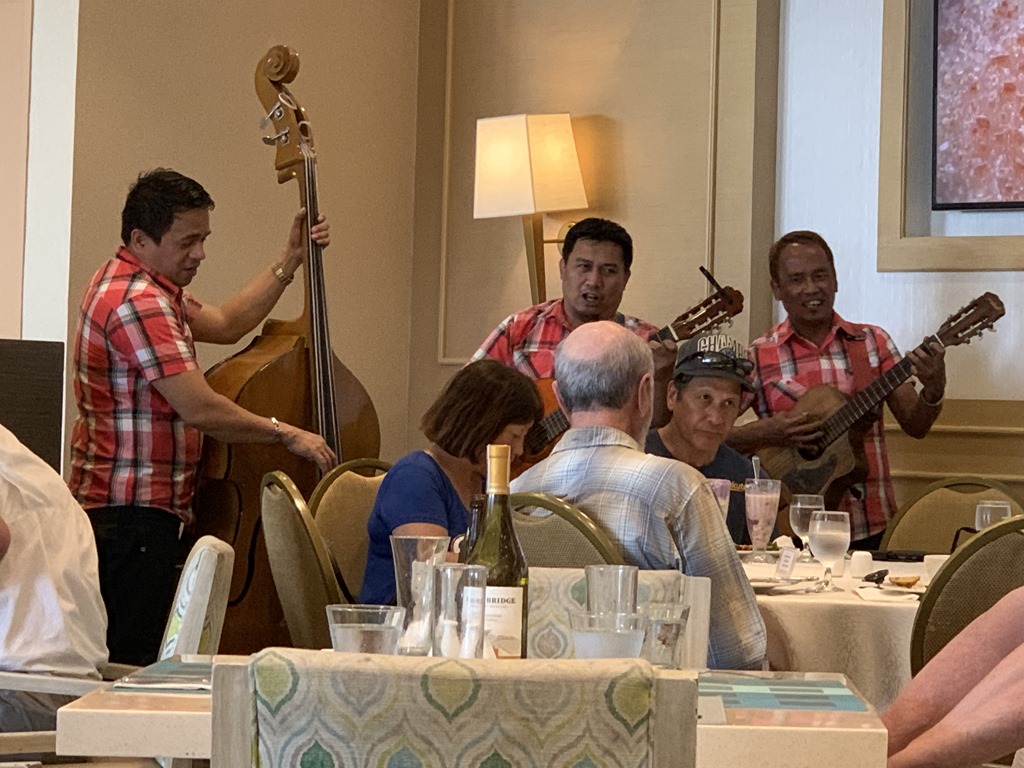
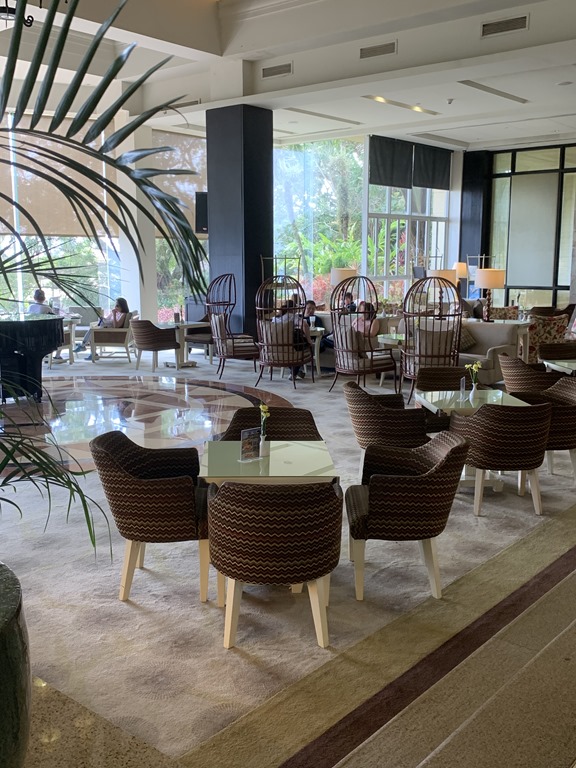
We had a wonderful buffet lunch in the hotel restaurant and had time to relax in the beautiful surroundings. We even had musicians to entertain us during lunch.

IMG_3780IMG_3781IMG_3782IMG_3793IMG_3794IMG_3796IMG_3798IMG_3799

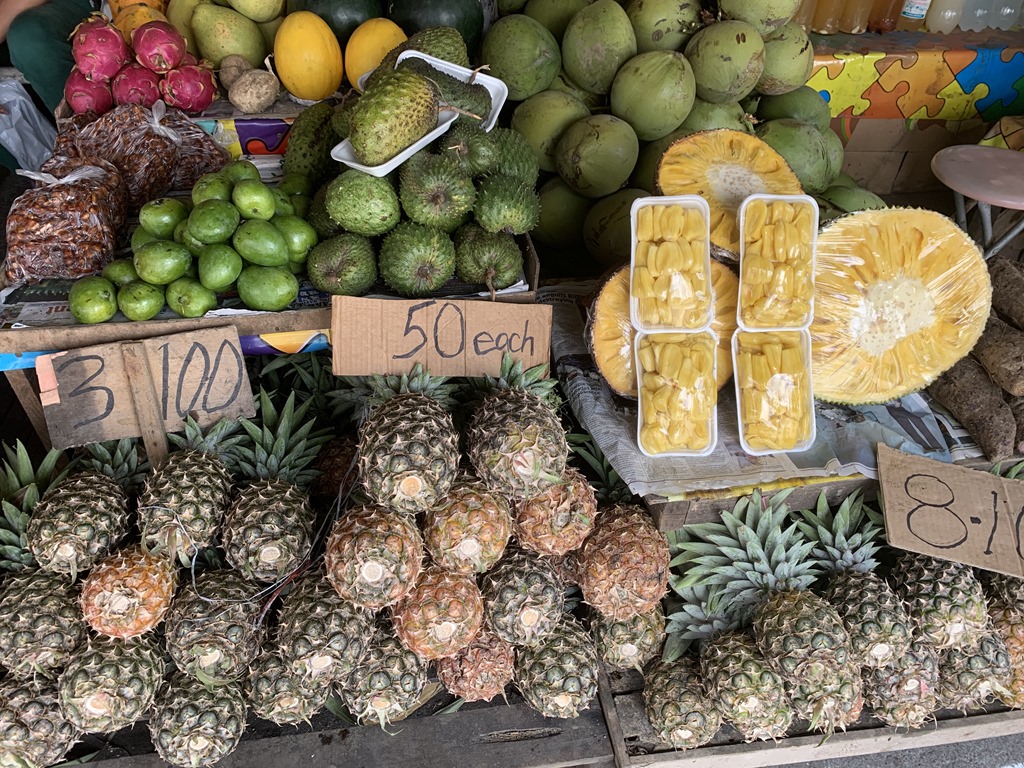
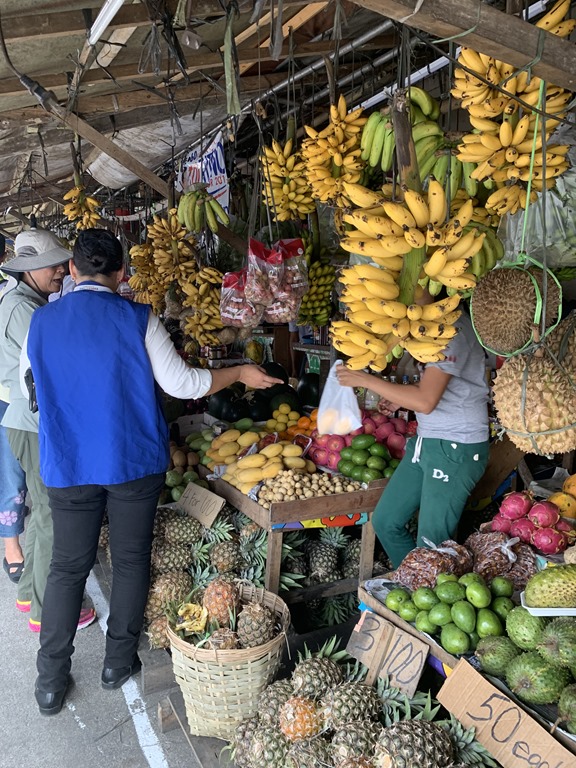
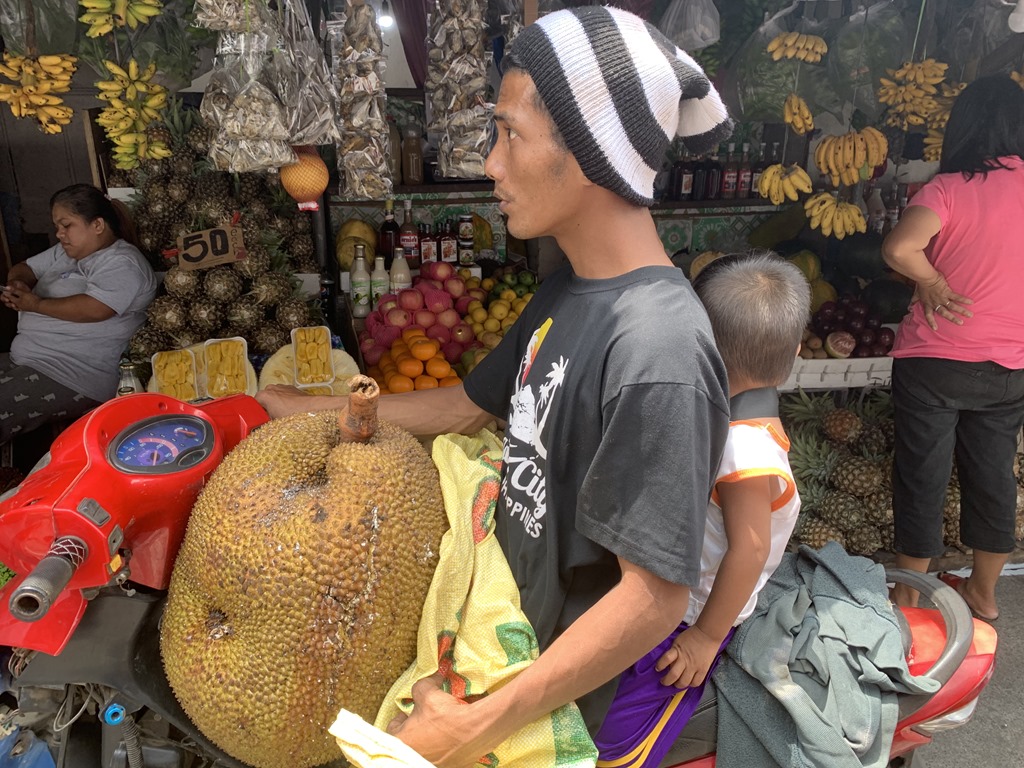
We also stopped at a wonderful fruit and flower market where we saw huge jackfruit (look at the one the man has on the motorbike), durian, bananas, mangoes, etc., as well as lots of sardines – Melanie said the lake here is the only source of fresh water sardines in the world. Melanie bought a bunch of small “monkey” bananas and gave us each two. Very sweet and delicious.

 IMG_3744IMG_3746IMG_3747IMG_3753IMG_3756IMG_3758IMG_3760

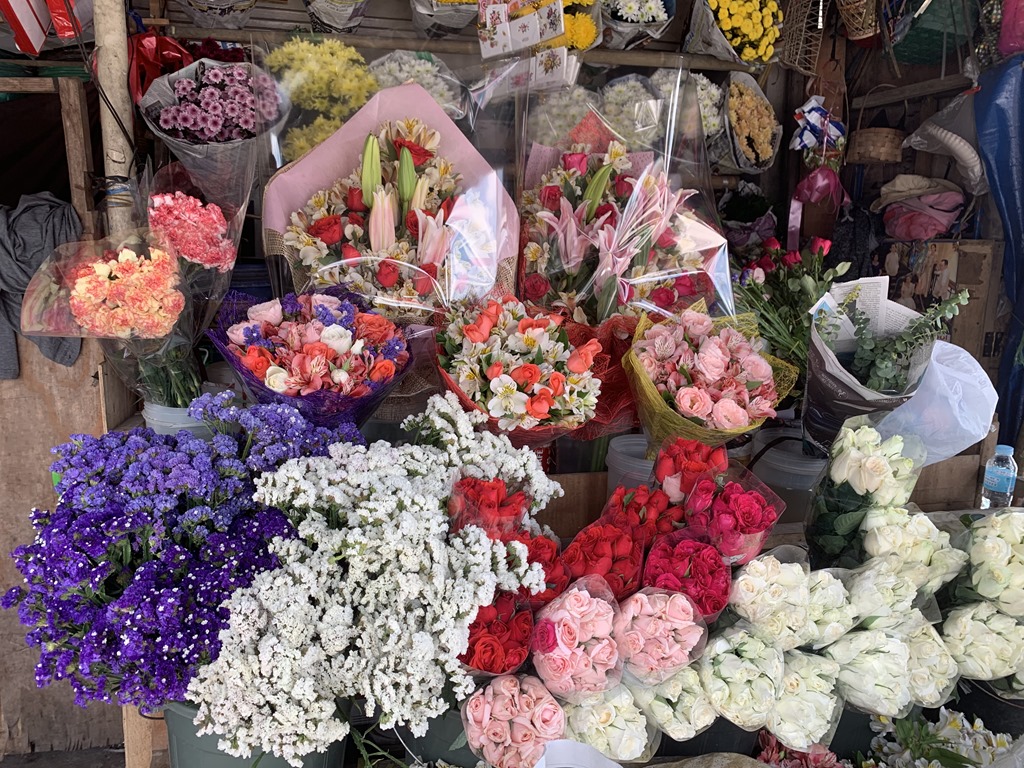
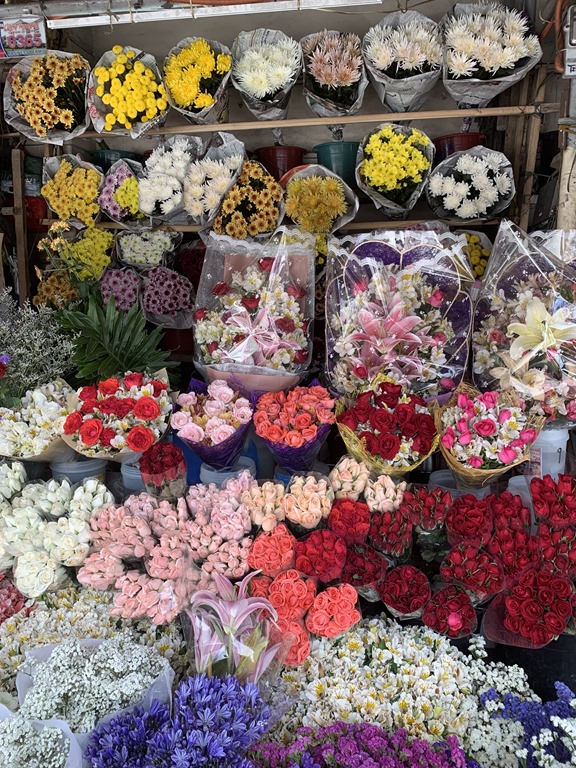
And I bought flowers to take back to the ship.

IMG_3749IMG_3750IMG_3752

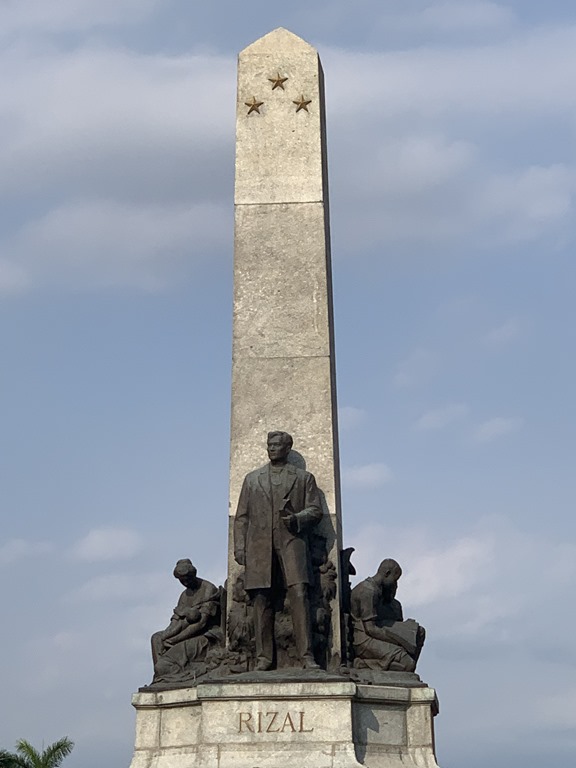
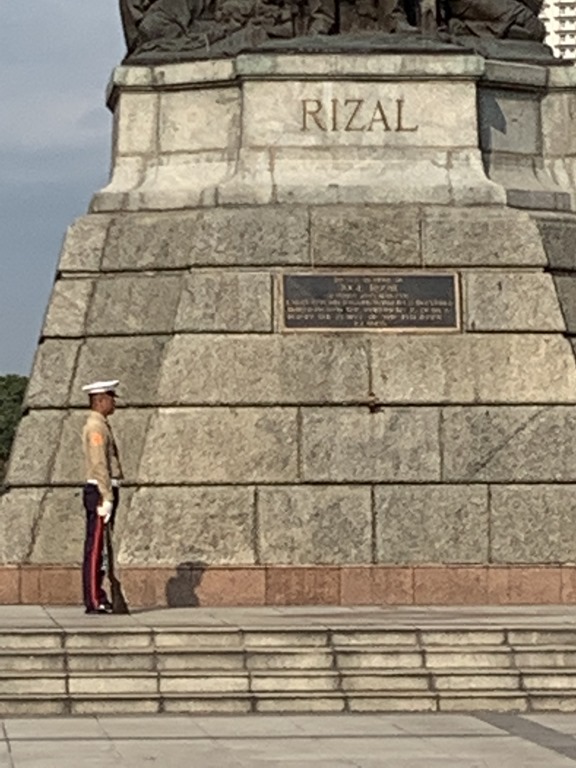
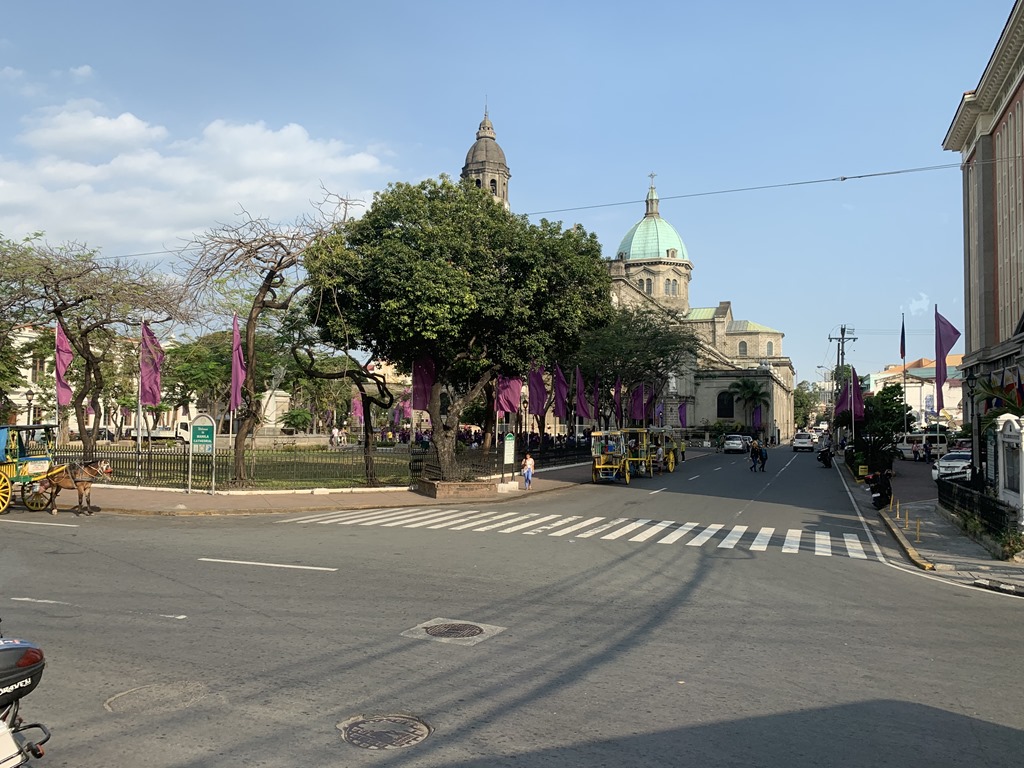
When we returned to Manila, we had a tour around the city, including the Intramuros, the city’s oldest district which is enclosed within a thick wall that the Spanish build for defense in the 1500s. We also had a photo stop at Rizal Park which is dedicated to the national hero, Dr. Jose Rizal who was shot to death here by the Spaniards and led to the Philippine revolution against Spain.  This is also his burial place and one of the largest urban parks in Asia. It serves as the point from which all distances in Manila are measured and it is said if you don’t have a picture taken here, you haven’t visited Manila!

IMG_3836IMG_3837IMG_3839IMG_3840

We also passed by the Manila Hotel which was used by General Douglas MacArthur as his command post during much of World War II.  His suite of rooms can be a place to stay if you have $8000 for a night!

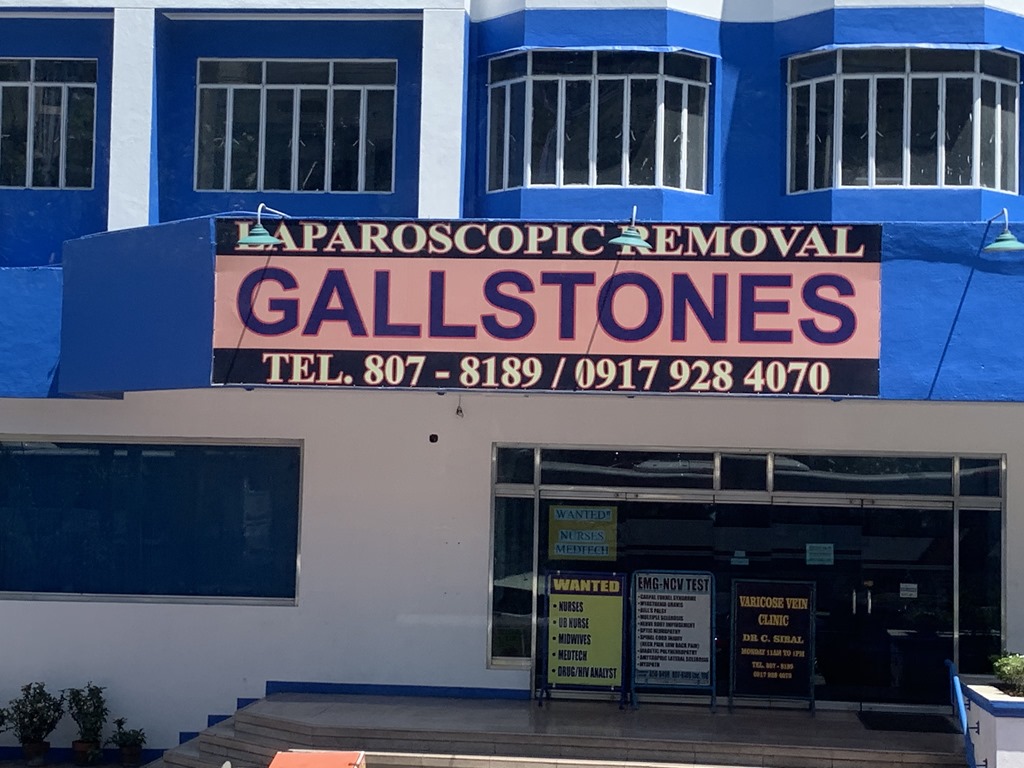
Here are a couple of other sights from the city. Markets, traffic and yes, you can have your gallstones removed.

IMG_3741IMG_3829IMG_3843IMG_3851IMG_3854IMG_3855IMG_3857IMG_3858

It was really touching to see so many of our crew members with their families and so hard to see their goodbyes.

IMG_3861

After a long day, we had dinner in the terrace.  Here is the sunset and sight of the city from our balcony as we leave Manila. And my flowers.

IMG_3863IMG_3865IMG_3866IMG_3862

On to Taiwan after a sea day.

Posted in Asia, Excursions, March, World Cruise 3 | 1 Comment

Boracay Island??

March 21, 2019

Is this Boracay Island?  We cannot be sure.

IMG_3667IMG_3668

It has been named one of the best island beaches in the world and has been closed to the public while they did clean up – we were so looking forward to seeing the beaches and doing some snorkeling here. The beaches are made up of pure white sand, they say.

As I have mentioned before, when the captain comes on the speaker and it isn’t noon, it is never good news.

We found out that due to heavy winds and sea conditions (which, on a large ship don’t seem so bad), the tender operations could not be used to get us to Boracay Island so we have an unexpected sea day.

Tomorrow we will be in Manila and are traveling to Tagaytay Ridge.

Posted in Asia, At Sea, March, World Cruise 3 | Leave a comment

Boracay Island??

March 21, 2019

Is this Boracay Island?  We cannot be sure.

IMG_3667IMG_3668

It has been named one of the best island beaches in the world and has been closed to the public while they did clean up – we were so looking forward to seeing the beaches and doing some snorkeling here. The beaches are made up of pure white sand, they say.

As I have mentioned before, when the captain comes on the speaker and it isn’t noon, it is never good news.

We found out that due to heavy winds and sea conditions (which, on a large ship don’t seem so bad), the tender operations could not be used to get us to Boracay Island so we have an unexpected sea day.

Tomorrow we will be in Manila and are traveling to Tagaytay Ridge.

Posted in Asia, At Sea, March, World Cruise 3 | 2 Comments