Bali, Indonesia

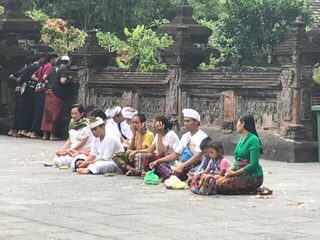
Where can I begin to tell the story of beautiful Bali and the Balinese people? Almost everything has a spiritual meaning here.  While there are beautiful beaches and surfing, diving and all kinds of sports, it is the essence of the people that really make this place special.  They are a very warm and welcoming people.  Their colorful dress and their smiles make you feel at home instantly.  And the many temples surround you everywhere you go.  90-95% of the population is Hindu and it is a quite different practice here than in India.  Although there are similarities, Hinduism here focuses more on the whole being and a freedom of happiness than the physical practice of yoga, etc.

We spent two days in Bali, a place we have never visited before.  The first day we did a tour with about 18 people called Discover Bali.  

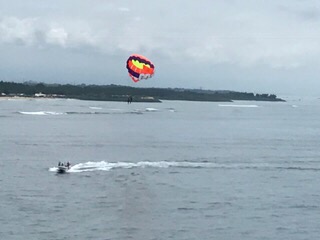
We saw a veritable playground of activity when we arrived – boats, parasailing, etc.  And we were greeted at the dock with traditional music and dancing.
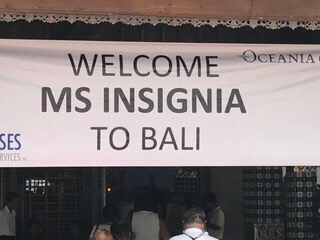

We arrived in Bali at about noon and set out on the tour to Tohpati Village for a demonstration of Batik cloth processing.  We have seen Batik before but the Balinese style is a bit different.  They use either hand drawn art or stamped art and they use more cotton than silk.  Interesting demonstration and of course I did buy a scarf!

Display of the stamps they use


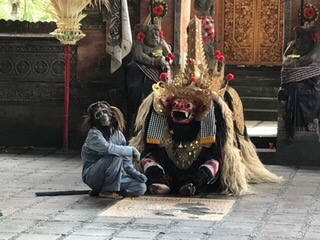
An unexpected event was the opportunity to see a traditional Barong and Kris Dance at Stage Chandra Budaya.  The Barong Play represents an eternal fight between good and evil spirits.  A Barong (mythological animal) represents good spirits and Rangda (a mythological monster) represents evil ones.  The costumes were quite spectacular and the play was so interesting.  Luckily we got a printed description of the 5 acts as there is no dialogue at all and the story is all told through movement and music.

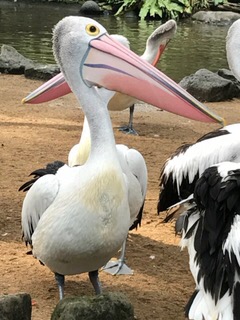
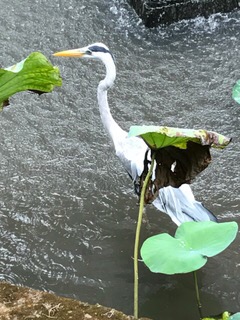
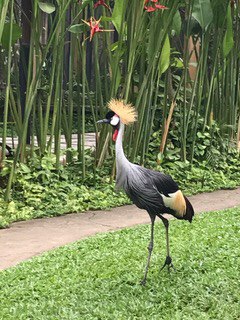
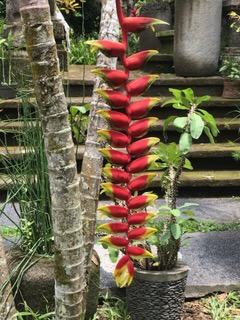
We visited the Bird Park which was so beautiful.  The vegetation and the beautiful birds captivated us for over an hour. It has the largest collection of Indonesian birds in the world as well as many varieties from Africa and South America.  It covers almost 5 acres of botanical landscape and has almost 1000 birds of 250 different species.  They are free range and a few in aviaries to protect them.  The tropical plants and trees attract a significant butterfly population – I captured one in the red flower.
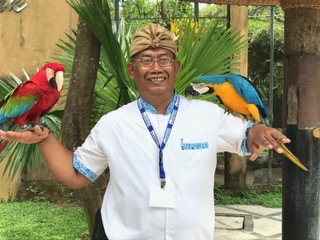
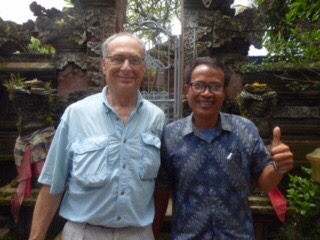
Our guide, Reno
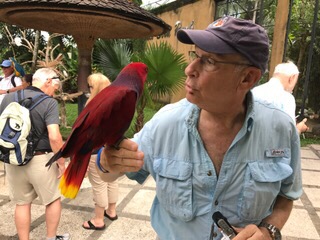

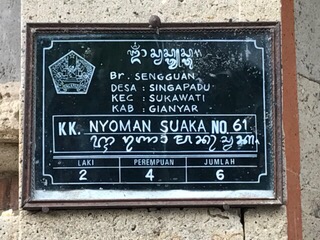
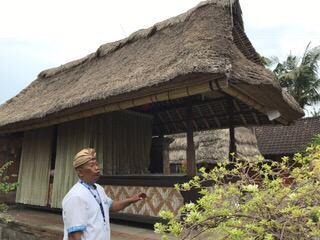
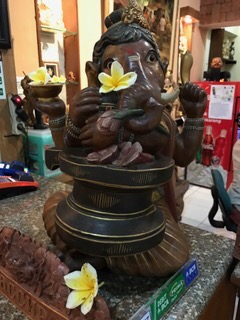
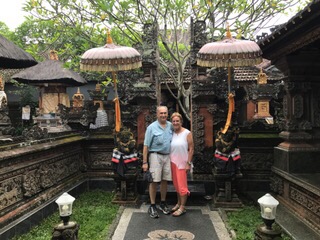
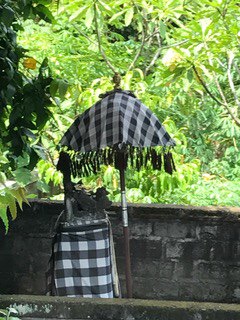
We visited a traditional house compound.  The Balinese home is often viewed as a human organism.  Much like a human being, it has a head (the ancestral shrine), arms (the sleeping quarters and living room) and legs and feet (the kitchen and rice granaries).  There is always a temple in these homes and the compound and the temple are huge and sprawling.  Outside the home on a pillar there is a placque which lists the number and gender of the people who live there.  Our guide, Reno, says this is for census purposes. You also see these small shrines everywhere outside as you travel along and the black and white checked material is a symbol of Bali.  Inside the homes or temples you might see yellow or yellow and white.

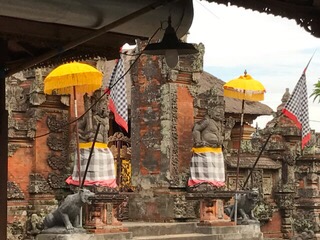
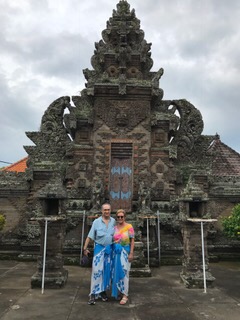
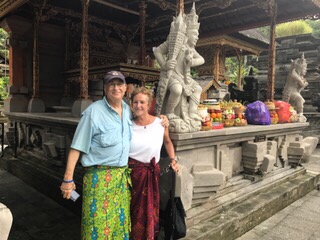
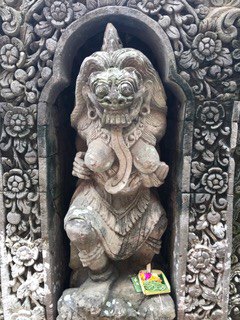
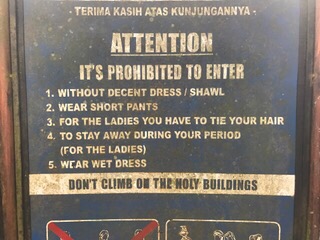
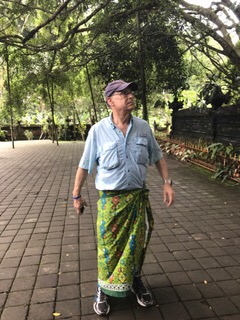
We had to wear sarongs to visit the temples. The temples, statues and interiors of the house compound all look quite similar.
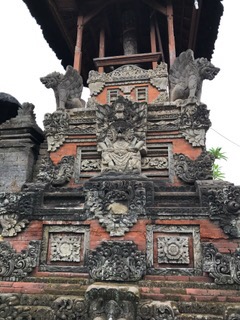
In the Singapadu Temple or Pura Puseh. Used in the village for traditional ceremonies.

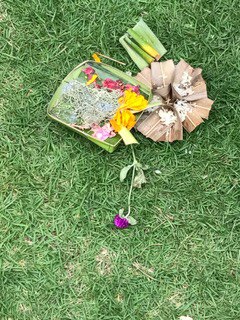
You see these offerings everywhere at the small shrines and all around every temple.
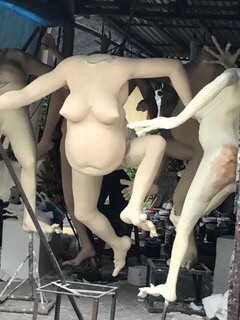

Don’t ask.. these are apparently used in the local celebrations!


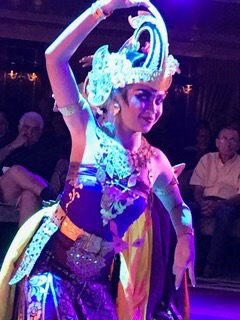
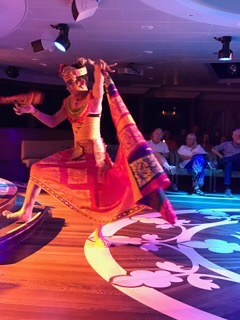
We returned to the ship for dinner, an amazing sunset and a local folkloric show of Bali.  The costumes, the music and the dancing were wonderful.  Men and women learn the art as early as 4 or 5 years old.  What distinguishes their dance is the amazing hand and eye movements.  The musicians were mostly young boys and girls and they were terrific! 


Our second day in Bali, we hired a local driver to take us to places that our onboard lecturer had told us about.  We were surprised to learn that our driver’s name was Nyoman – pronounced Norman!  We knew then that it would be a great day and it most certainly was.  We left the pier at 8:30 in Nyoman’s air conditioned white Toyota which was a pleasure as it was hot and humid.  

On the way, Nyoman told us the way children are named in Bali.  There are 4 names for both boys and girls.  The first born is named Wayan, the second is Made, the third, Nyoman and the fourth is Ketut.  If a family has more than four children, the fifth is again named Wayan!  It can get confusing.  Many people have nicknames for this reason.  Some families use “I” in front of the name to signify a boy and Ni to signify a girl.

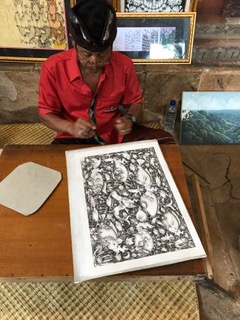
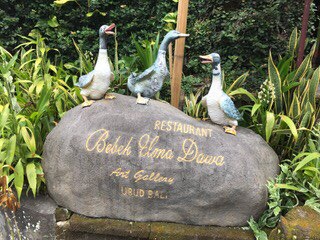
Nyoman was a terrific guide, typical of the kind and smiling Balinese people.  We made a couple of stops at wonderful art galleries in and around Ubud including the Gajah Bali Gallery and Dewa Putu Puja Toris. We bought a piece of Balinese art and two of the masks, one natural as in the picture, carved from Hyacinth wood and the other beautifully painted.

 This area is the focus in the book Eat, Pray, Love.  When I asked Nyomen about it he said “of course, Julia Roberts!”


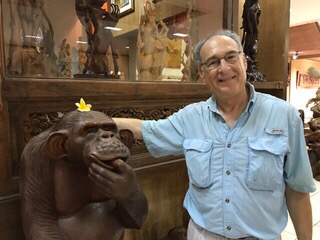
We visited the Sacred Monkey Forest Sanctuary in Ubud.  Monkeys everywhere in a wonderful wooded setting.  I had my backpack and unfortunately my New Zealand Manuka honey lip gloss was in an outside pocket.  The monkeys climbed on top of me and relieved me of the lip gloss- who knows if they could get it open, they were biting on the container pretty hard. And one came at me with teeth bared – I guess in case I tried to get it back.  I knew better than that.  Nyoman got pretty nervous and said not to look the monkey in the eye but just back away.  In spite of that, we really enjoyed this beautiful forest.
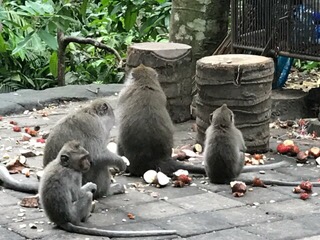

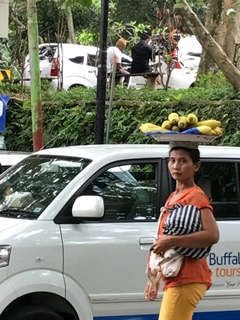
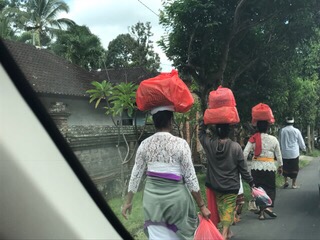
This area has a lot of shops and markets as well.  And we saw motorbikes everywhere carrying almost everything.  People are all covered in jackets, long pants, etc, and this is because they want to keep their skin as white as they can.  Only tourists are in shorts and sleeveless tops in spite of the heat.
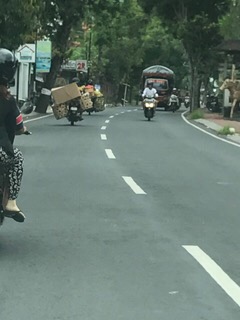

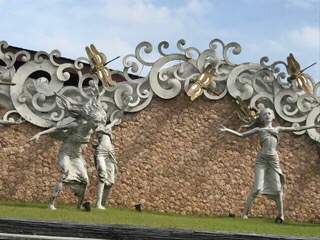
There are a lot of beautiful and meaningful statues along the roads.  The traffic really kept us from getting good photos though.


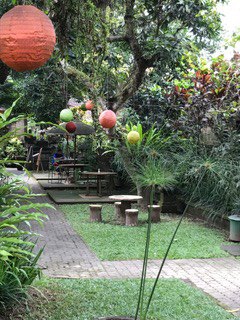
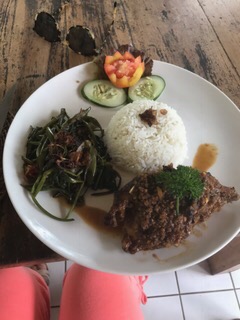
We had a stop for lunch at a lovely Indonesian restaurant, again located next to a beautiful family compound.  We loved the Indonesian food.  We invited Nyoman to eat with us.  Guess what he wanted?  Spaghetti with marinara sauce!
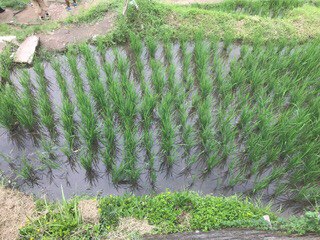
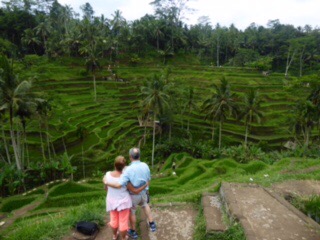
After lunch we traveled to see the magnificant rice terraces.  These are farmed by many different people.  Many families, including Nyoman’s, have their own rice patties which supply their family needs.  The saying here is that if there is no rice, it isn’t really a meal.
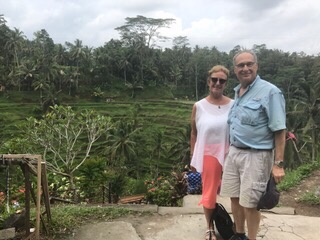
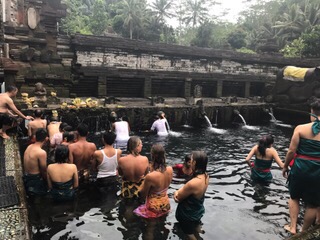
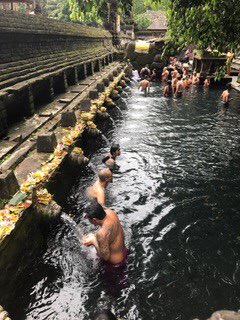
We went to Tampaksiring to see the water temple.  Water comes from the mountains and is sufficient to supply all of these rice fields and terraces.  People come to the temple to purify themselves.  We again had to wear sarongs to enter and I was glad to be past the age of menstruation or I could not have entered during that time!
wooden bell tower, the bells are made of wood.


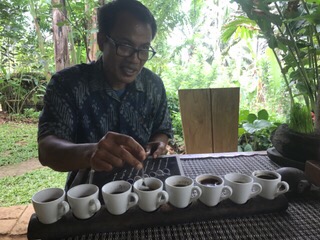
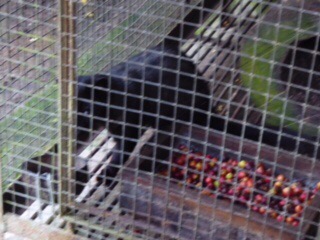
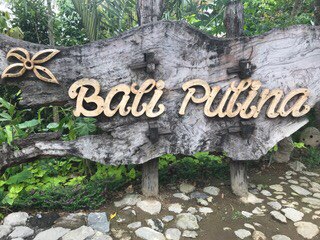
Our last stop at Bali Palina was to taste the coffee that is made from beans that are eaten  – the animals love the ripe red coating – and then retrieved from the droppings of the Luwak, boiled and roasted.  We had a tasting of their many teas and coffees.  The one from the droppings is very strong!  This was again a beautiful tropical setting.

On the way back from a wonderful day, we saw several road closings for ceremonies – and people traveling to and from the ceremonies.  

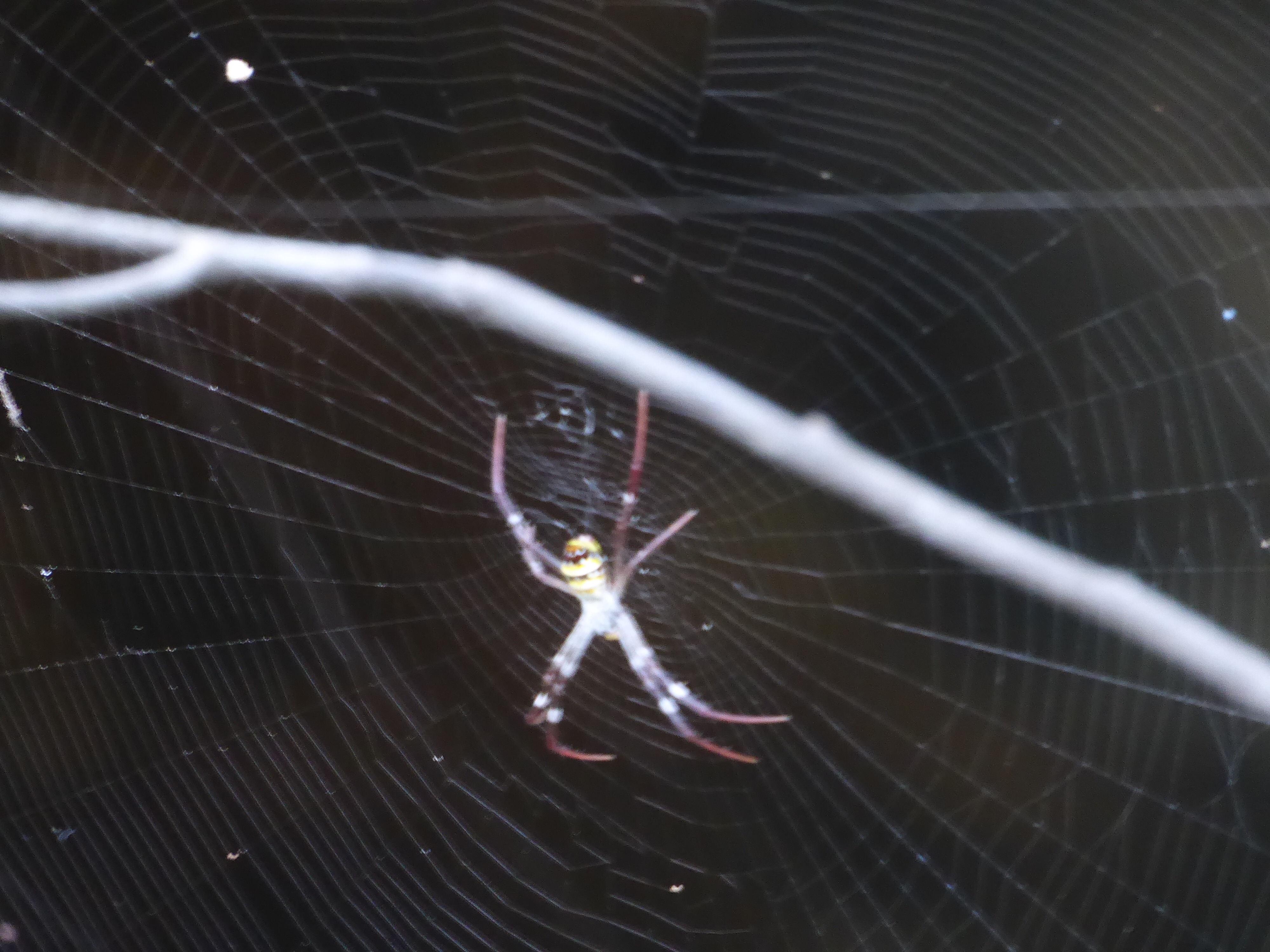
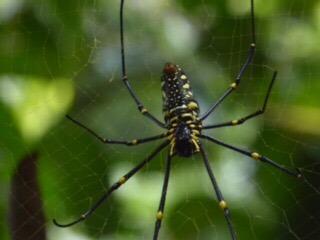
And they have some pretty impressive spiders here too!

We definitely want to return to Bali, and please let me know if you want to go and I will highly recommend Nyoman!

Posted in Asia, Excursions, March, World Cruise 2 | 1 Comment

Komodo, Indonesia

March 15, 2017

We arrived at our anchor spot in beautiful Komodo by 11 AM and we had booked a tour through cruise critic colleagues Erin and Mui.  A lot of work goes into planning these tours, and there were 33 people on this one.  It took a while for the authorities to clear the ship so that we could disembark on the tenders, but Erin was first in line to get all of our tender tickets, assuring that we would be on the first tender to the island.  

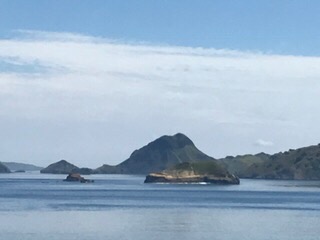
The sail in to the area was beautiful with mountains covered with greenery.  Indonesia is composed of about 6000 populated islands of the total 18,000 in the world’s largest archipelago, with more than 300 ethnic groups calling Indonesia their home.  We have many Indonesian crew on board and as Leslie, our cruise director always says when we arrive in a new country, welcome to the guests and to the crew who live here, “welcome home”.


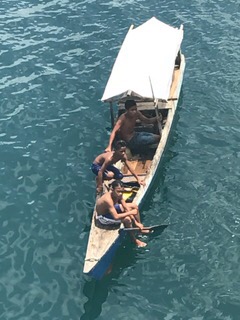
As we were waiting for the ship to be cleared, we were out on deck 5 and there were many children in small boats coming up near the ship and shouting “money”.  Some passengers threw dollar bills down and the children would dive for them.  In spite of being repeatedly warned by Leslie not to do so because of the danger of being so close to an anchored ship which does move, people did it anyway.  Once on the island, the guides also asked us please to not give money to the children as it encourages the behavior that the native people are not proud of.  I would rather buy something from them.


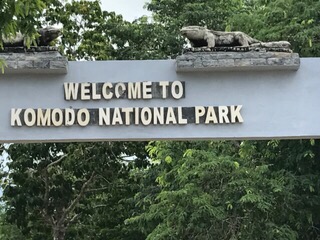
They do not allow any visitors to Komodo Island who are not on sanctioned tours.  You must show tickets or vouchers when you arrive.  The main focal point of the islands is the world famous Komodo Dragon, or ora as it is known locally, which lives nowhere else but the Komodo National Park which combines Komodo with its smaller neighbors Rinca and Padar.  The park was established by the Indonesian Government in 1980 in order to protect its prime inhabitant but now expanded its protection to all of the plants and animals.  The entire park including the three main islands and the surrounding waters covers nearly 1000 square miles.  There are approximately 5000 dragons among all of the islands, the largest number, 2800, on Komodo.

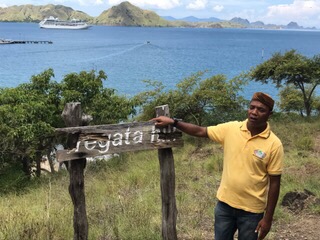
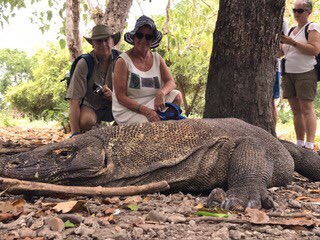
We were greeted by our guide, Hendrik, and a naturalist, Tafir, who took us on a 3 mile trek through the forest.  We were able to see 10 dragons during our time there.  Male dragons can grow up to 10 feet long and weigh over 200 pounds, females are slightly smaller.  They live from between 20 and 40 years in the wild.  They have an amazing sense of smell and can detect their next meal from up to 5 miles away!  We were warned not to go if we had any bleeding wounds and women having their periods are not allowed to go on the island.  And, you cannot wear anything red as it is like showing red capes to the bull in a bullfight.  Jan, our neighbor on the ship was going to wear gloves to cover her red nail polish!


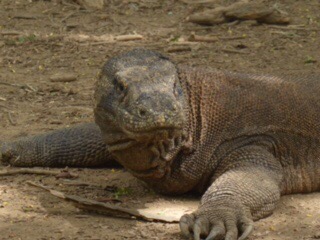
The dragons are extremely strong, with huge hooked claws and a forked tongue that they use in much the same manner as a snake.  Their saliva is full of bacteria that will kill a human or any of their prey in a very short time.  They are fast on land and can swim and climb trees.  They eat the wild pigs and Timor deer that are found on the island.  They are very territorial and will even eat each other if they cross into another’s territory. The guides have these long forked sticks that they carry.  We sure hoped that would hold any hungry dragons at bay, but they really didn’t seem that interested in us.

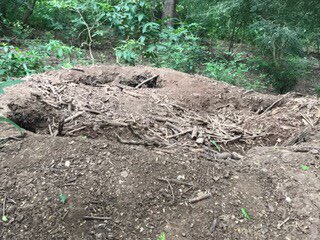
The females lay eggs which have a gestation of about 8-9 months, the longer the gestation, the offspring will be a male.  The females guard the eggs for about 3 months, but don’t protect the offspring and will often eat her own babies.  So the babies climb trees and stay there for about 2-3 years.  Apparently it is too much trouble to climb up to eat them.

Here are some pictures of the dragons and also one of the nest in which they lay eggs.  They have a lot of decoy holes to try to fool predators who want to eat the eggs, primarily the birds.


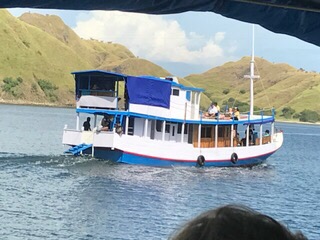
After our hike and dragon viewing, Norm opted to go back to the ship and I continued for the rest of the afternoon on the snorkeling trip.  The group went on the wooden boats that the guides use to travel between the islands.  Hendrik and his group traveled by boat for 4 hours to conduct our tour.  I did take my gopro and got some nice video of the fish and the beautiful coral but cannot upload it on the ship with the slow wifi. I will have to do a whole video when I am in a hotel or back at home when it will work. I even got some footage of one of the dragons moving and flicking its long forked tongue.  Trust me on that one!

The coral was the most beautiful I have seen on this trip and second to the Great Barrier reef which I saw 8 years ago.  Sadly, that one has suffered but this is varied and beautiful.  

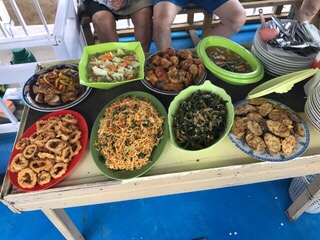
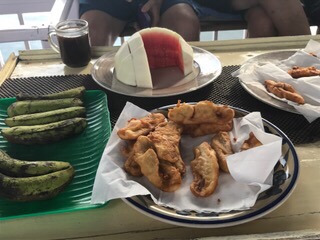
We were also served a wonderful lunch of native Indonesian specialties and I had to tell the guide that I am the type that takes pictures of my food!


It was a wonderful day.  When the ship was leaving, we had a torrential downpour, so no sunset pictures today.  Tonight we were entertained by the fantastic pianist Van-Anh Nguyen.  We heard her on our last world cruise and it was great to hear her perform again.

Posted in Asia, Excursions, March, World Cruise 2 | 4 Comments

More from Darwin, Australia

March 13, 2017

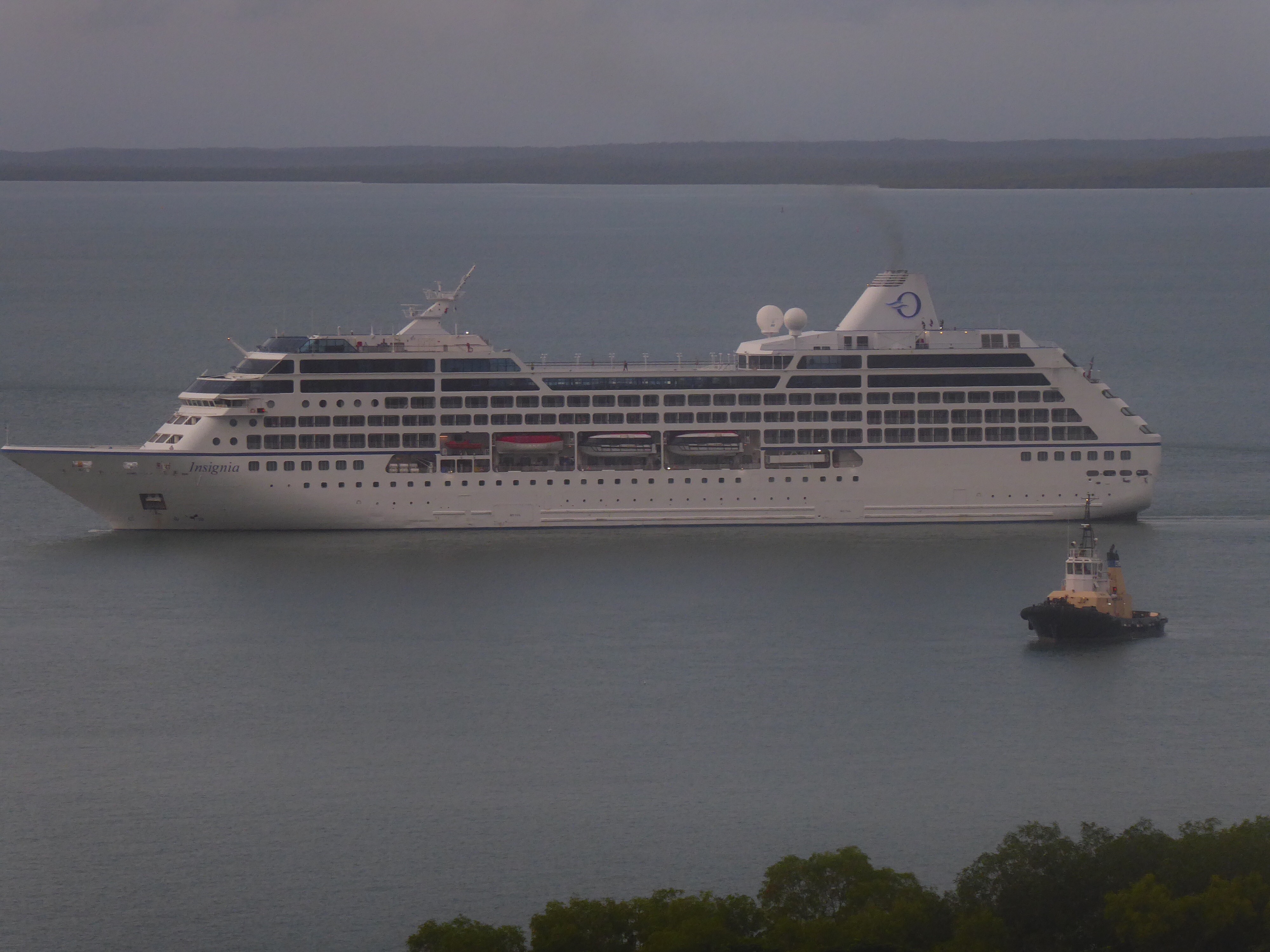
Today we return to our “home away from home”, the Oceania Insignia.  We watched it come into the harbor from our hotel room this morning!  Funny feeling as we usually don’t get that view! 40-60 ships come to Darwin every year.


Here is another fun fact I didn’t mention in my previous post. Darwin gets more lightning strikes than anywhere in the world. Well, maybe that is not such a FUN fact. Also, we traveled on the Stuart highway, the longest road in the Southern Hemisphere, from north to south here in Australia. 

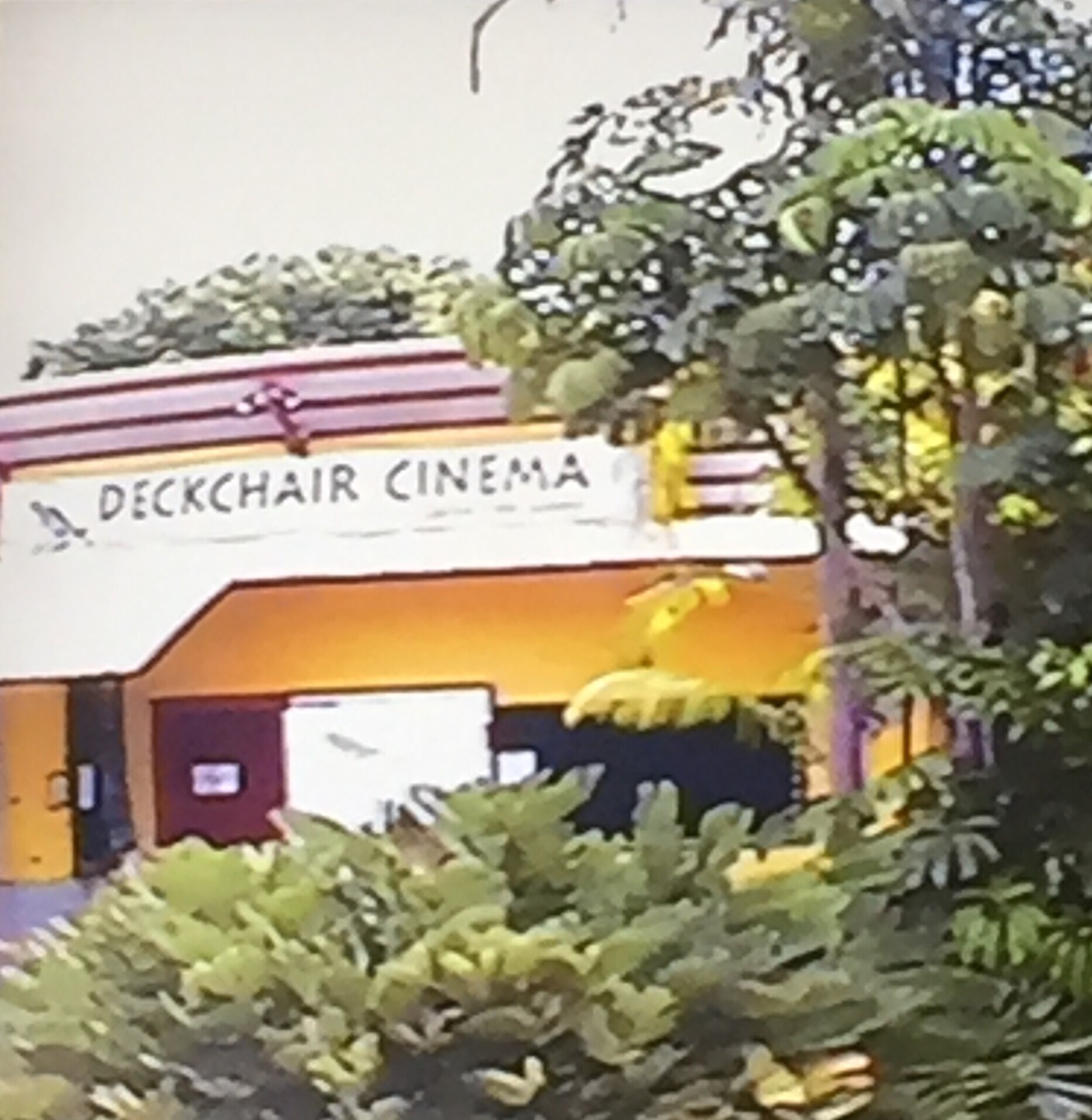
Also forgot to mention that they have a “deck chair” cinema – only in the dry season of course.  Since that cyclone Tracy on Christmas Eve 1974, they are VERY careful! 


During this past week, we got a real appreciation for the size, culture and history of this amazing country.  More accurately, an amazing continent.  

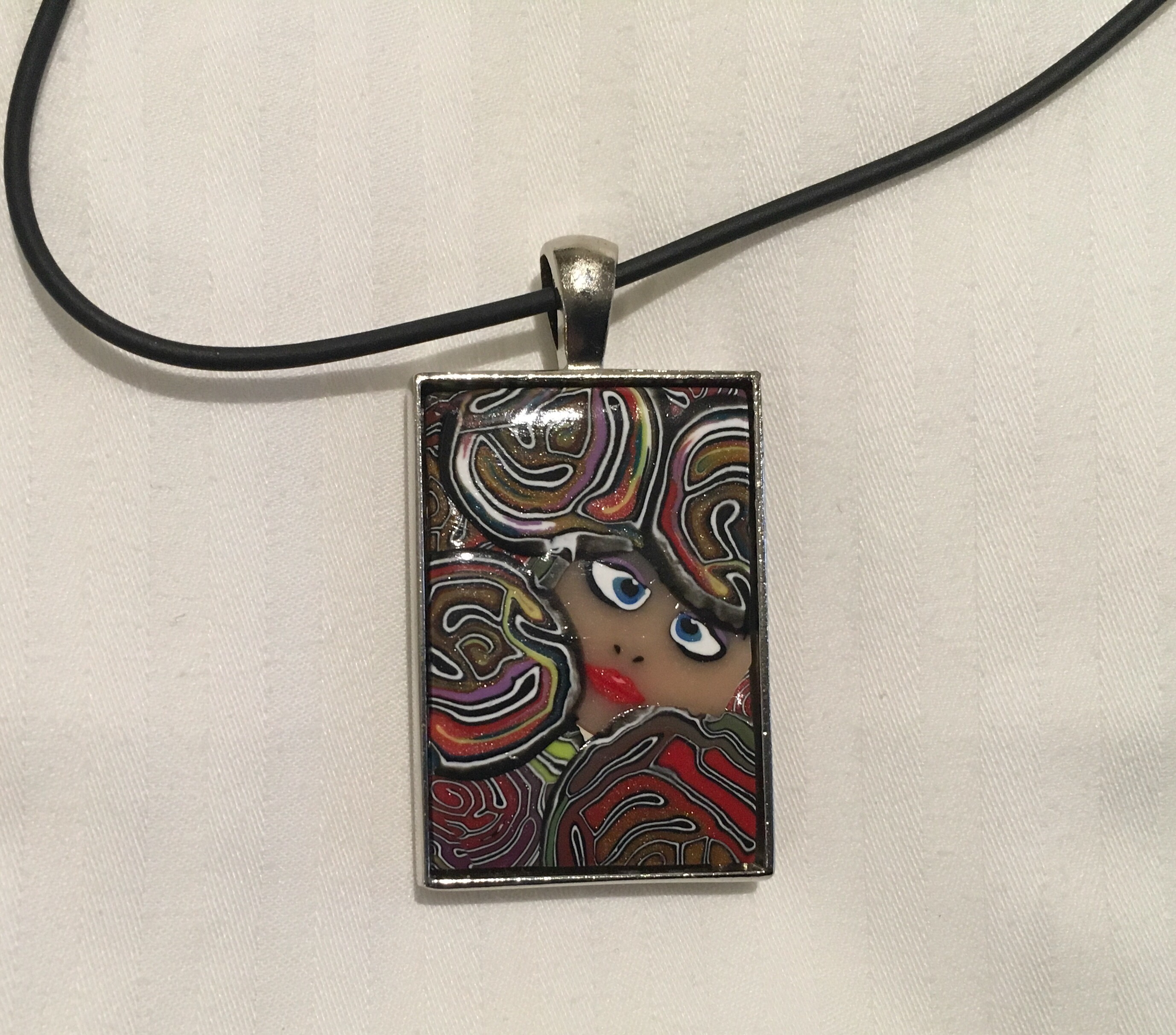
And Hilary reminded me to post a picture of the necklace I got in the museum yesterday.  Here it is.

We will say goodbye to Australia later today and it will be on to the next adventure. Thanks for the memories, Australia.

Posted in Australia, March, World Cruise 2 | 2 Comments

Darwin, Australia

March 12, 2017

Our tour of Darwin today is scheduled for 12:15, so we enjoyed a nice breakfast at the hotel – late.  They also had one of the juicers with lots of fresh fruits and vegetables available to make your own.  I guess it might be an Australian thing.


Our driver, Ray, picked us up in another one of those big truck/buses.  We only had about 15 people with us and most of them were Greek, so the language in the bus escaped us most of the time.  Some of them spoke English at least a bit though, and one couple had moved to Melbourne.

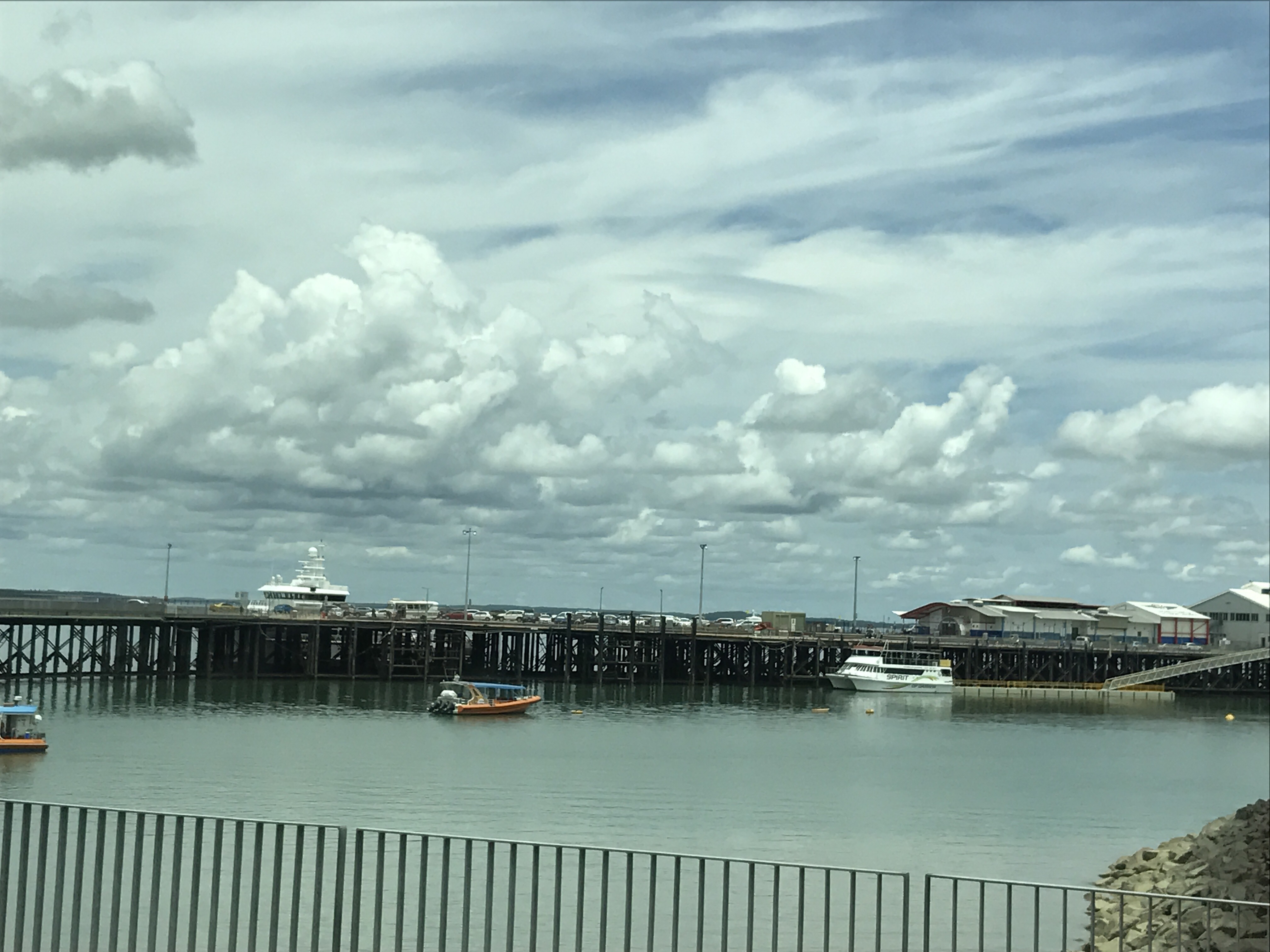
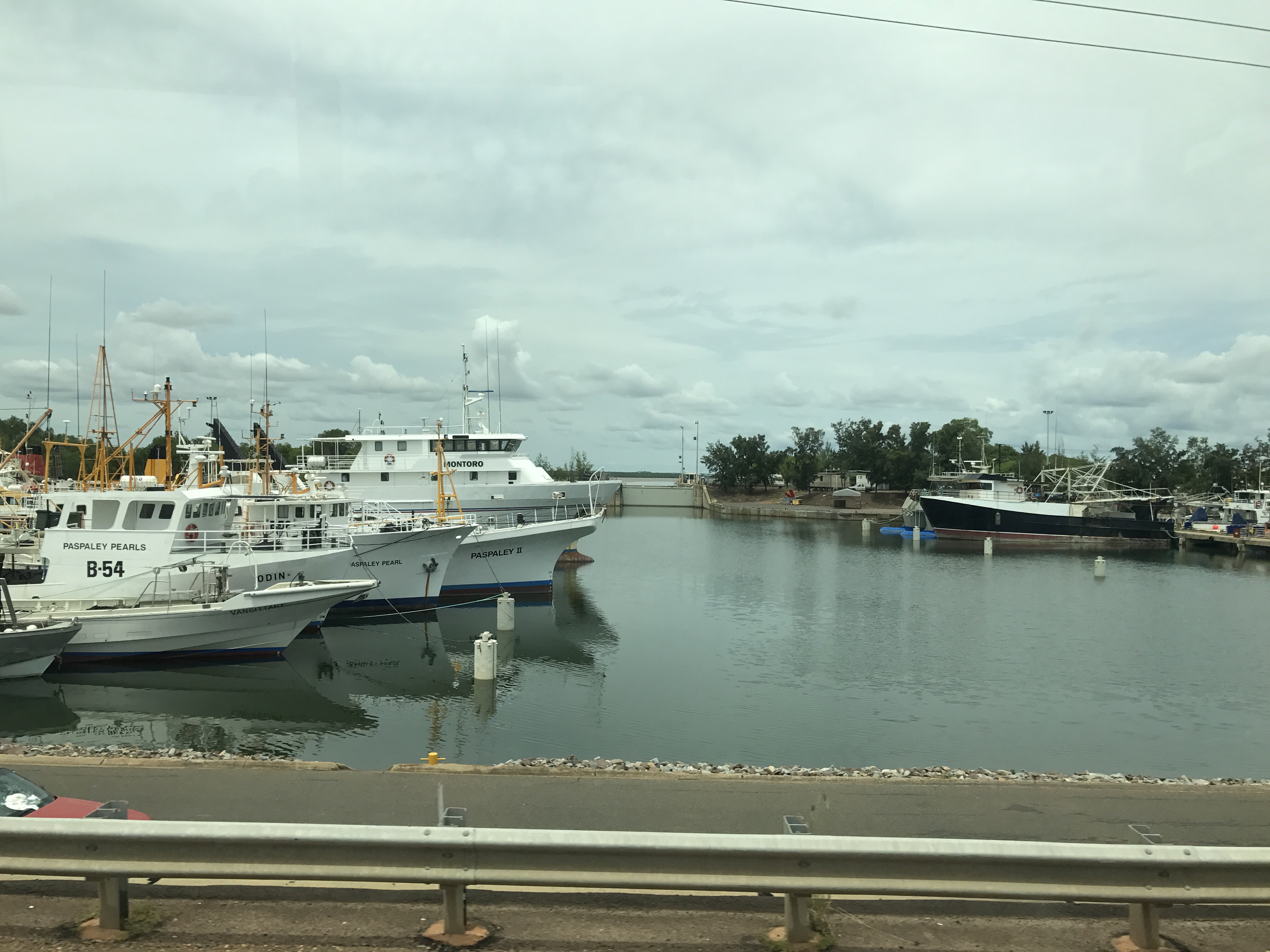
Darwin, as it turns out, has a harbor that is twice the size of Sydney’s which was a surprise to us.  It is a totally different city from Sydney, though, only 87,000 population although people of 70 nationalities live here. It is Australia’s only tropical capital city.  We didn’t go to the commercial port but Ray told us it is constantly being enlarged and improved.  Interestingly there are 4 marinas that have locks, one for commercial fishing boats and the other three in private marinas.  This is because the tides are so dramatic here.  

There is lots of water and many beaches but no one swims at them.  Ray says maybe some tourists who don’t know any better might.  Why?. Crocodiles and deadly jellyfish.  In fact, Australia has more dangerous species of animals, reptiles, insects, etc.  than anywhere in the world.

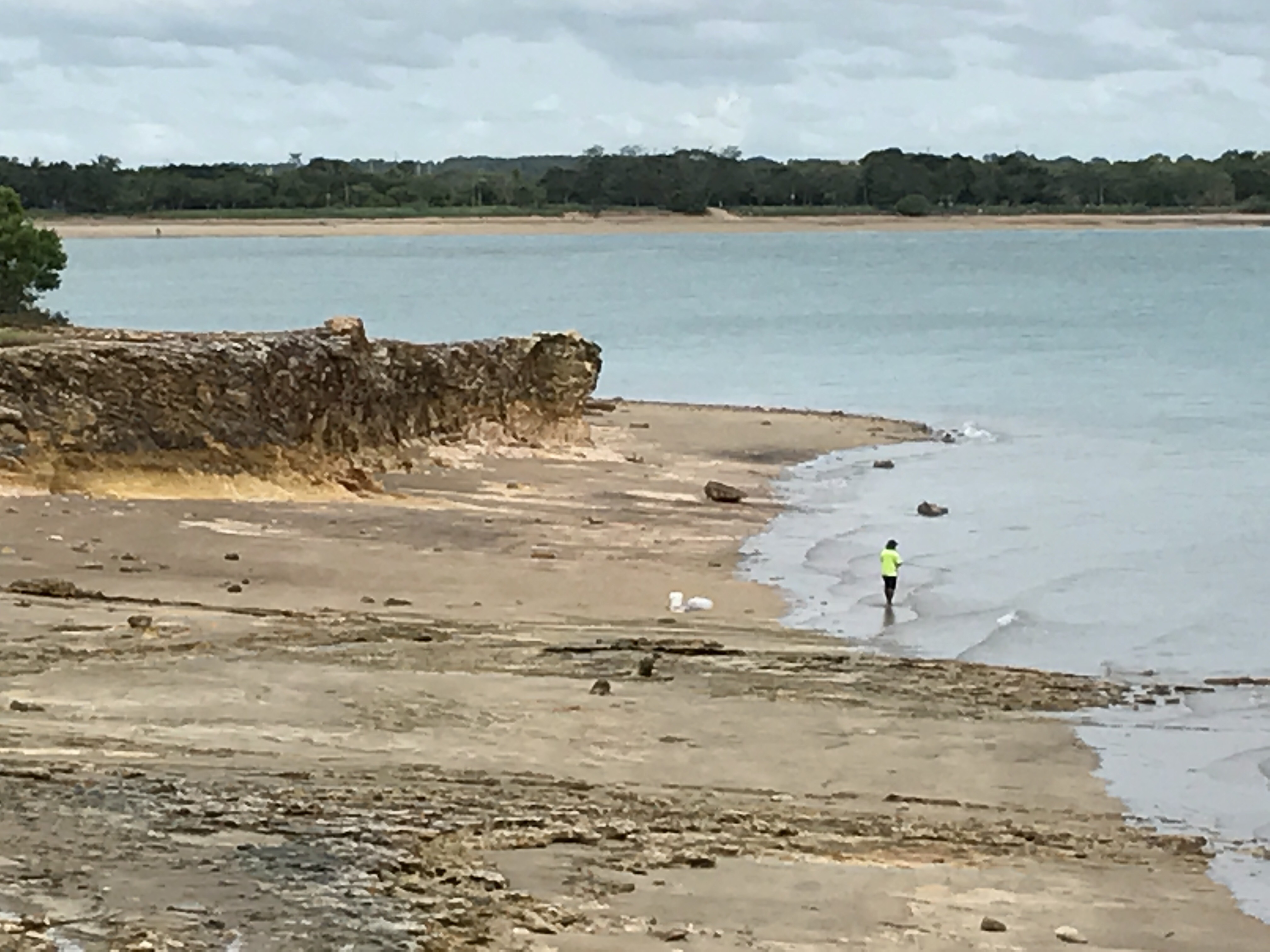
Low tide now.


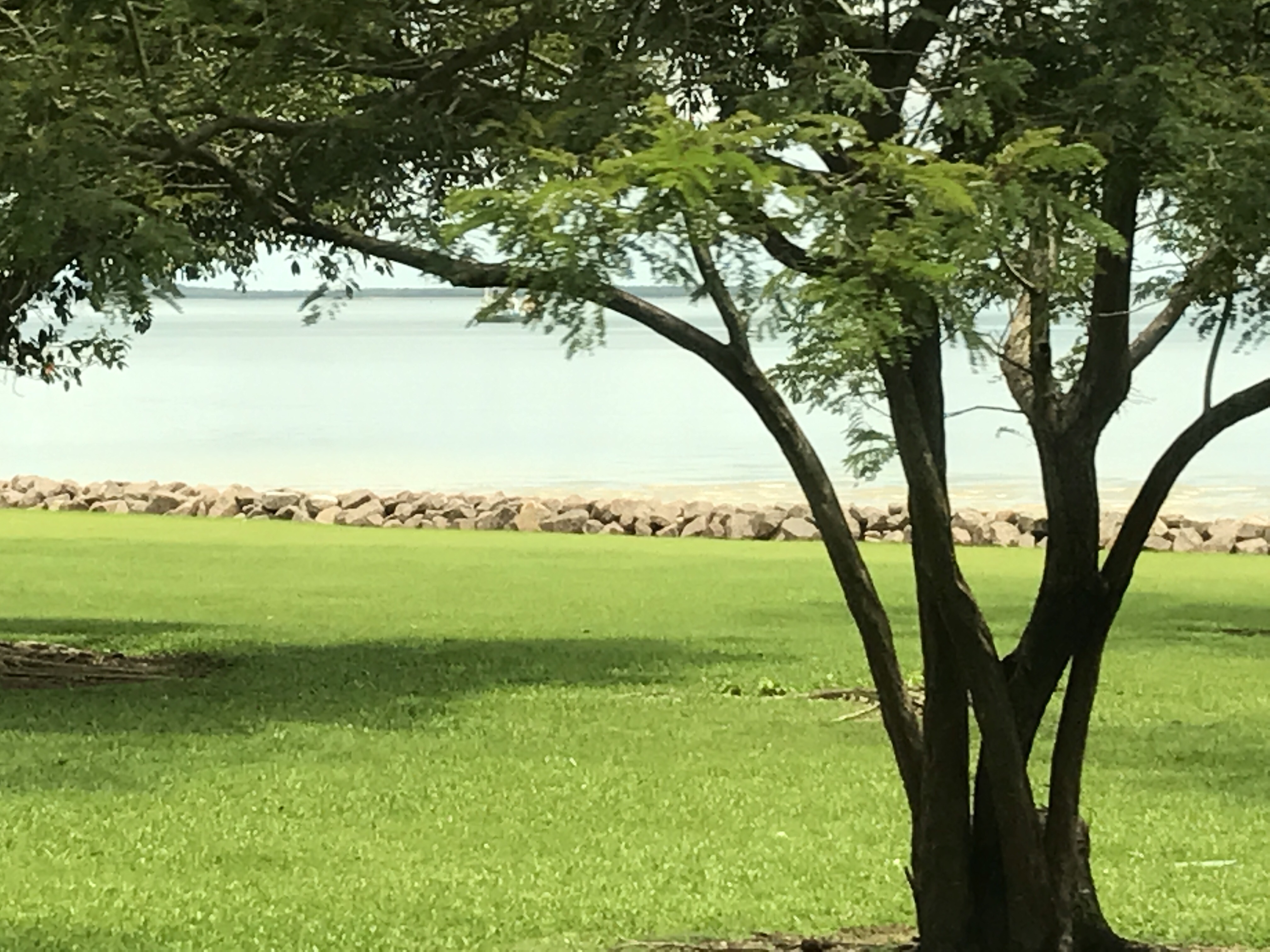
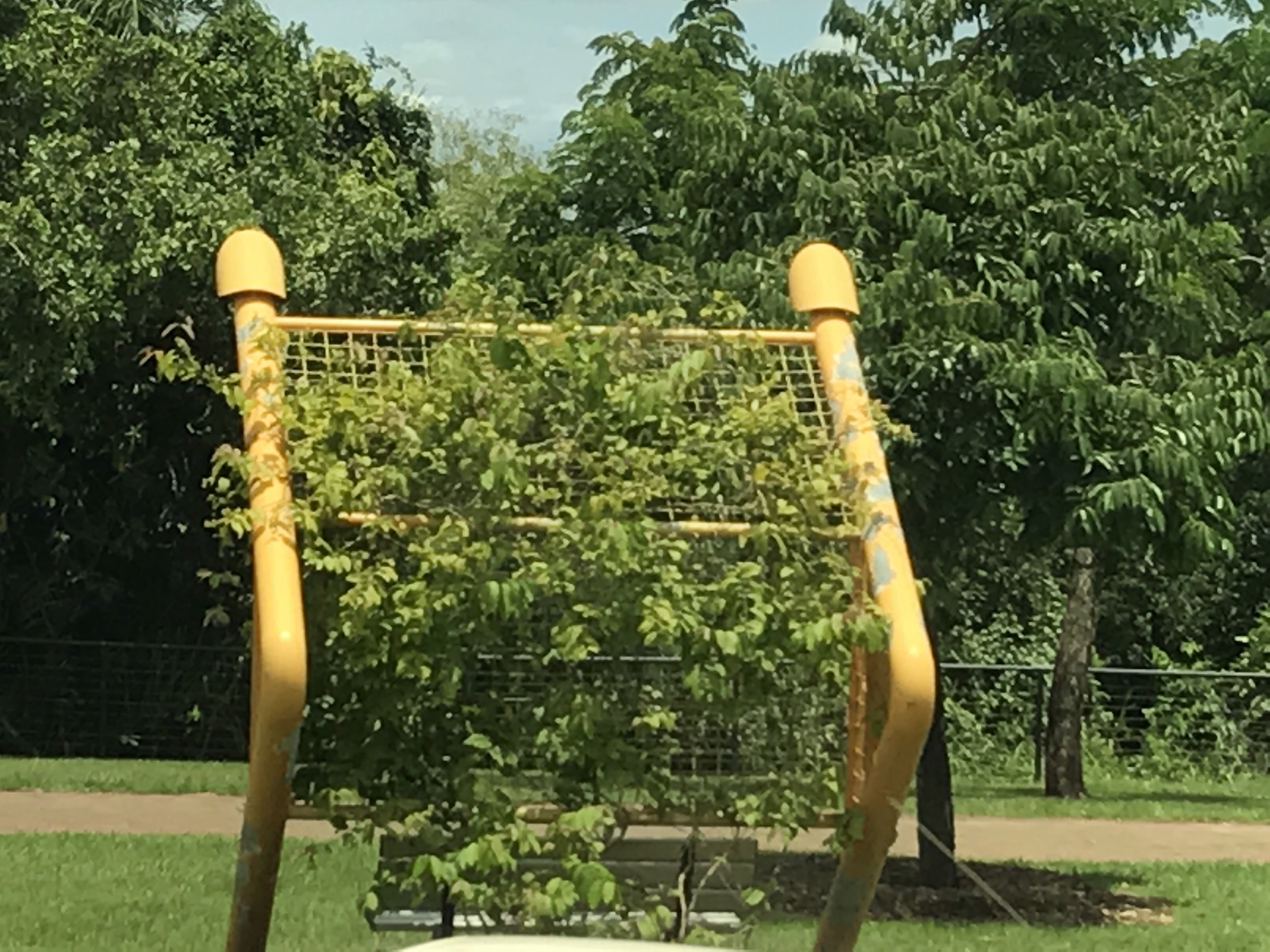
We first had a drive around some of the waterfront parts of town.  These unique benches started out as gun look alikes to deter the Japanese from coming on land.  They never did come on the land, so they kept them there and now they are growing plants over benches that have been placed looking out on the water.

Some history Norm and I certainly never learned is that just 10 weeks after the Japanese bombed Pearl Harbor, they also attacked Darwin – on the 19th of February, 1942.  There were a total of 64 air raids on the city.  It is said that it is the battle Australia tries to forget.  Although there was much to be proud of that day, the dark side of the story lingers – looting, desertion and a failure of Australian leadership.

The difference between the attacks on Pearl Harbor and Darwin is startling – the Japanese dropped more bombs on Darwin, killed more civilians in Darwin and sank more ships in Darwin than in Pearl Harbor.  It remains the single deadliest event in Australia, yet it remains mostly unspoken about.

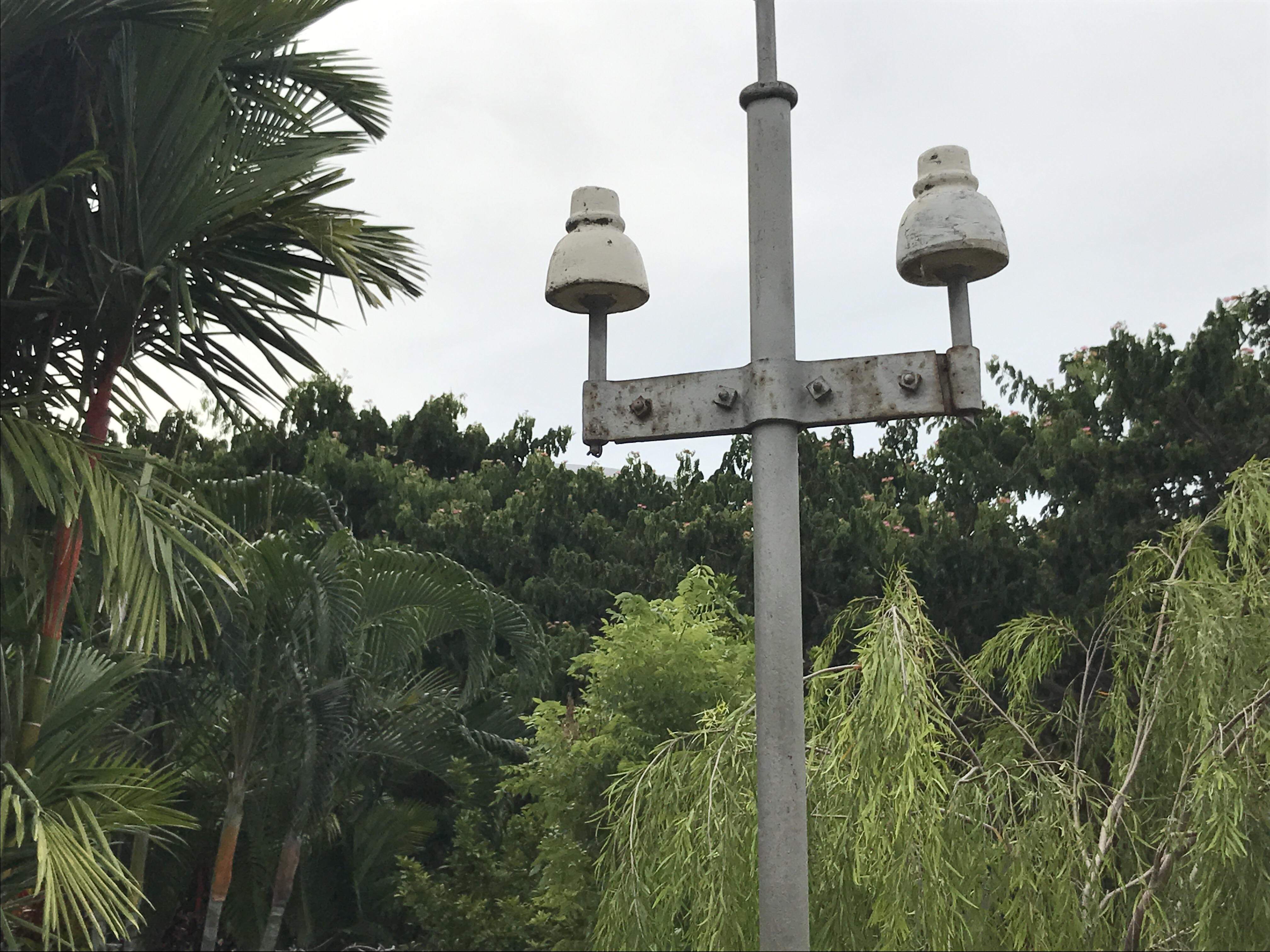
We saw the first telegraph pole which became functional in 1872 and represented the first communication between Australia and the rest of the world.  Before that, a letter could take 4 – 6 months to arrive.


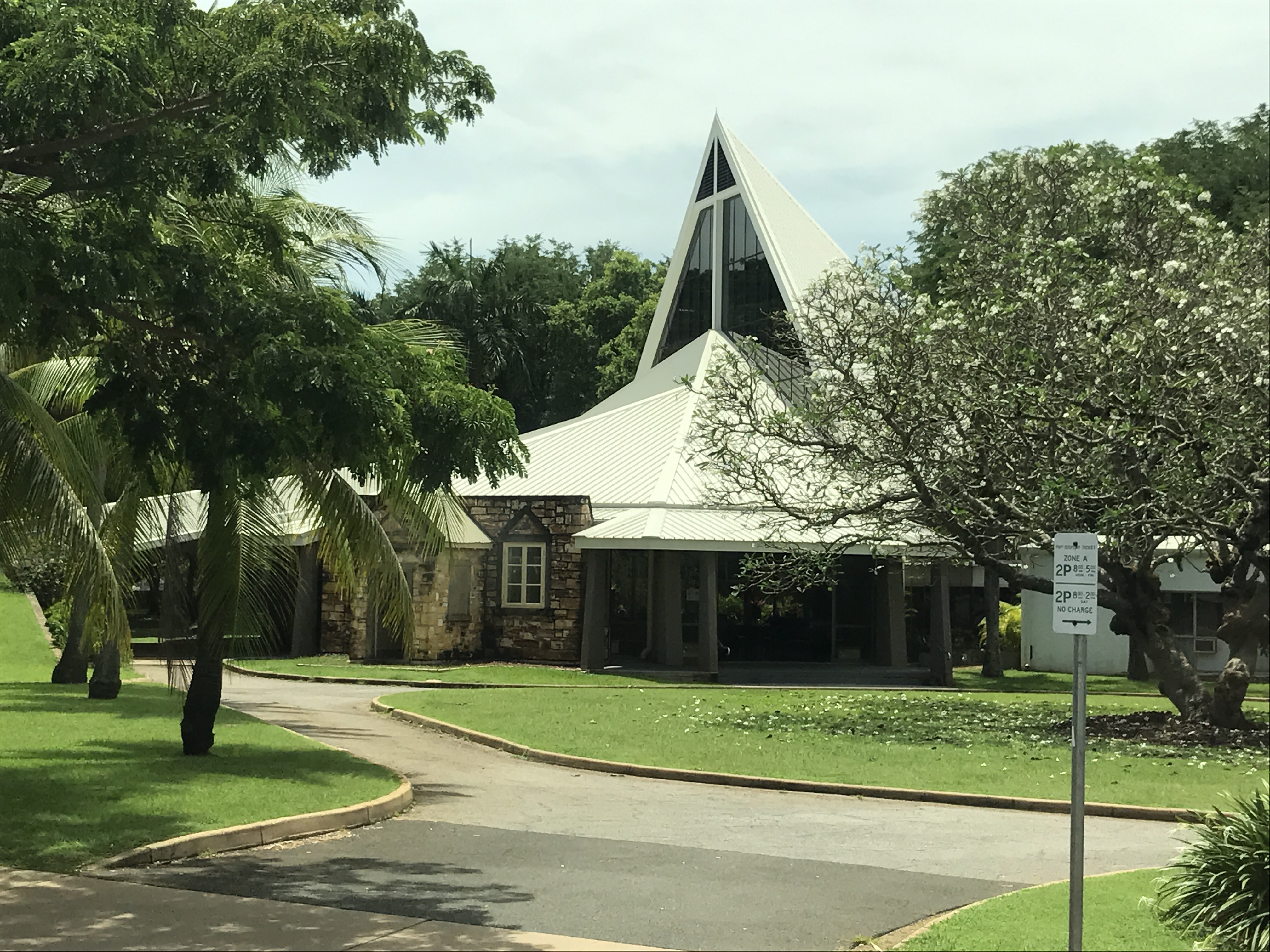
We passed St. Mary’s Church which has a black madonna, and it was said by the church that their tradition demands that it faces the water.  The church required special arches in another building before they would approve its application so that they could still have the water view.


Here are some of the other interesting buildings in the city.  The one shaped like an elongated egg is to make it able to withstand cyclones – that winds would go around it so that it would be less stressed.  They had a very severe cyclone in 1974.

This church was almost all destroyed in the cyclone – only the front facade remained so they kept it and rebuilt the church behind it


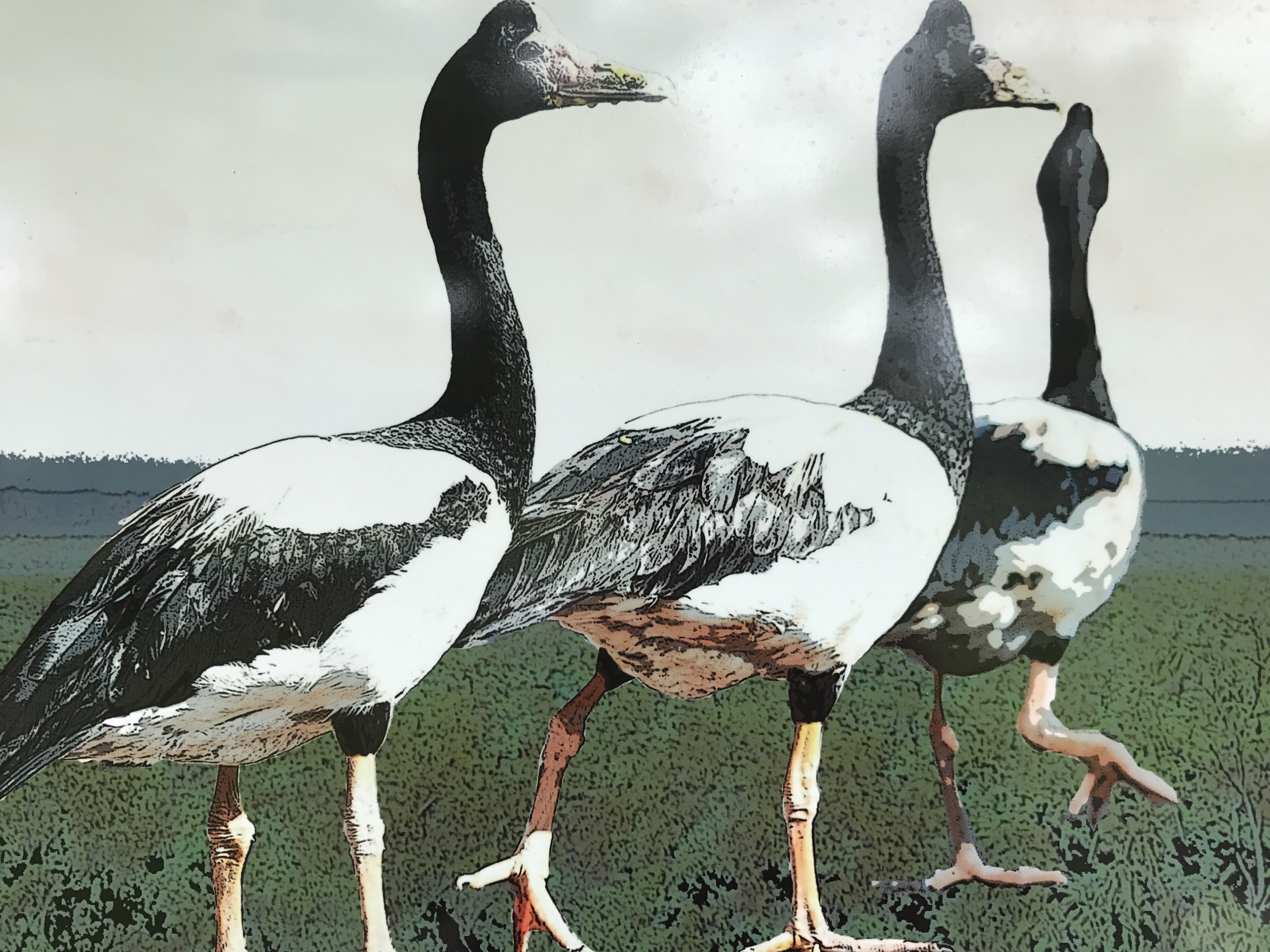
We drove out to the Charles Darwin National Park and had a walk around.  Since I didn’t get a picture of the magpie goose yesterday, here is a picture!


The view of Darwin from the park is very nice, and you can also see the huge mangrove forests. There are 40 different kinds here.

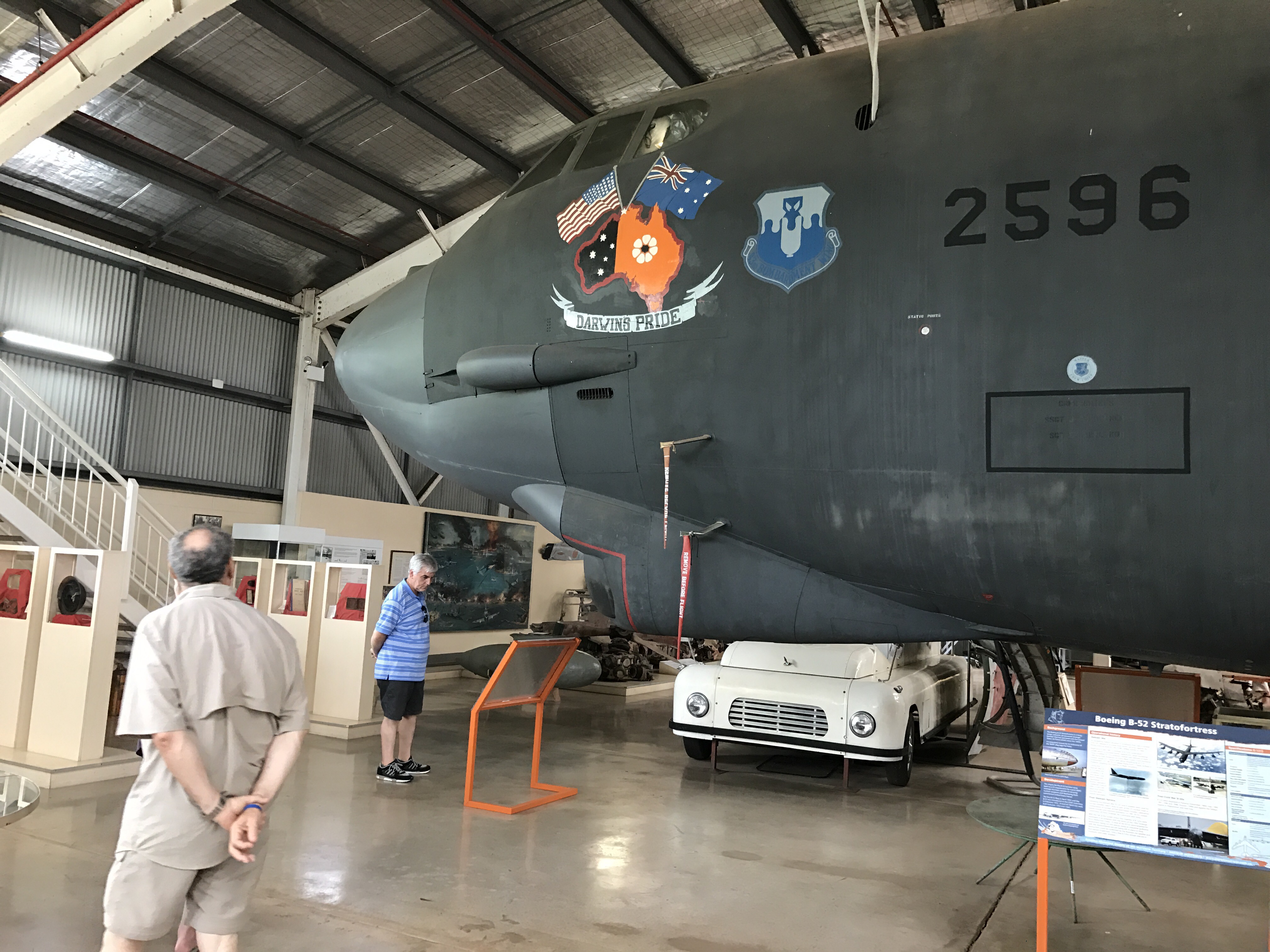
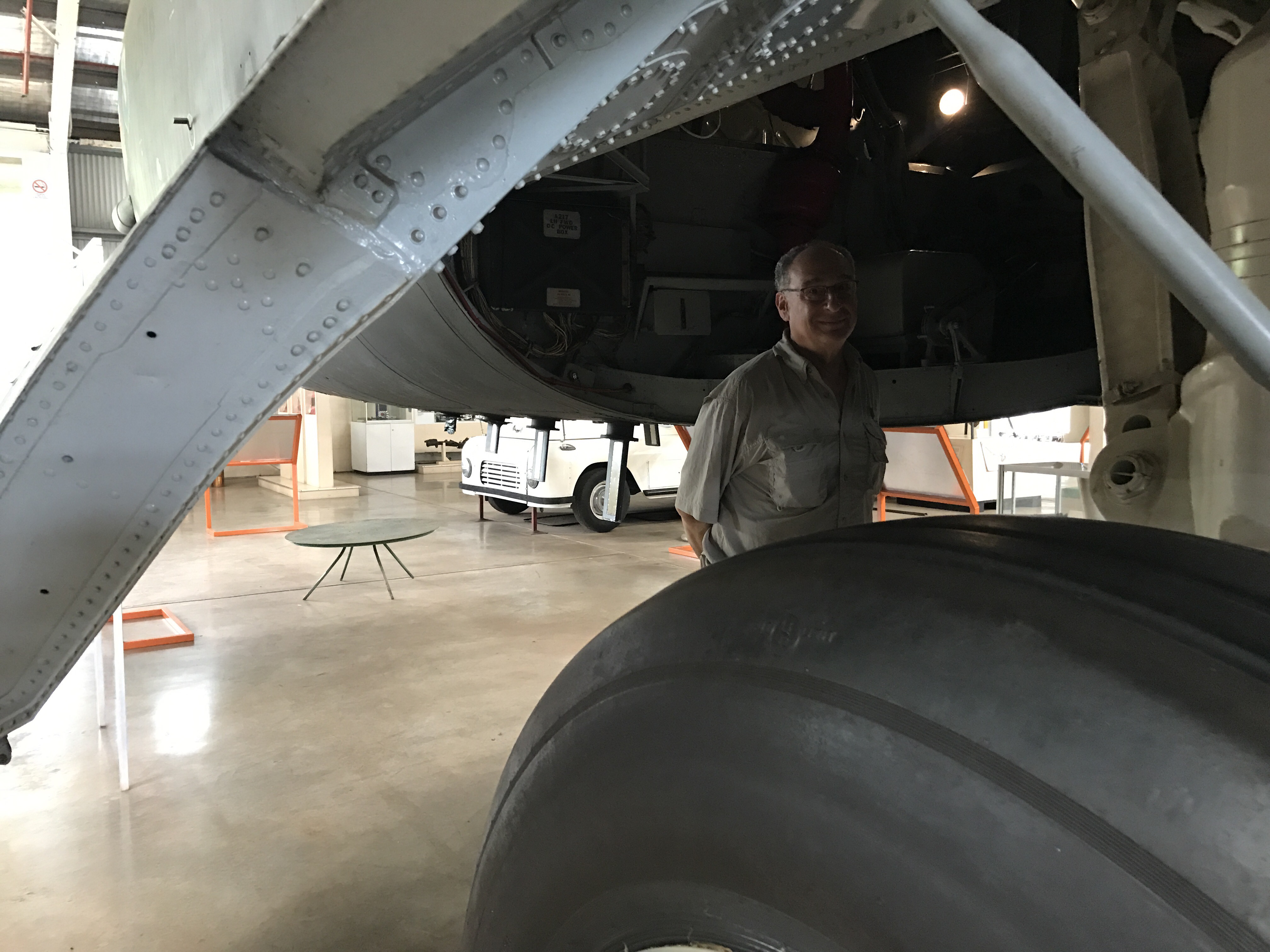
Next we visited the Darwin Aviation Museum which is just large enough to contain a B-52 – the plane and its wings fills the entire building and the other smaller planes and exhibits fit underneath it.  This is mostly a WWII museum with lots of stories about the war.  The Japanese bombed Darwin to assure that Australia would not enter the war, and they did not, but they suffered casualties anyway.


These bunkers we passed were covered with vegetation which made them invisible to the attack planes during the war.

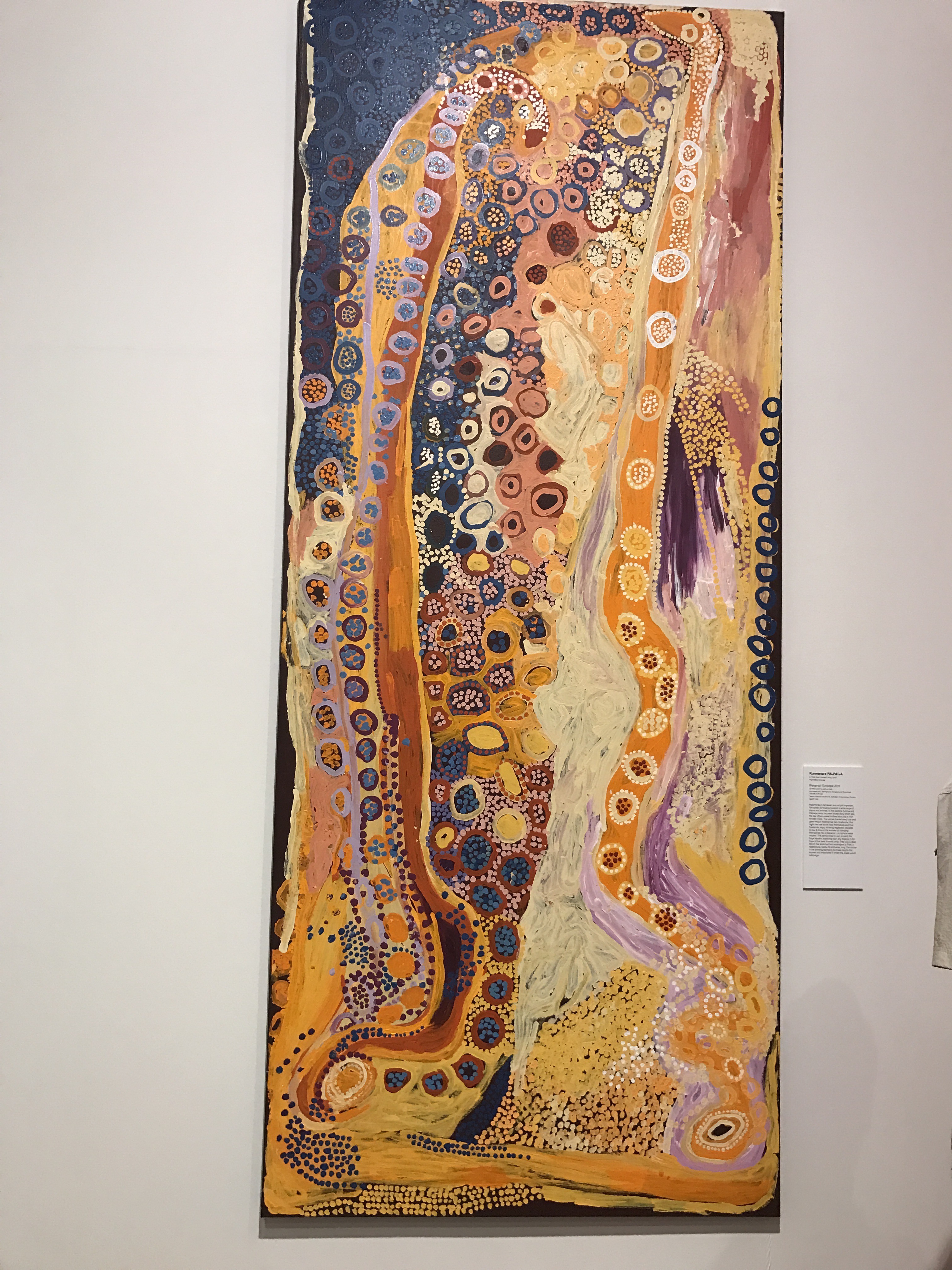
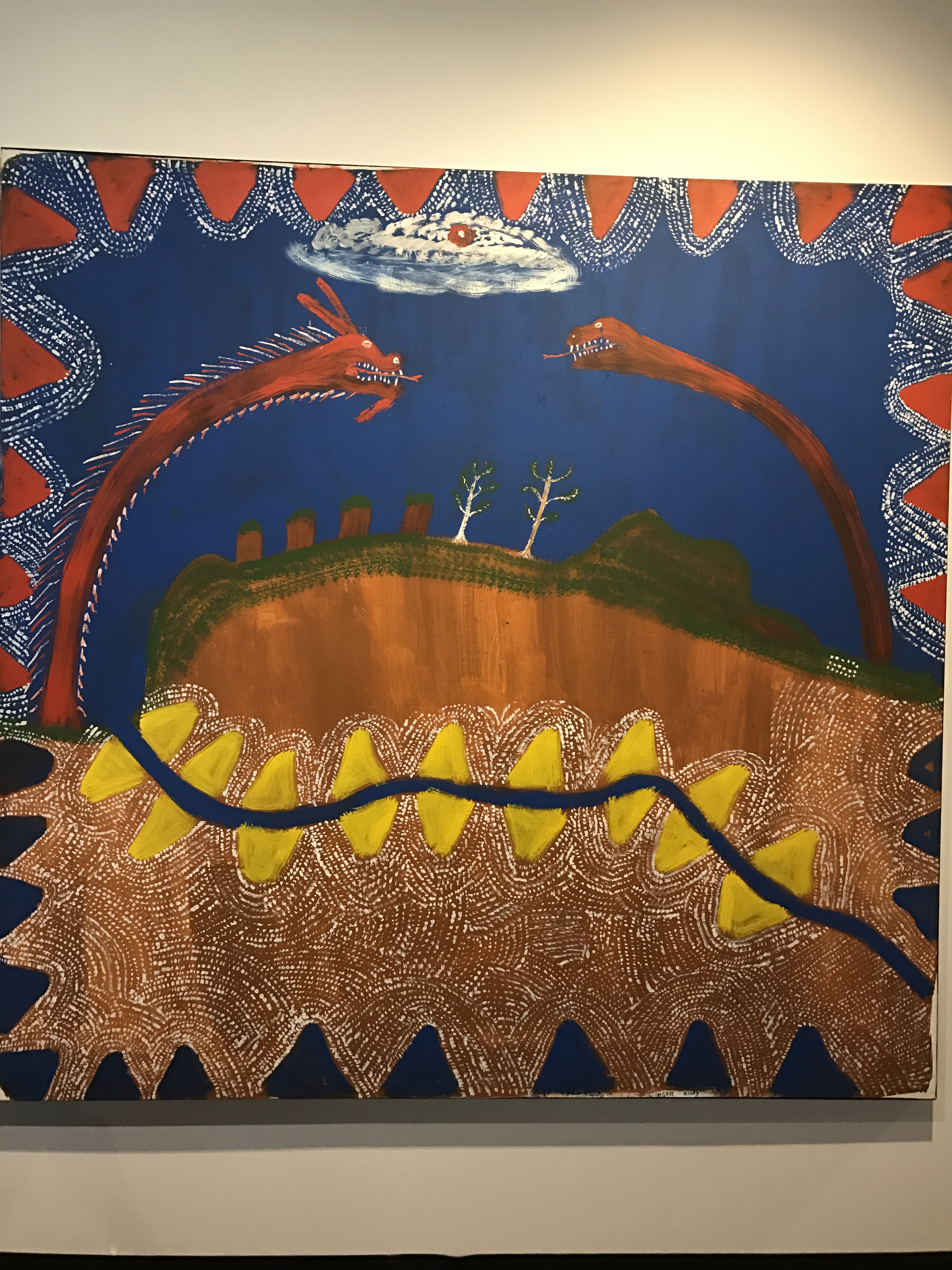
We visited the Museum and Art Gallery of the Northern Territory – really enjoyed the art.  They have a Country and Western section which has a whole different meaning here – Country is Aboriginal and Western is the white population.  Here are two of the Country pieces. I am really intrigued by the Indigenous art and bought a necklace in the gift shop.

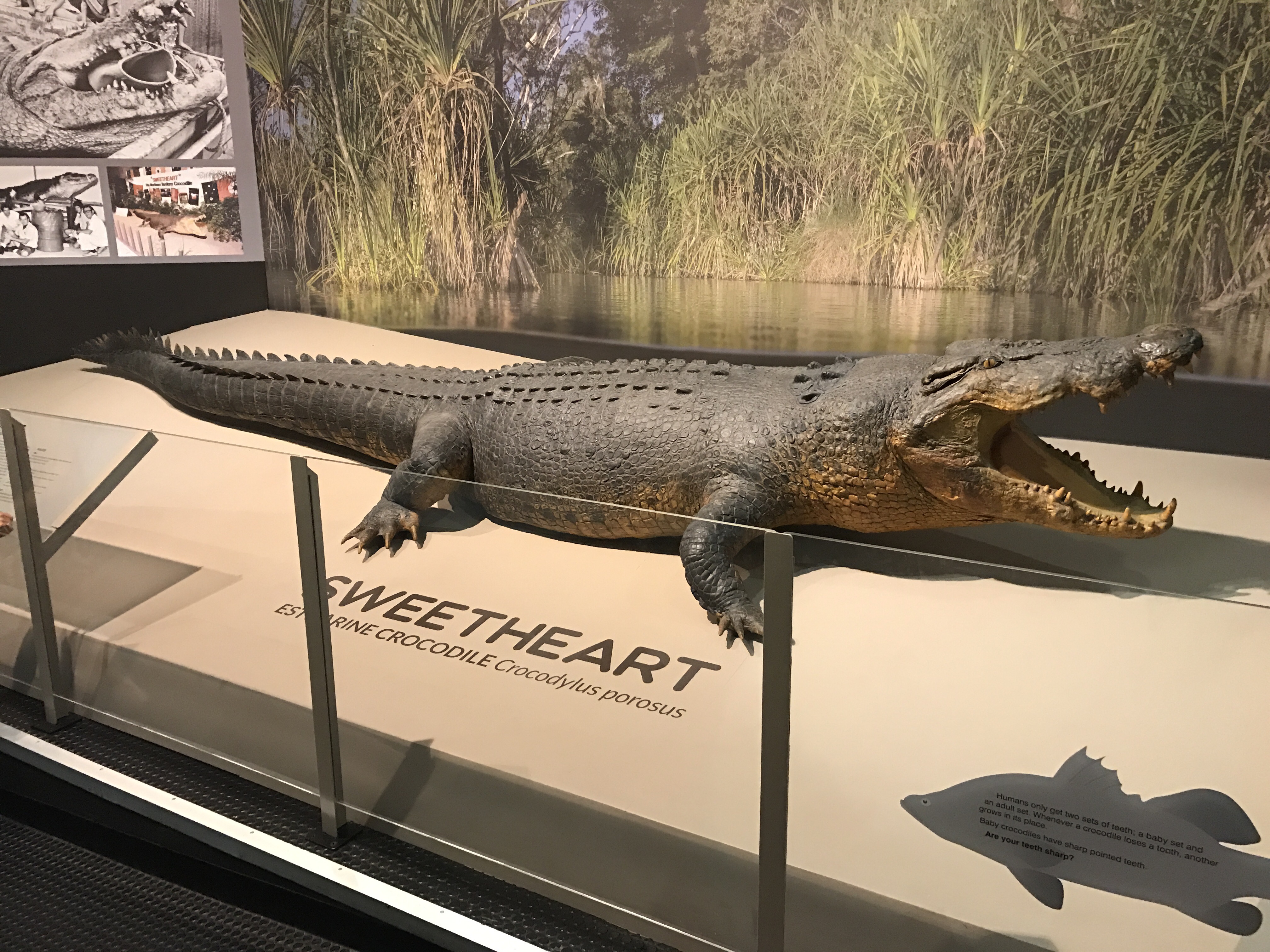
There are many other exhibits of shells, wildlife, the 1974 cyclone and one of the highlights is the presence of “Sweetheart”, a crocodile that was known for attacking aluminum boats.  They attempted to remove him to a sanctuary but unfortunately he died and he now “rests in peace” in the museum.


I never want to see one up close and personal!

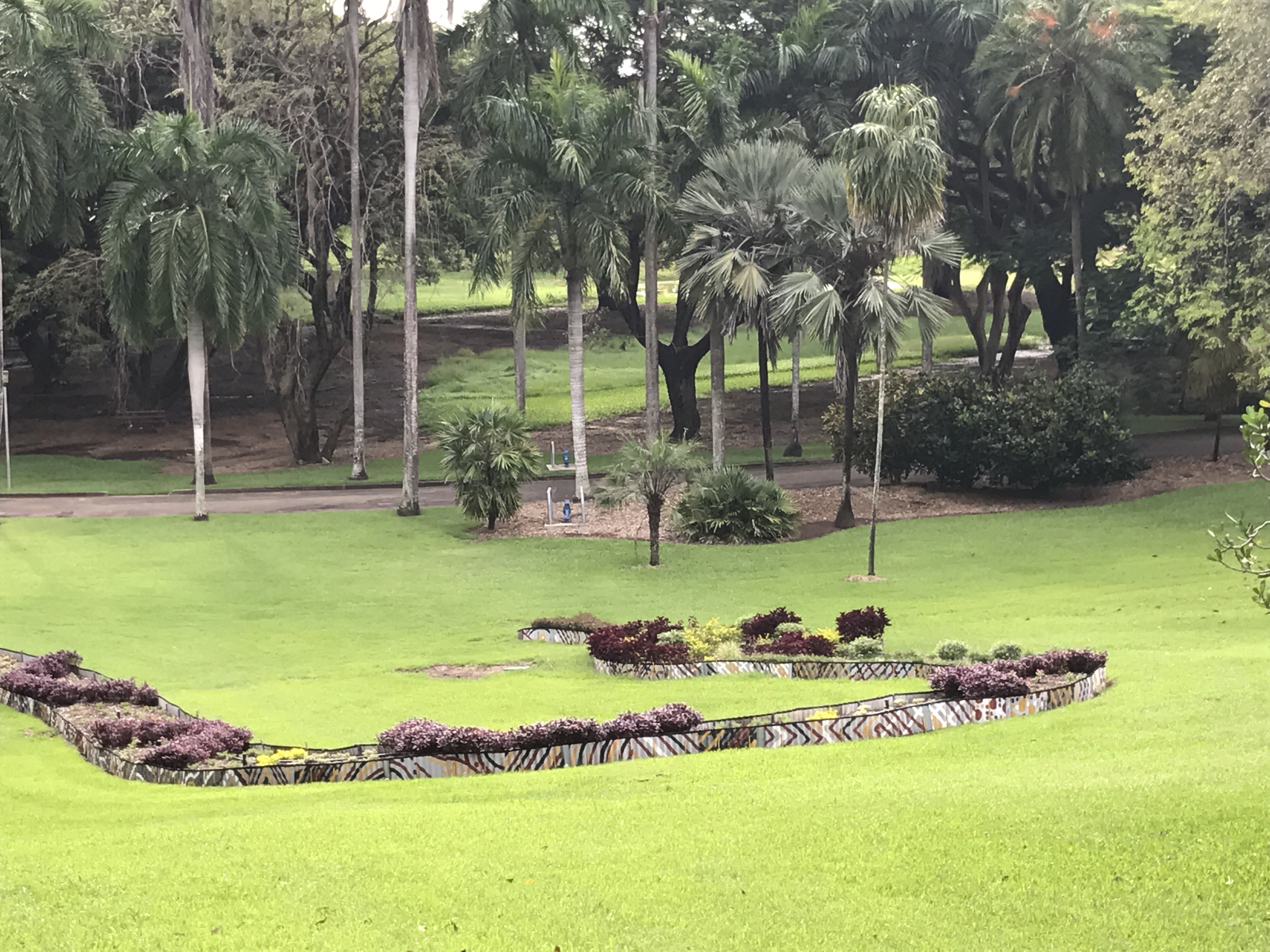
Our last stop of the day was the George Brown Botanical Gardens, renamed for the man who gave so much of his life to rehabilitating the Gardens when they were devastated by the cyclone.  It was beautiful and peaceful.  They have these benches made of trees in all of the parks we have visited.


There is a dramatic difference in everything between the wet and dry seasons.  As I mentioned, this is the wet season – the dry is June – October.  Operating hours of attractions, excursions available, restaurant hours and much more – Ray mentioned so many times that things are available only in the dry season.  Of course our flight in Kakadu is only in the wet season!
Very interesting day – Ray was a good guide and showed us many other things in Darwin – I tried to cover just some of it here. It was about 100 degrees and humid, so we were really glad we did this option vs the hop on hop off bus which would have been a scorcher.  Lots of lightning in the sky later in the day but no rain.


We ate at a restaurant in the Waterfront, got gelato on our walk back to the hotel and now I am doing my last “easy and fast” blog post.  Tomorrow in the late morning we will check out and go back to the ship.  Once we get organized we may venture out again as the ship won’t sail for Komodo Island until about 6 PM.  Or we might just stay on board and relax.  It has been a wonderful, educational week.  Soon we will say goodbye to Australia – who knows if we will be back so we were glad to see some of the outback and the National Parks.

Posted in Australia, Excursions, March, World Cruise 2 | 5 Comments

Darwin and Kakadu National Park

March 11, 2017

We flew into Darwin yesterday and checked into the Hilton.  In fact, I checked in from our transfer in the Alice Springs airport.  Love these apps.  I even selected our room using the app.

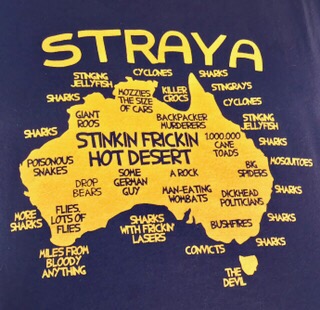
We met a woman from the Philadelphia suburbs in the airport.  She shared this t-shirt design:


Remember I mentioned how much avocado they seem to serve here? (and I love avocado).  In the Quantas magazine I saw this small article about the different foods that they like here in Australia.  This is the explanation for the avocado:

“When social commentator Bernard Salt pontificated in his newspaper column last October that young people could afford a mortgage if they stopped paying $22 for smashed avocado on toast, he unwittingly put this humble fruit in the national spotlight.  Now you can’t find a cafe without smashed avocado on the menu!”

So after we actually arrived at the hotel, we went for a walk to the waterfront.  Very hot here but the waterfront is just a few blocks away.  In fact, I think we will be able to see our ship when it arrives on Monday morning.

We went to a local pub for dinner – sat outside and this tree was right in the middle of the pub!

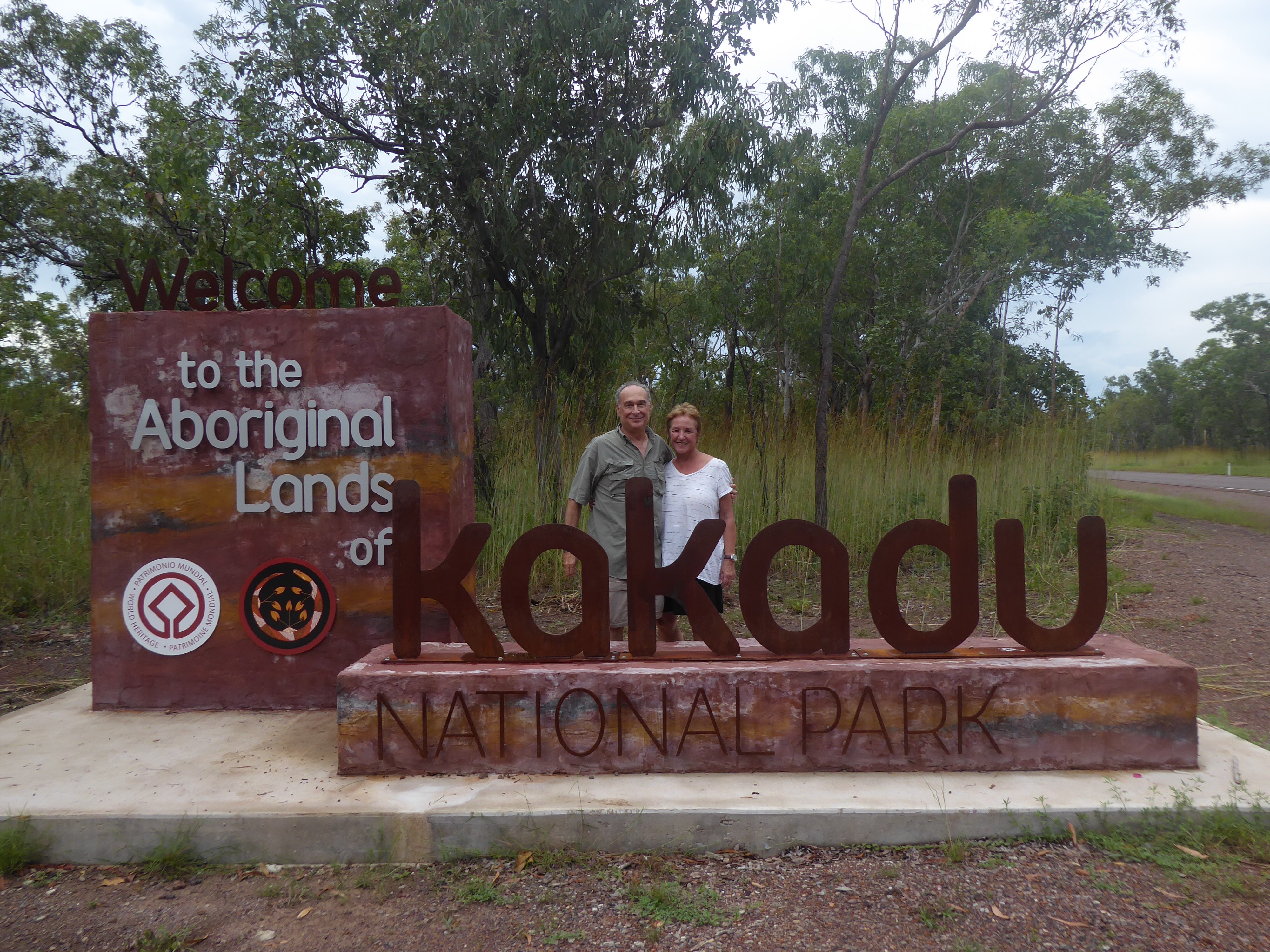
After a short night’s sleep – again – we had a trip today to Kakadu National Park.  It is a 3 1/2 hour trip to the part of the park we were headed for, so we left at 6:15.  We were with a group of 30 people and our driver/guide was Michael. He was a wealth of knowledge – his mother has aboriginal background.


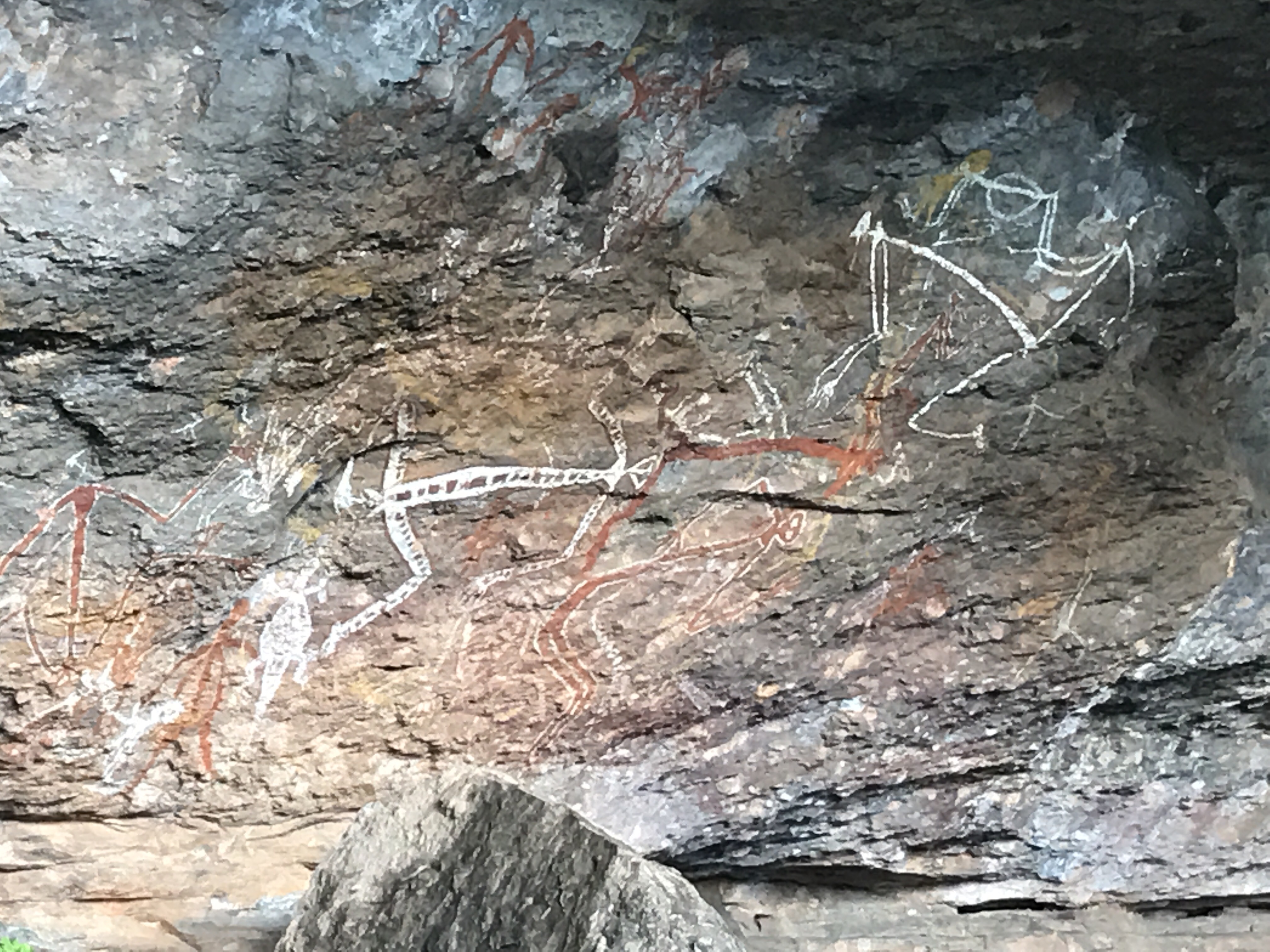
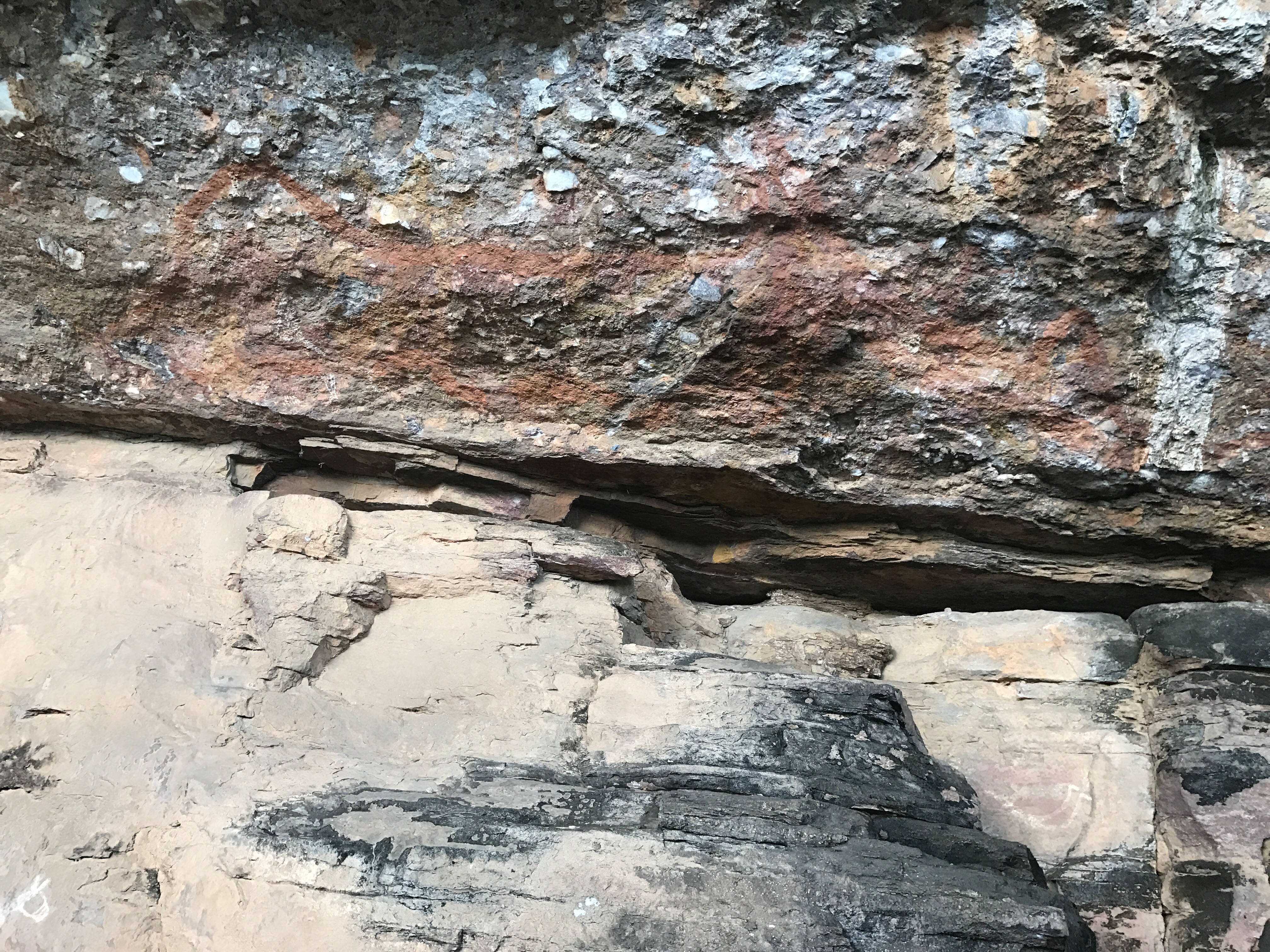
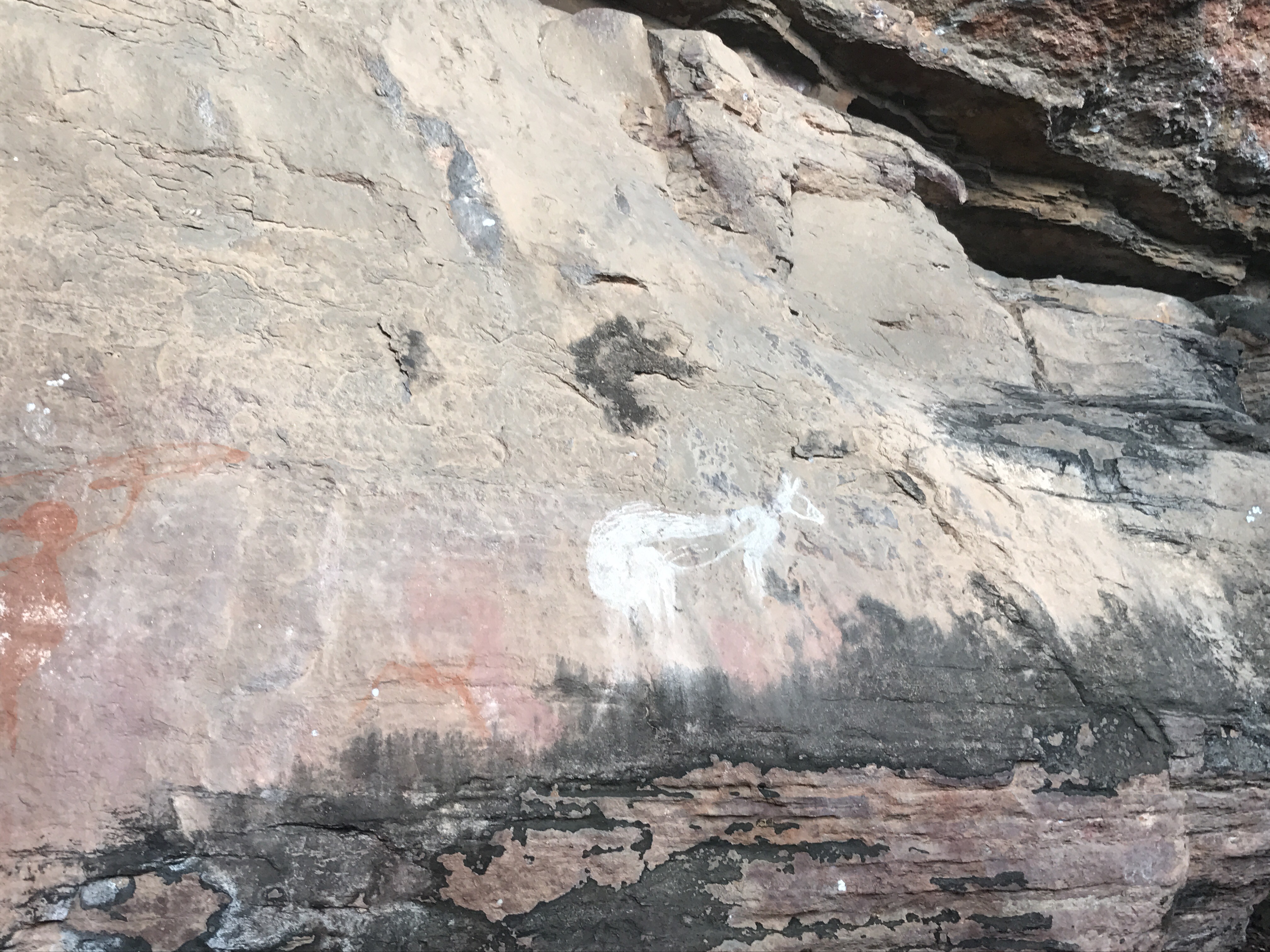
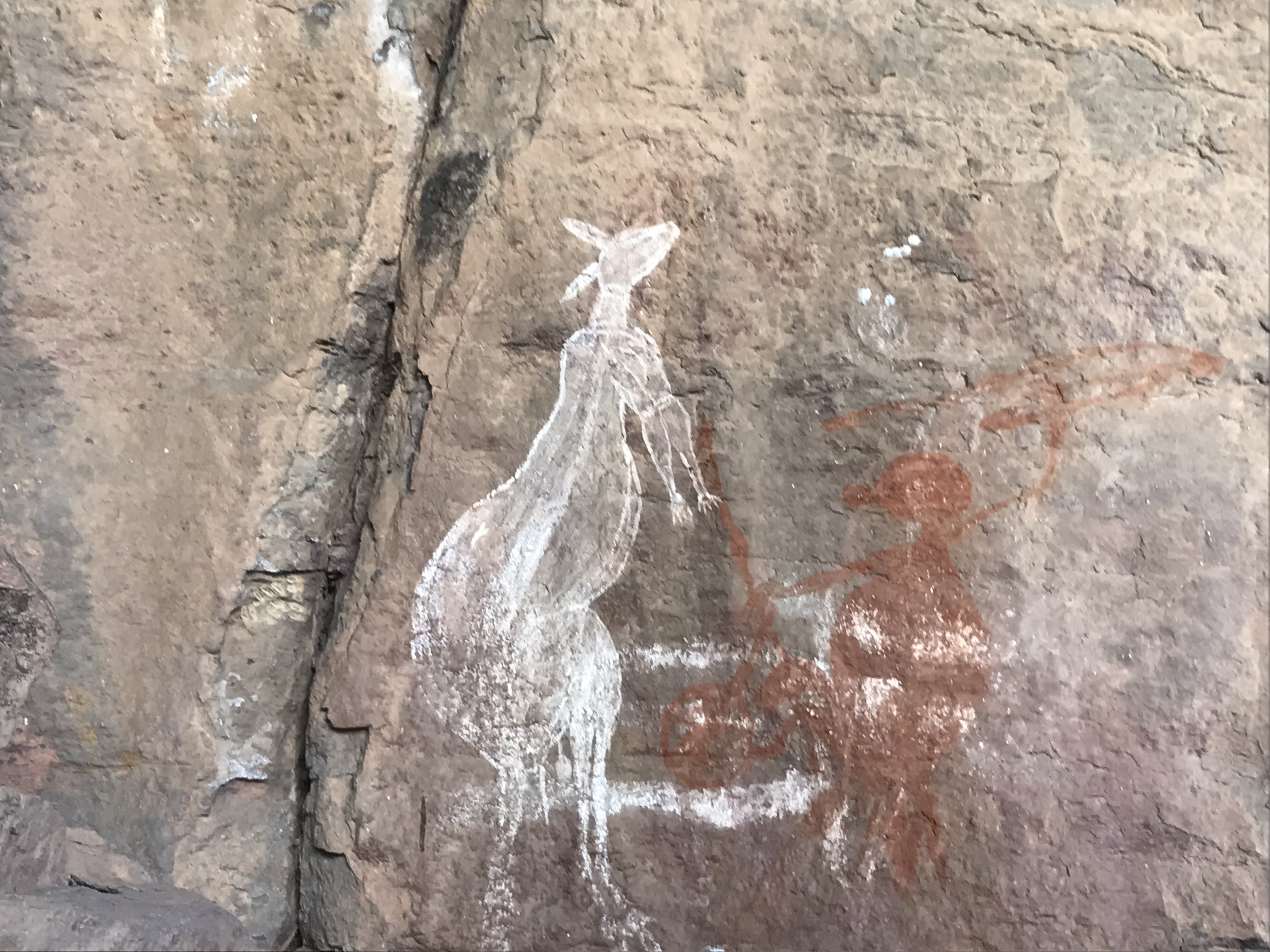
 The park covers an amazing 20,000 square kilometers and is on the UNESCO World Heritage List in recognition of both its outstanding natural values and as a living cultural landscape. It is known as the oldest living culture in the world – aboriginal people have lived here for what is believed to be 70,000 years!  It is also known as the cleanest park in the world – it is a weed free environment.  Much like Uluru, this park land was returned to the indigenous people and was leased back to be held as a national park for 99 years – in 1992. Both Uluru and Kakadu are managed by a Board of Management which has an Aboriginal majority representing the traditional owners. There are thousands of rock art sites here, we saw just a few – most are sacred sites and cannot be visited or photographed.

There is a uranium mine within the park and it is still operational.  The mine workers are breathalyzed and drug tested every day.  

The name Kakadu comes from an Aboriginal language called Gagudju which was one of the languages spoken in the north of the park at the beginning of the 20th century.


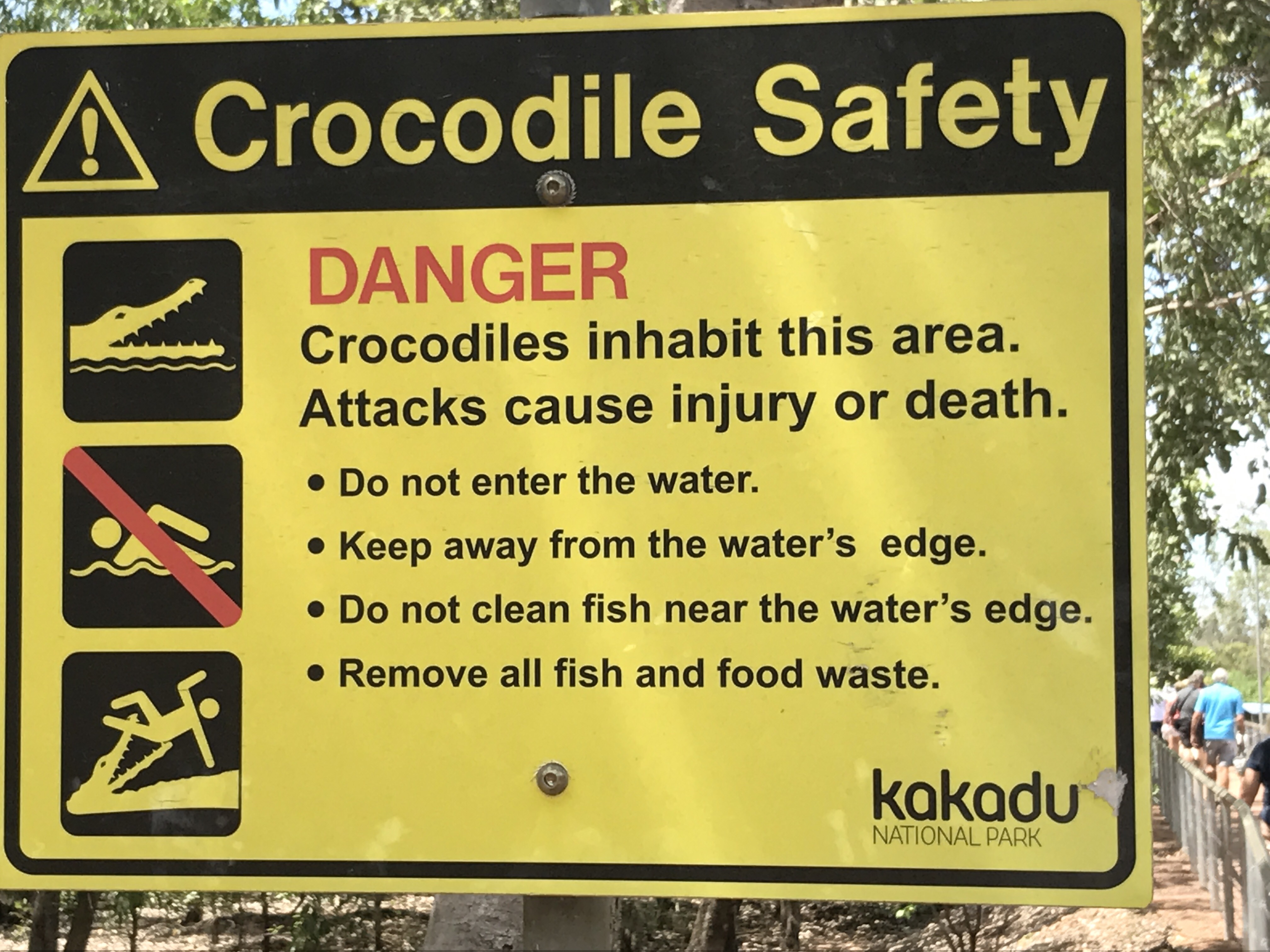
Kakadu is home to 68 mammals, more than 120 reptiles, 26 frogs, over 300 fish species and over 1/3 of Australias birds.  We saw many wallabies frolicking along the road.. but what we really wanted to see was either a fresh water or salt water crocodile – but Michael said it was too hot and they were probably under the water.  They are prevalent – 80 crocodiles/kilometer and there are warnings everywhere.  But we didn’t see even one!


They are the world’s largest living reptiles as well as one of the oldest having existed unchanged for nearly 200 million years.

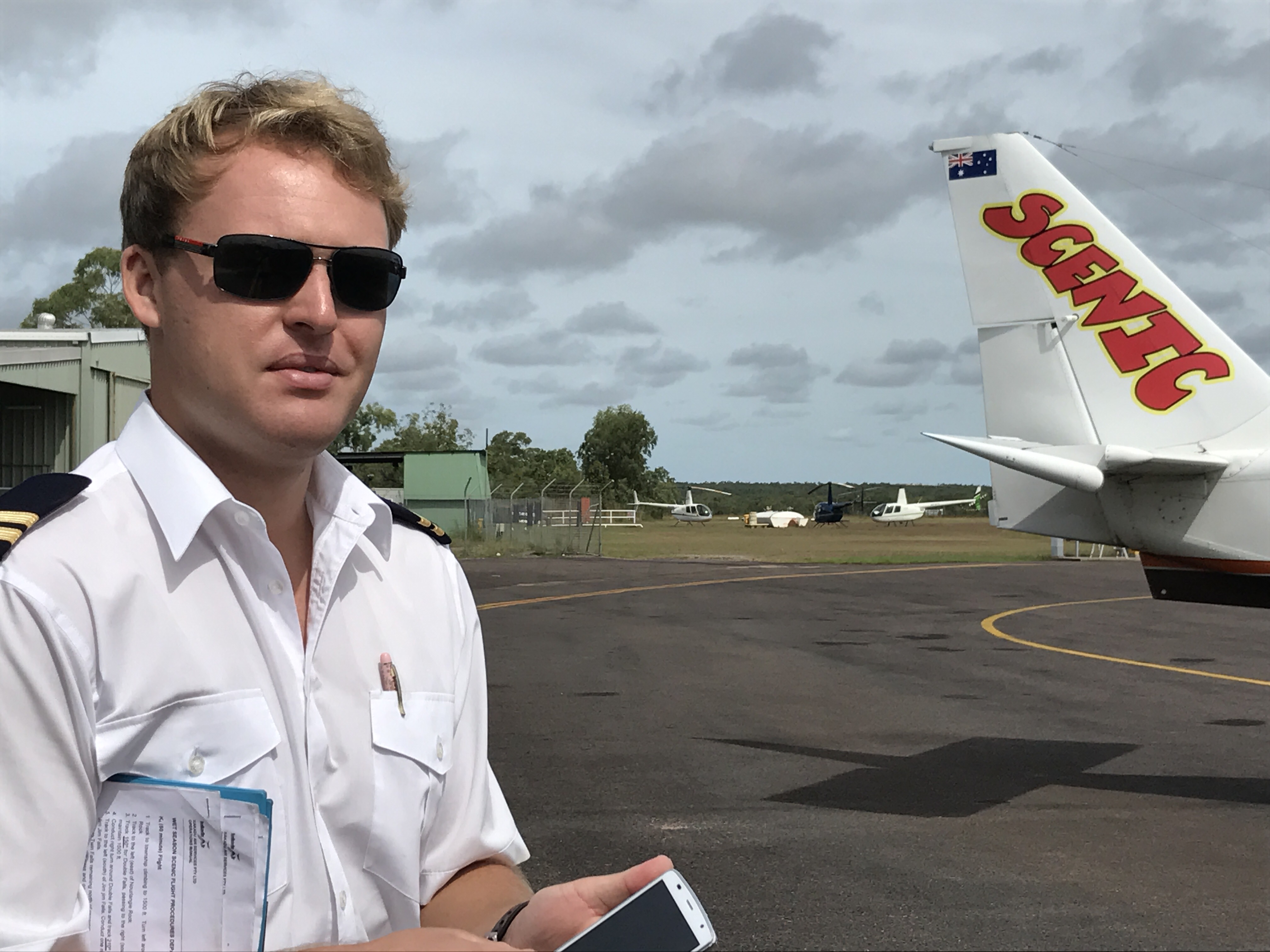
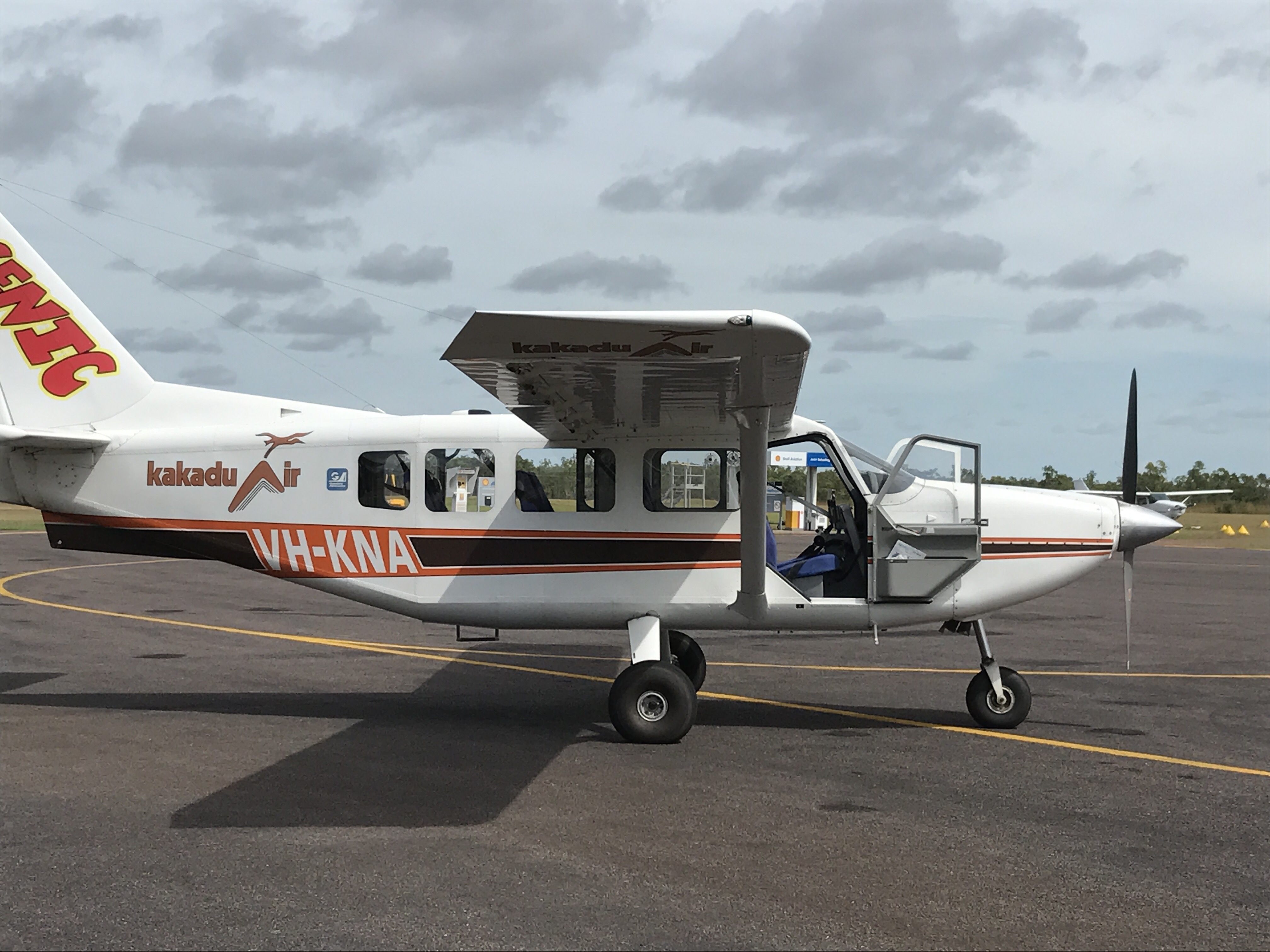
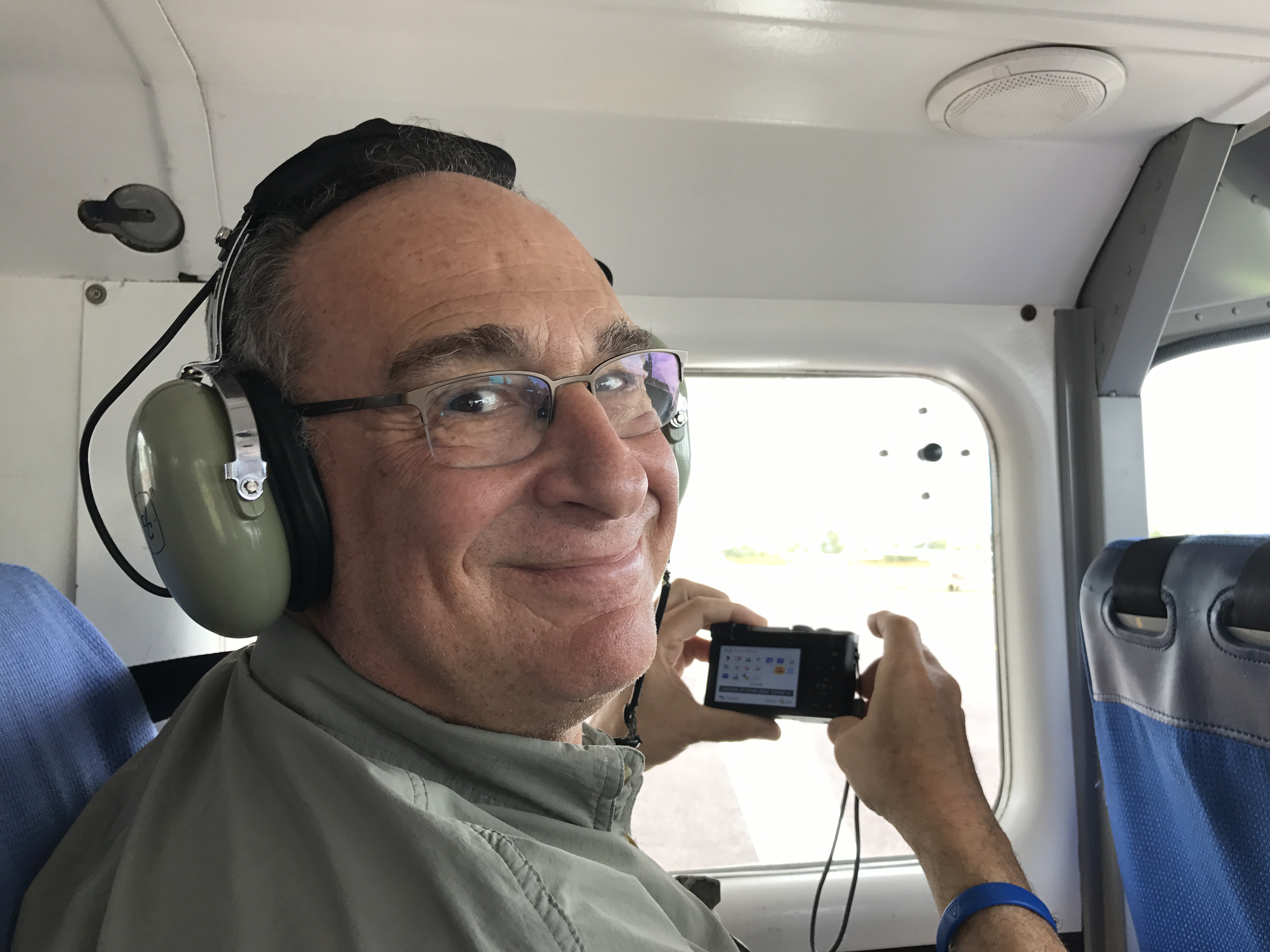
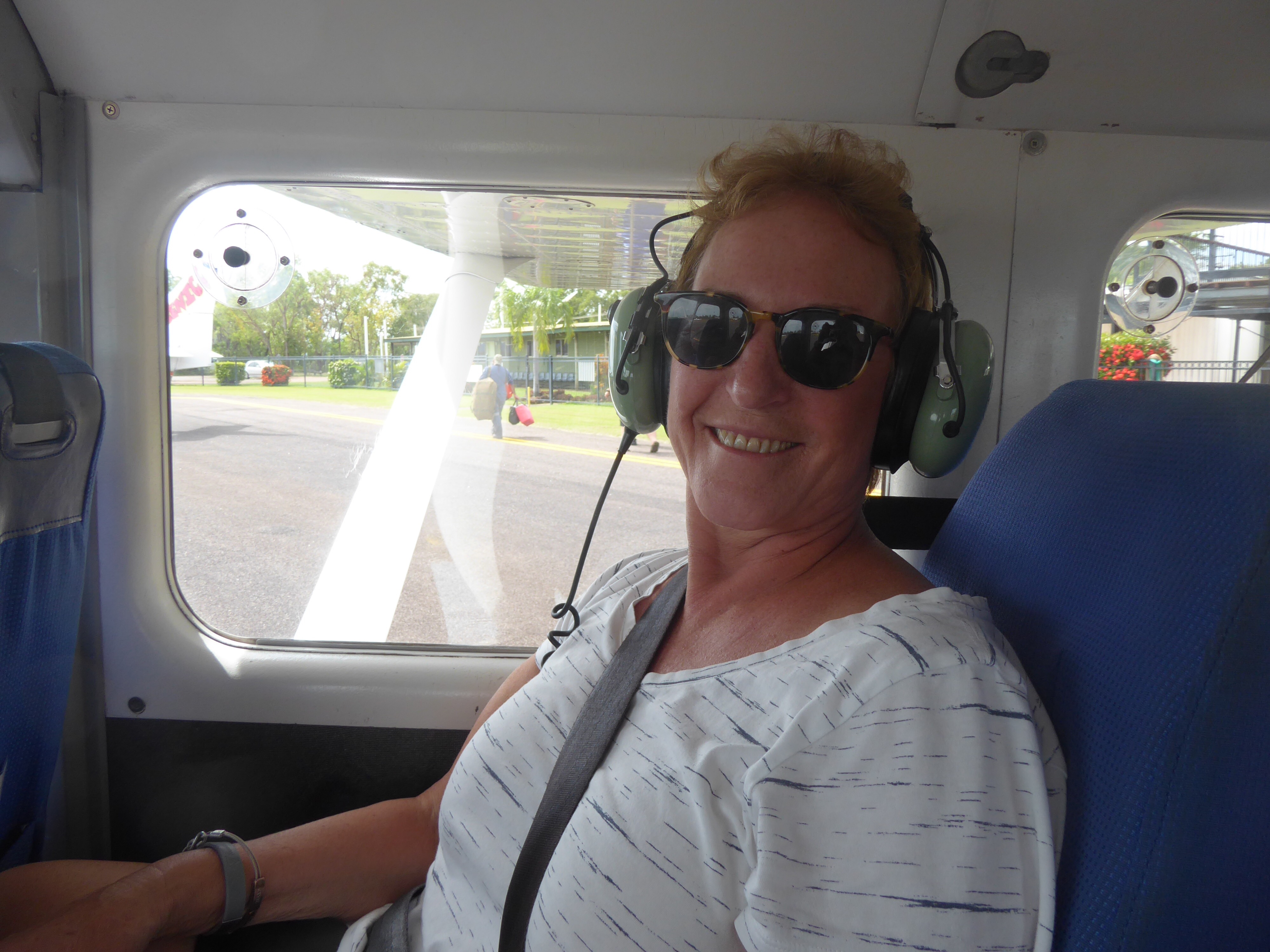
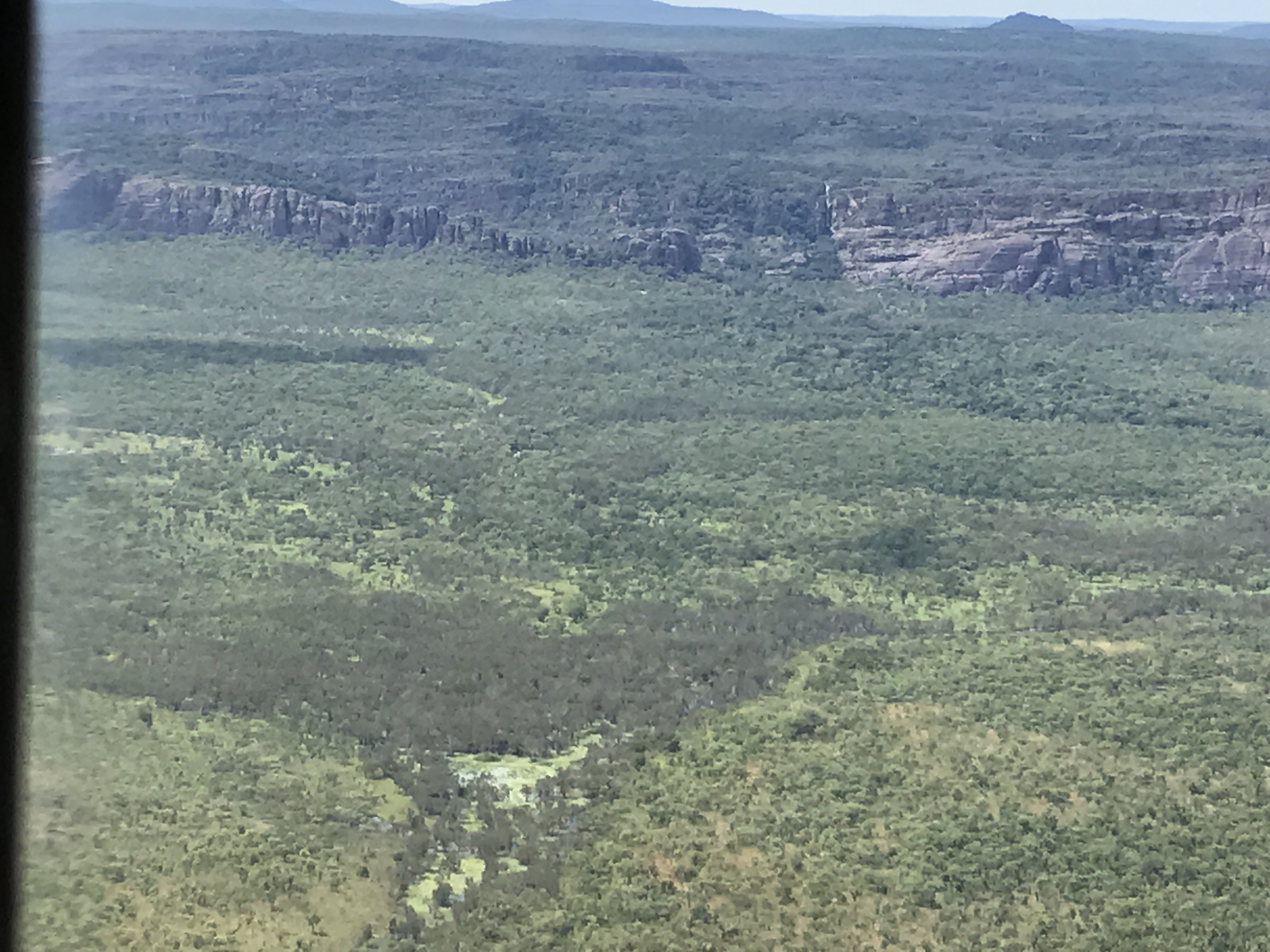
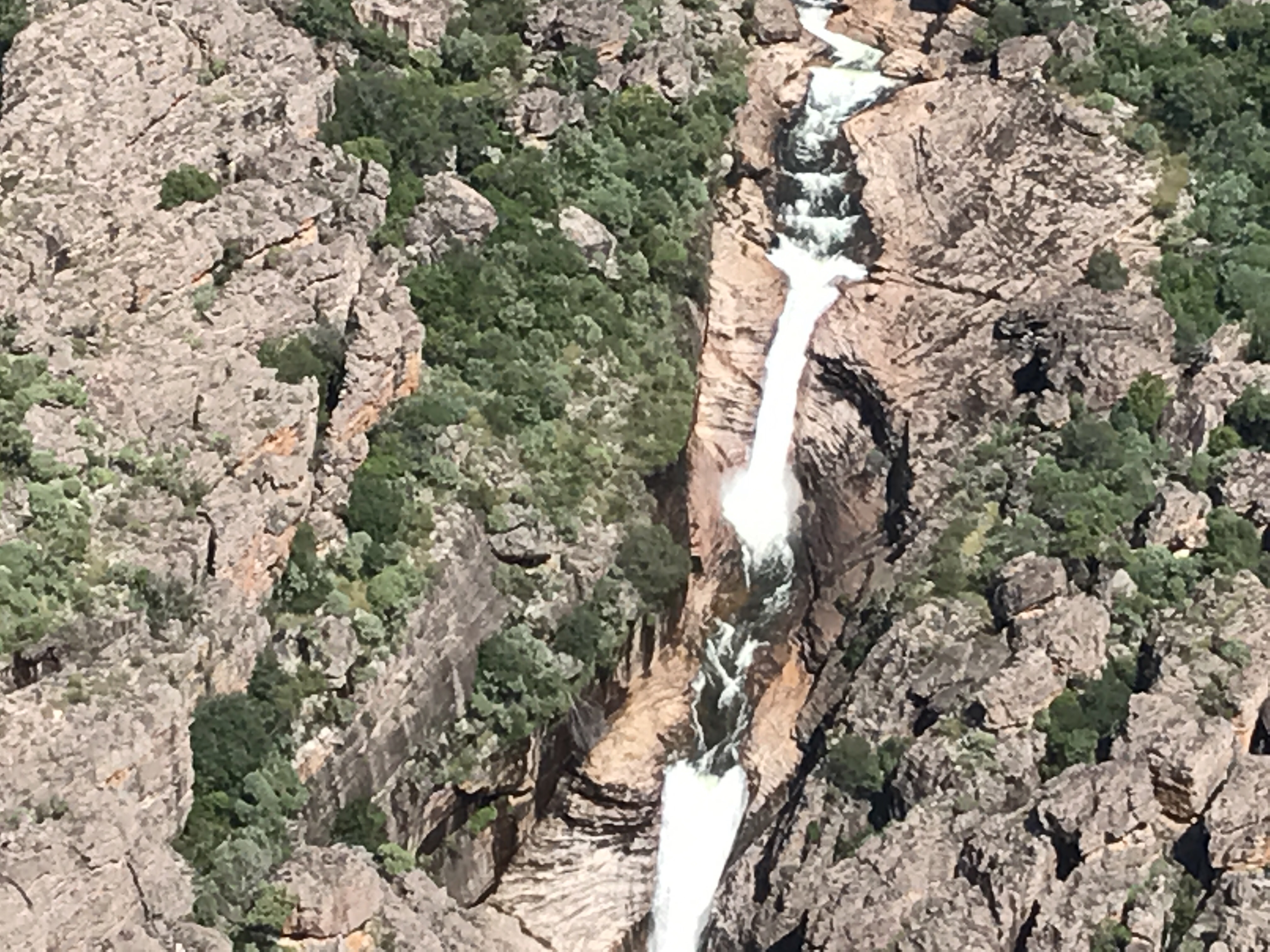
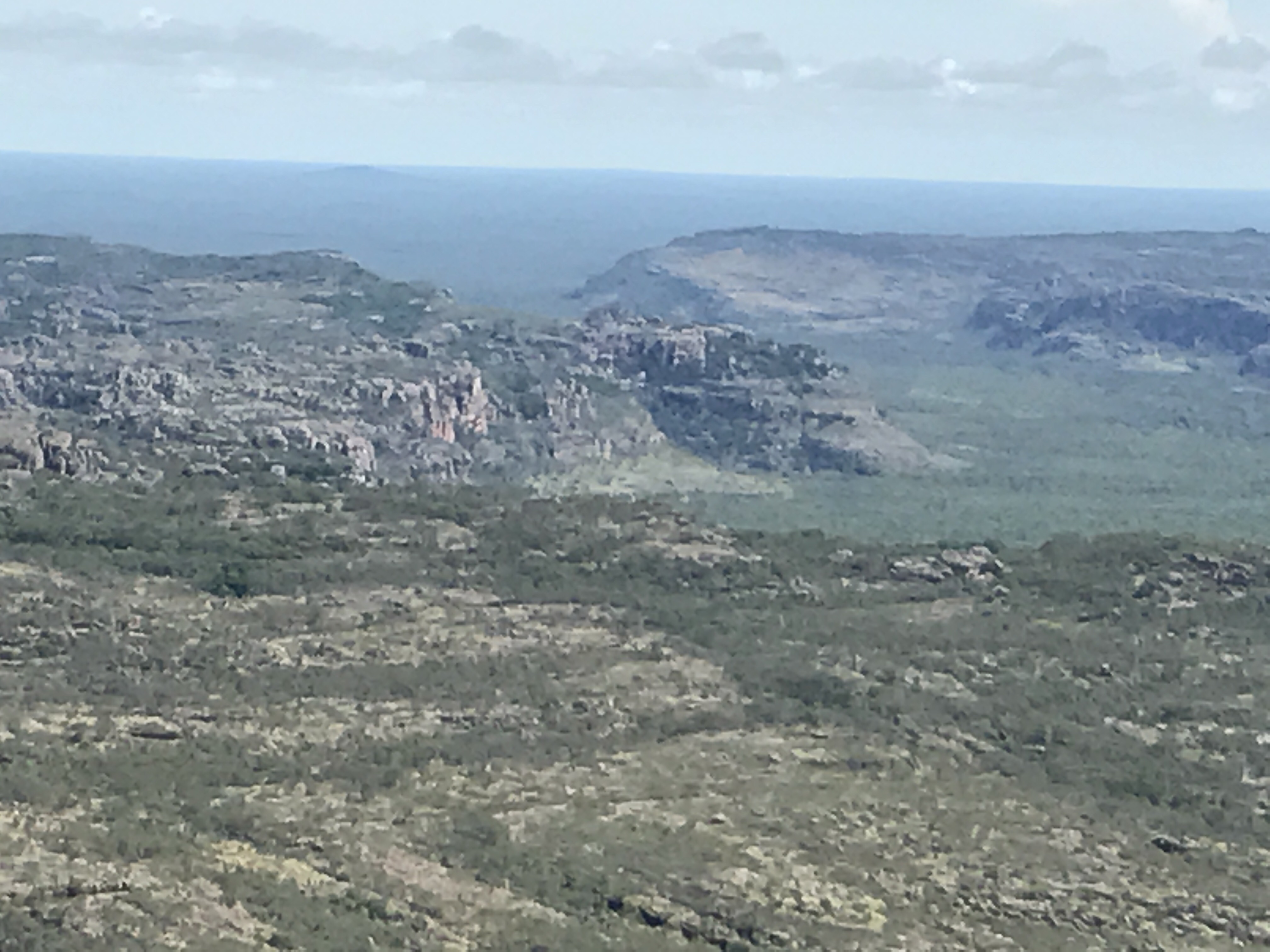
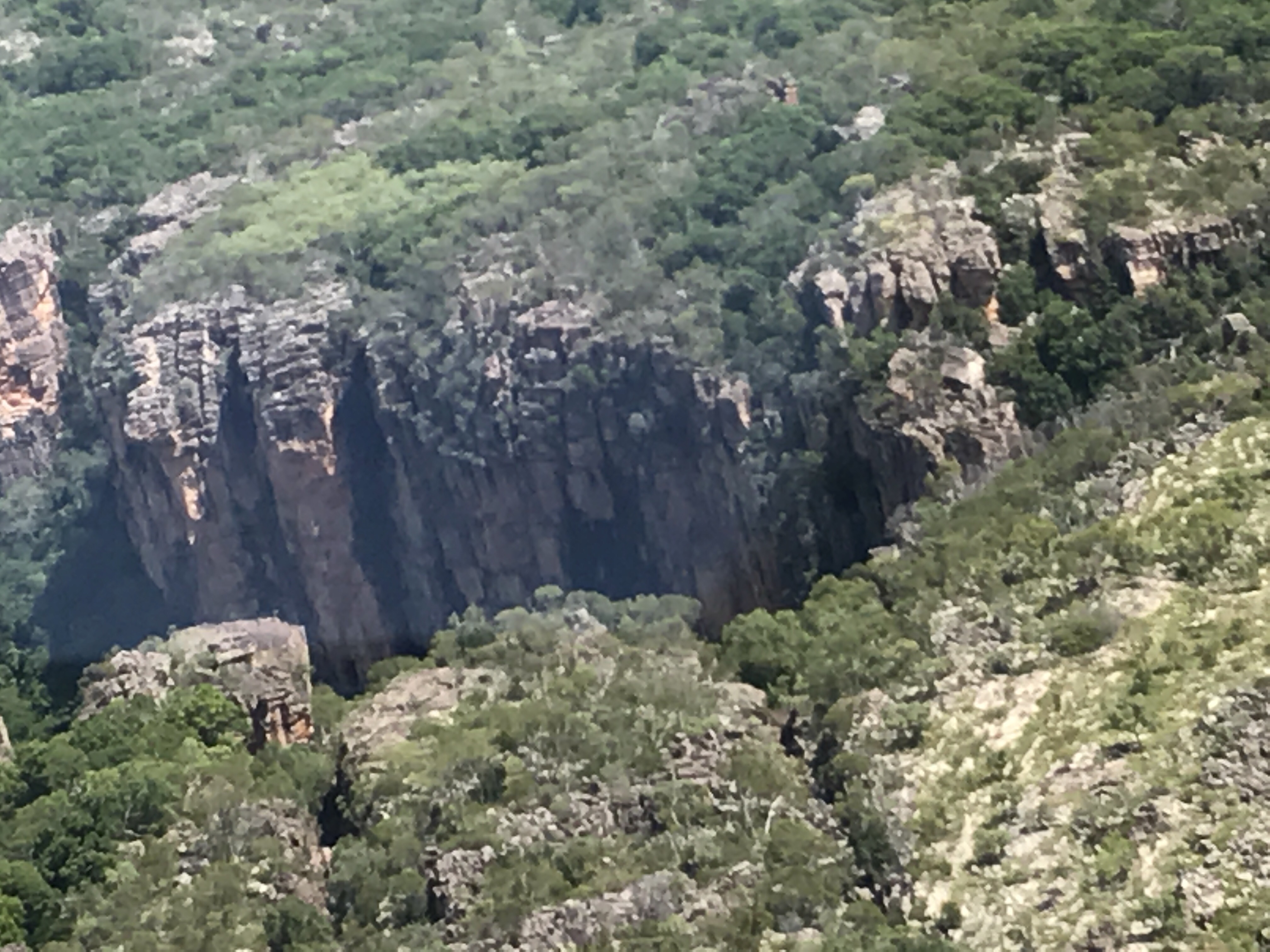
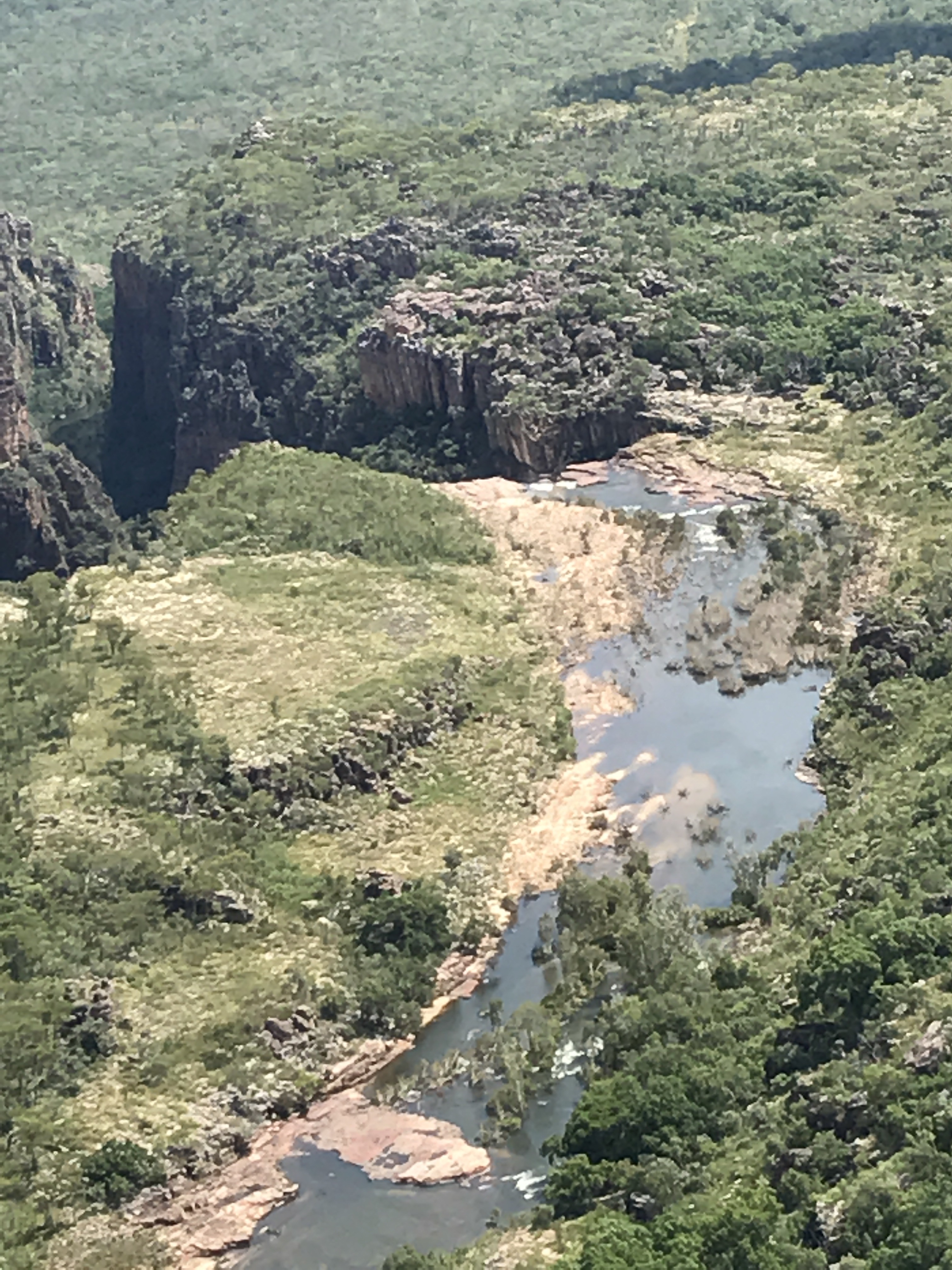
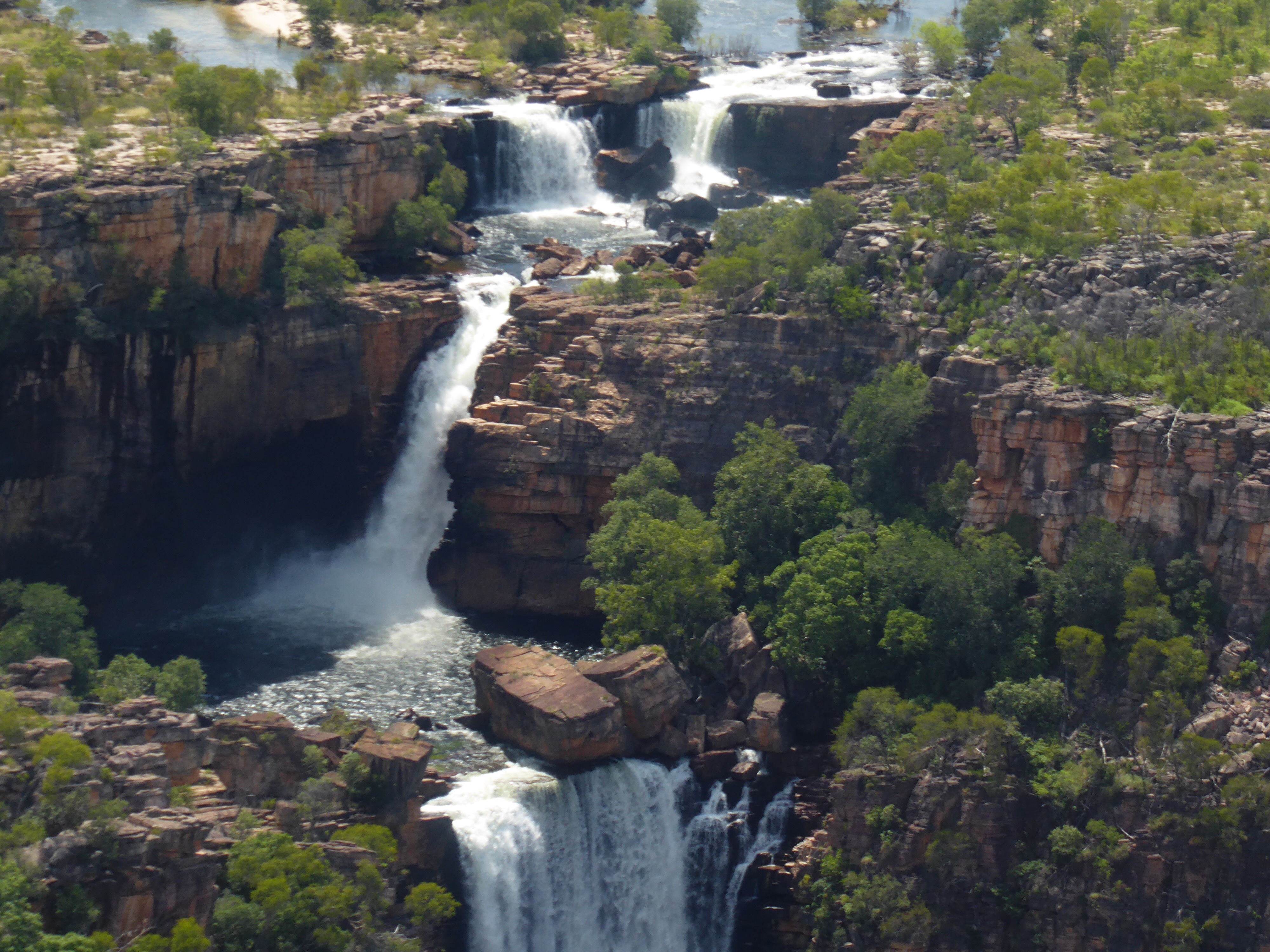
This is the wet season here, so we had the opportunity to take a flight over the park to see the waterfalls.  This flight is only  operated during wet season since the waterfalls dry up the rest of the year.  9 of us decided to do the flight with Kakadu Air.  Vincent was our pilot – there were 4 in our plane and 5 in the other one. The planes are Airvan G8 high wing aircraft and hold 7 plus the pilot.


The flight was at 1500 feet and the perspective of the huge park was amazing.  Here are a variety of shots from the plane.

The first is the Mercure Kakadu Crocodile hotel. Wonder why they named it that?


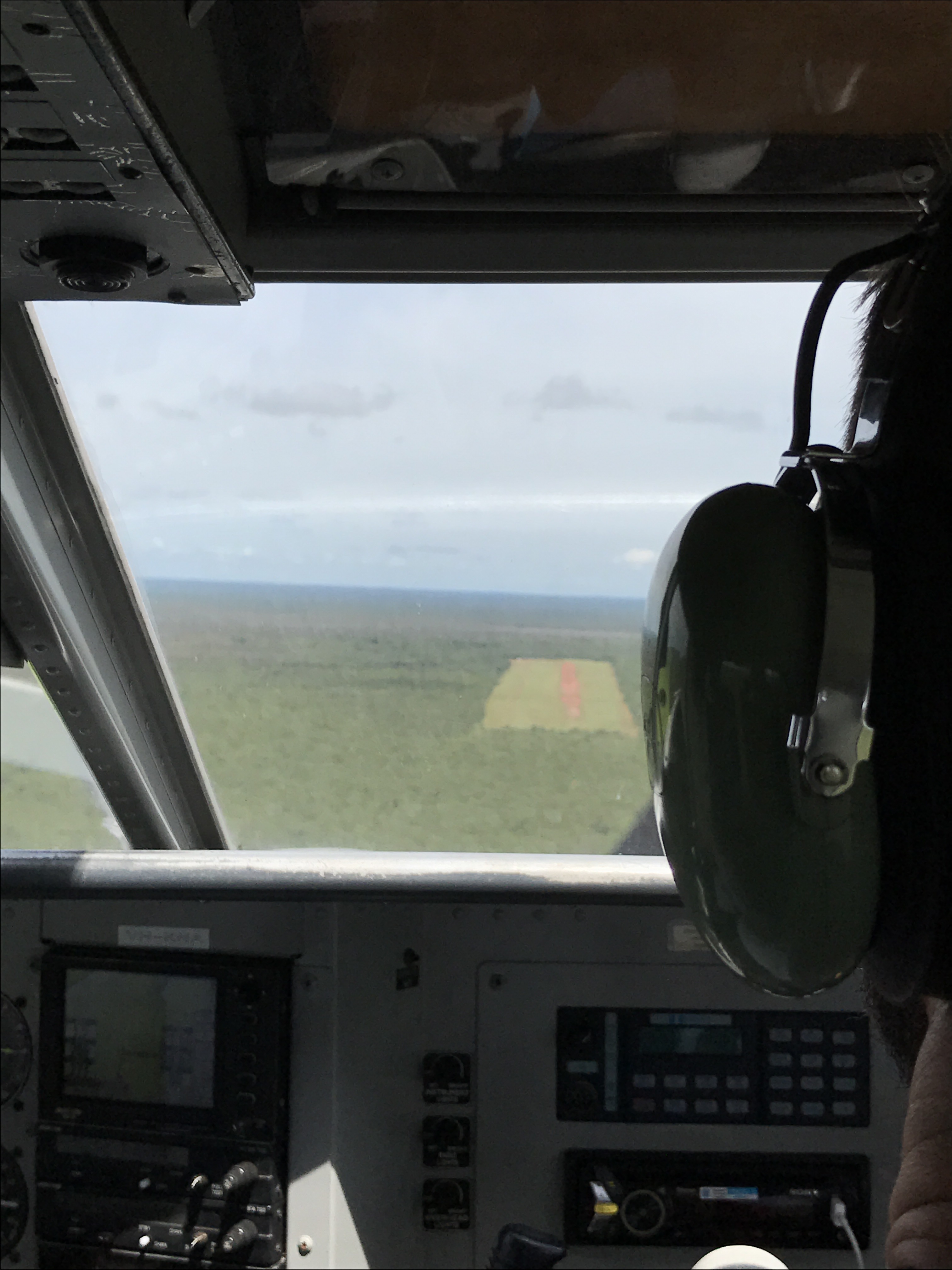
And here is a view of the landing strip as we were coming in for the landing.


The people who didn’t take the flight continued on in the bus and visited the cultural center.  We met them at Cooinda airport.

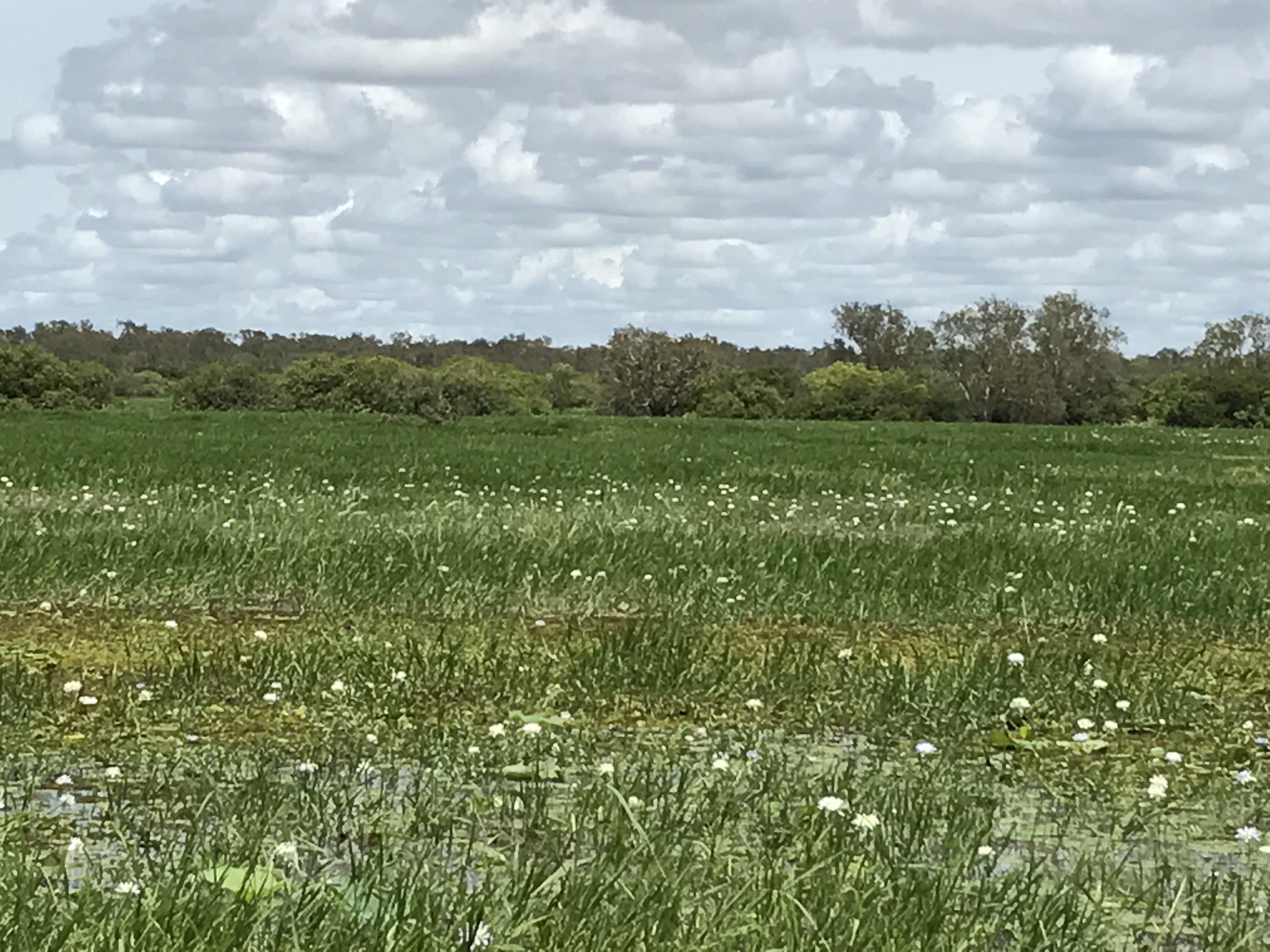
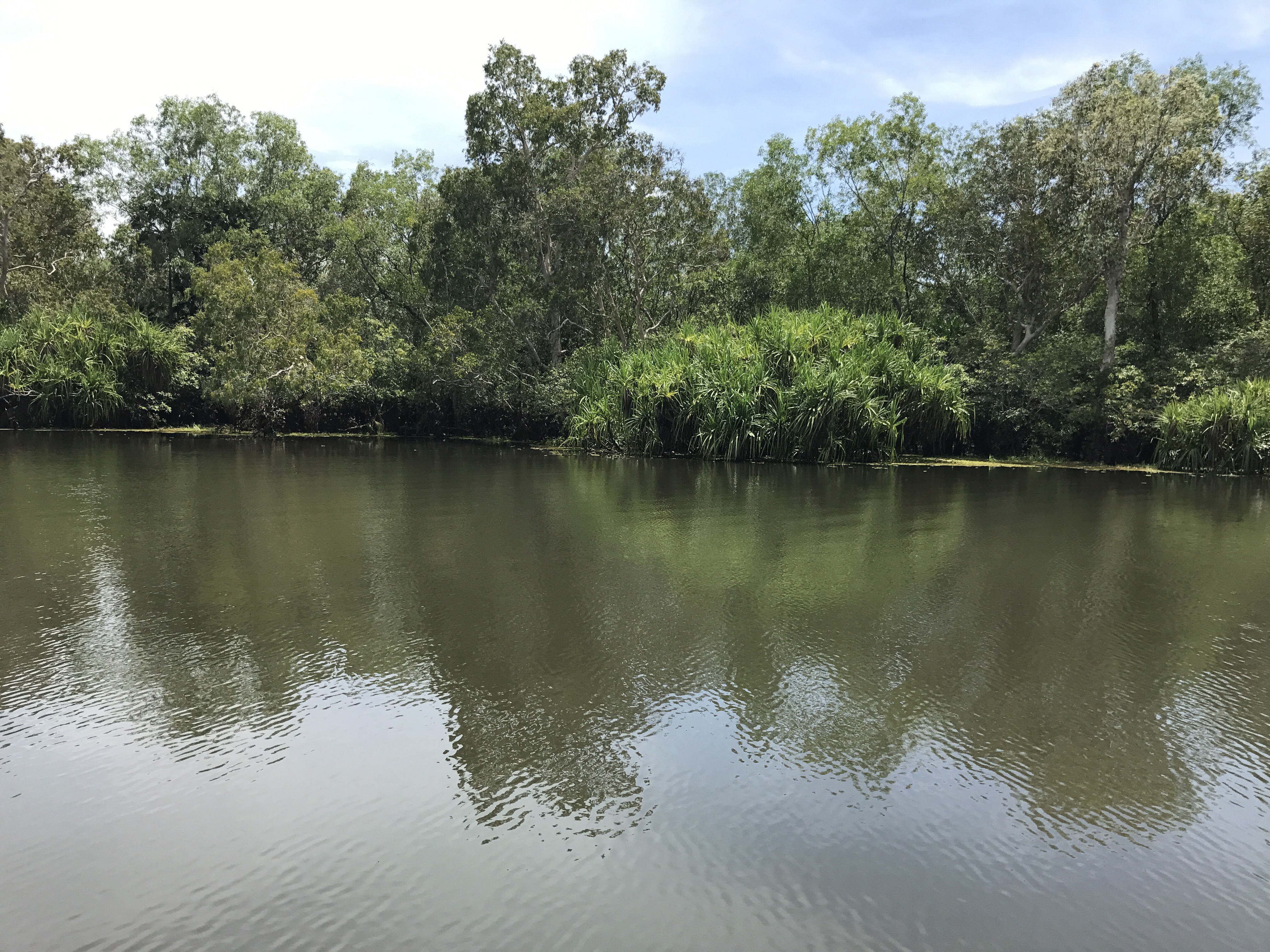
Our next adventure was a boat trip in the Yellow Water wetlands.  Our boat captain was Dennis and he explained all about the waterways and we learned that a billabong is a permanent source of water.  Because it is wet season, the rivers are full but that is not the case the rest of the year.  We were on the Alligator rivers – there are three of them. There are actually no alligators in Australia but an American explorer named the rivers thinking that the crocodiles were alligators.  By the time it was on all the maps, they decided not to change the names – they are the South, West and East Alligator Rivers.

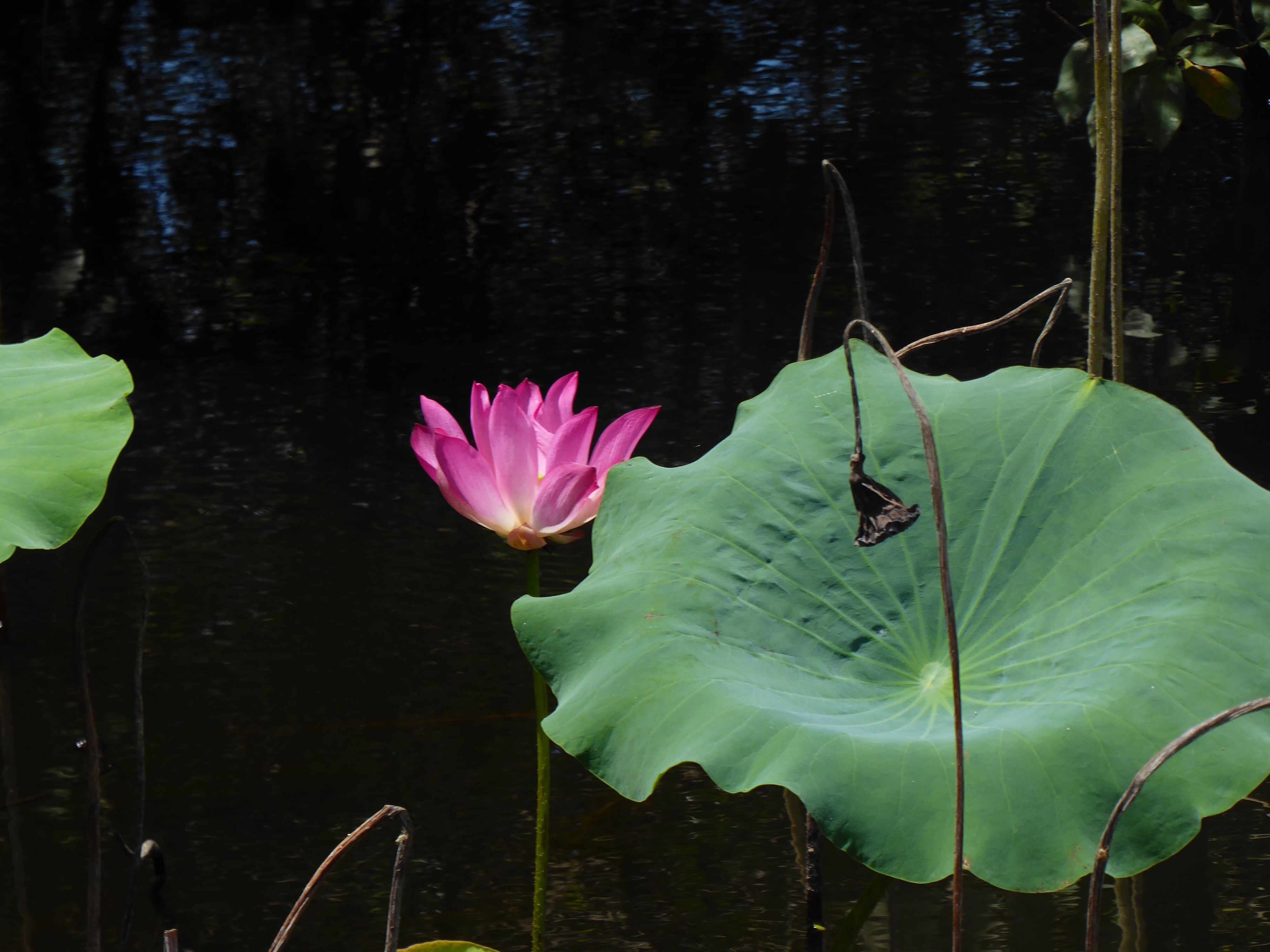
We saw many cockatoos – pure white – lots of lilies (the native people eat the roots and say they are delicious) and lots of magpie geese – the rarest goose in the world.  They have half webbed feet so they can both swim and land in trees.


Great time and lots to see.  But still no crocodiles.

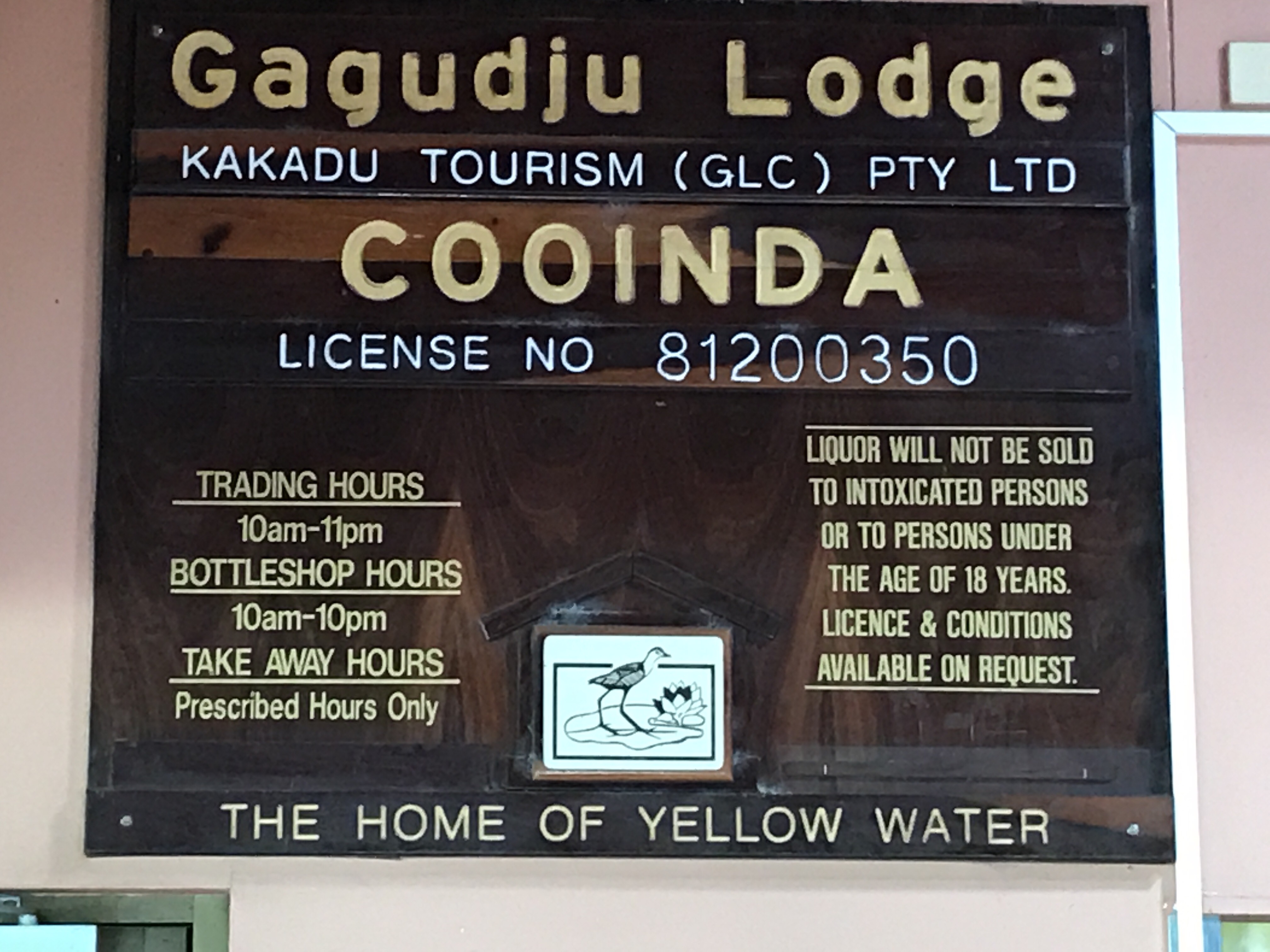
We had our lunch at the Cooinda Lodge where I spotted this sign:


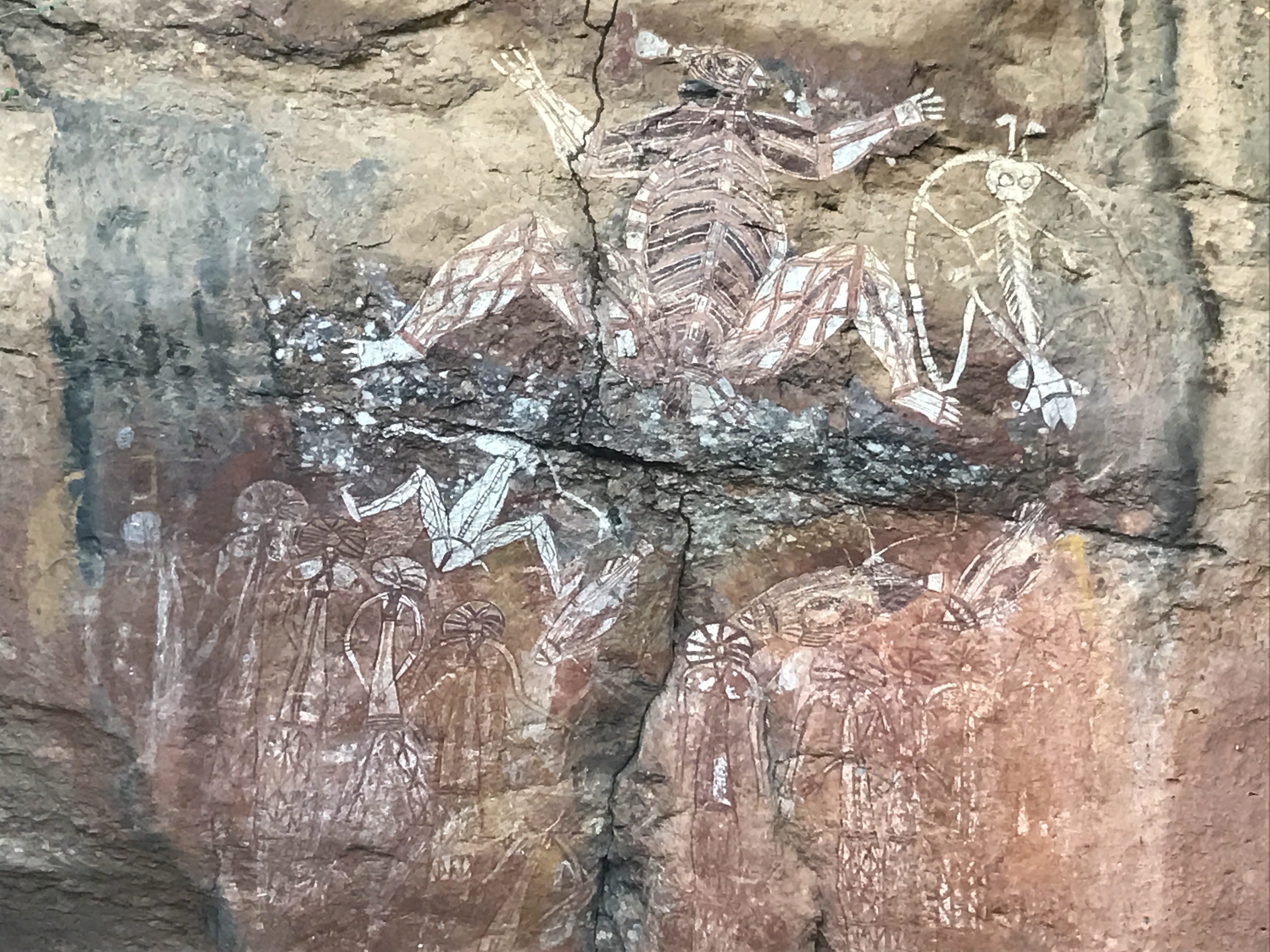
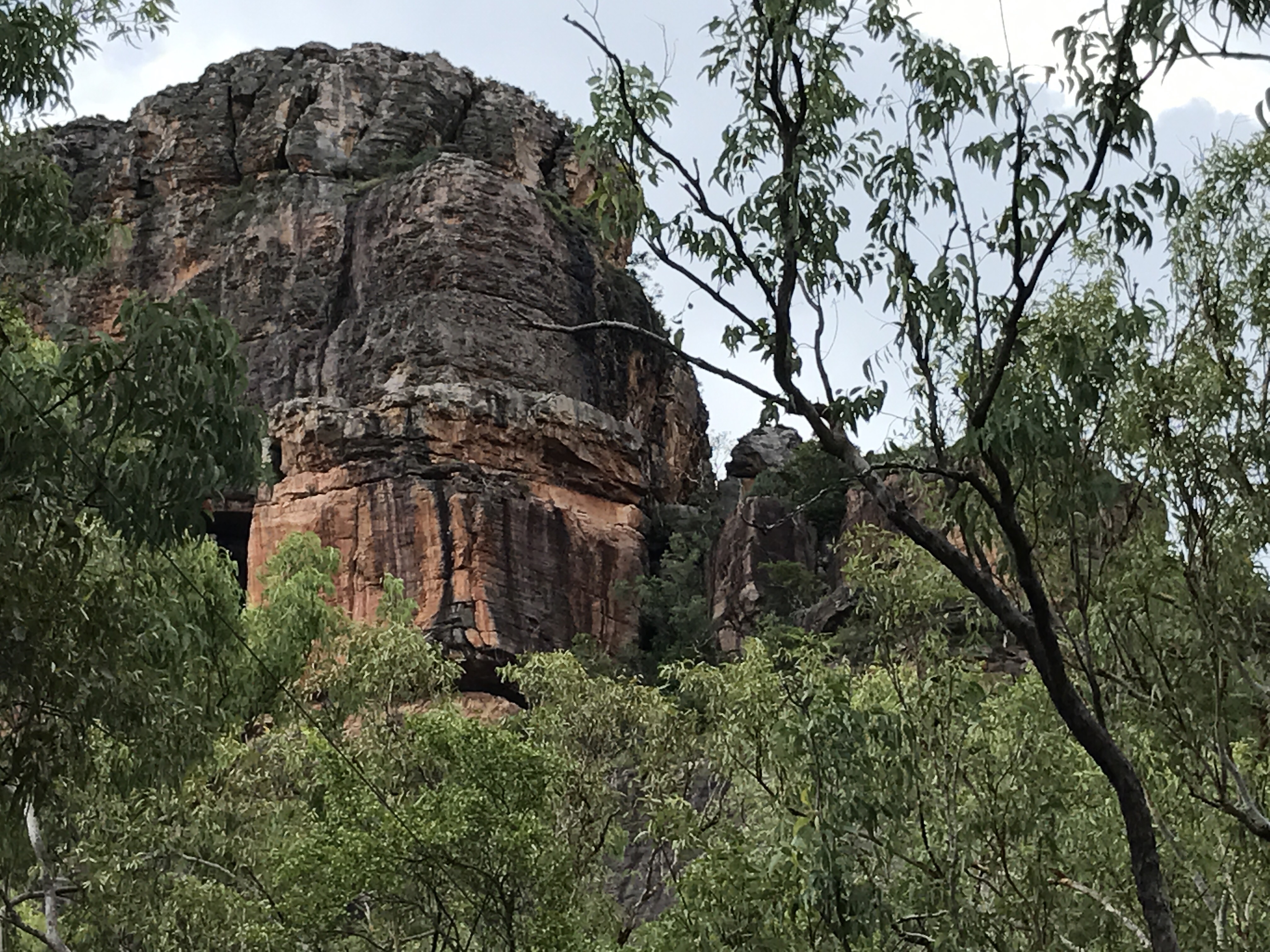
After lunch we went to the Anbangbang rock walk to see the art sites there.  Michael explained the meaning of the art.  The act of painting was more important to the people than its permanence, so some of the sites were painted over. The art was interesting and the additional rock formations just awesome.


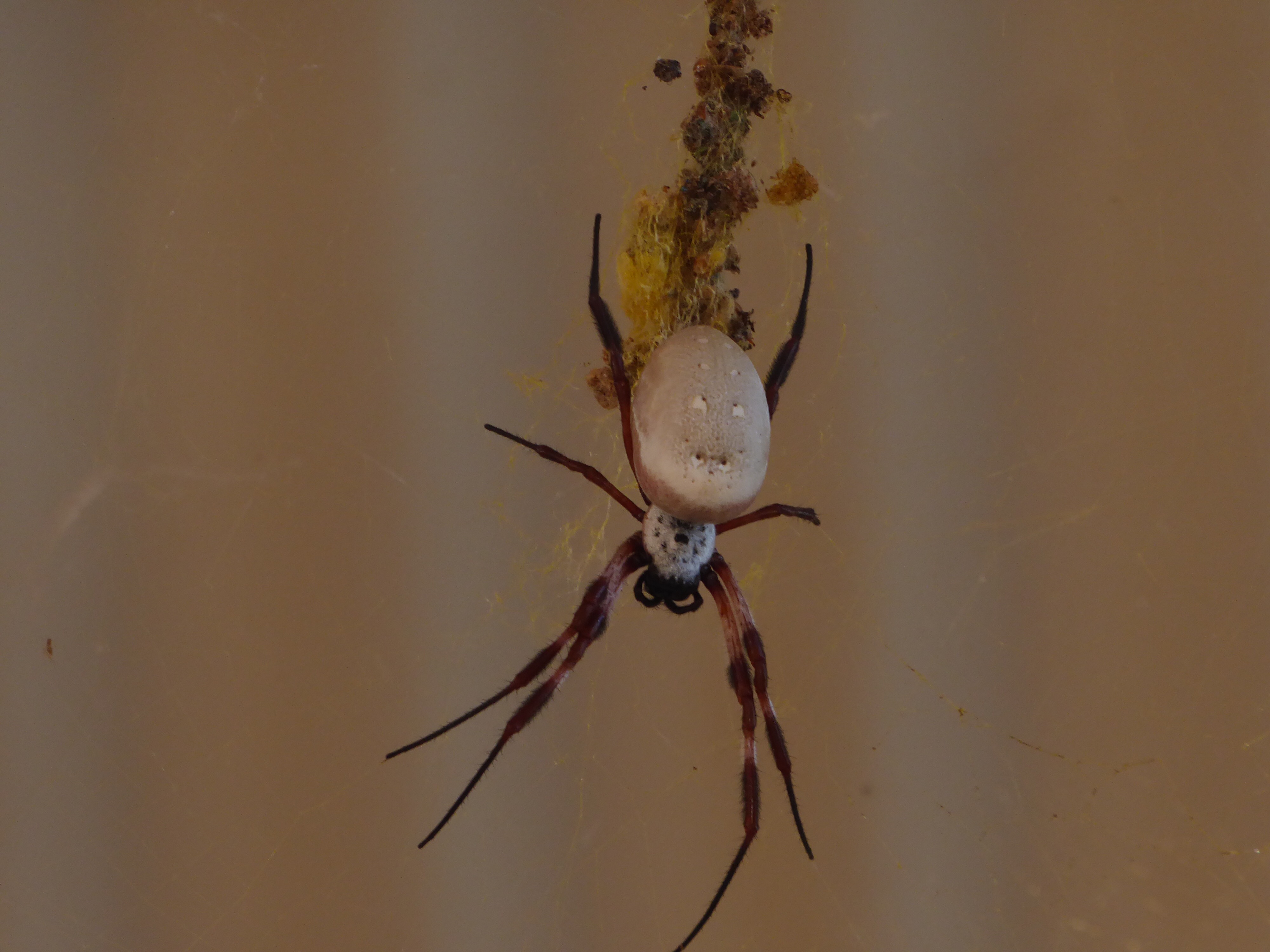
Yes, we saw another impressive spider. But this kind does not eat the male after they mate like the one we saw at Uluru!

Wonderful, amazing day and again, quite a spiritual place in so many ways.  We have really appreciated getting an understanding of the indigenous people here and learned so many things about their culture and the beauty of their surroundings. They value their land so much and here at Kakadu, like at Uluru,  they ask that we respect their culture by not entering restricted areas.  They may be sacred sites, ceremonial sites or burial sites.

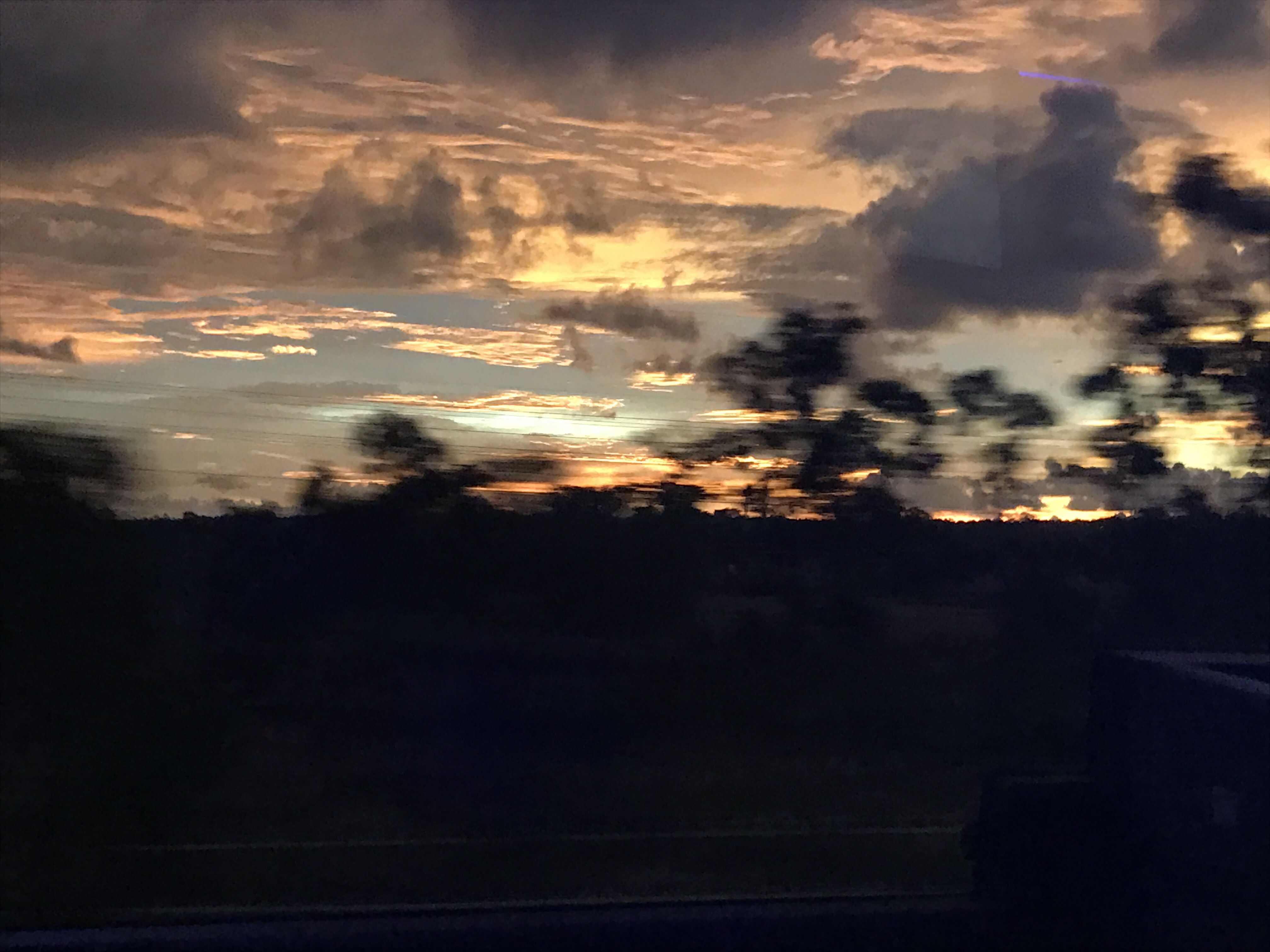
On the way home, we had thunder, lightning and heavy rain.  The water came up past the bus windows as Michael drive through the standing water.  I see why they call it the wet season!  Here’s a shot of the sky just before we reached our hotel at 8 PM. Just beautiful.
Tomorrow we are doing a tour of Darwin and I will have fast wifi here at the hotel to post about that.  Then on Monday, we will rejoin the ship.  Back to painfully slow internet, but looking forward to seeing our friends and the next ports of call.

Posted in Australia, Excursions, March, World Cruise 2 | 4 Comments

Ayers Rock (Uluru), Australia

March 8 and 9, 2017

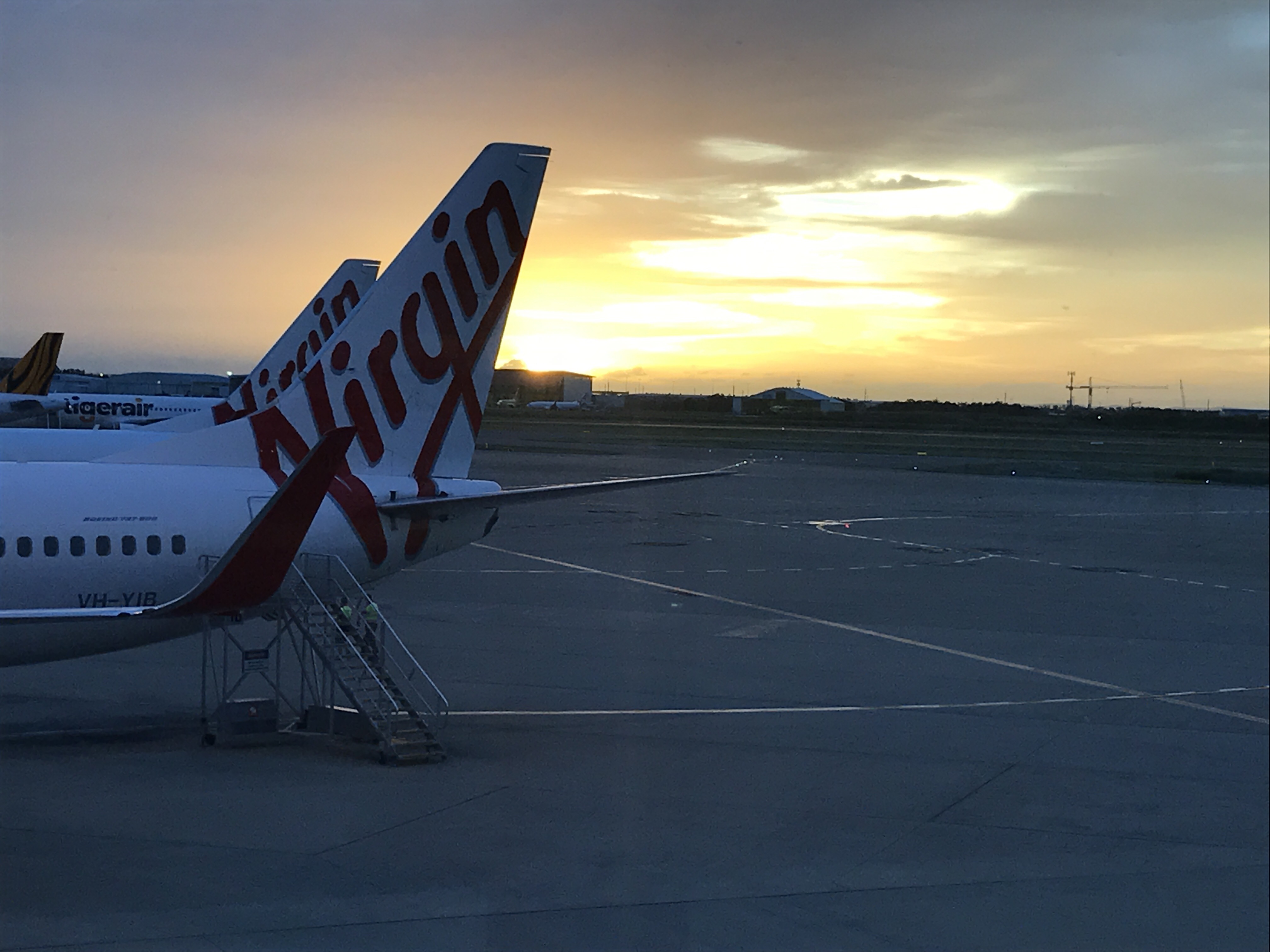
We were up very early yesterday to catch our flight from Brisbane to Ayers Rock, the flight was at 6:30 so we needed to get up at about 4:30.  We saw the sun rise over the airport!

We traveled on Virgin Australia to Sydney where we changed planes for the trip to Ayers Rock.  They had a system that you could use with wifi on board to watch TV, movies, play games, listen to music, take a class, etc.  I watched a movie I have been wanting to see – Manchester by the Sea.  And I can see why Casey Affleck won best actor for it.  

I wonder why airplanes can get good wifi and the Insignia can’t? You will also notice the full size pictures in this post because this entire resort has high speed internet – it works everywhere you go in the whole resort which consists of 3 hotels, an apartment/hotel and a campground.  It also has several restaurants and shops, a theater, an art gallery/museum, spa, camel farm, tennis and volleyball courts and a supermarket.

We arrived at the Ayers Rock airport (which had a sign that it is only open from 8 – 4.) 

And here’s the other sign that greeted us!


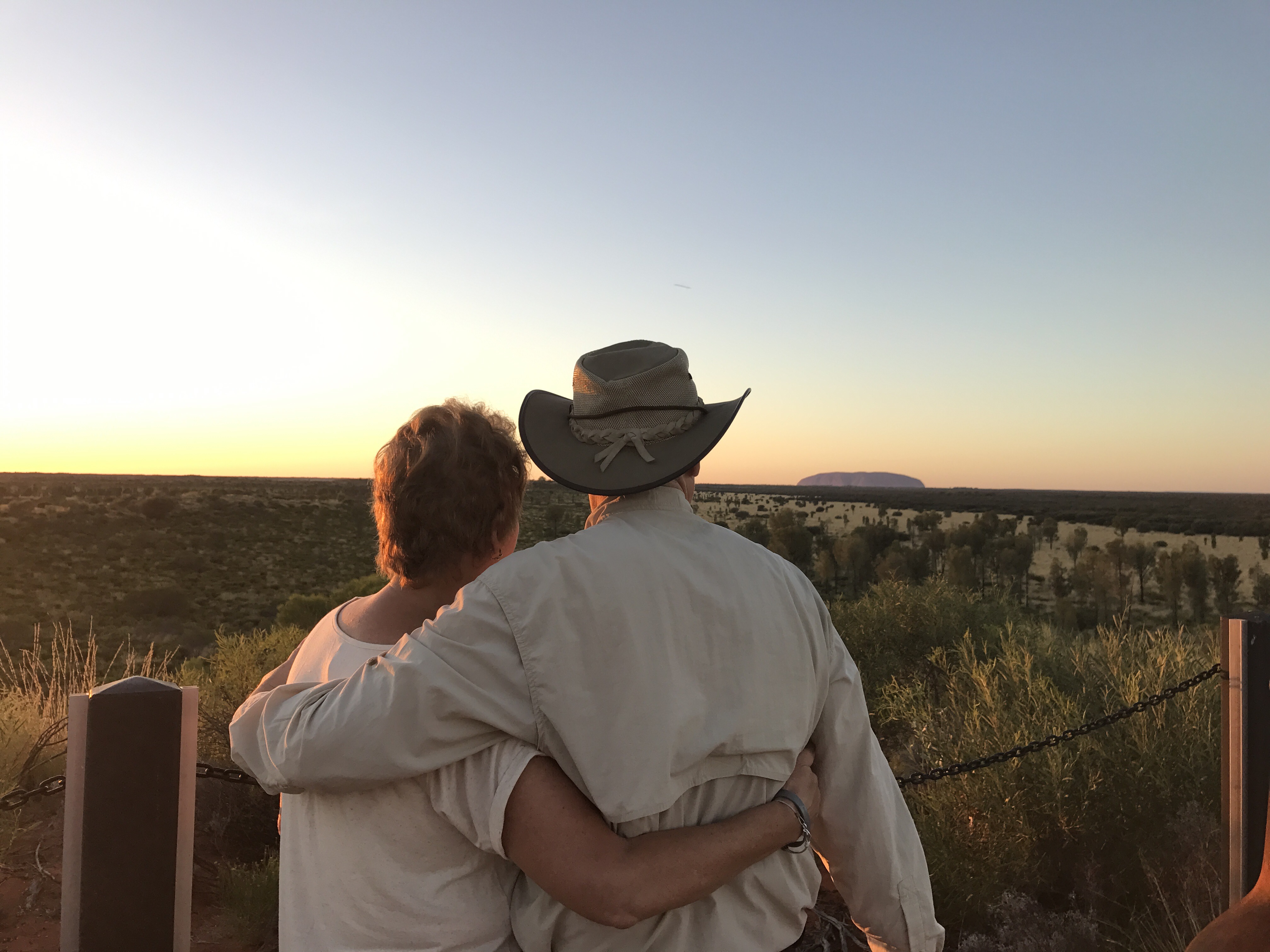
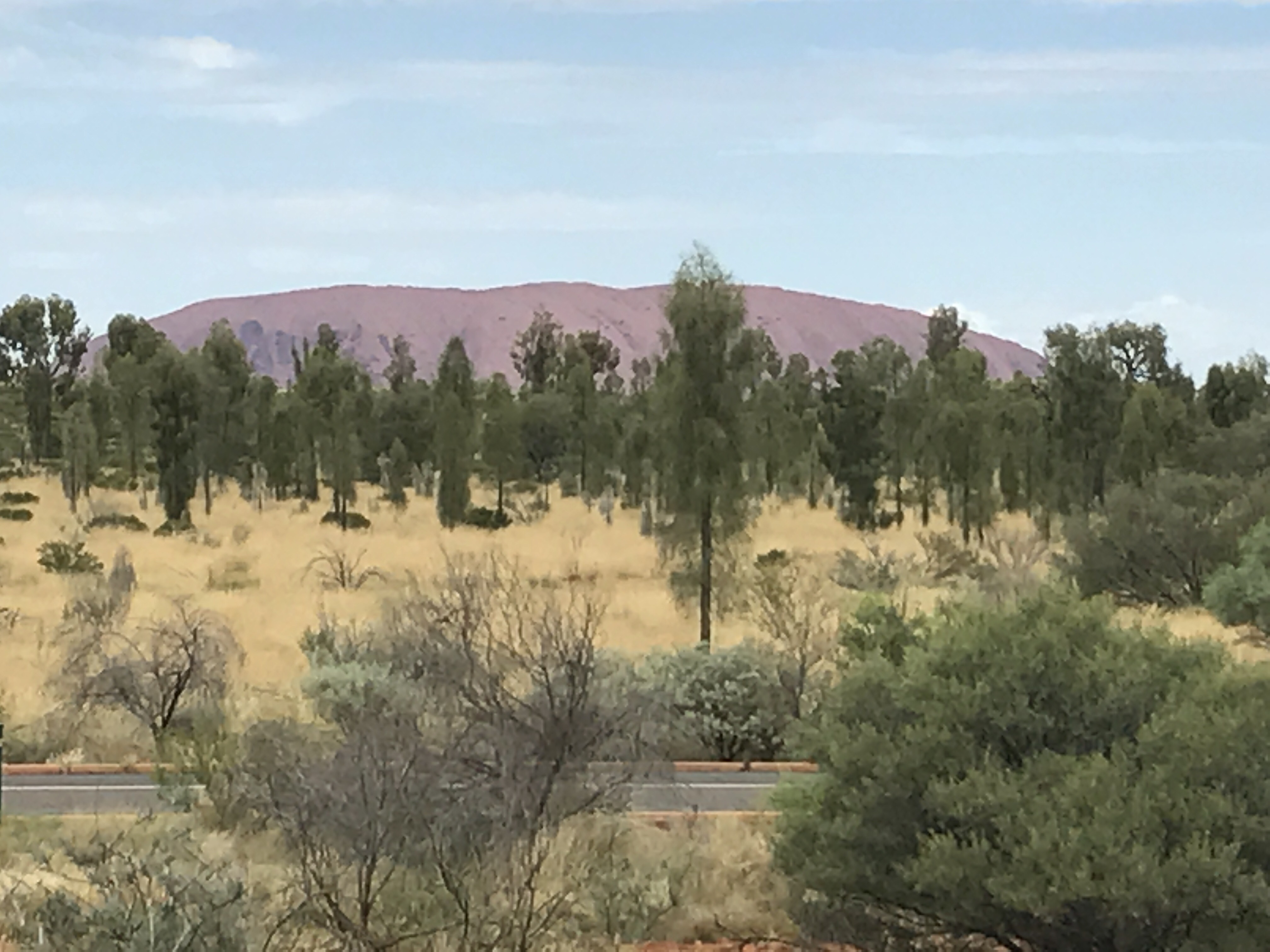
We checked in at Voyagers Ayers Rock Resort – the Desert Garden Hotel and got our arrangements for the tours we had booked.  The view of the rock from our room is beautiful.


Our first tour was called Sounds of Silence and it took us to a viewing platform overlooking the Uluru-Kata Tijuta National Park.  We were greeted with sparkling wine and canapes while being entertained by the humming sounds of a didgeridoo.


As the sun set and it got dark, we moved to a close by location and had a wonderful dinner under the outback sky. We had a “bush tucker” buffet that incorporated native bush ingredients – crocodile, kangaroo, barramundi and quandong. We were also entertained by indigenous dancers. Norm had a cucumber crocodile canape and he said it tasted like a mild tuna fish.

After dinner, the resident star talker described the southern sky as we had our dessert, tea, coffee and port. He pointed out many of the constellations including the southern cross which appears on the Australian flag.


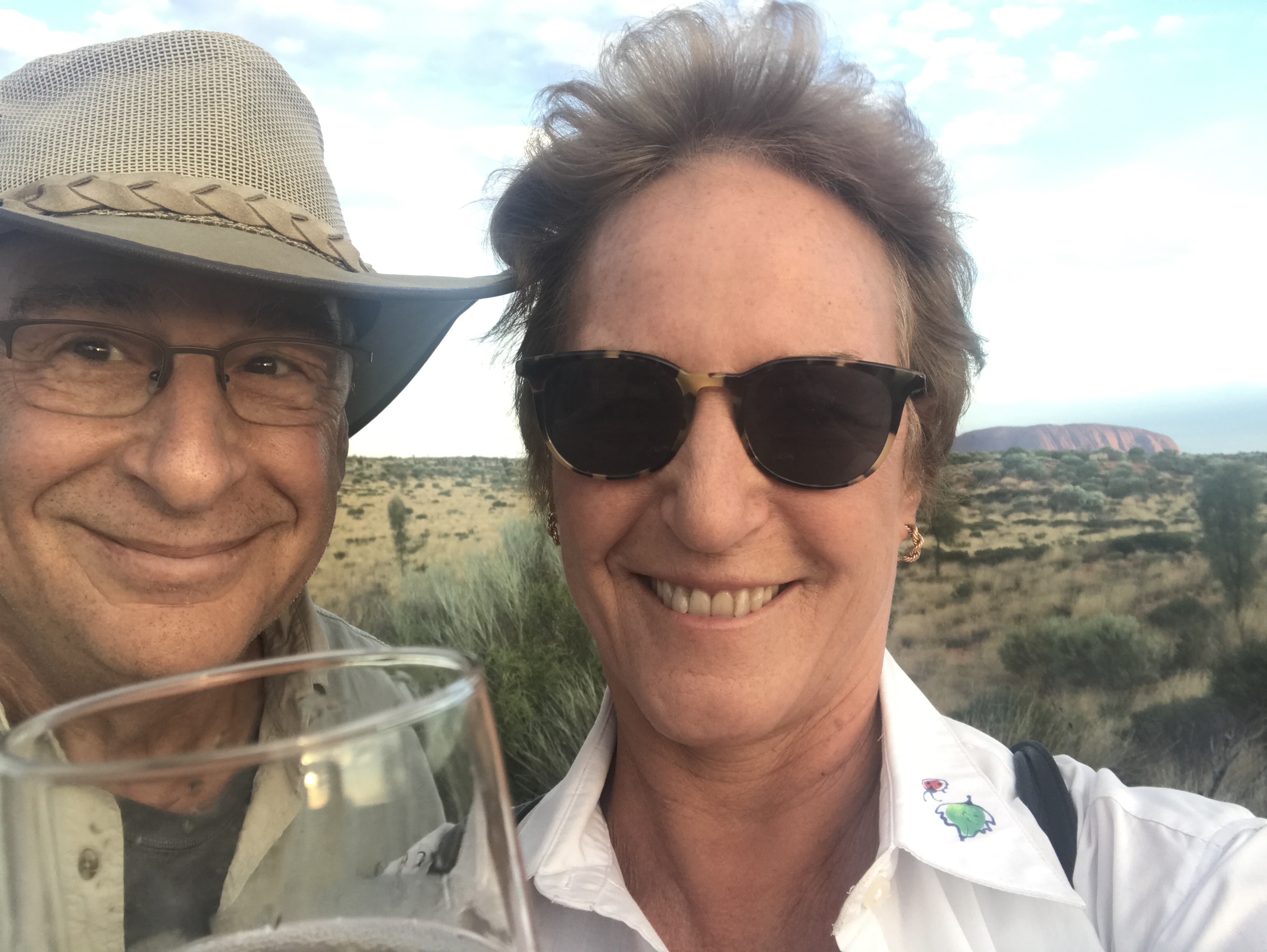
It was a truly unforgettable experience.  We met some great people, at our table there was a couple from Australia, one from the UK (Devon), one from Toronto and one from Salt Lake City.  The wine flowed all night and although we were tired, we wanted it to go on forever.

And this couple got married there!


We returned to the resort and conked out for the night as our wakeup was at 4:20 for a 4:50 departure – our next adventure – Desert Awakenings.

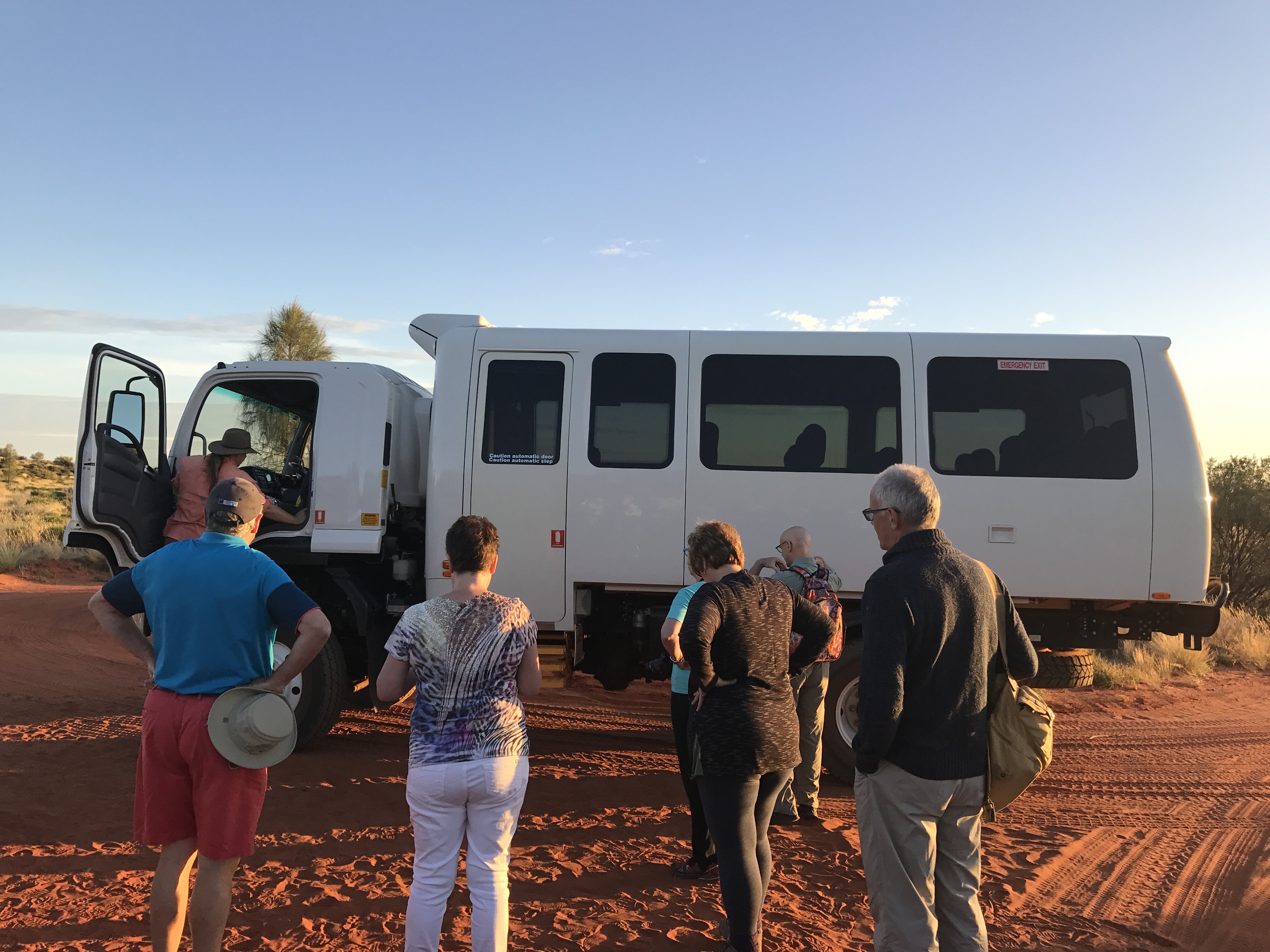
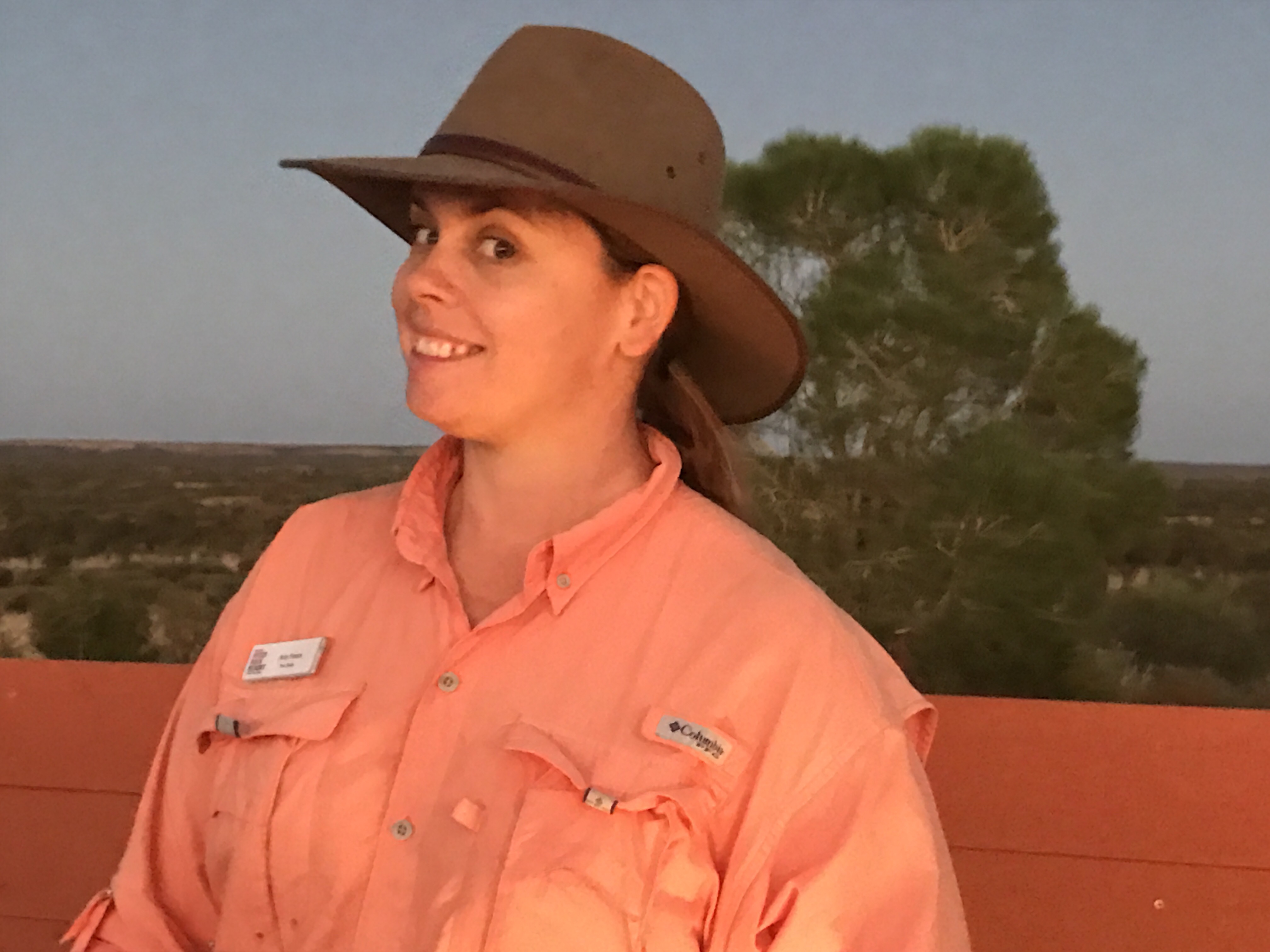
Amy Pierce, our guide, met us right on time in a huge off road truck like vehicle.  There were 18 of us on this adventure.  I will describe it first, then give a bit of what we learned in our 6 hours with Amy today.


We went out into the bush in the pre dawn – and the sky was so clear and beautiful, I don’t think I have ever seen so many stars.  We had a traditional Aussie breakfast of fruit, fresh baked danish, homemade damper (a traditional bread served with golden syrup) and bacon and egg rolls as the stars faded and the sun rose. It was so beautiful, that, as I have said so many times – photos cannot capture the experience.


And here’s Amy and our chef!


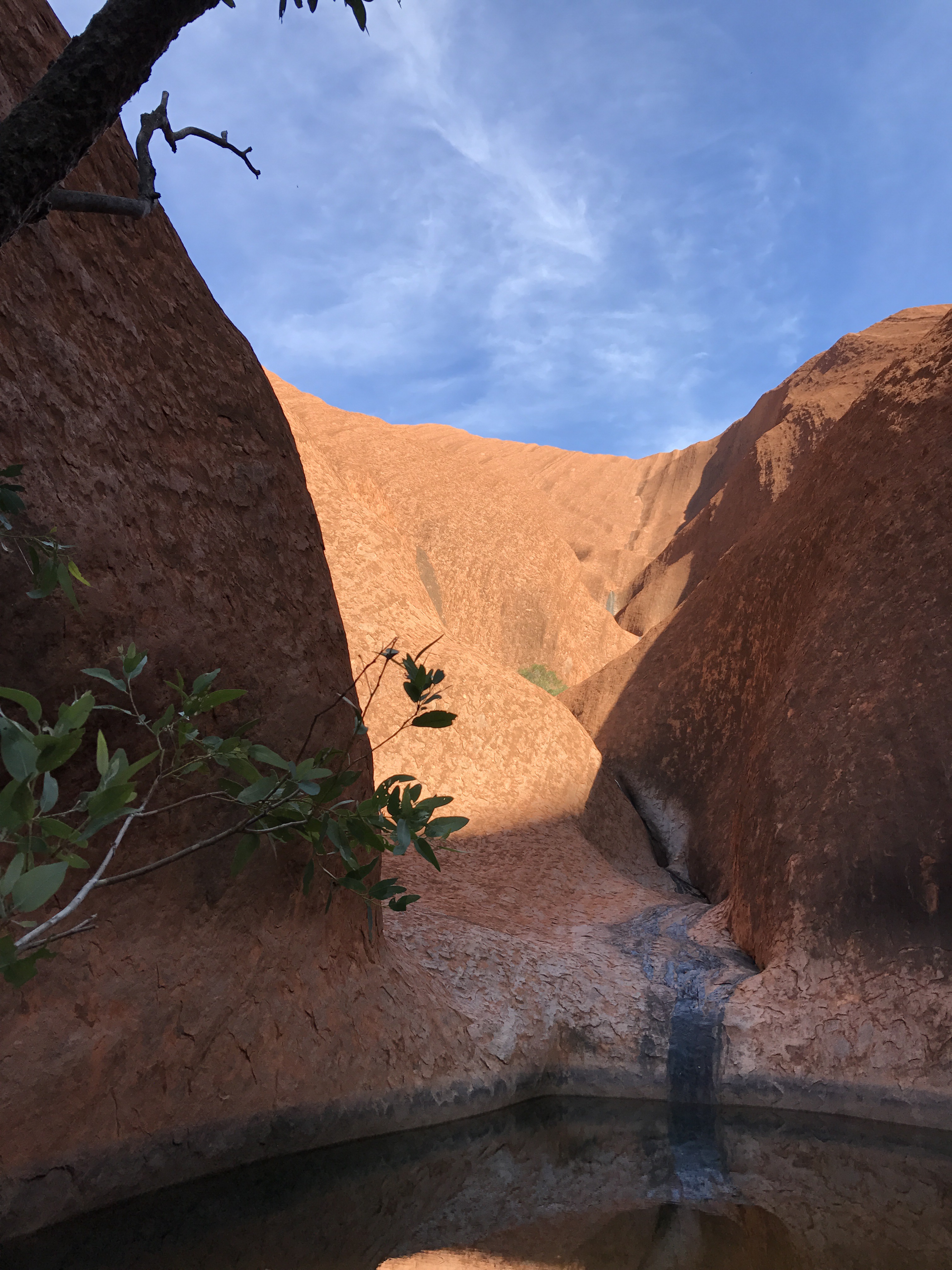
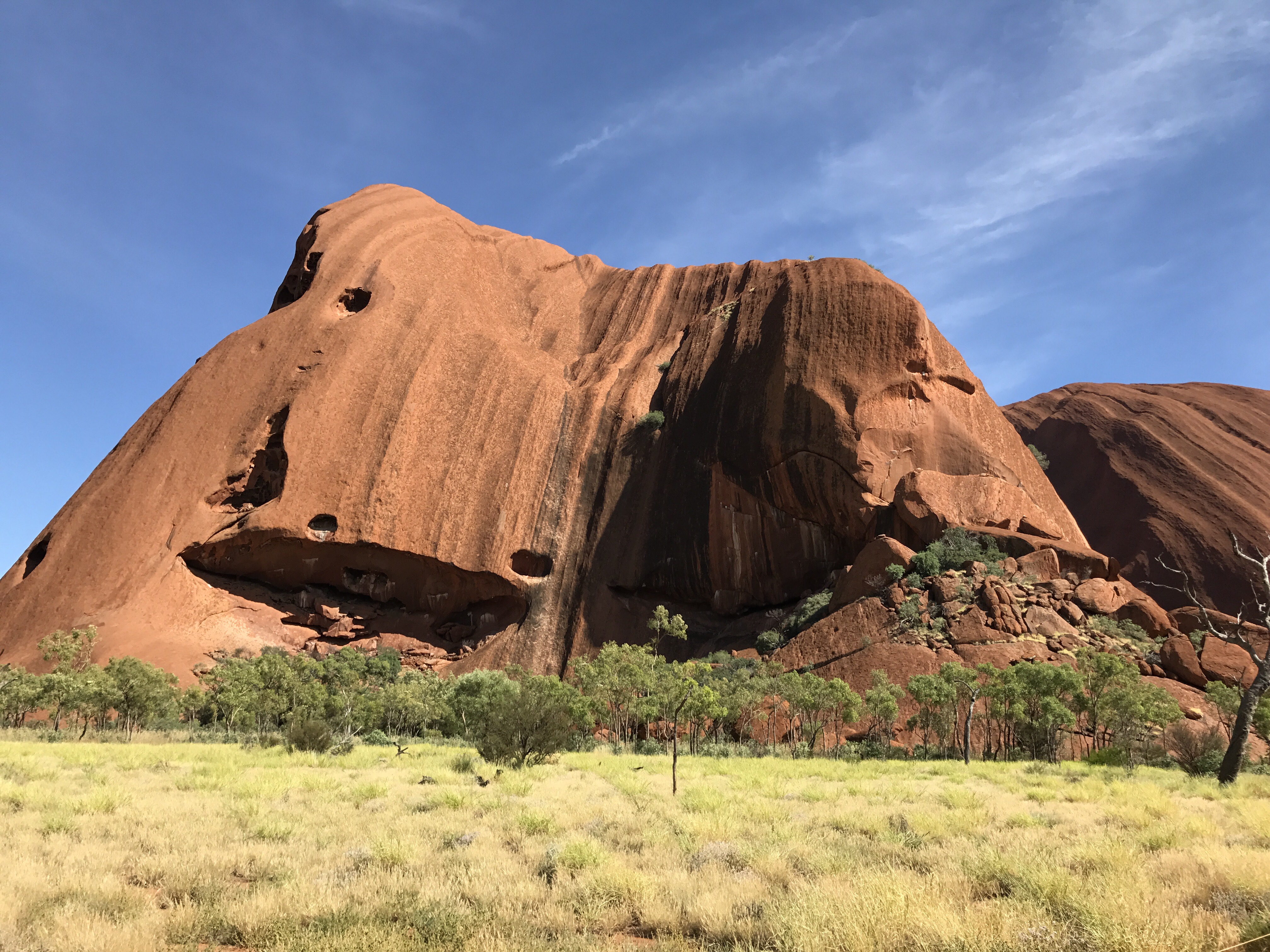
This is the central desert region of Australia and has been home to the Indigenous people – the Anangu – for tens of thousands of years.  No one really knows how the huge rock formations were created.  Geologists have one theory and the native people have another – that this is sacred and cannot be explained.  This is a sacred and spiritual land to them.  In 1984 the Commonwealth Government handed the Uluru National Park back to the Traditional Aboriginal Owners.  It is now a National Park and the resort is managed by Voyages which has a commitment to increase Indigenous employment.  The resort now employs about 900 people and 30% are Indigenous.  They hope to have this up to 40% by the end of next year.

After our breakfast, Amy took us all around the National Park and explained the stories and legends that the Anangu teach.  They believe in Tjukuya – that they should teach the next generations how things came to be, how to behave toward each other and how and why things happen.  Amy proved to be a wonderful story teller, in fact, when we visited the cultural center later, we knew all of the stories that were on display there. We had heard from friends that the flies can be bad, so we got these fashion statement fly nets – and we were glad we did!


We learned about the creatures here – lots of spiders, 400 species of lizard, mammals including kangaroo (we didn’t see any), snakes  and many varieties of birds. 


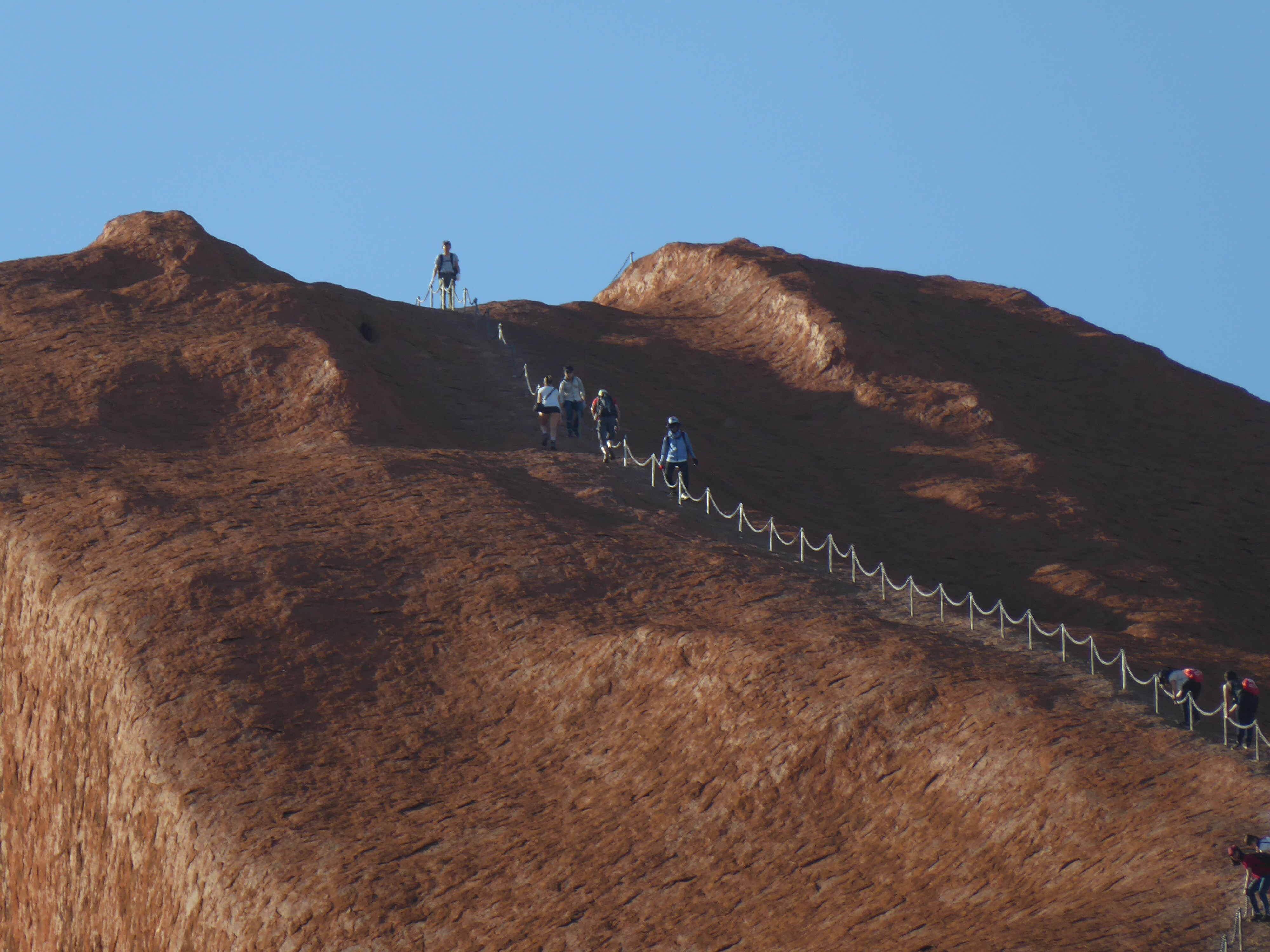
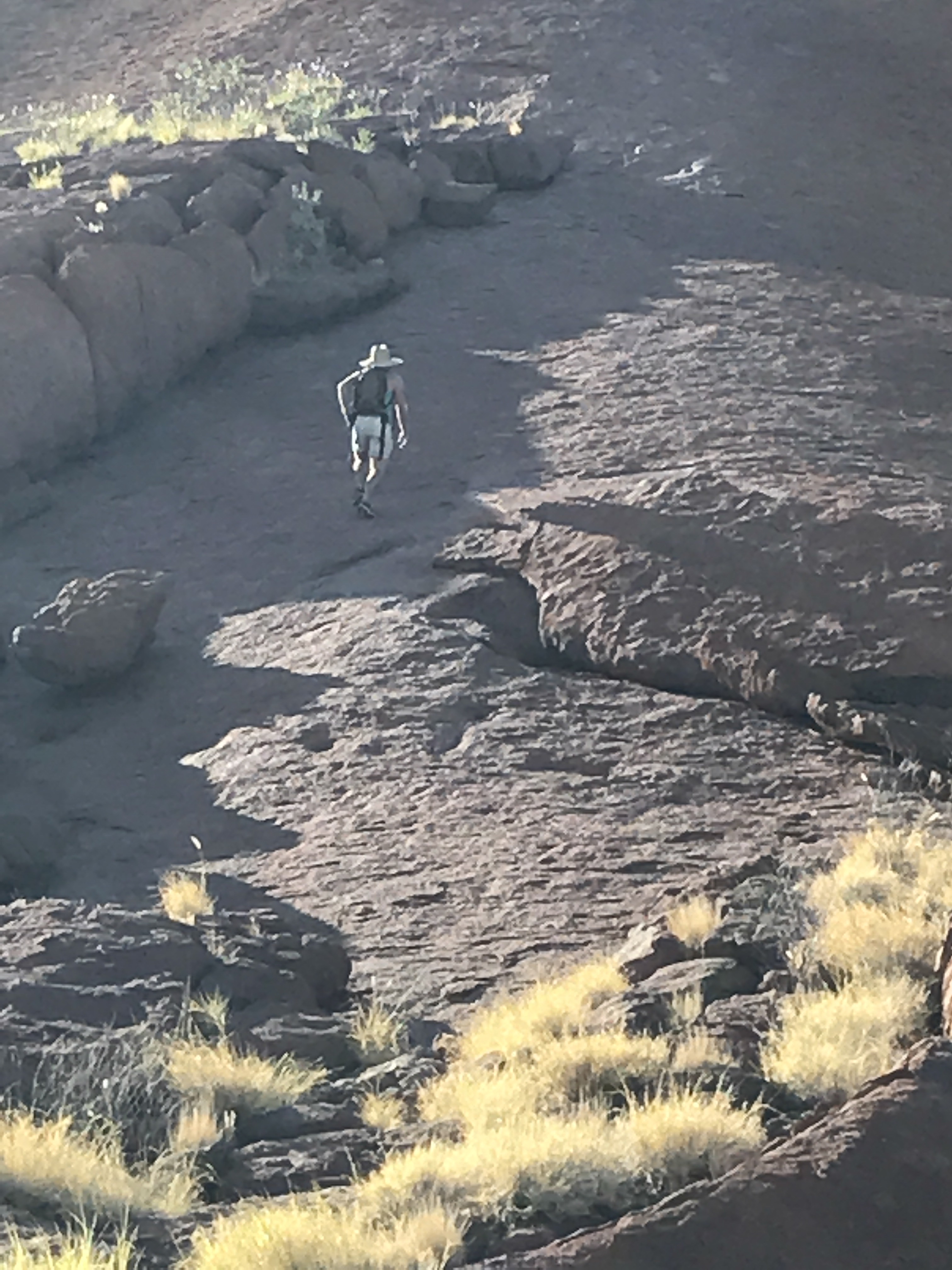
 We also learned that to climb the rock is considered to be sacred and that the Anangu people ask visitors to their land to respect their wishes, culture and law by not climbing.  That said, there is a climbing area for those who feel they must do it, and we did see some going up there.  It is a hard climb and causes environmental damage.  Some have died.


This National Park encompasses more than 327,414 acres of the desert outback and is home to two of the world’s most iconic rock formations – Uluru and Kata Tijuta. Uluru is more than 348 meters high, it is higher than the Eiffel Tower. It continues below the ground for possibly 5 – 6 km.Kata Tjuta consists of 36 domes, thi highest rises 198 meters higher than Uluru.  Both are spectacular and change almost constantly in the different light.  Sunrise and sunset are the most beautiful which is why we booked the tours we did.

The Park is a dual World Heritage site for both its cultural and natural values.  


The Anangu paintings are created for educational and ceremonial purposes.  The symbols are similar to the cave drawings we saw.  They had some artists working in the cultural center but photos were prohibited there. We made purchases of these two paintings. The one on the left is the bearded lizard and the one on the right represents the honey ants that are dug up and eaten by the native people. 


We got back from the tour about 11:30 and had lunch – then we went to a Mani-Mani Indigenous Cultural theater production.

It is very hot here so I am now writing this in the cool comfort of our room overlooking Uluru (Ayers Rock).  I’ll have a swim in the pool before dinner and then we will pack up for our flight to Darwin tomorrow morning. This has been a moving and probably once in a lifetime visit that we will never forget.  In fact, Amy gave us time to just breathe and take it all in at the end of the tour.

Posted in Australia, Excursions, March, World Cruise 2 | 4 Comments

Byron Bay and Brisbane, Australia

March 7, 2017

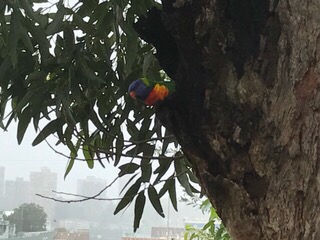
After our evening in Byron Bay last night, we were serenaded by the beautiful lorikeet birds who are very loud as they land in the Norfolk Island pines outside our hotel.  They are beautiful green and orange birds, but boy are they loud!  Between the birds and the reggae just outside, it was a “happening” night!  and in spite of it all, we slept well.

** and Jesse, Emmanuel, Sri and Bojan, I have more money now – not missing you at all (just kidding!)

Here are some pictures of our hotel.  Perfect location, and the view first thing this morning was this one – many cars already bringing people to the lovely beach.


We had a wonderful breakfast at a nearby cafe.  Loving sitting outside in the sun.  Followed that with a beach walk, a walk around town and another coffee here at Cool Katz.  Peter knows all the good coffee places.

Eggs on sourdough with mushrooms and avocado for breakfast!


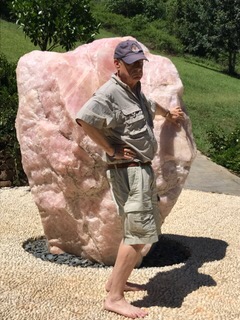
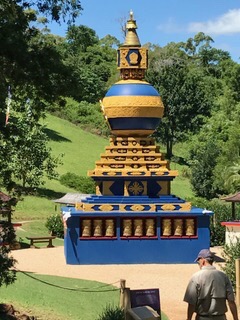
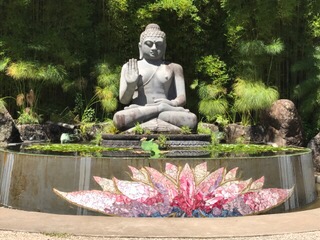
After the beach walk, we set out to visit many of the small charming towns as we made our way back to Brisbane.   We stopped in the lovely little shops and really enjoyed our visits.  We ended up at the Crystal Castle Shambahala Gardens and spent an enjoyable several hours among the gardens, statues, and rain forest.  We also walked the spiral and the labyrinth.  It is a beautiful, peaceful place. There are displays of all kinds of crystals here, shops, glass singing bowls, and you can see the prayer wheels.  You could also write out a wish and place it on the tree nearby.  We all did that, and I do have many wishes for healing in the US.  We have had so many people ask us if we are embarrassed to be Americans and it makes me very sad.

“Rosie” a 4 ton piece of rose quartz

Hard to tell, but this is one of the Crystal Guardians, the world’s largest crystal geodes. They are smoky quartz with amethyst, clear quartz and agate


Lunch was at the Poinciana Restaurant in Mullumbimby.  All of the places we have eaten have wonderful food.  Lots of avocado, sourdough bread, great beers and natural foods.  And this one had a couple of resident gekkos.


We ended at the entrance of the ocean to the river and again, wonderful beach walk, watched the kiteboarders and had a few pictures to mark almost the end of a great two days.

Thanks, Peter and Kate, for being wonderful host and hostess, choosing the very best things for us to see and do, including the meals and the coffees, and generally being terrific ambassadors for your beautiful country!


We are staying at the Novotel Hotel near the airport as we need to get up at 4:30 AM to make our flight to Ayers Rock.  So we said goodbye to Peter and Kate at about 6 PM and had a bite before getting organized for the next adventure.

Posted in Australia, Excursions, March, World Cruise 2 | 2 Comments

Brisbane, Australia and Byron Bay

March 6, 2017

Today we disembarked the ship for our one week in Australia.  First, we needed to be checked out by the Australian immigration authorities – and I do mean checked out. They went through every item in our bags asking questions along the way about the coffee I purchased for Peter, our medications, if we were taking in large amounts of money, etc.  Well, we checked out OK and got off the ship.  This immigration check happened in the Captain’s conference room near the bridge, so we got to see some of the “inner sanctum”.

We were met by Peter Barr, a friend and ICF colleague and his girlfriend Kate and we began a wonderful day.  Here is the view of Brisbane from high up at a lookout – Mt. Cootha.


We traveled to the Margaret Olley gallery where we intended to visit and have lunch in the cafe, but alas, it was closed on Monday and Tuesday.  Norm did take the time to interact with yet another sculpture!


We traveled to Tyalgum, a very small town with a very wonderful cafe, Flutterbies, where we had lunch.  Norm and Peter both enjoyed a potpie while Kate and I had mushroom (Kate) and avocato(me) toast.  Fabulous!


We were loving the scenery and glad we weren’t driving as we made our way toward our hotel for the night in Byron Bay, which Peter says is the most beautiful place around.  And we won’t argue with that.  Mt. Warning is in the distance and that picture will wait till tomorrow’s post because it was quite hazy.

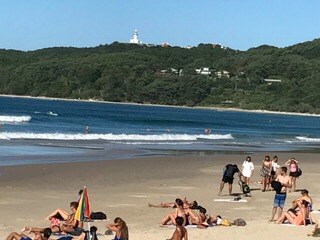
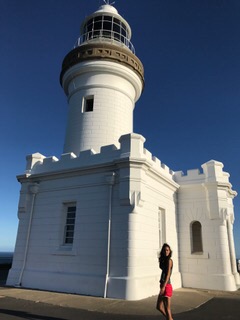
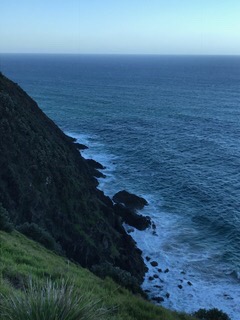
We checked into out hotel, the Byron Bay Beach hotel, then went for a 6 mile (and 52 flights) walk up to the Cape Byron lighthouse and the most easterly point in Australia.  Absolutely spectacular views from every angle and the beach is lined with forests.  We walked along the beach then up to the lighthouse.

Wild turkeys and beach beauties.

Does Peter think he can fly without the hang glider??
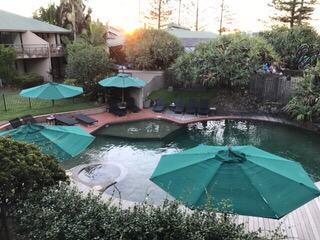
We then came back to the hotel, shared drinks on the balcony overlooking the beach and the pool and had dinner at a nearby pub where they were playing reggae.  It is usually much more crowded, but this whole area is full of backpackers, vacationers, cafes, pubs and the most beautiful scenery.  Seem to be musicians playing on every corner too.

The view of the pool from our balcony

Part of the pub viewed from our table


More adventures await tomorrow.  Great day.

Posted in Australia, Food, March, World Cruise 2 | Leave a comment

Sydney, Australia

March 4, 2017

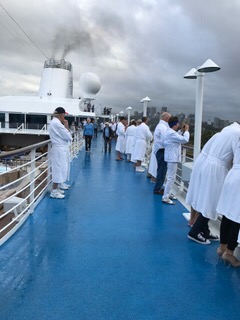
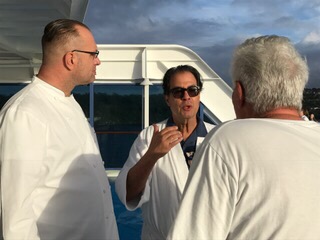
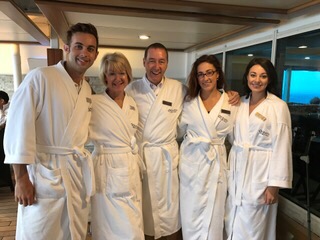
We were advised by our cruise director, Leslie, that we would greet Sydney with the “white jacket/white robe breakfast”.  The Around the World passengers received white jackets so we chose to wear those to breakfast and then up on deck to sail into the beautiful Sydney Harbor.  


The entertainment team all had their robes on and of course, Erica of the beautiful shoes had another stunning pair of high heels on with her robe!


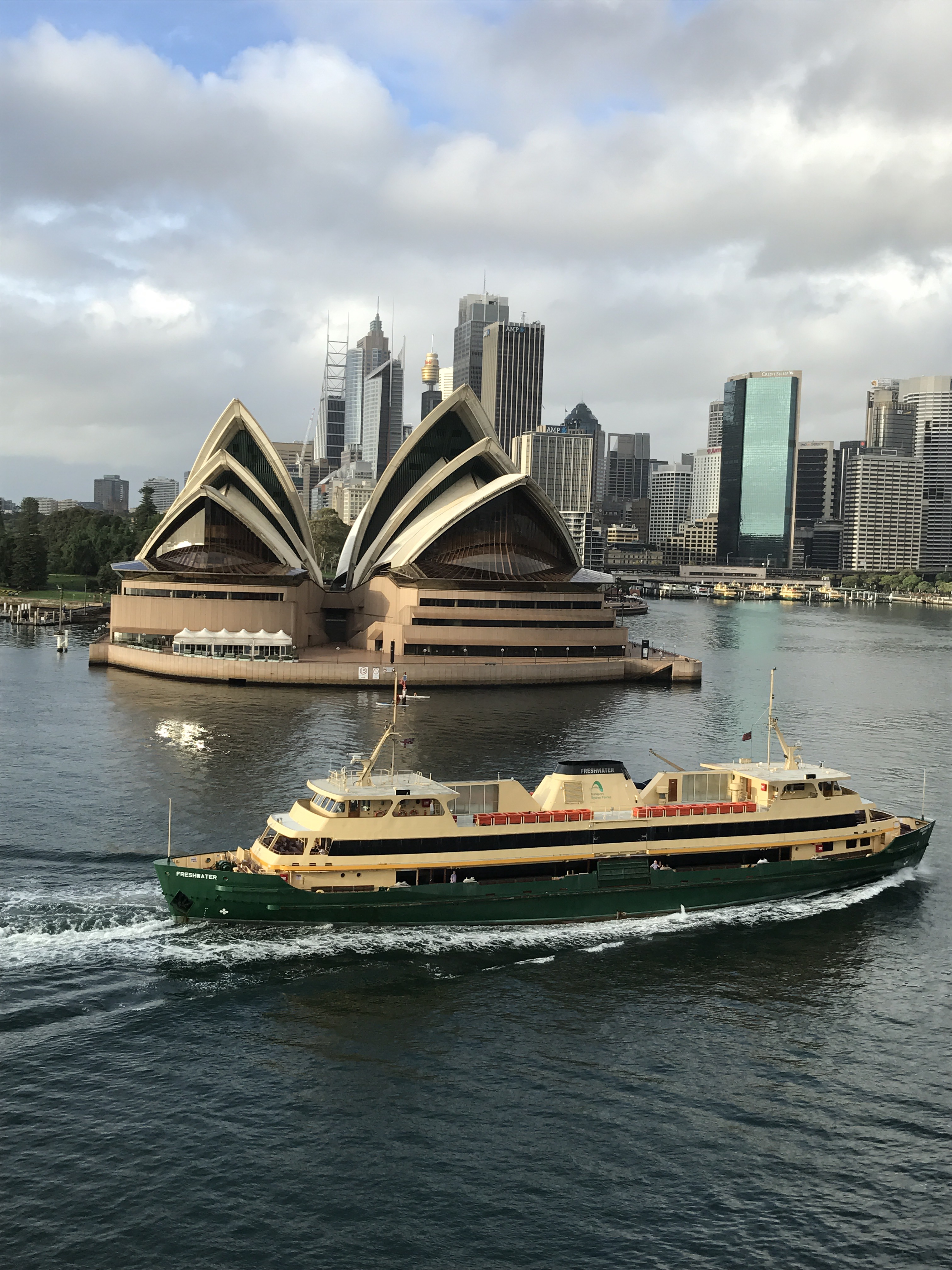
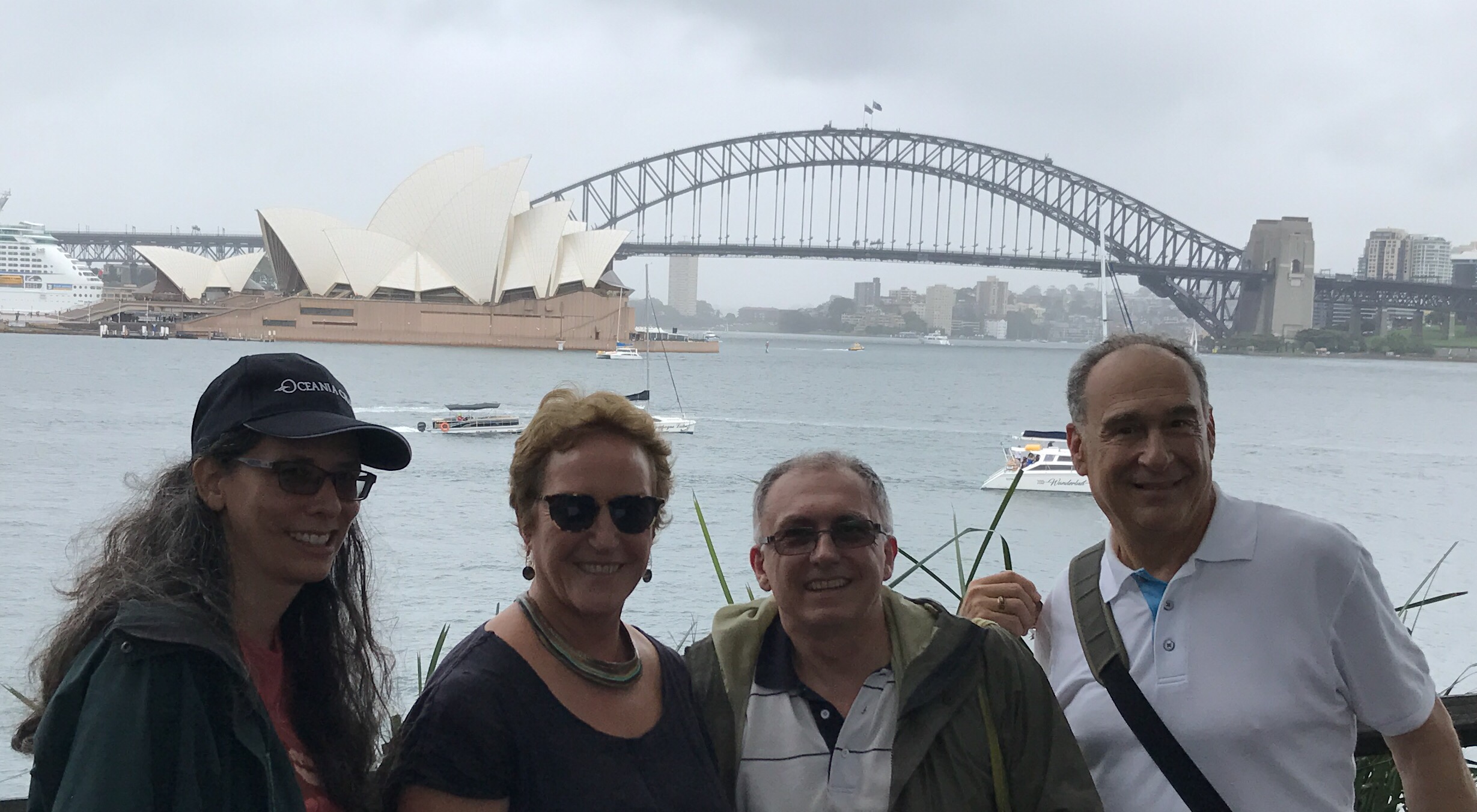
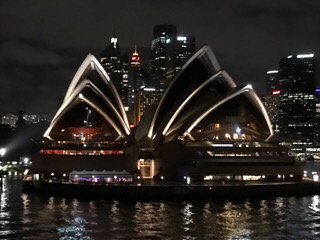
We have been to Sydney 8 years ago and had explored much of the city, but we have never sailed in. It is truly one of the most beautiful harbors in the world with the famous Opera House and the harbor bridge greeting you as you glide by.


Jorg, our executive chef and Leslie, our cruise director, talking with a passenger

Sean, Tricia, Steve, Alexis and Erica in their robes


We had a big downpour just before arriving in the harbor, then the weather cleared enough to be out on deck and take our pictures.  The weather throughout the day was misty with glimpses of sun, and we did have a couple of downpours,  but we were able to be out and walking around the city all day in spite of that.  

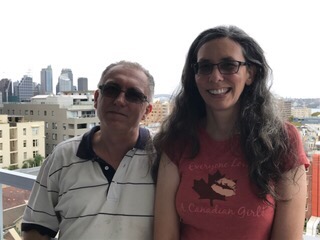
We were berthed at White Bay which is a bit of a distance from the center of town but for us it did not matter as we were being met by Rodney and Candace, friends we met on our last world cruise. They live in Sydney and we were so happy to spend the day with them.

There were a lot of road closures announced because of the big Gay Mardi Gras parade which is a big annual event here. They are expecting 300,000 people! We were lucky to be with local people who knew how to get around!


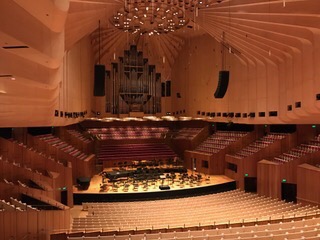
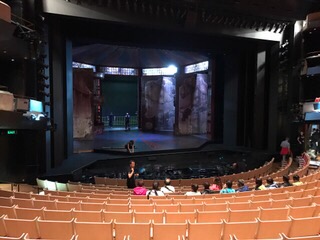
Our first stop was the Sydney Opera House which we saw on our last trip but never toured. Rodney and Candace dropped us off and we enjoyed the one hour tour. It is pretty spectacular inside and out and the guide was great. You are only allowed to take pictures in the theaters when there is nothing going on. He didn’t tell us that until I had already taken pictures in the Joan Sutherland theater (used primarily for operas and ballets). They were setting up the set in there for Tosca. There can be 18 performances of one kind or another every day in the Opera House. It is a UNESCO World Heritage site and one of the busiest performance venues in the world.  Our guide says that the most interesting is the “Festival of Dangerous Ideas”! The main theatre has space for a 600 voice choir and seats only 2679. The rings you see are not lights, but acoustic rings.  This venue is where the Sydney Symphony performs.


The Opera House opened in 1973 and was initially very unpopular with the people of Sydney.  The architect estimated that the cost would be $7 million but the cost ended up to be $102 million.  Now it is a symbol of pride for sure.  They are about to embark on a 1.1 billion dollar renovation. 

After our Opera House visit (and by the way they have FAST wi-fi there), we went to the Royal Botanic Gardens, which is a vast and beautiful 70 acre park.  We saw beautiful displays, birds, and on our way out of the Gardens, we spotted this possum peeking out of a tree!

Mrs Macquarie’s chair


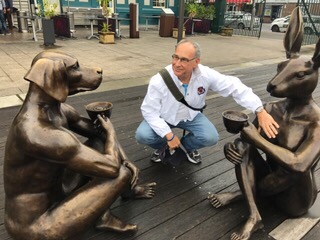
We walked through the Woolloomooloo neighborhood where there is a sculpture display (Norm can never resist interacting with a sculpture), then had lunch at a local pub where Rodney introduced Norm to meat pies, a specialty here.

here’s how to pronounce the name of the area!


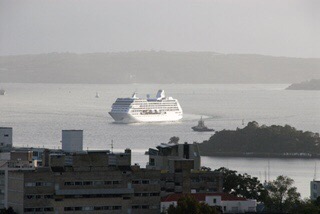
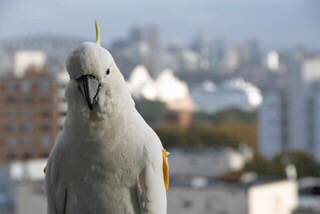
After our lunch we walked up to Rodney and Candace’s apartment where we had the most beautiful view of the city from both of their balconies.  Candace took pictures of our ship as it was arriving this morning, and how about this one of the bird that landed on the balcony!  Ship in the background.  Thanks for sharing these, Candace!  We took advantage of their very fast wifi to update our devices and were introduced to the famous Australian Tim-Tams, a wonderful cookie that we then purchased on the way back to the ship as gifts for our butler and stateroom attendants.

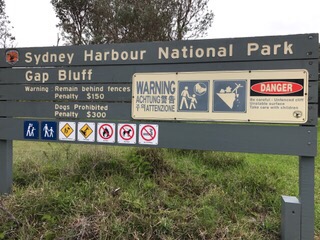
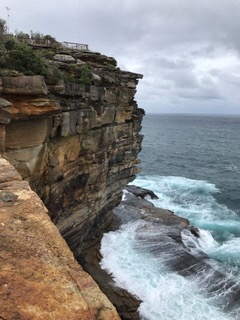
We finished our day with a walk to the Sydney Harbor National Park – Gap Bluff.  We stood on the bluffs that we saw as we sailed into the harbor.


A wonderful day with friends and an exploration of the city that we never would have seen on our own. And the sail out in the dark was beautiful too!

Posted in Australia, March, World Cruise 2 | 4 Comments

Eden, Australia 

March 3, 2017

Our port today is Eden, the world’s third deepest natural harbor.  We are anchored off shore and took the tender in to the wharf.  The bay we are anchored in is called Twofold Bay.  It is a renowned sanctuary for whales during their migratory journeys to and from Antarctica.  It has quite a whaling history which I will explain later in this post. The Eden wharf is walking distance from the pier we arrived at.  It was a pouring rain so instead of walking to the town which was about 1/2 mile, we took the shuttle.  


I really wanted to have a nail appointment but the one and only salon didn’t have an opening until this afternoon, too close to when we are leaving.  Too bad, it would have been a nice rainy day activity!  

Instead, we went directly to the attraction we both wanted to see, the Eden Killer Whale Museum.

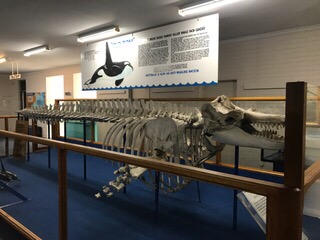
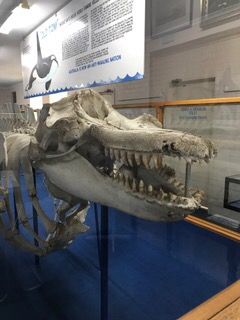
There we saw the skeleton of “Old Tom” and heard one of the volunteers explain the story of Old Tom and his pack of killer whales that worked with the local whalemen of Twofold Bay for decades during the later 1800s and early 1900s. We also watched the excellent film they have here before exploring the rest of the museum.

This whaling operation was unique in that there was cooperation between the whalemen and a pack of killer whales.  They returned each year and were identified individually by special markings.  Tom, Hooky, Humpy and Stranger would herd the baleen whales into Twofold Bay. They would alert the whalemen of their prey’s arrival by “flop-tailing”, (thrashing the water with their tails) and the chase would be on.

After the whale was harpooned, some of the killer whales would expedite its death by rolling over its blowhole to stop it from breathing, and others would swim below it to prevent it sounding (diving deep). 

When the whale was dead, the killer whales would take the tongue and lips as their reward and leave the carcass for the whalemen to bring ashore.  Whaling from Twofold Bay continued until the late 1920’s.  The last whale was taken in 1928 and there is no whaling allowed in Australia today.

Old Tom’s body was found floating in the bay on September 17, 1930.  His remains were kept and his skeleton mounted to become the first item in the collection of the Eden Killer Whale museum.

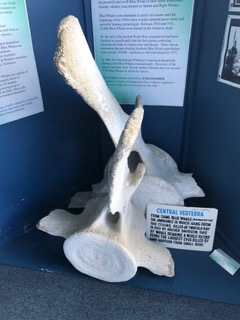
Other displays include the rowboats the whalers used and some of the vertebrae and jawbones of the whales.  There is a lot of WW I history here too.  All in all, a worthwhile and educational visit.


Skeleton of Old Tom


After our visit to the museum, the sun was out so we took a walk through the town, which is just a few blocks of shops and cafes with a hotel and some apartments.  It is built on a hill overlooking the beautiful harbor.  There were many dark clouds with a forecast for more rain, so we came back to the ship.  Before boarding the tender, we talked to this “town crier” who told us more of the history of the area.  Like in some of the New Zealand towns, there were many volunteers everywhere to give us maps and assist us.  Very friendly and helpful, although here you really didn’t need a map!

Posted in Australia, March, World Cruise 2 | 2 Comments