July 10, 2023
We arrived in Astoria at 10 AM and had to go through a face to face immigration since we were coming from Canada back into the US. It took quite a long time and our tour to Mount St. Helens left 1 hour late.
Here are some pictures of our arrival. It was drizzling slightly when we arrived but soon cleared up and was a beautiful day.
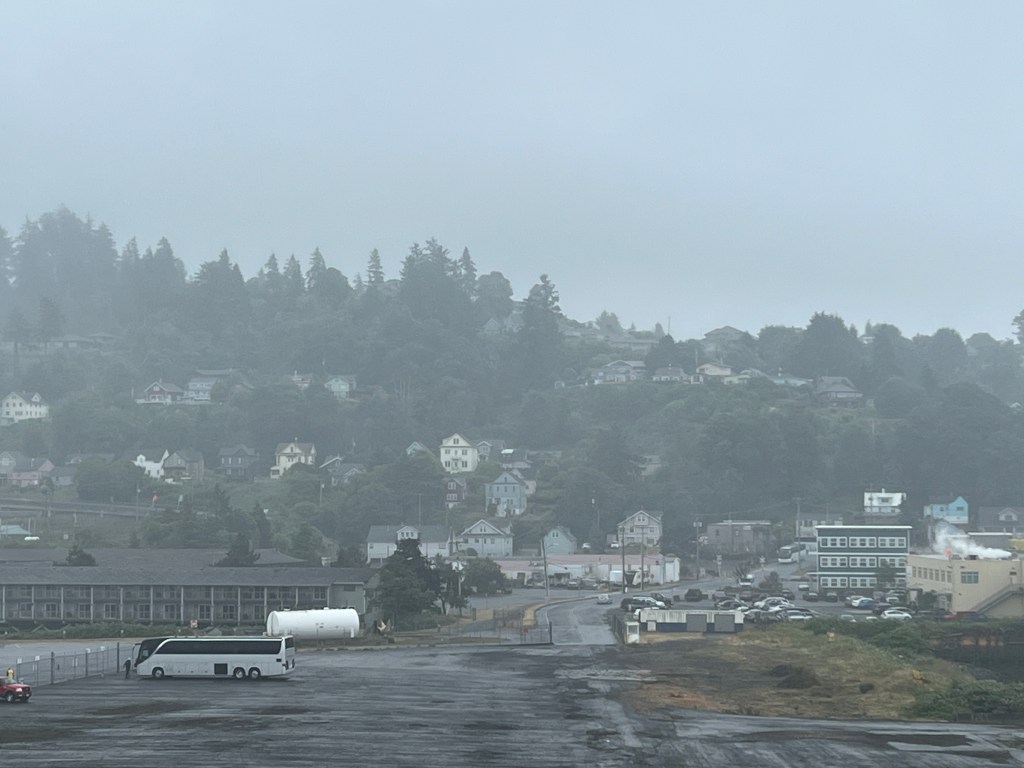
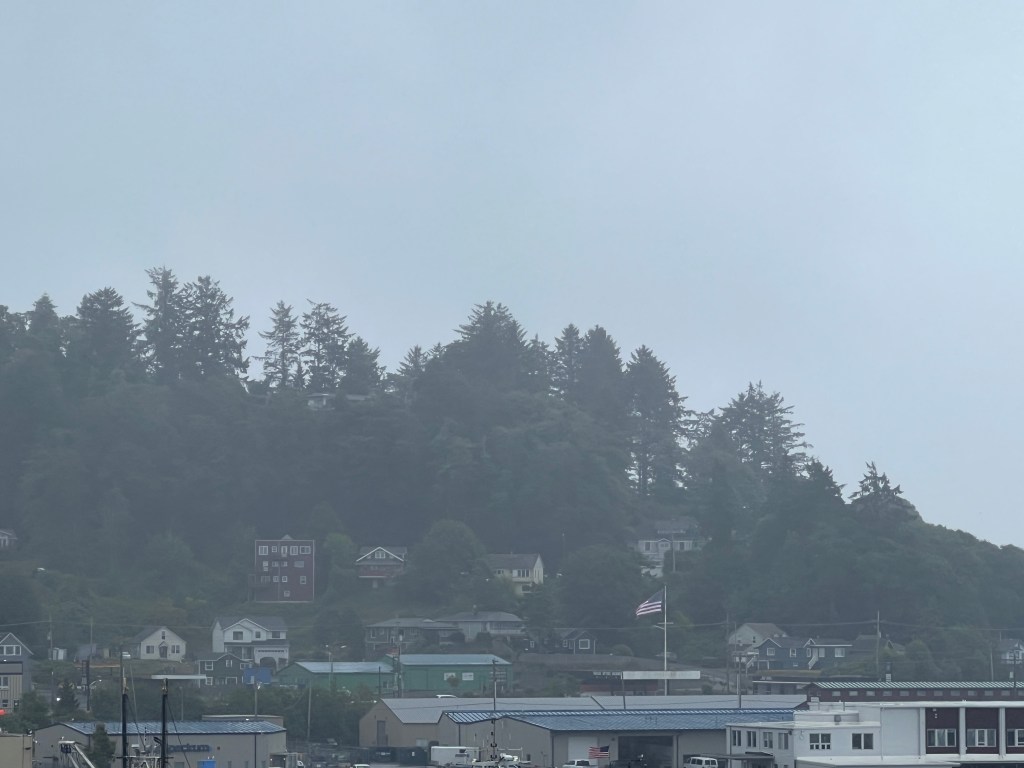

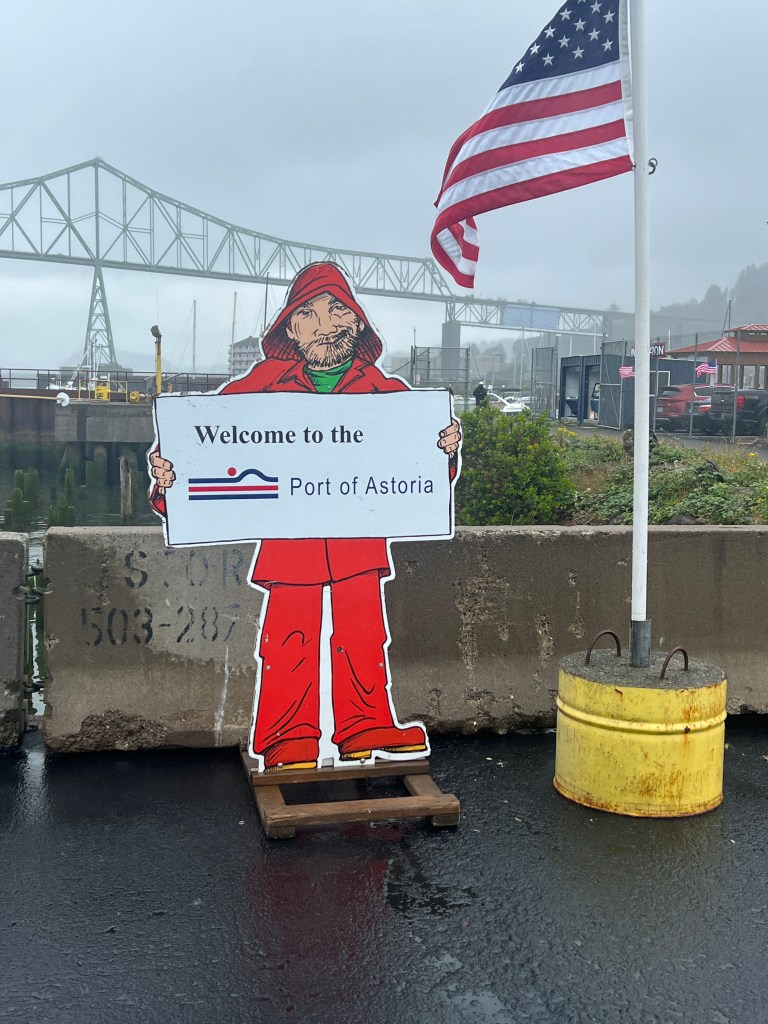
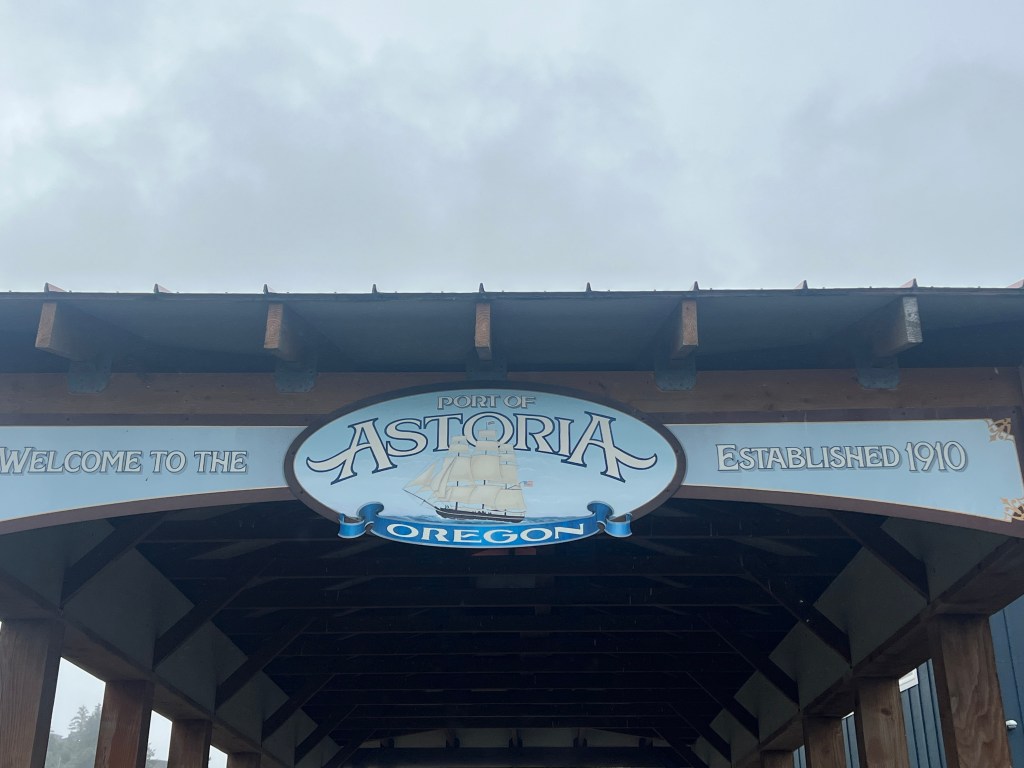
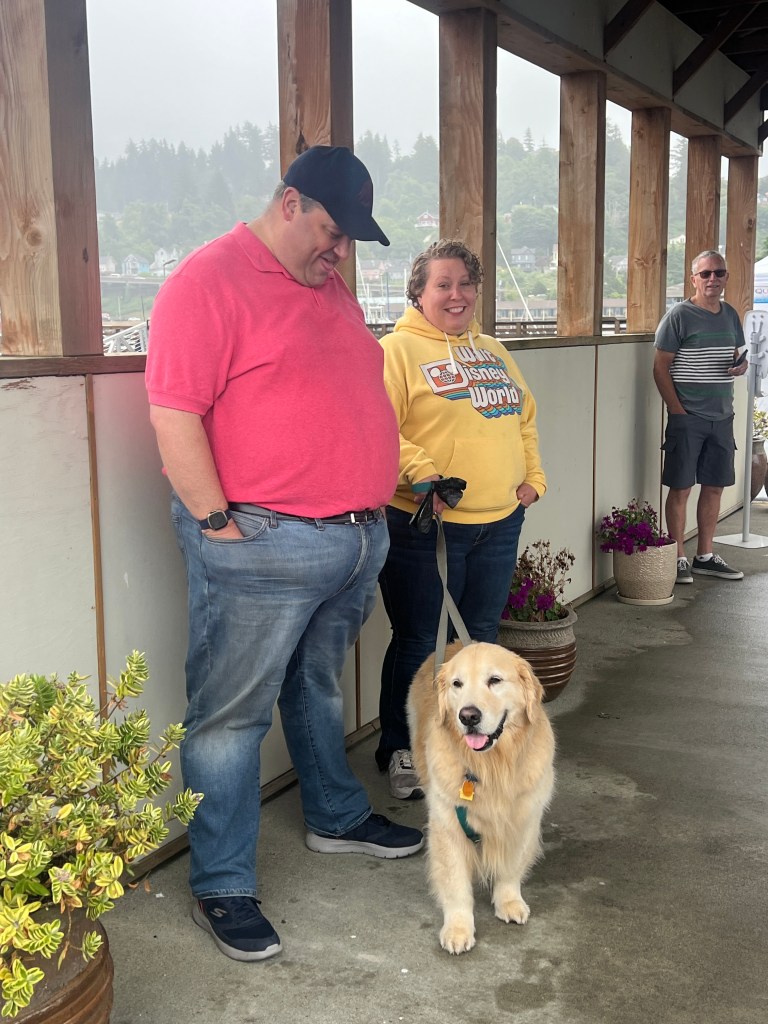
Our tour to Mount St. Helens was a long one – a 2 hour + bus ride. Our guide was Bob and he was very knowledgeable and humorous.
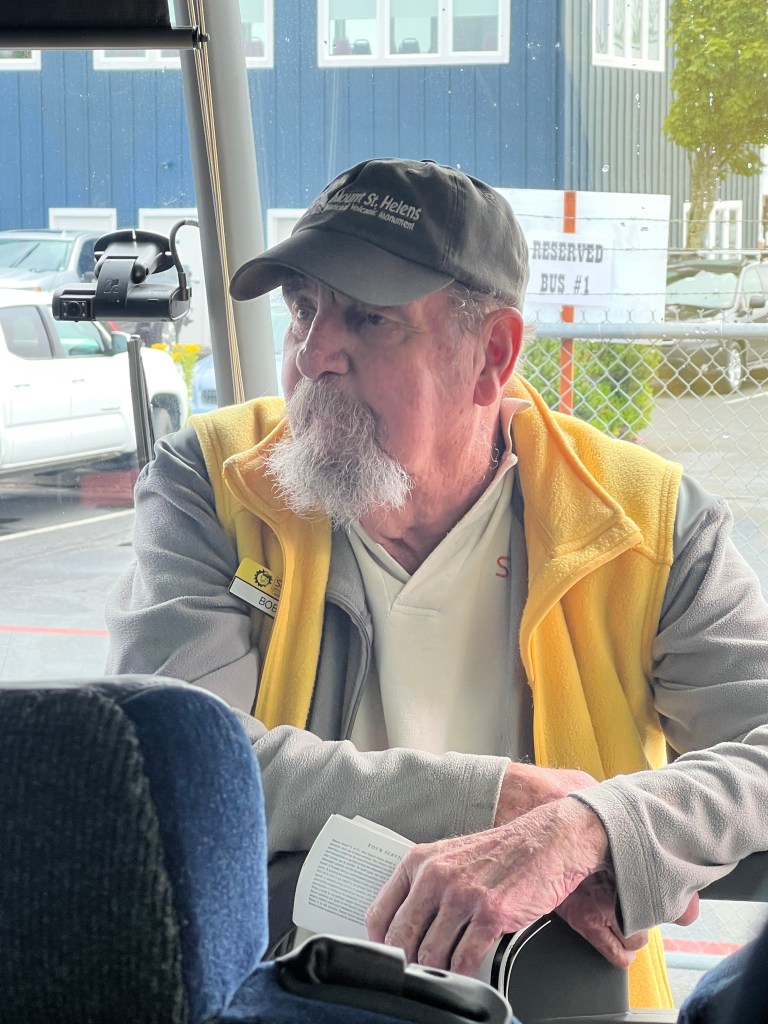
On our way, he gave us information about Astoria as well as some facts about Mount St. Helens. We also watched a movie called “The Fire Below Us” about the eruption that took place on May 18, 1980.
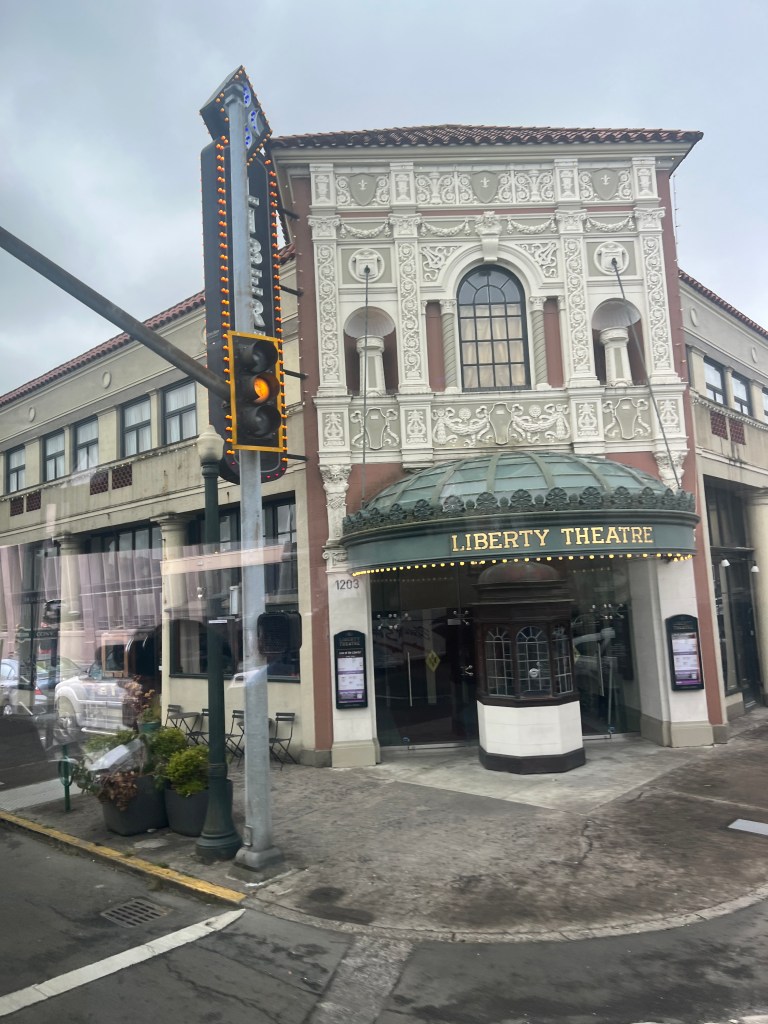
Astoria is the oldest American settlement west of the Rockies. It was established in 1811 on the Columbia River. It is known as the “little San Francisco of the Pacific Northwest” because of the colorful Victorian homes clinging to its steep hills. Settlers used wooden pilings to build foundations for the buildings to raise them above the marshy ground. Unfortunately the wood buildings on the wood pilings left the buildings vulnerable to fires which almost completely destroyed the city in both 1883 and 1922. In spite of these fires, Bob said there are more historic houses here than anywhere in the US.

The Astoria-Megler bridge which was formally dedicated in 1966 stretches 4.1 miles from Astoria to Point Ellice. It iw 1232 feet in length making it the longest “continuous truss” in the US.
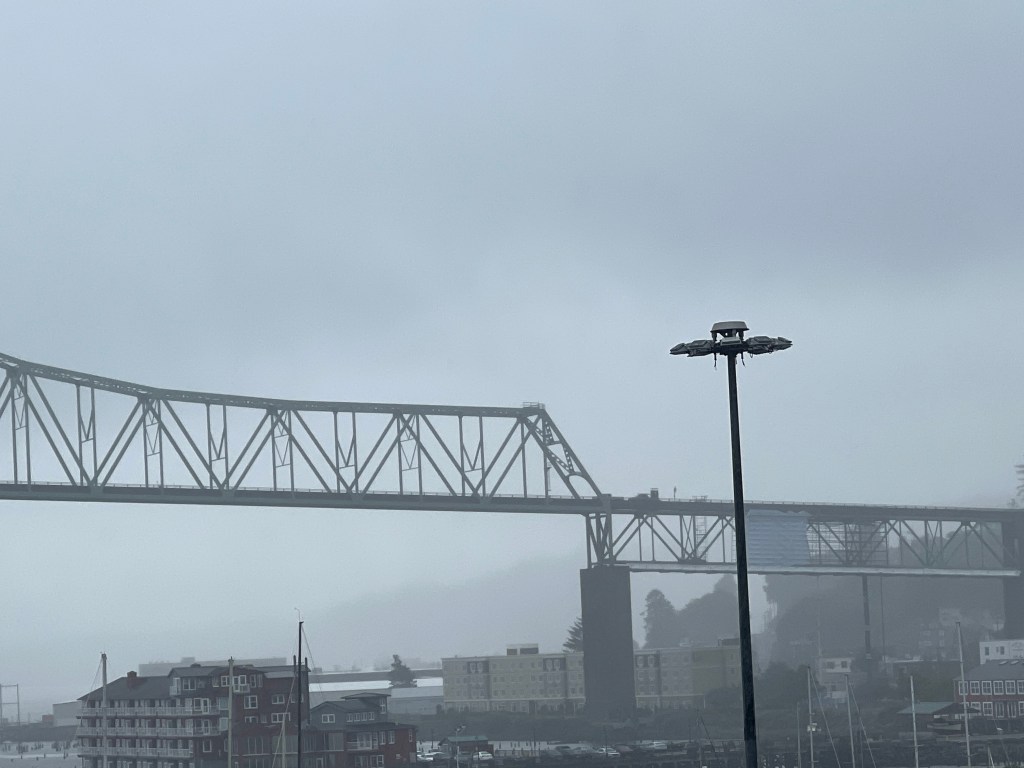
Bob said that Astoria has a number of memorable “firsts” including the first customs house and the first cable TV. The Columbia River bar – a narrow channel where the river flows into the Pacific – area is a dangerous stretch for boaters and is known as “the Graveyard of the Pacific”. More than 2000 shipwrecks have happened here.
Many movies have been made in Astoria, including Free Willy, The Goonies, Short Circuit and Kindergarten Cop. We passed the school where Kindergarten Cop was filmed.
We traveled on Route 30 (yes, it runs from NJ all the way out here to Oregon) until we reached Route 5 and then the road to Mount St. Helens. The Johnson Ridge observatory is closed through 2023 due to a mudslide that is still being cleared but the Coldwater Lake science and learning center remains open.
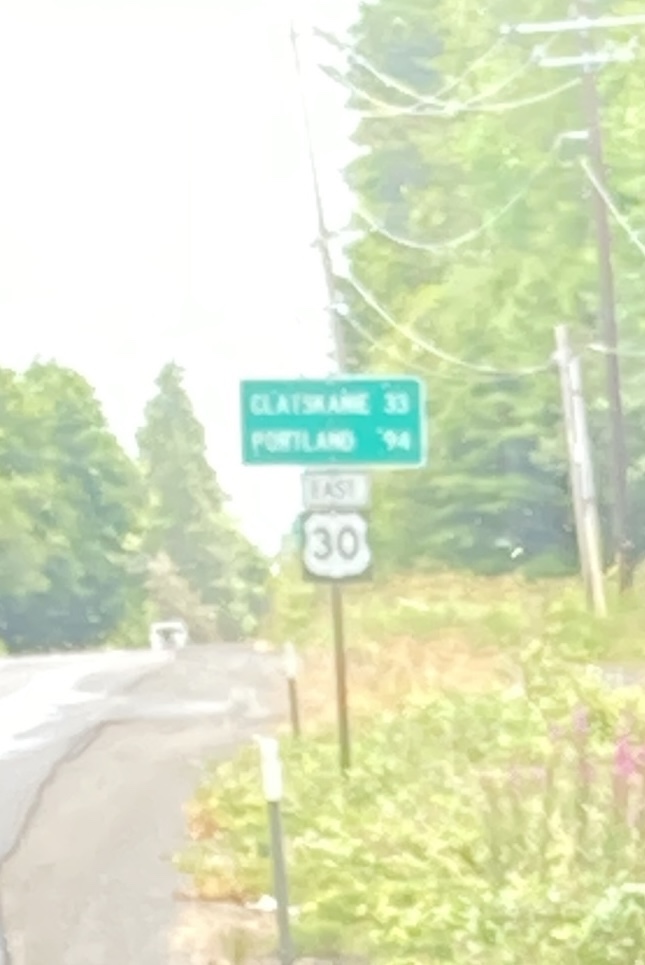
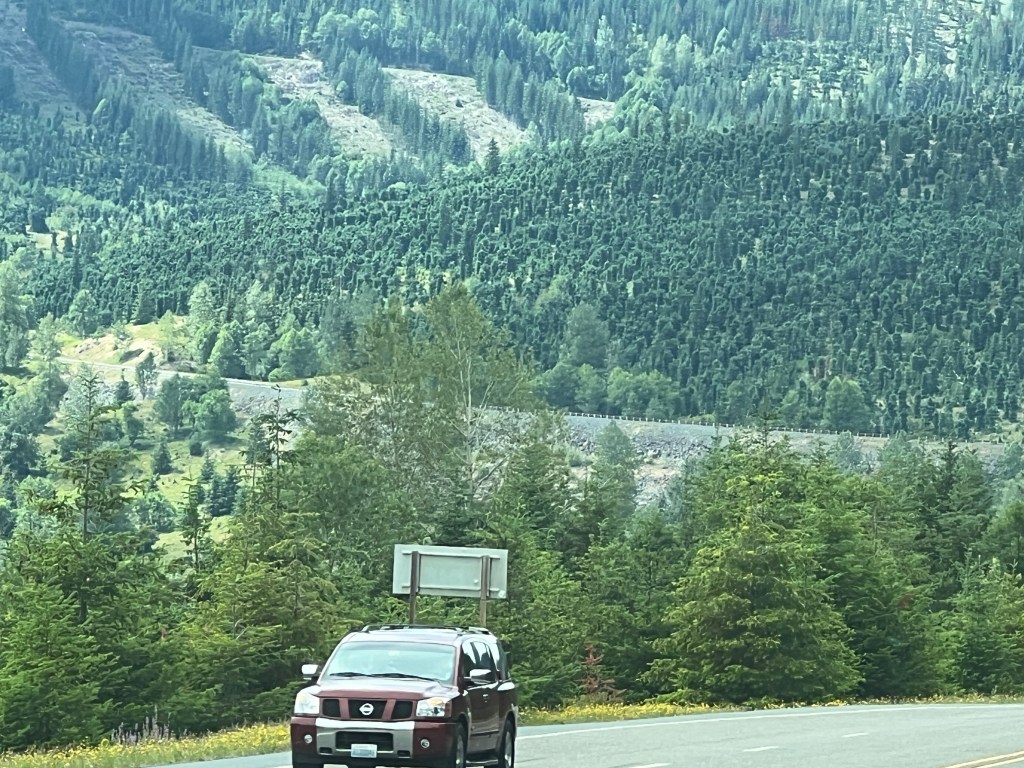
The scenery along the way was really beautiful with lots of Douglas Fir and Red Alder trees covering the hills and mountains. And the day kept getting sunnier as we ascended to the volcano.
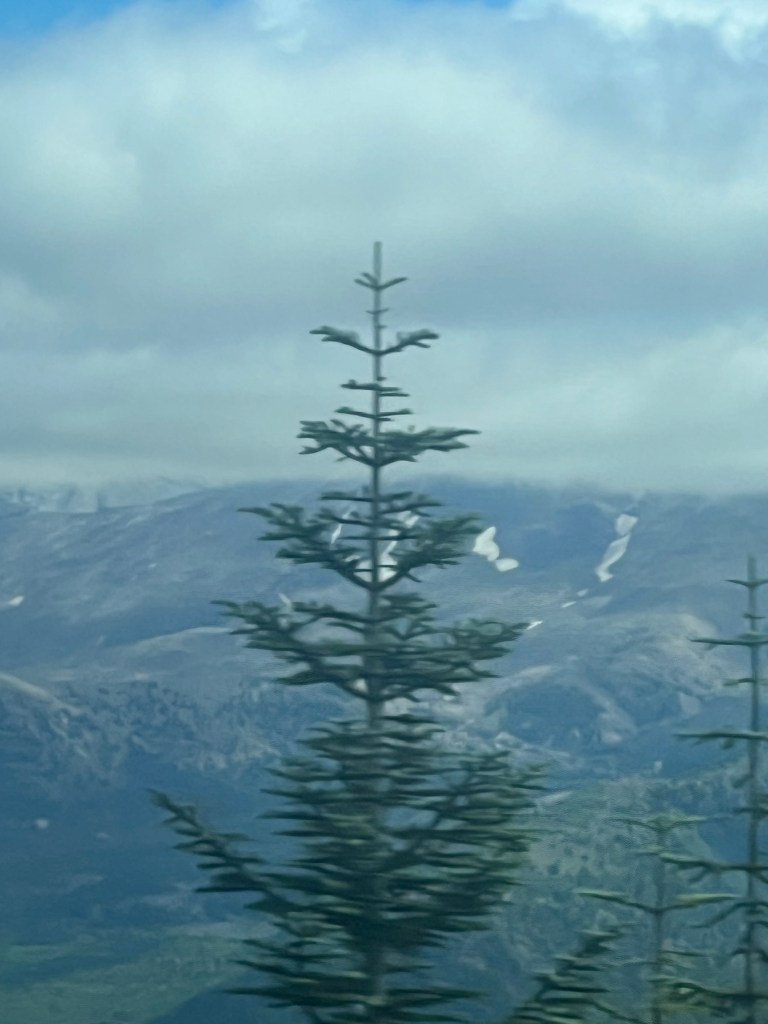
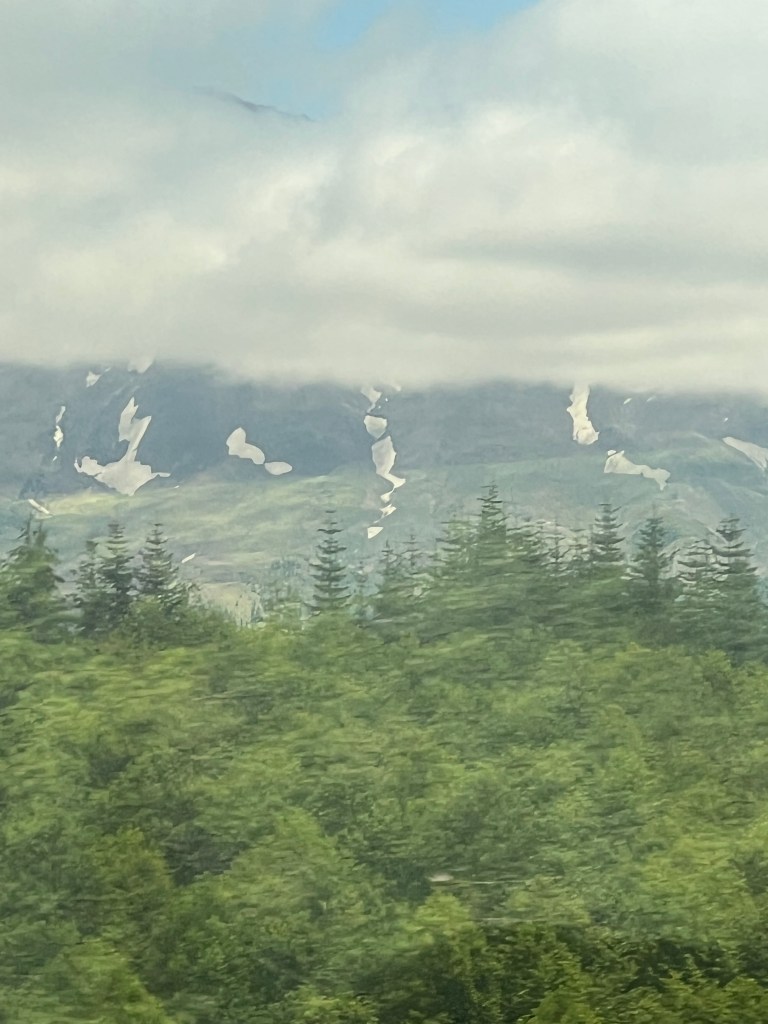
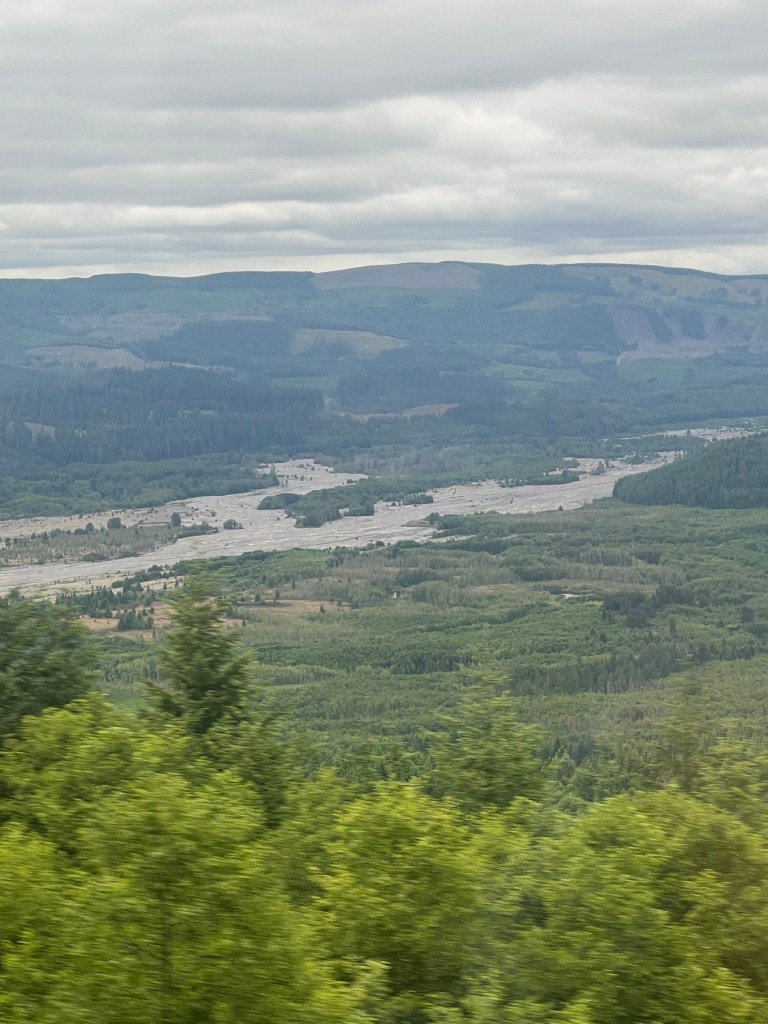
It is hard to believe that in only 43 years since the largest historical landslide on earth and a powerful explosive eruption causing more than 150 square miles to be flattened – the area is so tree covered and green. As the literature from the learning states “The lesson is that life is resilient and ongoing.” The movie showed the story of some of the survivors as well as showing dramatic footage of trees and logs blocking the river and the volcanic mudflows that choked the rivers. The landslide deposit – its surface strewn with huge blocks of shattered rock called hummocks – buried the river valley as much as 600 feet deep for a distance of 13 miles. The violent eruption killed 57 people and destroyed every building except one in its path. The surviving building still stands but we went by too fast to get a photo of it.
The volcano was nicely visible with only a small amount of cloud cover. We had outside seating at the center to eat the bag lunches that were provided and about 1 3/4 hours to explore the area and the exhibits. Since the eruption, the volcano is no longer cone shaped. Beneath the volcano, magma is accumulating again and building for another eruption. Scientists believe it could take place within our lifetimes. Hot dome rocks are still steaming and rock falls send plumes of dust skyward.
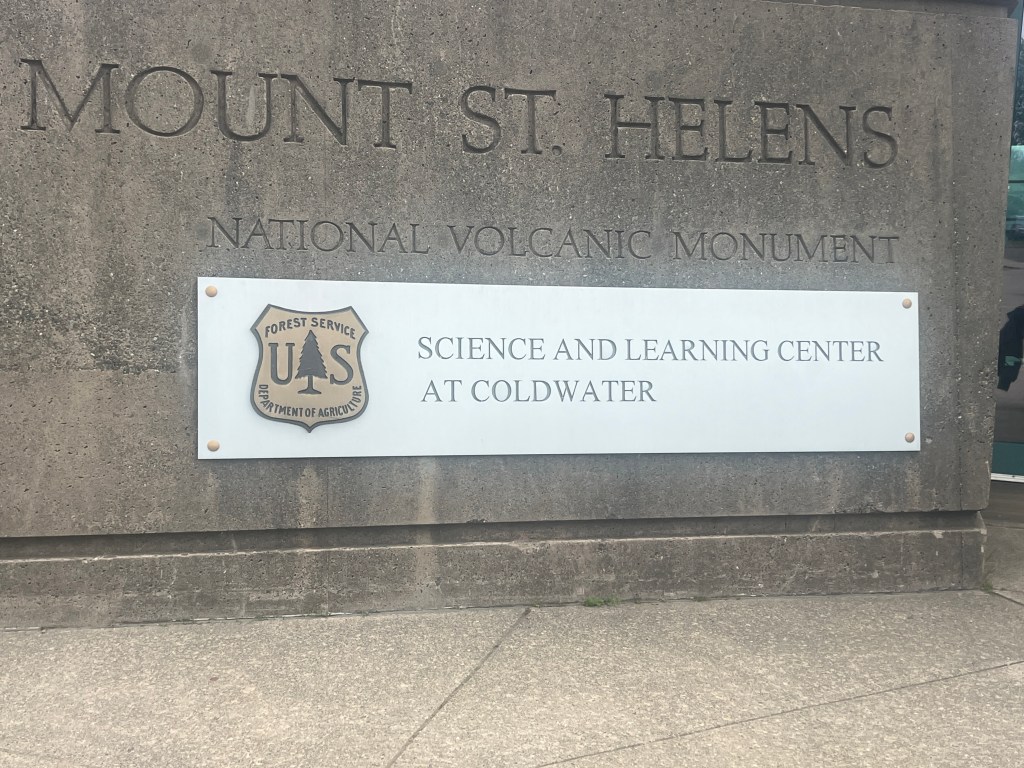
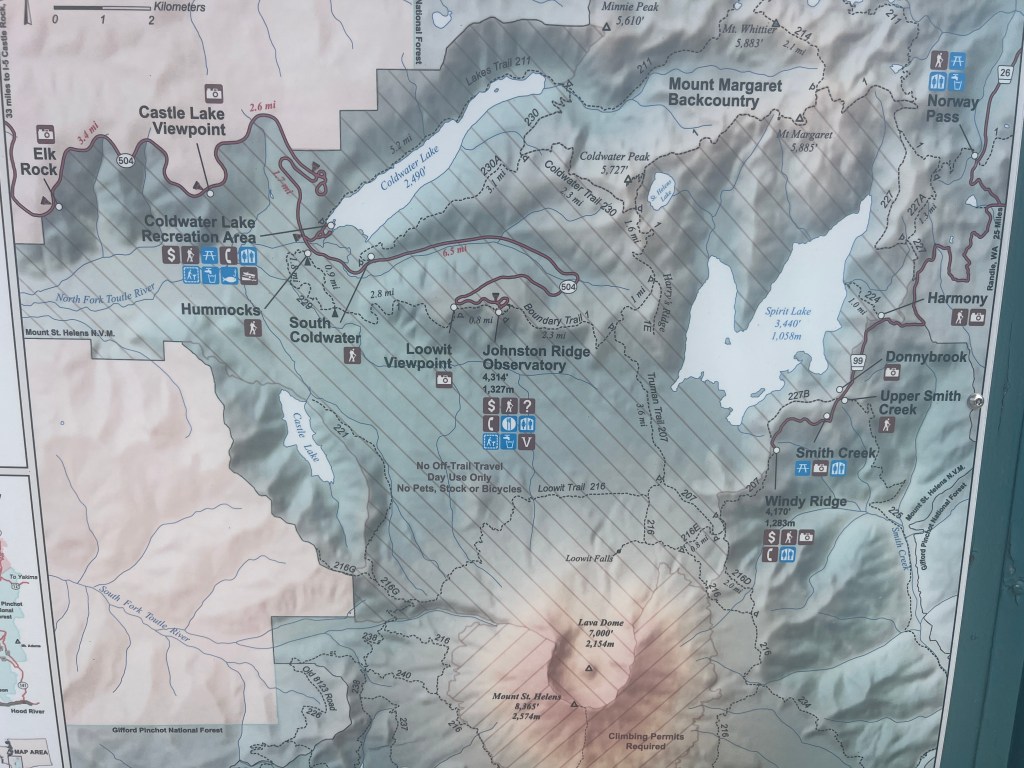
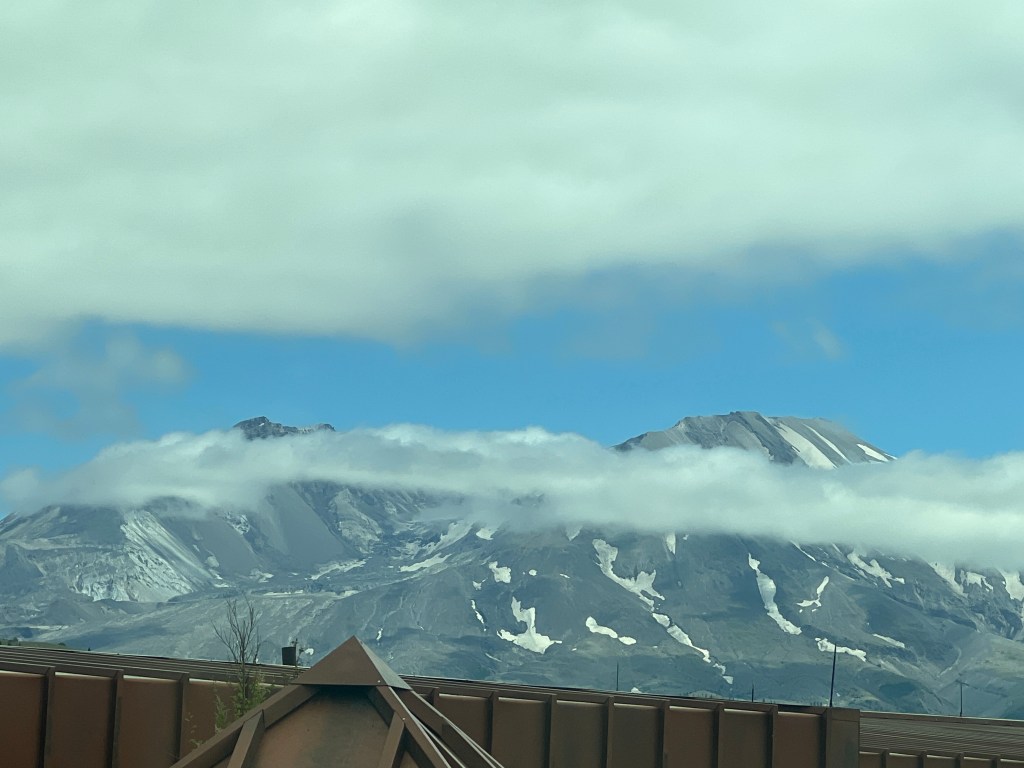

The Coldwater lake is below the center and is a hiking and picnicing area.

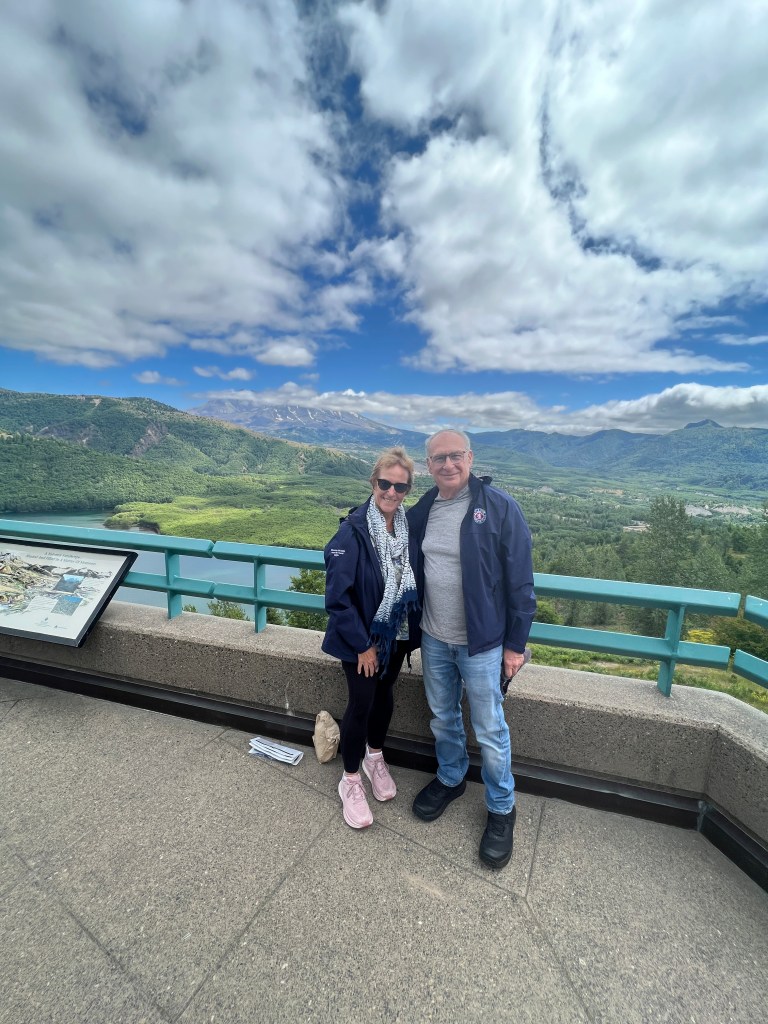
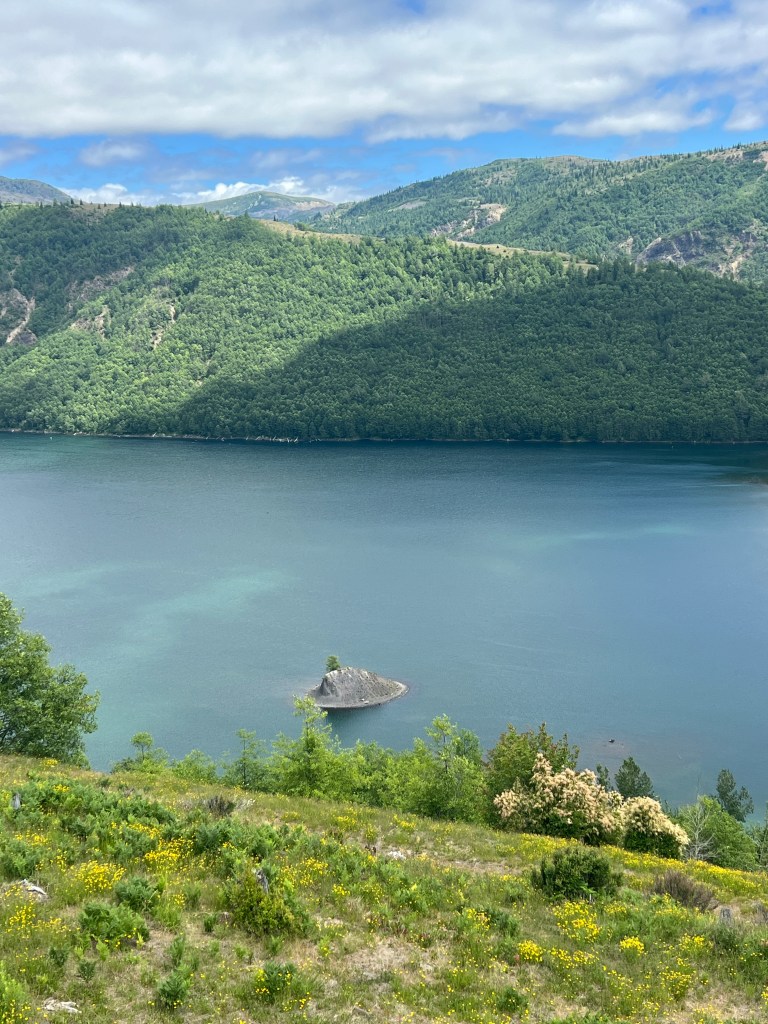
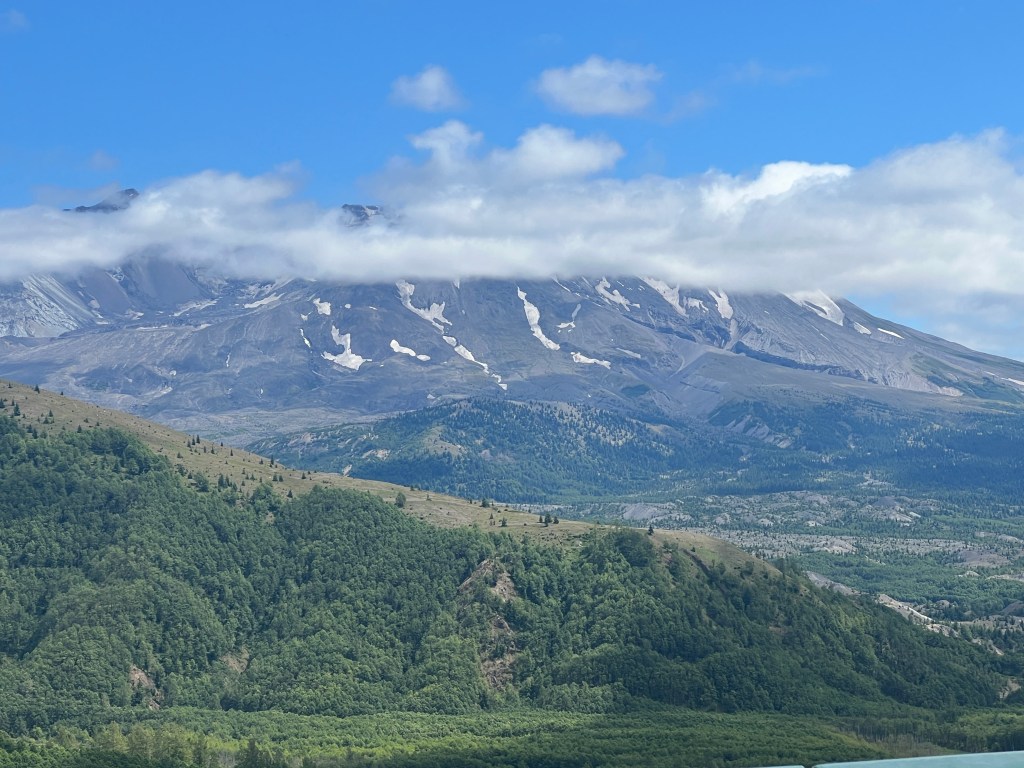

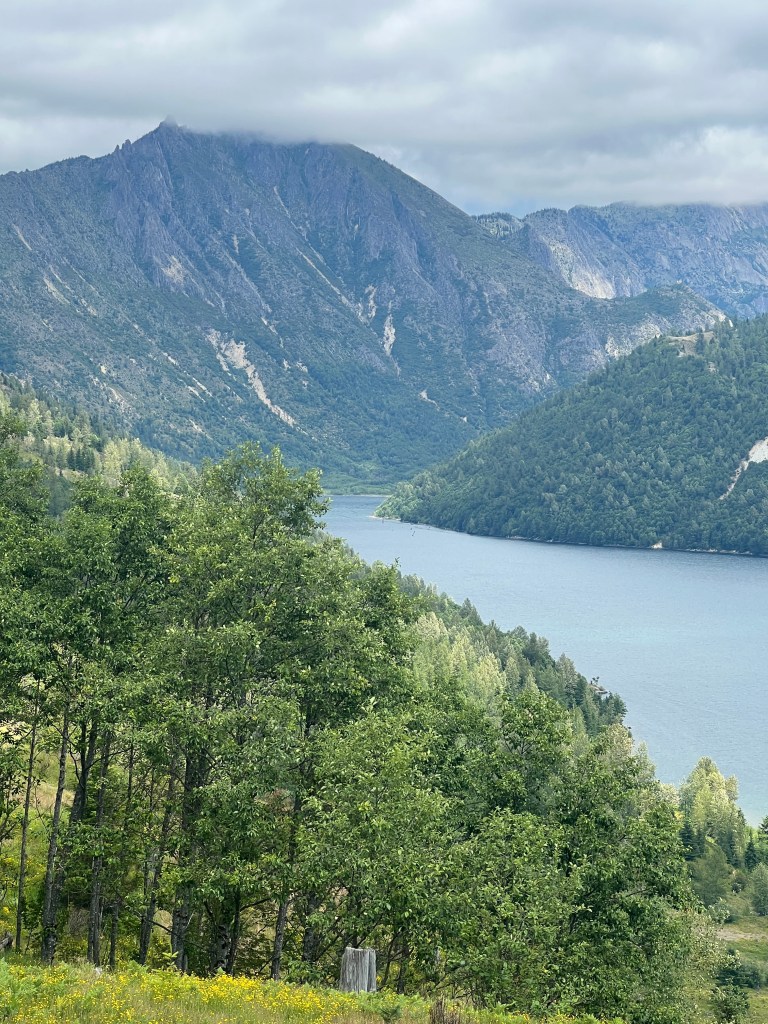
On the way back to the ship, we passed many areas that are being harvested and areas where lumber is being loaded on ships to send to China and other areas of the world. The replanted forests are mostly owned by the Weyerhaeuser company which owns nearly 12,400,000 acres of timberland in the US. There are signs that say when certain sections have been replanted.
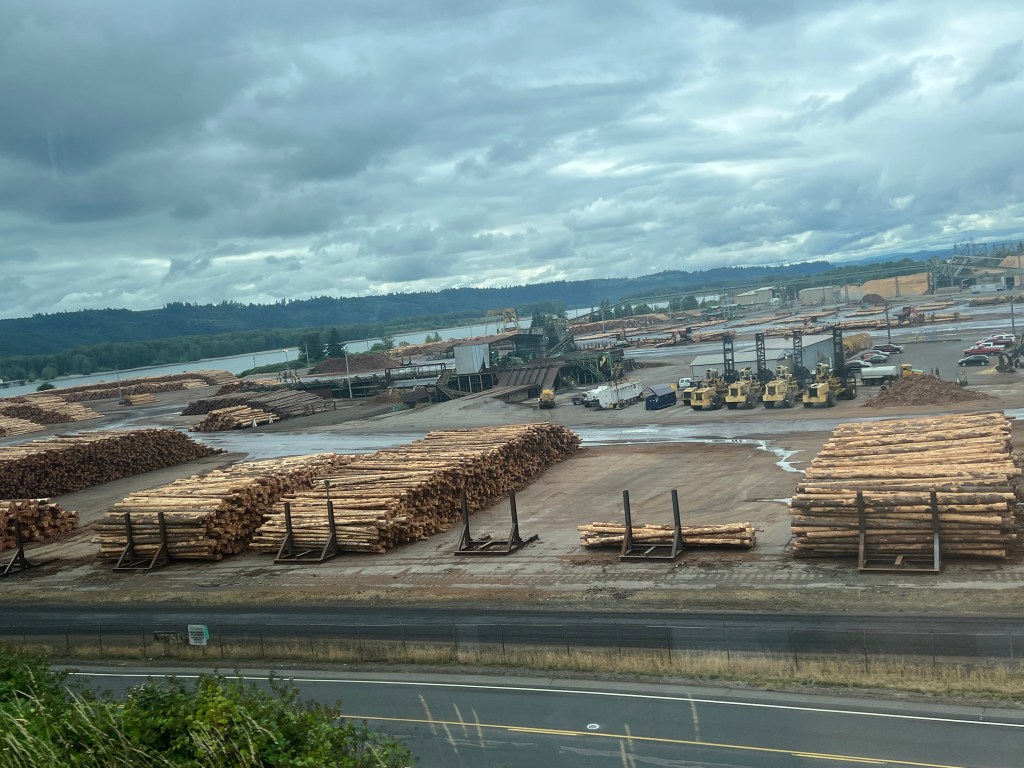
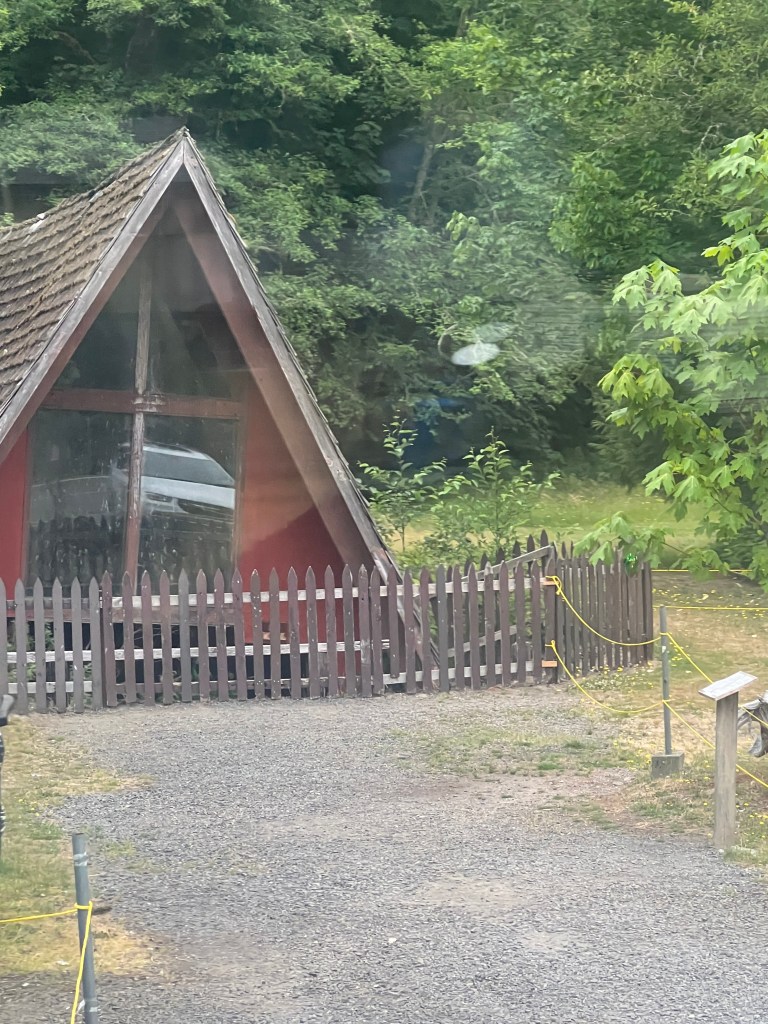
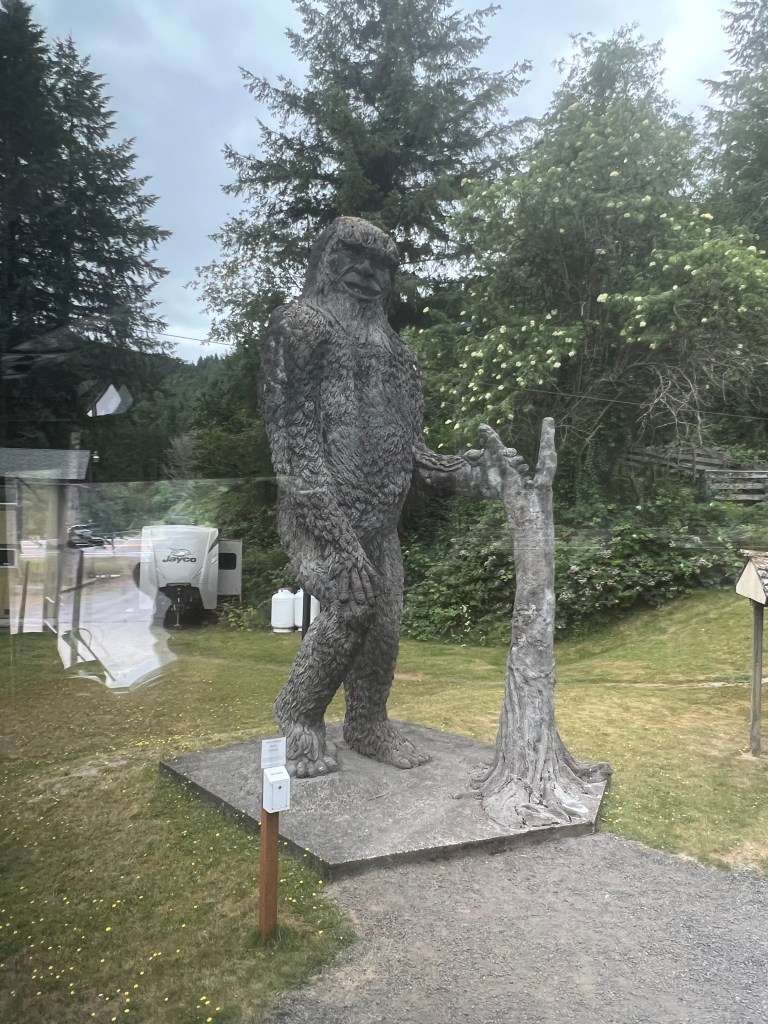
This area was a logging community right along the river. It looks quite charming.

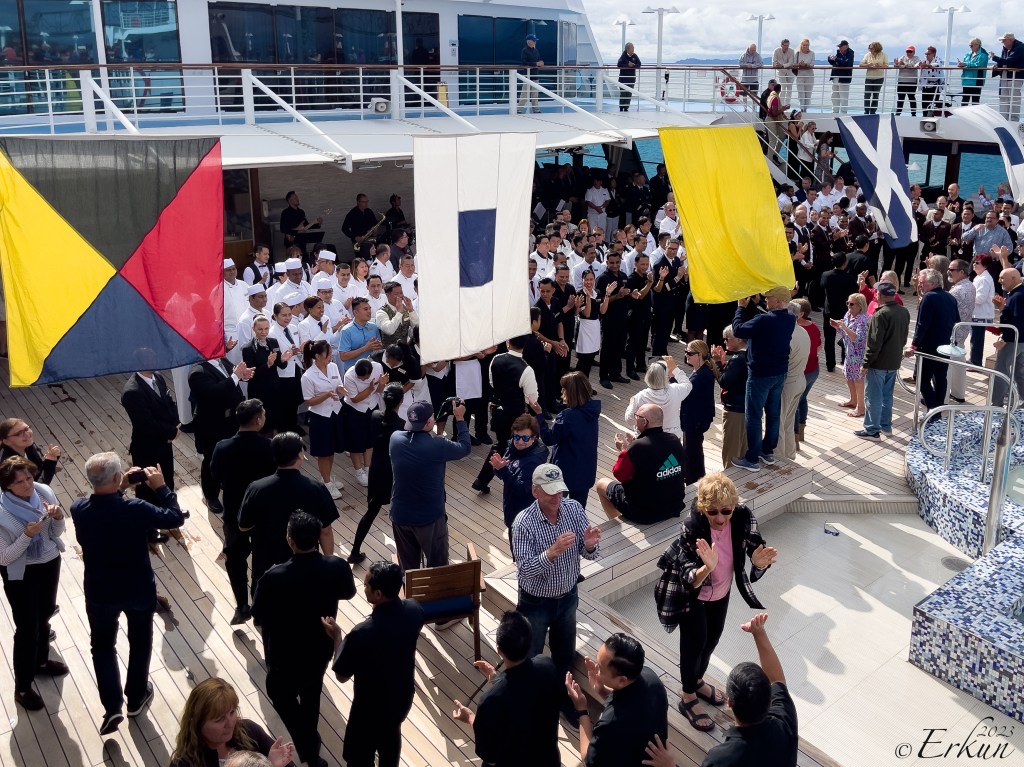
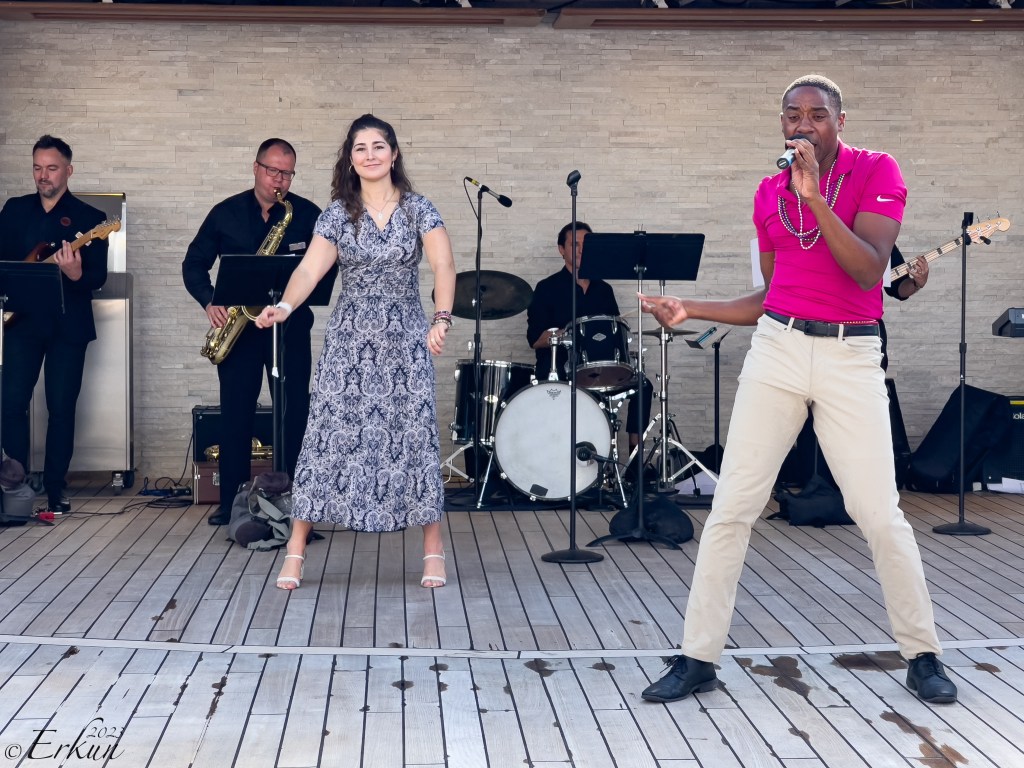
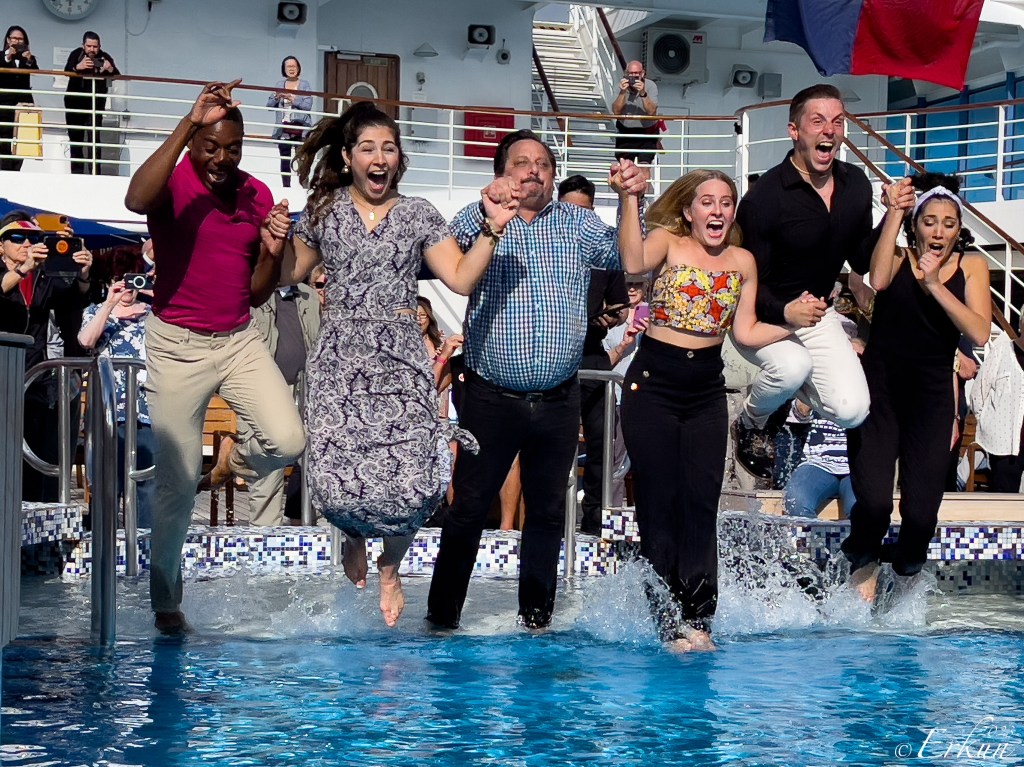
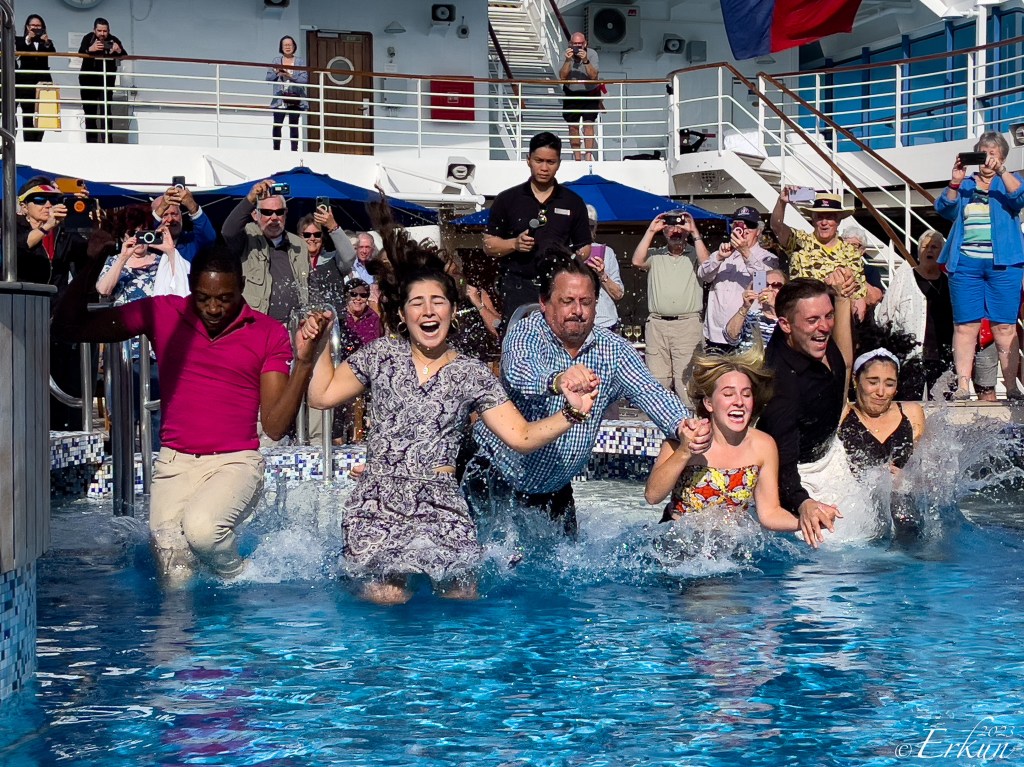
Because we got a late start and it is such a long trip, we were late returning to port. Because it is a ship tour, they don’t leave without you, but we missed “the End of the World Sail Away Party and crew mix and mingle.” We heard that almost every crew member attended and it was quite a sight on the open deck. It’s a tradition to jump into the pool with your clothes on (I did this on a previous trip) and we missed that too, but my friend Erin Erkun provided me with some pictures of the festivities.
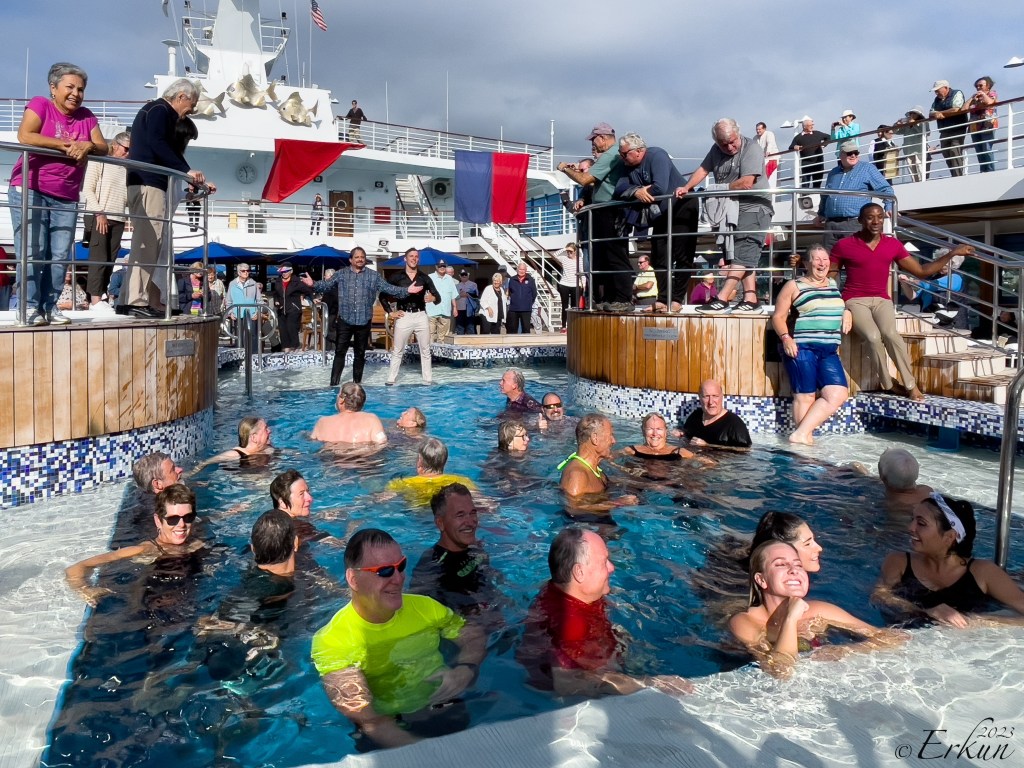
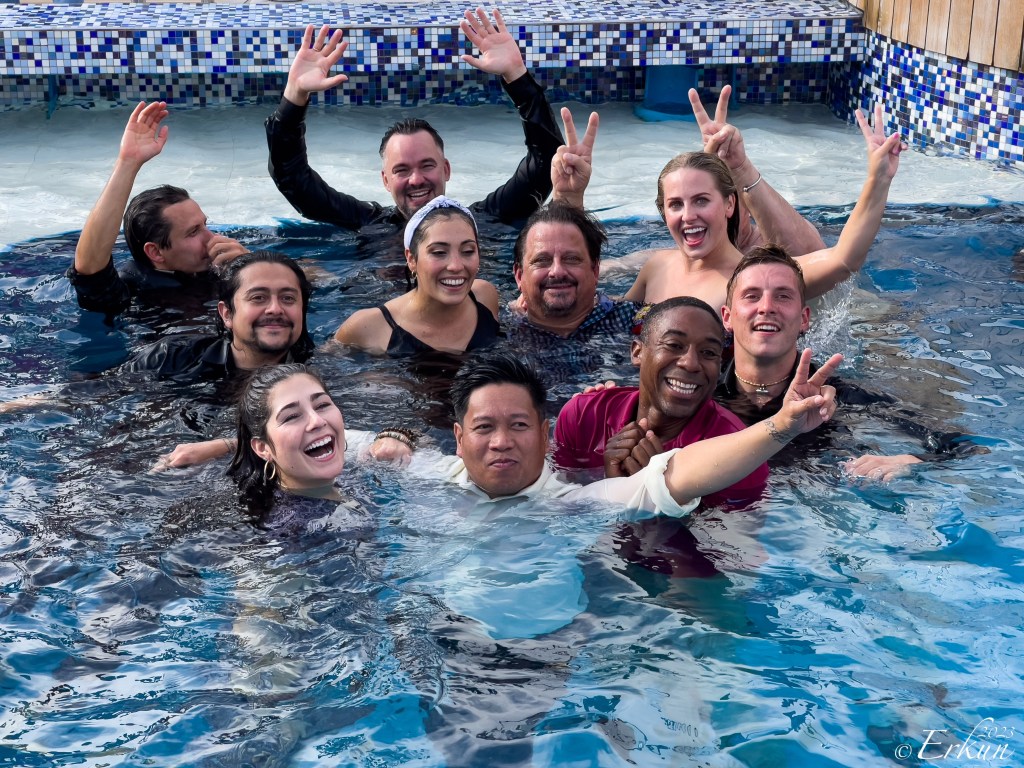
We had dinner with Paul and Carolyn as well as three other guests. Jennifer and I thought we coordinated our outfits and shoes! Just cooincidence though!
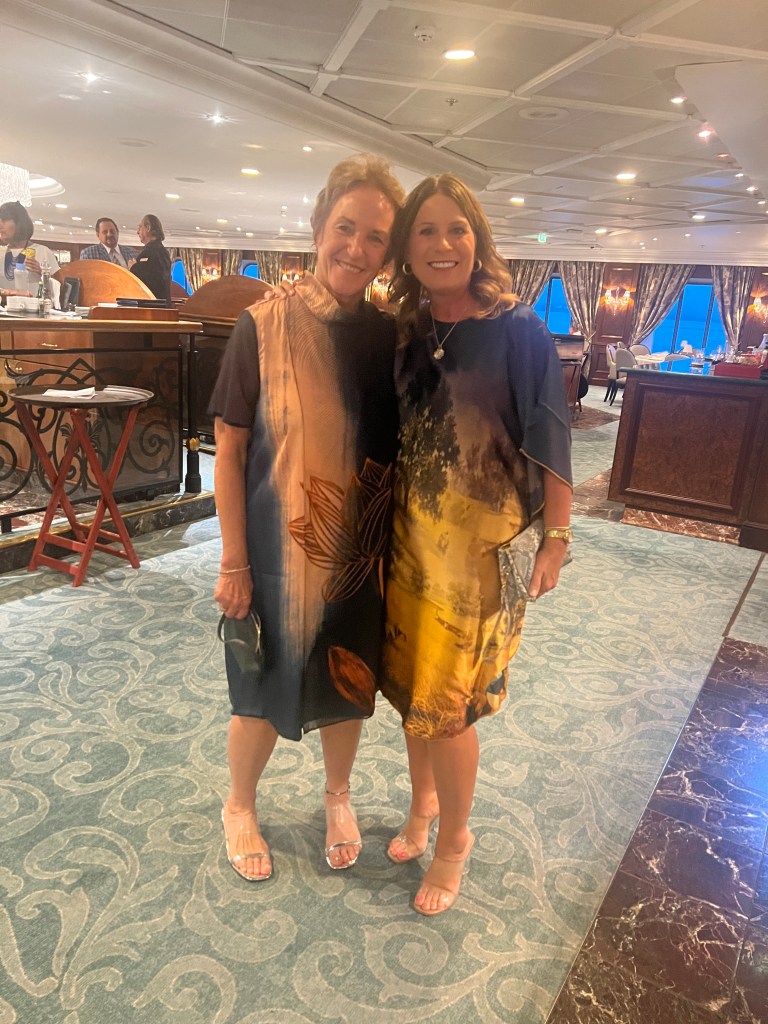
It is hard to believe that we have now finished day 177 of our 180 day world cruise. We have a sea day tomorrow, we arrive in San Francisco on Wednesday and we fly home on Thursday. Bittersweet for sure. We will never forget the places, the people and all of the experiences we were fortunate enough to have on this trip.

 Pat and Norm's World Cruises and other adventures
Sweet memories!!
LikeLike
Pat/Norm – we know you are sad that your journey is ending. But we wanted you to know we thoroughly enjoyed traveling along with you digitally.
Your adventure brought back fond memories for us when you were in locations we had been to before and the new locations increased our appetite for future travel.
Looking forward to your next trip.
Thank you for sharing with us.
Rick & Marilen Beaman
LikeLike
I remember that volcanic eruption!
Thank you for sharing all the wonderful photos and experiences during your journey.we really enjoyed viewing photos snd reading the stories happy you had a safe passage Don snd Jan
LikeLike