April 21, 2024
I was looking forward to St. Malo because I remembered it so well from the trip our son Mark and I took with good friend Jim and his daughter Jamie. We also went to Mont St. Michel during that trip and it is our destination today. Norm was not on that trip so it is his first visit here.
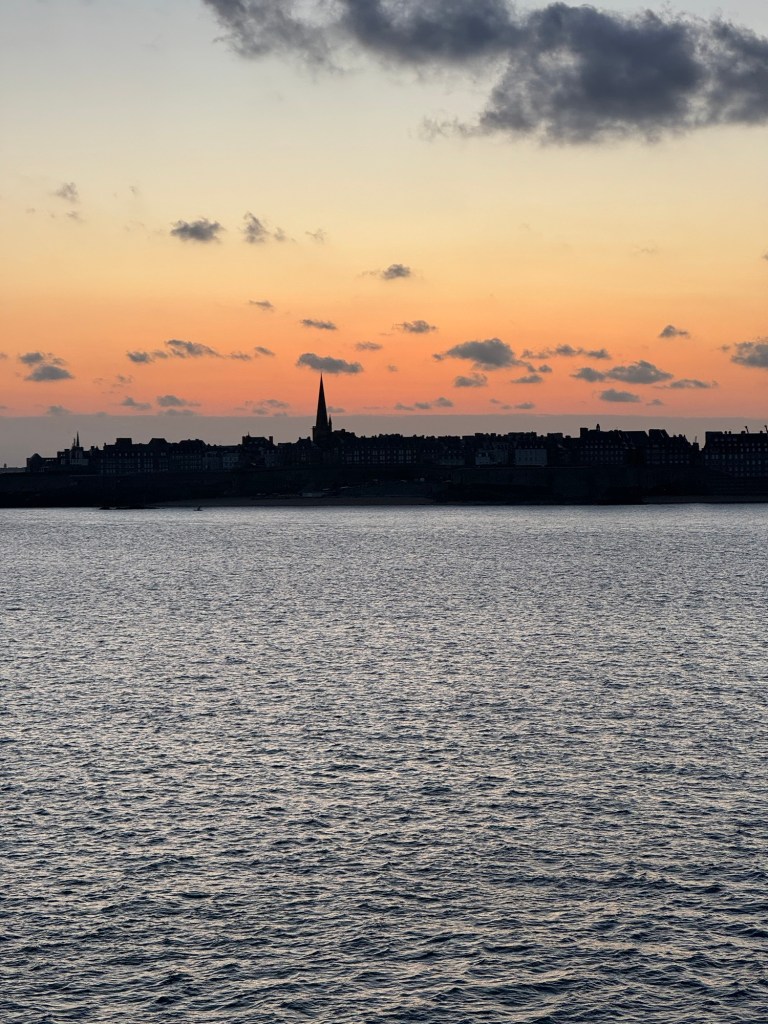
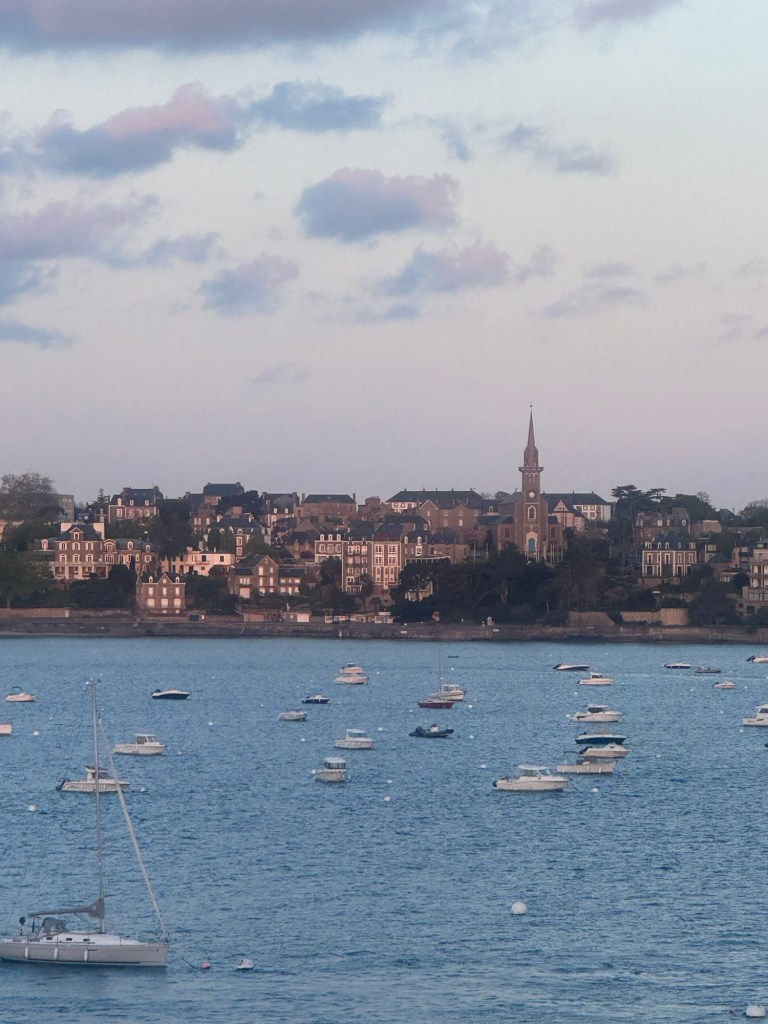
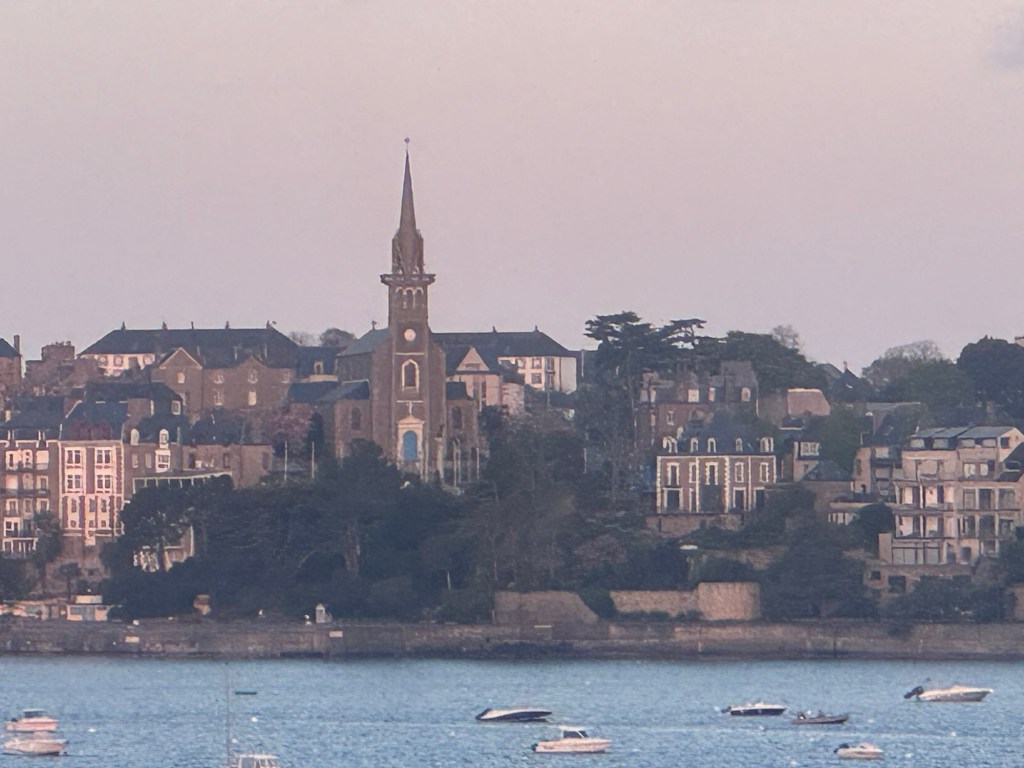
This is a tender port so everyone has to wait until the ship is anchored . Here are some pictures from our room during the sail in.
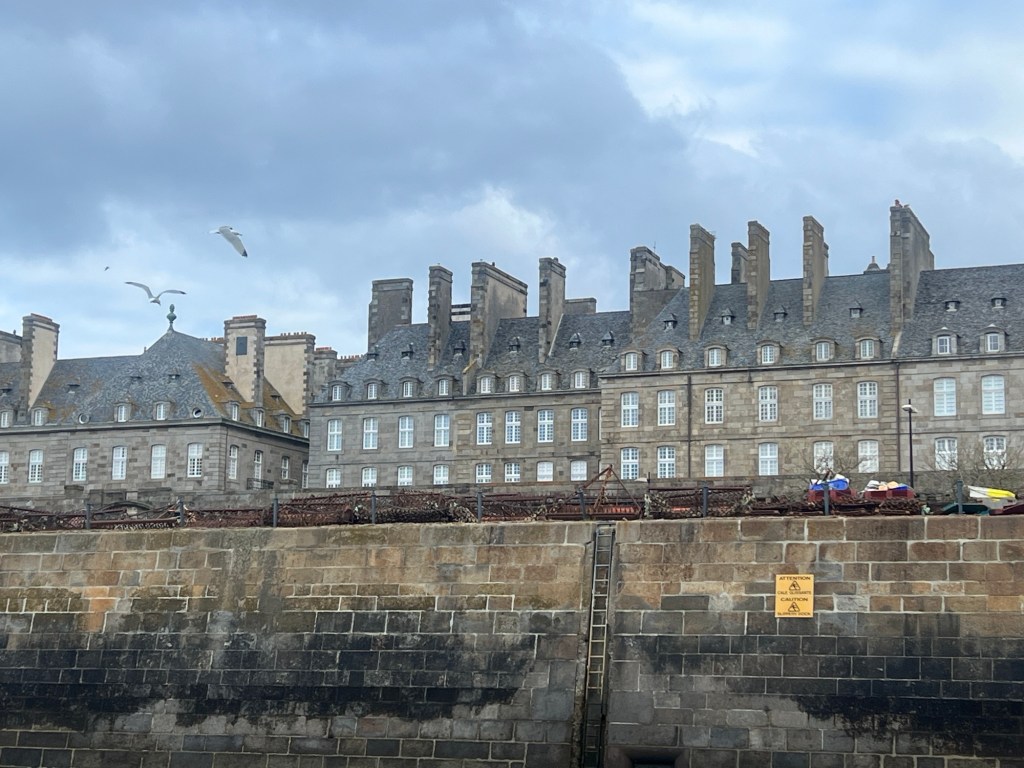
We arrived at the pier and met our guide for the day, Natalie.
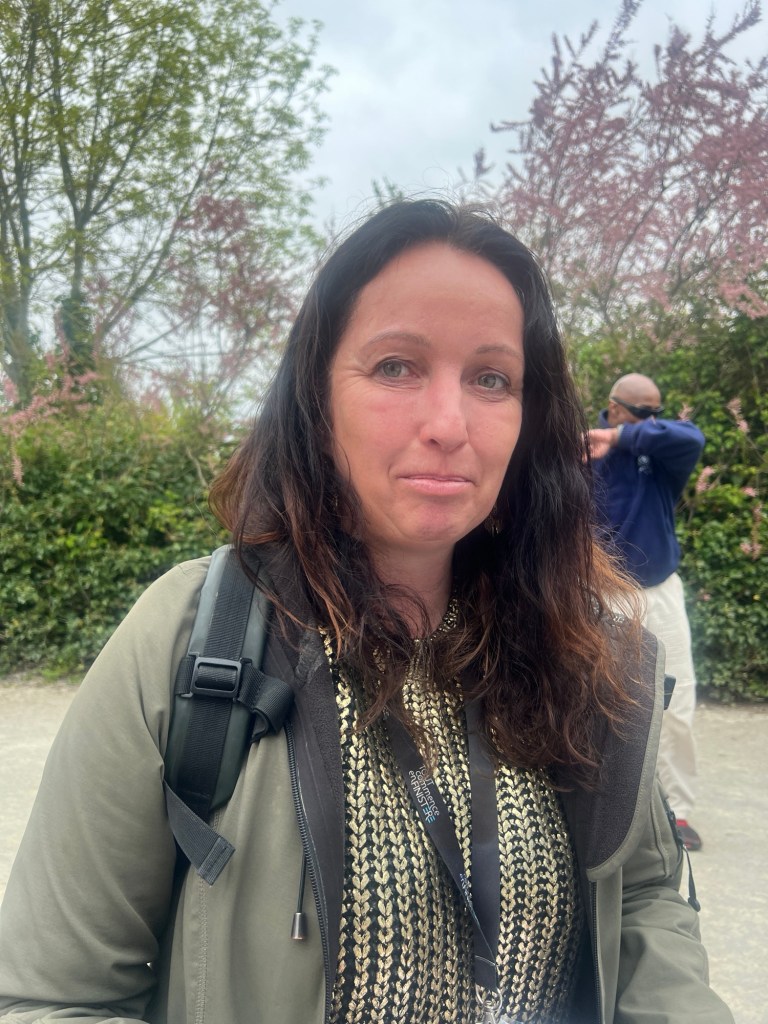
She was an exceptional guide! She explained that we are in Brittany and St. Malo is a peninsula in the western part of Brittany. We are headed to Normandy where we will visit Mont St. Michel. She said that in Britany, they are jealous of Normandy because they have the famous Camembert cheese, and jealous of Bordeaux to the south because they have wine. Brittany has neither, but what they do have is the best half salted butter in the world because of the type of cow they have here. The cows produce 20 pints of milk/day each.
More about St. Malo later.
There are some lovely homes and sights along the way to Mont St Michel.


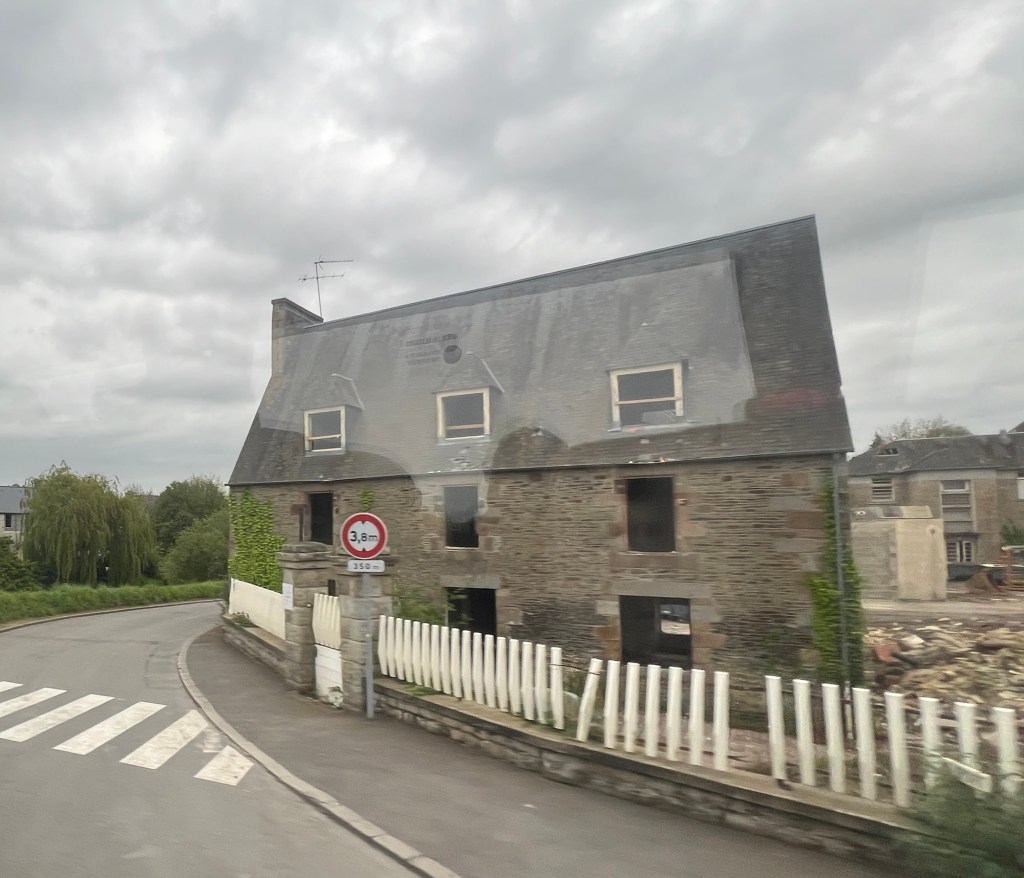
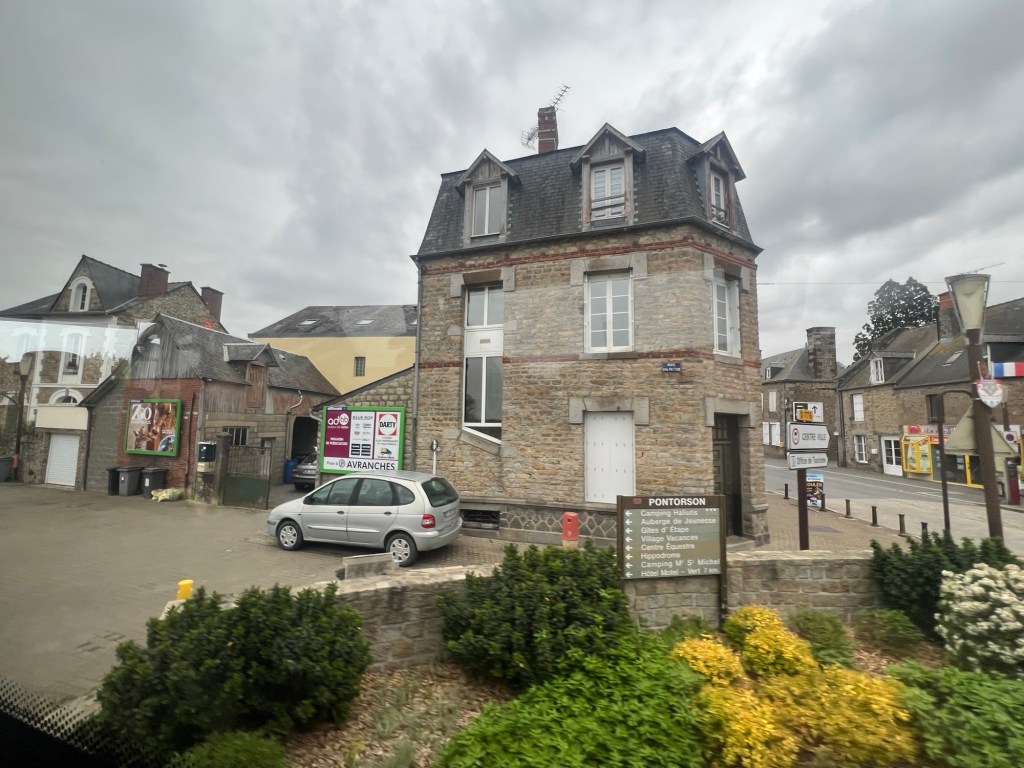
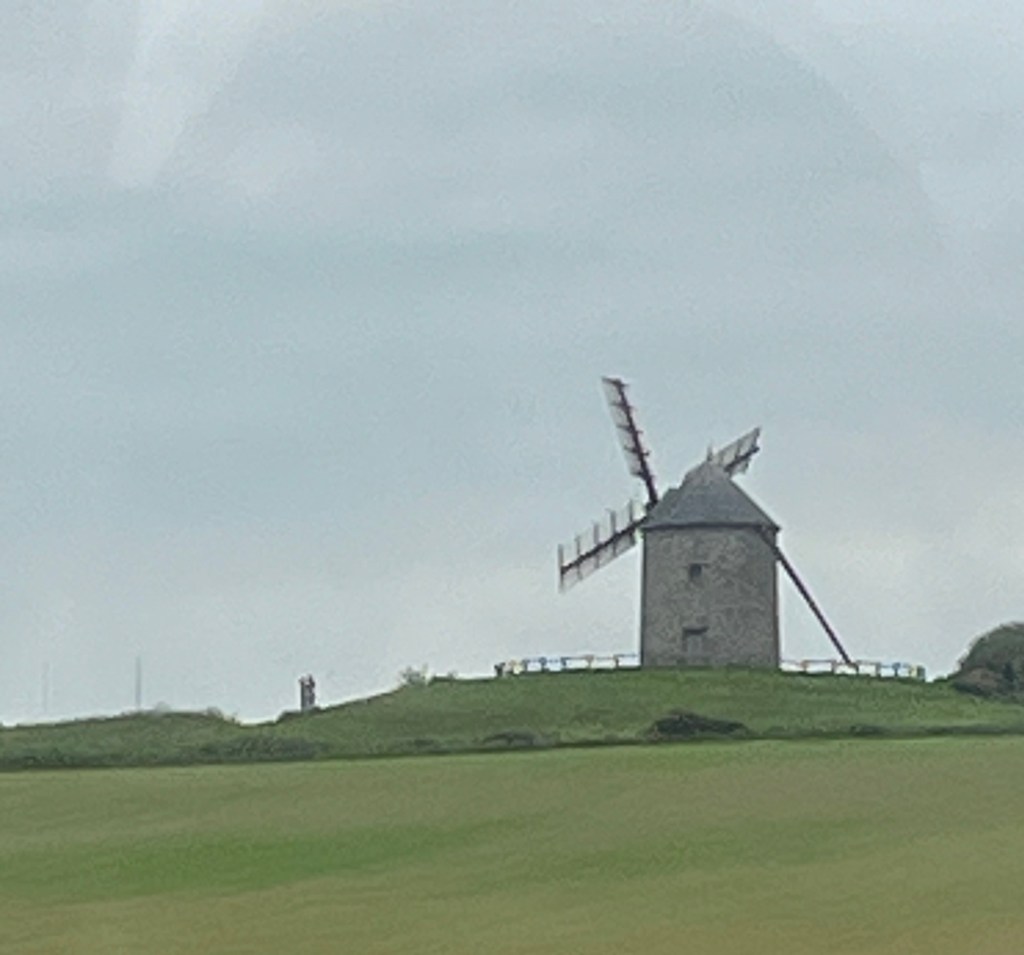
She also gave us a 5 minute French lesson! Voila, oo la la, eww, and petit – she says these are the words that the French use in almost every sentence!
French became the official language in the 1930’s. Before that Breton was spoken here. As French became more common, children had to wear a donkey hat if they spoke Breton in school. Now there is a movement to preserve Breton language.
Before World War II, all women here wore a costume with a distinct headdress representing the region or village in which they lived.
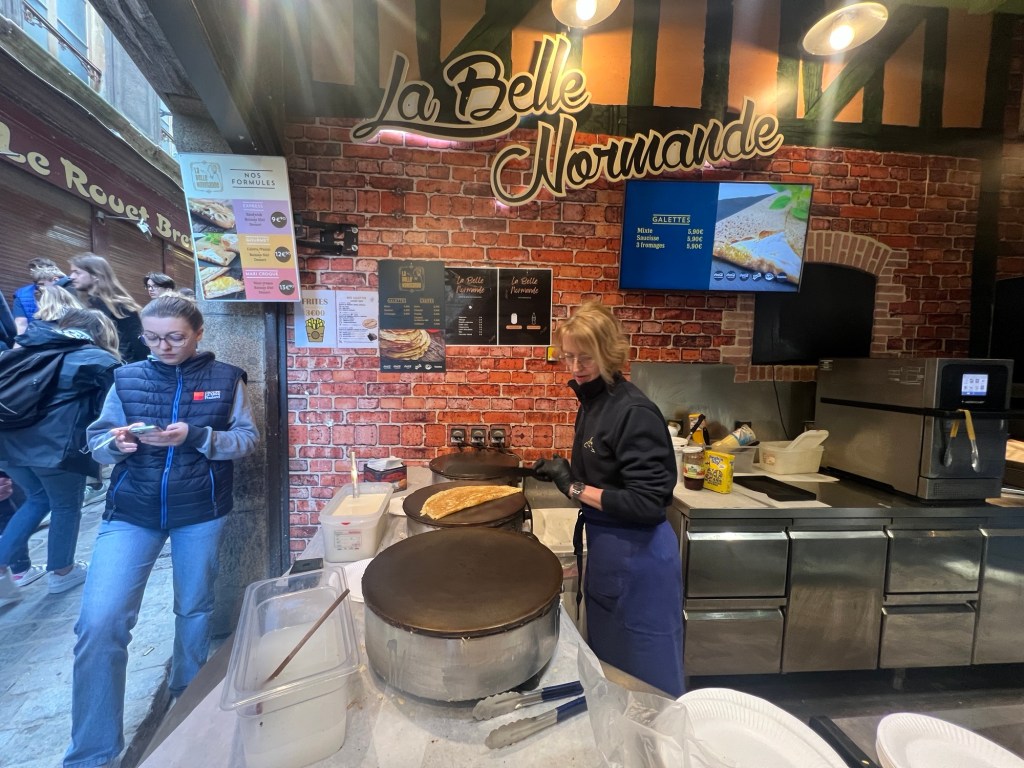
Typical foods in this area are crepes made of buckwheat with either sweet or savory fillings and ciders.
When we reached Mont St. Michel, Natalie gave us our tickets and we waited for the shuttle to take us to the Abbey. When some people tried to cut in line, she gave them quite a talking to and they got behind us! I like her.
Things are different from 25 years ago, of course. There was no shuttle and no bridge to the Abbey. The tides closed off access during high tide. Now there is a bridge and the tides are only high enough to close access 5 times a year. Which makes it much easier for the 10 million people who visit each year. It is still the highest tidal change in Europe, a 15 meter difference between high and low tides.
Here is our first glimpse of the magnificent sight.
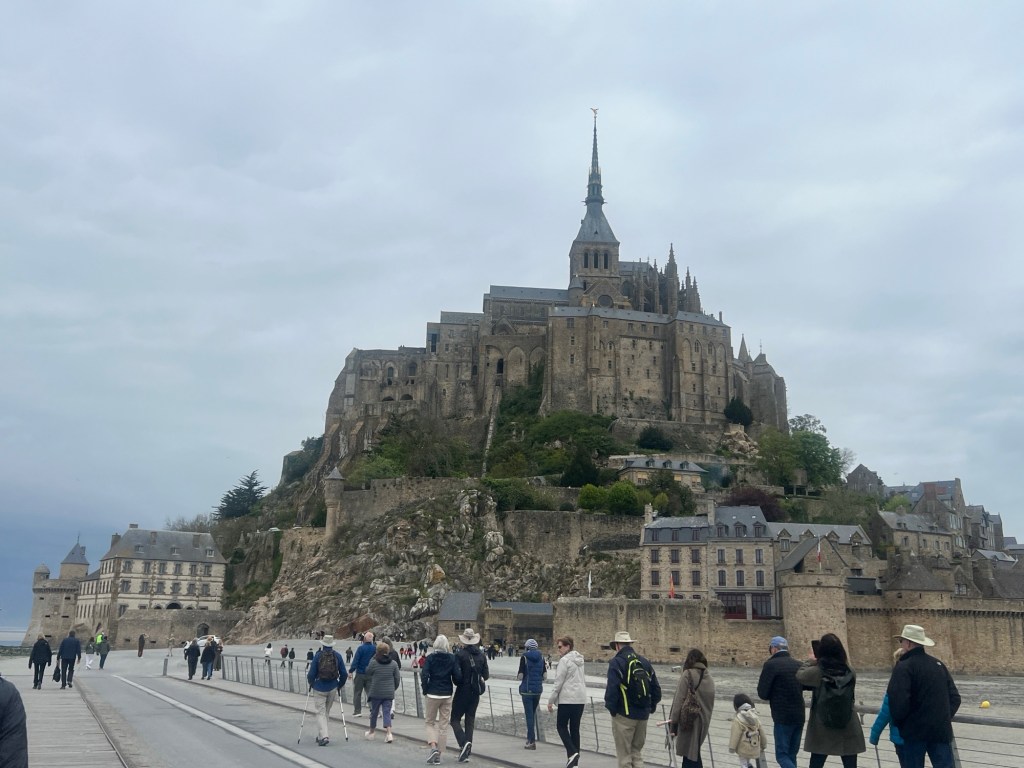
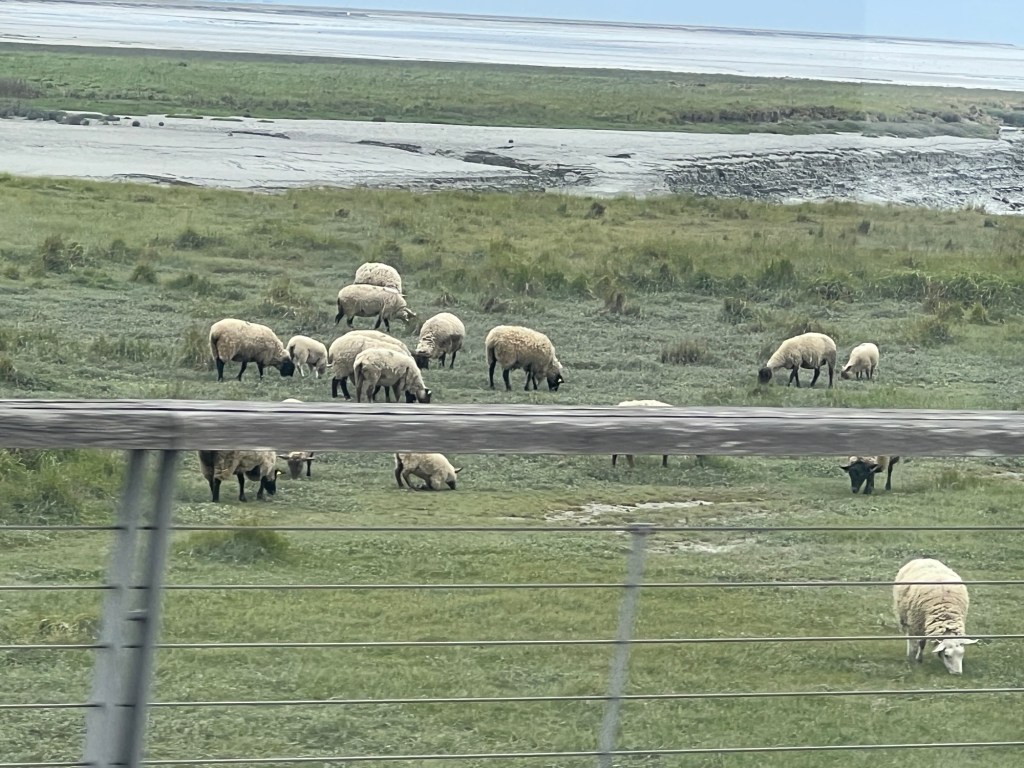

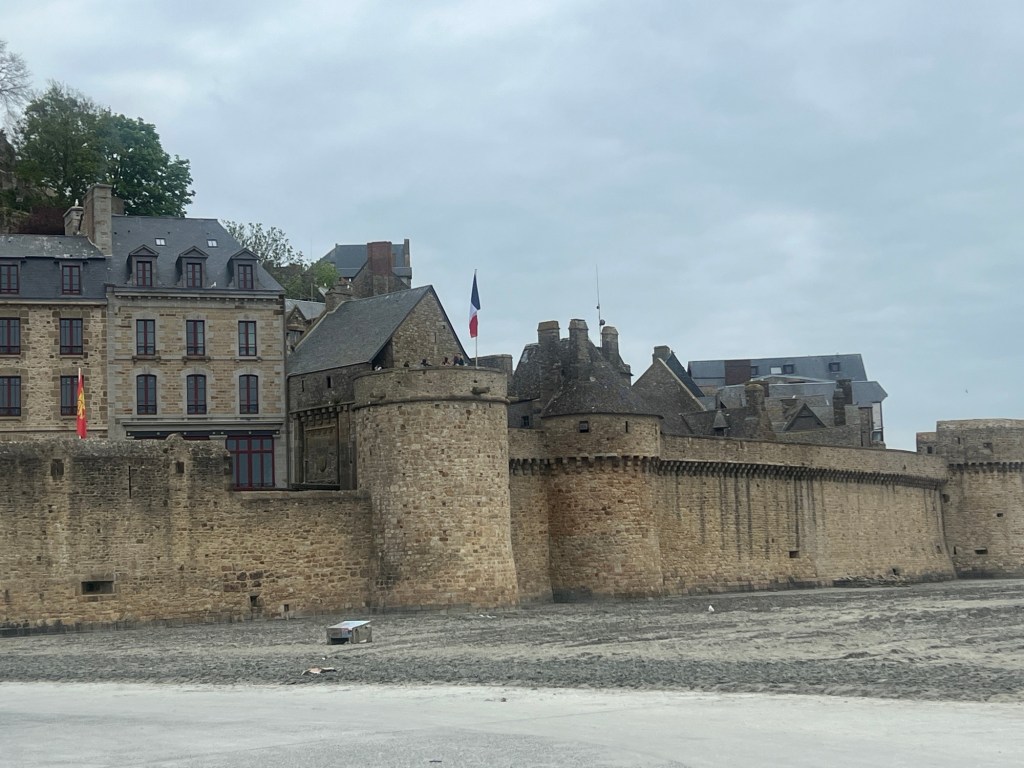
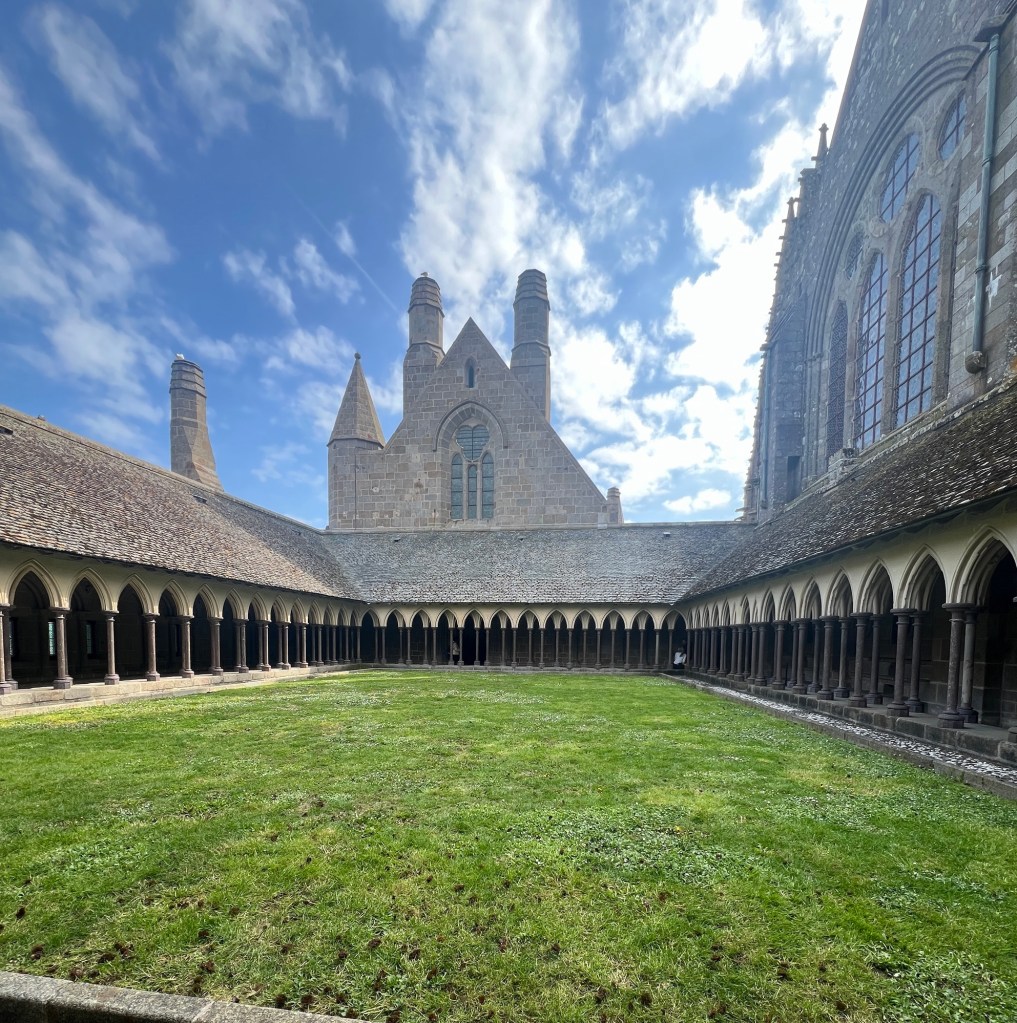
Natalie gave us a lot of information as we approached. The most prominent feature of Mont St Michel is its medieval abbey, perched atop the rocky island. It’s a masterpiece of medieval architecture and has been a place of pilgrimage for centuries. It has also been used as a prison and a fort over the years. It is built in layers, the first of which was built in the 700s and added to over the centuries. 40 people live in the village surrounding the Abbey, so most of the people we see operating the shops, etc, live in the outside area, but anyone can buy or rent a house here is one is available.
Mont St Michel and its bay were designated as a UNESCO World Heritage Site in 1979. It’s recognized for its exceptional cultural and natural significance. The bay of Mont St Michel is also home to other attractions, including salt marshes, quaint villages, and historic sites.
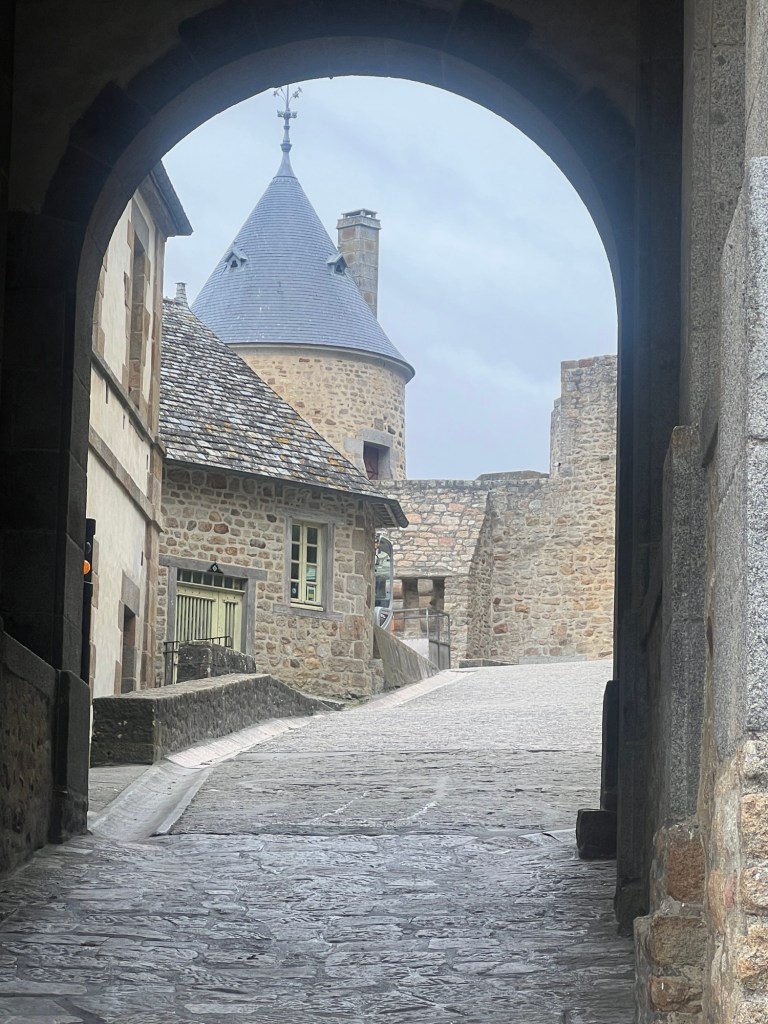
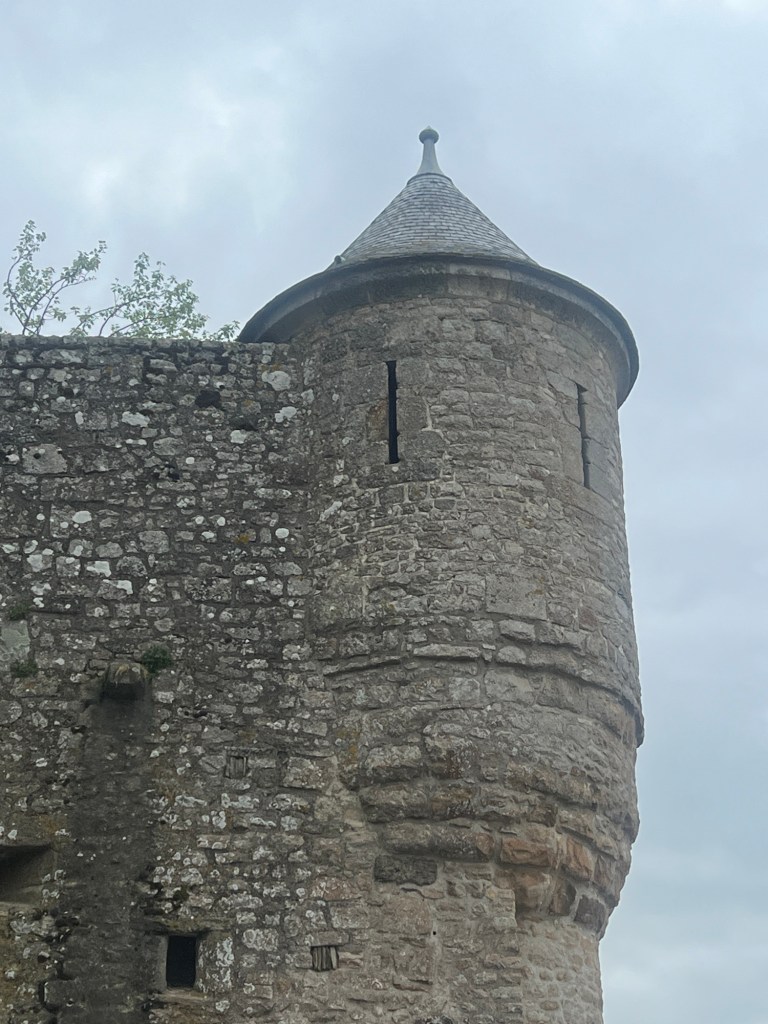
Natalie took us into an entrance that most of the visitors do not use which saved us about half of the 400 steps it takes to reach the Abbey. We went on a mixture of winding paths and steps. Along the way, we saw some of the ramparts from the fortress days.


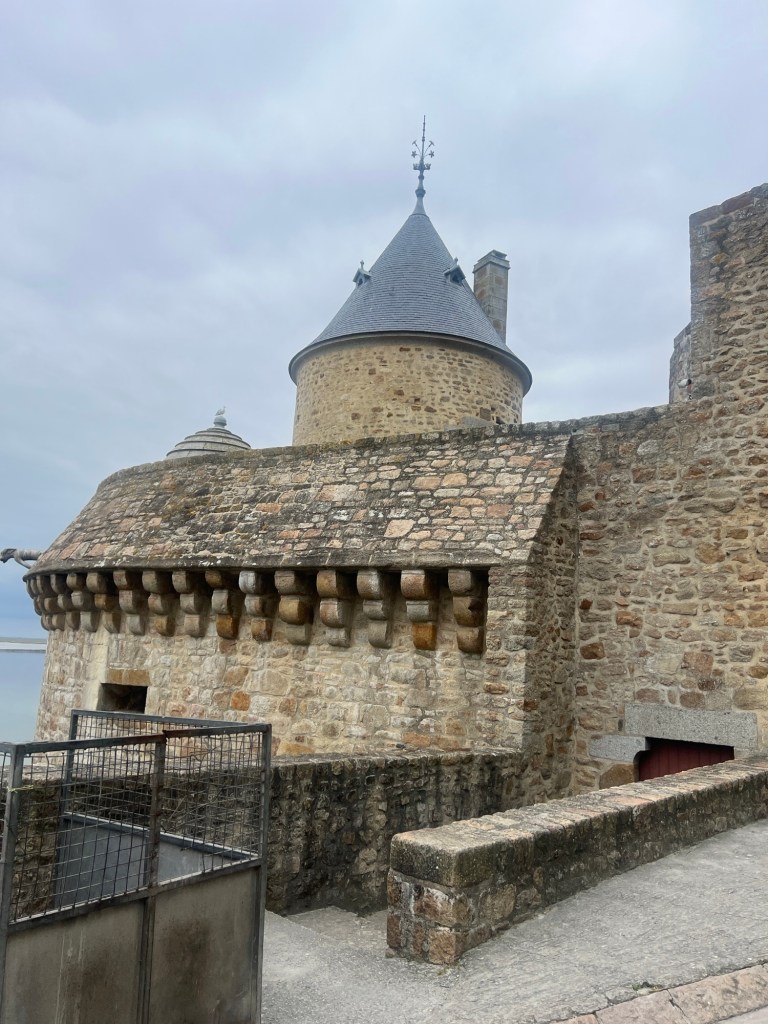
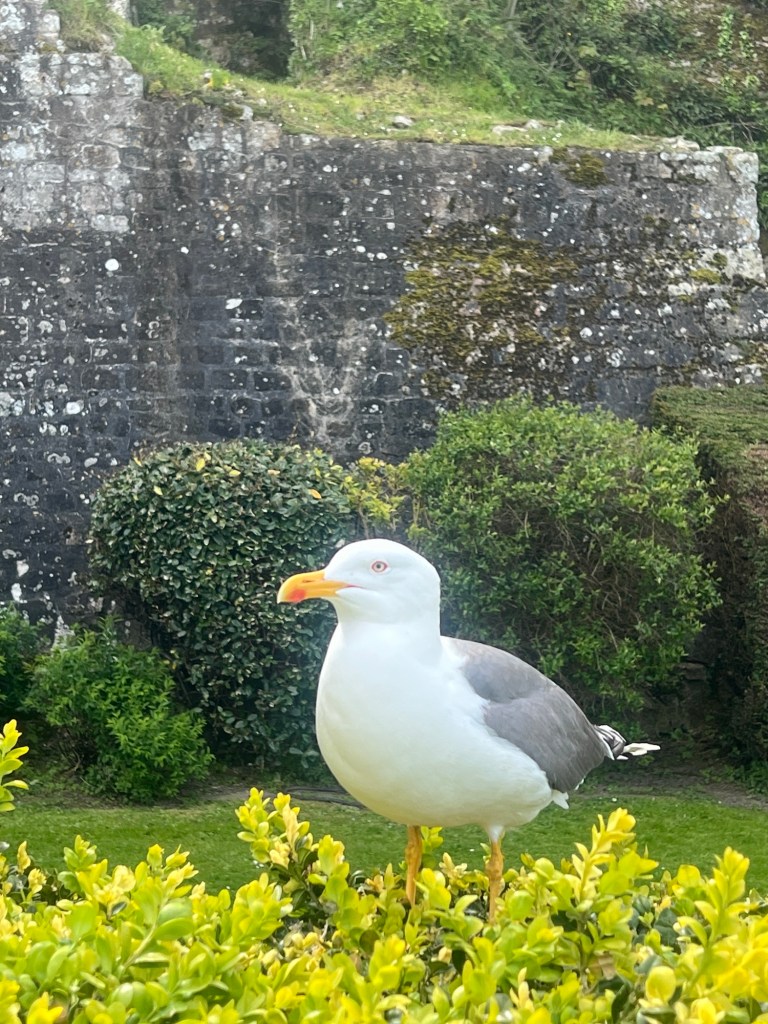
There are “resident” seagulls who just are not afraid of the visitors.
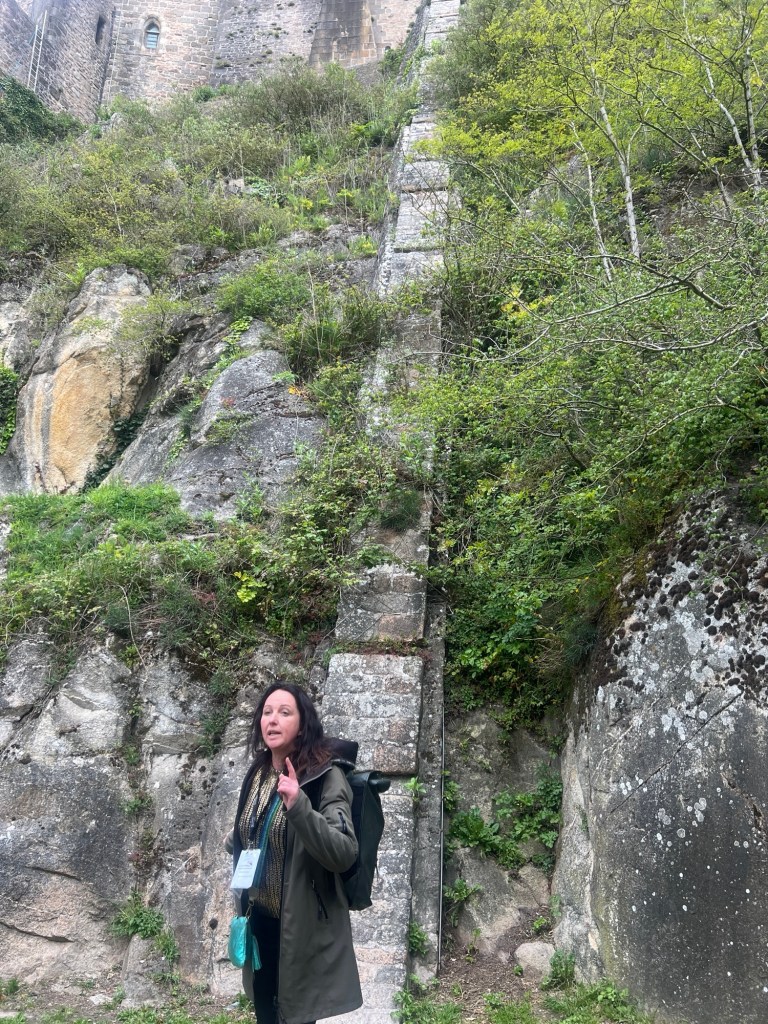
This was a kind of early escalator which was powered by a wheel that men moved like a hamster wheel from inside.


It is a Sunday so we saw people with green stickers who are coming to the Abbey for mass. It was just about starting as we got all the way up to the Abbey and the organ music filled the room. We saw nuns and a priest carrying a cross, but there were too many people there to get a clear view.

We walked all through the Abbey and its many layered rooms and on many steps. Natalie explained the history along the way.
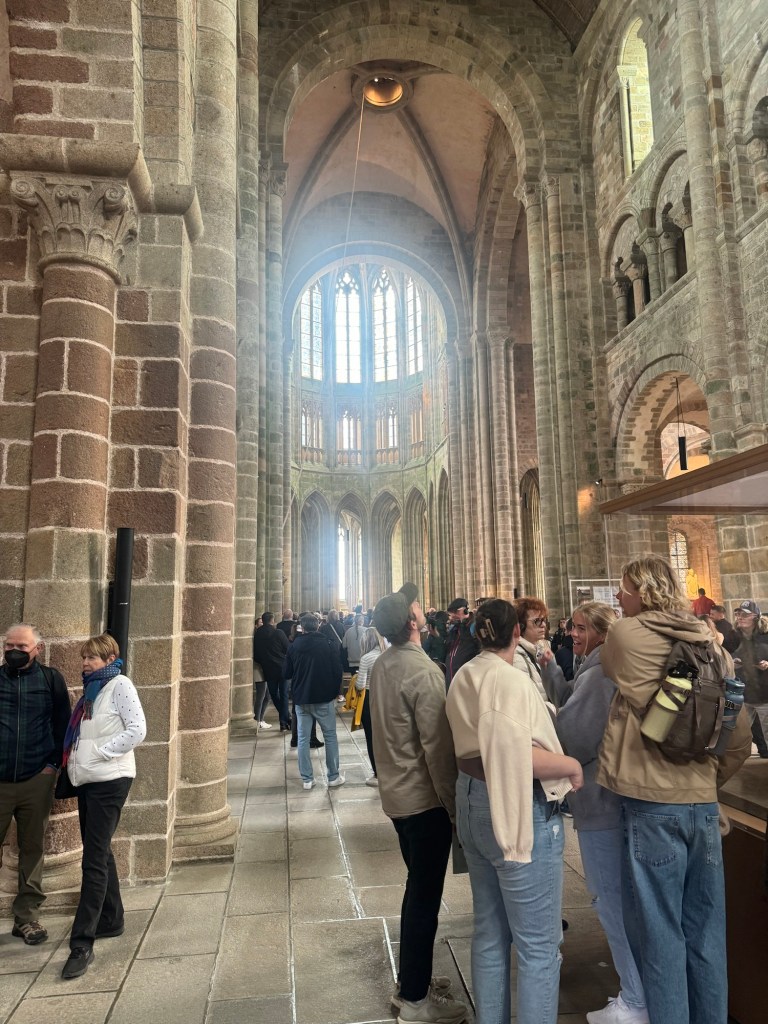

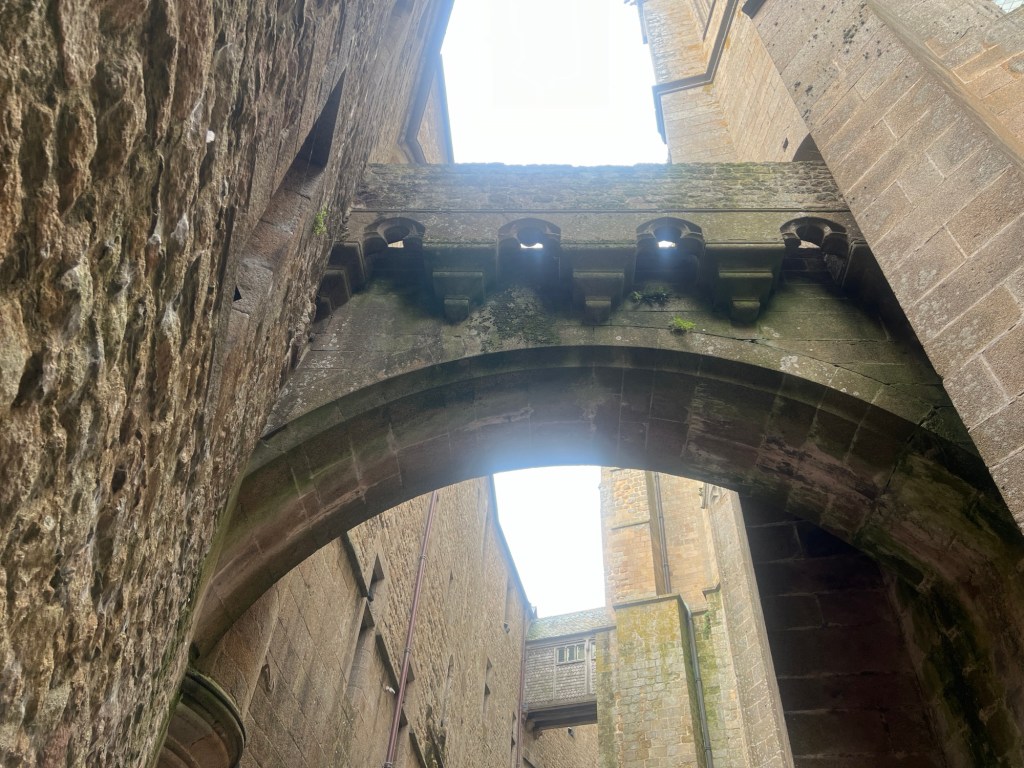
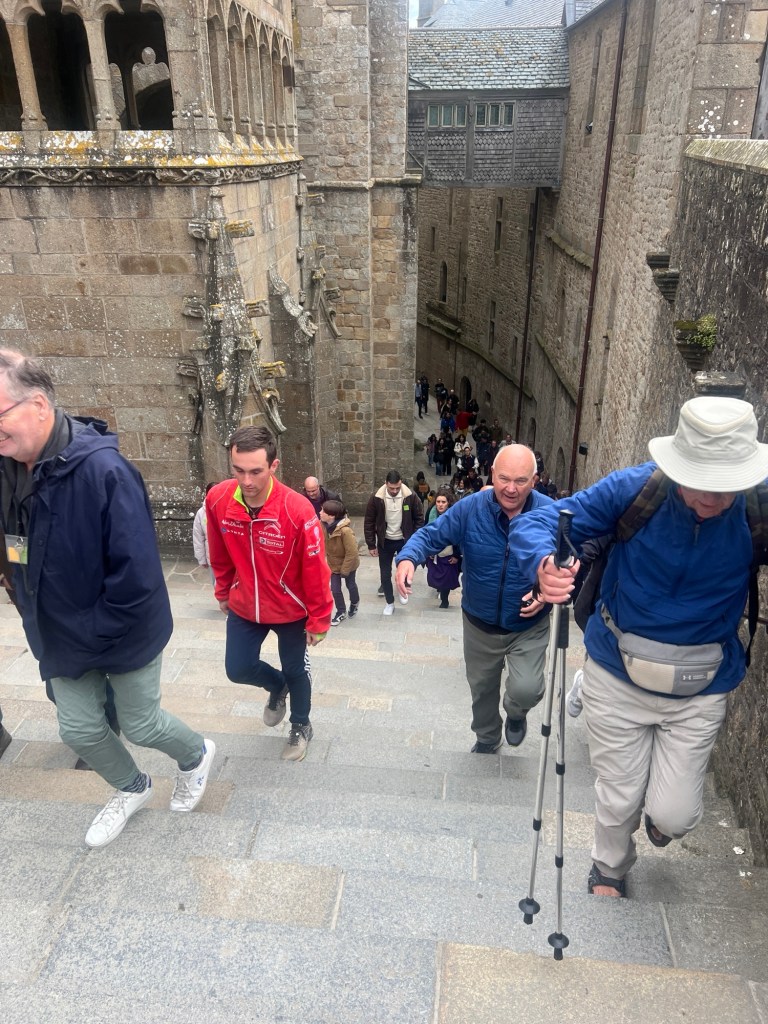

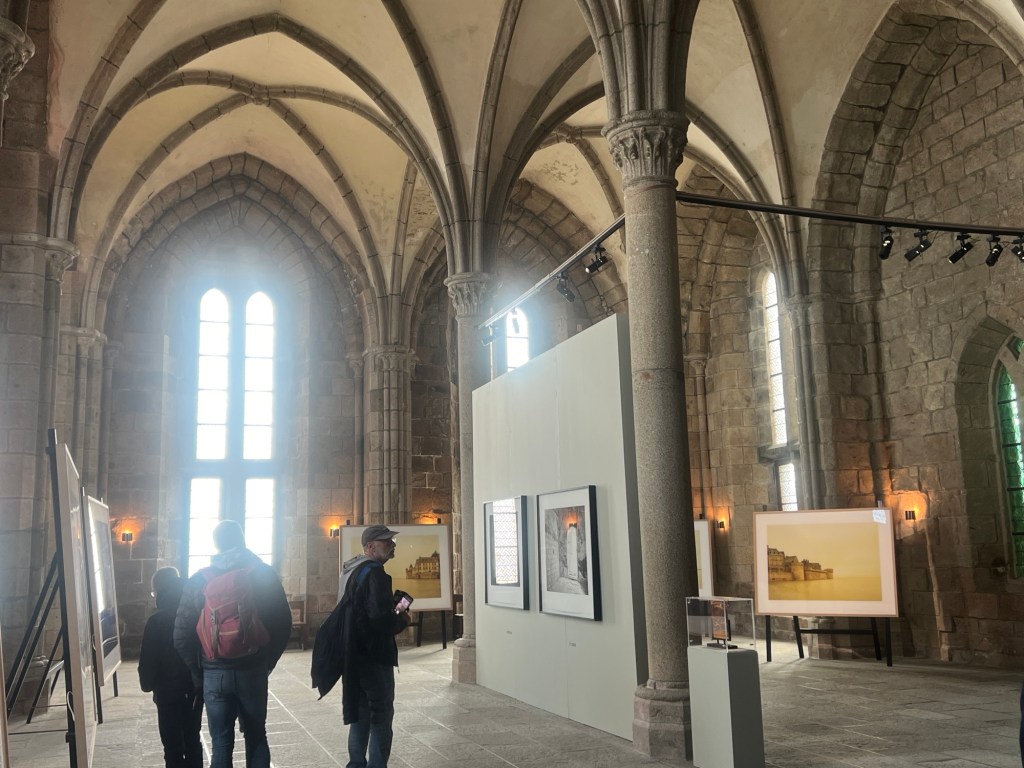

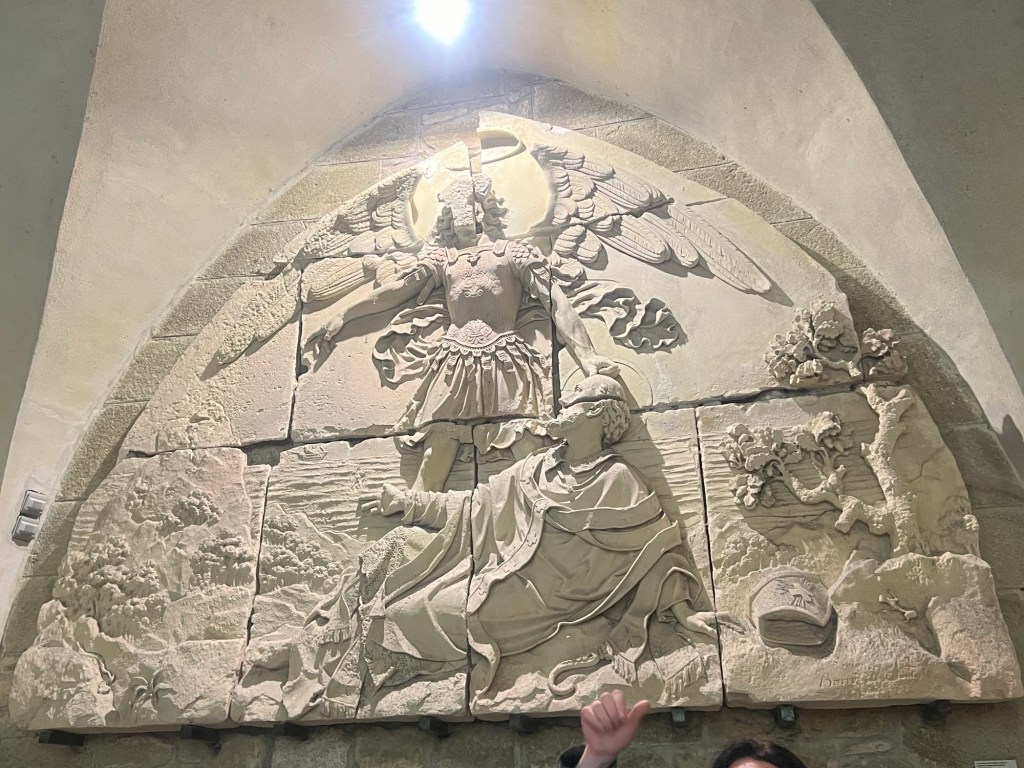
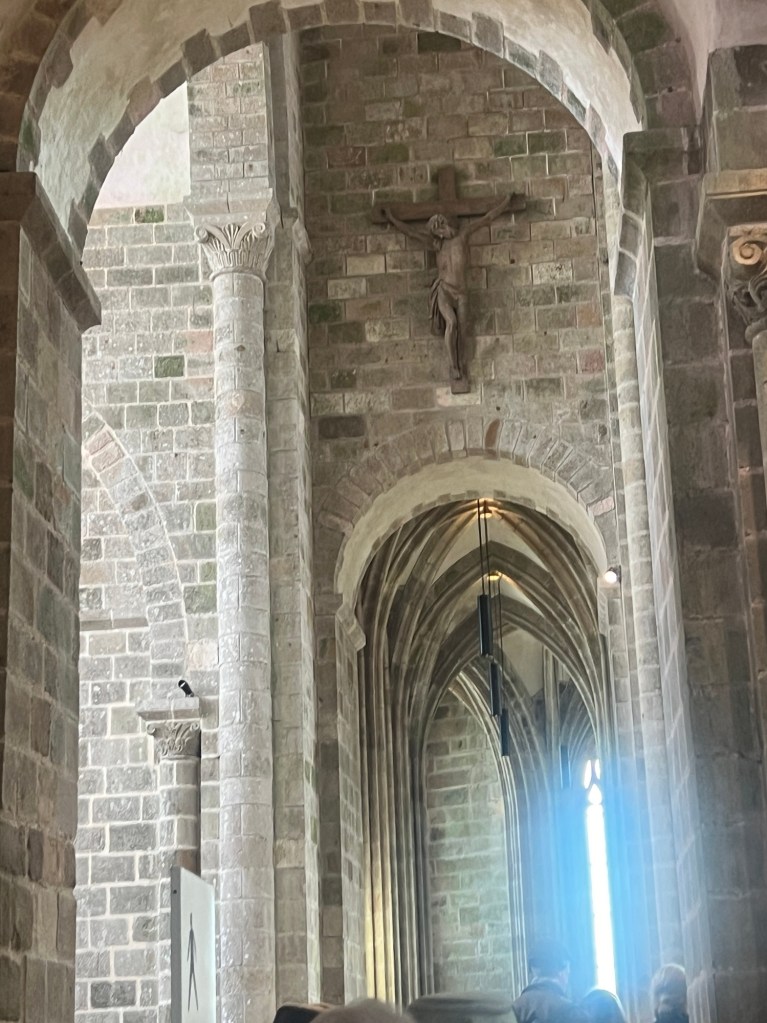


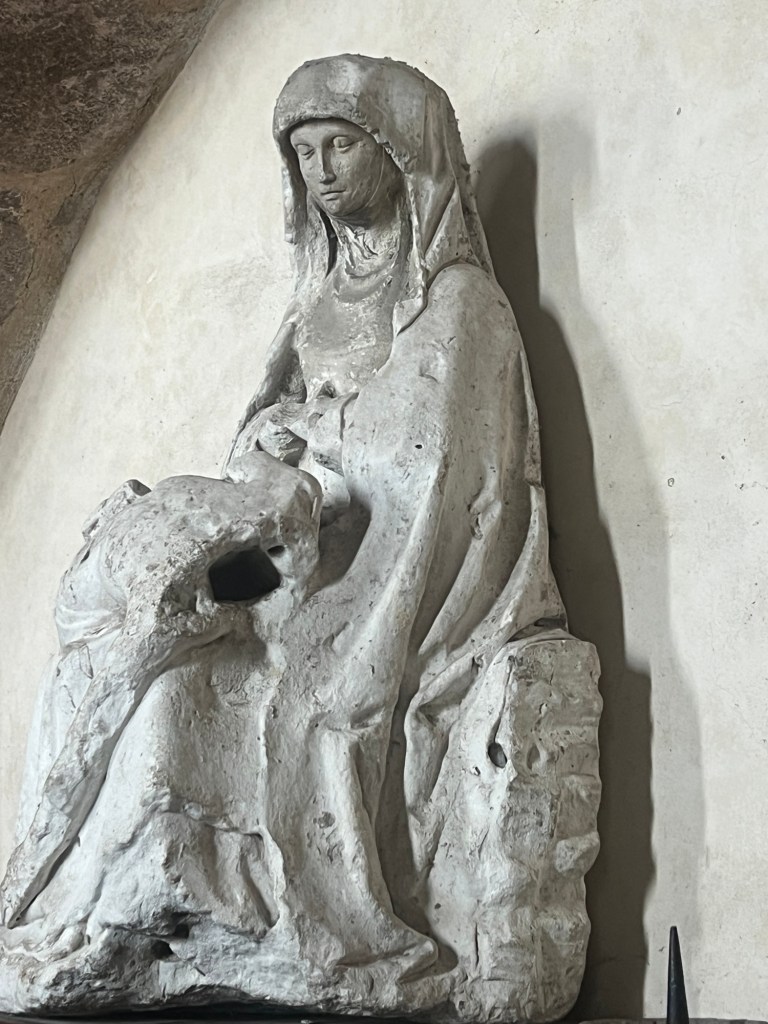

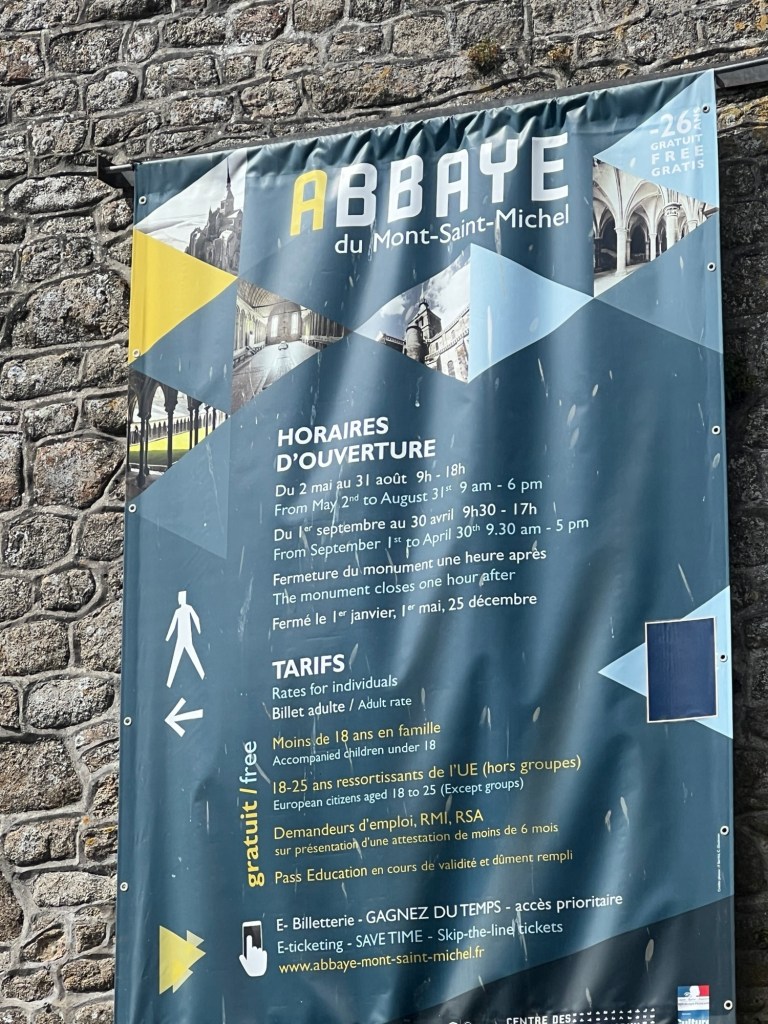
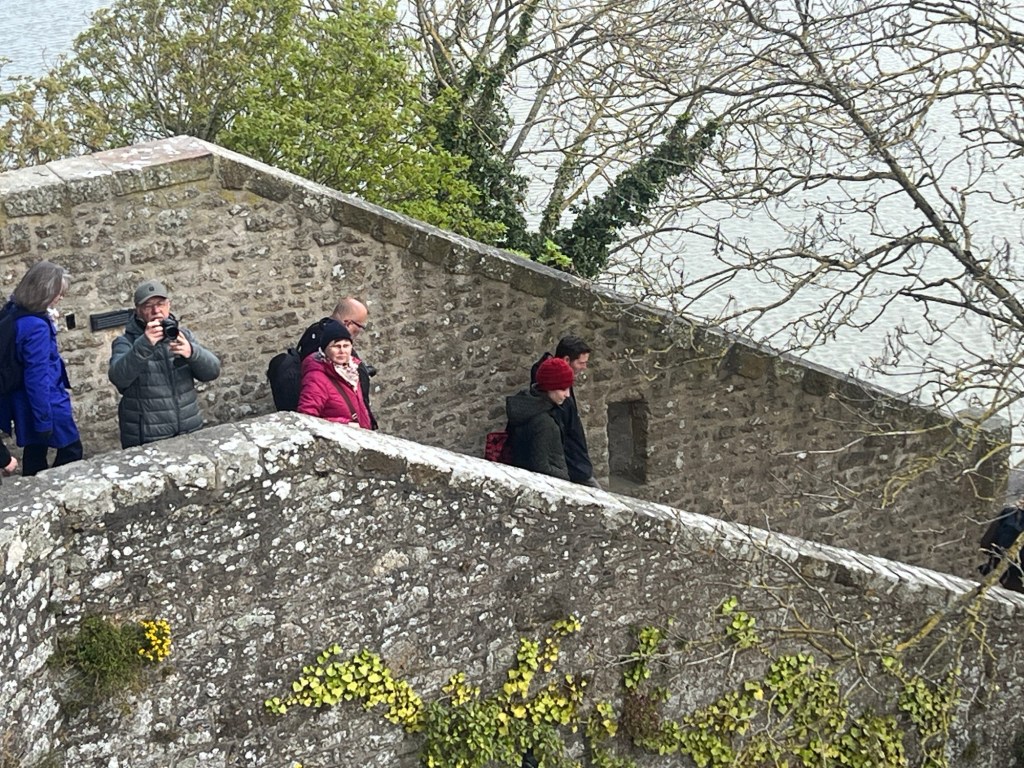
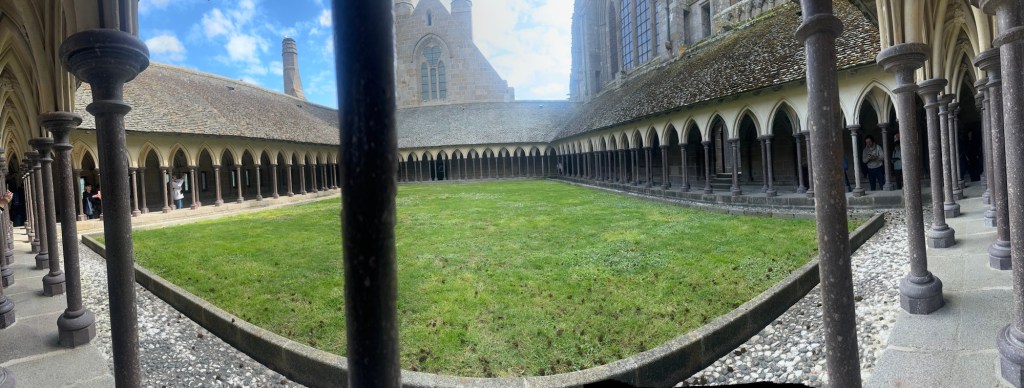
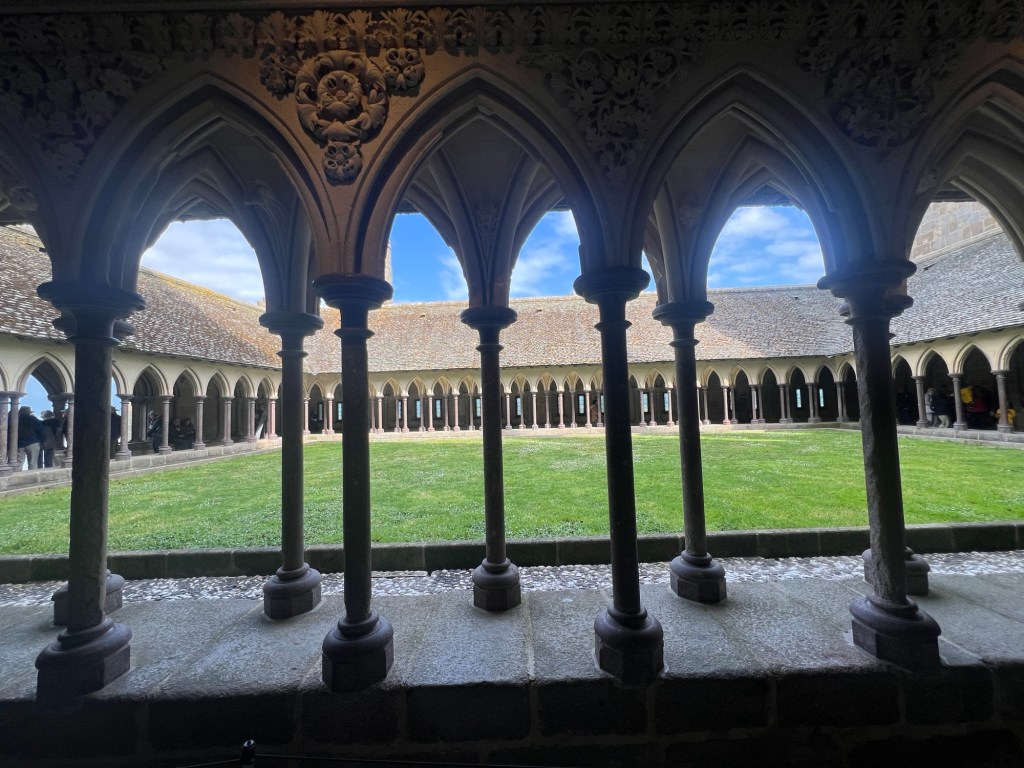
After our fabulous tour we had some free time to walk through the village and the shops so of course I had a cappuccino and a crepe with chocolate. Norm had a panini sandwich and a Fanta.



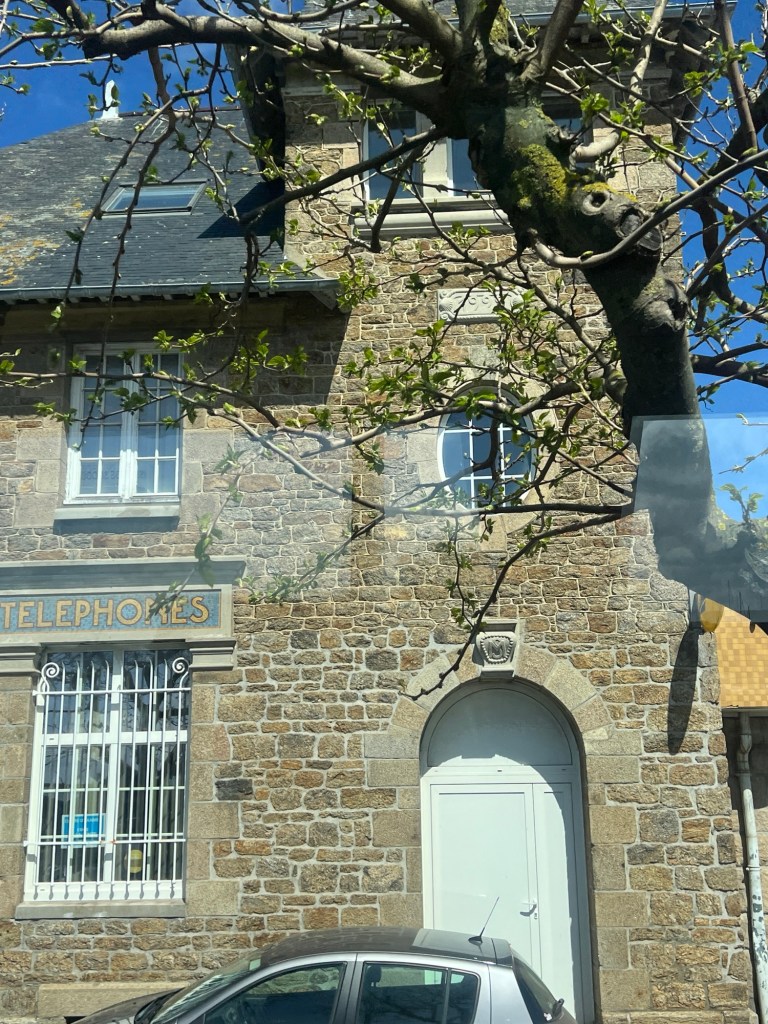
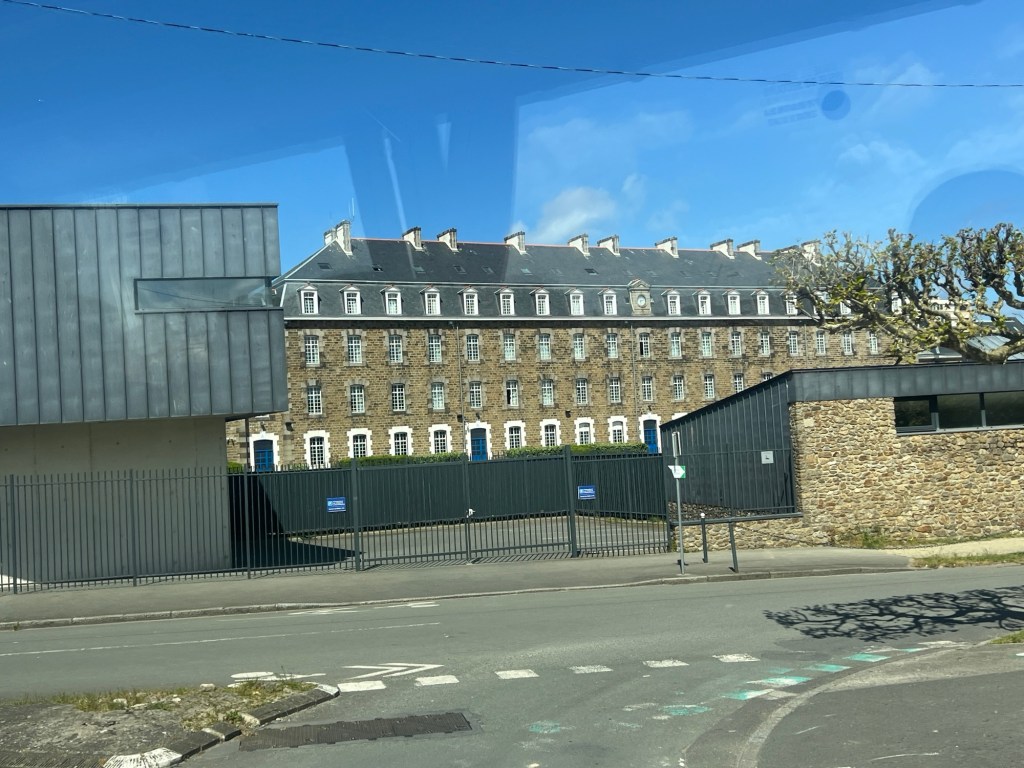
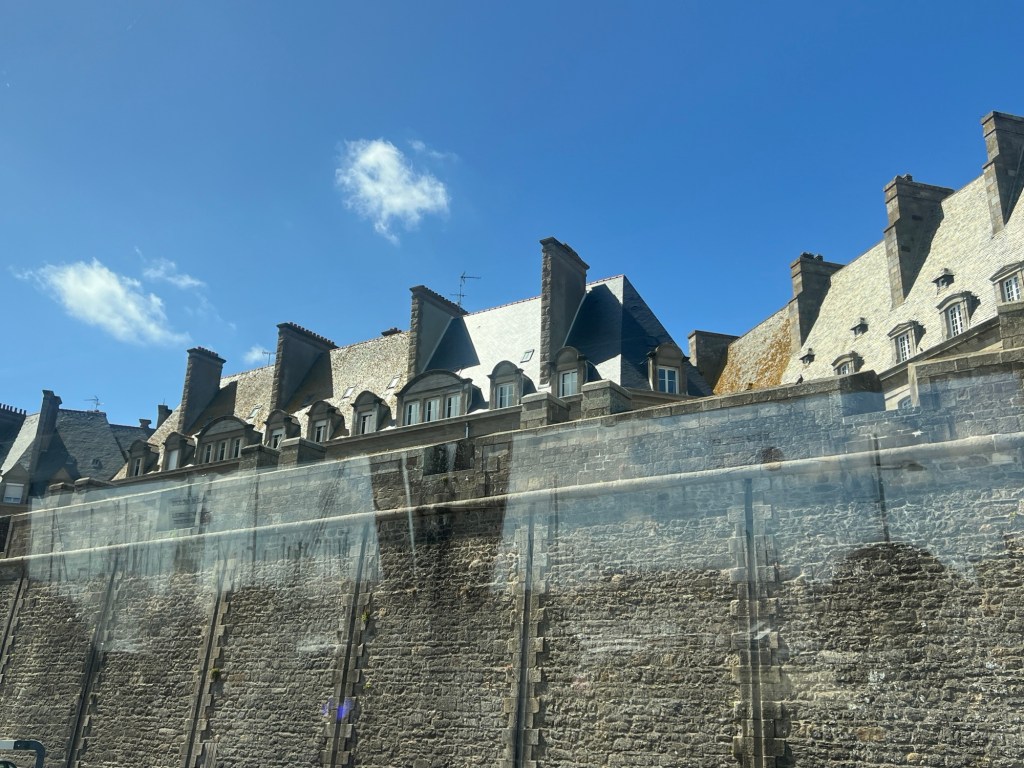
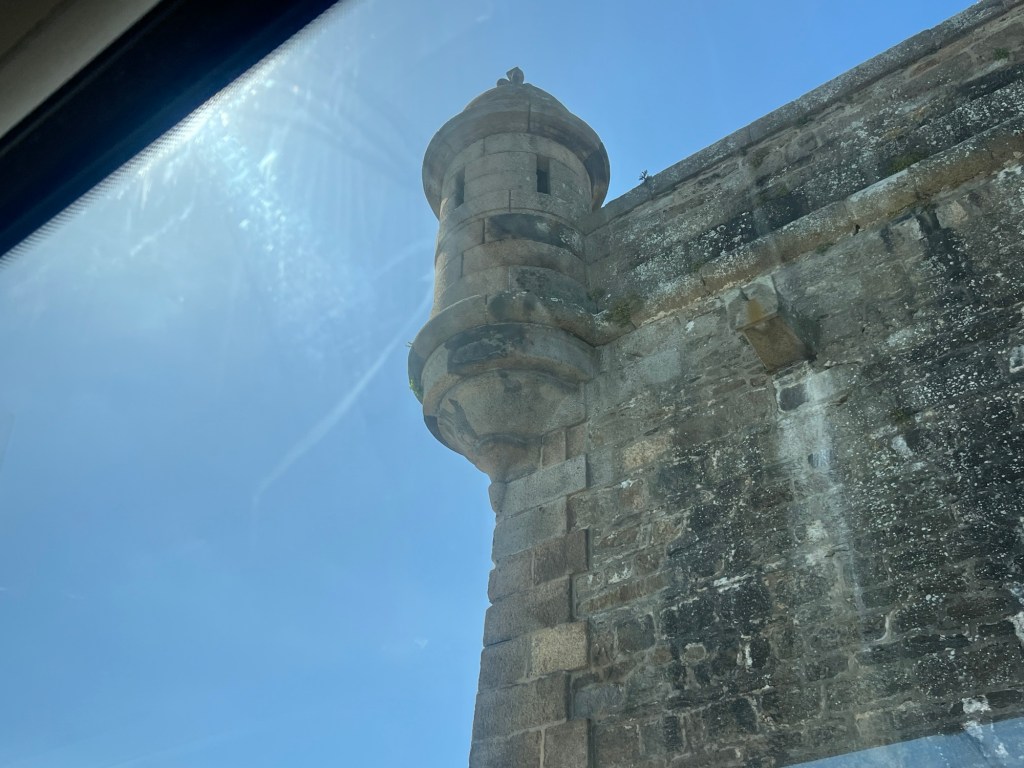
The bus took us back to St. Malo and Natalie gave us information about the city. The population is 42,000. It is a walled city dating back to 800. Unfortunately it was 90% destroyed by allies in 1944 in World War II because they thought Germans were hidden here. So the stone from the rubble was used to rebuild the walls and the city.
The book and Netflix series “All the Light You Cannot See” was filmed here. I read the book a while ago but saw the series within the past 6 months and yes, I did cry when watching it. I will have to see it again to notice the city.


We thoroughly enjoyed the day and our guide, Natalie.

St. Malo from the tender.

 Pat and Norm's World Cruises and other adventures
Pat, May I have the contact info of your tour guide. Many thanks.
LikeLike
It was a tour sponsored by the ship so I don’t have her contact info. Will see if I can get at least the agency name from the destinations staff.
LikeLike