April 26, 2024
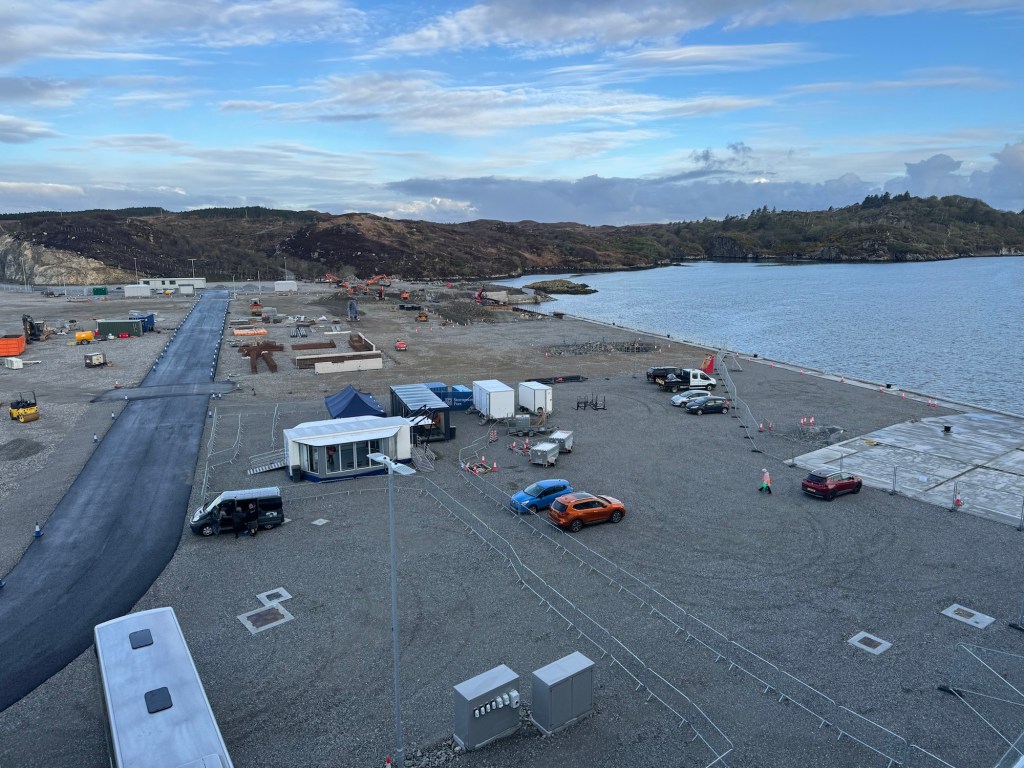
Sad to realize that we are one week away from the end of our wonderful cruise. We have one more port in Scotland (Glasgow) after today before we head to our remaining ports of Belfast, Dublin, Holyhead, Cork and Plymouth. It has all been great, including the fact that we have had no rain so far. It is cold and windy – today started at 42 degrees which is a bit warmer than yesterday but we did dress for it.We arrived into port at 7 AM. Norm got this shot as we approached the port.

They are just constructing the deep water port here and there is a lot of work still going on. Nice that we didn’t have to tender in.

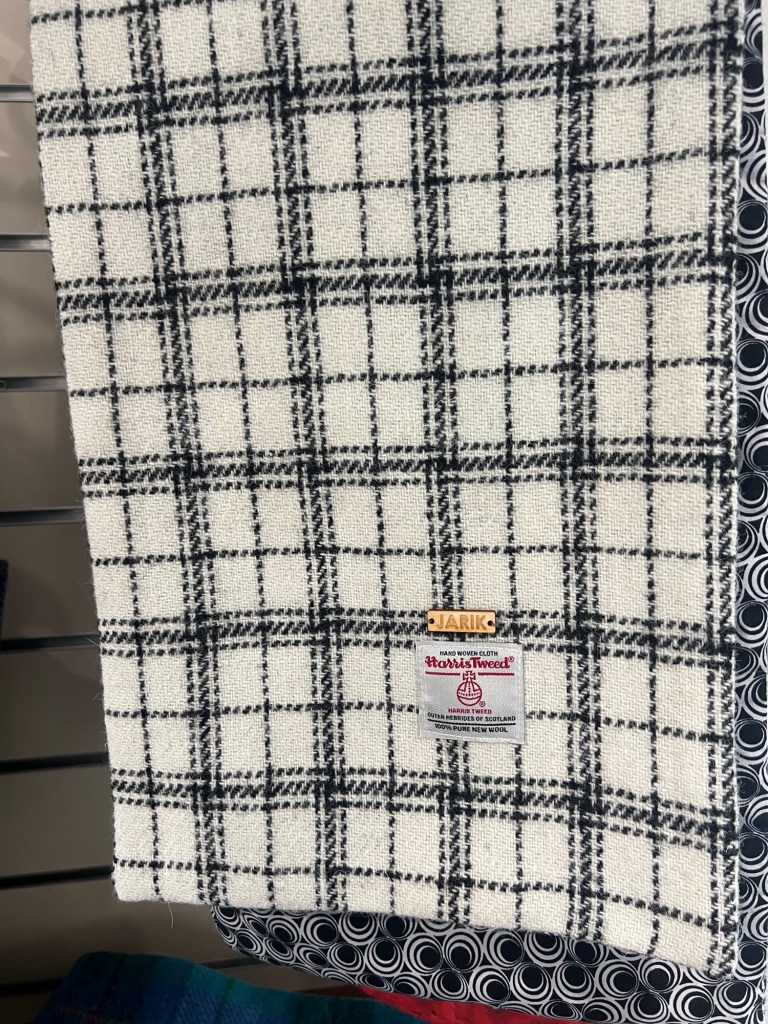
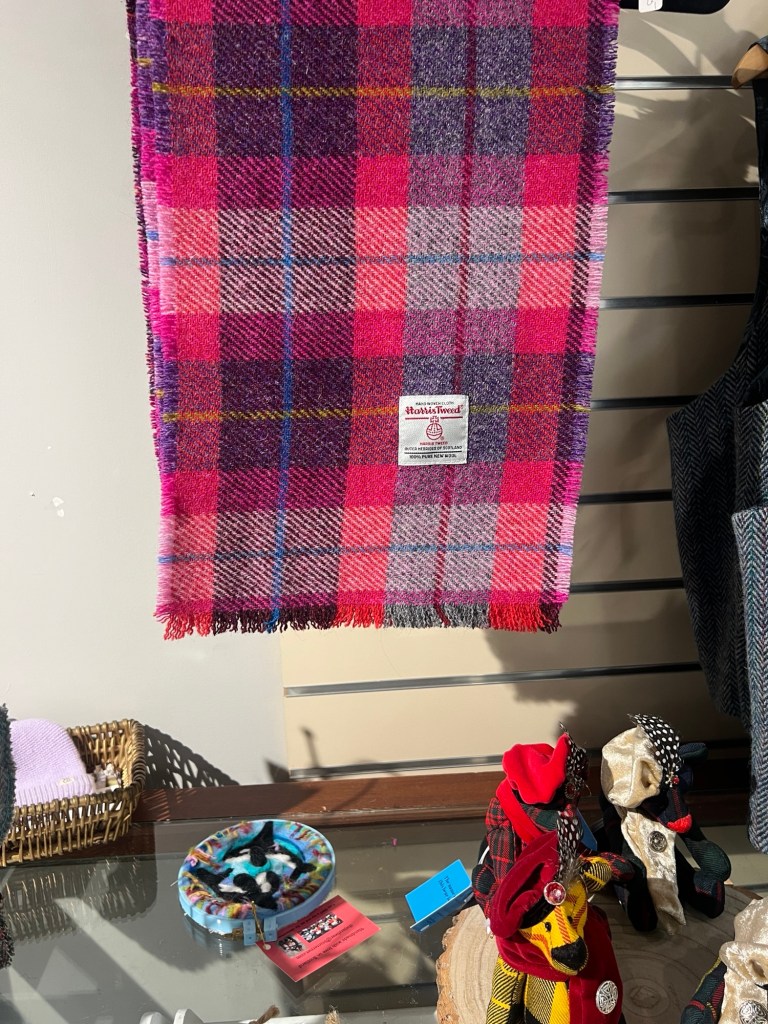
Stornoway is the largest town and port in the Outer Hebrides islands of Scotland. The local population is 8000 people. The town is a center for the manufacture of Harris Tweed and you see items in all of the shops. Harris Tweed must be made from virgin Scottish wool that is woven by hand in the homes of local weavers. These weavers have defended and protected this historic process even in the face of developing technologies.
We took the shuttle into town and decided to walk to the castle first.
Stornoway is located on the Isle of Lewis in Scotland and is home to Lews Castle. This historic castle overlooks Stornoway and is situated within beautiful grounds. Built in the mid-19th century, it’s known for its stunning architecture and picturesque setting. Today, it serves as a museum, event venue, and luxury accommodation, offering visitors a glimpse into its rich history and breathtaking surroundings.
Lews Castle was constructed between 1844 and 1851. It was designed by the famous architect Charles Wilson in the Scottish Baronial style for Sir James Matheson, a wealthy merchant and owner of the Isle of Lewis. Sir James Matheson used the castle as a residence for himself and his family. The Matheson family had acquired the Isle of Lewis in the early 19th century, primarily due to its lucrative trade in the production of wool and Harris Tweed.
After Sir James Matheson’s death, the castle changed hands several times. It served various purposes over the years, including as a hotel and as accommodation for RAF personnel during World War II.
In the latter half of the 20th century, the castle was used by Lews Castle College as a campus. It housed classrooms, offices, and student accommodation.
In the early 21st century, Lews Castle underwent a significant restoration project. The aim was to preserve its historic features while also transforming it into a luxury hotel, museum, and event venue.

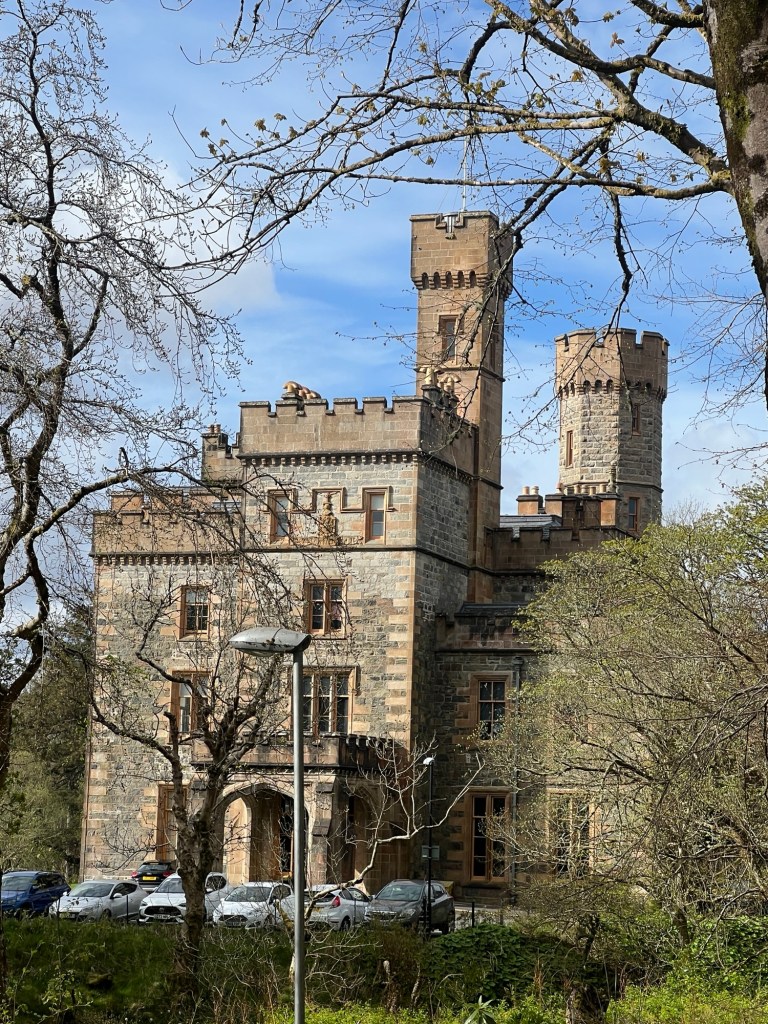

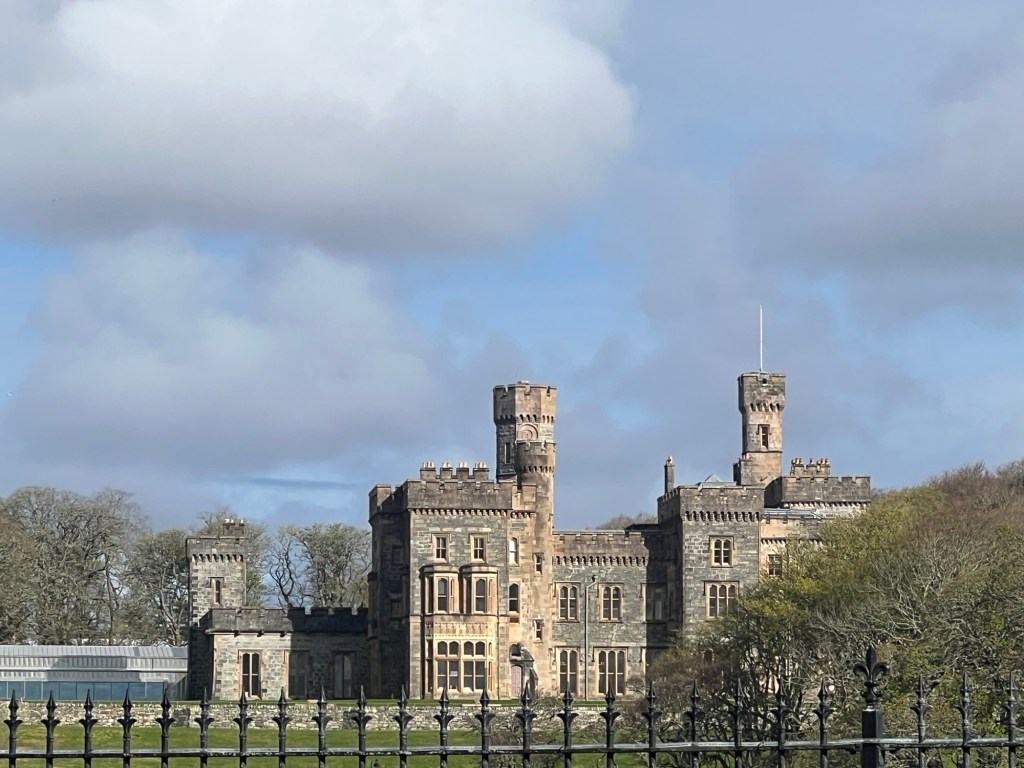

The main level of the castle is almost empty and the main feature includes the many decorative fireplaces.
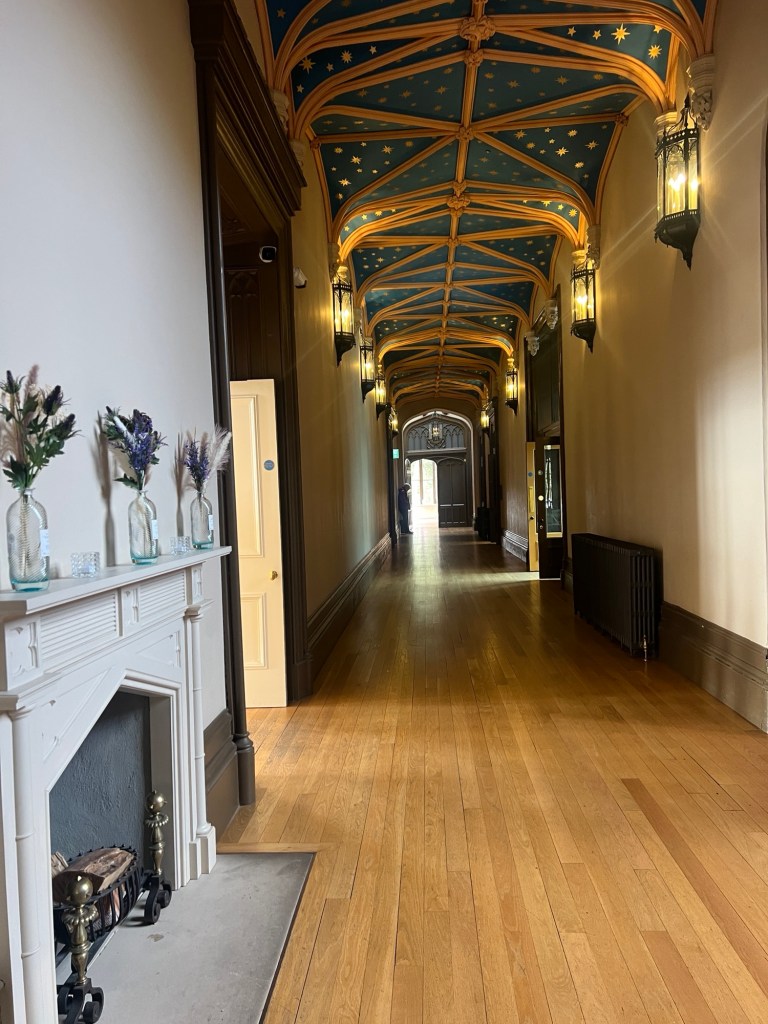


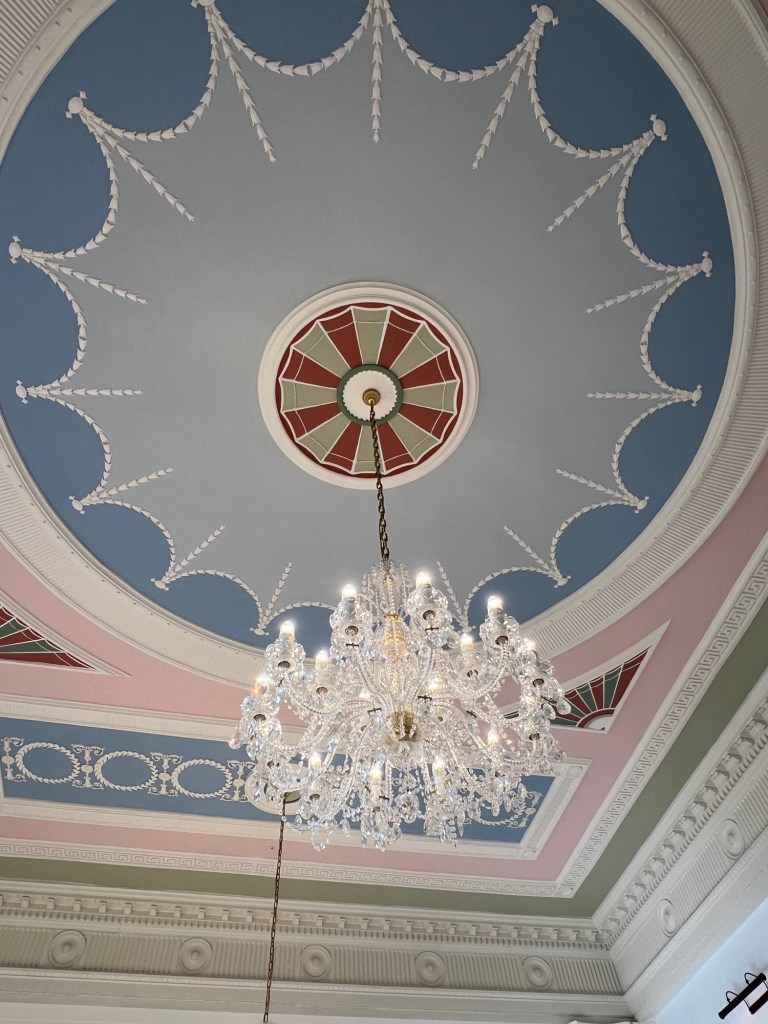
The library was closed for a special event. The upstairs is for guest rooms which of course we couldn’t see. The architecture is interesting.

We visited the gift shop and the museum. We saw these chess pieces in Kirkwall but this museum had an extensive explanation of them.
The Lewis Chessmen, not “chess pieces,” are a famous set of medieval chess pieces discovered on the Isle of Lewis in Scotland, near Stornoway. Here’s an overview of their history:The Lewis Chessmen were discovered in 1831 on the Isle of Lewis, in the Outer Hebrides of Scotland, not far from Stornoway. They were found buried in a sand dune, possibly hidden by a merchant or trader for safekeeping.
The chessmen are believed to have been made in Norway, likely in the late 12th or early 13th century, during the Viking Age. They are carved from walrus ivory and whale teeth, with intricate details and craftsmanship.
The Lewis Chessmen consist of 93 pieces in total, including kings, queens, bishops, knights, rooks, and pawns. They are known for their expressive faces and elaborate costumes, reflecting the style of medieval Norse art.
The chessmen were initially owned by the landowner who discovered them, and later they were acquired by the British Museum and the National Museum of Scotland. Today, they are divided between these two institutions, with the majority held by the British Museum in London.
The Lewis Chessmen are regarded as one of the most significant artifacts from the medieval period. They provide valuable insights into the history of chess, as well as medieval art and culture in Scandinavia and the British Isles.
Replicas of the Lewis Chessmen are available for purchase in the gift shop.
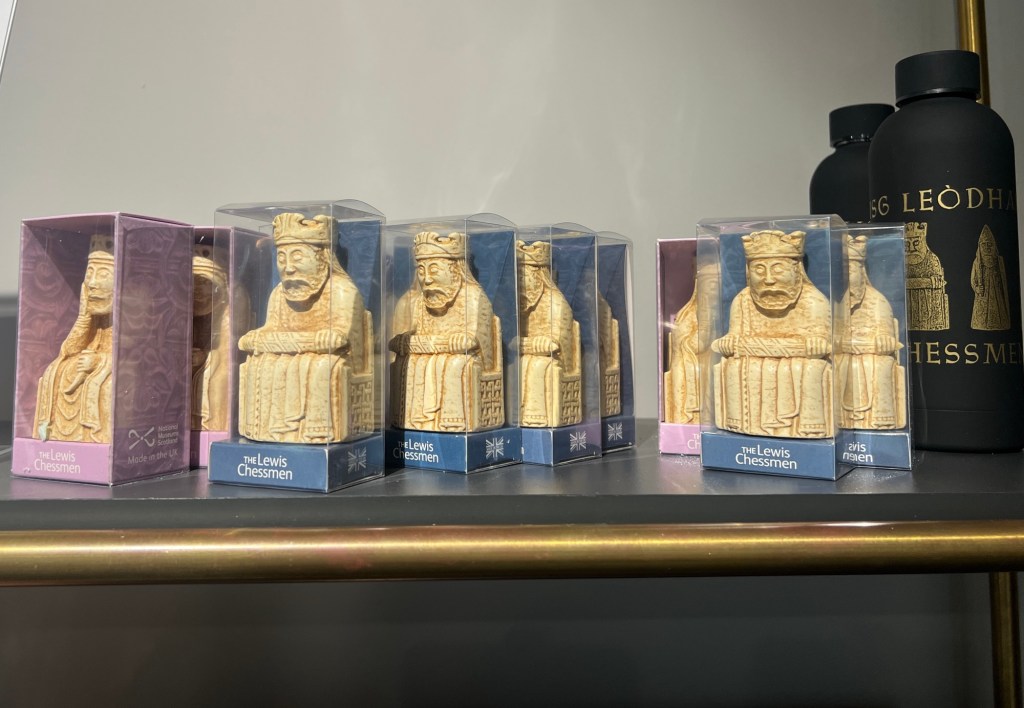
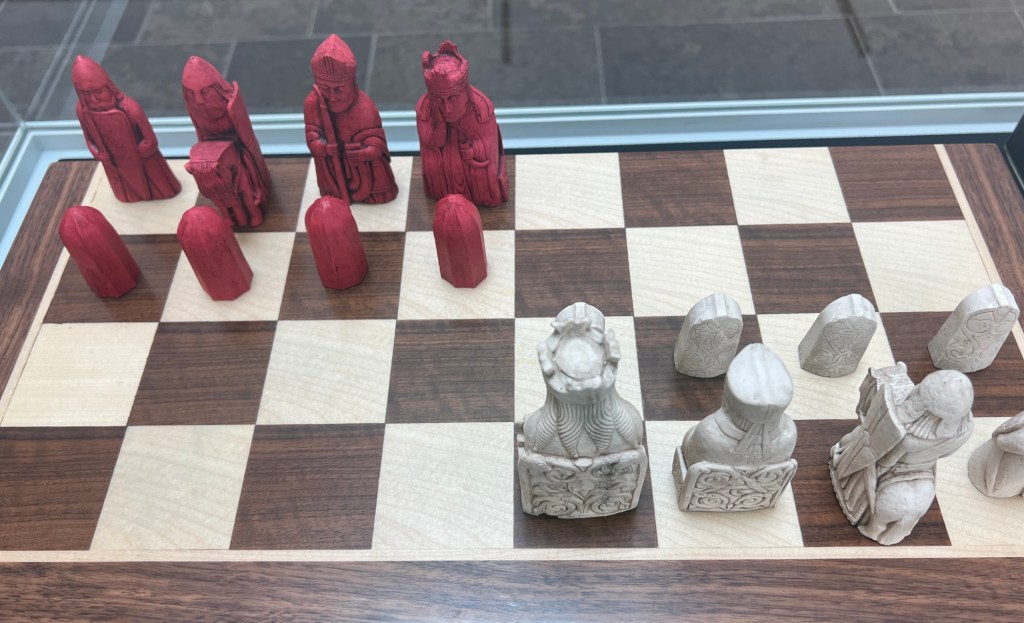
Other interesting parts of the museum exhibits were the explanations of the Gaelic language
Gaelic, also known as Scottish Gaelic or Gàidhlig, is a Celtic language spoken primarily in Scotland, particularly in the Highlands and the Western Isles, including places like here in Stornoway on the Isle of Lewis. It only uses 18 letters and uses a lot of specific punctuation marks which makes it hard for us to read or understand! It was once the dominant language in this part of Scotland.

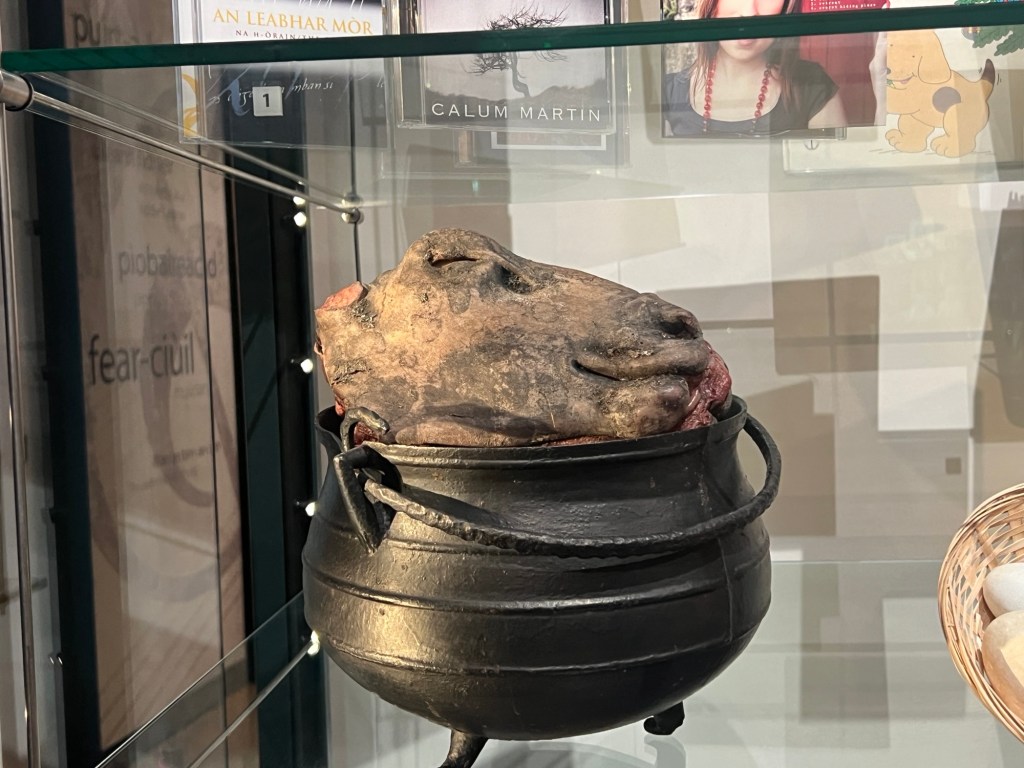
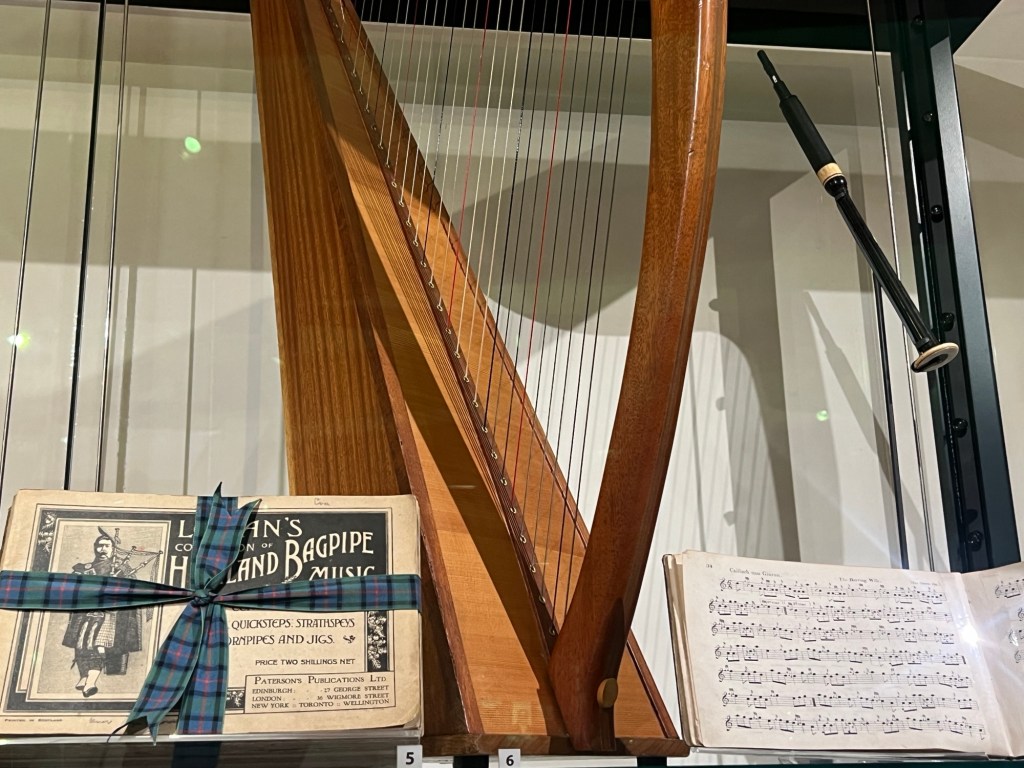
We walked through the extensive grounds.
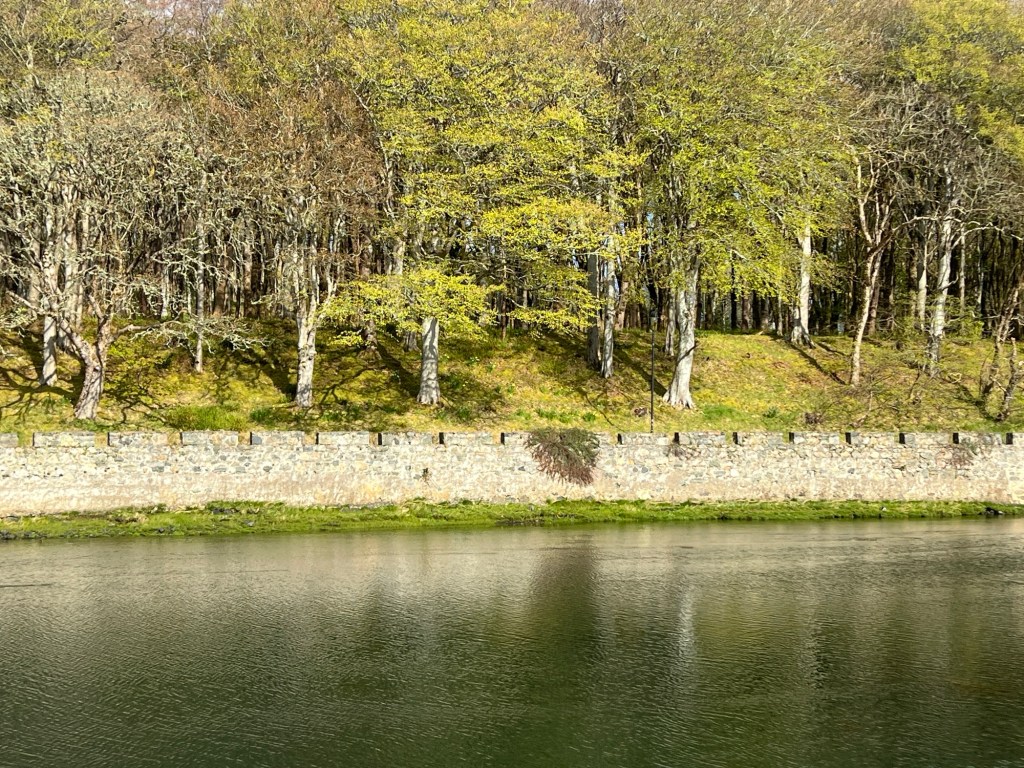


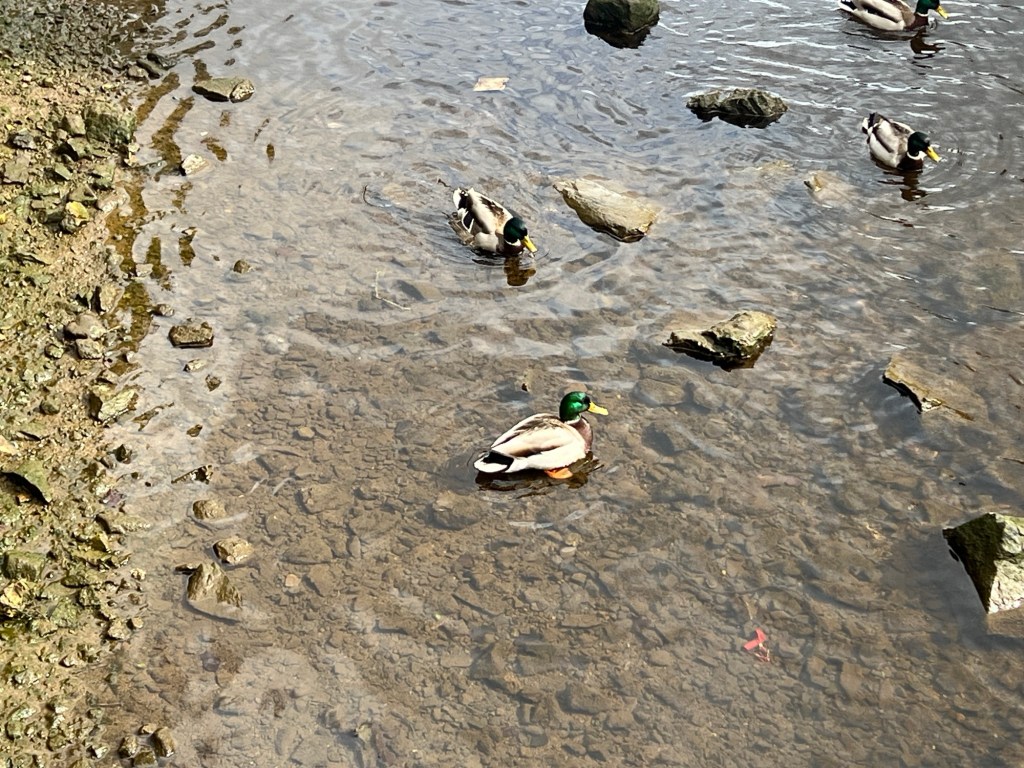
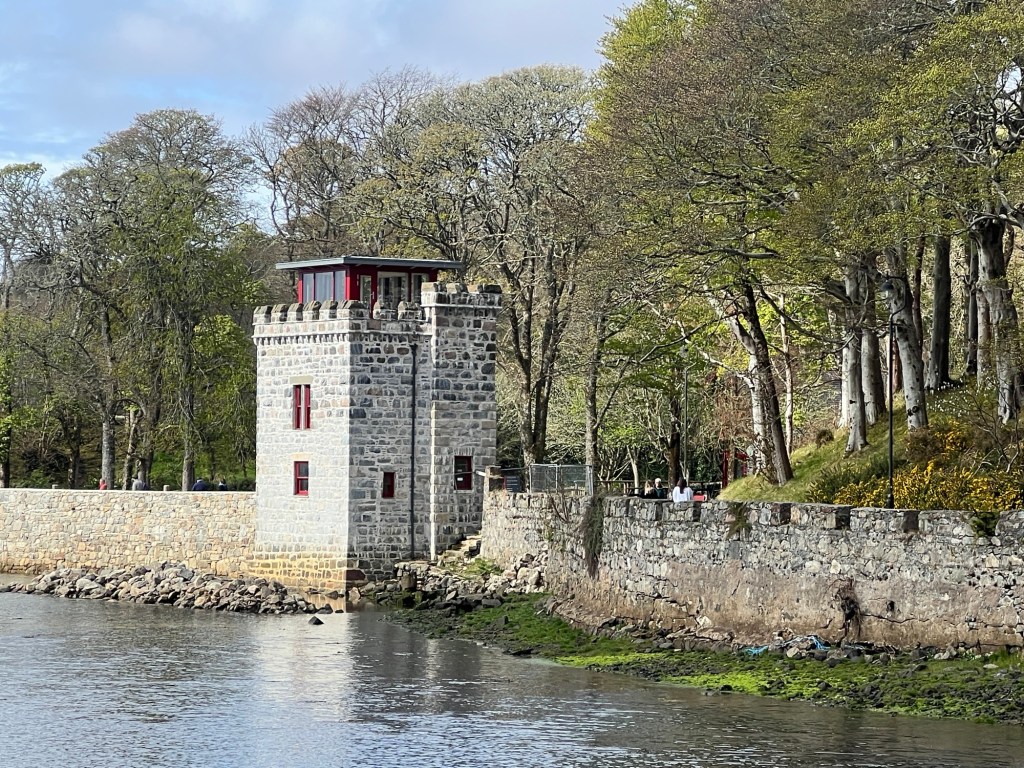
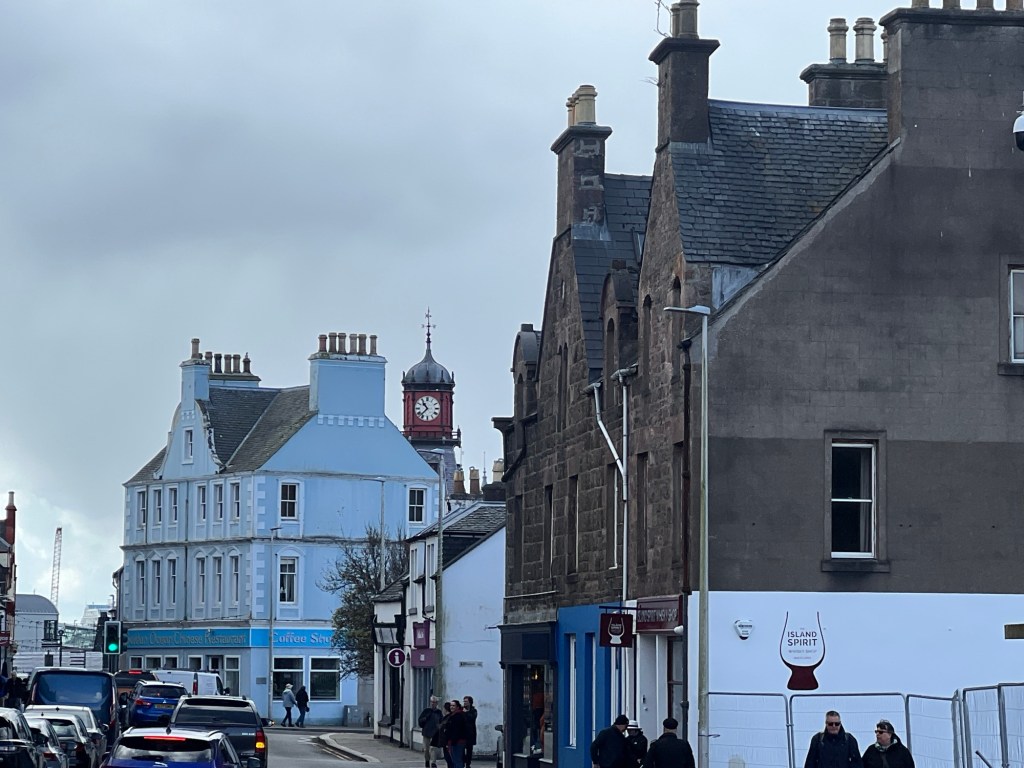
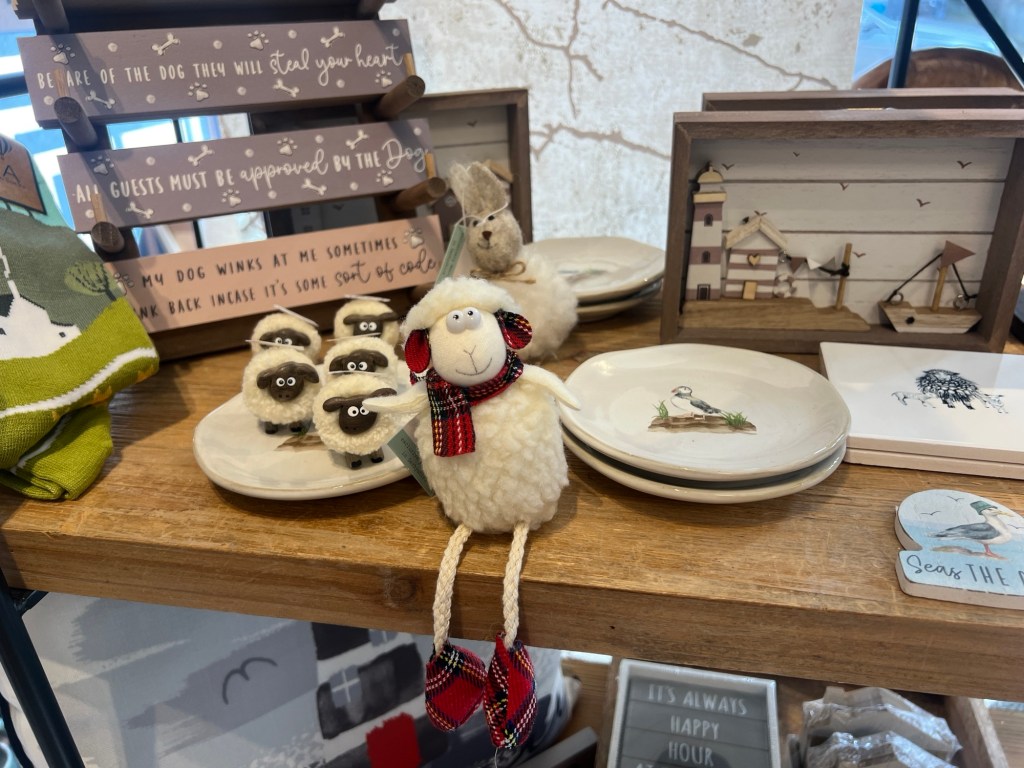
We wandered through town and went into a few shops. The town is quite small but charming.
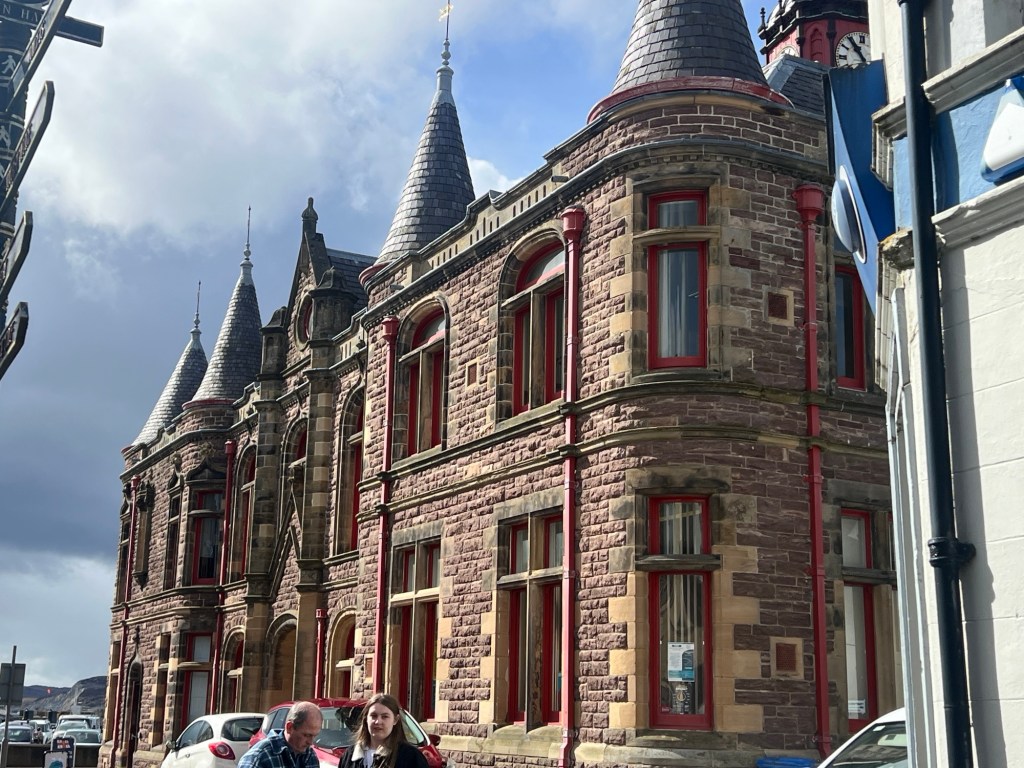



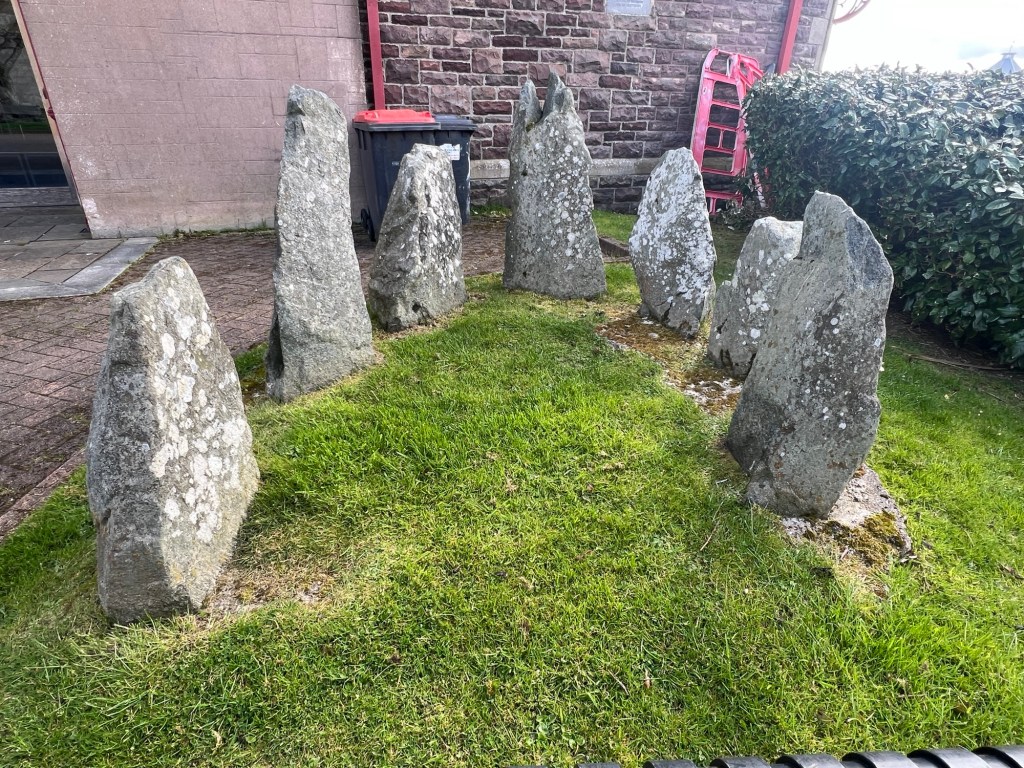
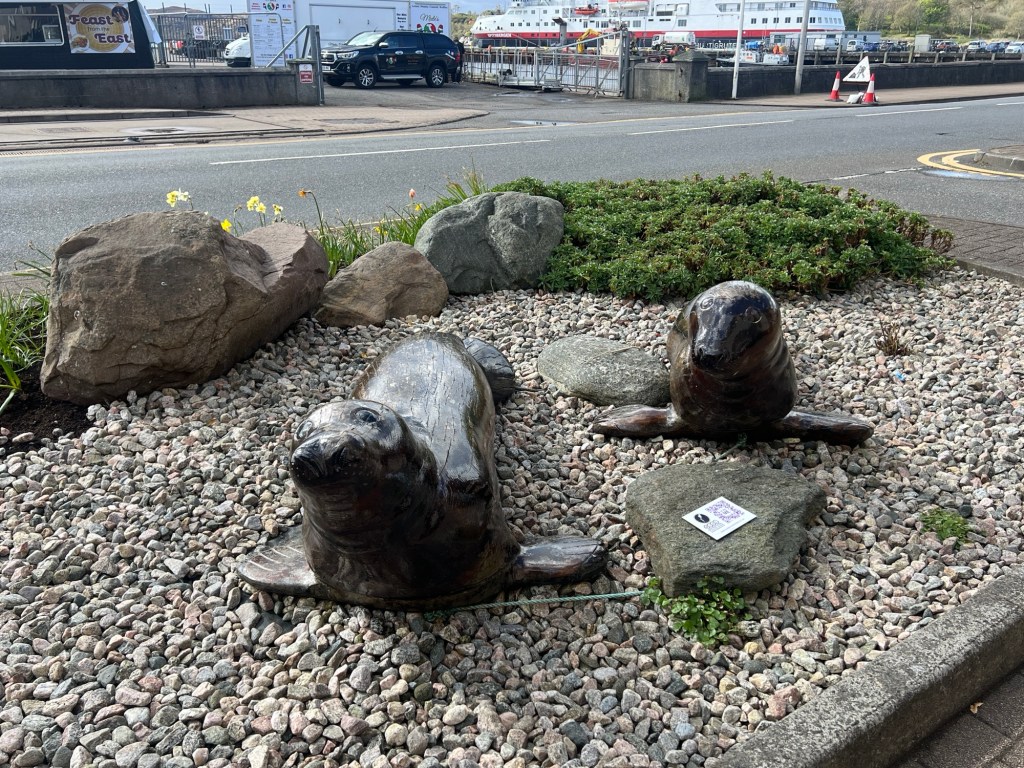
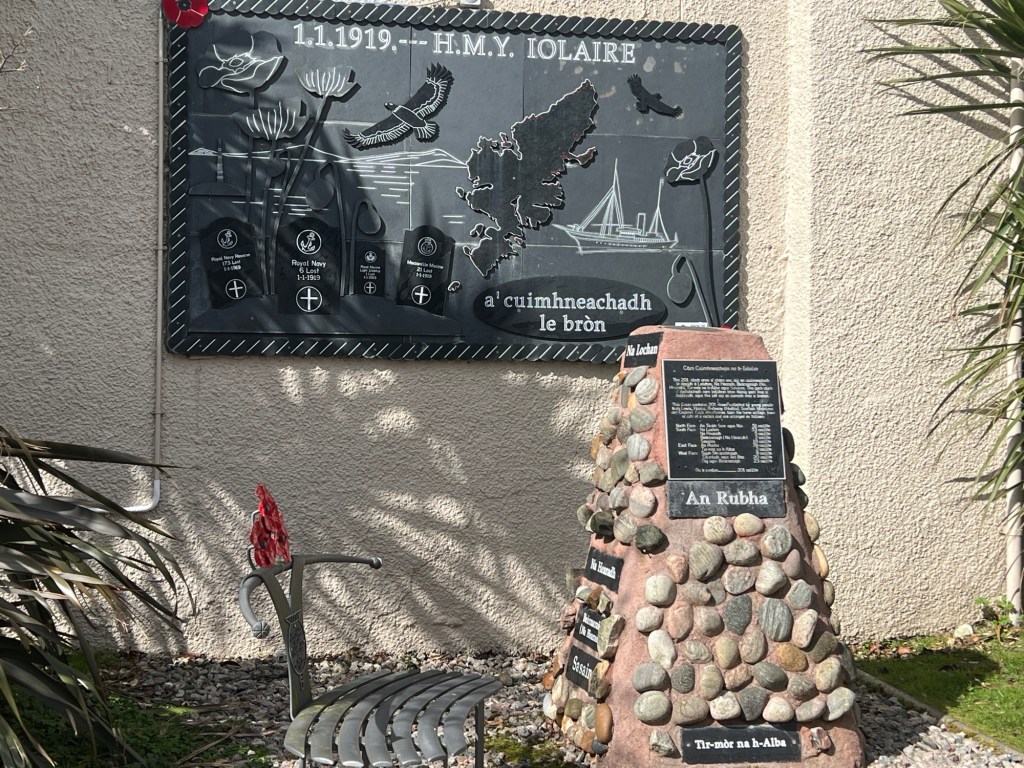
This is a monument in memory of the Iolaire disaster that occurred on January 1, 1919, near here.
The Iolaire was a yacht requisitioned by the Royal Navy during World War I. On New Year’s Eve 1918, it set sail from Kyle of Lochalsh on the west coast of Scotland, bound for Stornoway, carrying returning servicemen. The Iolaire approached Stornoway Harbor in the early hours of January 1, 1919, it struck the notorious rocks known as the Beasts of Holm, just a short distance from shore. Despite being so close to safety, the vessel foundered, and the majority of those on board died. Only 80 of the 280 on board survived.


After a nice day, we returned to the ship for a 2 PM departure. We will host a cocktail party for our trivia team tonight. Pictures will be added tomorrow.

 Pat and Norm's World Cruises and other adventures
SO glad you got to wander the castle and surrounds and that it has remained dry.
you really are getting Scotland at its best in the dry.
LikeLike
Your travels never cease to amaze me!
<
div> Always something new and exciting!
<
div>
<
div>
Sent from my iPhone
<
div dir=”ltr”>
<
blockquote type=”cite”>
LikeLike