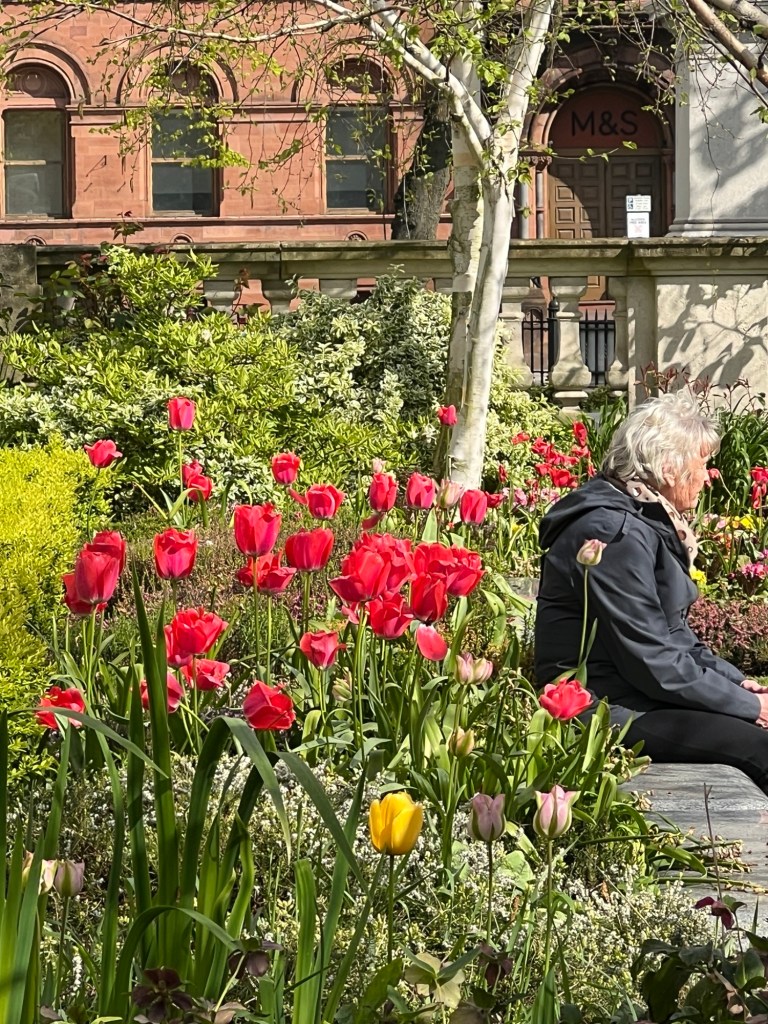
Belfast, Ireland

April 28, 2014

This is our third visit to Belfast. One of the benefits of writing a blog is that I can look up what we did last time! This time we booked a tour outside of the city to Ards Peninsula and Grey Abbey. The tour was scheduled for 1:20 PM so in the morning we took the shuttle bus to town. Since it is Sunday, the shops would mostly be closed or open later in the day but our destination of the St. George’s Market will open at 10 AM. We really wanted to meet an artist that we purchased an item from for Mark and Ramsay’s wedding in 2019. And we just love that market in general.

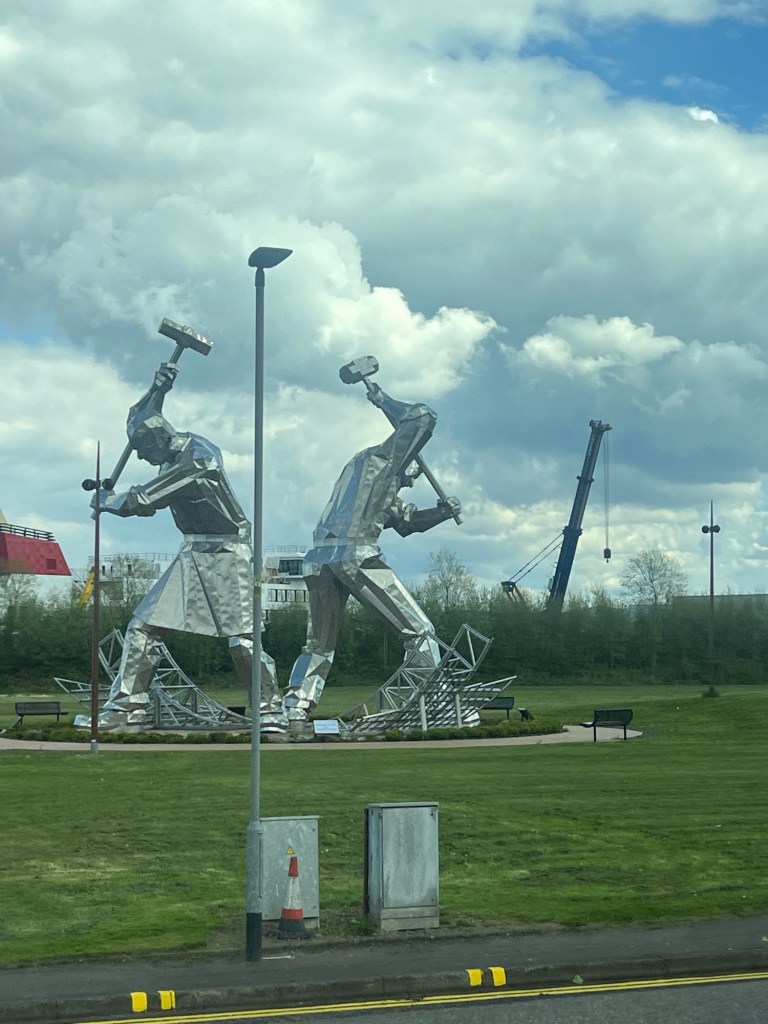
We got the shuttle at 9. We passed the giant blades for the wind turbines that are ready to be shipped out to be installed in the North Sea.

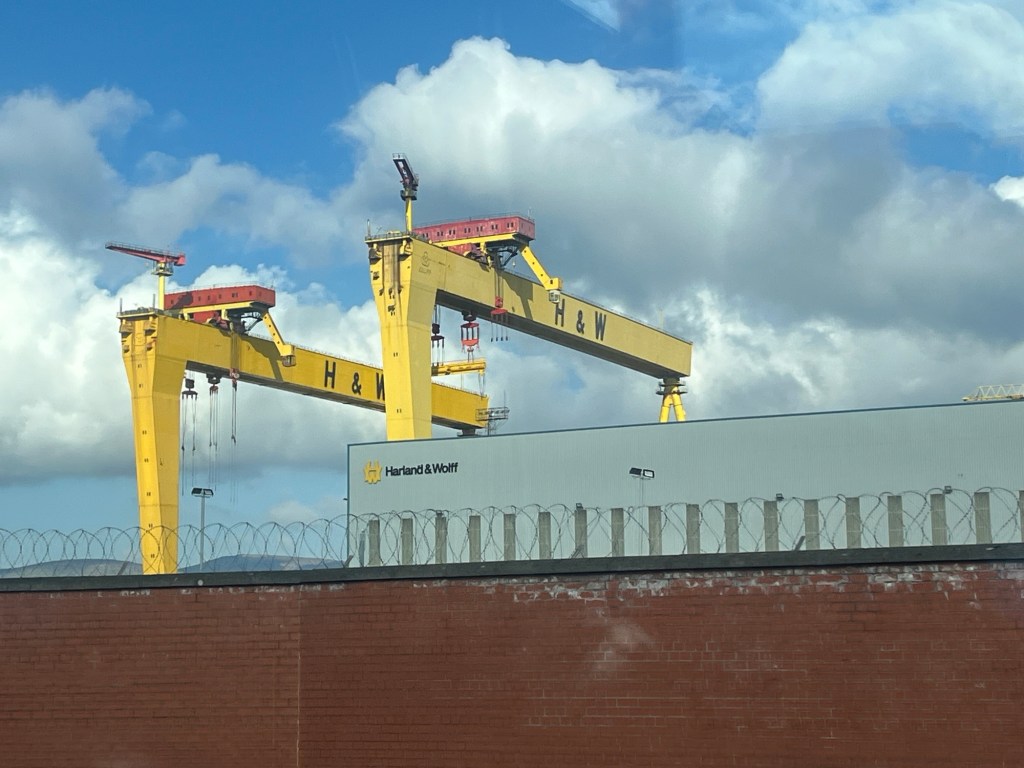
This is the company that built the Titanic, Harland and Wolff. It was built here in Belfast and there are lots of references to it and a great Titanic Museum that we visited on a previous visit.

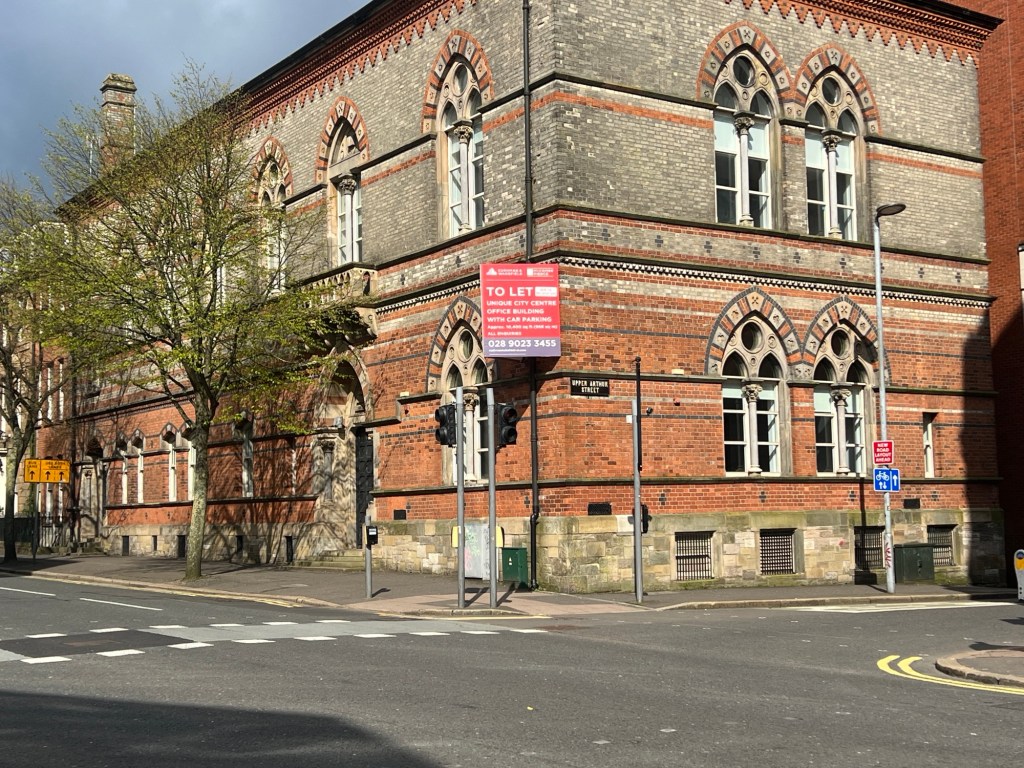
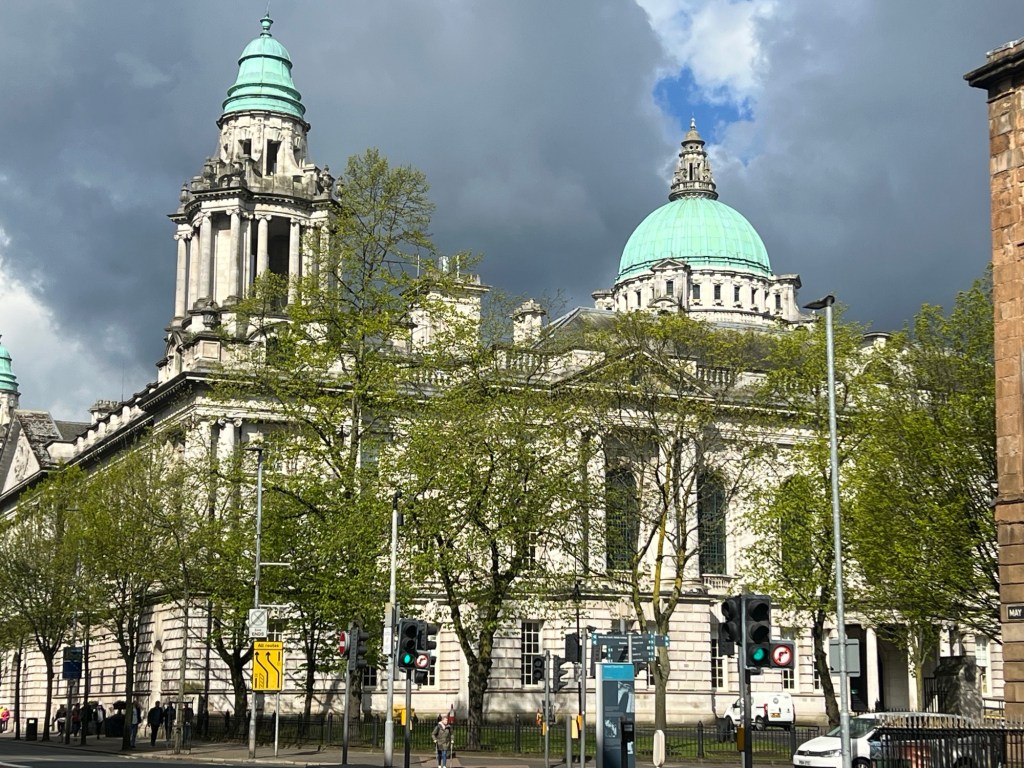
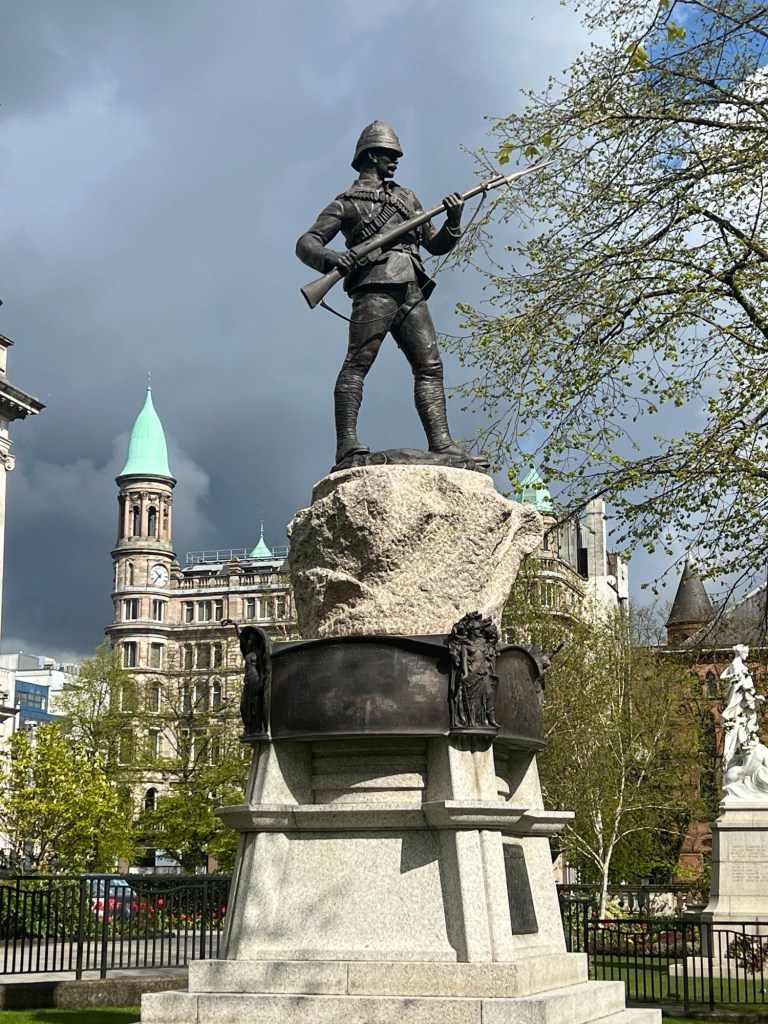
We walked around the city before heading to the market.
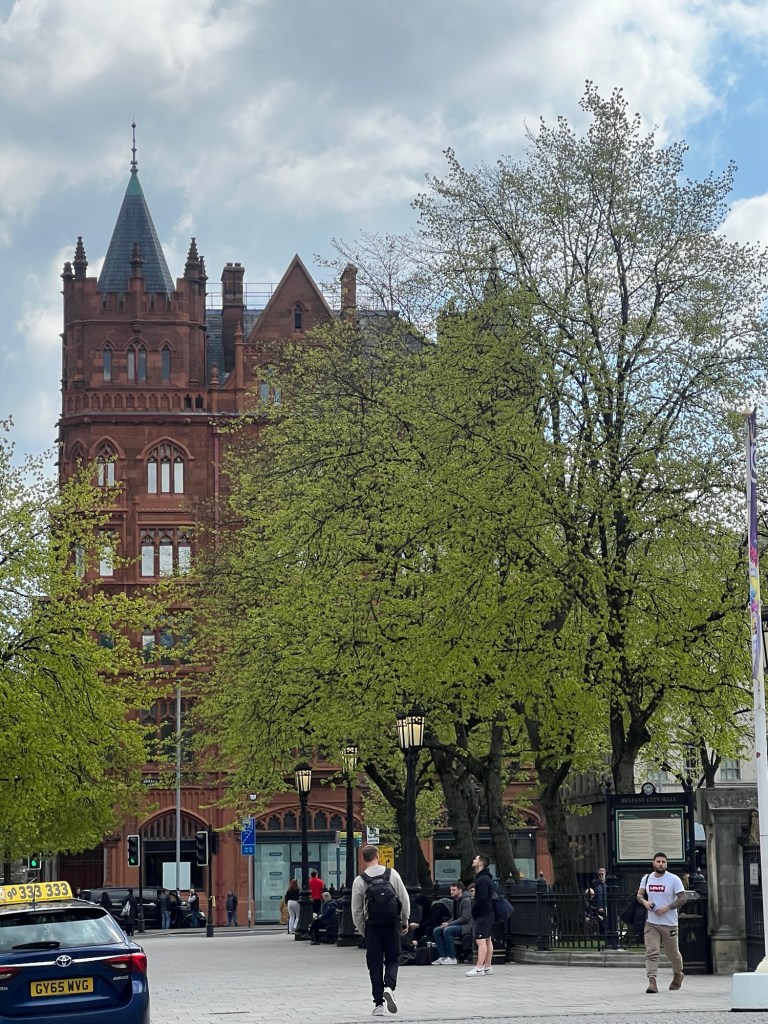
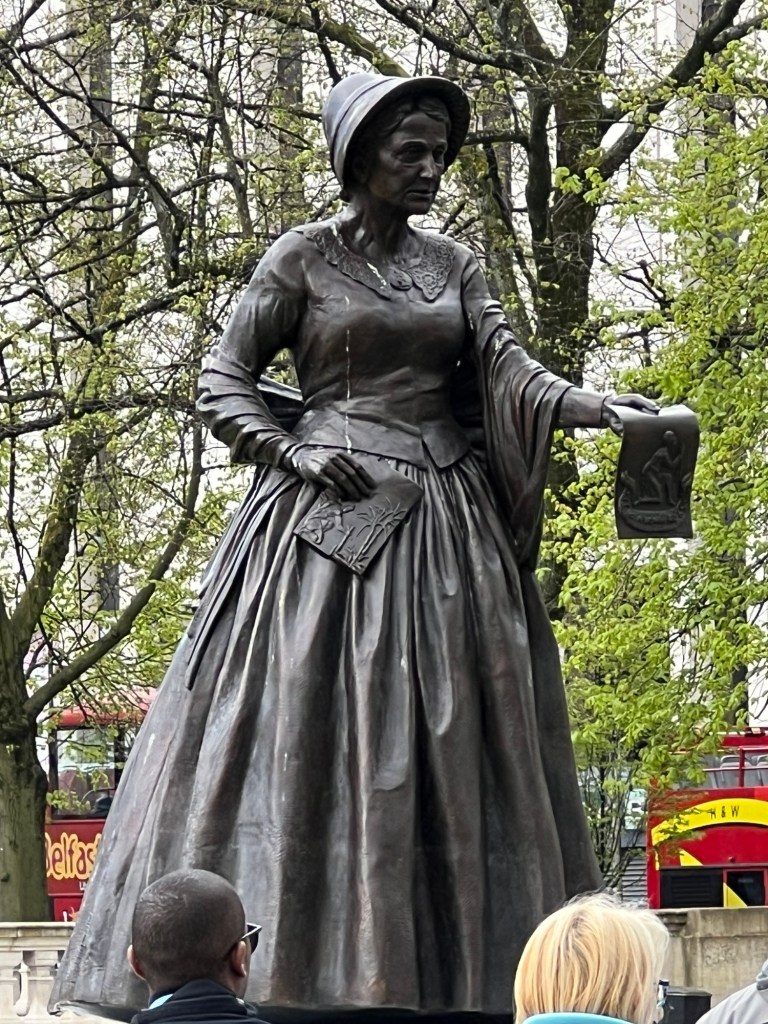
Queen Victoria outside City Hall

We got to the market before the opening at 10 but the food and coffee places were already open. We walked through and didn’t see the vendor we were looking for. We stopped for great coffee and then went through when everything was open.
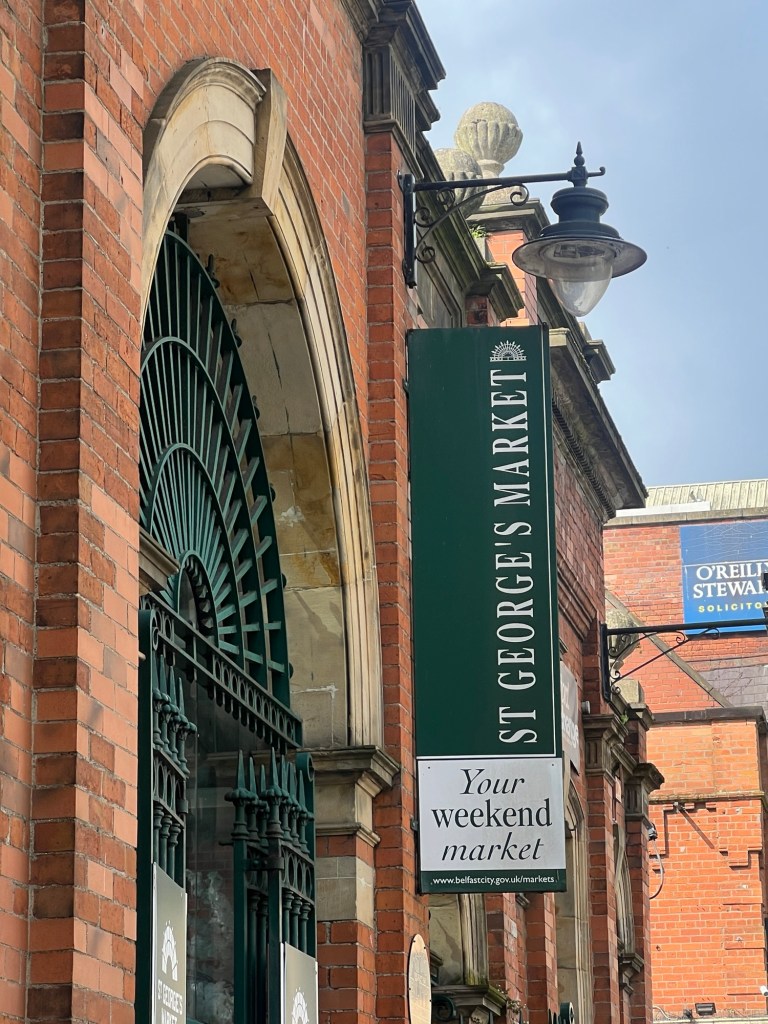
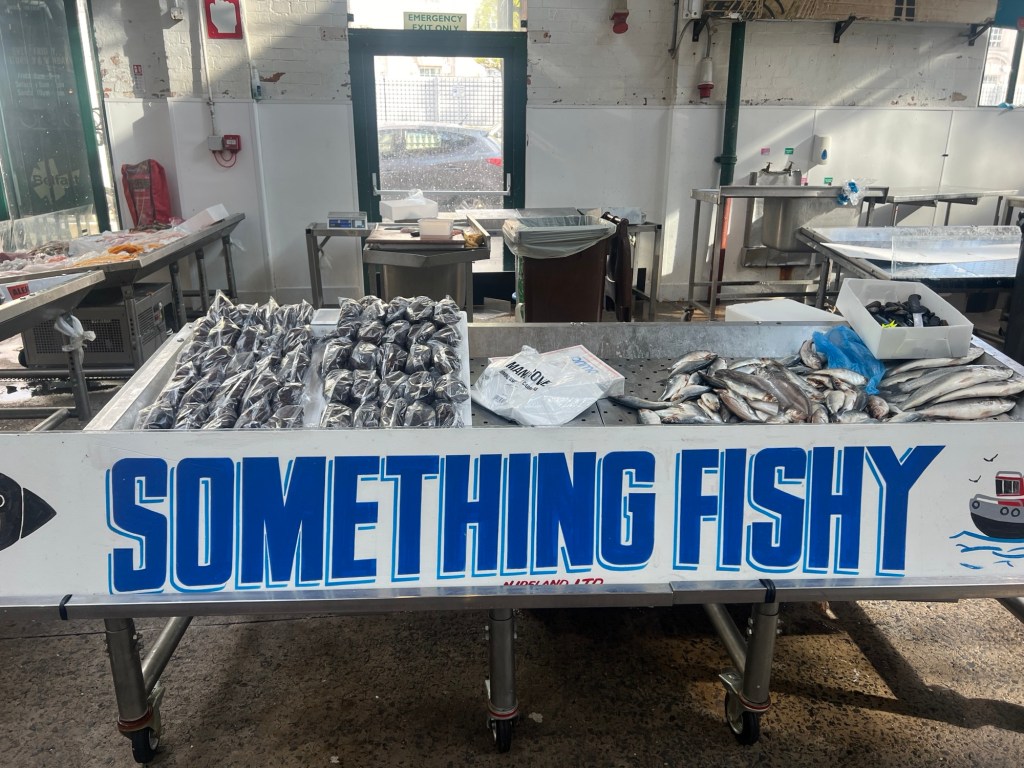
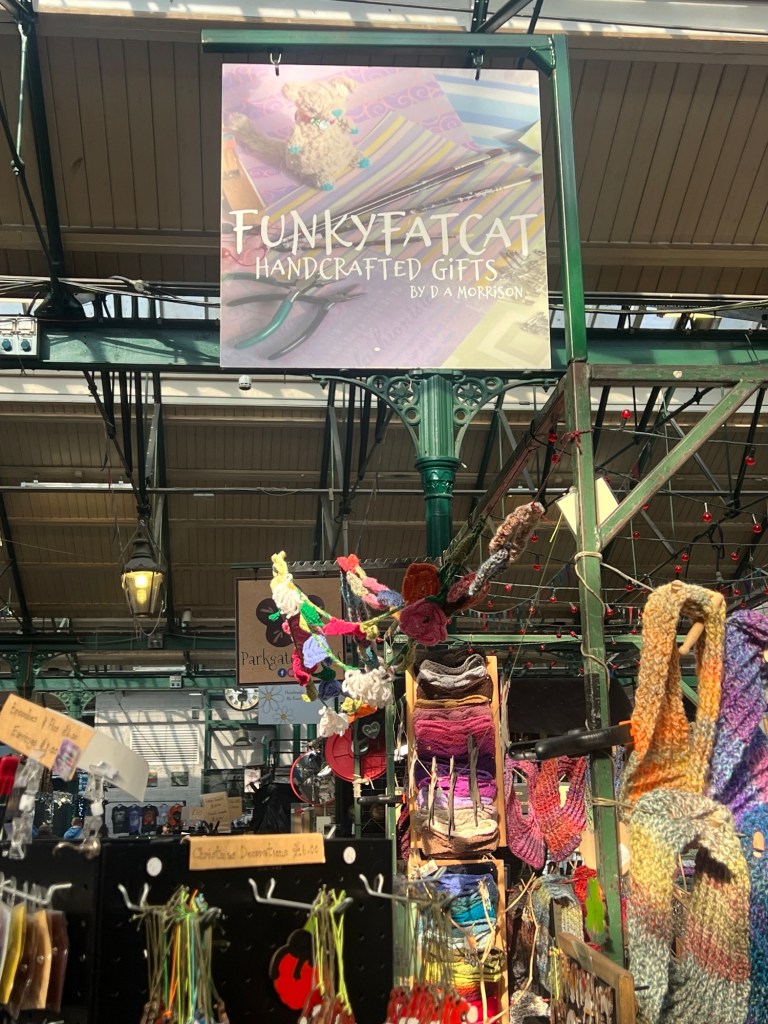
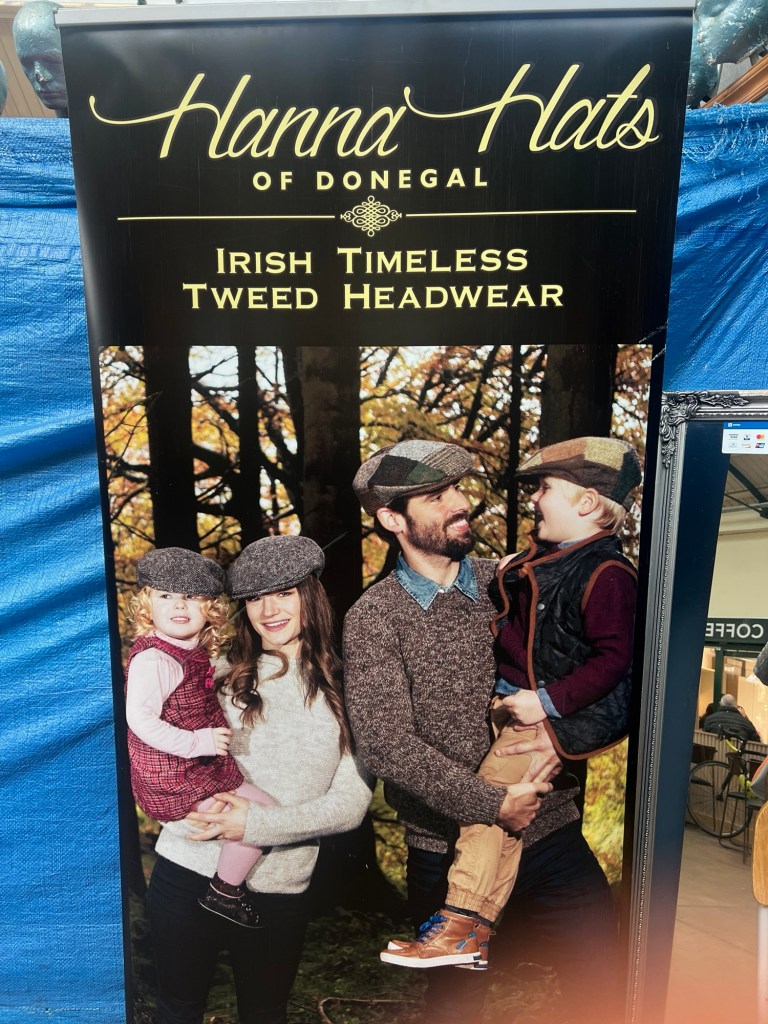
Some of the vendor names are very clever.
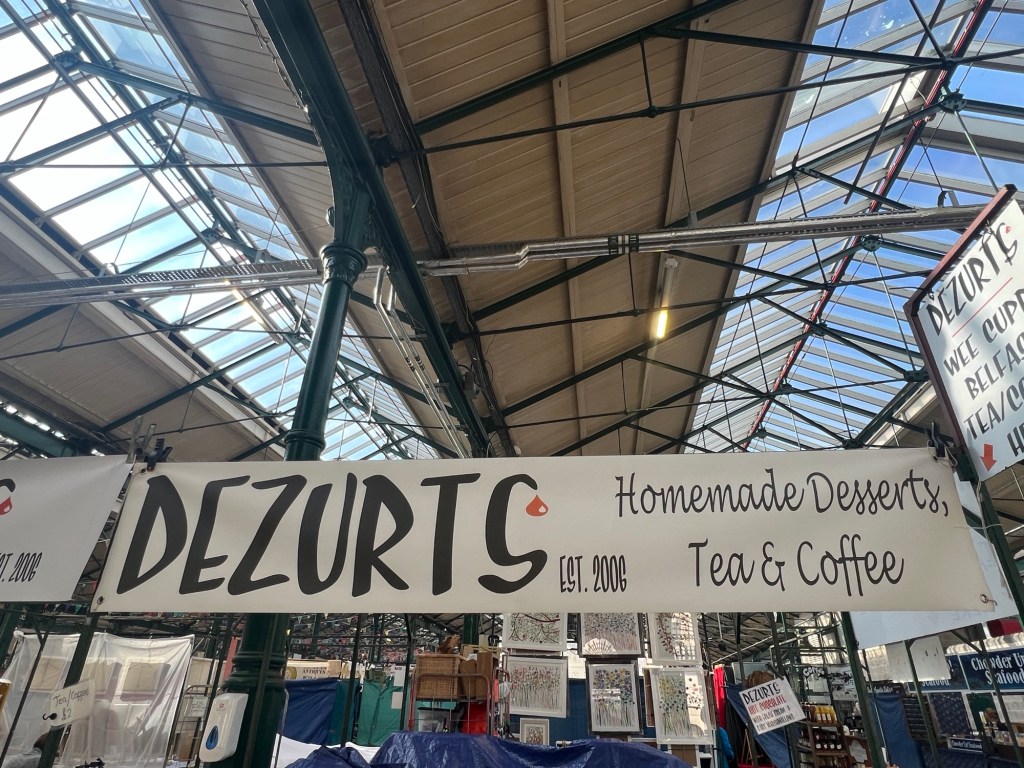
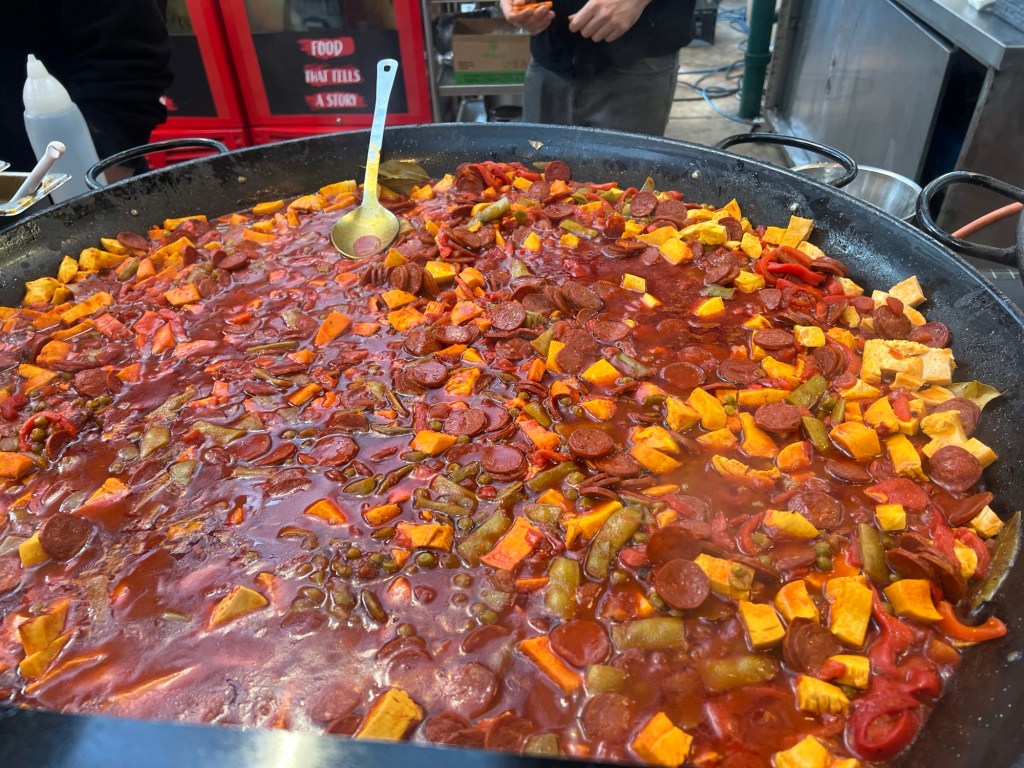
And the food looks delicious!
Amazing paella
Interesting clock

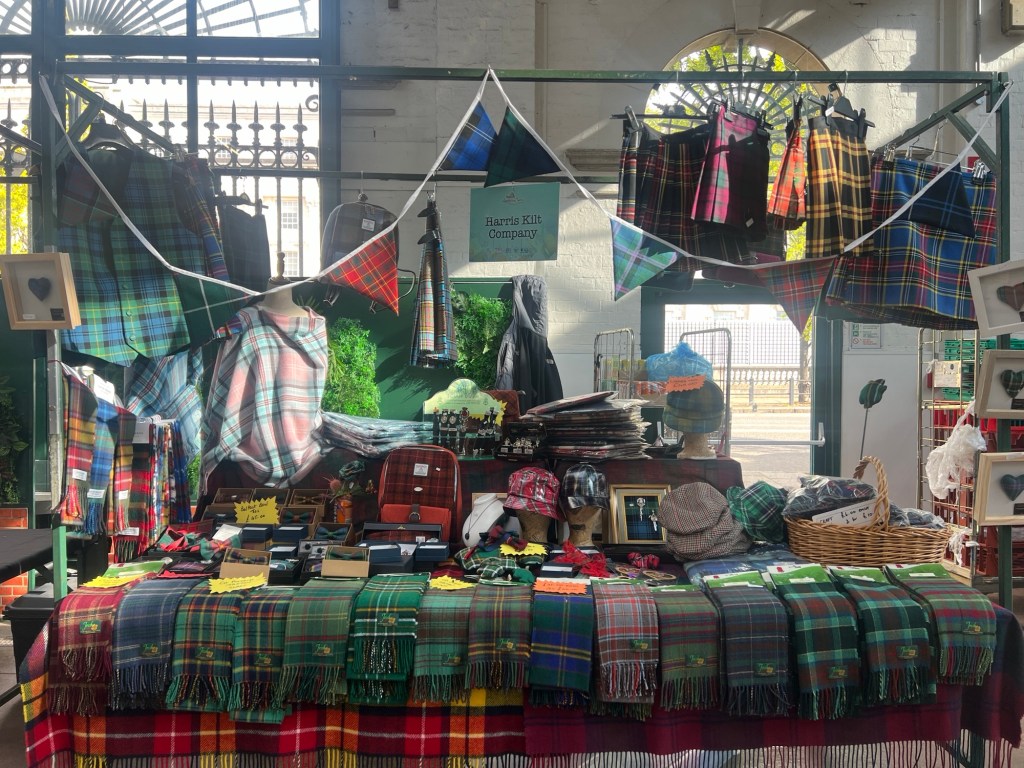
There is a wide variety of food, antiques and other merchandise here. You can spend a lot of time.

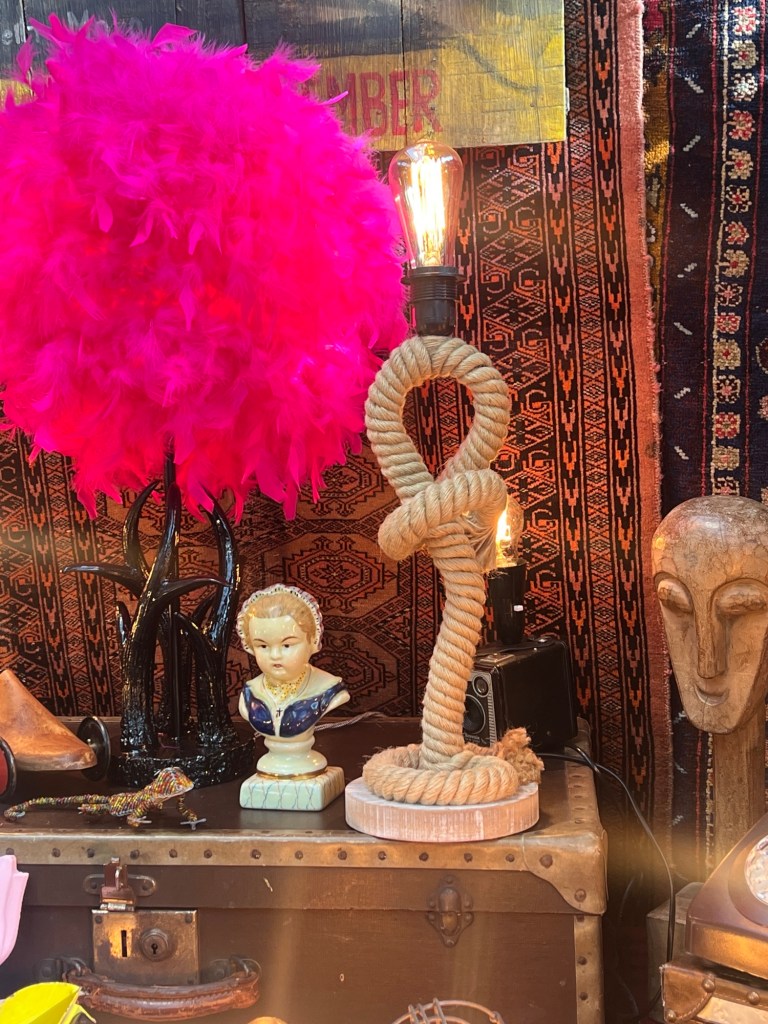
Look at these unusual lamps!

I bought a ring and earrings from one of the vendors and asked about the one I particularly wanted to see again. She knows her well, and promised to give her our regards. She only comes every two weeks since she now has two children. And sadly this was her off week.

My ring and earrings

We headed back to the ship to get ready for our afternoon tour. We met our guide, Bibi, who entertained us non stop with commentary about almost everything you can imagine.
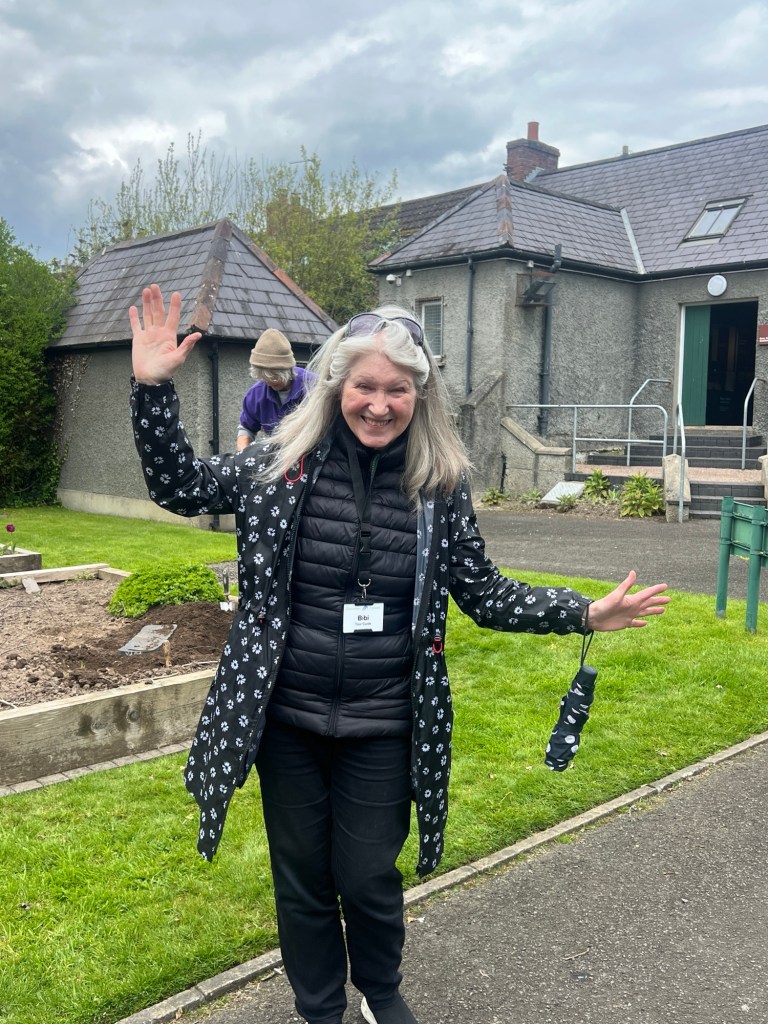
We heard about Belfast WOW which means Windows on Wildlife which they are very serious about preserving here.

We passed through a town called Holywood, which should be pronounced Holy Wood, but they call it Hollywood because many famous people come from here, including Rory McElroy, the golfer, Liam Neeson from close by and Jamie Dornan who will apparently be the next James Bond. CS Lewis also comes from the area. Bibi has a fond expression “love him to bits”! She doesn’t have much use for politicians and said that even though St. Patrick drove the snakes from Ireland, they are still there in the form of the politicians.

Ireland is known as the Emerald Isle and the area we traveled in is a great example of the greenery and the rich soil. It is temperate all year. Love those baby lambs!
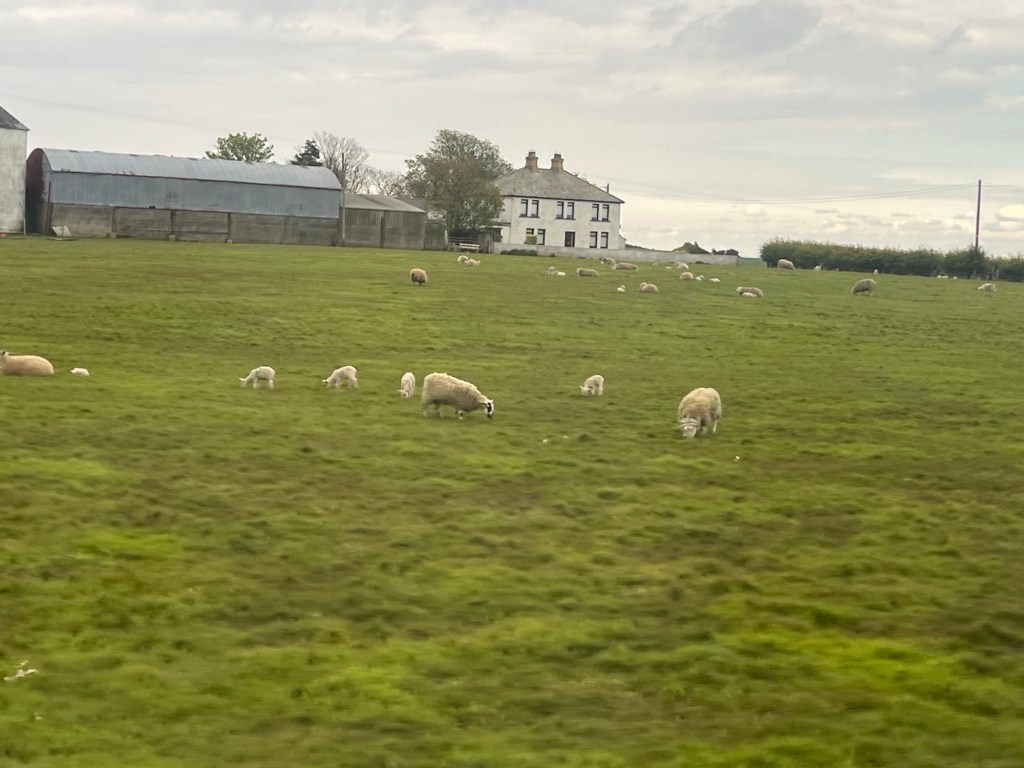
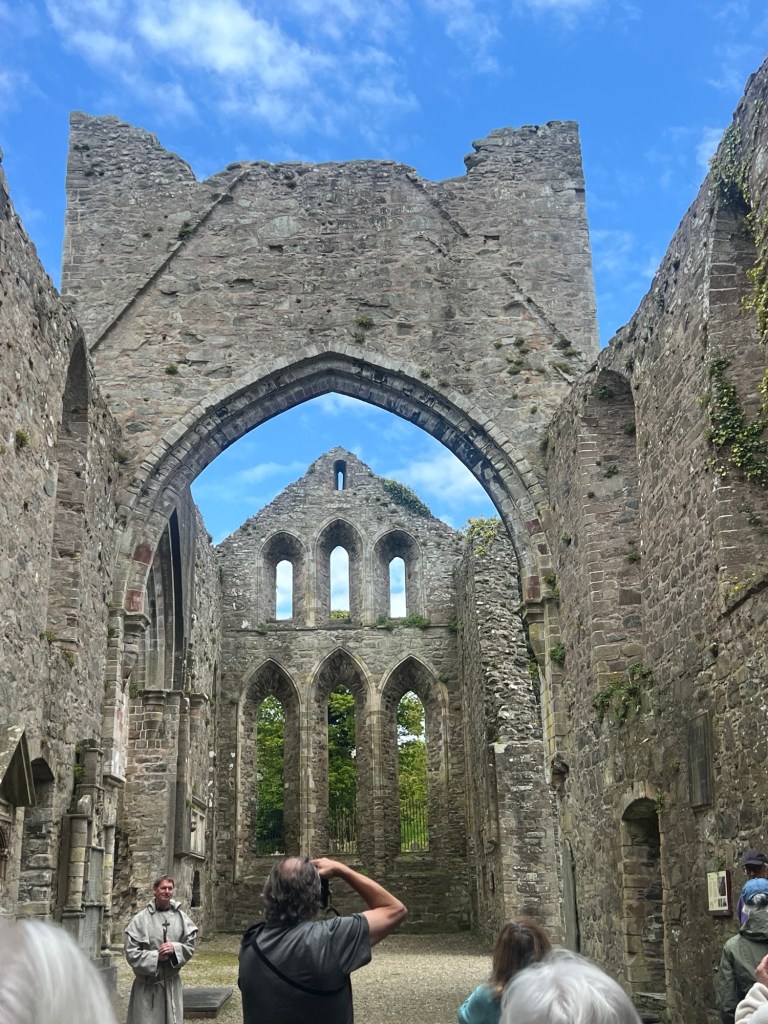
We drove through the Ards Peninsula and reached Grey Abbey.

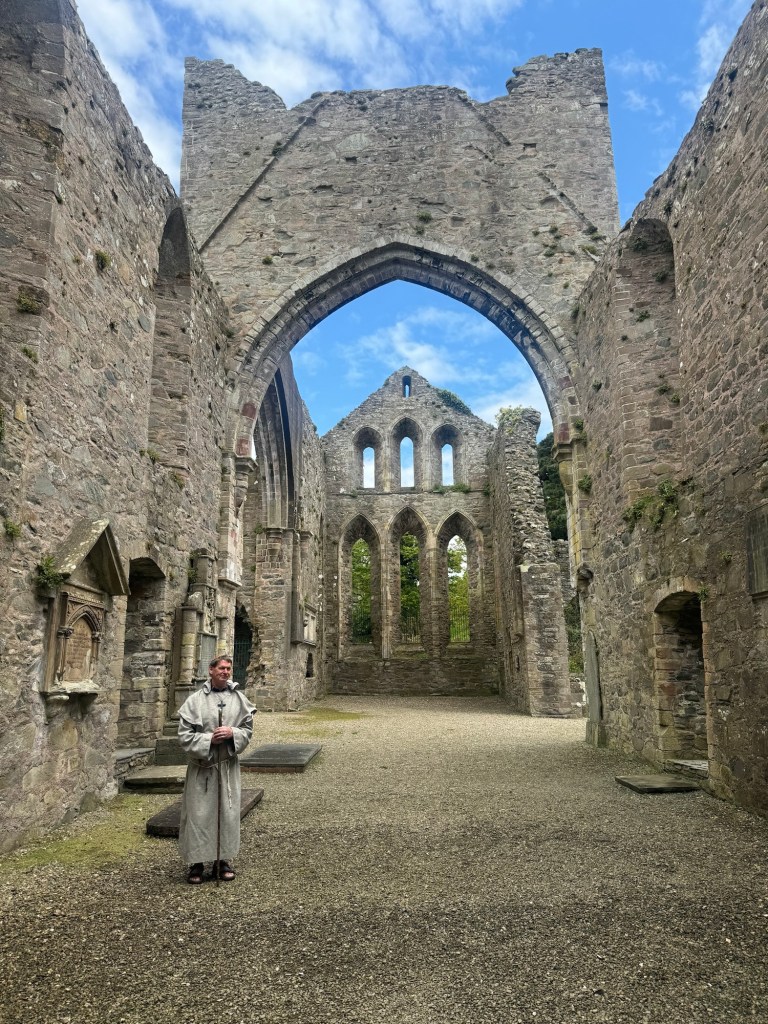
It is a Cistercian monastery which was founded in 1193 by Affreca, the wife of the Anglo-Norman invader John de Courcy. It is the only monastery in Ireland known to have been founded by a woman in thanksgiving for her safe landing after a storm at sea.

It is built in the Gothic style, one of the first churches in Ireland to be built in that style.

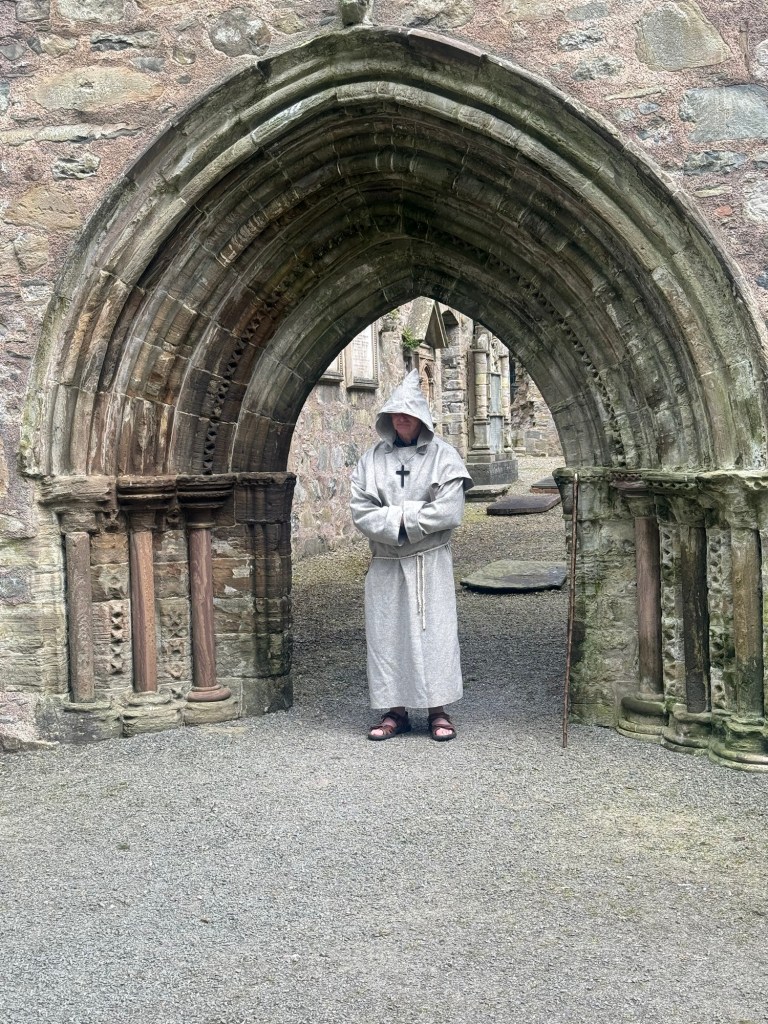
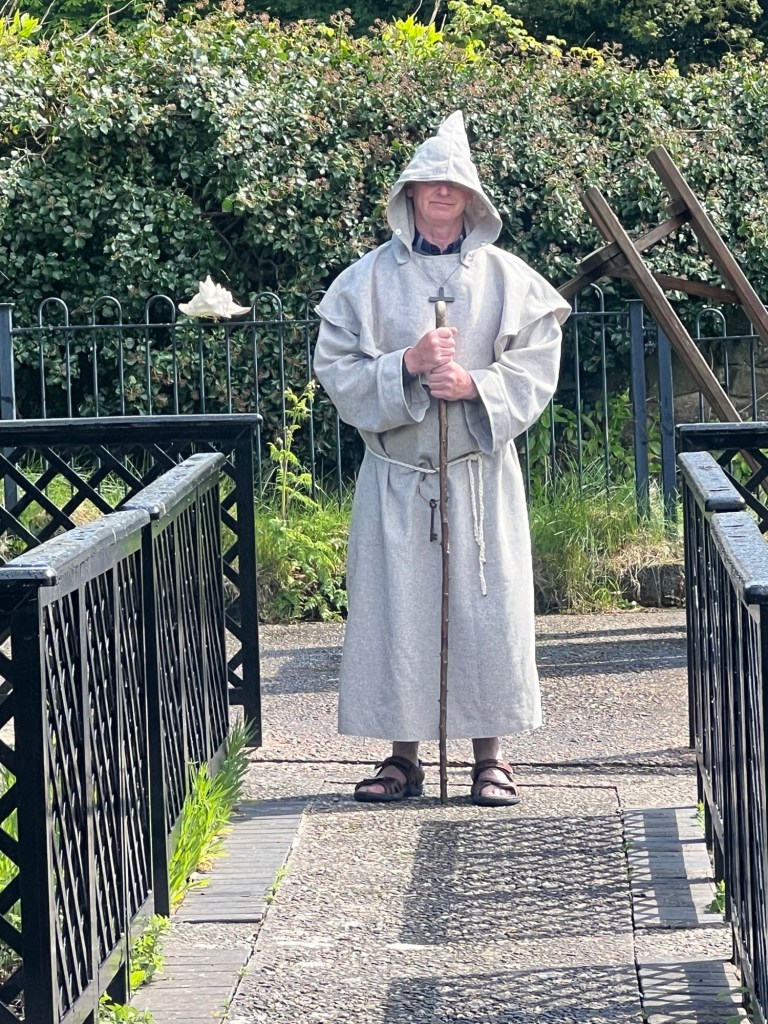
We had a guide to take us through the buildings and of course, there was a “monk” to add to the stories.

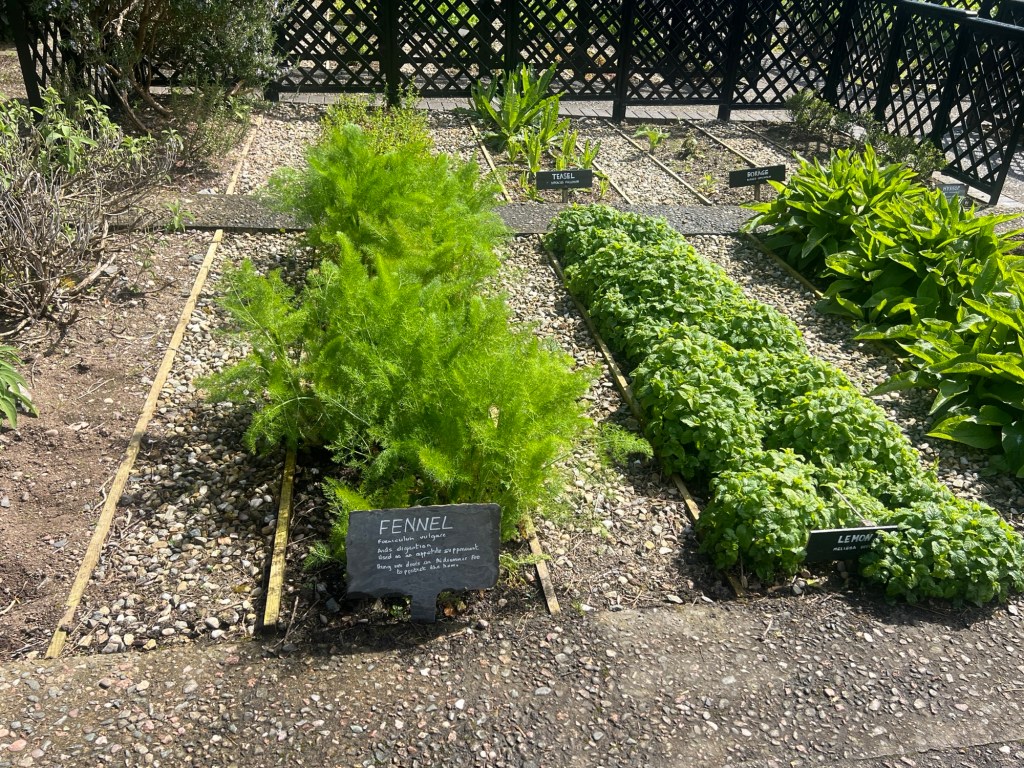
The herb gardens were present back in the early years and used as medicines. Volunteers maintain them.
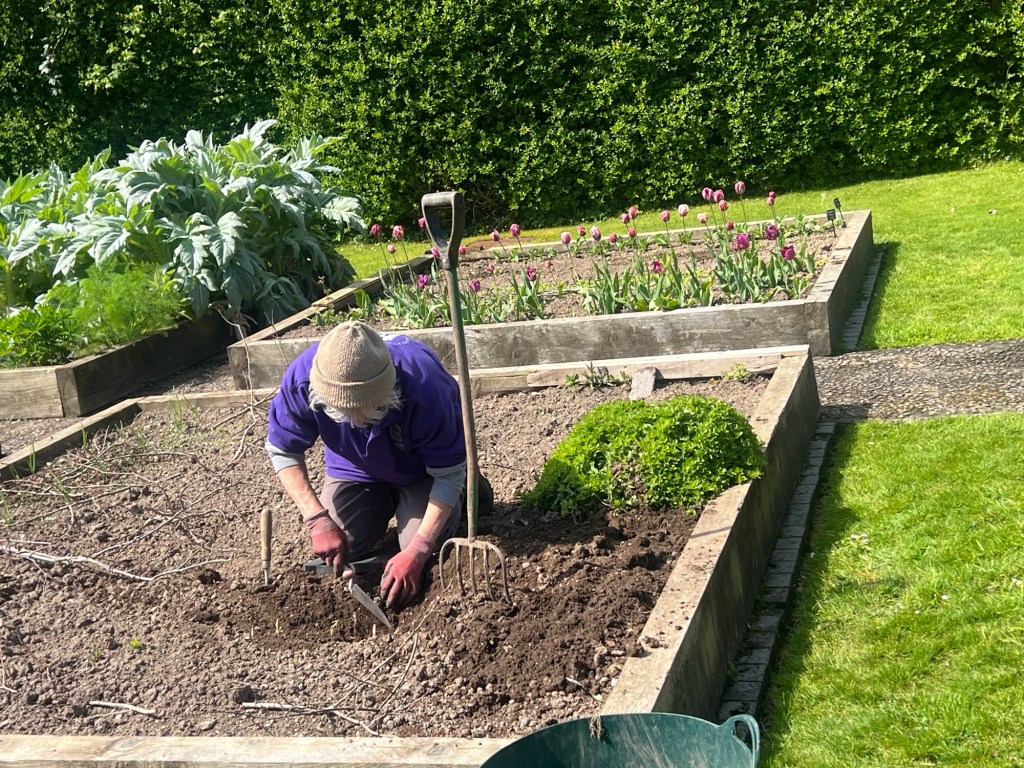
Here are some pictures from our walk through the ruins.

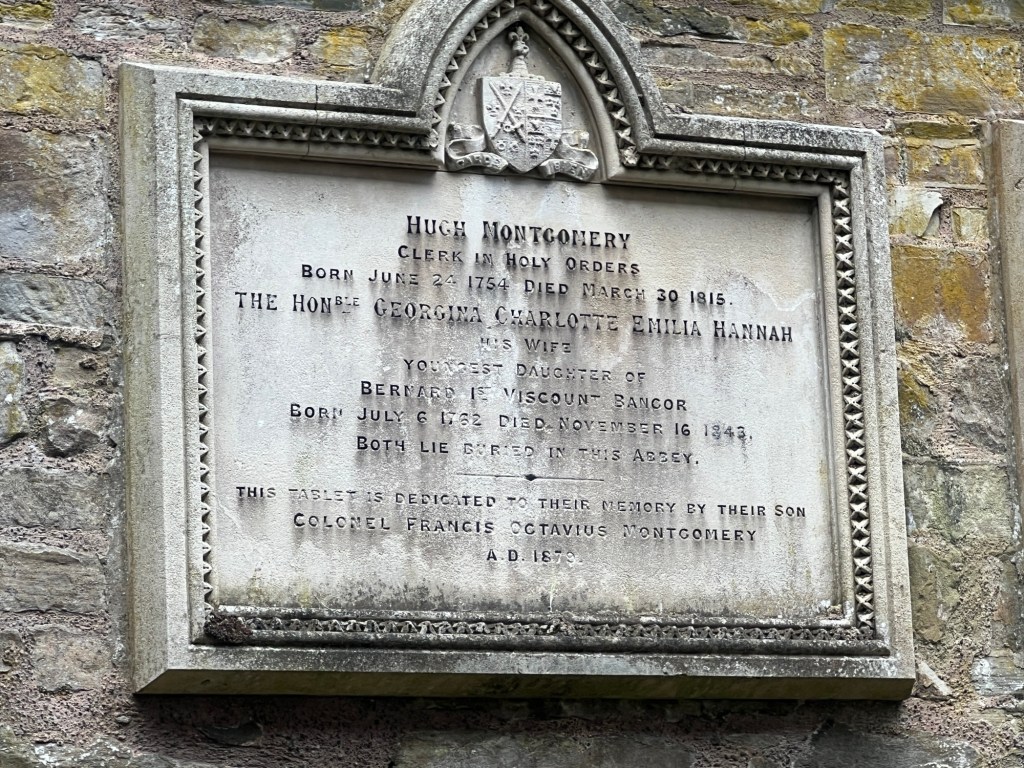
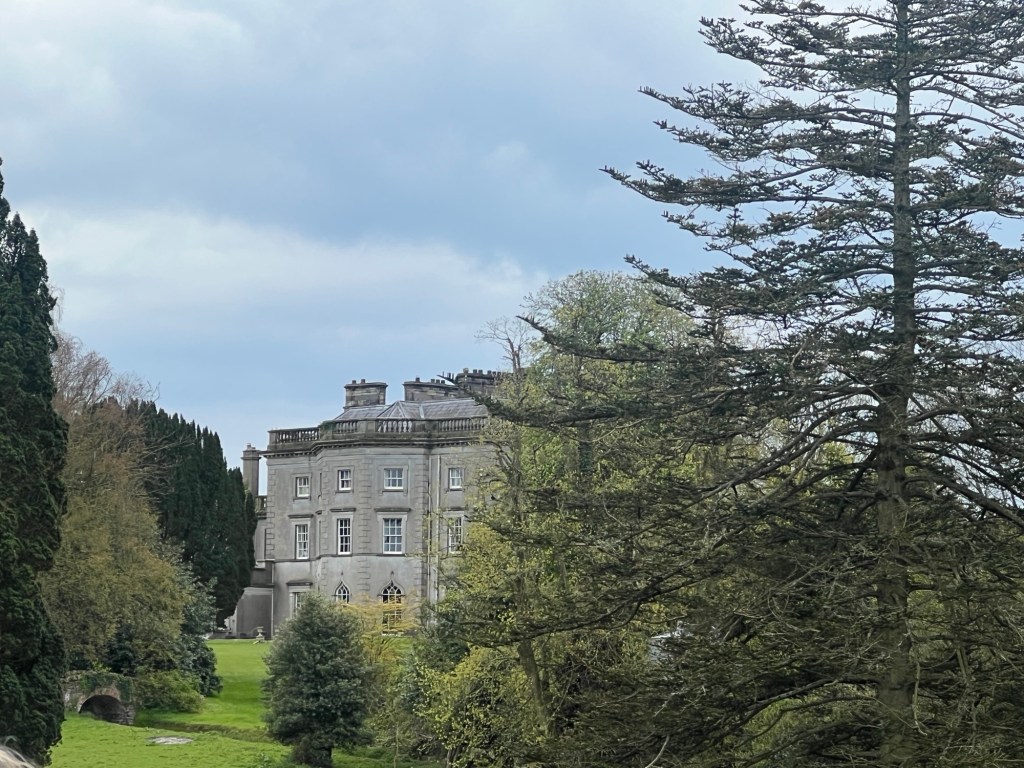
The Montgomery family has lived in the nearby house since 1607. Many descendants became important in America
Montgomery house

There was a small museum with explanations of the history.
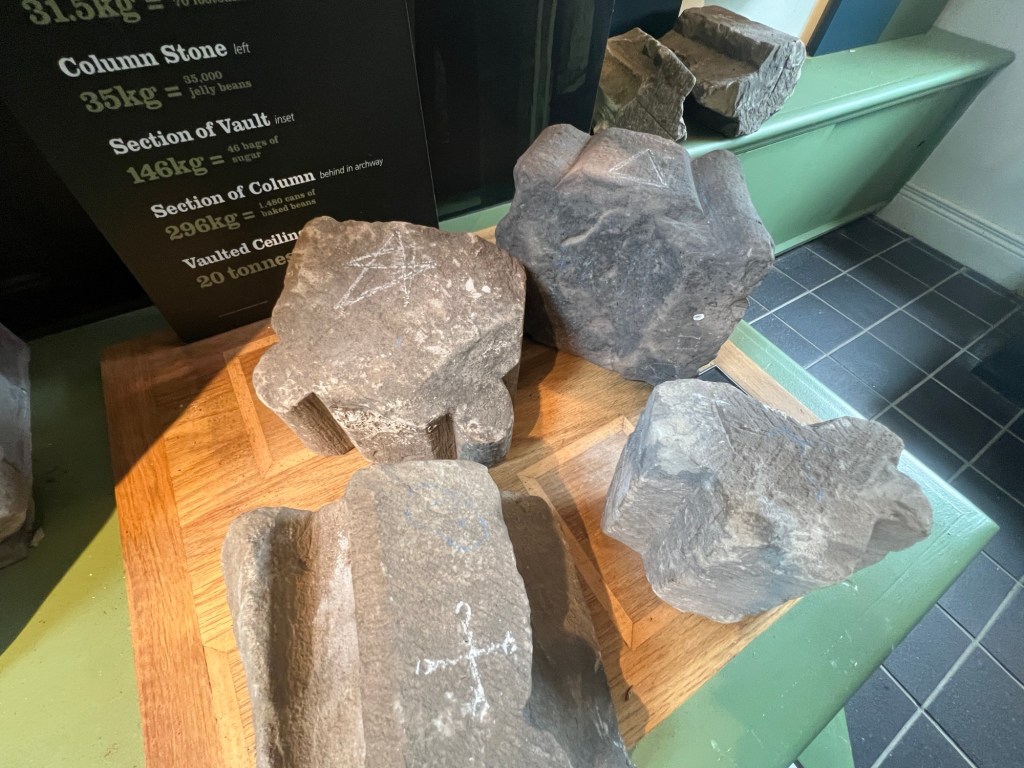
The stonemasons left their marks on the carvings they did

We enjoyed the tour and we chatted with the dedicated volunteers who maintain the gardens and the grounds. Fifteen monks lived at the Abbey and it was a silent order. The Abbey was self sufficient – they grew their own food, used their herbs for medicine, kept animals for milk and meat and did all their own maintenance.

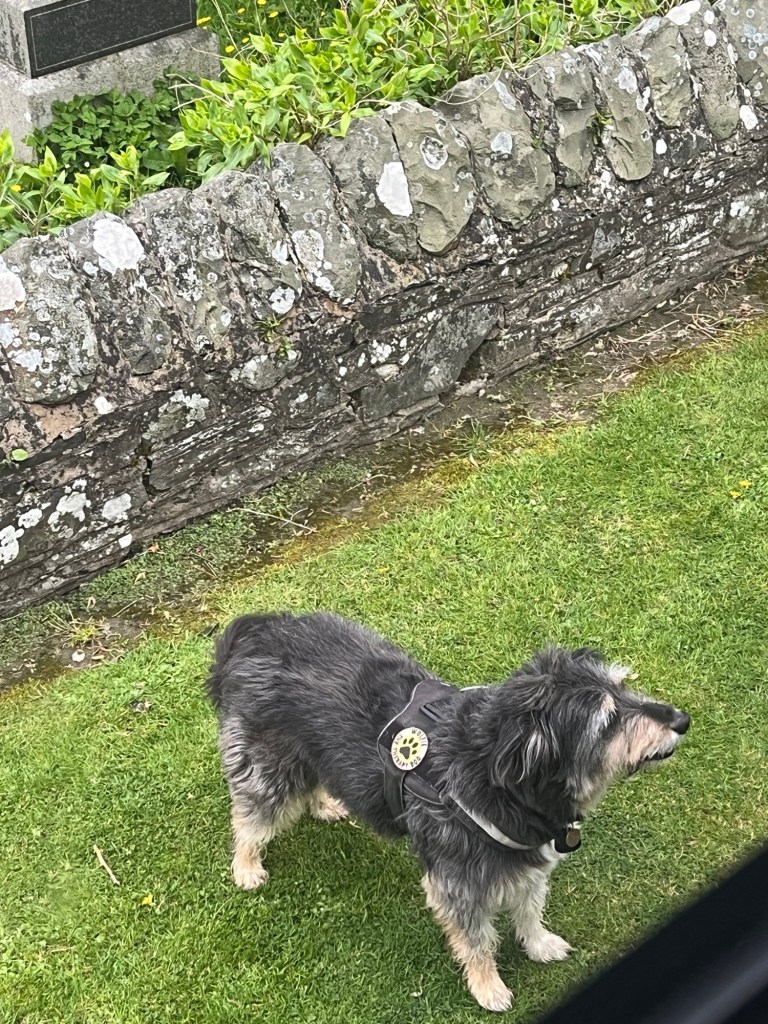
Before we left we met Wolfie, a dog that is apparently very well known here in County Down. He has appeared in many movies and TV series, the most well known is Hope Street. He wanted to get on the bus with us but that’s not allowed!
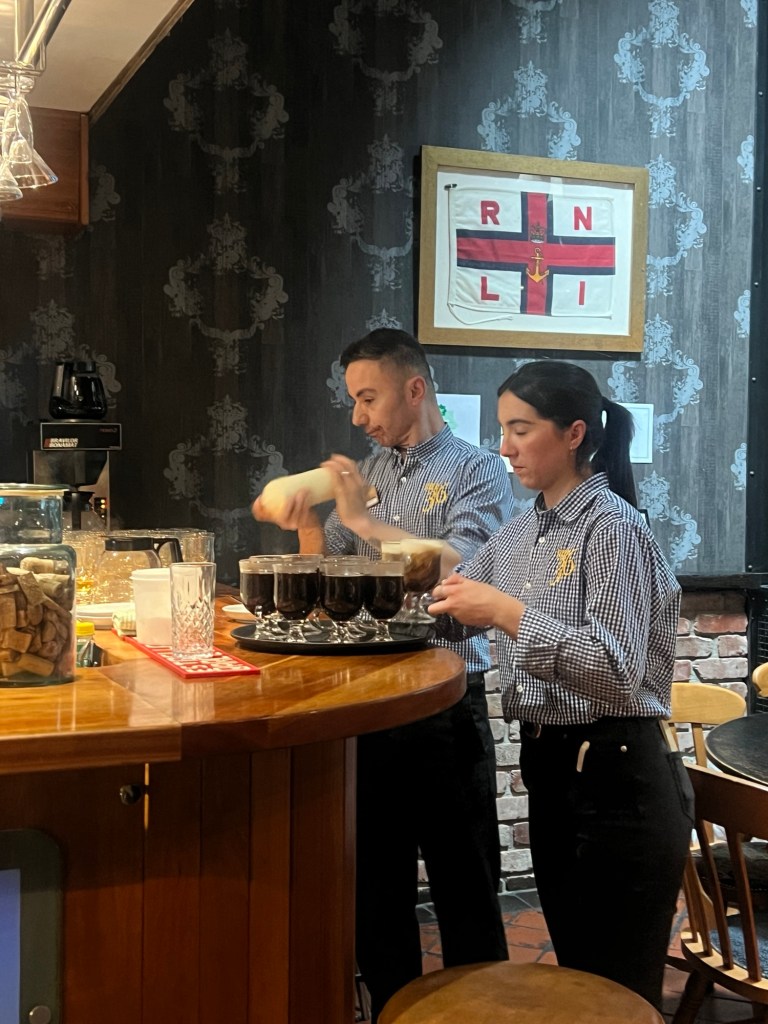
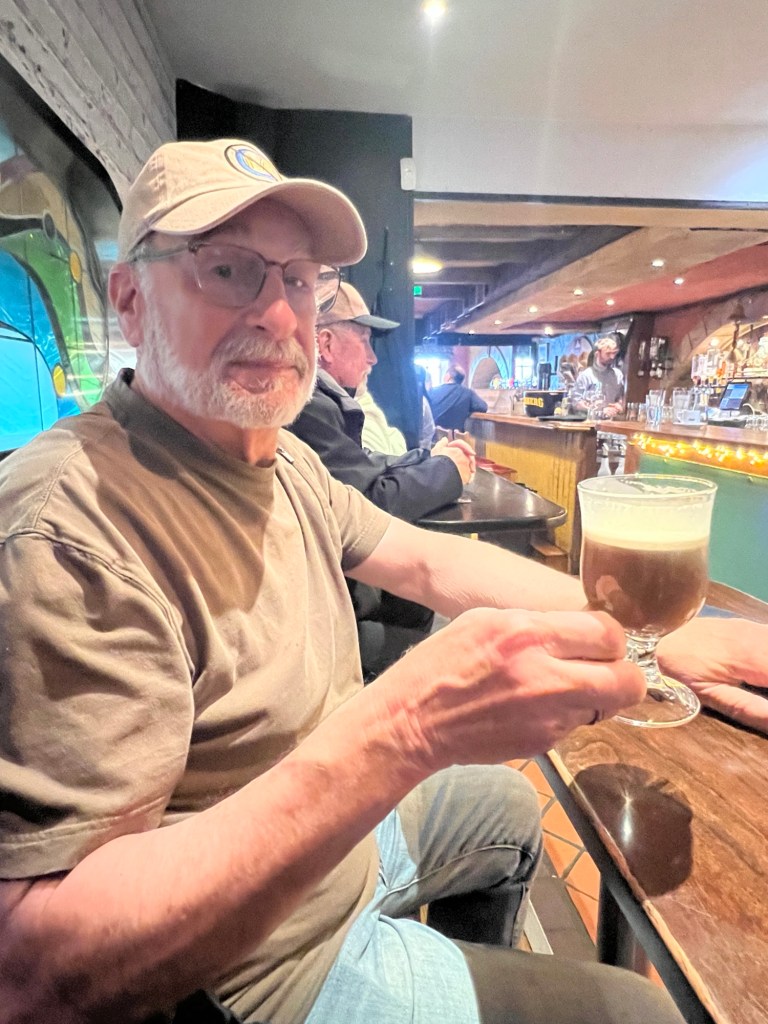
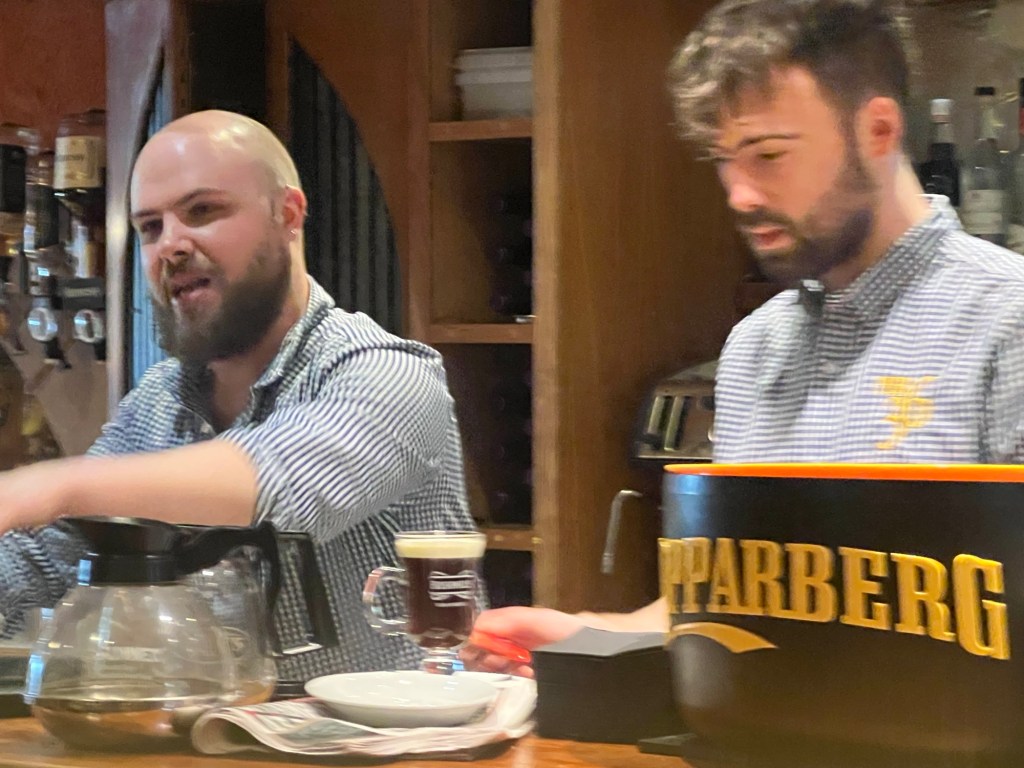
We drove across Ards Peninsula to Donaghadee to visit the small town and have an Irish Coffee at Pier 36 (Commodore) pub where some episodes of Hope Street were filmed.

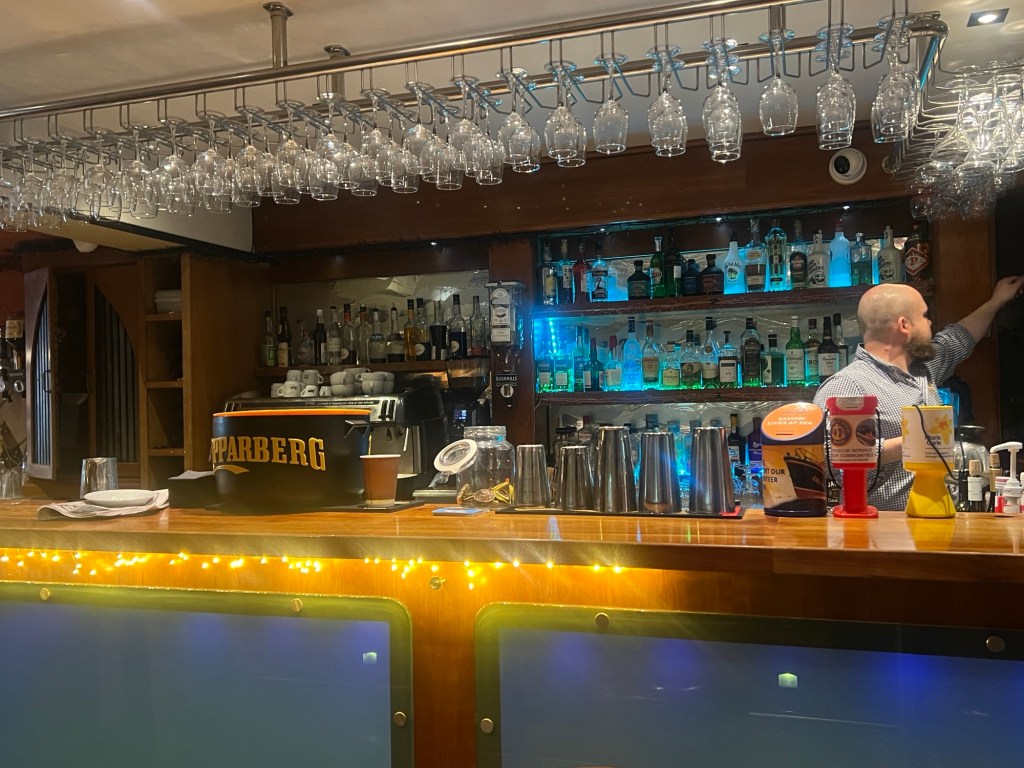
After our delicious coffees, we went out for a walk around town. On the way out of the pub we met Eddie, a 16 year old dog, with his owner. They come every Sunday and Eddie gets his own treats.
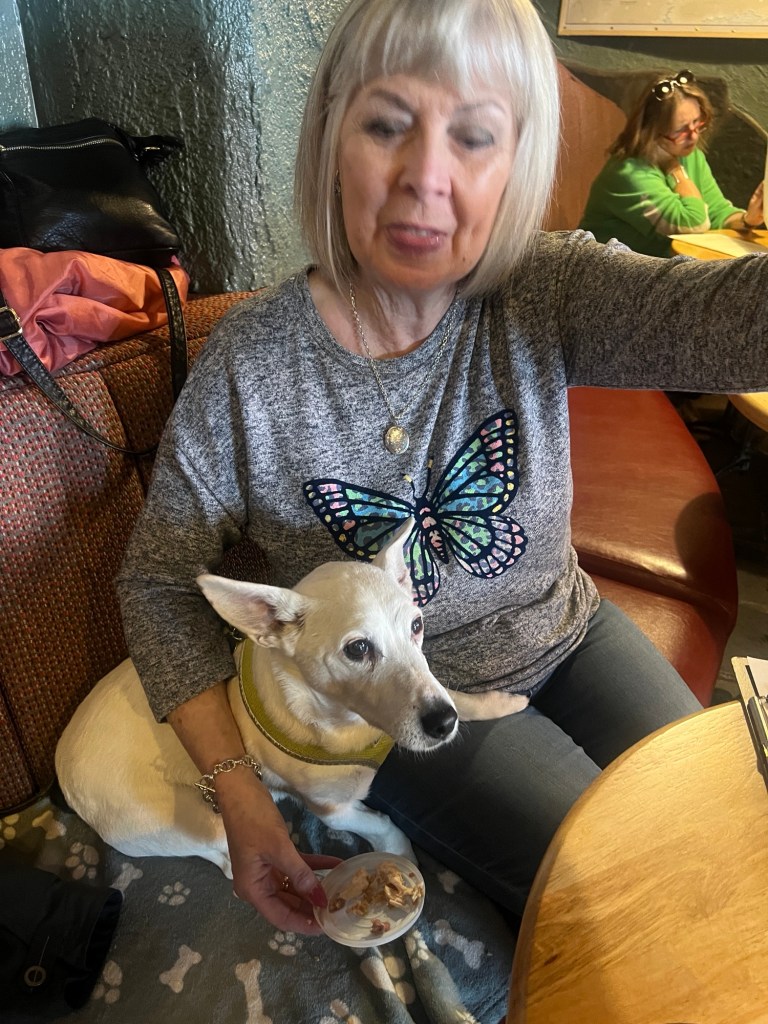
There are signs of spring everywhere and again, we were lucky to not have rain.

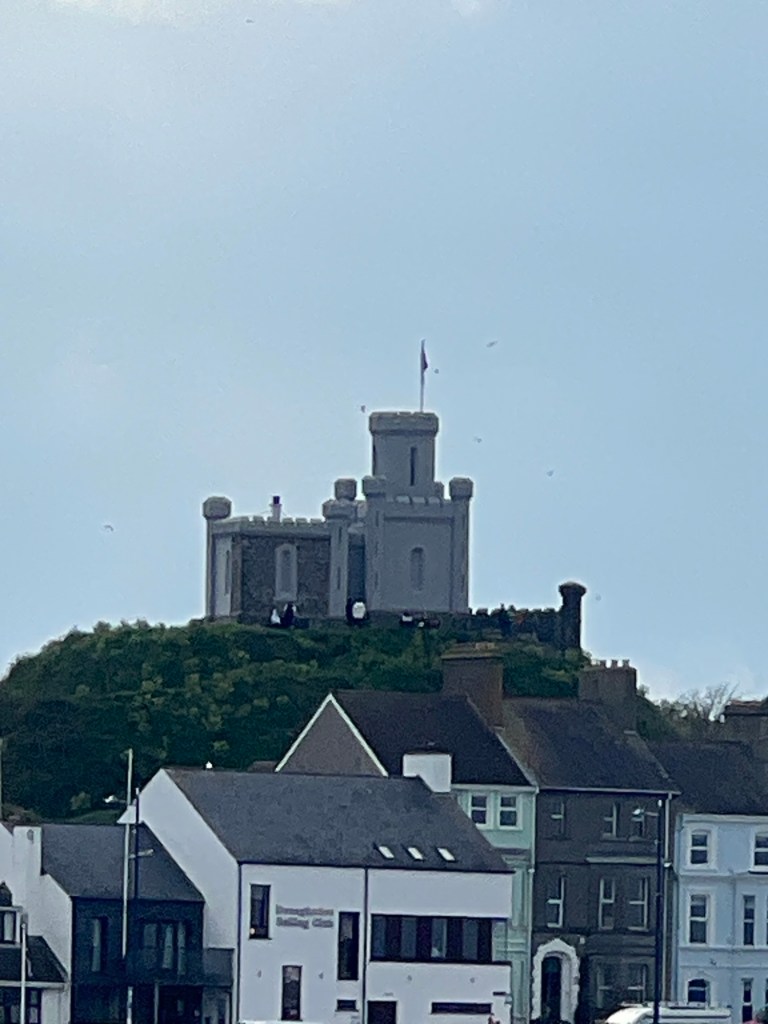
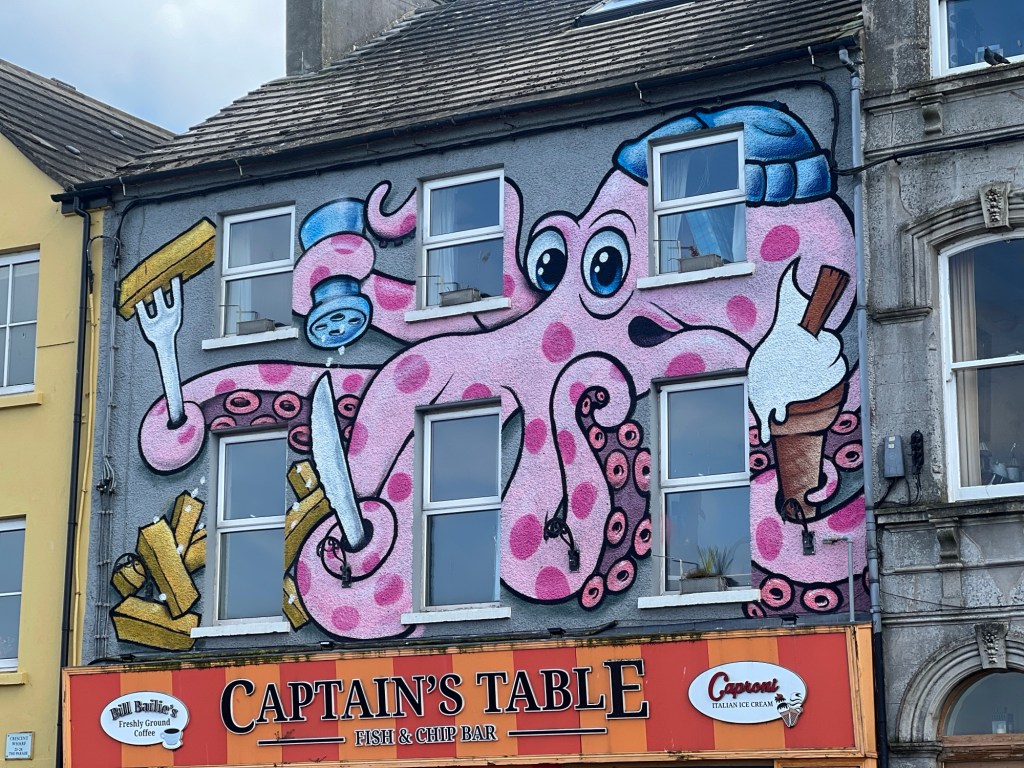
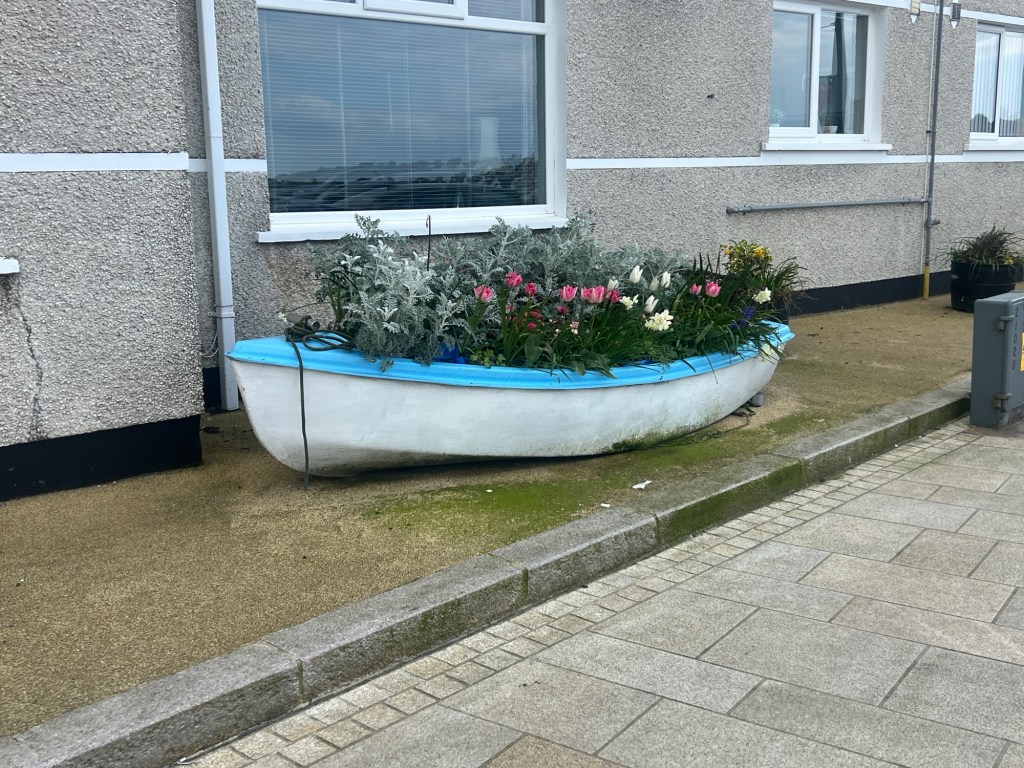
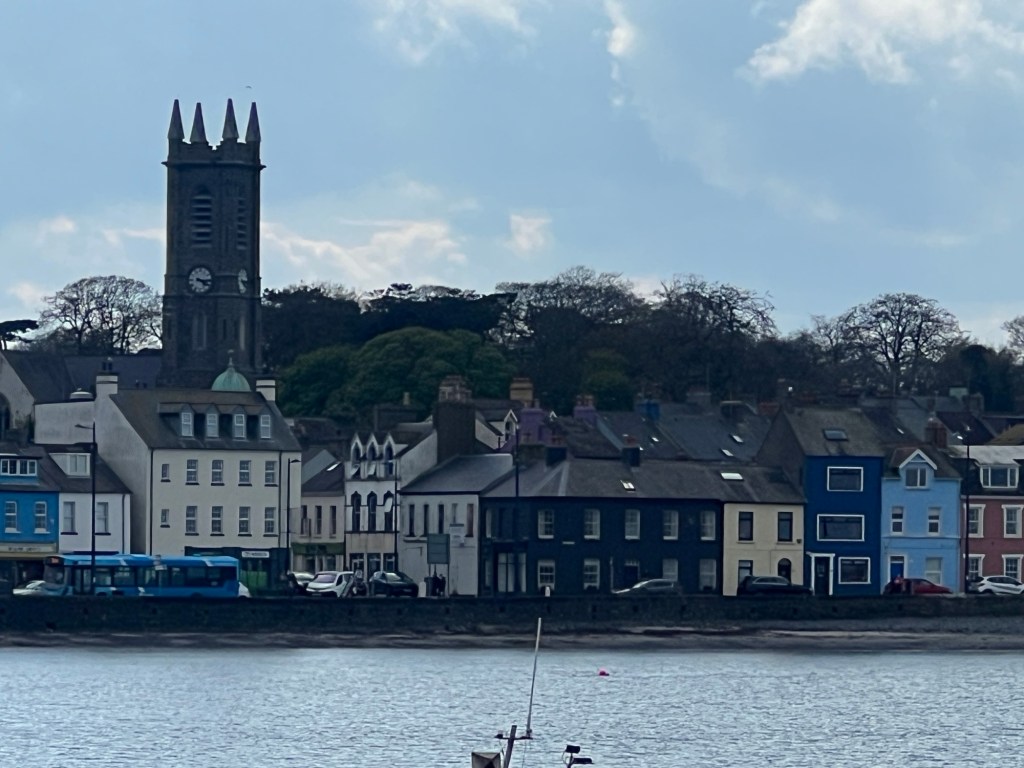
Here are some pictures from around town.
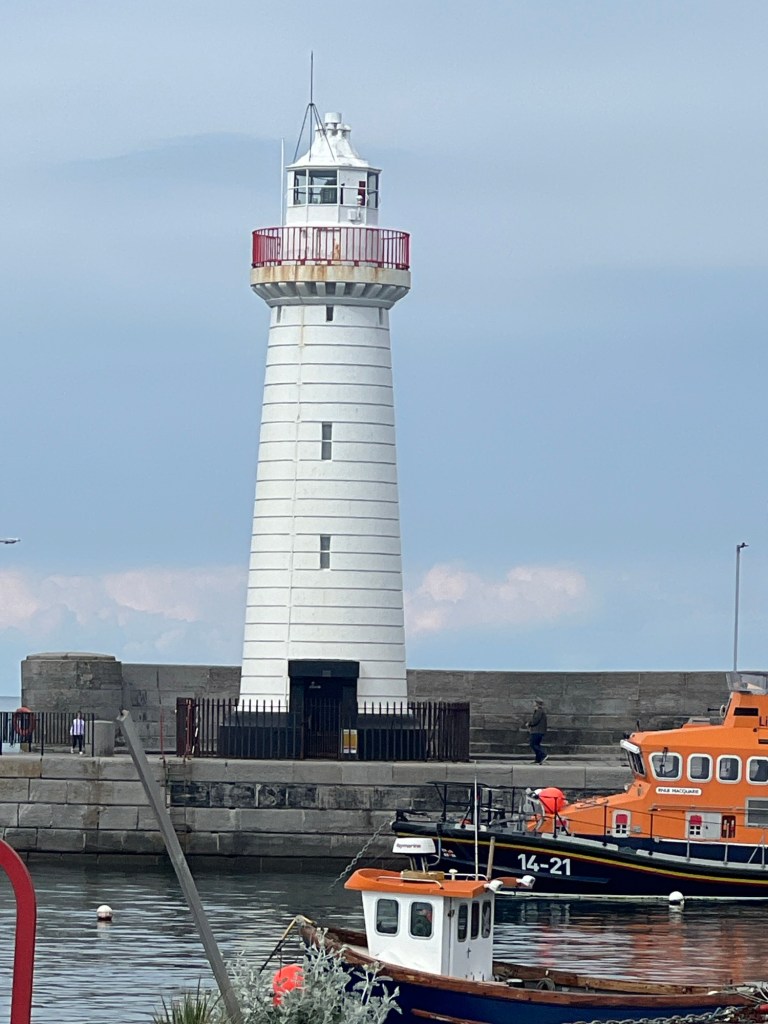
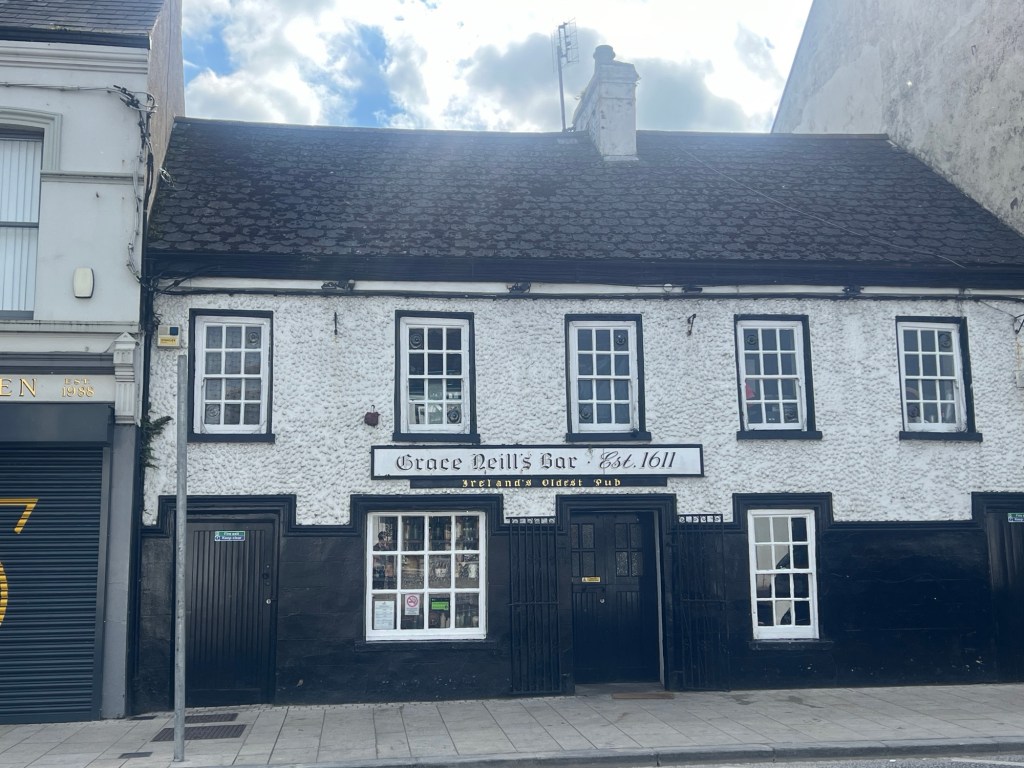
Supposedly the oldest pub in Ireland – 1611
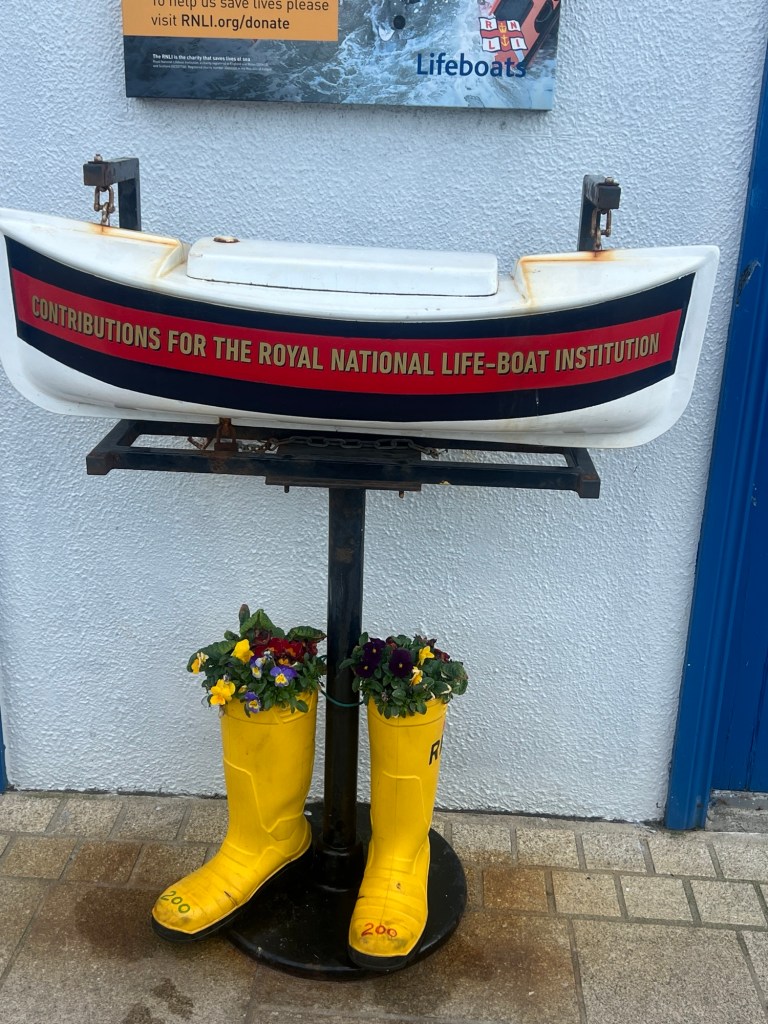
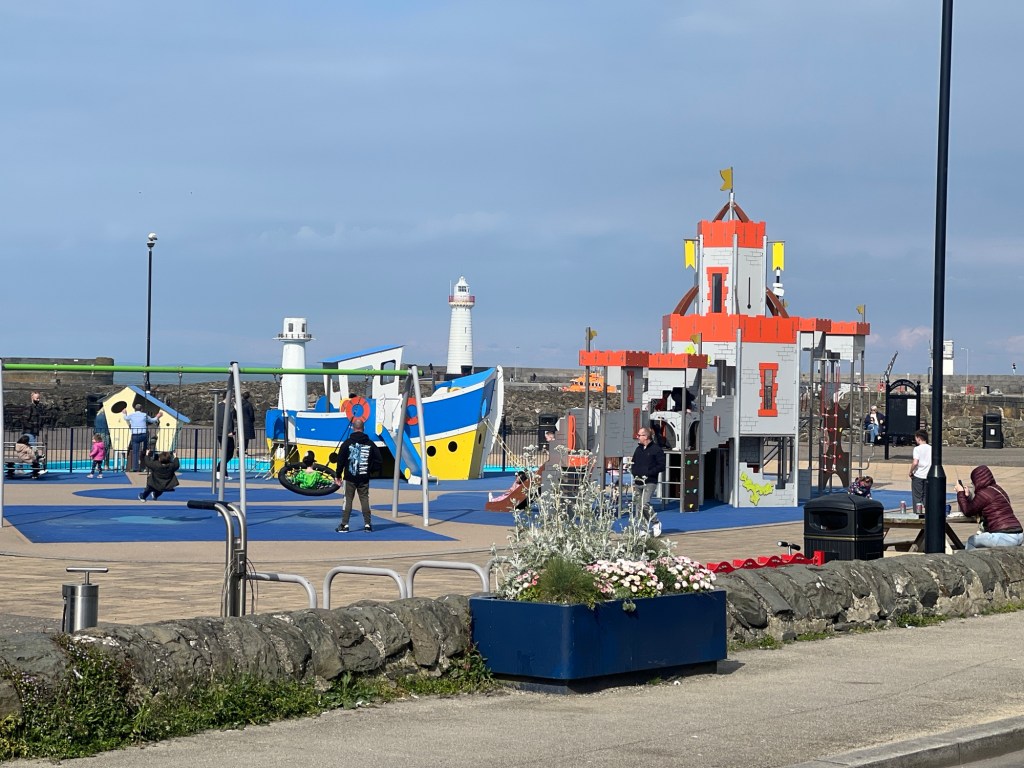
Very cool kids playground

On the way back from the ship, Bibi gave us recipes for champ, which is a kind of mashed potato dish that everyone has as a side dish, and she talked about the Ulster Fry breakfast.

She mentioned several times that the Irish people believe in all kinds of fairies, goblins, etc. In Ireland, the concept of a fairy tree is deeply rooted in folklore and mythology. These trees are often ancient and are believed to be inhabited by fairies or other mythical creatures. They are typically respected and left undisturbed, as disturbing a fairy tree is thought to bring bad luck. While there isn’t a specific tree designated as the fairy tree in Ireland, there are many scattered throughout the country, each with its own local stories and legends. If you see a tree all alone in a field NO ONE would dare ever cut it down, even if it is dead. We spotted one and she told us all about the legends.

We had a really great day, full and tiring. Our dinner was in Red Ginger, our last one there for this trip.

Tomorrow we arrive in Dublin. We have been there many times so will again take the shuttle and wander in the city and probably have lunch in a pub.
Posted in April, Europe, Excursions, Food, Spring 2024 | Leave a comment

Glasgow (Greenock), UK

April 27, 2024

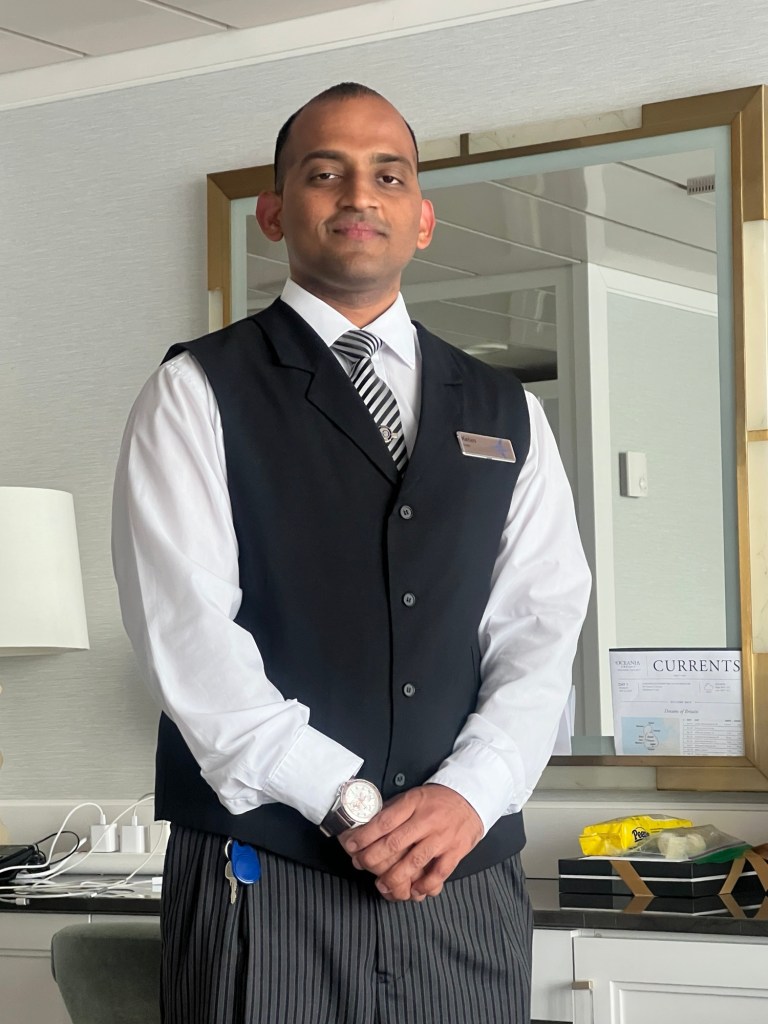
Well, there will be no pictures of our fun cocktail party with the trivia team. We had many goodies to eat and lots of wine and champagne but I was having such a good time, I completely forgot to take pictures! Our butler, Keton, did a great job setting it up.

Today is our last day in Scotland and we have enjoyed every minute of it. It would be a place to come back to and spend some more time.

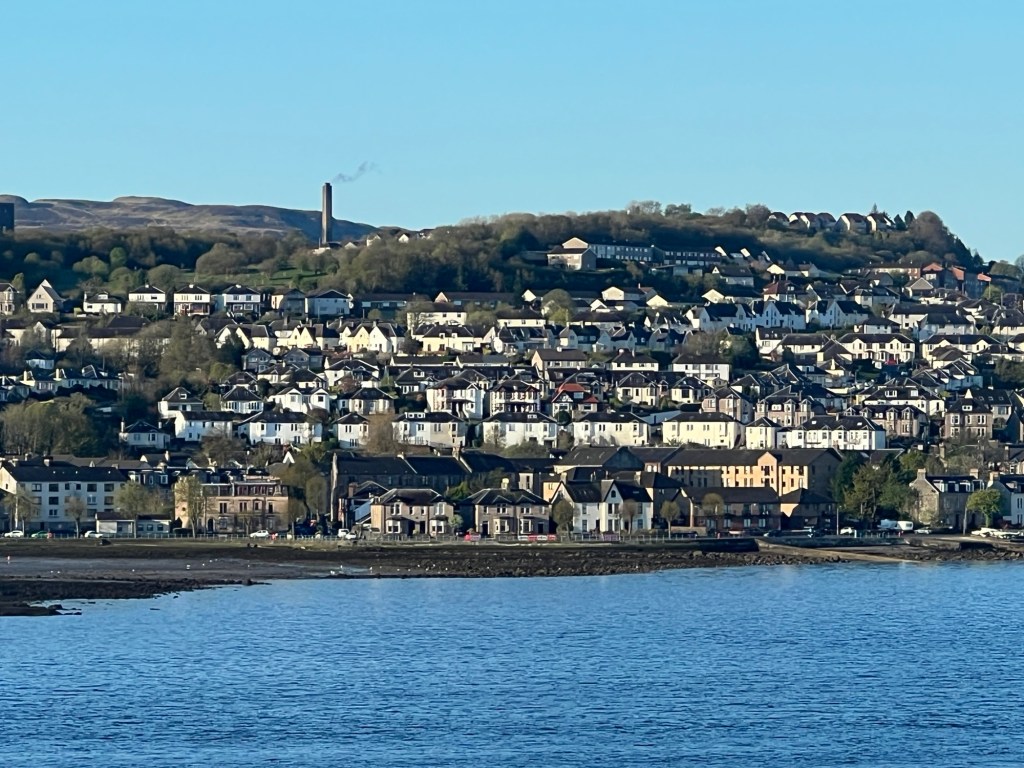
We. Had breakfast overlooking the docking procedure. We are at the Greenock port which is a short distance from Glasgow.

Our tour today was Loch Lomand and the Glengoyne Distillery. We had booked the first departure and were notified by destinations that we would depart at 12:15 instead of in the morning and there was no second departure. There were 2 buses though, so I guess we all went together. Our guide was Gilbert and he was certainly very knowledgeable about historical figures but was hard to understand much of the time.The first thing he told us after introducing himself was that we must be blessed because the weather is so good – they have had only 3 dry days in the last 6 months and it is sunny today and even a bit warmer – it got up to 50 degrees during the day.

We headed out to the distillery first and I assume the other bus went to Lock Lomand first. Along the way, Gilbert talked about James Watt – this is his statue.

James Watt was a prominent figure in Scotland’s history. He was a renowned engineer and inventor. Born in Greenock, Scotland, in 1736, he is best known for his improvements to the steam engine, which played a pivotal role in the Industrial Revolution. His innovations significantly increased the efficiency and practicality of steam power, revolutionizing industries such as mining, transportation, and manufacturing. His partnership with Matthew Boulton in Birmingham further propelled his inventions into widespread use. Watt’s legacy is celebrated in Scotland and beyond for his contributions to engineering and industry.

St. Patrick was also born here.

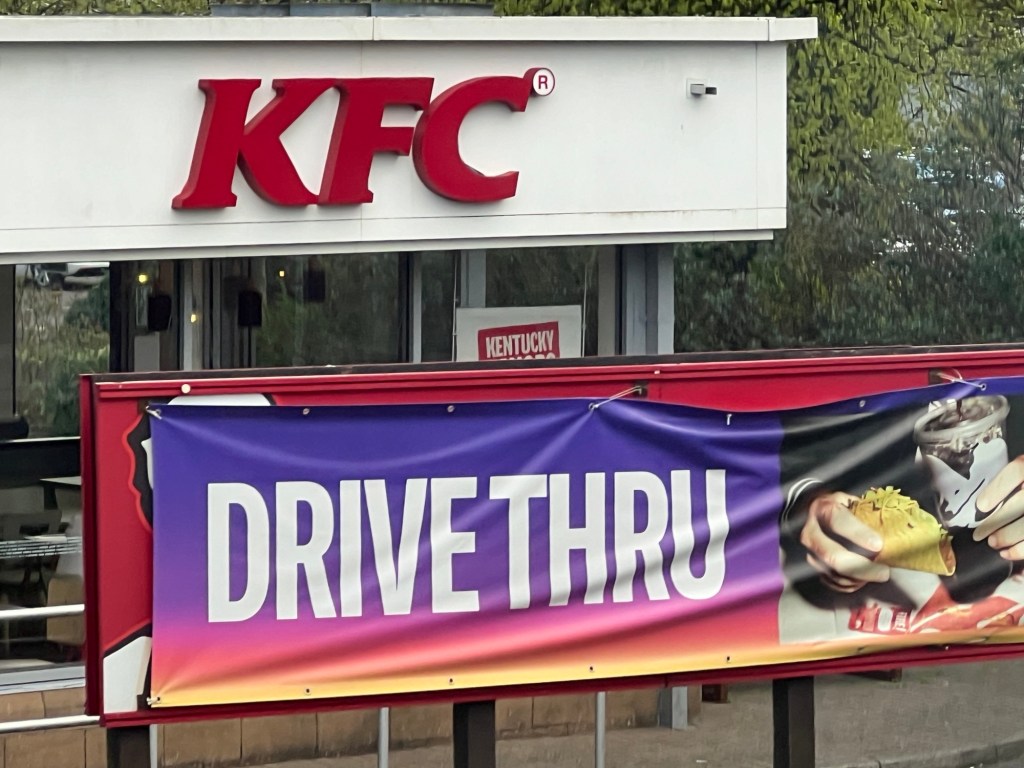
This area was known for ship building but that largely disappeared in 1960. The city went into a decline but now it is experiencing a renaissance. Compared with Edinburgh, this is a much more industrial city. We didn’t spend time there but saw some sights as we drove through. All of the US fast food restaurants are here!

We drove through many small and charming villages and past lots of sheep with young lambs frolicking in the meadows. They are sooooo cute!

Dumbarton Rock is a volcanic plug standing over the River Clyde.
It has a long history of fortifications dating back to ancient times.

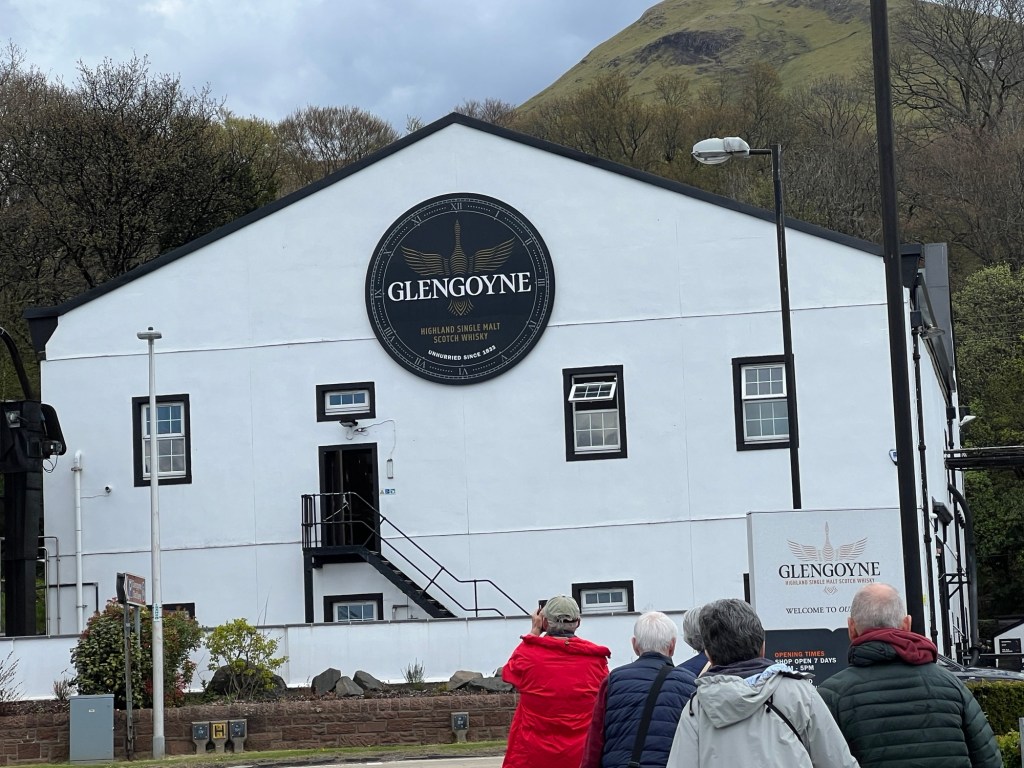
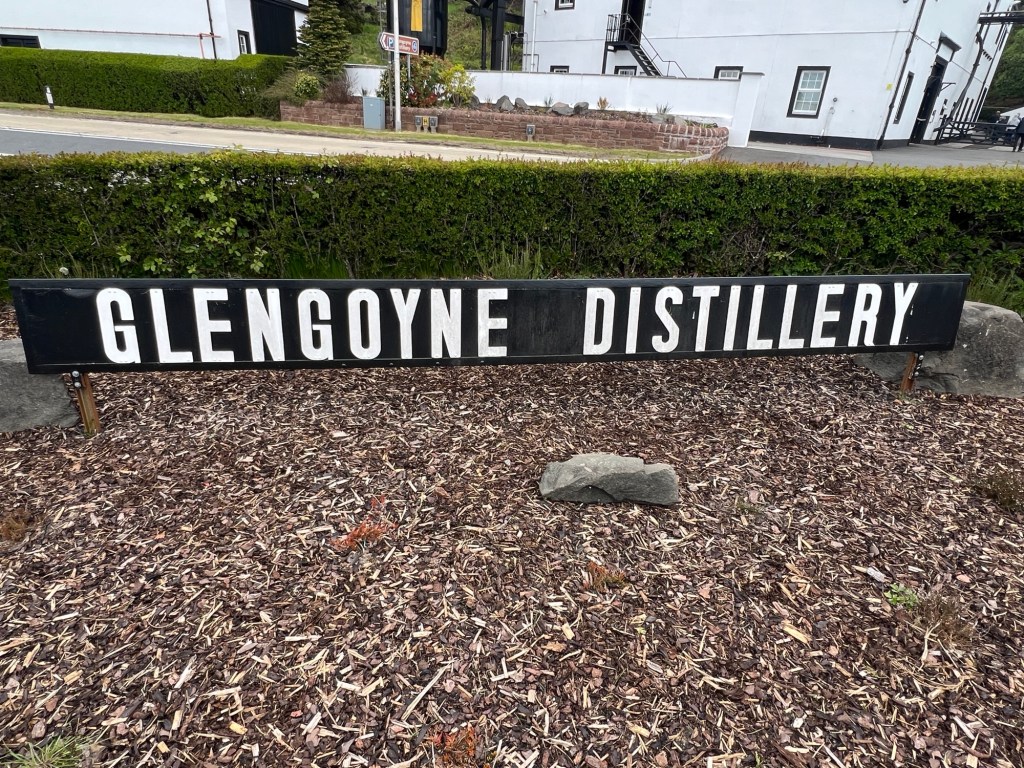
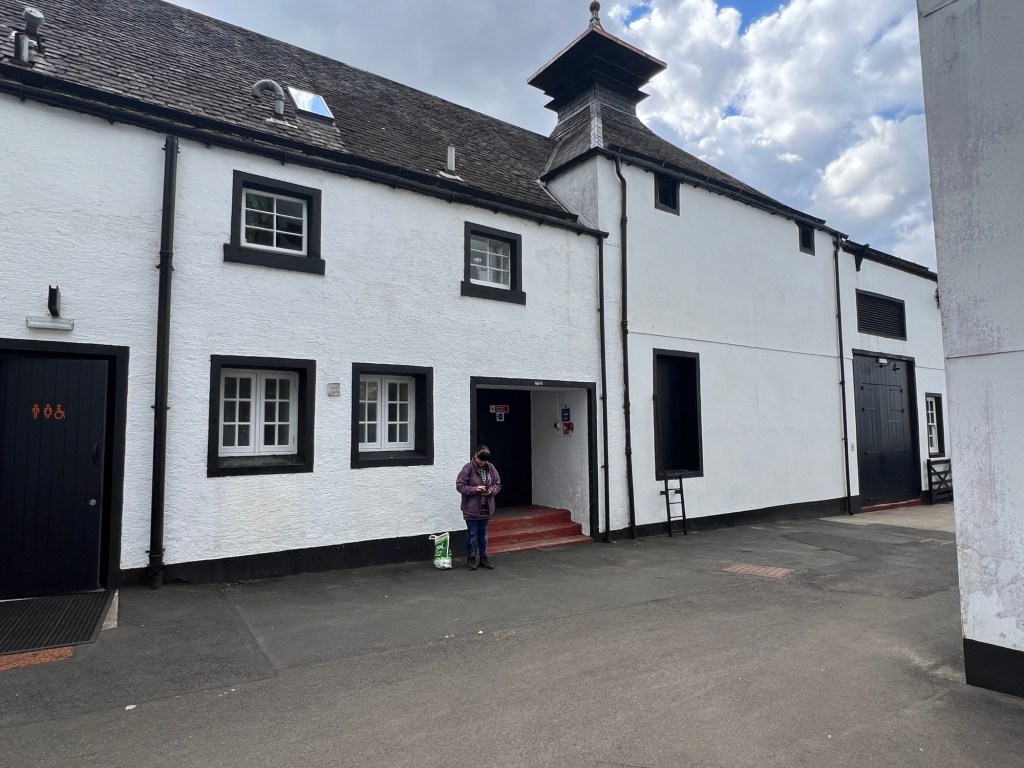
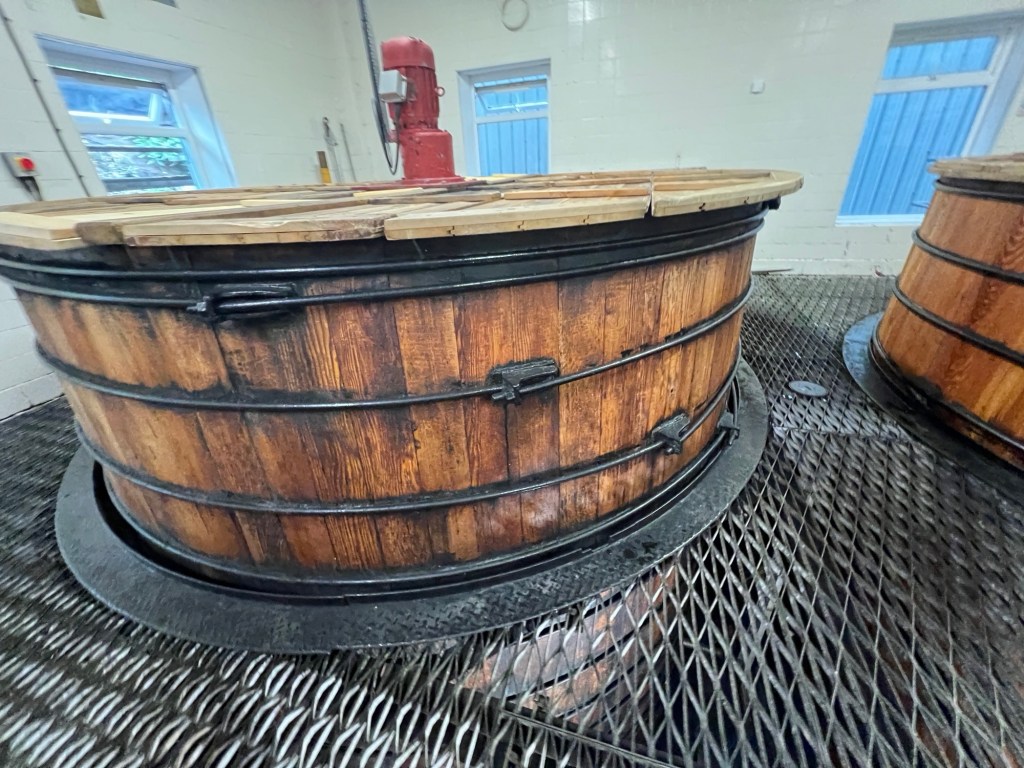
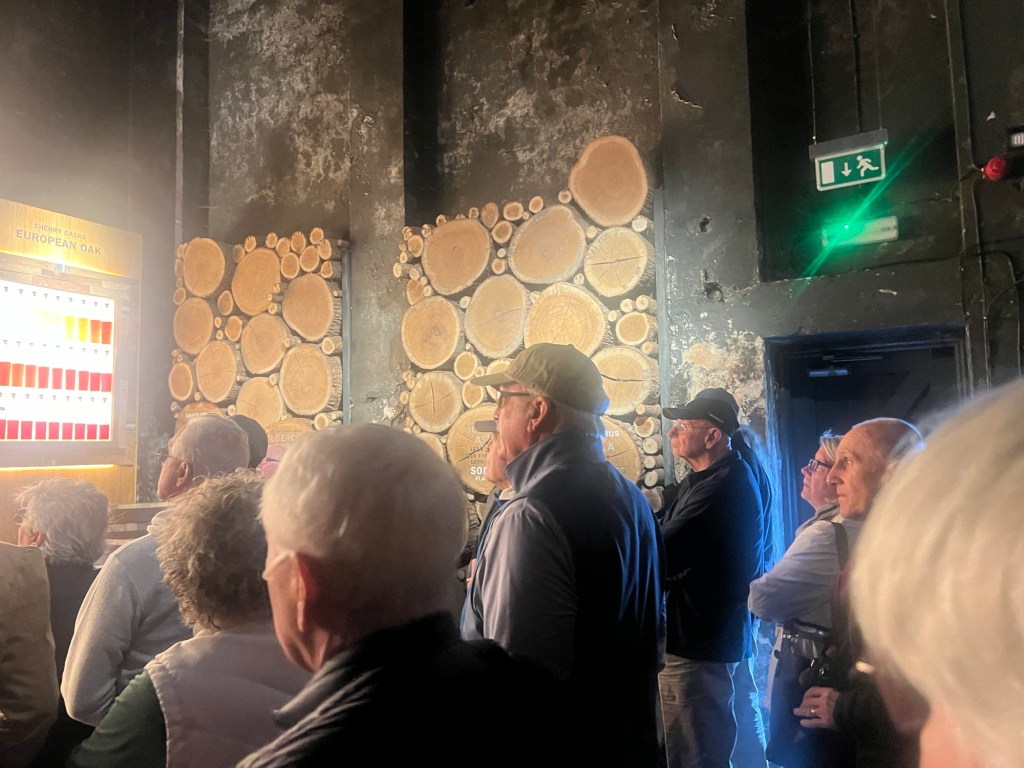
We arrived at the Glengoyne distillery and the tour guides split us up into 3 smaller groups for the tour. It was a fascinating explanation of the process of making the whiskey they are known for – from the barley to the barrels.

Glengoyne Distillery is situated near the village of Killearn in Stirlingshire, Scotland, is renowned for producing Highland single malt Scotch whisky. Here are a few key points about Glengoyne Distillery.

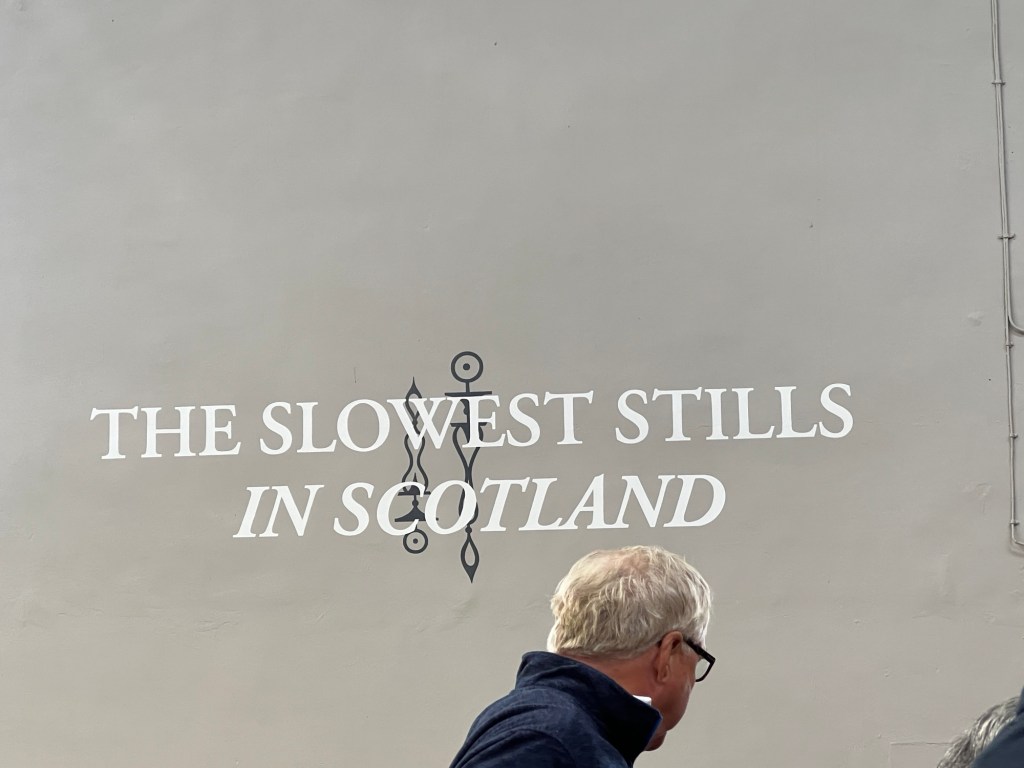
It is located at the foot of Dumgoyne Hill with the surrounding area providing the pure water essential for the whiskey production. It dates back to 1833 when it was founded as the Burnfoot Distillery. It became Glengoyne in 1905. It is known for its traditional methods of whiskey production including slow distillation, the exclusive use of golden barley and sherry cask distillation.

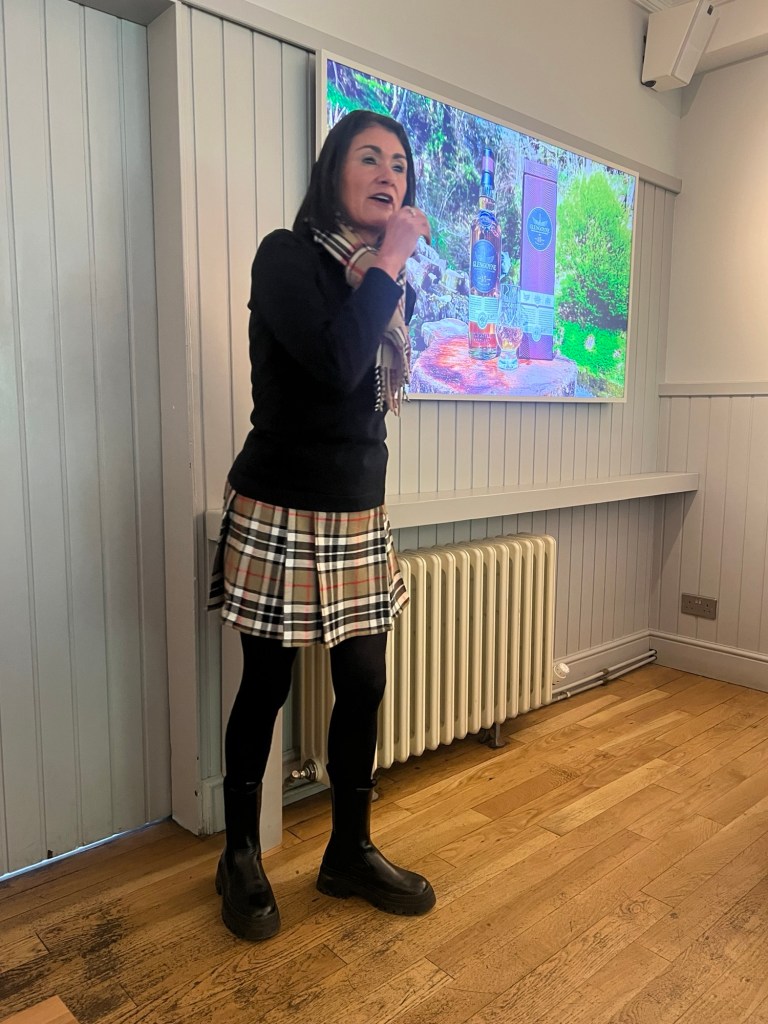
Our guide, Tori.

Of course, we had a tasting of the 10 year old and the 15 year old Single malt Scotches that they make here. I am not really a whiskey fan, but did taste it.

Norm bought one yesterday – Raasay – which we saw written up as a good one and he bought the 12 year old one here.

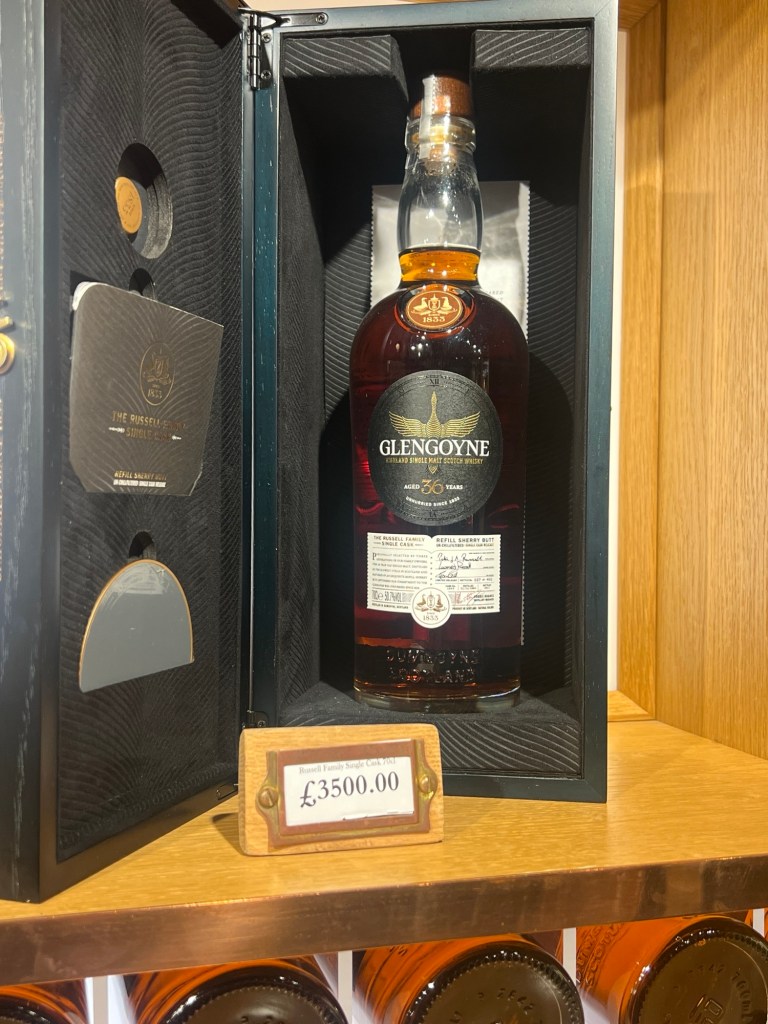
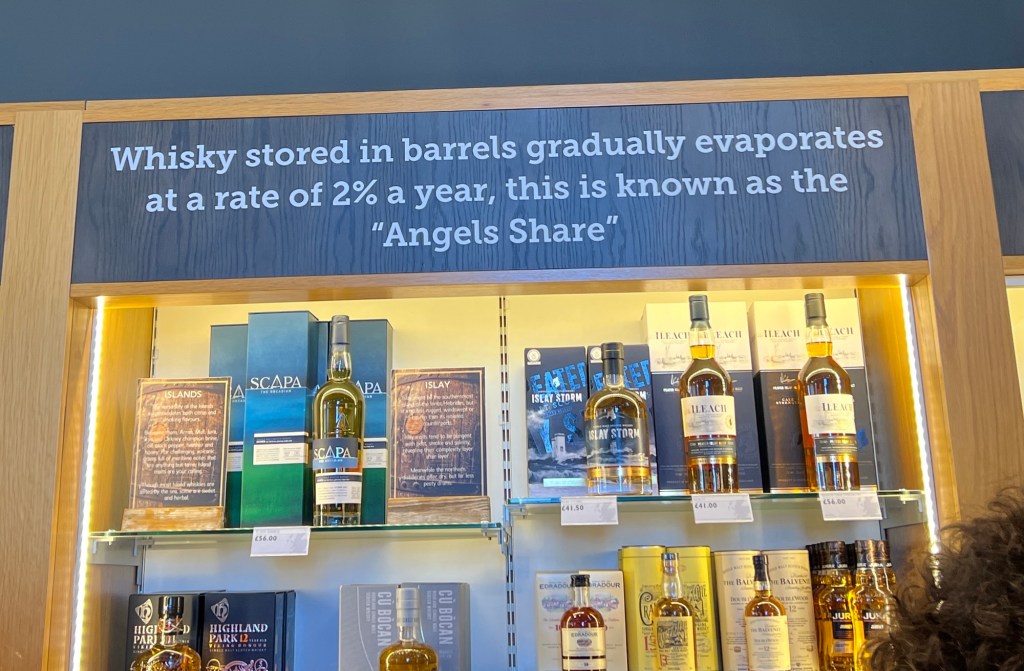
This one was a standout in the gift shop!

Notice the price!
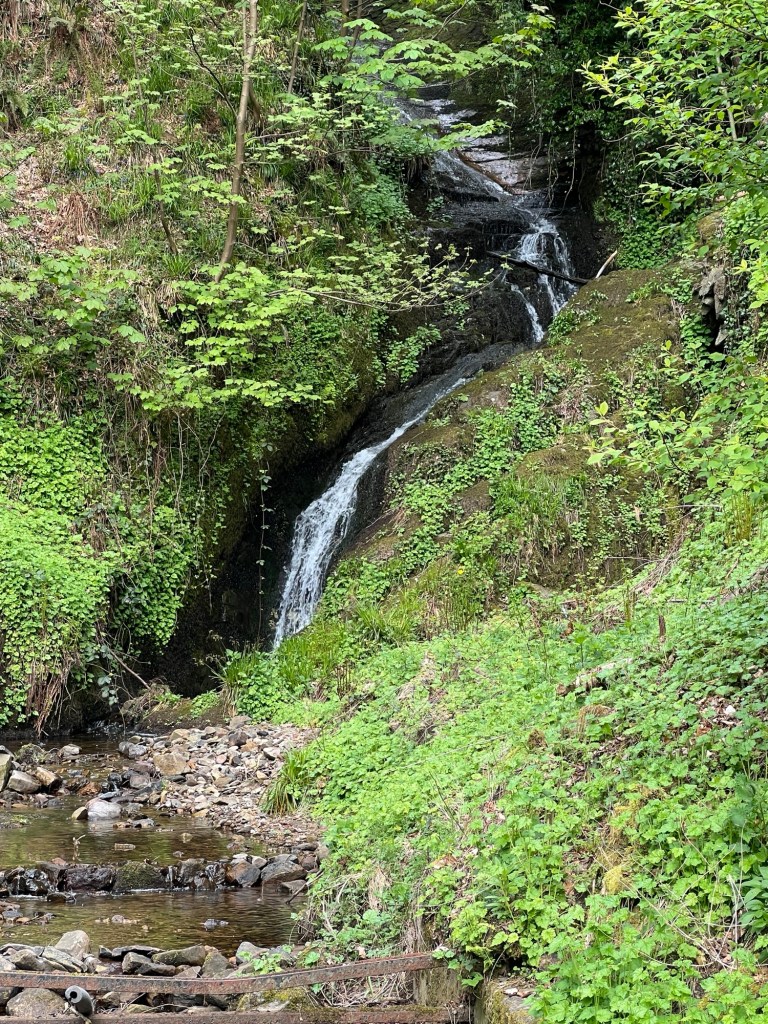
The waterfall behind the distillery. This is the pure water they use in production. No peat is used in this distillery

After our visit and purchases we headed for Loch Lomond.

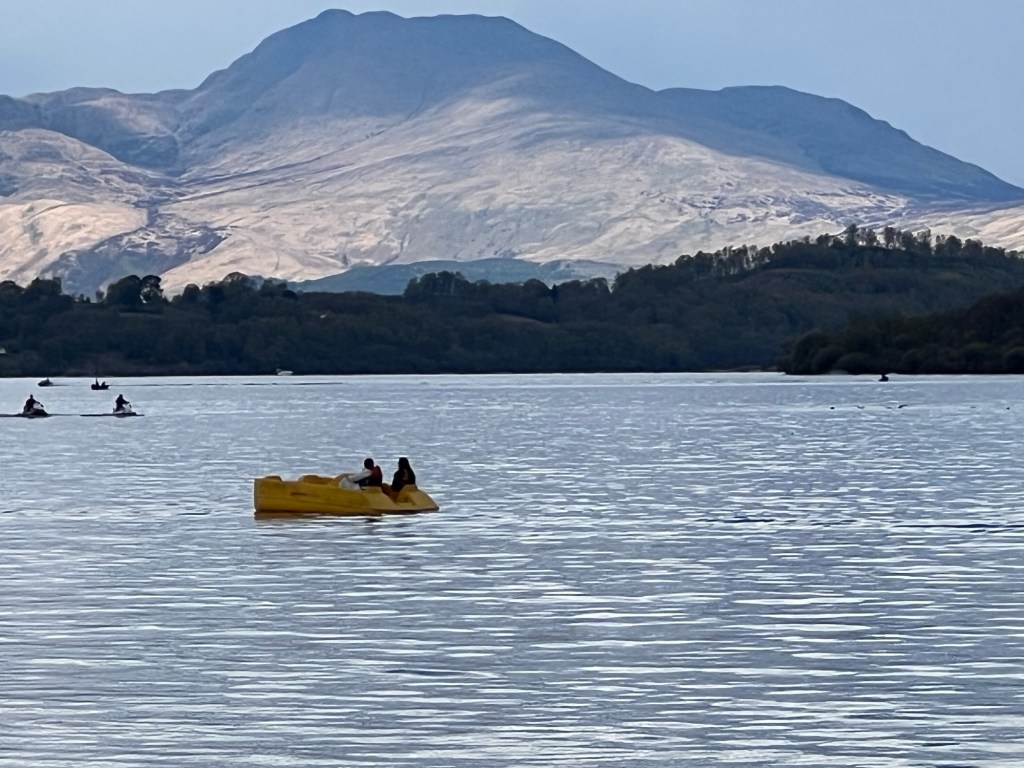
Loch Lomond is a freshwater loch located in the Scottish Highlands. It’s the largest inland stretch of water by surface area in Great Britain, covering about 71 square kilometers (27 square miles). The loch is known for its stunning natural beauty, surrounded by picturesque landscapes, hills, and mountains. It’s a popular destination for outdoor activities like hiking, boating, and wildlife watching. Additionally, the area has cultural significance, with several songs and poems inspired by its beauty, including the famous song “The Bonnie Banks o’ Loch Lomond.”

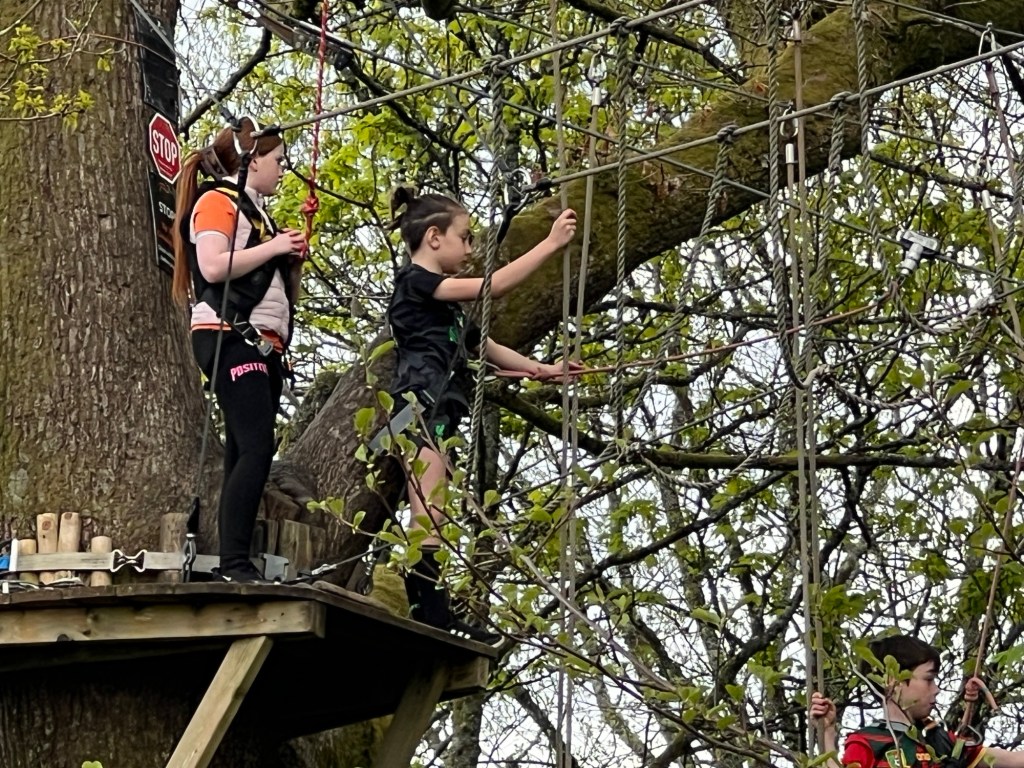
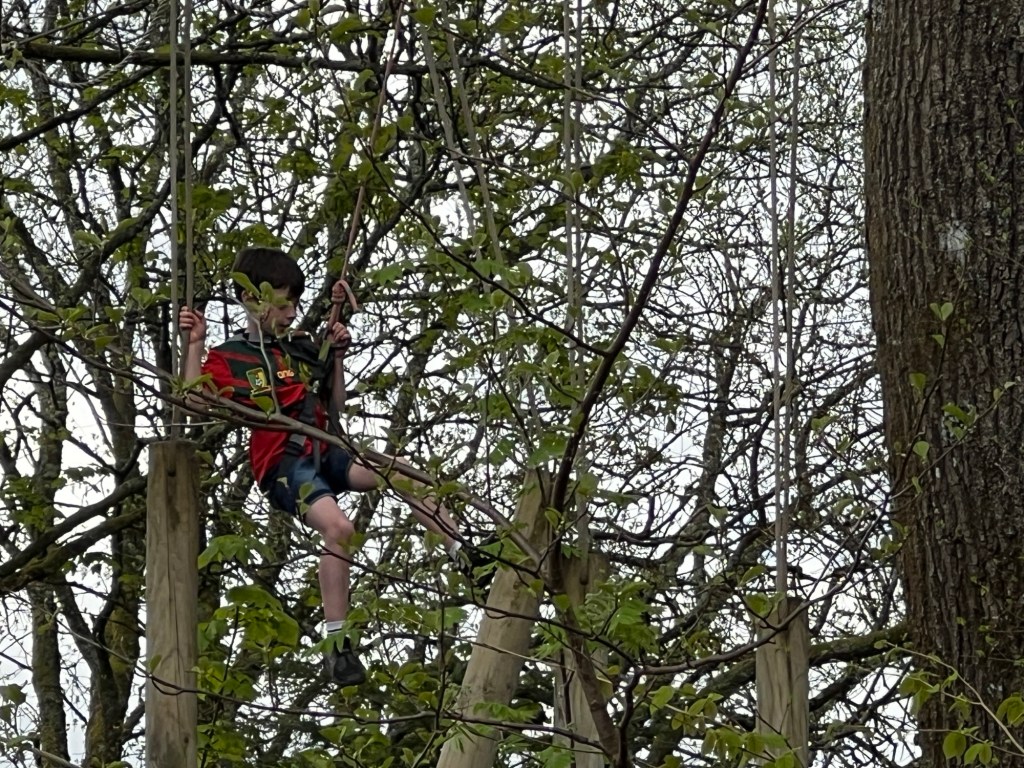
There are shops, refreshment stands and a very extensive aerial playground where kids were being challenged!

And we saw a golden retriever chasing a stick in the water.

We did have a few raindrops before we boarded the bus to return to the ship. And we saw this sailboat from our room. Brr, too cold for me! We depart for Belfast tonight at 10 PM.

Posted in April, Europe, Excursions, Spring 2024 | Leave a comment

Stornoway (Hebrides), UK

April 26, 2024

Sad to realize that we are one week away from the end of our wonderful cruise. We have one more port in Scotland (Glasgow) after today before we head to our remaining ports of Belfast, Dublin, Holyhead, Cork and Plymouth. It has all been great, including the fact that we have had no rain so far. It is cold and windy – today started at 42 degrees which is a bit warmer than yesterday but we did dress for it.We arrived into port at 7 AM. Norm got this shot as we approached the port.

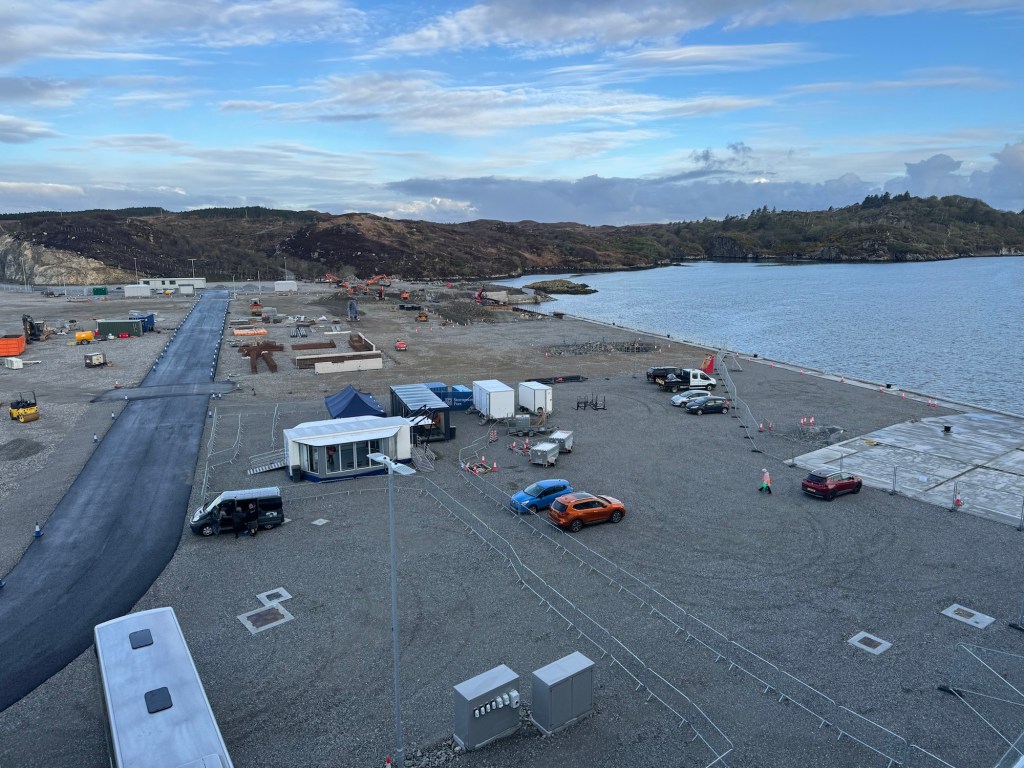
They are just constructing the deep water port here and there is a lot of work still going on. Nice that we didn’t have to tender in.

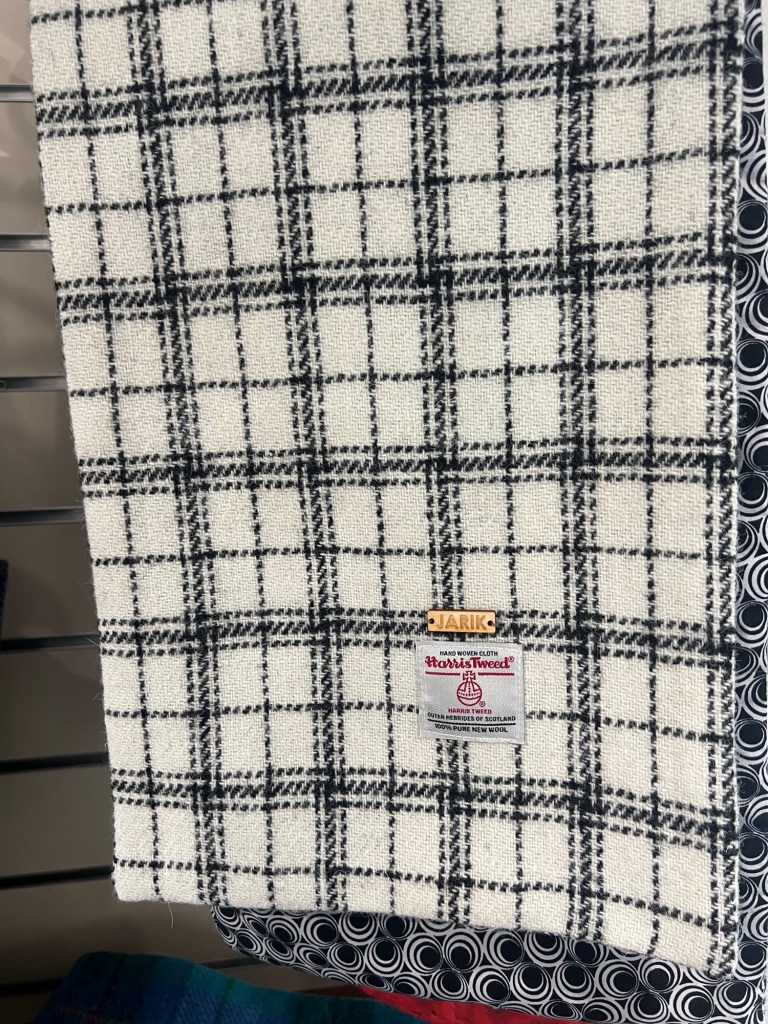
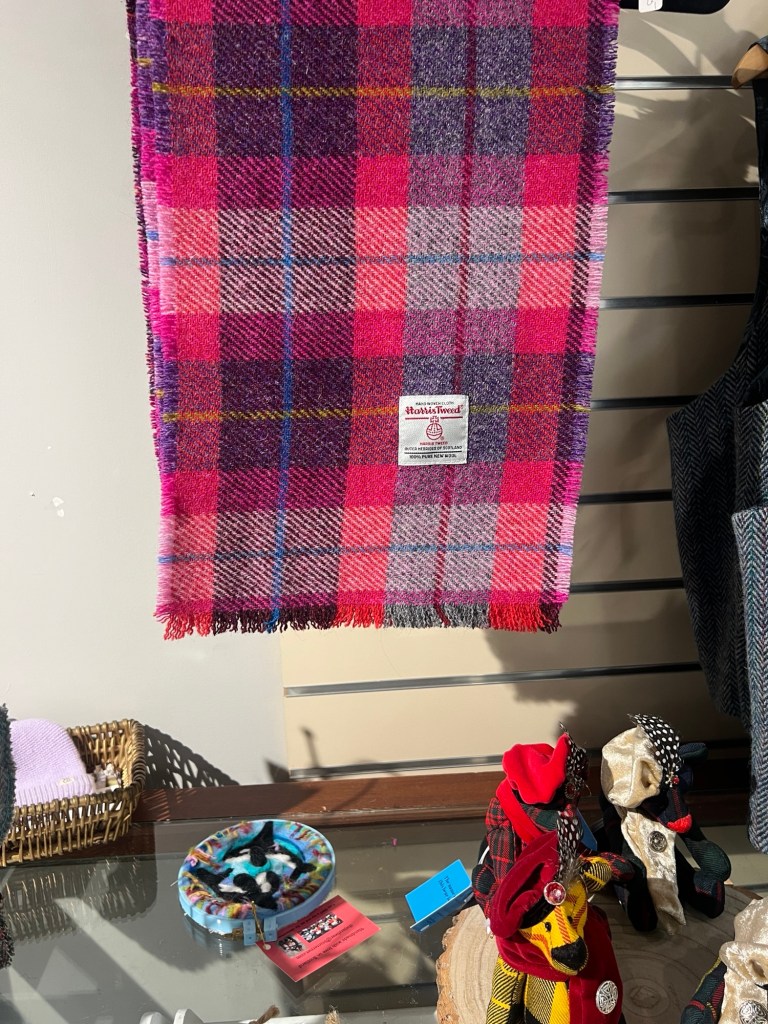
Stornoway is the largest town and port in the Outer Hebrides islands of Scotland. The local population is 8000 people. The town is a center for the manufacture of Harris Tweed and you see items in all of the shops. Harris Tweed must be made from virgin Scottish wool that is woven by hand in the homes of local weavers. These weavers have defended and protected this historic process even in the face of developing technologies.

We took the shuttle into town and decided to walk to the castle first.

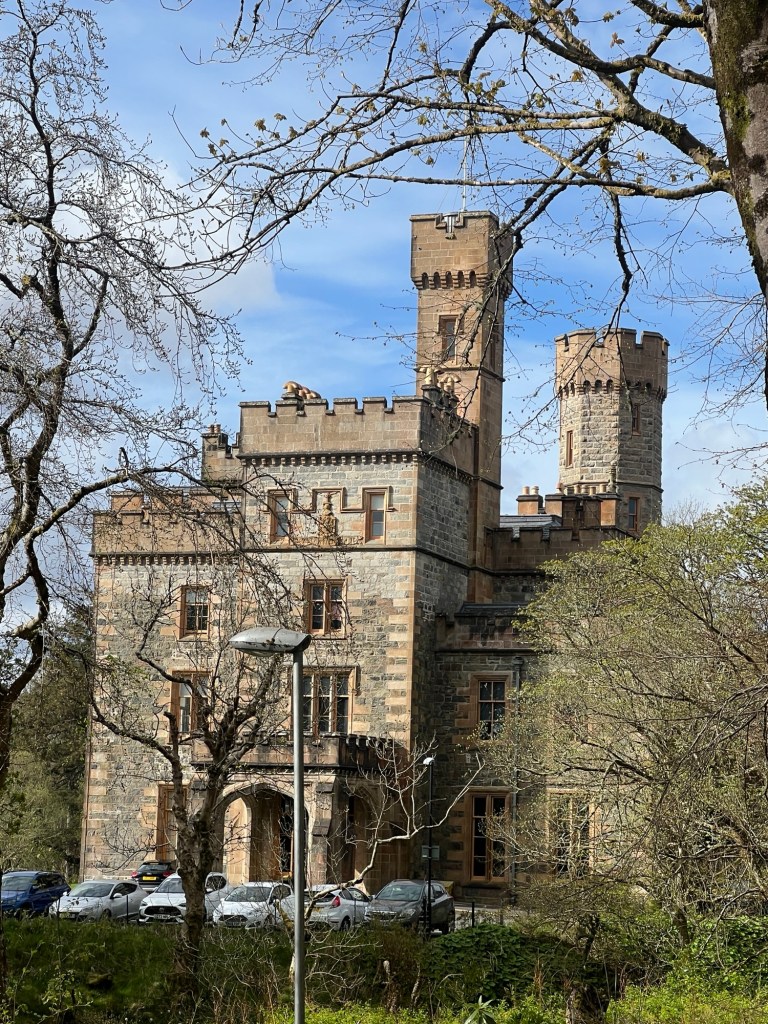
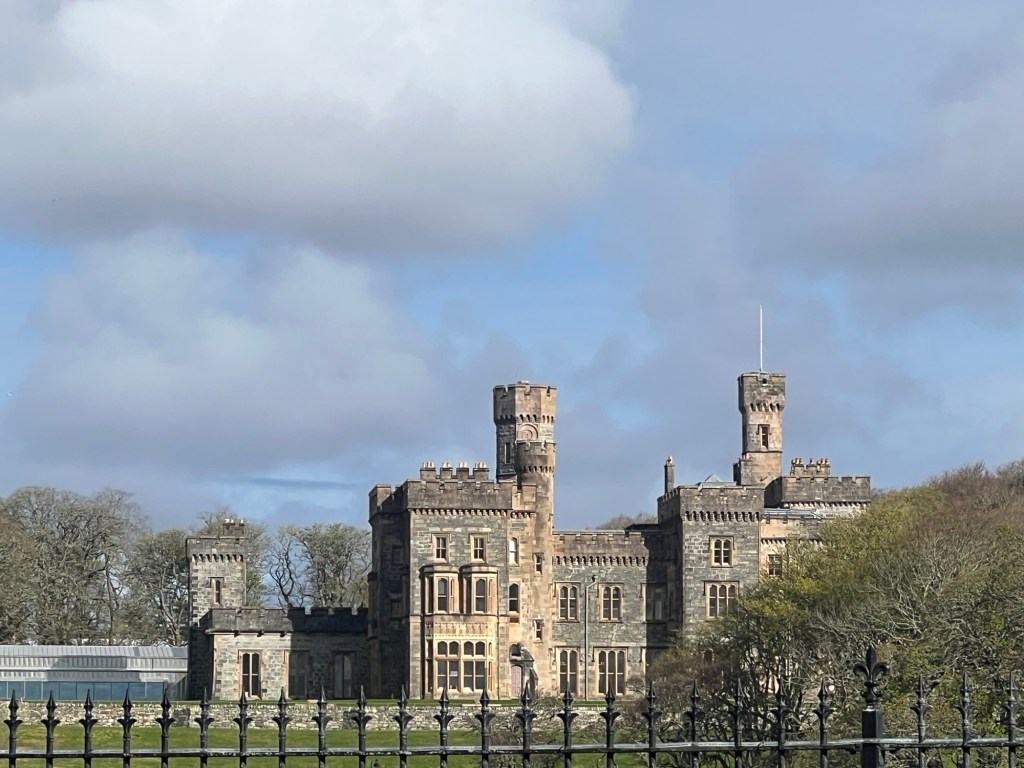
Stornoway is located on the Isle of Lewis in Scotland and is home to Lews Castle. This historic castle overlooks Stornoway and is situated within beautiful grounds. Built in the mid-19th century, it’s known for its stunning architecture and picturesque setting. Today, it serves as a museum, event venue, and luxury accommodation, offering visitors a glimpse into its rich history and breathtaking surroundings.

Lews Castle was constructed between 1844 and 1851. It was designed by the famous architect Charles Wilson in the Scottish Baronial style for Sir James Matheson, a wealthy merchant and owner of the Isle of Lewis. Sir James Matheson used the castle as a residence for himself and his family. The Matheson family had acquired the Isle of Lewis in the early 19th century, primarily due to its lucrative trade in the production of wool and Harris Tweed.

After Sir James Matheson’s death, the castle changed hands several times. It served various purposes over the years, including as a hotel and as accommodation for RAF personnel during World War II.

In the latter half of the 20th century, the castle was used by Lews Castle College as a campus. It housed classrooms, offices, and student accommodation.

In the early 21st century, Lews Castle underwent a significant restoration project. The aim was to preserve its historic features while also transforming it into a luxury hotel, museum, and event venue.

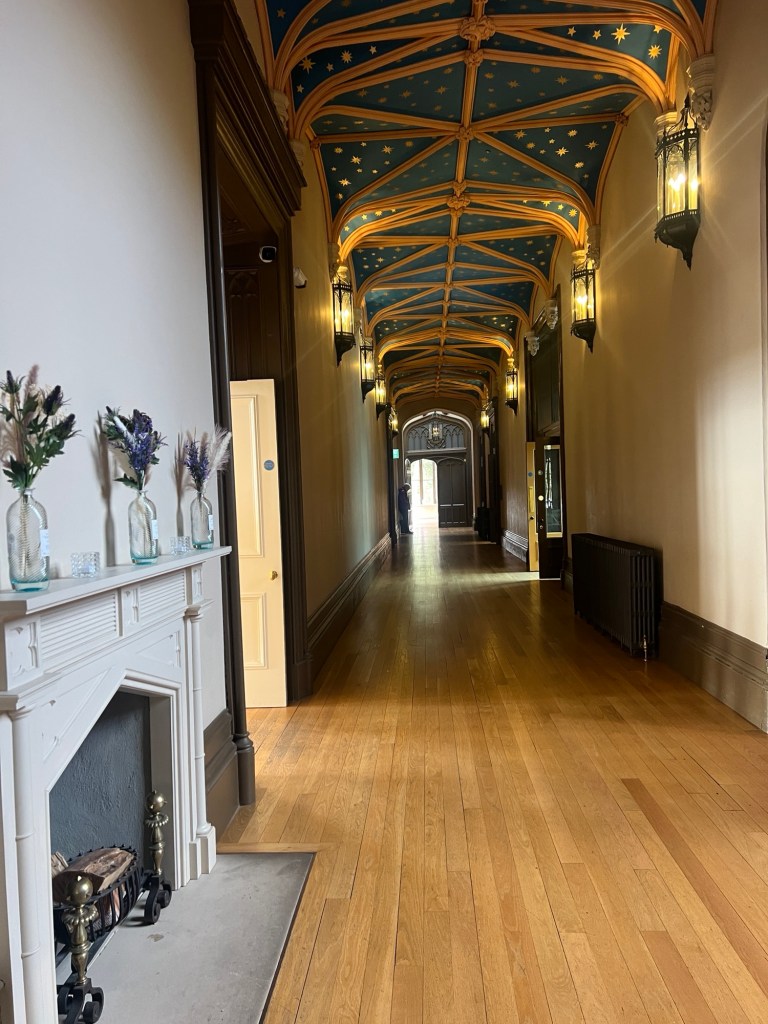
The main level of the castle is almost empty and the main feature includes the many decorative fireplaces.

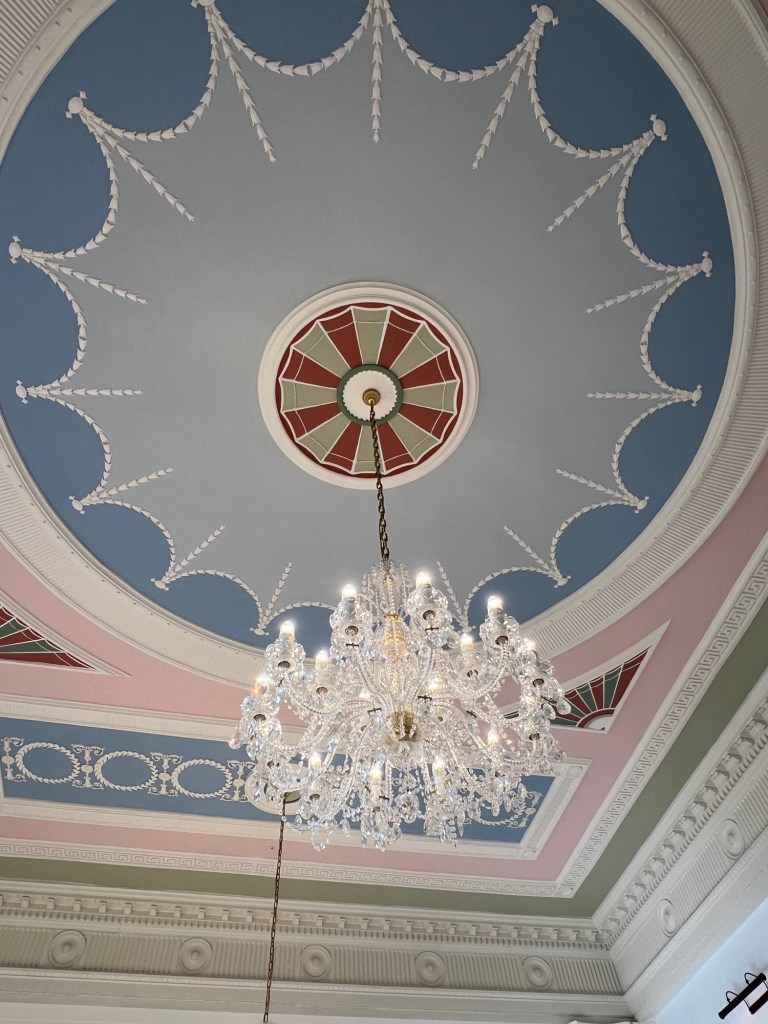
The library was closed for a special event. The upstairs is for guest rooms which of course we couldn’t see. The architecture is interesting.

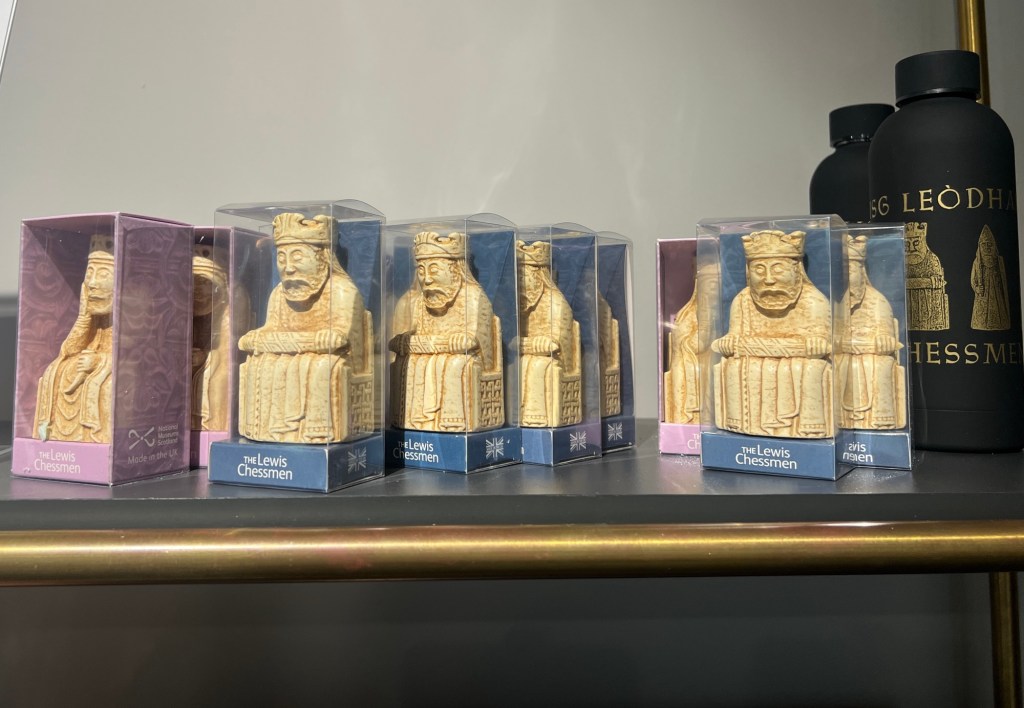
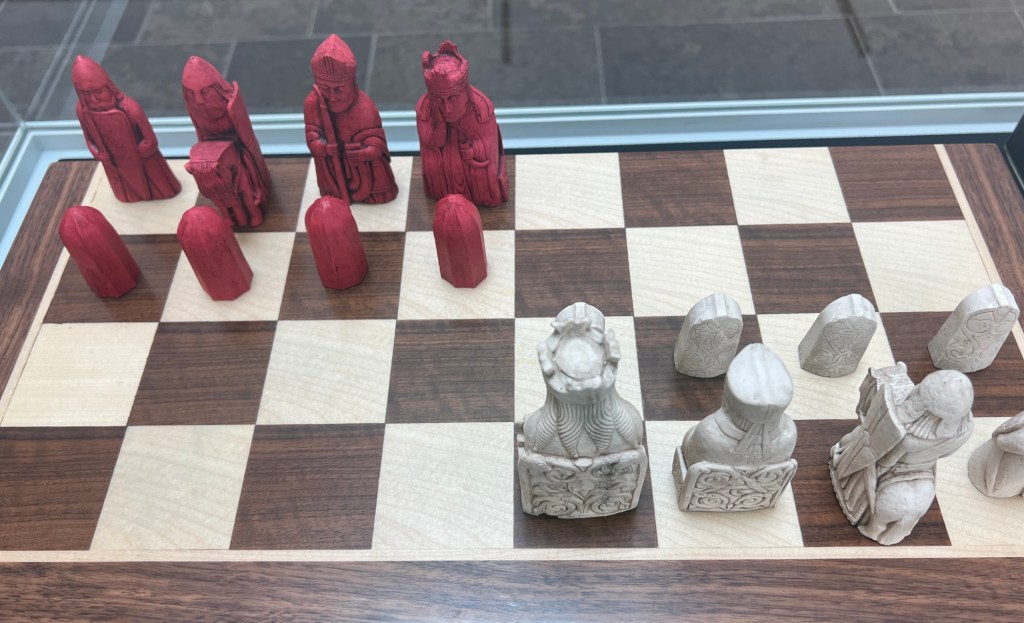
We visited the gift shop and the museum. We saw these chess pieces in Kirkwall but this museum had an extensive explanation of them.

The Lewis Chessmen, not “chess pieces,” are a famous set of medieval chess pieces discovered on the Isle of Lewis in Scotland, near Stornoway. Here’s an overview of their history:The Lewis Chessmen were discovered in 1831 on the Isle of Lewis, in the Outer Hebrides of Scotland, not far from Stornoway. They were found buried in a sand dune, possibly hidden by a merchant or trader for safekeeping.

The chessmen are believed to have been made in Norway, likely in the late 12th or early 13th century, during the Viking Age. They are carved from walrus ivory and whale teeth, with intricate details and craftsmanship.

The Lewis Chessmen consist of 93 pieces in total, including kings, queens, bishops, knights, rooks, and pawns. They are known for their expressive faces and elaborate costumes, reflecting the style of medieval Norse art.

The chessmen were initially owned by the landowner who discovered them, and later they were acquired by the British Museum and the National Museum of Scotland. Today, they are divided between these two institutions, with the majority held by the British Museum in London.

The Lewis Chessmen are regarded as one of the most significant artifacts from the medieval period. They provide valuable insights into the history of chess, as well as medieval art and culture in Scandinavia and the British Isles.

Replicas of the Lewis Chessmen are available for purchase in the gift shop.

Other interesting parts of the museum exhibits were the explanations of the Gaelic language

Gaelic, also known as Scottish Gaelic or Gàidhlig, is a Celtic language spoken primarily in Scotland, particularly in the Highlands and the Western Isles, including places like here in Stornoway on the Isle of Lewis. It only uses 18 letters and uses a lot of specific punctuation marks which makes it hard for us to read or understand! It was once the dominant language in this part of Scotland.

This is a painted whale’s eardrum!
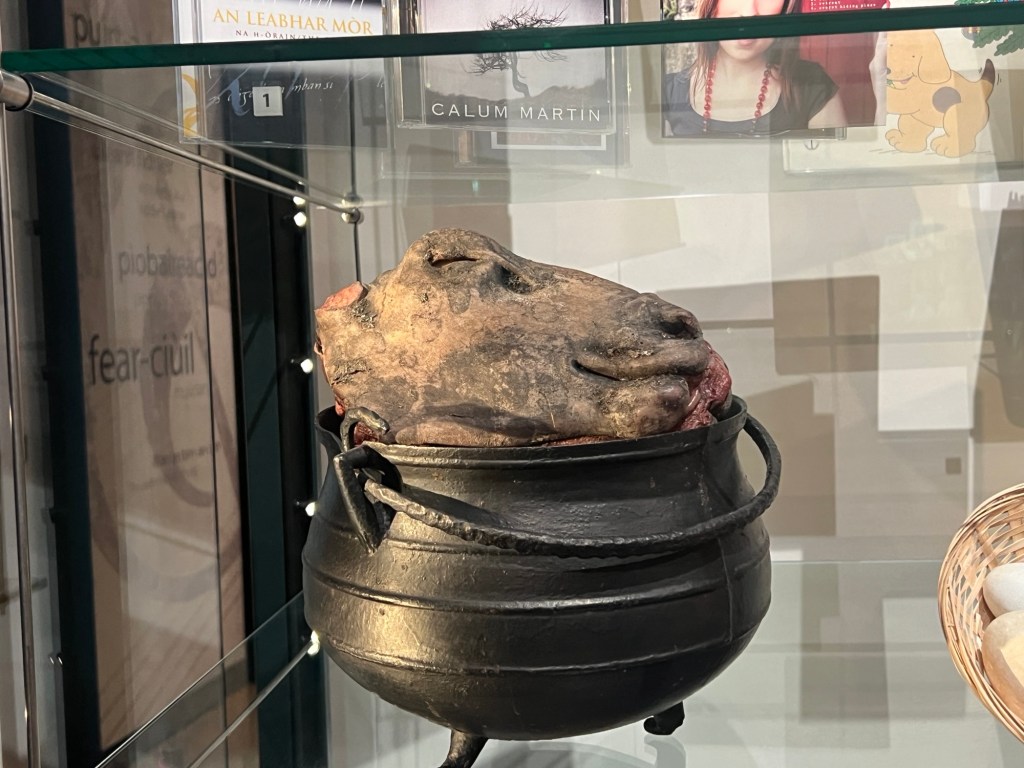
Sheep’s head in a cooking pot
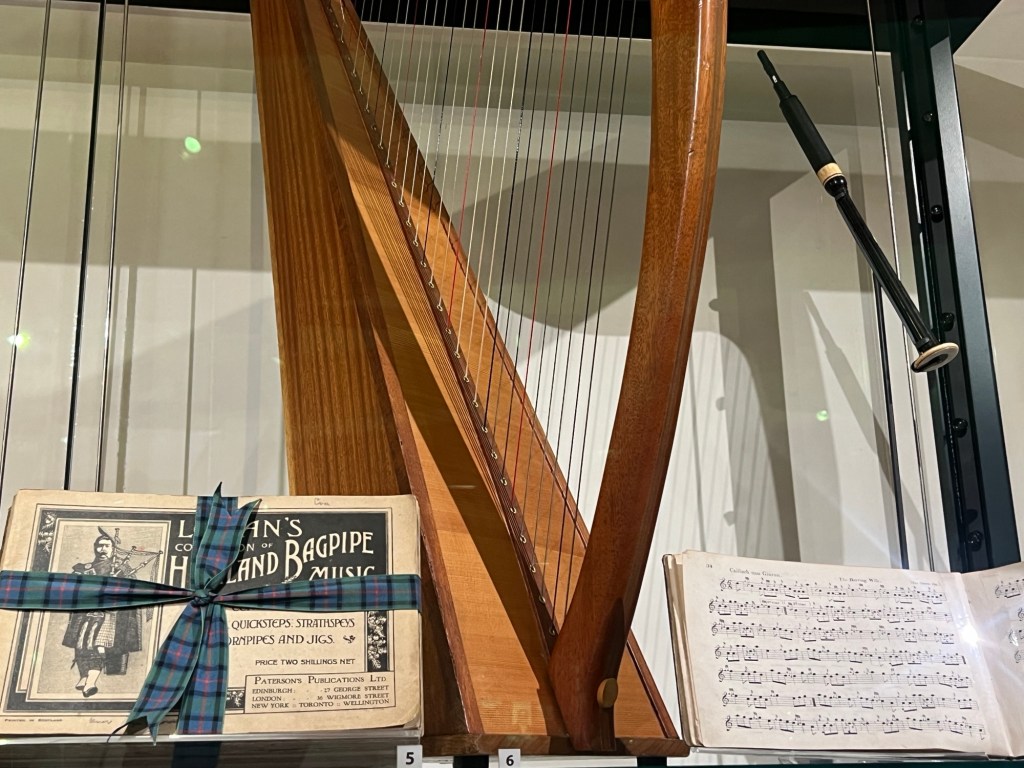
Common instruments

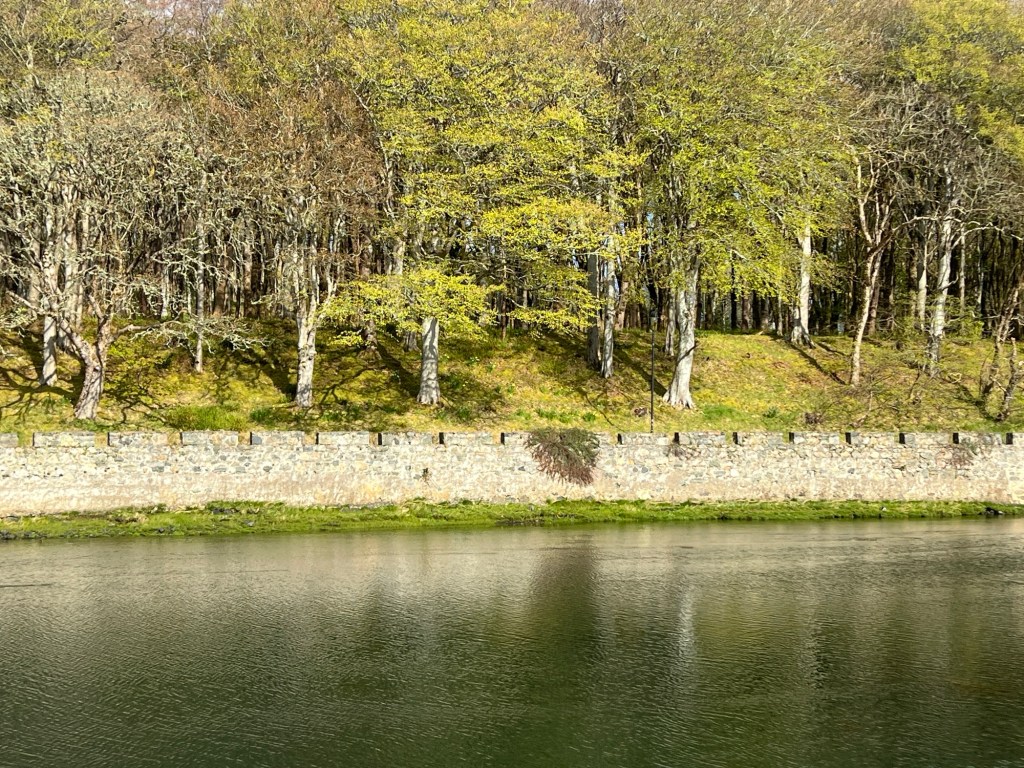
We walked through the extensive grounds.

We wandered through town and went into a few shops. The town is quite small but charming.

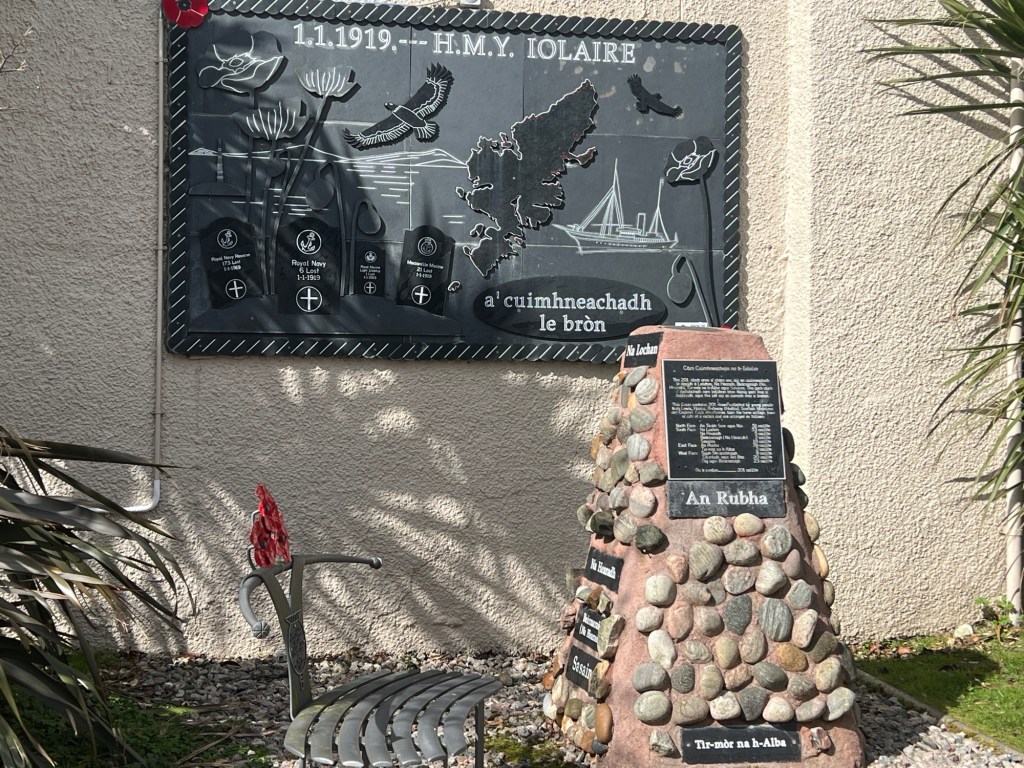
This is a monument in memory of the Iolaire disaster that occurred on January 1, 1919, near here.

The Iolaire was a yacht requisitioned by the Royal Navy during World War I. On New Year’s Eve 1918, it set sail from Kyle of Lochalsh on the west coast of Scotland, bound for Stornoway, carrying returning servicemen. The Iolaire approached Stornoway Harbor in the early hours of January 1, 1919, it struck the notorious rocks known as the Beasts of Holm, just a short distance from shore. Despite being so close to safety, the vessel foundered, and the majority of those on board died. Only 80 of the 280 on board survived.

This is the outline of the boat, better seen in low tide

After a nice day, we returned to the ship for a 2 PM departure. We will host a cocktail party for our trivia team tonight. Pictures will be added tomorrow.

Posted in April, Europe, Spring 2024 | 2 Comments

Kirkwall (Orkney Islands), UK

April 25, 2024

Kirkwall is the main settlement of the Northern Isles and capital of Orkney, an archipelago in the north of Scotland. When we woke up this morning, it was 39 degrees so it promised to be a chilly day. We dressed for it!

We saw this castle on the way into the port and fortunately we were at a dock. A Seabourn ship had to tender their passengers ashore.

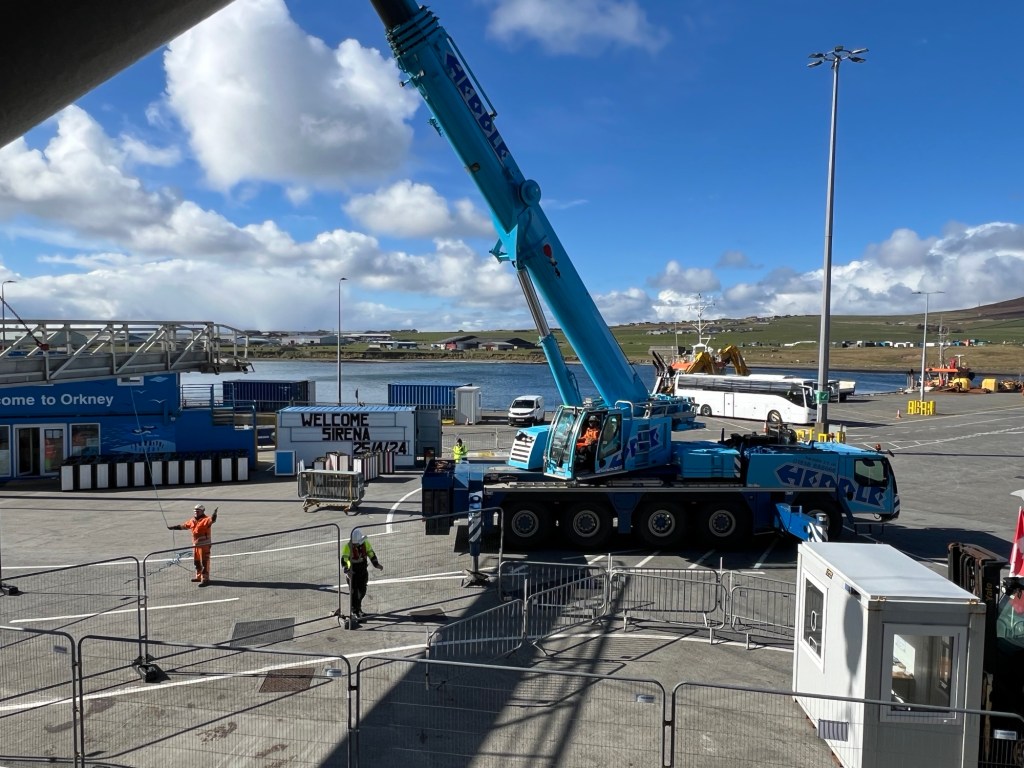
We watched as the local port workers attached the gangway. Quite an operation!

We took the first shuttle into town and stopped at a small local craft market first. The people were delightful to talk with and we learned that a ship couldn’t make it in yesterday because of wind so we felt lucky. There are many sheep on the hillsides but no trees at all due to the harsh winds.

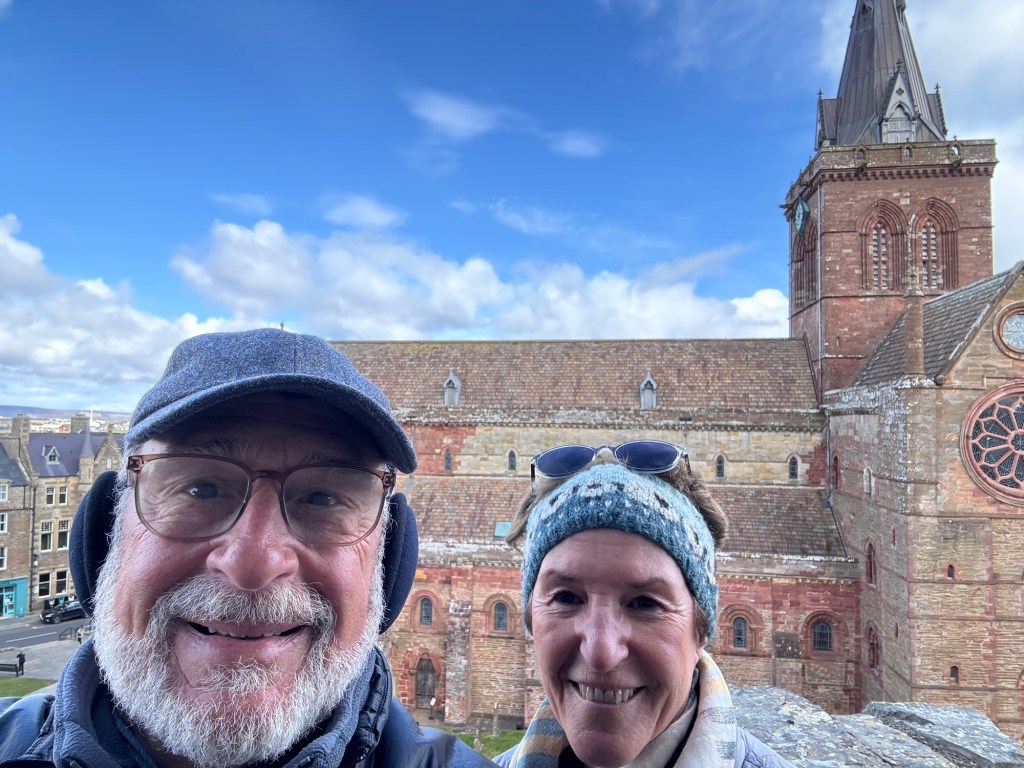
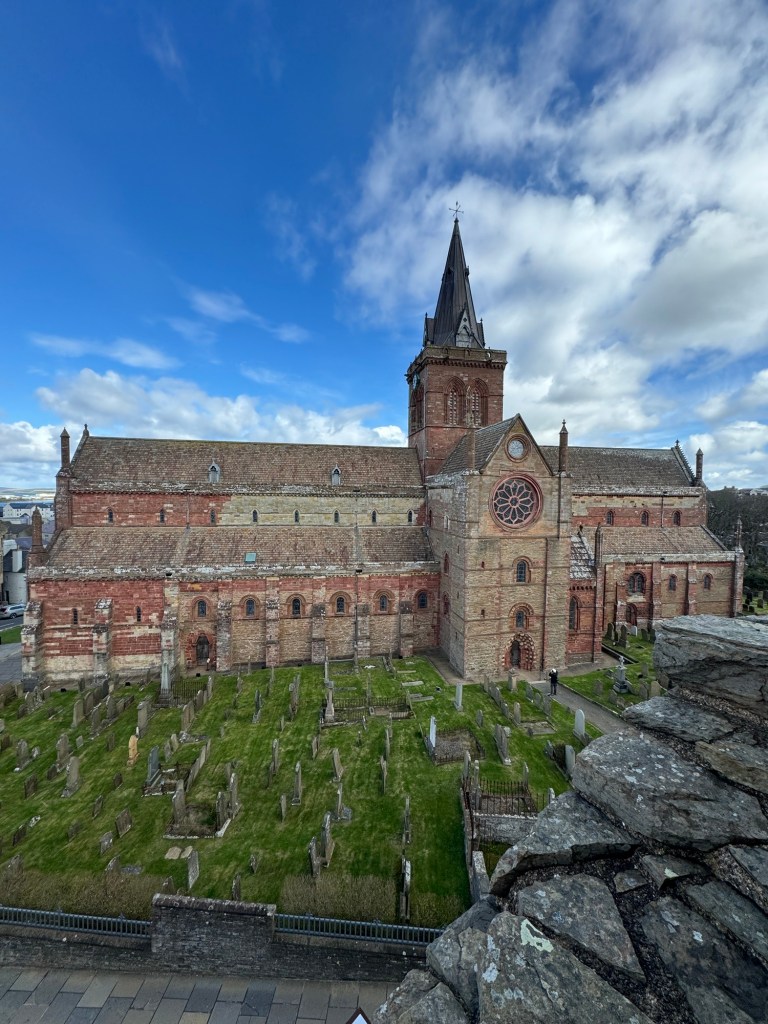
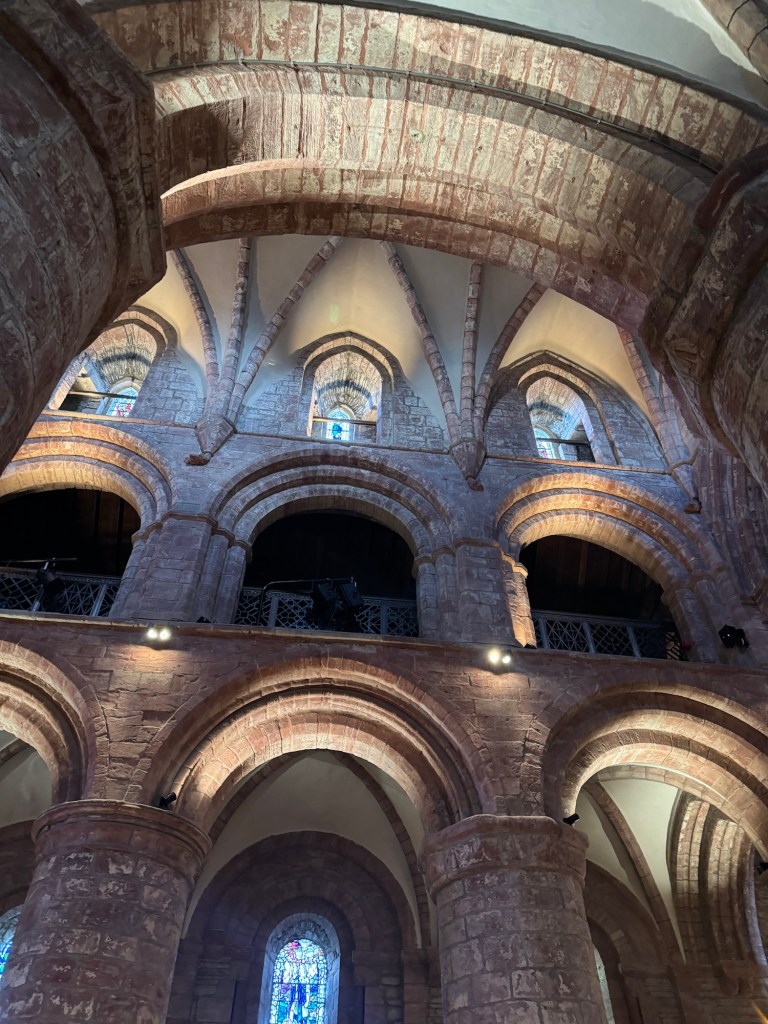
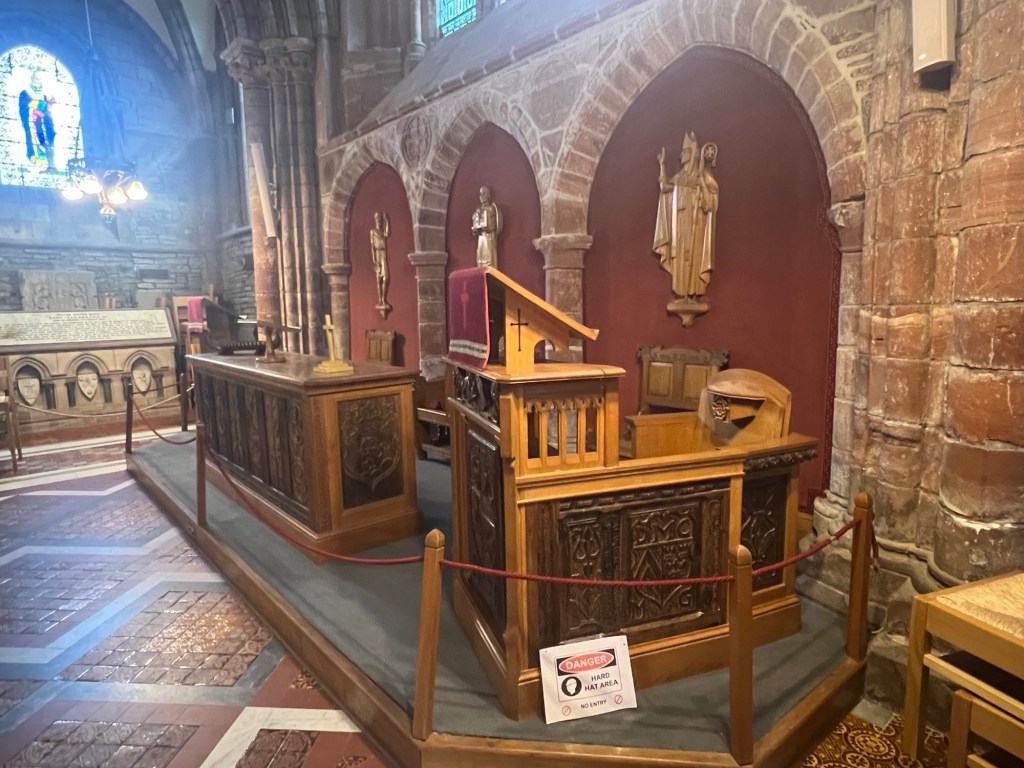
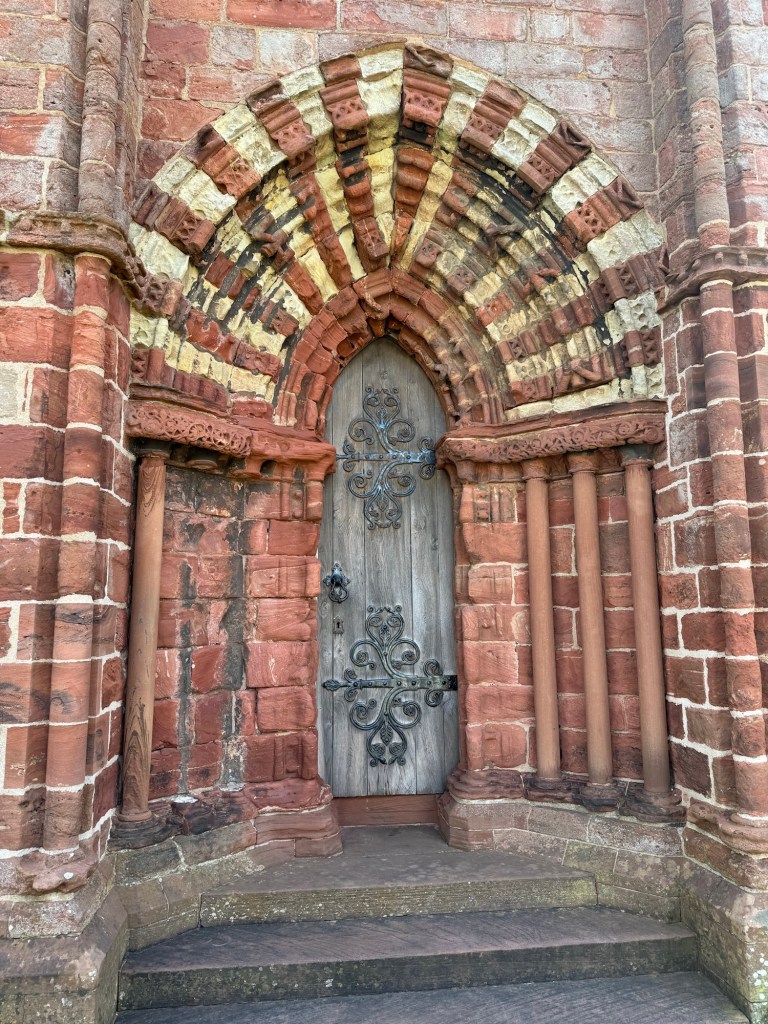
Our first stop was the magnificent St. Magnus Cathedral which was founded in 1137. It has a Church of Scotland congregation and by arrangement can be used by any Christian denomination.

Magnus was the Earl of Orkney in the early 1100s. He shared the Earldom with his cousin Hakon but they disagreed so they held a meeting on the island of Egilsay. Hakon broke the agreement they made to bring 2 ships and brought 8. Rather than kill Magnus himself, Hakon ordered his cook to do the deed. Magnus dies praying, killed by an axe blow to his head. Stories grew of miracles at his grave and people began to believe he was a holy man. His nephew came from Norway to claim his uncle’s earldom and promised to build a place of pilgrimage in honor of Magnus. Both are saints and their remains lie within the walls of the choir.

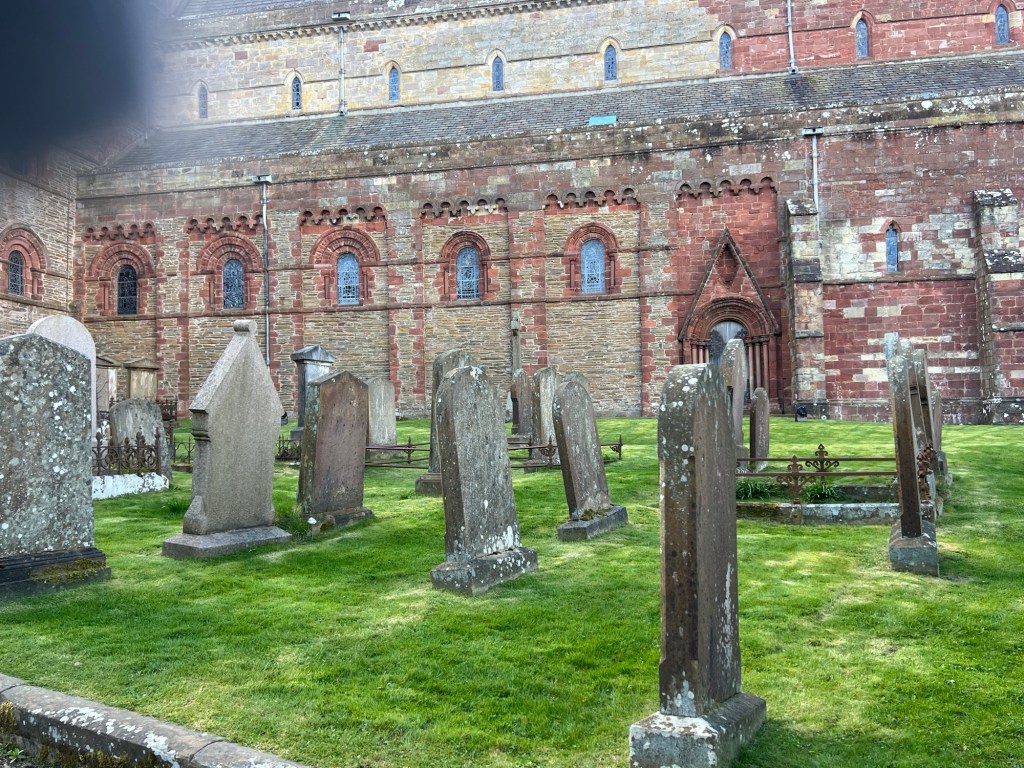
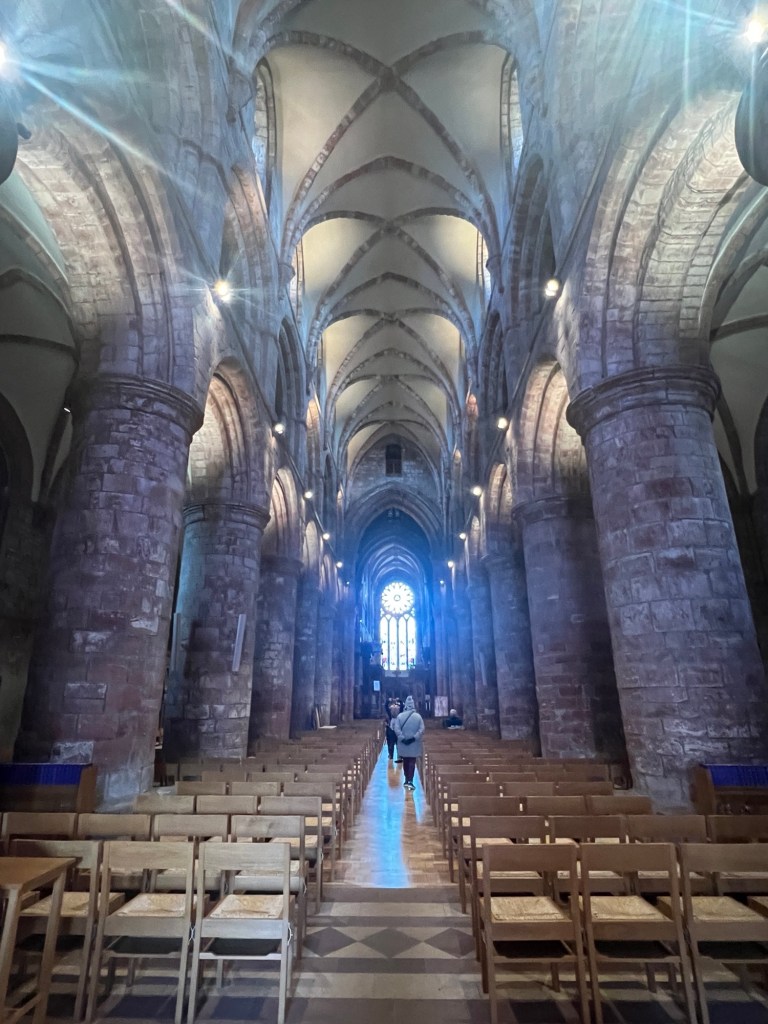
This cathedral is unlike any we have seen. Known as “the Light of the North”, it is one of the finest examples of medieval architecture to be found in Britain. It is made of red sandstone. The building has moved slightly westwards over the years creating some obviously leaning pillars which is almost hard to believe because they are huge.

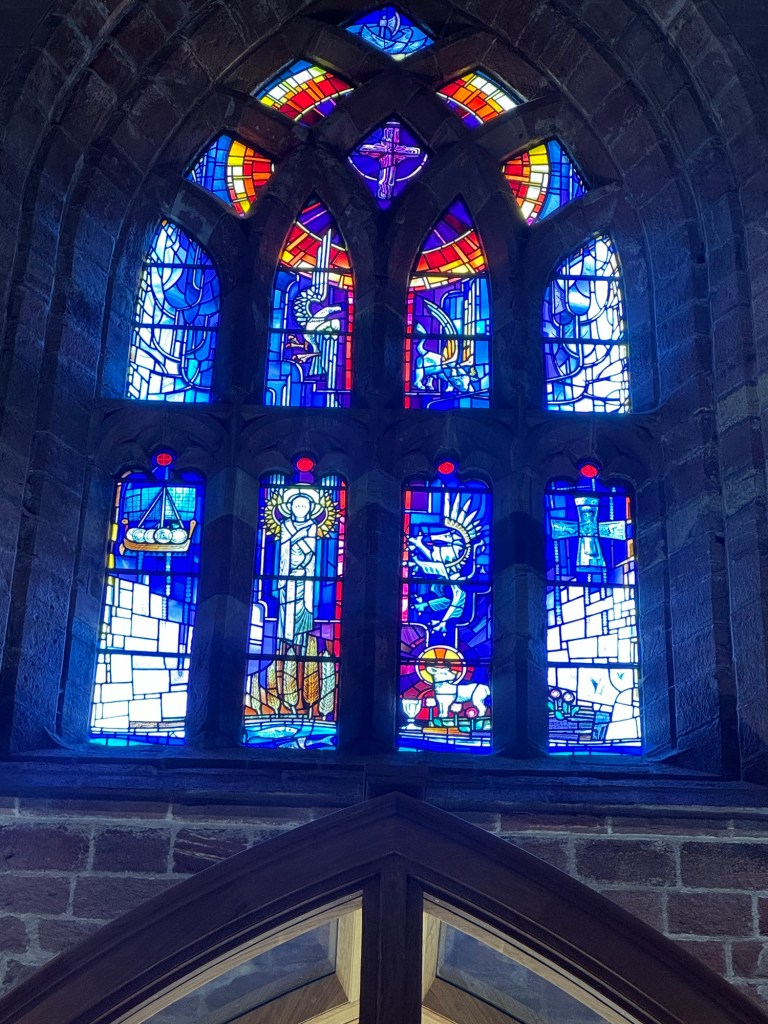
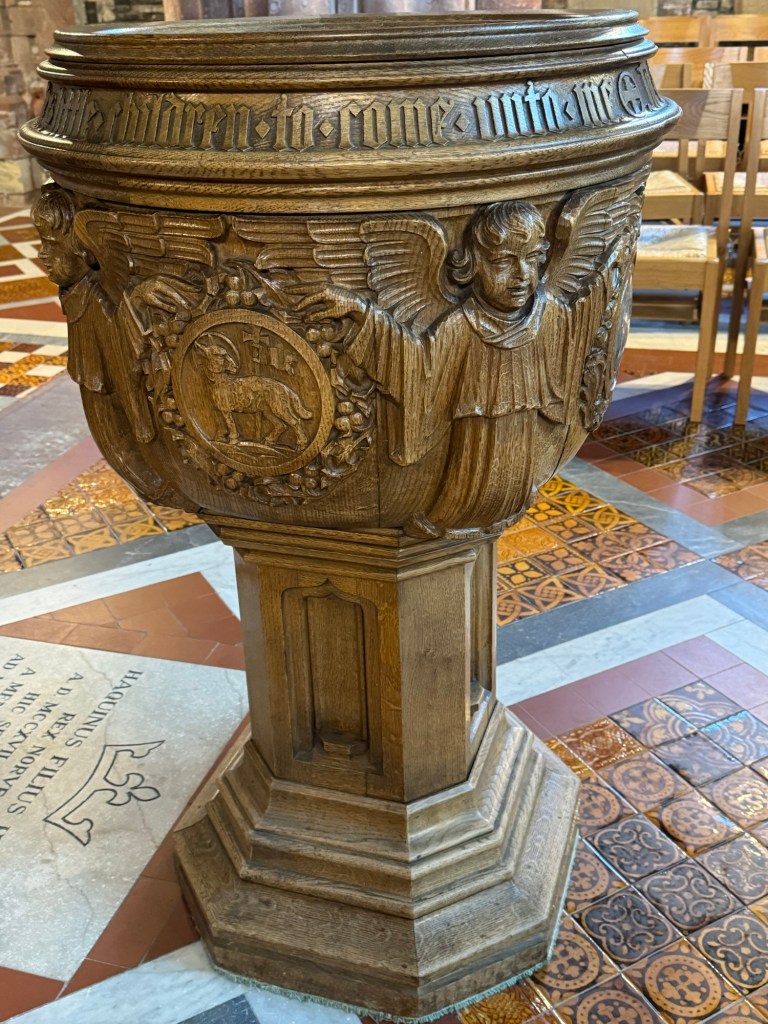
The stained glass was designed in the 1920s and they depict a variety of saints and biblical figures as well as characters from Orkney’s Norse past.
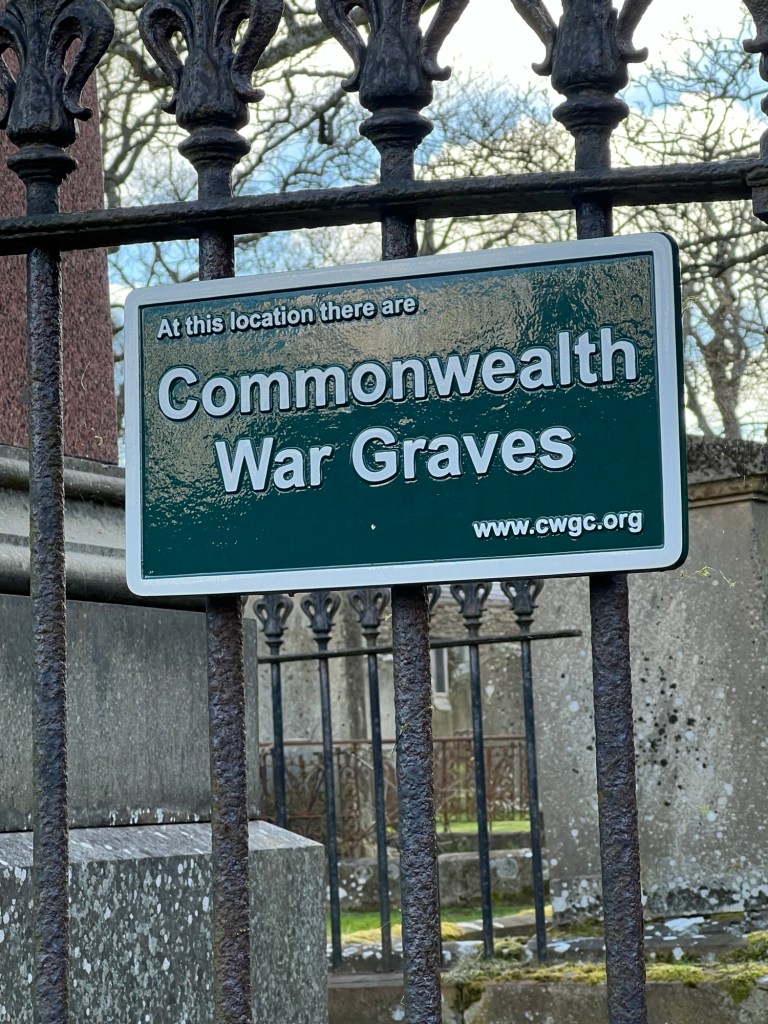
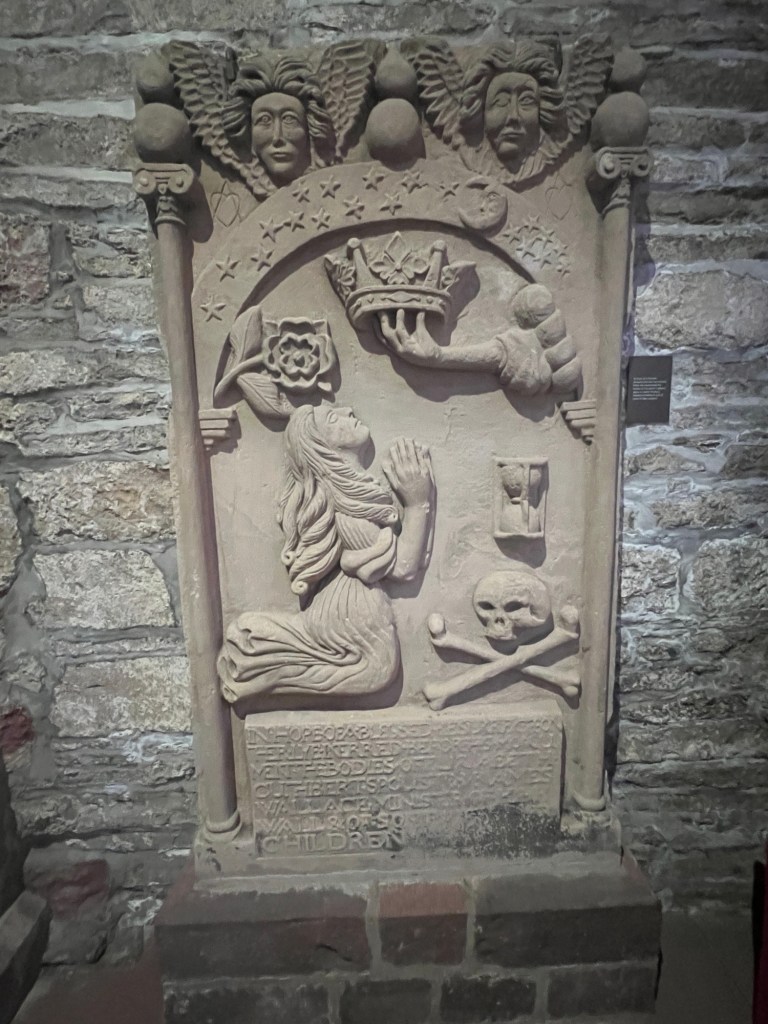
Many examples of headstones line the walls. These decorated stones once covered burials in the nave but the remains have been exhumed and reburied in the graveyard. The stones contain many reminders of death such as skulls and crossbones.
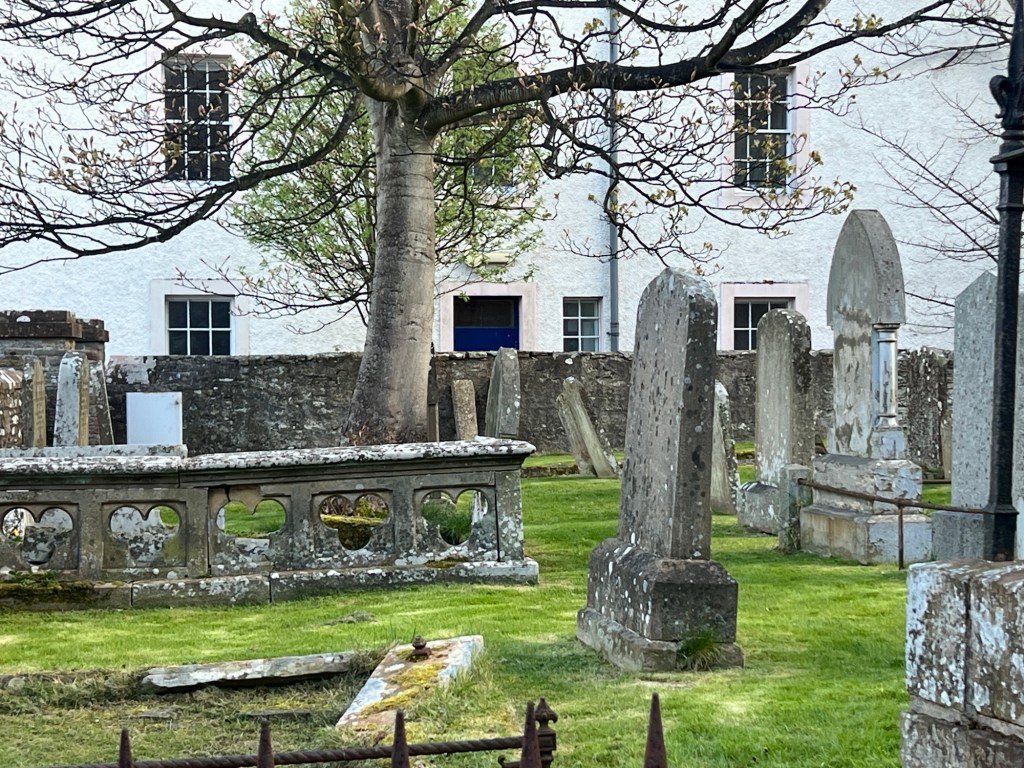
This is the memorial to Dr. John Rae, an employee of the Hudson’s Bay Company, explorer of the Canadian Arctic and discoverer of the Northwest Passage. He is buried in the cathedral graveyard

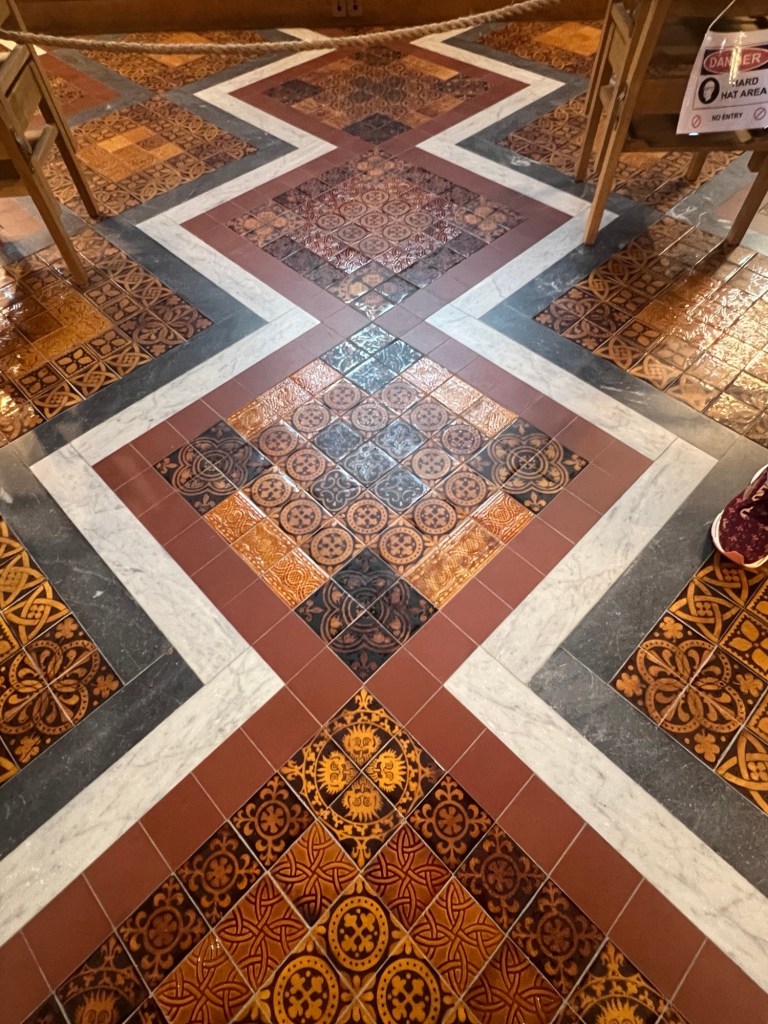
There is so much to look at in this cathedral – we spent quite a long time and didn’t even see everything.

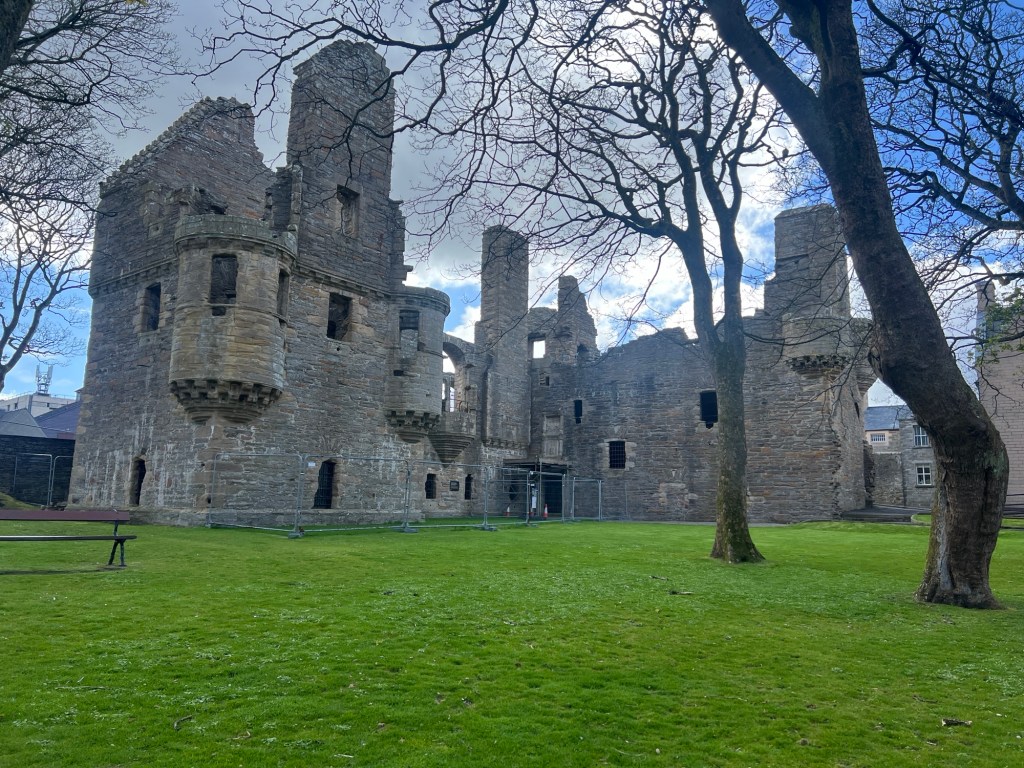
After touring the cathedral, we headed to the Earls’s and Bishop’s palaces. The Earl’s palace is under construction so we could not enter it. Here is a picture of it.

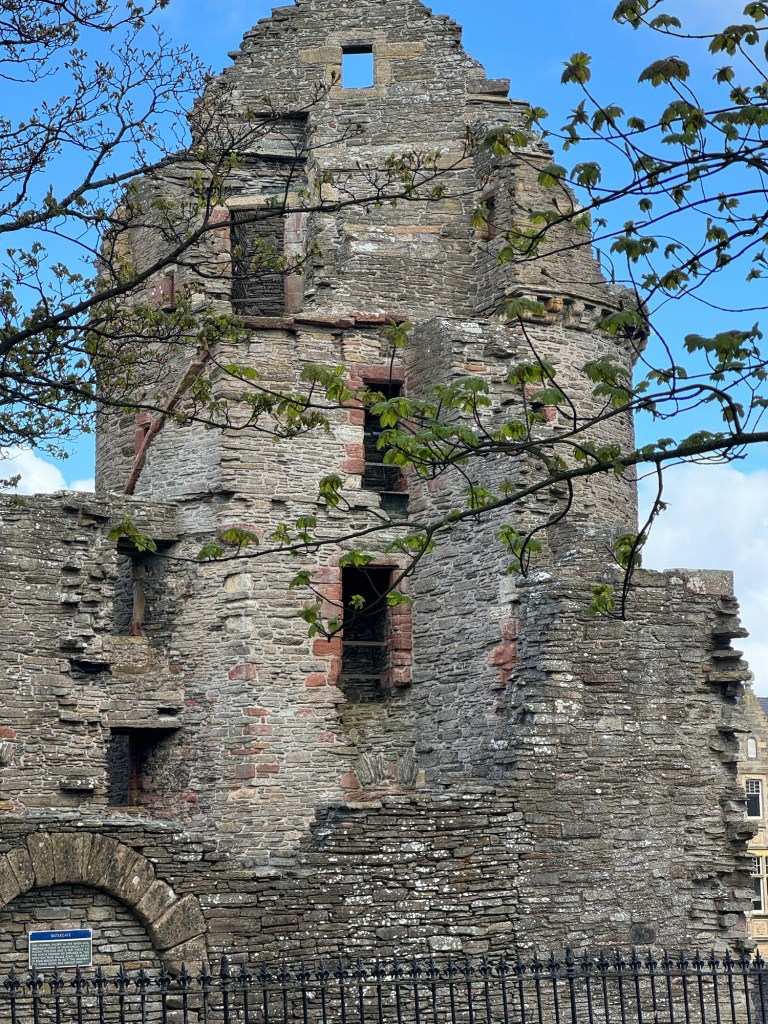
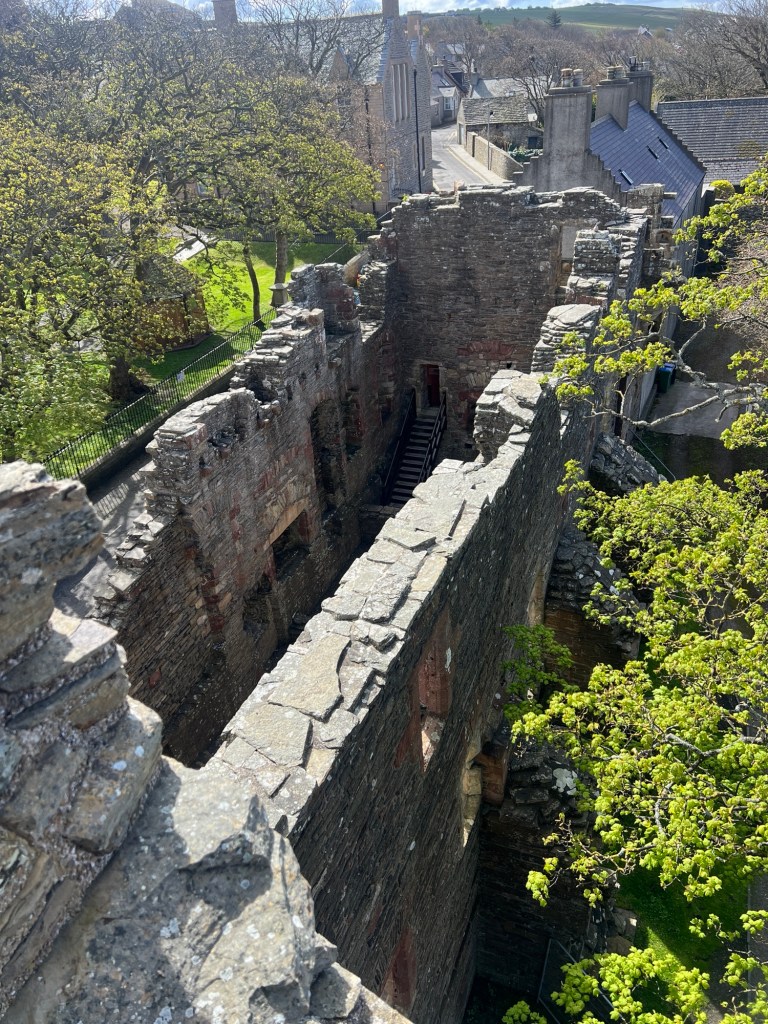
We did go to the Bishop’s palace.

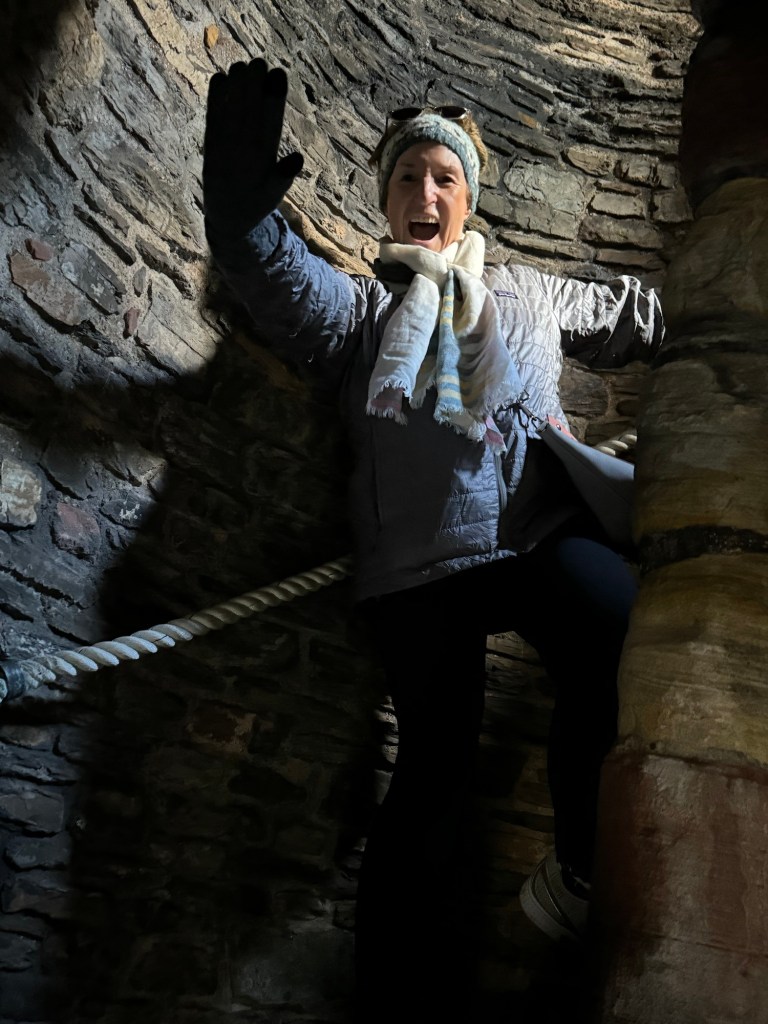
We climbed up into the tower. It was a very windy and steep stairway – here’s the view.

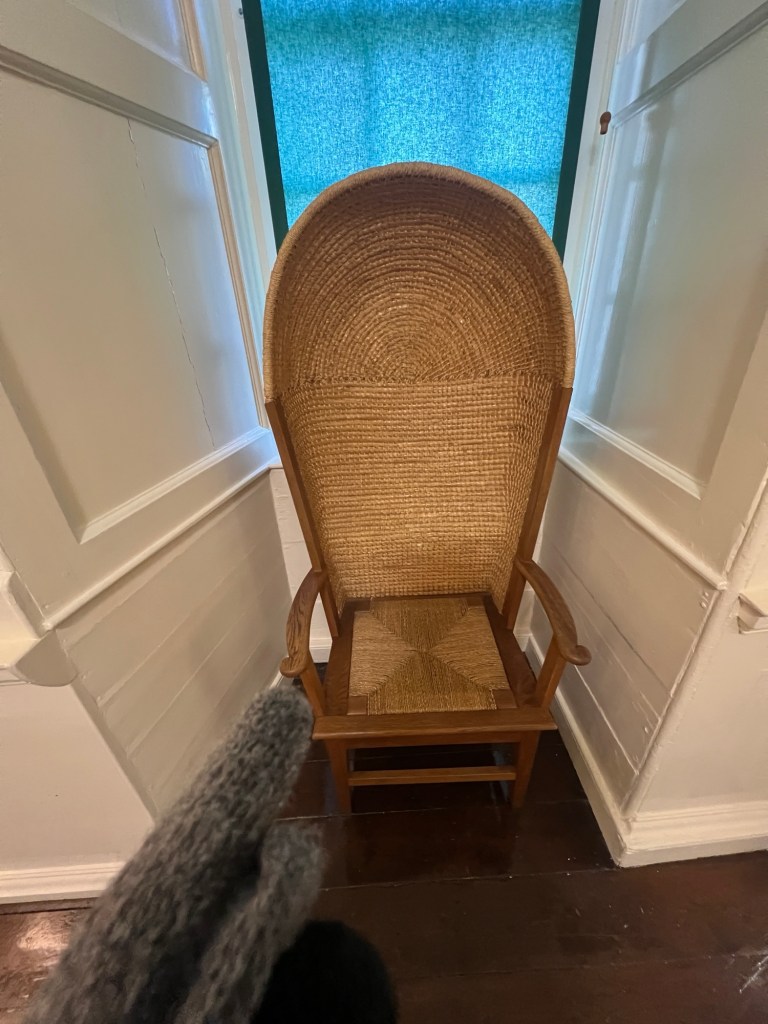
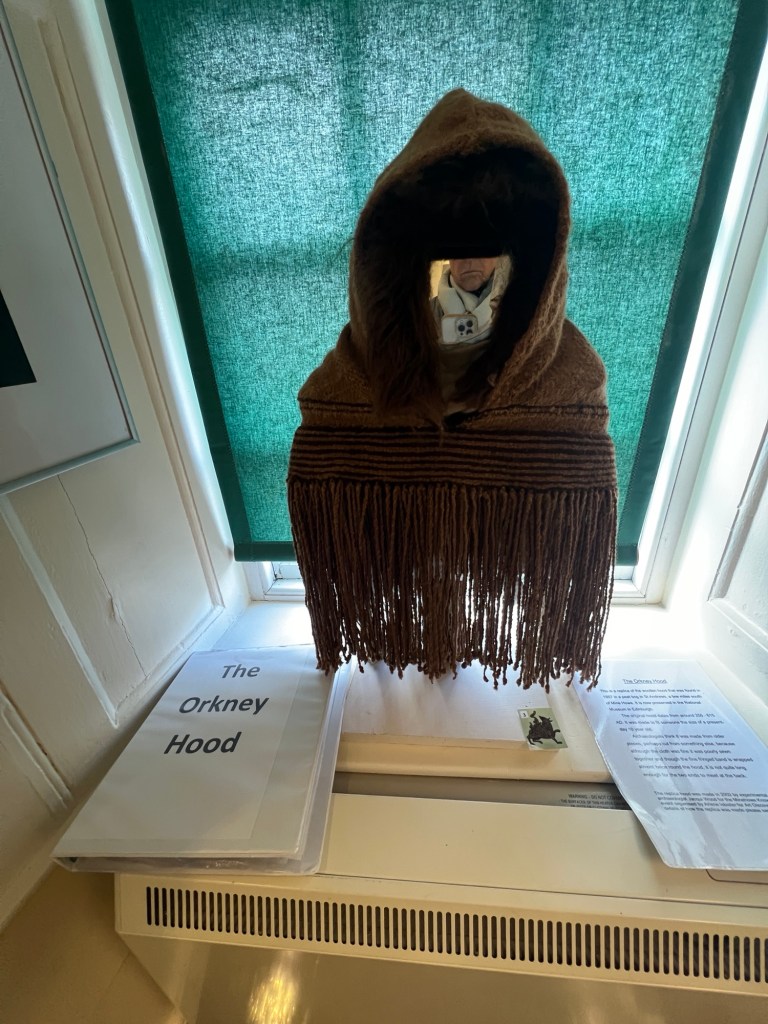
Our next stop was the Orkney Museum in Tankerness House. We were surprised by the number of artifacts from the history of the Orkney Islands that were housed in this small museum. Very interesting visit.

Christening gown and caps
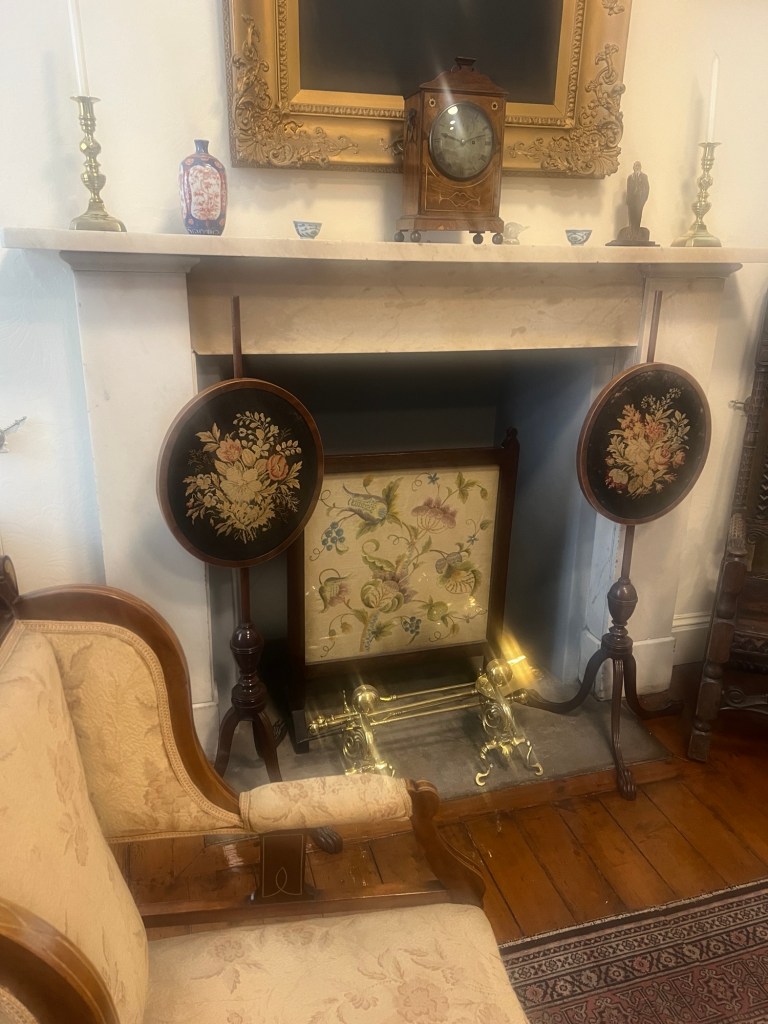
More fireplace screens

We went outside to the delightful walled garden.

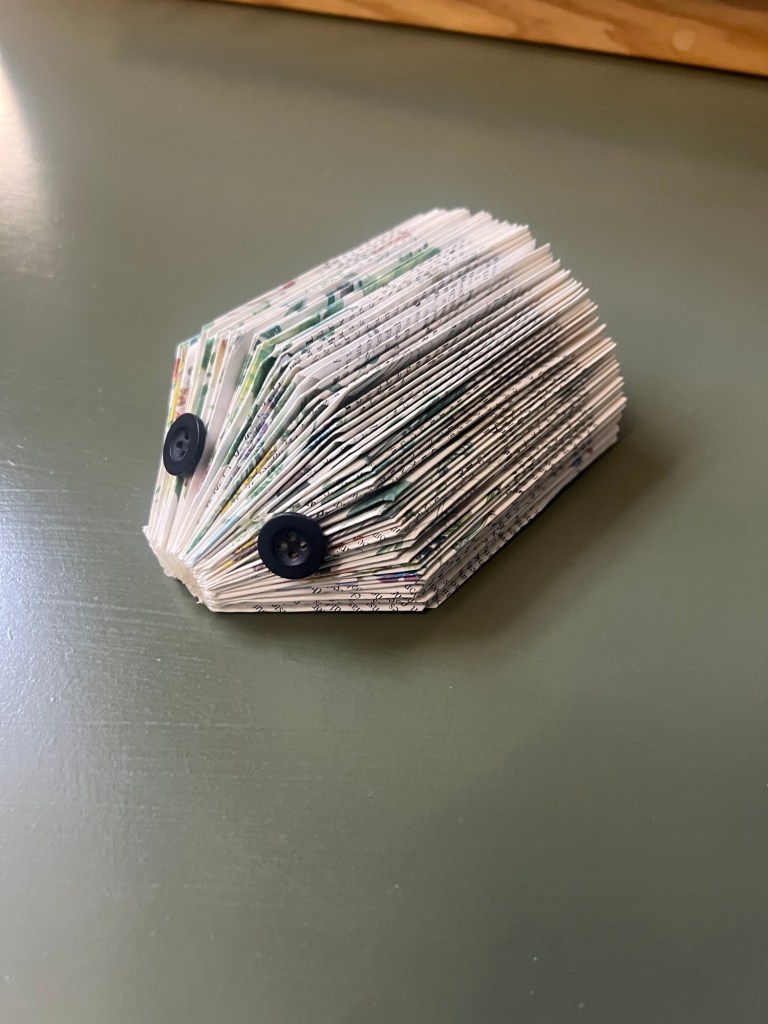
We visited the library and warmed up – there was fast WiFi too! There was a big book sale going on and if we had room in our luggage, I would have bought some. There was a 1984 cookbook with a young Martha Stewart on the cover for the wee price of 1 pound!

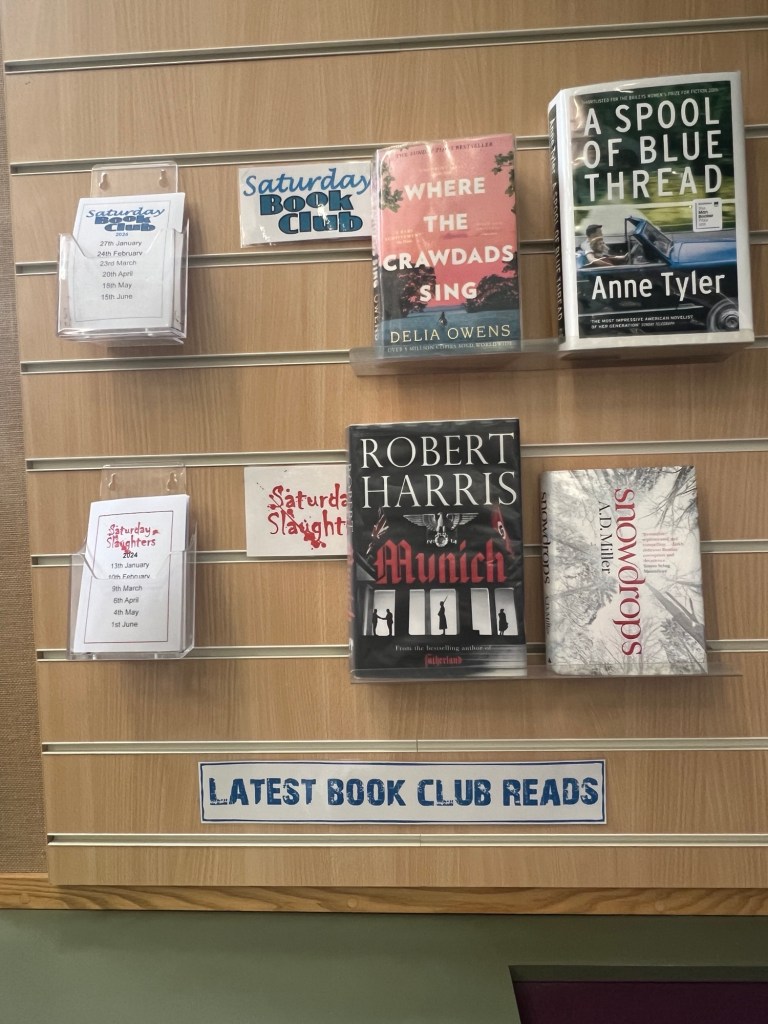
They have two book clubs and show the featured books.

We decided to try to find a local cafe for lunch before returning to the ship. We walked around the streets and enjoyed the small streets.

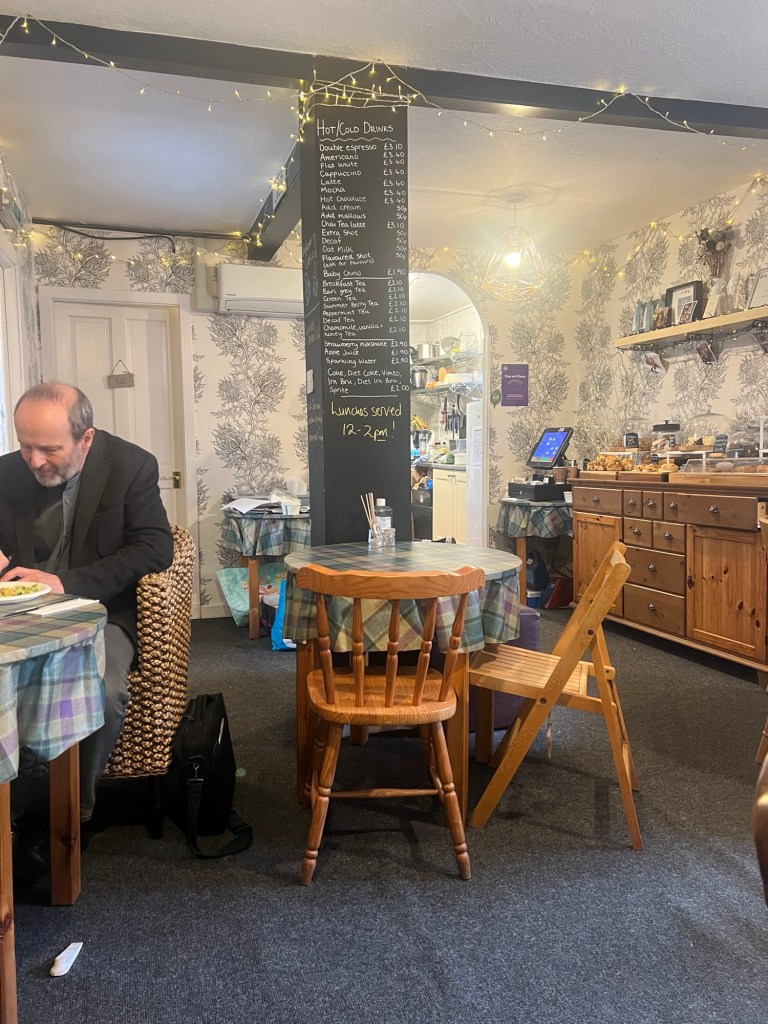
We found the tiny and charming Cafe Lolz.

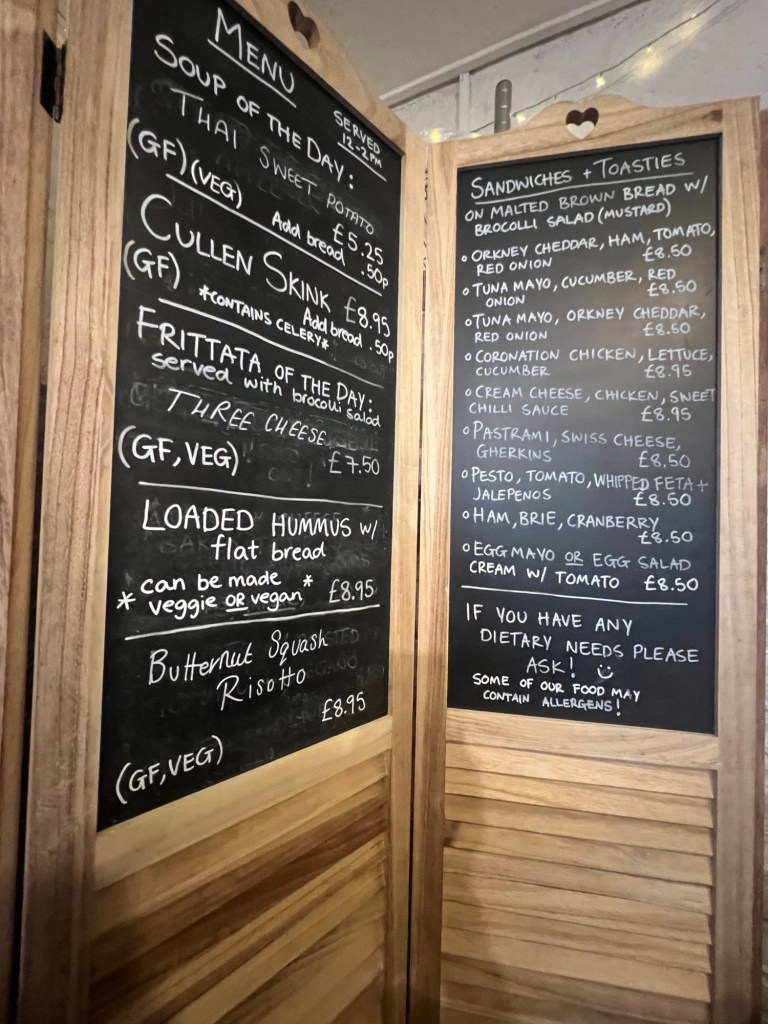
The menu
Norm had a tuna sandwich with onion and broccoli salad. The brown package contains an delicious looking scone I got to go
I had a Thai sweet potato soup that was amazing. With freshly baked bread.

We had a lovely leisurely lunch. On the way out of the cafe, I spotted this sign.

Tomorrow we Will be in Stornoway, UK, another one of the northern Scottish islands. We didn’t book a tour and will again take the shuttle and explore on our own. We are loving Scotland!

Posted in April, Europe, Food, Spring 2024 | 1 Comment

Edinburgh, Scotland

April 24, 2024

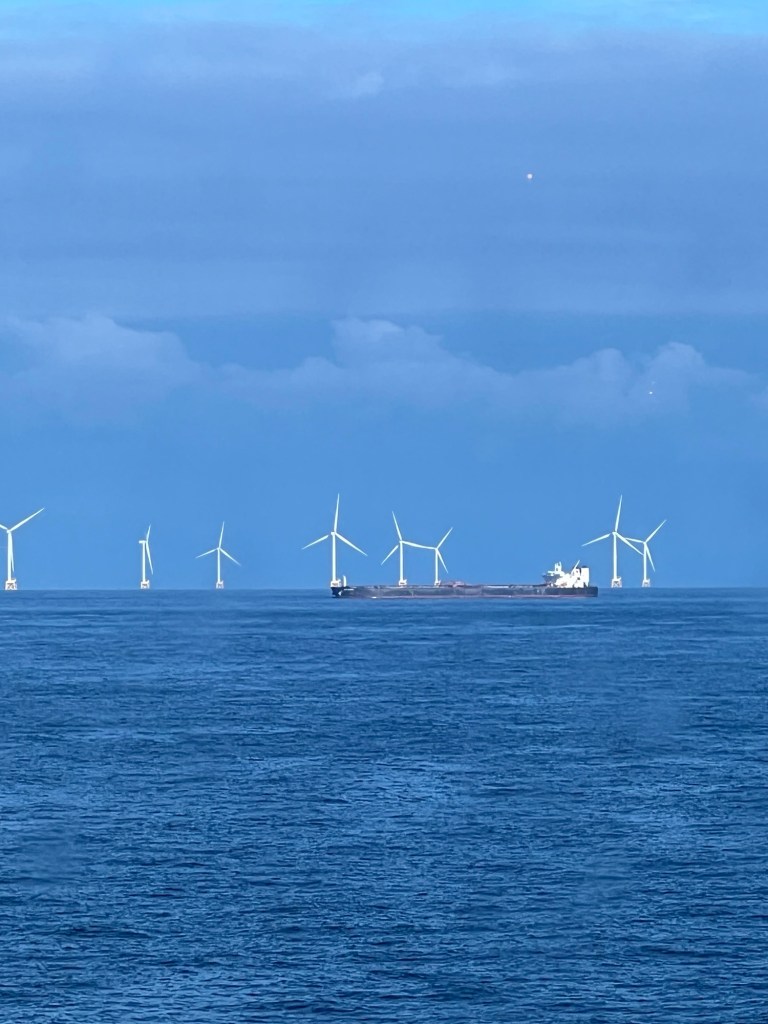
As we made our way into the Firth of Forth, the river that takes us into Edinburgh, we saw, as we h ave in many places on this trip, long rows of wind turbines. It seems that many parts of the world are way ahead of us in the US when it comes to harnessing wind power.

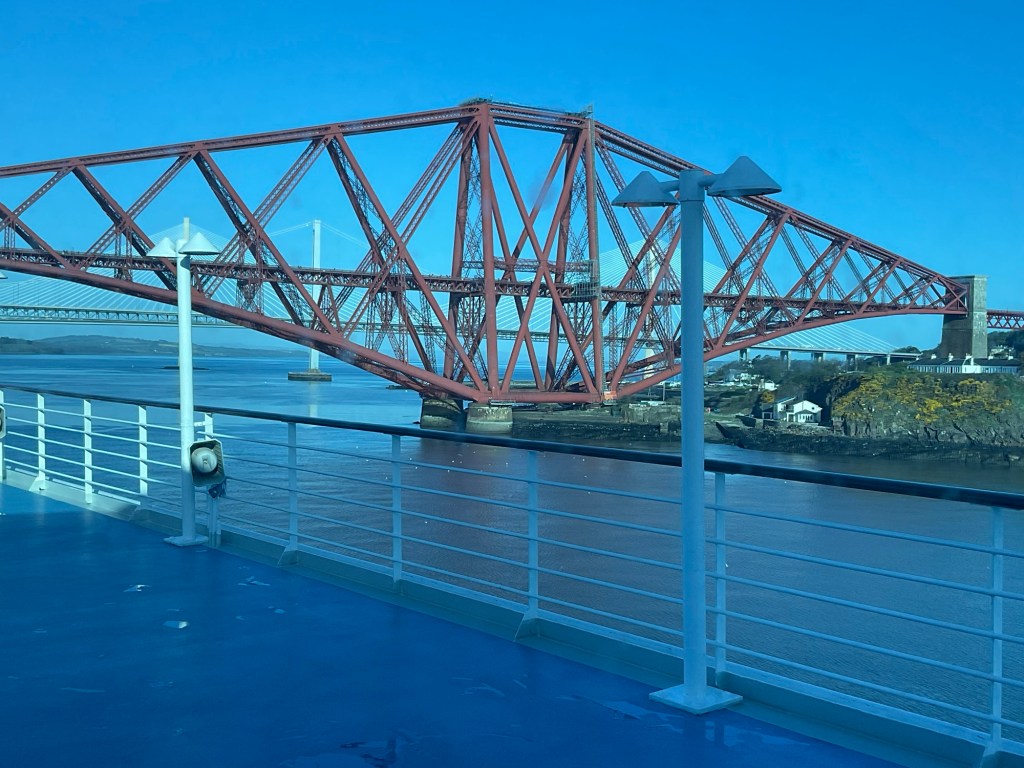
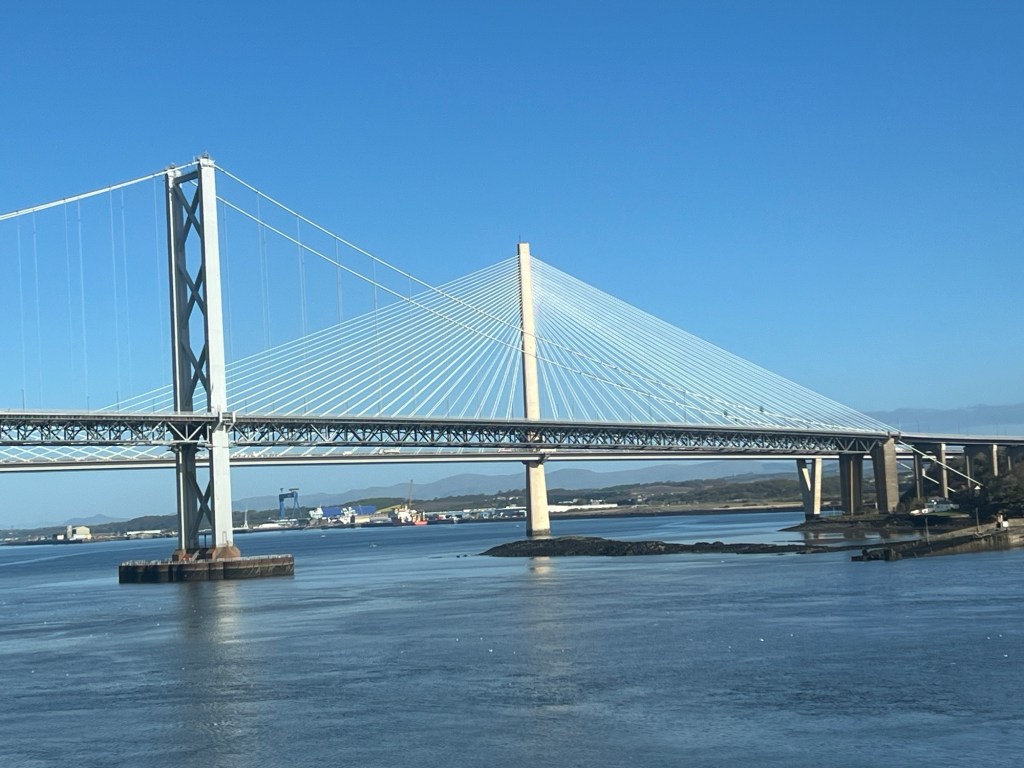
Here are some other shots of our approach. There are three bridges here, one red metal railway bridge that dates back to 1890 and two others built in the 1960s and 1990s. We went under all three. We learned later that the 1960s bridge is only used for buses and trucks which explains why we didn’t see any cars on it when we passed under the bridge. It is supposed to be renovated but things are moving slowly. In the meantime it is used to test our self driving trucks!

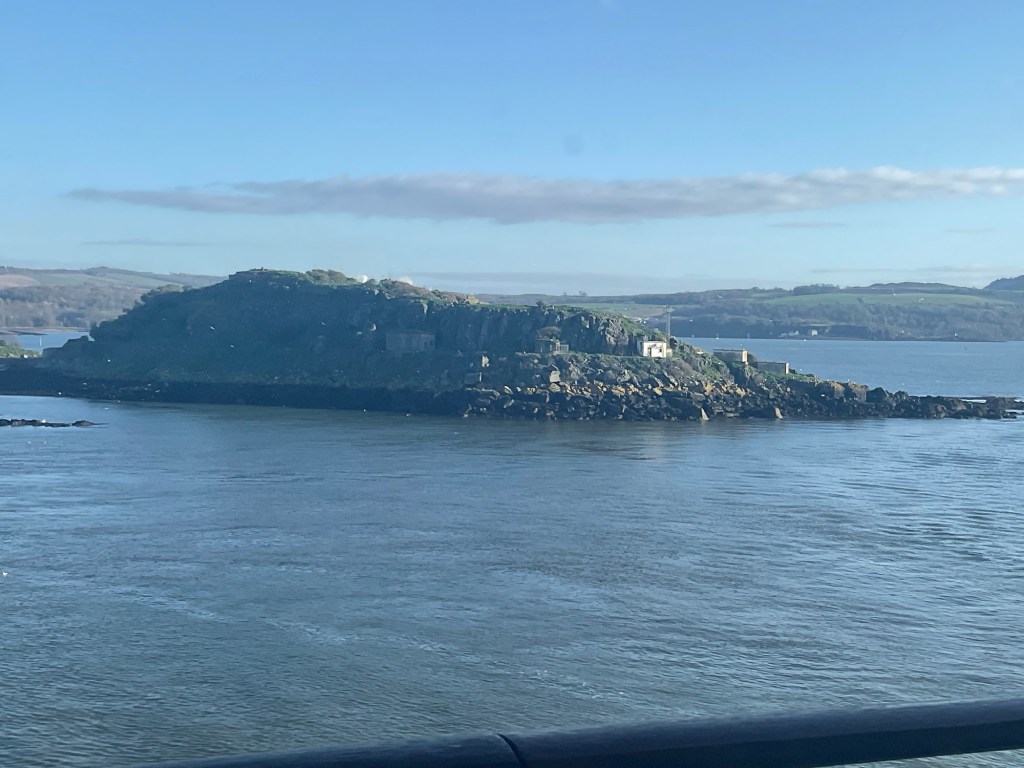
Here are some other sights we saw as we were arriving.

Our tour today is called “The house and the castle”. Of course we were greeted by a bagpiper as we left the ship.

Our guide was Emily.

Our first stop was the Edinburgh Castle. But on the way, Emily told us a lot about Edinburgh and Scotland. Scotland has a population of 5.5 million and there are 6.5 million sheep, so, more sheep than people! We passed through a very wealthy area where J.K Rowling of Harry Potter fame lives. She is the second richest person living in Edinburgh. First is Richard Scott.

Edinburgh is the capital of Scotland and has a population of 550,000 but Glasgow is larger, population 800,000. Edinburgh is known as “The Athens of the North” due to being built on 7 hills like Athens.

There is a yellow ground cover lining the roadways, it is called gorse and it provides cover for small animals like rabbits.

Many companies here Such as JP Morgan and Lloyds provide for large salaries and these rich people send their children to expensive private schools which can cost up to 40,000 pounds/year. One out of every 4 children goes to private school. Taxes are high, 40% of salary for anyone earning over 44,000 pounds a year and 21% for anyone earning less. Edinburgh is known as the greenest city in the UK.

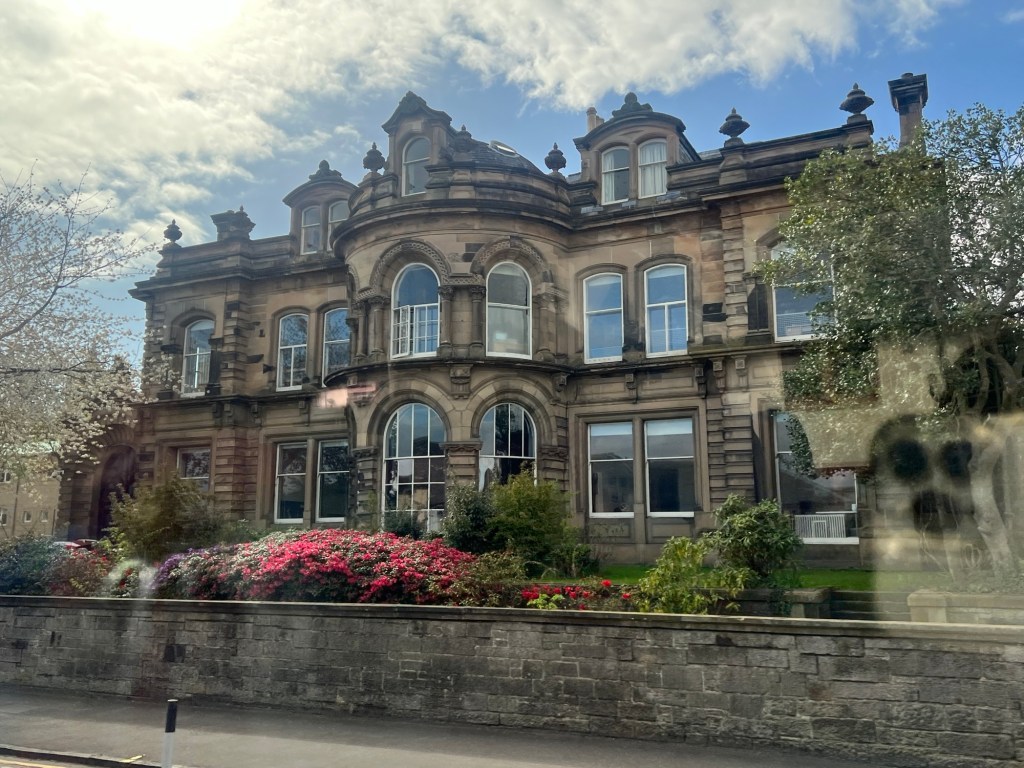
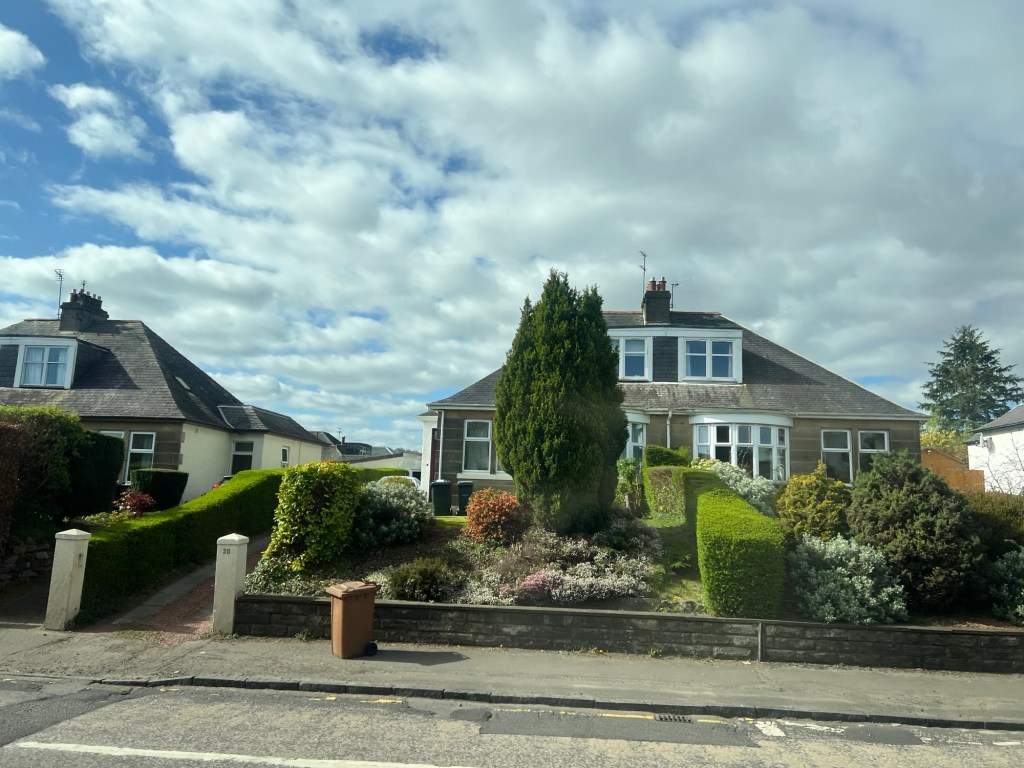
Here are some of the buildings we passed on our trip. The smaller homes were built on one floor modeled after Indian style homes, with second floors added later.

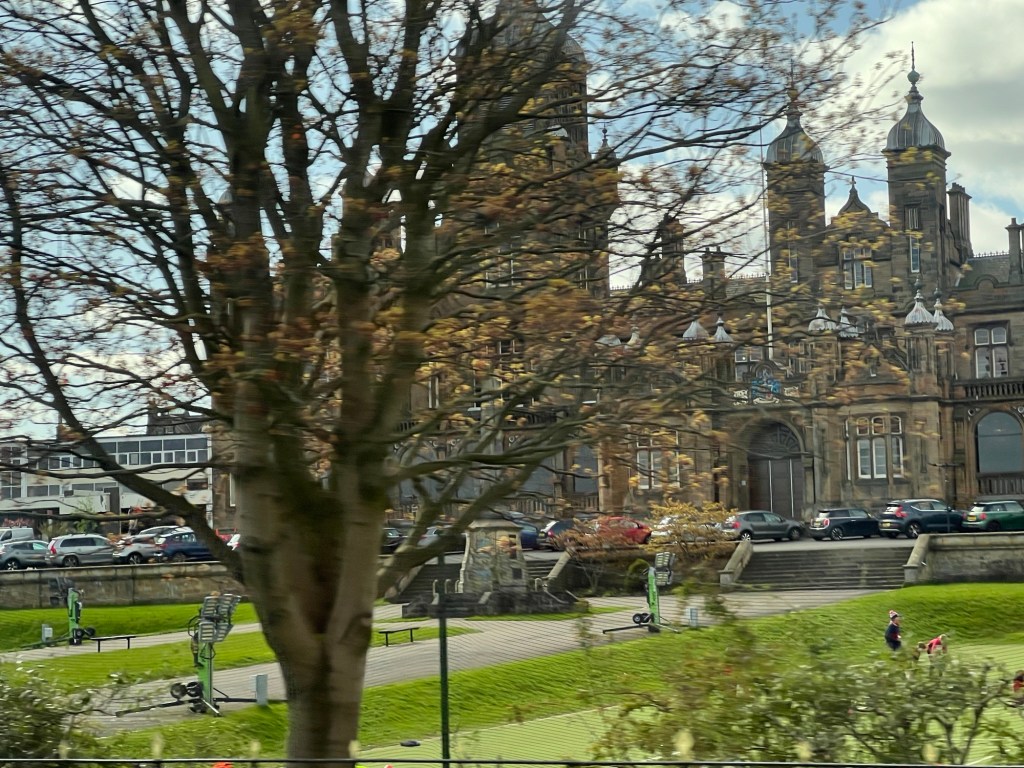
One of the private schools
This is the type with the second floor added later. Many have lovely gardens

Many of the houses and other buildings are made of yellow sandstone which is from the area. Some are red sandstone which means they were built earlier, mostly in the 16th and 17th centuries.

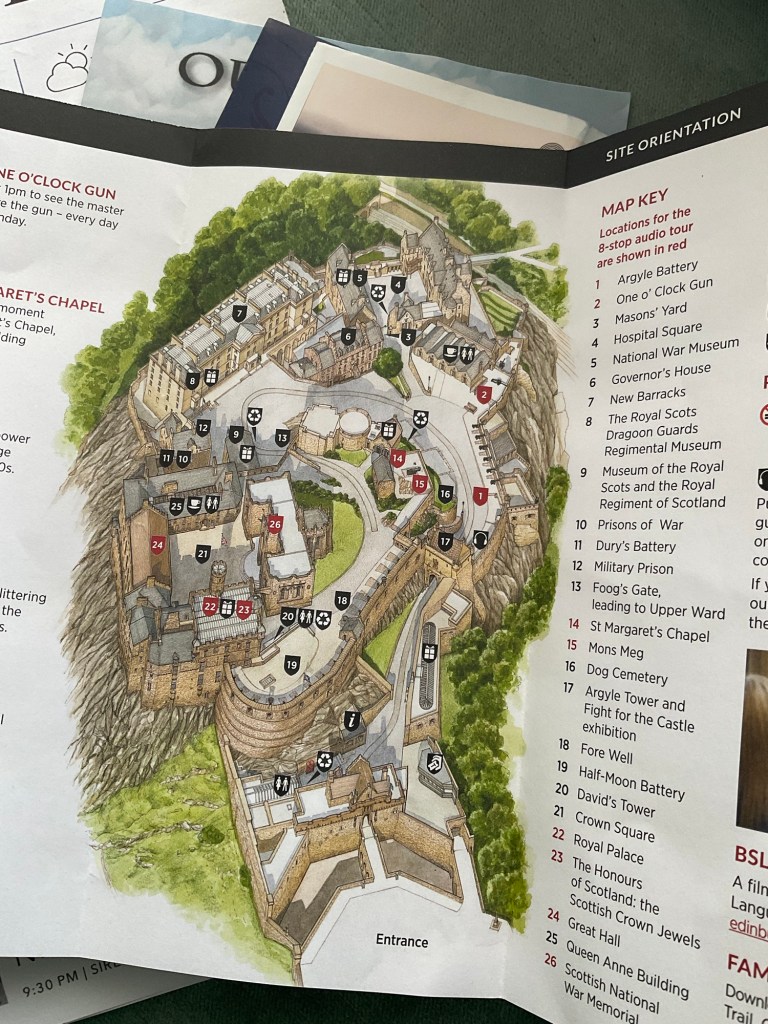
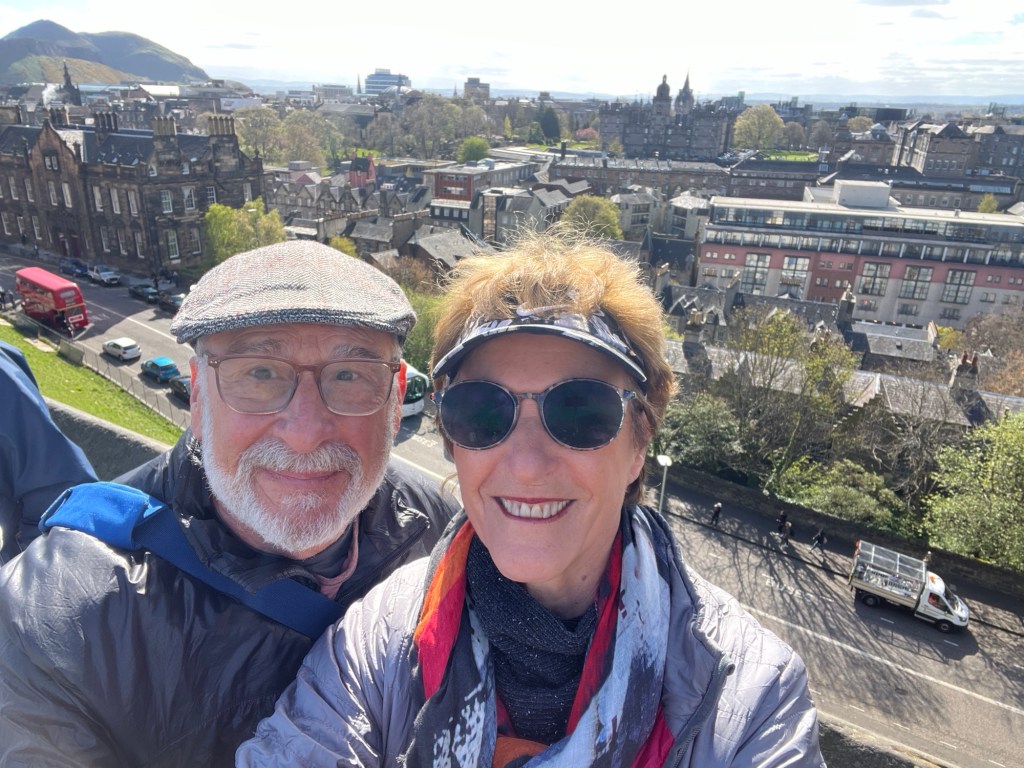
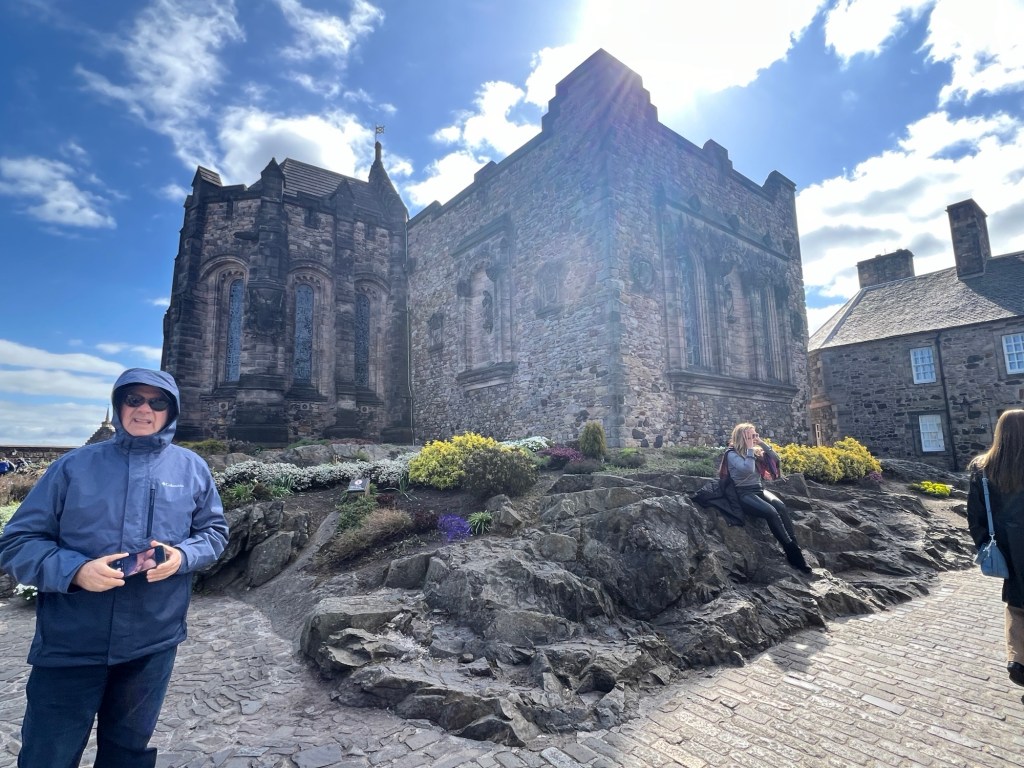
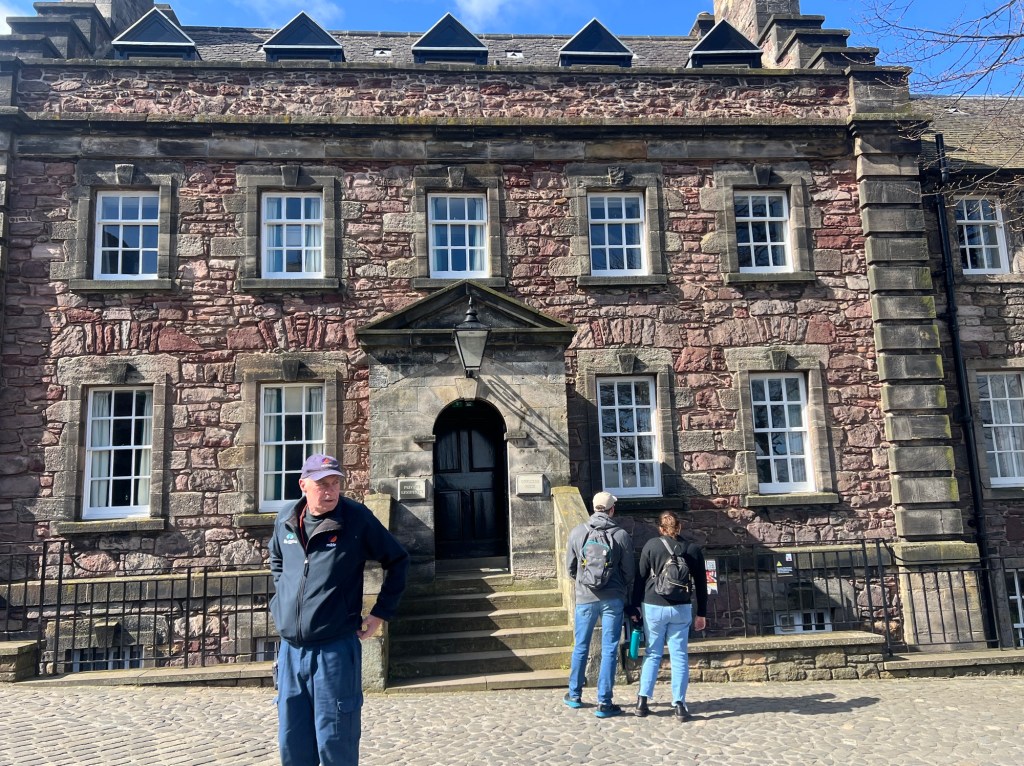
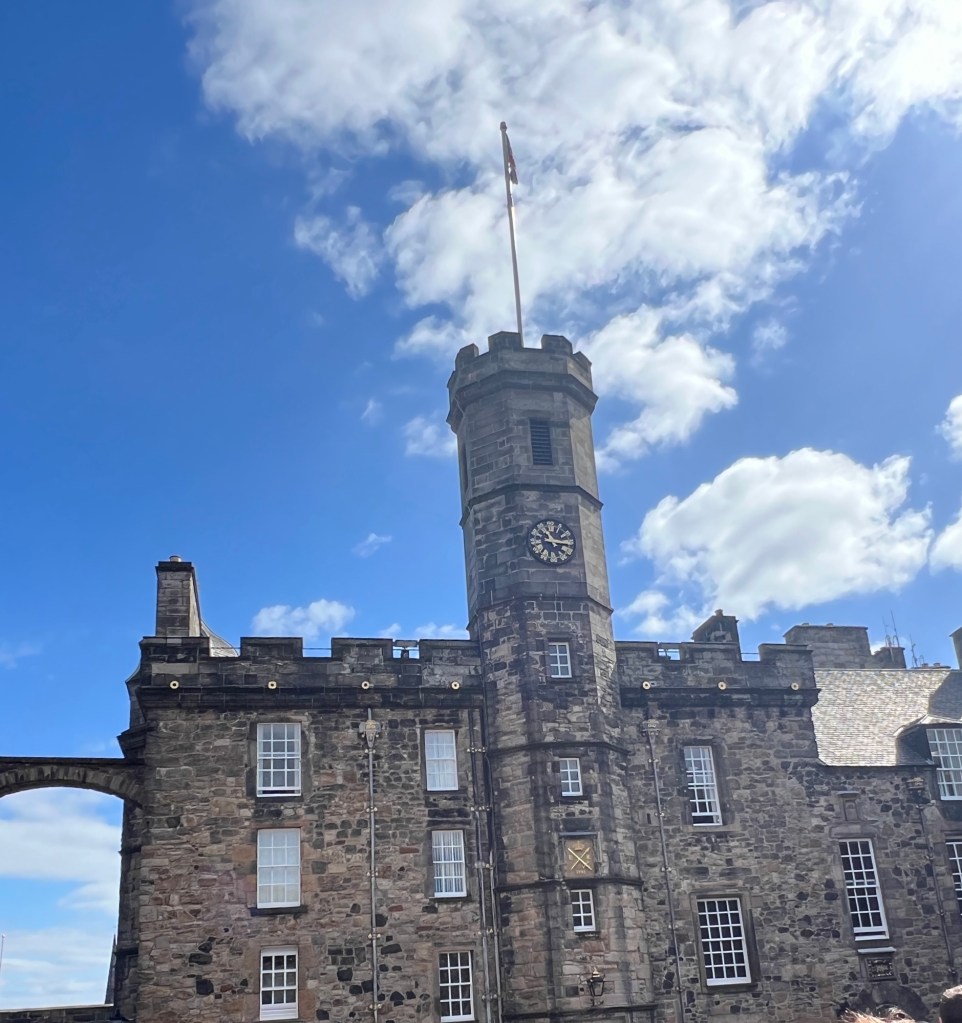
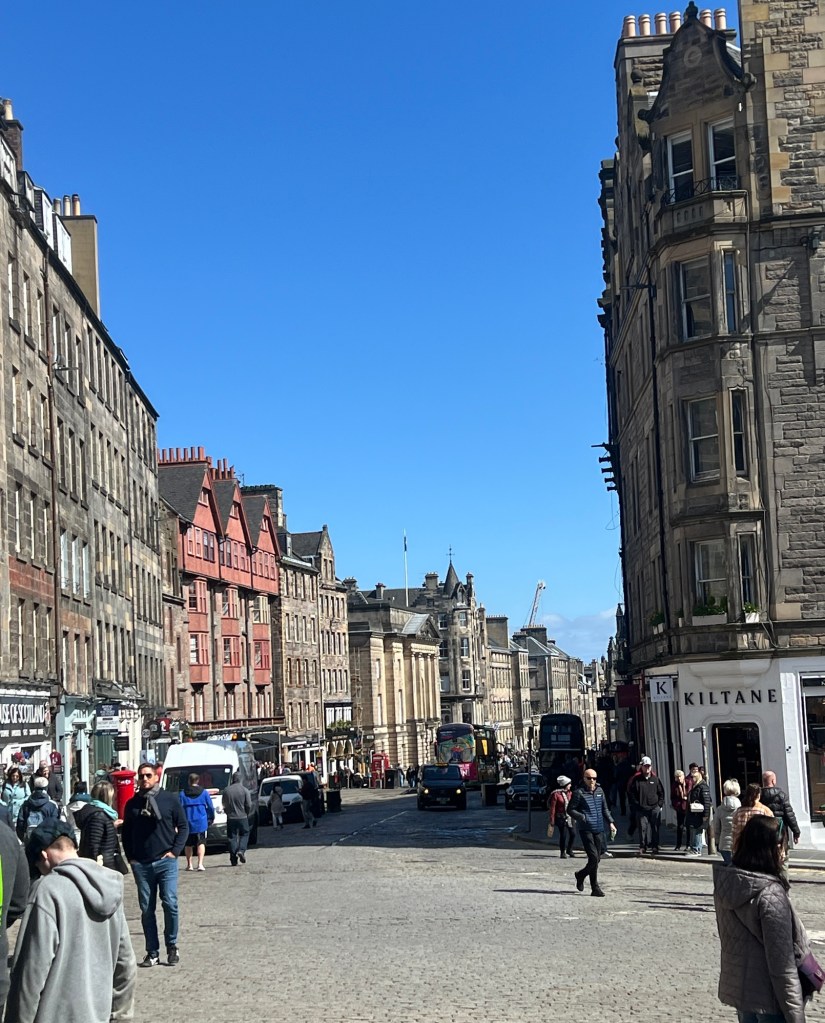
We arrived at the Royal Mile and the Castle. Edinburgh Castle is perched atop Castle Rock. It dates back to at least the 12th century, and has served as a royal residence, military stronghold, and symbol of Scottish power. The Royal Mile, which leads from the castle gates down to the Palace of Holyroodhouse, is a bustling street lined with historic buildings, shops, and pubs.

The Castle took us about 2 hours to see and we didn’t even cover it all.

Emily took us to 4 main sites and gave us lots of information about the many buildings and their use over the years. Here are a few highlights.

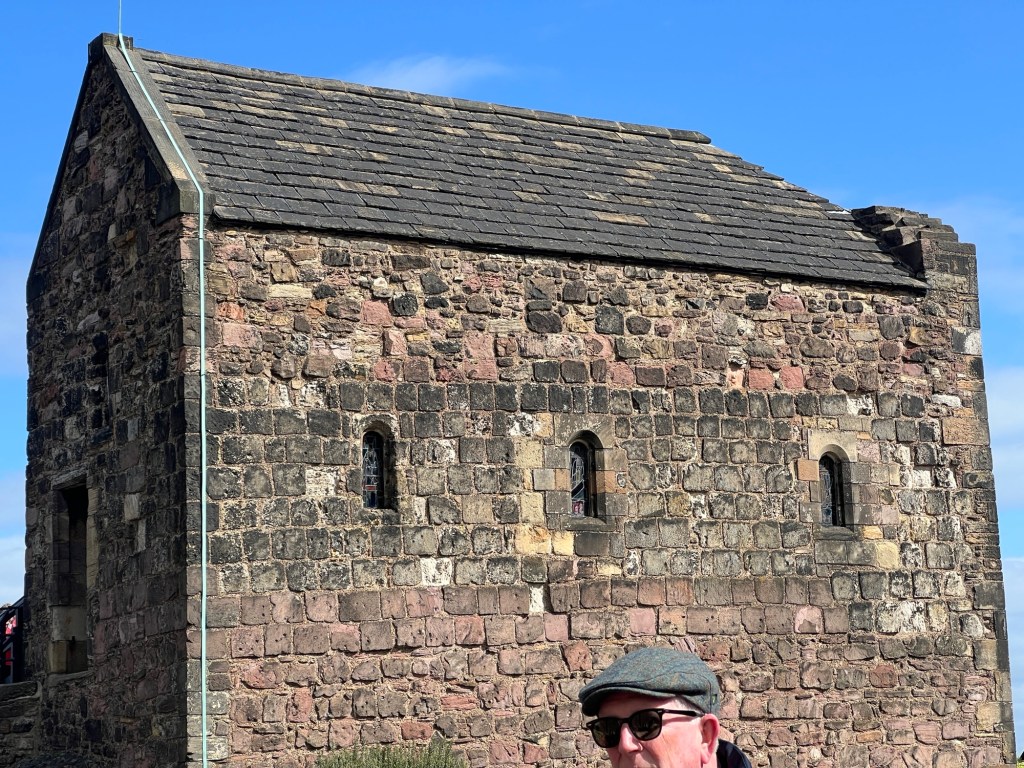
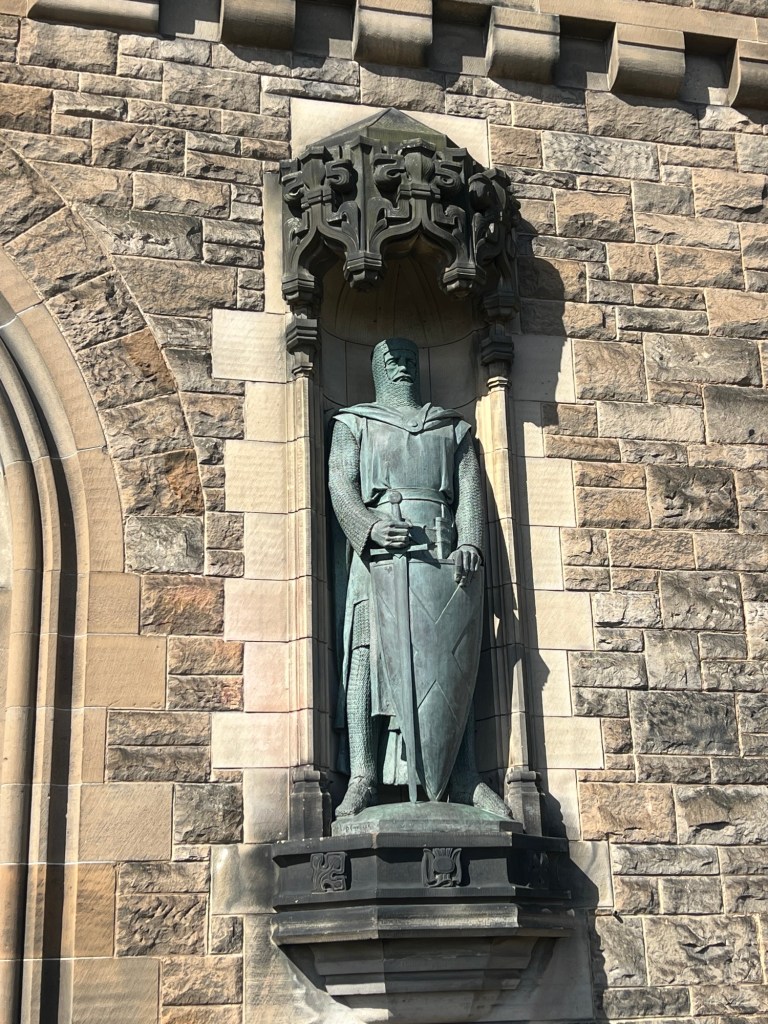
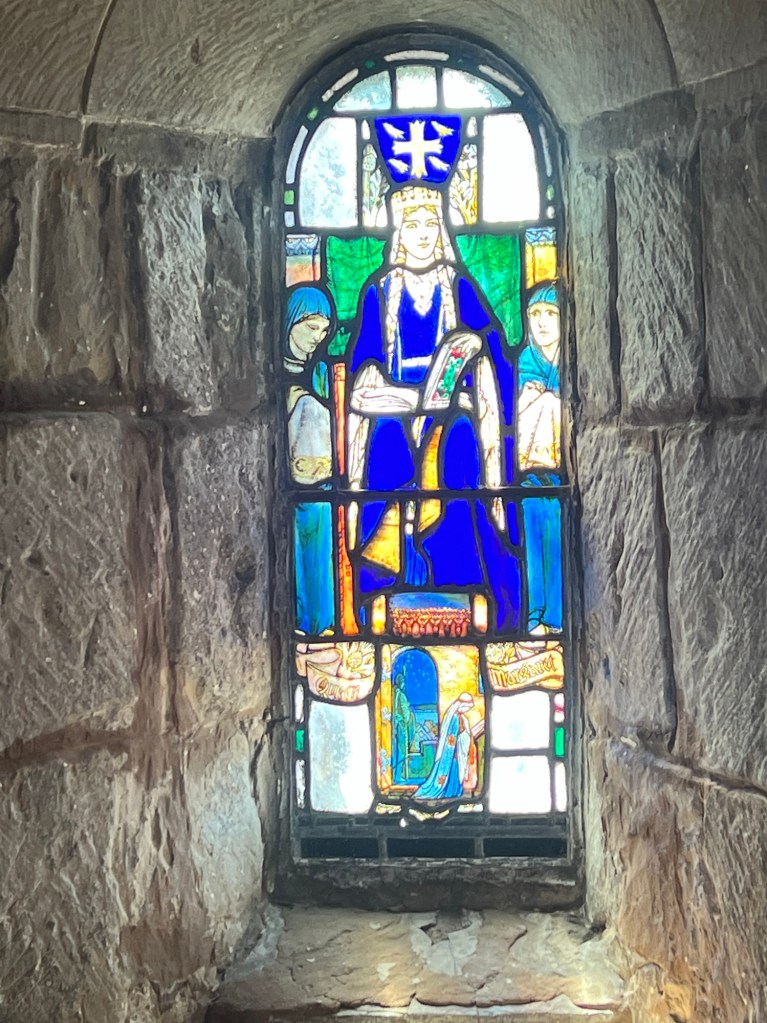
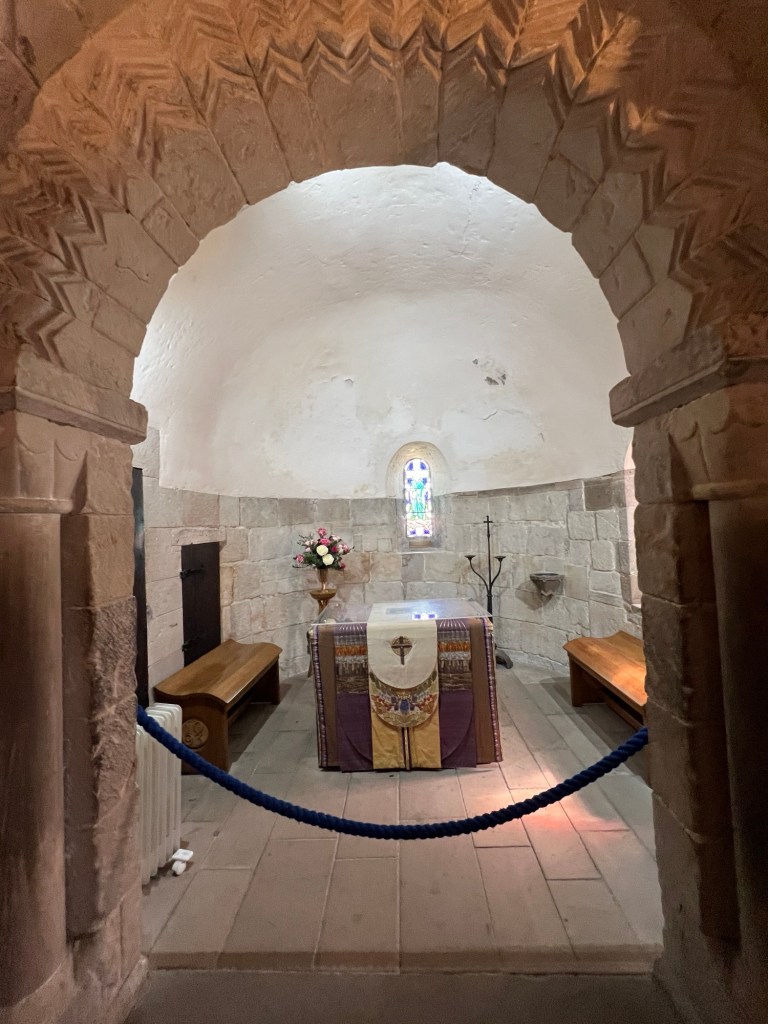
St. Margaret’s Chapel, the oldest building in EdinburghYou can get married here for 60,000 pounds. Very small inside

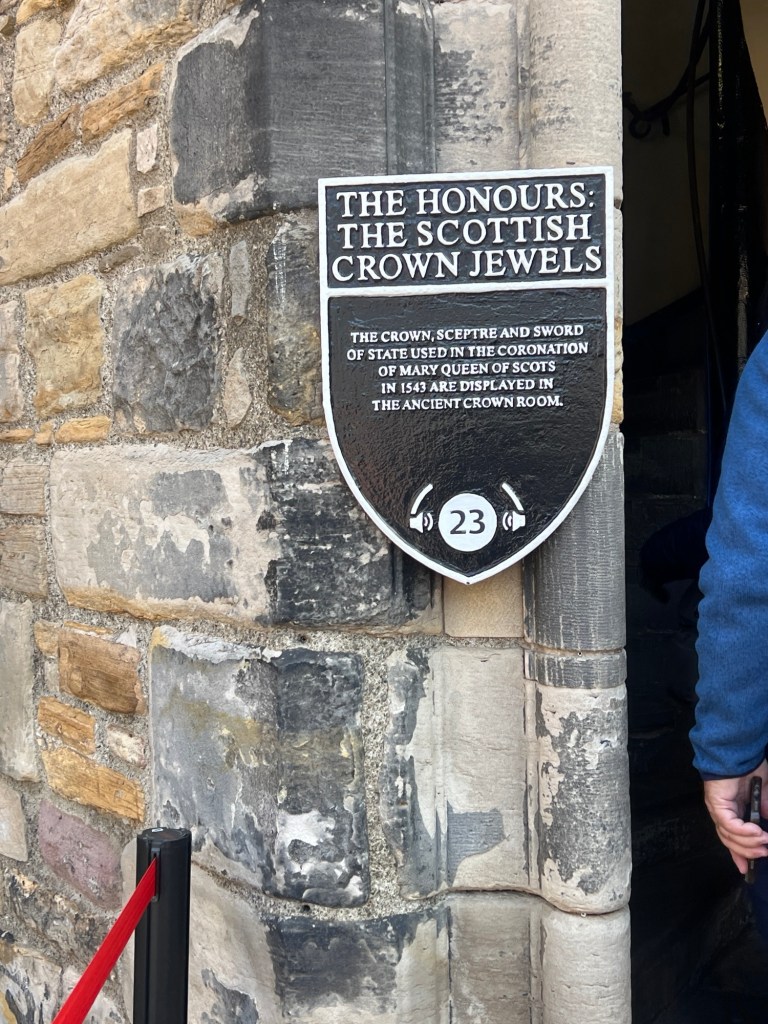
They have few Crown Jewels to display but there is an area you can walk through to see the crown and swords but no pictures were allowed. The last time the Crown Jewels were used was the early 1600s.

It was cold and windy at the Castle
I love that they had a dog cemetery

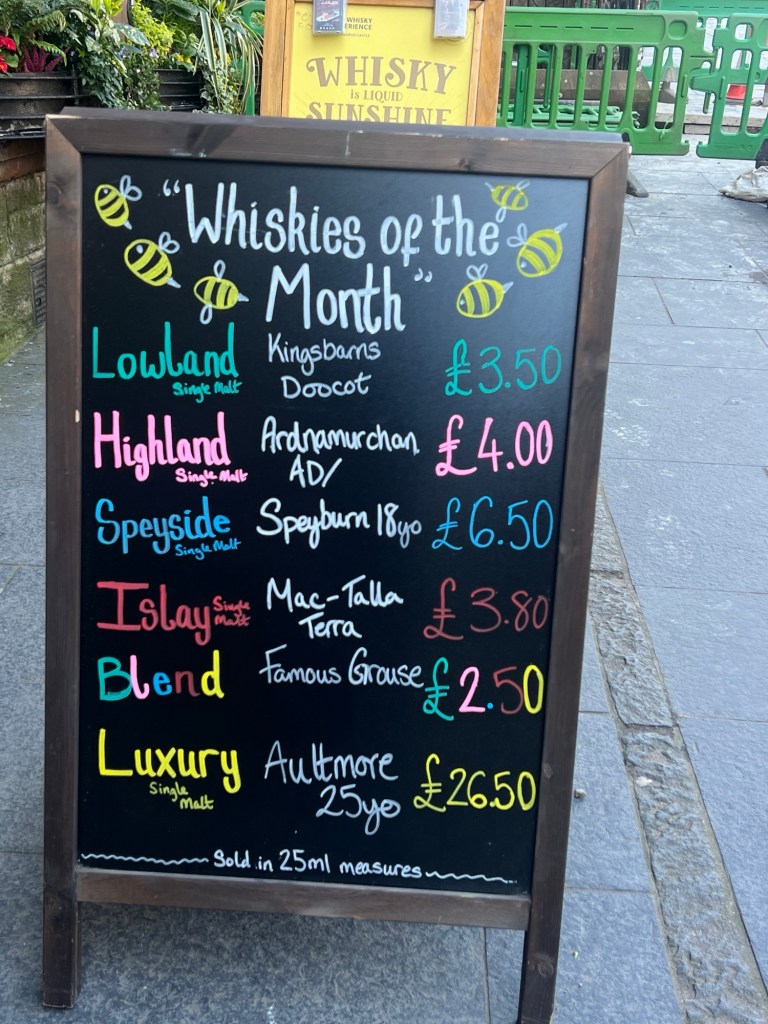
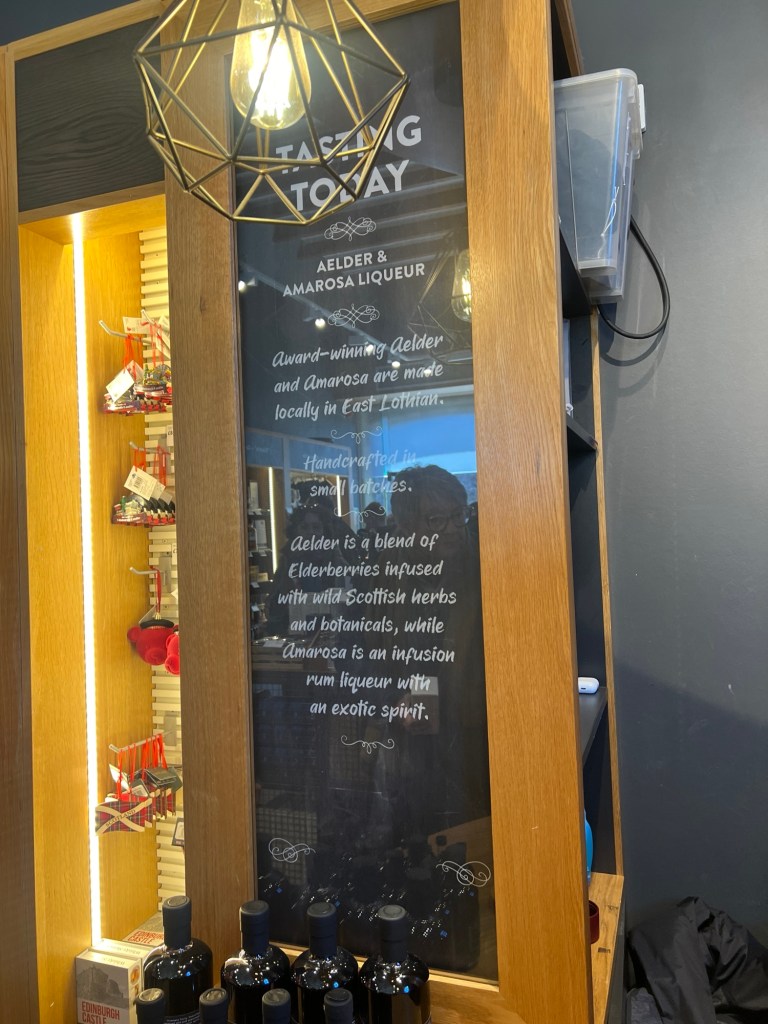
Before we left the Castle area, we did have a whisky tasting. It was whisky with elderberries. We liked it but didn’t buy any.

After our visit, we walked down the Royal Mile where there were many shops and restaurants. We wanted to find a place for a quick lunch and decided to stop here.

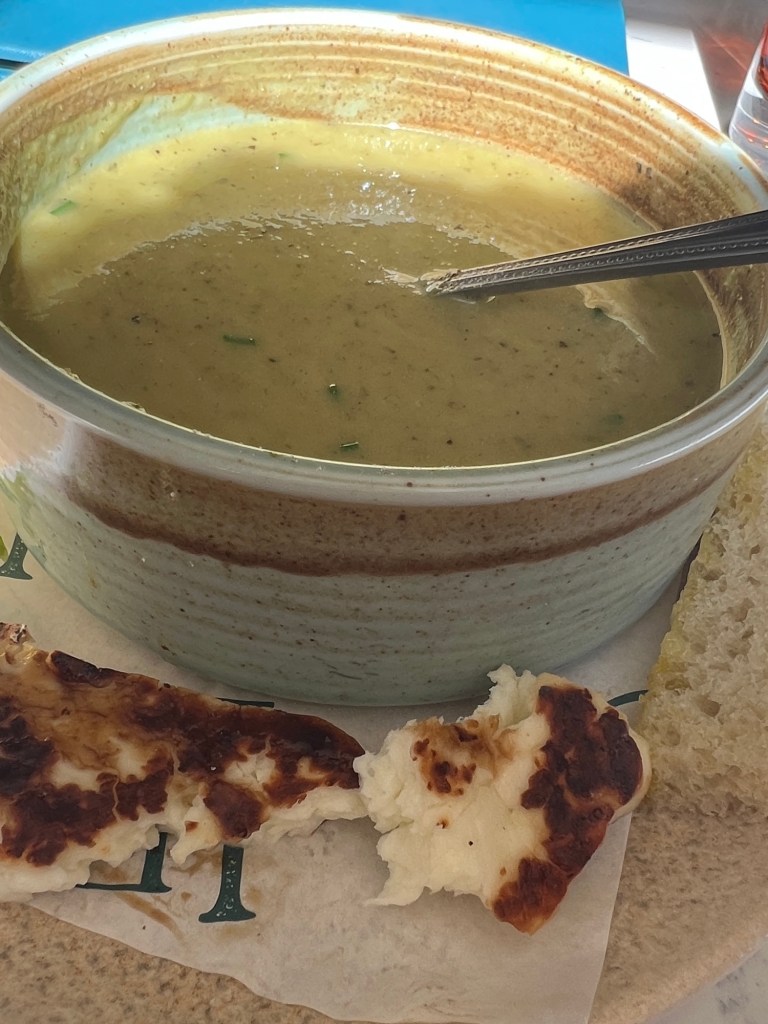
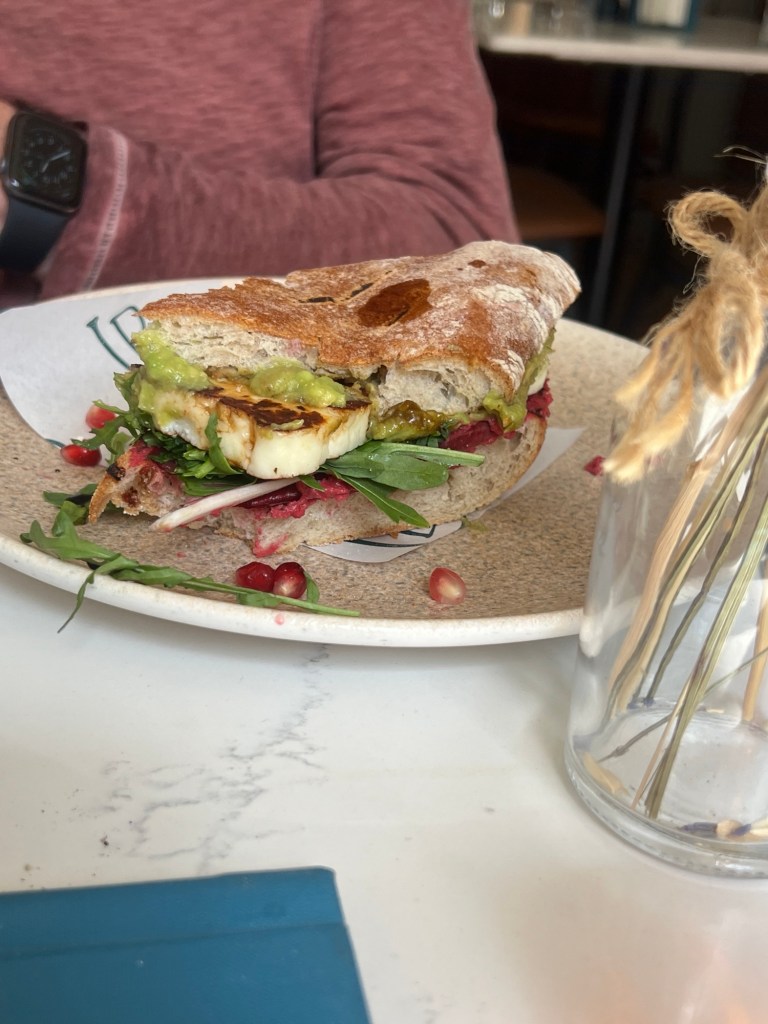
I had a delicious soup that warmed me up and Norm had an amazing sandwich with halloumi cheese and many other additions.

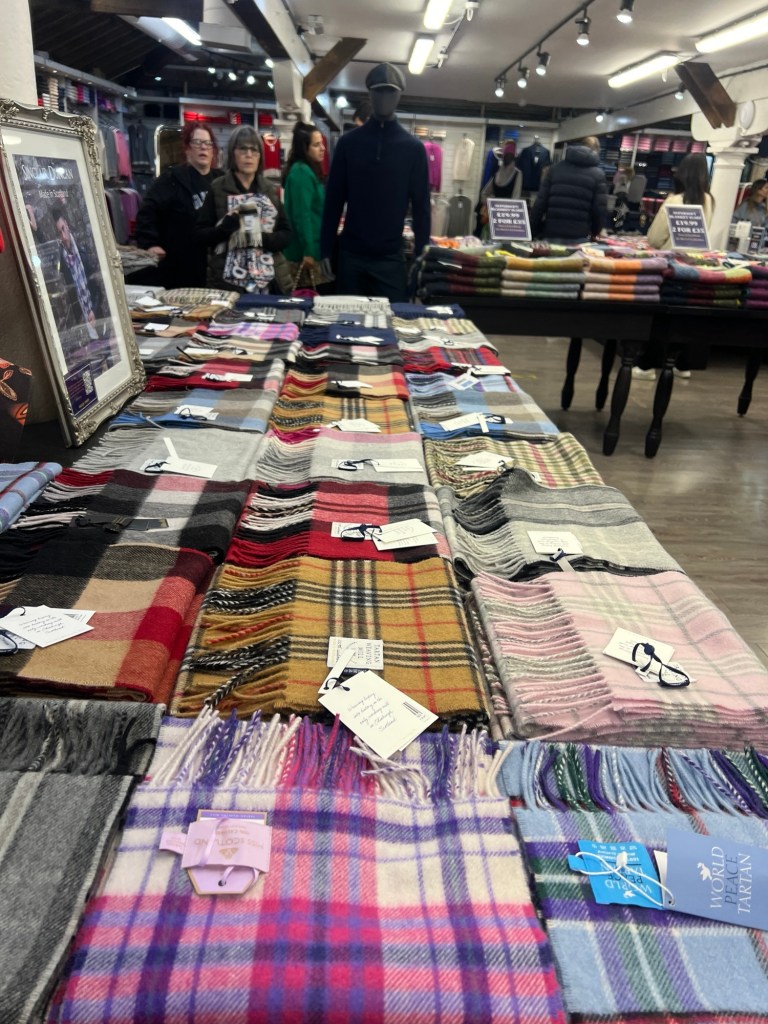
The woolen goods are in almost every shop and are just beautiful.

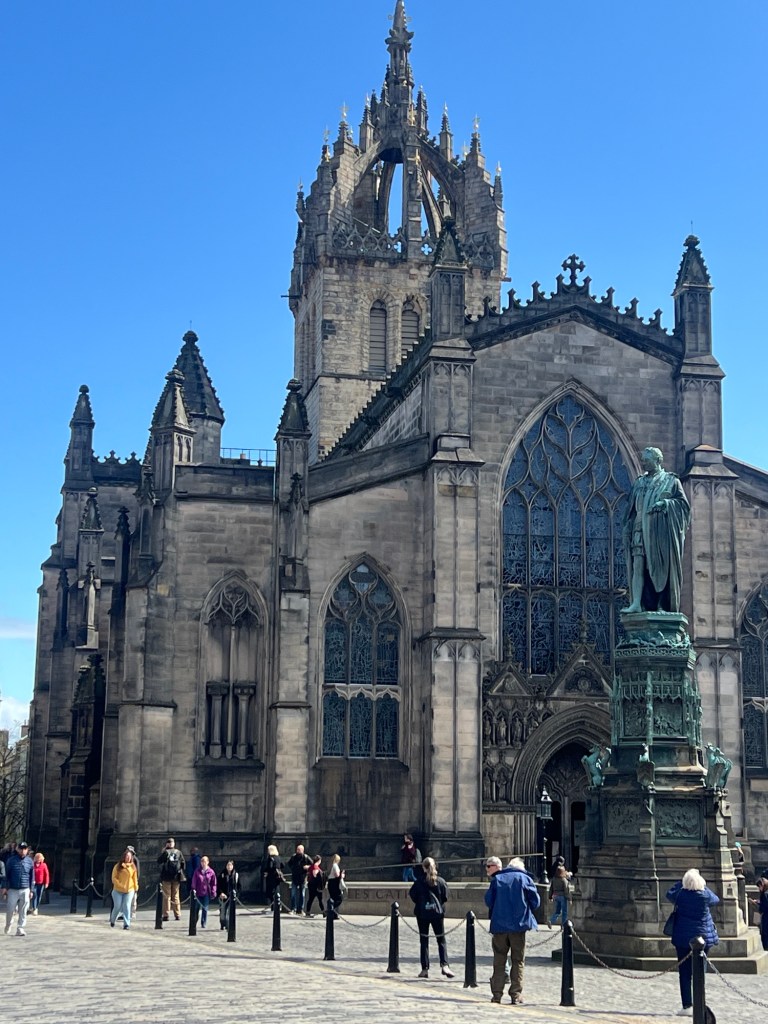
Some buildings near and along the Royal Mile.

Royal bank of Scotland
And another bagpiper
How’s this for a Radisson Hotel!
The oldest building on the Royal Mile, dated back to the 1500s
We didn’t want to take the time to eat here but it looked like a fun place

We met Emily near this coffee place!

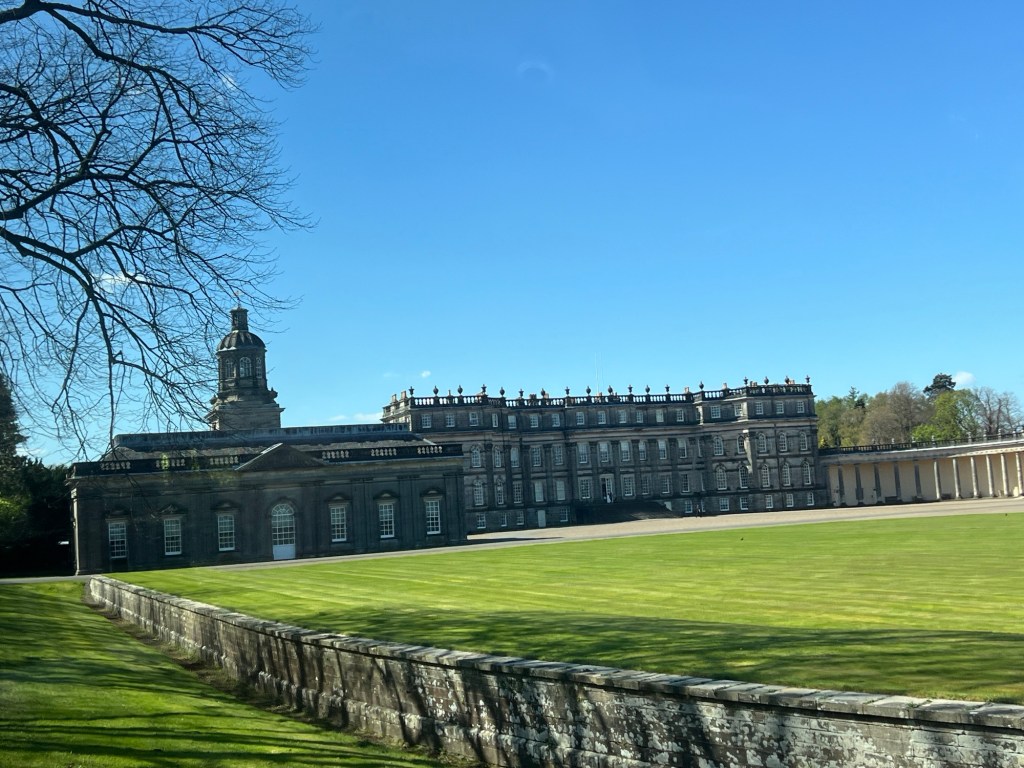
On to our next stop, the Hopetoun House and Grounds.

This house is on 100 acres of beautiful landscape. It is widely considered to be Scotland’s finest stately home and was used in many films most notably Outlander seasons 1, 2, 3 and 7. We got a brochure to tell us which rooms were used in each scene. They were filming Downton Abbey while we were there.

We had 2 hours to explore the home and grounds and enjoyed it all.

The guide that explained the house
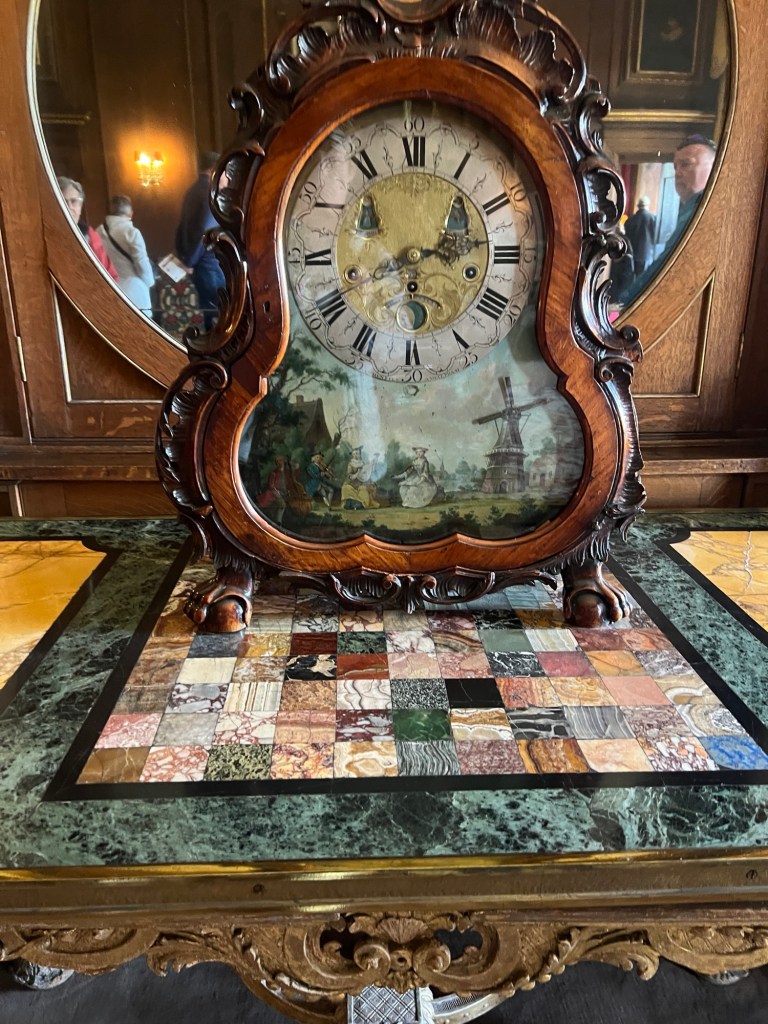
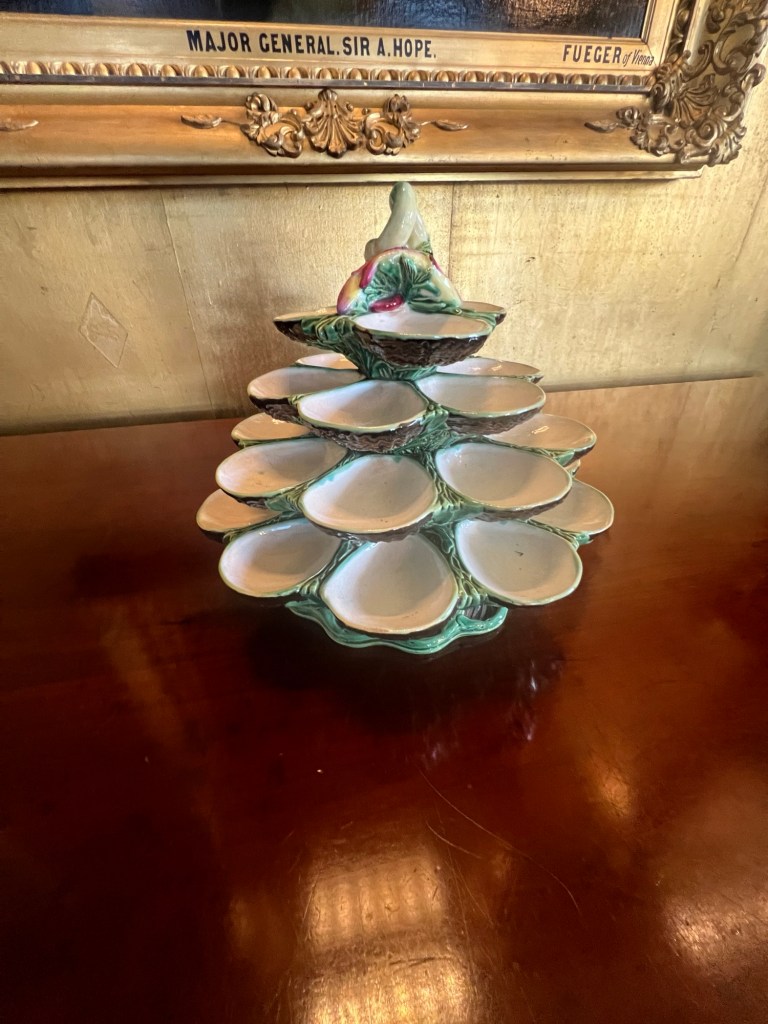
These needlepointed screens are seen by every fireplace (and each room has one) The reason is that the white makeup used by the women of the day would turn toxic if exposed to the heat
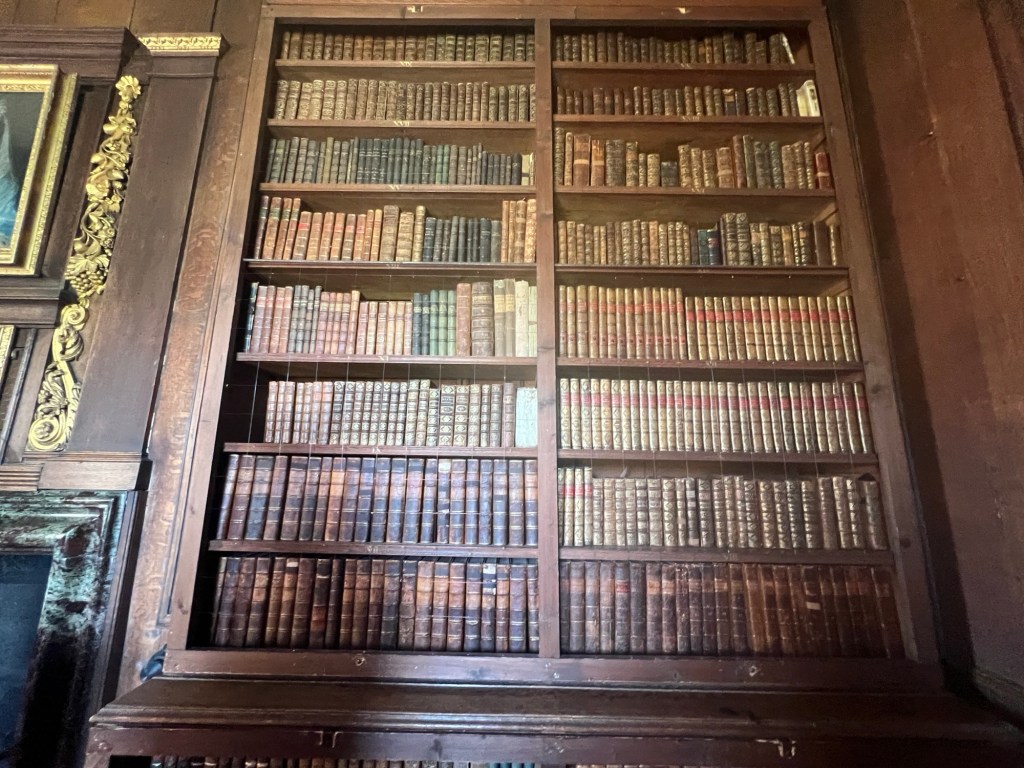
We couldn’t enter the large main library. There were 20,000 books at one time but some, Including a rare Gutenberg Bible, had to be sold to maintain the home.

The family still lives in one wing of the house.

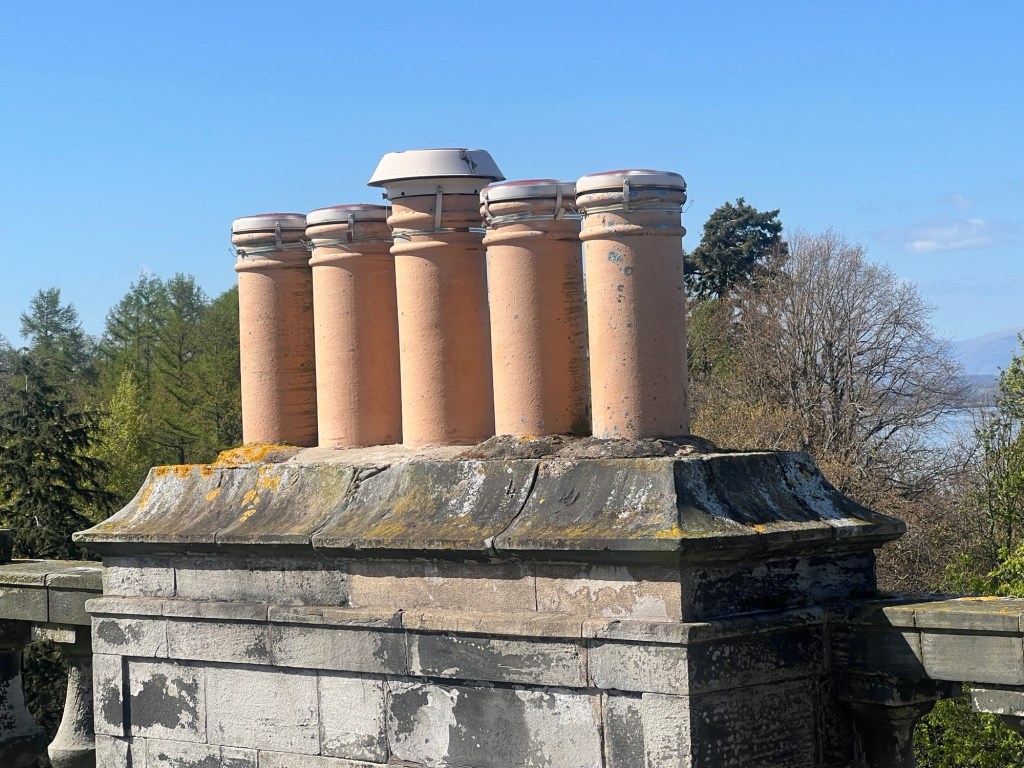
You see these chimneys on all old houses
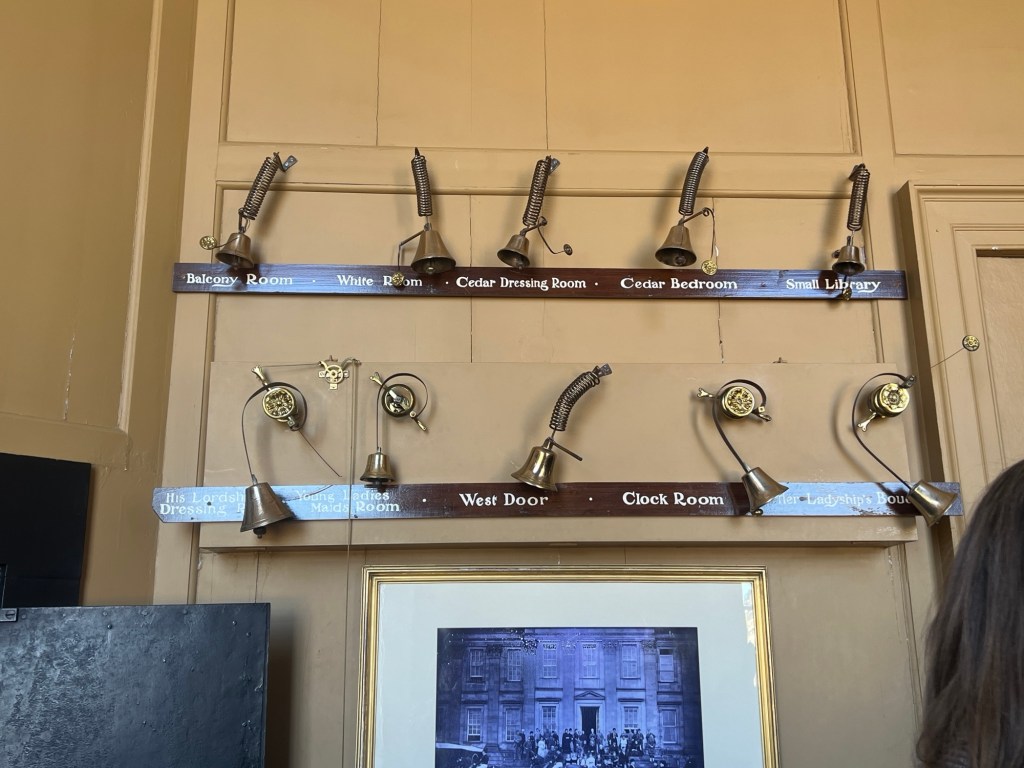
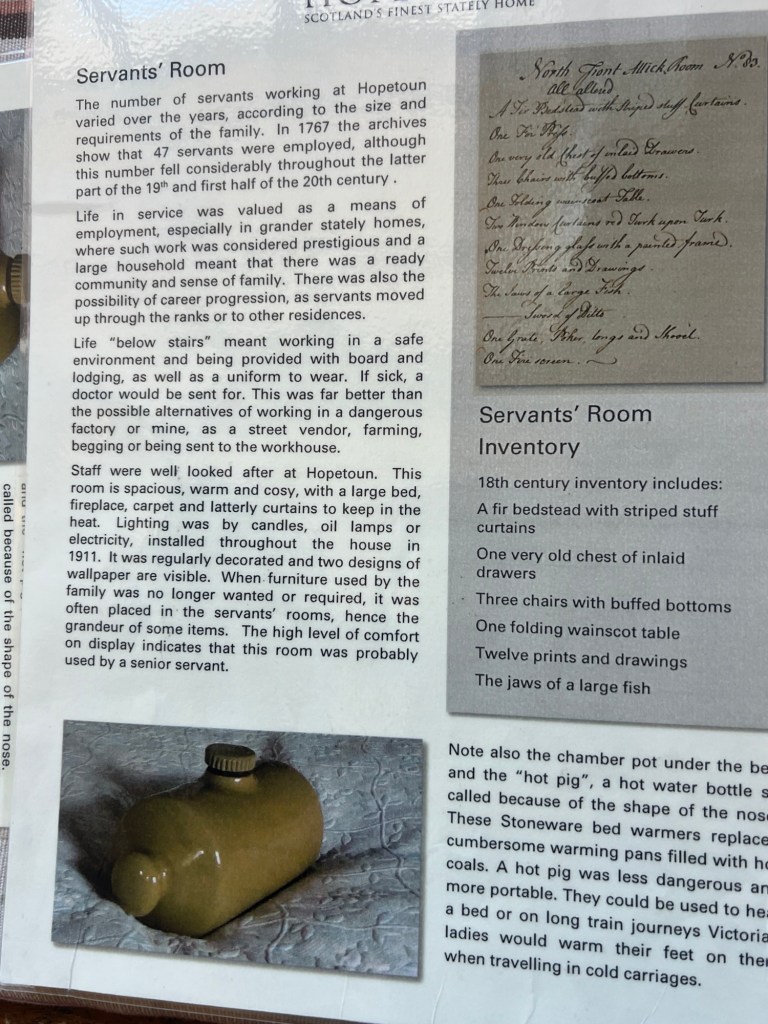
The bells to call the servants
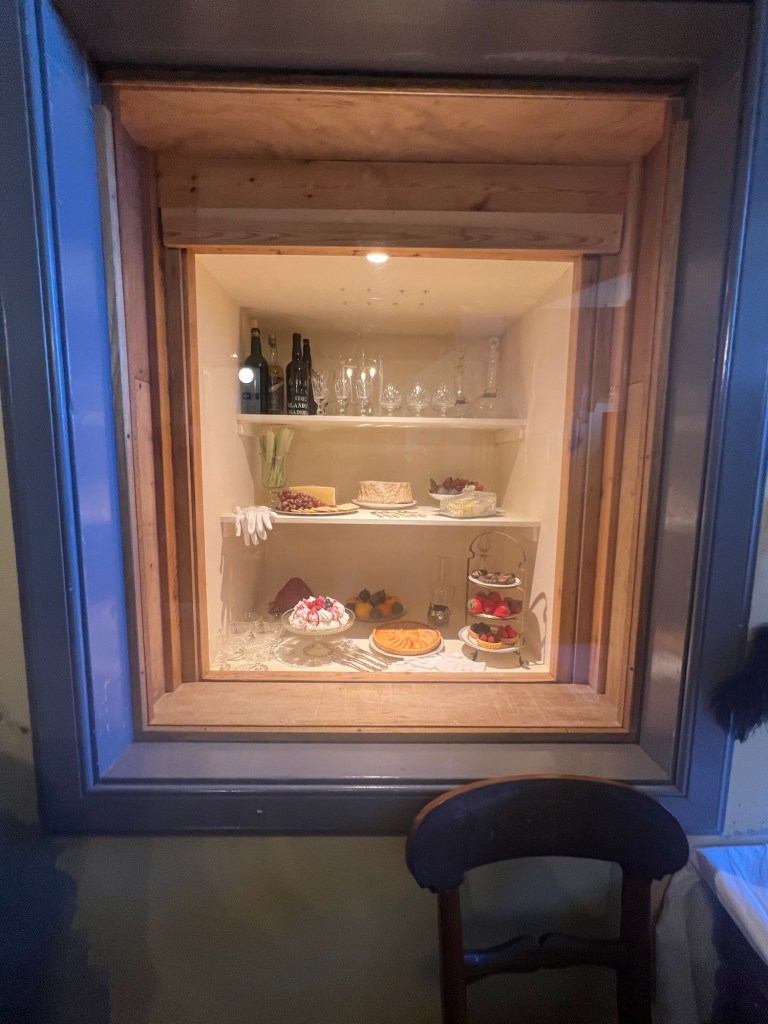
The dumbwaiter

We walked one of the garden trails.

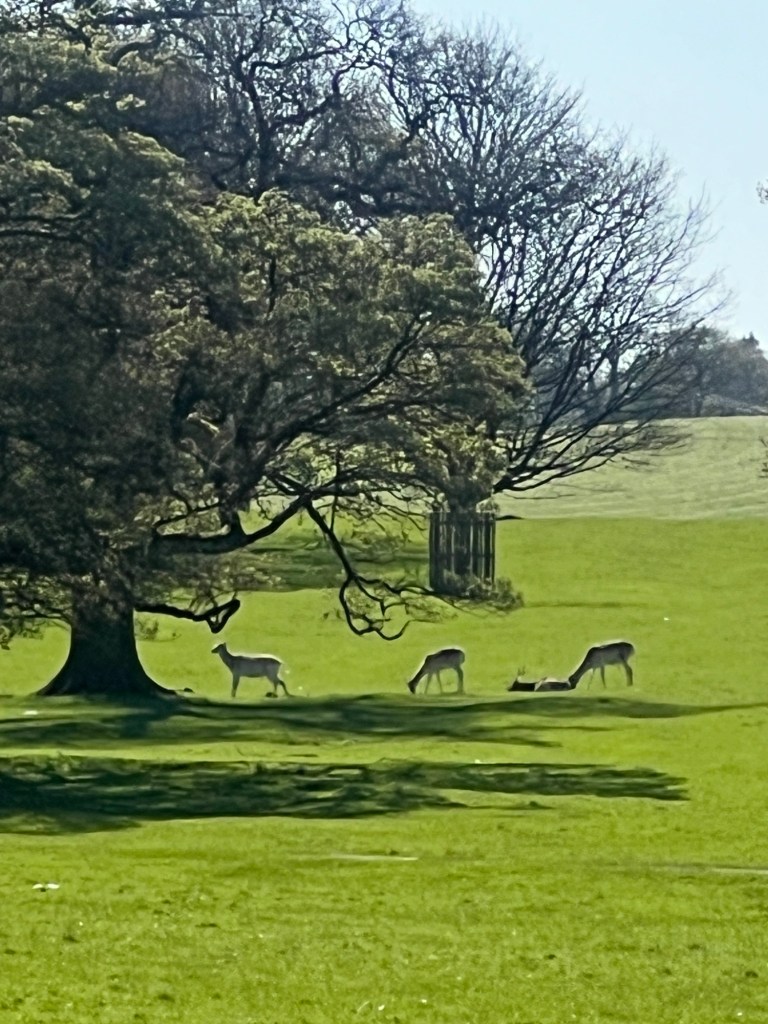
They have too many deer in Scotland
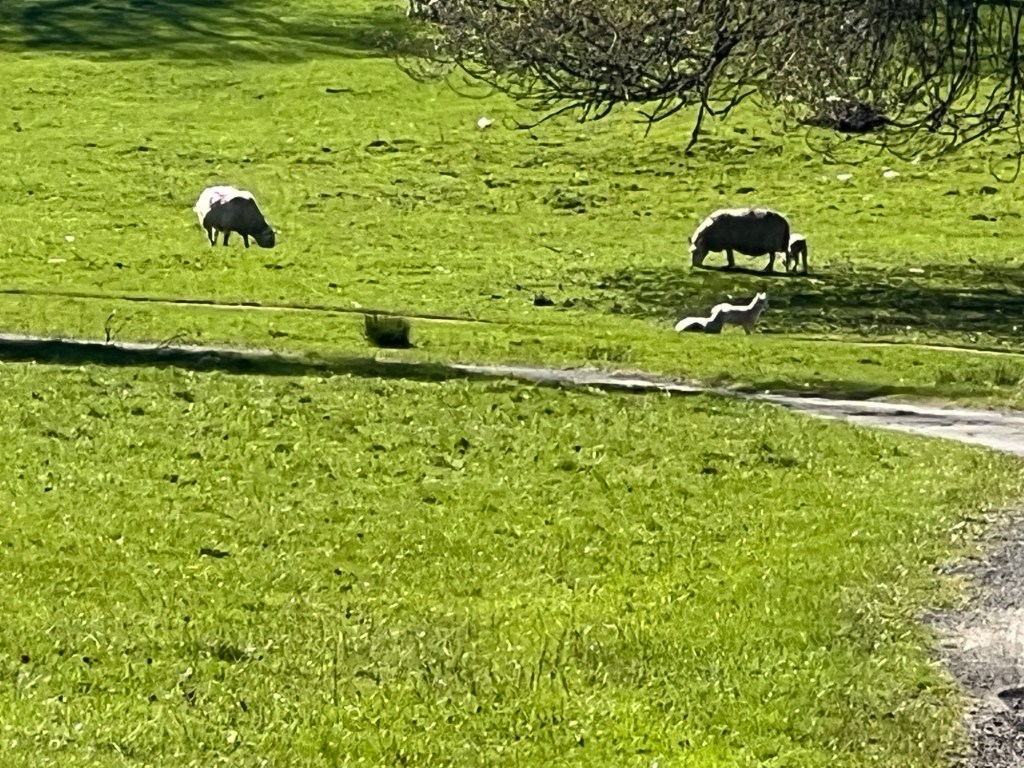
The sheep had lots of babies

We were so lucky to have a sunny day. The house guide said last week was cold and rainy all week.

We returned back to the ship just before it was time to leave the port. Tomorrow we visit Kirkwall in the Orkney Islands of Scotland. We will take the shuttle and to our on our own.

Posted in April, Europe, Excursions, Food, Spring 2024 | Leave a comment

Southampton, UK

April 22, 2024

Southampton is located on the south coast of England. It is a vibrant city with a rich history. We have been here several times before, visiting the Isle of Wight and having just a glimpse of the city on another visit. This time we are so excited to meet my friend Hilary who will take the train from London to spend the day with us.

Southampton has a deep maritime heritage and is famous for being the departure point for the ill-fated RMS Titanic in 1912. The city’s port is one of the busiest in the UK and has played a significant role in maritime trade and travel.

The city is known as the cruise capital of the UK, with several major cruise lines operating out of its port. It serves as a popular embarkation point for cruises to destinations around the world.

Today is the embarkation port for people on this trip around the British Isles. We had to change rooms due to an error made by the ambassador when we originally booked. Because we are in Southampton and return to Southampton, only the first one was booked and our room was already taken for this departure. Our butler made the move very easy and we got settled before heading out to meet Hilary.

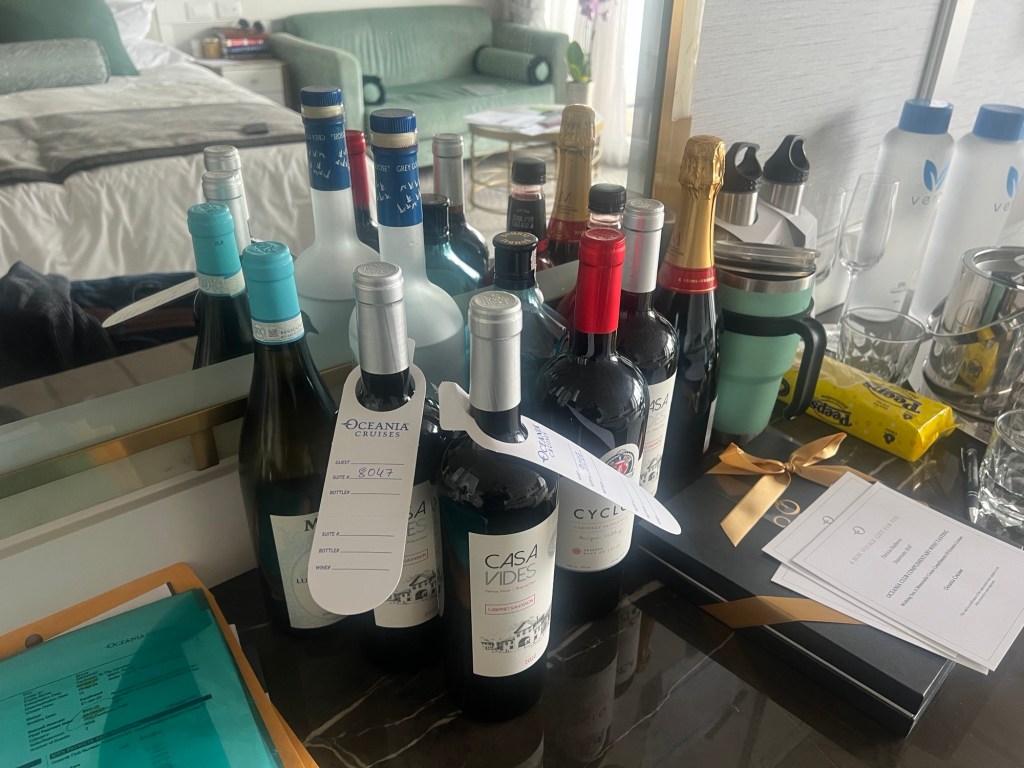
Not much to see at the port. They were already refueling the ship when we were ready to leave to meet Hilary. Lots of goodies in the new room.

After about a 20 minute walk in the city, we met Hilary at the Sea Museum. We decided to spend our time outside before the predicted rain. It was in the 40s again and. I suspect that will be the case as we travel all around Britain.

We wandered through the huge garden – I was surprised to find such a large green space in the city.

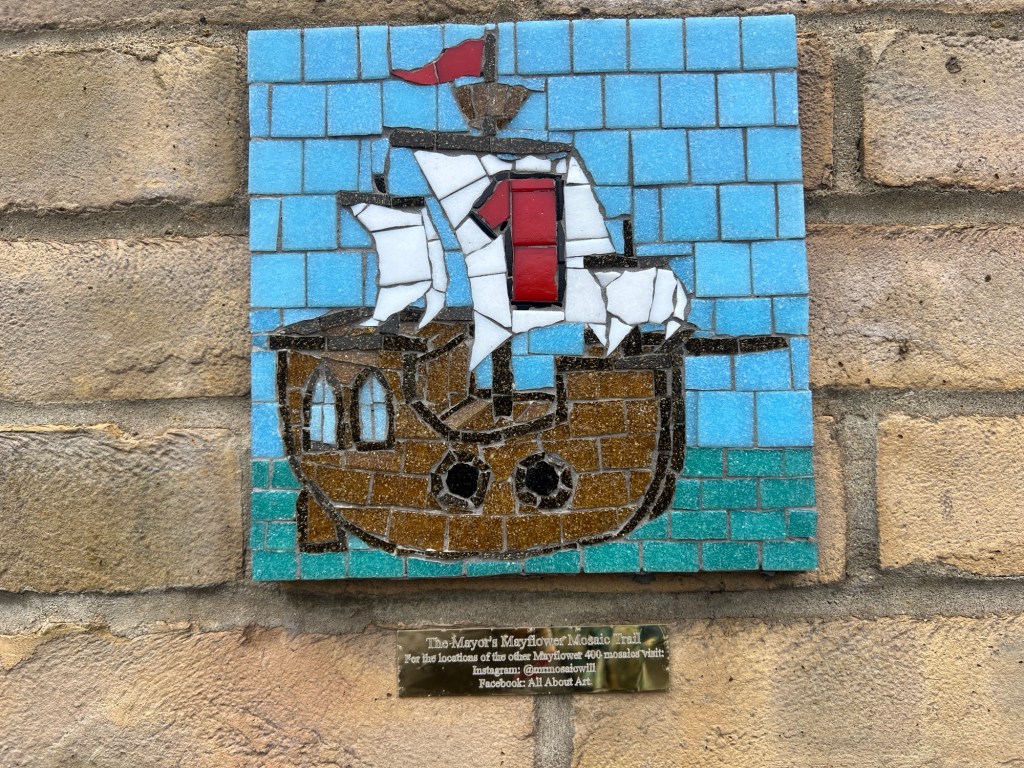
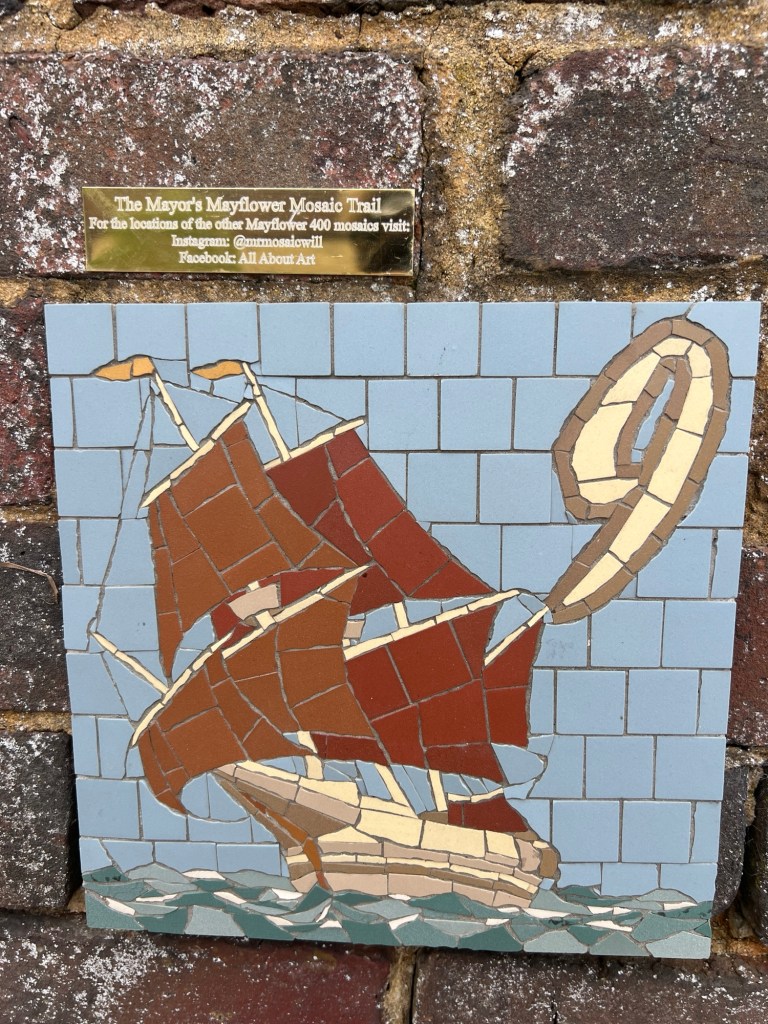
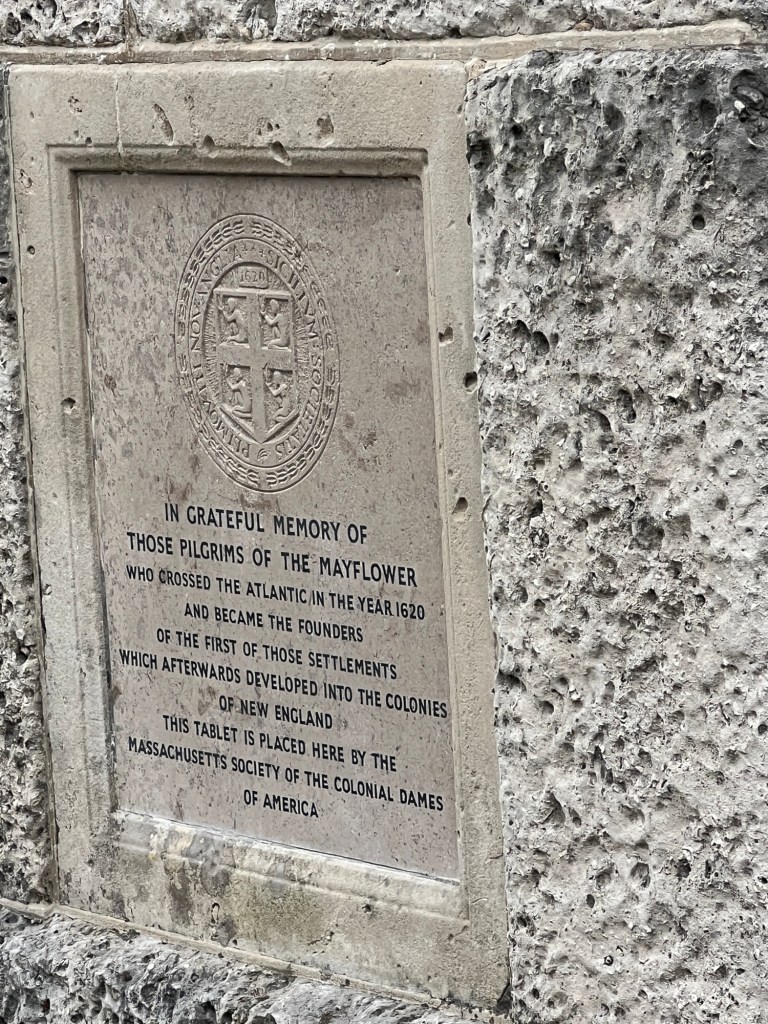
The Mayflower has significant historical connections to Southampton and we saw the monument as well as 2 of the 400 tiles on the Mayflower Mosaic trail.

Southampton was one of the departure points for the Mayflower’s famous voyage to the New World in 1620. The ship initially set sail from Southampton to Plymouth, England, where it met up with the Speedwell before departing for America.

Some of the Mayflower’s passengers and crew were recruited from Southampton and the surrounding area. While the majority of passengers boarded the ship in Plymouth, Southampton played a role in the recruitment and preparation process,

The Mayflower’s voyage is a pivotal moment in American history, as it carried the Pilgrims, who established the Plymouth Colony in what is now Massachusetts. The Mayflower Compact, signed by the passengers aboard the ship, is considered one of the earliest forms of democratic government in America.

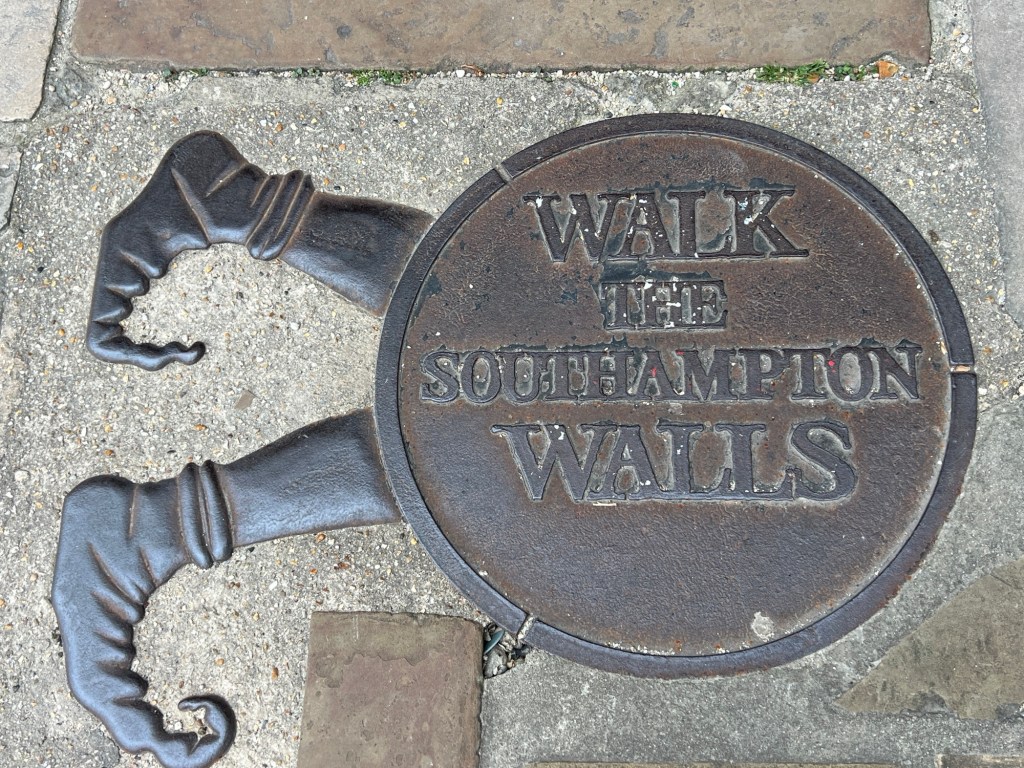
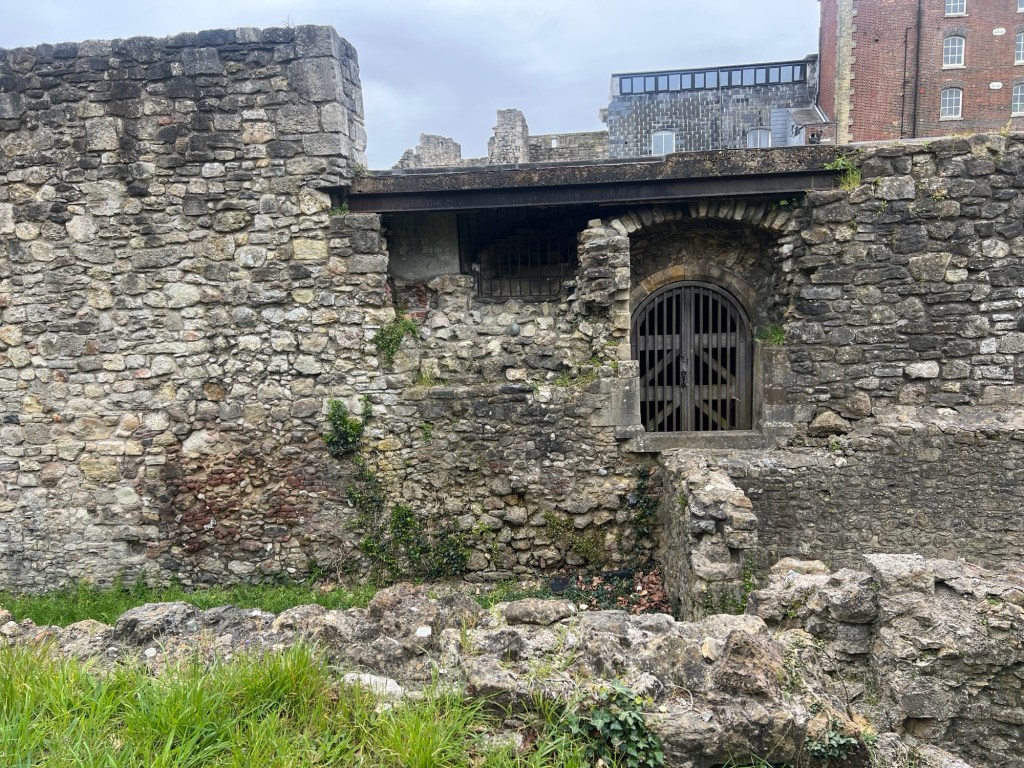
    We walked all through the historic area and what remains of the old walls.

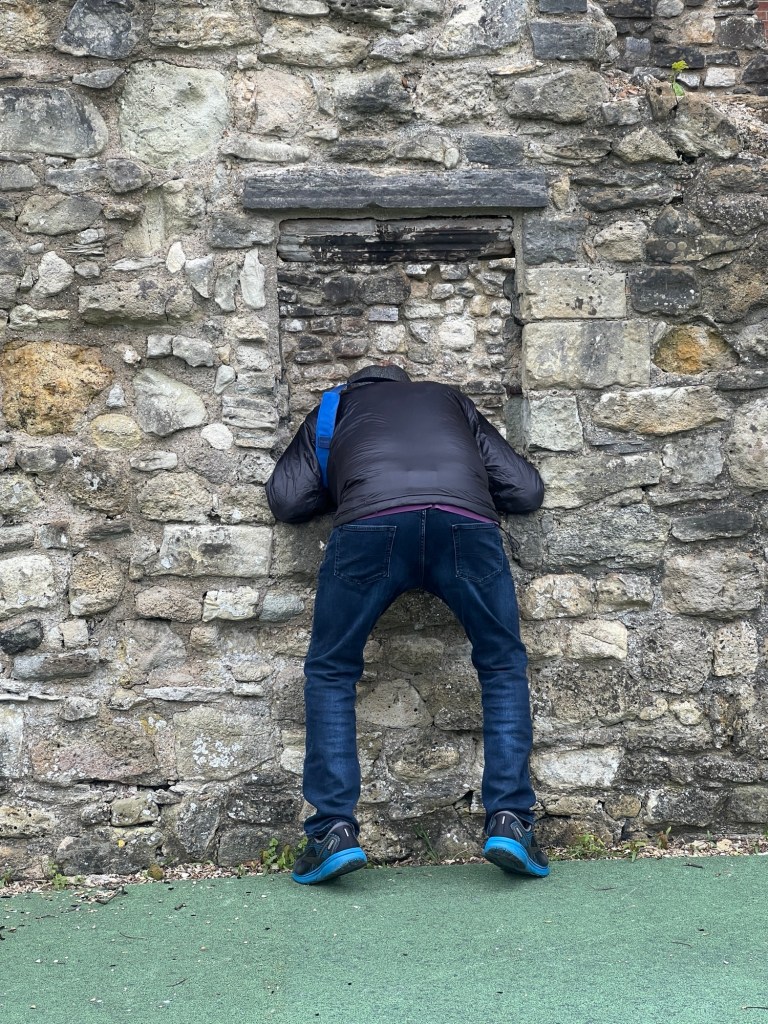
    Some people just can’t help it!

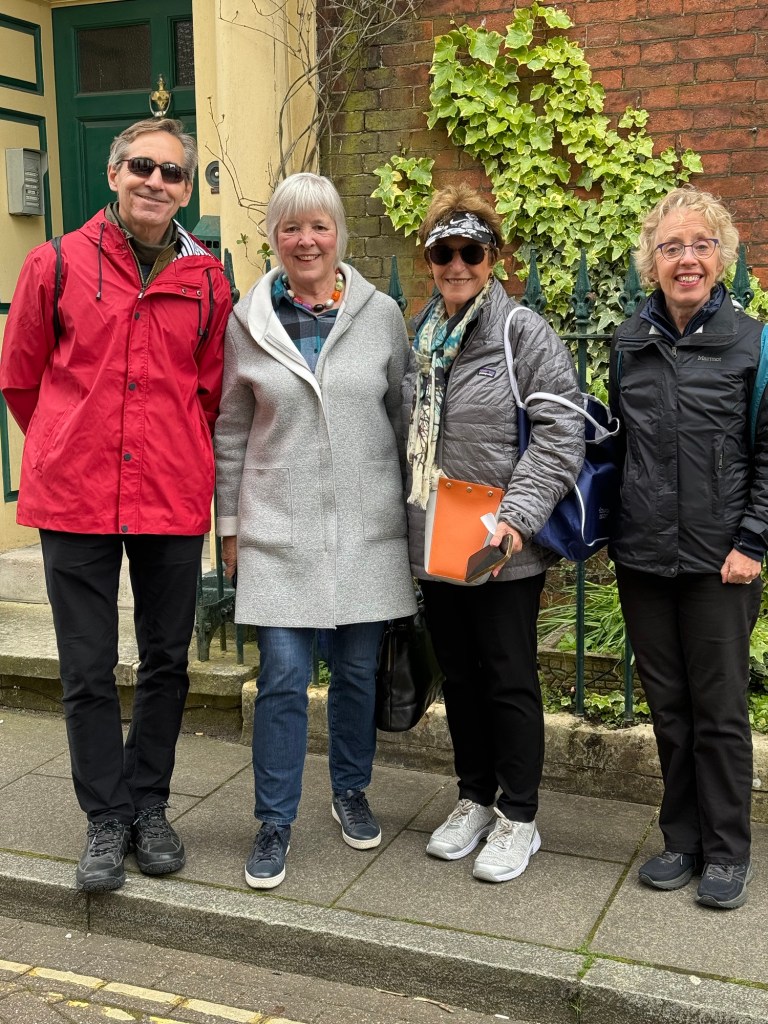
    To our surprise, we ran into James and Shelley in town. They had just been to the Tudor House and Museum and recommended it, but we opted to stay outside while the weather held up.

    There was an interesting tile wall. Each section showed some of the old city.

    And, in a modern touch, there are these defibrillator kiosks – a project of a man who lost his son to a heart attack. Hilary says they are found in many places in the UK.

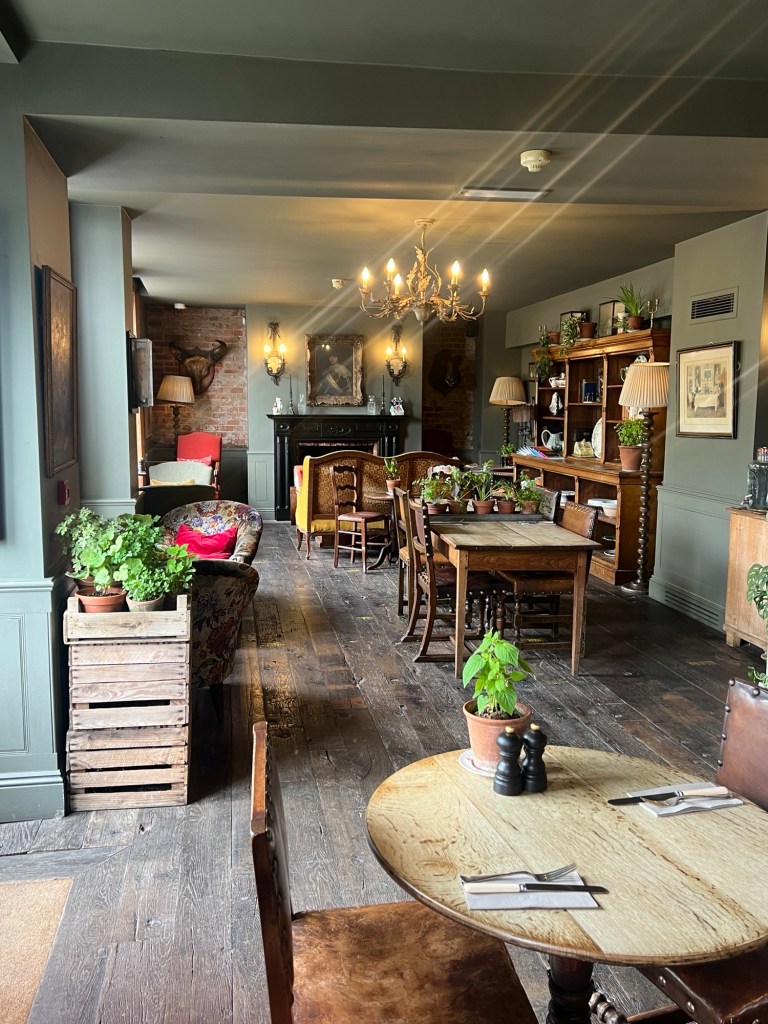
    The day was really about connecting with Hilary and she made reservations for 1 PM at The Pig in the Wall for lunch. It was starting to sprinkle so we went in a little early. What a charming place.

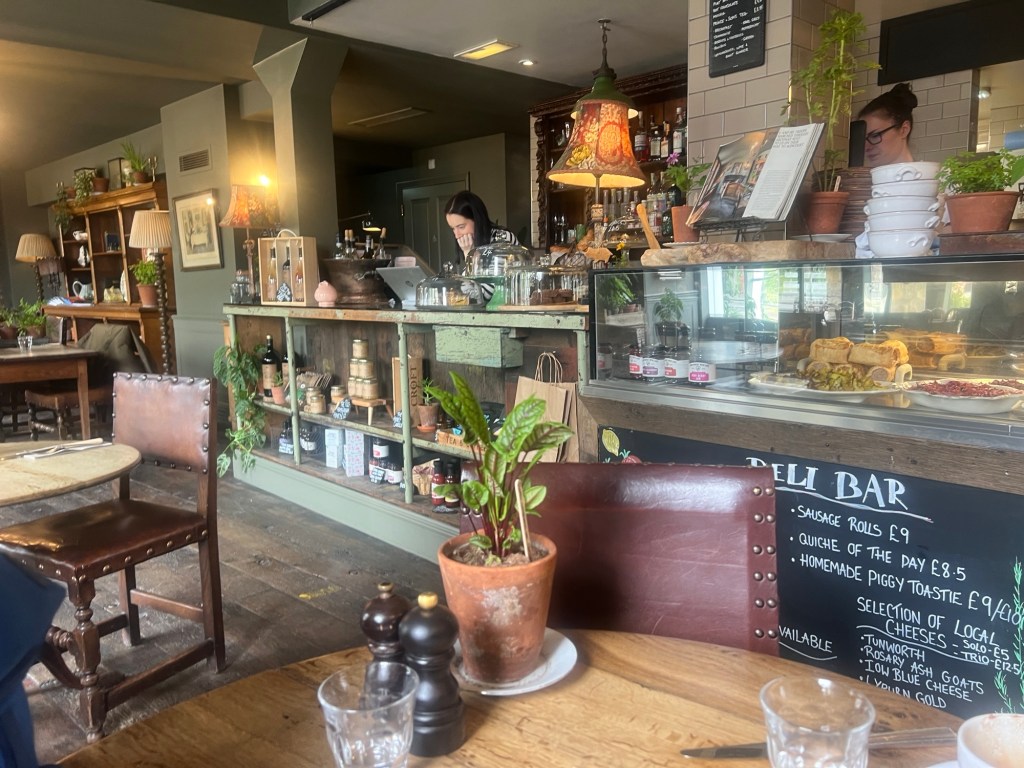
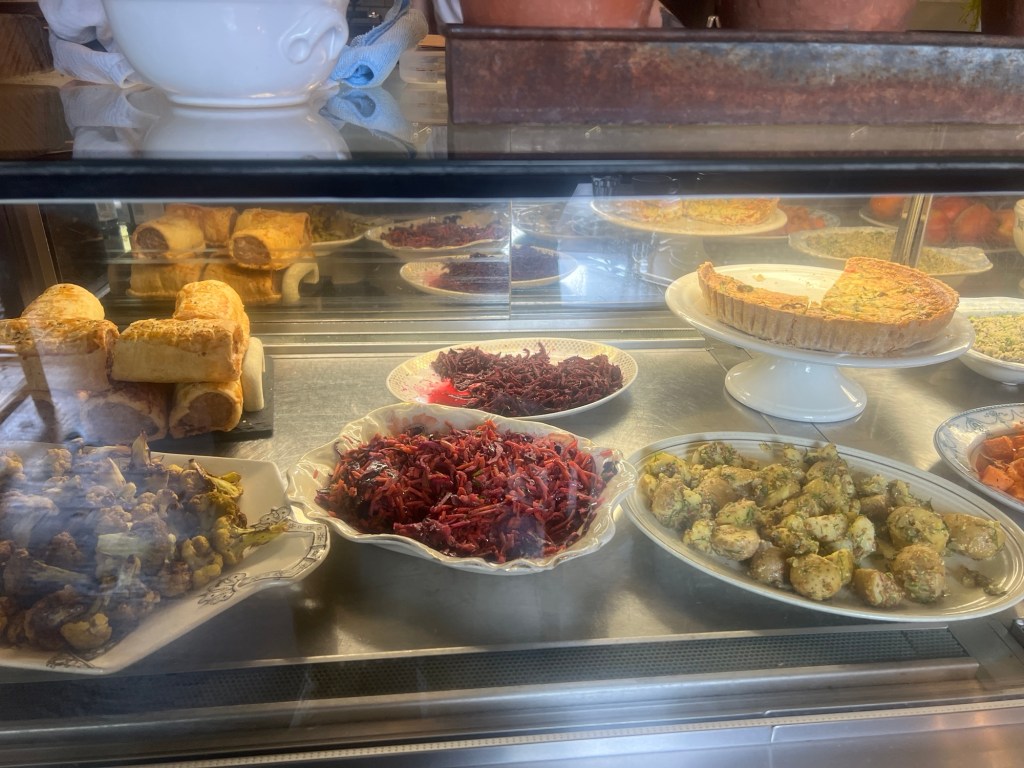
    We had a wonderful time. The server recommended the salad plate which Hilary and I opted for and Norm had a vegetarian charcuterie plate. We had wine too. Unfortunately we were so engrossed in conversation that I never took pictures of the great food. But here is a glimpse of the MANY vegetables on the mixed plate. It was a really good choice.

    Hilary bought me some of the honey made from the local hives. Can’t wait to try it.

    We shared a berry cake and cappuccinos to finish a terrific lunch. But the best part was being with Hilary and catching up. It was a leisurely lunch, just what we wanted.

    We said our goodbyes to Hilary with promises to see each other soon and headed back to the ship.

    Tomorrow is a sea day and on Wednesday we will be in our first port in Scotland, Edinburgh. Here is our itinerary for this segment.

    Posted in April, Europe, Food, Spring 2024 | 1 Comment

    St. Malo, France

    April 21, 2024

    I was looking forward to St. Malo because I remembered it so well from the trip our son Mark and I took with good friend Jim and his daughter Jamie. We also went to Mont St. Michel during that trip and it is our destination today. Norm was not on that trip so it is his first visit here.

    This is a tender port so everyone has to wait until the ship is anchored . Here are some pictures from our room during the sail in.

    We arrived at the pier and met our guide for the day, Natalie.

    She was an exceptional guide! She explained that we are in Brittany and St. Malo is a peninsula in the western part of Brittany. We are headed to Normandy where we will visit Mont St. Michel. She said that in Britany, they are jealous of Normandy because they have the famous Camembert cheese, and jealous of Bordeaux to the south because they have wine. Brittany has neither, but what they do have is the best half salted butter in the world because of the type of cow they have here. The cows produce 20 pints of milk/day each.

    More about St. Malo later.

    There are some lovely homes and sights along the way to Mont St Michel.

    She also gave us a 5 minute French lesson! Voila, oo la la, eww, and petit – she says these are the words that the French use in almost every sentence!

    French became the official language in the 1930’s. Before that Breton was spoken here. As French became more common, children had to wear a donkey hat if they spoke Breton in school. Now there is a movement to preserve Breton language.

    Before World War II, all women here wore a costume with a distinct headdress representing the region or village in which they lived.

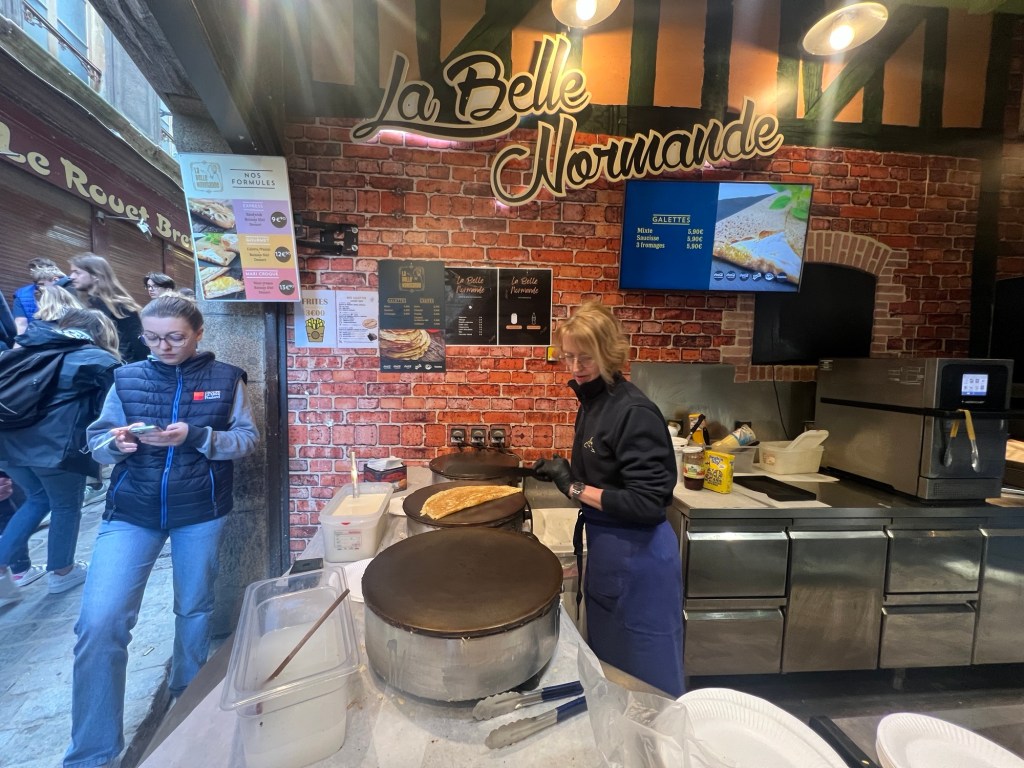
    Typical foods in this area are crepes made of buckwheat with either sweet or savory fillings and ciders.

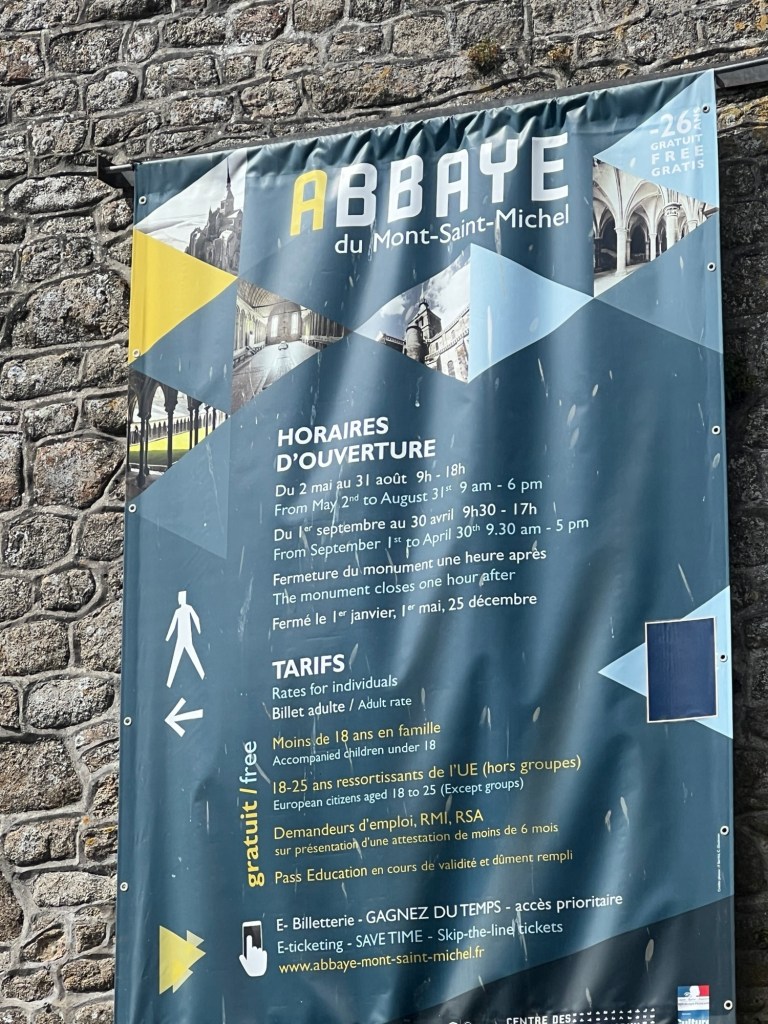
    When we reached Mont St. Michel, Natalie gave us our tickets and we waited for the shuttle to take us to the Abbey. When some people tried to cut in line, she gave them quite a talking to and they got behind us! I like her.

    Things are different from 25 years ago, of course. There was no shuttle and no bridge to the Abbey. The tides closed off access during high tide. Now there is a bridge and the tides are only high enough to close access 5 times a year. Which makes it much easier for the 10 million people who visit each year. It is still the highest tidal change in Europe, a 15 meter difference between high and low tides.

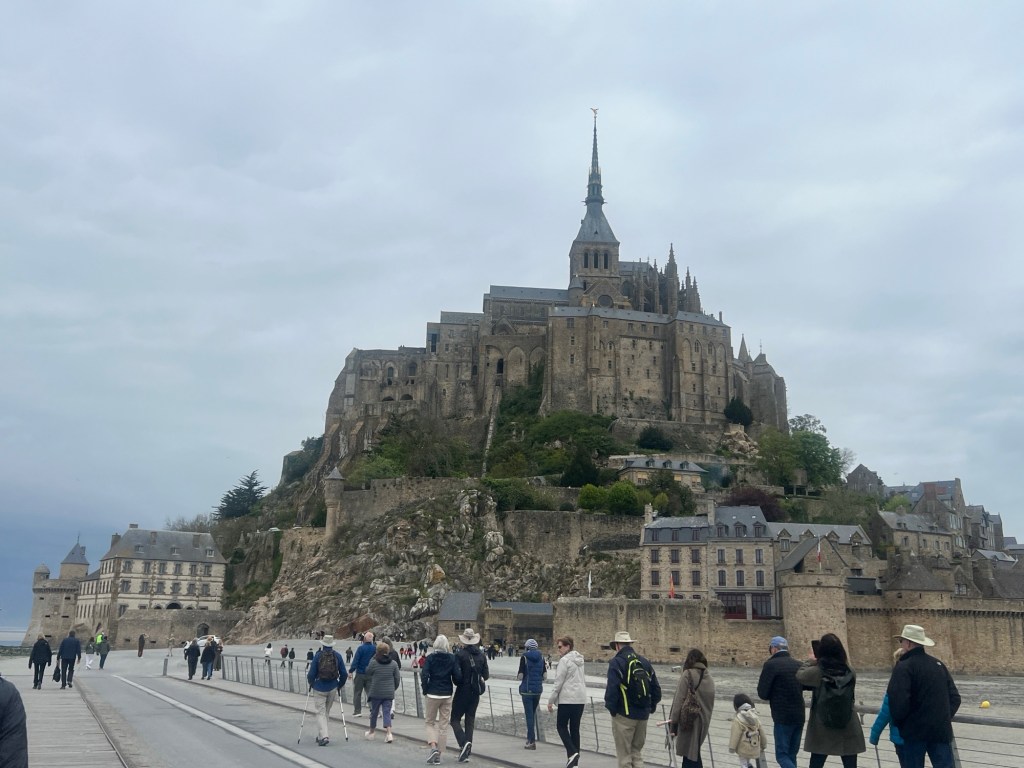
    Here is our first glimpse of the magnificent sight.

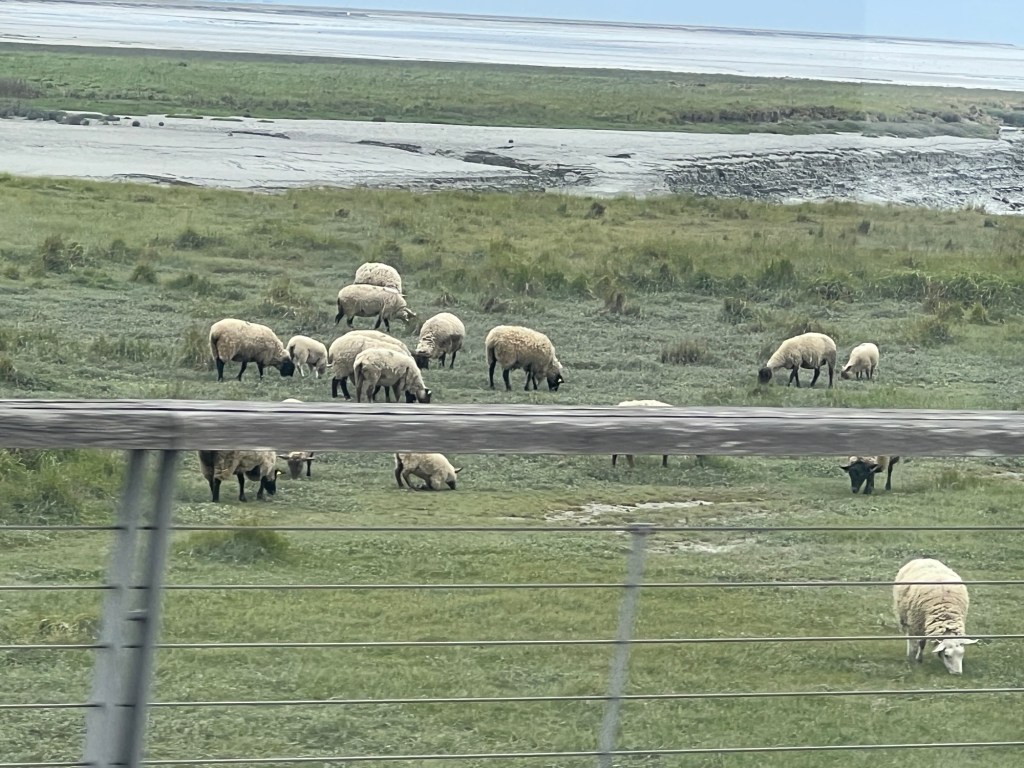
    Lots of sheep nearby

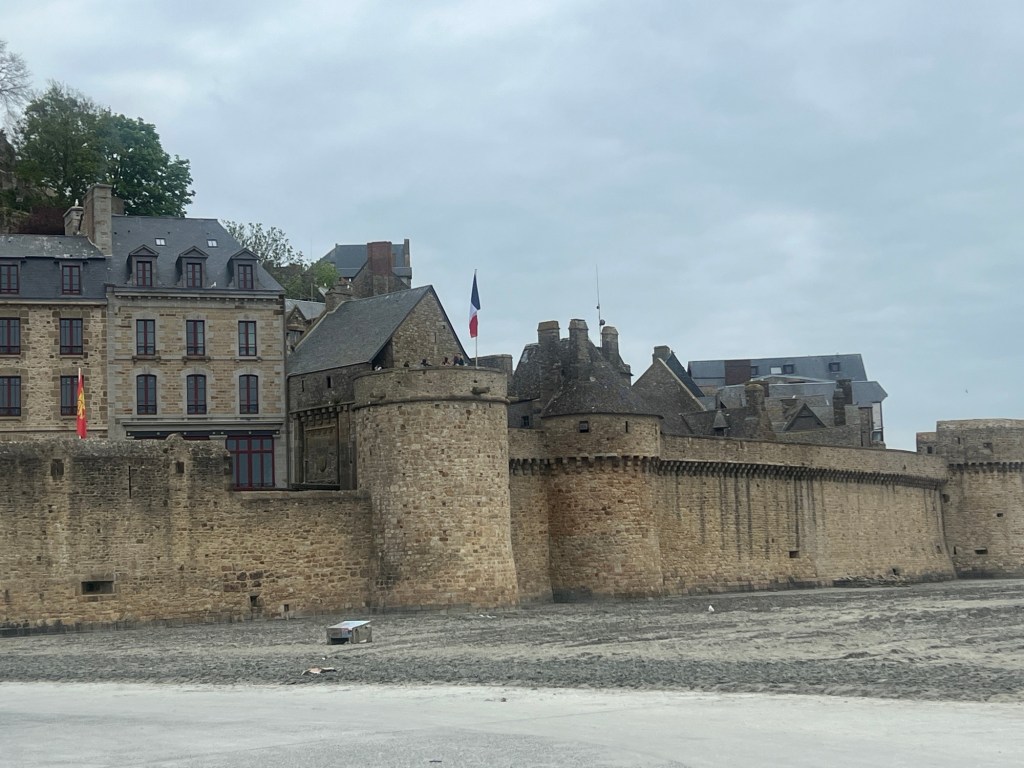
    Natalie gave us a lot of information as we approached. The most prominent feature of Mont St Michel is its medieval abbey, perched atop the rocky island. It’s a masterpiece of medieval architecture and has been a place of pilgrimage for centuries. It has also been used as a prison and a fort over the years. It is built in layers, the first of which was built in the 700s and added to over the centuries. 40 people live in the village surrounding the Abbey, so most of the people we see operating the shops, etc, live in the outside area, but anyone can buy or rent a house here is one is available.

    Mont St Michel and its bay were designated as a UNESCO World Heritage Site in 1979. It’s recognized for its exceptional cultural and natural significance. The bay of Mont St Michel is also home to other attractions, including salt marshes, quaint villages, and historic sites.

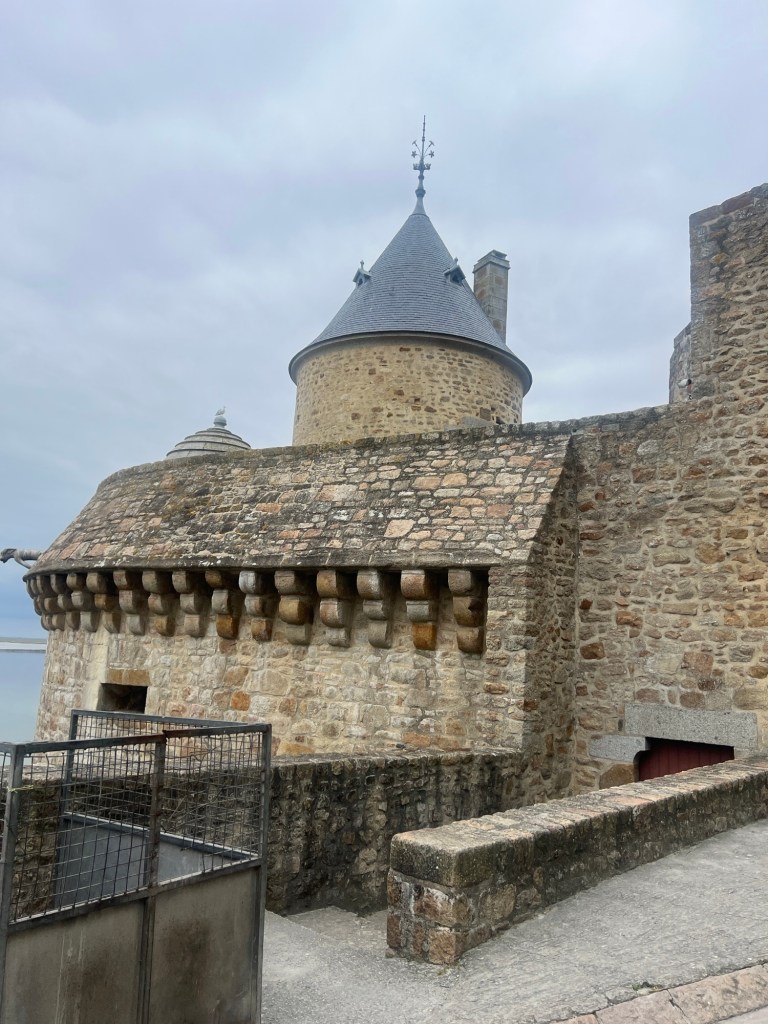
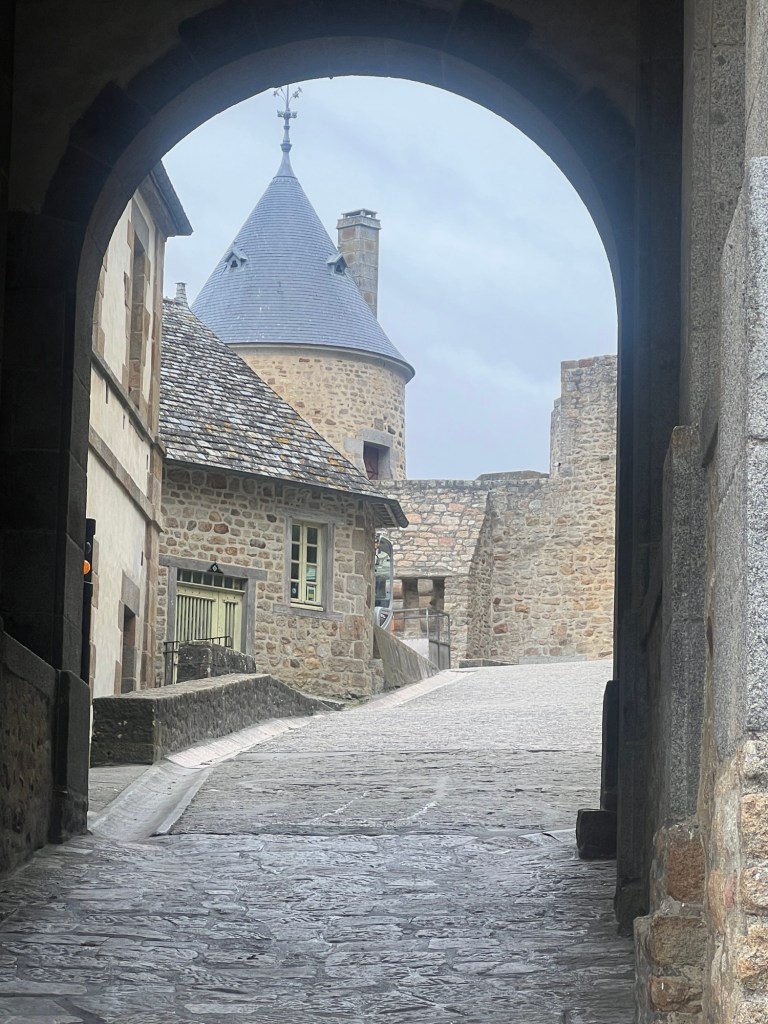
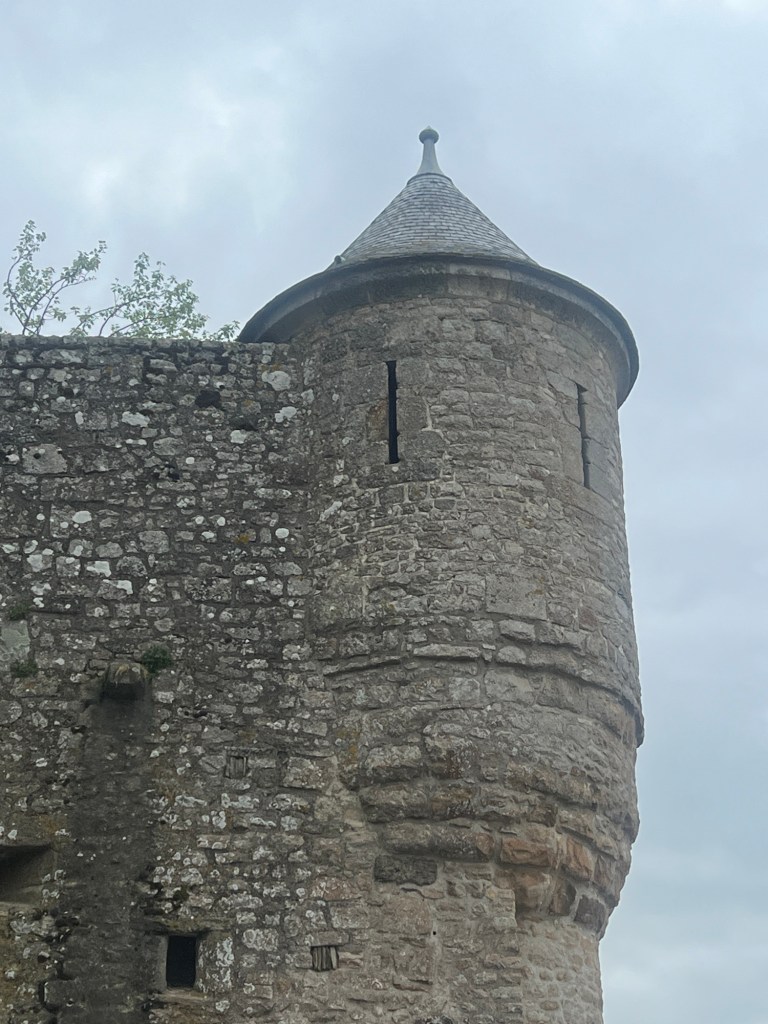
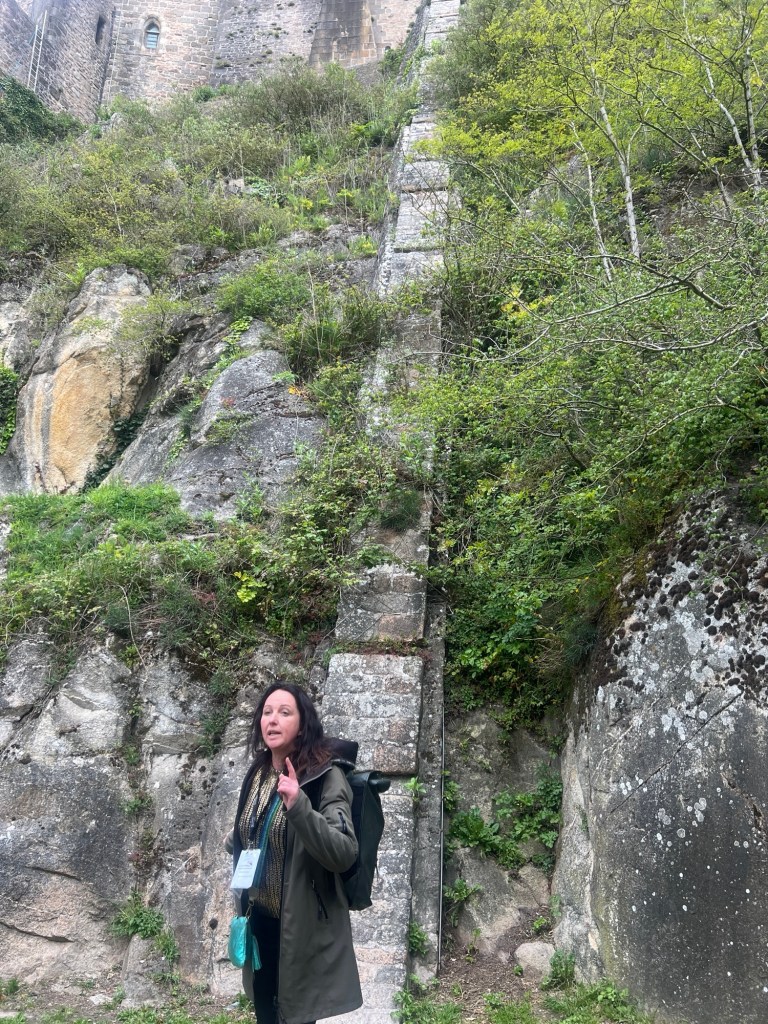
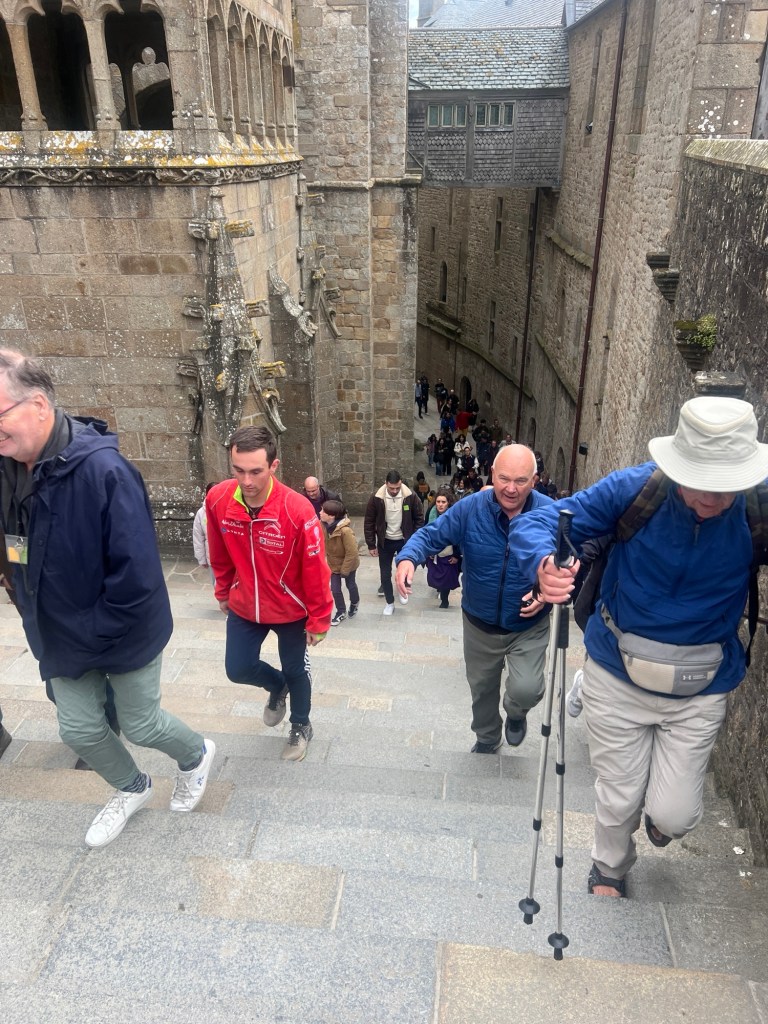
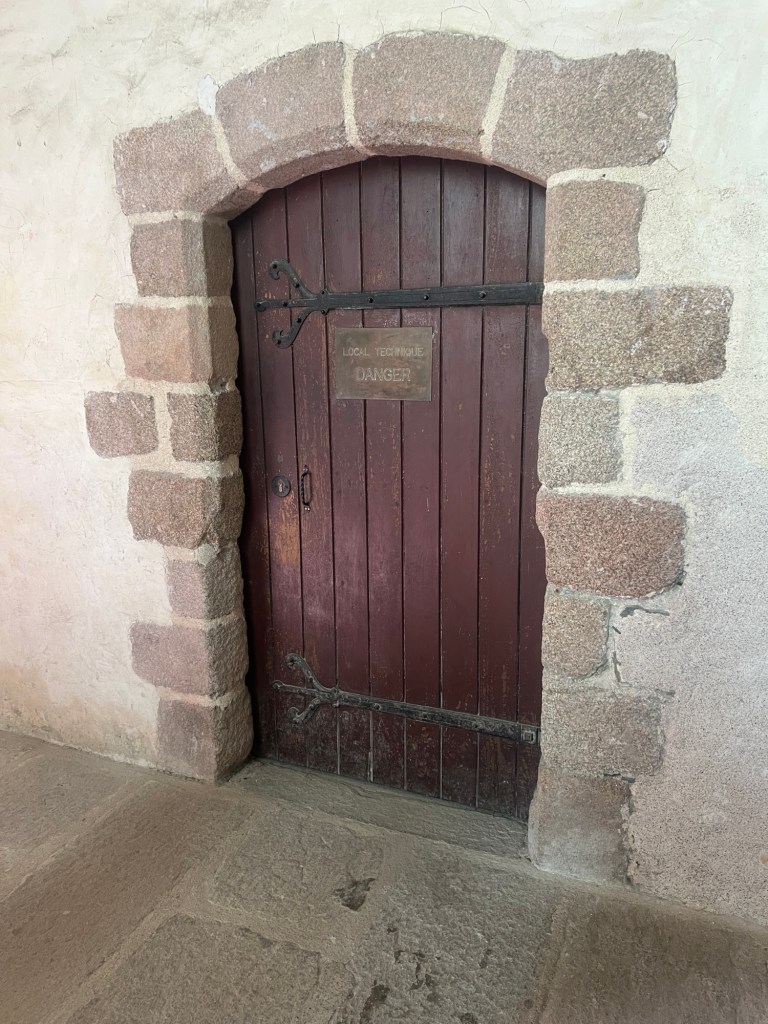
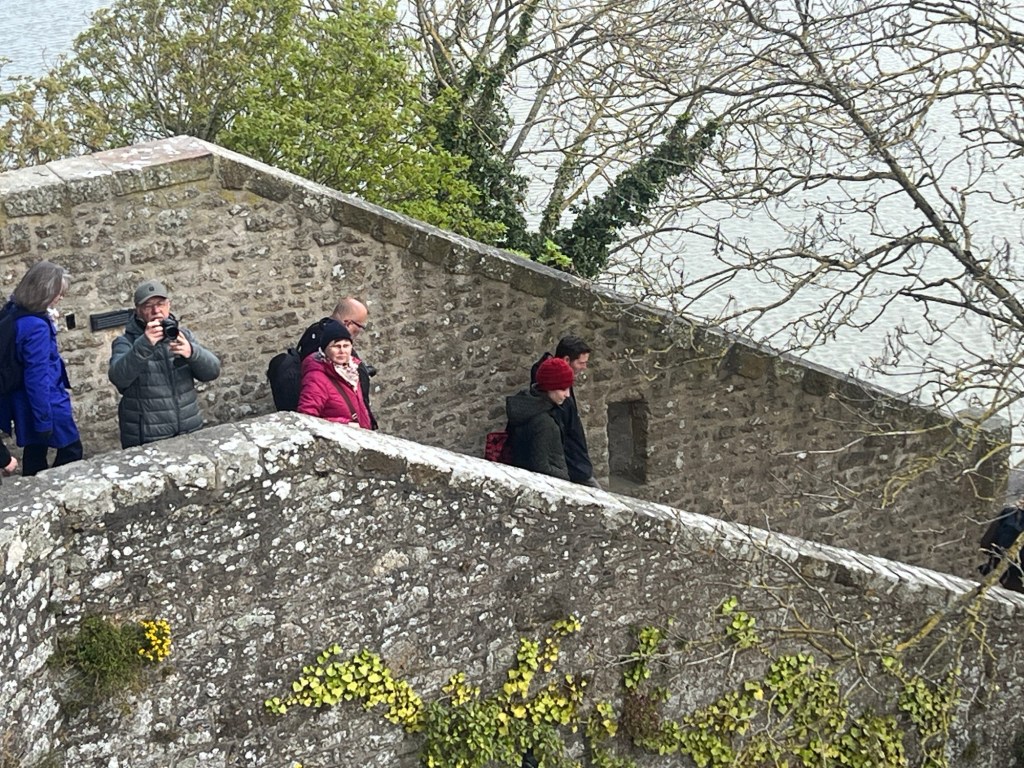
      Natalie took us into an entrance that most of the visitors do not use which saved us about half of the 400 steps it takes to reach the Abbey. We went on a mixture of winding paths and steps. Along the way, we saw some of the ramparts from the fortress days.

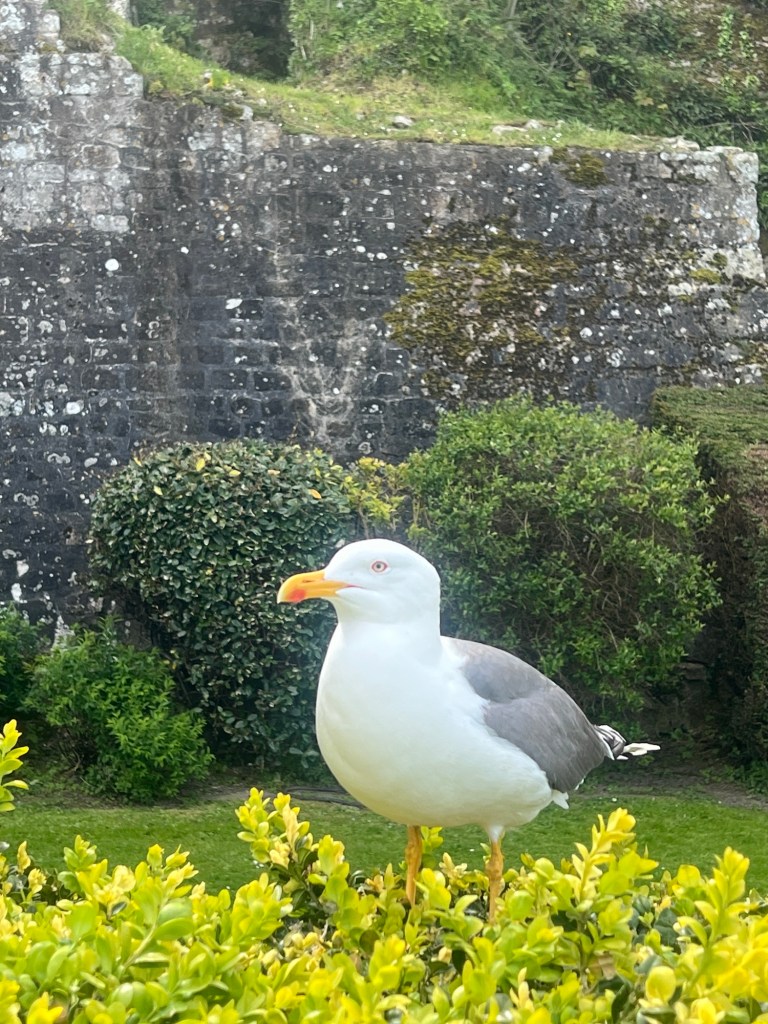
      There are “resident” seagulls who just are not afraid of the visitors.

      This was a kind of early escalator which was powered by a wheel that men moved like a hamster wheel from inside.

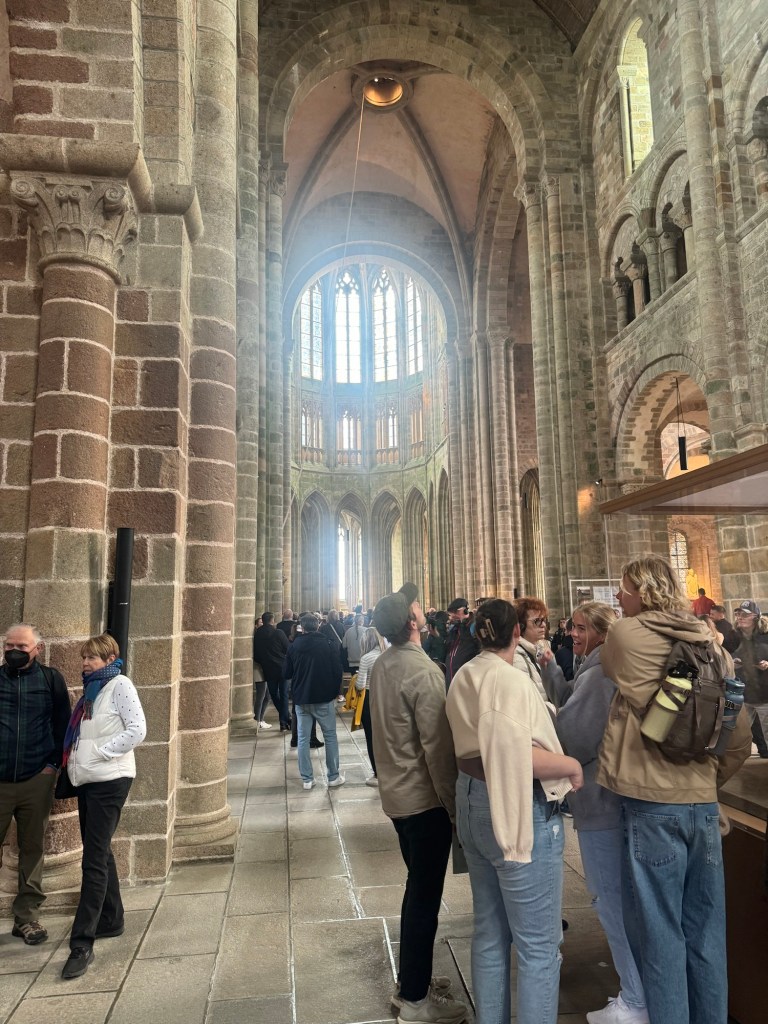
      It is a Sunday so we saw people with green stickers who are coming to the Abbey for mass. It was just about starting as we got all the way up to the Abbey and the organ music filled the room. We saw nuns and a priest carrying a cross, but there were too many people there to get a clear view.

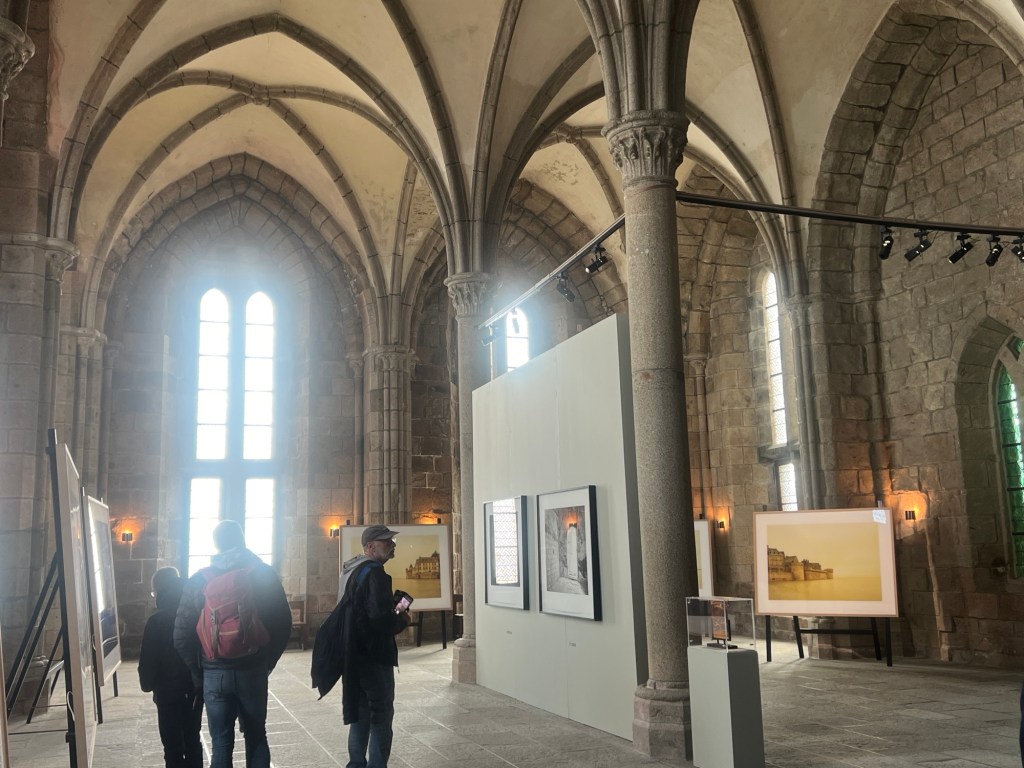
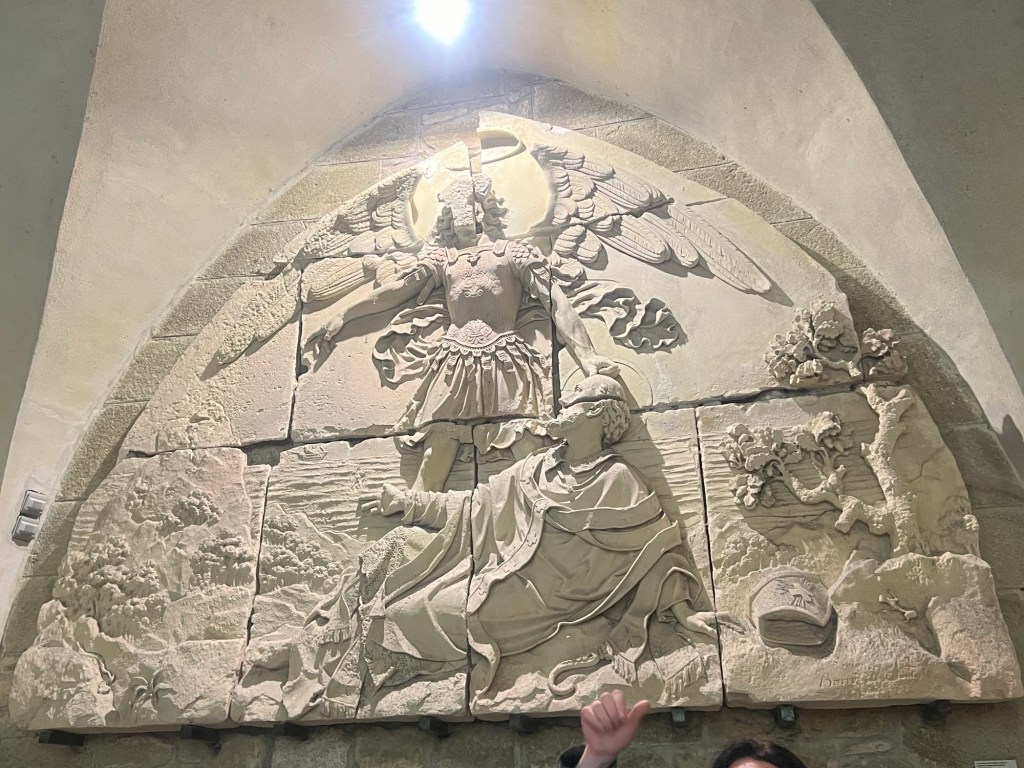
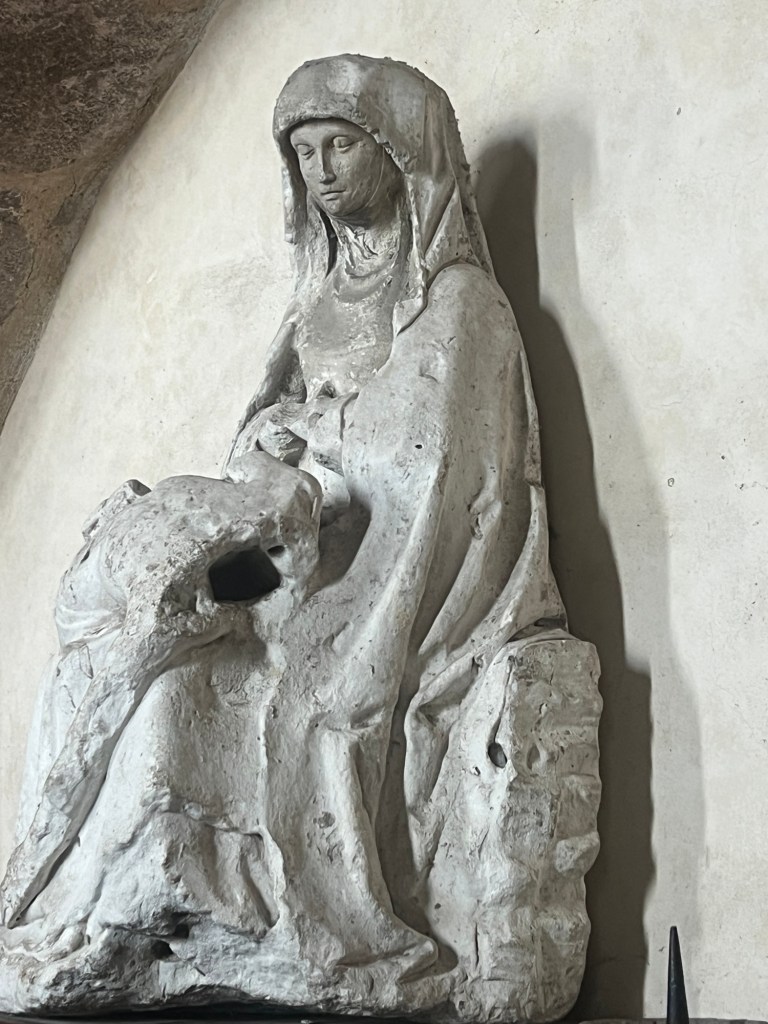
      We walked all through the Abbey and its many layered rooms and on many steps. Natalie explained the history along the way.

      These people are standing in a fireplace!
      The refectory
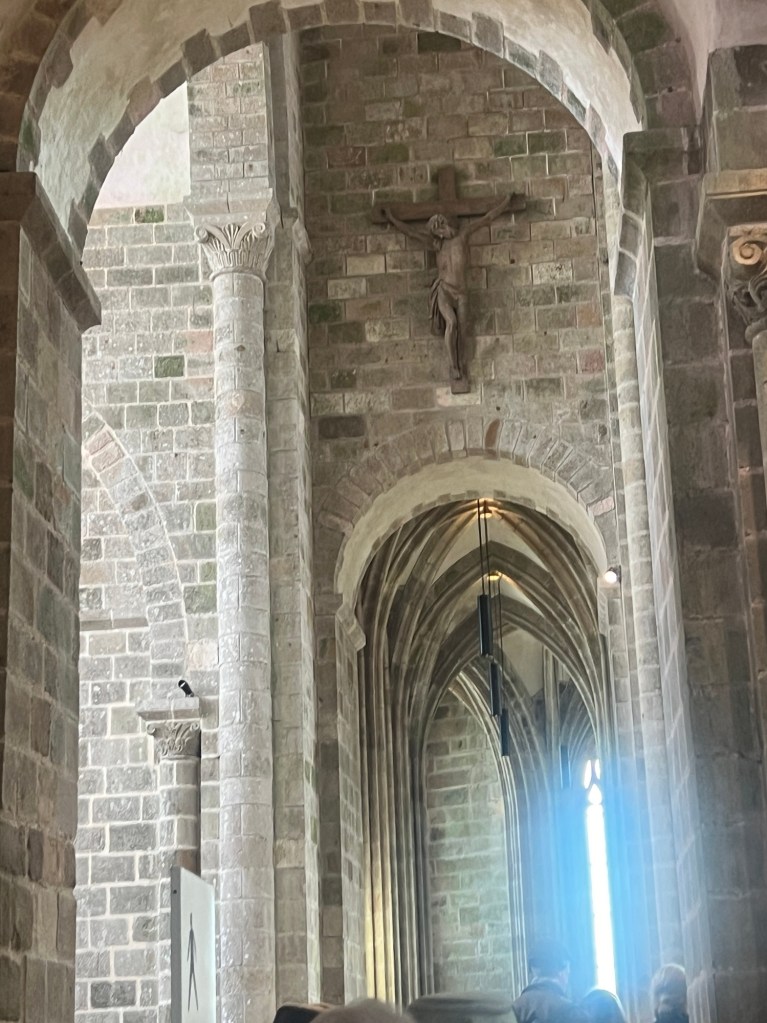
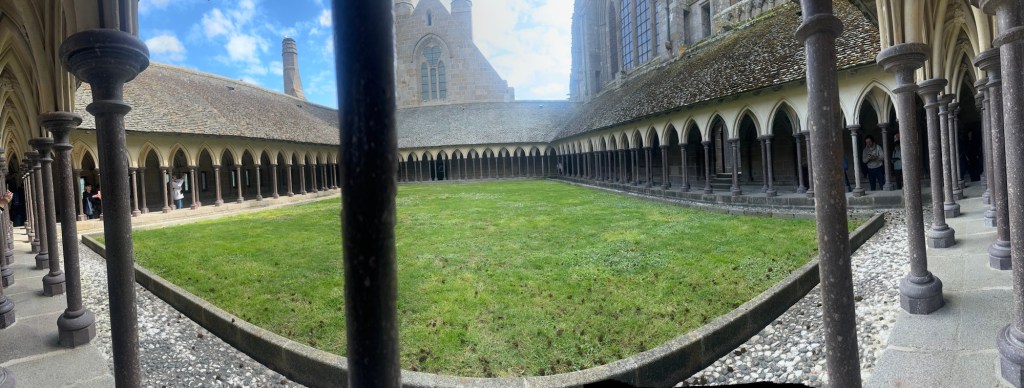
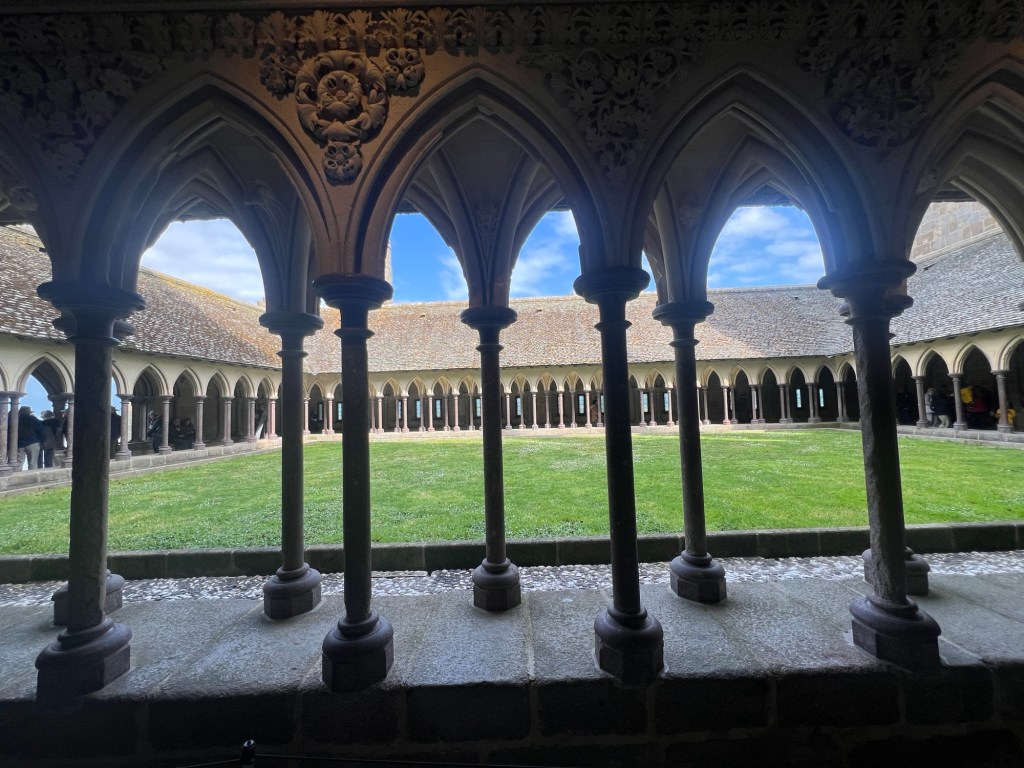
      The thick columns required to build in layers, Gothic design
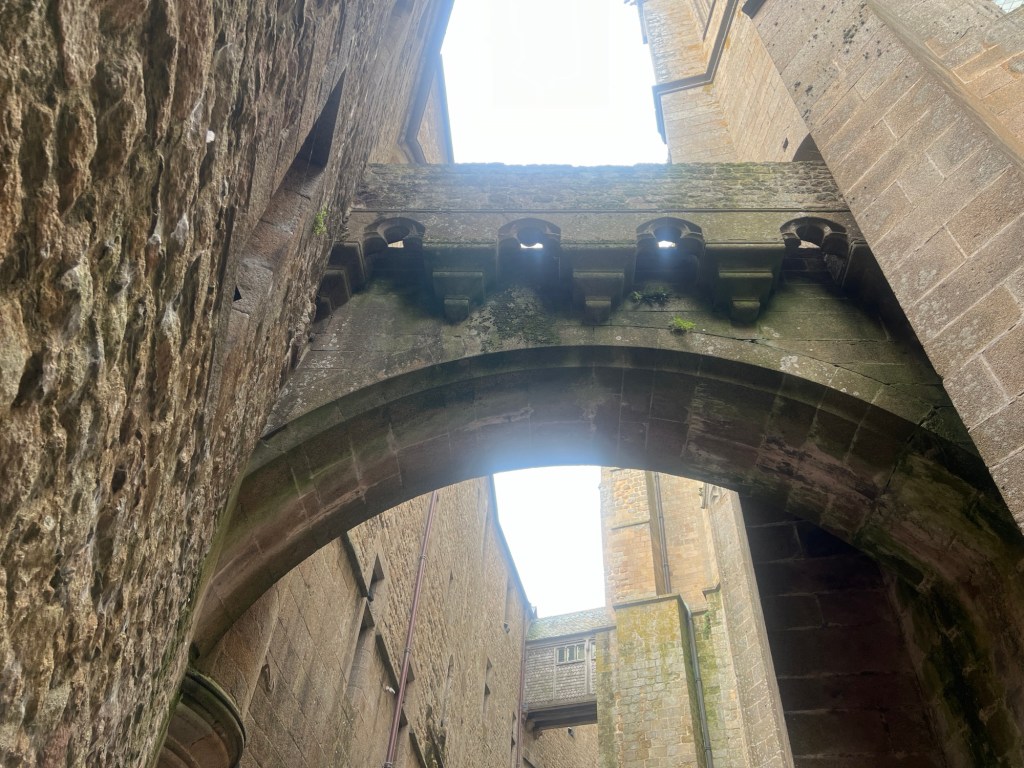
      Thick walls too
      The tidal basin and bridge
      You can see that it was a cold day, high of 49 degrees
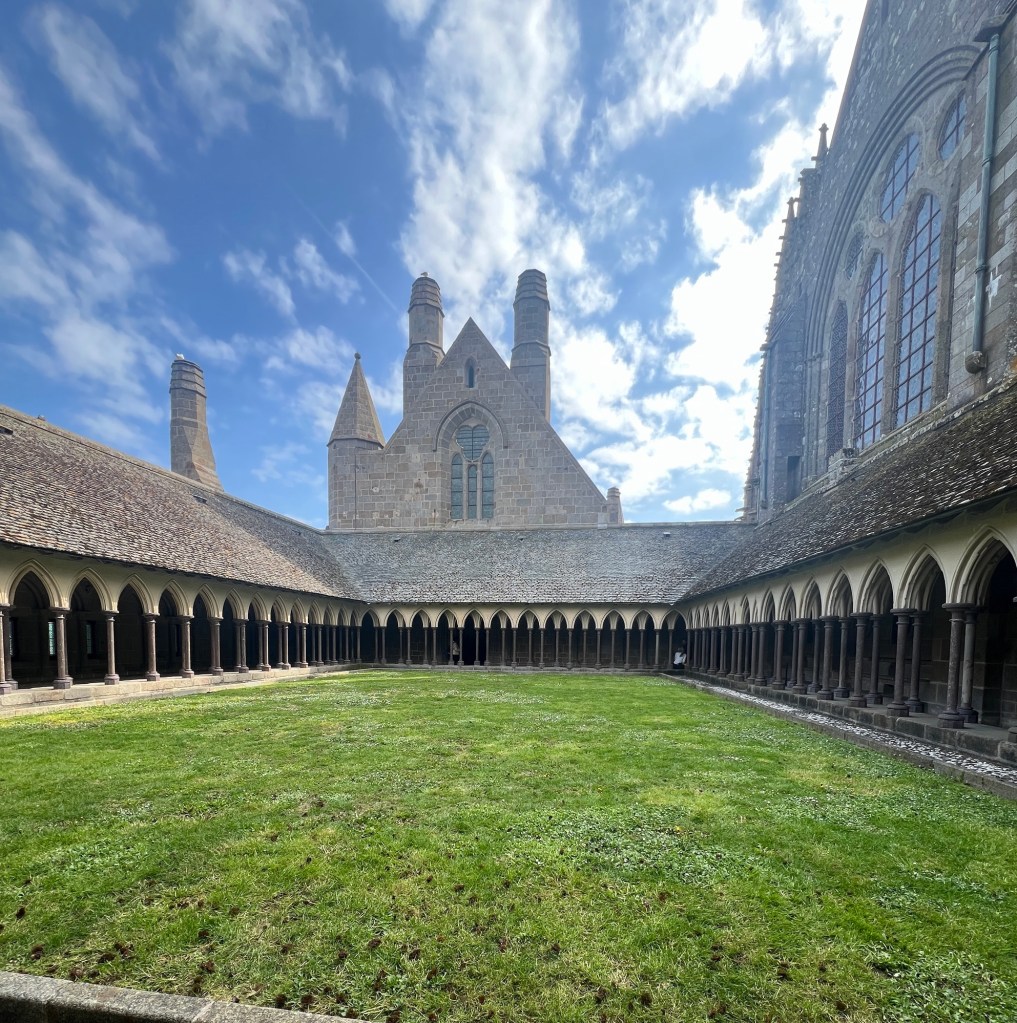
      The courtyard

      After our fabulous tour we had some free time to walk through the village and the shops so of course I had a cappuccino and a crepe with chocolate. Norm had a panini sandwich and a Fanta.

      Making my crepe
      Yum

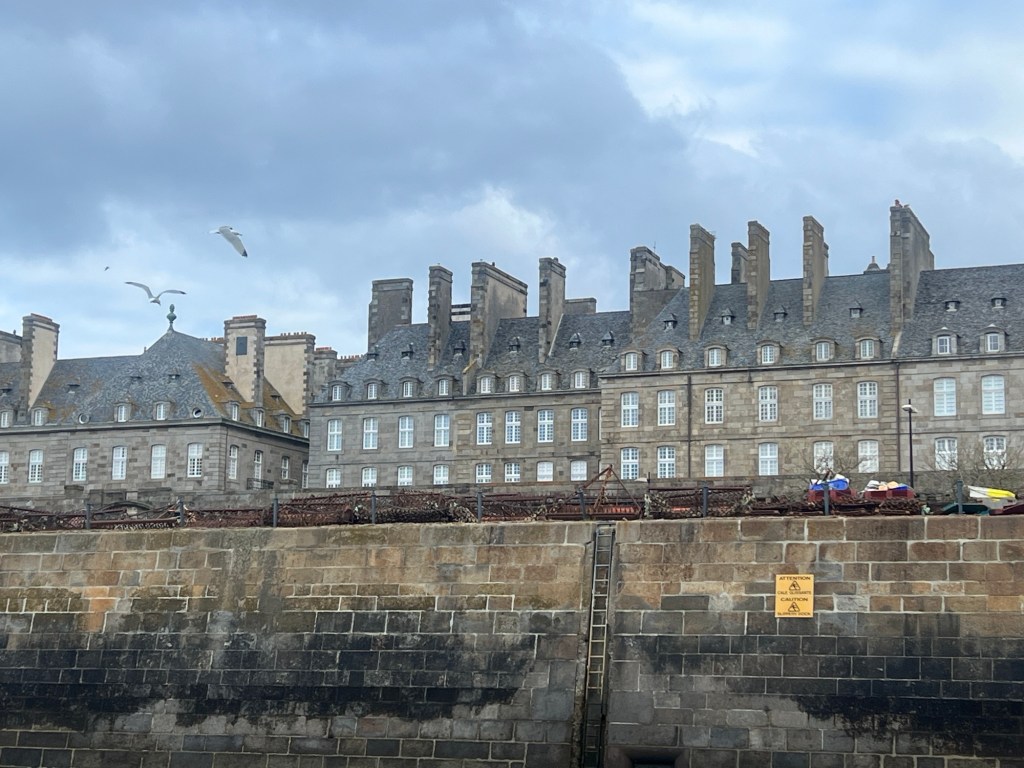
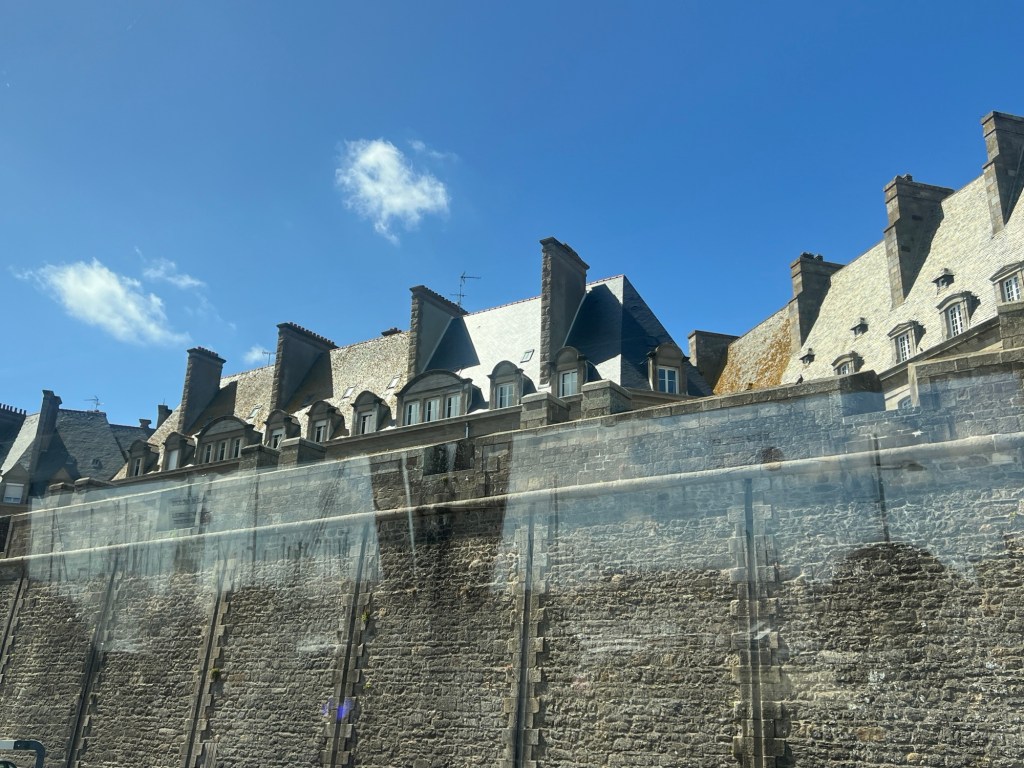
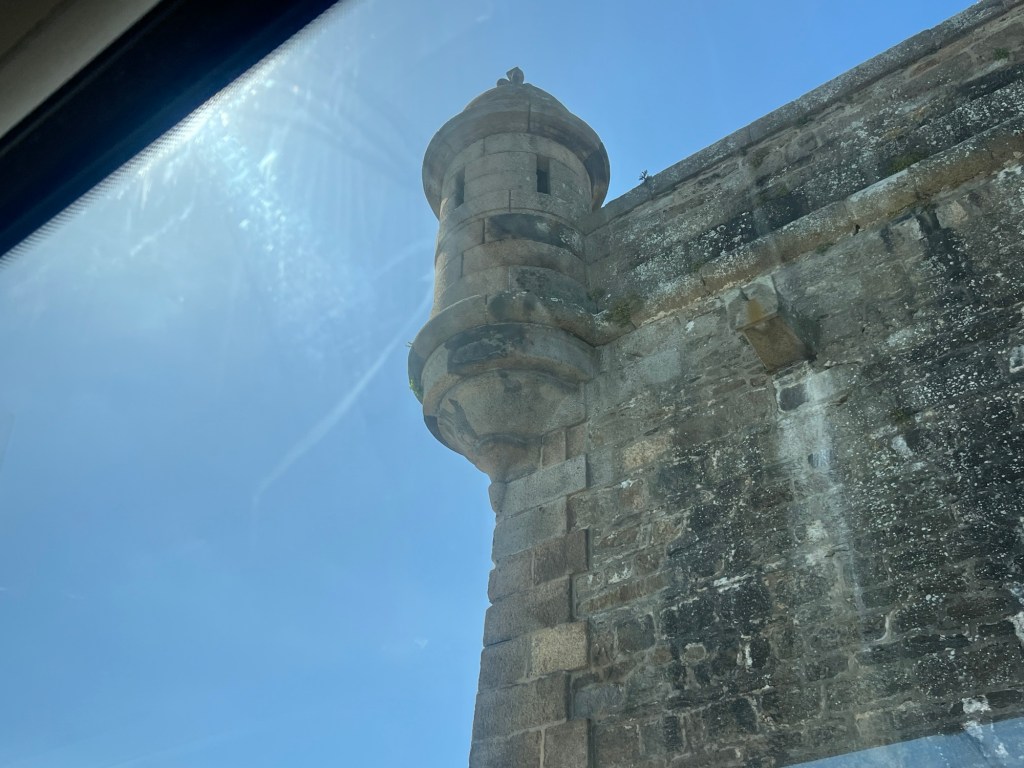
      The bus took us back to St. Malo and Natalie gave us information about the city. The population is 42,000. It is a walled city dating back to 800. Unfortunately it was 90% destroyed by allies in 1944 in World War II because they thought Germans were hidden here. So the stone from the rubble was used to rebuild the walls and the city.

      The book and Netflix series “All the Light You Cannot See” was filmed here. I read the book a while ago but saw the series within the past 6 months and yes, I did cry when watching it. I will have to see it again to notice the city.

      We thoroughly enjoyed the day and our guide, Natalie.

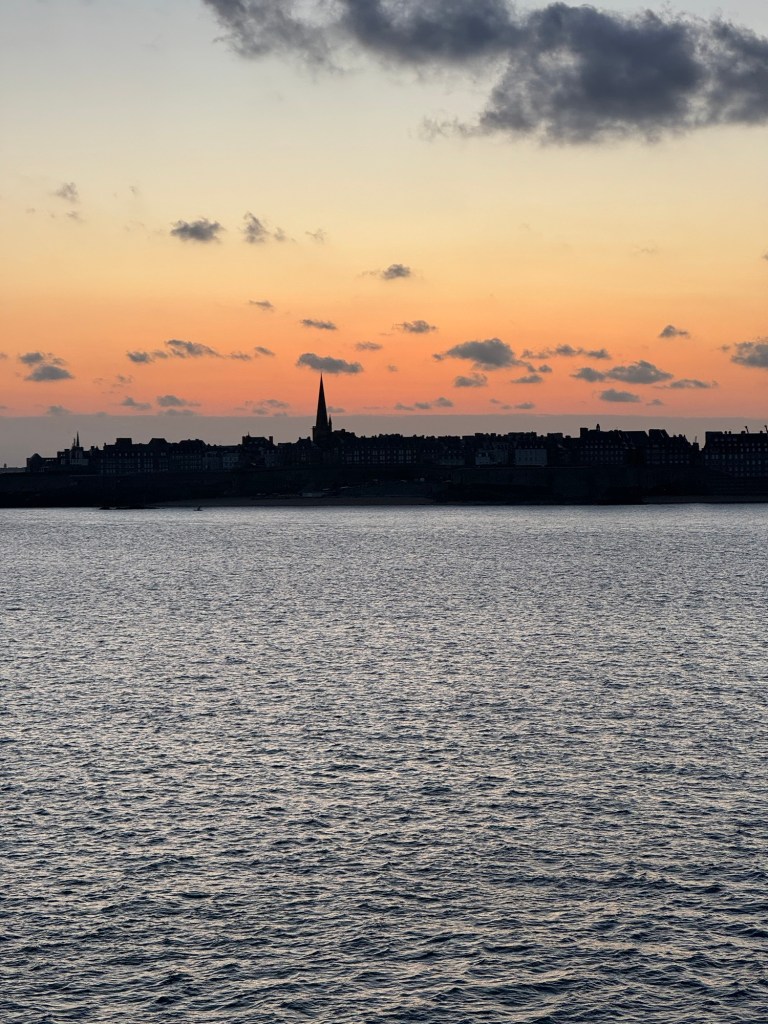
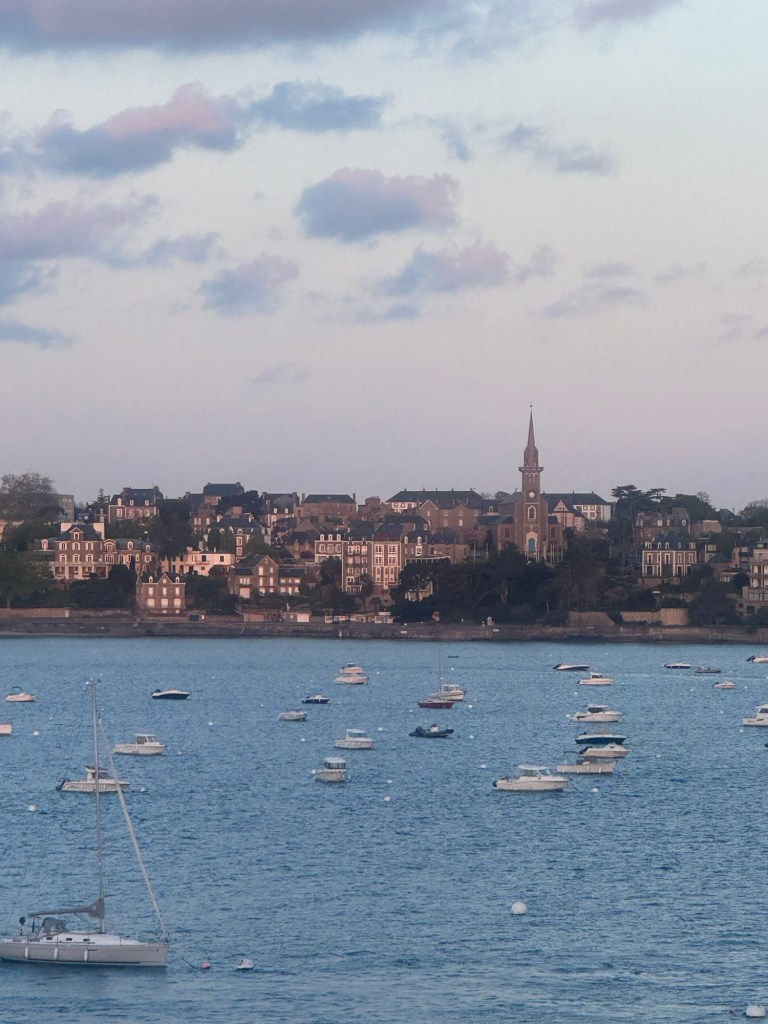
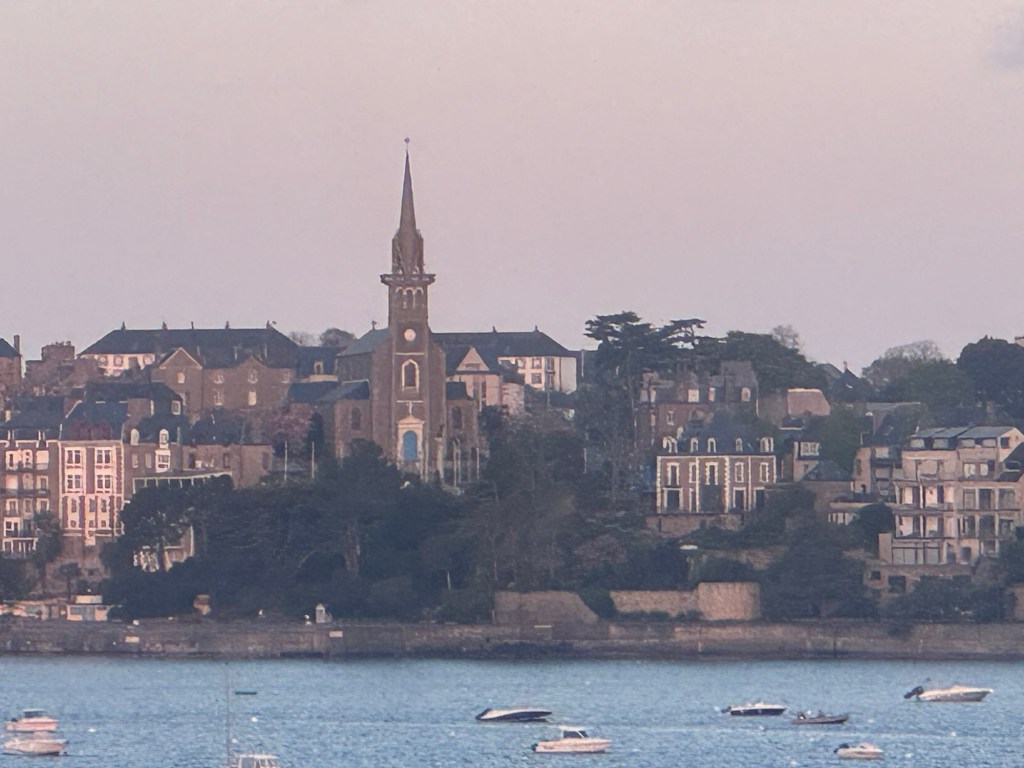
      St. Malo from the tender.

      Posted in April, Europe, Excursions, Food, Spring 2024 | 2 Comments

      Lisbon, Portugal

      April 18, 2024

      Happy birthday, Adam! Our son does the technical work on this blog and today is his birthday.

      When I re-read the description of our tour for today, I realized that we would be in Setubal (we have been to Lisbon many times), and that a colleague from one of the cohorts I directed at Georgetown had moved here with her husband. So I contacted her to see if she would be in town and was delighted to hear that she would be and was free to meet us.

      We sailed in to Lisbon harbor while it was still dark. These pictures were taken just as dawn was breaking.

      Our tour to Setubal was Meet Locals at the Market and Fishermen. We got caught in some traffic due to an accident and the bus driver was able to move through and take another route after just a short delay.

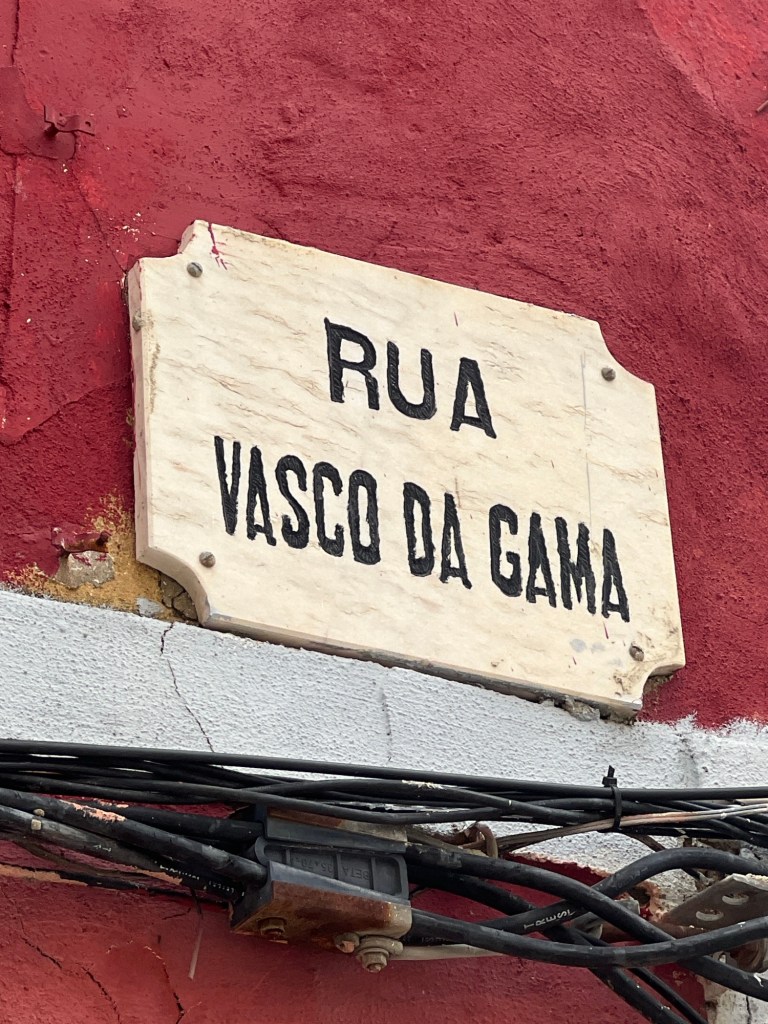
      We crossed the 8.2 mile long Vasco de Gama bridge which is near the hotel where ICF had a meeting 2 years ago. Our guide was Miguel.

      He was a very informative guide and during the trip he gave us a lot of facts about Lisbon. The population of the city was around 800,000 but is now only 500,000 as many people can’t afford to live here and are moving to the suburbs. With the suburbs the population rises to 2.8 million. Portugal’s total population is about 10.3 million.

      We know that Portugal produces 60% of the world’s cork and 90% of all wine corks. What I didn’t remember was that it takes 9 years before you can remove just the outer layer of cork, then you have to wait another 9 before getting more.

      We saw many more white stork nests and an area where there are flamingos and where people go clamming as well as seeing the salt flats. The flamingos and storks used to come in March and go back to Africa in October, but due to climate change and plentiful food, they stay all year. Lots of rice is grown here and there are small crabs that eat the roots of the rice plant. Luckily this is the plentiful food that the storks love, so having them stay all year and eat crabs saves the rice crops!

      Here is a tower with many nests – maybe a stork condominium?

      Many tomatoes are grown here and they export a lot of them to Heinz which started when Senator John Heinz was married to Theresa who was Portuguese. He died in 1991.

      There are 2-3 crops/year due to the temperate weather.

      When we arrived in Setubal, we went to the fishermen’s area first. Joy met us there! Setubal is located southwest of Lisbon on the Saco River. There are no bridges over the river but miles of beaches can be reached across the river by ferry.

      This is an umbrella pine tree which produces pine nuts. They are very expensive due to the way they need to be harvested.

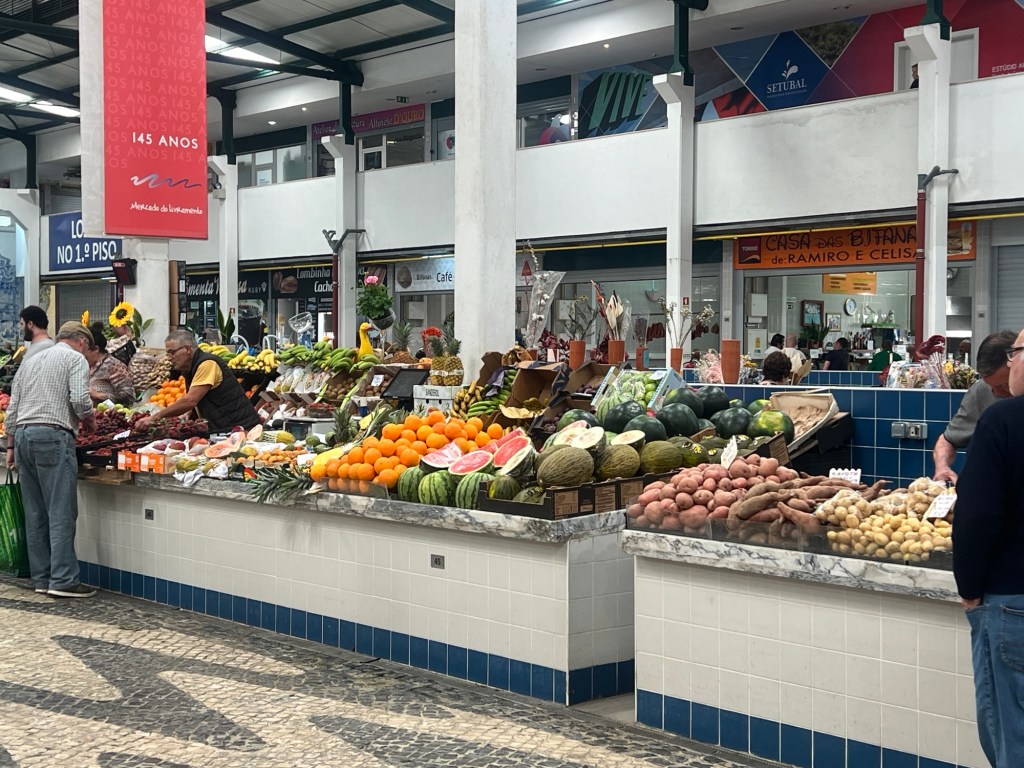
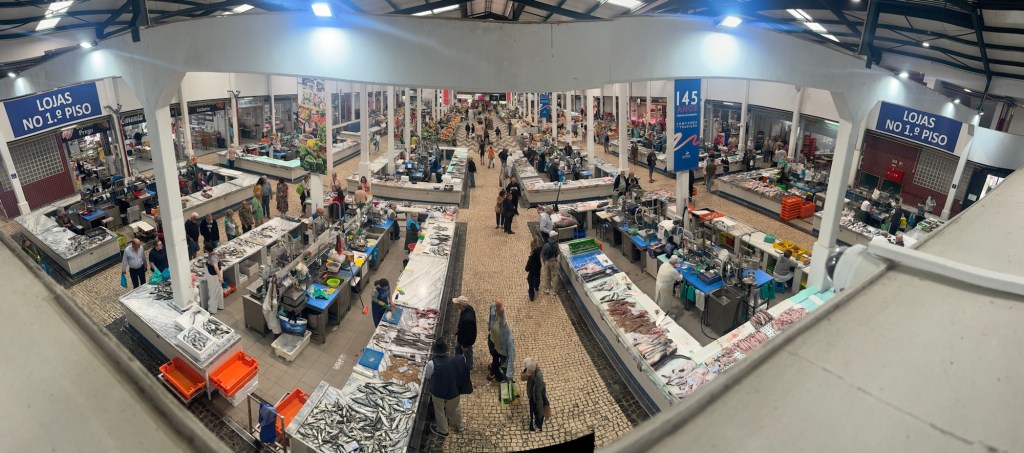
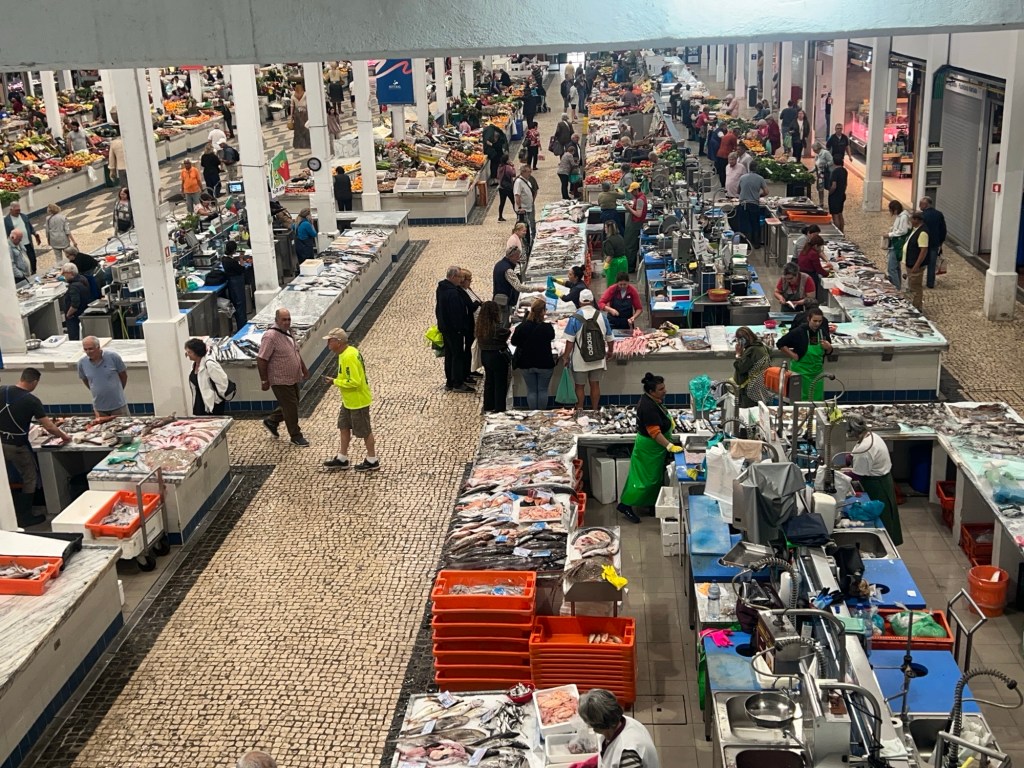
      We walked to the market which Miguel told us is rated one of the 10 best markets in the world. And Joy had told us that the strawberries are in season and we must get some. They were delicious.

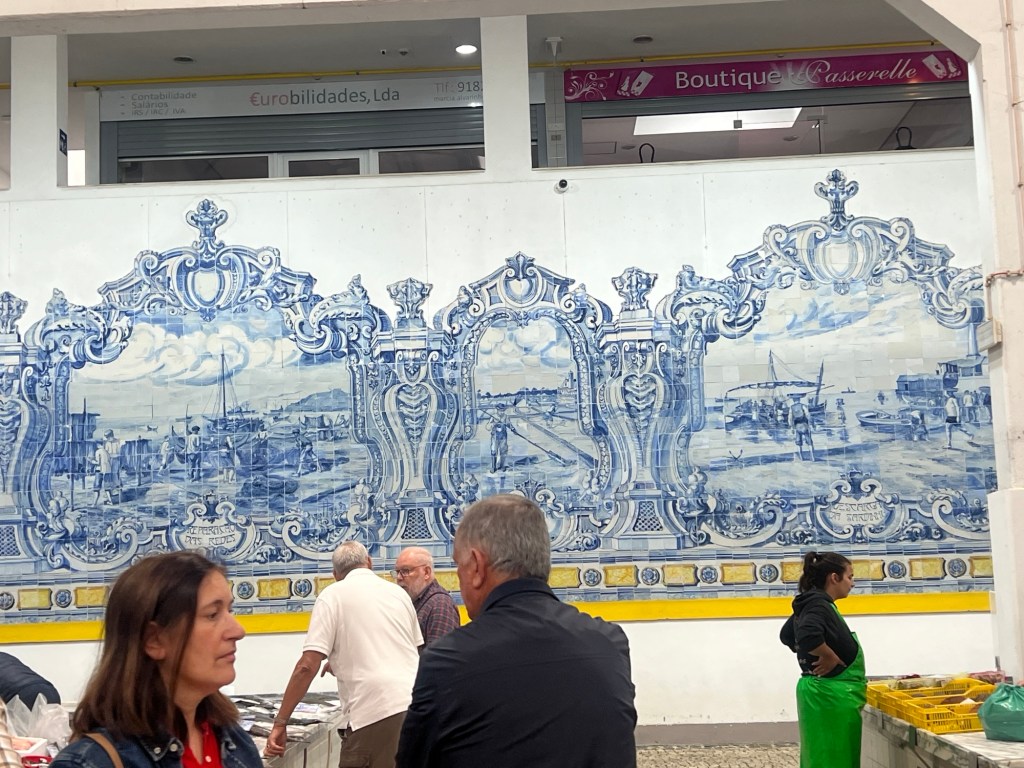
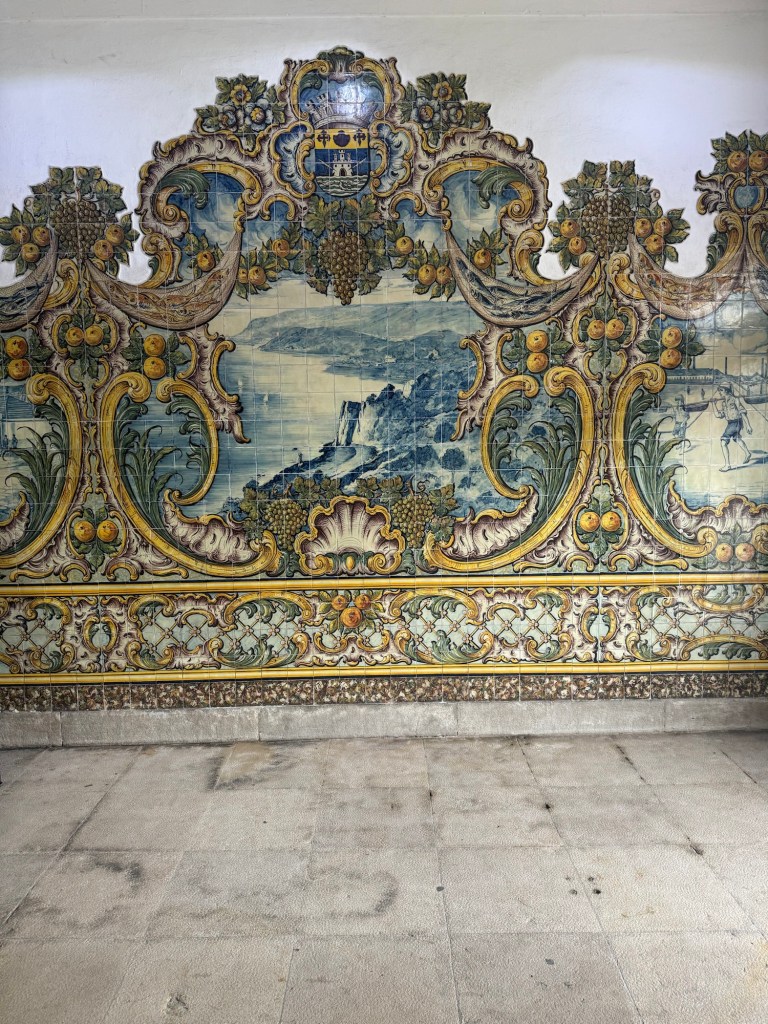
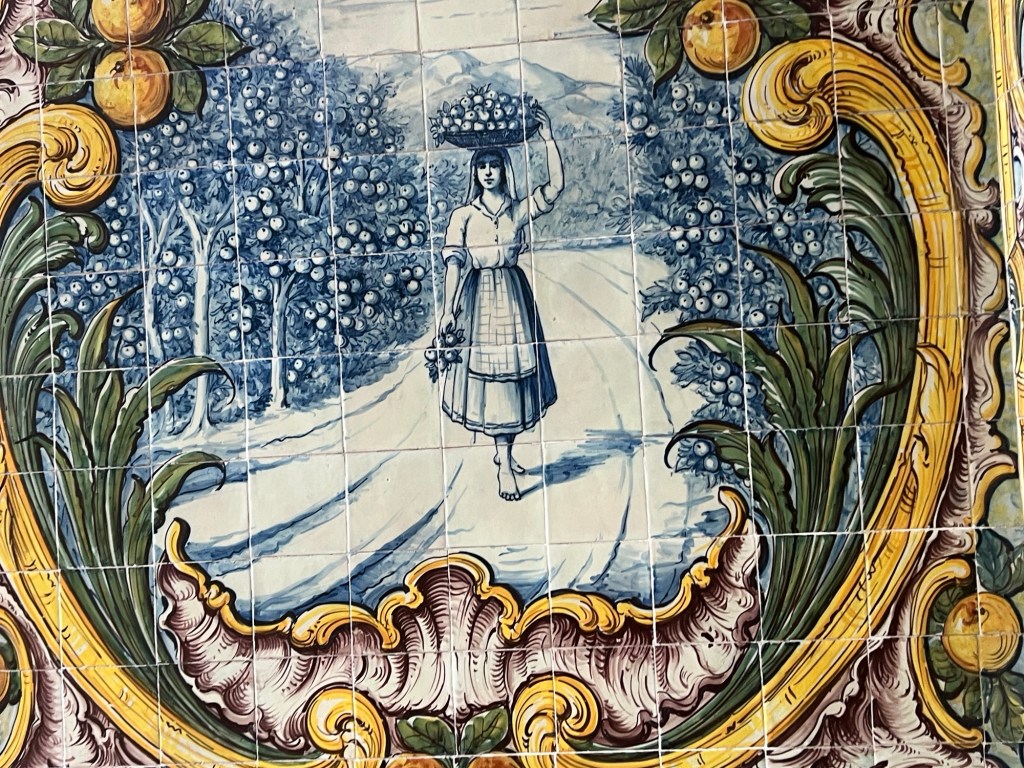
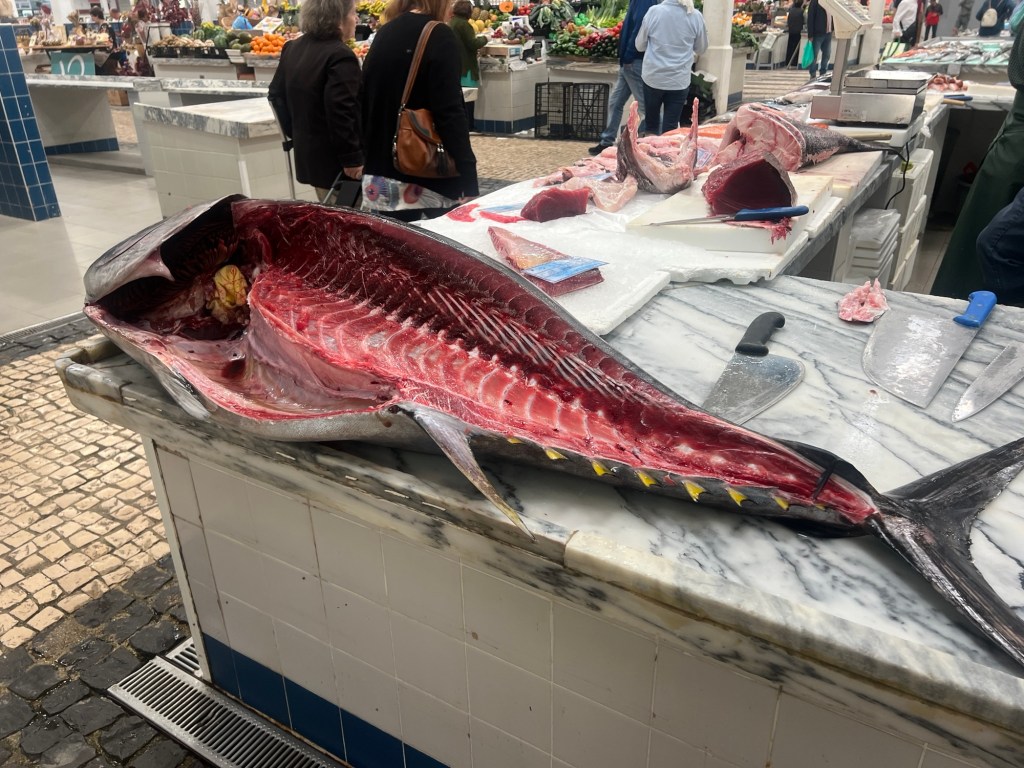
      The tile work in the market is beautiful and the fish, vegetables and pastries are beautifully displayed.

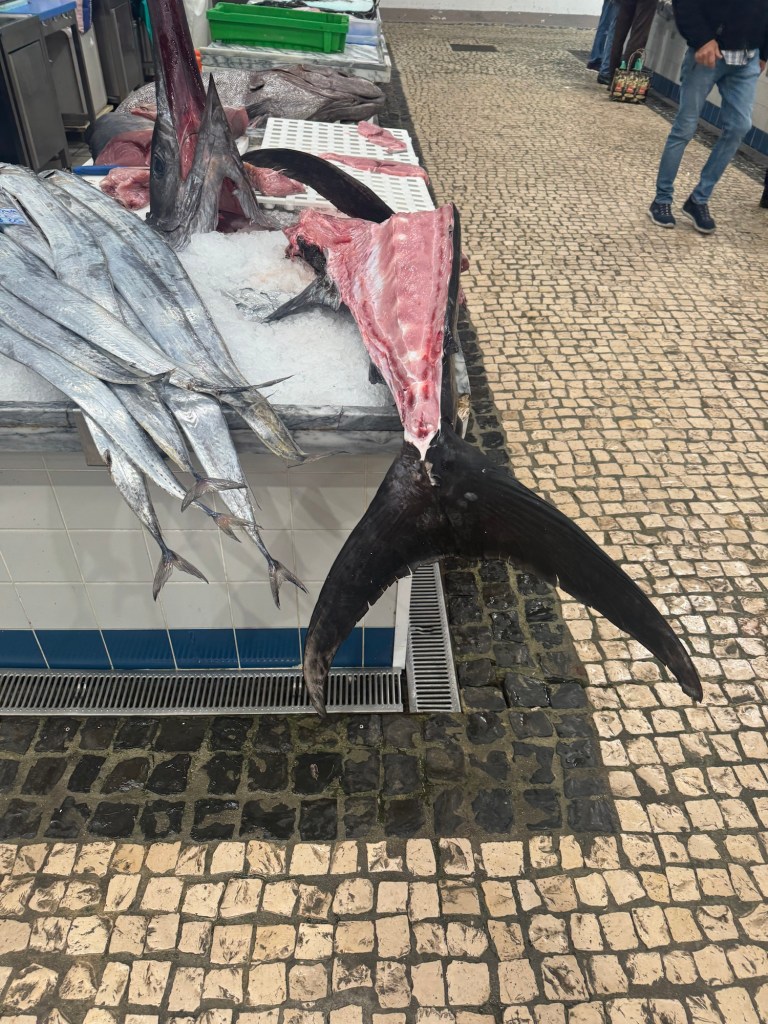
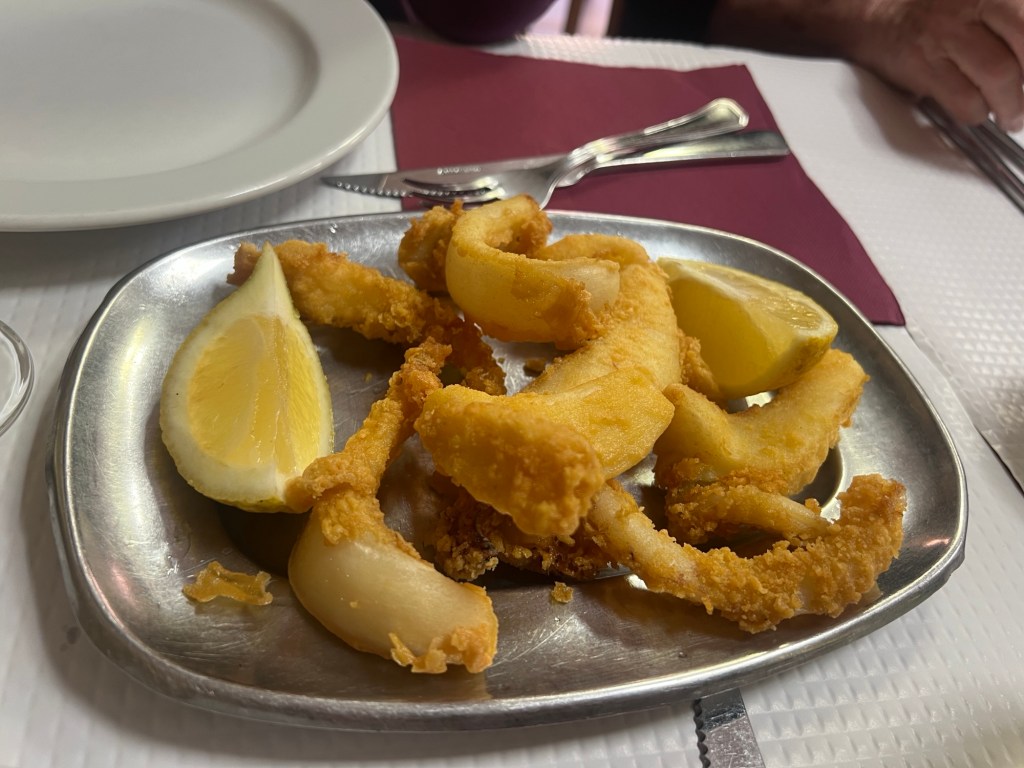
      This is the cuttlefish, a local specialty that we will taste later. It is like a squid but with a bigger body and a bone
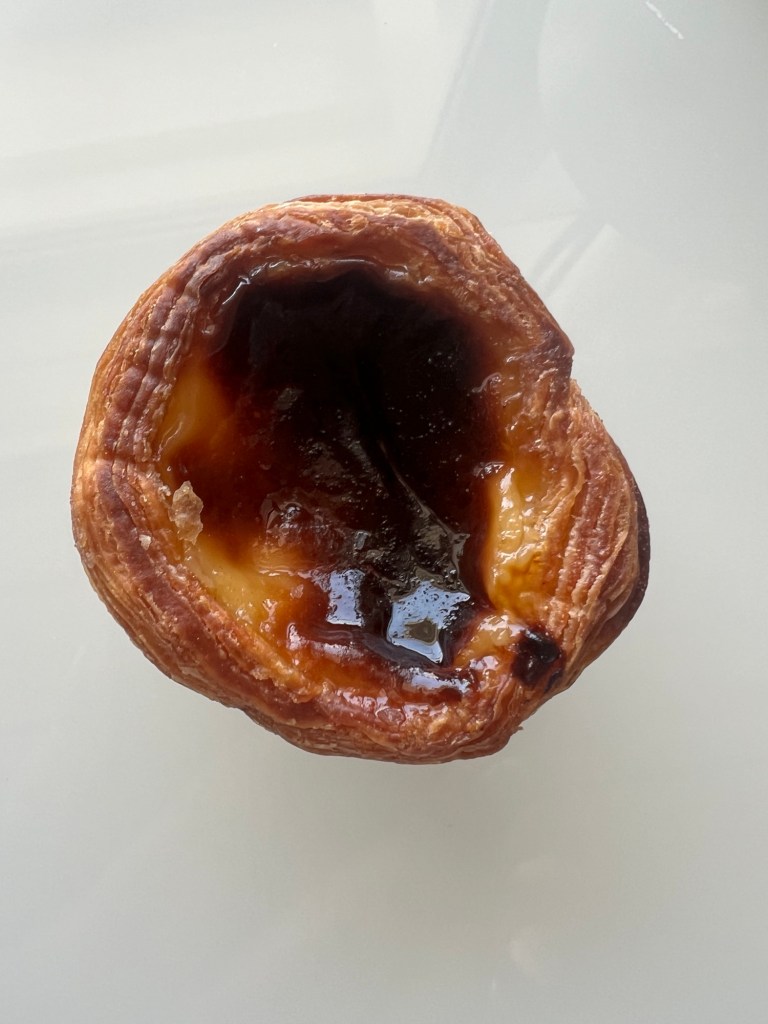
      I bought some traditional pastries here

      This is one of the most traditional pastries in Portugal – the Pastel de Nata. It’s a delicious egg custard tart with a flaky pastry crust, typically dusted with cinnamon or powdered sugar. We have had them on previous visits and had to get some here.

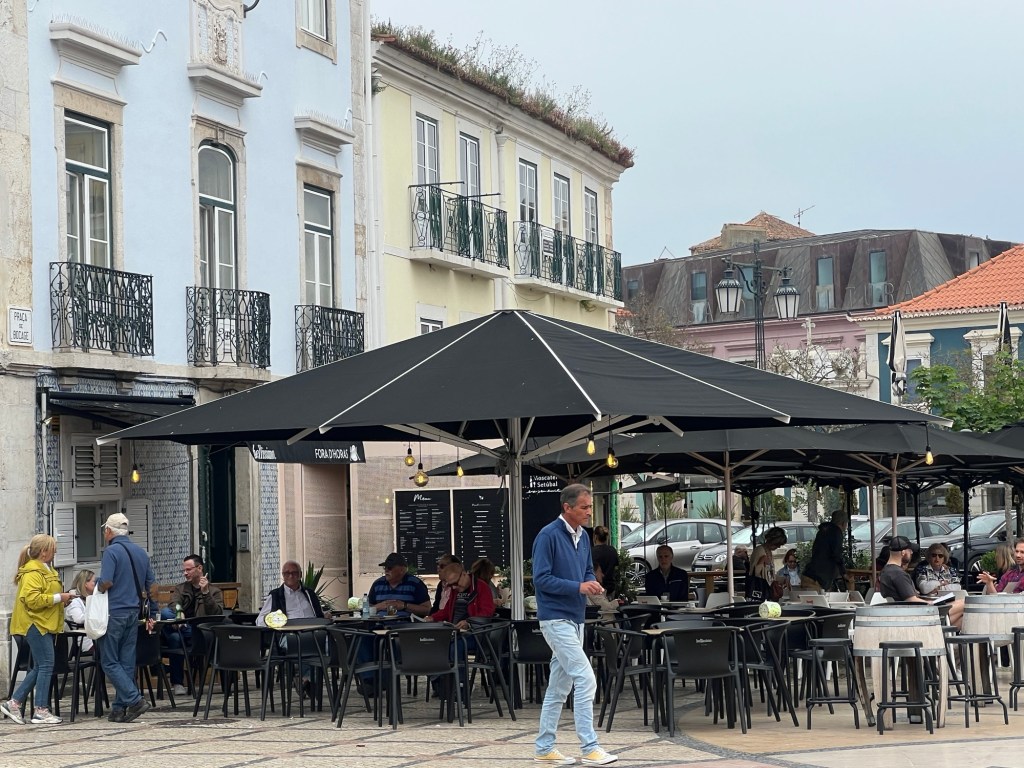
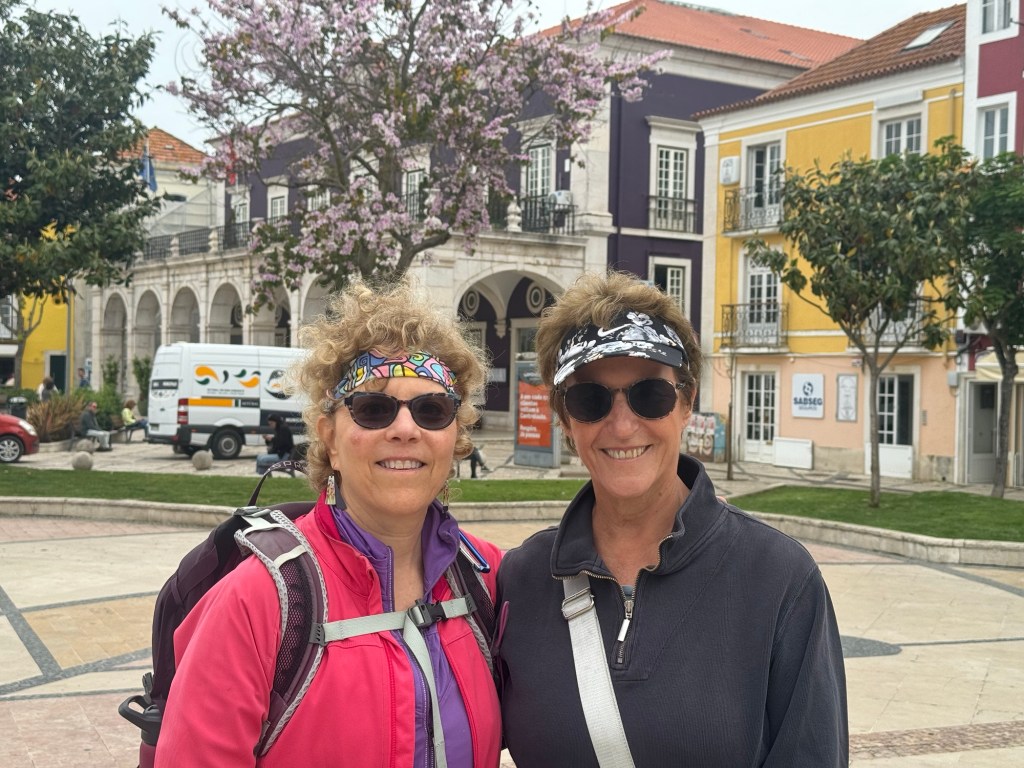
      We had free time in the market, so after we walked all around and got our purchases, Joy took us on a walk to a nearby square. We had time to ask her about her life here. She and her husband absolutely love it and we could see why.

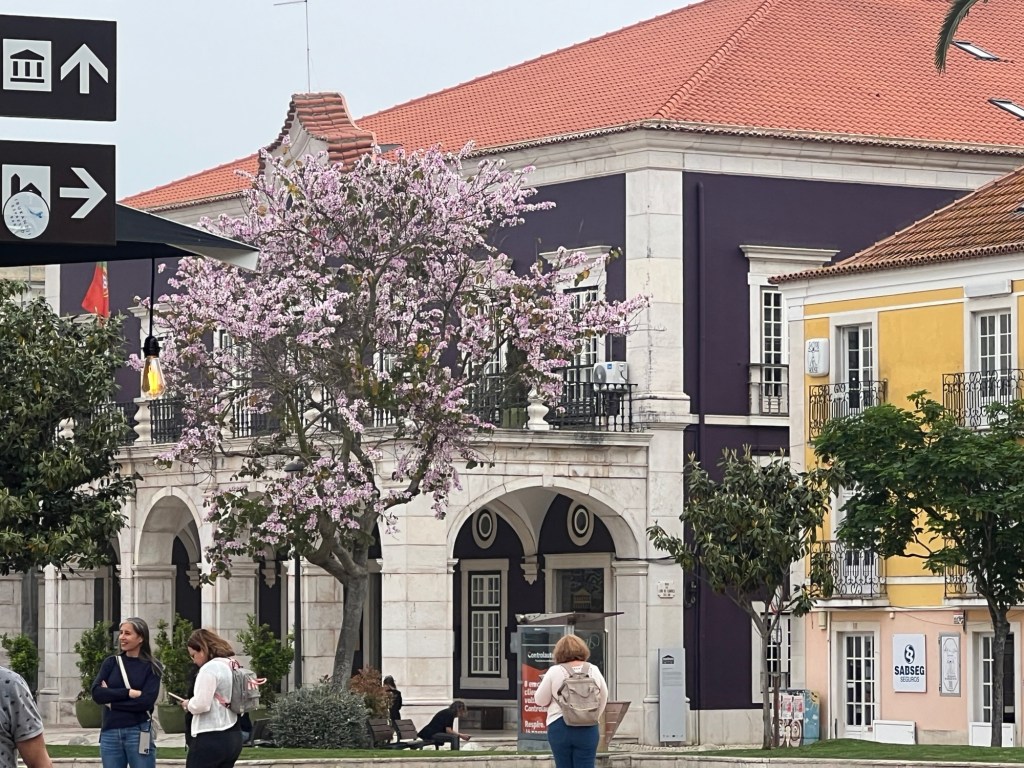
      Government center painted purple with a blooming jacaranda tree in front

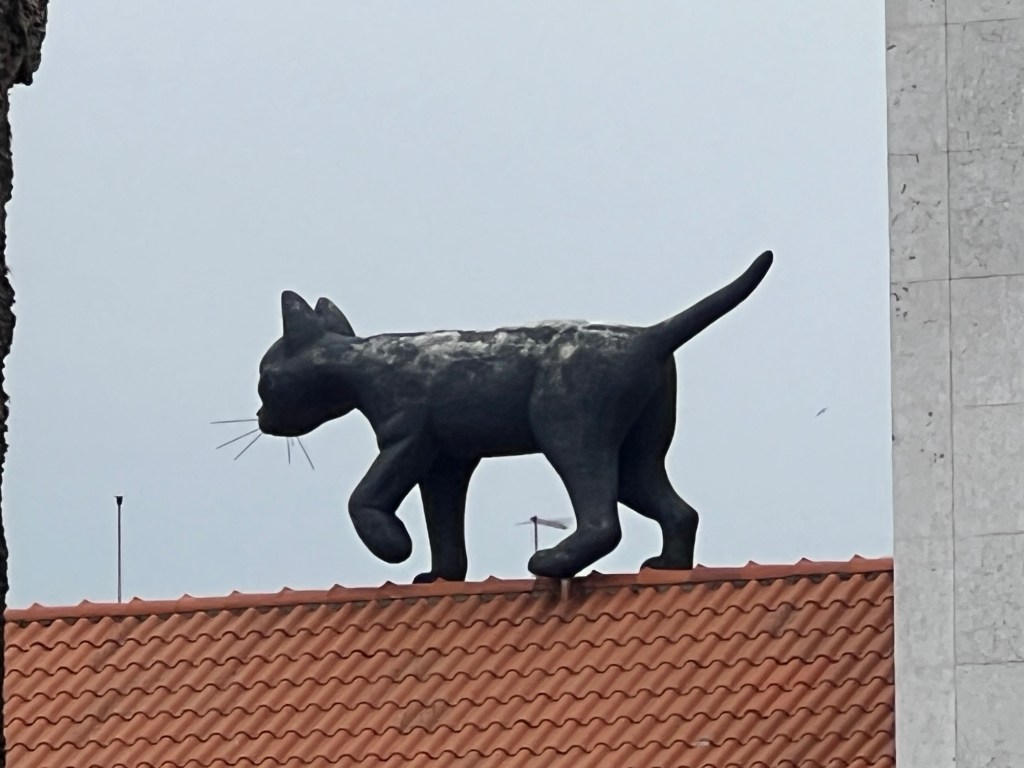
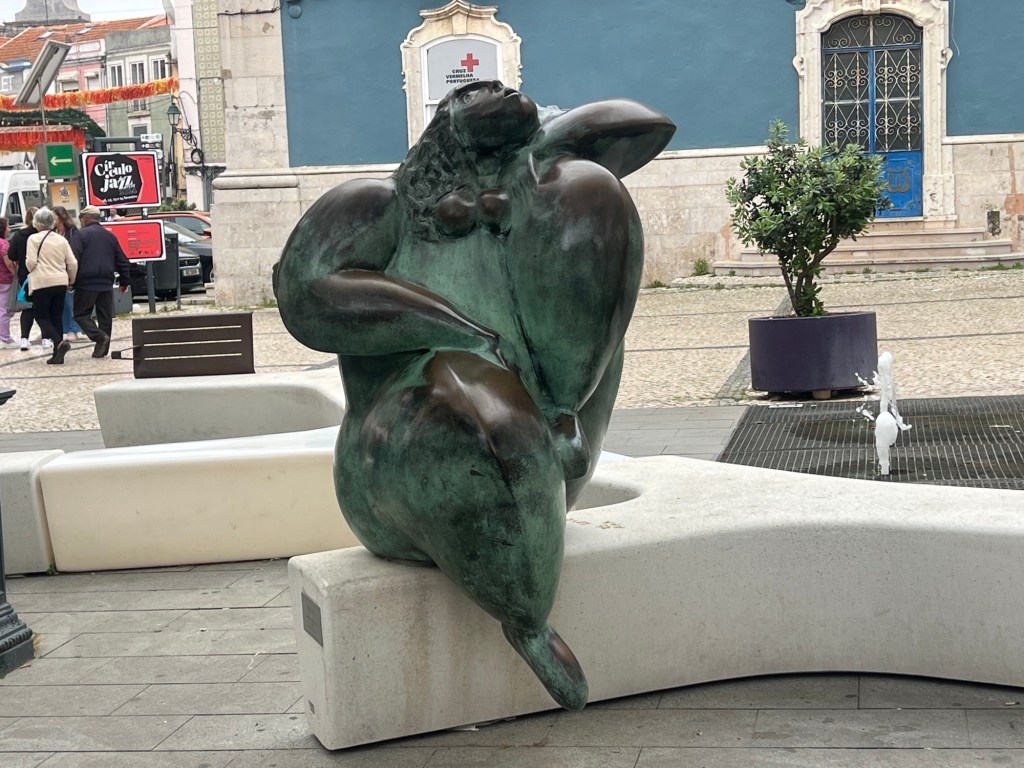
      This large sculpture has landed on the roof of the Casa do Turismo in Bocage Square and is called “The Cat and the Wind” by artist Ricardo Romero.

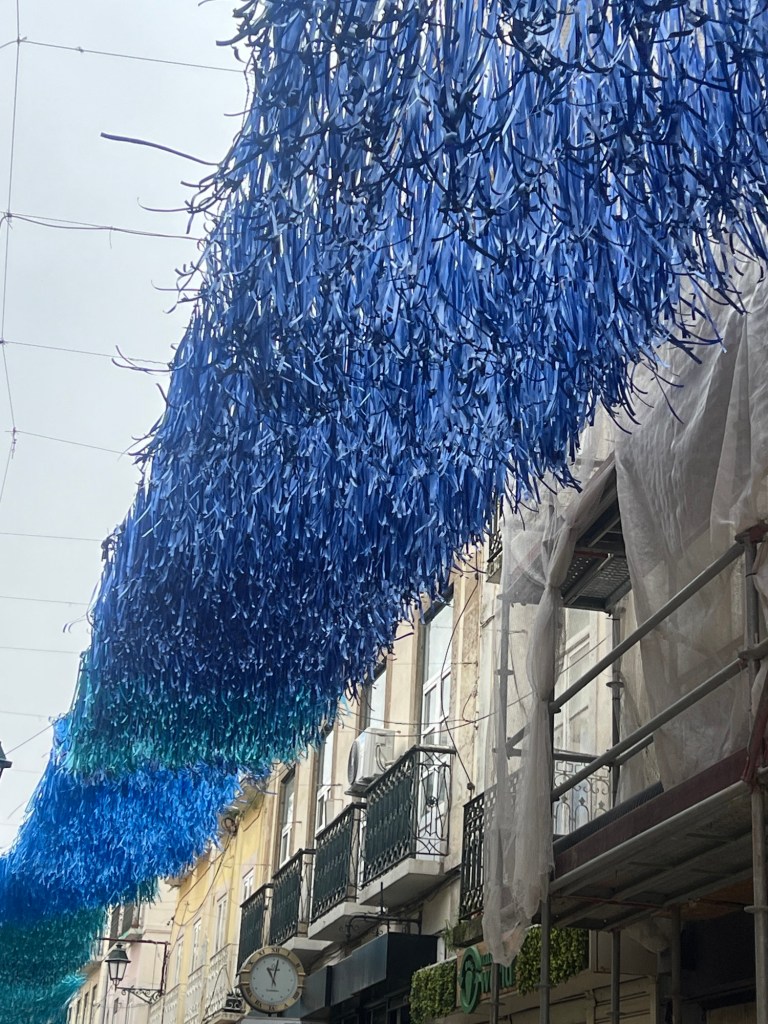
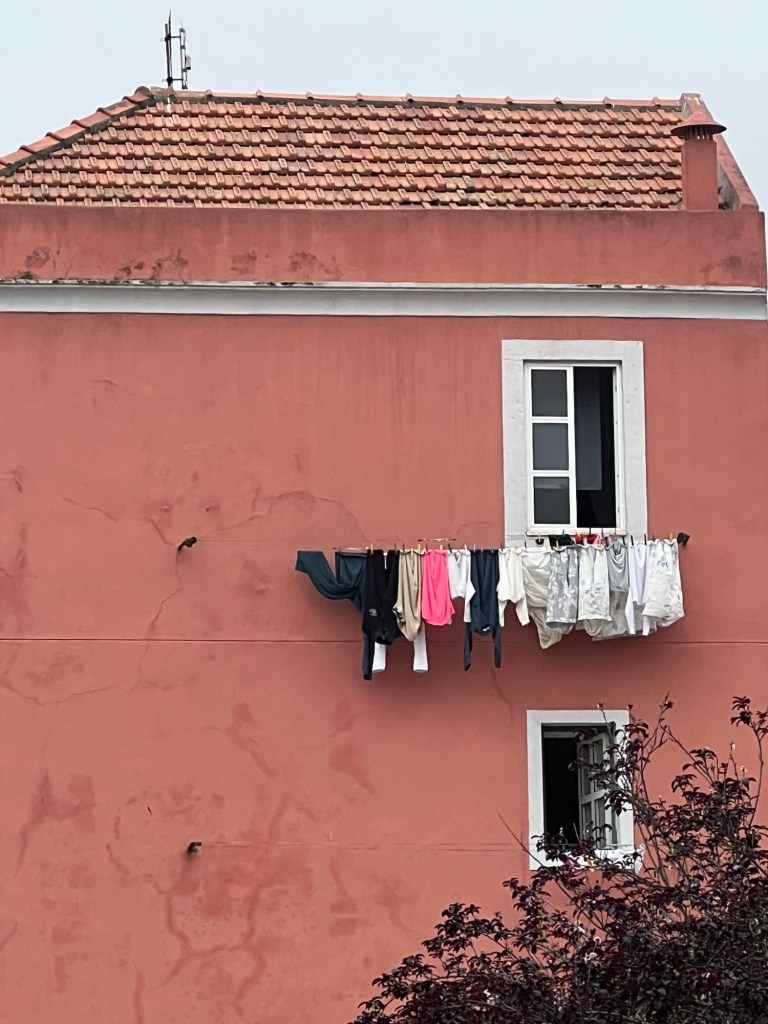
      These hanging ribbons are on all of the streets surrounding the square. They are hand tied and represent earth, sun and water depending on the color
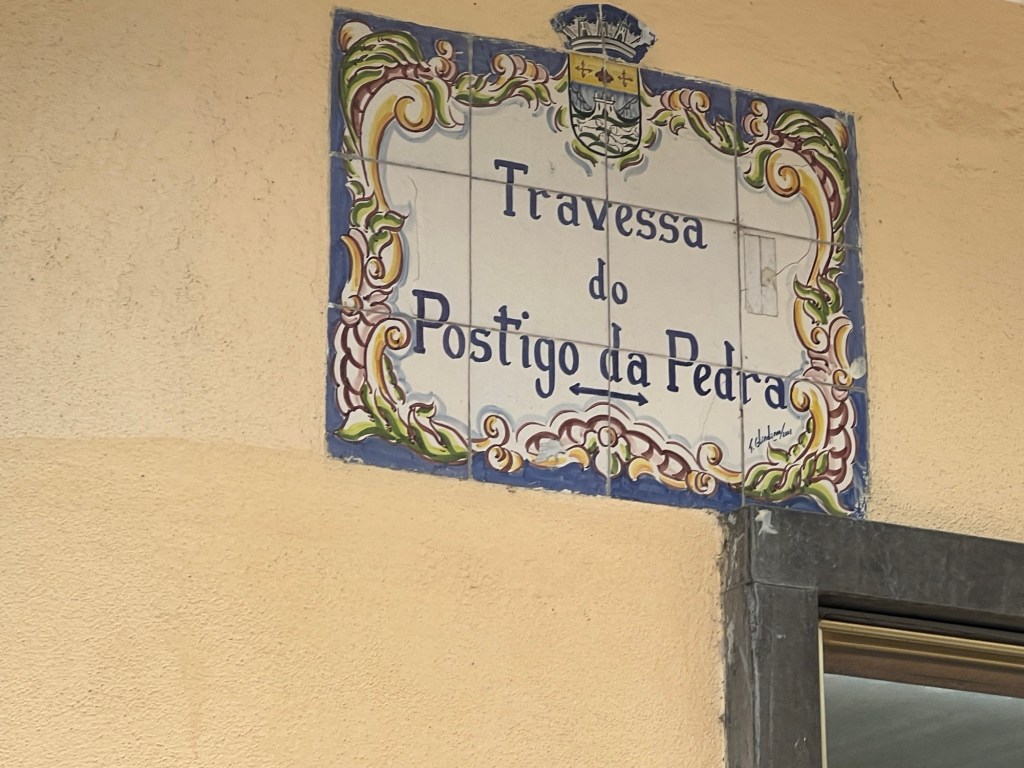
      Tile street signs

      Next we went to the restaurant for our snack of cuttlefish and wine.

      Tile was originally only used inside but when people discovered how easy it is to clean, they started using it on the outside of buildings – very beautiful

      After enjoying our cuttlefish and white slightly sparkling wine, we returned to the bus for the ride back to Lisbon.

      Cute cuddlefish trying to escape the pan
      Marijuana store

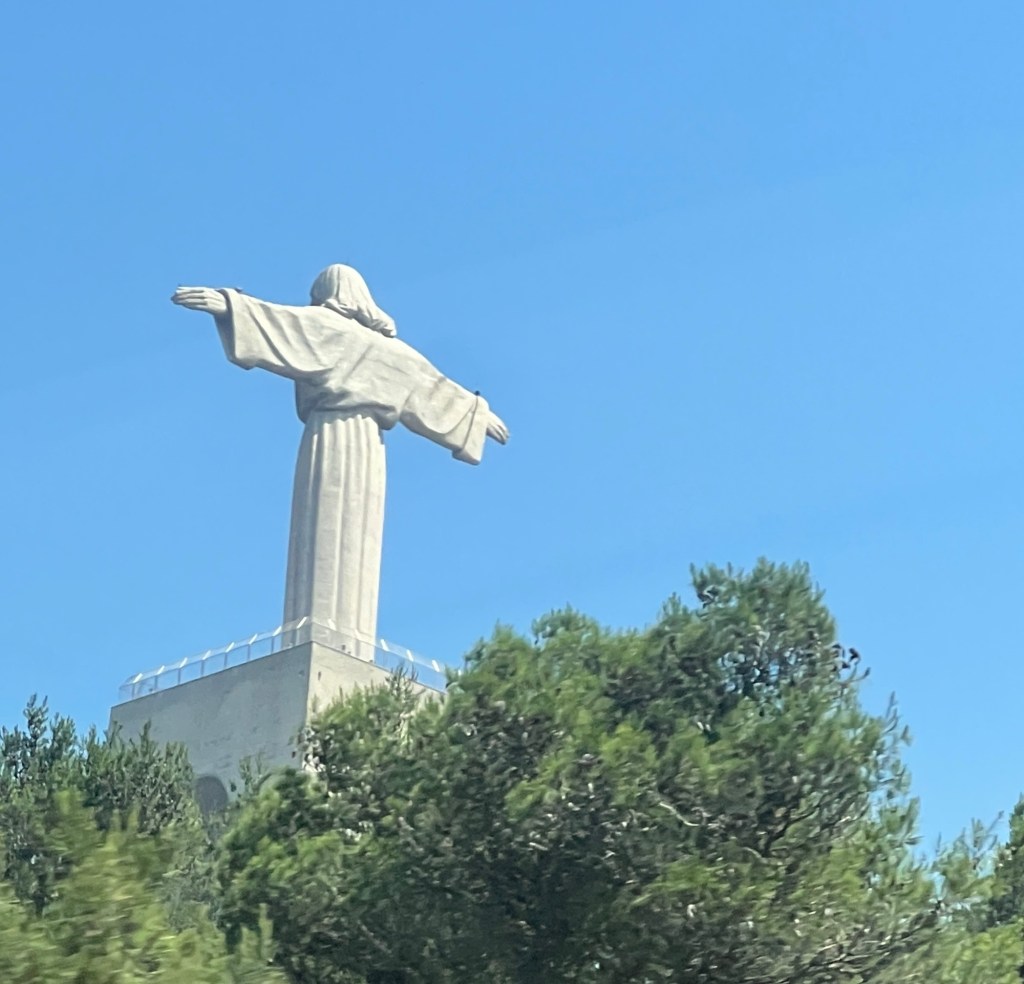
      We took a different route back to Lisbon, crossing the red bridge that looks like the Golden Gate and was designed by the same person. We could also see the Christ the Redeemer statue like the one in Rio.

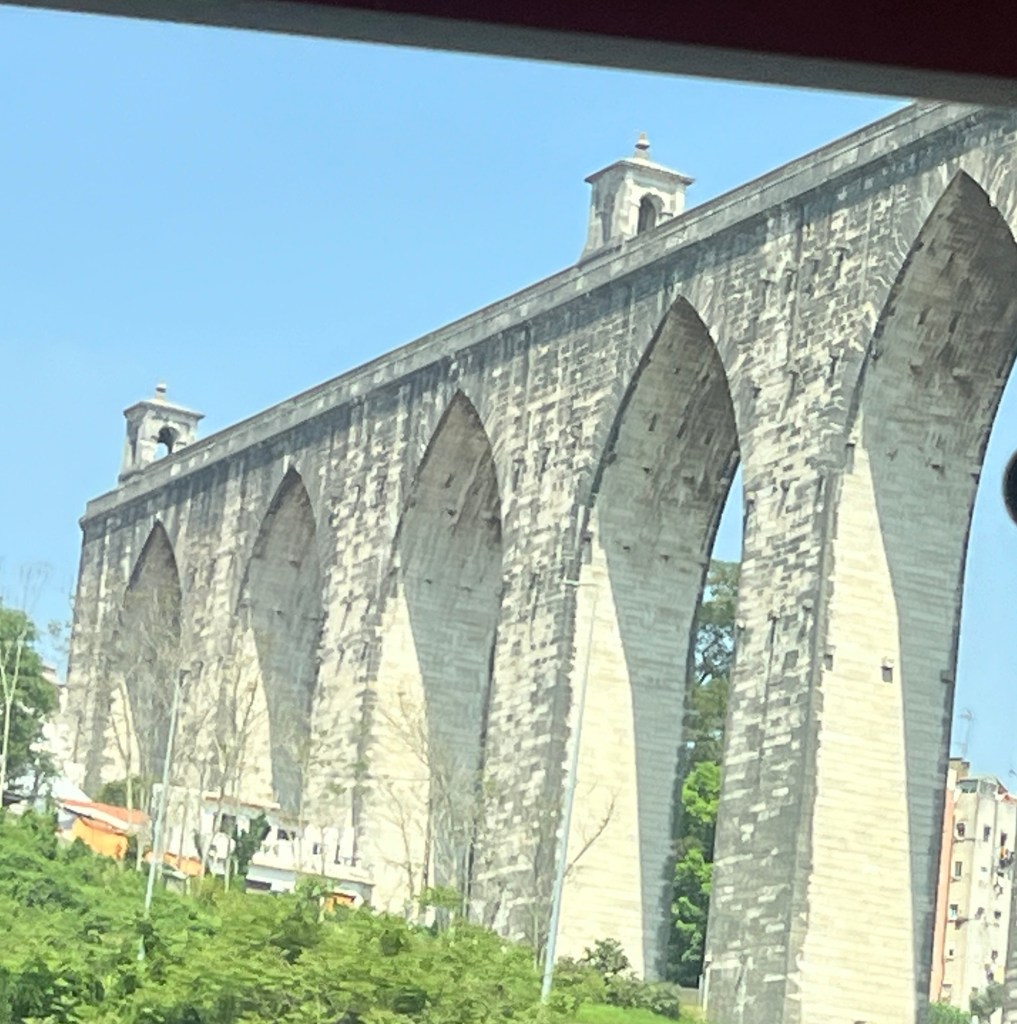
      And the largest limestone aquaduct in the world

      When we got back to the ship, we saw some of the liquor and beer they were loading for us!

      Tonight we move our clocks forward an hour again before our arrival into Vigo Spain.

      Posted in April, Europe, Excursions, Spring 2024 | 2 Comments

      Portimao, Portugal

      April 17, 2024

      Portimao is a port we have never visited on our trips to Portugal. We selected the Benagil Cathedral Sea Cave tour and just walked to the tour boat from our ship.

      Ana was our guide and she took us to the boat.

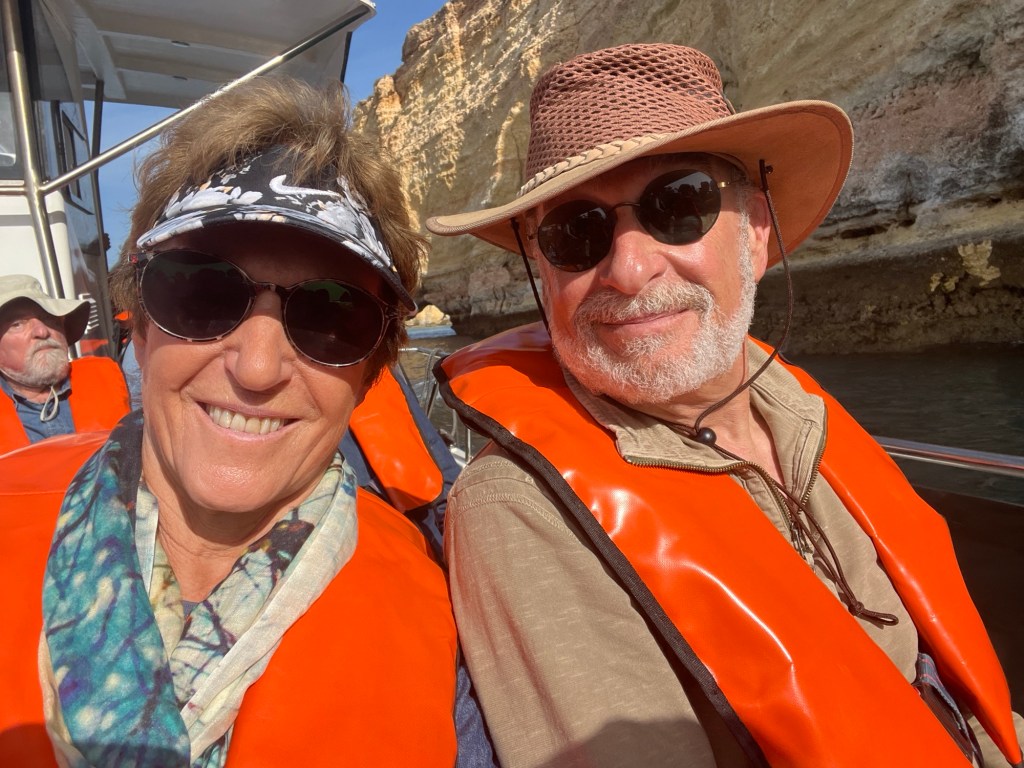
      Once on the boat, we put on our life jackets and prepared for the trip along the shoreline.

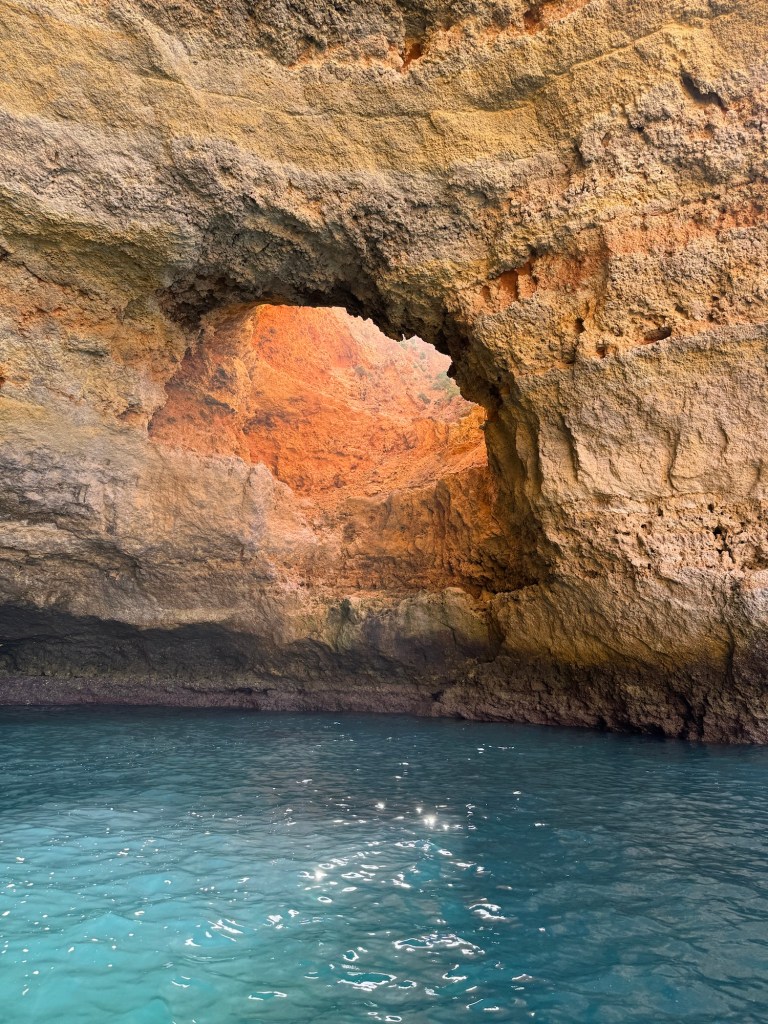
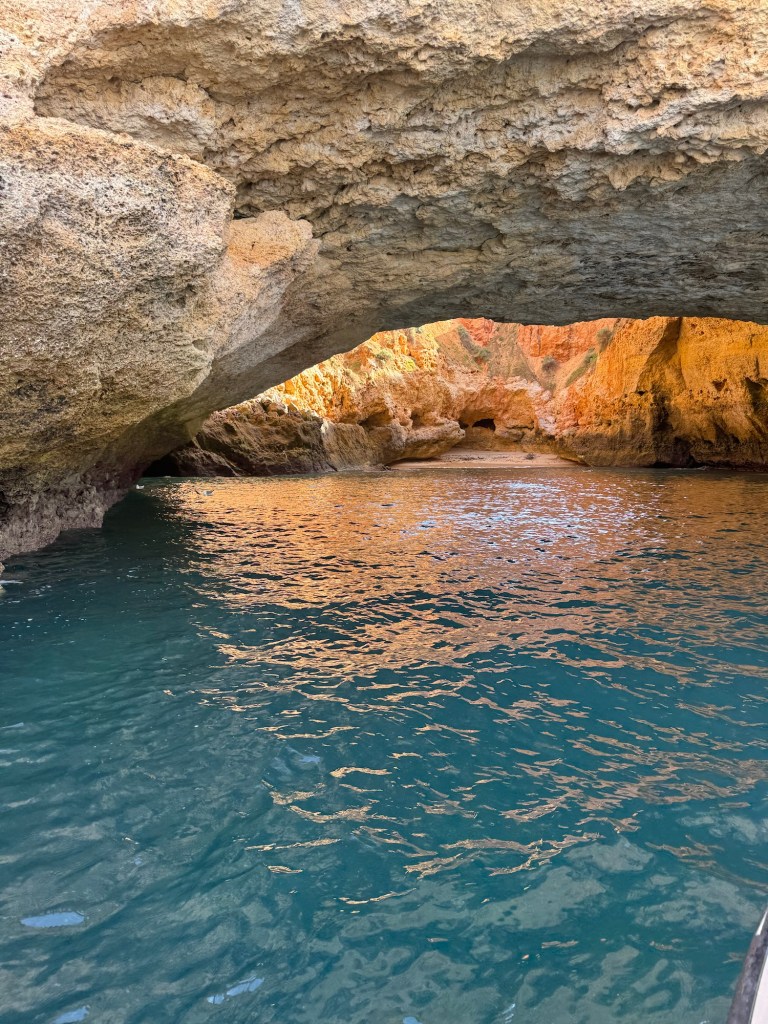
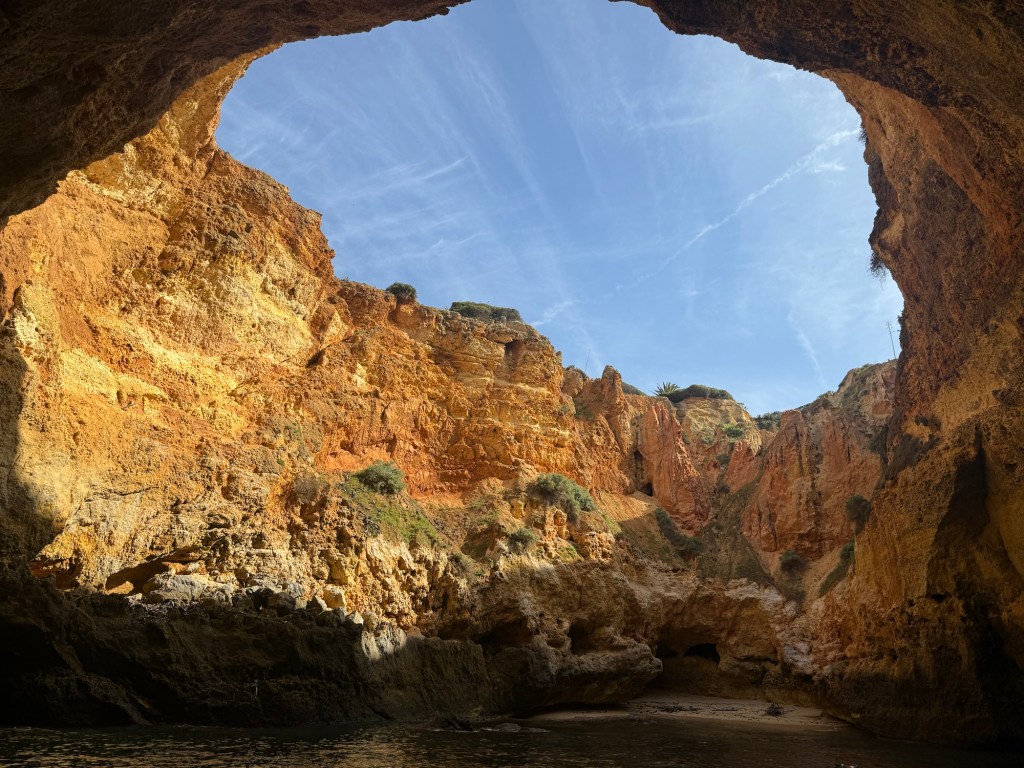
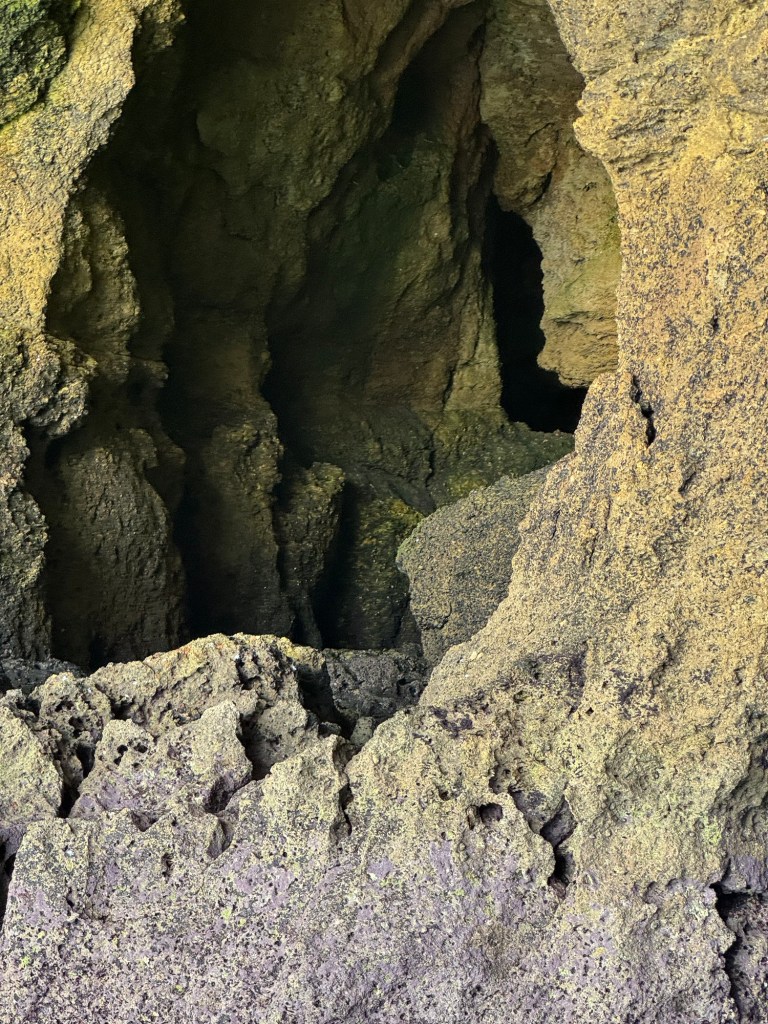
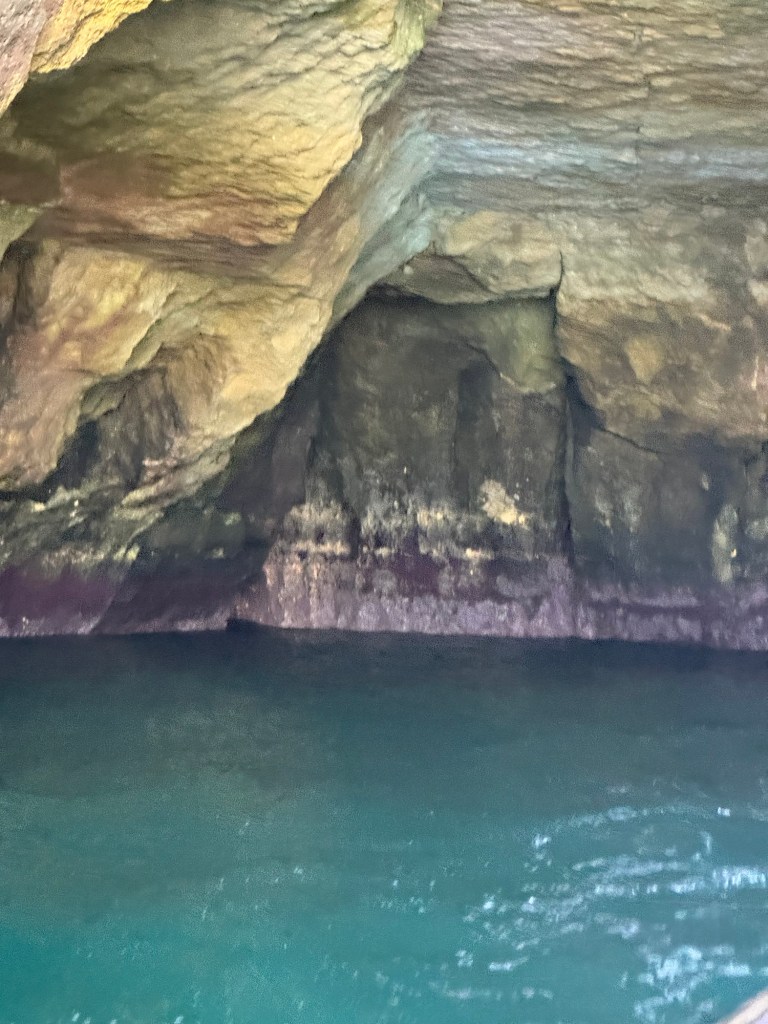
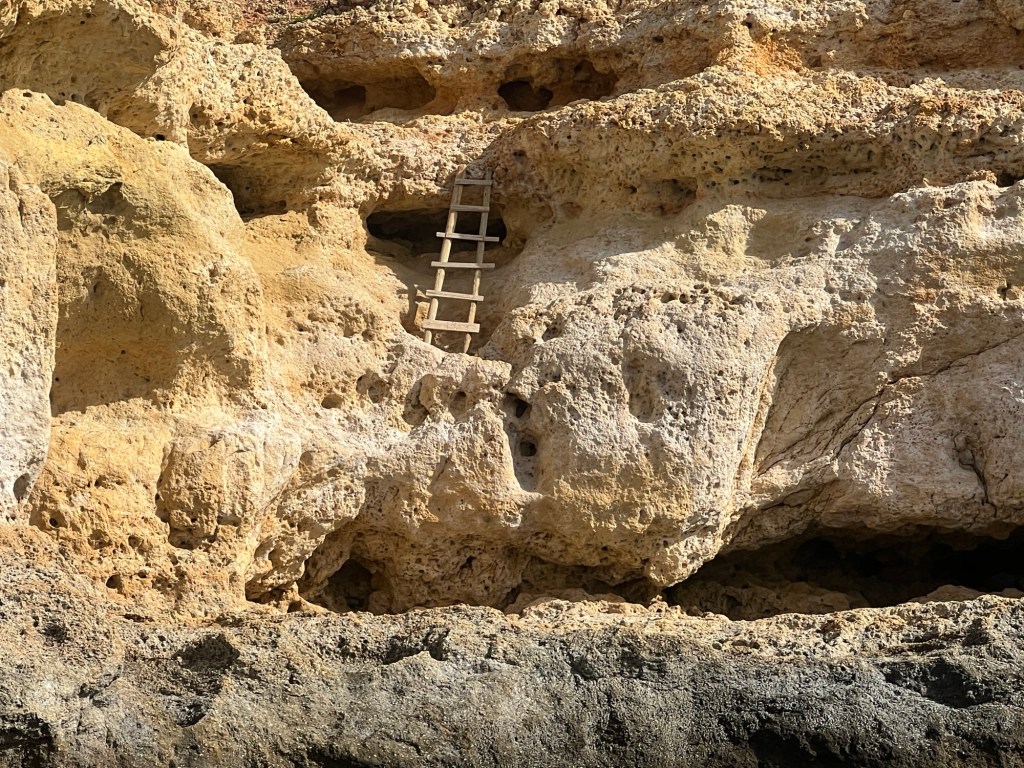
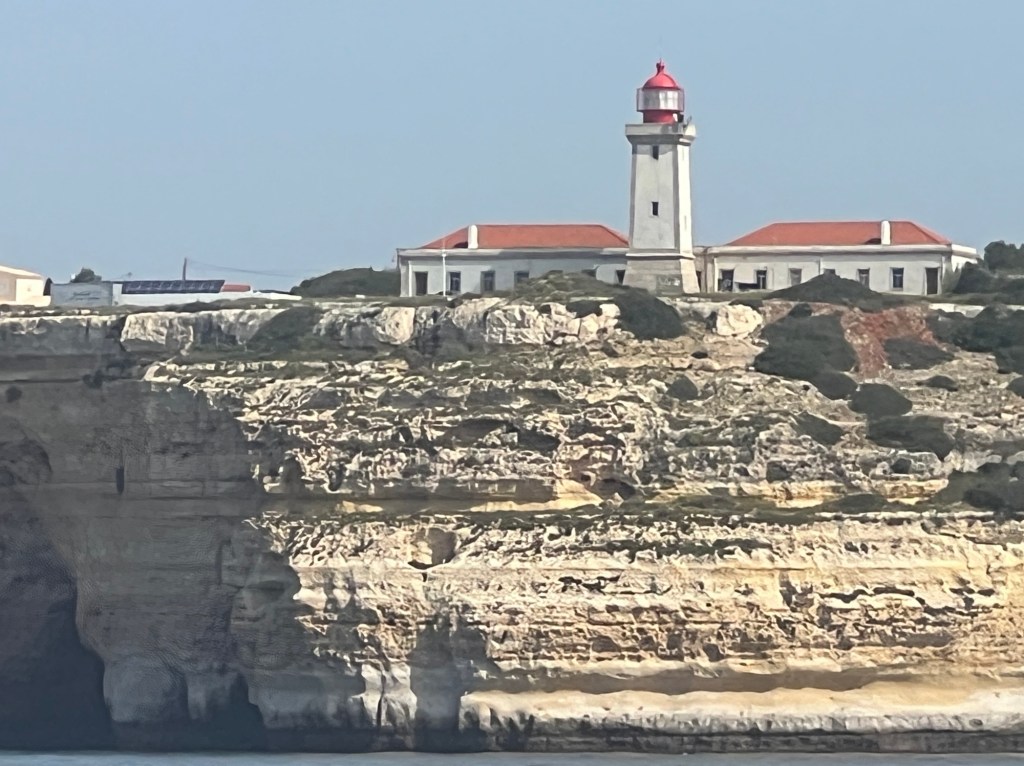
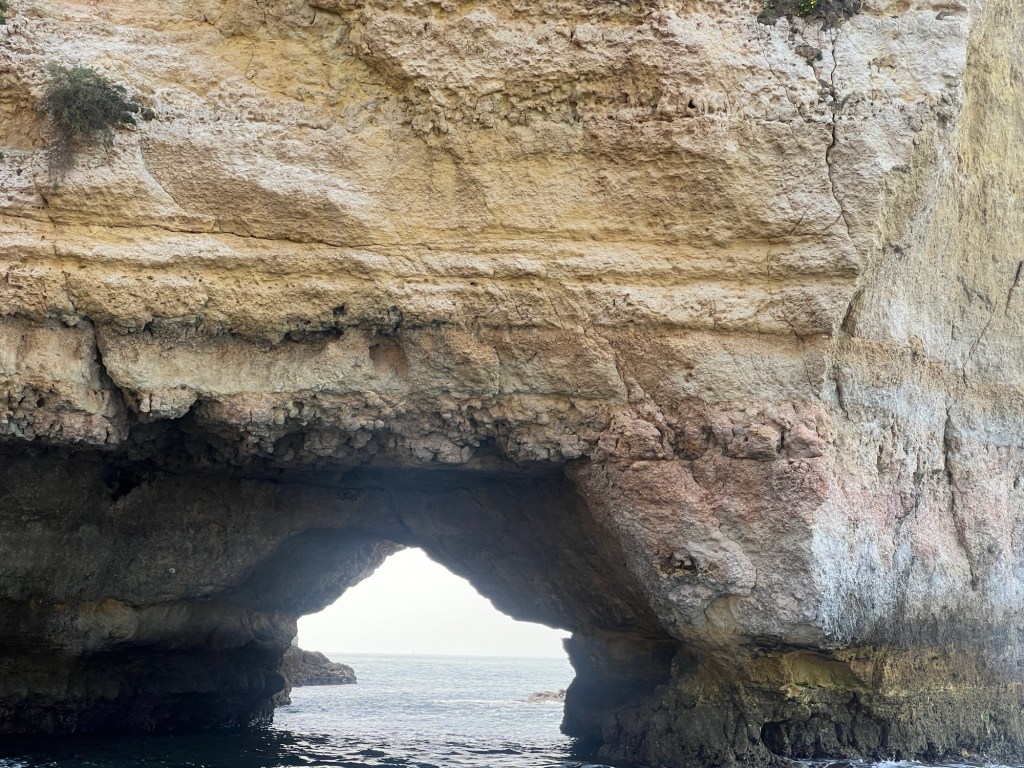
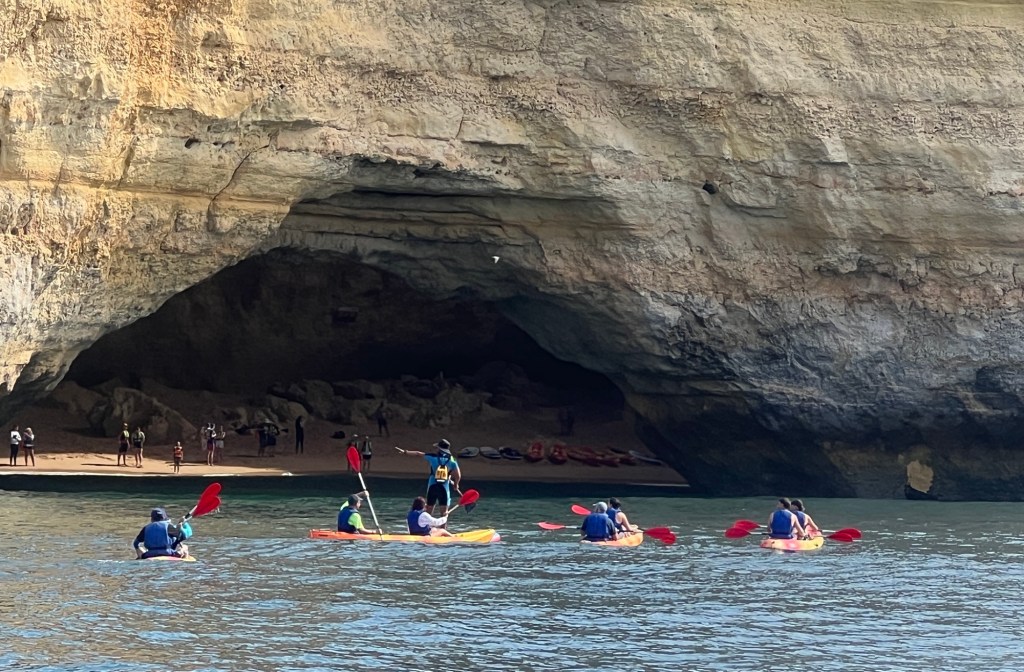
      The Benagil Sea Cave, often called the Benagil Cathedral is located on the southern coast of Portugal, near the town of Benagil. This stunning sea cave is famous for its large dome-shaped opening, which allows sunlight to filter through, creating a beautiful natural light display inside. Actually there are many beautiful rock formations and many caves along this shoreline. Here are just some of them.

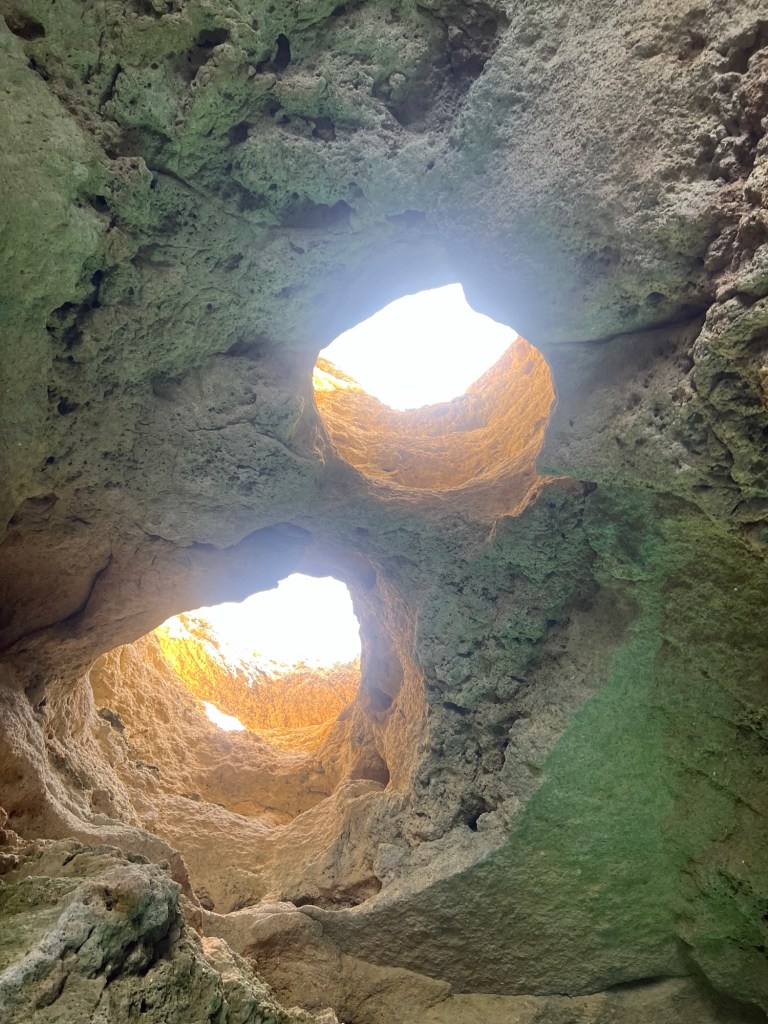
      This one is known as the blue eyes since the blue sky shines down into the cave
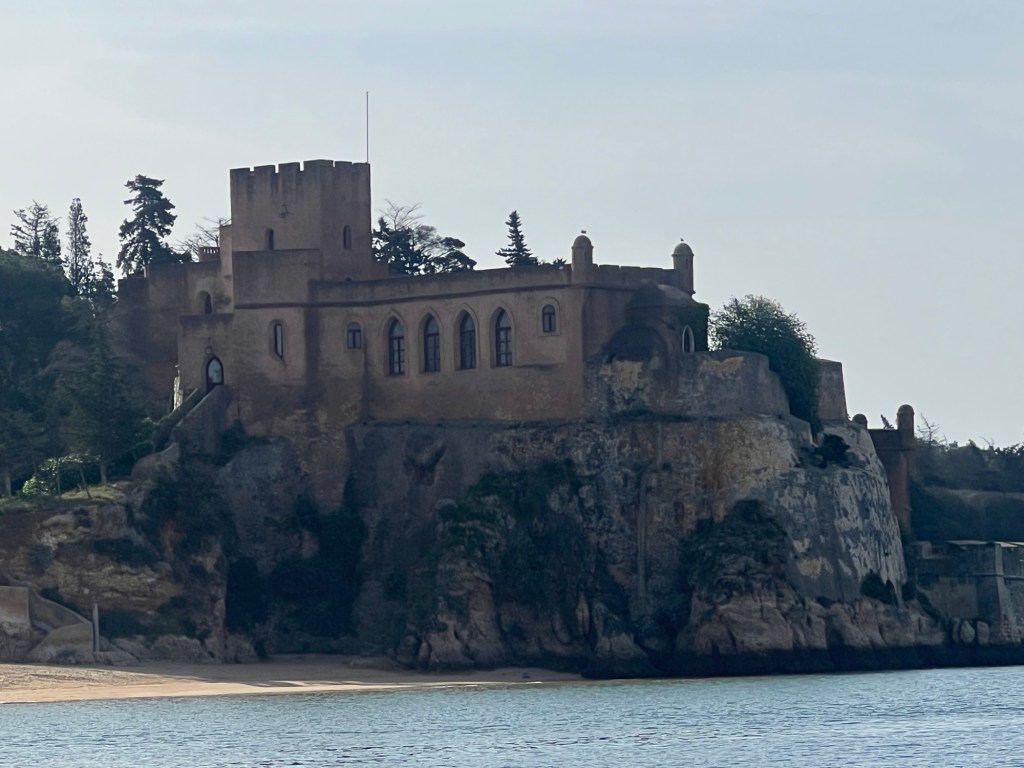
      An old castle along the way. It is privately owned now
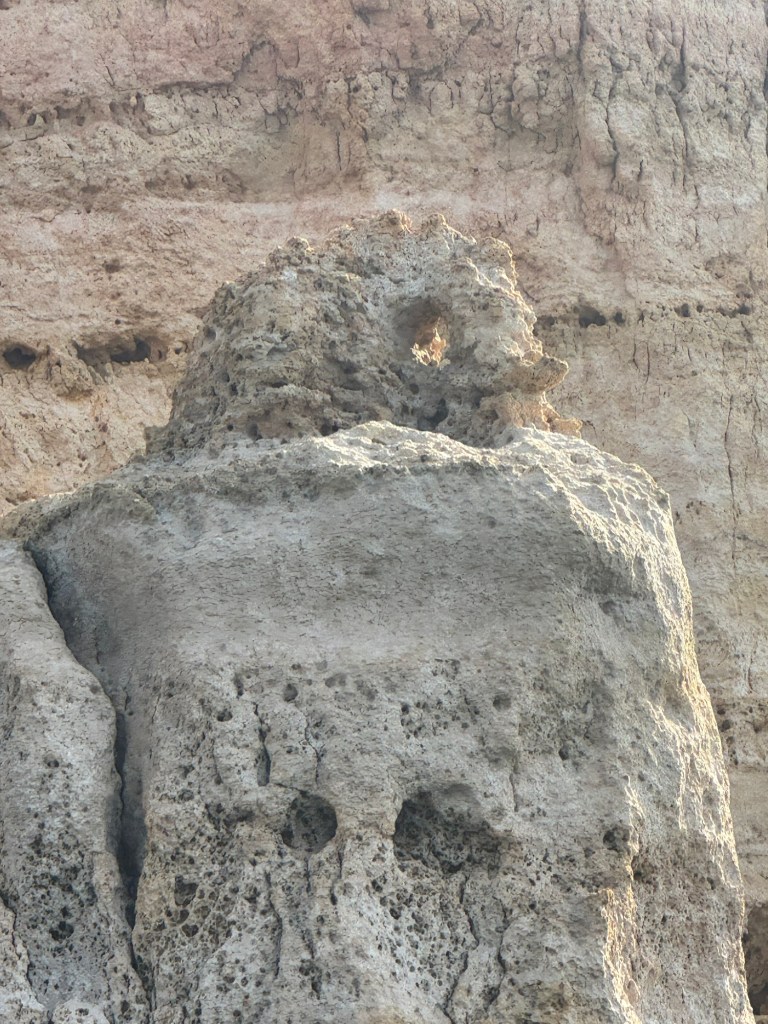
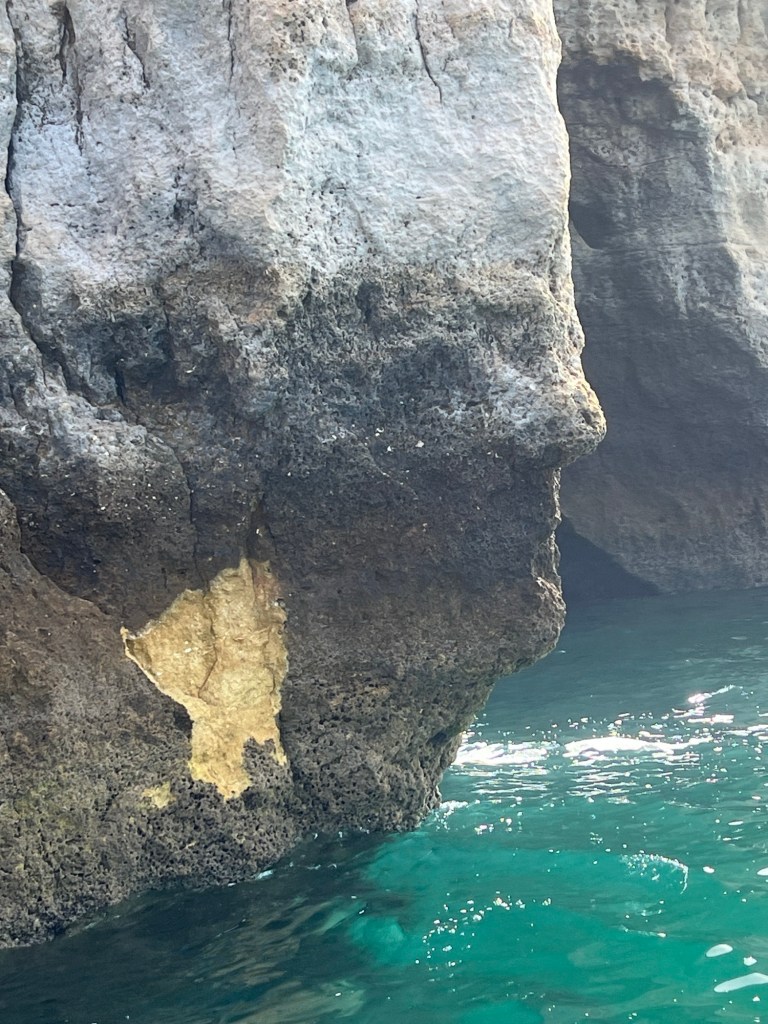
      These formations look like a person

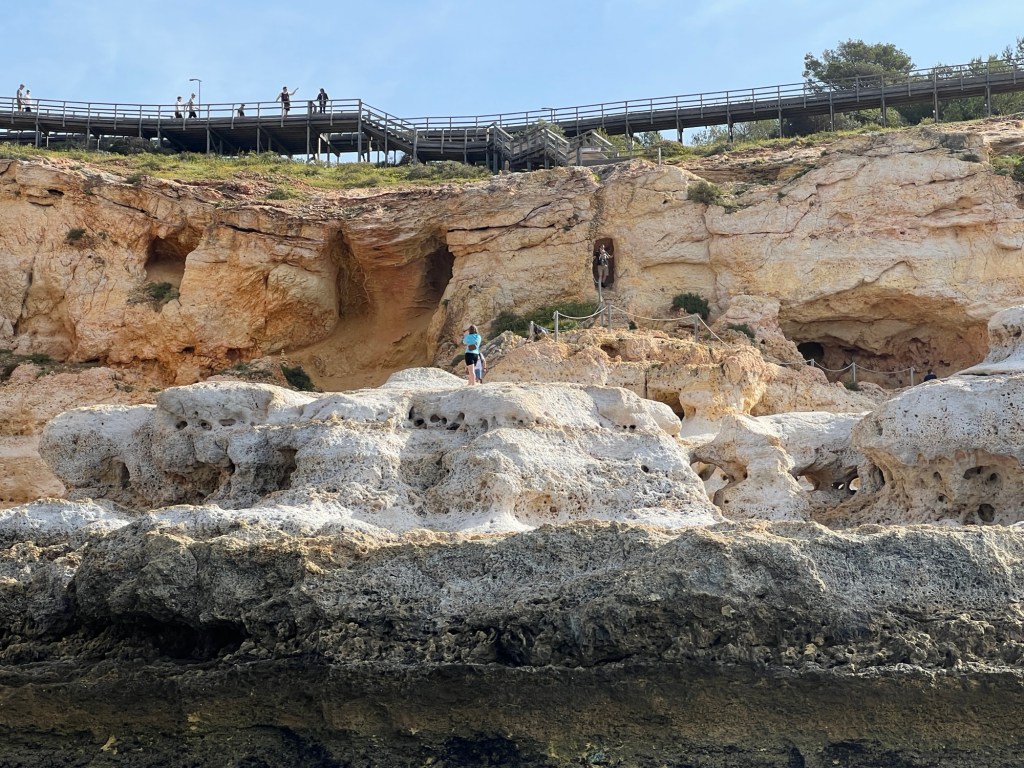
      Our guide on the ship pointed out some of the highlights including the spectacular hotels, the people who hike along the ridges and the many kayakers.

      It was a really nice tour with very good weather and calm water. We were able to enter many of the caves in the boat.

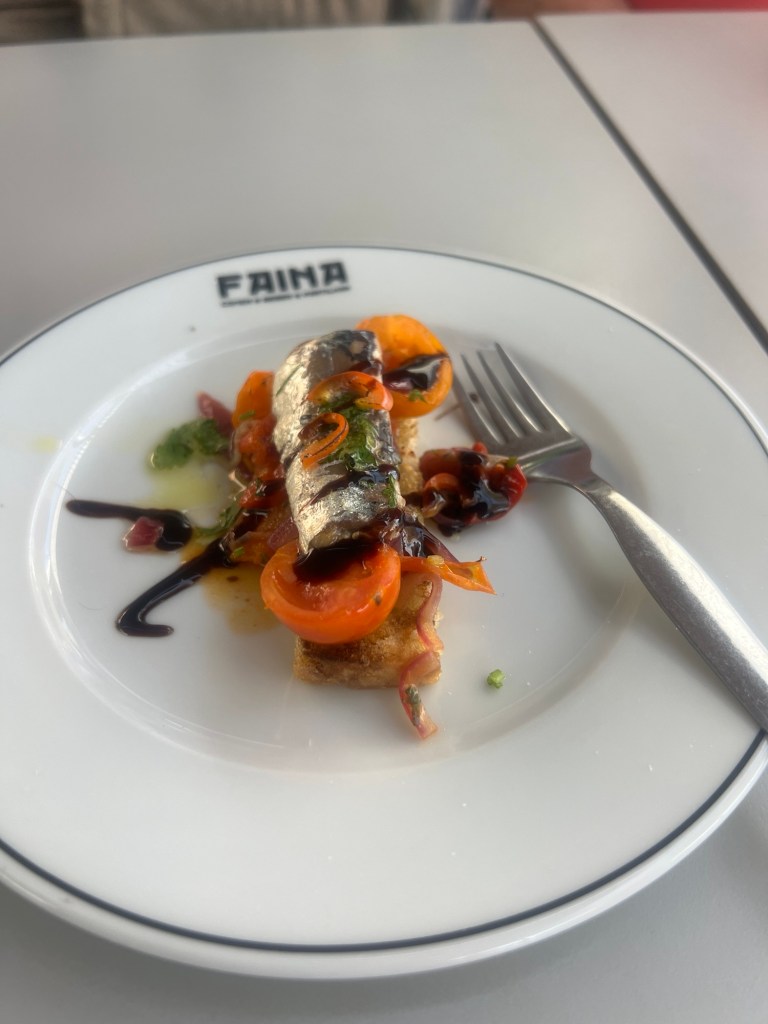
      Once on shore, Ana took us on a walk to the restaurant where we had a typical tapas of bread with tomatoes and local sardines along with a white wine from the region.

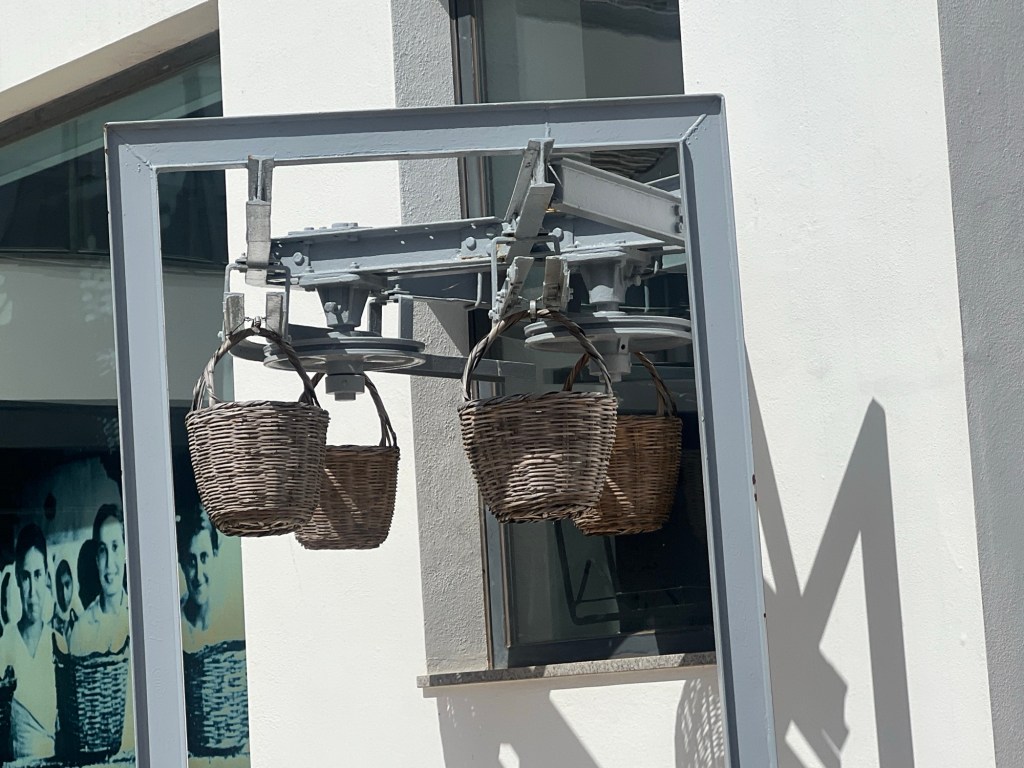
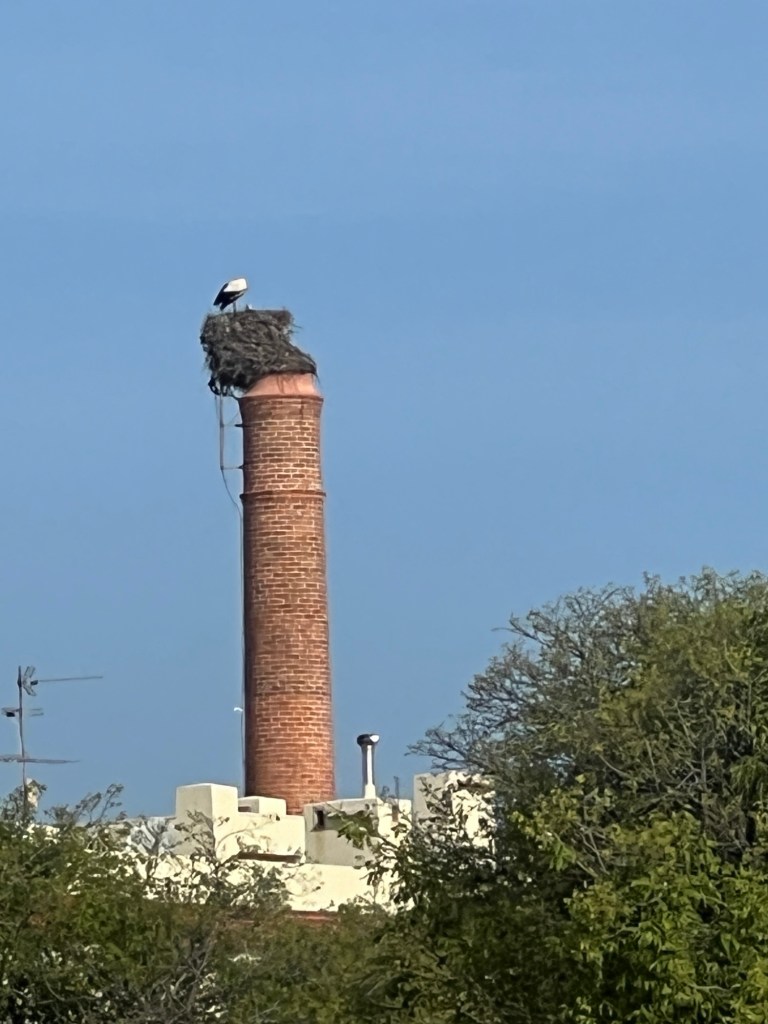
      There was lots of sardine fishing and canning here at one time. These hanging baskets were used to move the fish from the dock to the cannery. These days larger factories are used but the smokestacks from the old factories can never be removed. There is a museum about this industry here.

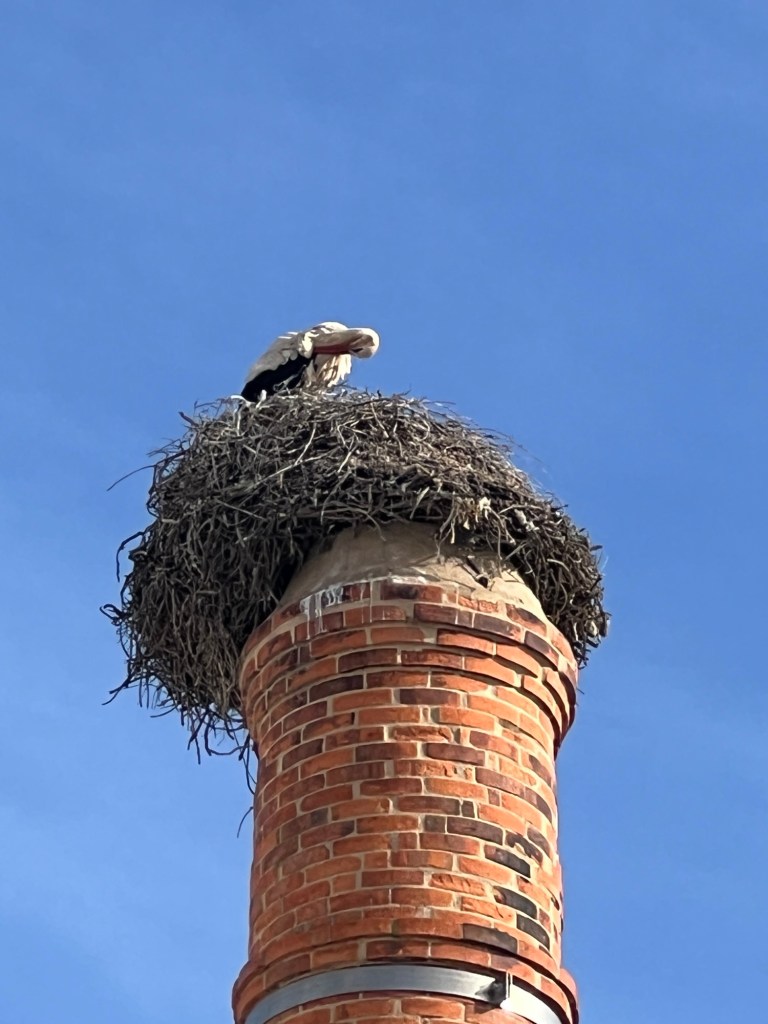
      And it’s a good thing the smokestacks remain because the white storks build their nests on them!

      These nests can weigh 200 pounds and are made of sticks. The storks mate for life and return to the same nests every year.

      We enjoyed our snack at the restaurant.

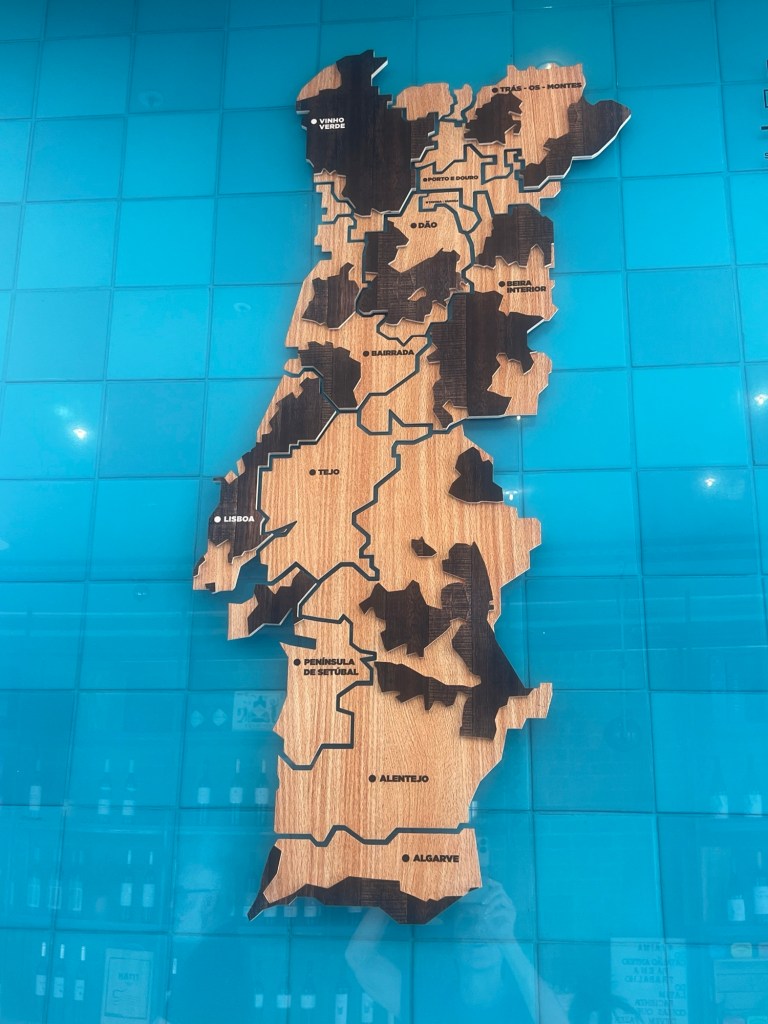
      The wine regions in Portugal. We are at the bottom left of the map

      It was a really nice day. We did well in trivia and were invited to Tuscan Steak with Marck, our general manager, and Kate, our social hostess who is also one of the singers. It was a fun dinner with a wide range of dinner topics. Later James, Shelley and I did name that tune in Martinis and came in first place!

      Posted in April, Europe, Excursions, Spring 2024 | 1 Comment

      Santiago de Compostela (Vigo), Spain

      April 19, 2024

      This post will probably be out of order since the previous two are encountering some type of glitch in photo uploading. I am trying to fix it without totally rewriting the whole thing but so far no luck!

      For centuries, thousands of pilgrims have traveled on Saint James’ Way every year, finally reaching the capital of Galicia and entering the iconic Cathedral. According to tradition, this is the burial place of the relics of James the Apostle.

      We have been to some of the spots along St. James’ Way and opted not to take the trip to the Cathedral as it was only for an outside visit.

      We arrived at 11 AM and this was our sail in.

      Our guide for the trip to two small villages was Continta. She was a good and patient guide since we had several people on the trip who had trouble walking the distances.

      We traveled on the Atlantic motorway to our first village of Pontevedra which means old bridge.

      We passed many fish farms that raise oysters, scallops and mussels.

      Vigo itself has a population of 30,000. Two islands protect the area from the strong Atlantic winds. And, while much of Spain is dry and the residents have severe water restrictions, this area gets enough water.

      There are many oak trees and eucalyptus trees here. They don’t really like the eucalyptus but they have an industry of making paper from them.

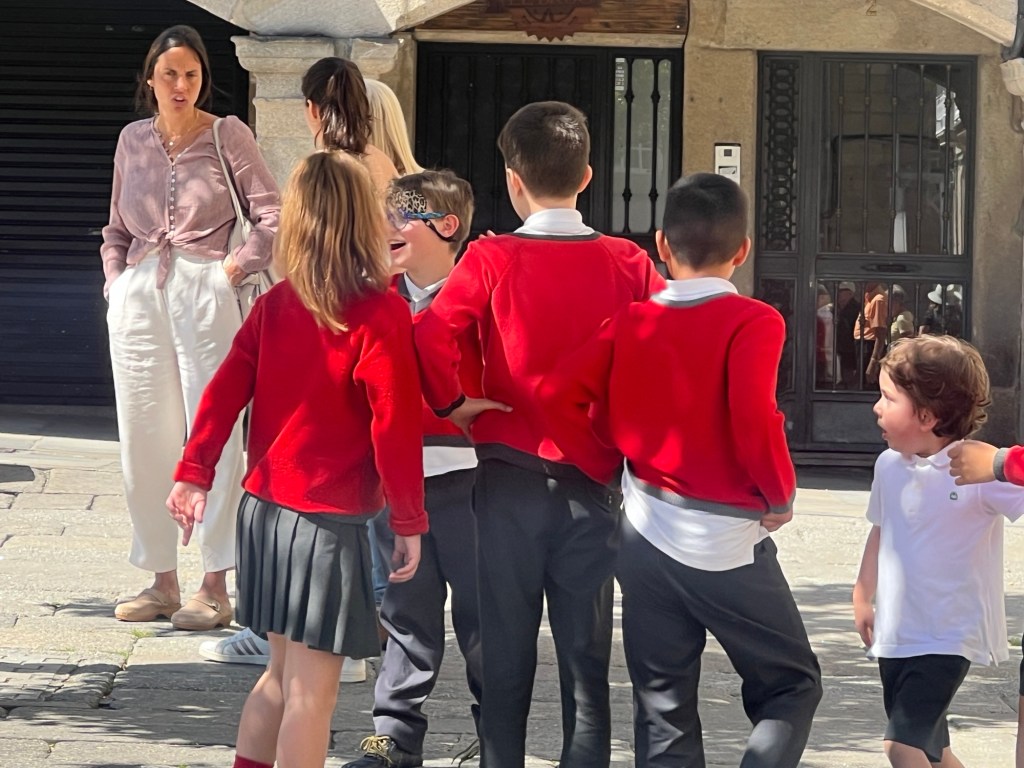
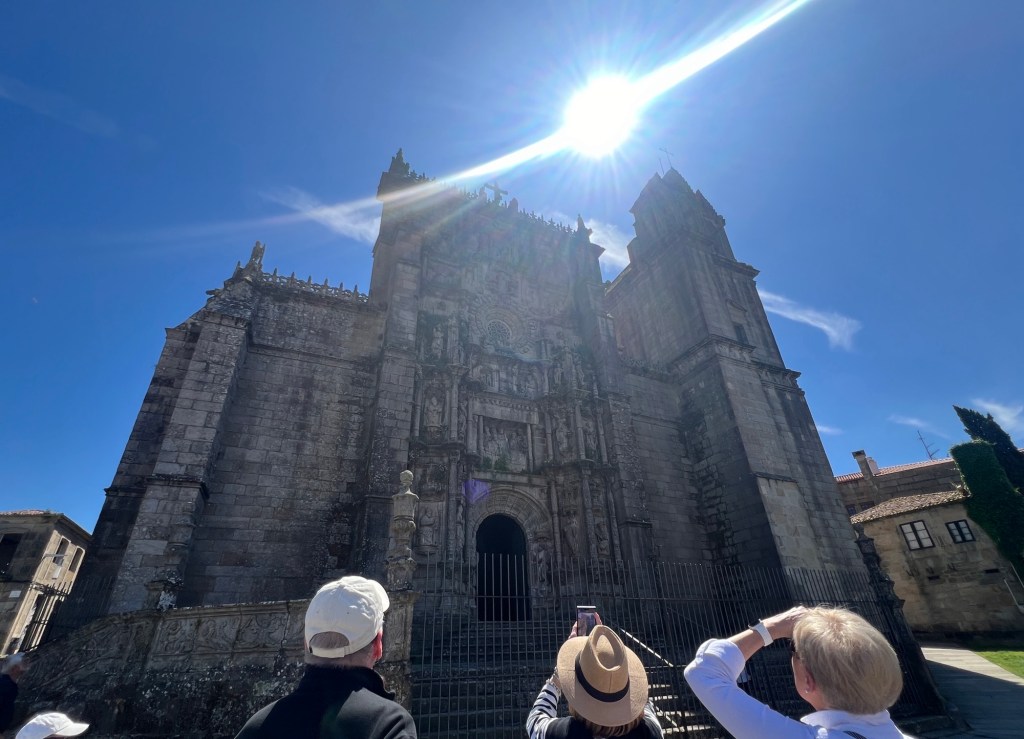
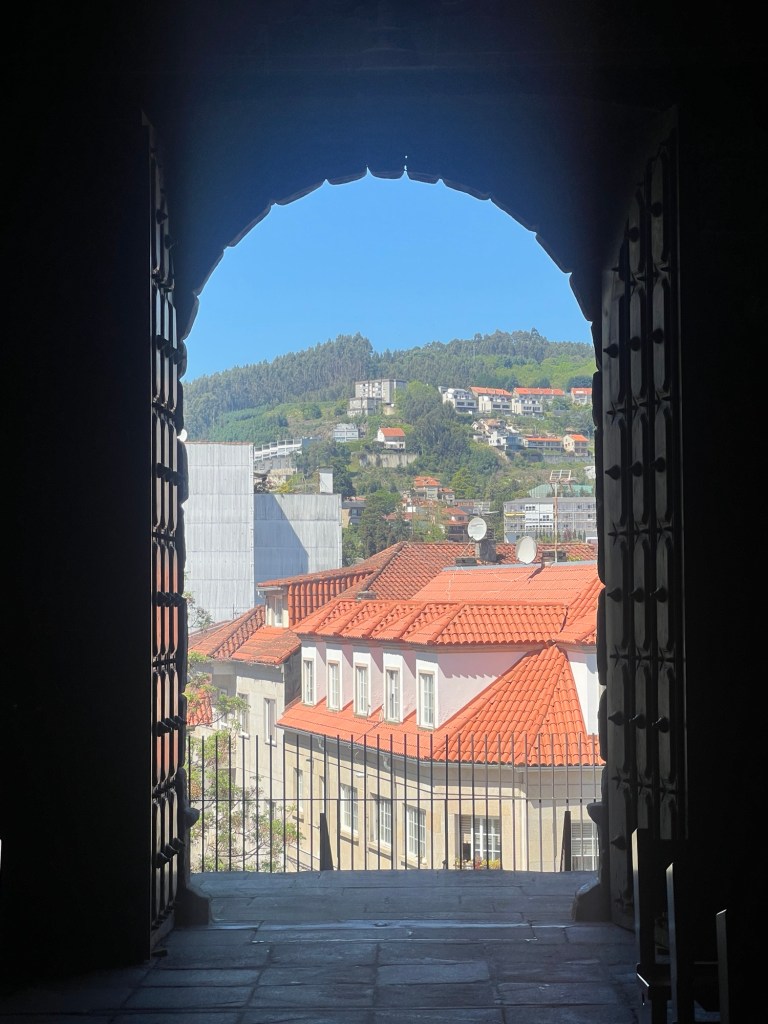
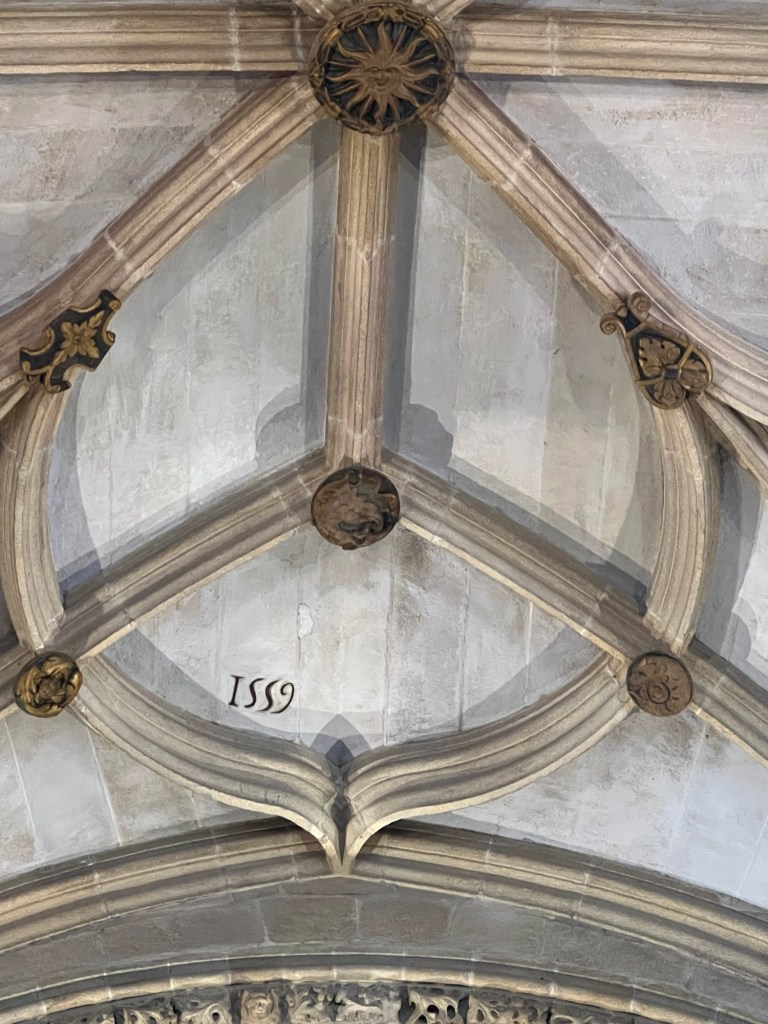
      We reached Pontevedra which is a town of about 80,000. It is built on rocks and most of the buildings date back to the 15th and 16th century. There are many churches and monuments here. It is lunchtime in Spain and we first encountered large groups of school children going to the museum. Friday is the day for school excursions here. There were also children playing in the squares.

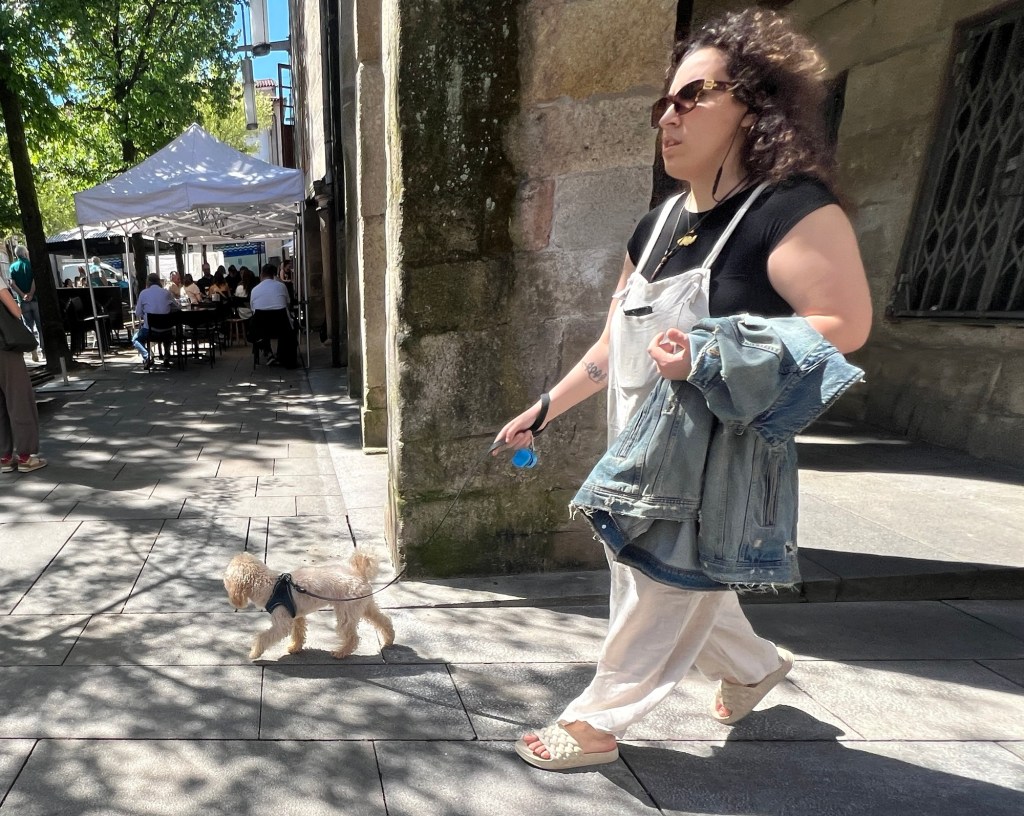
      And many little dogs!

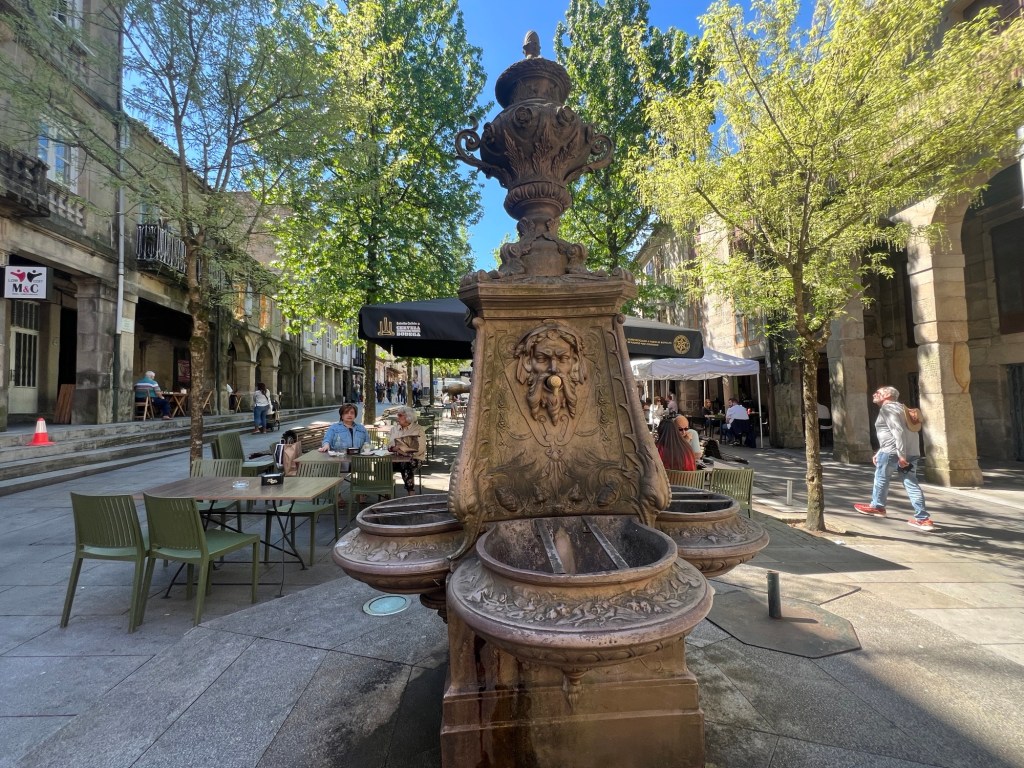
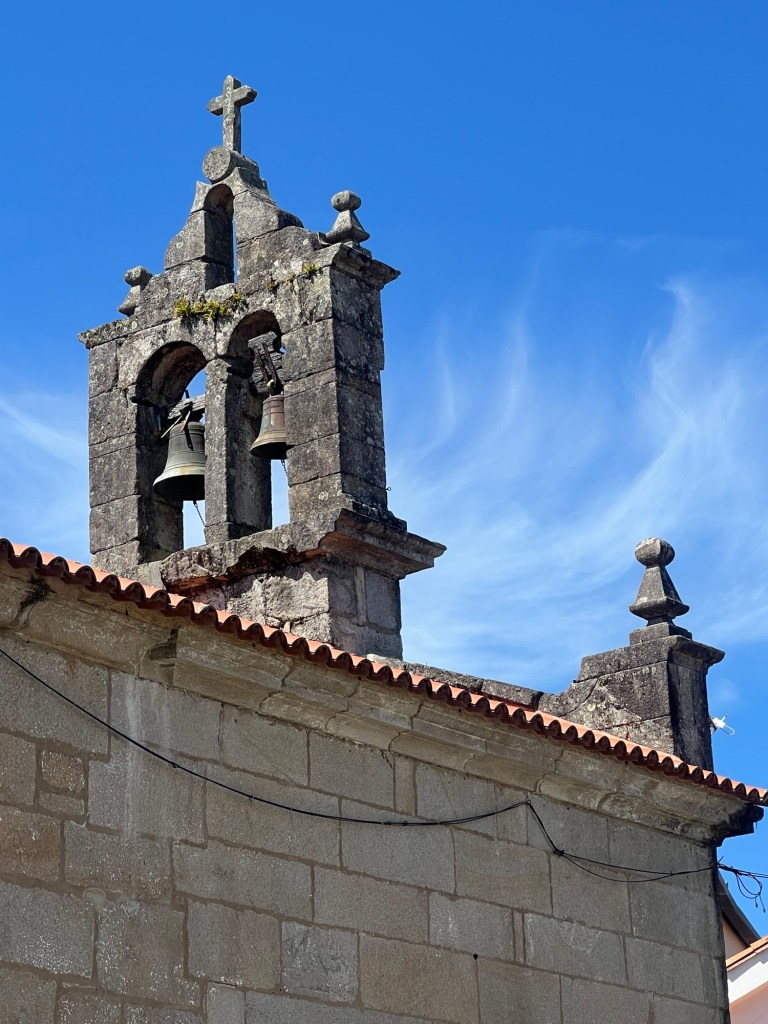
      Here are some of the sights.

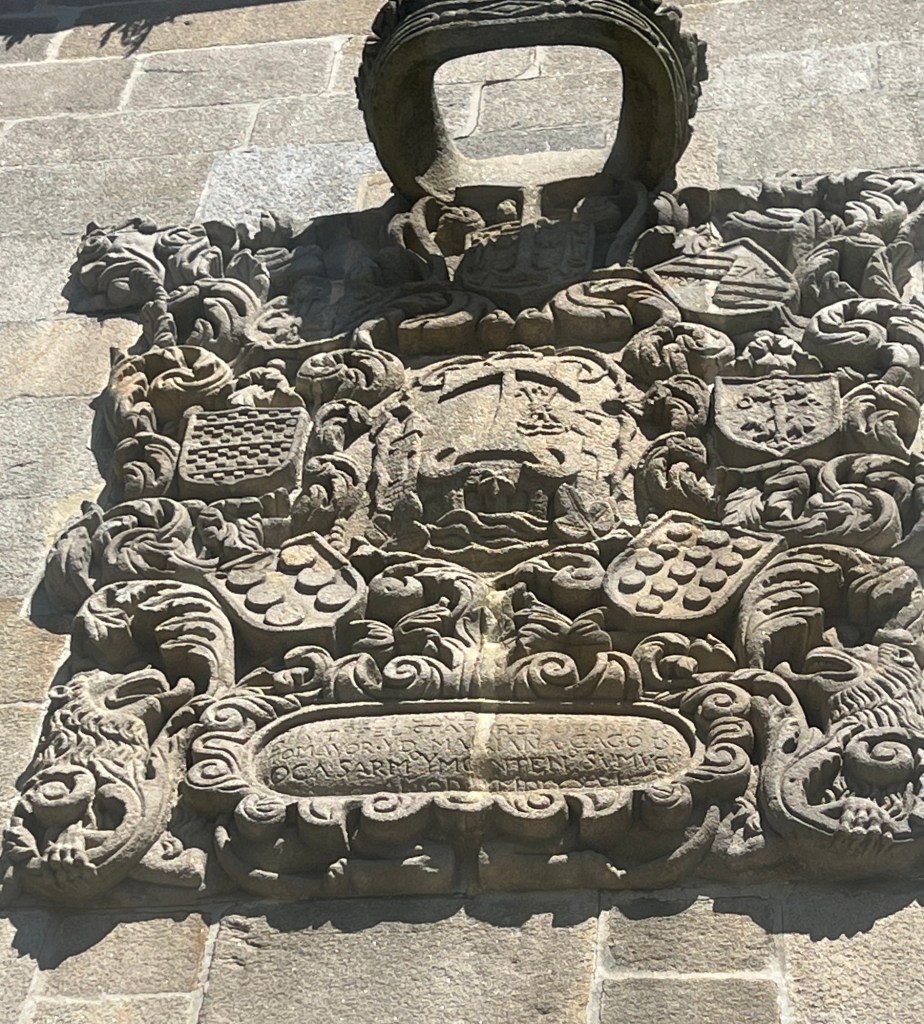
      Coats of arms are see everywhere
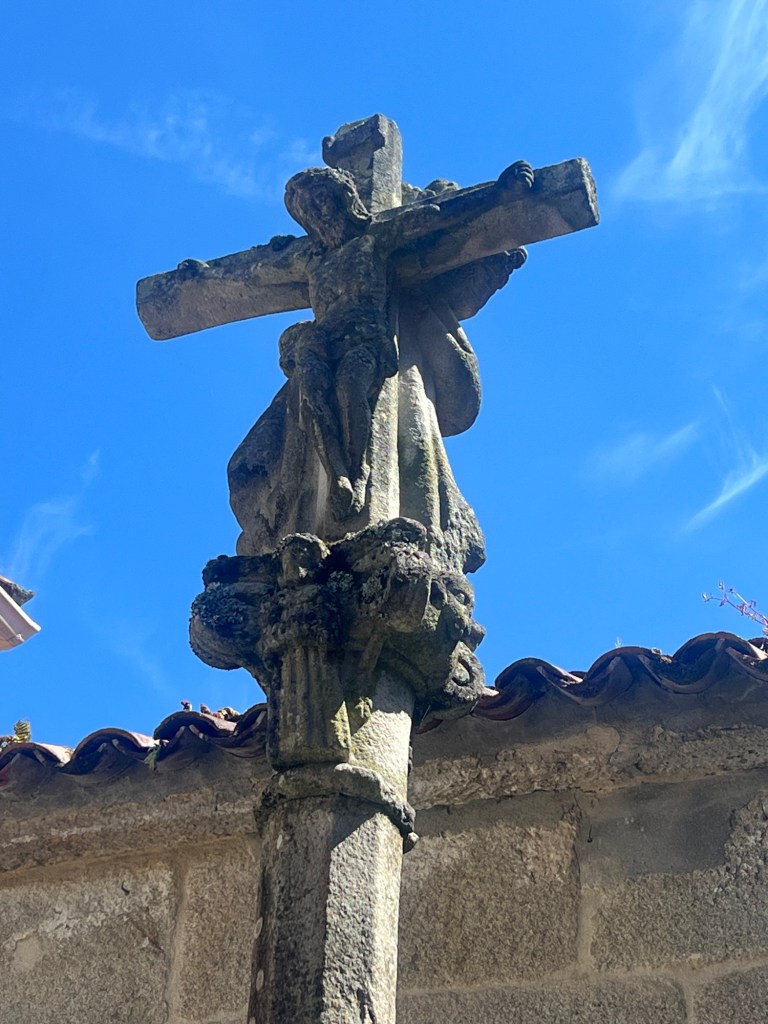
      There are many of these pedestals which show Christ on the cross on one side and the Virgin Mary on the other
      This one had Adam and Eve at the bottom
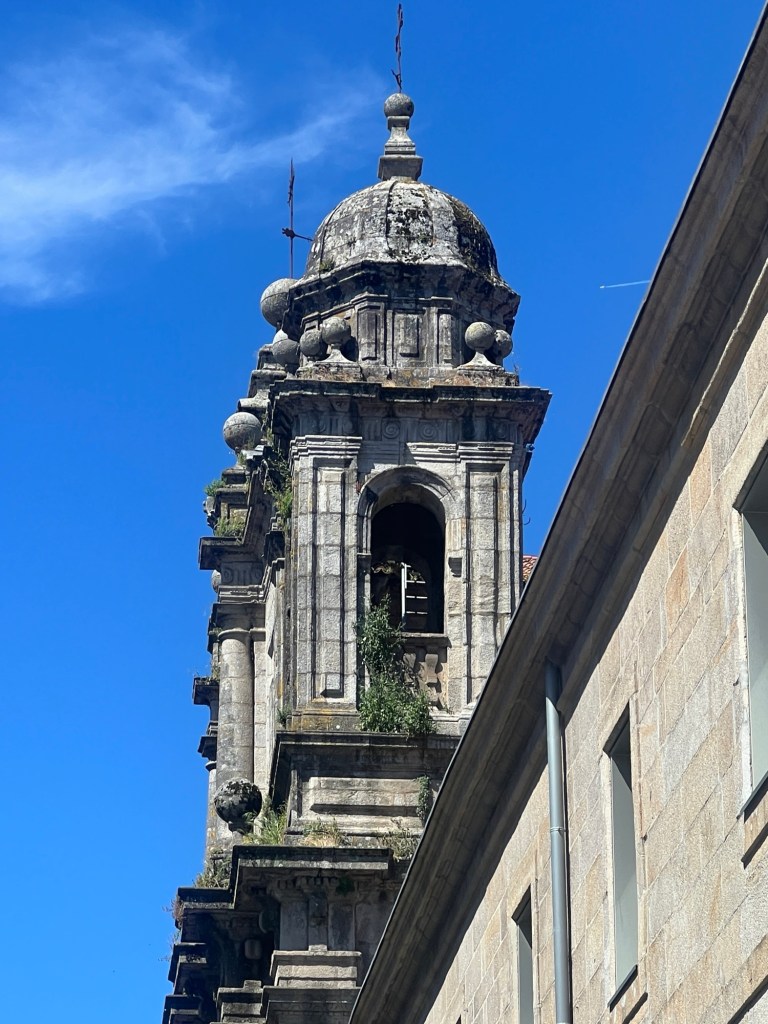
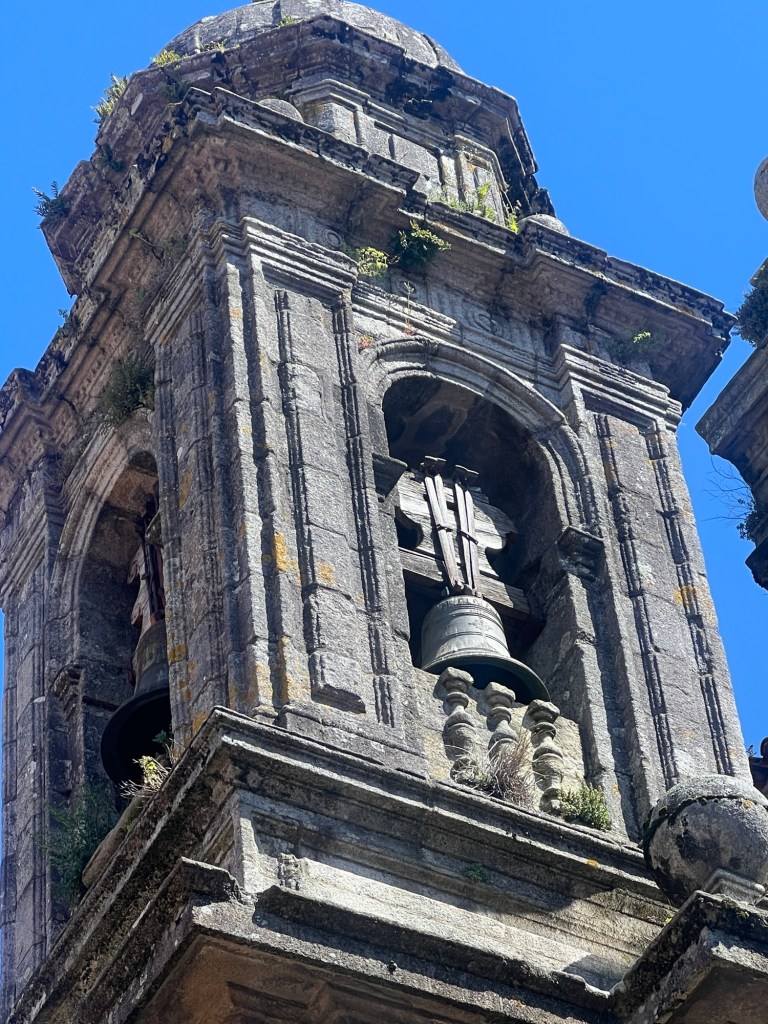
      St. Bartholomew Church
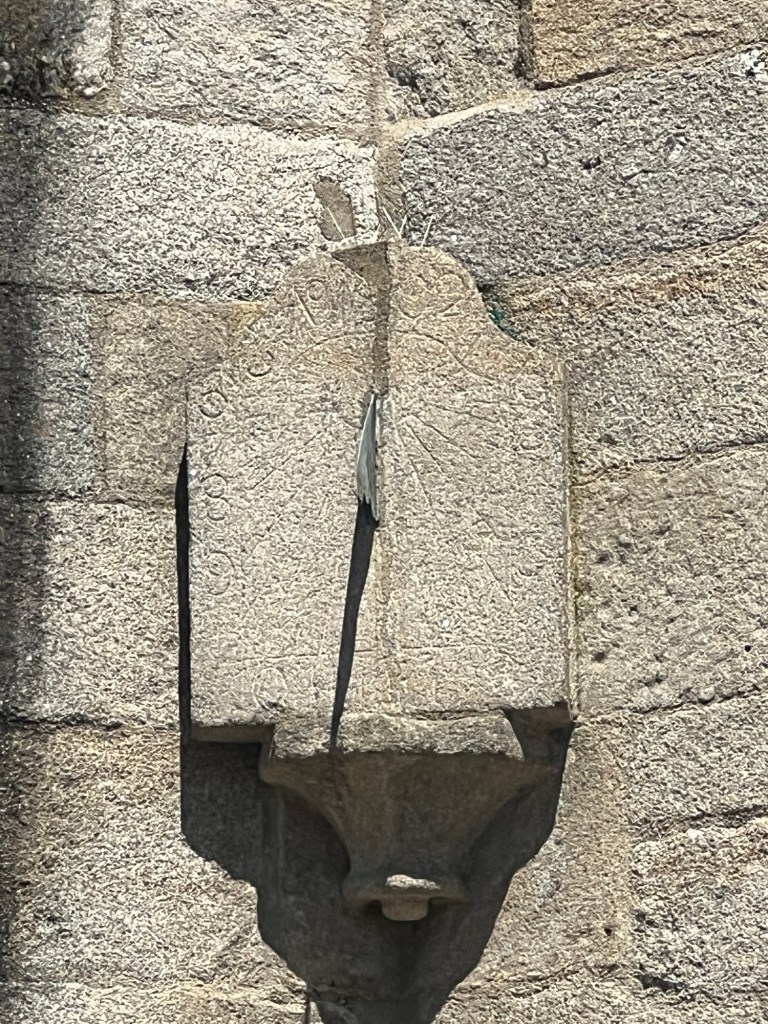
      A sundial
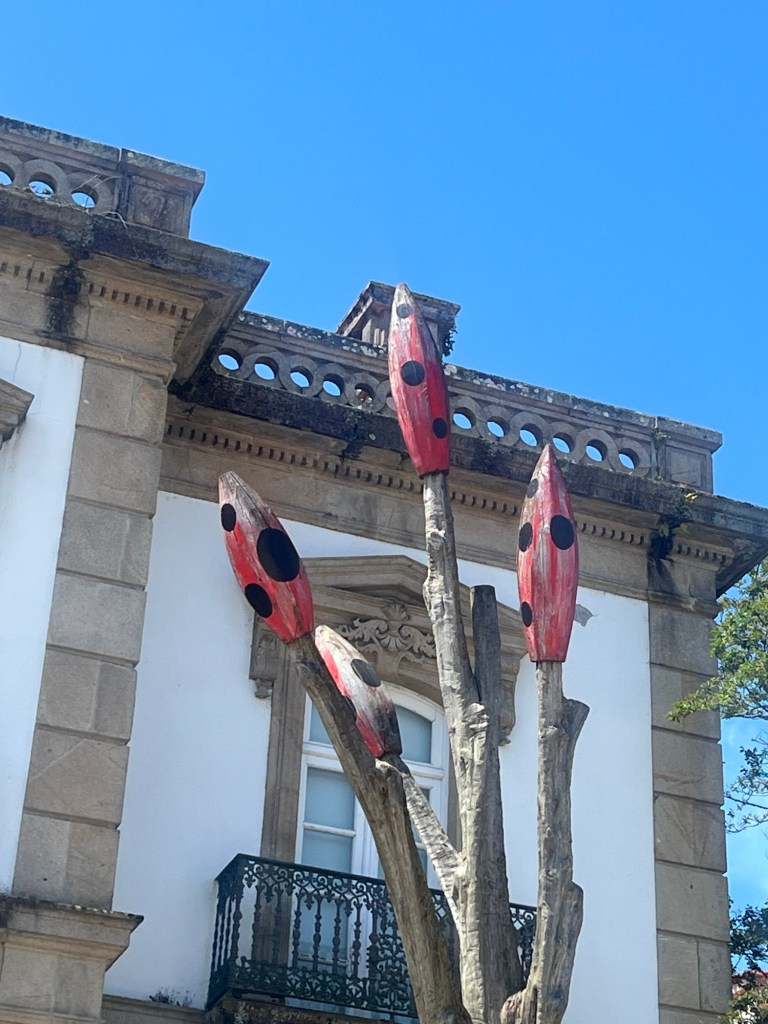
      They found something to add to a dead tree!
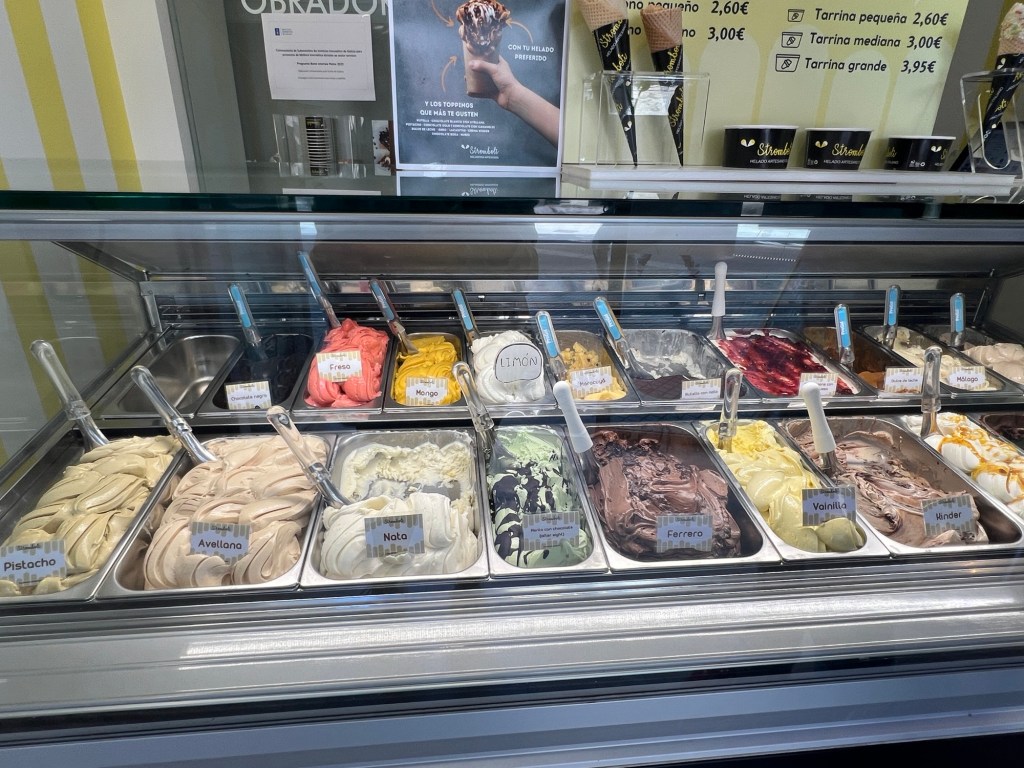
      We had some free time to stop for gelato on one of the squares. Delicious.
      These scallop shells mark the
      Way of St. James.

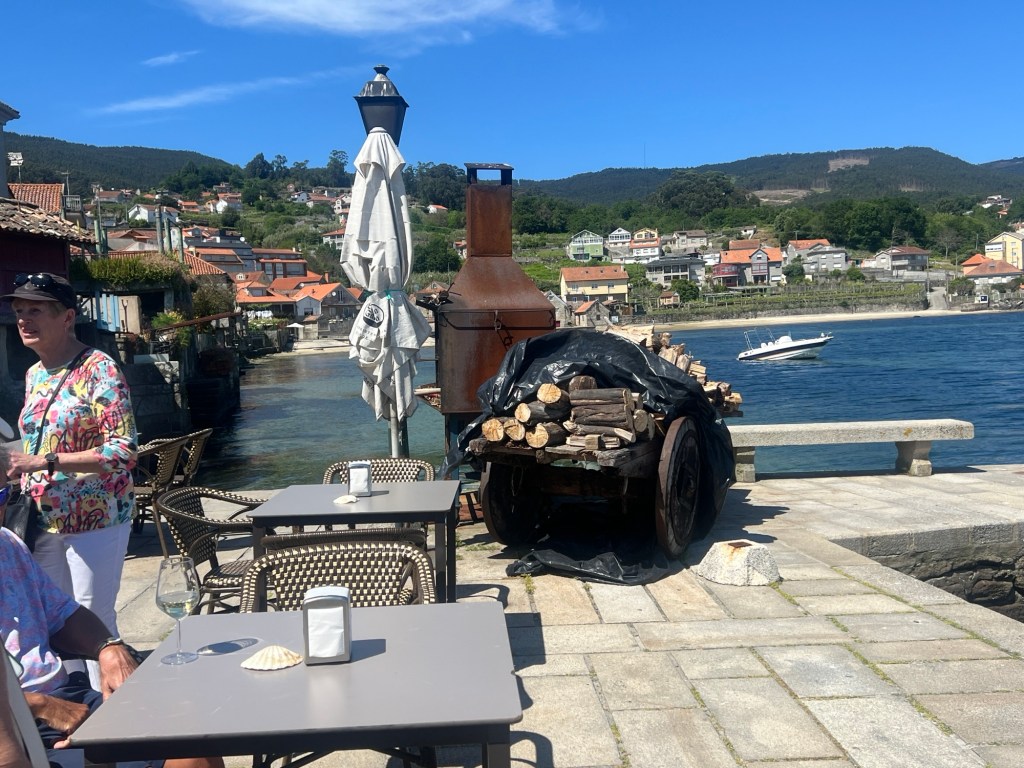
      After our visit to Pontevedra, we drove a short way to the next village of Combarro. It is a small and very charming place. The population is only 1800. Some say it is the most charming small village in Galicia. The buildings and other structures date back before the 1700s. The name means “a sheltered fort”.

      Continta told us about these small structures that we saw along the way. They are called horreos or granaries. They have open slats on all sides and have been used for keeping fruits and vegetables and other staples inside to keep them from being eaten by the animals. Some are still used that way but others are used for storage or children’s play. We haven’t seen these anywhere else.

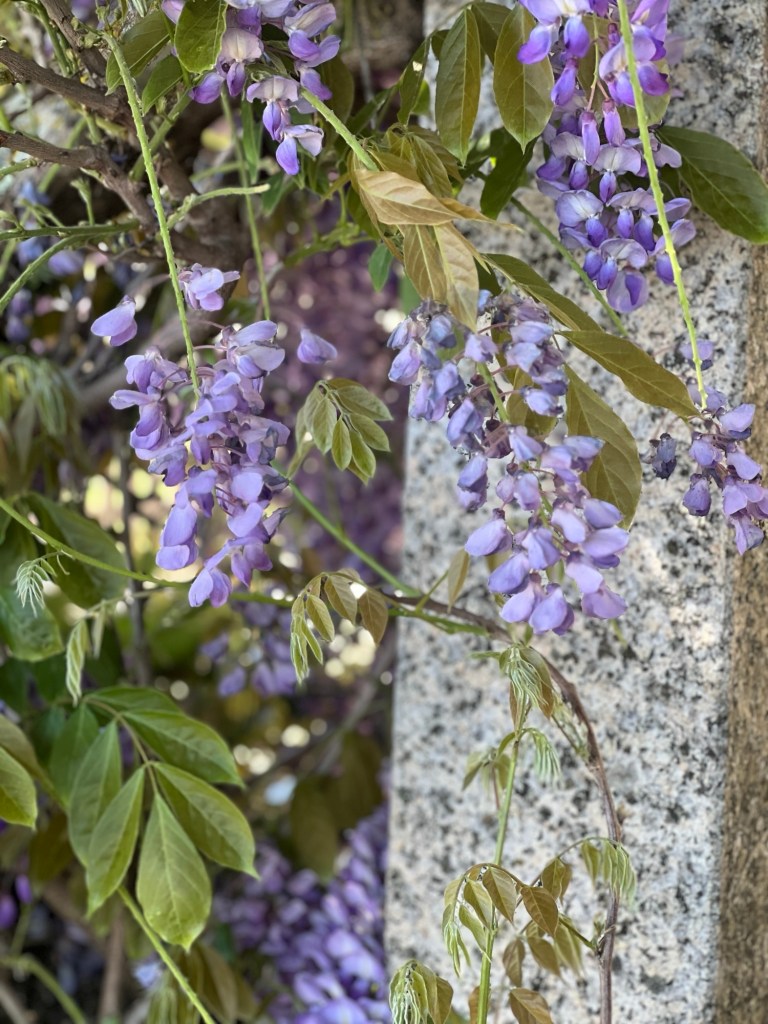
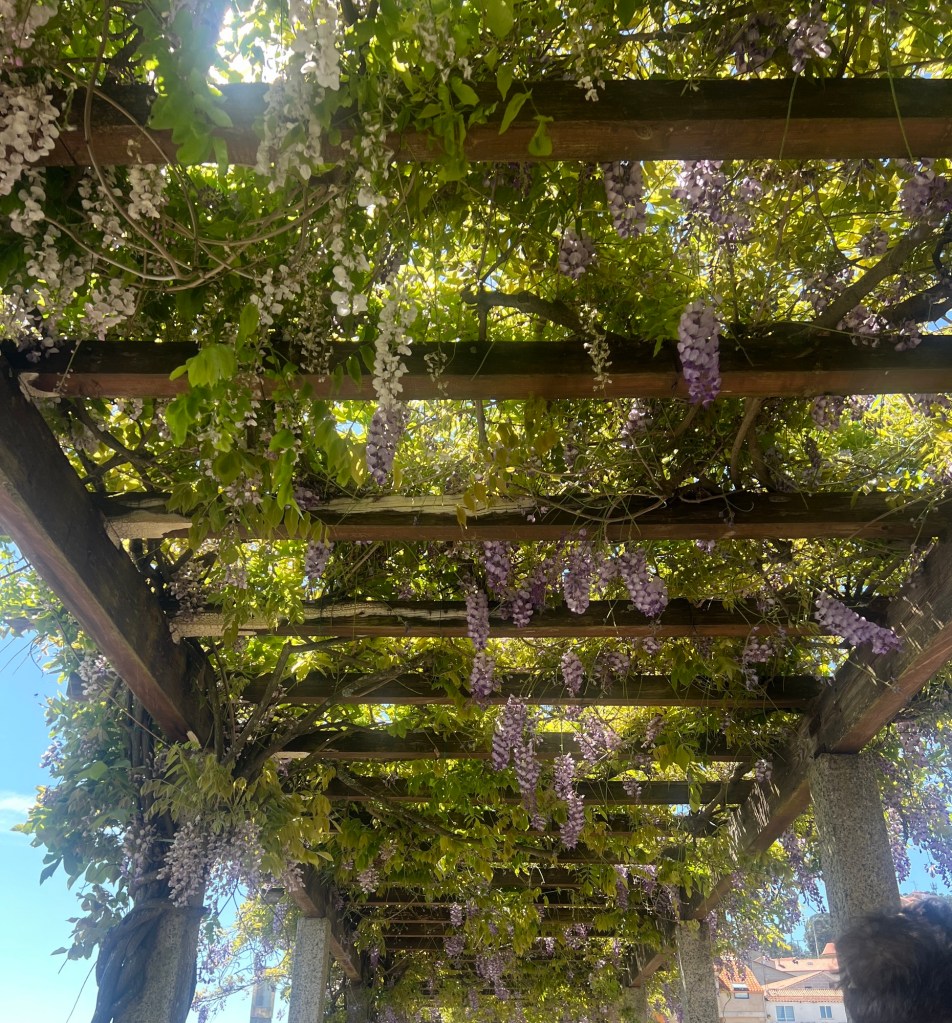
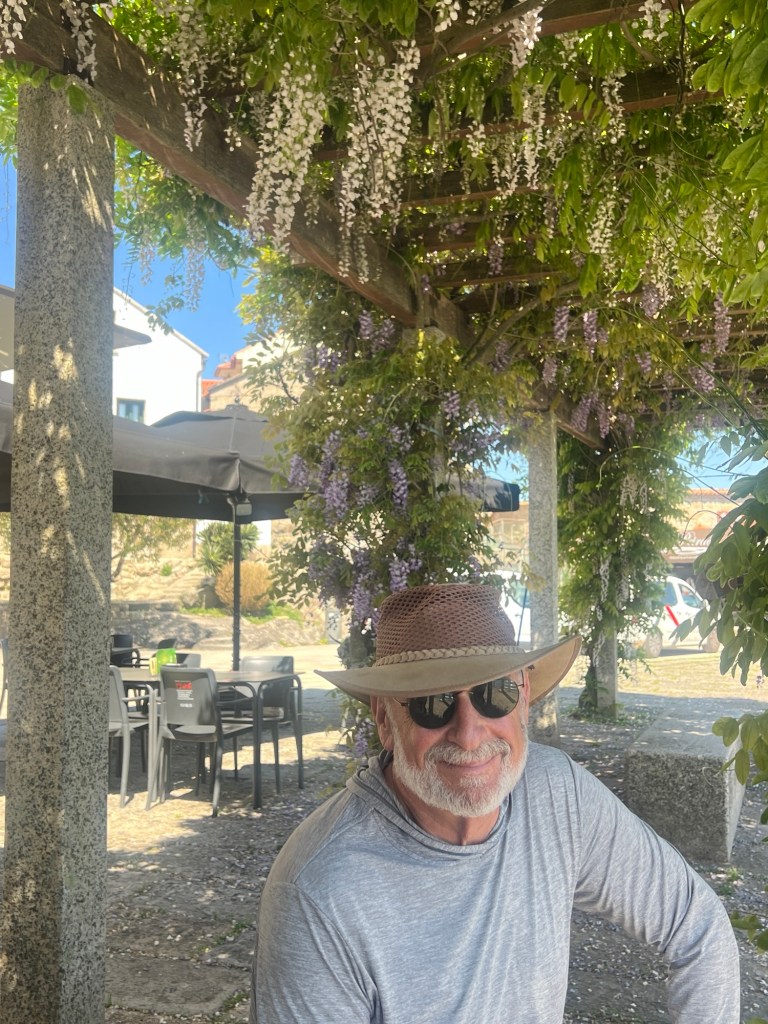
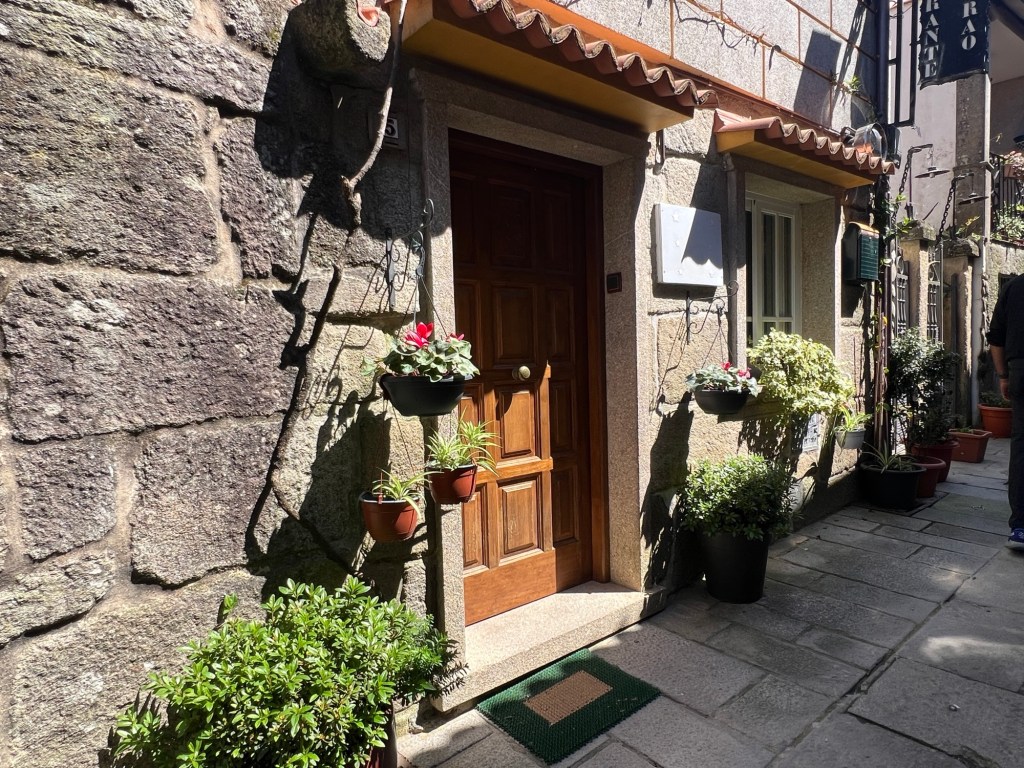
      We walked through the winding streets after resting under the wisteria vines.

      Again, it was still afternoon and the long lunch time so most of the small shops were closed. I did manage to buy some chocolate.

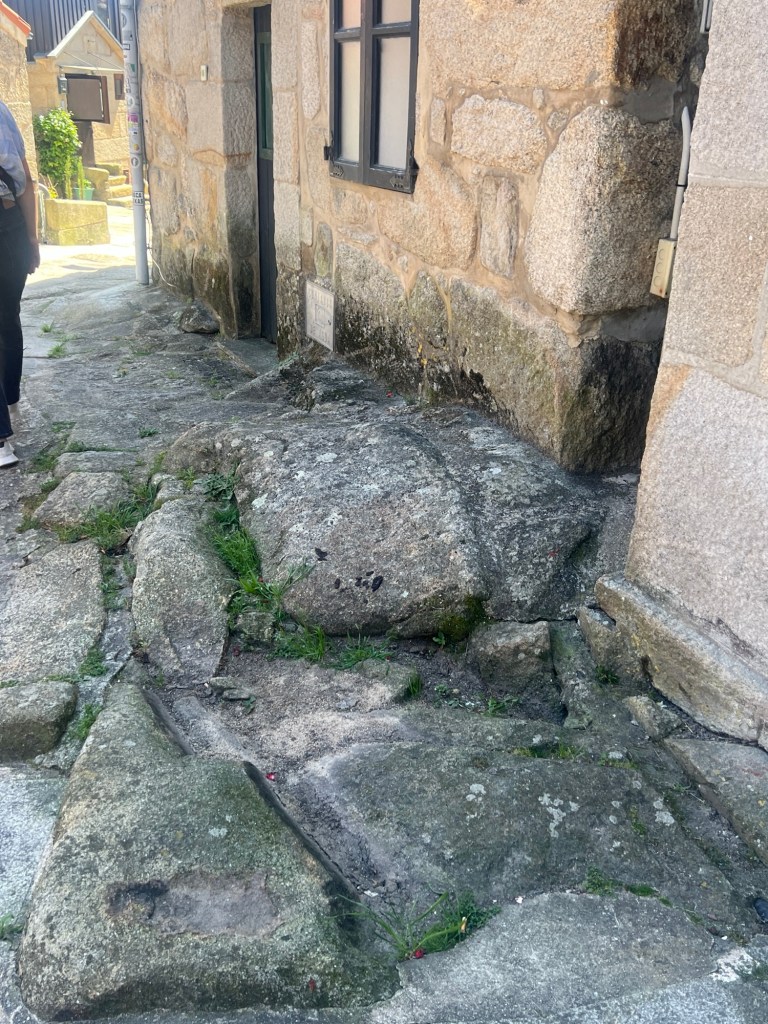
      You can see how the village was built on rock
      This is the typical stone table used to celebrate mass once a year in June for the feast of Corpus Christi. Most have been dismantled but this one remains.
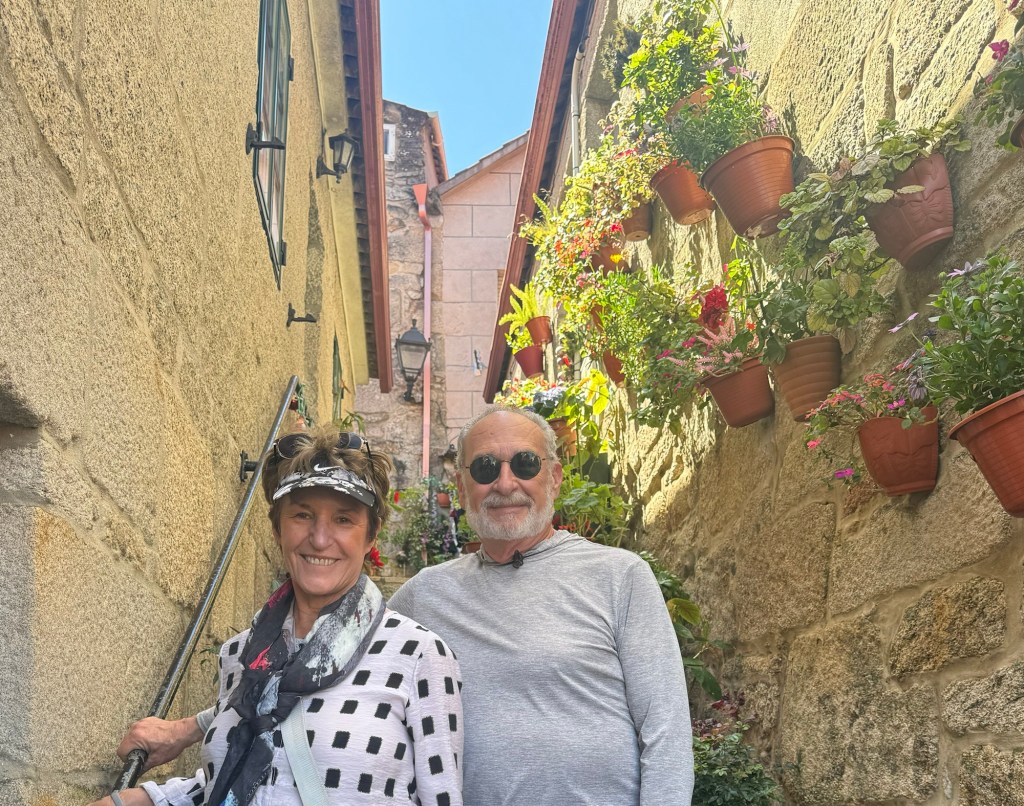
      We met some pilgrims on the Way of St. James – they are from South Africa.
      Panorama from the square

      The trip was really nice and we enjoyed each village. We have a sea day tomorrow and we enter France on Sunday where we will go to Mont St. Michel.

      Posted in April, Europe, Excursions, Spring 2024 | 1 Comment