July 6, 2023
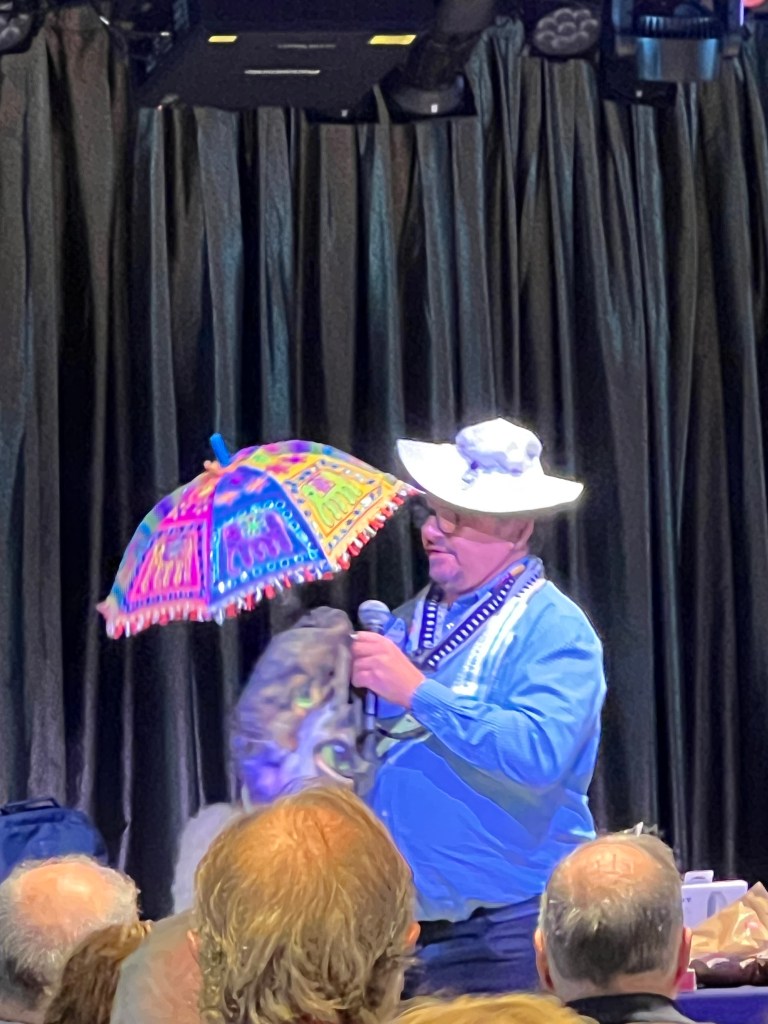
We had a 12:30 arrival into Ketchikan and there was time for a traditional end of the world cruise white elephant sale in which Ray serves as the auctioneer. You cannot believe the amount of “stuff” that passengers either bought and regretted, don’e want any more or just contribute for fun. There are books, a lot of clothing, paintings by passengers and almost anything else you can imagine. Many of the gifts we got at the cave event in Vietnam are so heavy that passengers donated them (we gave ours) and Ray called them “kissing chickens” and added them to every successful bidder until he ran out. I don’t know what those winners will do with them! Ray even modeled some of the items. This is a hilarous event even if you don’t buy anything. The money again goes to the crew welfare fund.

We arrived at our last port in Alaska, Ketchikan. It is at the southern tip of Alaska and is often the first or the last port for cruises visiting here. And they do visit – on average there are 6-8 ships in port every day. and they bring between 5000-9000 passengers. There are two different docking places and the docks can hold 4 ships each. The town is 31 miles long but never more than 3 blocks wide. On one side of the avenue, businesses and homes are built on stilts out over the water, while on the other side they cling to the steep slopes and often have winding wooden staircases leading to their doors. In fact, the staircases have street names.
Ketchikan boasts the largest number of totem poles in Alaska, some more than 100 years old. They can take a year to carve and are made from just one tree which rots from the inside out so that is why they last so long.

They get 14 feet, yes, feet, of rain each year but only 2 feet of snow. The low temperature is 32 degrees.The daily tides cause the water to rise 19 feet. The second largest national forest in the US is on this island.
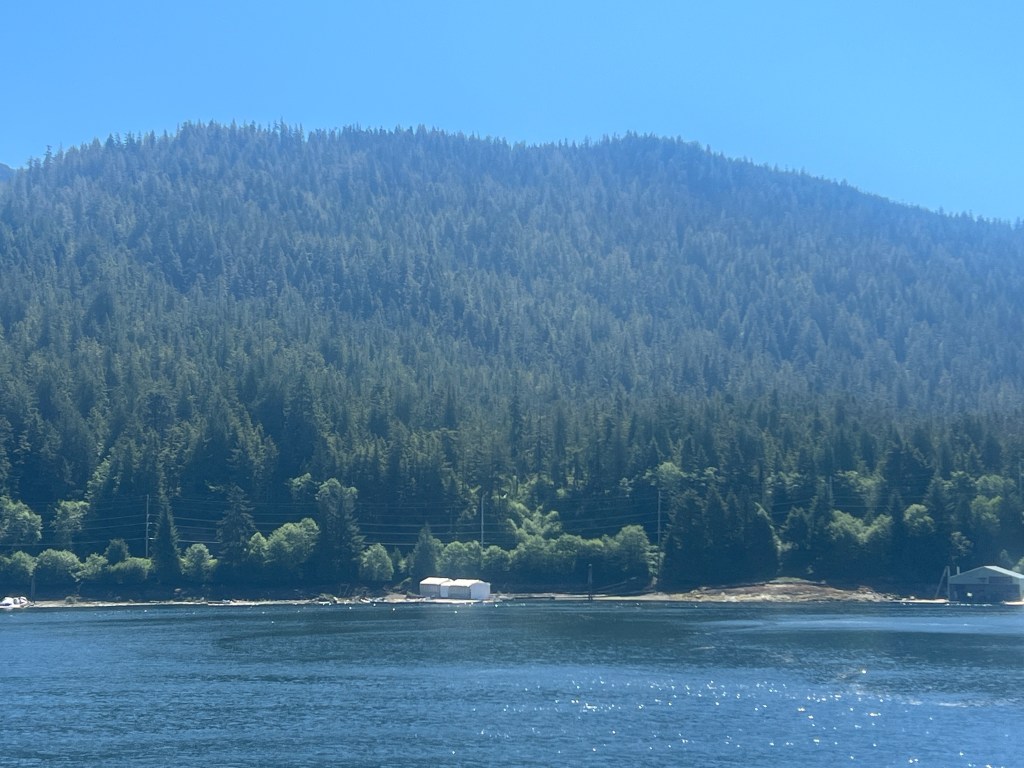
Here are some pictures of our sail in.

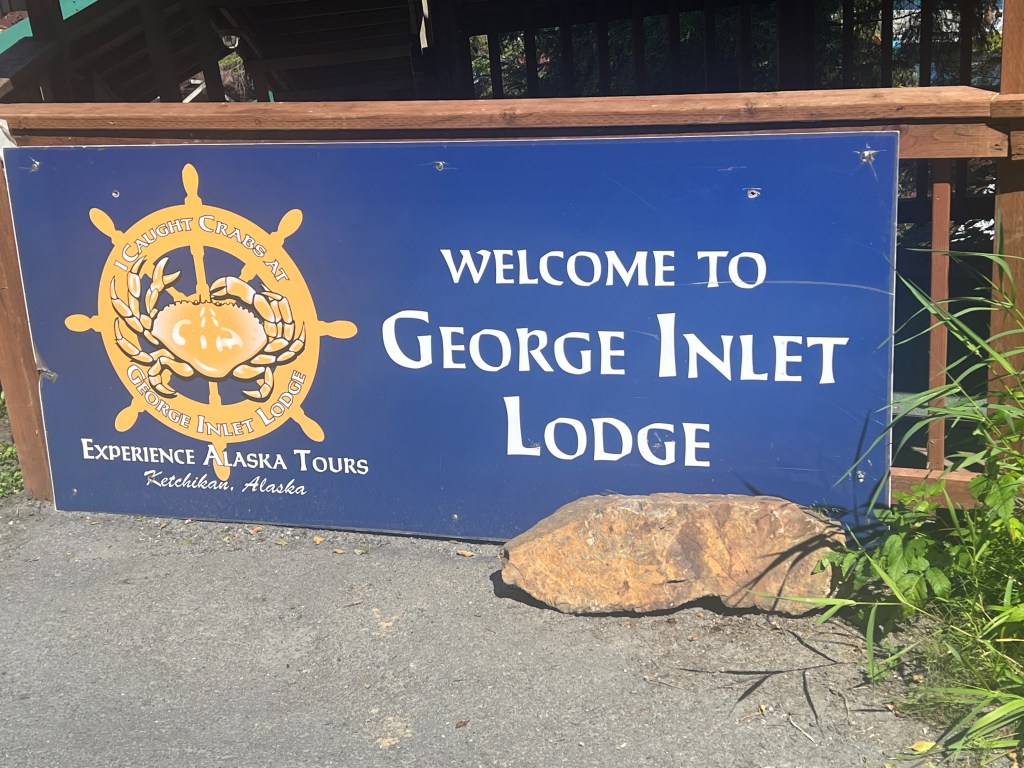
Our tour today is the George Inlet Lodge crab feast. Our bus driver entertained us with facts about Ketchikan and stories handed down by the three tribes that live here. She told us that there are only three ways to get to Ketchikan – boat, plane or the birth canal! 40% of the population here are natives. In the tribes, when people marry, the husband takes the woman’s last name and they move in with her family. It is strictly followed that the husband has no role at all in raising the children. If the wife dies, a female relative of the wife must take on that duty.
The crab feast was wonderful! It was at a lodge on the water and our group had its own dining room. They kept bringing us as much of the Dungeness crab as we wanted and…who could finish the cheesecake we had for dessert!


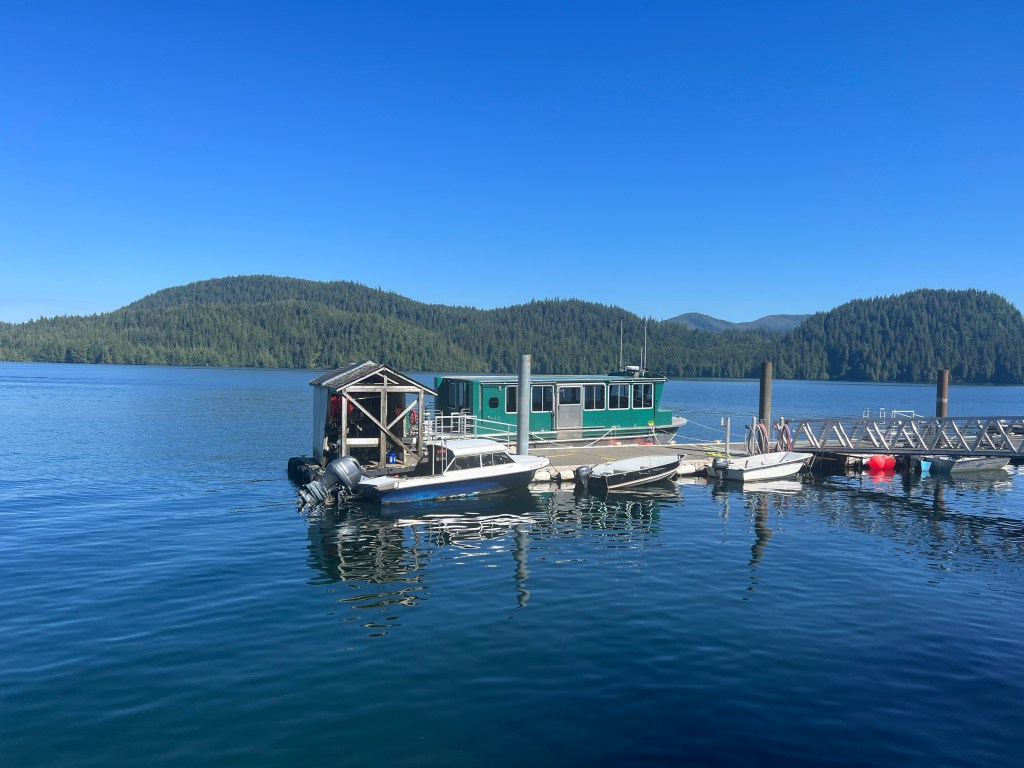

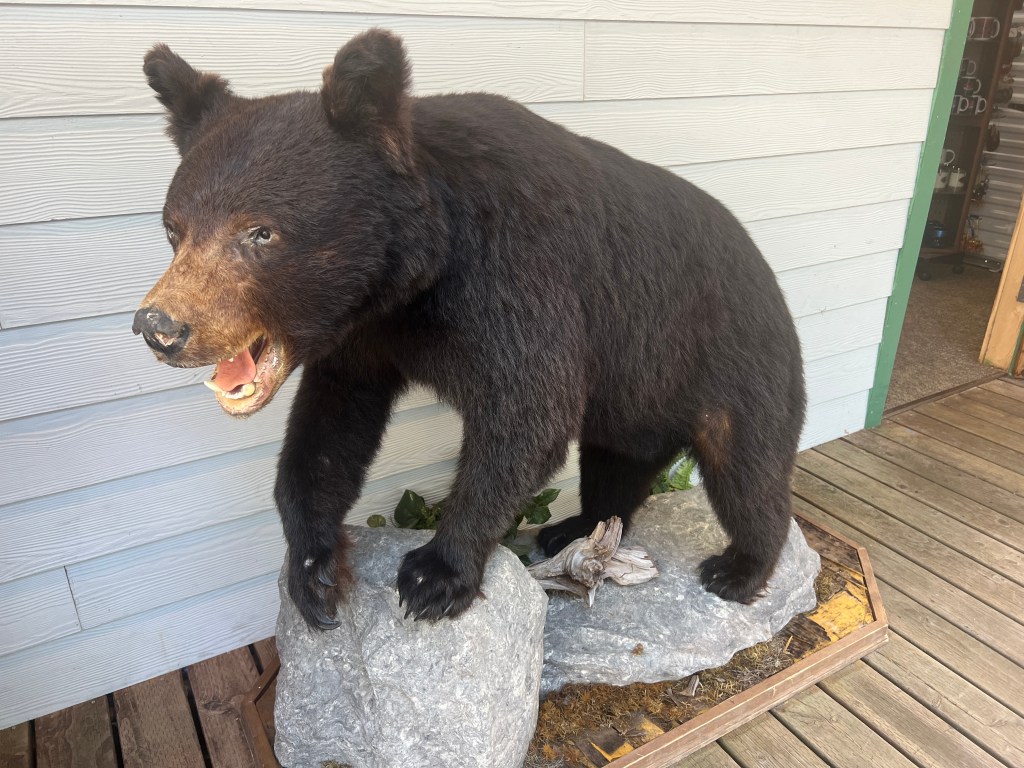


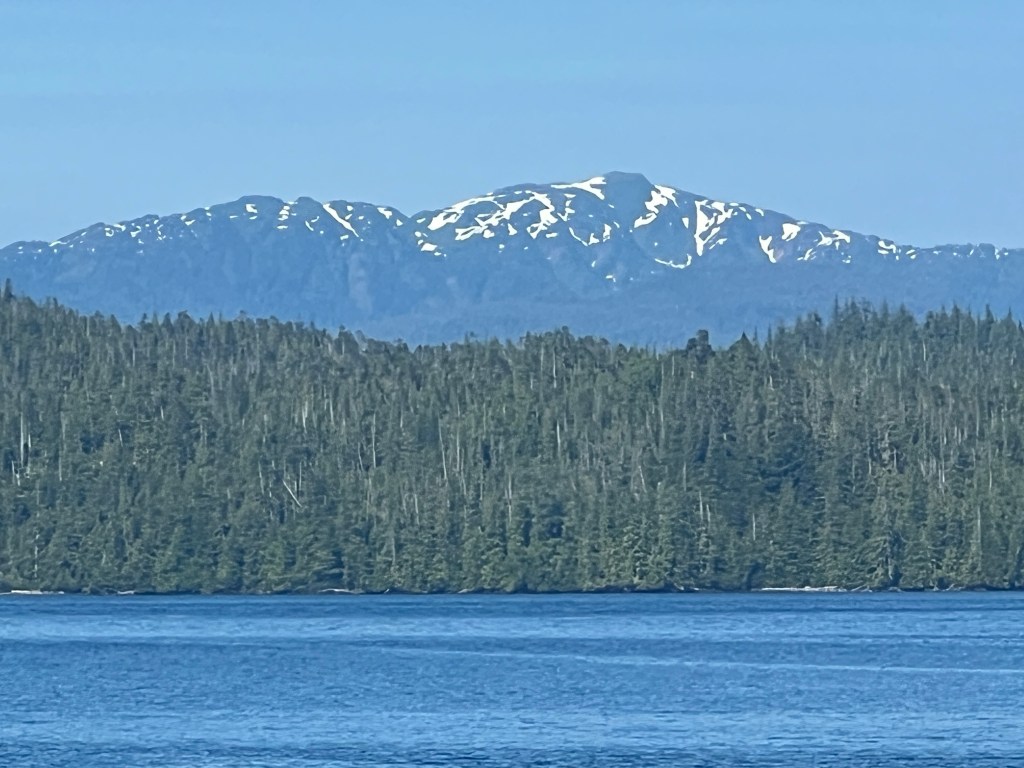
After we ate, we were taken back to the ship which was docked in the Ward Cove docks (we wanted the driver to drop us in town, but for legal reasons here, they aren’t able to do that). So we took the shuttle bus back to town and explored.


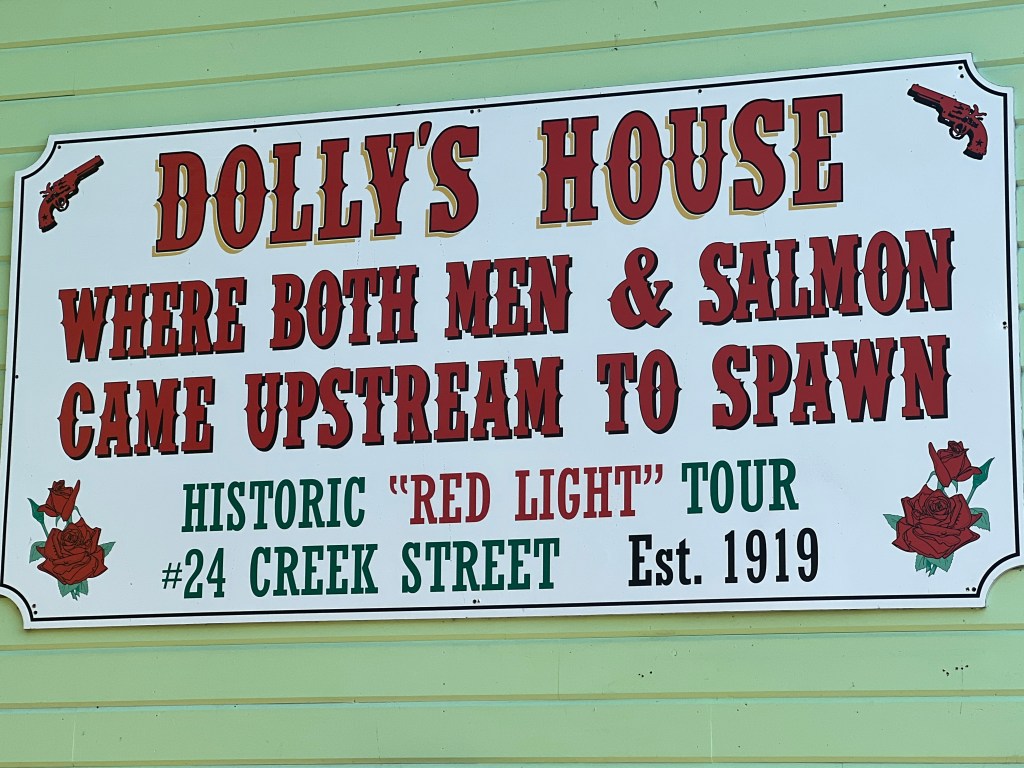
Creek Street was interesting. It is a historic area with a boardwalk path built over Ketchikan Creek on stilts. It was Ketchikan’s famed red-light district until 1954. Today the street is home to art galleries, gift shops, bookstores and restaurants. Unfortunately, the huge cruise ships that were docked on this side of town were in the process of leaving, so most of the shops were closed and we certainly weren’t hungry for a restaurant after all those crabs! The most popular house in the district was Dolly’s House, the parlor of the city’s most famous madam, Dolly Arthur. It is now a museum dedicated to this famous era. Also unfortunately closed. We heard that in the bar was placed over a trap door to the creek for quick disposal of bootleg whisky.
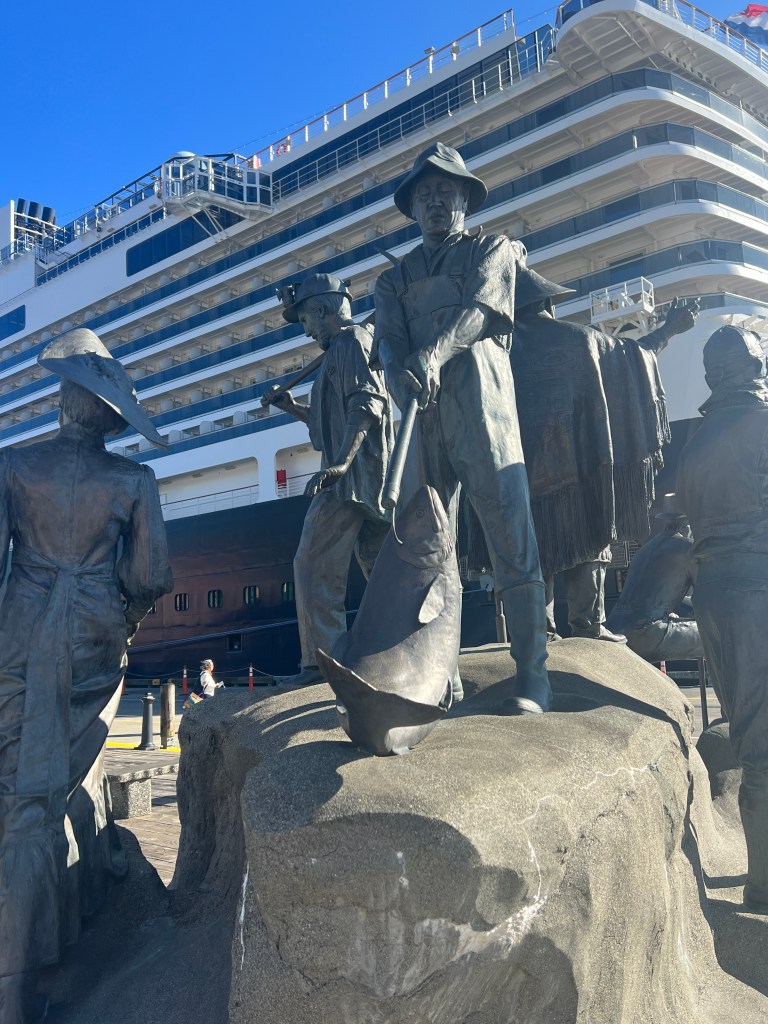



When you need to rest, there are whale tail benches to stop and take in the scenery.


Ketchikan is the “Salmon Capital of the World” and our chef is buying it to serve on the ship.
Tomorrow we arrive in Prince Rupert, Canada.

 Pat and Norm's World Cruises and other adventures