Tokyo, Japan–Day 2

With this post, I am finally catching up on my blog after so many busy port days. It feels so good to have a day at sea to catch up (and I won the blackjack tournament)!  It is a wonderful 68 degrees and my walk on the deck was actually refreshing.

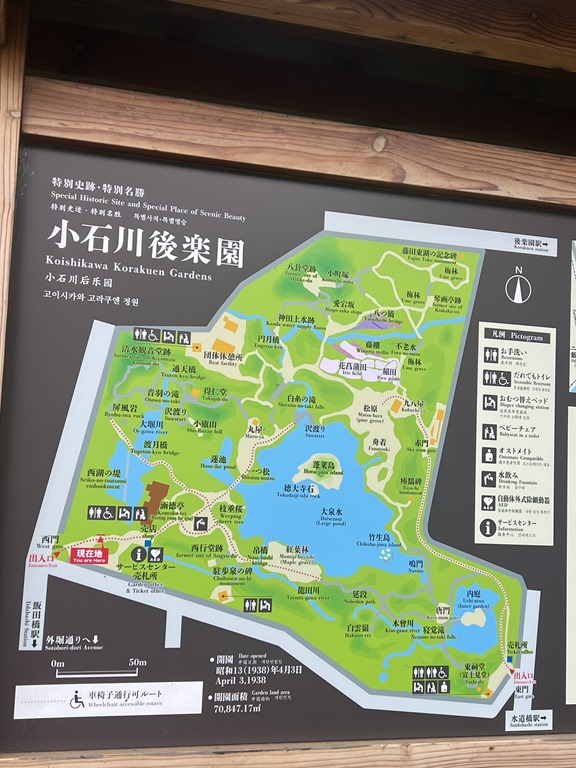
Our tour yesterday was the Koishikawa Korakuen Gardens and the Tokyo Tower.  We were hoping that the gardens would be first so that we would be OK to leave the tour when we got to the tower, and make it in time for my 11:45 nail appointment.  When we got to the bus and the guide we were told that we were going to the gardens first.

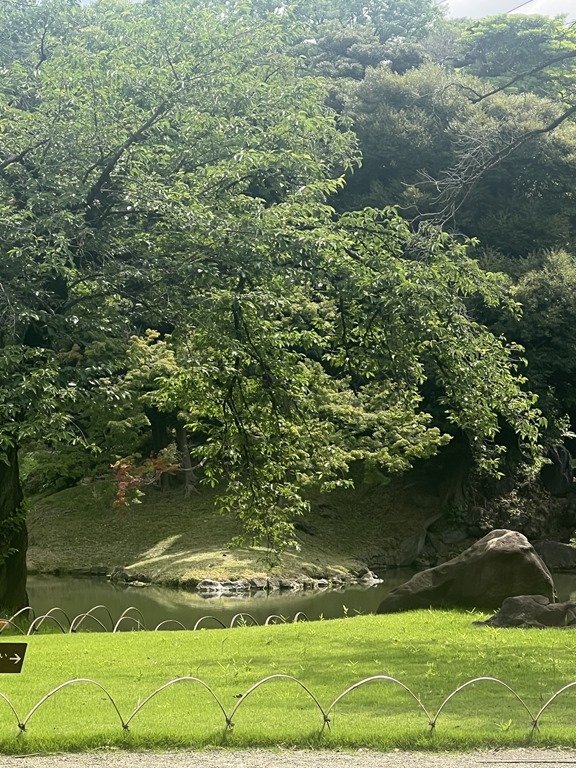
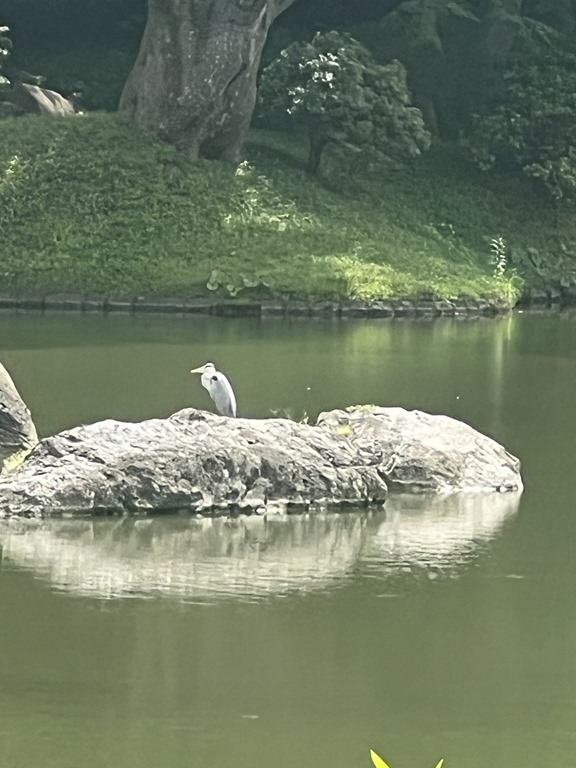
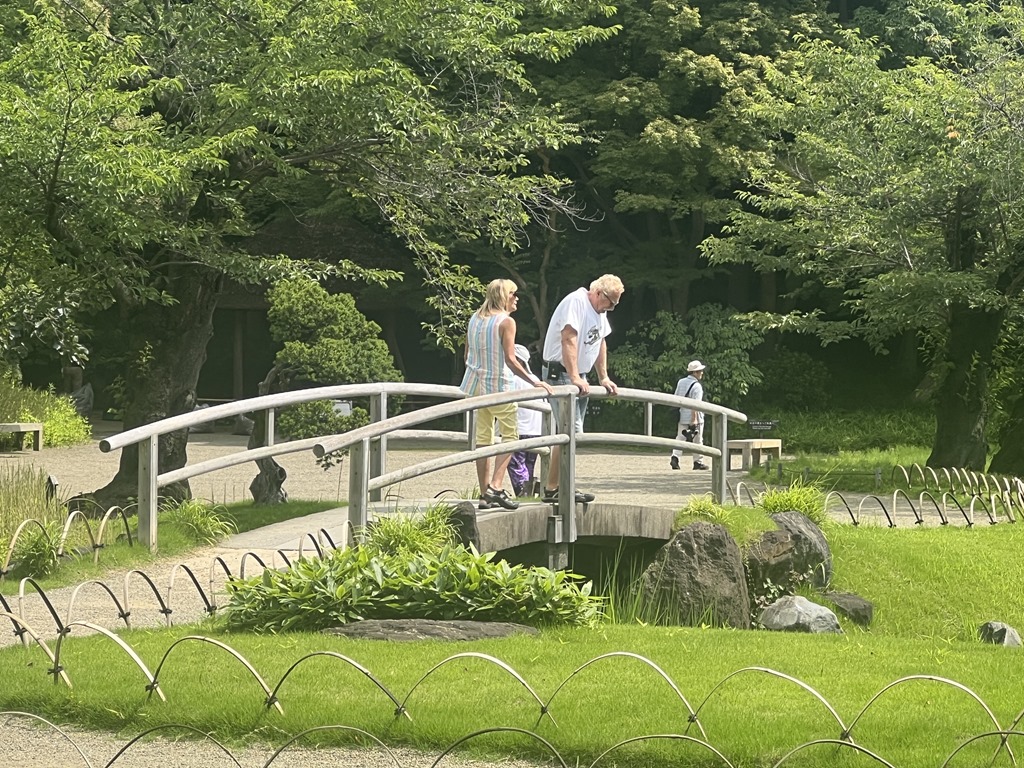
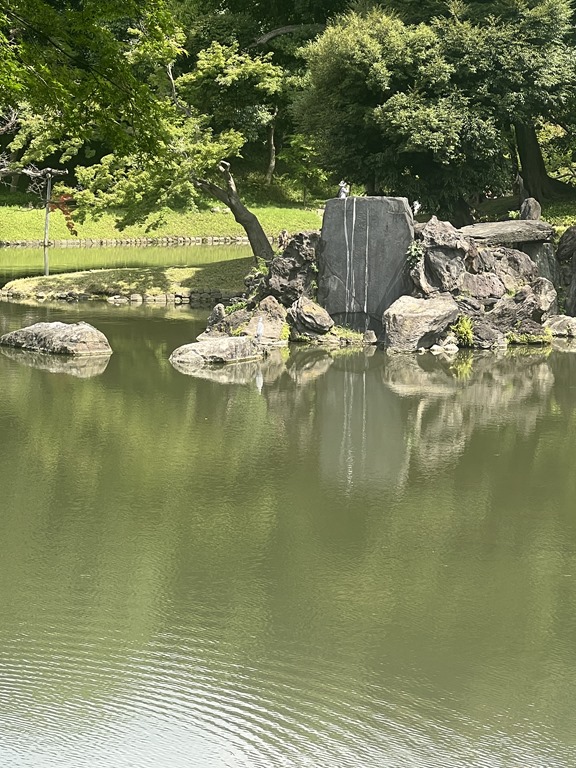
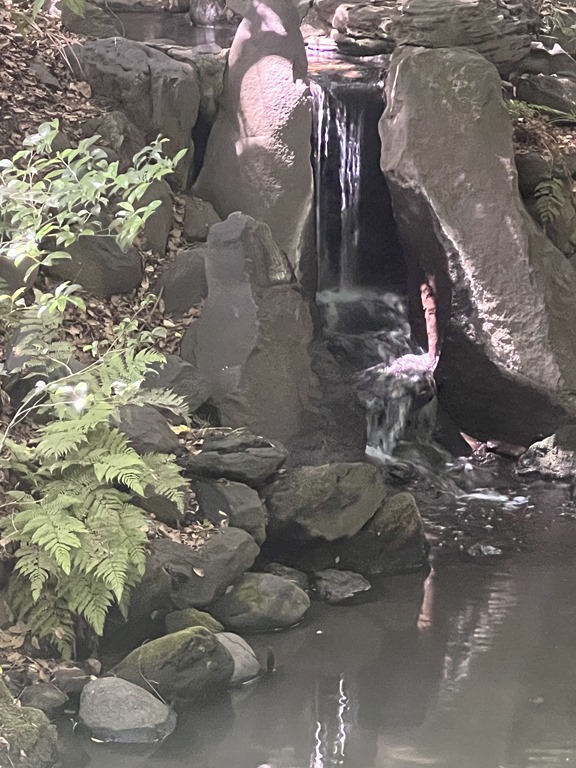
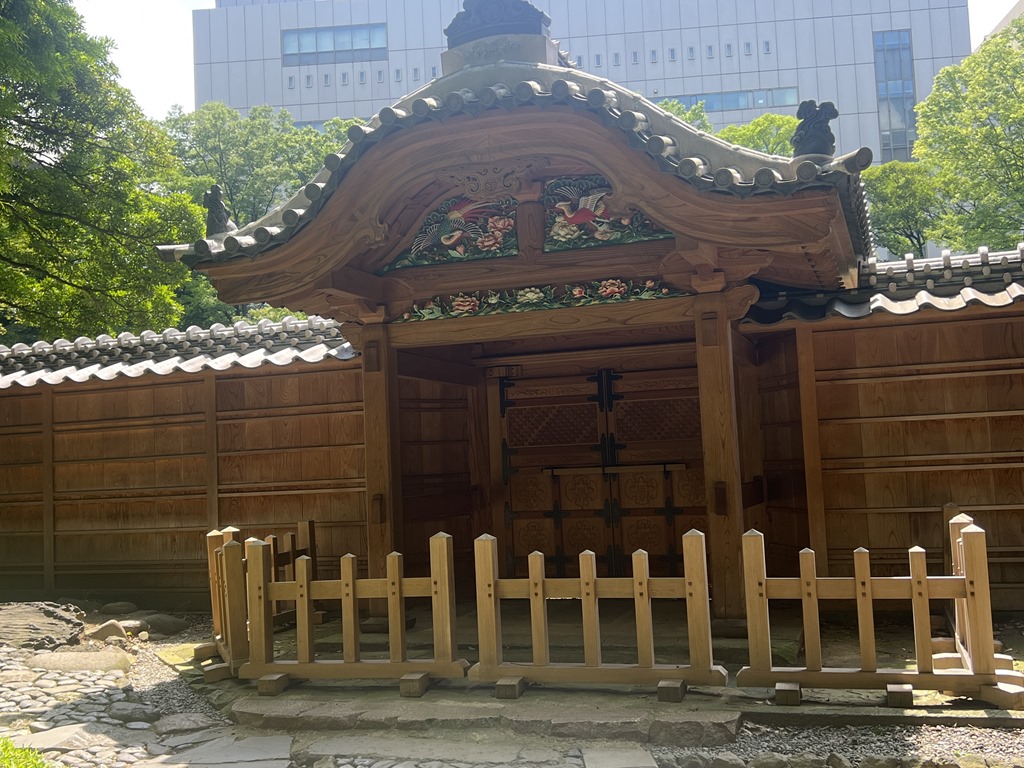
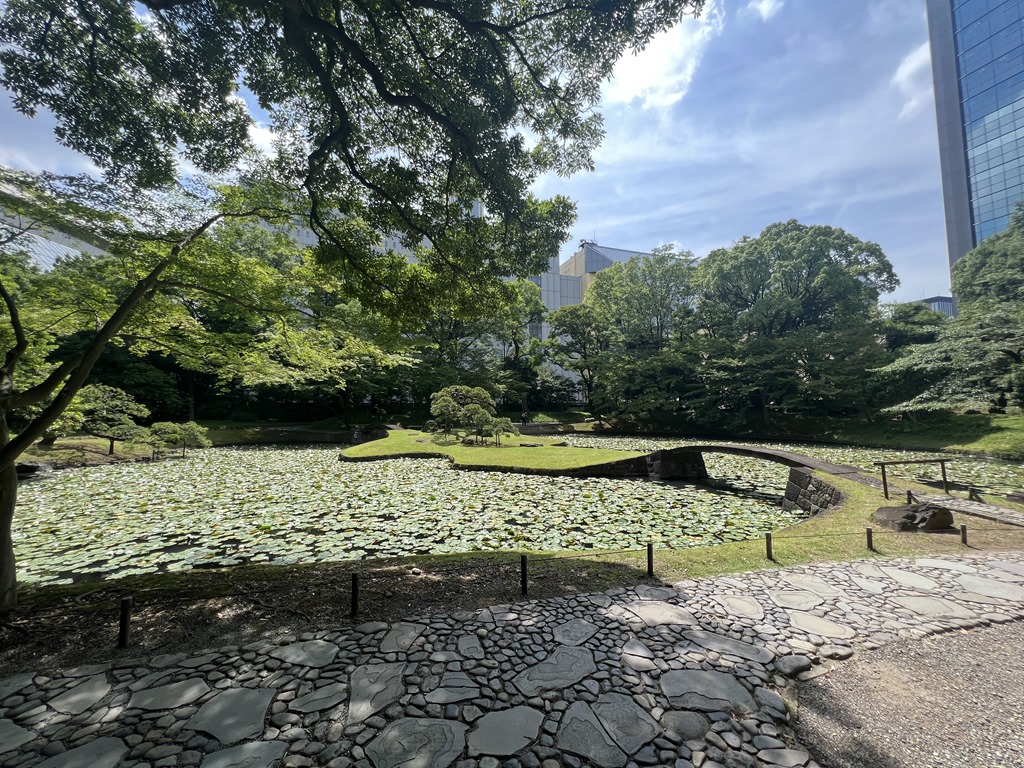
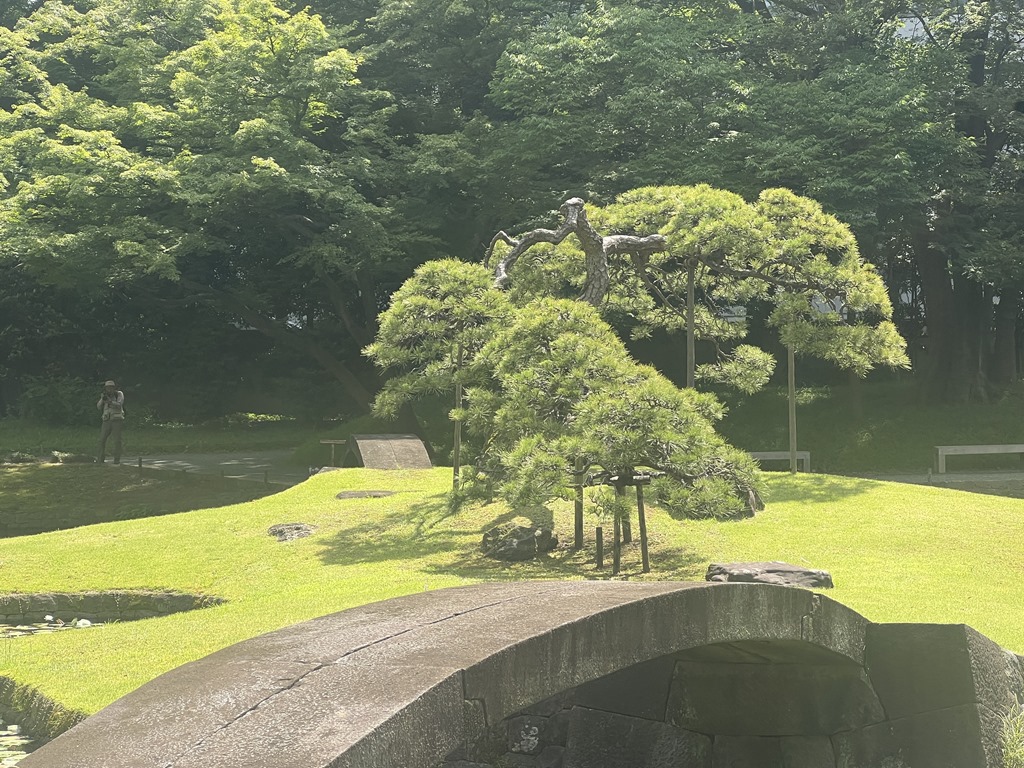
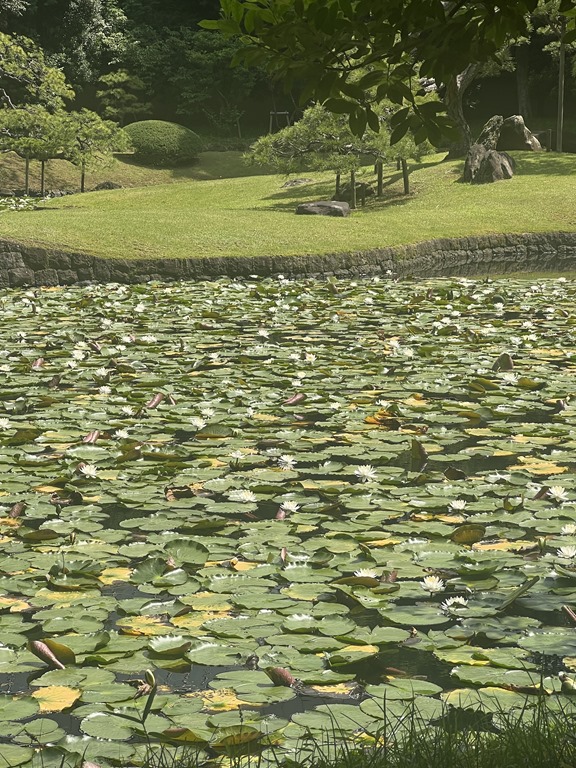
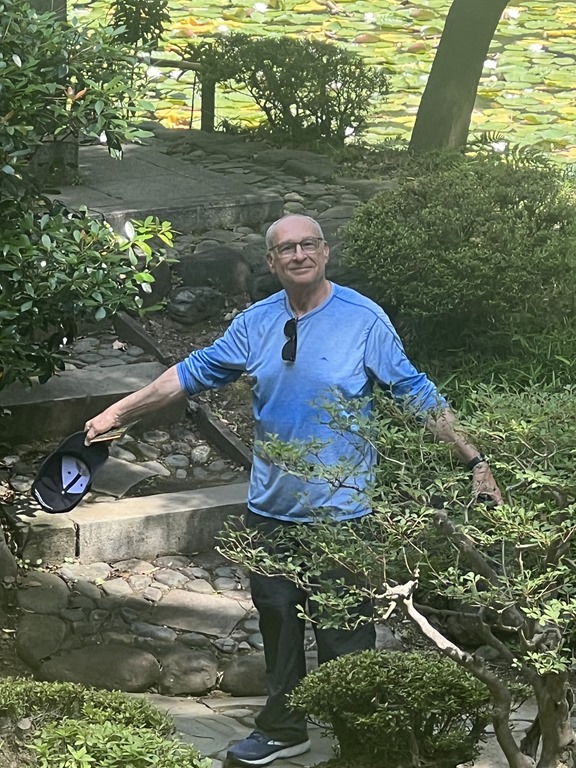
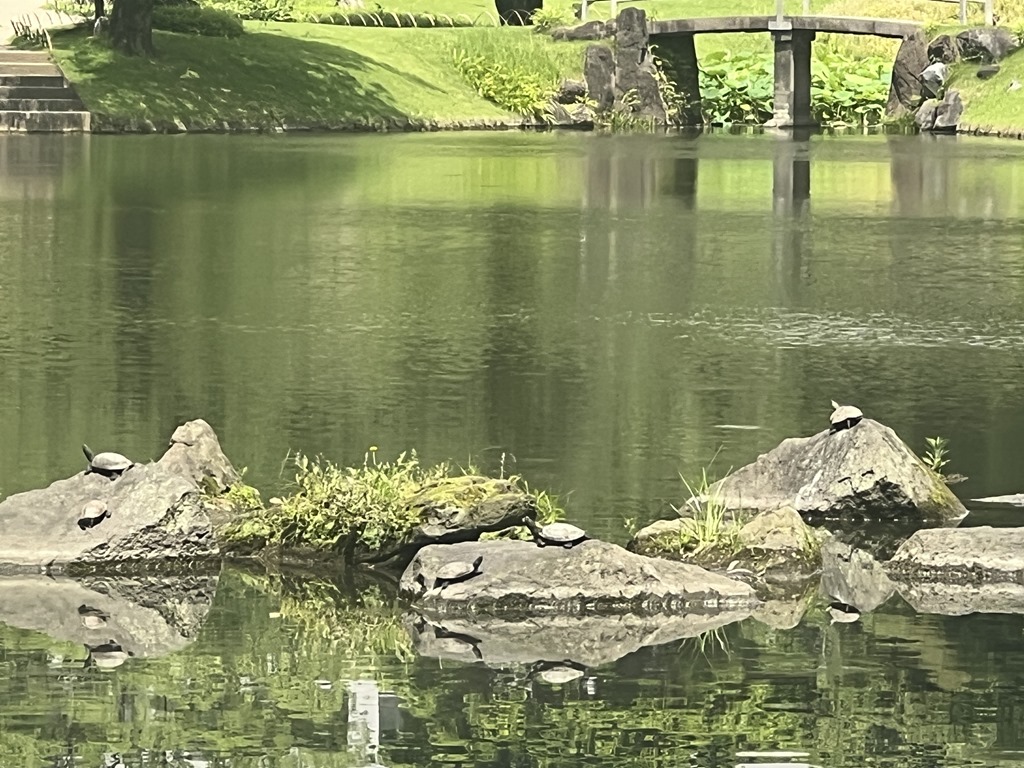
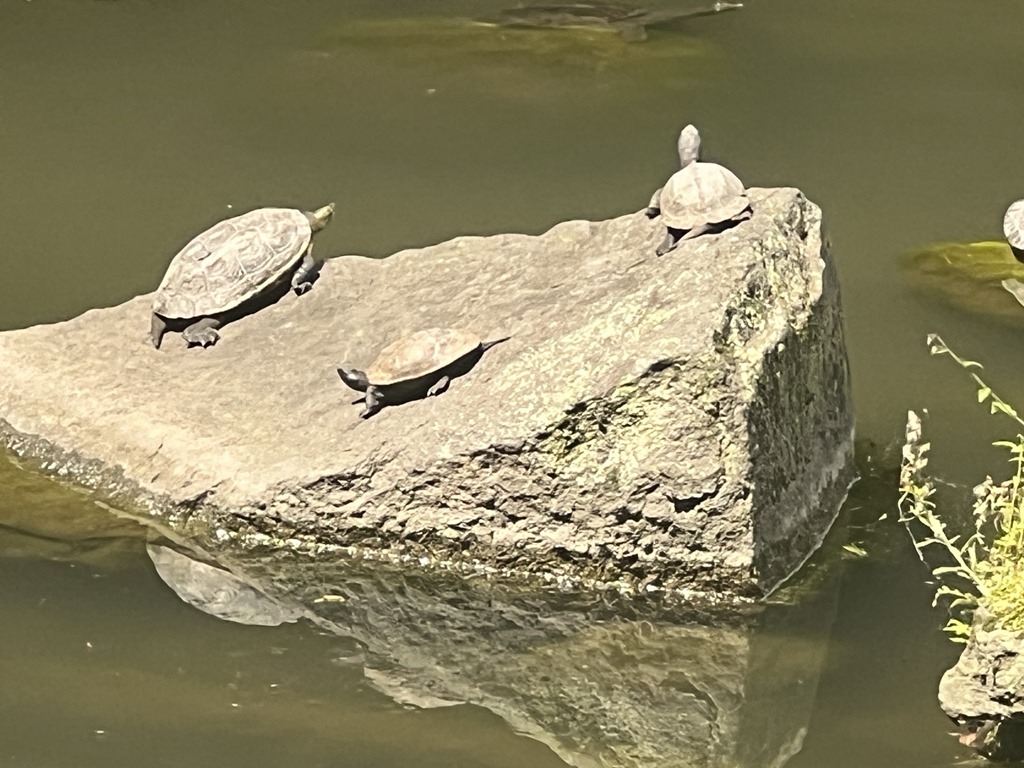
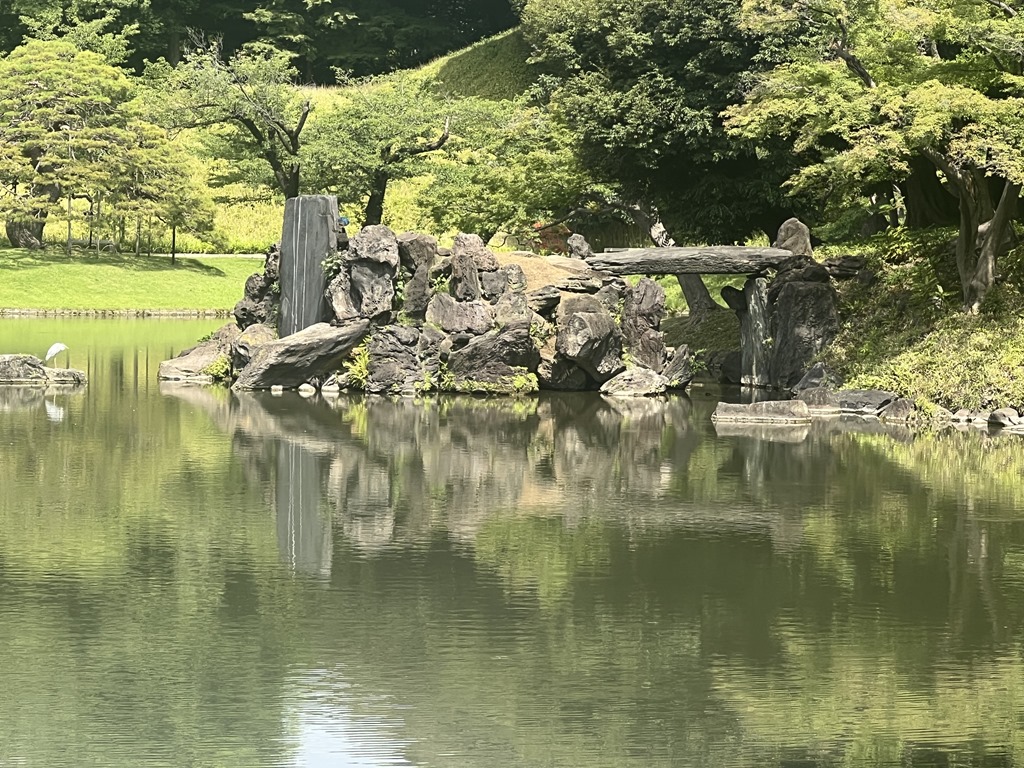
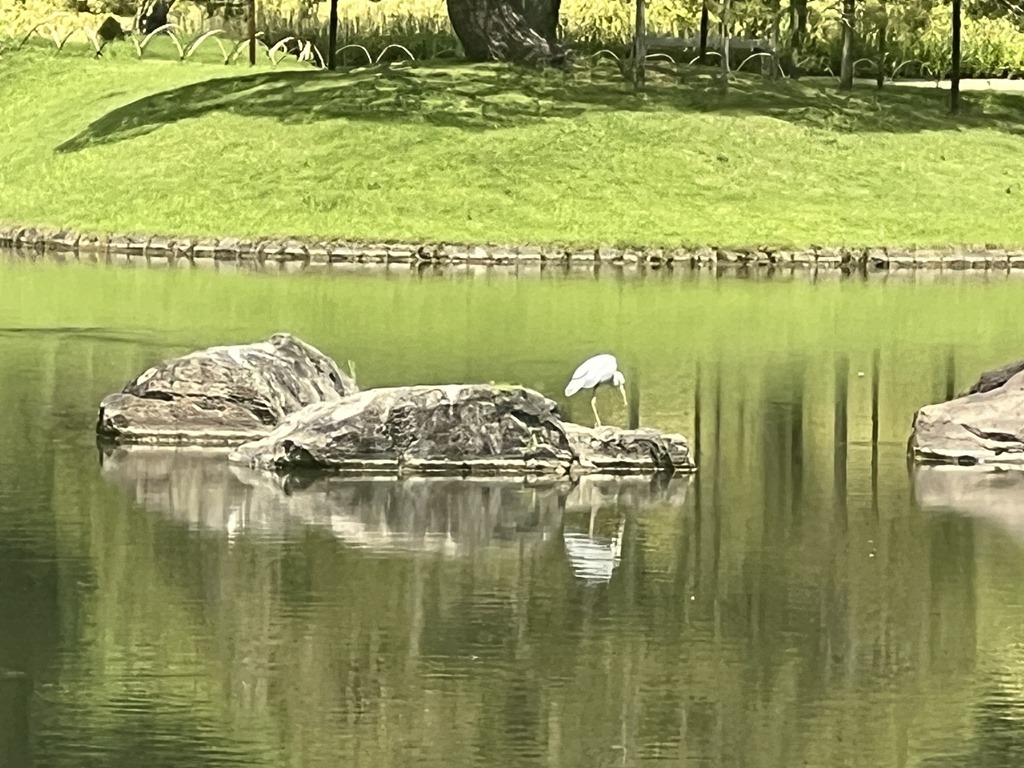
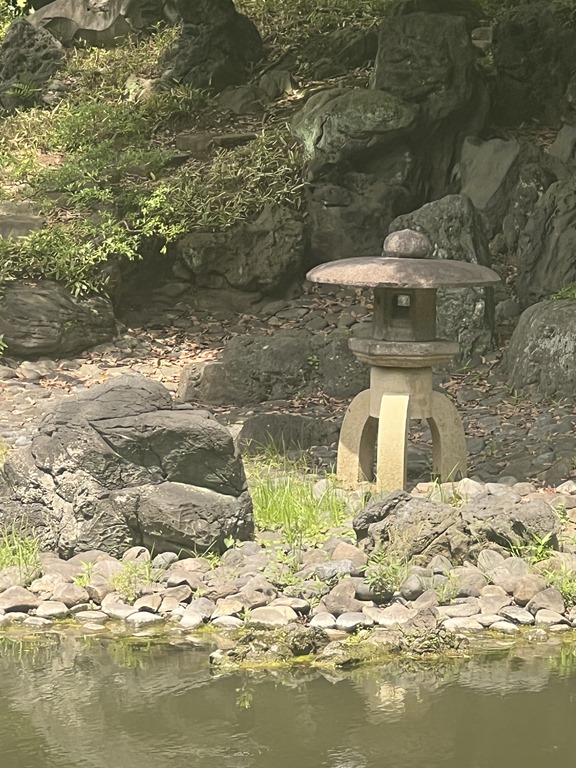
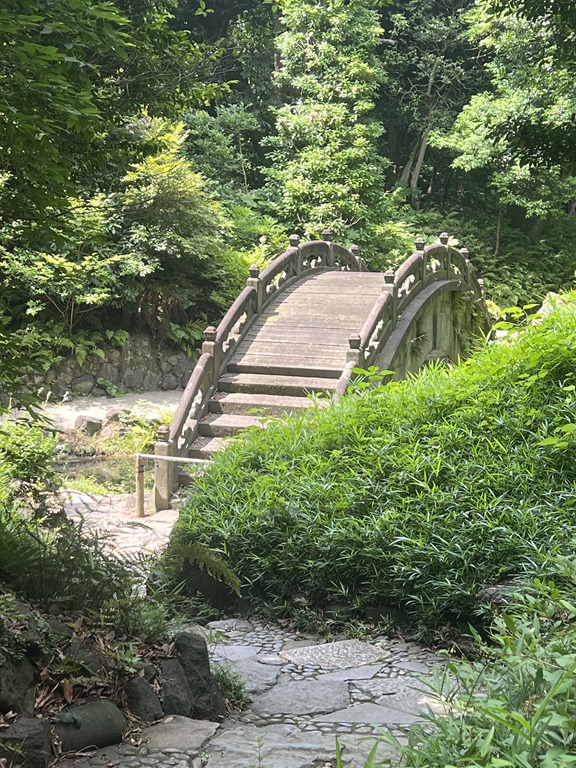
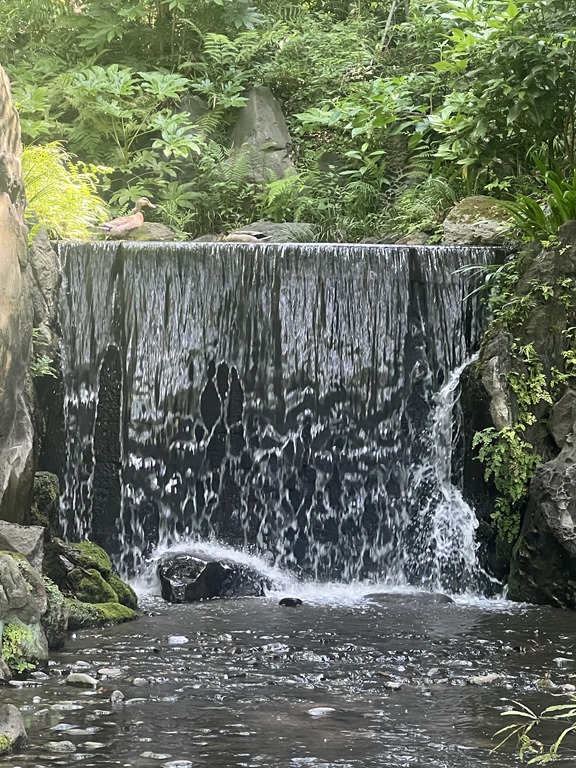
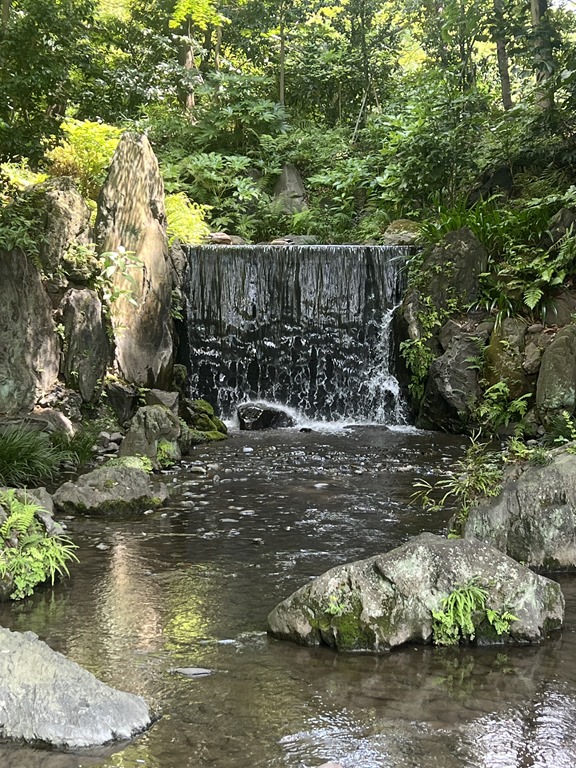
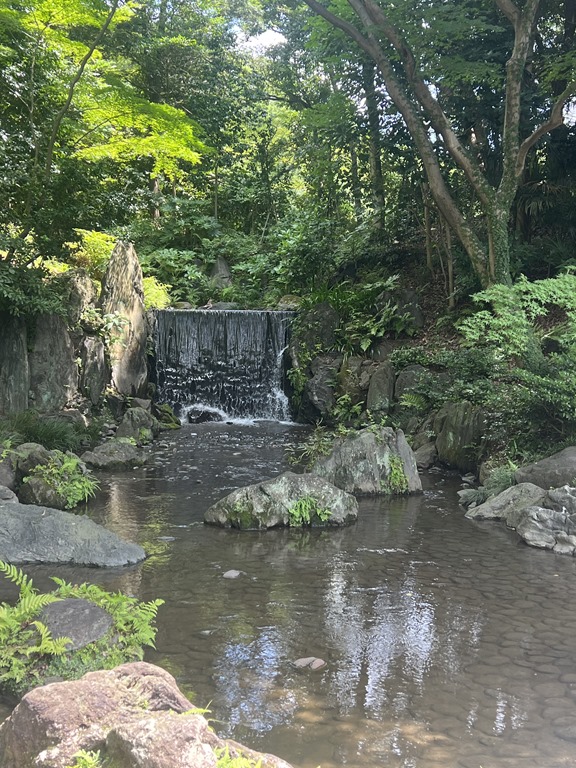
We traveled through the city with its many green spaces.  They are generally not as big as parks in the US and some other countries, but they are very beautiful and serene.  The one we visited was originally built by the founder of the Mito branch of the  Tongagawa clan in the early stage of the Edo period, 1629. Its style is kaiyu (circuit) style with ponds and manmade hills centering on the pond. The word Korakuen is derived from a Chinese text meaning “Worry before all worries in the world and enjoy after all enjoyments in the world.”

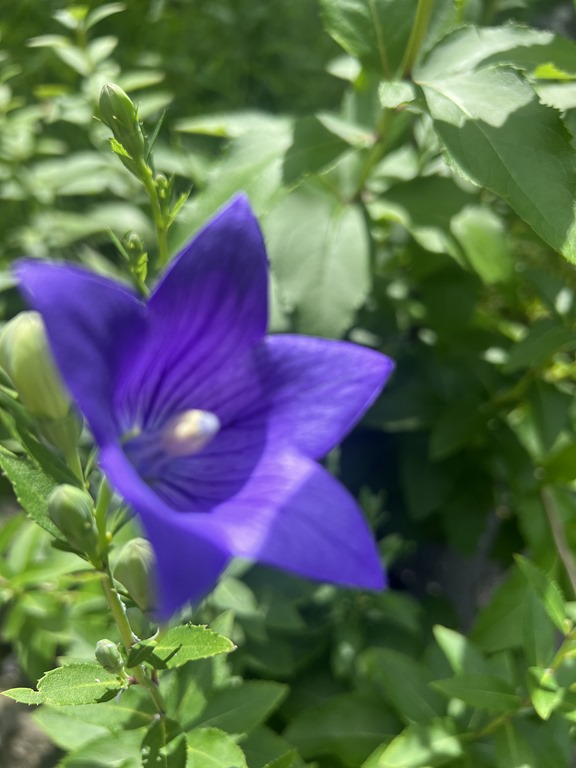
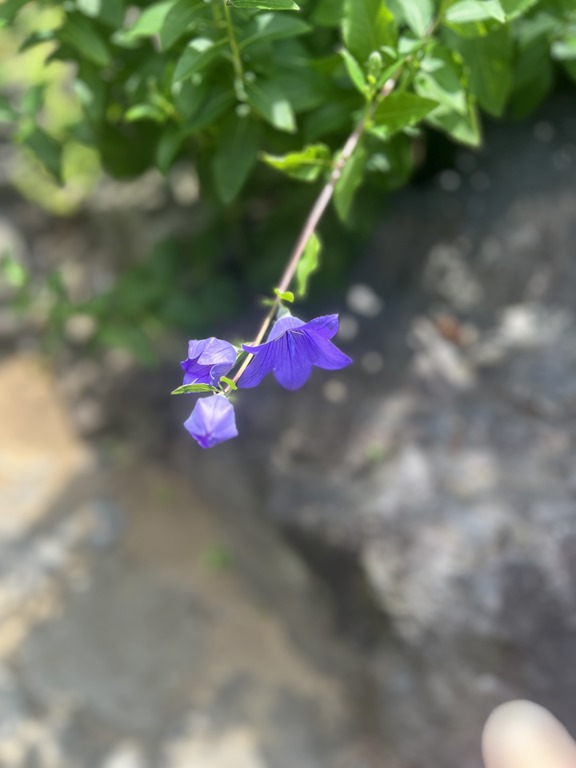
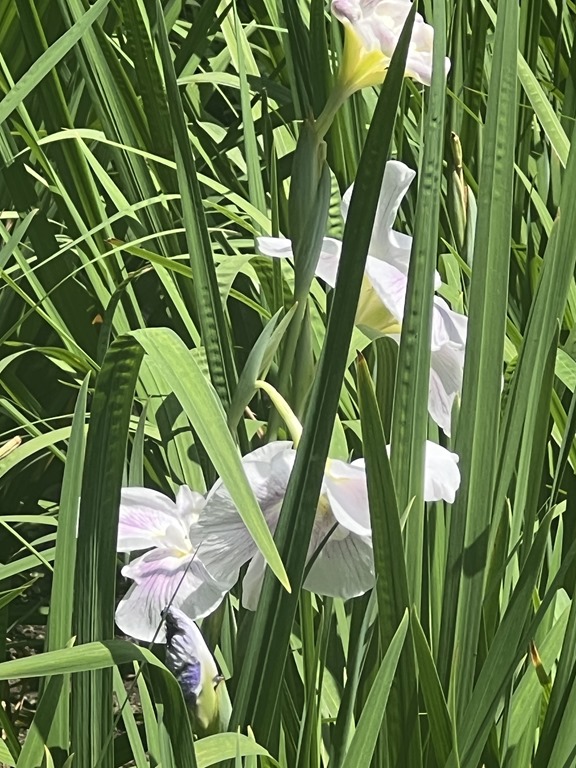
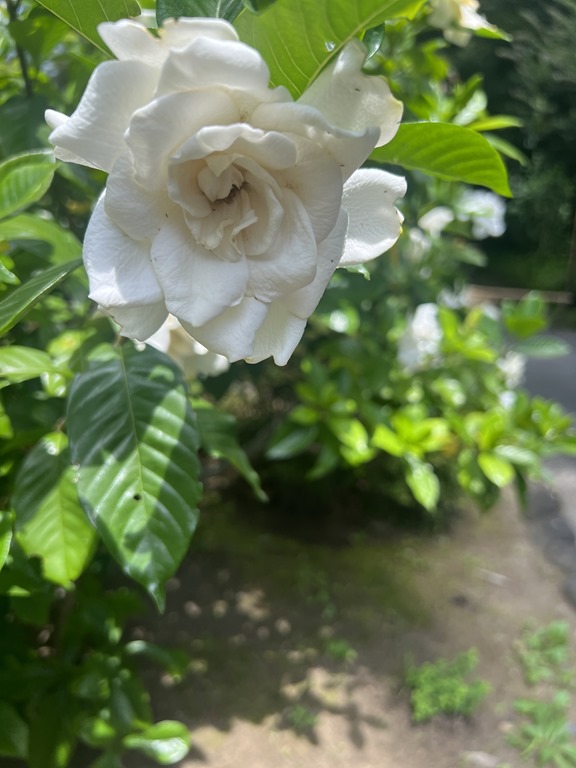
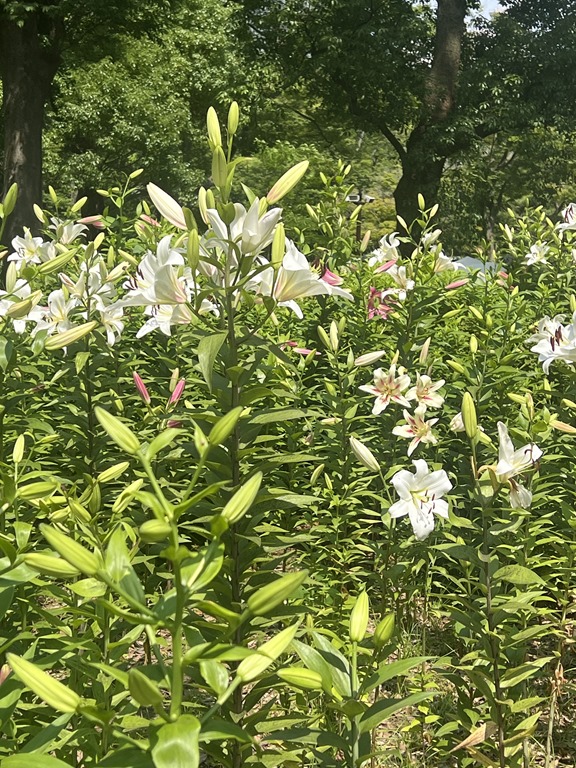
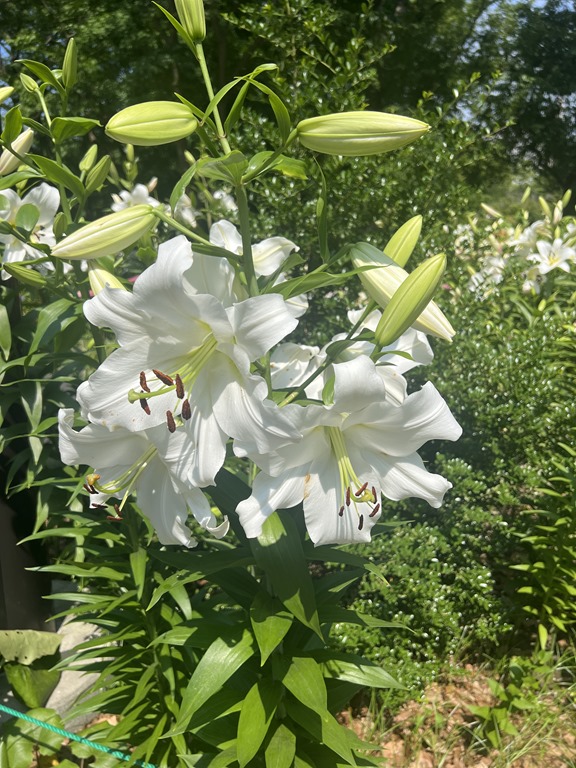
There is a plum orchard, seasonal flower beds (right now iris is in season and we did see a few balloon flowers which will bloom soon.) There is also a rice paddy field which is to symbolize how important rice is to Japanese people. There are many water lilies. IMG_0301~photo - Copy - CopyIMG_0302~photo - Copy - CopyIMG_0303~photo - Copy - CopyIMG_0305~photo - Copy - CopyIMG_0306~photo - Copy - CopyIMG_0308~photo - Copy - CopyIMG_0309~photo - Copy - CopyIMG_0310~photo - Copy - CopyIMG_0311~photo - Copy - CopyIMG_0312~photo - Copy - CopyIMG_0313~photo - Copy - CopyIMG_0314~photo - Copy - CopyIMG_0315~photo - Copy - CopyIMG_0316~photo - Copy - CopyIMG_0317~photo - Copy - CopyIMG_0318~photo - Copy - CopyIMG_0320~photo - Copy - CopyIMG_0321~photo - Copy - CopyIMG_0322~photo - Copy - CopyIMG_0323~photo - Copy - CopyIMG_0324~photo - Copy - CopyIMG_0325~photo - Copy - CopyIMG_0327~photo - Copy - CopyIMG_0328~photo - Copy - CopyIMG_0329~photo - Copy - CopyIMG_0331~photo - Copy - CopyIMG_0334~photo - Copy - CopyIMG_0335~photo - Copy - CopyIMG_0337~photo - Copy - CopyIMG_0338~photo - Copy - CopyIMG_0339~photo-full - CopyIMG_0340~photo - CopyIMG_0343~photo - CopyIMG_0346~photo - CopyIMG_0348~photo - CopyIMG_0350~photo - CopyIMG_0351~photo - CopyIMG_0354~photo - CopyIMG_0355~photo - CopyIMG_0356~photo - Copy

We got back to the tower, walked to the nail salon where I had a meticulous gel manicure (they do not do dip powder here in Japan). The manicurist spoke English and did a great job.  It looked like the salon was attached to her apartment and her cat was in the next room so she takes one client at a time.  I was lucky to find her.

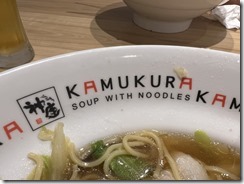
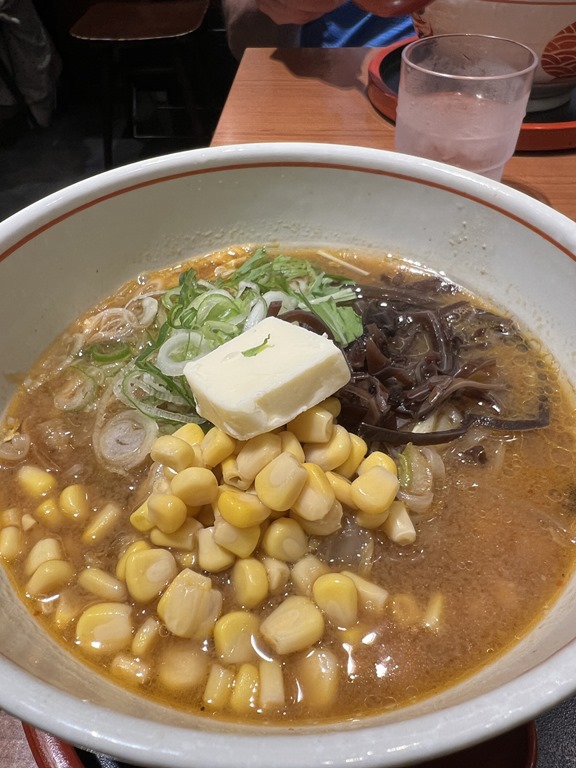
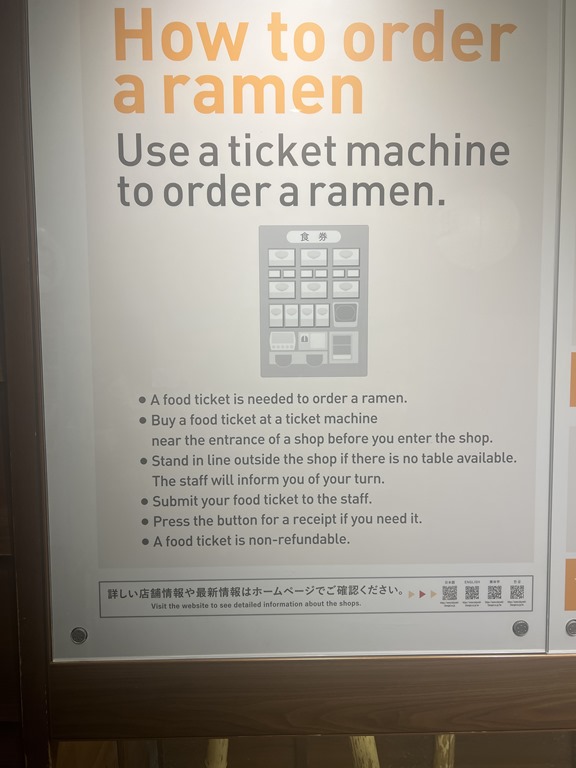
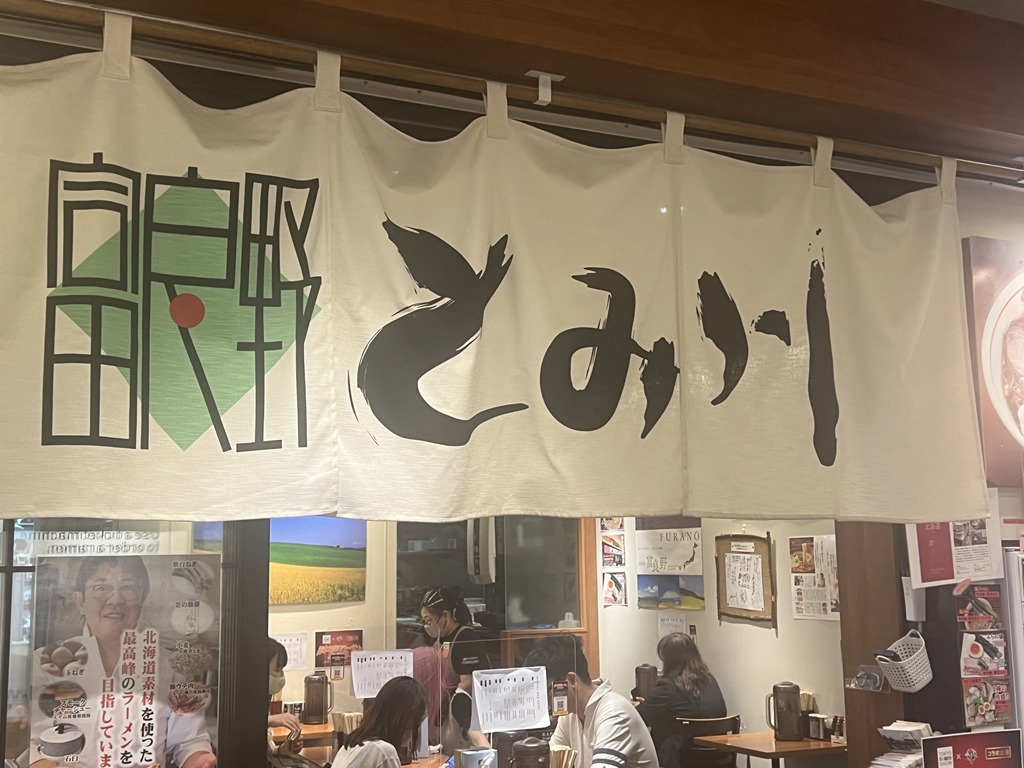
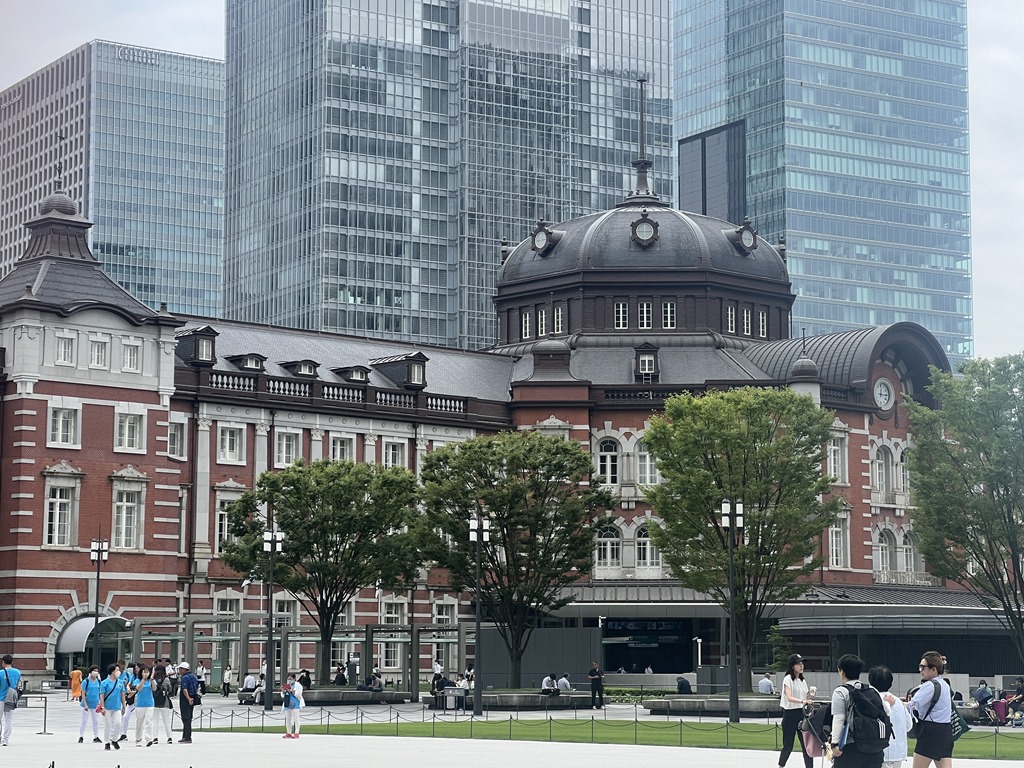
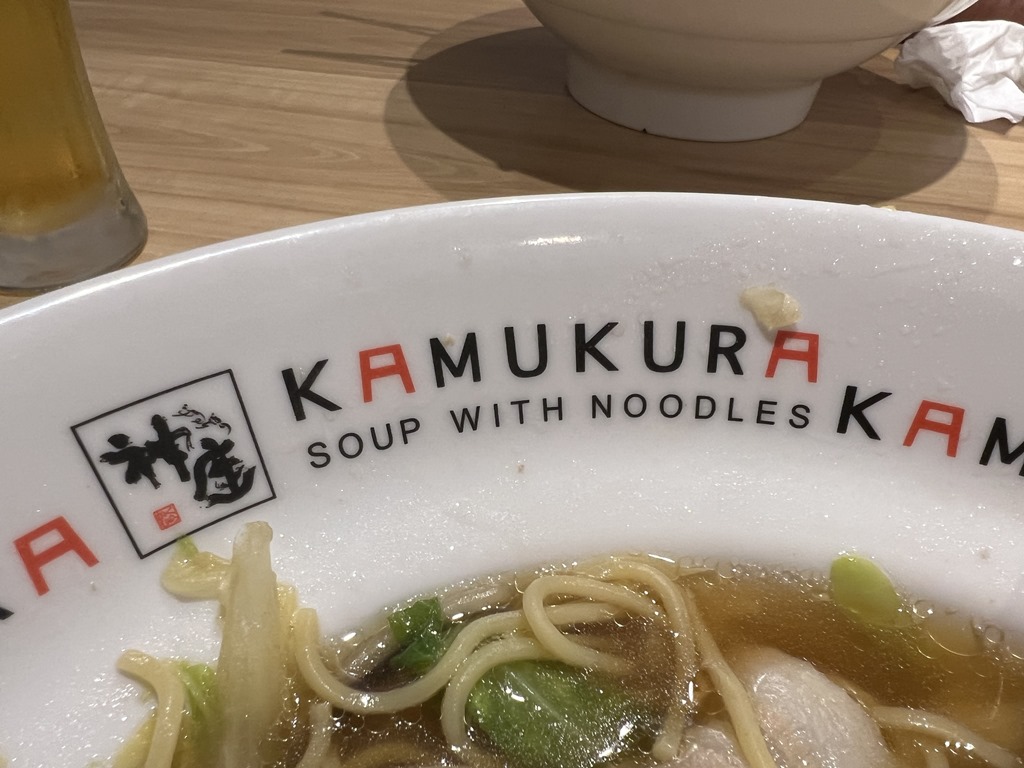
After the manicure, we took the train back to the Tokyo Station where we found Ramen Street and yes, had another ramen lunch. 

IMG_0365~photoIMG_0367~photoIMG_0368~photoIMG_0369~photo

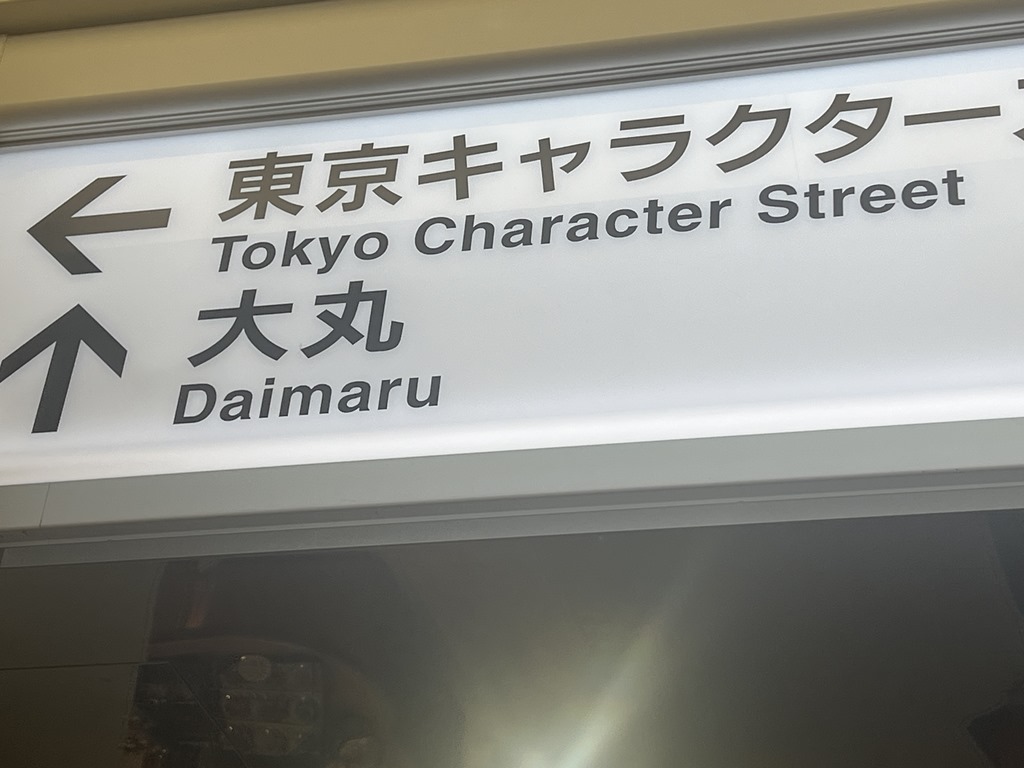
This area also has a character street where almost any kind of children’s toy can be found.

IMG_0370~photoIMG_0371~photoIMG_0372~photoIMG_0373~photoIMG_0374~photo

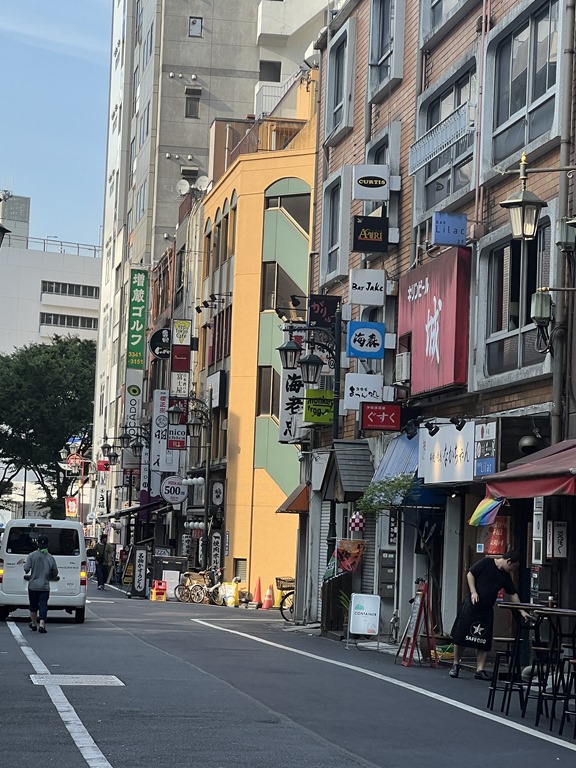
After another exhausting day crisscrossing Tokyo, we again took the train and the monorail back to the ship.

IMG_0298~photoIMG_0294~photoIMG_0295~photo

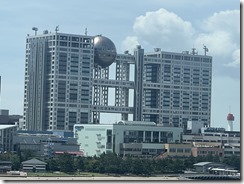
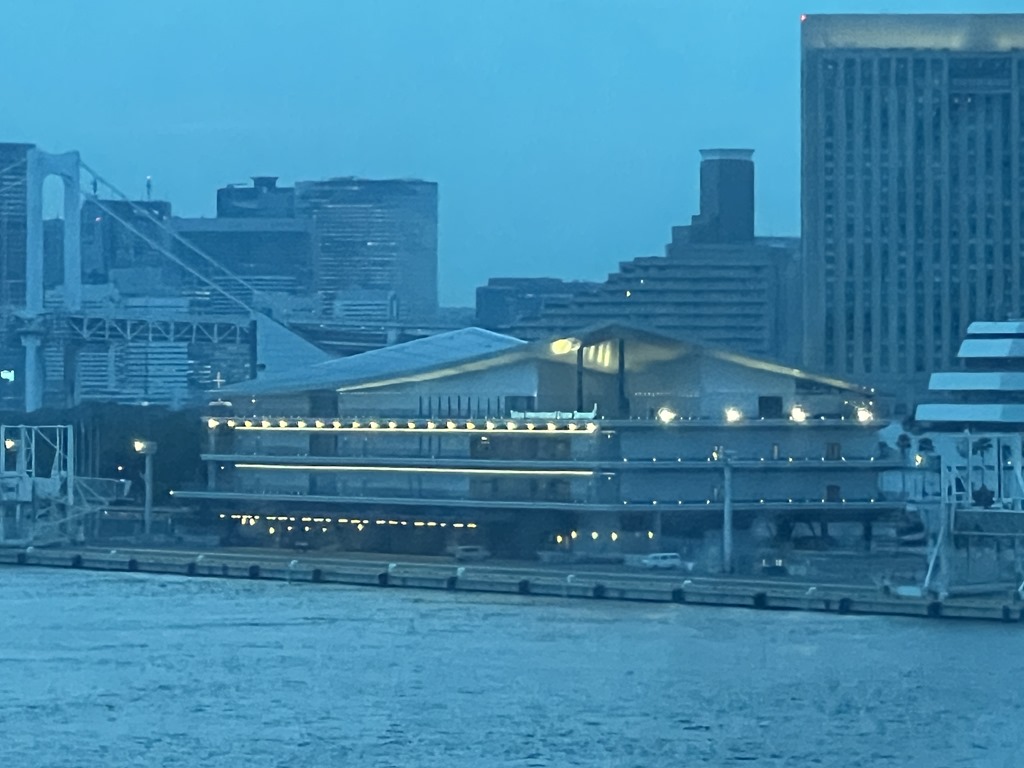
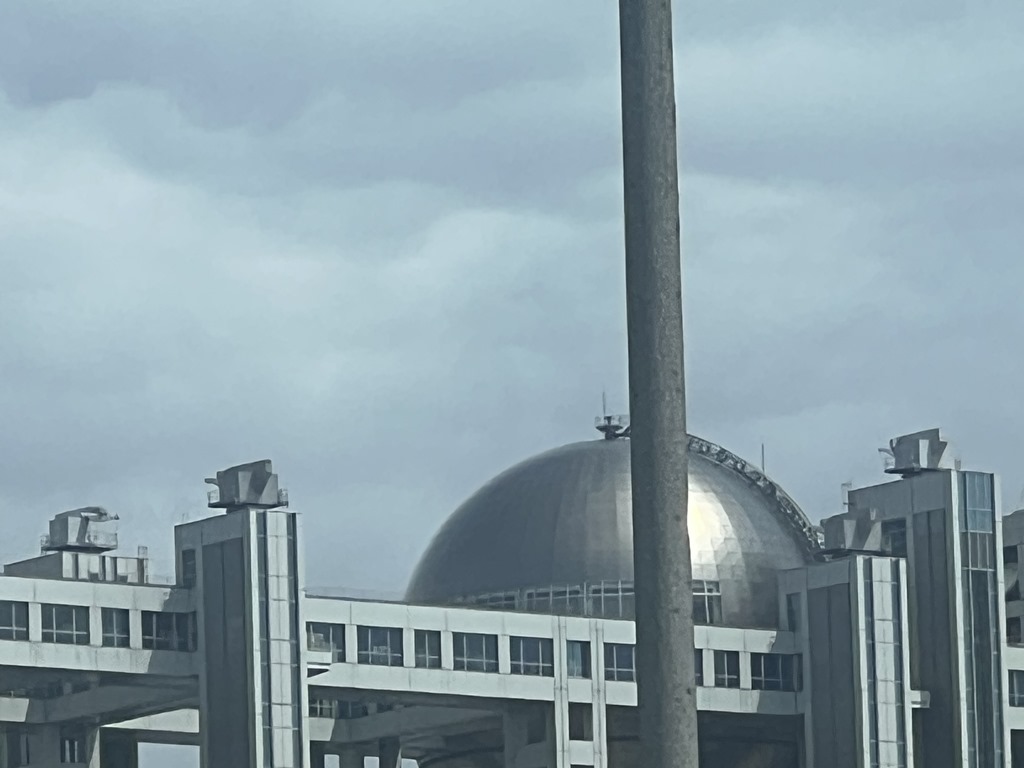
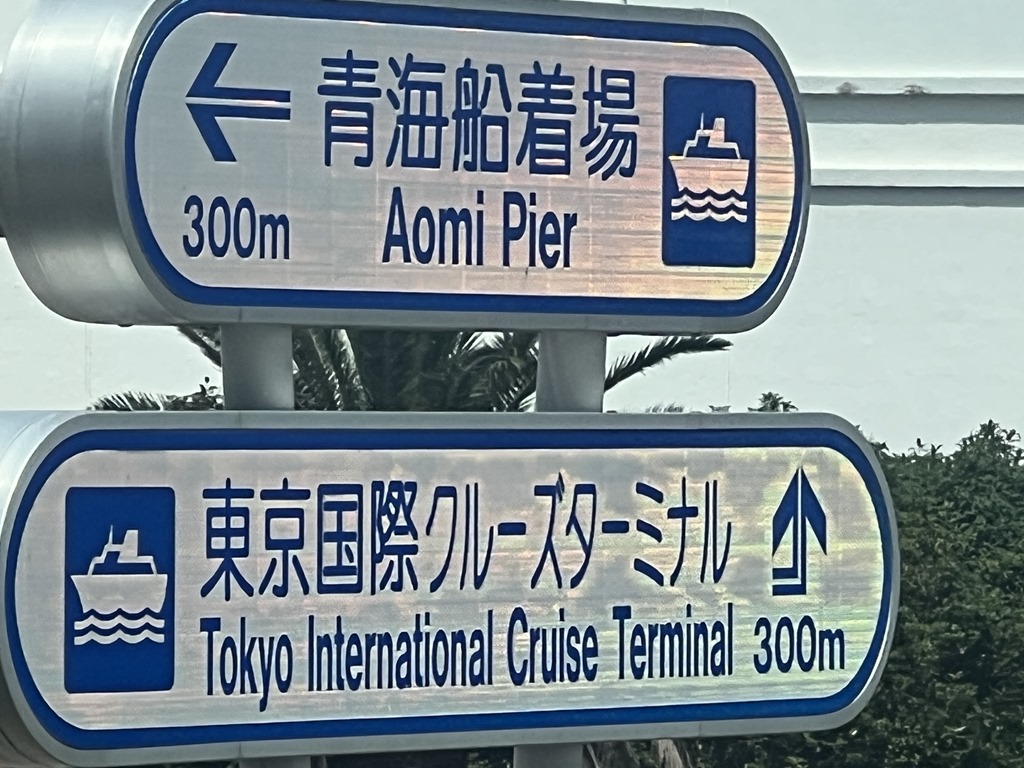
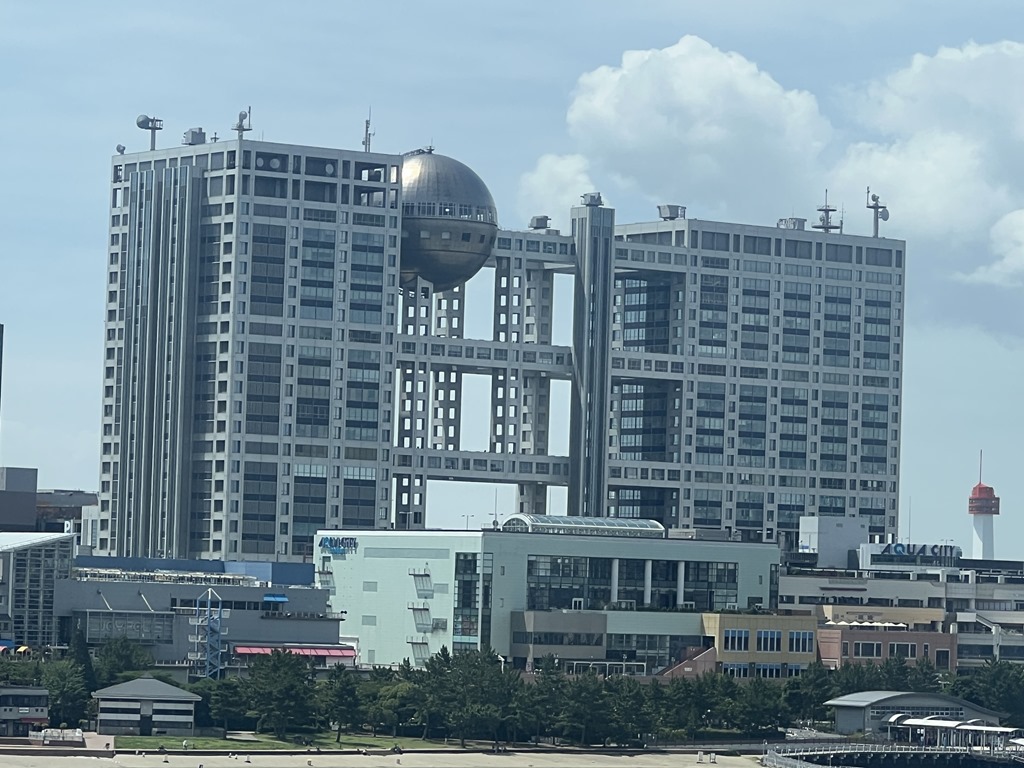
We had dinner in Polo and had a great table at the aft of the ship.  Here’s the marine museum that is shaped like a ship and the cruise terminal as we left Tokyo.

 IMG_0379~photoIMG_0377~photo

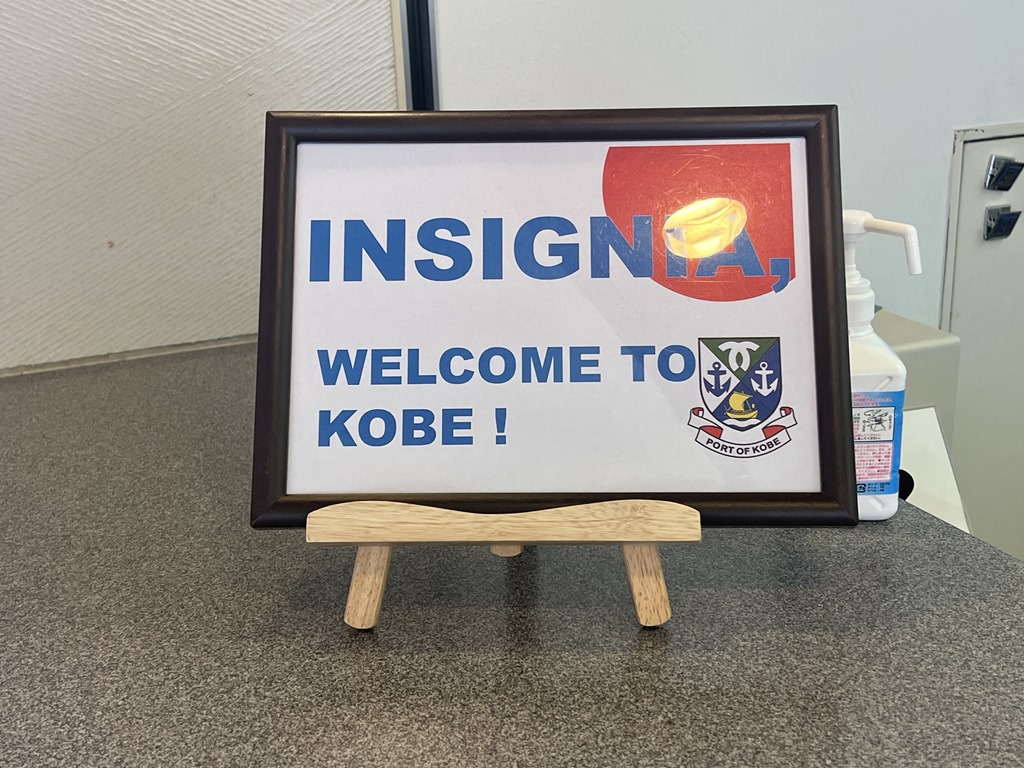
And this was on the reception desk when we got back after our exploration of the city!

IMG_0375~photo

Posted in Asia, Excursions, Food, June, World Cruise #4 | 1 Comment

Tokyo, Japan–Day 1

June 20, 2023

Before we arrived in Tokyo, we realized that the Tokyo Tower was listed as one of the places we would visit on both days – the first day was “Panoramic Tokyo” which included the tower, and the second day was “Tokyo Garden and Tower”. I don’t really know how we missed that info, but I guess planning excursions for 6 months might be some excuse!  It turned out to be helpful because I still needed to find a place to get my nails done and now we had a specific location   (near the tower) to look.  The city is huge and while I had lots of names of places, we had no idea where they were.  So I found one, she had an English website with a scheduling app and I was able to make an appointment for our second day in port – walking distance from the tower.

Here is our arrival in Tokyo.

IMG_0231~photoIMG_0232~photoIMG_0234~photoIMG_0235~photoIMG_0236~photoIMG_0237~photoIMG_0238~photo

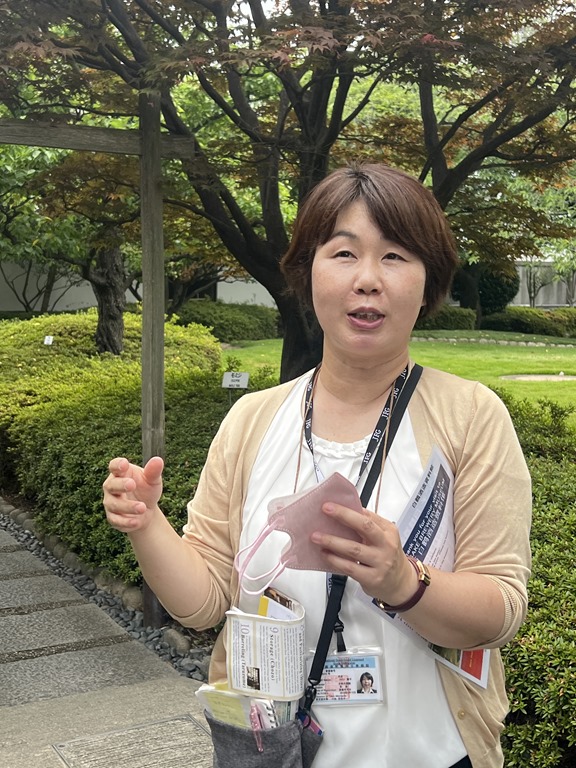
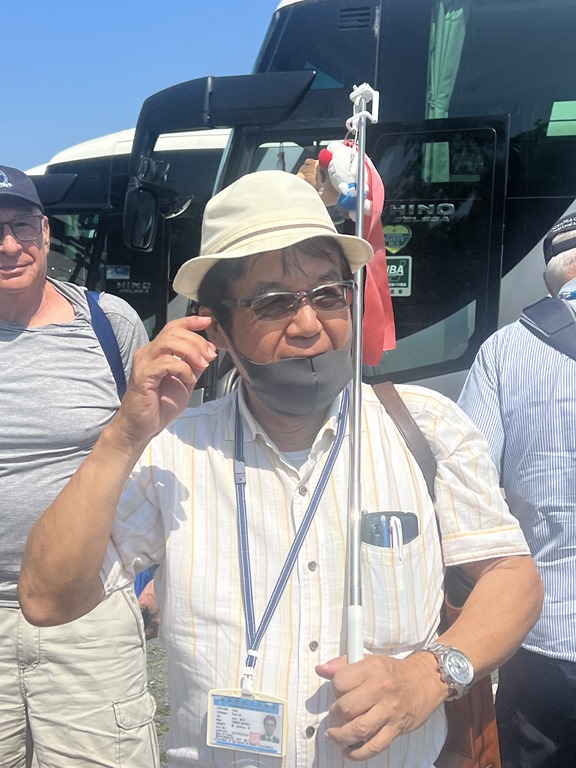
Today our guide was Muchi. 

IMG_0243~photo

She told us that Tokyo has 14 million population out of 126 million in all of Japan. Edo was the original name of Tokyo. Tokyo means “Eastern Capital”.  The early days were ruled by the Shogun and were feudal times.  Emperors replaced the Shoguns and Japan still has an Emperor who is a symbol of the state but has no political function and is ceremonial.  The leader is a prime minister.

We passed the Diet which is the parliamentary building, and the Imperial Palace grounds.  The Emperor resides at the palace and while the surroundings are open to the public, the actual palace is only open two days a year – January 2 and the Emperor’s birthday, February 25. There is a grove outside the palace with 500 pine trees.   We visited the palace grounds on our last visit to Tokyo.

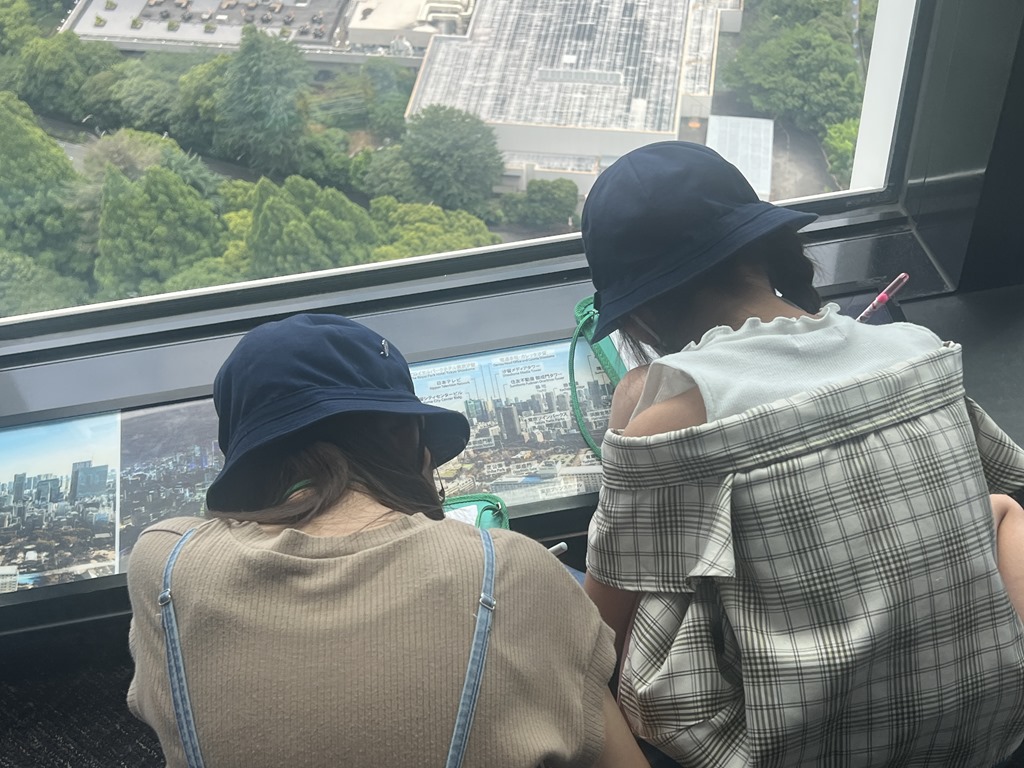
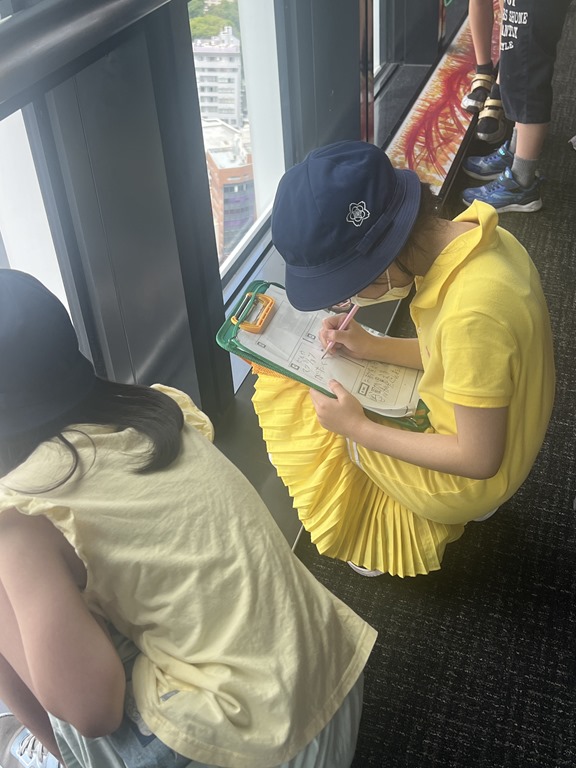
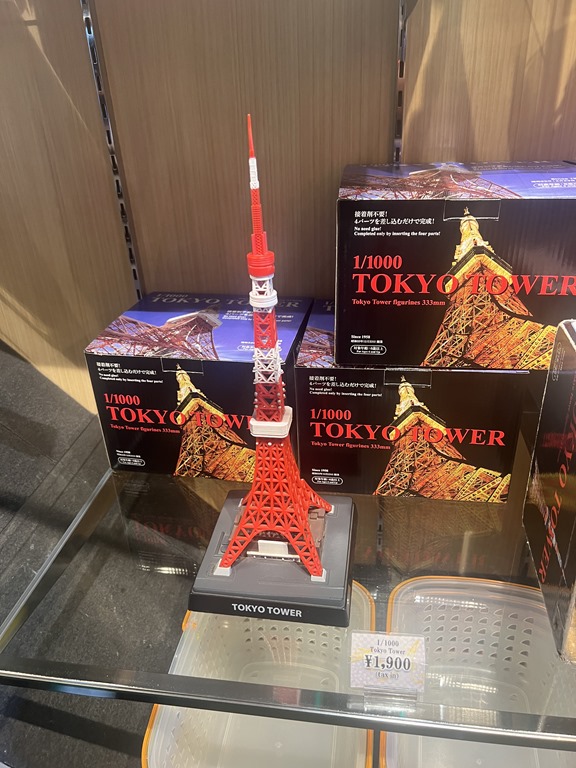
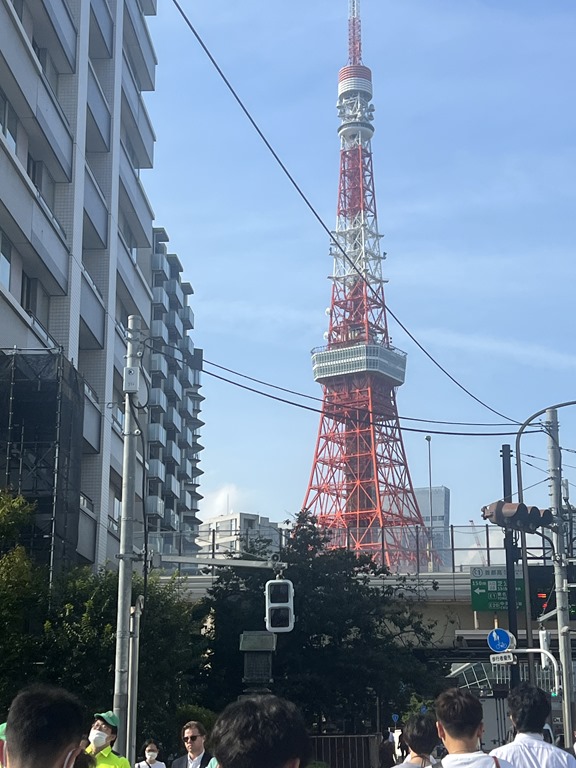
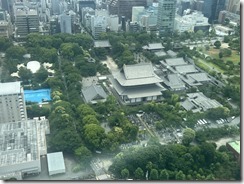
The Tokyo Tower is a broadcasting tower that was designed to look like the Eiffel Tower.  It was built in 1968 and is 333 meters high. We went to the observatory at 150 meters.  Again, it was pretty hazy and hard to see very far.  But what was so interesting was the groups of school children carrying packs with note taking areas who were at the various viewpoints taking notes.

IMG_0246~photoIMG_0248~photoIMG_0249~photoIMG_0250~photoIMG_0252~photoIMG_0257~photoIMG_0258~photoIMG_0260~photoIMG_0281~photo

I would say that you see about half the people here wearing masks. They are not mandatory and some people wear them all year around because of the sun, pollution and also germs.
IMG_0256~photo

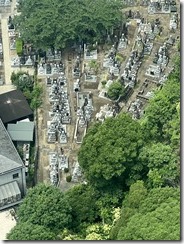
You see many cemeteries close to city buildings.

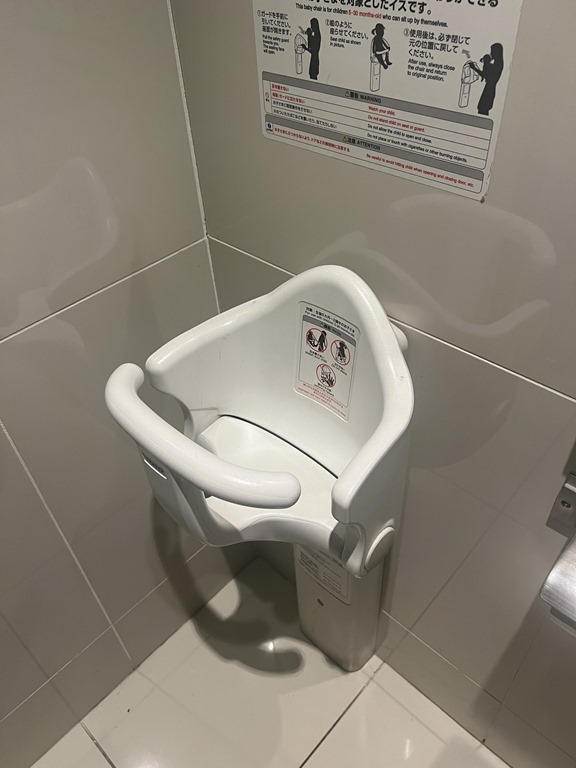
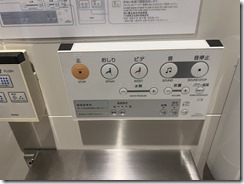
Again, the rest rooms are very clean, modern and interesting.  They have seats for children right in the women’s stalls too so they are safe while their moms are using the toilet.

IMG_0362~photoIMG_0363~photoIMG_0364~photo

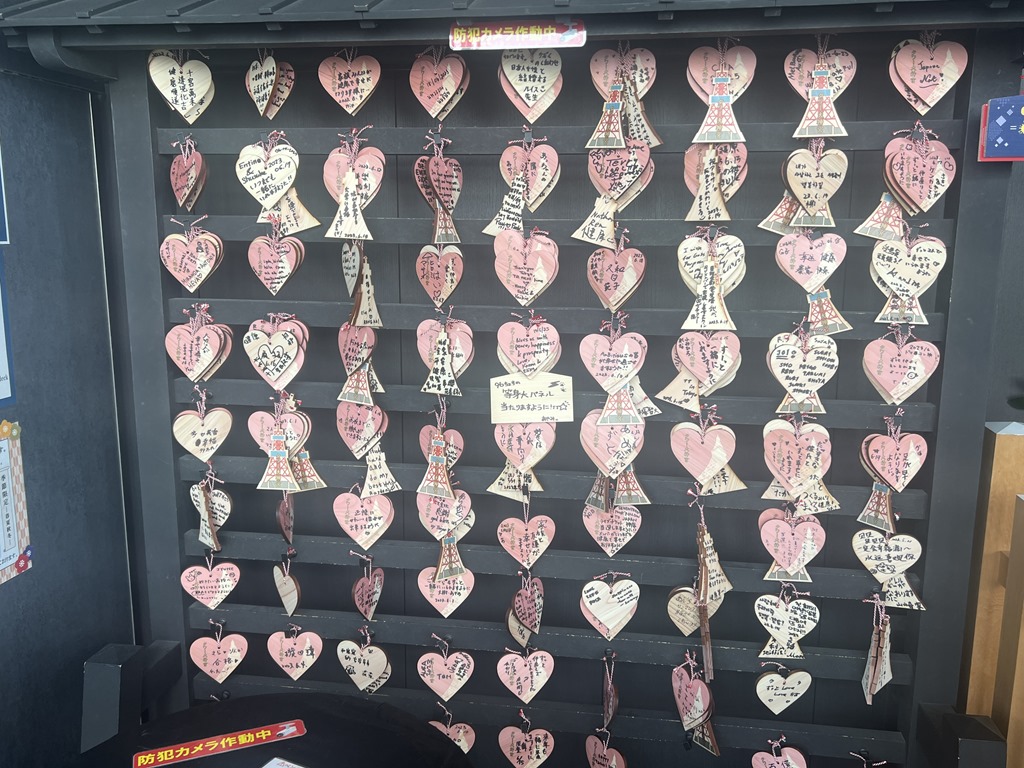
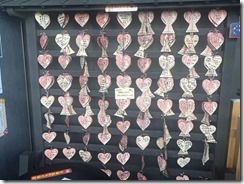
These are wooden hearts and towers that people write their wishes on and hang on this board.  You see these in many places.
IMG_0254~photo

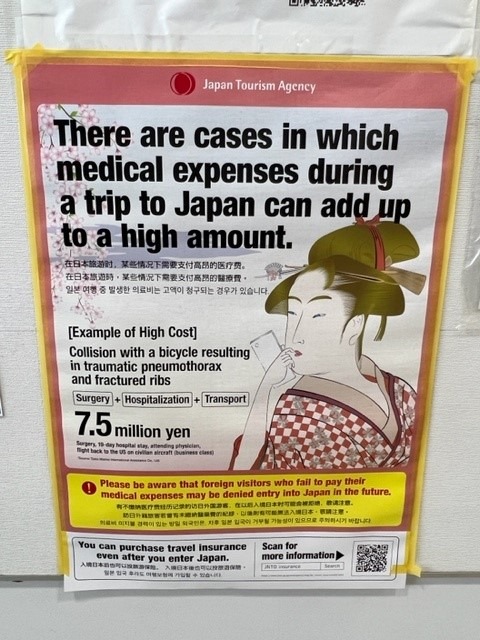
In every city we see this poster that warns you, as a foreign tourist, about the high cost of Japan’s medical system of you have an accident or need care.  They are in the train stations and cruise terminals.

japan medical

After the tour, we told the guide we wanted to leave the bus and get back to the ship on our own.  We are here overnight, so we wanted to explore, so we let our guide know and set out.  We wanted to see where the nail salon was so that tomorrow we wouldn’t have to search around too long. I have to mention how incredibly polite and helpful every single person we met was.  In fact, they were willing to miss their trains to help us.  A young woman led us to the salon which we were close to, but might have gone around and around the block if she hadn’t shown us exactly where it was.

We bought a 2 day subway pass (about $8 US) and went to the Tokyo Station where we had thought we would meet Erin and Mui for a ramen dinner.  But it was way too early and we didn’t know if we would be there too late, so we had a late lunch instead. food you ordered.
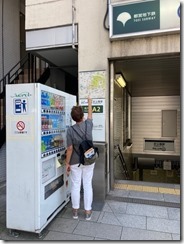
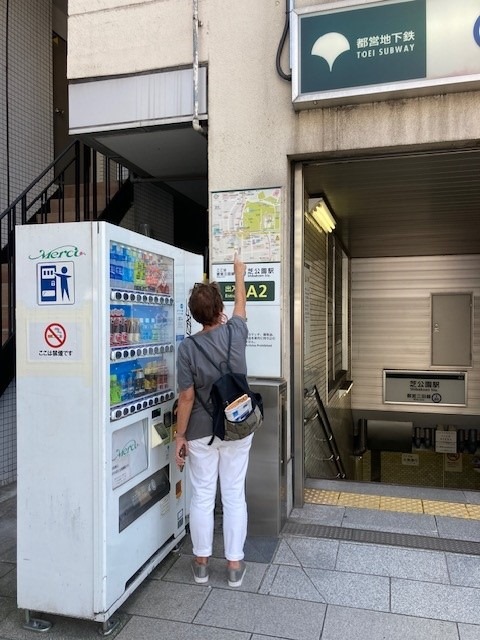
pat subwayjapan subway

Pat figuring out what station we wanted. 

The station from the outside.

IMG_0269~photoIMG_0270~photo

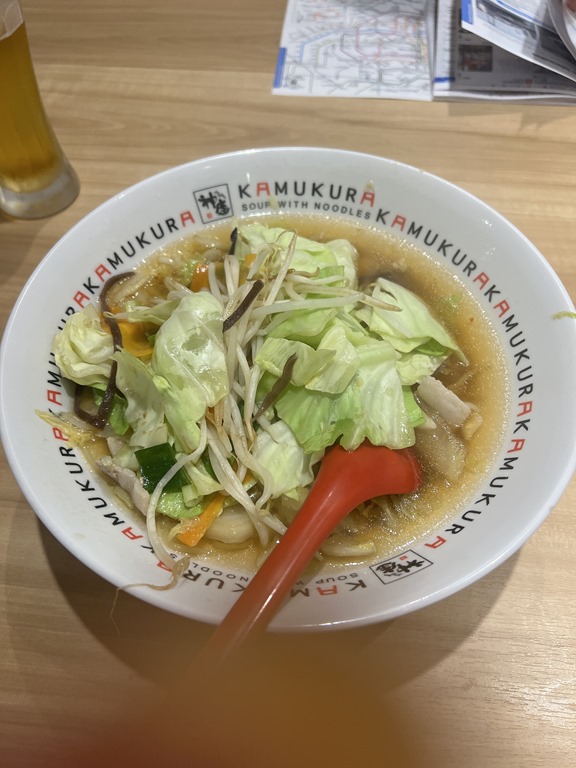
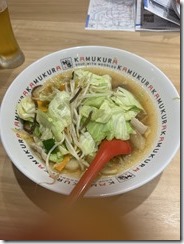
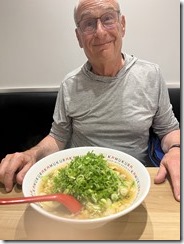
The underground station is HUGE and not always easy to navigate, but we found a nice place and had our ramen.  You push the button for what you want (pictures and in Japanese – some have English too), pay and get a ticket, then they take you to your seat and bring the
IMG_0271~photoIMG_0272~photoIMG_0273~photo

The food was so delicious and filling that I had ice cream for dinner.  Yes, just ice cream.

We did some more exploring – Japanese Iris is also in season now.

IMG_0274~photoIMG_0275~photoIMG_0276~photo

Before heading back to the ship, we stopped for a snack and a drink in the Shinjuku section of the city which is known as the entertainment area.  There are lots of bars and restaurants and there are designated smoking areas on some streets. There are “smoking patrol” officers  walking around to be sure no one smokes anywhere else. We took the subway and soon realized that there are three transit systems and our ticket was only for the subway- which turned out just fine.  The routes are in different colors and the stops are numbered making it easy to follow once you know where you are going!
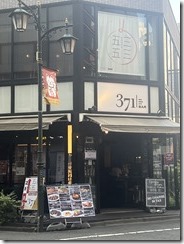
IMG_0282~photo - CopyIMG_0283~photo - CopyIMG_0285~photo - CopyIMG_0287~photo - CopyIMG_0288~photo - CopyIMG_0290~photo - CopyIMG_0291~photo - CopyIMG_0292~photoIMG_0293~photo

We took the subway back to the monorail station that takes you to the new international cruise port where our ship is docked.  It was not built in 2019 when we were last here and it is beautiful. 

Here is the nighttime view.
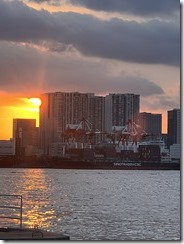
 IMG_0296~photoIMG_0297~photoIMG_0299~photo

At night we had a movie and popcorn! And we will be ready for our second day in wonderful Tokyo. 
Posted in Asia, Excursions, Food, June, World Cruise #4 | 1 Comment

Shimizu, Japan

June 19, 2023

Shimizu is considered one of Japan’s three most beautiful ports.  On a clear day, you can see Mount Fuji but our day was not clear enough to spot it. It is a UNESCO World Heritage site and is 10,000 meters high.  The last eruption was 300 years ago.  It is the snow covered picture with cherry blossoms in the background that is on most tourist brochures.

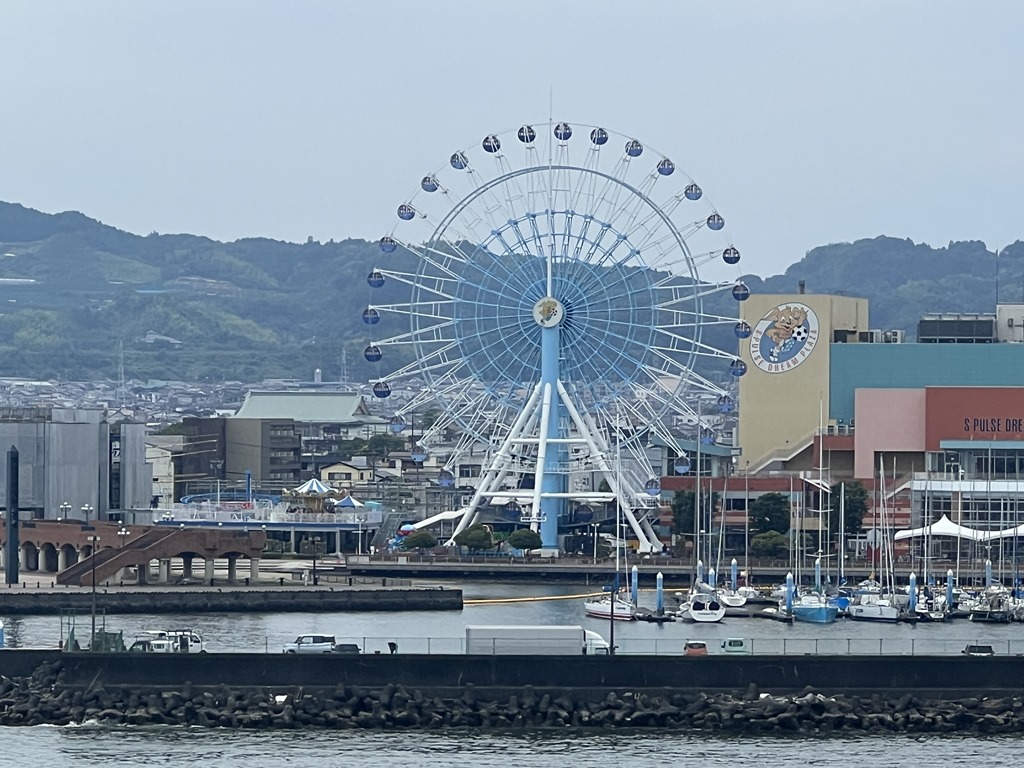
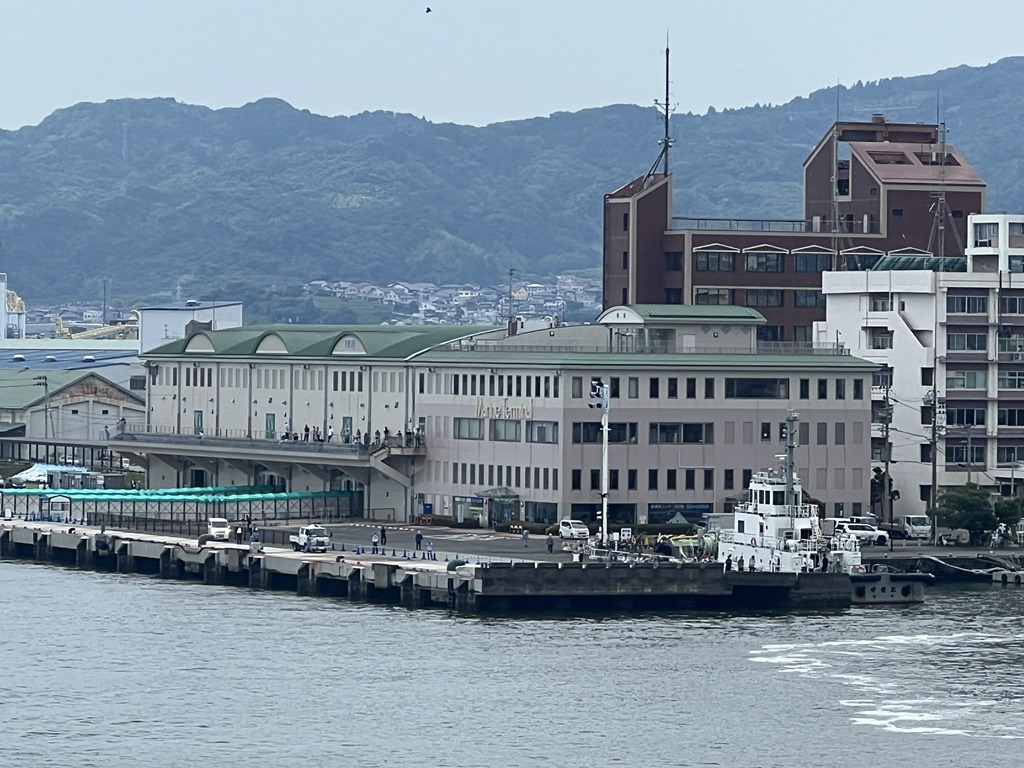
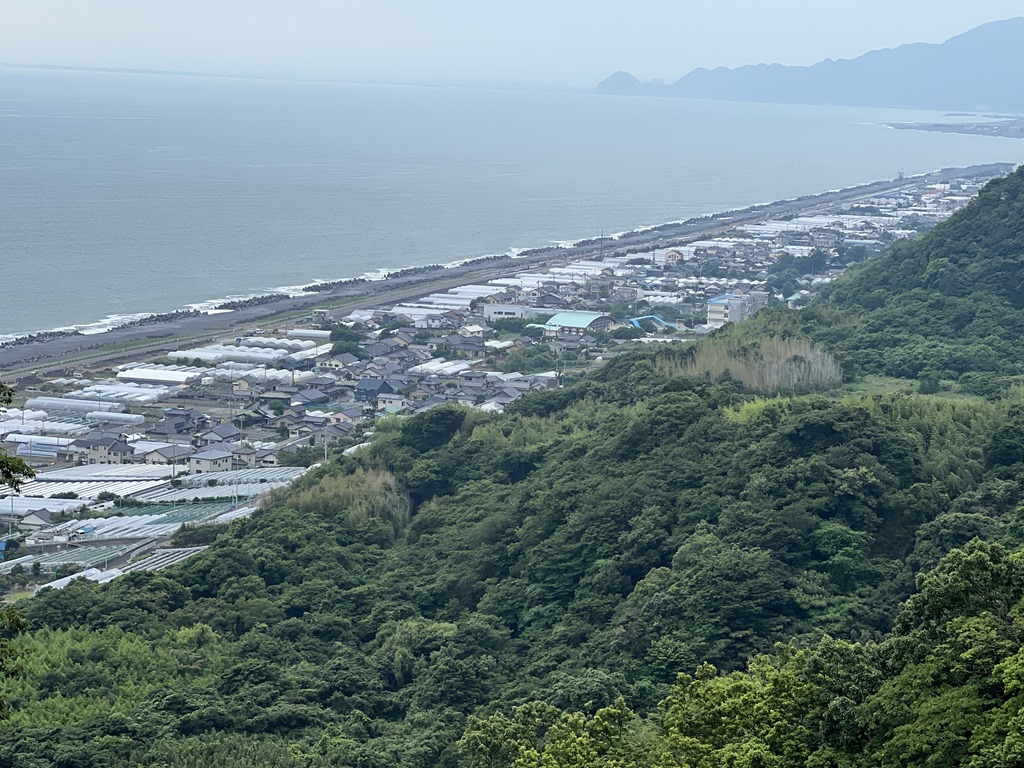
Here are some pictures of our sail in.  It seems every city has a ferris wheel! We arrived at noon.

IMG_0078~photoIMG_0079~photoIMG_0080~photoIMG_0081~photo

Our guide today was Sitsko and she said the meaning of her name is “prudence”. She talked a lot about the aging of the society and concern for the future. Our tour today is to the Kunozan Toshugo Shrine and the Kashinoichi Fish Market.

IMG_0082~photo

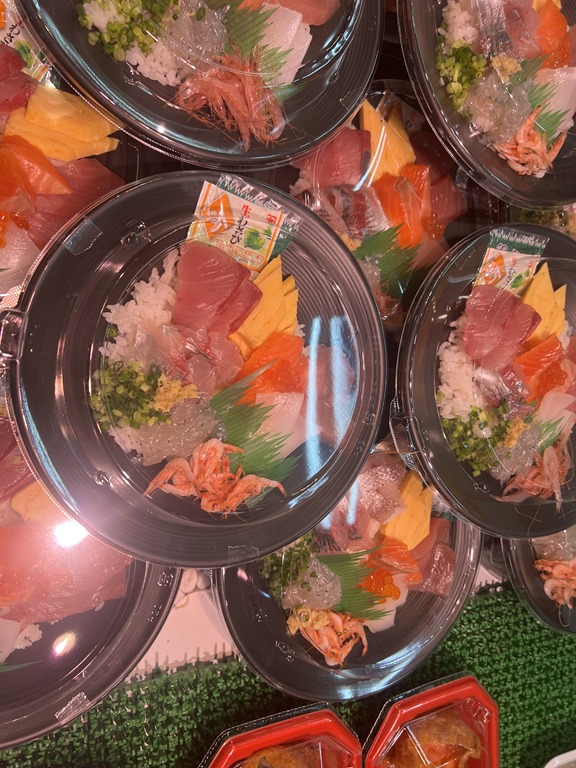
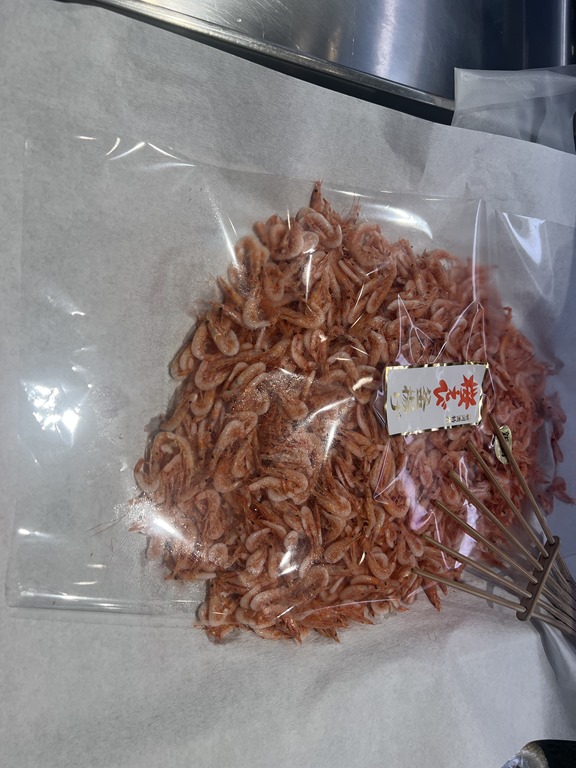
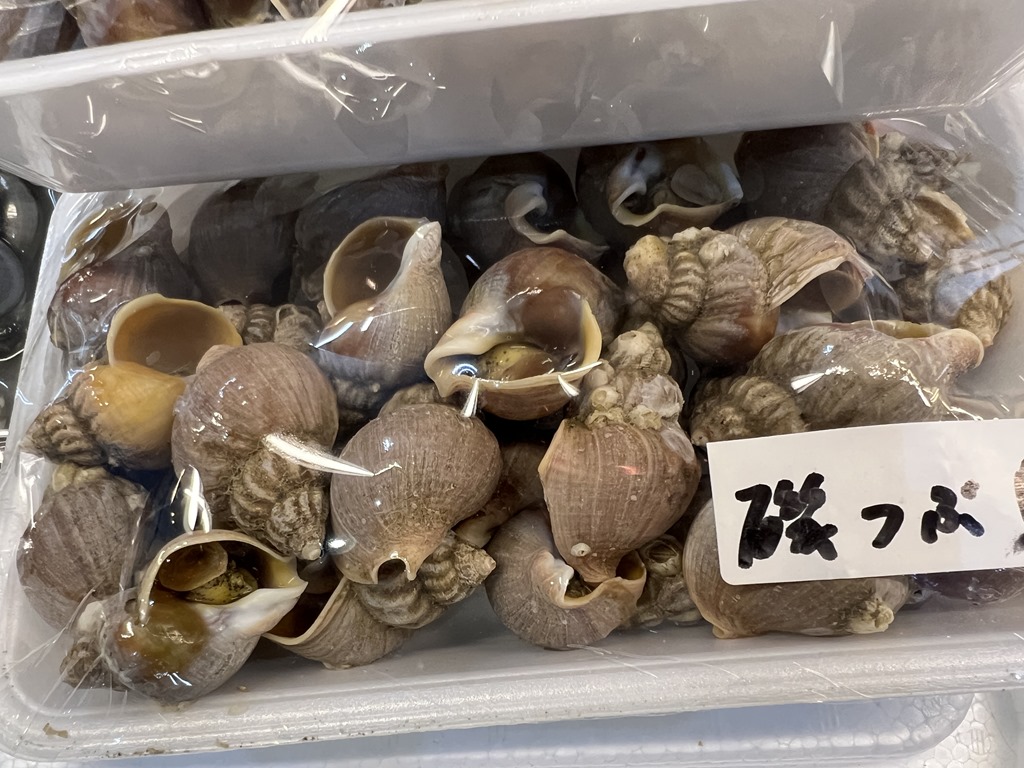
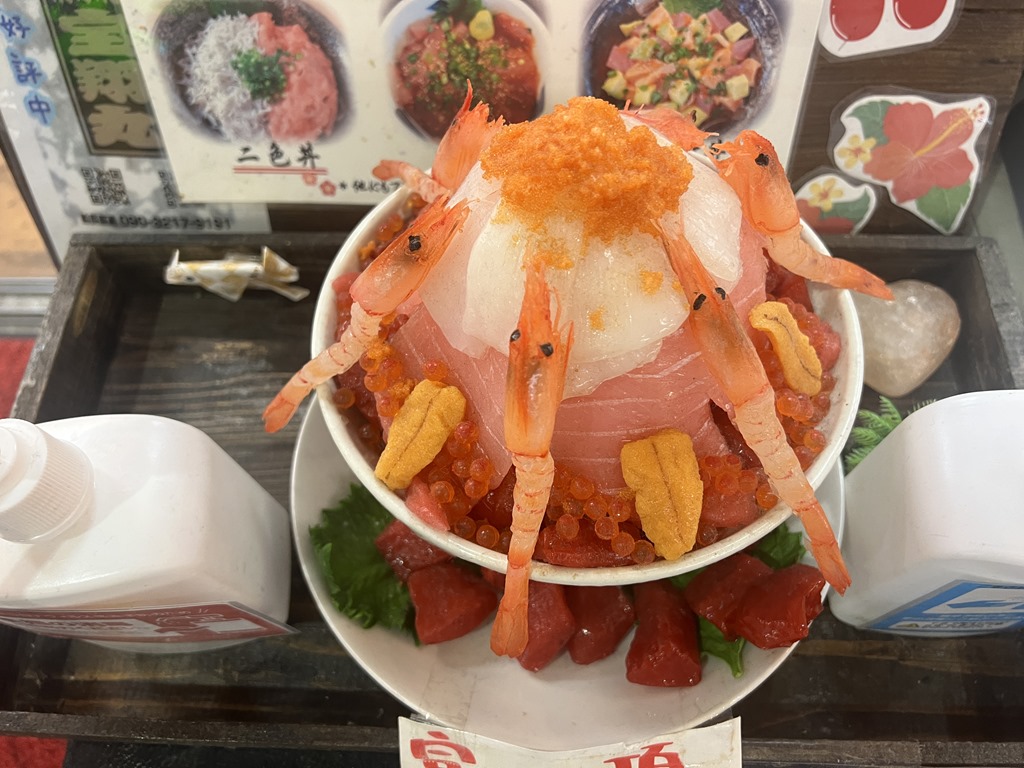
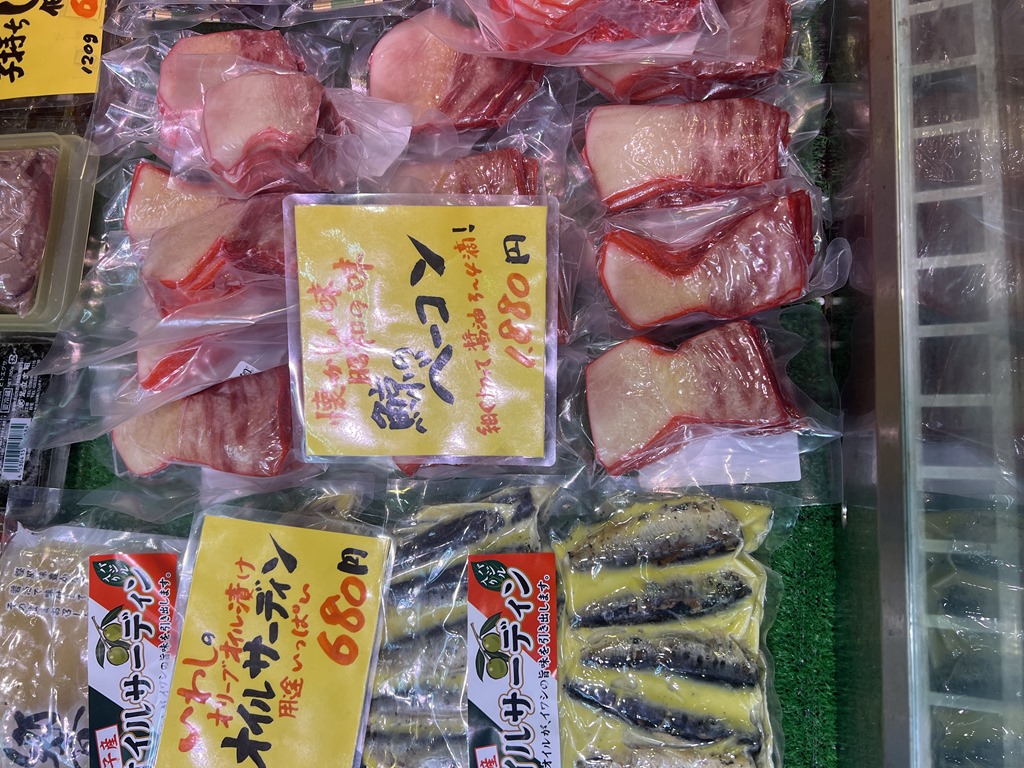
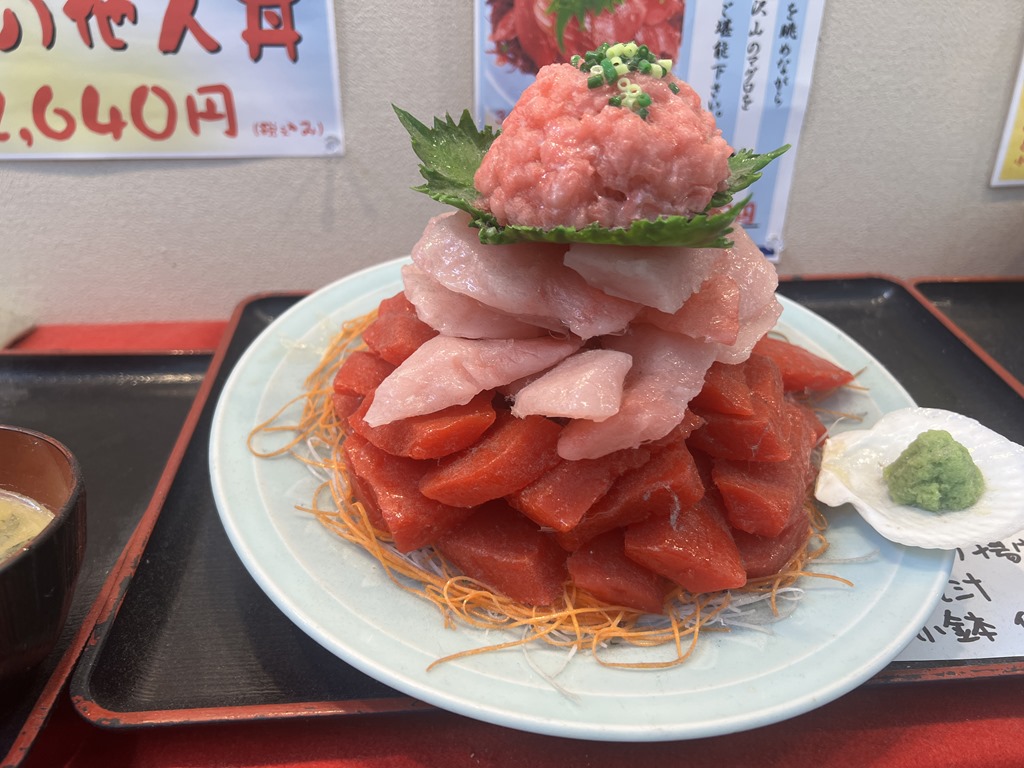
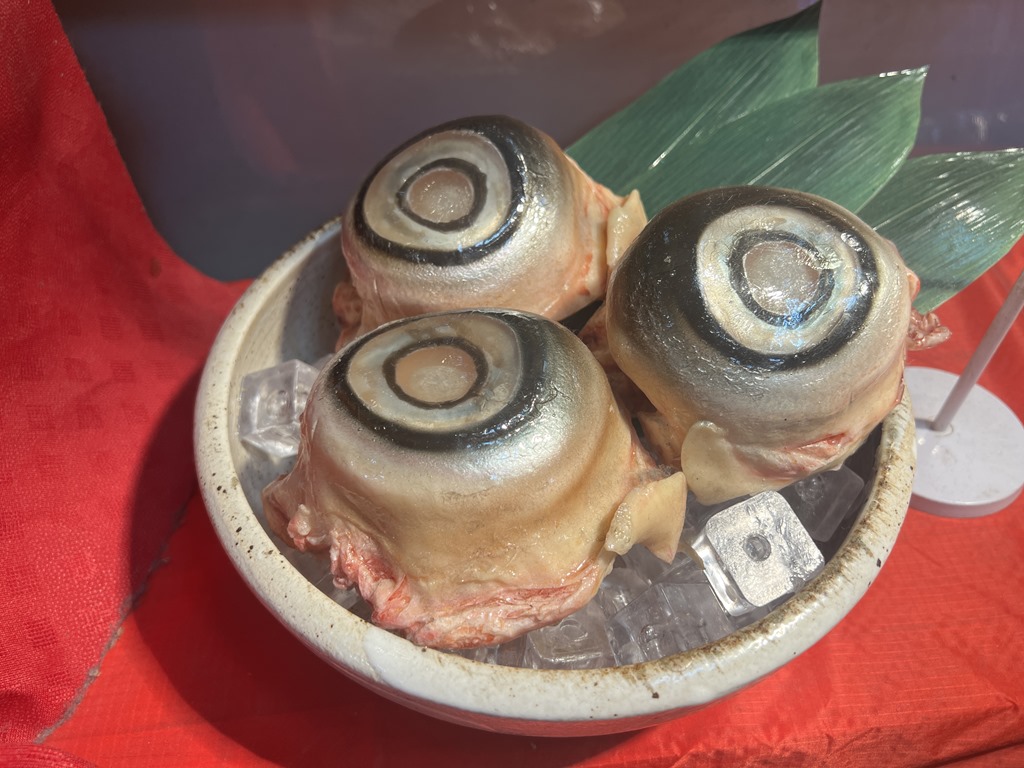
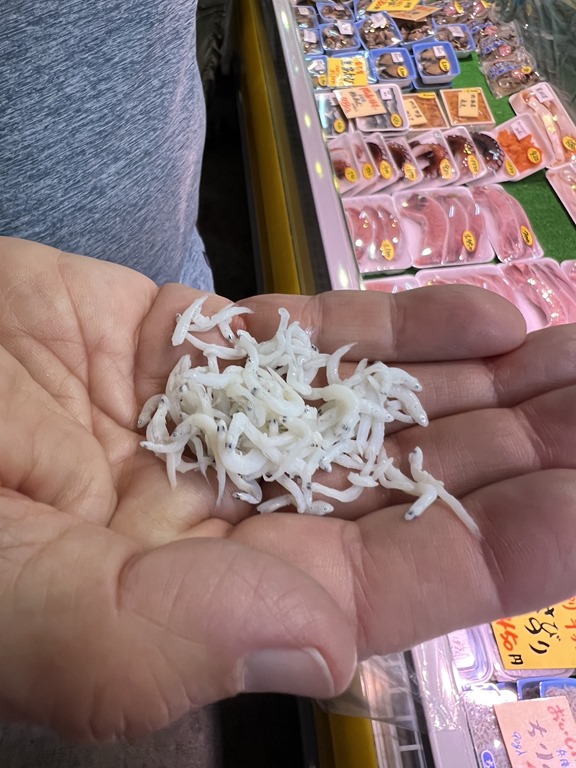
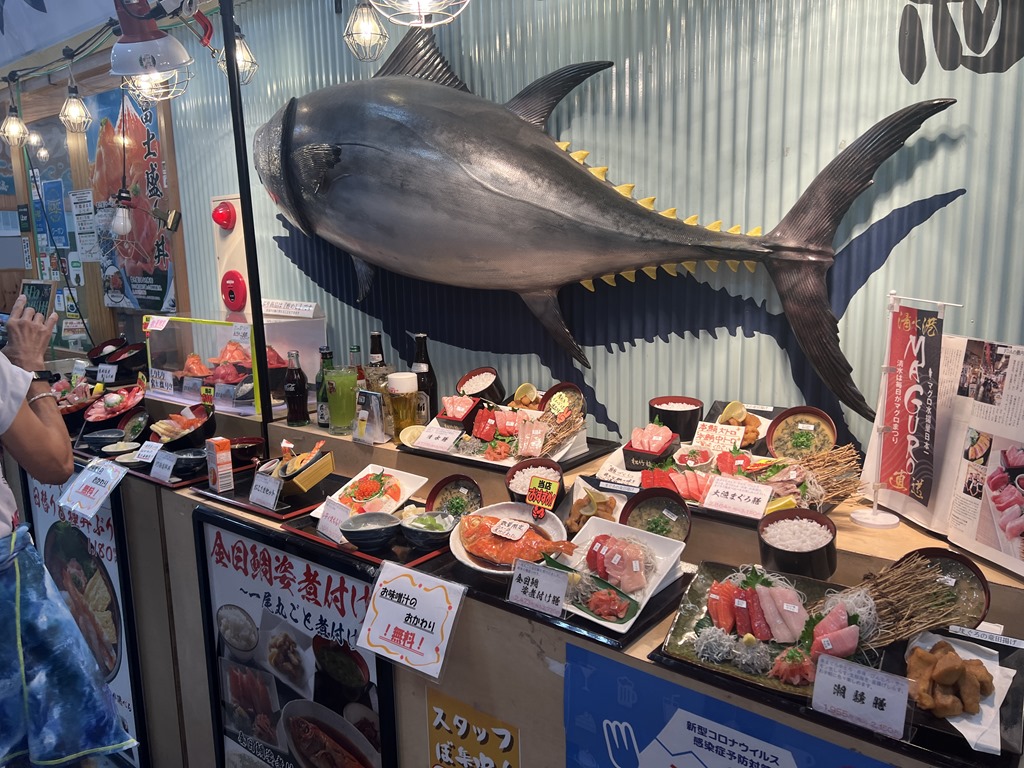
The fish market was the first stop on the tour. The area supplies half of all the tuna in Japan, the number one haul in the country.  Other local delights are the sakura shrimp (a small, crunchy variety found only in the area) and young sardines called shirasu.

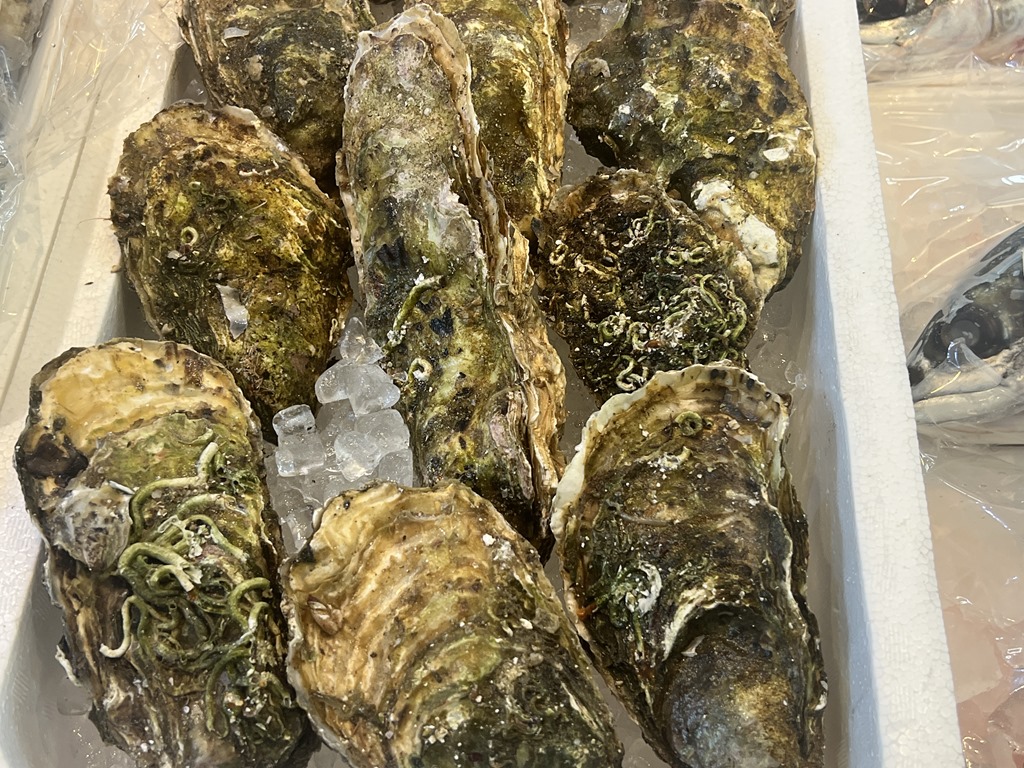
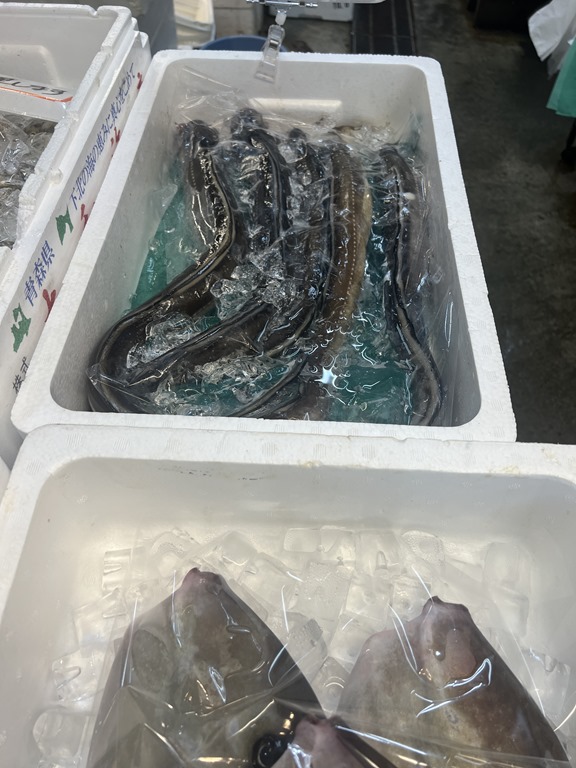
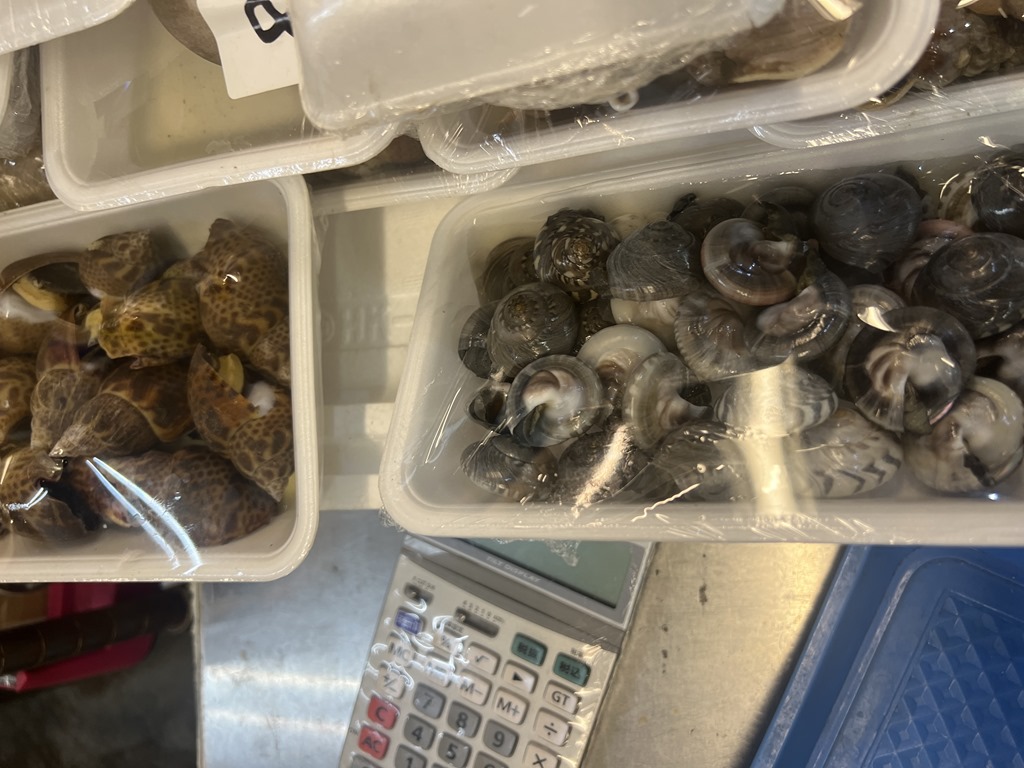
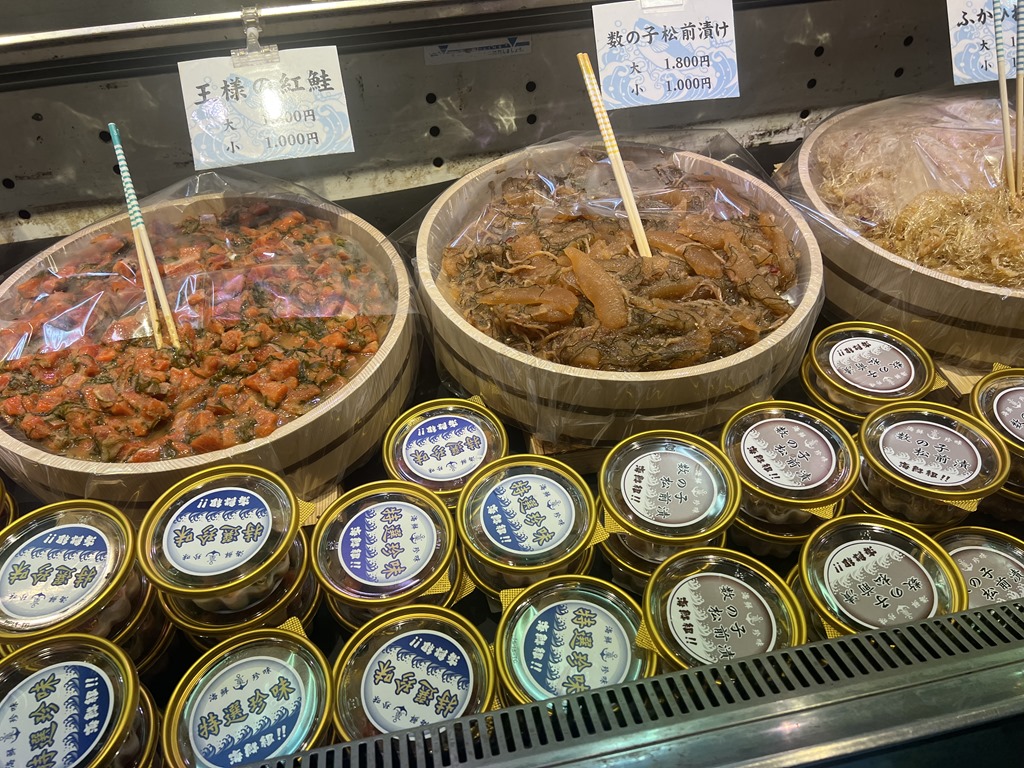
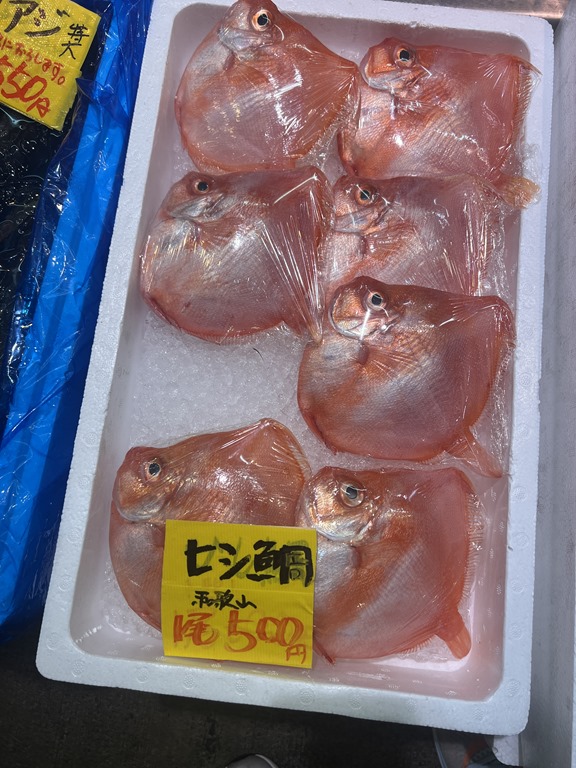
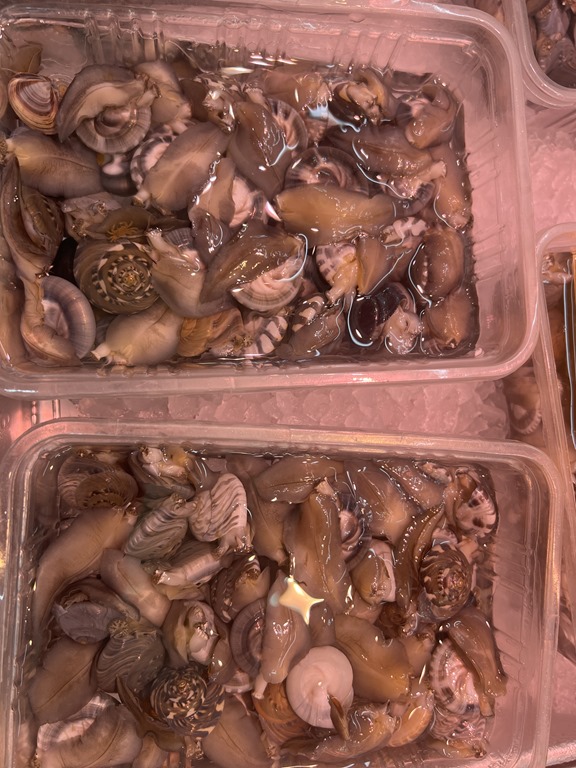
The market, like everything in Japan, was spotless.  All of the cut fish or fish for sale was wrapped.  There was no smell at all.  Here are some of the beautiful displays of fish, oysters, shellfish, etc.

IMG_0087~photoIMG_0088~photoIMG_0089~photoIMG_0090~photoIMG_0091~photoIMG_0093~photoIMG_0094~photoIMG_0095~photoIMG_0098~photoIMG_0099~photoIMG_0100~photoIMG_0101~photoIMG_0102~photoIMG_0106~photoIMG_0108~photoIMG_0111~photoIMG_0112~photoIMG_0127~photoIMG_0128~photoIMG_0136~photo

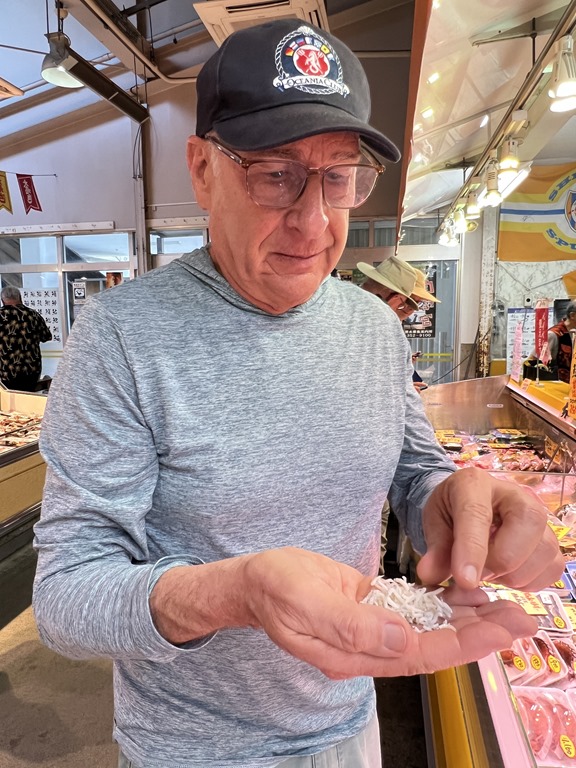
This is the shirasu. Norm tasted it and offered it to others.  I passed on that one.  He said it was salty and crunchy.

IMG_0113~photoIMG_0115~photo

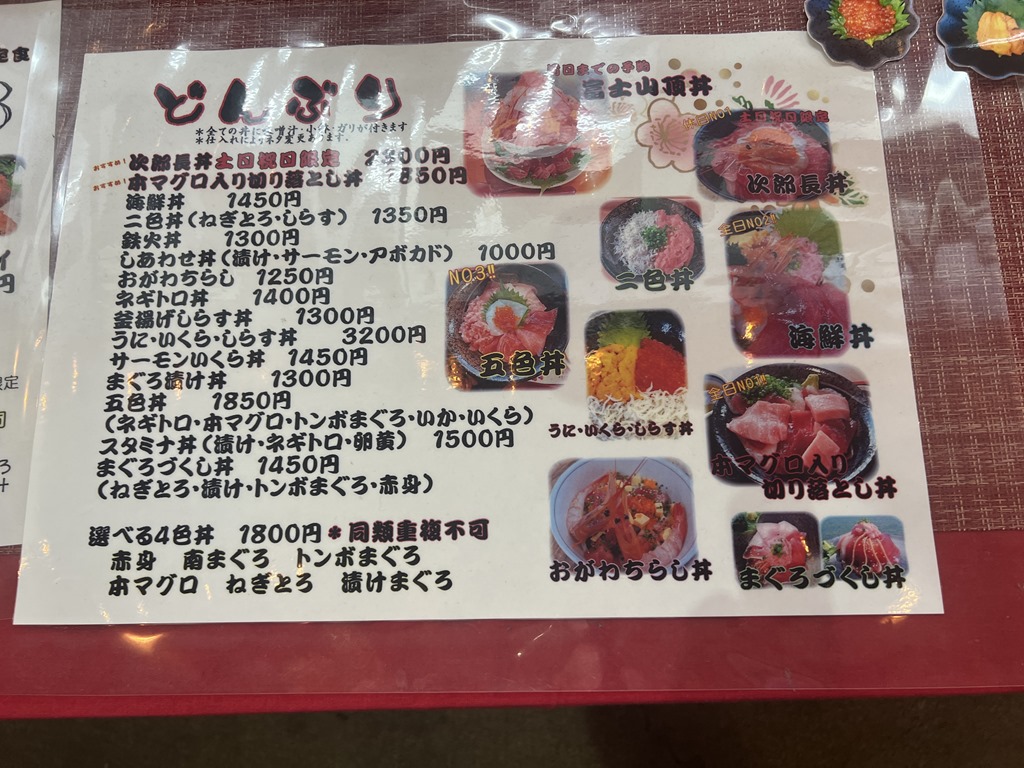
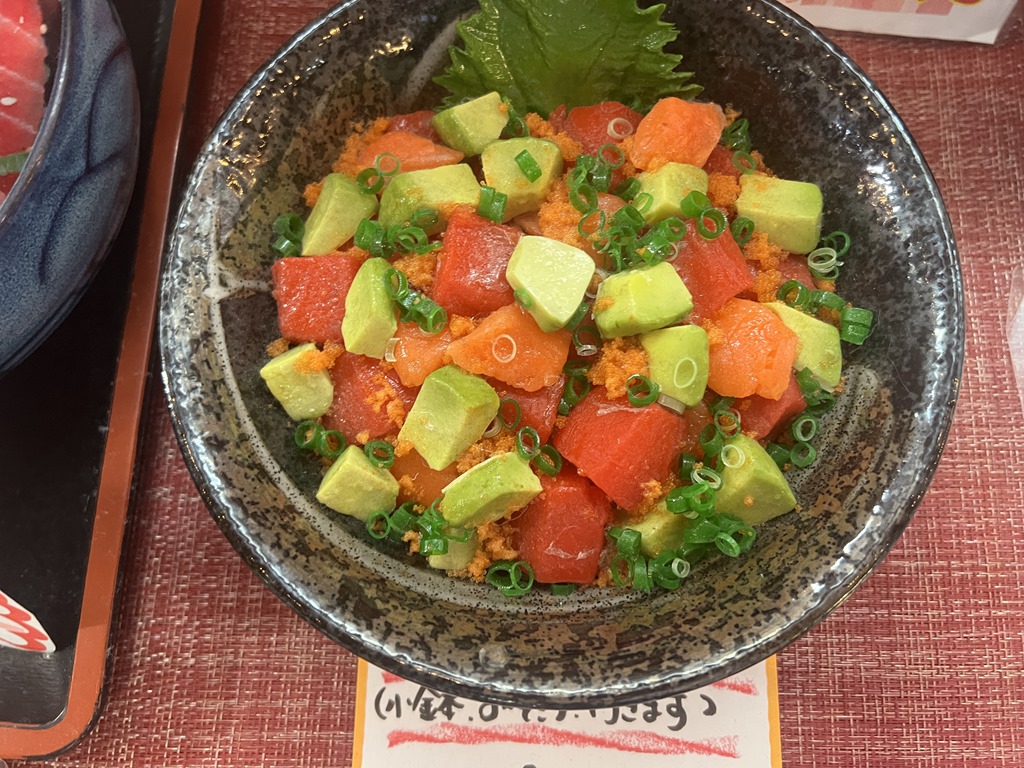
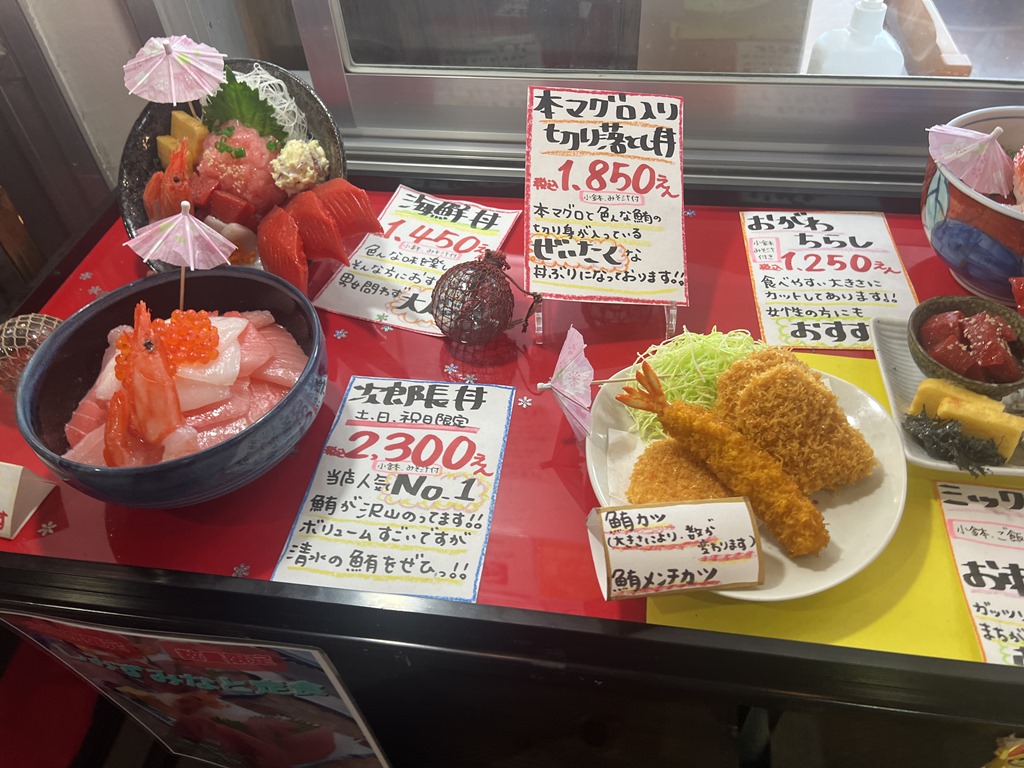
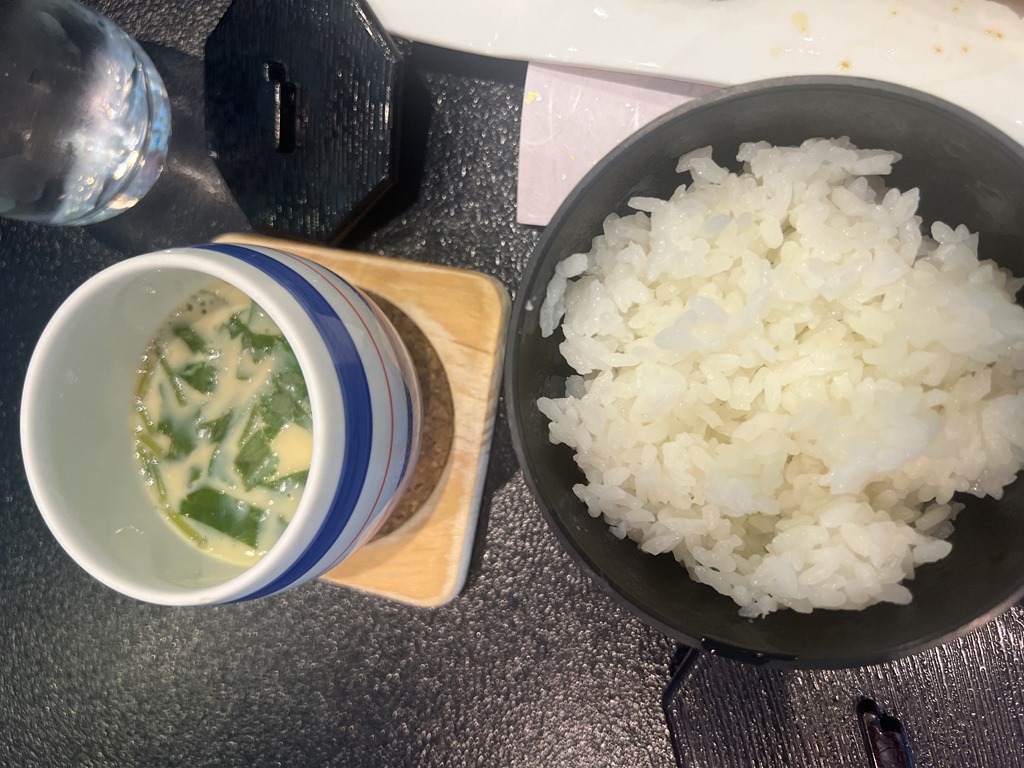
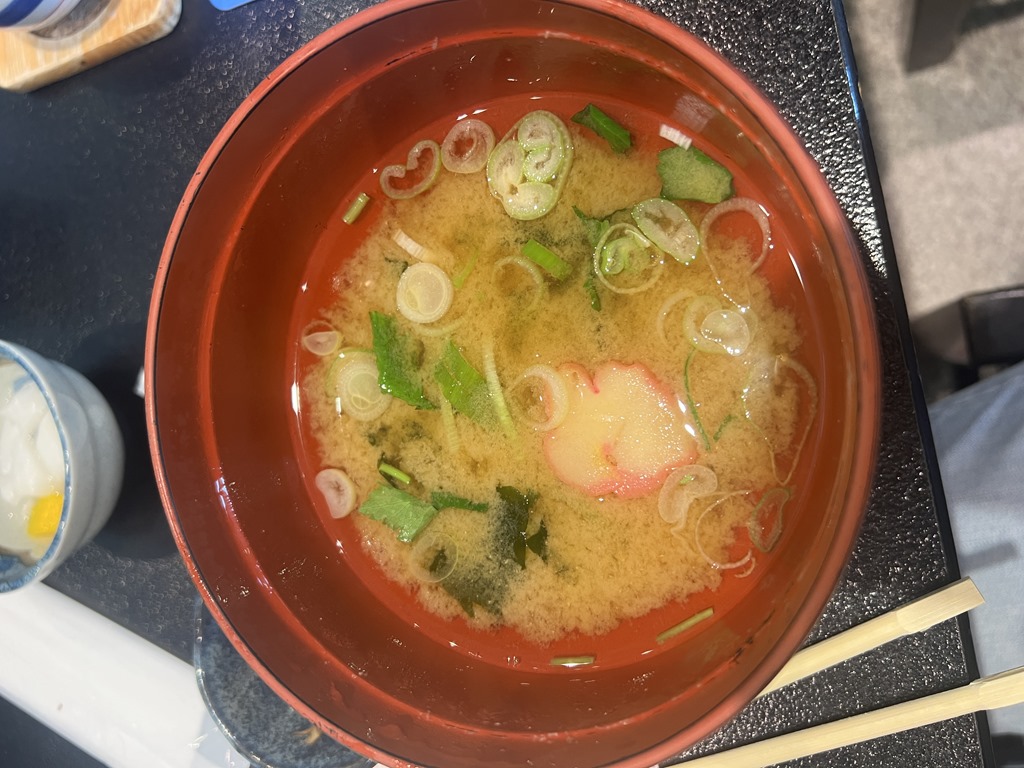
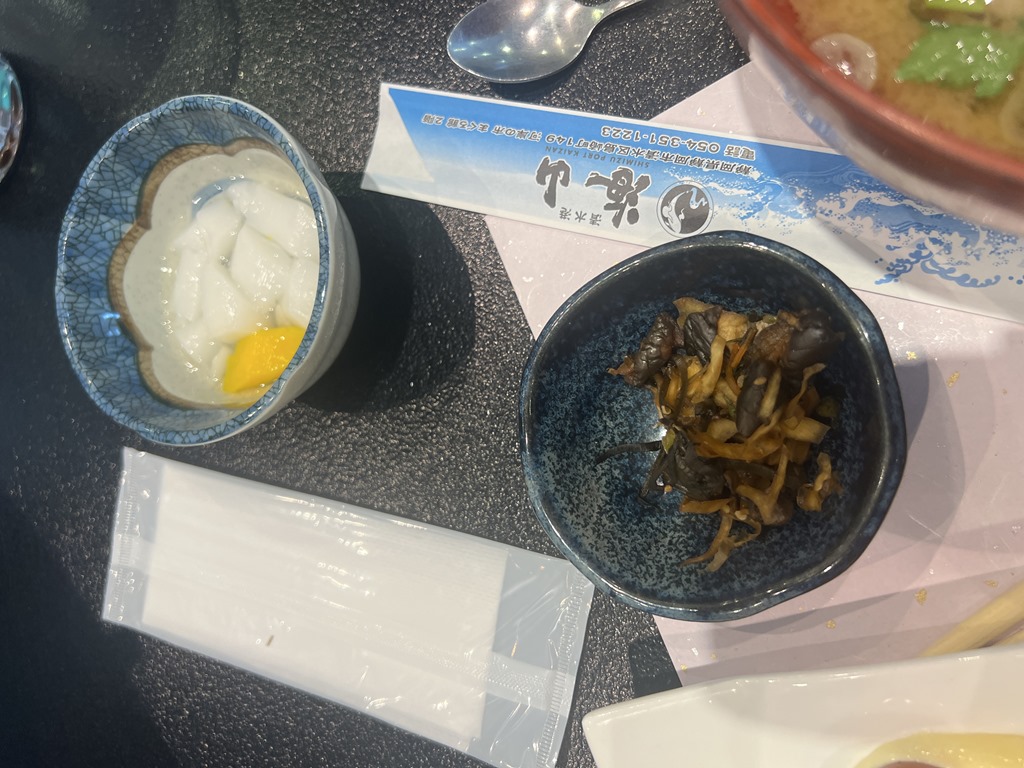
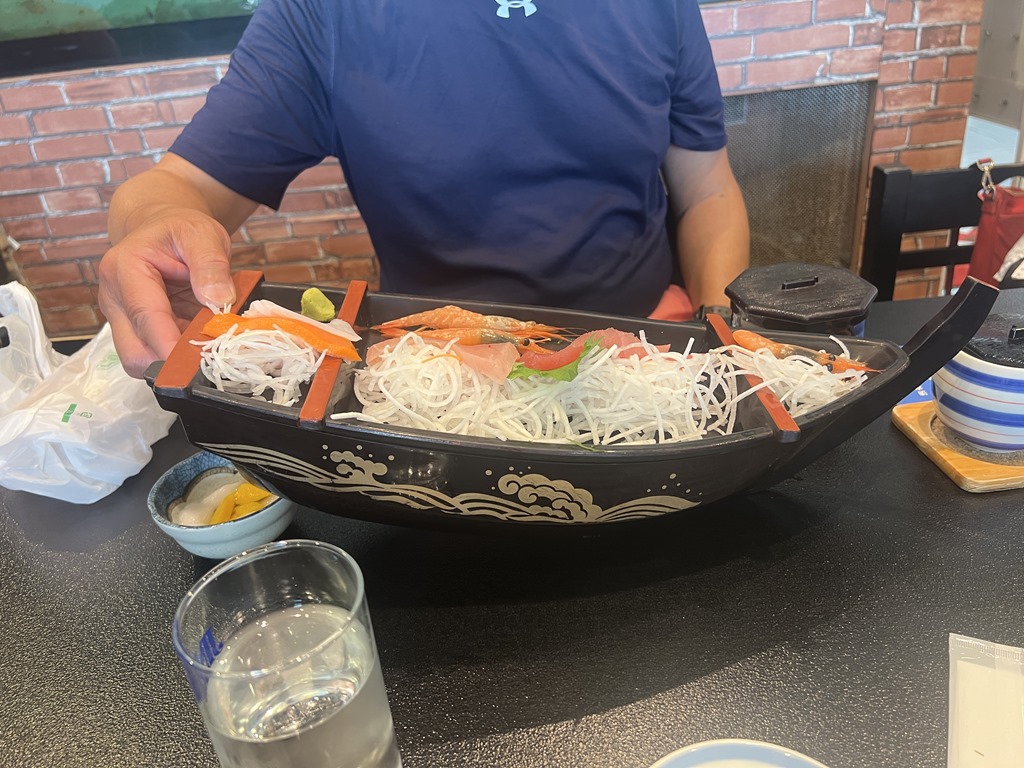
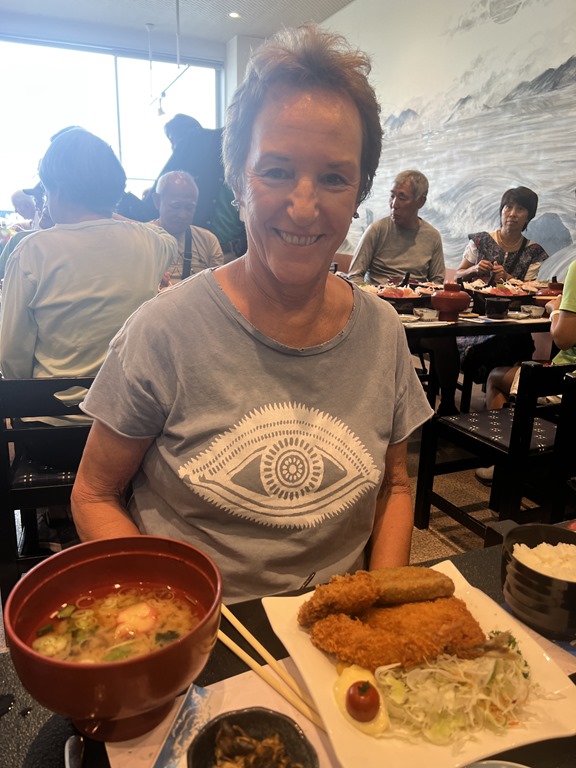
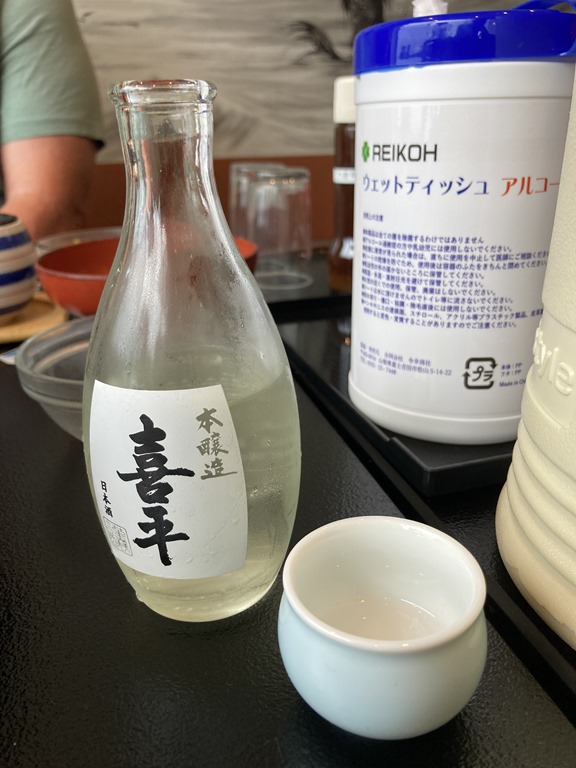
After our walk through the market, we went to the restaurant upstairs and enjoyed a wonderful meal. You could choose to have sake if you wanted it.

IMG_0118~photoIMG_0119~photoIMG_0120~photoIMG_0121~photoIMG_0122~photoIMG_0124~photoIMG_0210~photoIMG_0138~photo

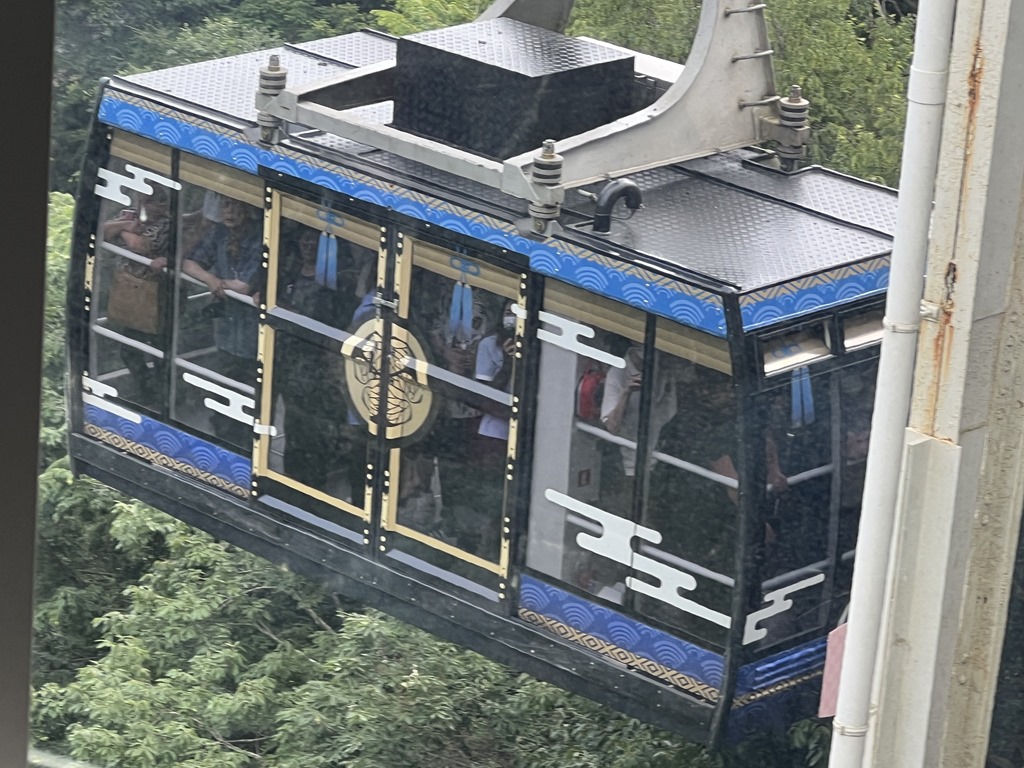
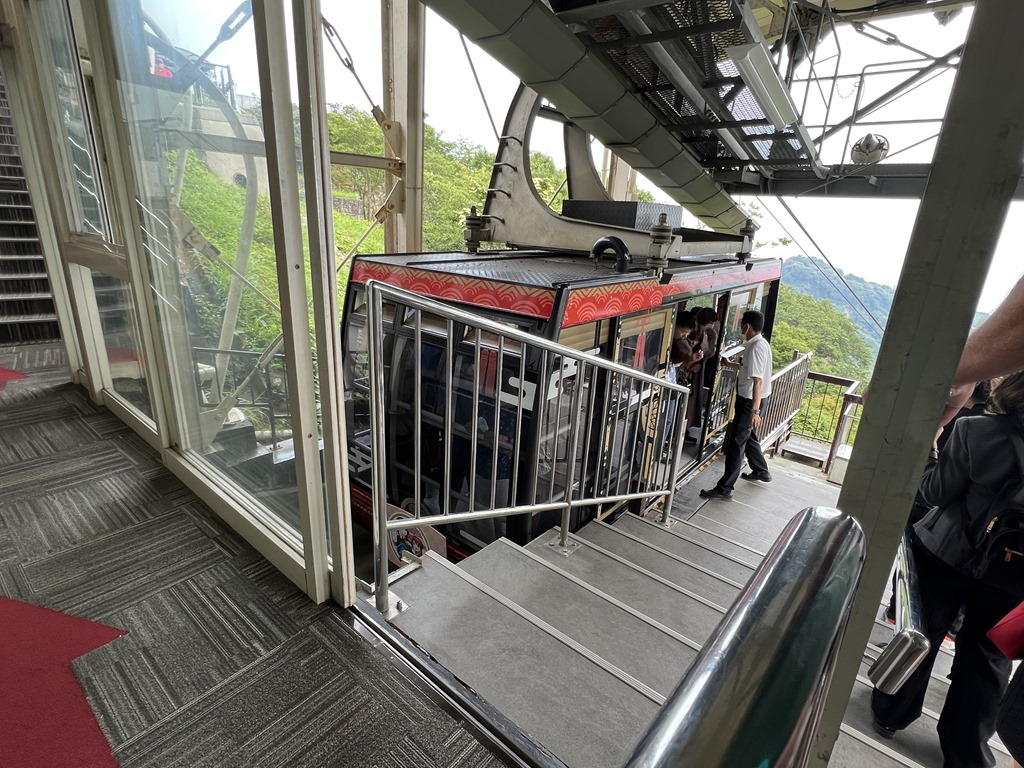
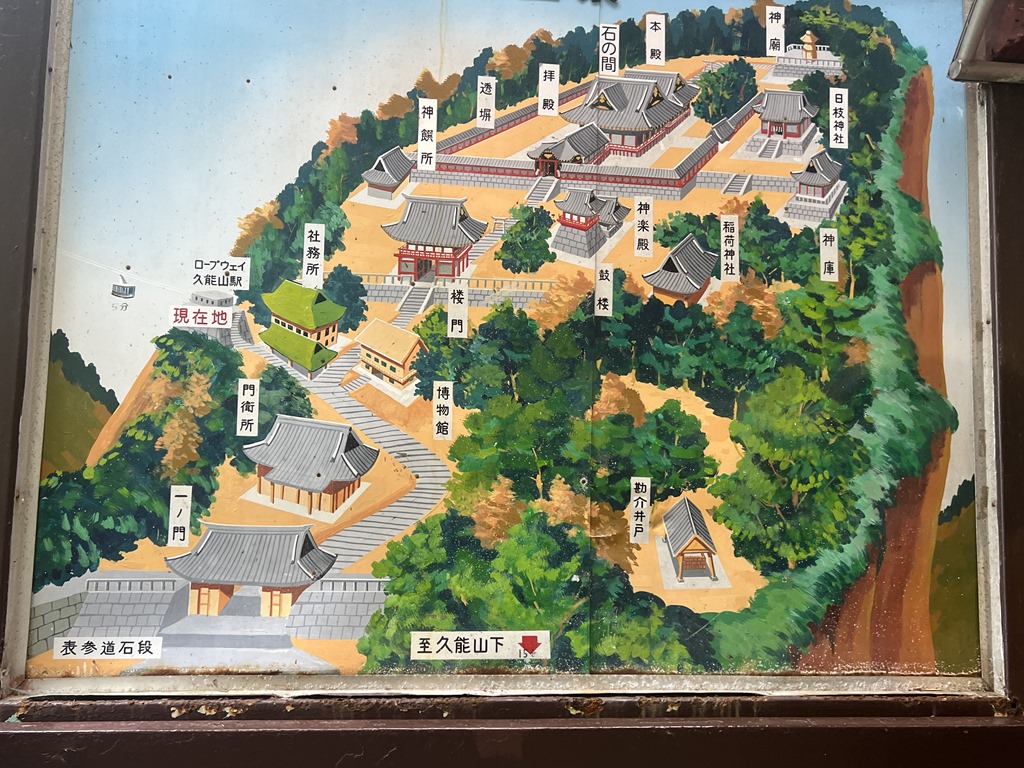
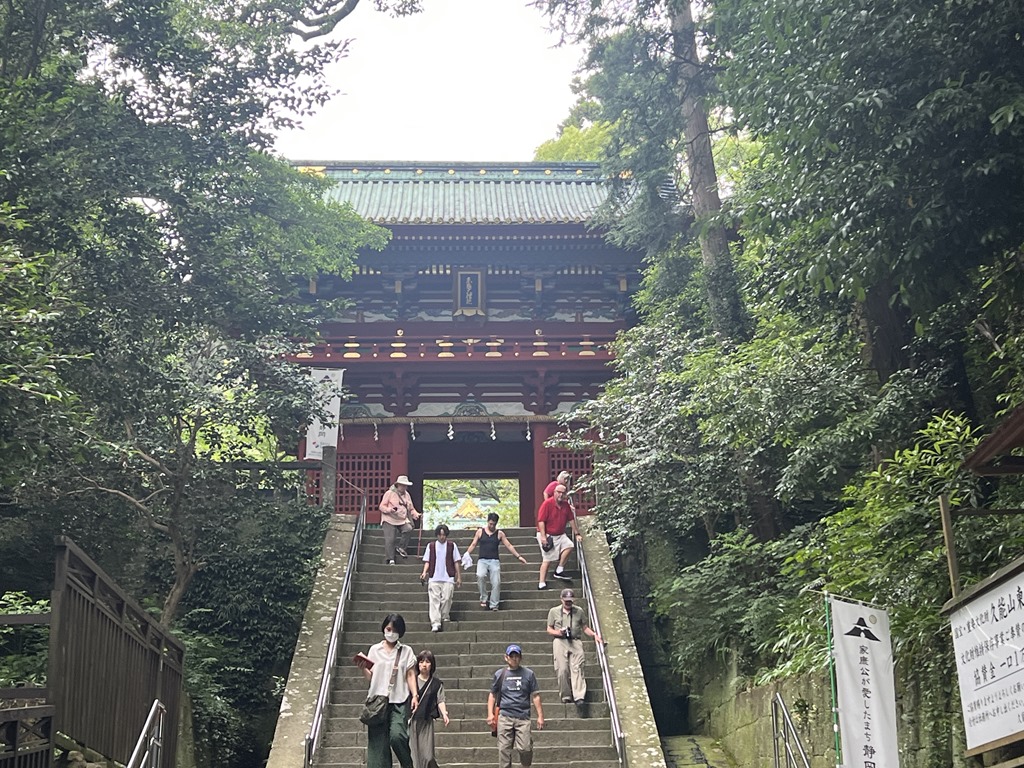
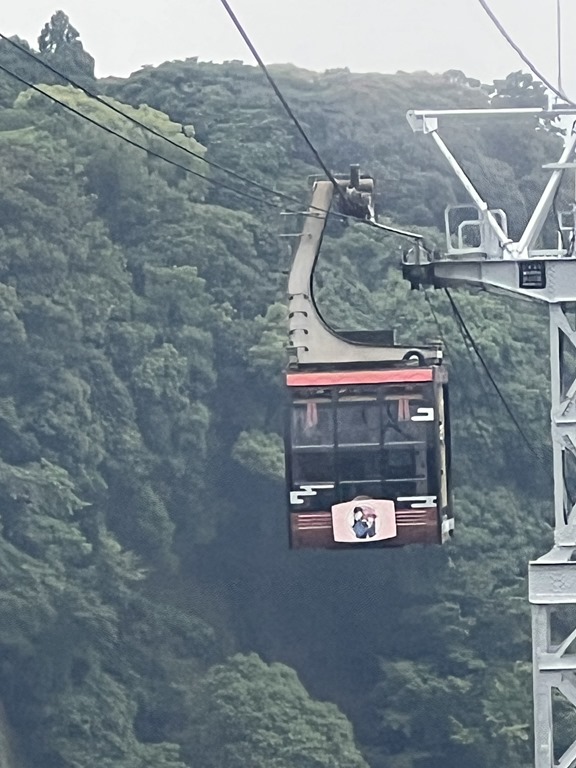
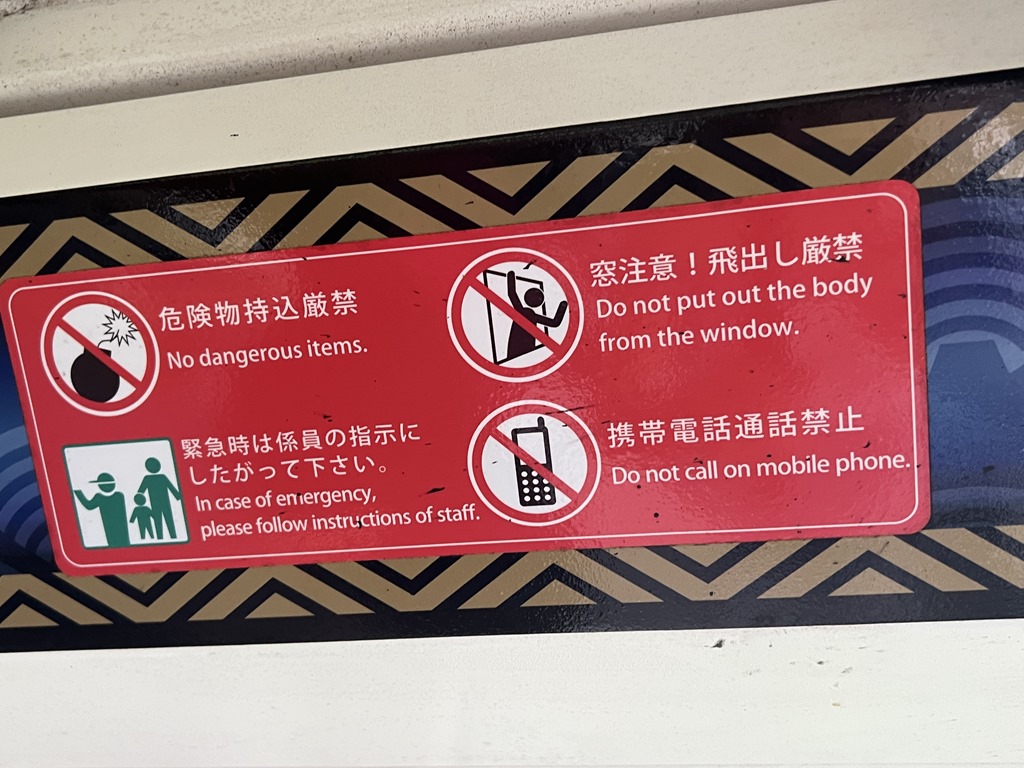
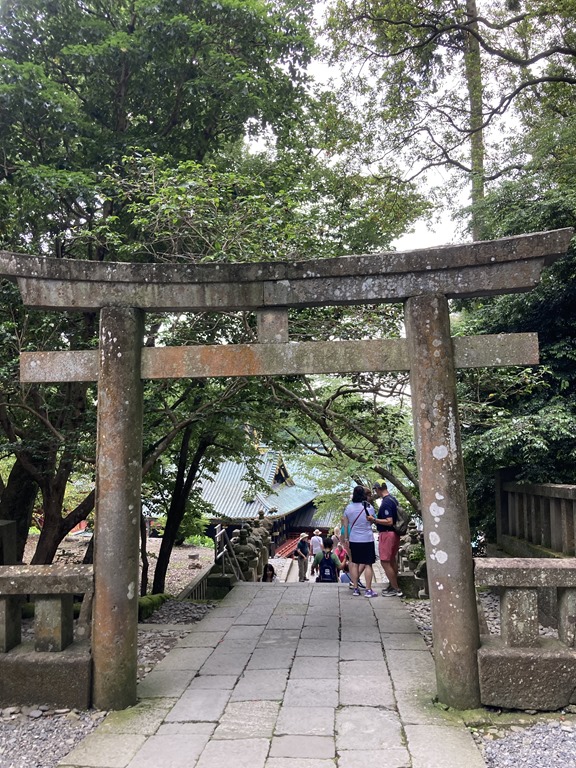
Our next stop was at the Kunozan Toshugo Shrine.  We took a cable car down the mountain to the shrine.

IMG_0143~photoIMG_0144~photoIMG_0147~photoIMG_0149~photoIMG_0150~photo

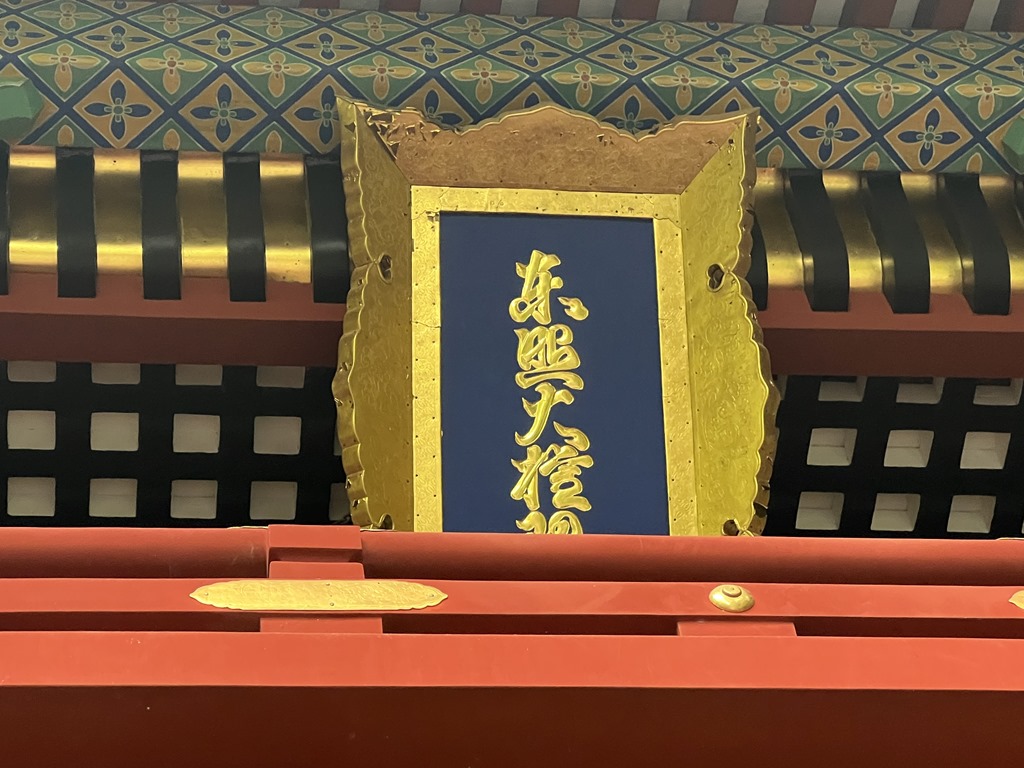
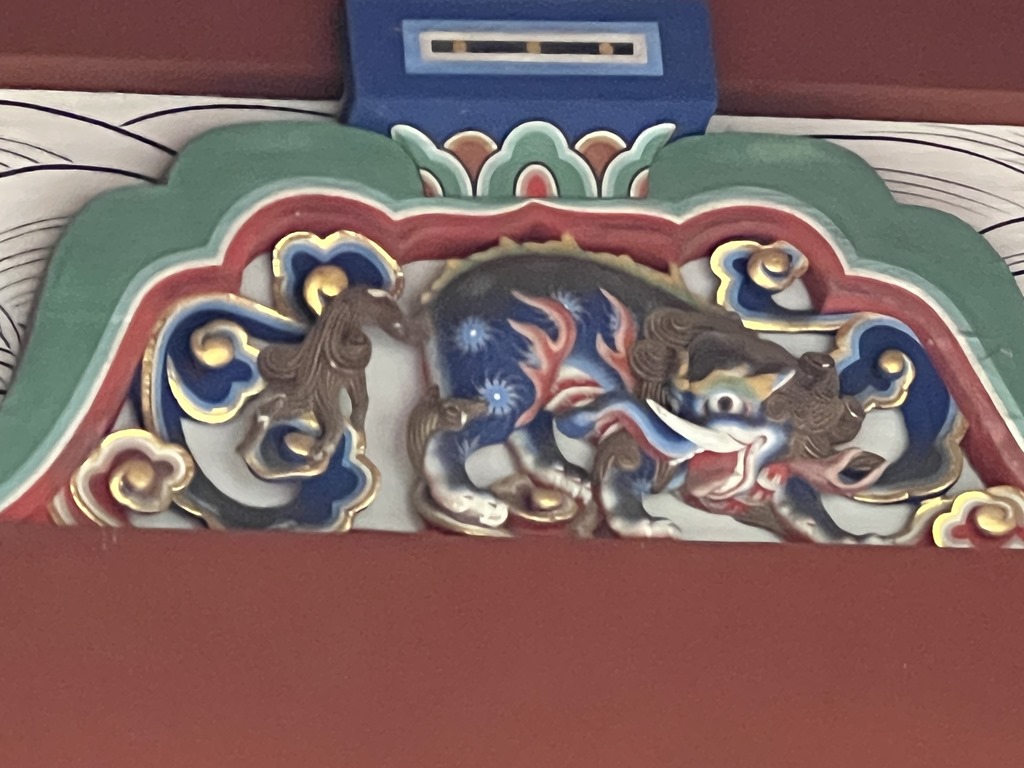
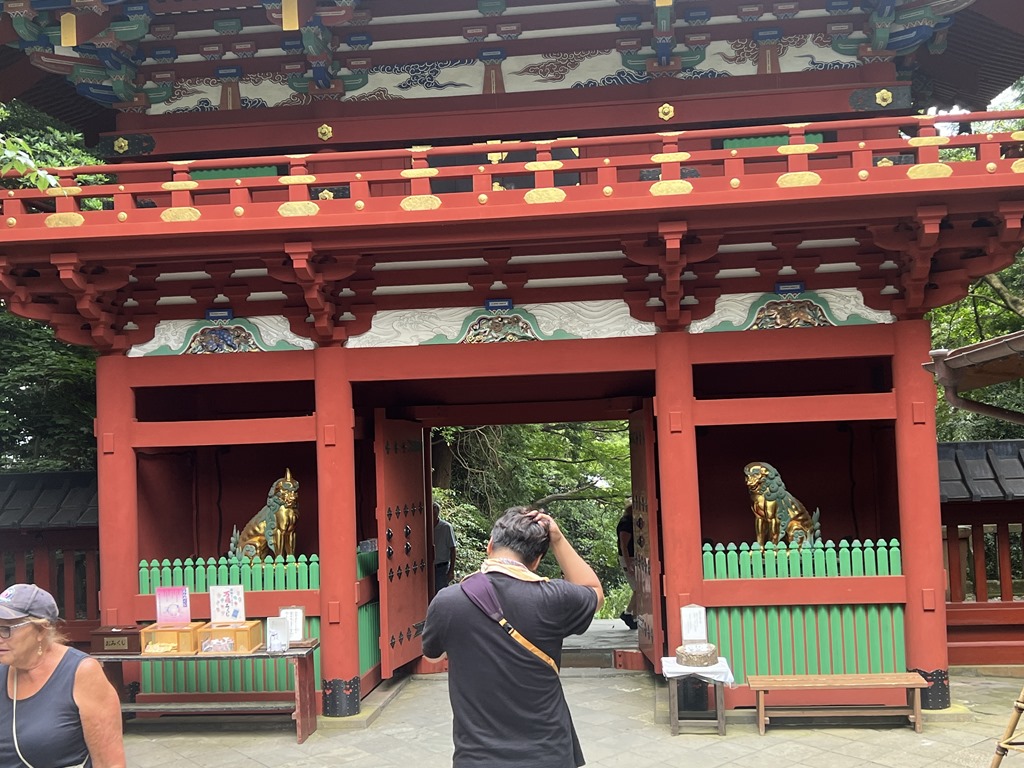
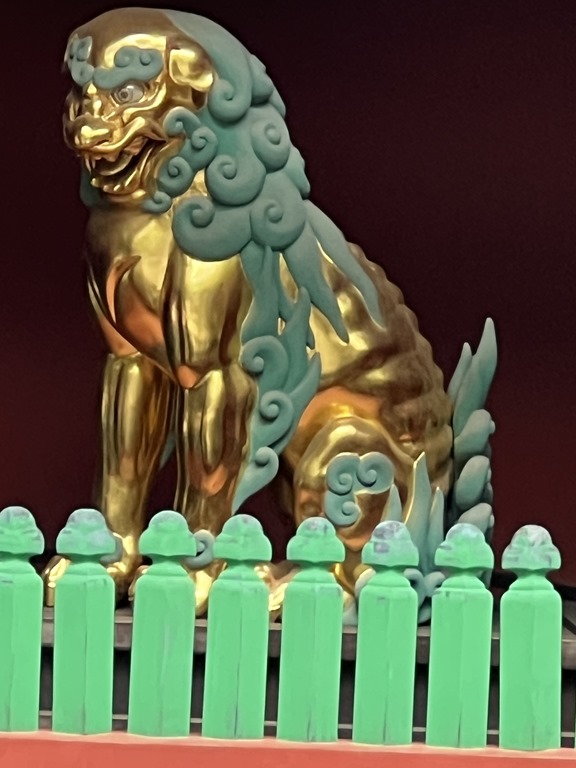
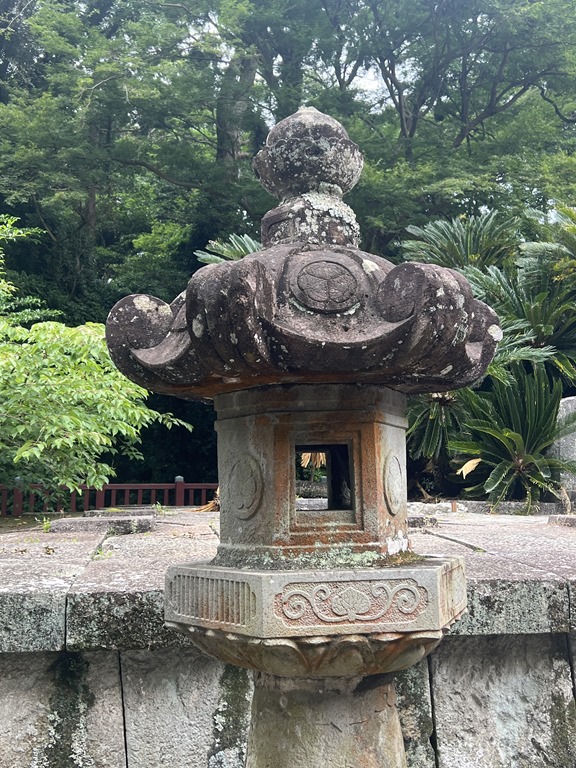
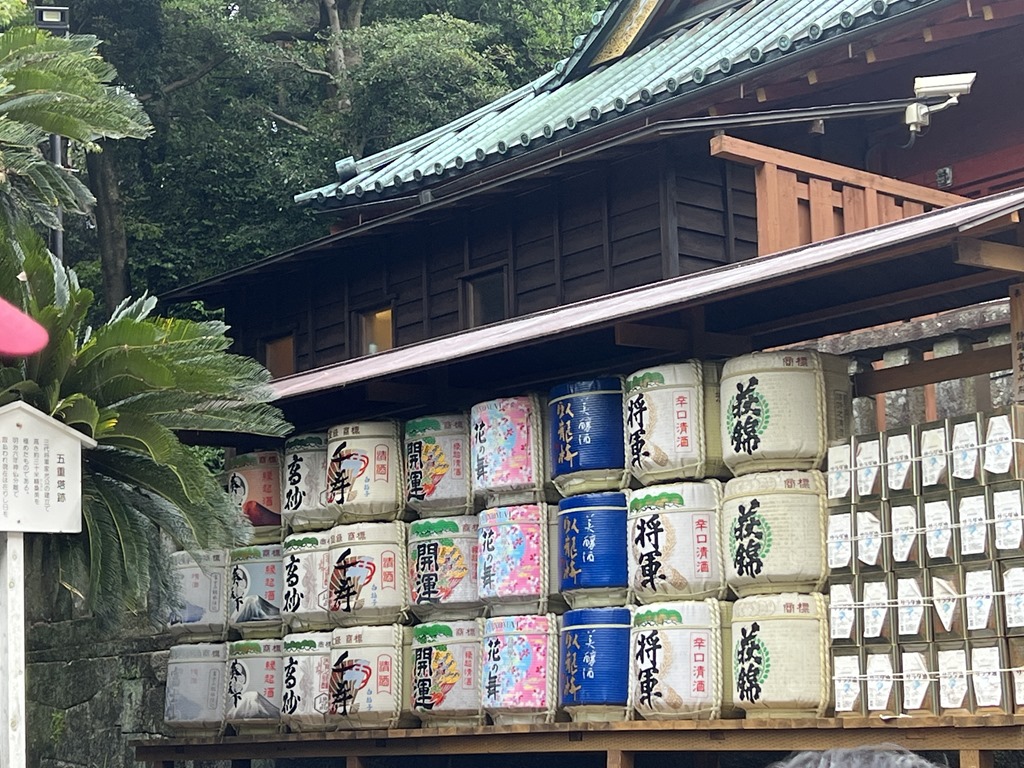
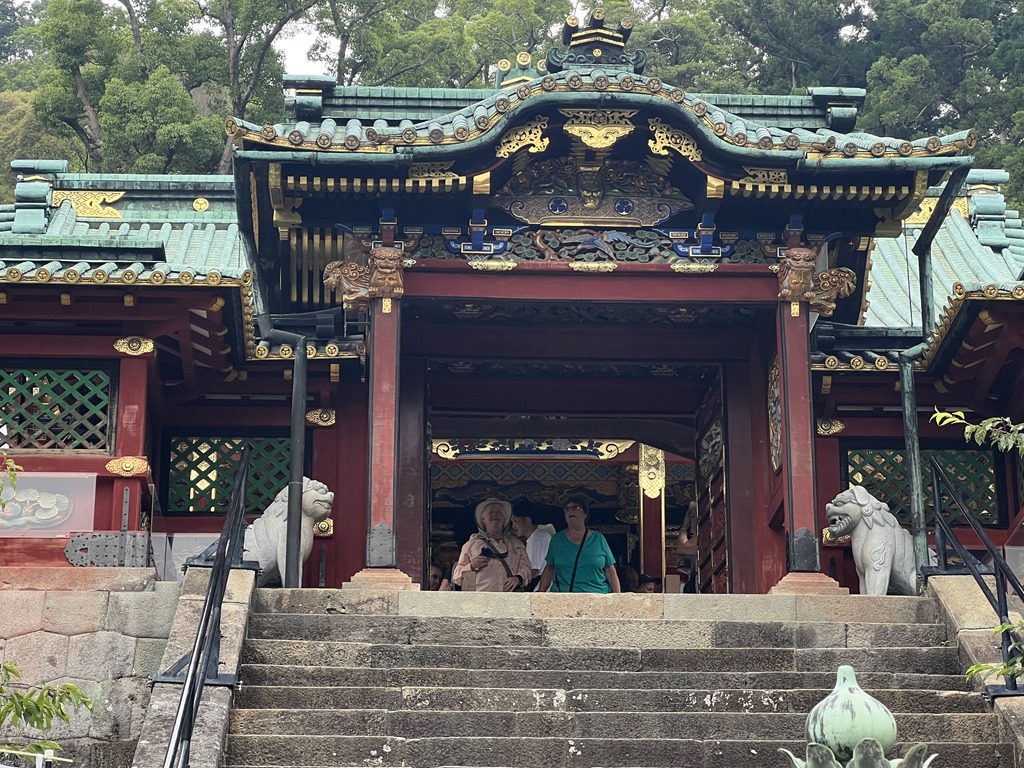
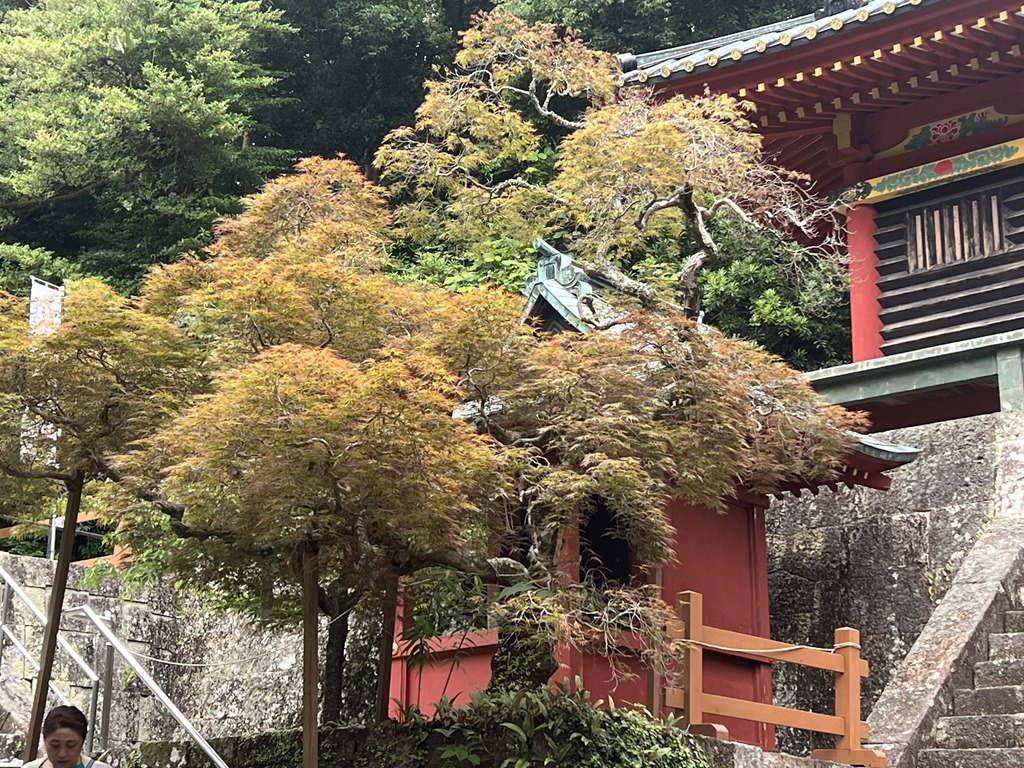
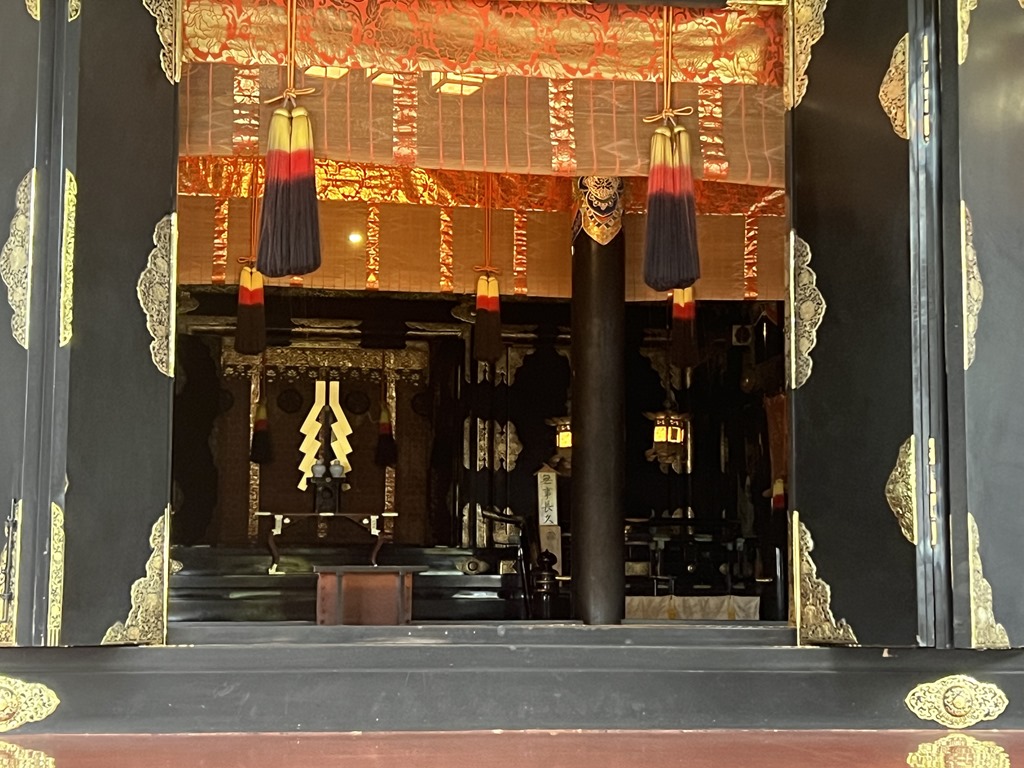
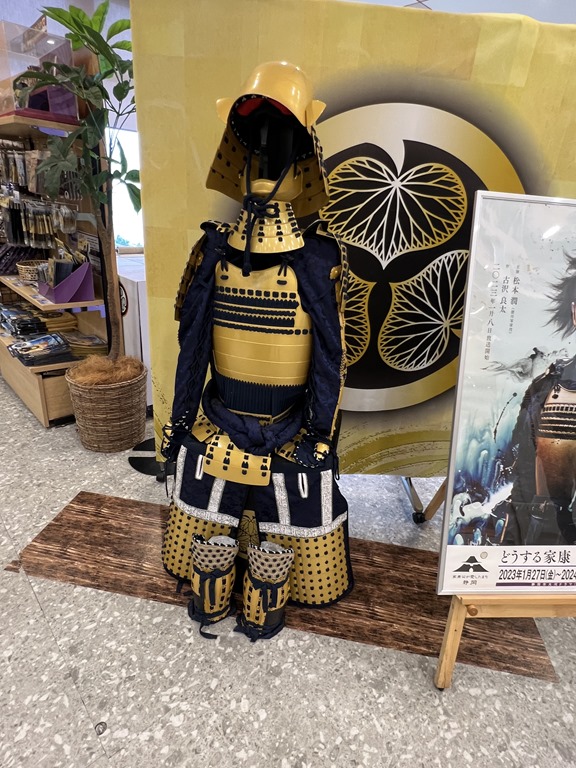
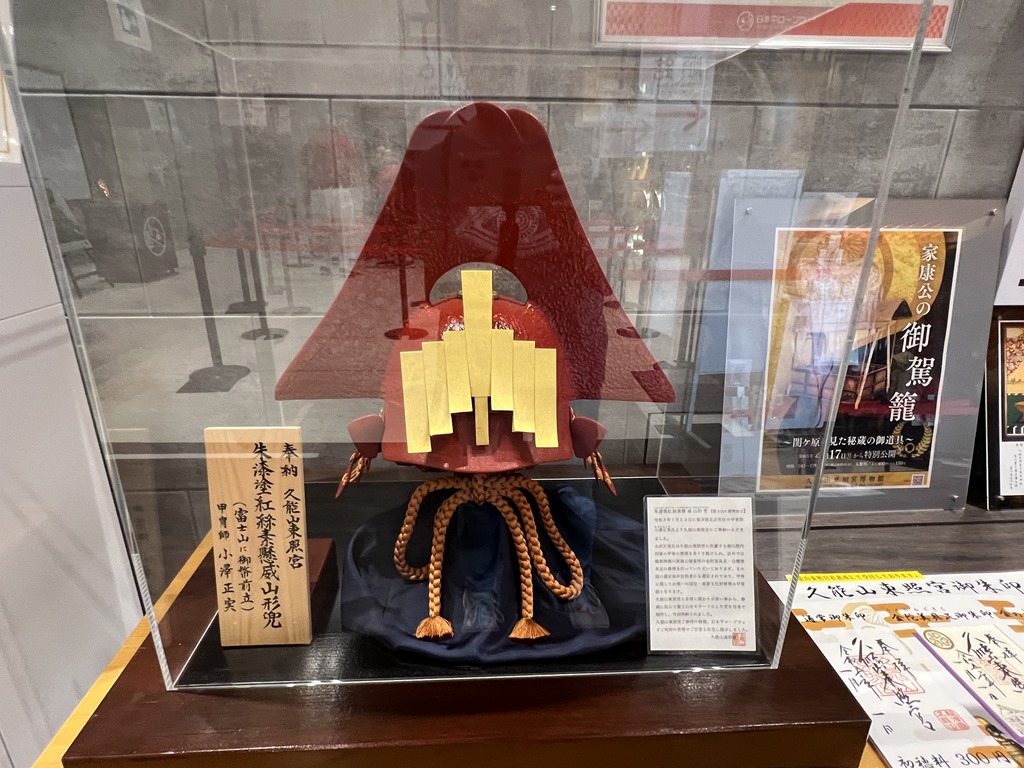
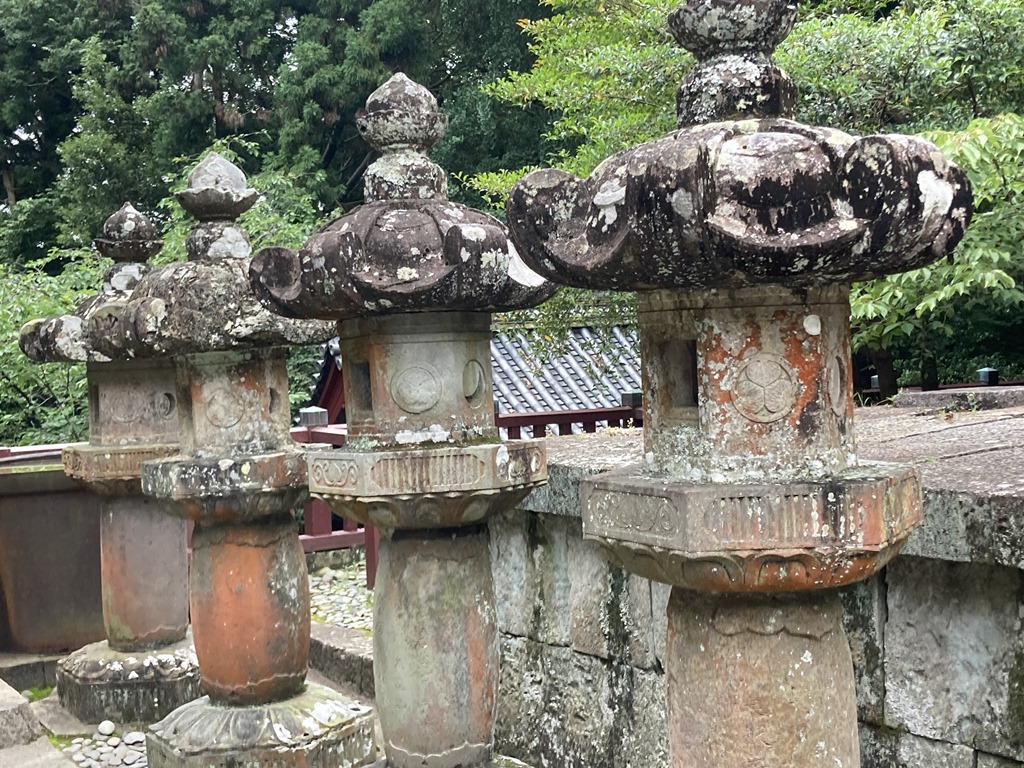
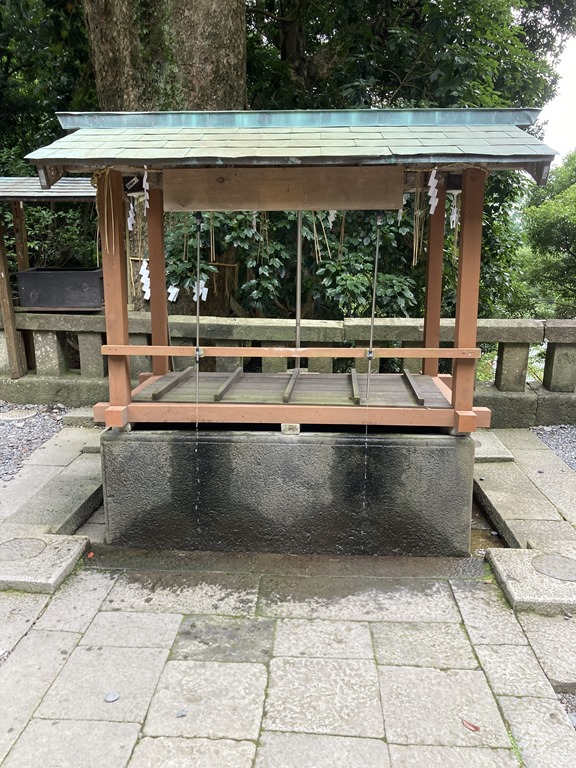
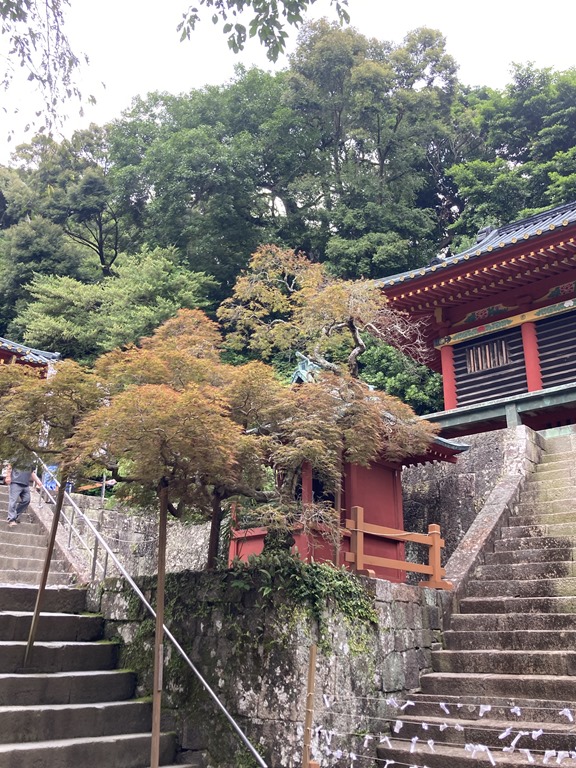
The shrine itself was built in 1617 for Ieyasu Tokugawa to be enshrined by the order of his son Hidetada.  The shrine includes the main building which was designated as a national treasure, as well as 13 other buildings designated as important national cultural properties. Some of the buildings are beautifully painted with lacquers and decorated with gold foils.  They have remained since they were built and the wooden materials including pillars are original. They have been repainted every 50 years to preserve them.

Interesting that Sitsko said that the temples are mostly historical sites, Japanese people are generally not religious.

IMG_0152~photo

There is a carved picture at the front of the main building.  It depicts the ancient Chinese story of Shiba Onko, an ancient Chinese politician that is called “A story of broken pot.” When Shiba Onko was a child, he was playing with some of his friends and one fell into a large pot full of water.  Although he knew that his father treasured the pot, Shiba Onko broke the pot with a stone to save his friend.  Later the father praised his son, saying “you can buy another pot with money but you can’t buy your friend’s life.  The story can be interpreted as a message to tell us that there’s nothing more important than human life.

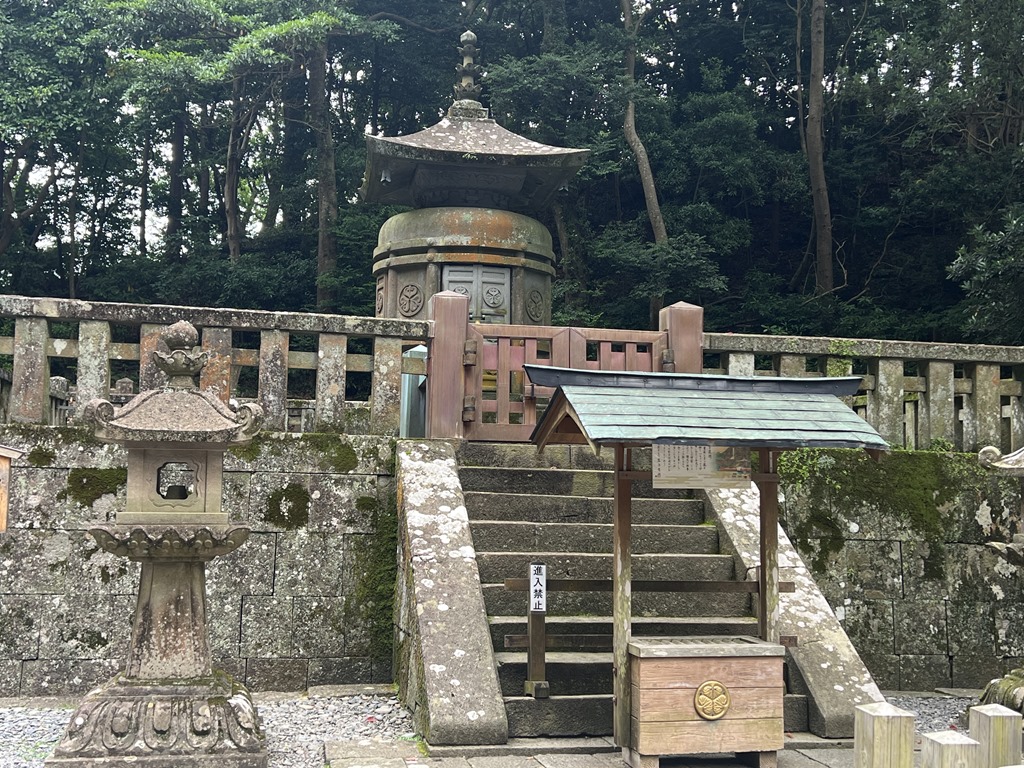
The father, Ieyasu, was buried according to his will farther up behind the main building of the shrine.

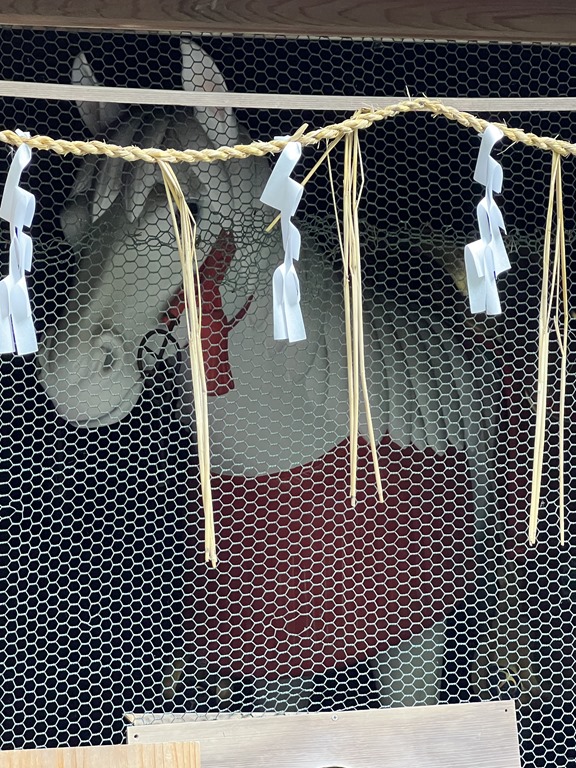
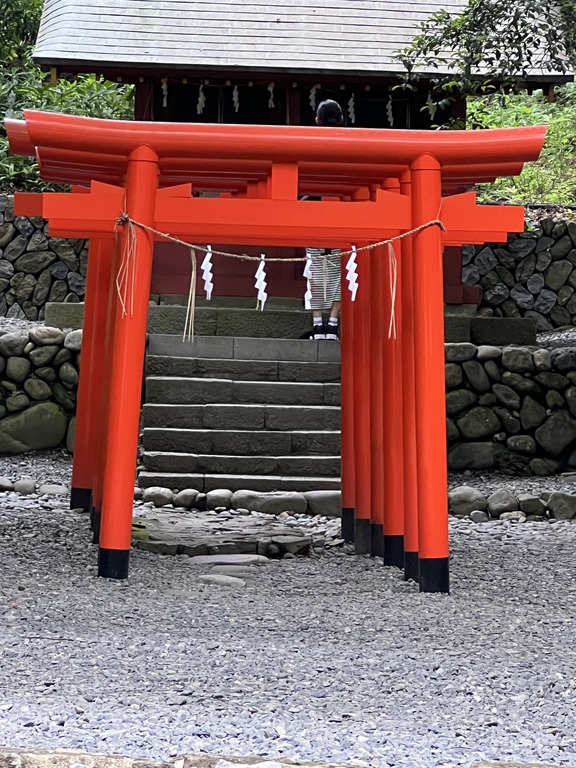
The white papers hanging from the rope (made of rice fiber) are made to look like lightning to signify the importance of rain to their main food, rice.  You see them at almost all temples.

IMG_0154~photo - CopyIMG_0155~photo - CopyIMG_0156~photo - CopyIMG_0157~photo - CopyIMG_0160~photo - CopyIMG_0161~photo - CopyIMG_0162~photo - CopyIMG_0163~photo - CopyIMG_0164~photo - CopyIMG_0165~photo - CopyIMG_0166~photo - CopyIMG_0167~photoIMG_0168~photoIMG_0169~photoIMG_0170~photoIMG_0171~photoIMG_0173~photo-fullIMG_0174~photoIMG_0176~photoIMG_0177~photoIMG_0178~photoIMG_0179~photoIMG_0180~photoIMG_0181~photoIMG_0183~photoIMG_0185~photoIMG_0186~photoIMG_0189~photoIMG_0187~photoIMG_0188~photoIMG_0191~photo-fullIMG_0196~photoIMG_0197~photoIMG_0200~photoIMG_0201~photoIMG_0202~photoIMG_0207~photoIMG_0208~photo

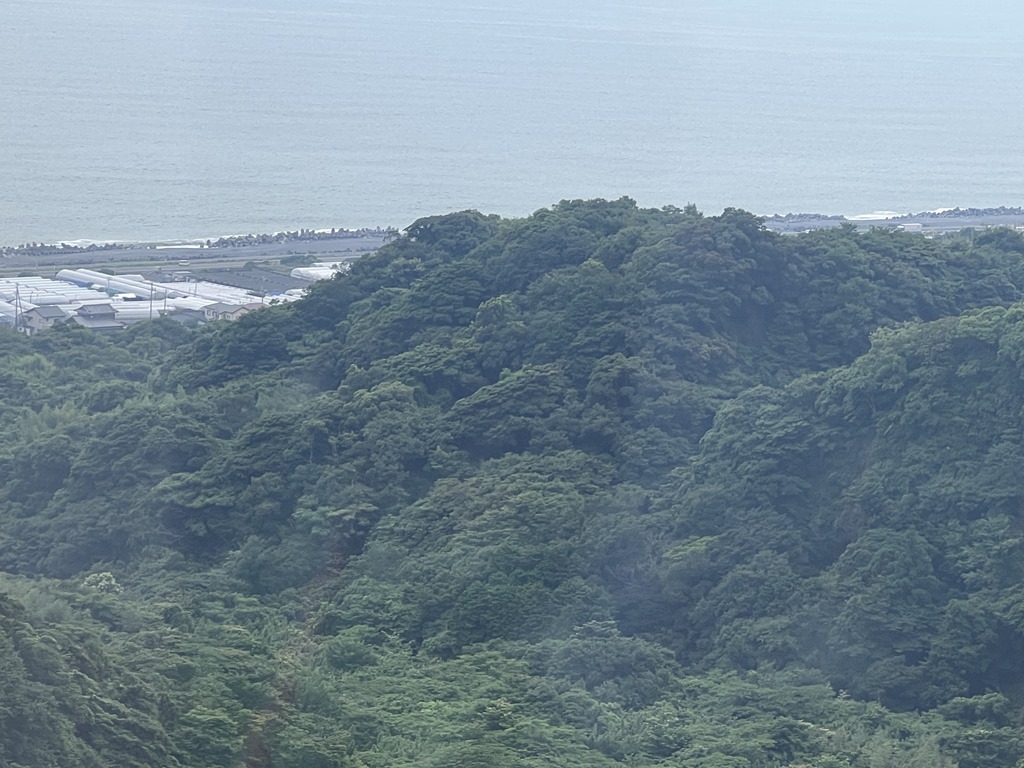
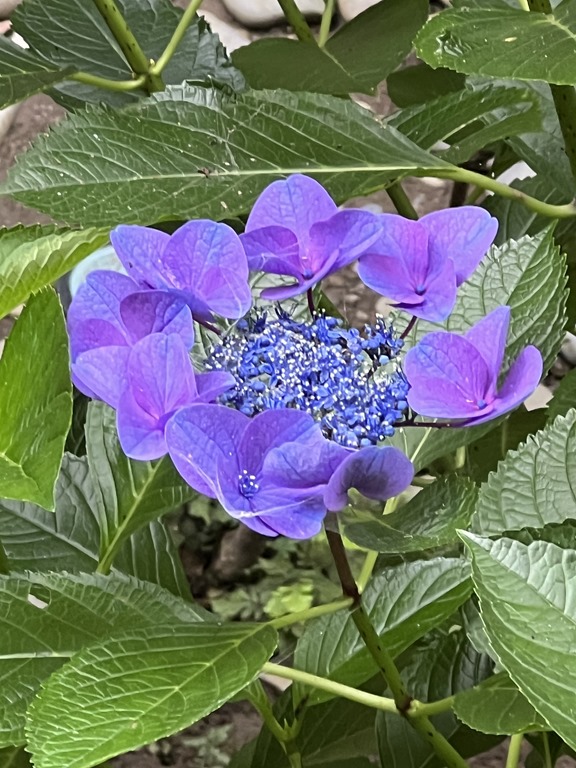
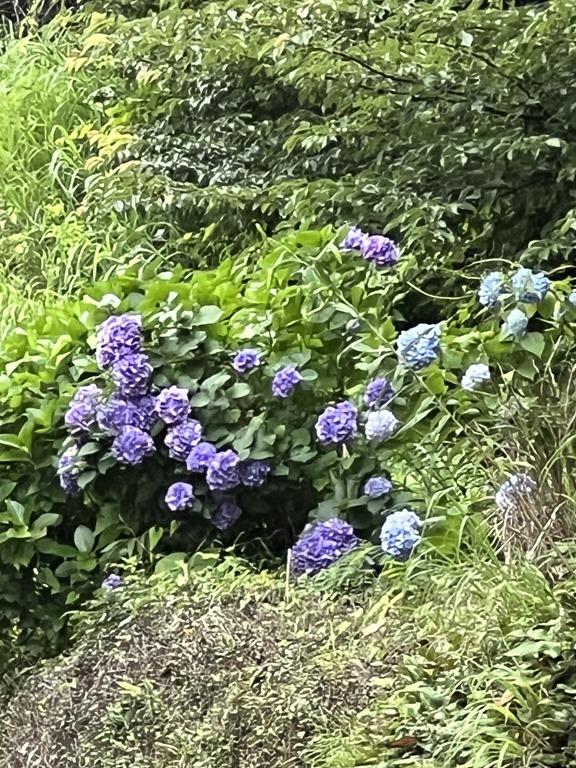
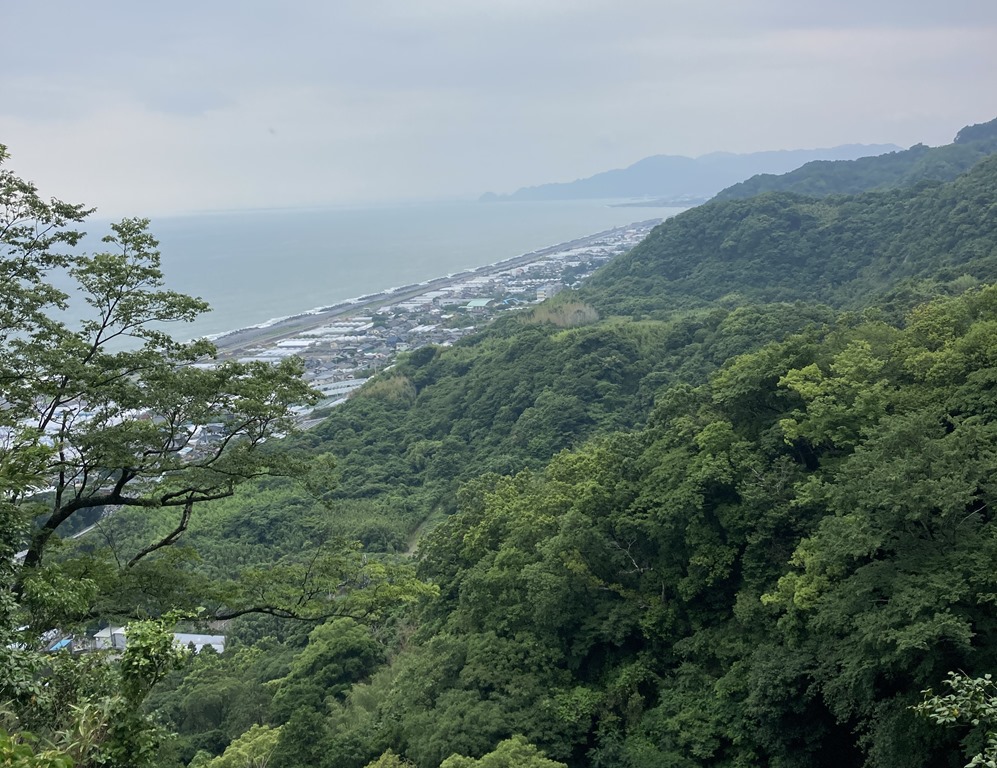
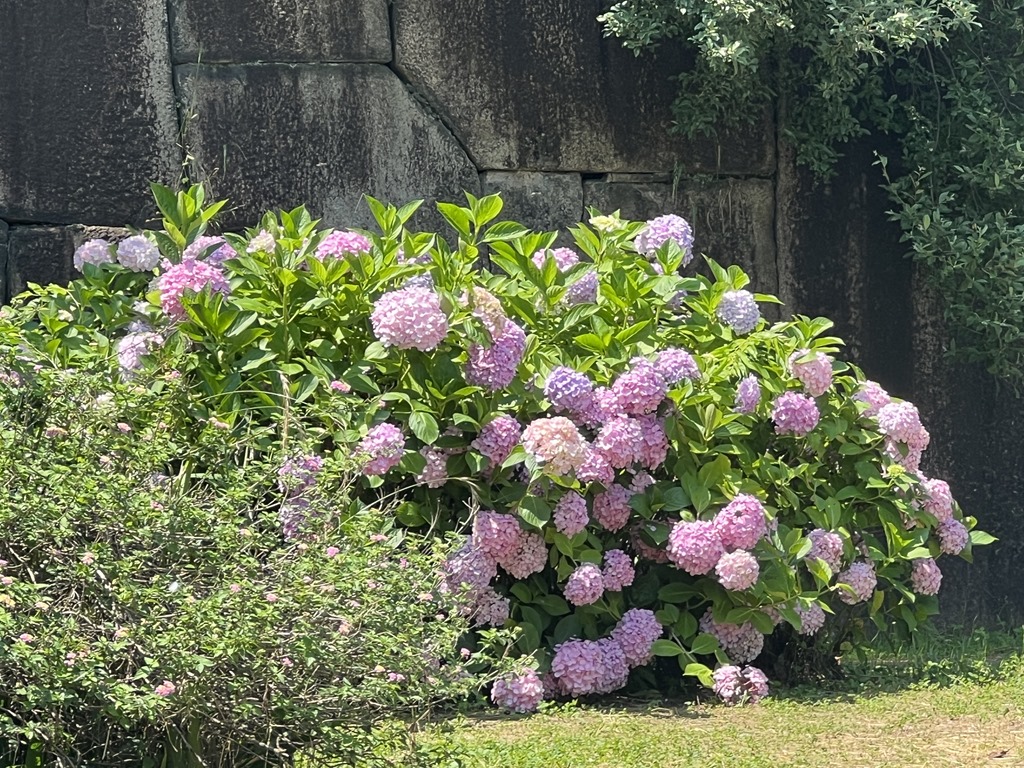
All of the sites we visited are very lush and green, and it is hydrangea season so we saw a lot of beautiful flowers.

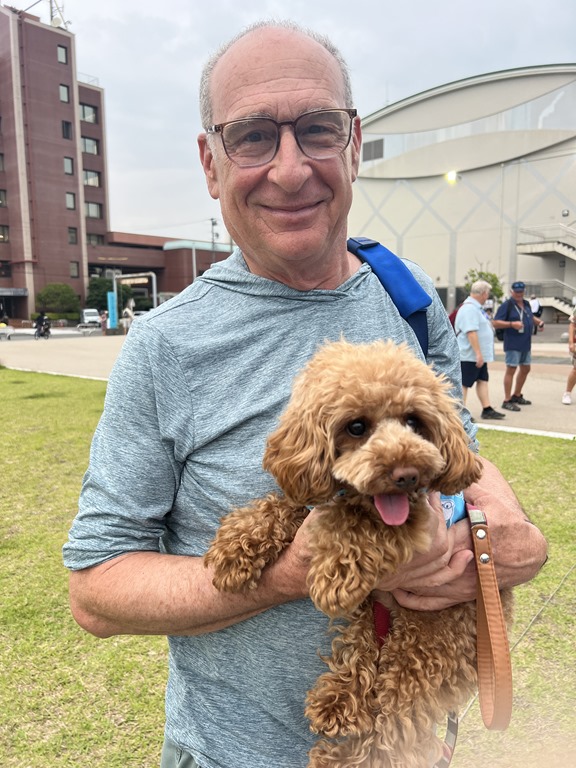
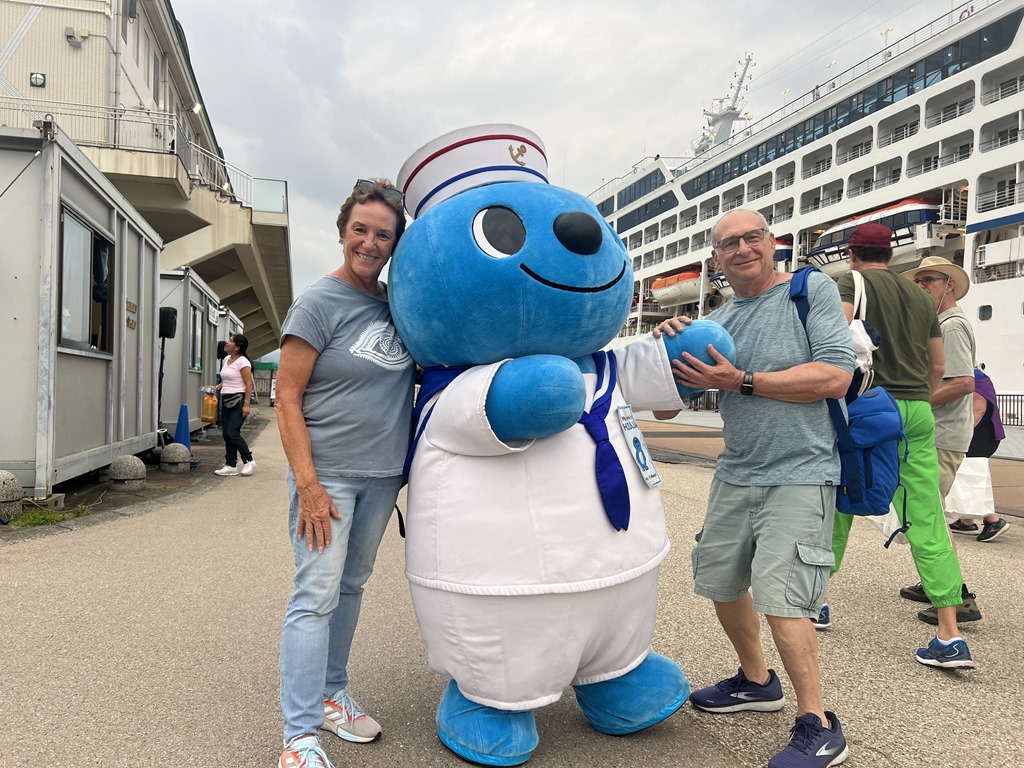
When we returned to the pier, there was a character walking around and a narrator asking us to say hello. And we saw a dog that looked a lot like our “granddog” Echo.  The owner let Norm hold her.  There are many small dogs here, some in strollers.  We even saw some with visors on.  There are also many pet stores.  Large dogs are not allowed in the cities.

IMG_0217~photoIMG_0220~photoIMG_0222~photo

The next port is Tokyo.

Posted in Asia, Excursions, Food, June, World Cruise #4 | 1 Comment

Kobe, Japan–Day 2

June 18, 2023

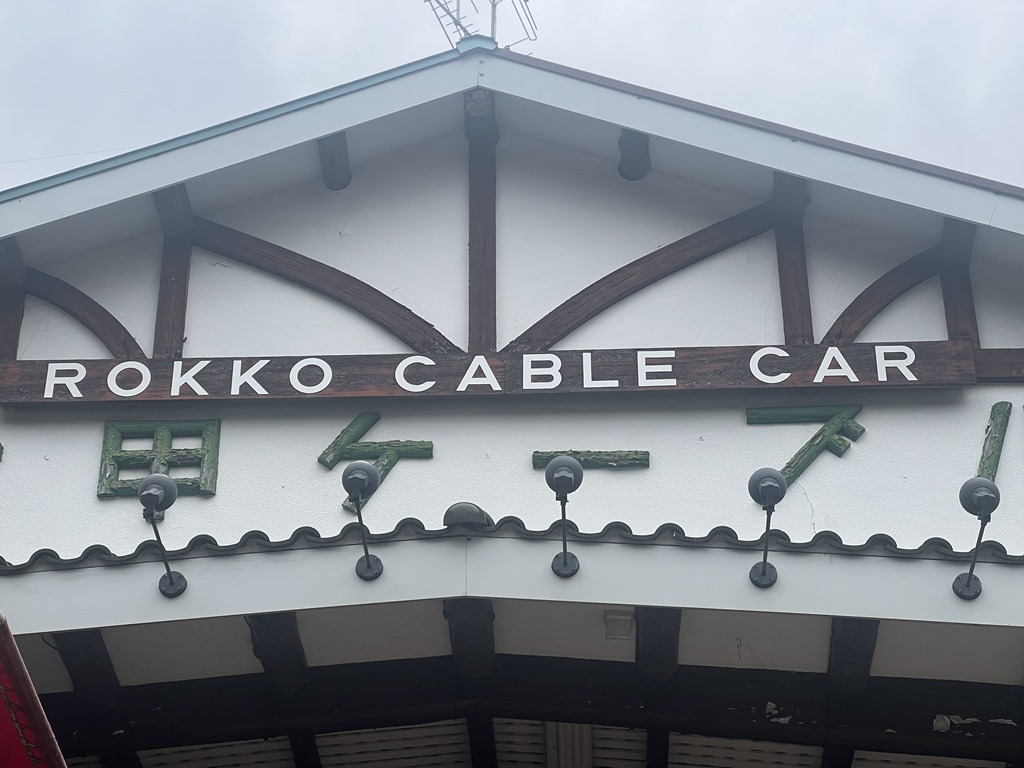
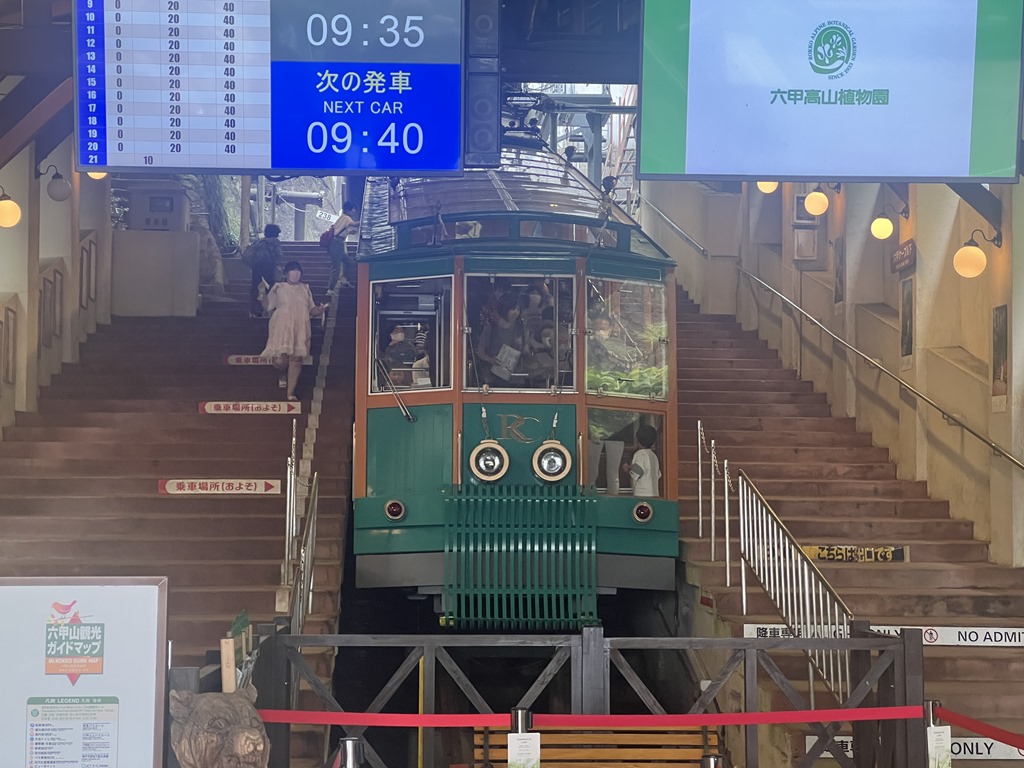
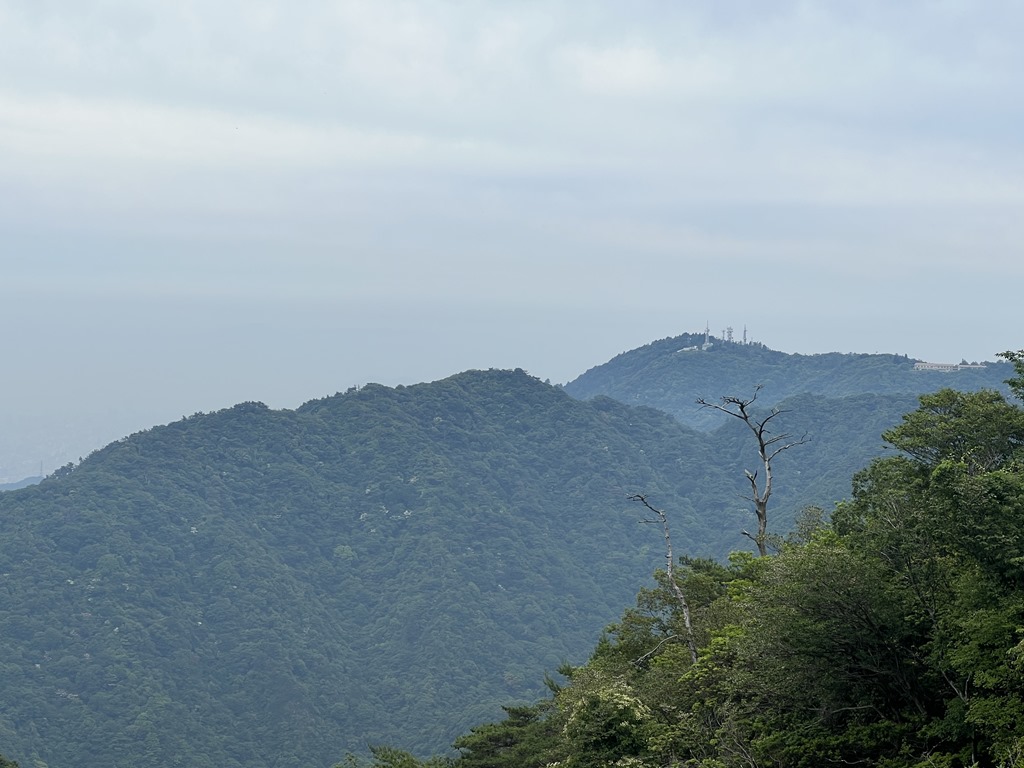
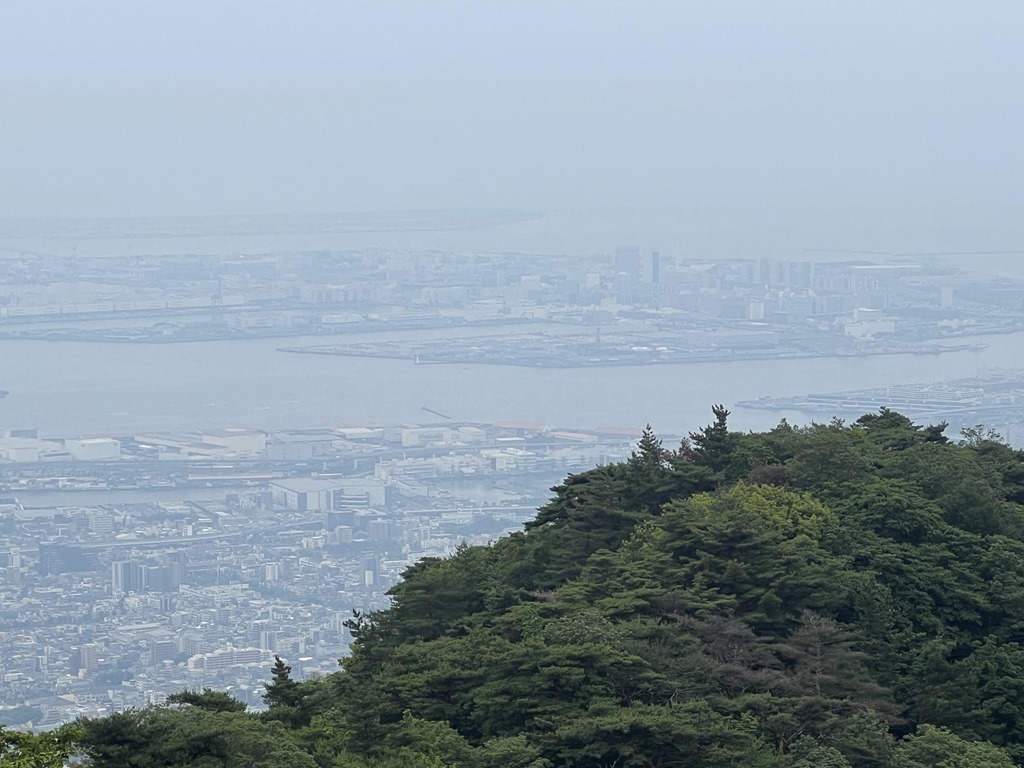
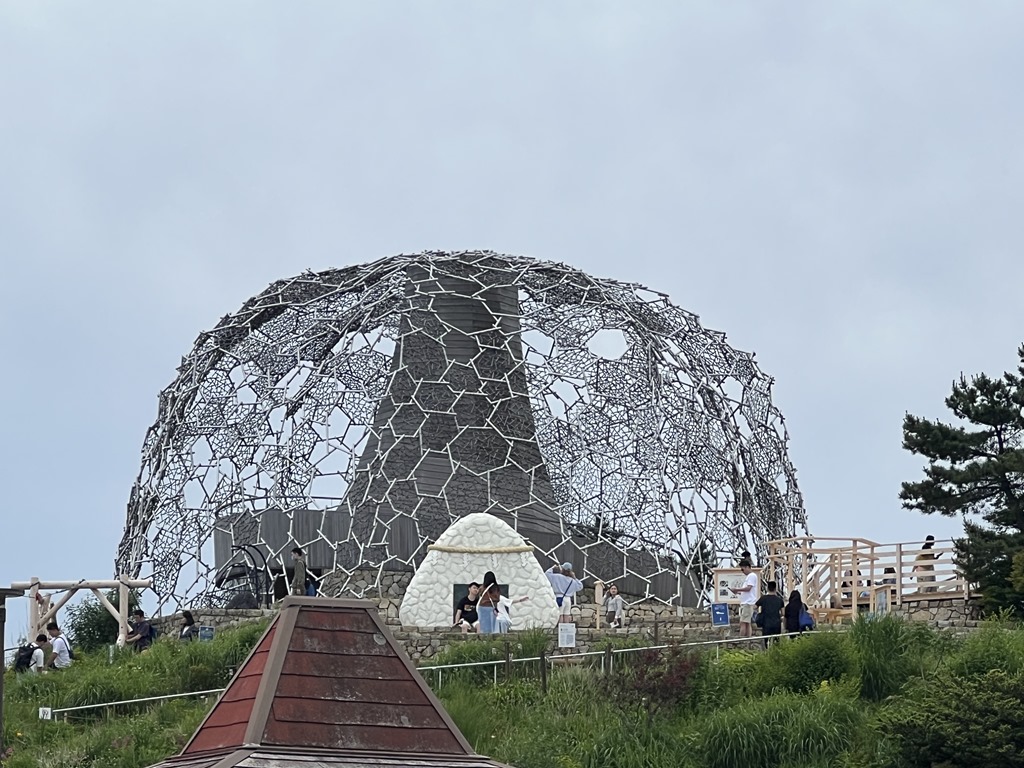
Our tour today was “The Glory of Mt. Rokko”. Our guide was Nobuko –she said to call her Nobi. The cable car takes you 900 meters high.

IMG_0040~photoIMG_0016~photo - CopyIMG_0017~photo - CopyIMG_0018~photo - CopyIMG_0019~photo - CopyIMG_0020~photo - CopyIMG_0021~photo - CopyIMG_0022~photo - CopyIMG_0023~photo - CopyIMG_0025~photo - CopyIMG_0026~photo - CopyIMG_0028~photo - CopyIMG_0031~photoIMG_0032~photoIMG_0033~photoIMG_0034~photoIMG_0036~photoIMG_0037~photoIMG_0039~photoIMG_0029~photoIMG_0030~photo

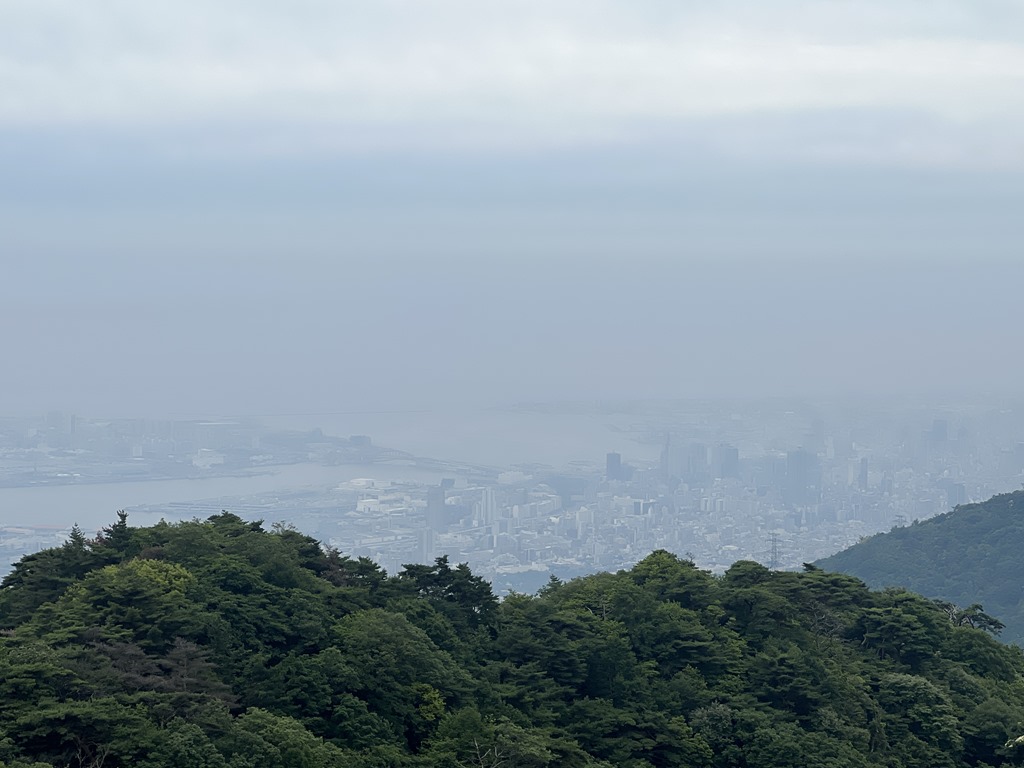
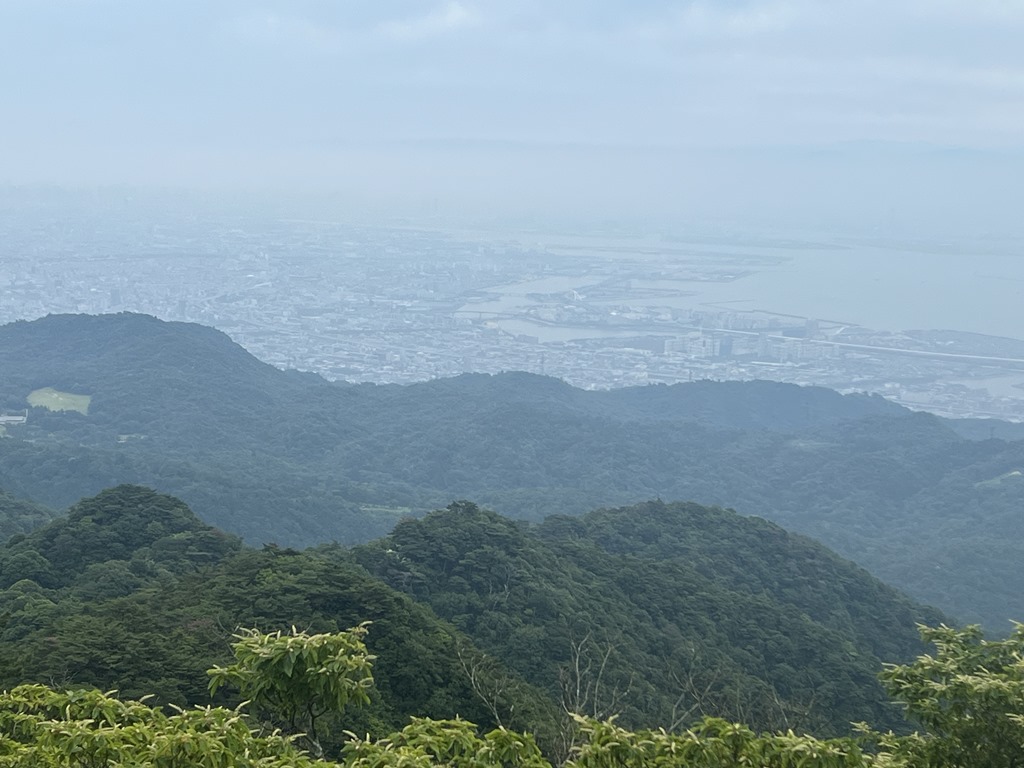
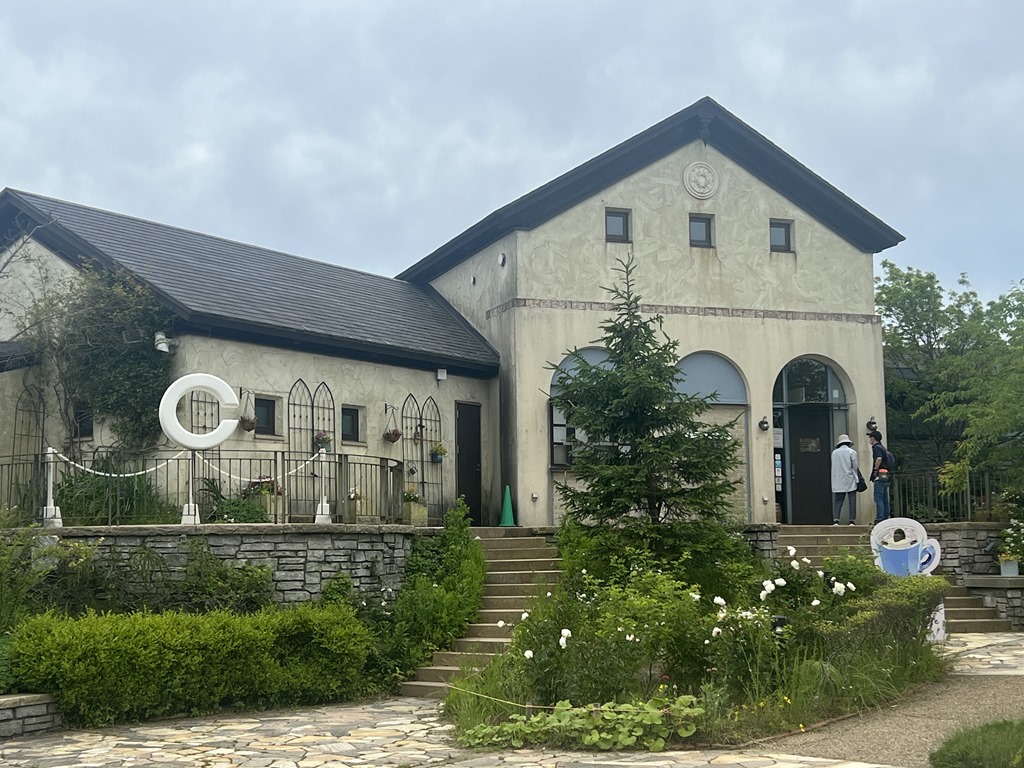
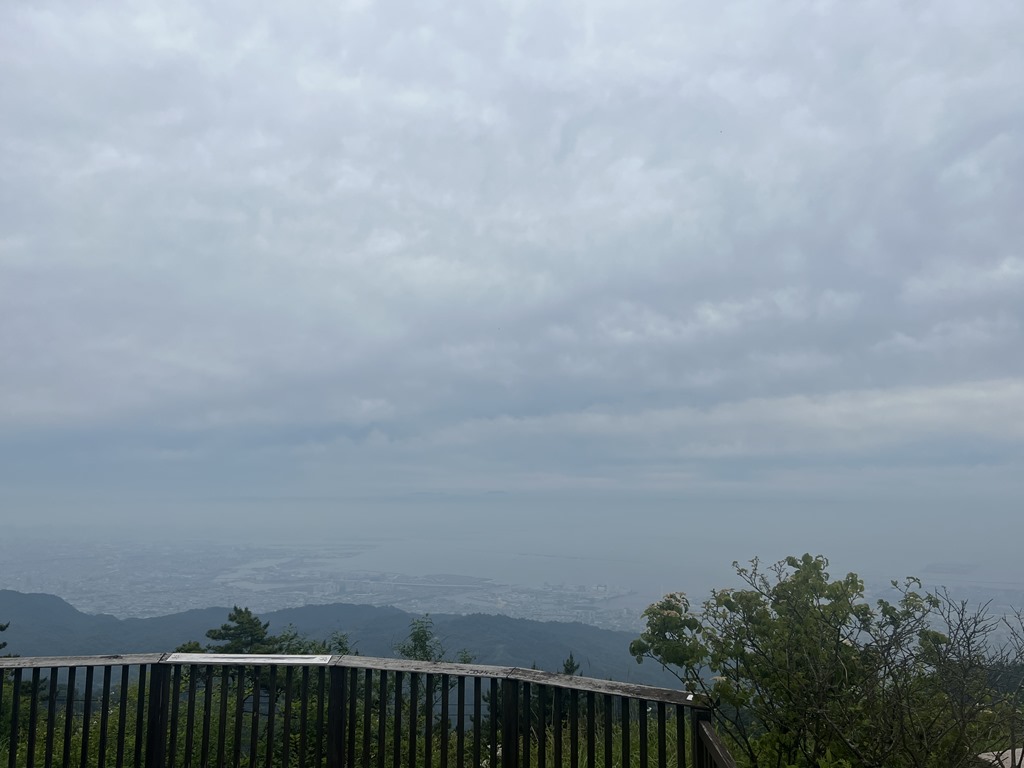
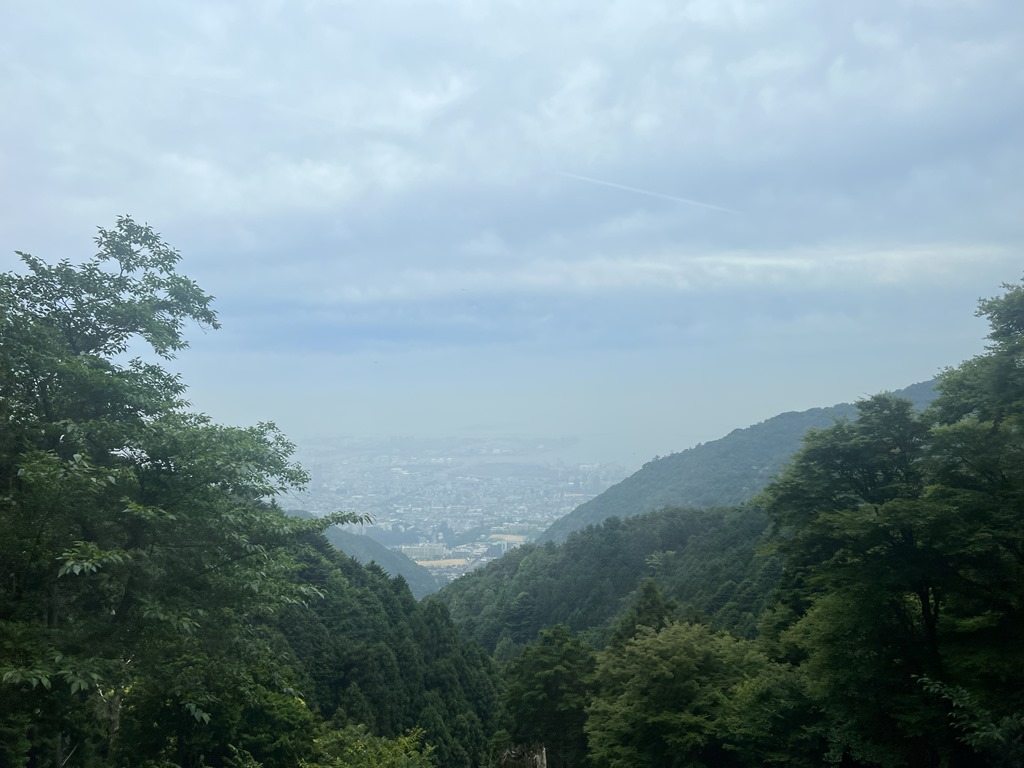
As you can see, the view from the top would normally be lovely but it was too hazy to see much. The area at the top was really pretty – lots of greenery and flowers.  I wish we would have had more time in the gift shop.  I did buy a pair of earrings and just after I bought them, Nobi came with a certificate for 150 yen discount ((Yen is very undervalued here and that would have been just about $1).  She felt terrible that I didn’t have the certificate and tried to get the clerk to give me the discount in cash which didn’t work, so she took money out of her own wallet and gave it to me.  I protested of course, but she wouldn’t hear of taking it back.  We just added it to her tip at the end of the day.  Here in Japan, tipping isn’t expected and sometimes even considered rude but our guides accepted it even when they seemed confused by the gesture.  The people are unfailingly polite.

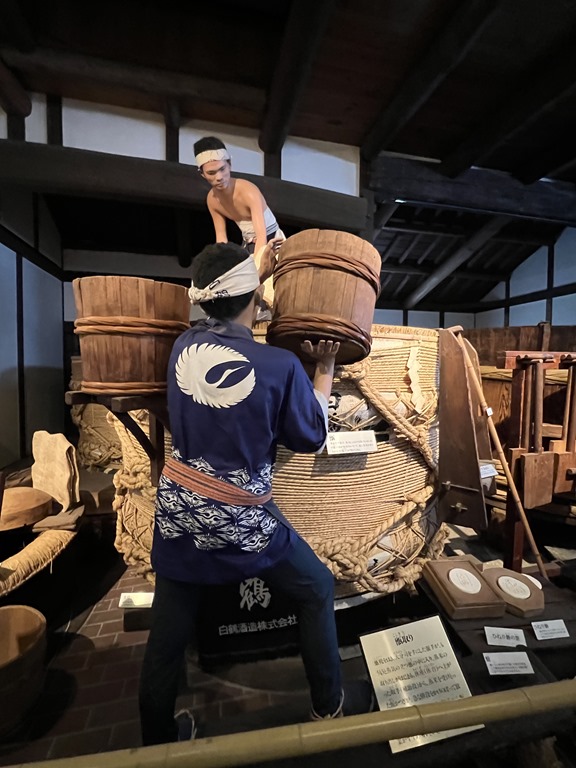
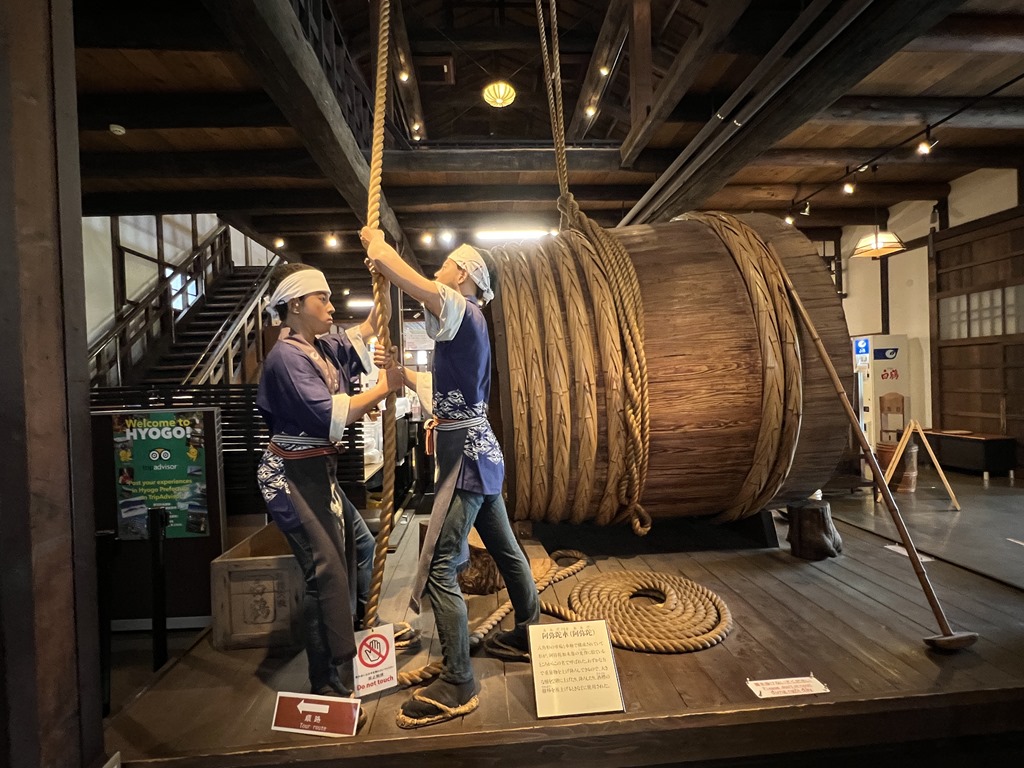
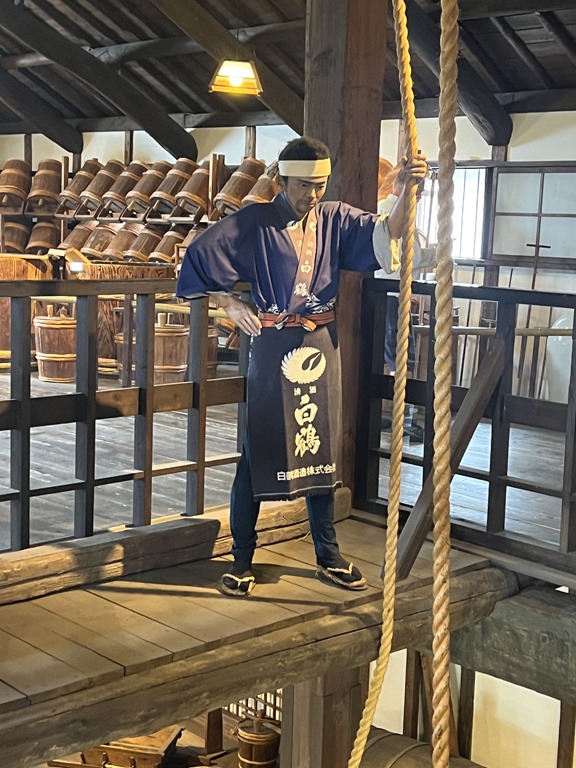
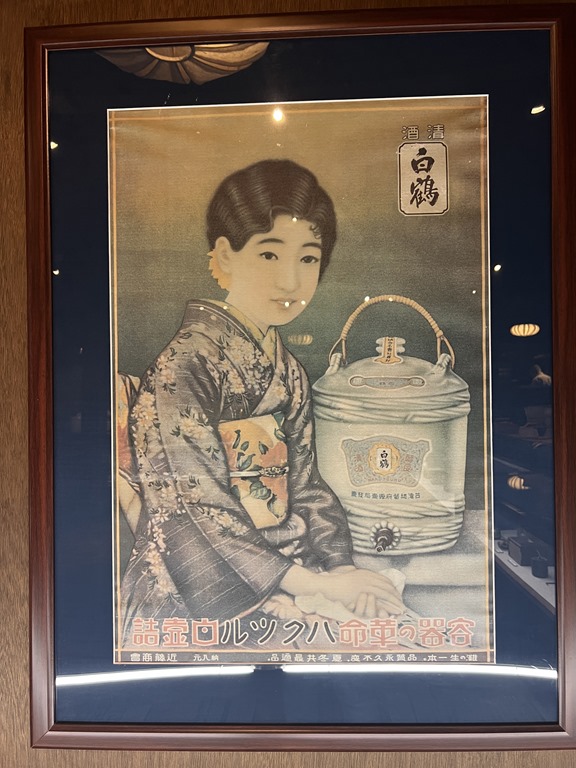
Our second stop was the Hakutsuru Saki brewery and museum where we saw the process of making sake. The brand was established in 1743. It was a self guided tour through a very well maintained display of the old tools used throughout the company’s history. Here are just a few pictures of the 10 step process. 

IMG_0044~photoIMG_0045~photoIMG_0046~photoIMG_0048~photoIMG_0052~photoIMG_0051~photoIMG_0053~photoIMG_0054~photoIMG_0059~photoIMG_0055~photoIMG_0062~photoIMG_0063~photoIMG_0064~photoIMG_0067~photo

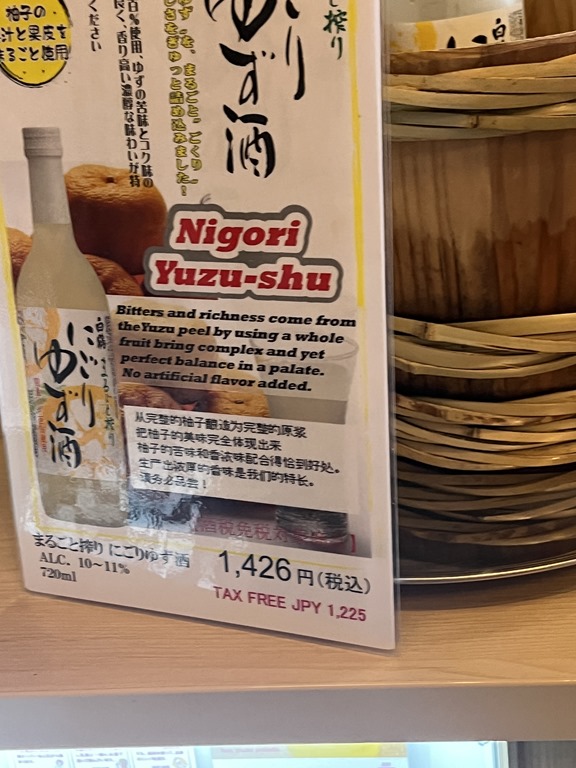
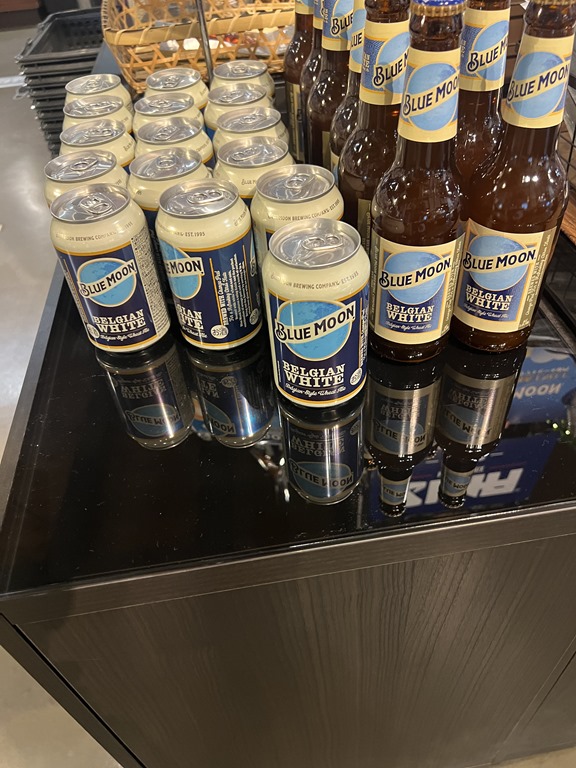
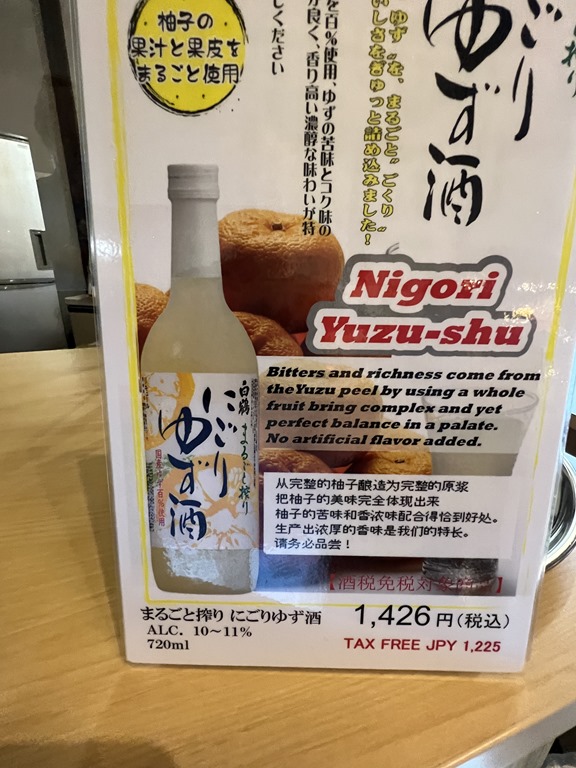
After the tour, we sampled three kinds of sake.  I liked the lemon flavored one and bought one bottle for us and one for a friend who didn’t go on the tour.  I was surprised that they had a sake ice cream and they also sold this Blue Moon beer!

Our ship left today at 3 PM so we didn’t do anything else after the tour.

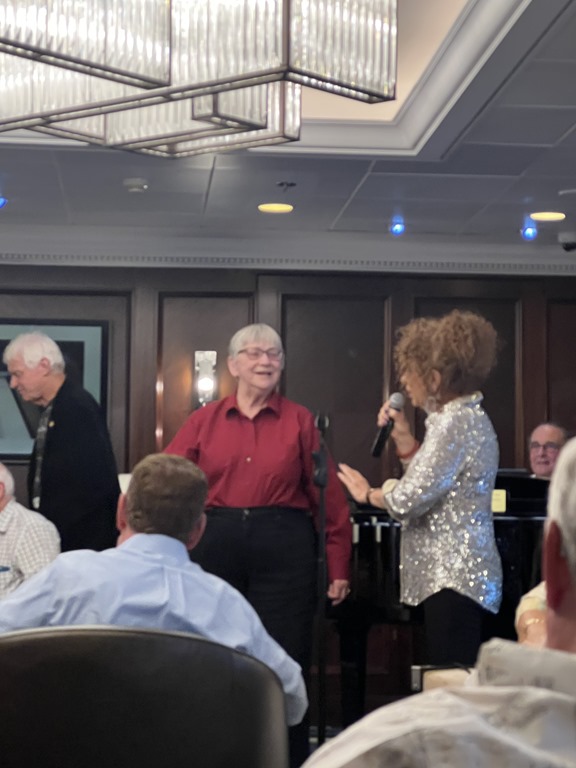
Back on the ship, our around the world ambassadors, Carolyn and Paul, held a pub night in Martinis with a sing along.  Very fun and just as crowded as the last one.  Then we had dinner with Bruce and Karen and several other tables of friends who joined in for a Father’s Day dinner.

IMG_0075~photo

Posted in Asia, Excursions, June, World Cruise #4 | Leave a comment

Kobe, Japan, Day 1

June 17, 2023

We visited Kobe in 2019 and chose to see Kyoto that time.  Kobe is the fifth largest city in Japan and is famous for its Kobe beef.  We heard that they massage the cattle and feed them beer.  That is apparently what makes the beef so delicious.  I can’t attest to that since I don’t eat it!

IMG_0005~photo

This time we booked a tour called “Highlights of Osaka”.  Our tour guide was Matta.  We learned that Osaka is the second largest city in Japan and is the old capital.  Matta explained that while there are many parks and green spaces in other cities – especially Tokyo, Osaka “only spends money on making money”  not on parks, so it is a very dense city of commercial buildings and factories. 

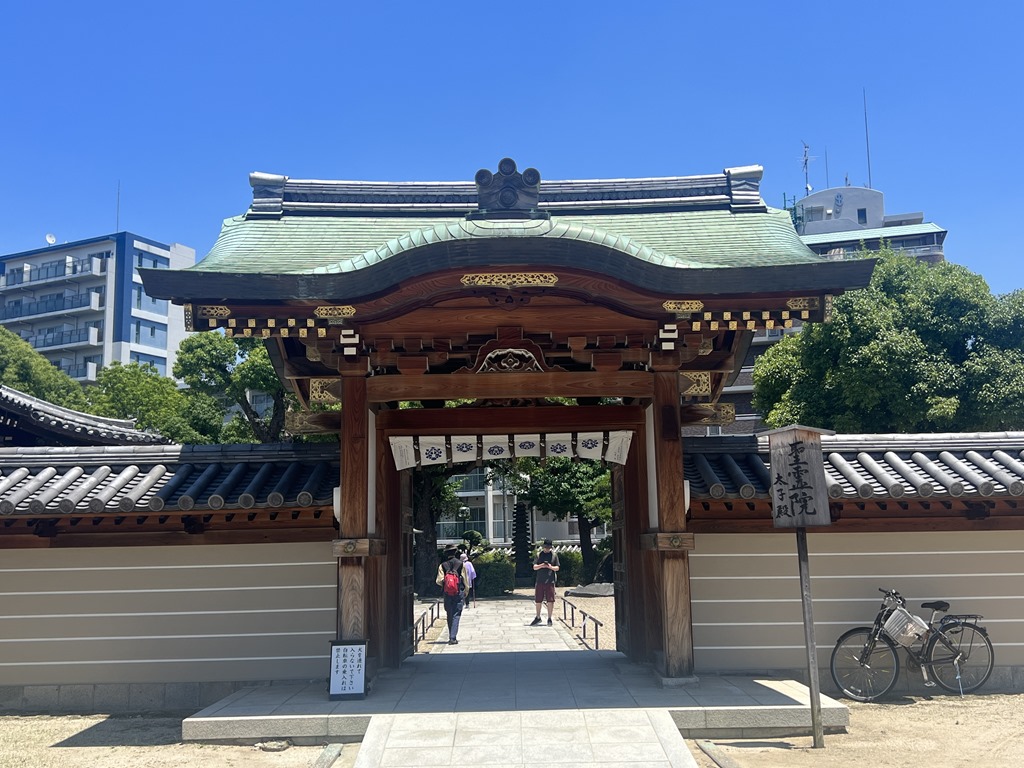
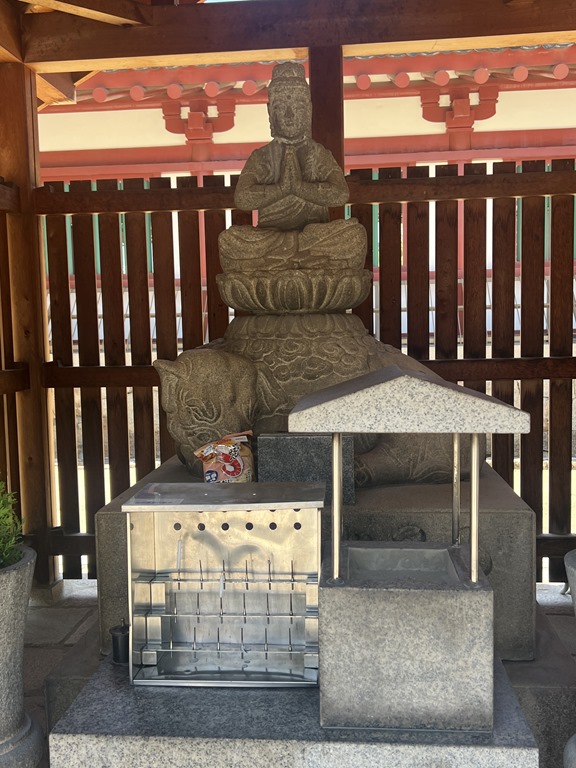
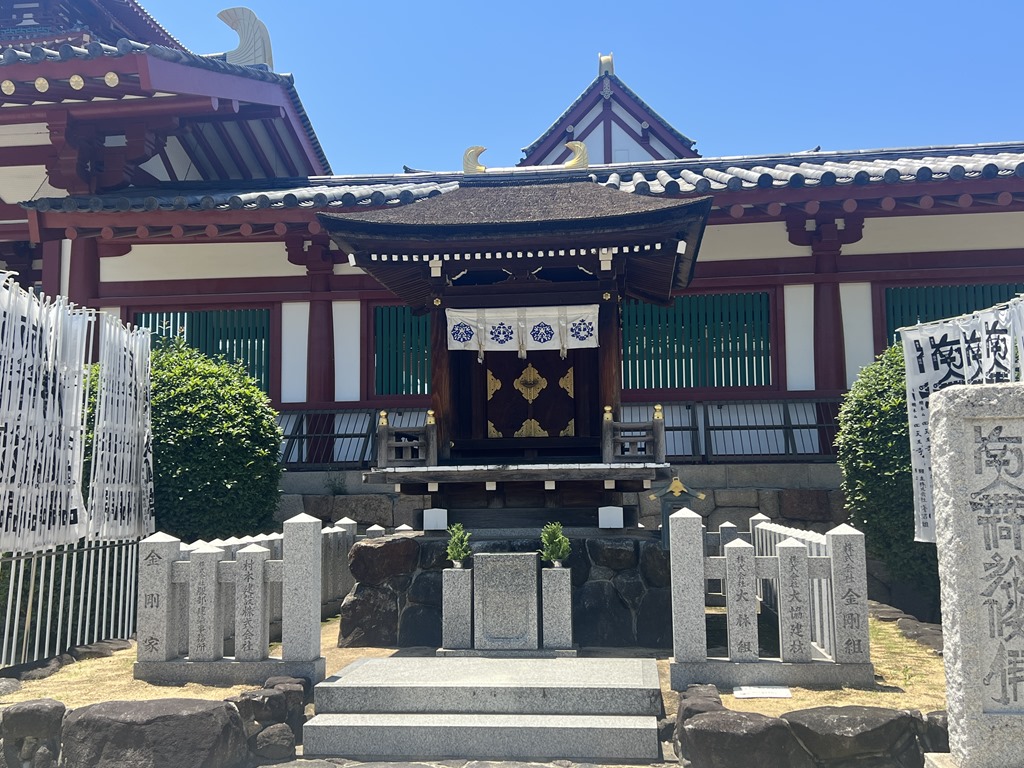
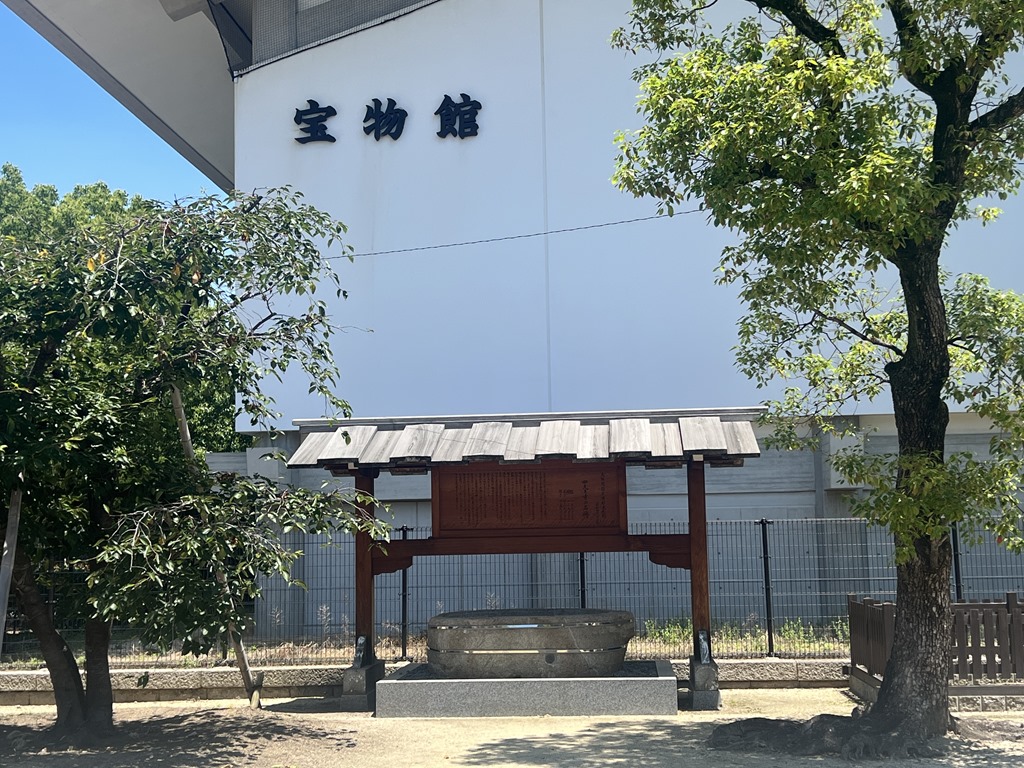
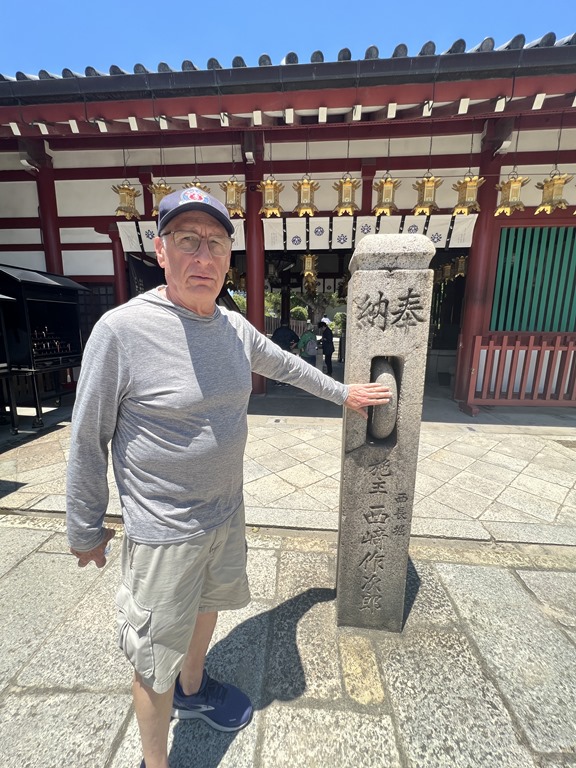
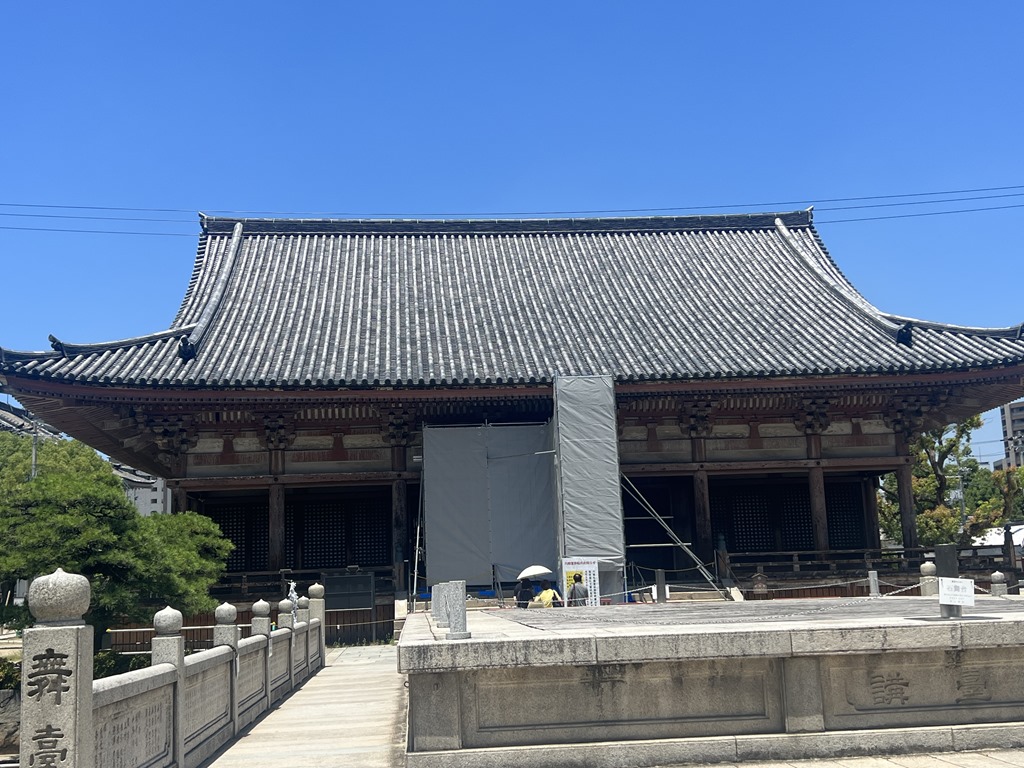
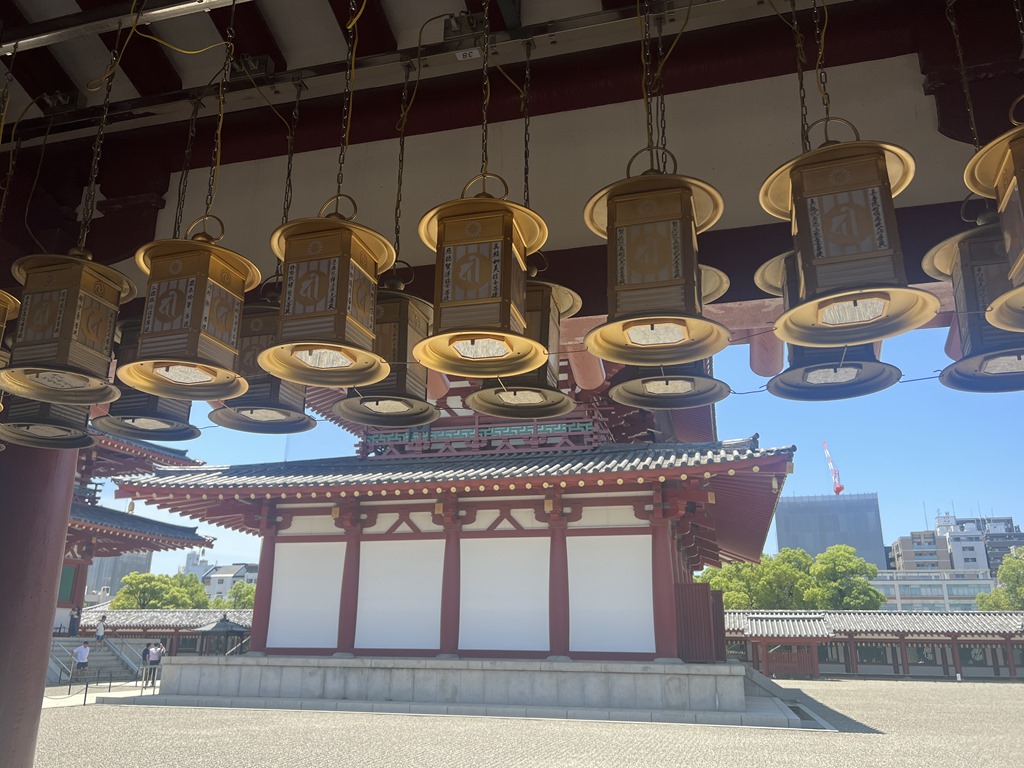
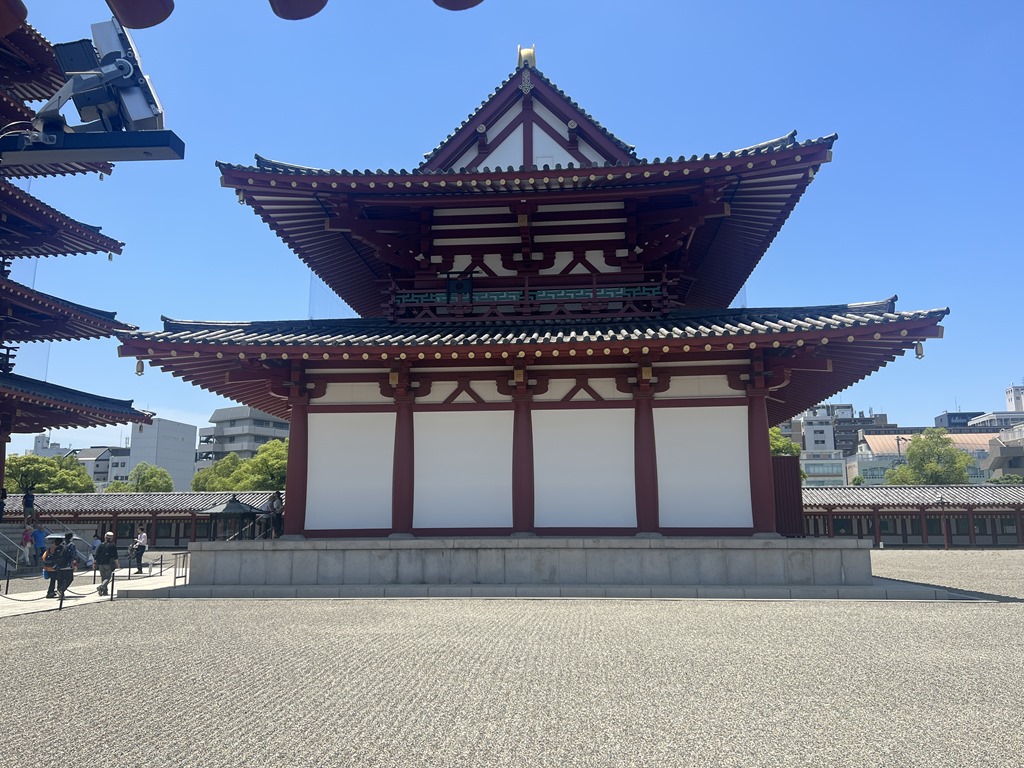
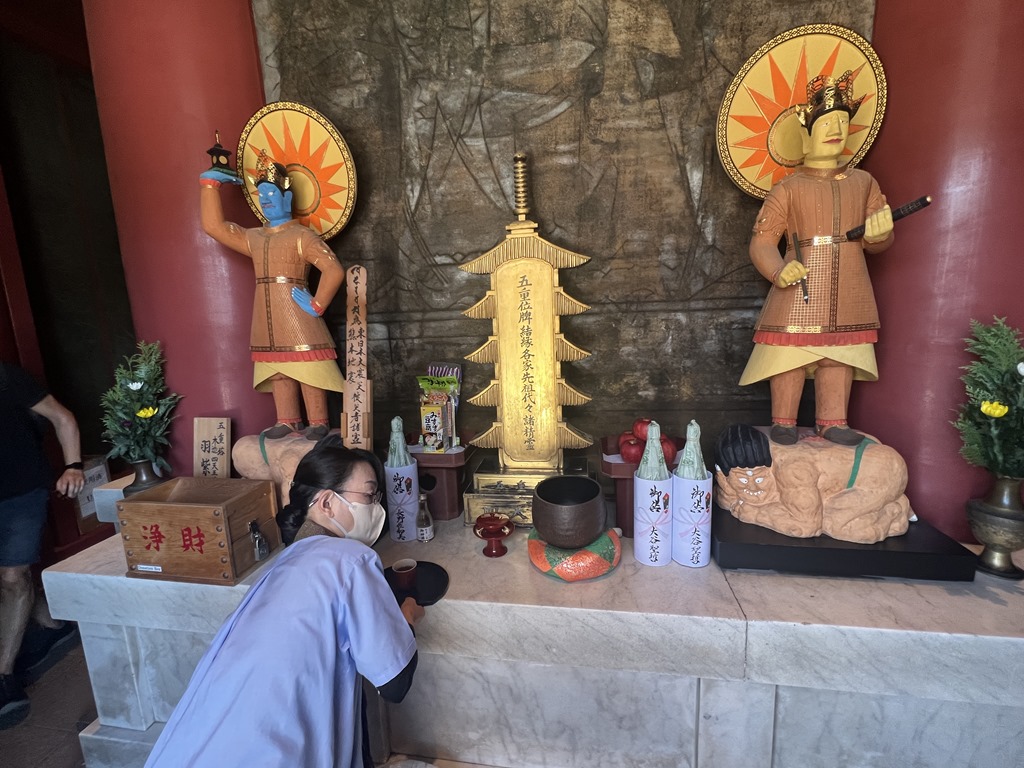
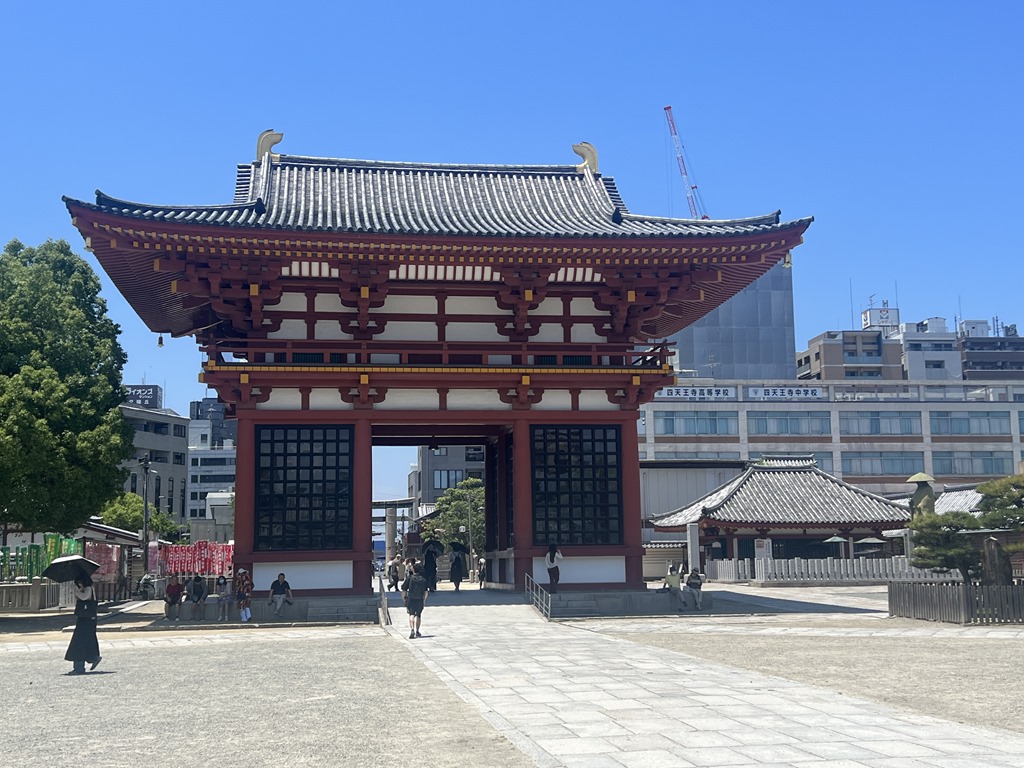
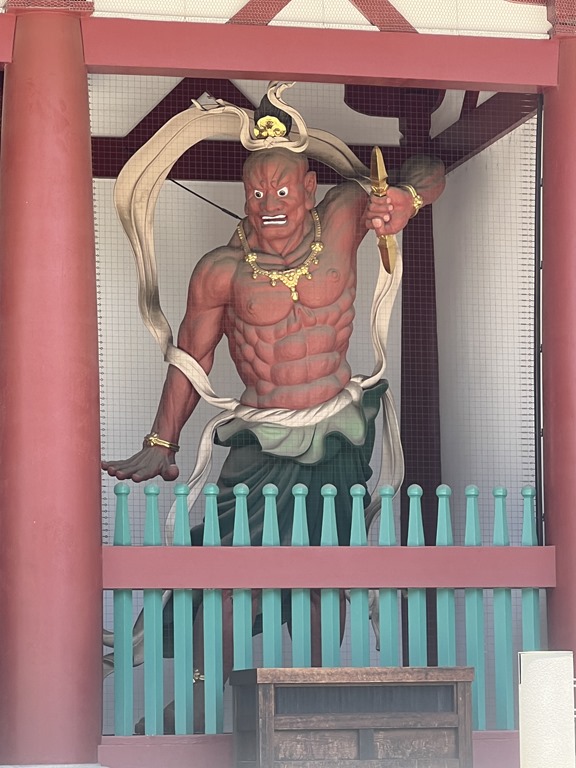
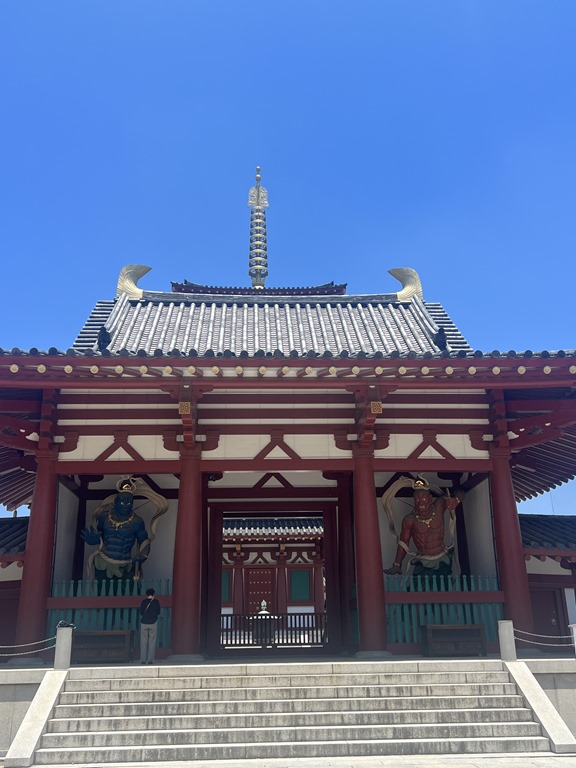
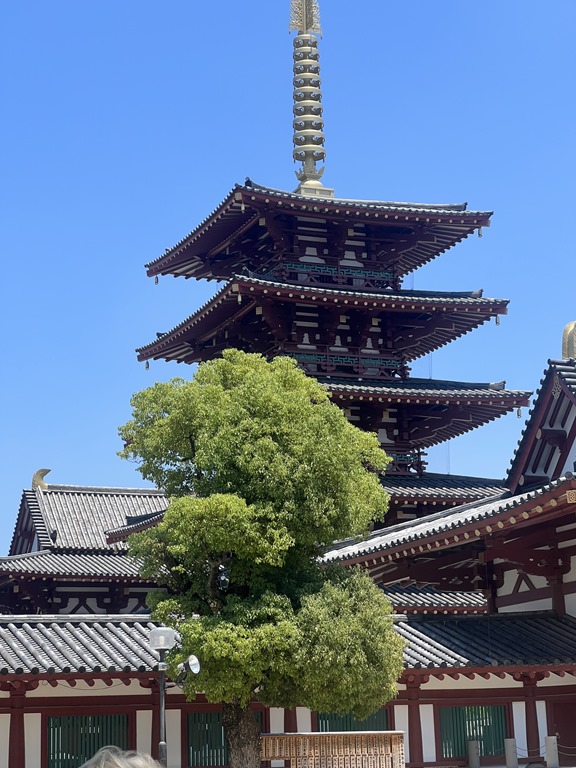
Our first stop was the Shitennoji Temple which is one of the oldest temples in Japan and the first to be built by the state.It was founded in 593 by Prince Shotoku who supported t he introduction of Buddhism in Japan.

IMG_9997~photoIMG_9996~photoIMG_9995~photoIMG_9993~photoIMG_9992~photoIMG_9991~photo

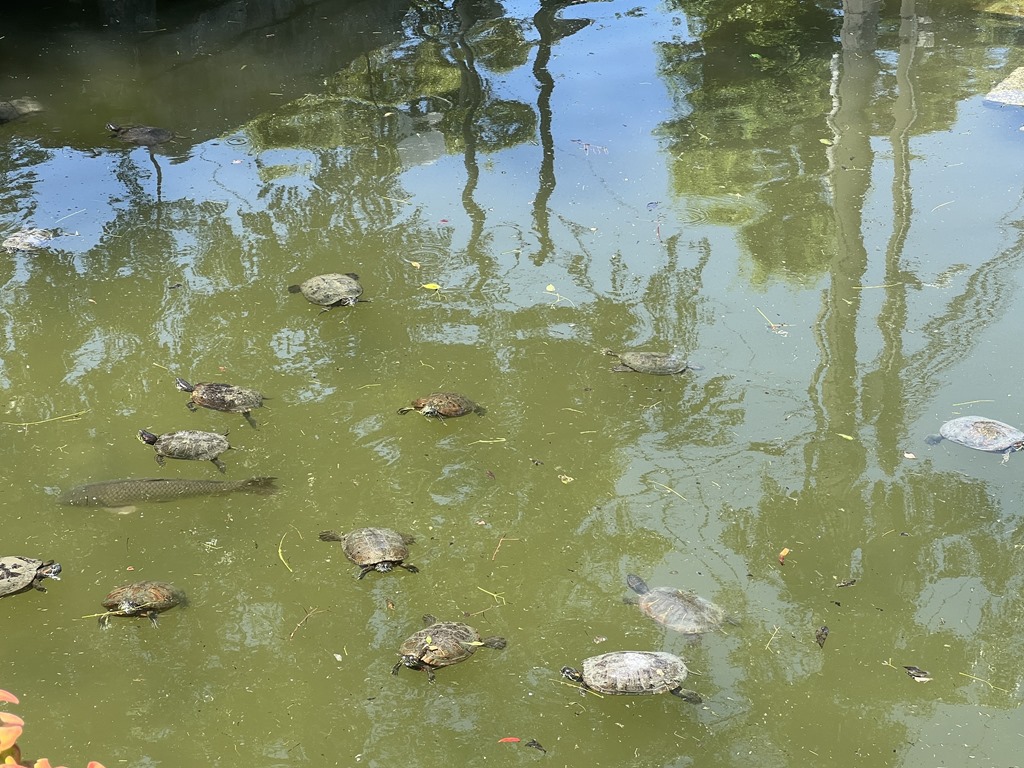
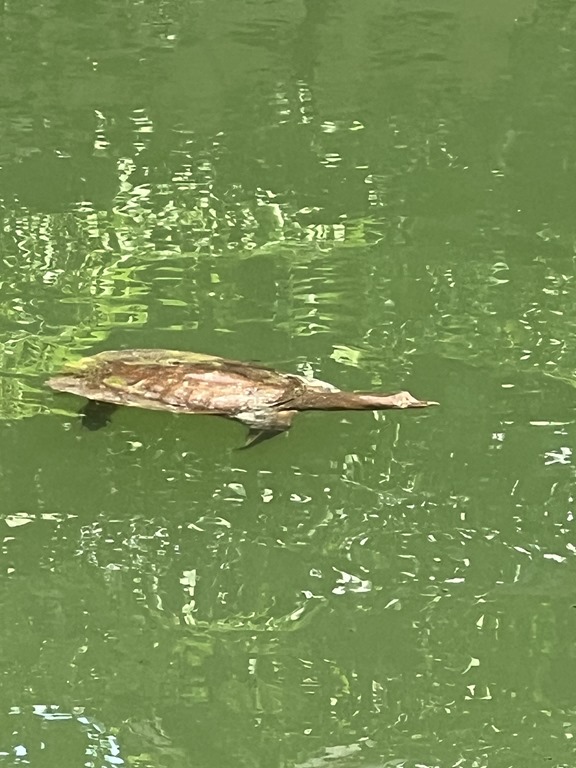
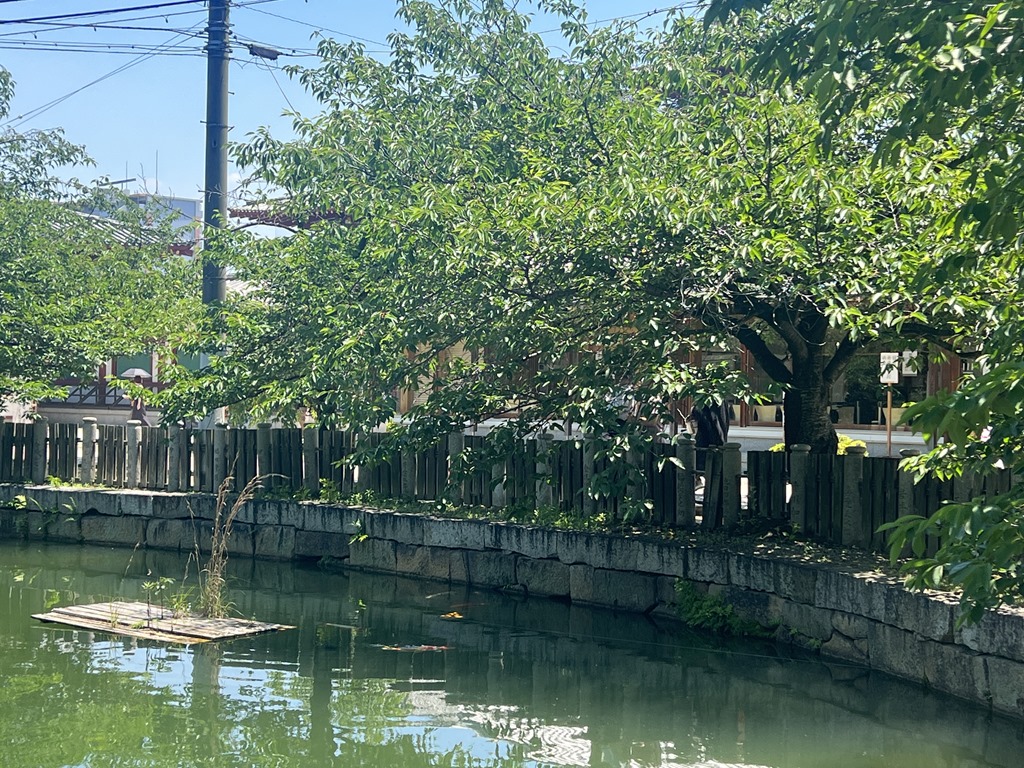
The surrounding gardens were also beautiful.  Matti told us that turtles and cranes are sacred here.

IMG_9987~photoIMG_9989~photoIMG_9986~photoIMG_9985~photoIMG_9983~photoIMG_9981~photoIMG_9980~photoIMG_9978~photoIMG_9976~photoIMG_9975~photoIMG_9974~photoIMG_9973~photoIMG_9971~photoIMG_9969~photo

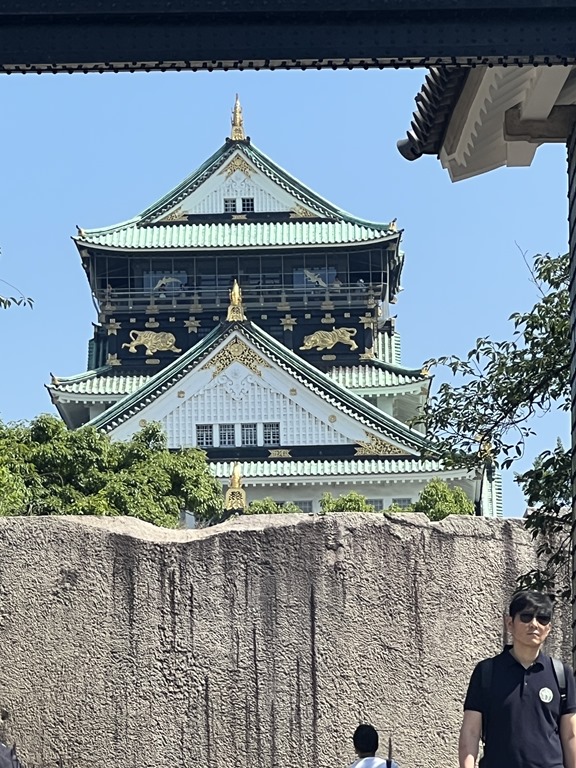
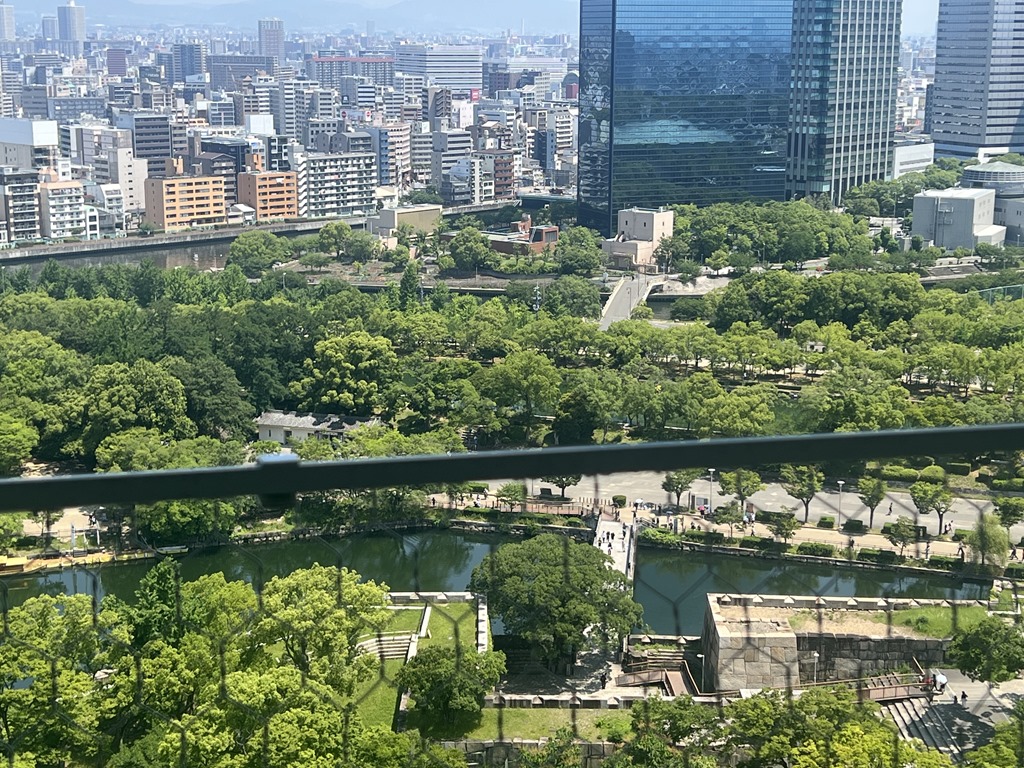
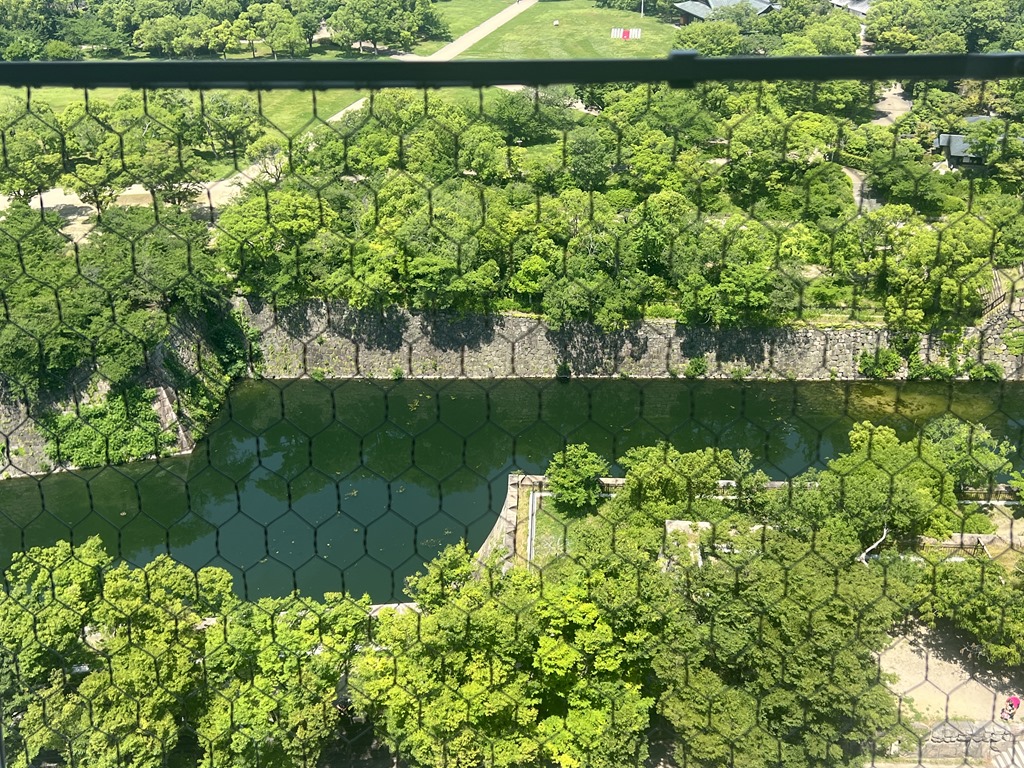
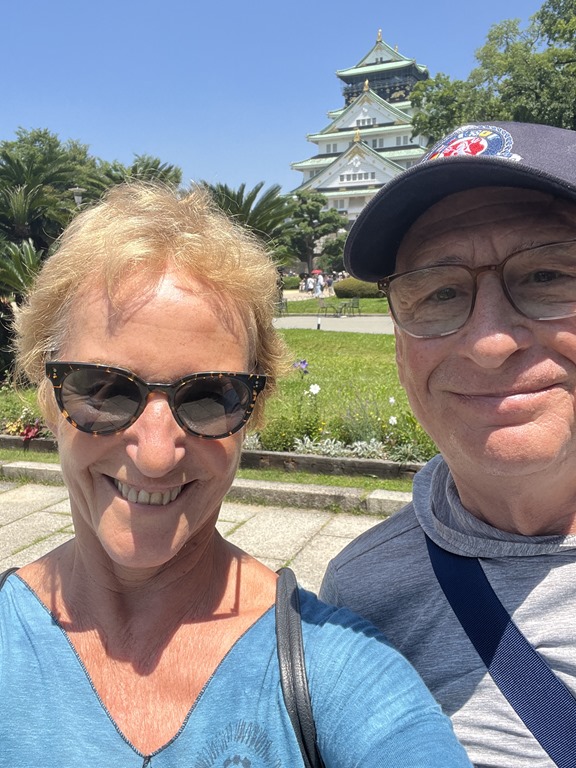
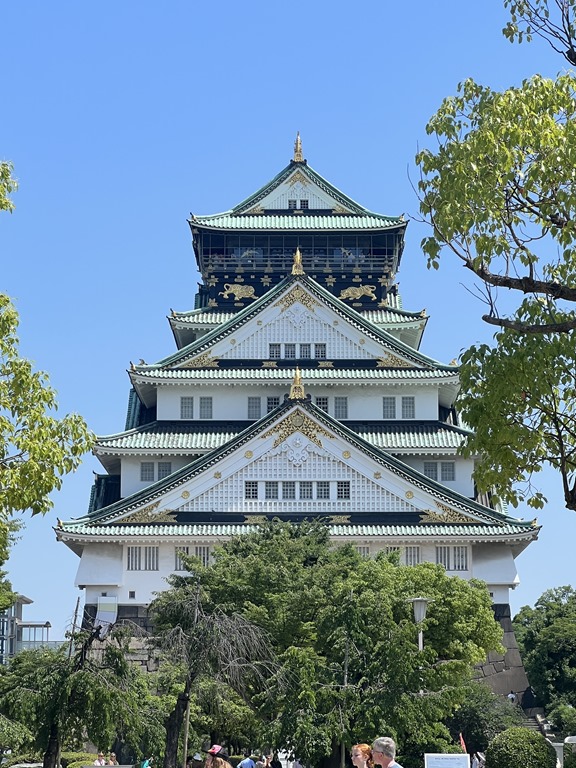
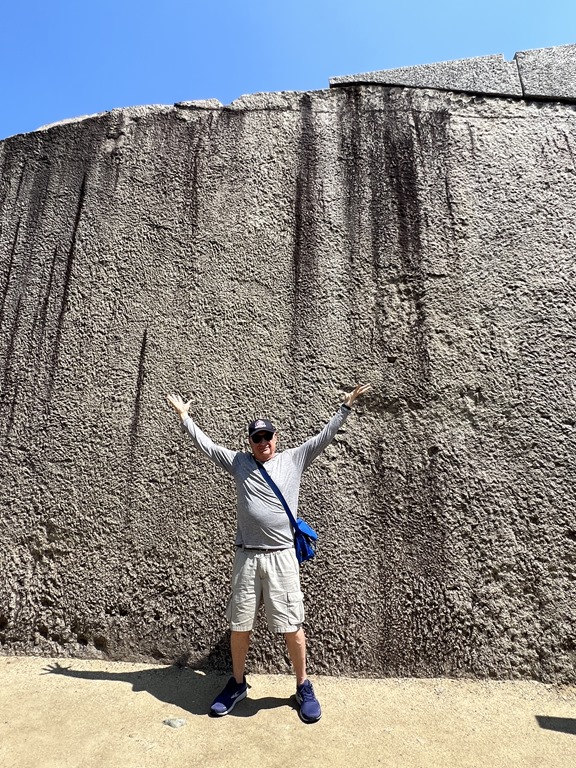
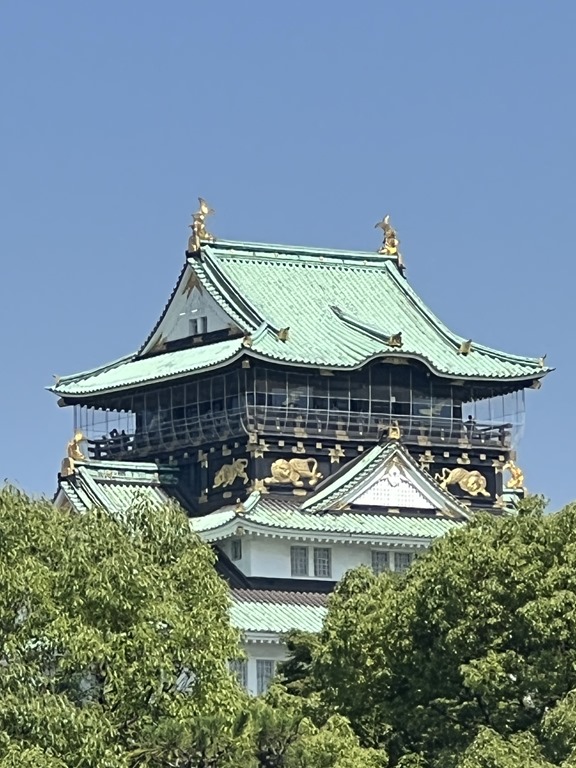
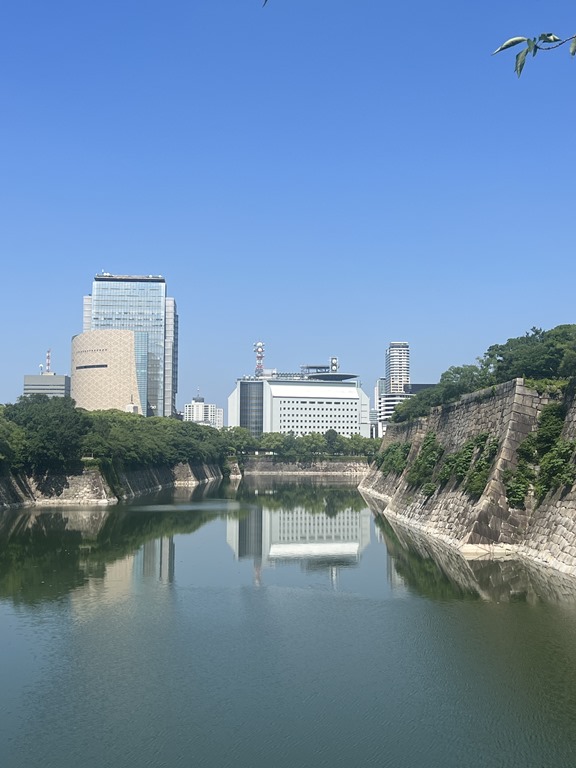
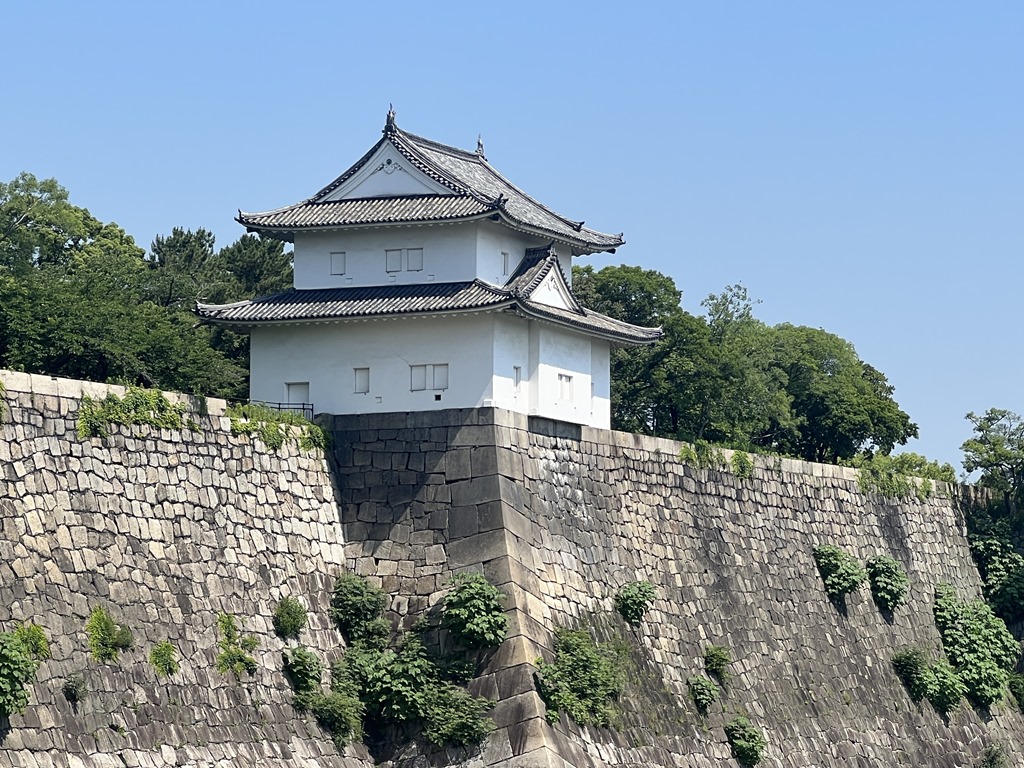
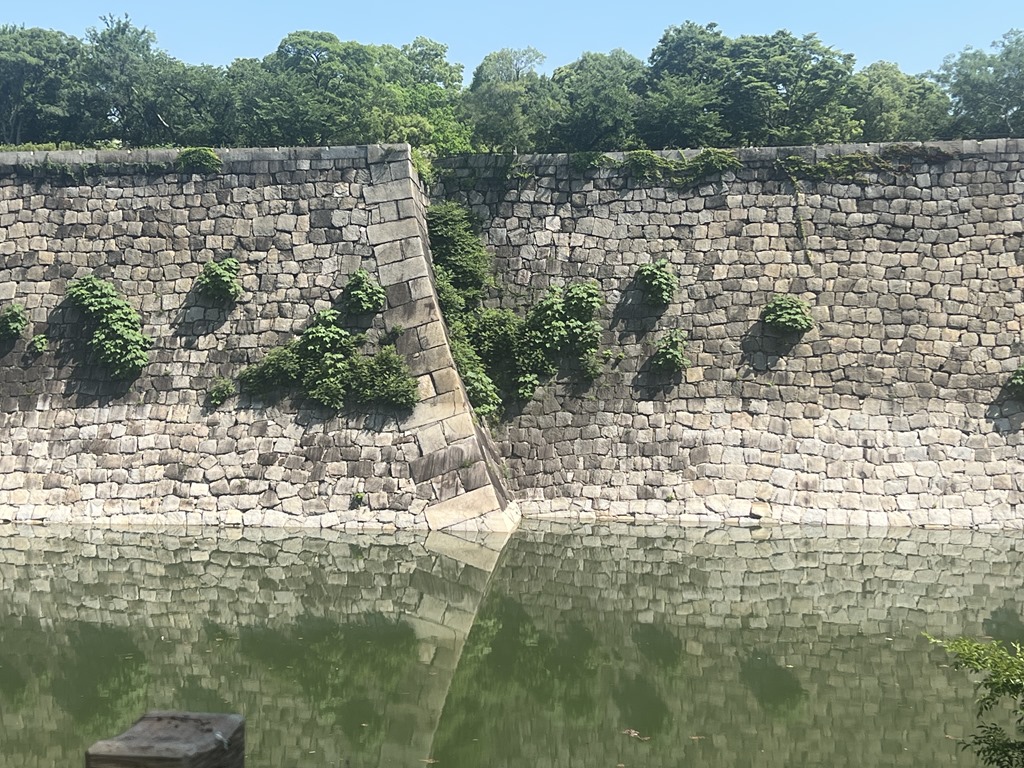
We visited the Osaka Castle which dates back to the end of the 16th century.  It is an imposing structure that is surrounded by three moats.  Two are dry moats.  There have been changes over the years, including fires which resulted in some reconstruction.

IMG_9920~photoIMG_9928~photo - CopyIMG_9927~photo - CopyIMG_9921~photo - CopyIMG_9965~photoIMG_9958~photoIMG_9951~photoIMG_9938~photoIMG_9963~photoIMG_9935~photoIMG_9934~photoIMG_9931~photoIMG_9926~photo - CopyIMG_9925~photo - CopyIMG_9924~photo - CopyIMG_9922~photo - Copy

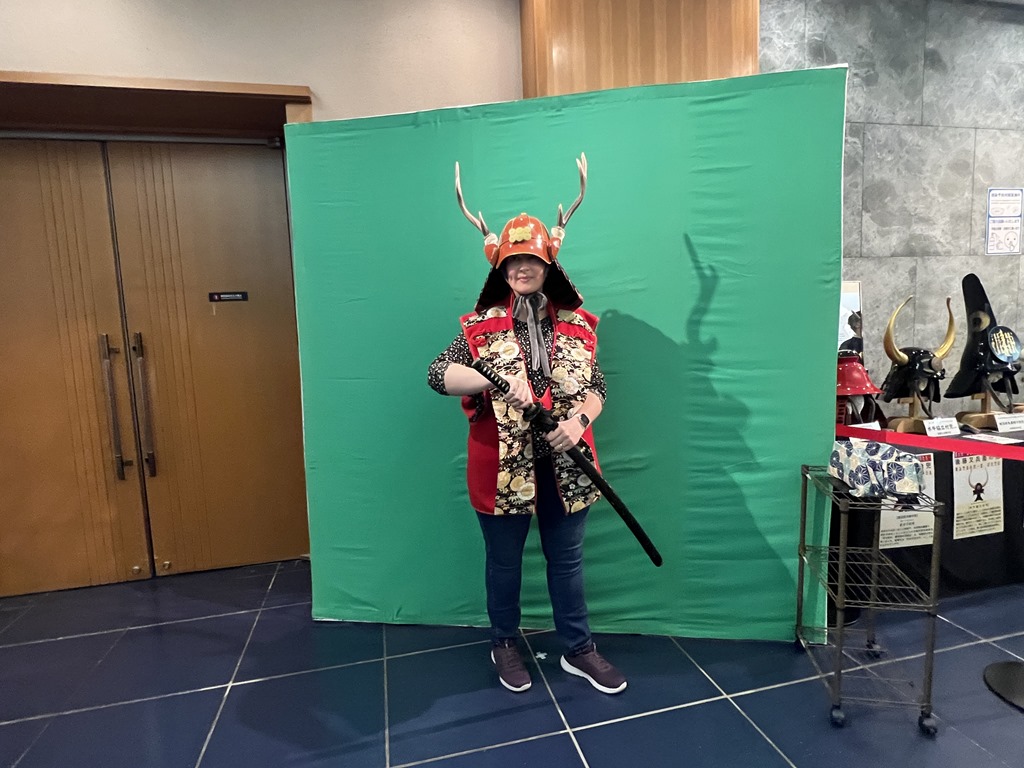
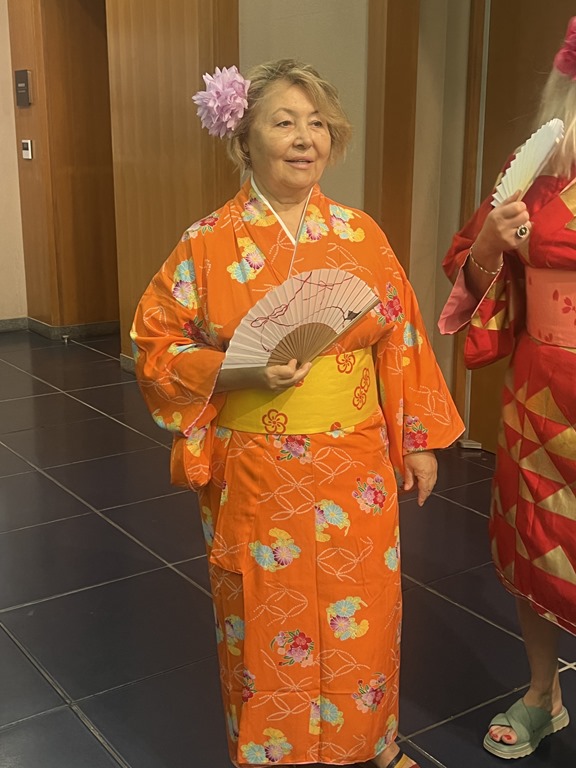
People could dress up in the kimonos and the shogun gear and have pictures taken.

IMG_9939~photoIMG_9961~photo

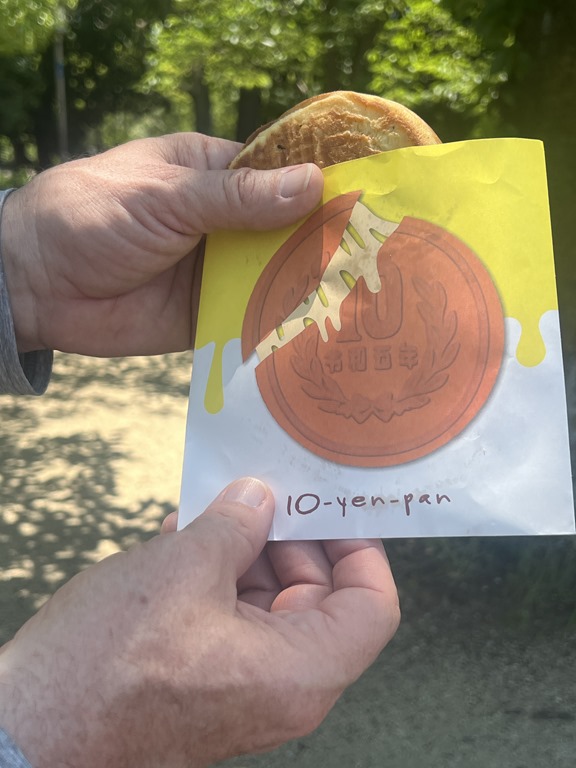
We ate this delicious cheese filled pastry!

IMG_9967~photo

We were in Kobe overnight, so after the tour we walked from the ship to the market area of Kobe in search of a nail salon. We found two but they were booked.  We did a LOT of walking and saw many places to eat and many shops. 

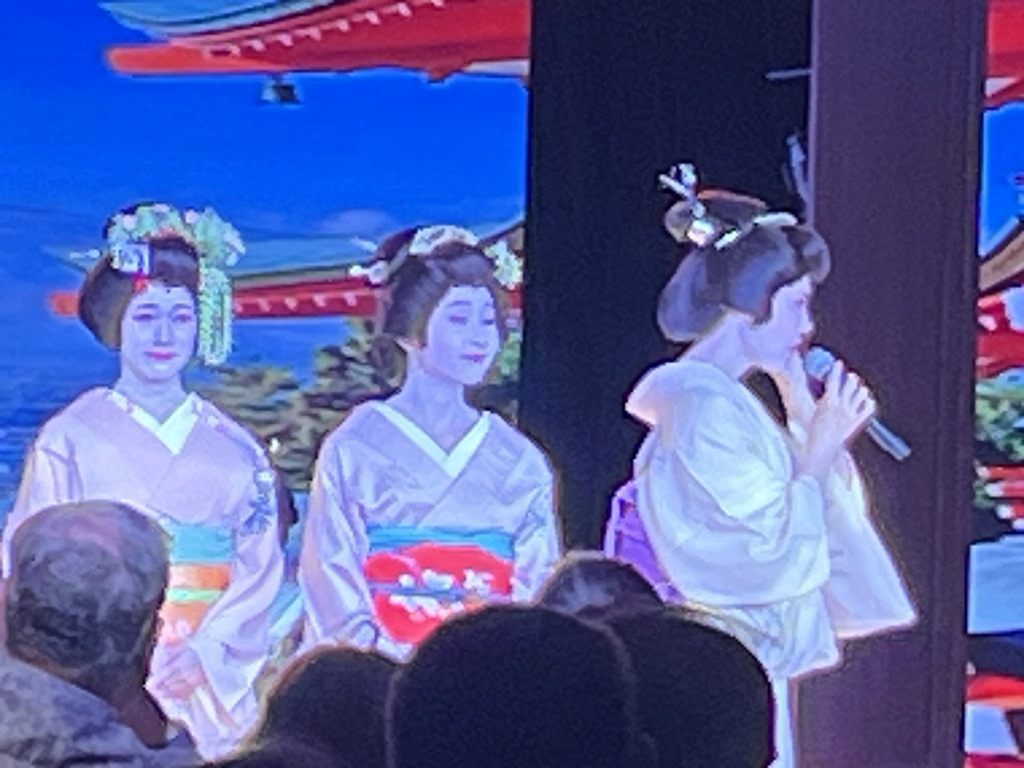
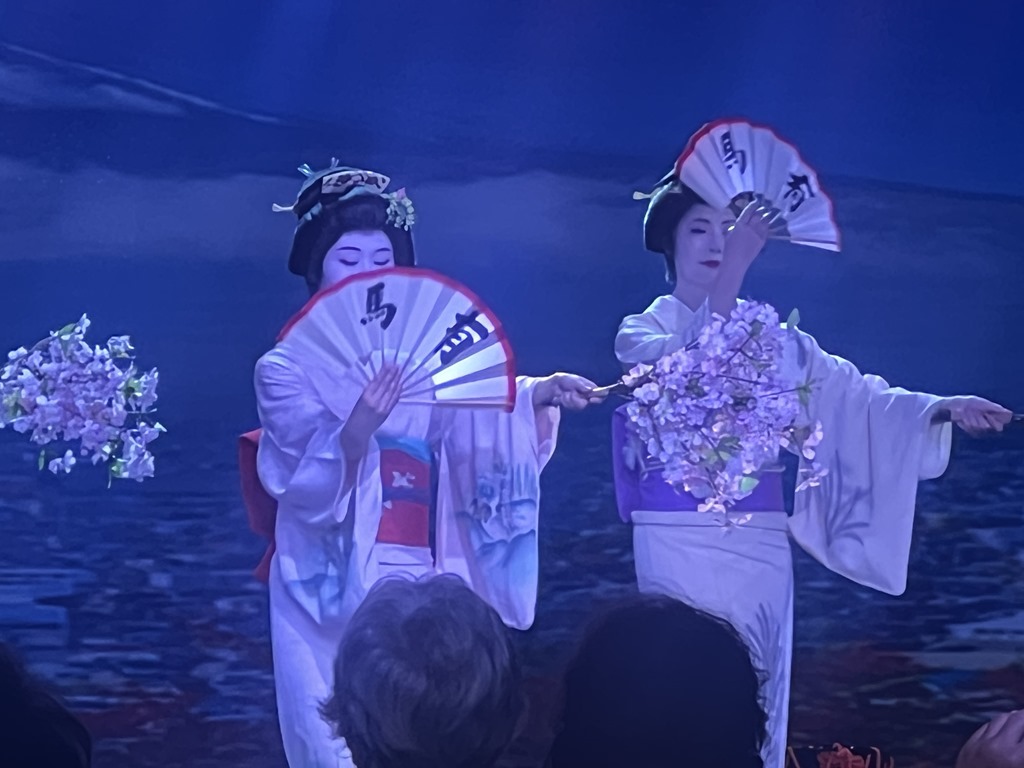
Onboard tonight there was a local traditional show called the Arima Geiko Show.  These women shared the culture of their costumes, wigs and traditional music and dancing. It was interesting to hear that the wigs are very heavy and are made from human Mongolian hair because of its thickness.

IMG_0009~photoIMG_0015~photo

Posted in Asia, Excursions, June, World Cruise #4 | Leave a comment

Hiroshima, Japan

June 16, 2023

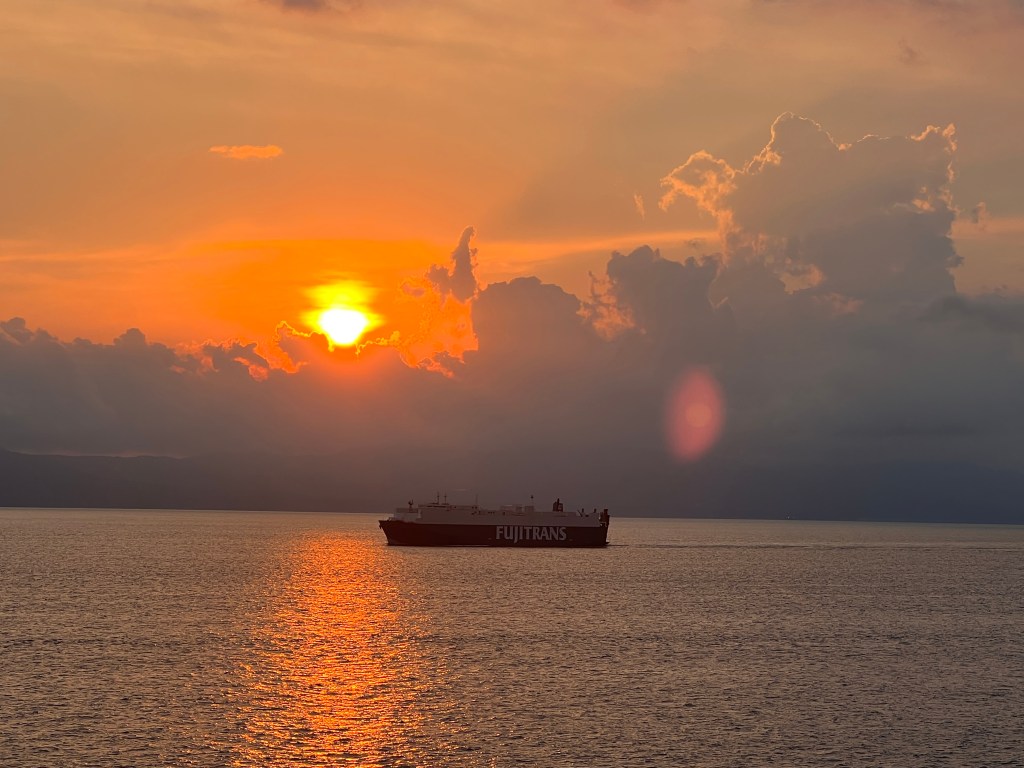
We had a beautiful sunset when we left Kagoshima yesterday. We left 3 hours late due to a mechanical issue but the captain is planning to make up as much time as he can to have only a slightly late arrival into Hiroshima.

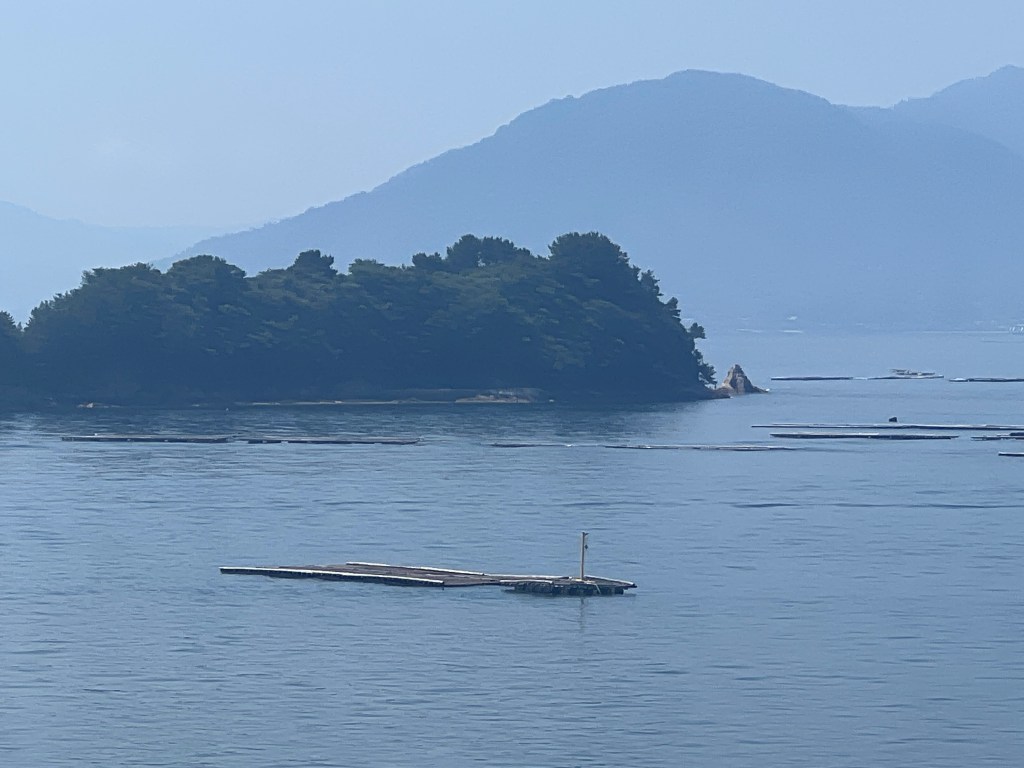
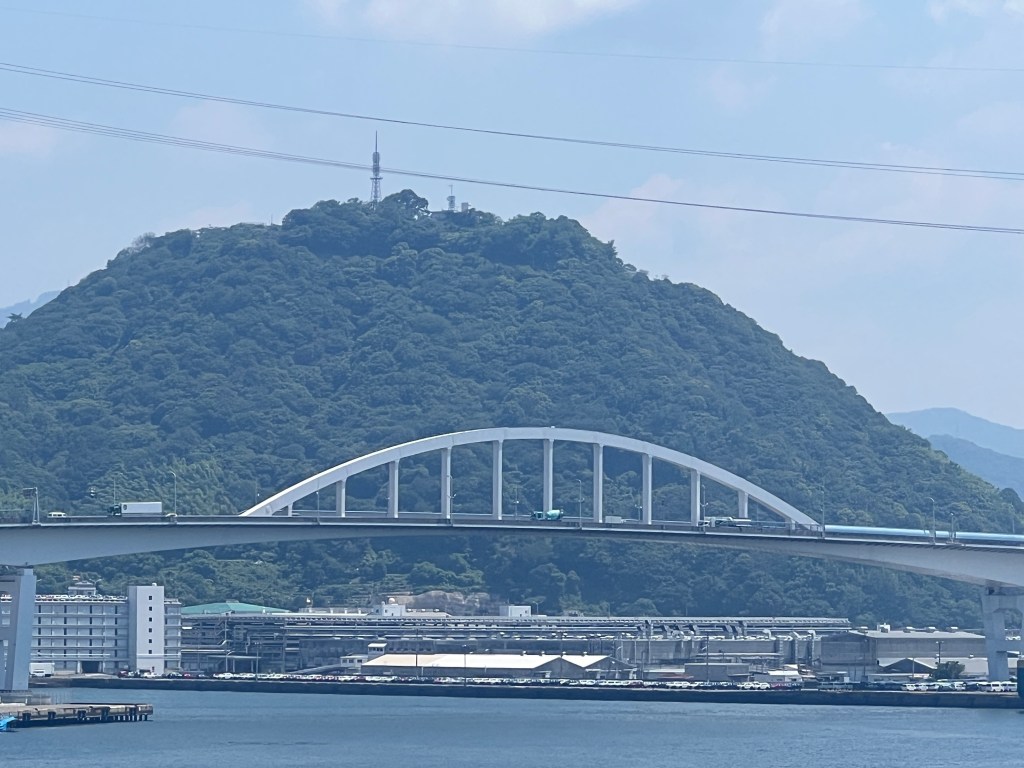
Here are some photos of our sail in to the harbor. We arrived only 30 minutes after our scheduled arrival. Well done, captain!

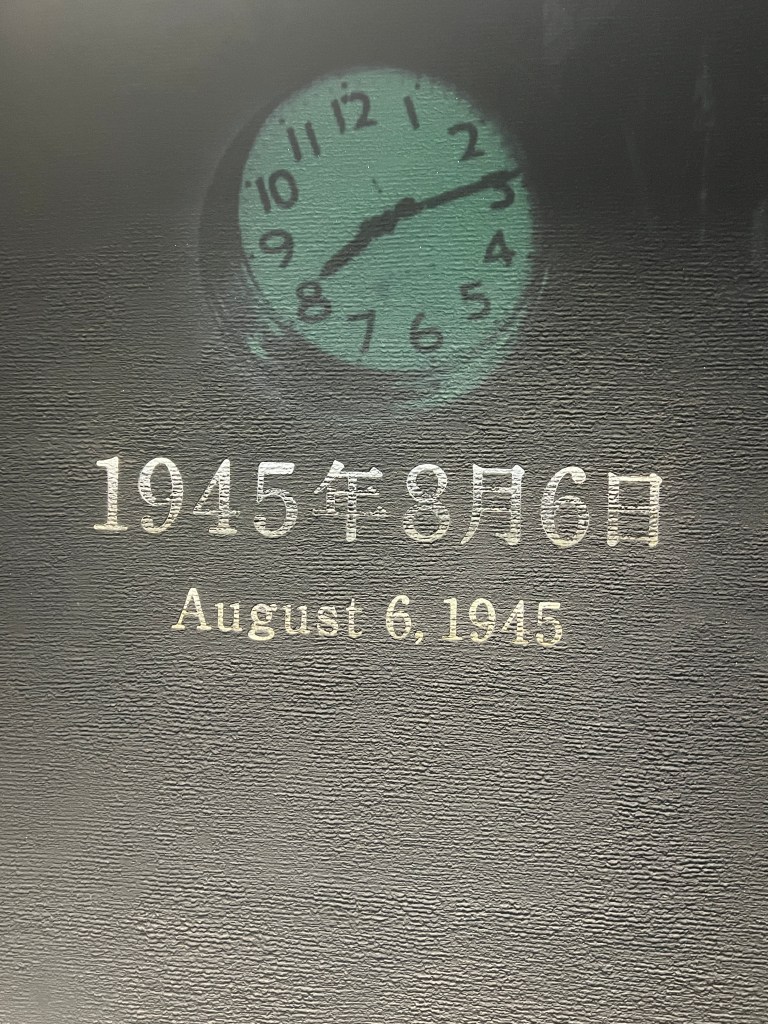
Hiroshima means “wide island”. It is best known as the first city in history to be targeted by a nuclear weapon when the United states Army Air Force dropped an atomic bomb on it at 8:15 AM on August 6, 1945 near the end of World War II. The oleander is the official flower of the city because it was the first to bloom again after the explosion of the atomic bomb in 1945. The city government continues to advocate the abolition of all nuclear weapons and the Mayor of Hiroshima is the president of “Mayors for Peace”, an international mayoral organization mobilizing cities and citizens worldwide to abolish and eliminate nuclear weapons.

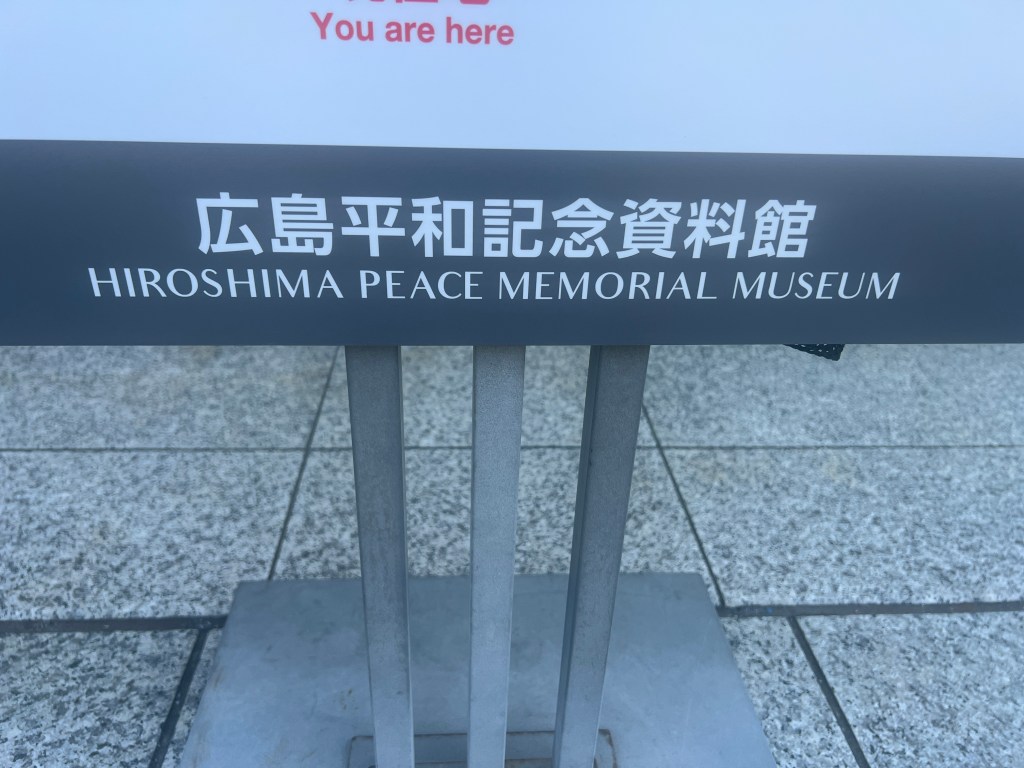
Today we took a taxi to the Hiroshima Peace Memorial Museum and Peace Memorial Park. We visited the park in 2019 but we were on a tour and it didn’t include the museum. Admission was only 100 yen for us old people – which was $.71 in US money. The museum is a very sobering history of Hiroshima both before and after the atomic bombing.It tells the story mostly through the people’s lives, those who died and those who survived.The museum calls for the abolition of nuclear weapons and eternal world peace. There were many pictures and artists renderings – too many to capture it all for this blog. But it is worth looking on their website. Very sad.

The weather was pretty perfect today – no rain and in the 70s. So it was a nice day to be in the park after we explored the museum.

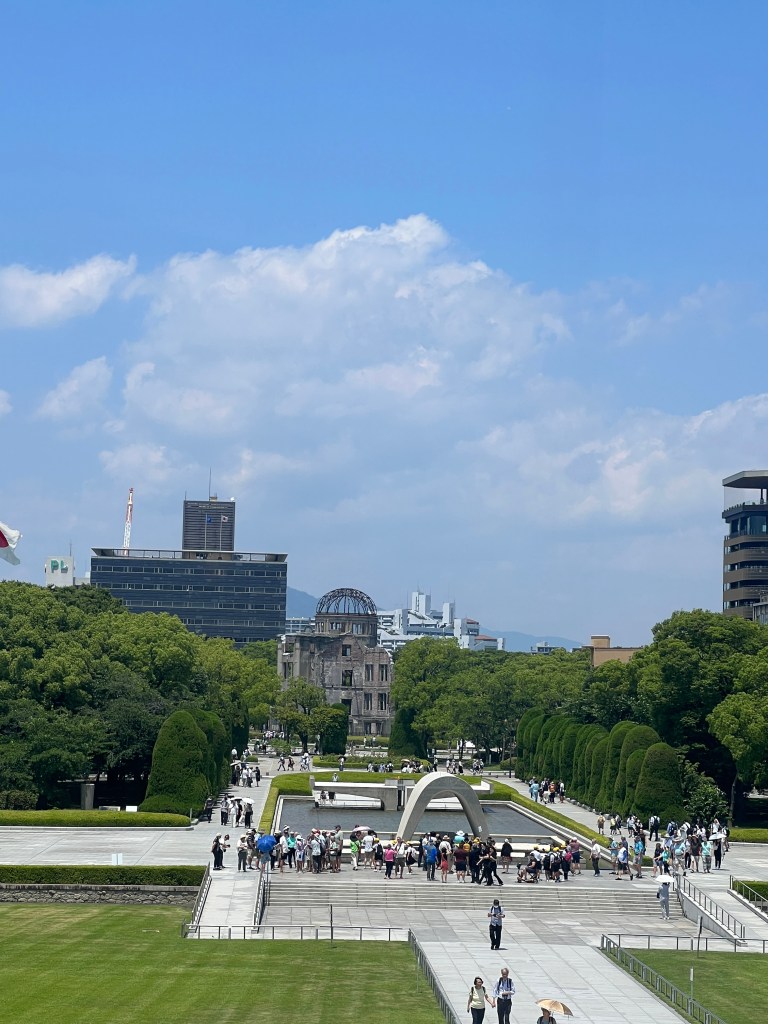
The park was constructed to make the whole neighborhood of the Nakajima district into a symbol of everlasting peace and a recreation area for citizens. The park was renovated into its current design in preparation of the 50th anniversary of the bombing. The Hiroshima Peace Memorial Ceremony is held here on August 6 every year.

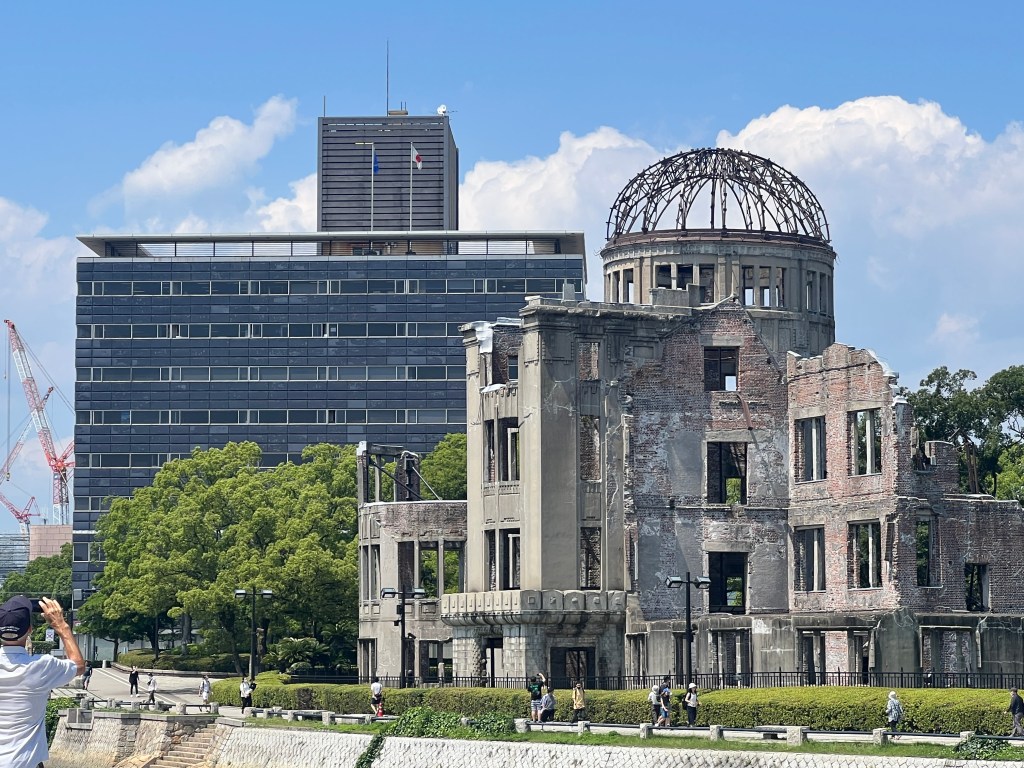
The atomic bomb dome that was damaged and burned. It symbolizes the pledge to convey the horror of the atomic bombing. It is a UNESCO World Heritage Site.

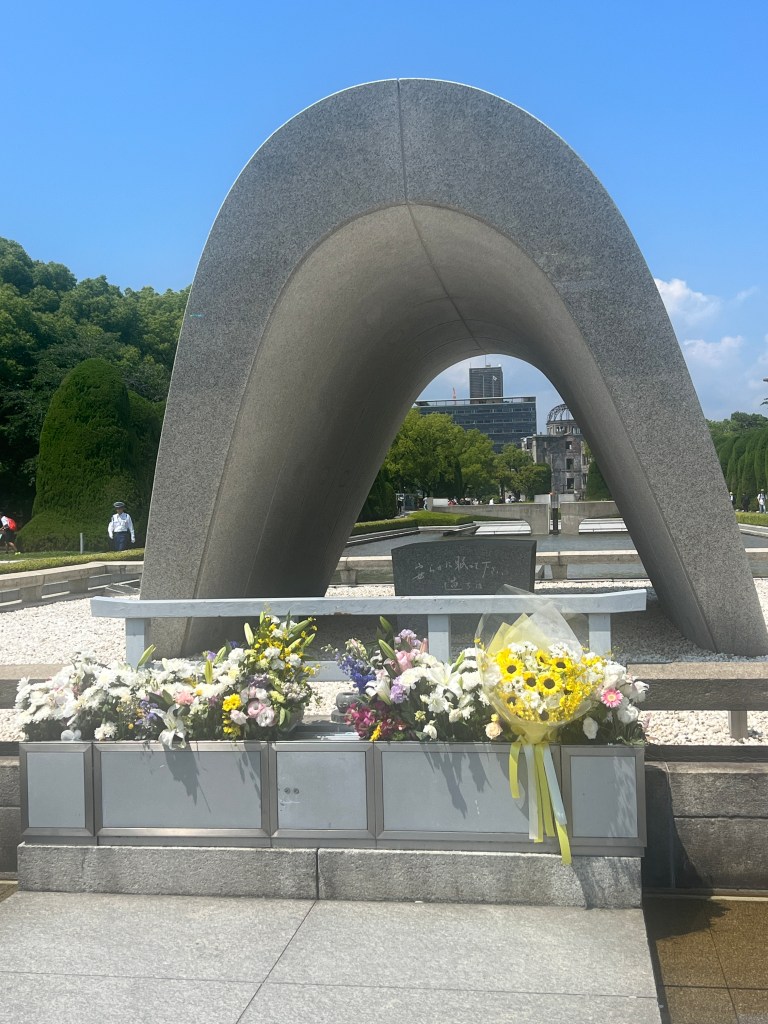
The Cenotaph for the Victims of the Atomic Bomb (formally known as the Memorial Monument for Hiroshima, City of Peace) was built in 1952. Inside lay registries which contain the names of all the known victims of the bombing, regardless of nationality. Names are added to these registries each year.

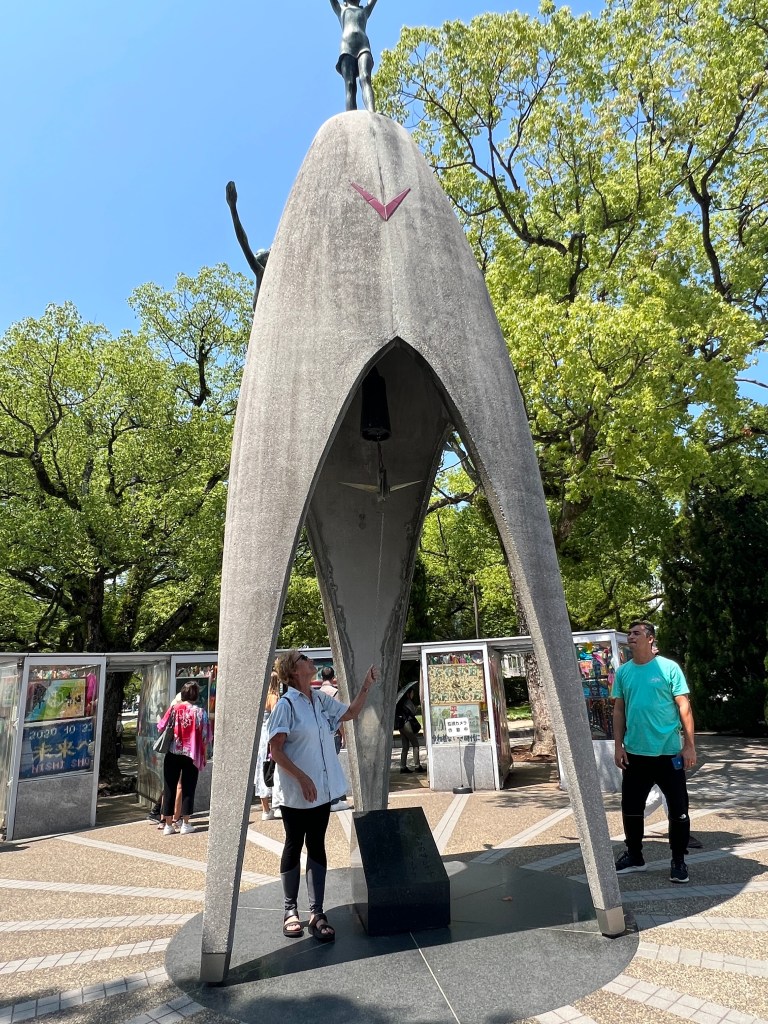
Pat ringing the bell of peace
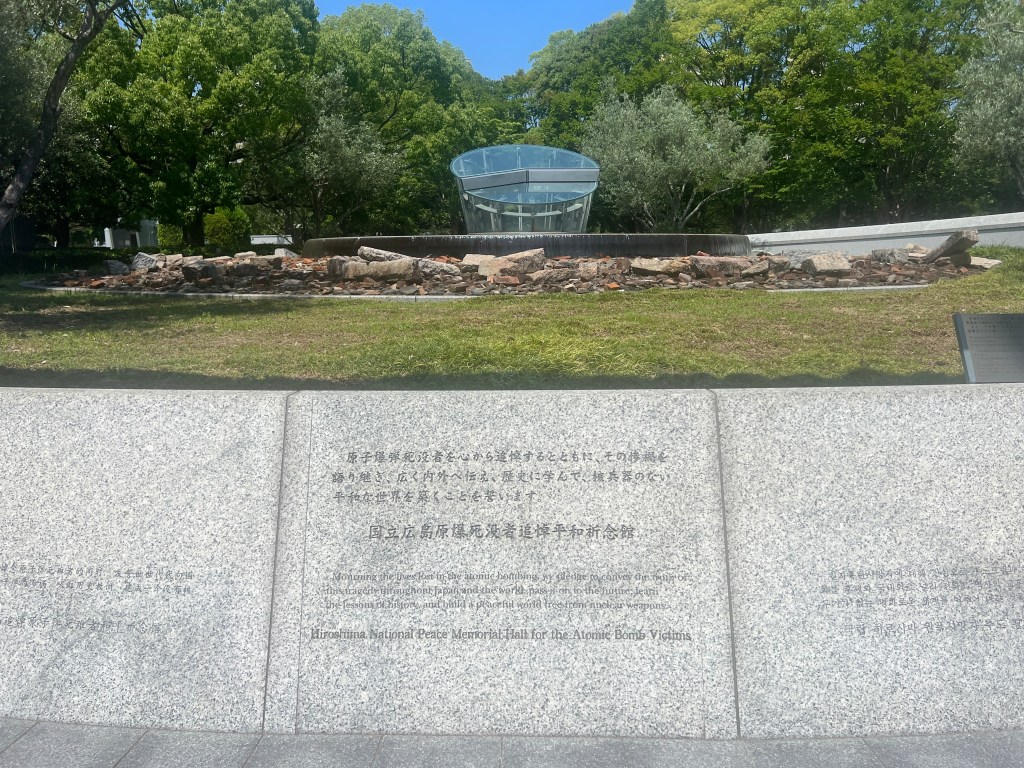
The National Peace Memorial Hall for Atomic Bomb Victims

There was a special exhibition about the Hiroshima War Orphans Foster Home. The bombing deprived many children of their families.
The exhibition describes the history of the home and the life of Gishin Yamashita who introduced the legislation, made contributions and was engaged in the operation of the home. It accepted a total of roughly 170 children until 1953 when operation of the foster home was transferred to the City of Hiroshima.

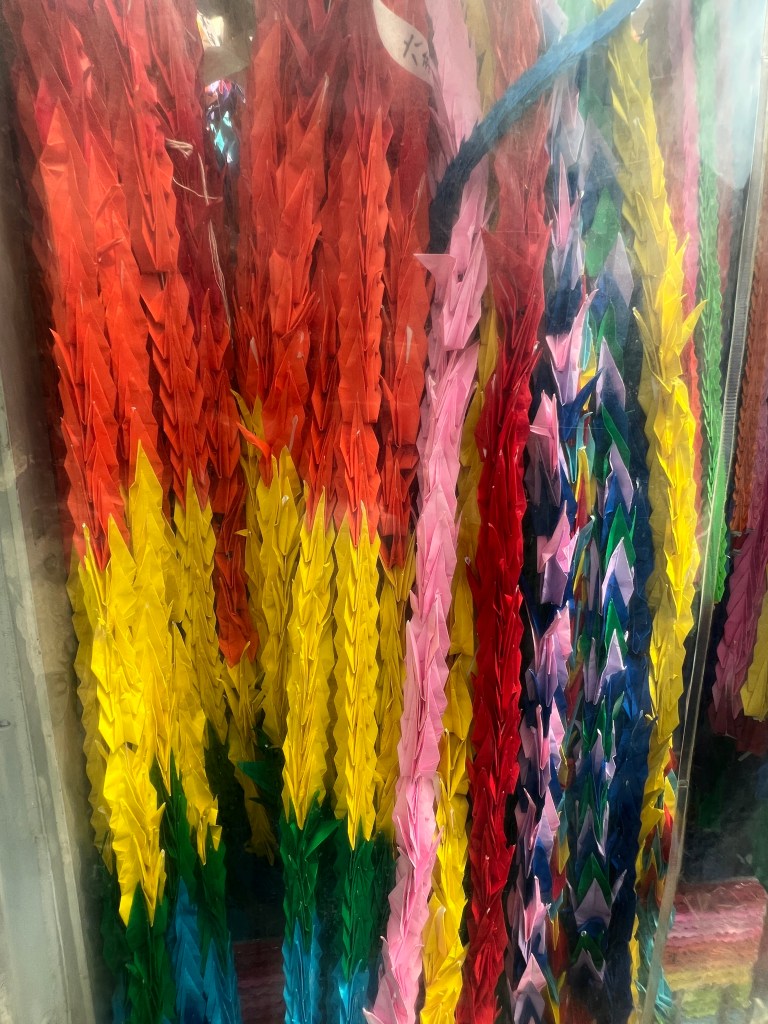
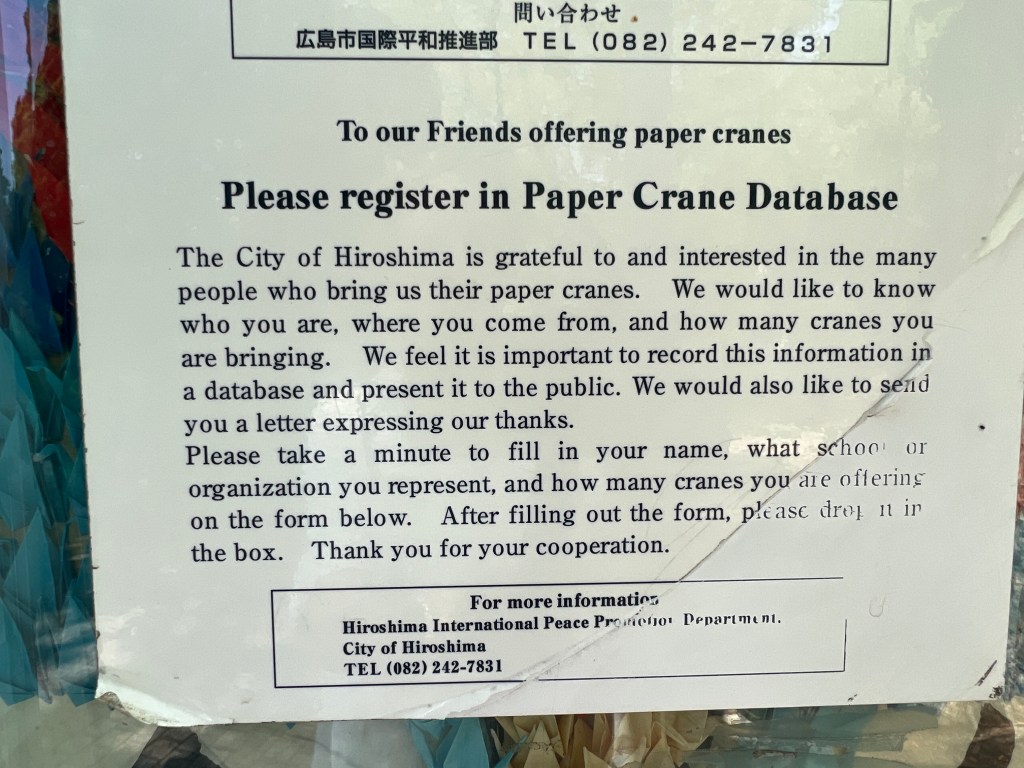
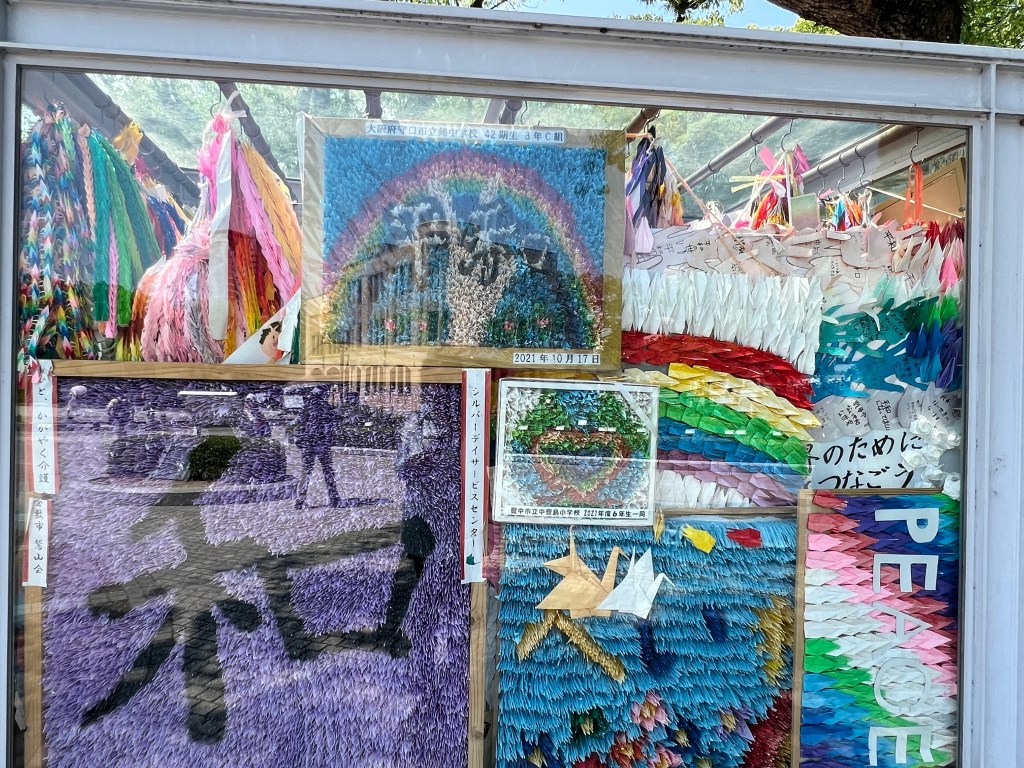
These paper cranes are made by people around the world and brought to Hiroshima as a symbol of peace. There are thousands on display here.

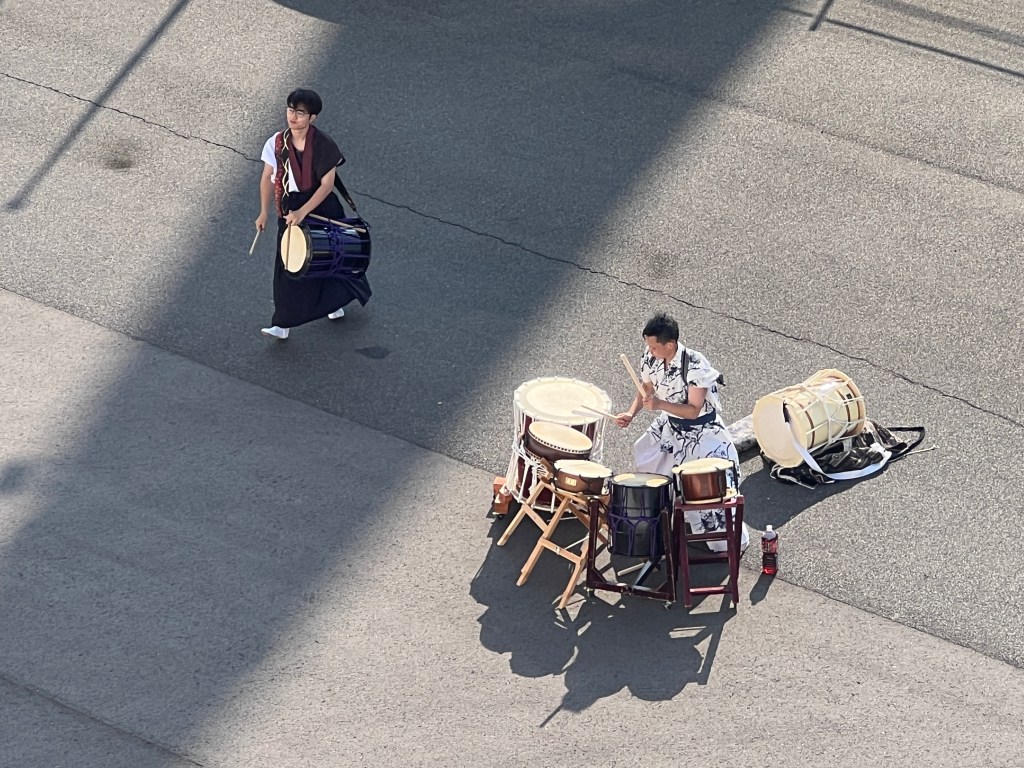
We had a scheduled departure for Kobe at 4:45 so we took the shuttle bus back to the ship and watched the drummers on the pier serenade us before we left. And we were delayed again today – a bigger ship had to leave before us. It was a huge car carrier.

Posted in Asia, Excursions, June, World Cruise #4 | 1 Comment

Kagoshima, Japan

June 15, 2023

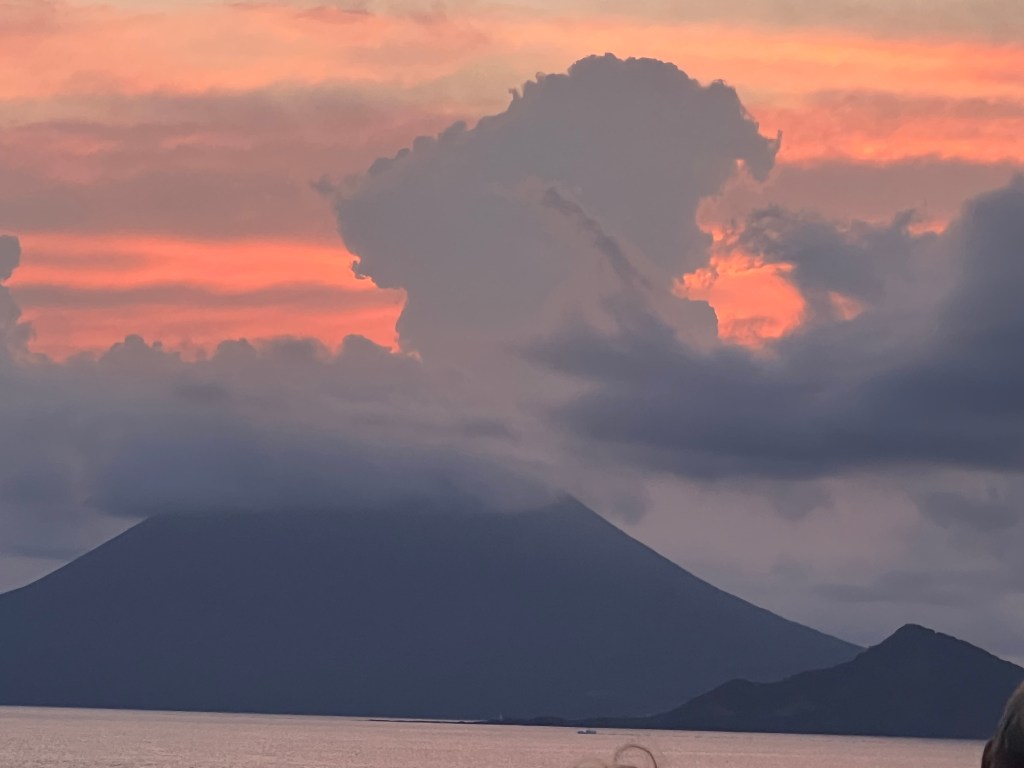
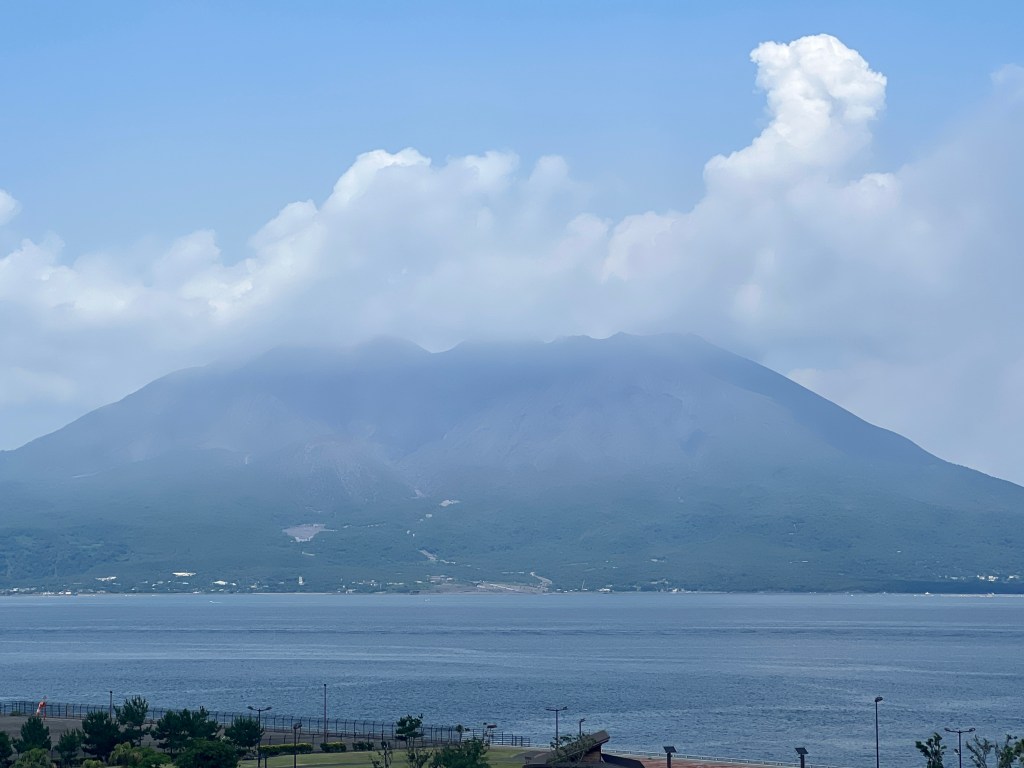
We have been to Kagoshima once before, in 2019. This time we opted to go on the Ibusuki Sand Bath Tour.Our guide was Mayumi and she was probably one of the best guides we have had. The trip to the Sand Baths took 1 hour 20 minutes and she was so informative the whole time. Kagoshima is a port city on the western shore of Kinkowan Bay. It is the southern most major city in Japan’s southern island of Kyushu. The volcano, Mt. Sakurajima, towers 3500 feet over the city and the bay. It is an active volcano and it erupts pretty constantly each day, but not dangerously. The most dangerous eruption was on January 11, 2014. It is the most active volcano in Japan. It was pretty cloud covered all day but here is the best picture I could get.

The city of Kagoshima has a population of 600,000 and is in a beautiful area. Agriculture is the largest occupation and the green tea, sweet potatoes and wagu beef are very popular. Kagoshima is the second largest producer of green tea in Japan. Mayumi said that the pork and beef are both delicious – the pigs are fed sweet potatoes and the steers are fed green tea!

Japan is made up of 14,200 islands. I had no idea! It is the length of Montreal to Jacksonville! There are 124 million people and the cities are quite crowded but you don’t see that in this area.

Mayumi told us many of the Japanese customs including bowing as a greeting. The depth of the bow is lower if the person being greated is of greater stature. It is considered respectful if you greet the person back the way you were greeted.

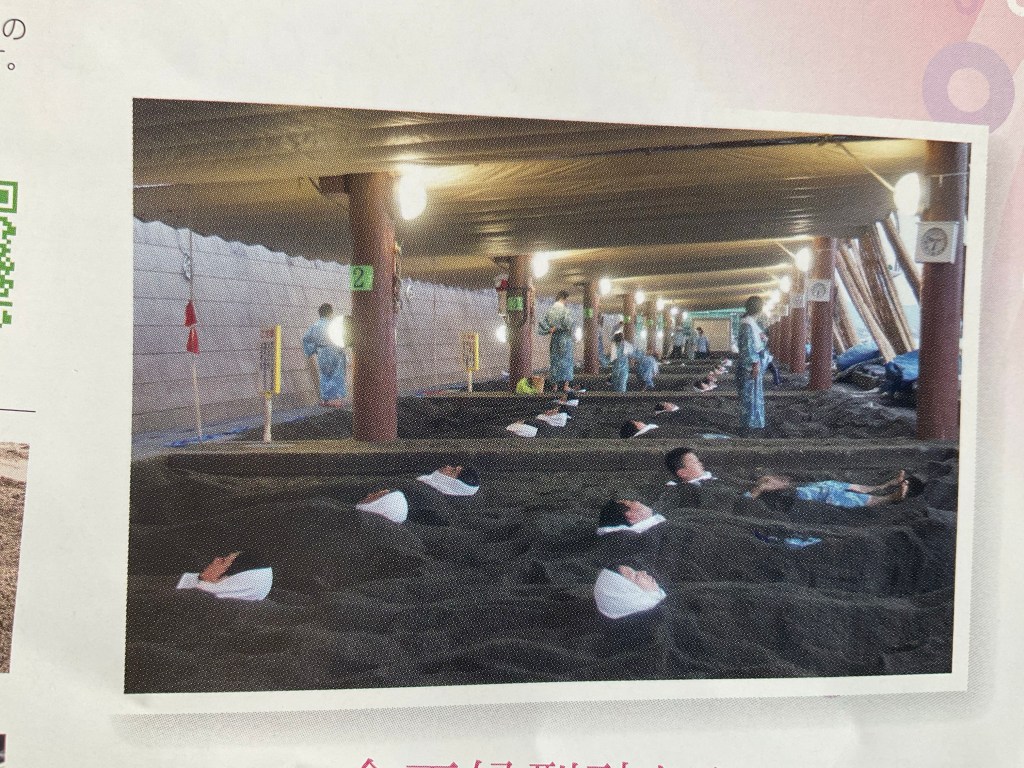
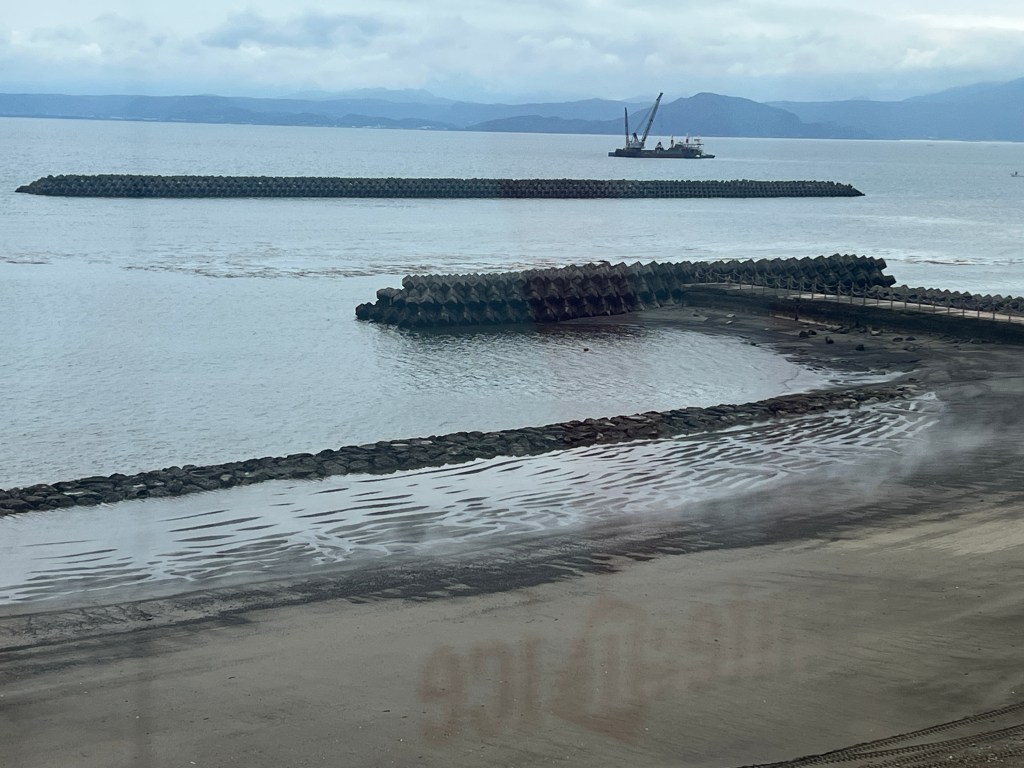
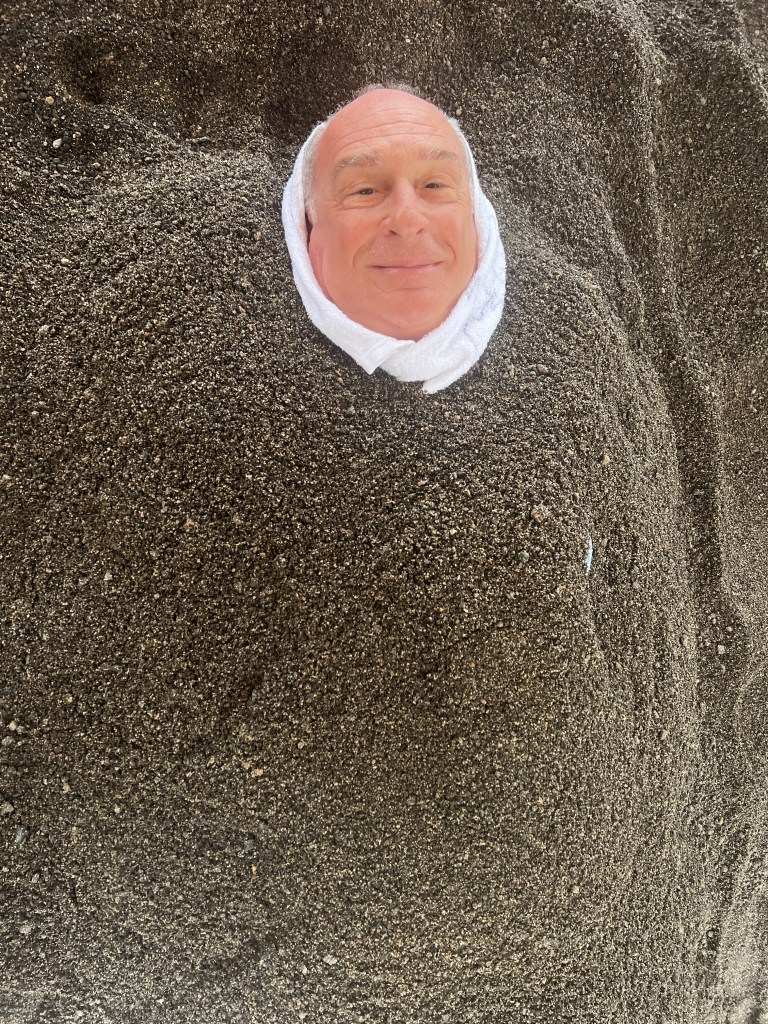
We reached the Ibusuki Sunamushi Onse Natural Sand bath and spa and got instructions about how it all worked. This is the only hot sand spa in the world so we knew we would be in for something special. We received two towels, a large one and a small one and a summer (cotton) kimono. We had to remove all clothing and shoes and put everything in a locker. We took the small towel with us down to the beach where there were covered sand baths. When the tide is right and the weather is good, the sand bath takes place out on the beach. Mayumi got special permission to take photos of us – it is usually not allowed – and she collected all of our cell phones so that she could walk around and take the pictures. The small towel is wrapped around your head and you lie down in the sand where the workers cover you with the warm sand. The sand underneath you is quite warm too. You only stay for 10 – 15 minutes. The sand is heavy and we both felt our bodies pulsing. The sand is hot from the hot springs. After the sand bath, we came in and showered the sand off, then went into the hot springs pool (women and men separately and naked). It was incredibly well organized as most things in Japan are.here are pictures of what it looks like under cover and out on the beach.

The sand bath hot springs have been used for the past 300 years. Their brochure says that it has been medically proven to have many positive effects on the human body. Research done by professor Tanaka of Kagoshima University Medical Department has demonstrated that sand bathing actively stimulates the heart and increases blood circulation in the body. The literature states that it is effective in relieving the following: neuralgia, rheumatism, lumbago, arthritis, fractures, paralytic effects of stroke, atopy, skin diseases, asthma, diabetes, and sensitivity to cold. It is prohibited for people with high blood pressure over 180, heart disease, irregular pulse, liver disease and fever (although no one asked us!). I am not sure it really relieves all that, but it did feel very relaxing.

Before we left, I found out that you could purchase the cotton kimonos like the ones we wore in the sand. Here is mine! Perfect to use as a robe yet Norm thinks I could wear it to dinner.

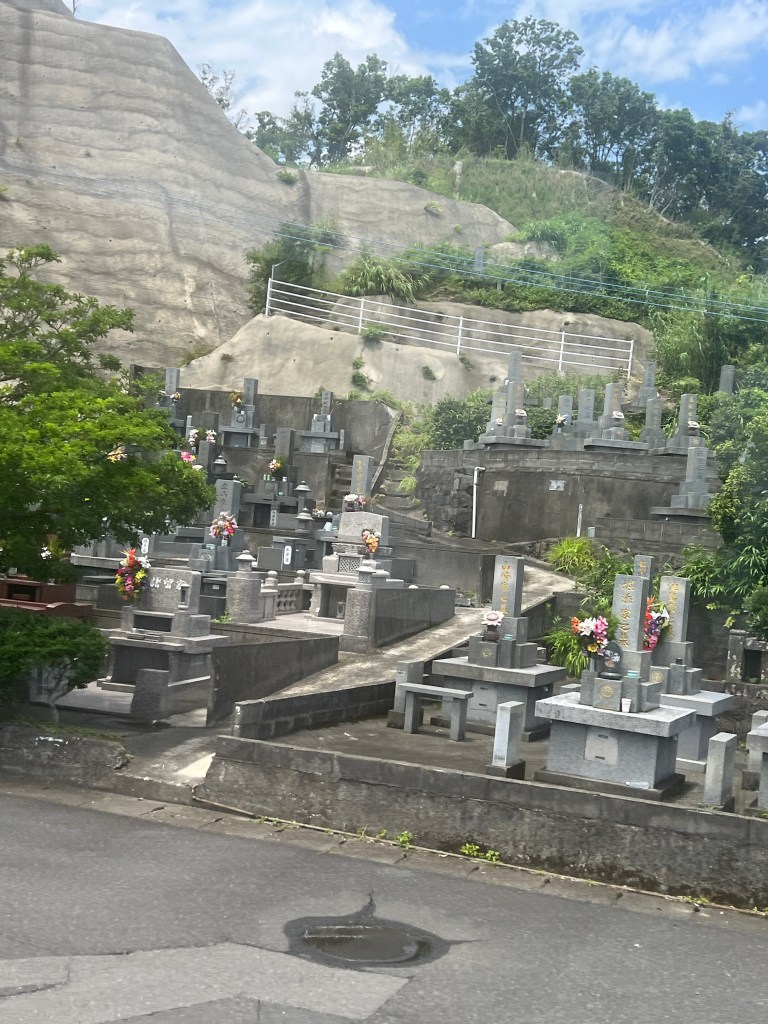
On the way back to the ship, Mayumi showed us pictures of how weddings are conducted and the finery worn by brides and grooms – she showed us her own wedding pictures with the 4 changes of outfits! She also explained the reverence for older relatives and how families usually have cemeteries near their homes so that they can visit graves to honor the dead.

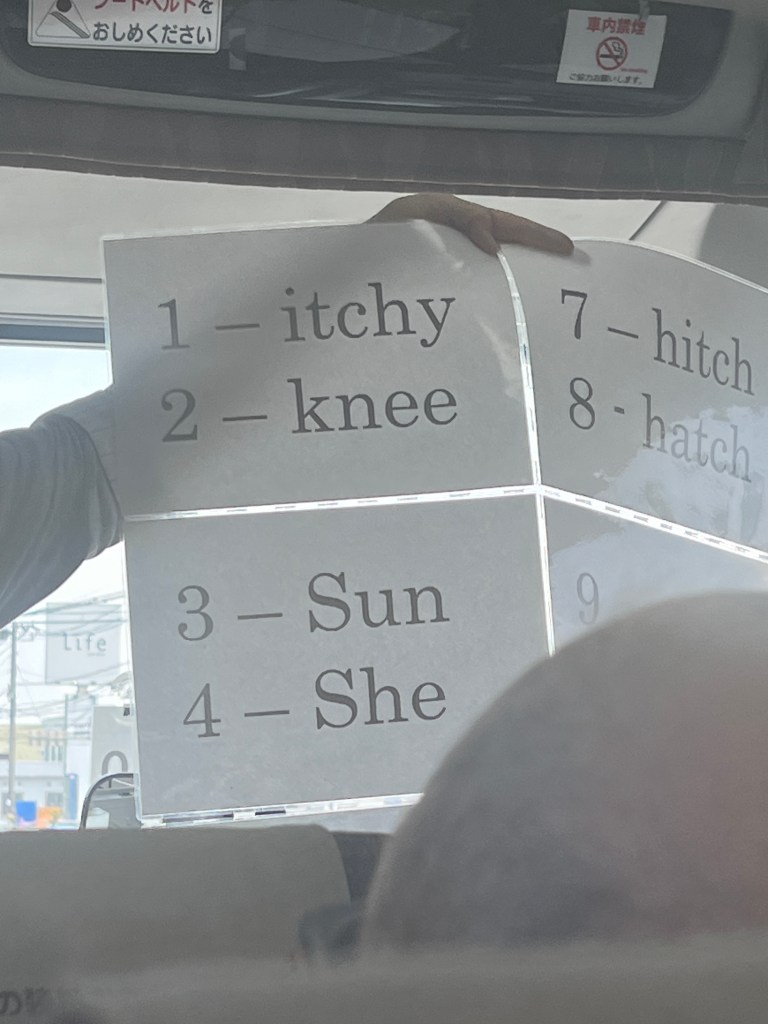
Then, we learned how to count in Japanese. She held up cards with each number and the Japanese pronunciation. She quizzed us on some numbers as well. She kept us well informed and entertained the entire trip. I would say she was one of the best guides we had. She gave us samples of Japenese candies and had one of the small towels we used on our heads for each of us – clean ones, that is.

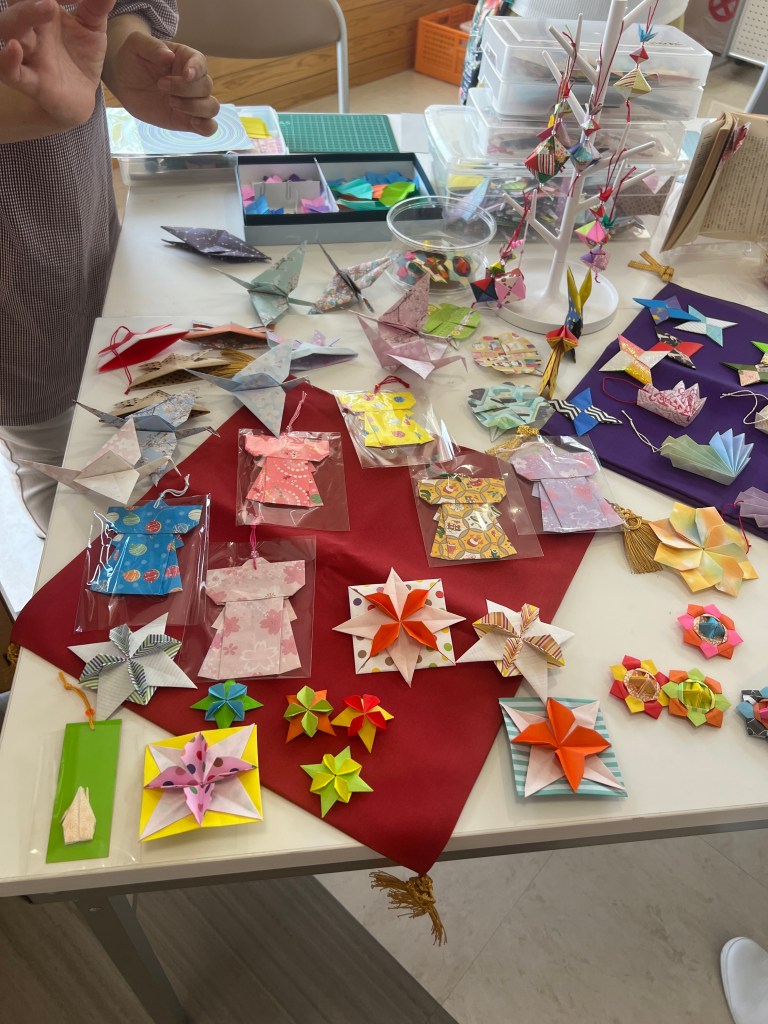
There were some small shops in the terminal and one booth was giving away origami figures. I got this small top that is very beautifully made and it spins.

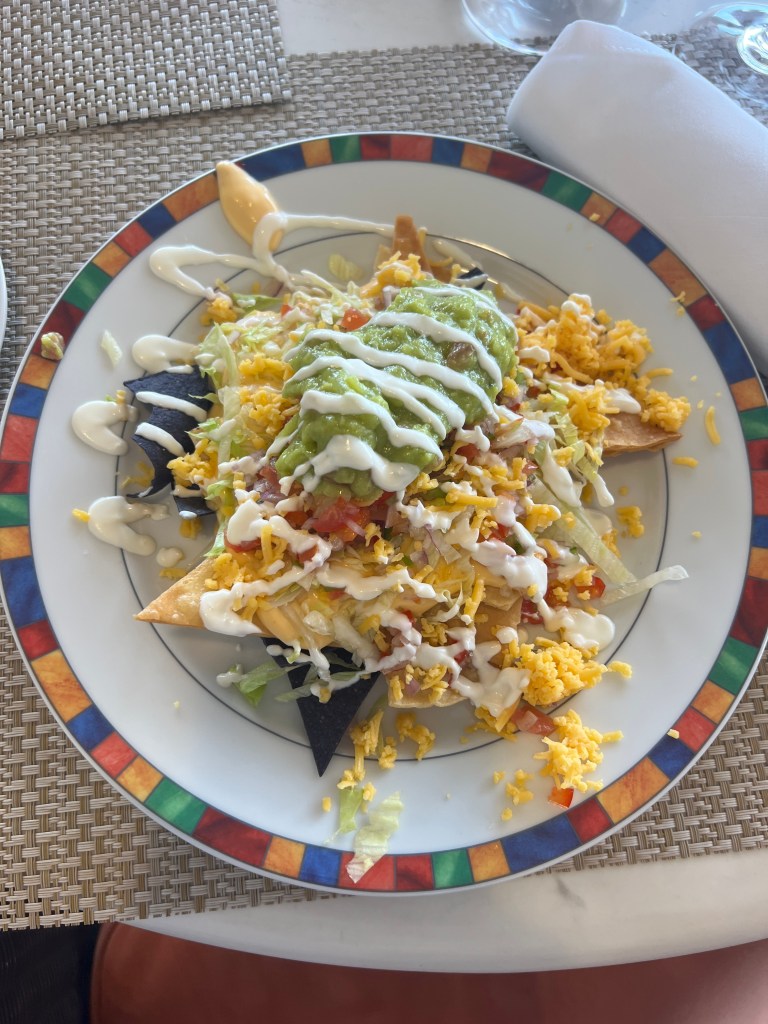
We got back in time for our lunch and it was the Mexican lunch that we love. Fresh nachos out on the deck. I took my deck walk and while I was out there a huge black smoke came out of a metal pipe and there was loud noise on my whole walk. We were supposed to leave at 3 PM but I am writing this at 5 and we are still in port. Apparently during the weekly test of the back up generator, something was tripped and none of the elevators work. So the ship cannot leave until everything is working. Ned, our chief engineer and friend, was supposed to do a guitar concert at 5:30 but I am guessing that will be postponed. We are schedule in to Hiroshima tomorrow at 10:30 so we will need to see when we can leave and how that will impact tomorrow. Stay tuned!

Posted in Asia, Excursions, June, World Cruise #4 | 2 Comments

Amami Oshima (Naze), Japan

June 14, 2023

This is a new port for us, and we foound out that it is the first time our ship has been to this port. When a new ship comes to a port, the local officials do a ceremony and present a placque to the captain. We were out on tour and didn’t see the ceremony but our friends happened to get off the ship when it was happening.

Amami Oshima is one of eight islands in the Amami archipelago, just some of the numerous islands that spot the stretch of sea between mainland Japan and Taiwan. There are steep tree covered mountain slopes. The island is far from the mainland and to this day, poor weather cuts locals off from food and important deliveries from the mainland. For any serious medical issue, they use helicopters to transport people to mainland hospitals. There are no colleges or universities here and when young people leave for post secondary education (as 96% of them do) most do not return.

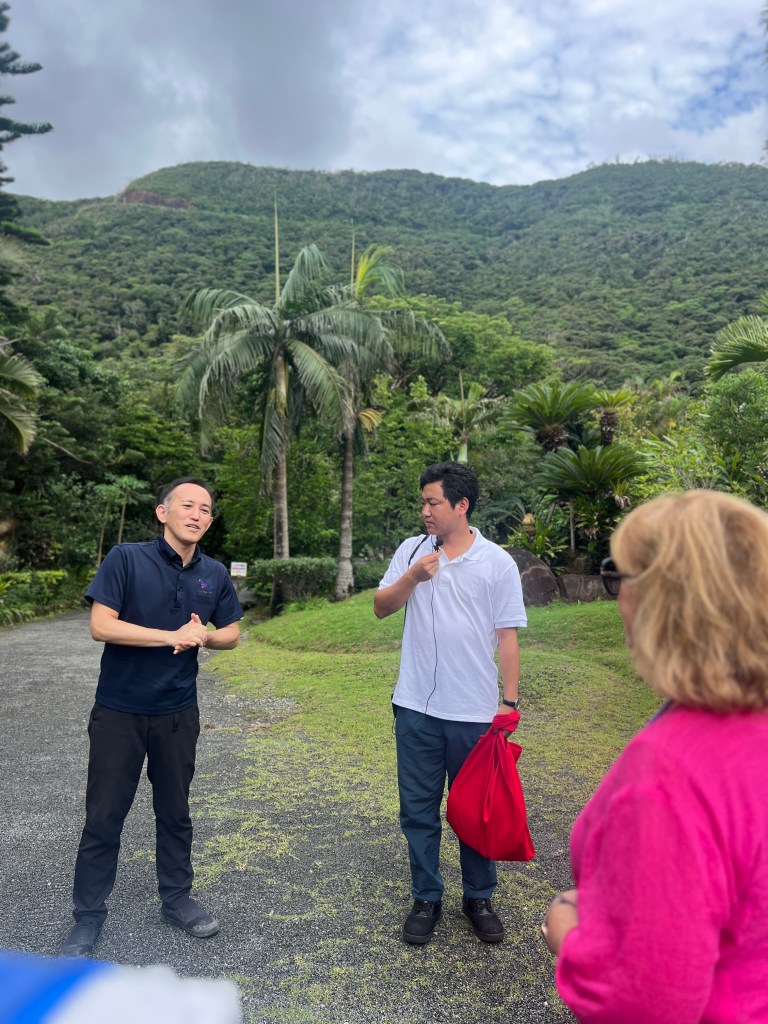
Our guide today had a very long Japanese name, so he asked us to call him a short veresion – Kaz. He started off by saying that he works in an insurance office but when he is needed to serve as a guide he tries his best to do so. He said that he failed college entrance exams for a Japanese university four times, so he ended up going to colleage in Las Vegas, Nevada. He majored in hotel management and tourism. He loves this island, though, so he chose to come back to live and has been here for the 10 years since college.

The island has a long history. This town has a population of 50,000 people and the whole island has 100,000. Construction is the main industry and sugar cane production is second.

Our first stop was about 40 minutes from the port and it was Oshima Tsumugimura, a museum and factory tour where they have been making silk woven fabric for kimonos for many years. The site is beautiful. We walked through many tropical like settings with lush plants and beautiful flowers. Our guide here did not speak English, so Kaz interpreted on our tour.

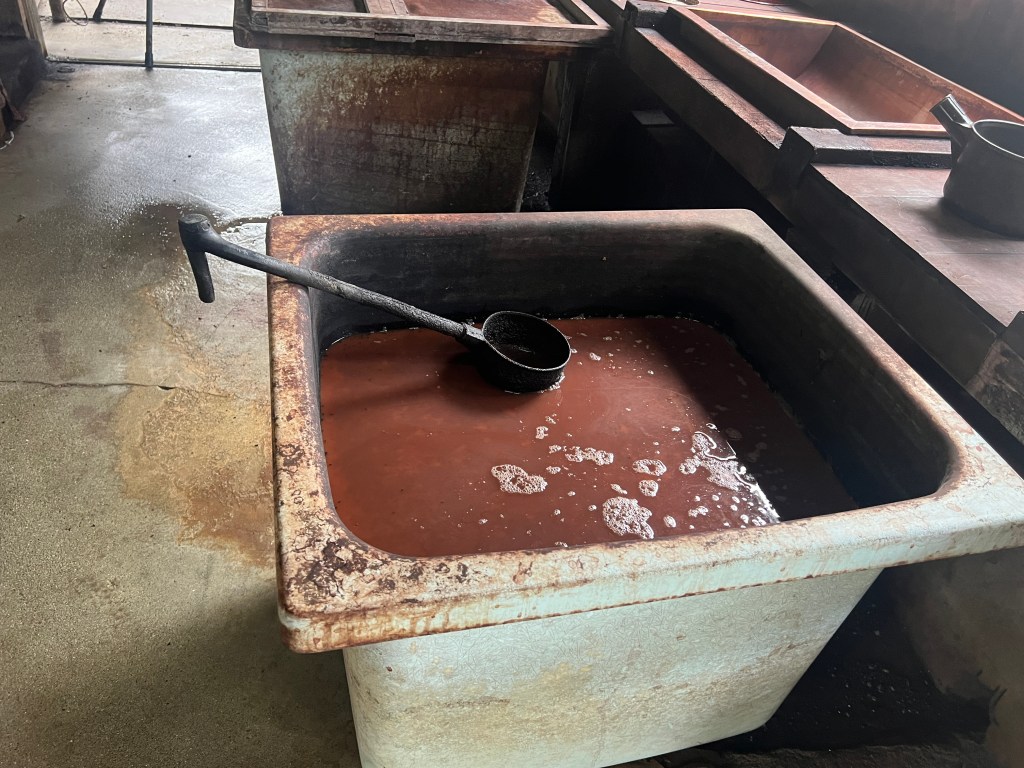
We saw the first area, the dyeing house. Sharinbai trees are chopped into pieces and then steamed with water for 20 hours. The dyeing takes place for 20 times, Then the threads are set to dry. After that, they are dyed with mud fields and they turn into brown. This process is repeated 4 times. Finally, silk threads are changed into elegant black by dyeing 80 times. Fine mud fields contain tannic acid from the trees and the iron in the mud combined.

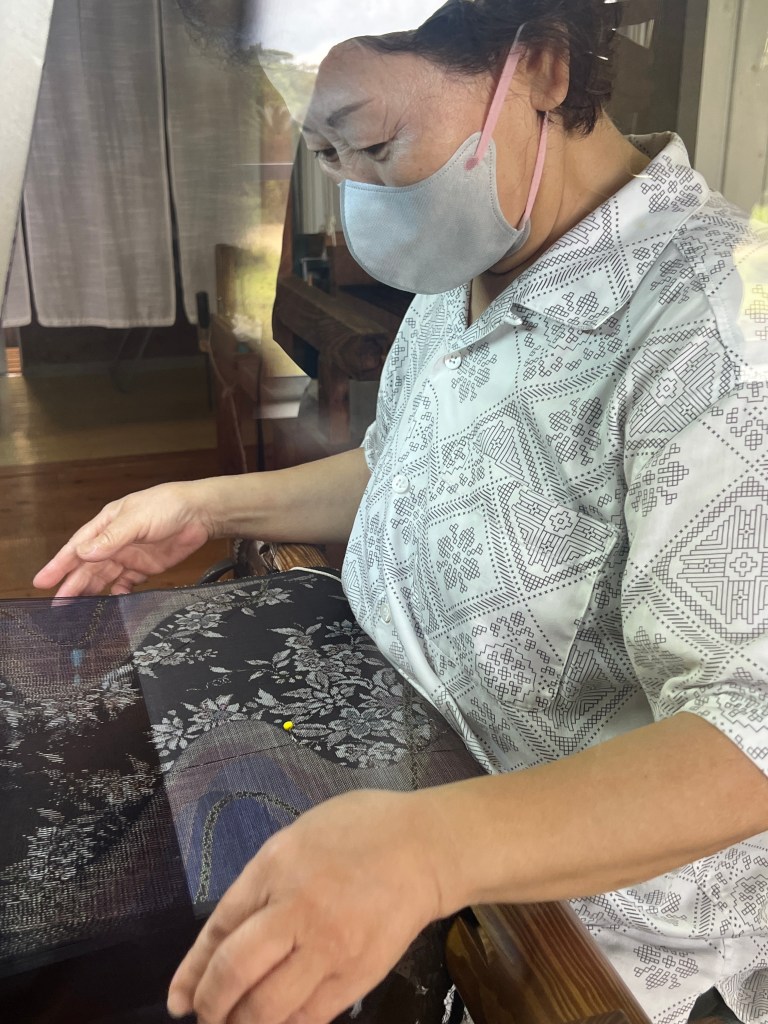
The pattern is designed by choosing the colors according to the graph paper pattern. Then, the Shime-bata loom is used to tighten the silk threads with cotton. To achieve the desired design, the cotton threads are removed so the silk threads may be dyed to match the specific color in the design. Finally, the fabric is carefully woven to match the pattern. Fine checking is performed every 8 cm where threads are adjusted to ensure accuracy and consistency. It takes a very long time to weave even a small section. A 5 inch section takes about 8 hours. This weaver is 74 years old and has worked there for 46 years. The factory has been there for 1300 years and now it is almost a dying art since like many occupations, the young people don’t want to do this anymore.

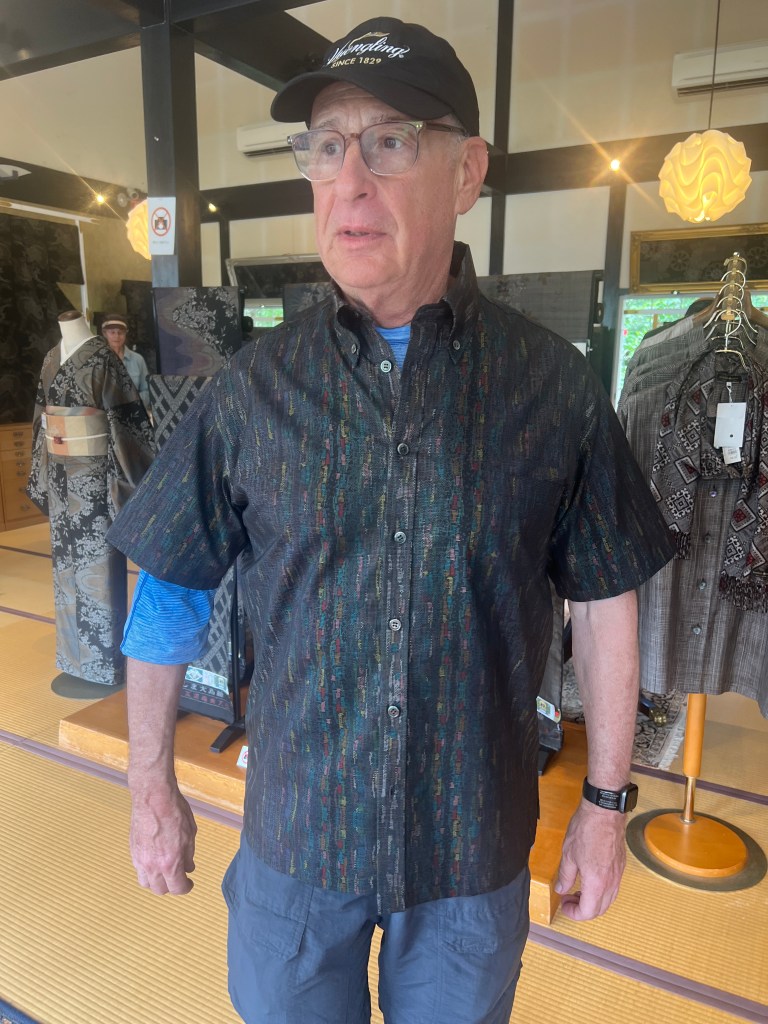
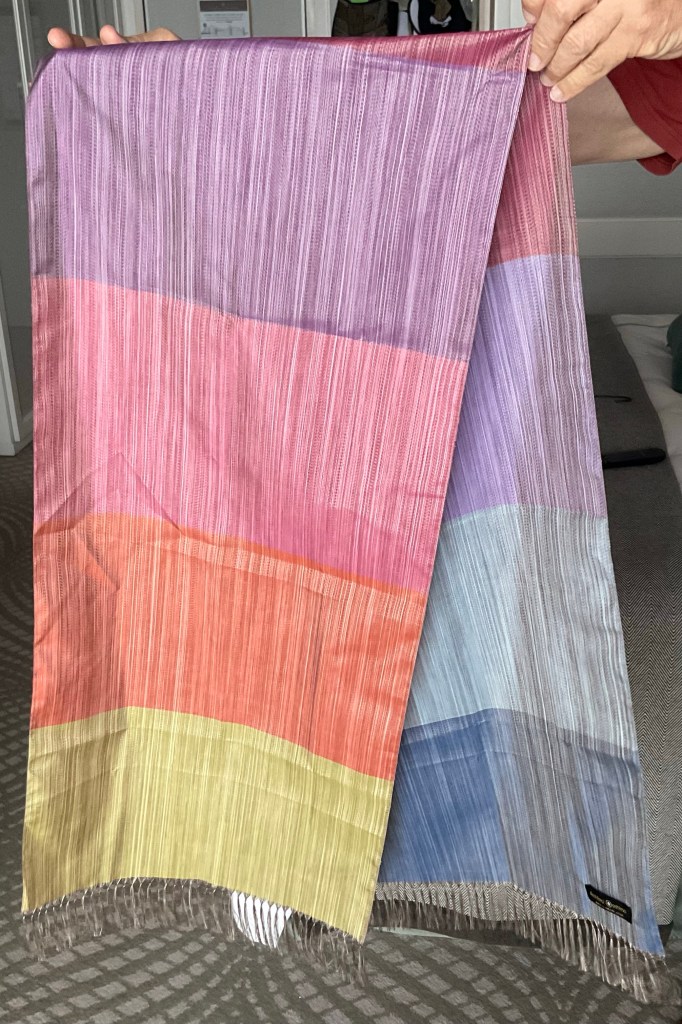
We visited the shop which had such beautiful products. Norm bought a shirt and I got a scarf.

Of course he has it on over his own shirt – will take another one later at cocktail hour!

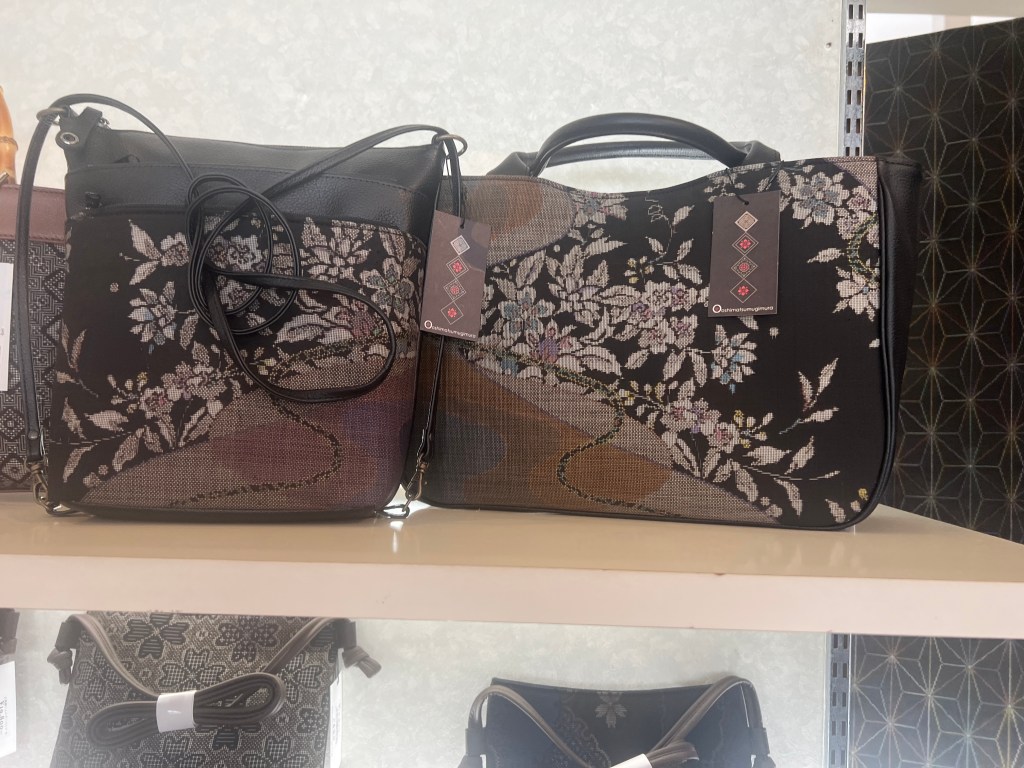
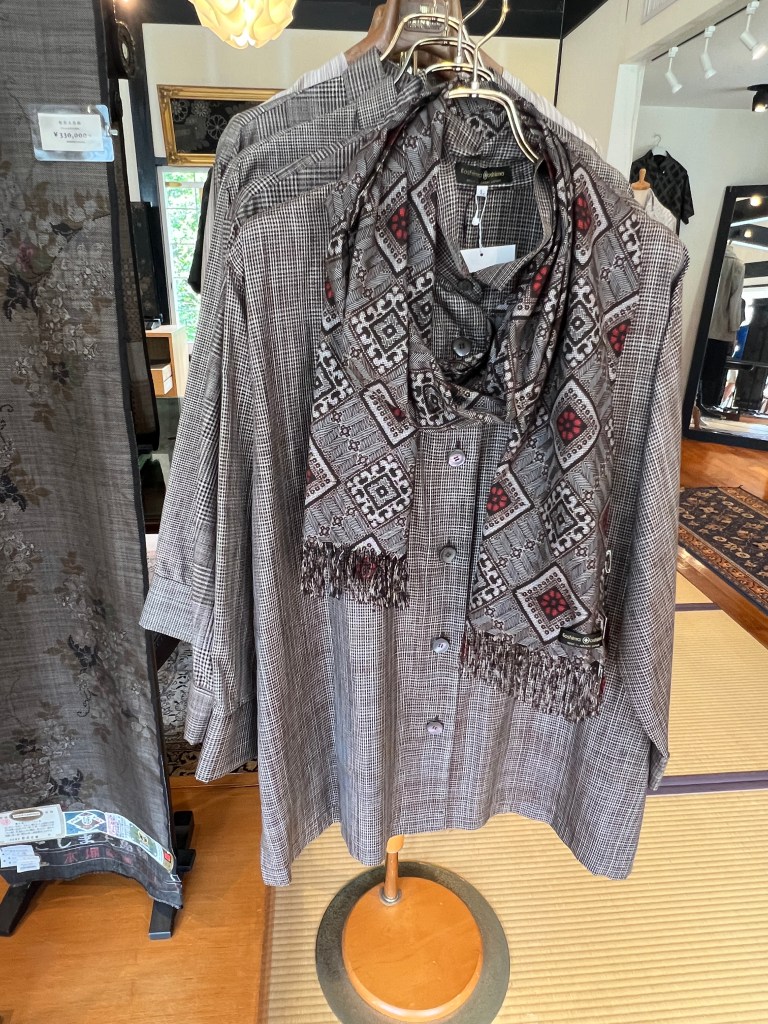
There were hats, purses and all kinds of other accessories. But no kimonos for sale. We couldn’t have afforded one anyway.

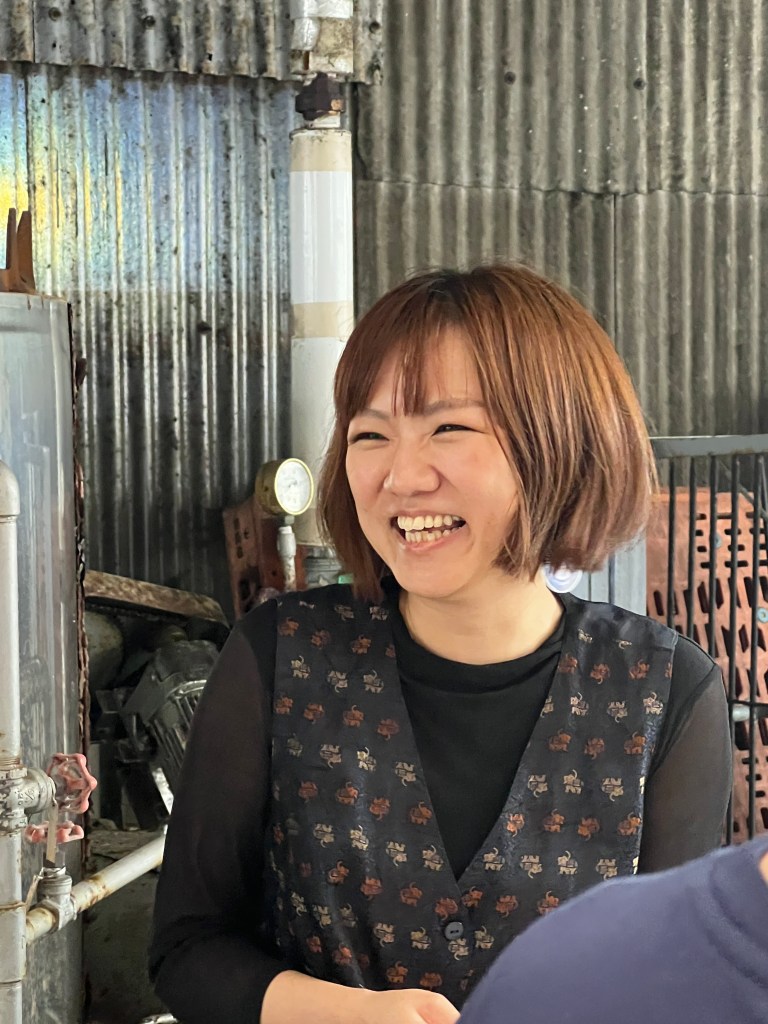
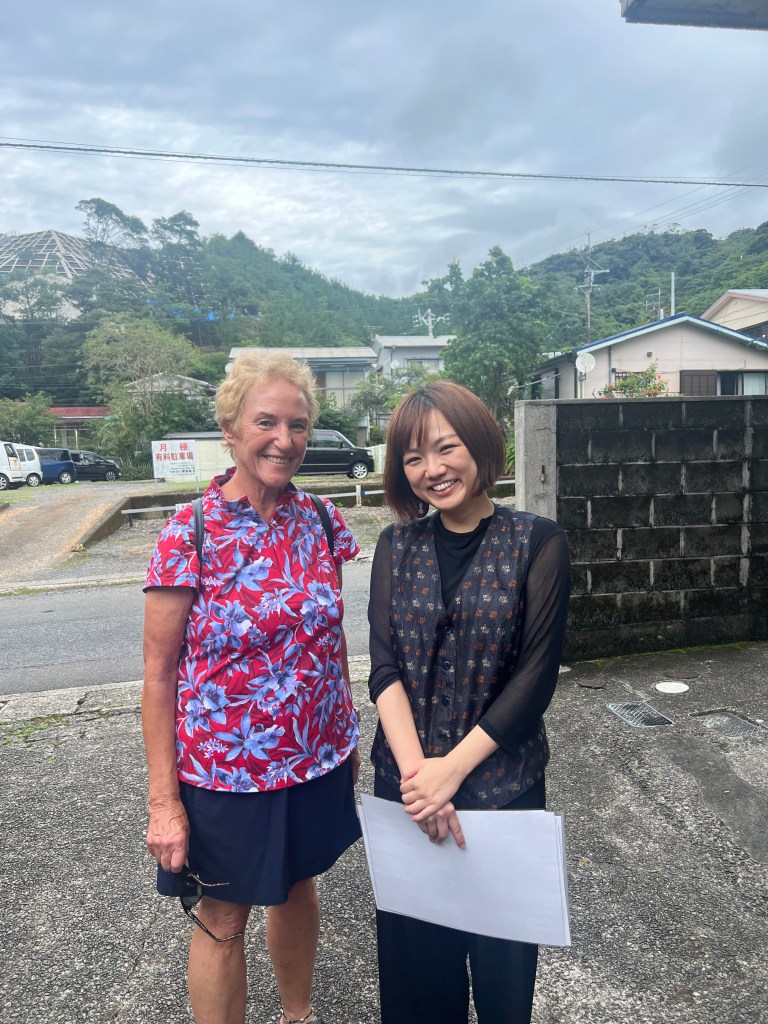
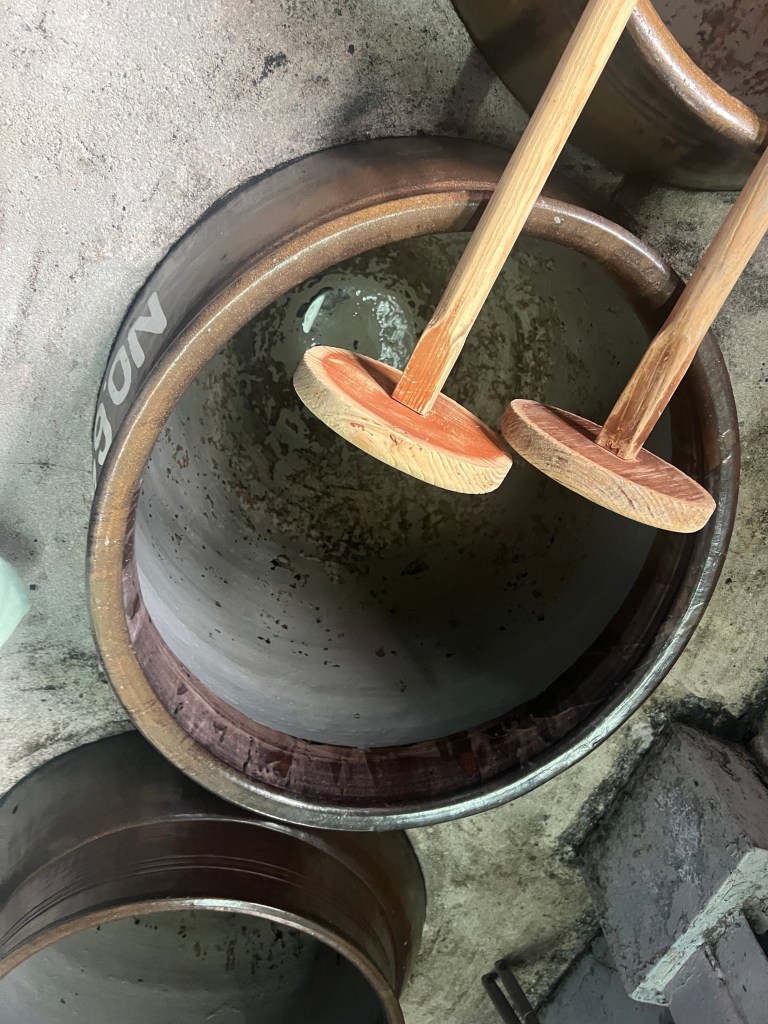
Our second stop was to the Shochu distillery which is a 4th generation family business. The owner is a young woman who is friends with Kaz. He said she had been practicing her English and wanted to take half the group through the distillery and the other half would do the tasting and then we would reverse. It is not a big place so that worked well. And she did a good job with her English. This Shochu is only made here on this island and is the oldest of the 27 saki companies. The guide’s great grandfather started the company and it has been family owned since then. Only 6 people work there and run the entire operation. The liquor is similar to a scotch and two of the types were 40 proof and one was 30 proof. Not my style but it was fun to see and taste. It is made from rice, a mold that helps it ferment and both white and brown sugar.

After the tour and tasting, we returned to the ship for a 3:30 PM departure. Our next port is Kagoshima, Japan.

Posted in Asia, Excursions, June, World Cruise #4 | 1 Comment

Okinawa (Naha), Japan

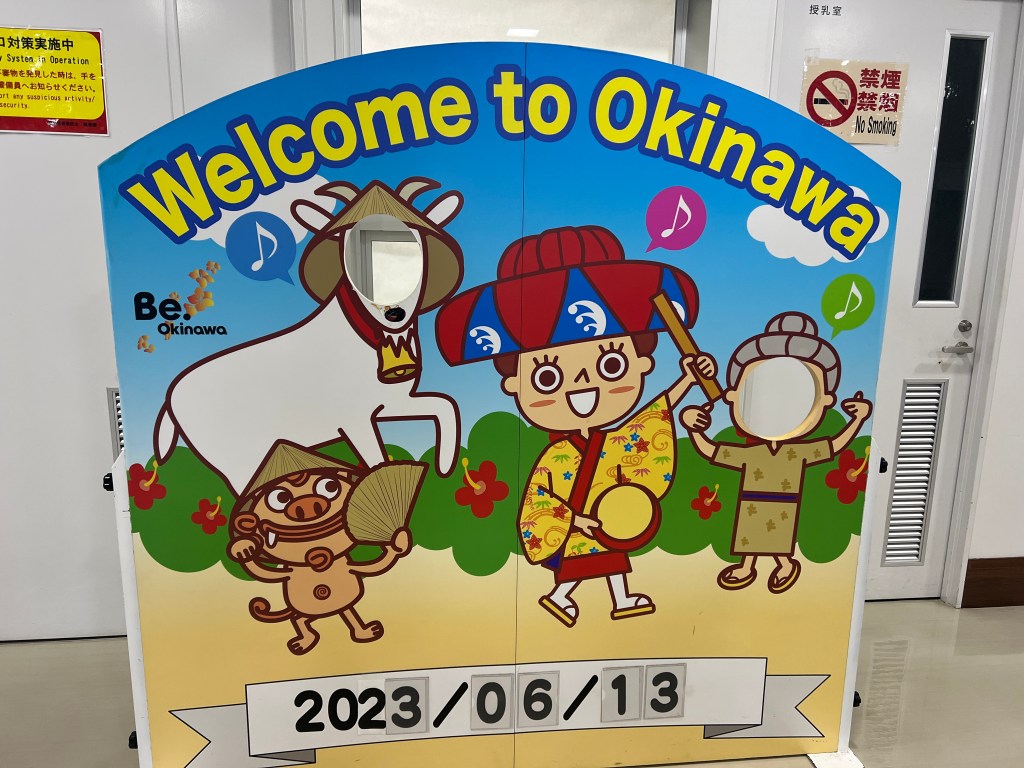
June 13, 2023

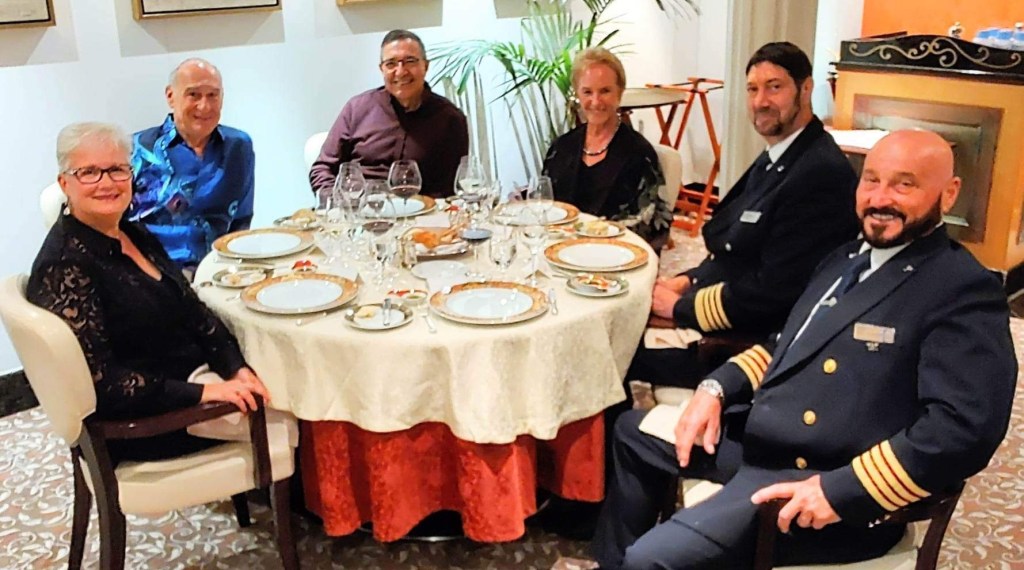
Last night was one of the two Oceania Club cocktail parties and for dinner in Toscana, we were invited with our Captain and Chief Engineer along with Erin and Mui. Both gatherings were so enjoyable.

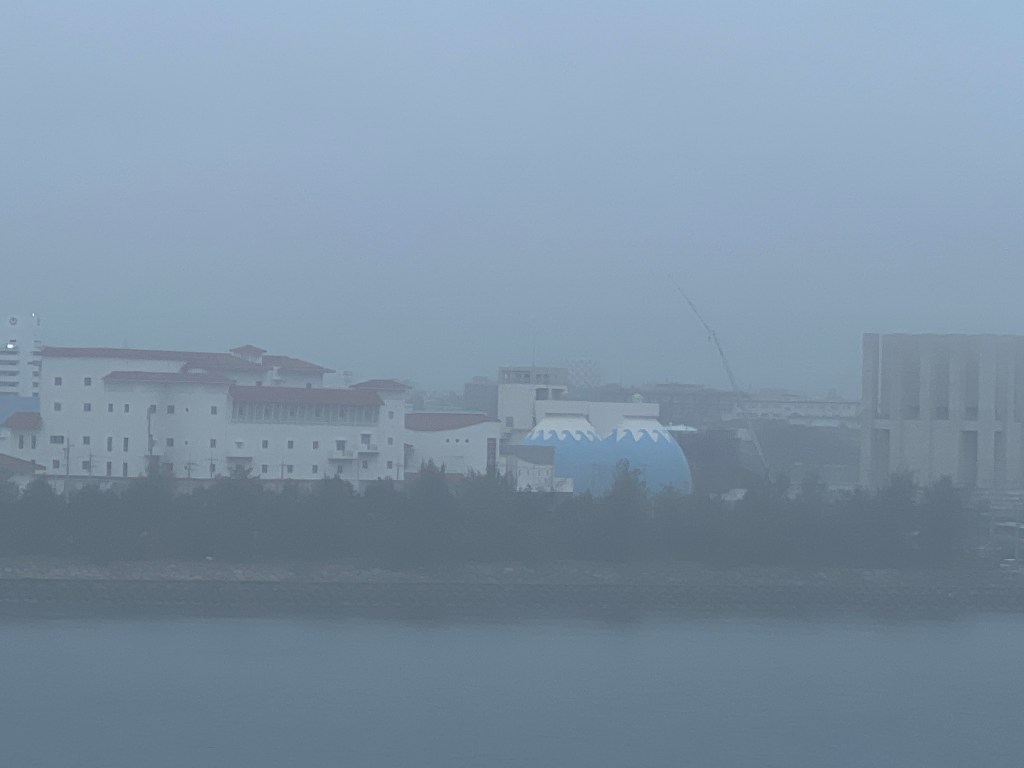
During dinner, the Captain mentioned that it would be a full day of rain on Tuesday. We were in Okinawa in 2019 and since then the Shuri Castle that we visited had a fire and is under construction. None of the tours can go there now since it is closed. We decided not to do an organized tour and we wanted to see the Okinawa Prefectural Museum and Art Museum so we decided to take a taxi directly there. The immigration procedure here took quite a long time. We arrived in port at 11:30 and we had lunch on the ship. Then we got our passports (the ship keeps them most of the time as the officials from most countries come onboard and check and stamp them there). We had to stand in a line to have our pictures and fingerprints taken and passports checked. Norm exchanged some money and we got a cab right outside of the terminal. At this point it was raining lightly. We got an announcement that the ship will leave 30 minutes early to avoid the weather system that is coming in.

Naha is the capital city of Okinawa Prefecture, Japan. In early modern periods and in medieval times it was the commercial center of the Ryukyu Kingdom. The name Naha comes from its original name, Naba, which was the name of a large mushroom shaped stone in the city. Naba is the Ryukyuan word for mushroom. The stone has since become buried but the name remains.

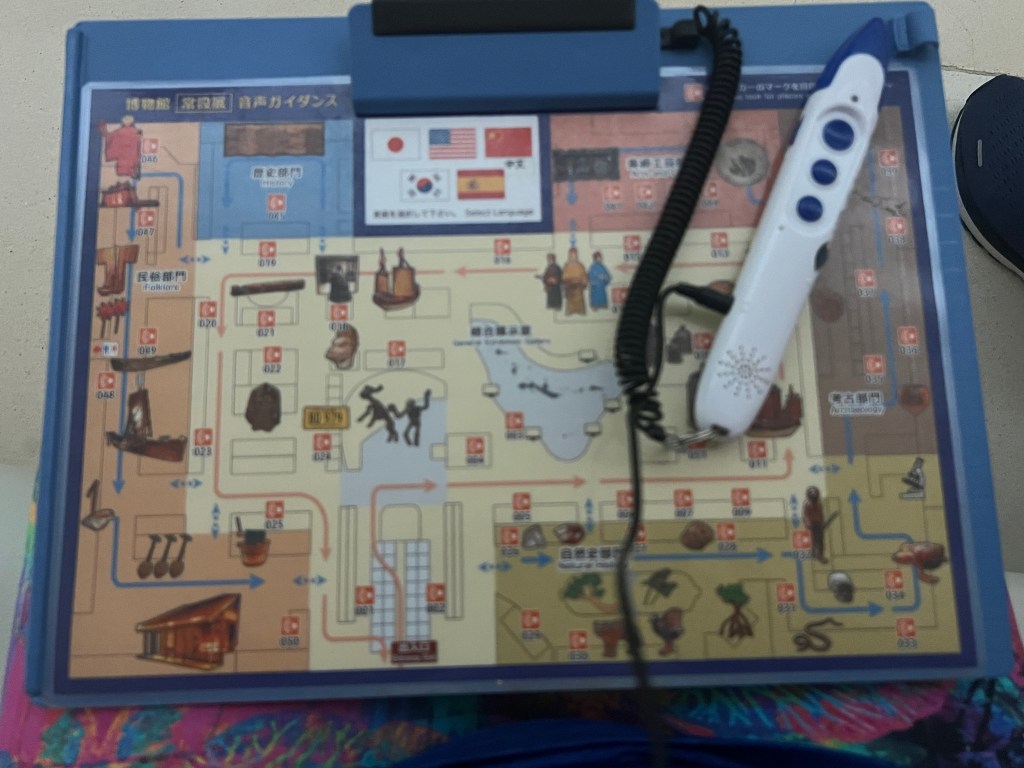
It only took about 20 minutes to get to the museum. Since we were over 70, admission was free! We didn’t expect that. They have a very unique system for audio in the museum.

We had headsets and this board with a stylus attached. You pointed the stylus first at the language you wanted, then at each numbered area you just tapped on the number and the audio started. It was so easy to use because of the actual map that made it easy to find the displays. We could take pictures in the main exhibit hall but not in the art museum.

The museum has a 70 year history – it was established just after the war. Its collection of more than 100,000 artifacts are displayed in a permanent exhibit under the theme “Sea and Island Life – Seeking Prosperity, Beauty and Peace.”

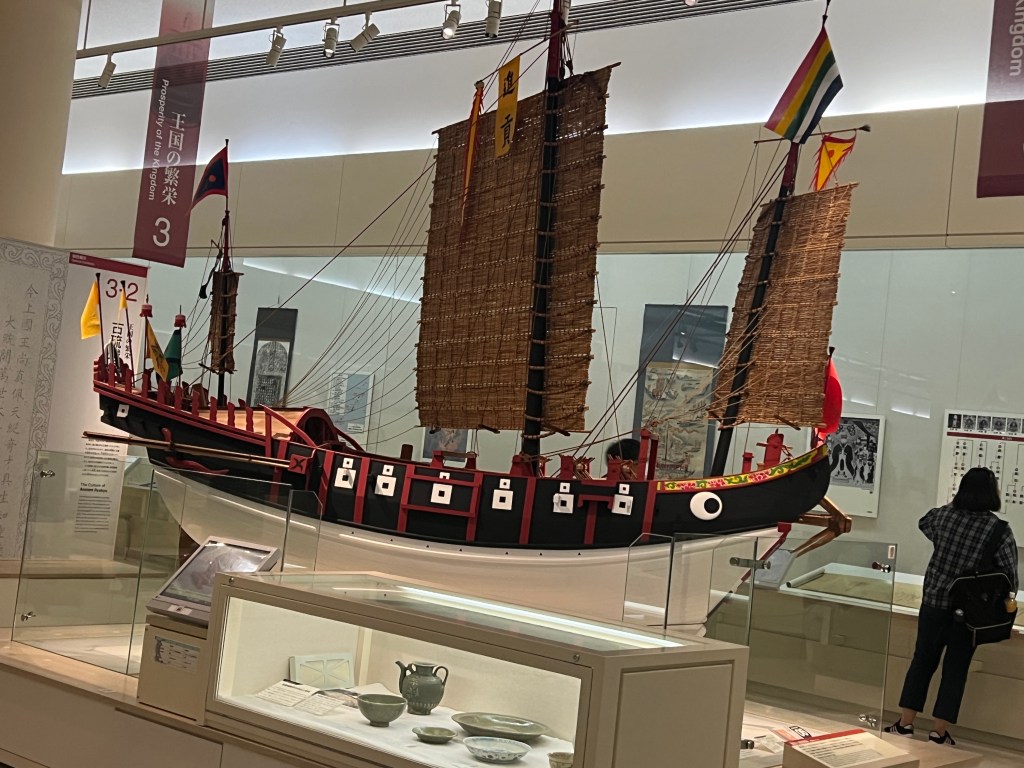
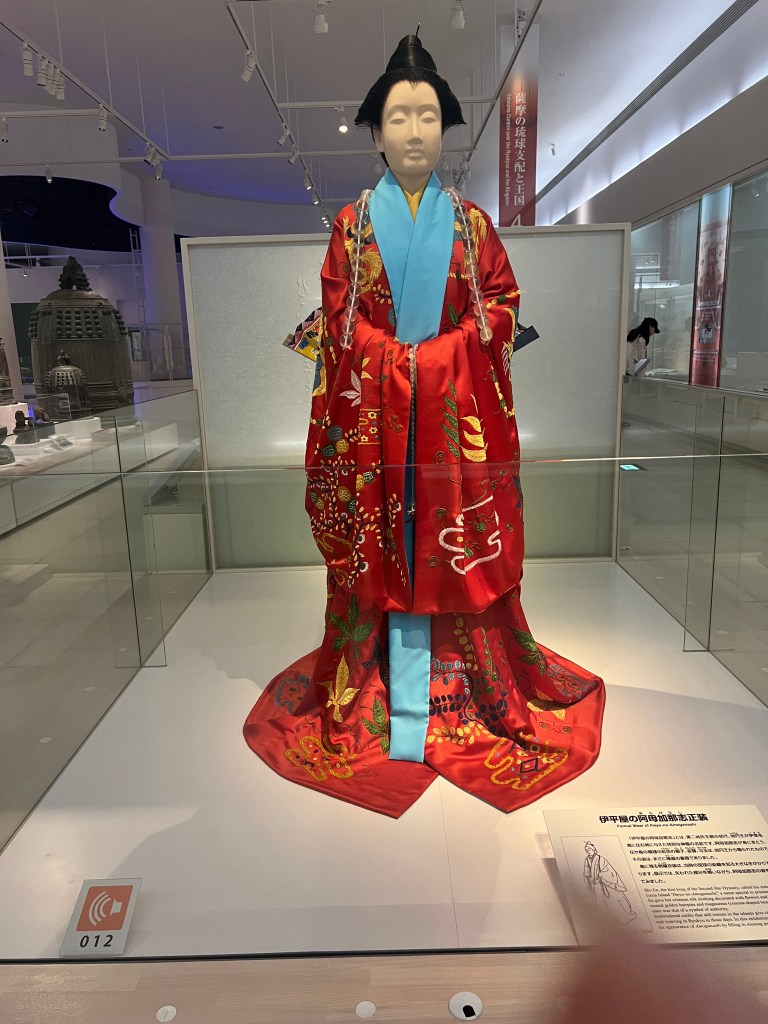
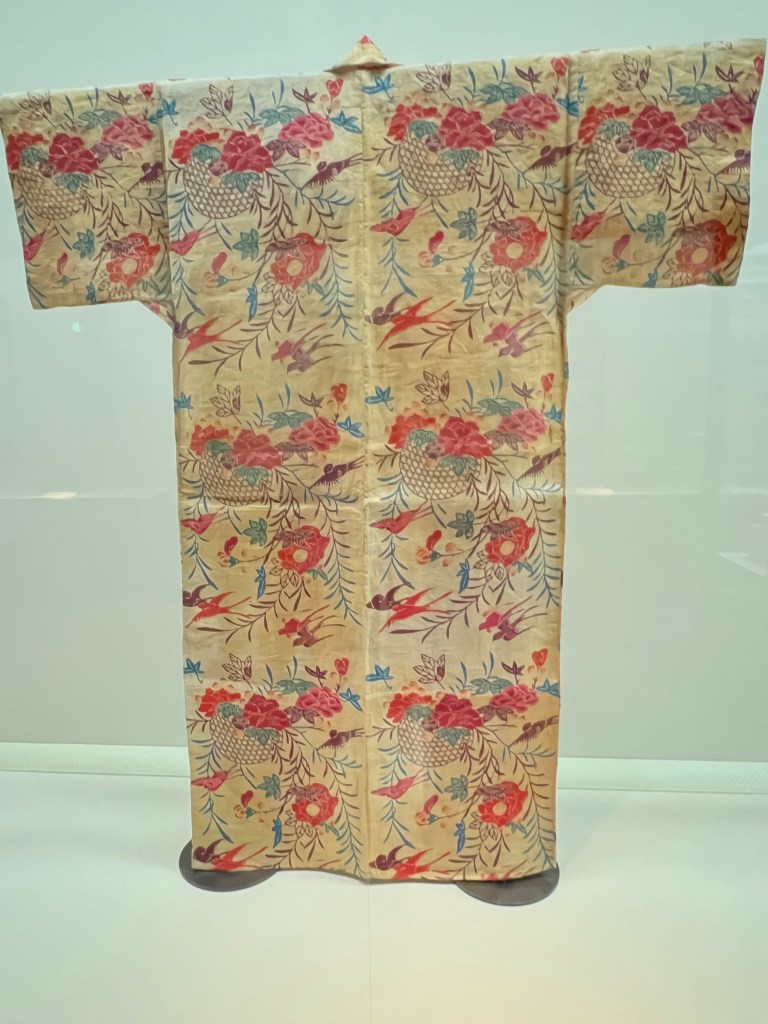
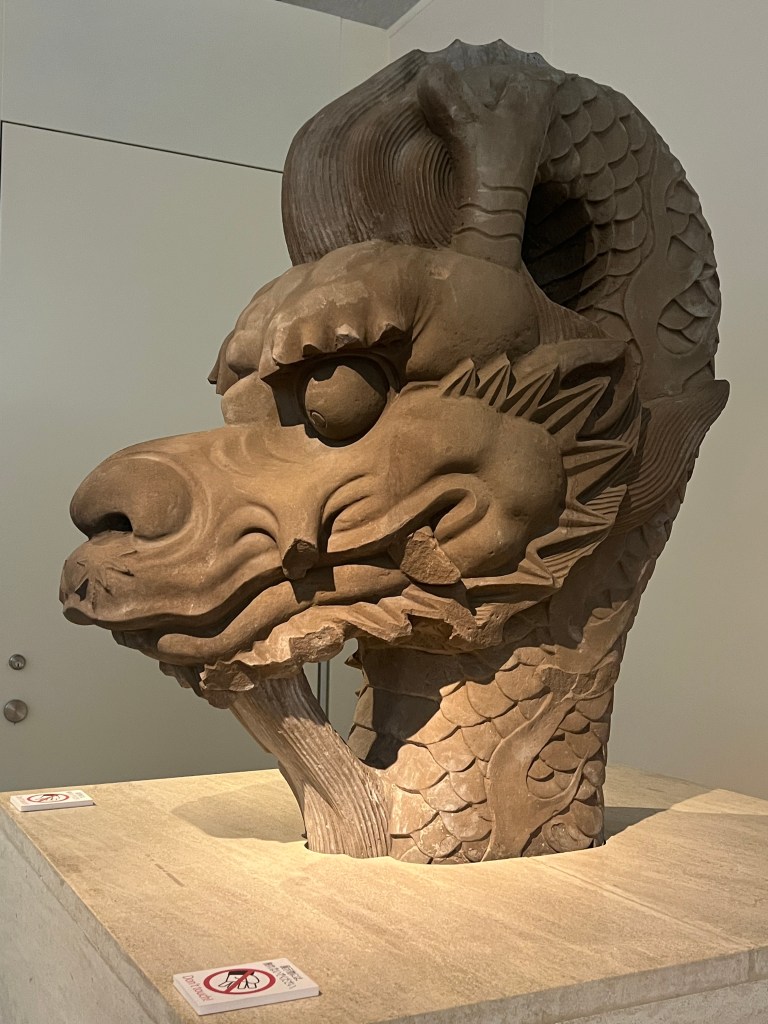
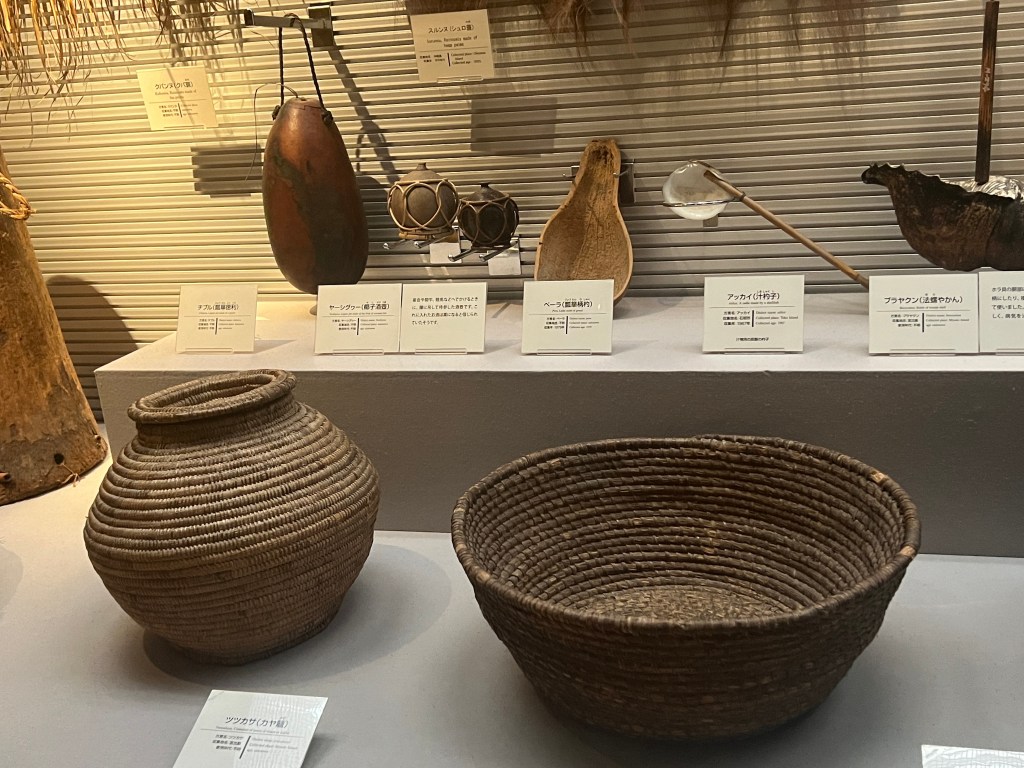
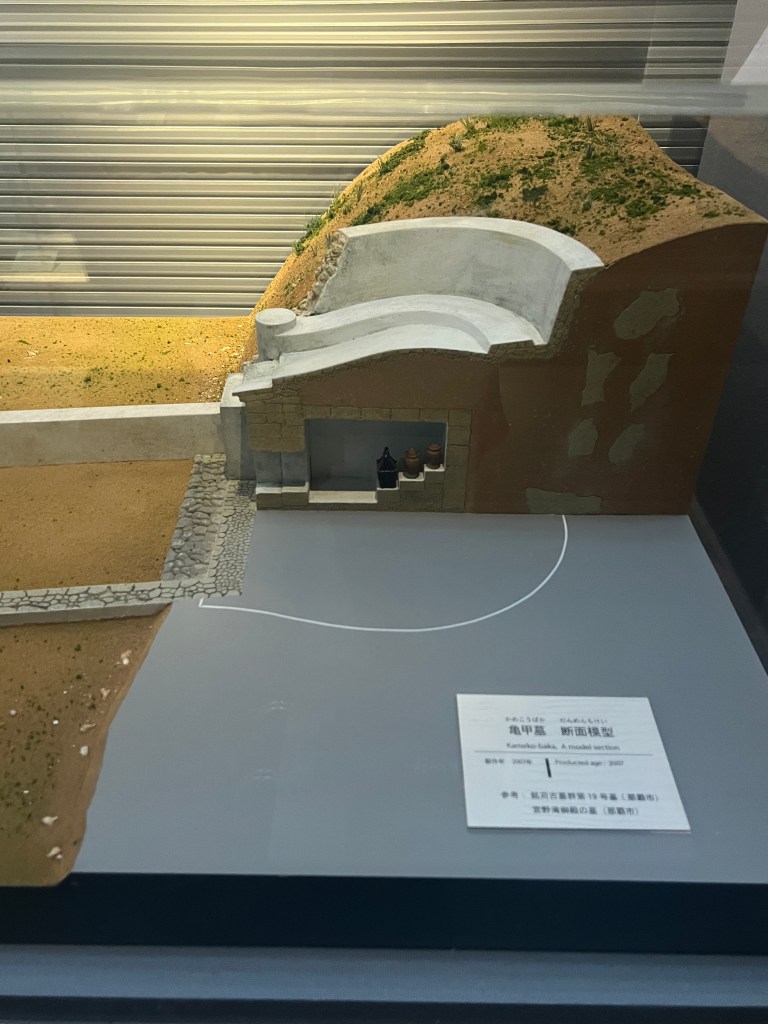
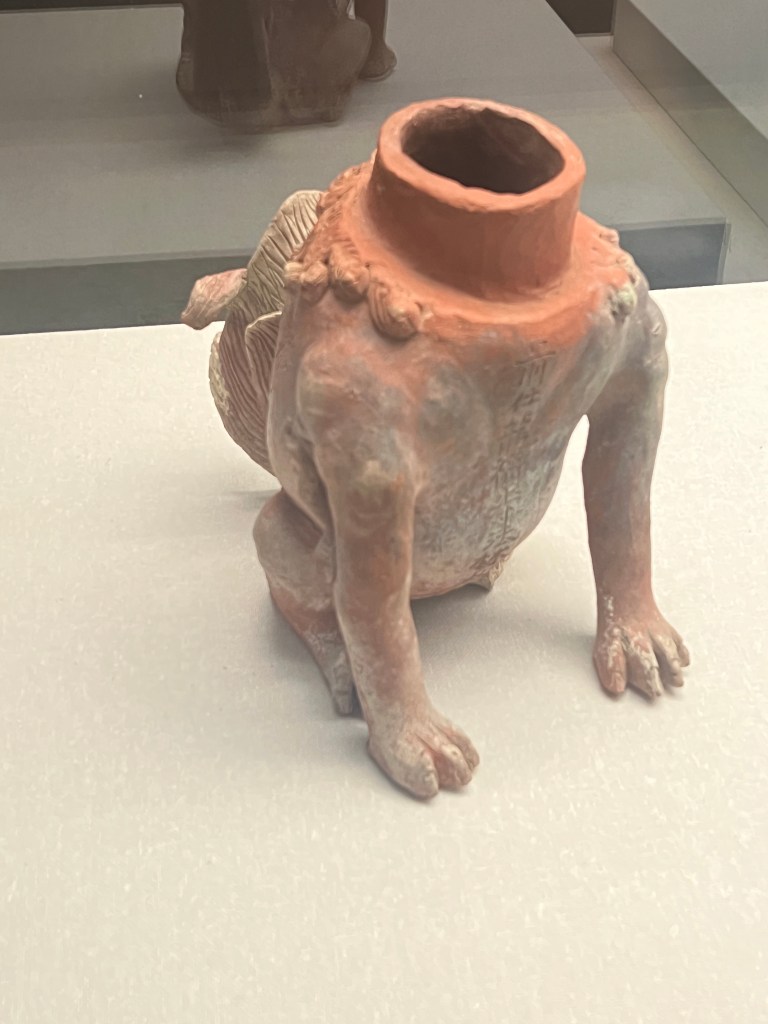
I will post pictures of some of the items in the museum. There were sections on Okinawa history, pottery, wildlife, burial procedures and much more. It was very interesting and I learned a lot of what I had never known (or forgot) about the US involvement in Okinawa.

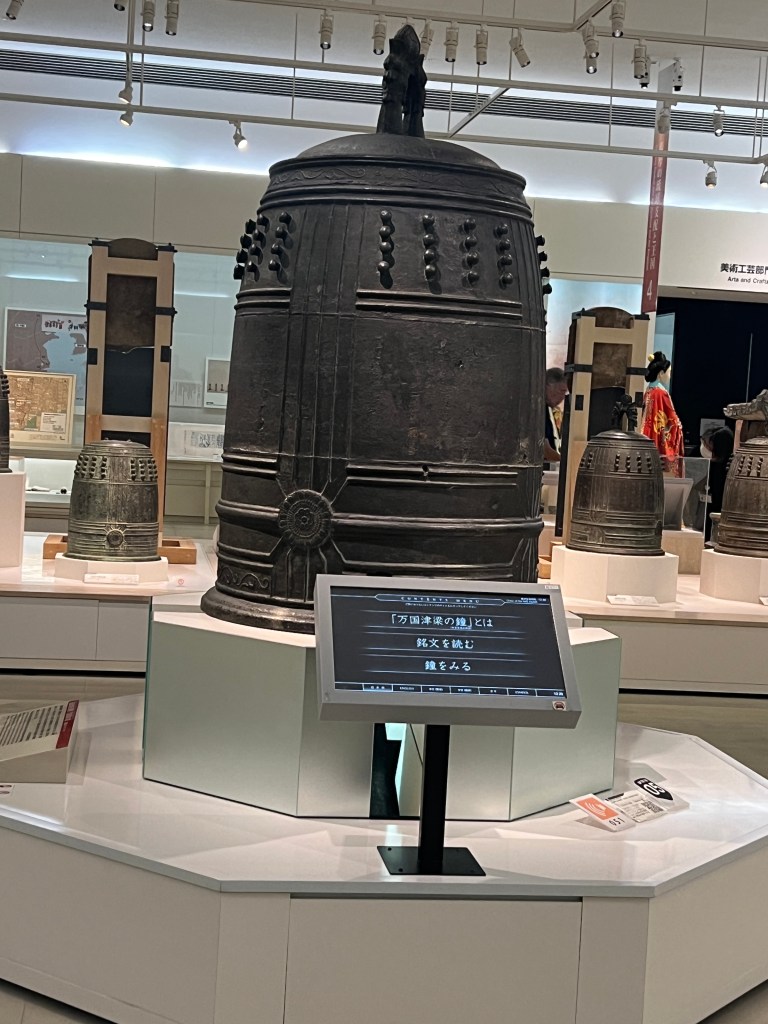
Old Shurijo Caste Seiden Bell cast by order of the 6th king of the first Sho Dynasty. It symbolizes a prosperous era of the Ryuku Kingdom
A burial case
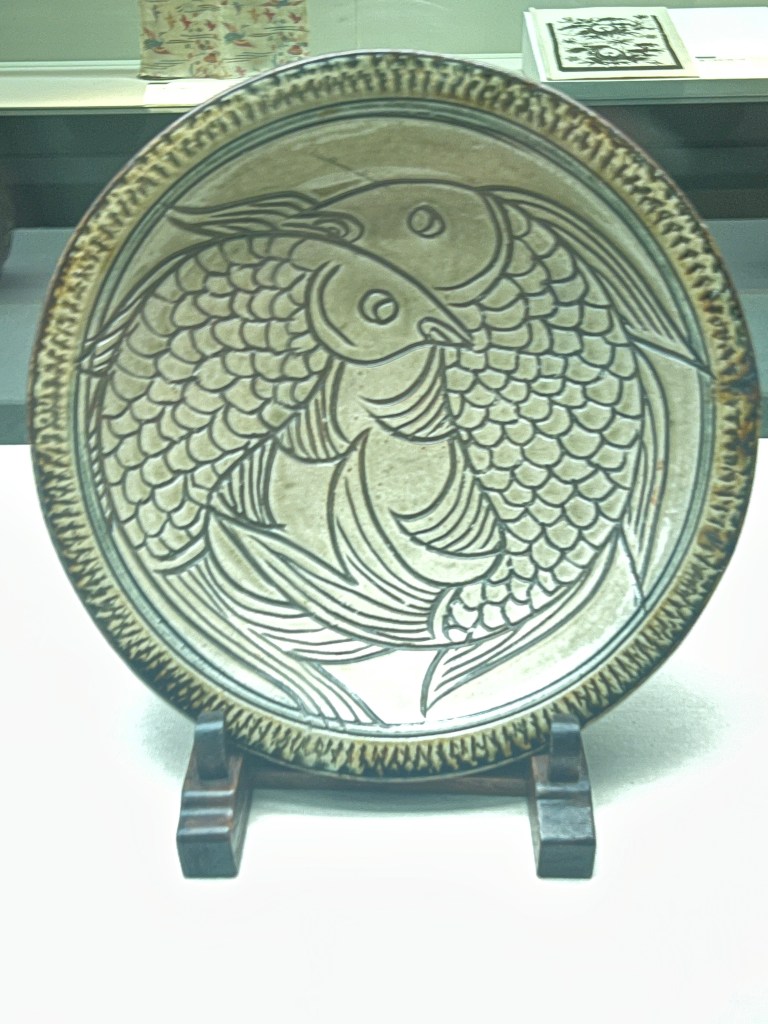
The pottery was beautiful
Early goggles used by fishermen when they dove with fishing nets
The baskets were stunning
A turtleback tomb.Turtles are considered sacred

When someone dies, they keep the body in a coffin until only the skeleton remains. Then they wash the bones in front of the tomb and proceed with cremation or sometimes re-bury the bones. This ancient tradition is still carried on for many families. More elaborate family tombs can cost as much as a house. Family celebrations are often held at the tomb site.

A holder for ashes

There were two model reproductions of Minatogawa Man as well as skull fragments of people who lived here 20,000 years ago.

We went to the museum cafe for a drink, did a bit of shopping in the museum store and easily got a taxi back to the ship.The tourist bureau at the port was helpful with a map and even wrote out directions in Japanese for us to hand to the taxi driver both ways. Most often, our daily newsletter on the ship gives the translation and we take a photo of it or take the newsletter to show to drivers. It works for the way back to the ship but not to where we want to go, so we were glad to have that. Neither of the taxi drivers spoke any English.

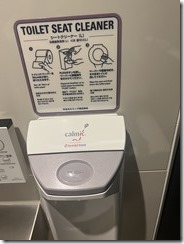
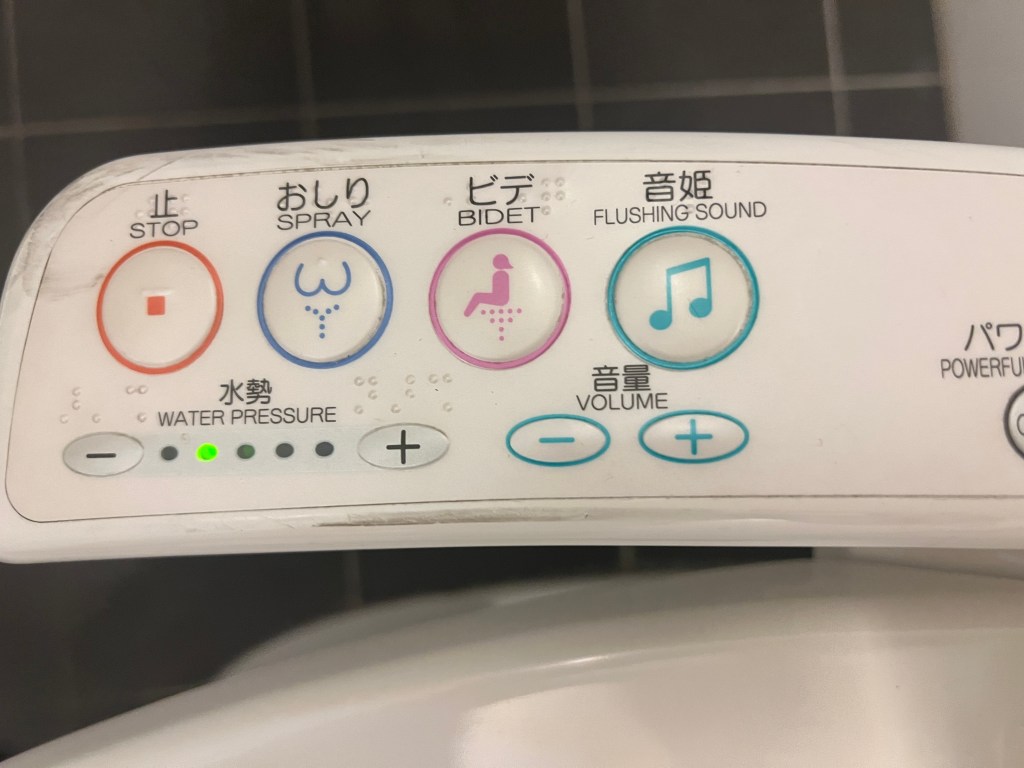
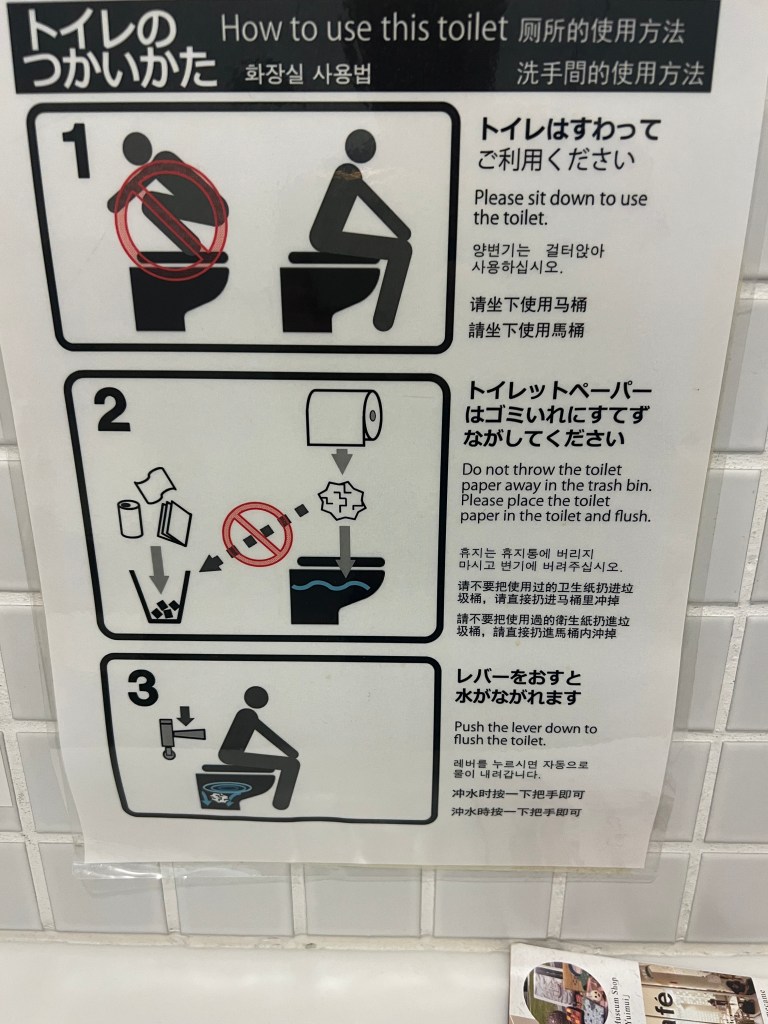
The bathrooms in Japan are quite amazing. The toilets have settings on the side for spray, bidet and even music to hide the sound of urinating and flushing. But for people used to squatting in the bathrooms in countries without western toilets, they also have directions on how to use the western toilet.

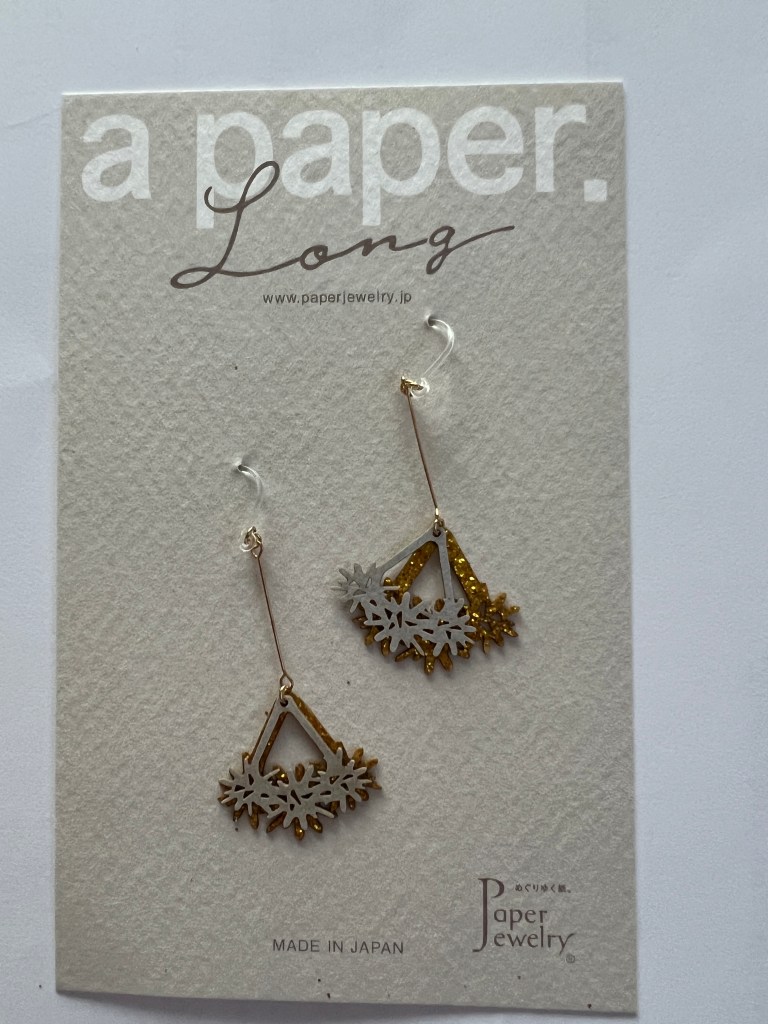
I bought some paper earrings in the museum shop. Very unique.

Tomorrow we arrive in Amami Oshima (Naze), Japan, a new port for us.

Posted in Asia, Excursions, June, World Cruise #4 | 1 Comment

Taipei (Keelung), Taiwan

June 11 and 12, 2023

We have only been to Taipei once before and due to the cancellation of Ishigaki, Japan, we have an overnight here.  Last time we were here, we went to the Yangmingshan National Park.  This time, we booked a night tour – Sky Lantern by night.

Because our tour wasn’t leaving until 6:20 PM, we had the afternoon (the ship docked at noon) to explore the city of Keelung which is where the port for Taipei is located.

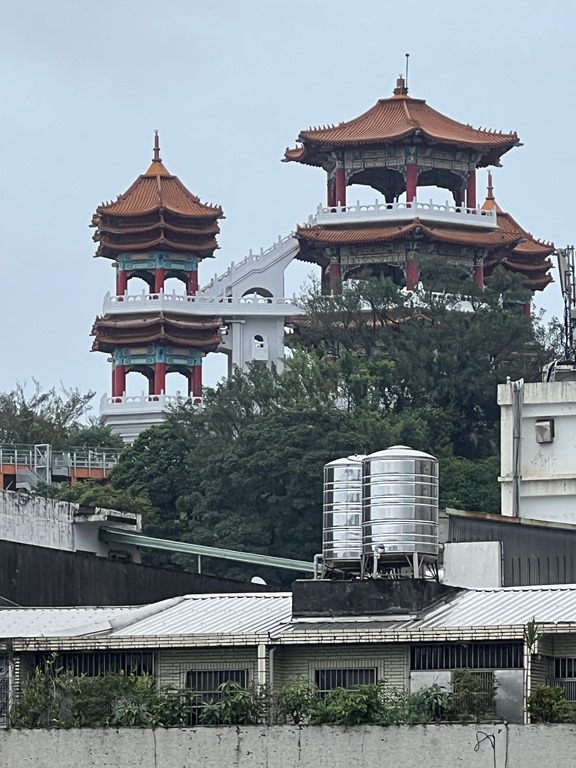
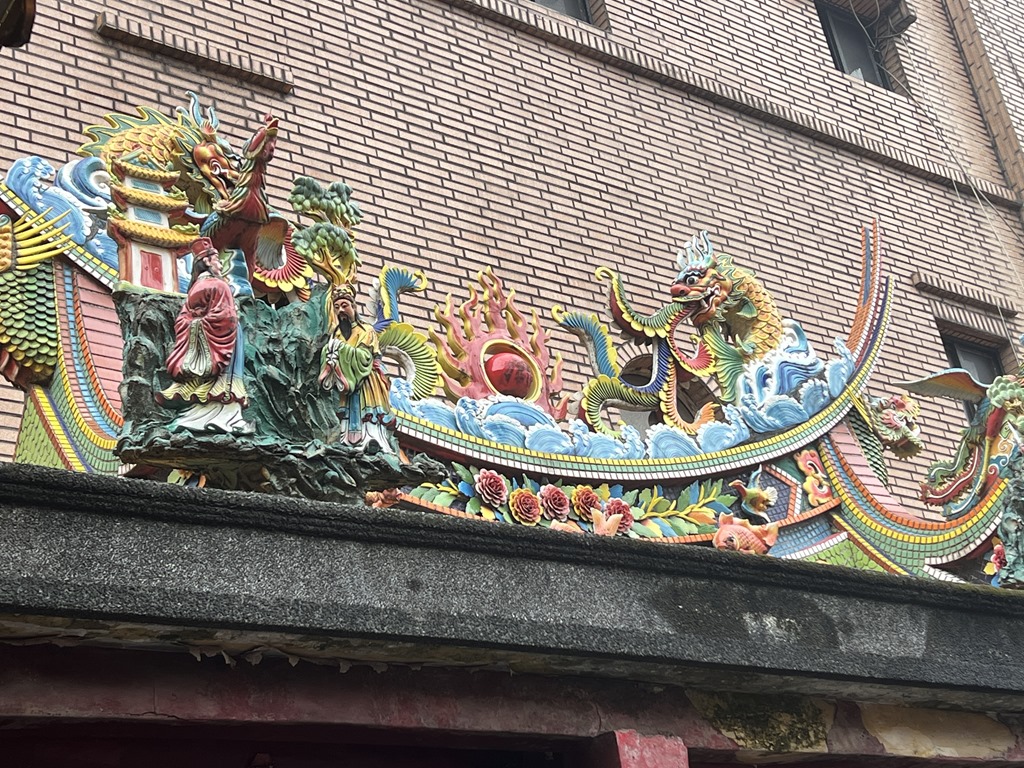
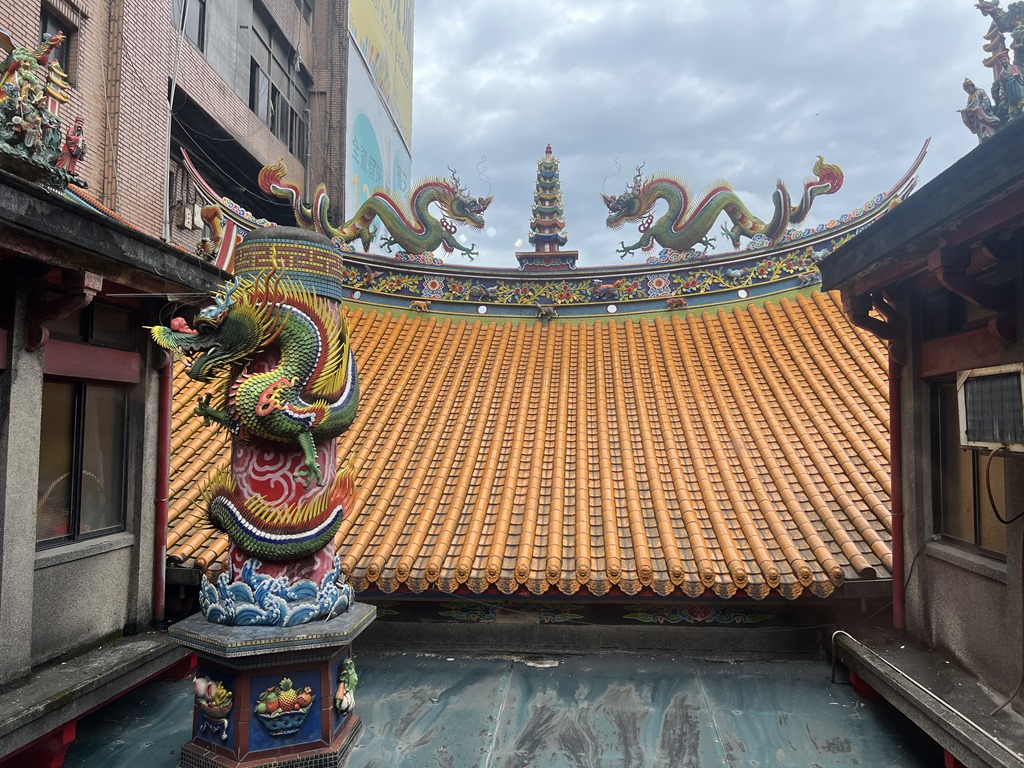
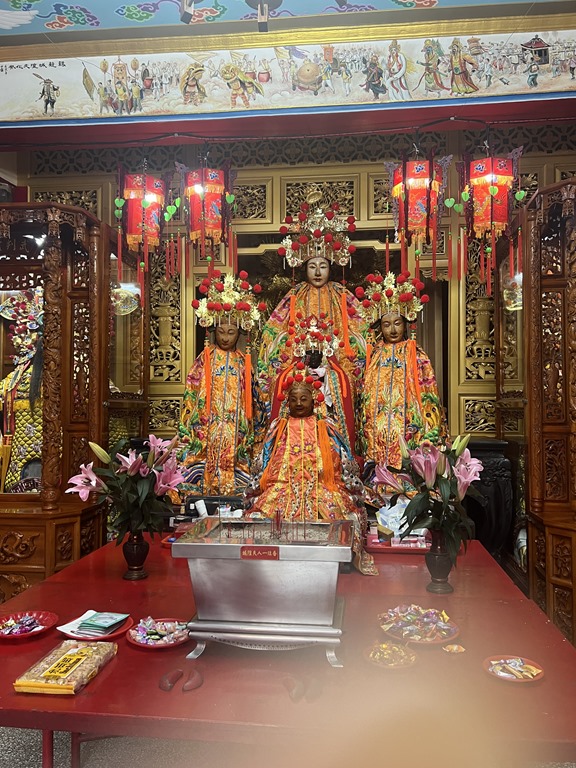
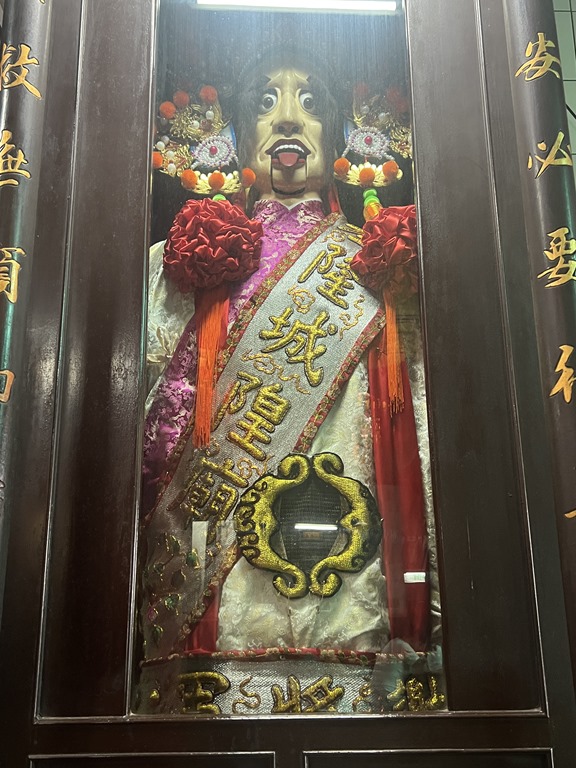
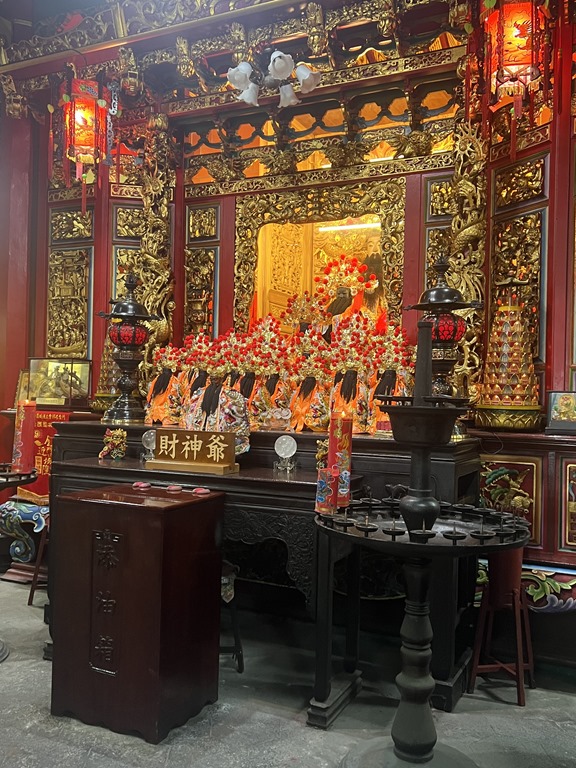
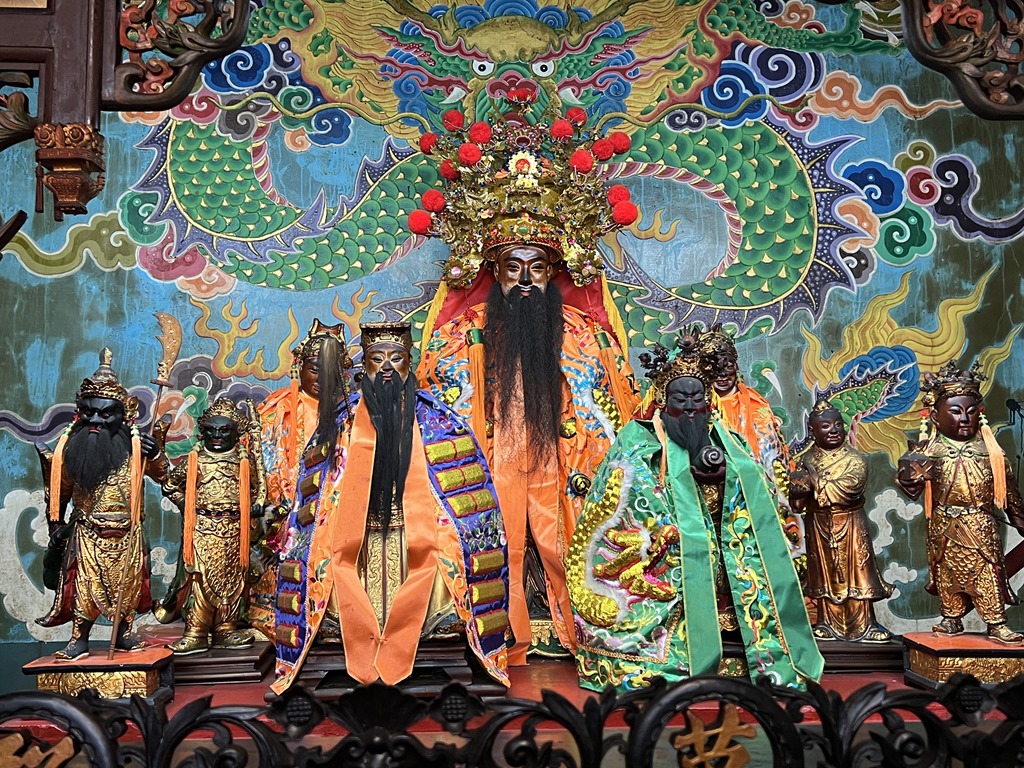
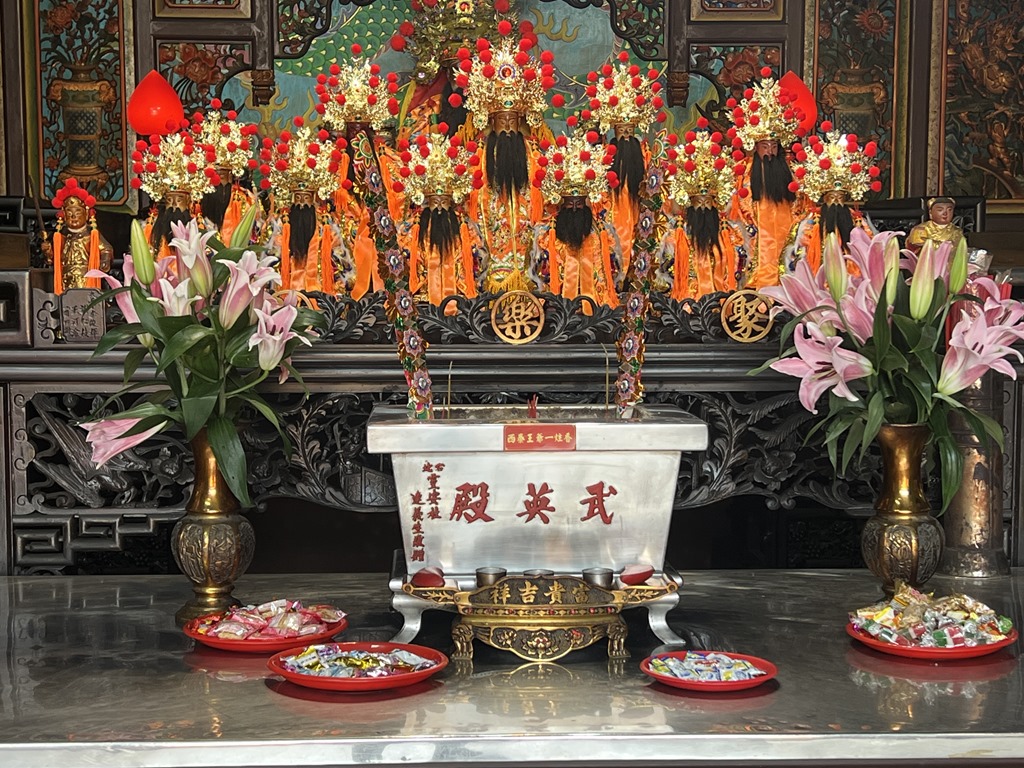
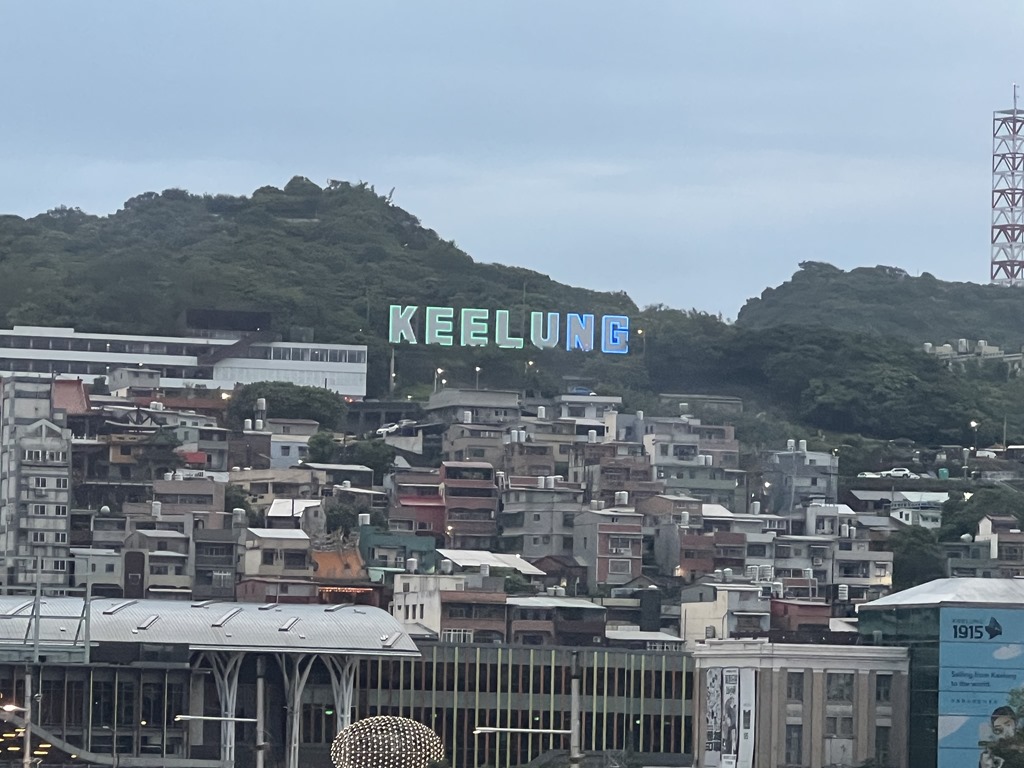
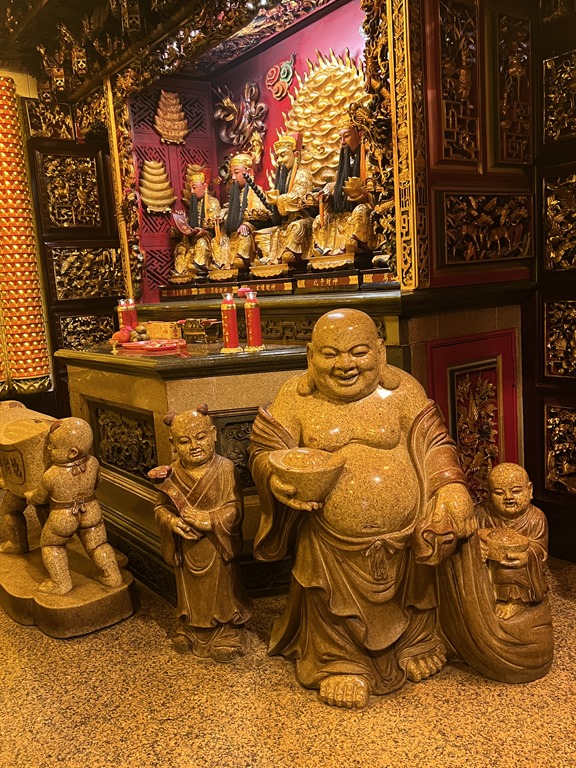
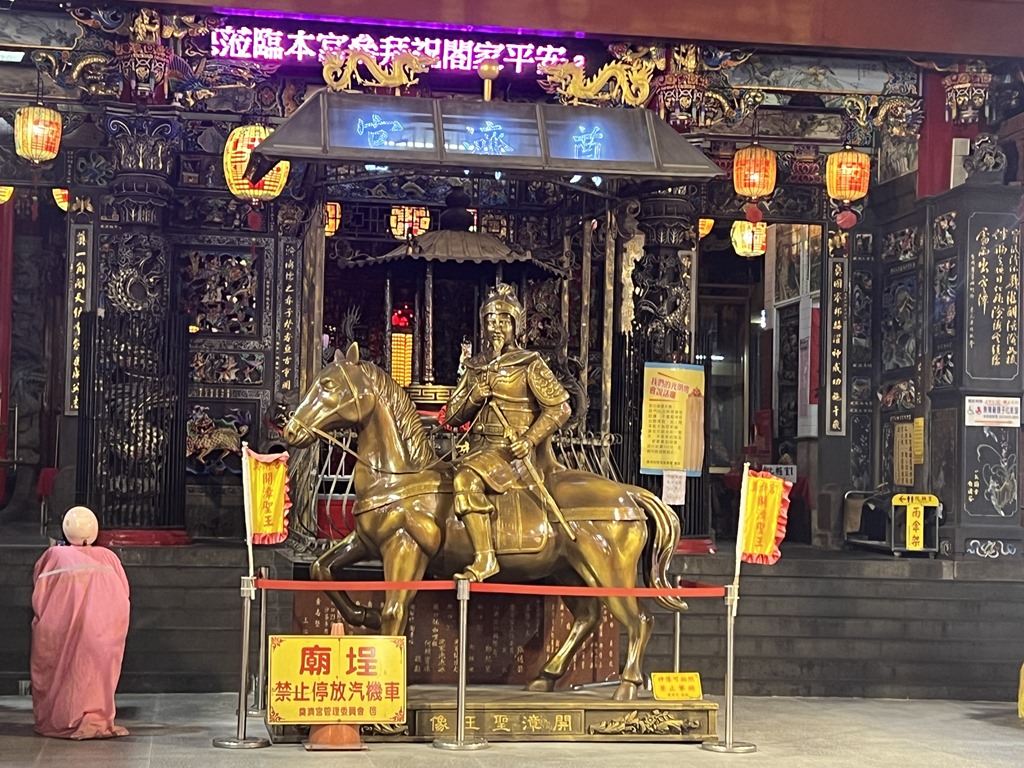
We wandered around the city and saw several temples, both Buddhist and Tao. We walked through markets and had the chance to buy some mangoes and flowers. We felt very safe everywhere and the traffic is well controlled by traffic lights which allow plenty of time to cross the busy streets.

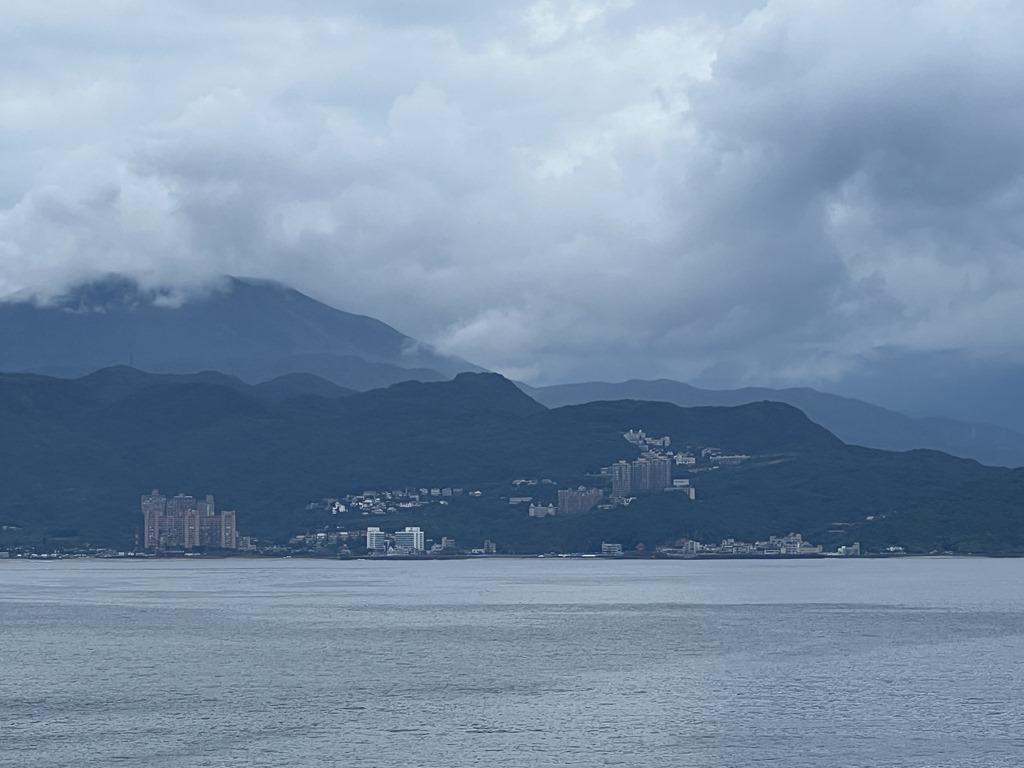
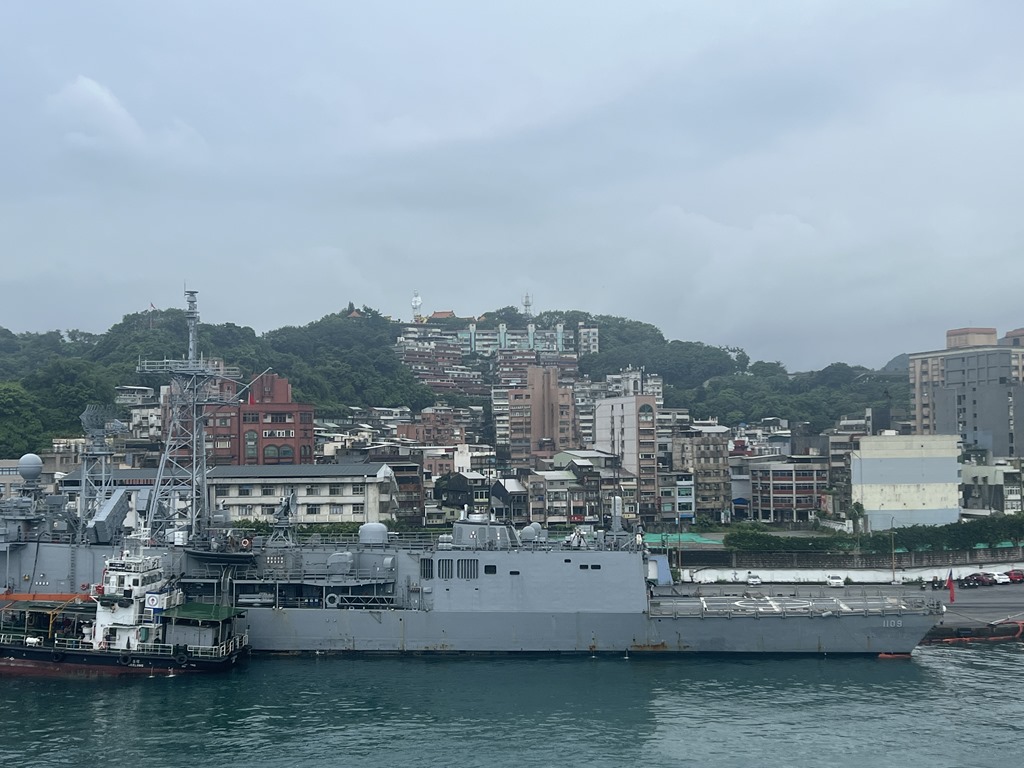
Here are a few pictures of our sail in.  Many people were gathered on the dock and were taking pictures of us as we arrived!

IMG_9494~photoIMG_9493~photoIMG_9495~photoIMG_9497~photoIMG_9496~photo

IMG_9504~photoIMG_9503~photoIMG_9501~photoIMG_9500~photoIMG_9498~photoIMG_9506~photoIMG_9505~photo

IMG_9509~photoIMG_9508~photoIMG_9507~photoIMG_9530~photoIMG_9528~photoIMG_9527~photoIMG_9524~photoIMG_9520~photo

Our tour in the evening was led by a guide named Laurene which he said is his French name. He mentioned the Han tribe which our guide, Tom,  from yesterday talked about because he was of Han ancestry. The Han tribe is the world’s largest ethnic group, making up 18 % of the global population.  There are 12 million people in Taipei but only 4000 live  in Shifen which is where we were headed for the sky lantern ceremony.  Laurene said that this ceremony is one of the top 10 things to see and do in Taiwan. The official Sky Lantern festival is held on the last day of Chinese New Year and during the festival, lanterns cover the entire sky.

IMG_9601~photo

It took about 45 minutes to travel to Shifen.  I mentioned in a previous post about the number of 7 Eleven stores here.  Laurene said you can do everything in these convenience stores. They are post offices, restaurants, beauty suppliers and more.  He said there are 13,000 in Taiwan.  The country with the most is South Korea.

There is a train that runs right next to the area of the sky lantern launching.  Here’s what we did:

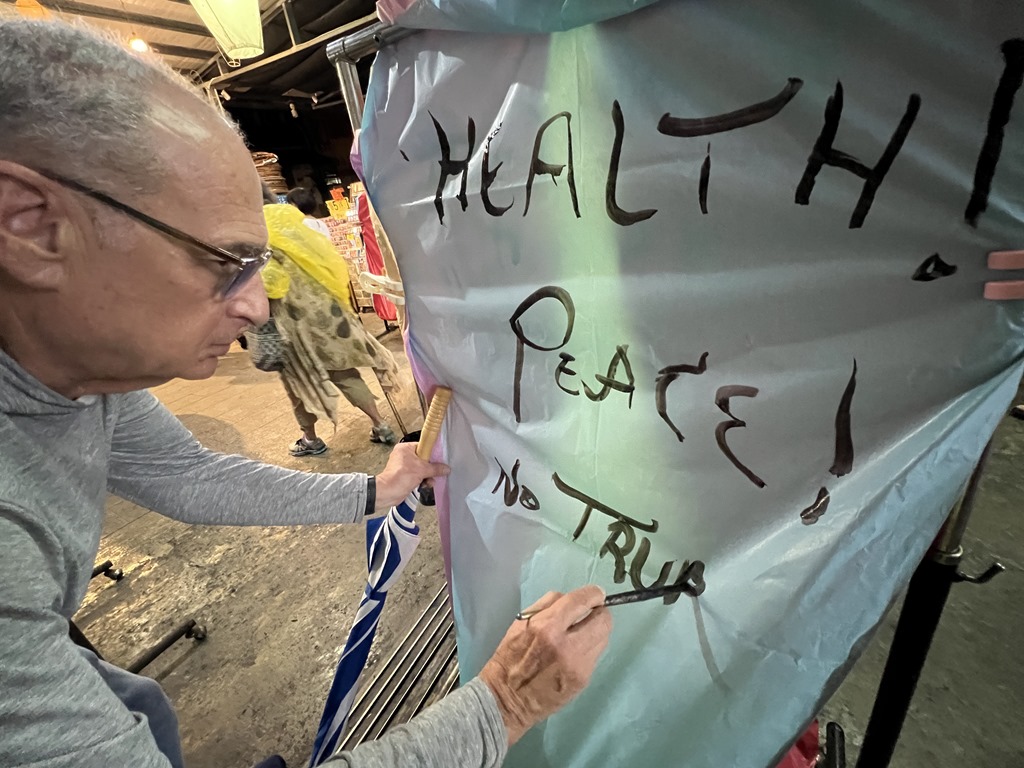
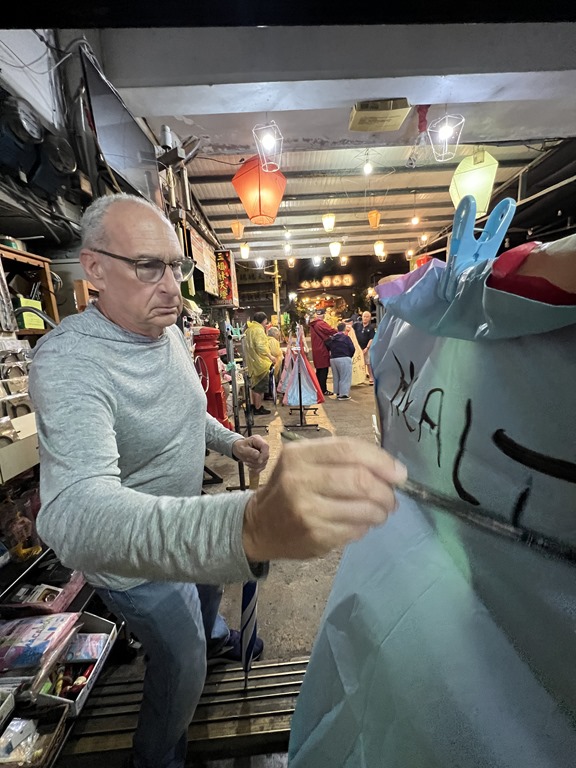
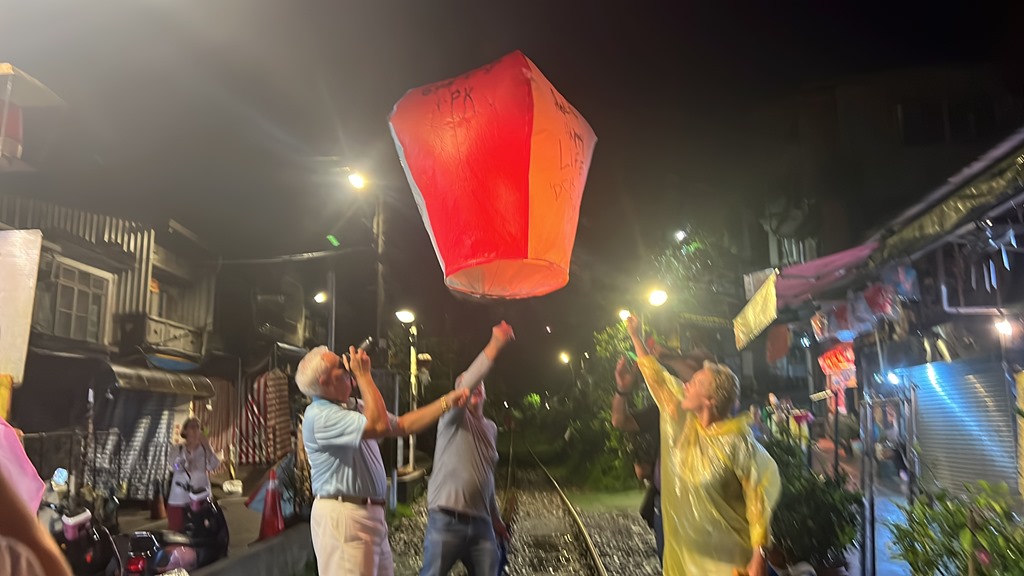
There were 4 people to a lantern.  These were huge balloon like lanterns with 4 sides, each a different color.  We each had a side to write our wishes on and then we were on the train tracks when one of the people in charge lit the wick inside and we launched the balloon.

IMG_9541~photoIMG_9538~photoIMG_9534~photoIMG_9533~photoIMG_9531~photo

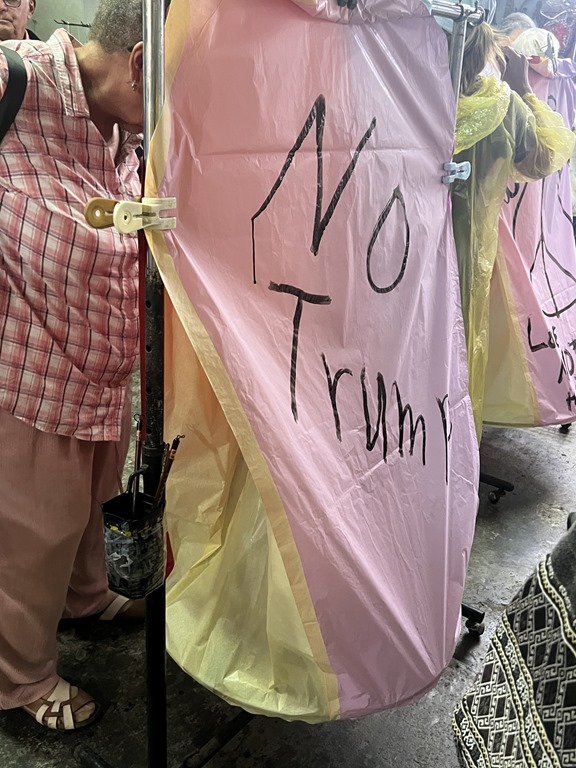
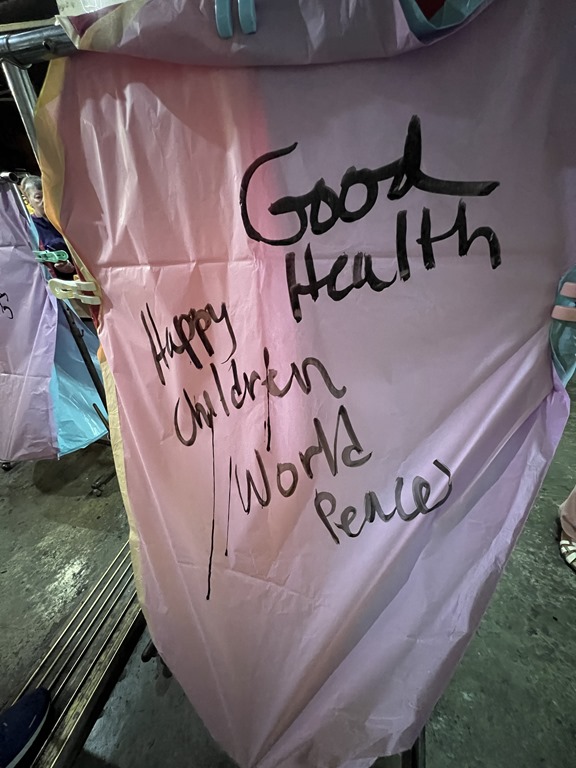
My wishes were Good Health, Happy Children and World Peace.  Norm’s wishes were Health, Peace and No Trump. One woman next to us wrote that last message on hers and one of the people at the same lantern left when she saw it – to join another group. 

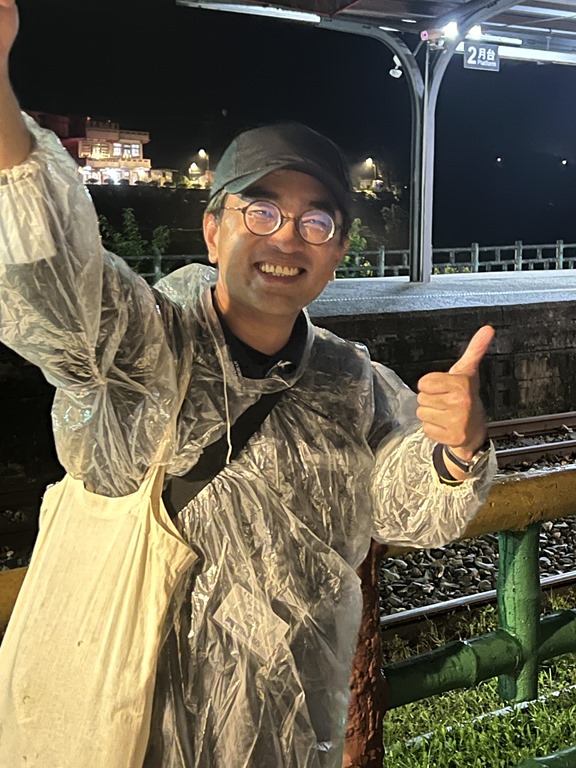
I have tried to load the video of the actual launching and the Wi-Fi is too slow, so if I can upload it in port sometime, I will try again.  But the pictures do tell the story as well. The lanterns are beautiful to see in the sky. We had a hard rain storm on the way to the site, so I had the disposable raincoat on which looks pretty stupid in the pictures!  But it did help keep the paint off of my clothes.

IMG_9587~photoIMG_9582~photoIMG_9557~photoIMG_9555~photo

After the launch we browsed in the shops and had a delicious mango smoothie.  We saw a few burned lanterns come down on the ground while we walked to and from the train bridge.

IMG_9598~photoIMG_9597~photo

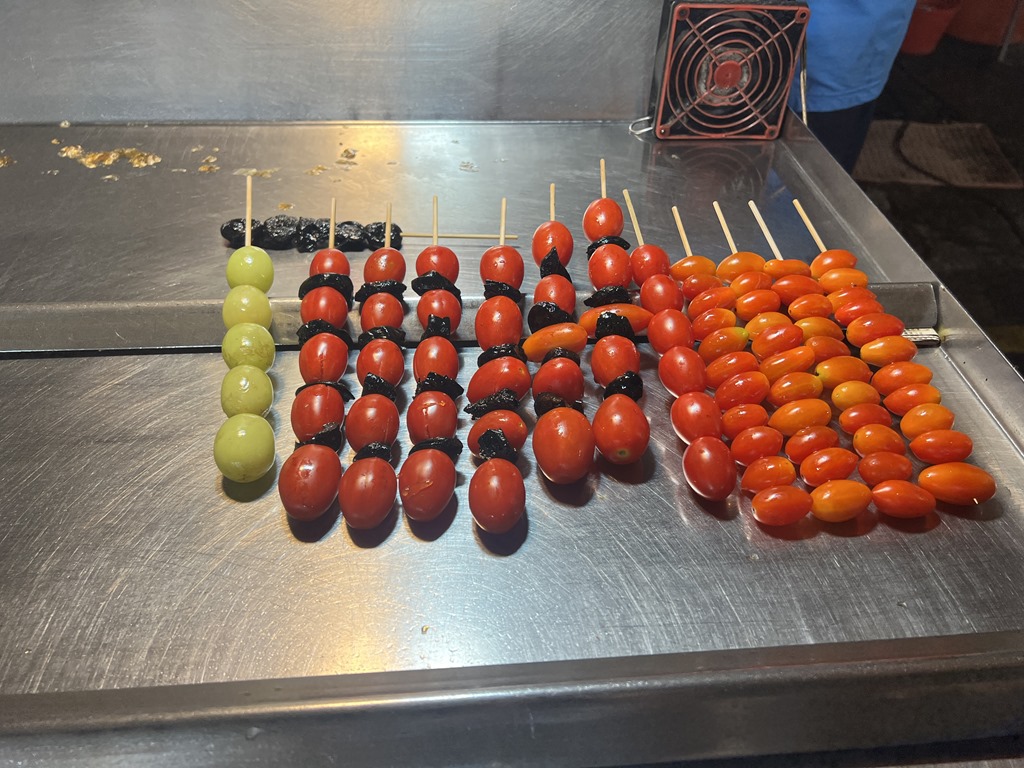
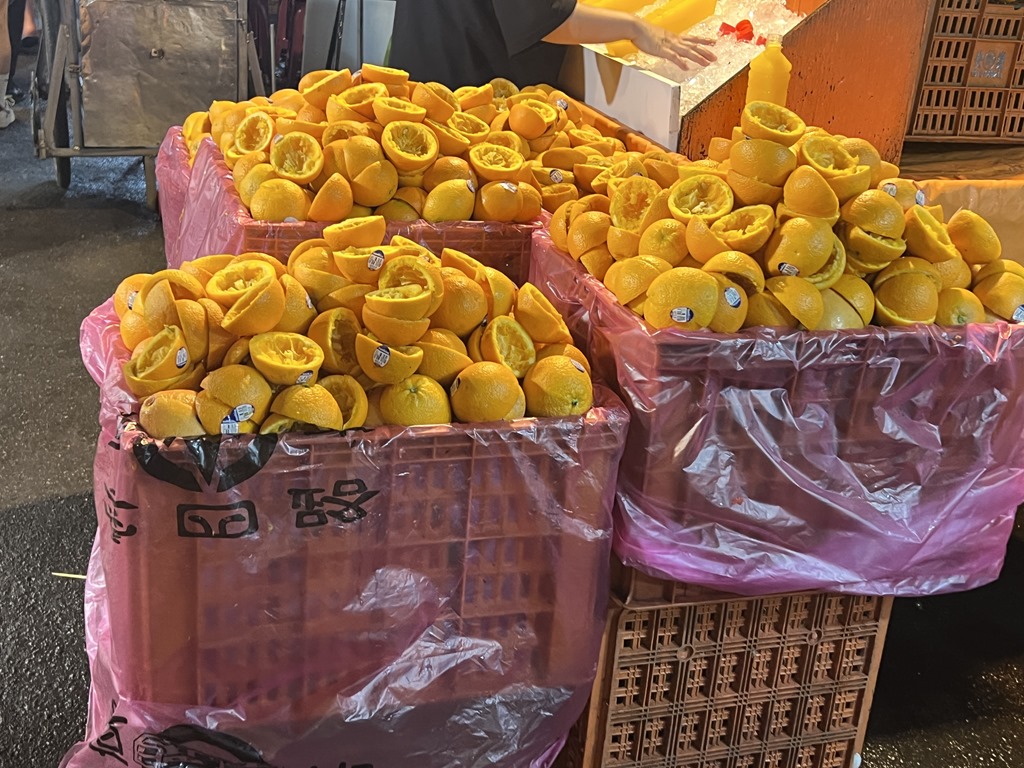
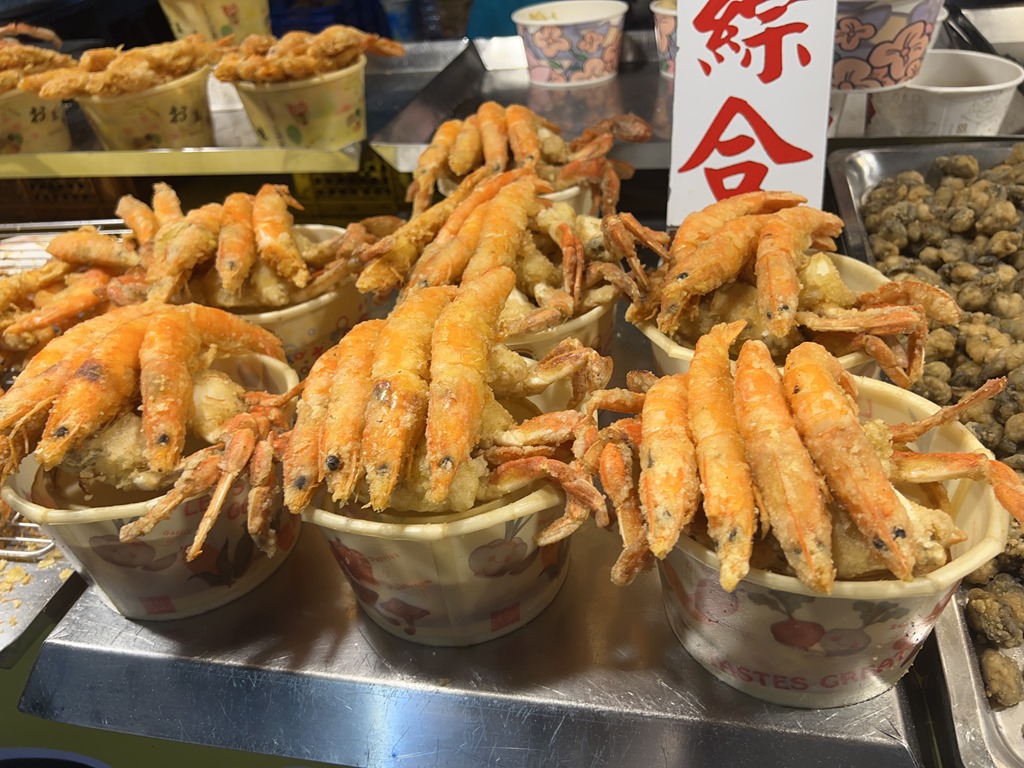
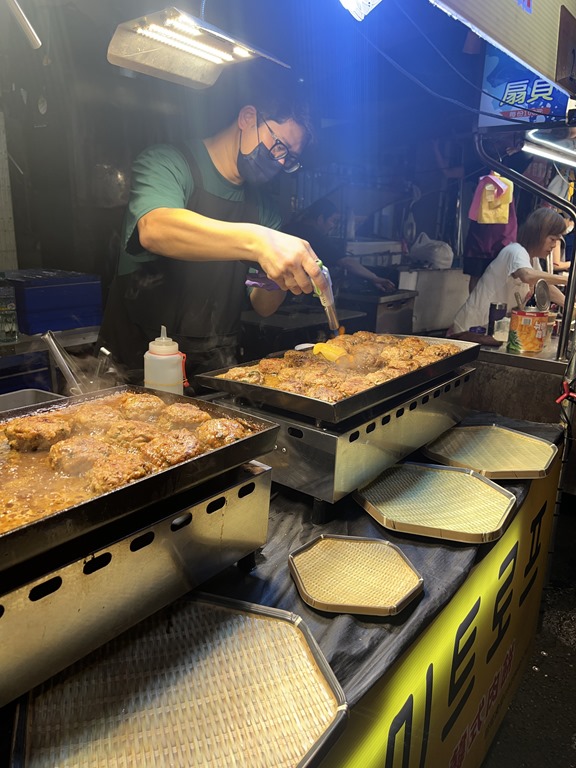
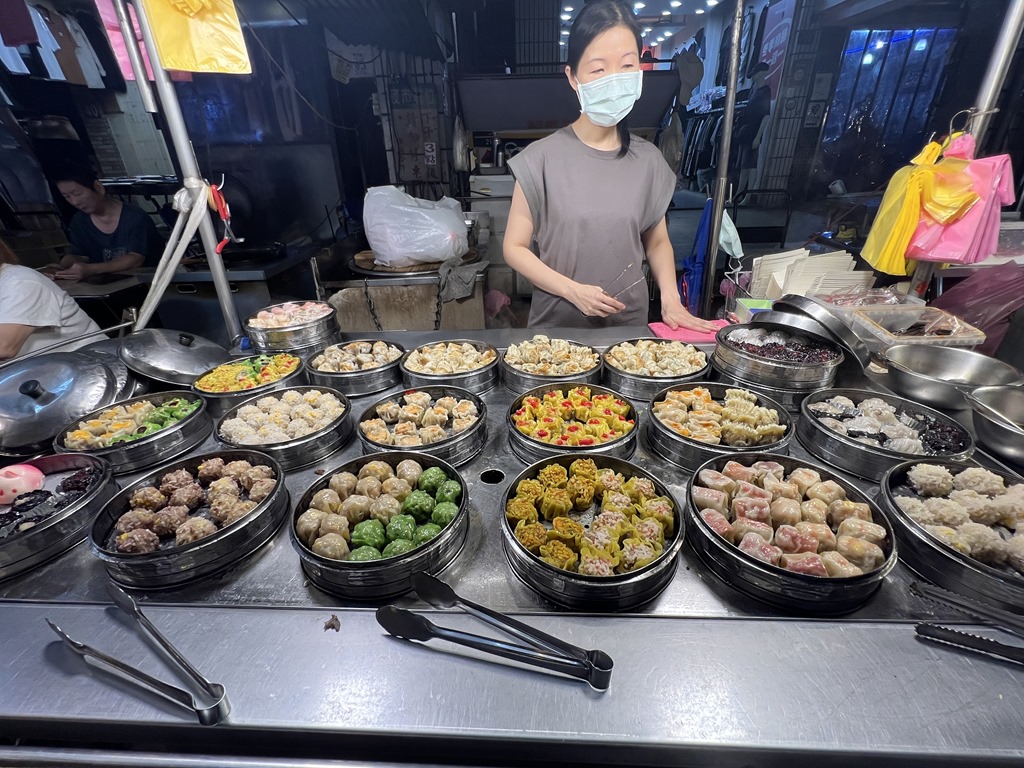
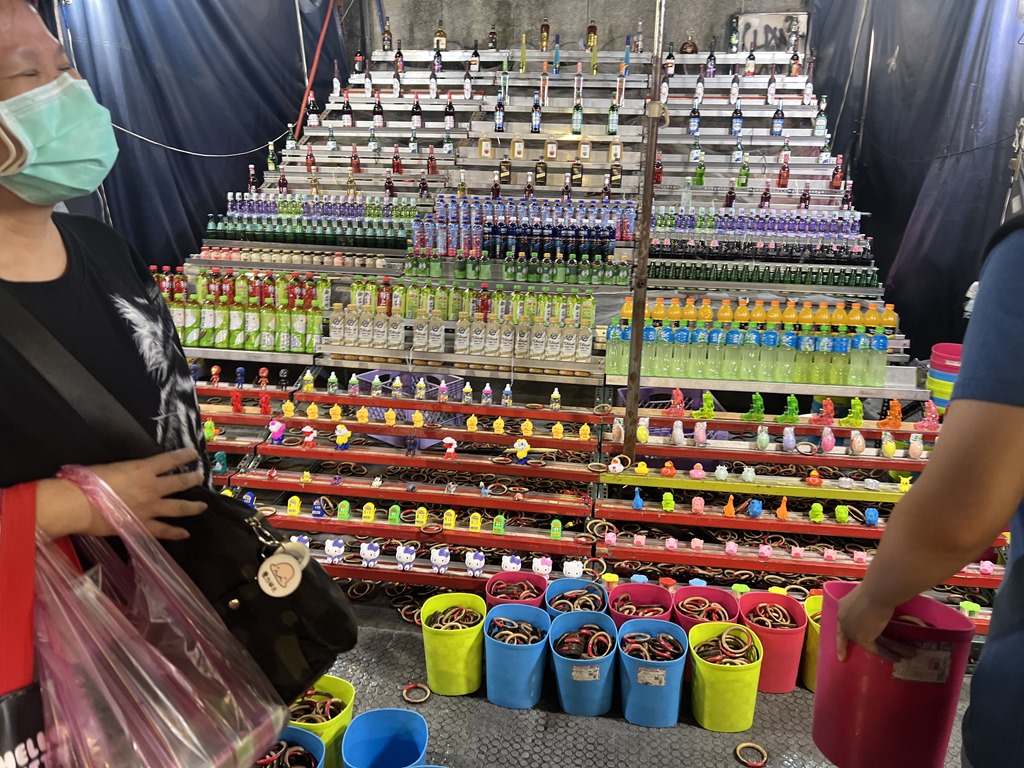
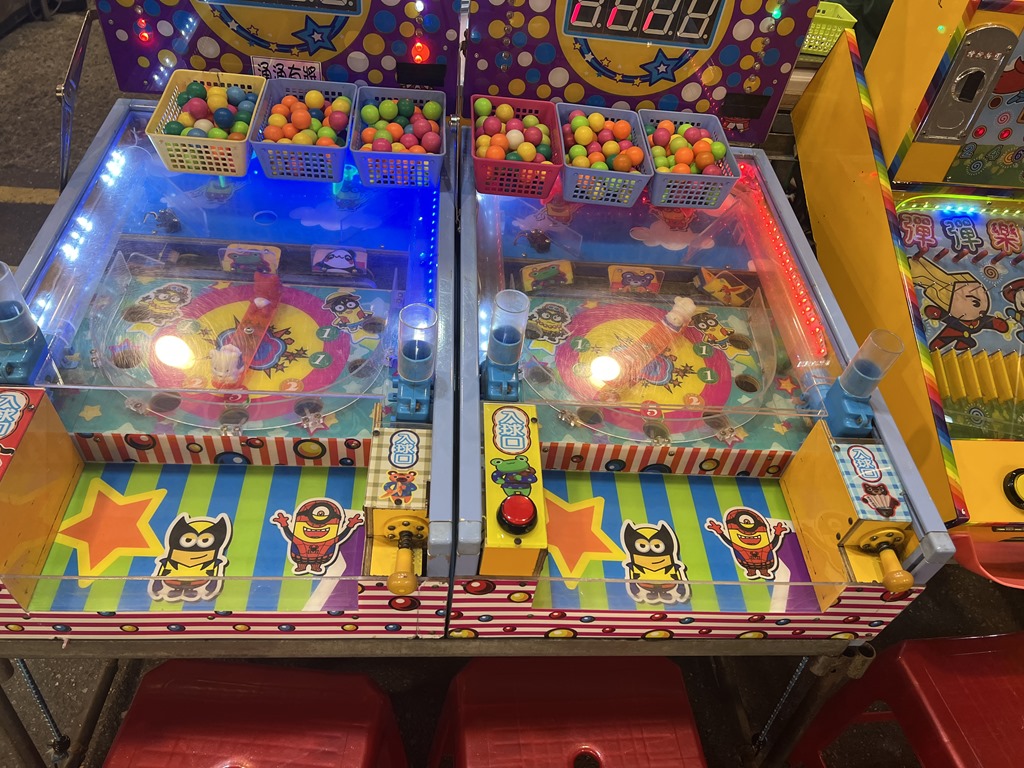
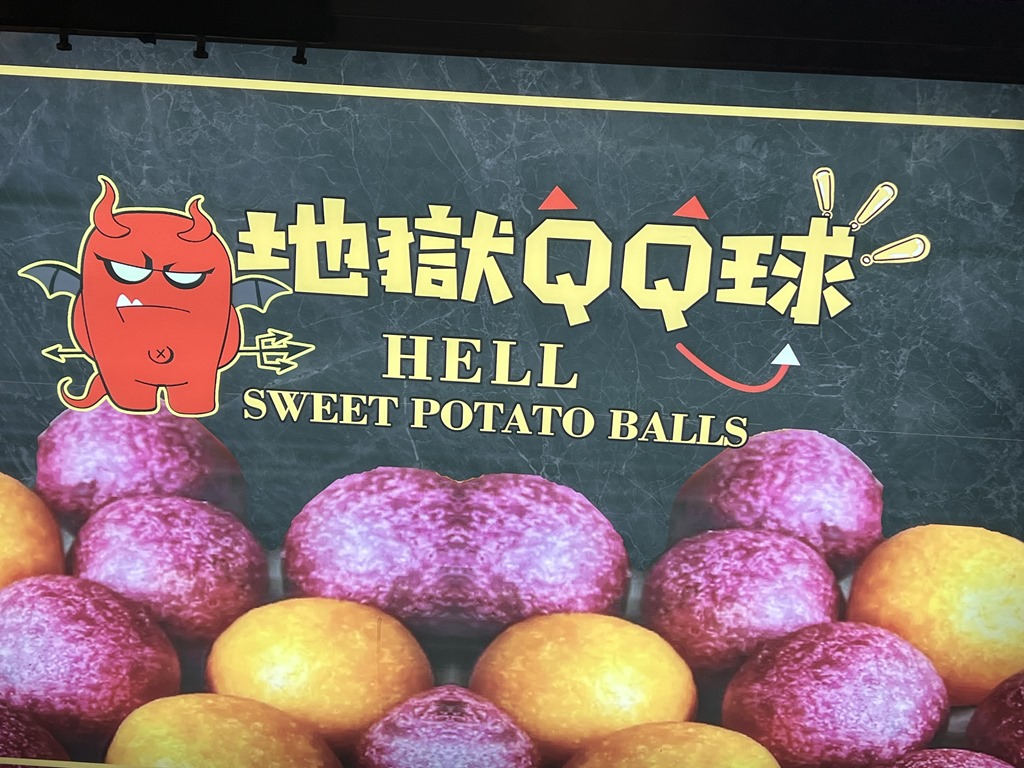
We returned to Keelung to visit the night market where all types of food are on display and being cooked and served.  There are booths for games, shops for clothing and shoes and some for iPhone accessories and children’s toys. Quite crowded and very interesting. The markets are all around a temple.  Laurene told us about some specialties at numbered shops and we were interested in seeing some of the unusual items.

IMG_9620~photoIMG_9619~photoIMG_9618~photoIMG_9616~photoIMG_9615~photoIMG_9614~photoIMG_9613~photoIMG_9612~photoIMG_9610~photoIMG_9609~photoIMG_9607~photoIMG_9604~photoIMG_9603~photoIMG_9602~photoIMG_9617~photo

Our butler, Rince, left some snacks in our room for when we returned.  It was close to 11 PM but we enjoyed some California rolls, a cheese plate and some sandwiches before we went to bed.  I watched some of the French Open men’s final – not too compelling as Djokovic was certain to win with how he played the first 2 sets.

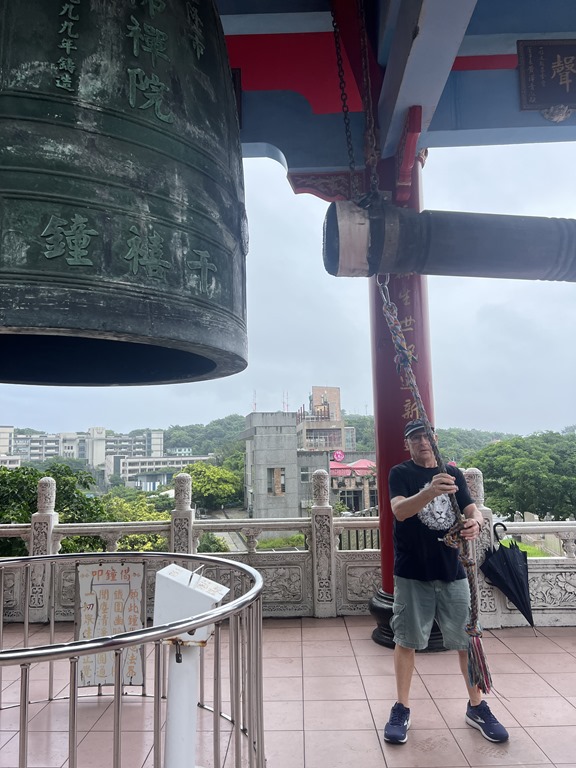
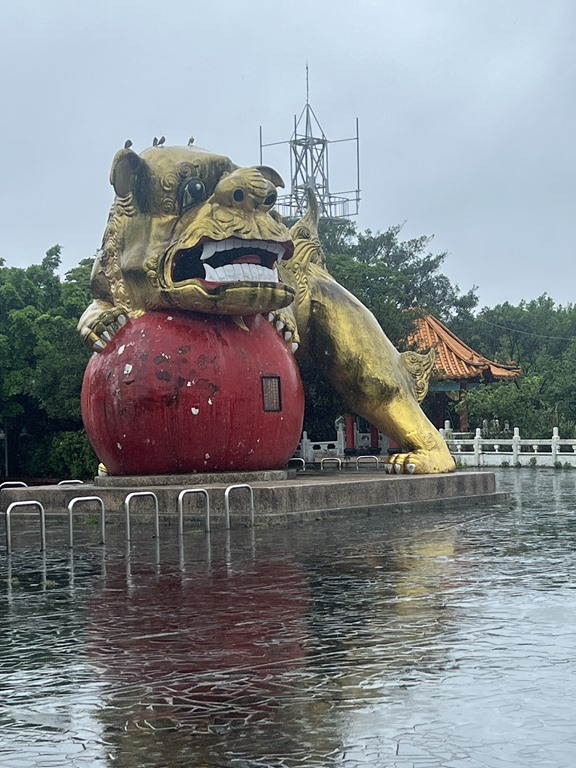
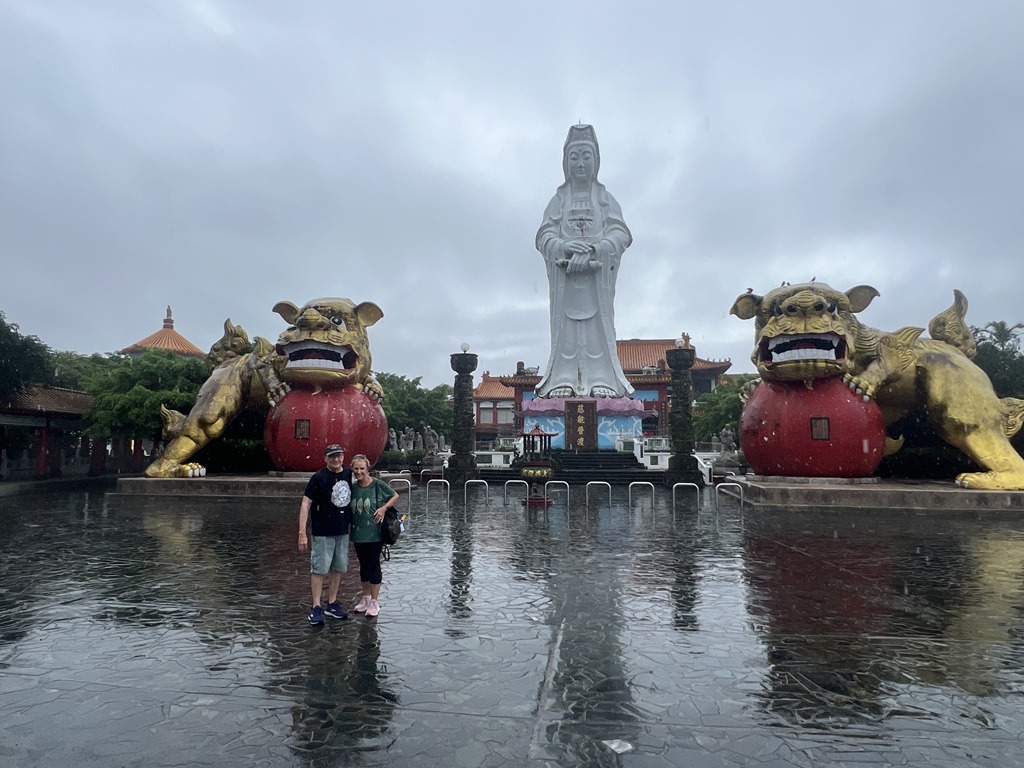
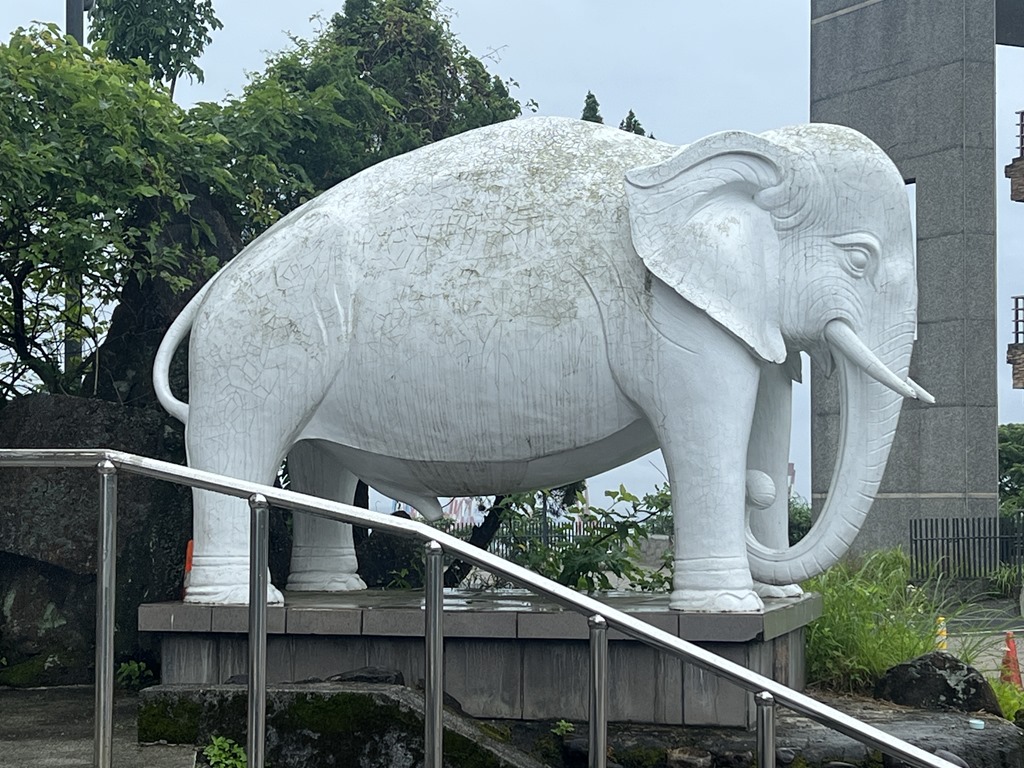
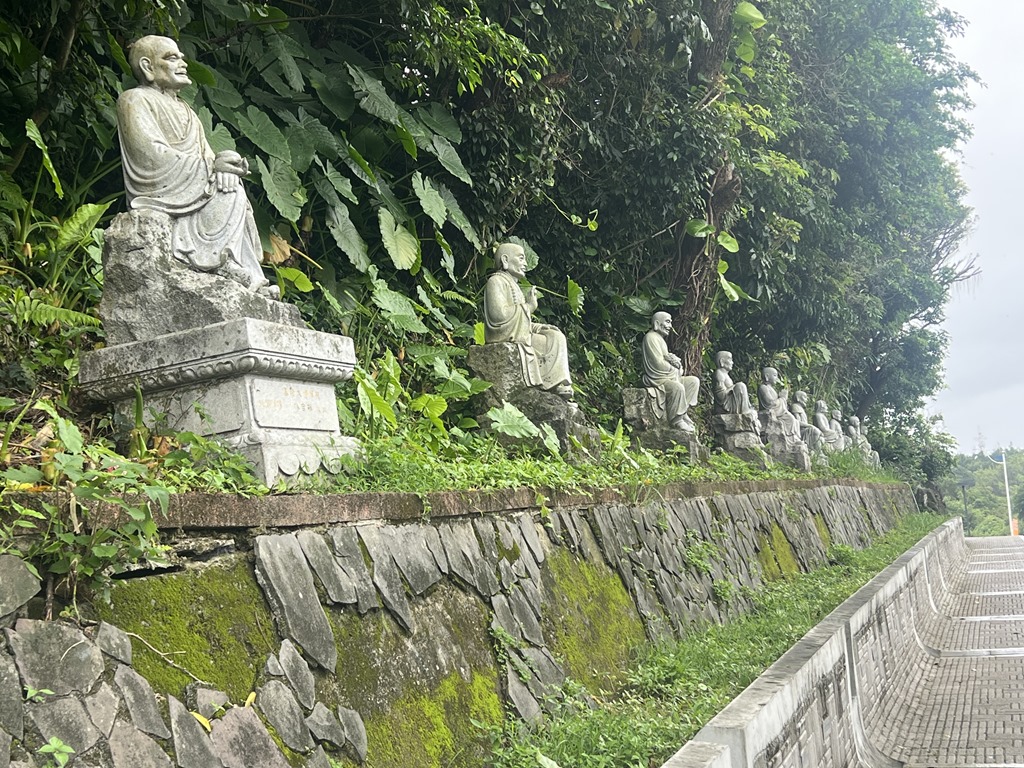
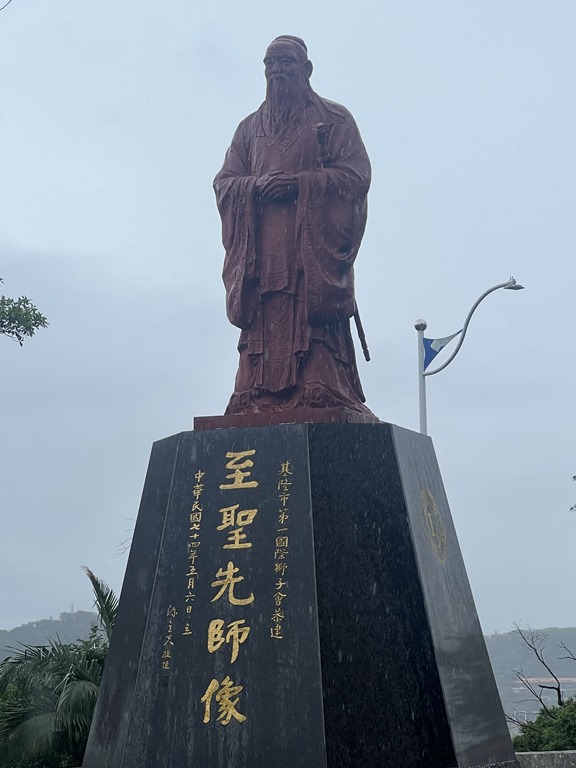
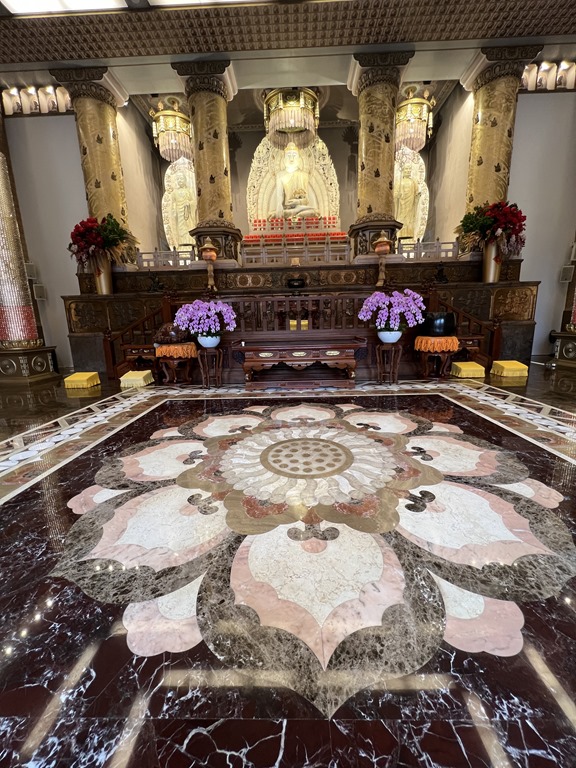
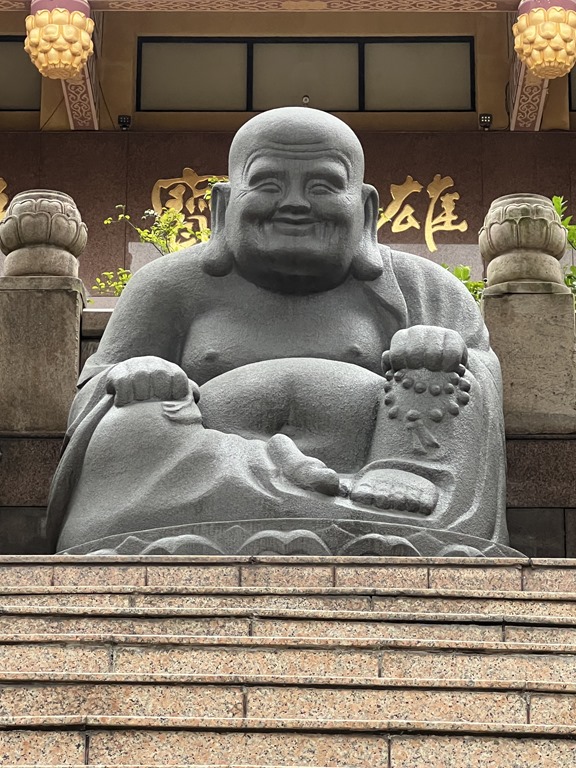
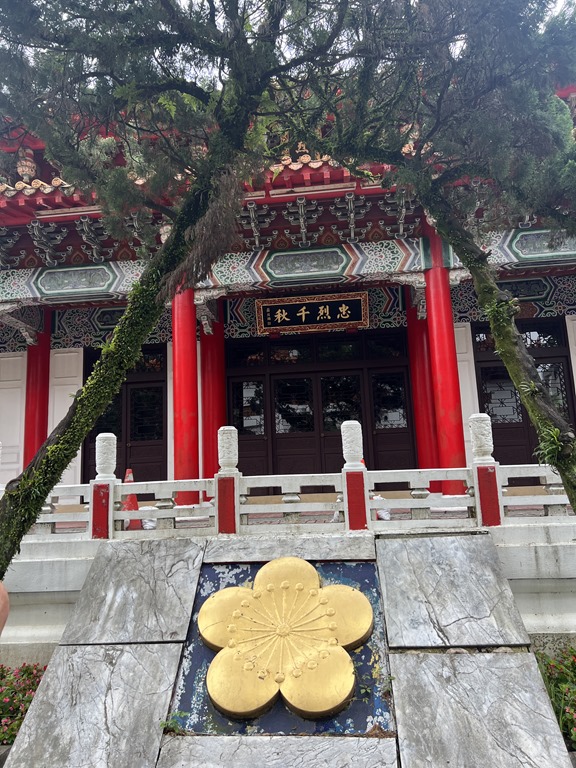
Today we were only  in port until noon and had to be back on the ship by 11:30 AM.  We had breakfast and headed out to see some of the city sights, especially the Zhongzheng Park which we didn’t get to yesterday. We did a lot of hiking and climbing stairs to reach temples and eventually the white Buddha at the park.  Some of the trails were in deep woods and all of a sudden the mosquitoes started to attack.  Norm had bug spray which helped keep them away.

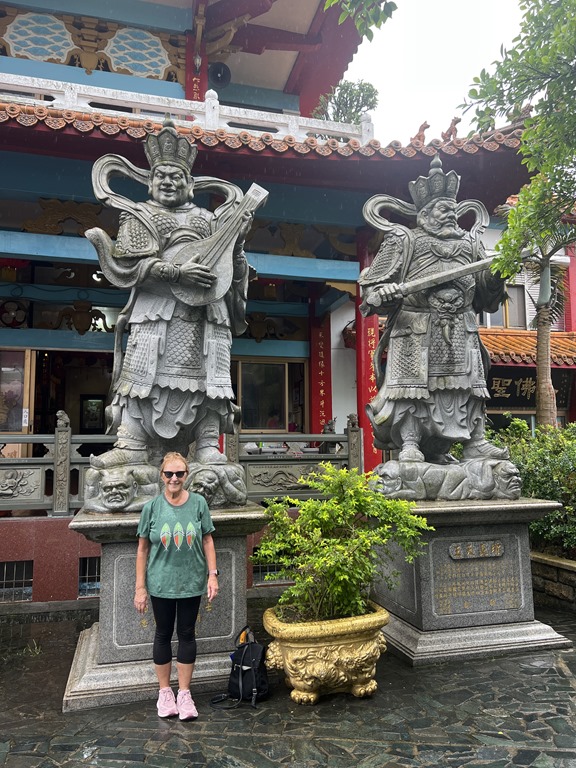
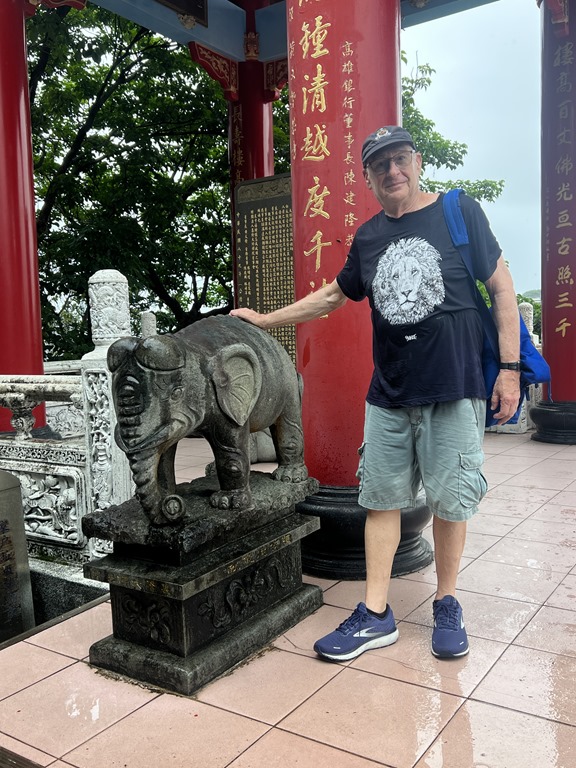
Here are some pictures of our wanderings (and my completely soaked hair!) We have seen many temples and find some beauty and serenity  in each one.

IMG_9663~photoIMG_9659~photoIMG_9658~photoIMG_9656~photoIMG_9655~photoIMG_9654~photoIMG_9647~photoIMG_9646~photoIMG_9645~photoIMG_9644~photoIMG_9643~photoIMG_9641~photoIMG_9640~photoIMG_9639~photoIMG_9638~photoIMG_9637~photoIMG_9636~photoIMG_9635~photoIMG_9634~photoIMG_9633~photoIMG_9632~photoIMG_9631~photoIMG_9630~photoIMG_9629~photoIMG_9628~photoIMG_9626~photoIMG_9625~photoIMG_9624~photoIMG_9623~photo

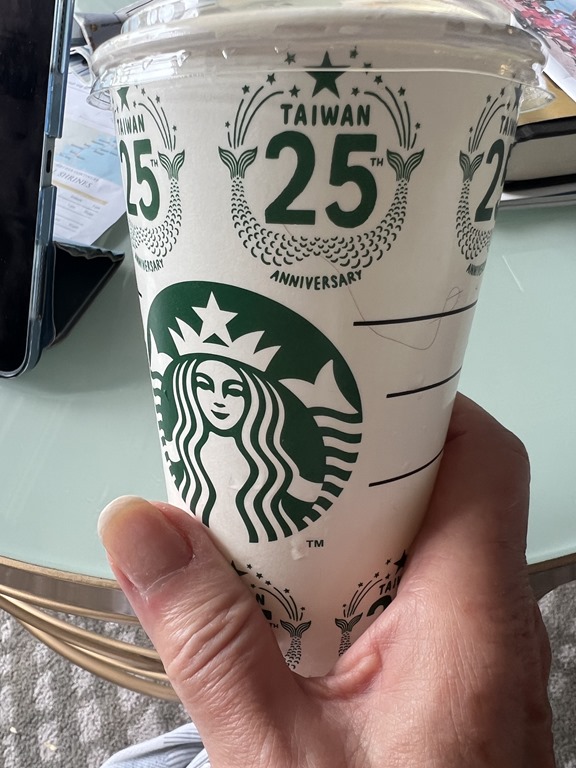
It was the coolest weather we have had in weeks.  Not cool, for sure, but only 78 degrees.  It was very humid, though, and we got rained on during our hikes.  We ended the morning with iced coffees at Starbucks.

IMG_9665~photo

Tomorrow we start our series of 12 days in Japan with overnight stays in Kobe (Kyoto) and Tokyo.  It is supposed to be cooler as we sail north.

Posted in Asia, Excursions, Food, June | 2 Comments