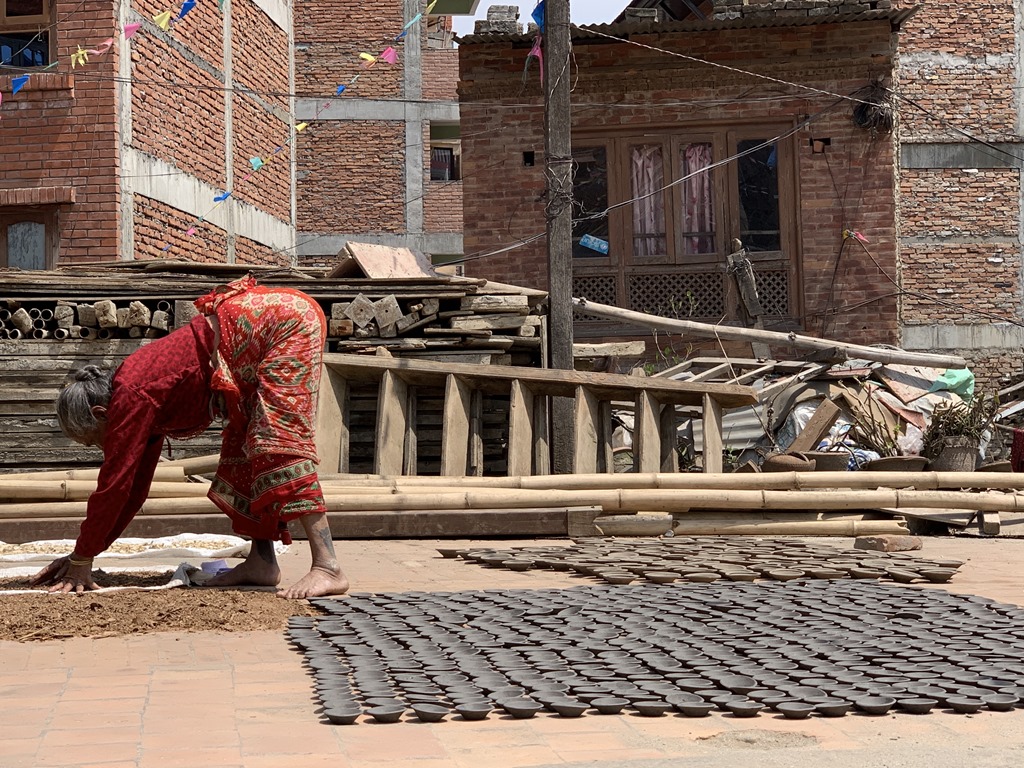
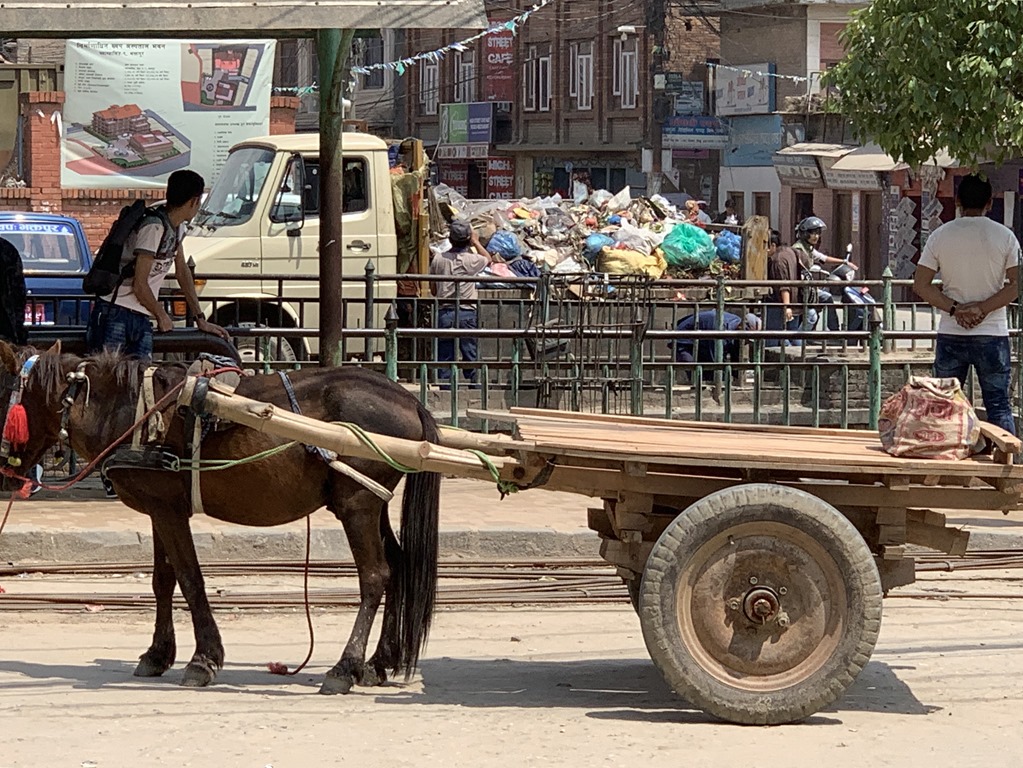
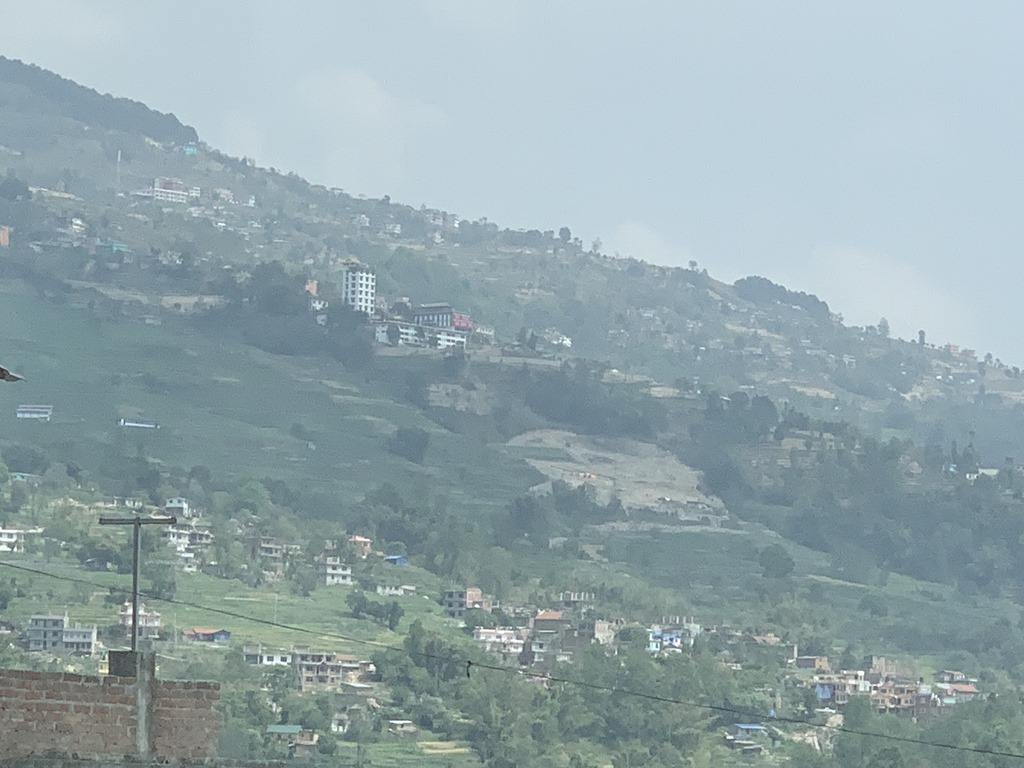
Nagarkot-Kathmandu, Nepal

April 14, 2019

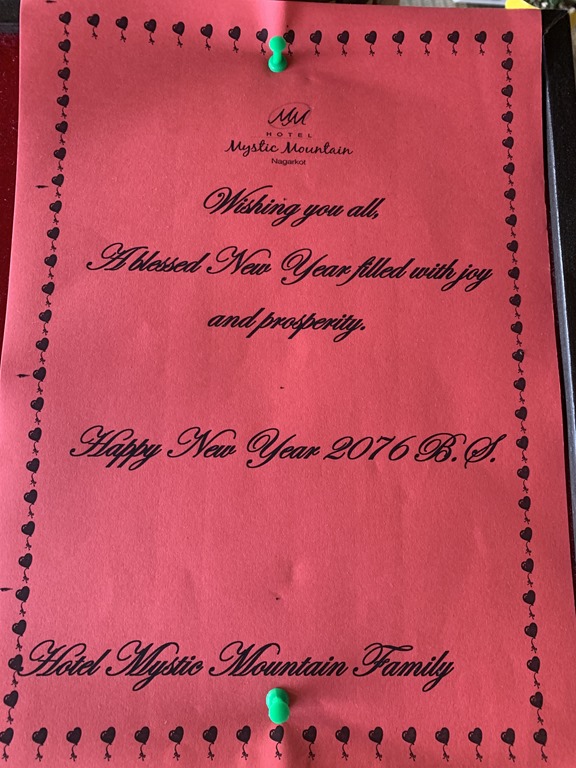
After our NY eve dinner at the Mystic Mountain hotel, we had the NY day brunch before Sagar and Zyanu picked us up for the day.   Here is the menu for the dinner last night.

IMG_6630

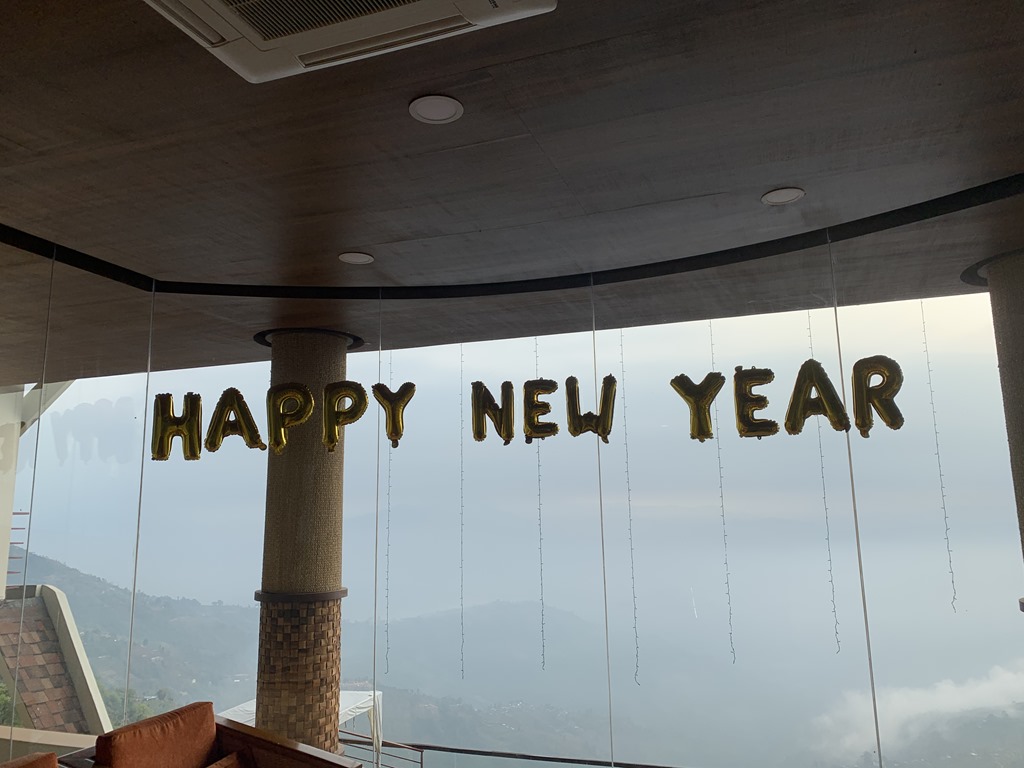
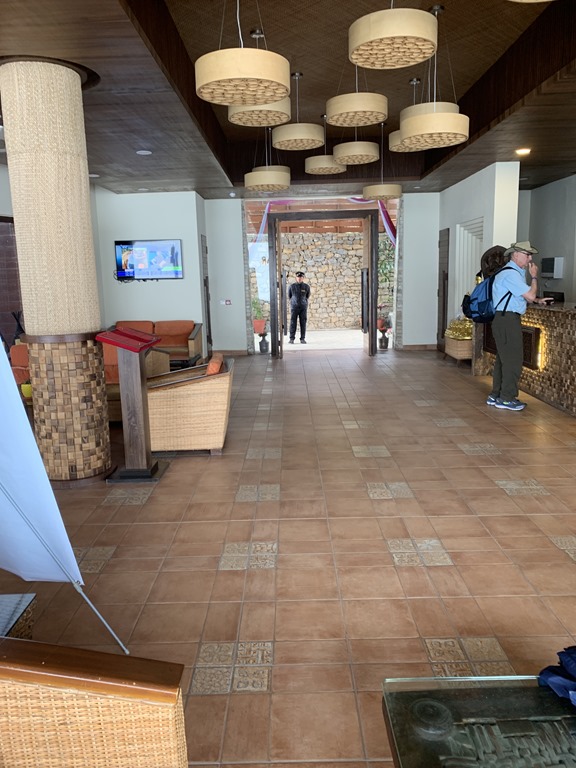
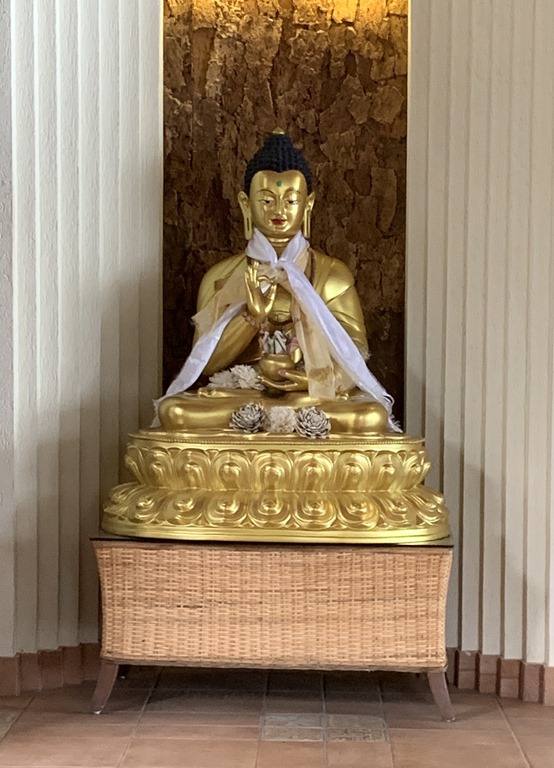
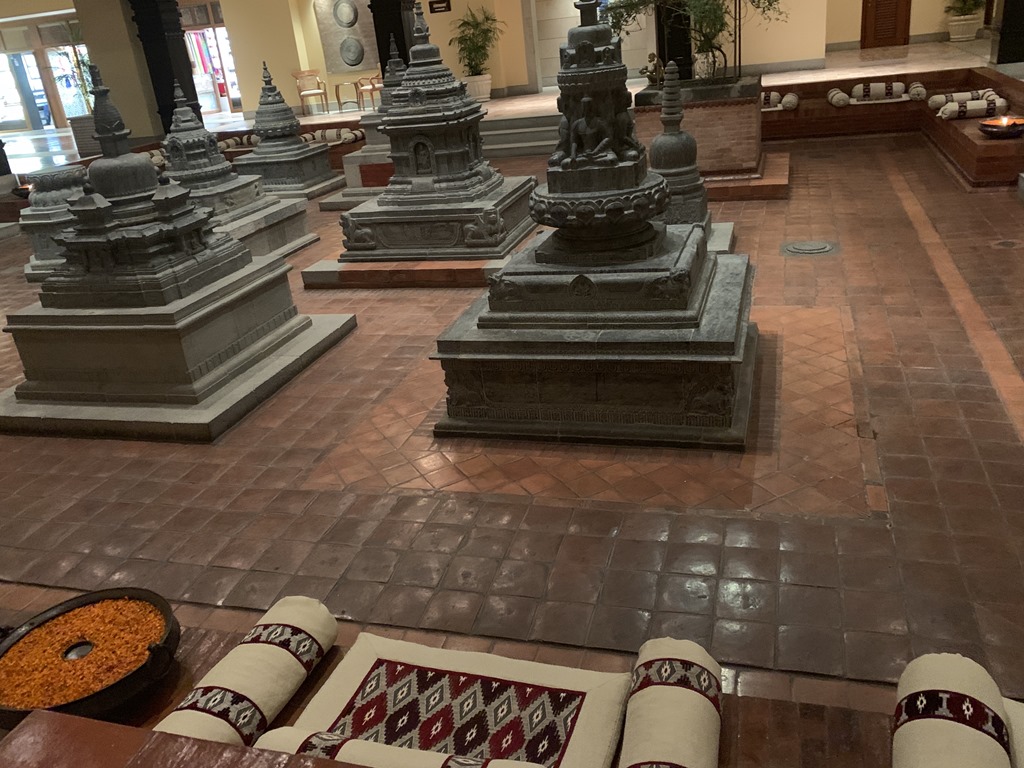
The lobby was decorated for New Year.

IMG_6628IMG_6629

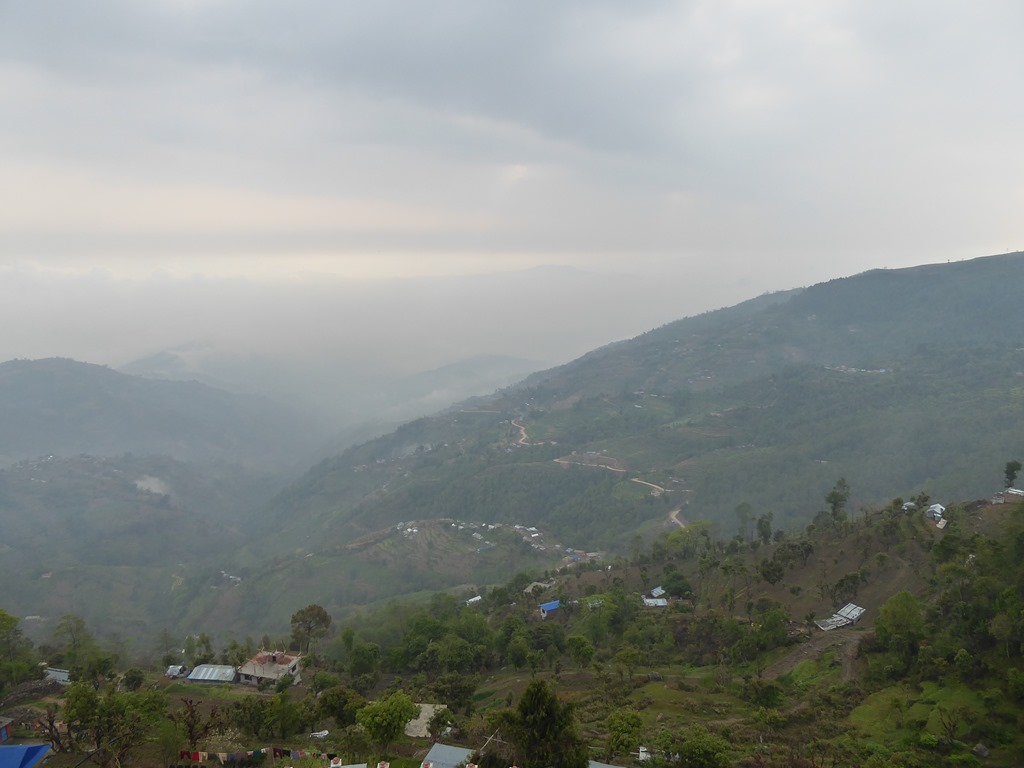
We didn’t see a sunset or a sunrise because of the cloud cover, but we did get glimpses of the Himalayas when the clouds momentarily cleared.

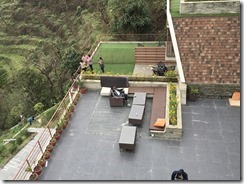
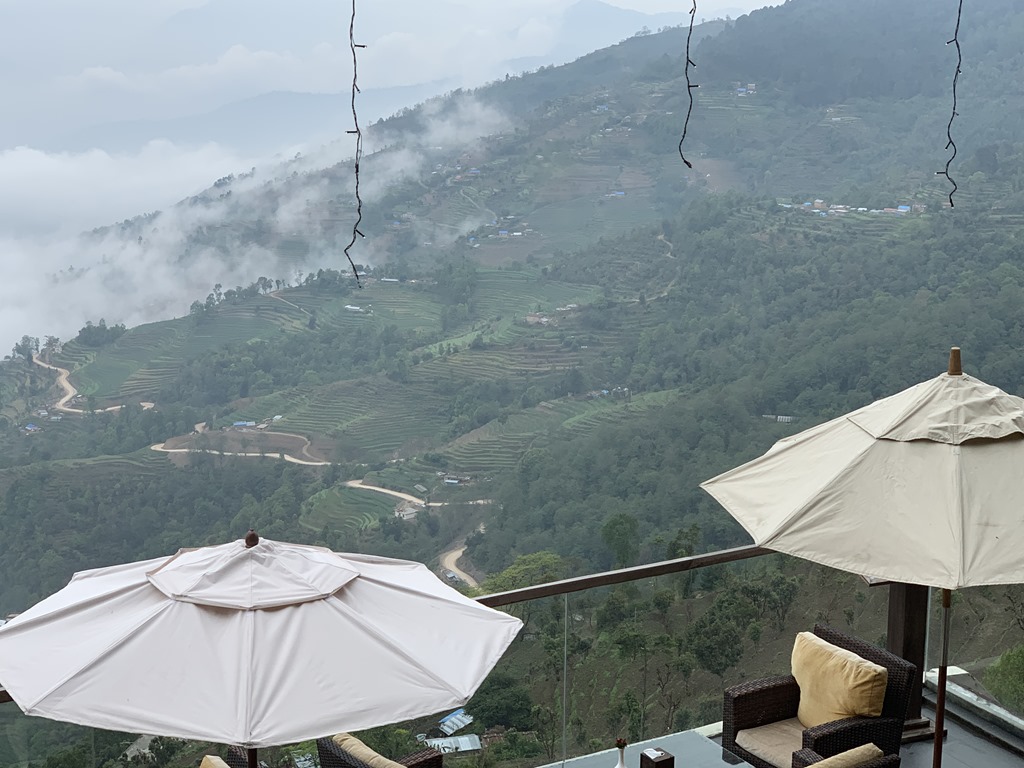
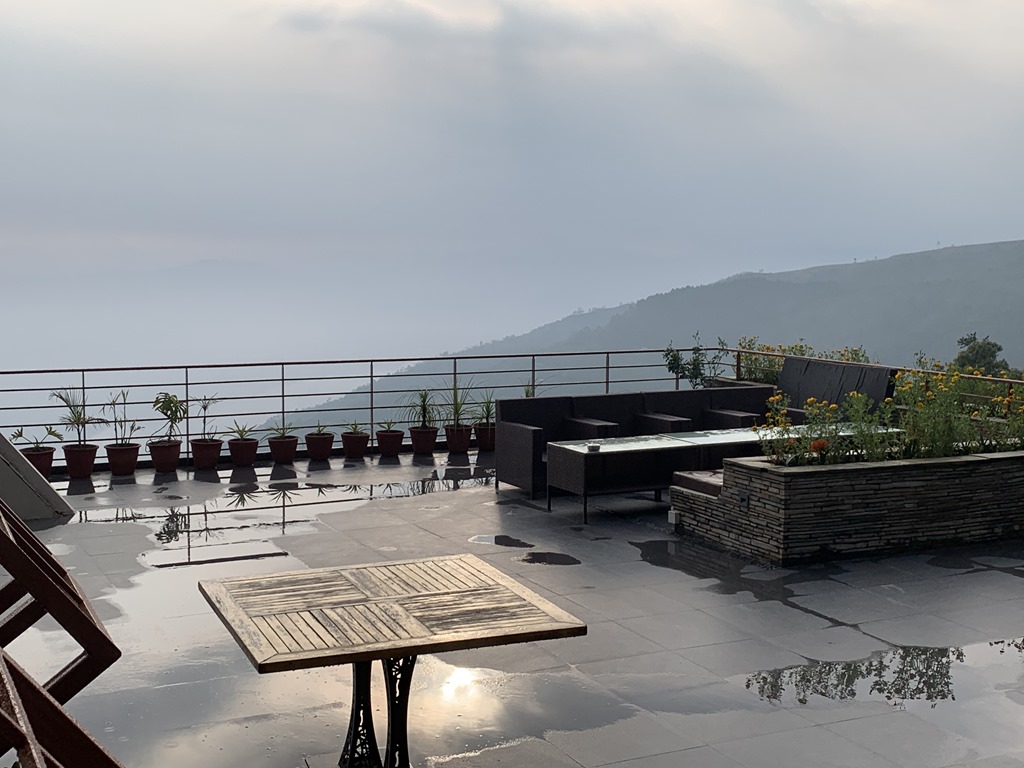
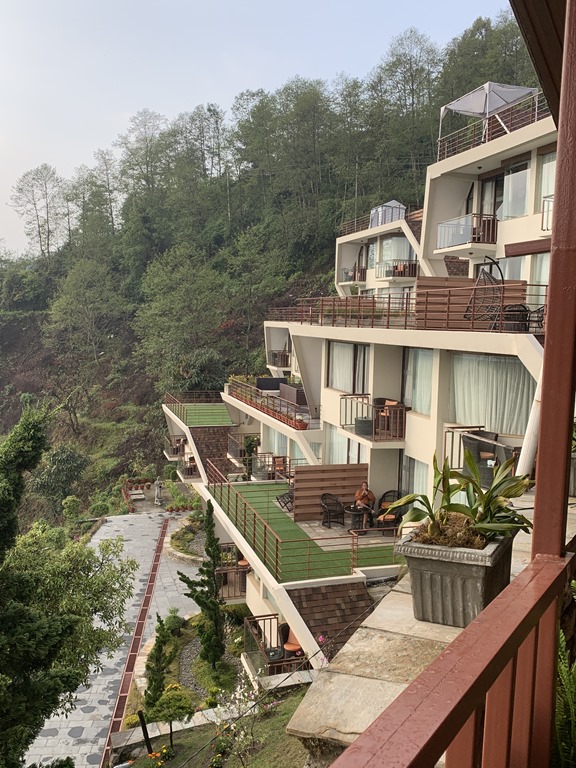
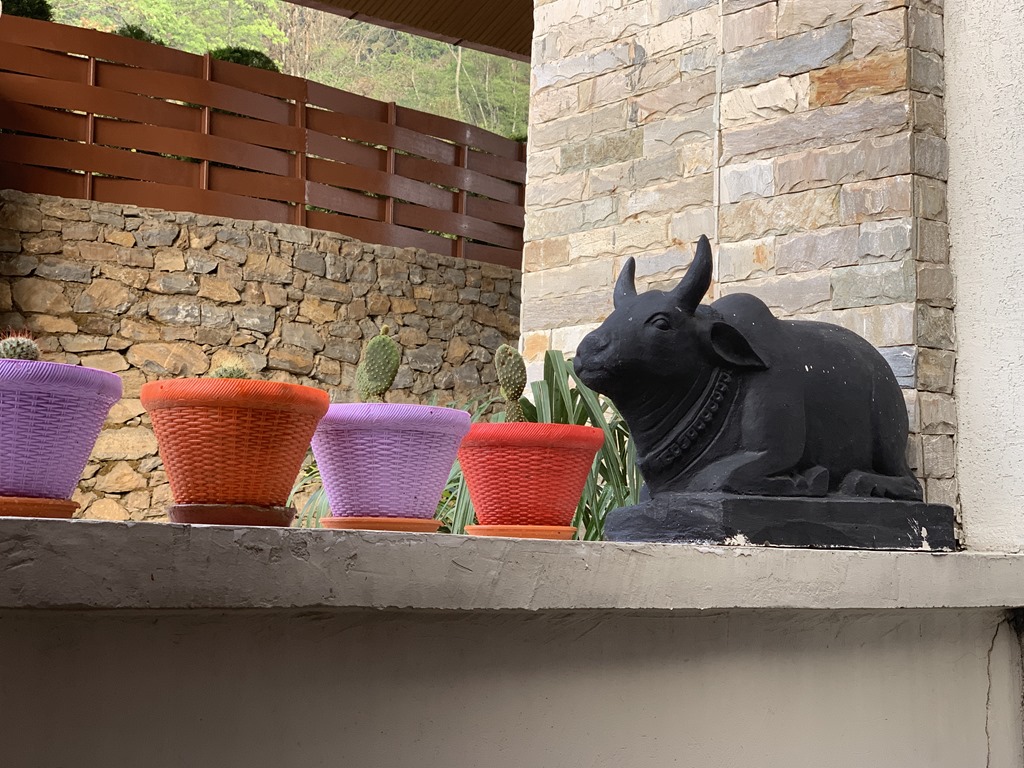
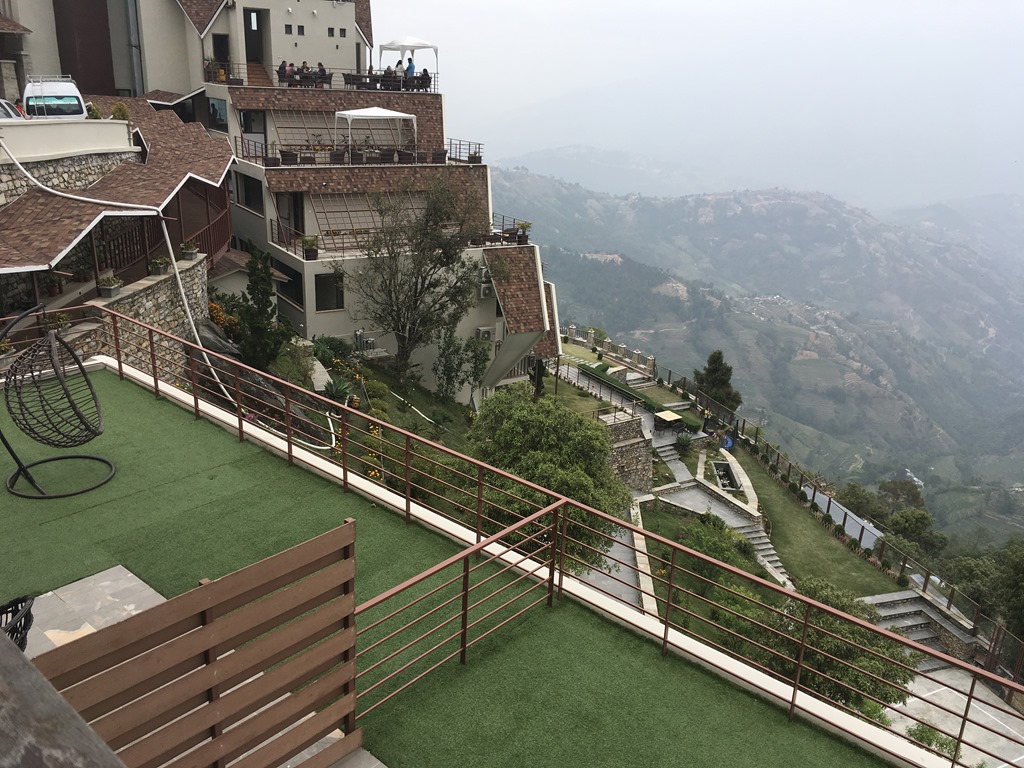
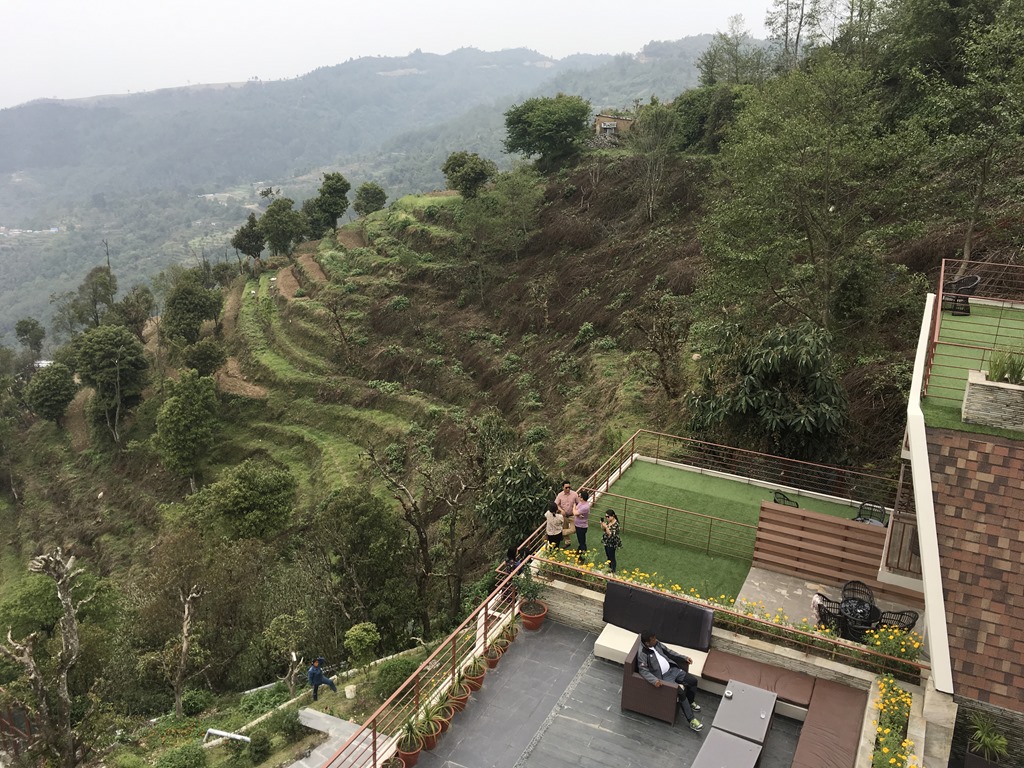
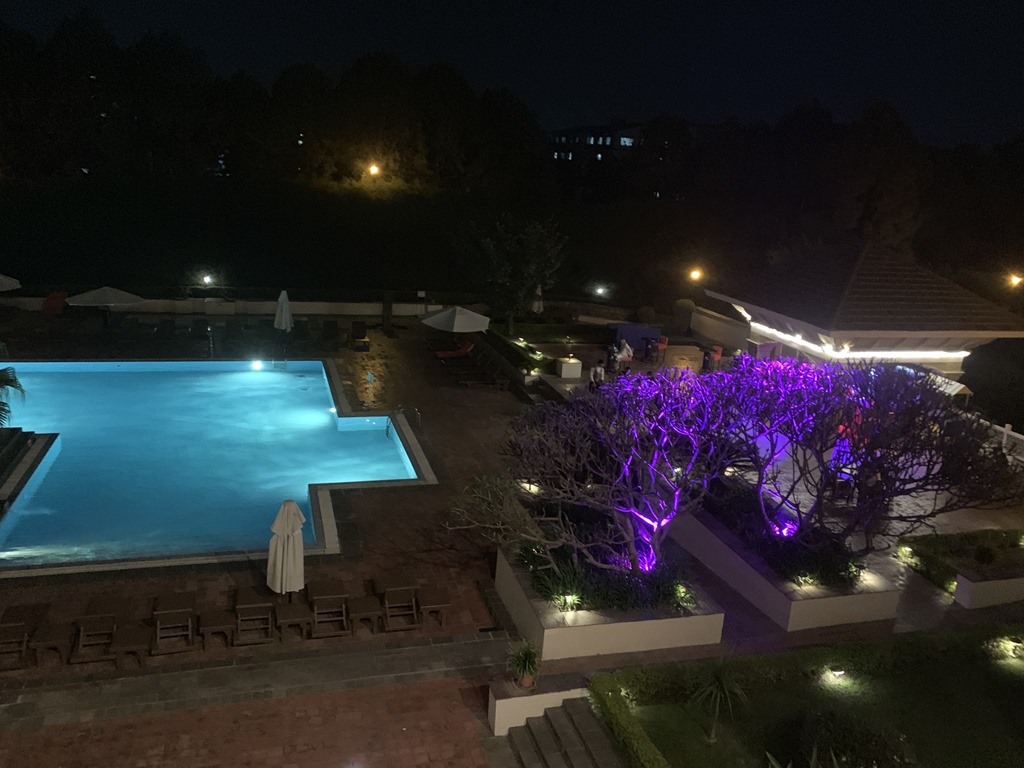
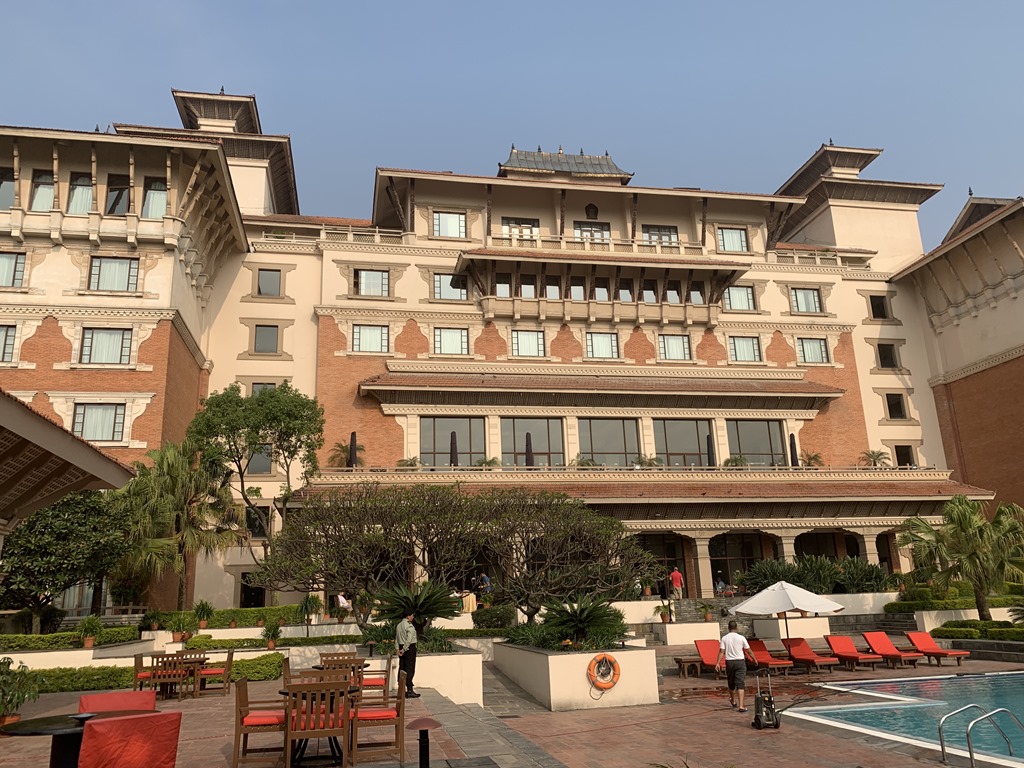
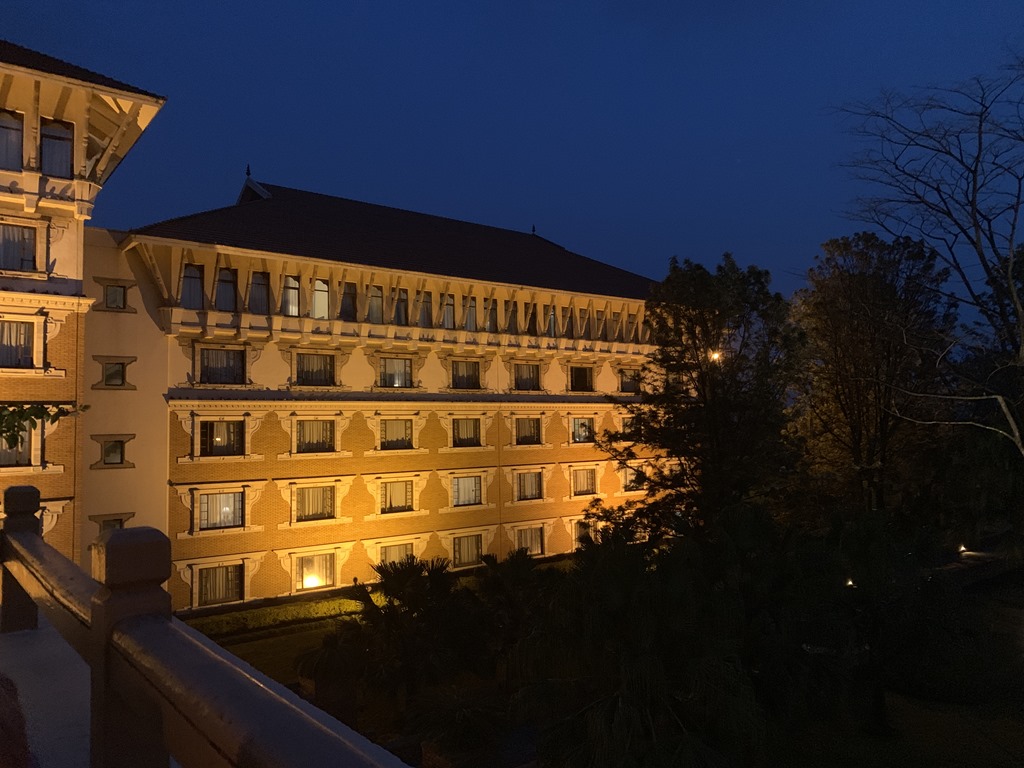
Here are some shots of the hotel and some of the views. Beautiful place.

IMG_6634IMG_6621IMG_6624IMG_6625IMG_6626IMG_6631IMG_6632IMG_6633IMG_6685IMG_6686IMG_6687IMG_6688IMG_6689IMG_6690IMG_6691

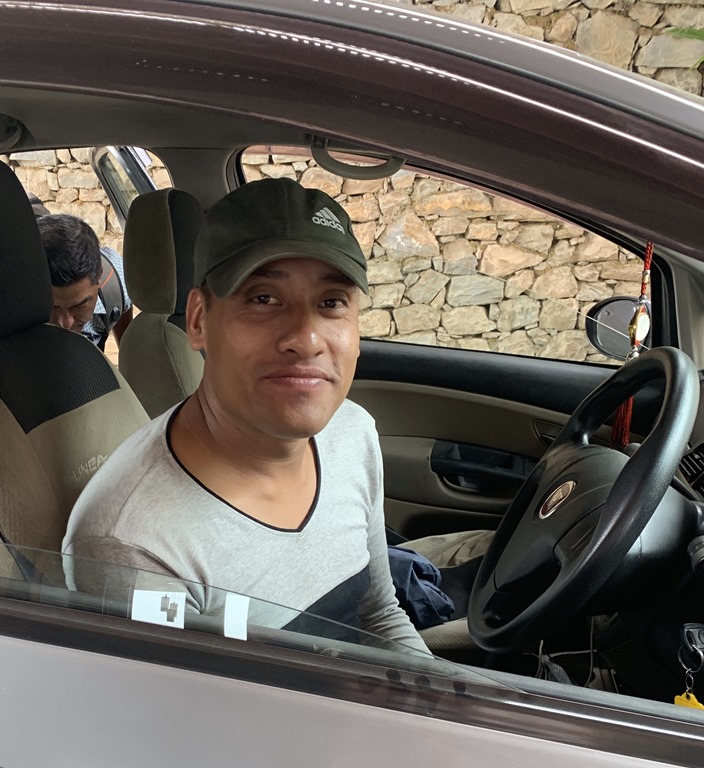
And I realized that I never posted a picture of Zyanu.

IMG_6635

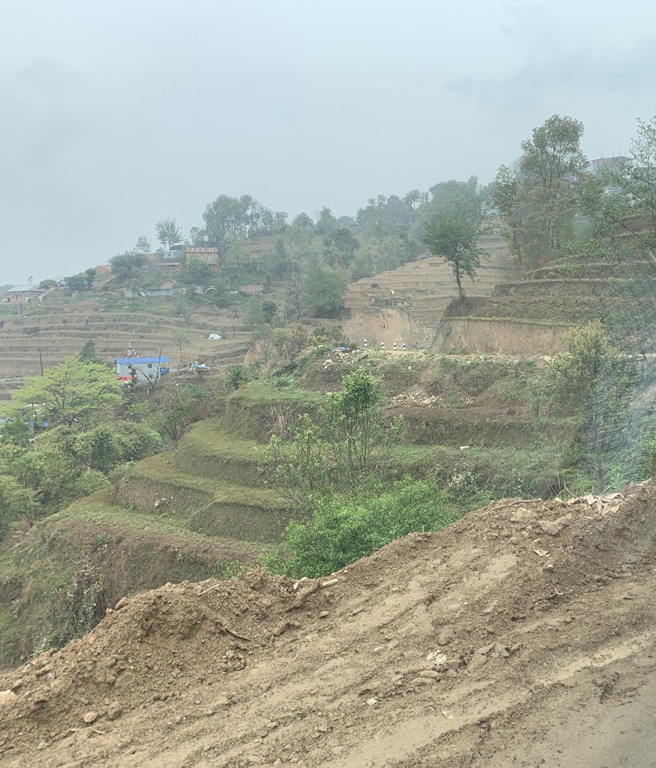
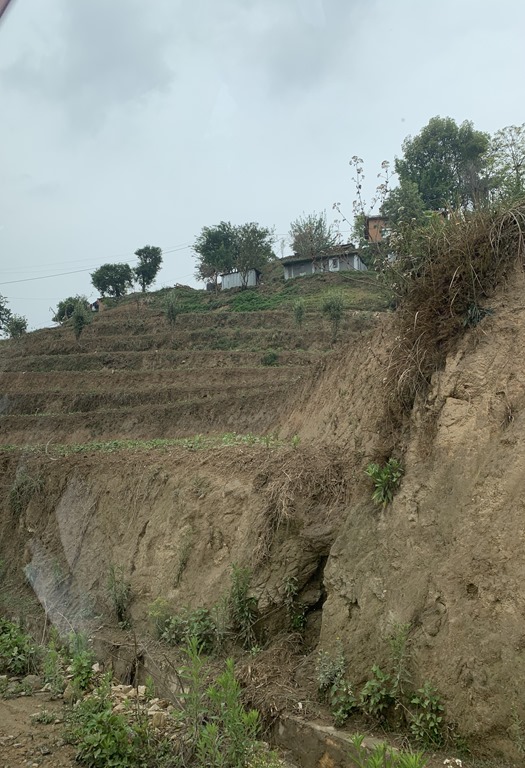
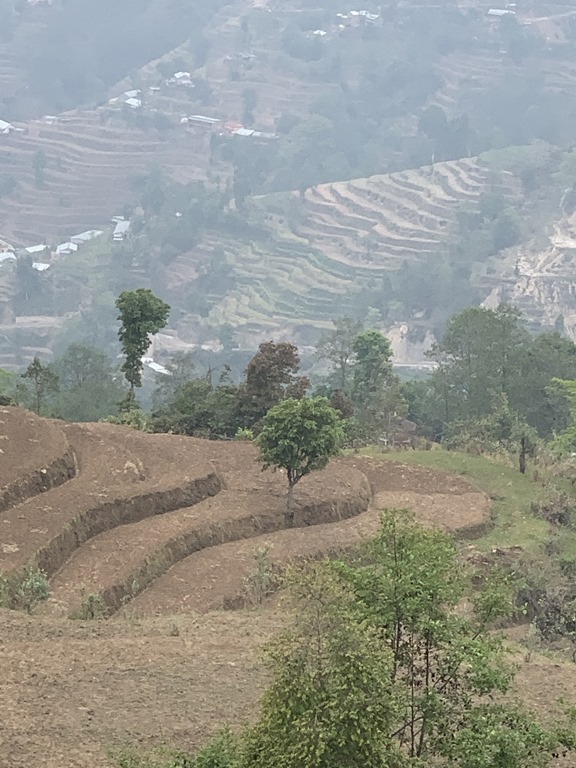
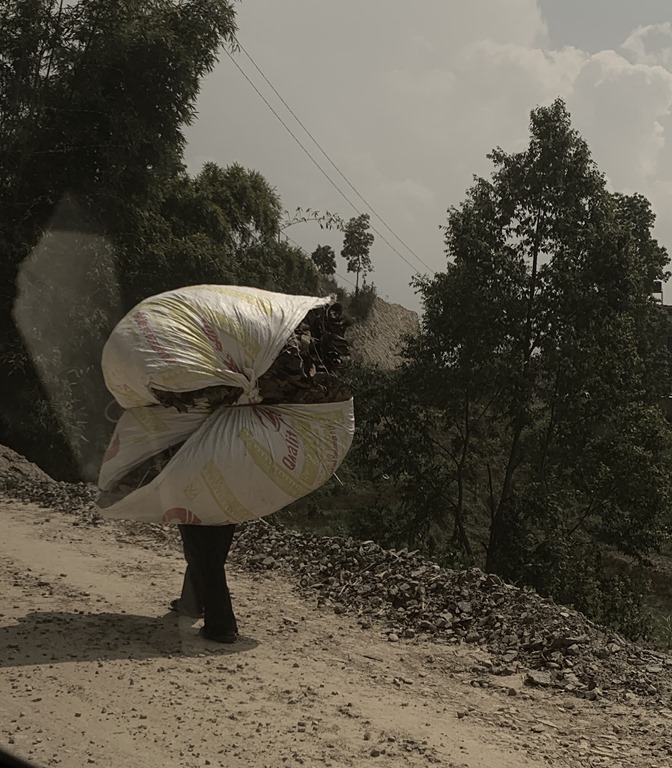
The plan for the day was to go trekking. We left the hotel close to 10 AM.  Sagar is a trekking guide, a mountain guide and a city guide and is certified in all of them.  He came equipped with trekking poles for us as we were doing a 7 K trek on a pretty rocky road downhill from the beautiful hotel.  Zyanu was going to be somewhere behind us in case we got tired part way through.  The dirt road had some traffic but not too bad, buses, cars and motorbikes were all traveling on the same road, and there were other people walking as well.  It took us through farmland on magnificent terraces.  All of the planting and harvesting is done by hand of course, these are hard working people.  Sagar says they start the children very young in having them carry large loads and building up their stamina to the extreme.  This is why the people from this area make great Gorka soldiers.

IMG_6706

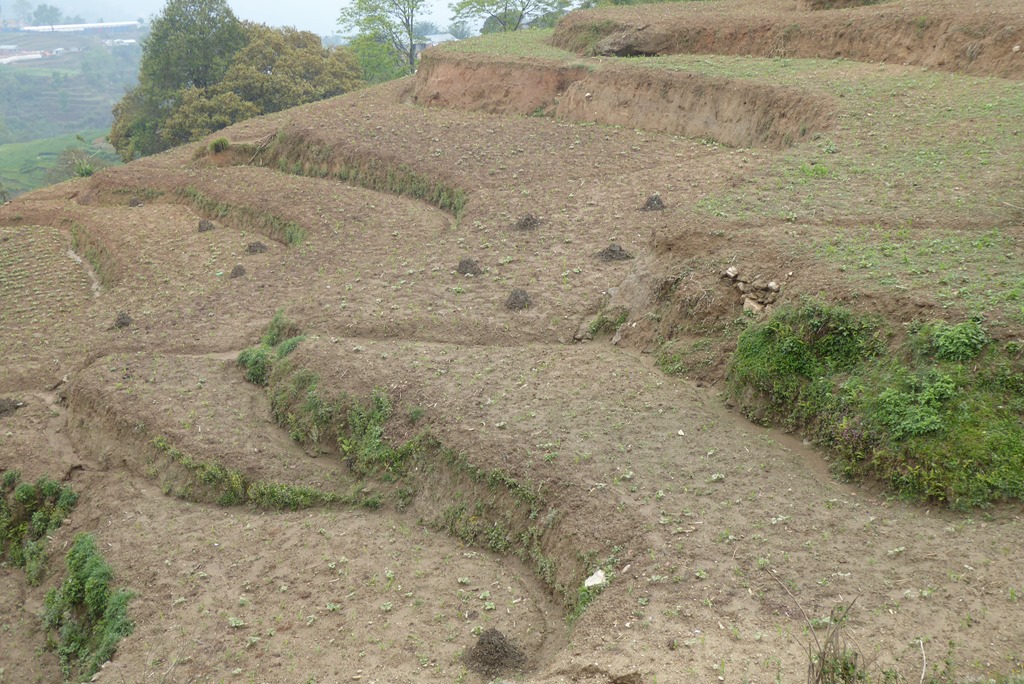
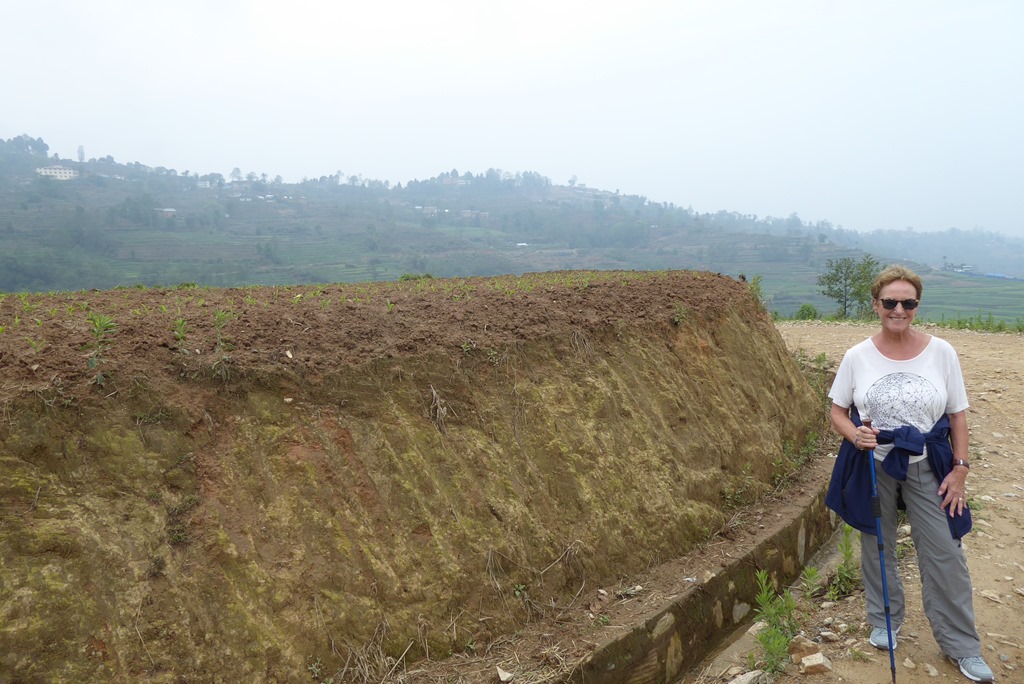
This is what the road and the terraces look like. There were markers at every kilometer. The photos don’t really show how immense and beautiful the terraces are.

IMG_6639IMG_6640IMG_6641IMG_6644IMG_6645IMG_6692IMG_6693IMG_6694IMG_6699IMG_6701IMG_6702IMG_6703

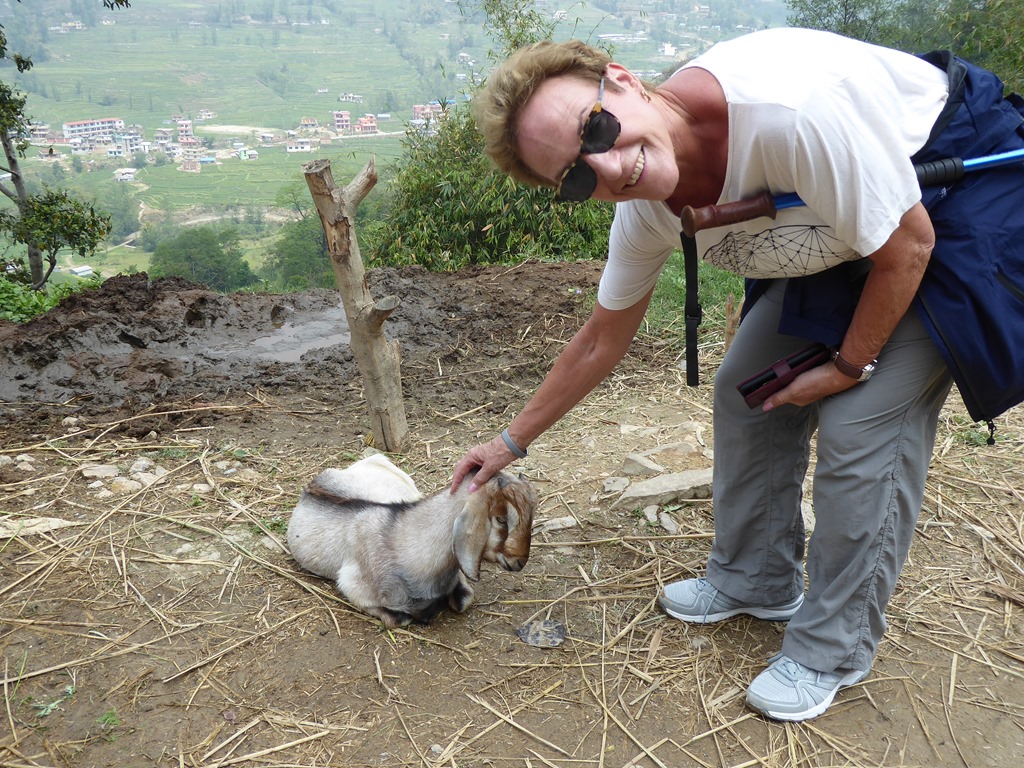
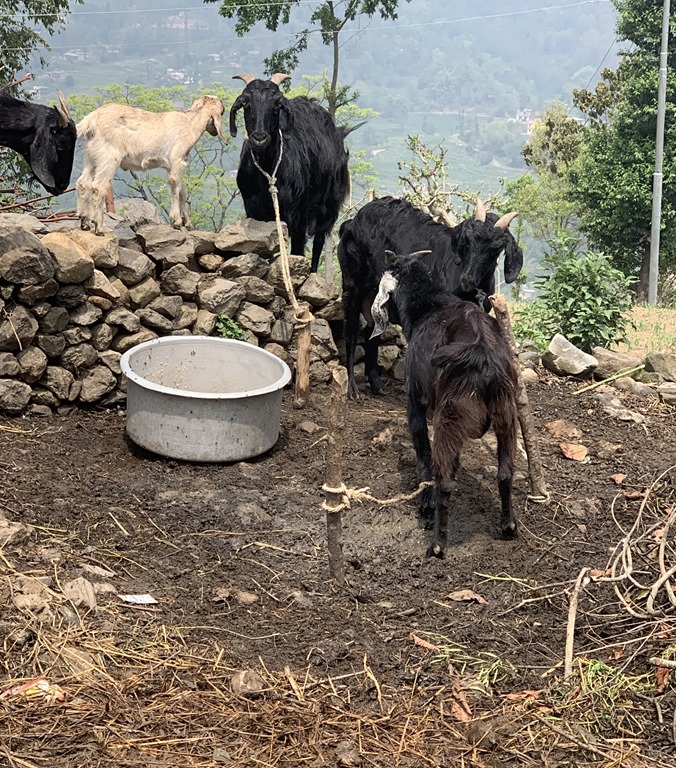
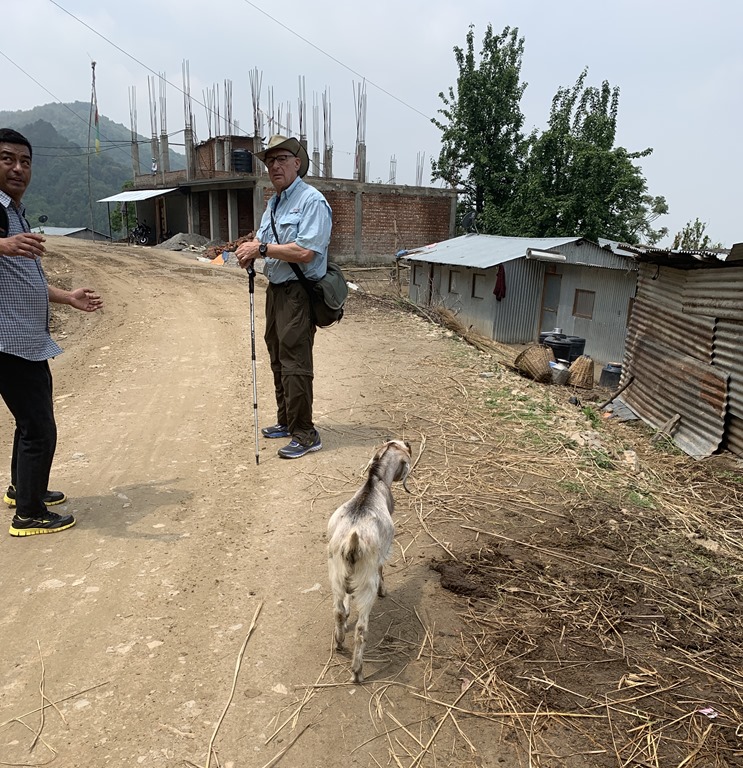
Of course we spotted lots of animals on our way.  I loved this friendly goat.

IMG_6707

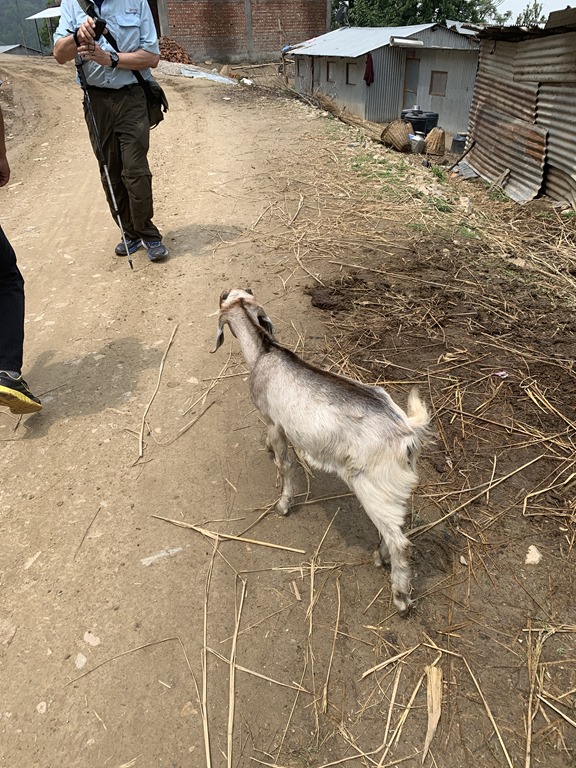
So did Sagar.

IMG_6656

And he wanted to follow Norm!

IMG_6657

IMG_6709IMG_6647IMG_6648IMG_6649IMG_6650IMG_6695

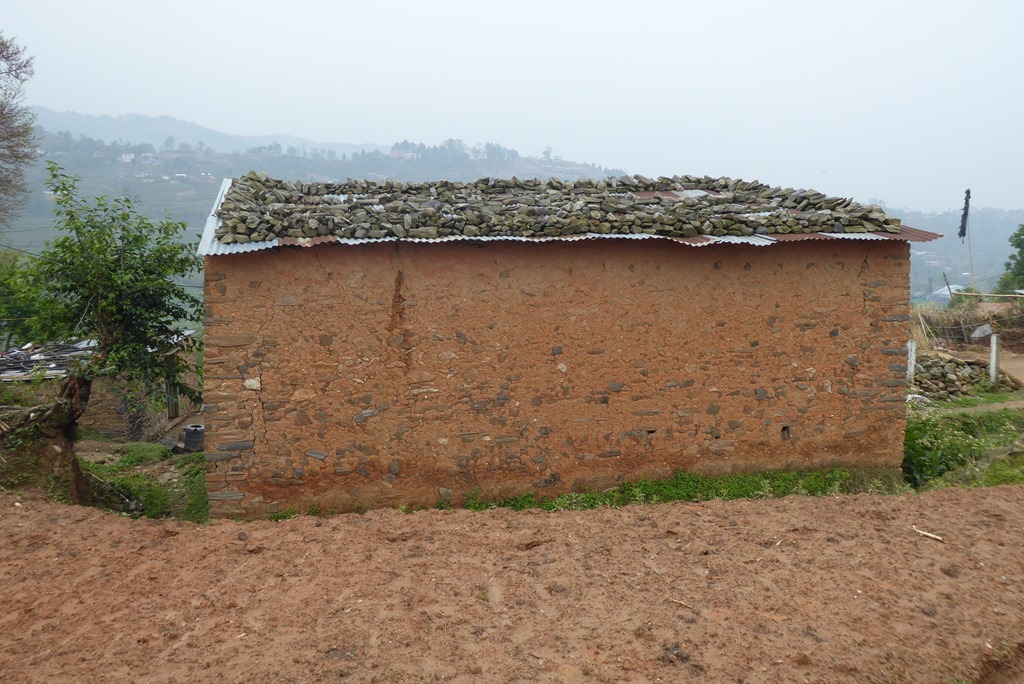
Many of the houses are plastered with cow dung on the outside.  This keeps the flies out of the house!

IMG_6700IMG_6643

We did see the marijuana plants on the side of the road.

IMG_6651

Beer bottles are turned in for 5 rupees each, we saw several piles of them.

IMG_6646

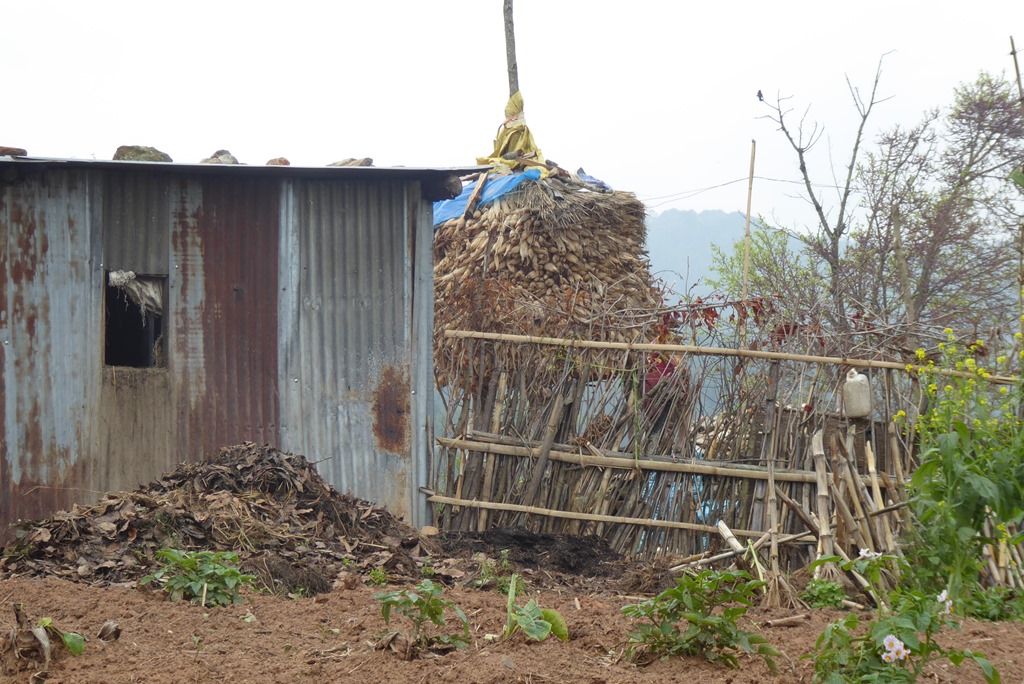
This is a house with a corn drying kind of tree like structure next to it. They then grind the corn to make a roti bread.

IMG_6698

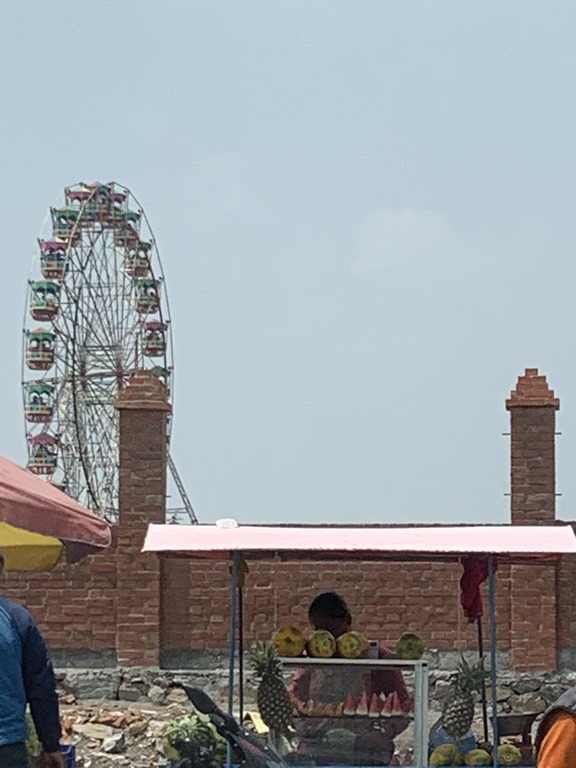
We finished the trek by about noon and headed back to Kathmandu.  Lots of traffic again with people standing in the back of trucks and on the tops of buses.  This is apparently not allowed in Kathmandu city but in the outer areas you see it all the time. The buses are packed with people. And with the holiday today, the amusement park was busy and there were many people walking too.

IMG_6708IMG_6659

And, of course, there were the cows in the road. This one had the traffic policeman lead him off.

 IMG_6660IMG_6663IMG_6710

You see families of 4 on motorbikes, and Norm was able to capture this picture of the dog.

We had the rest of the afternoon free, and I had booked a spa appointment – they had a “wonderful woman” special – scrub, massage, facial and steam and sauna.  I was indulged for over 2 hours and the cost with tax and tip was only $93.  Wonderful way to spend the afternoon.  Norm went to the pool until a small rain shower when he returned to the room.

Everyone is so friendly here.  The greeting is Namaste, and today people wished US a happy new year!

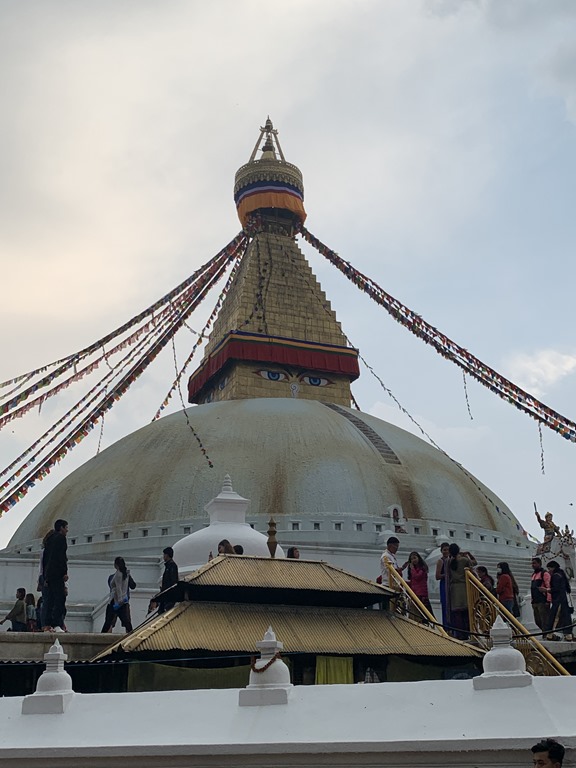
Sagar gave us the name of a restaurant nearby for dinner.  It is overlooking the Boudha Stupa.  We walked there, back roads that were very muddy and slippery, but an adventure for sure.  This area is on our schedule for a visit with Sagar tomorrow, so we just walked around the square and then went to the restaurant.

IMG_6664IMG_6666IMG_6668IMG_6670IMG_6671IMG_6672IMG_6678

The walk back in the dark was interesting, should have brought the flashlight they provide in the room with us!

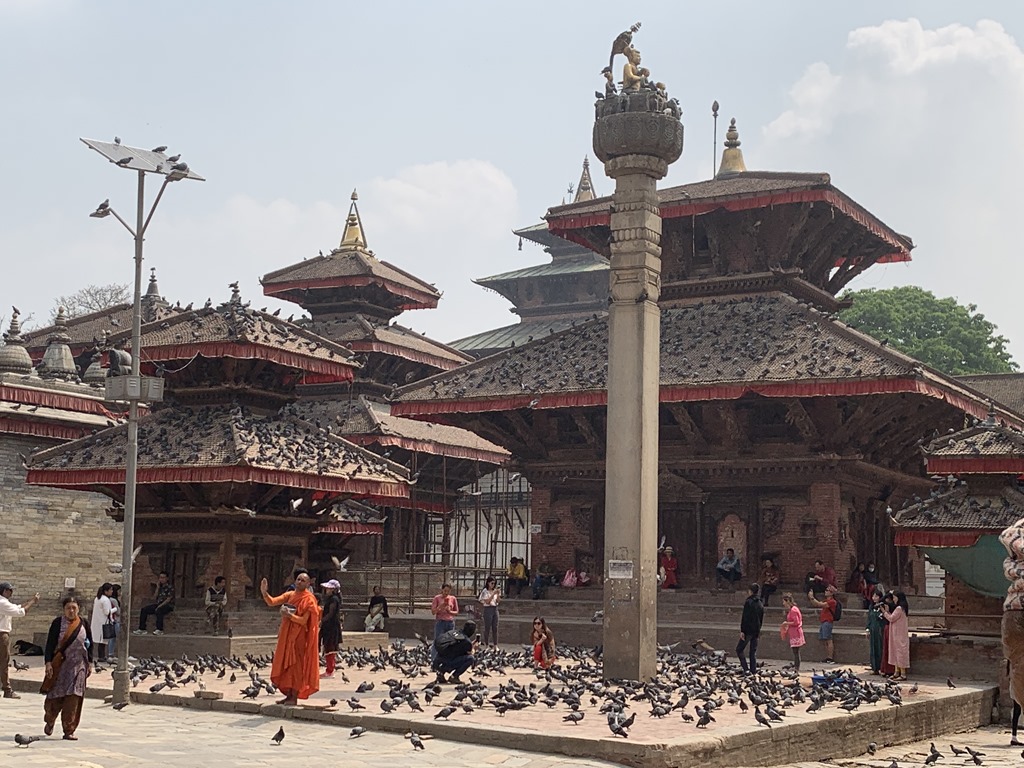
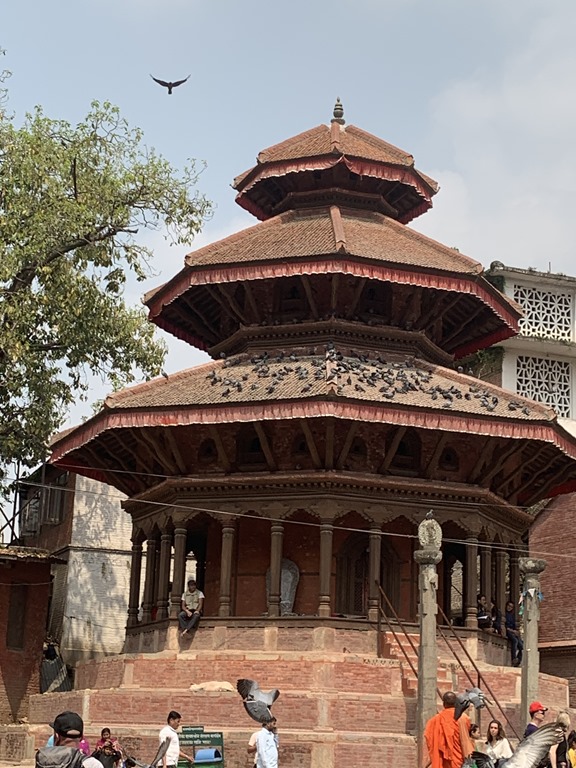
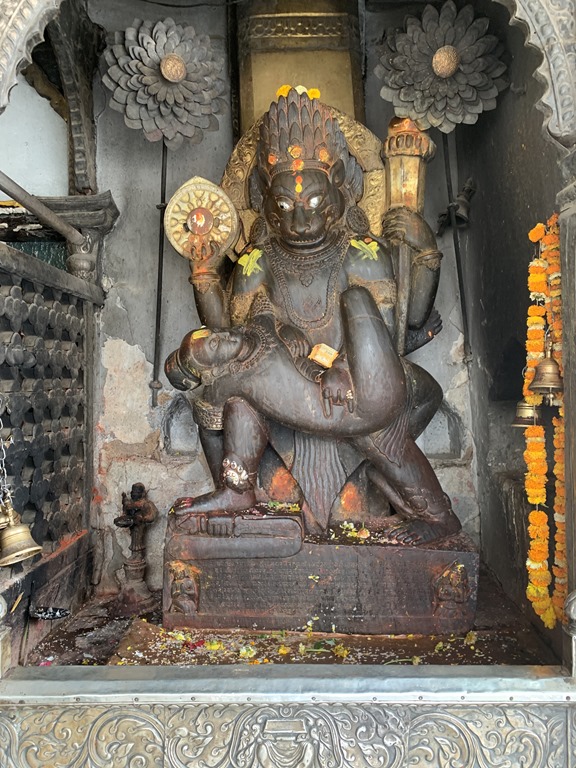
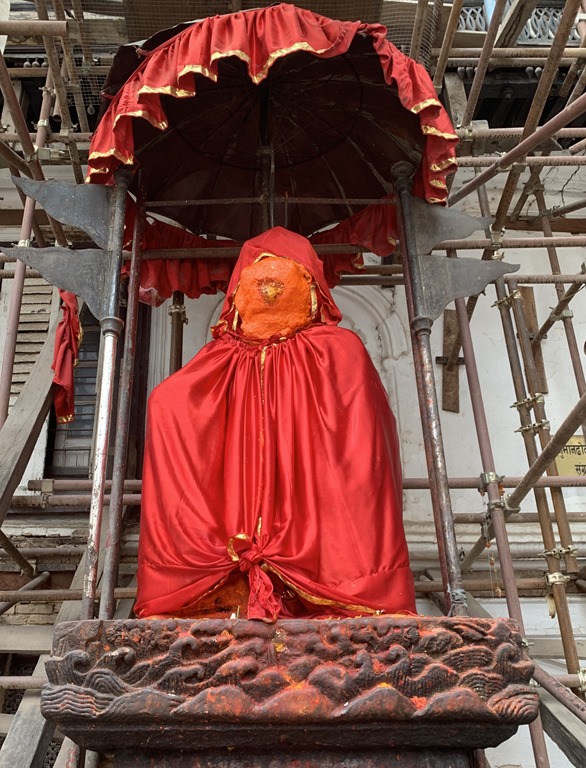
Tomorrow we will see some more sights in Kathmandu, including this temple.


Posted in April, Asia, Excursions, Food, World Cruise 3 | Leave a comment

Kathmandu-Nagarkot, Nepal

April 13, 2019

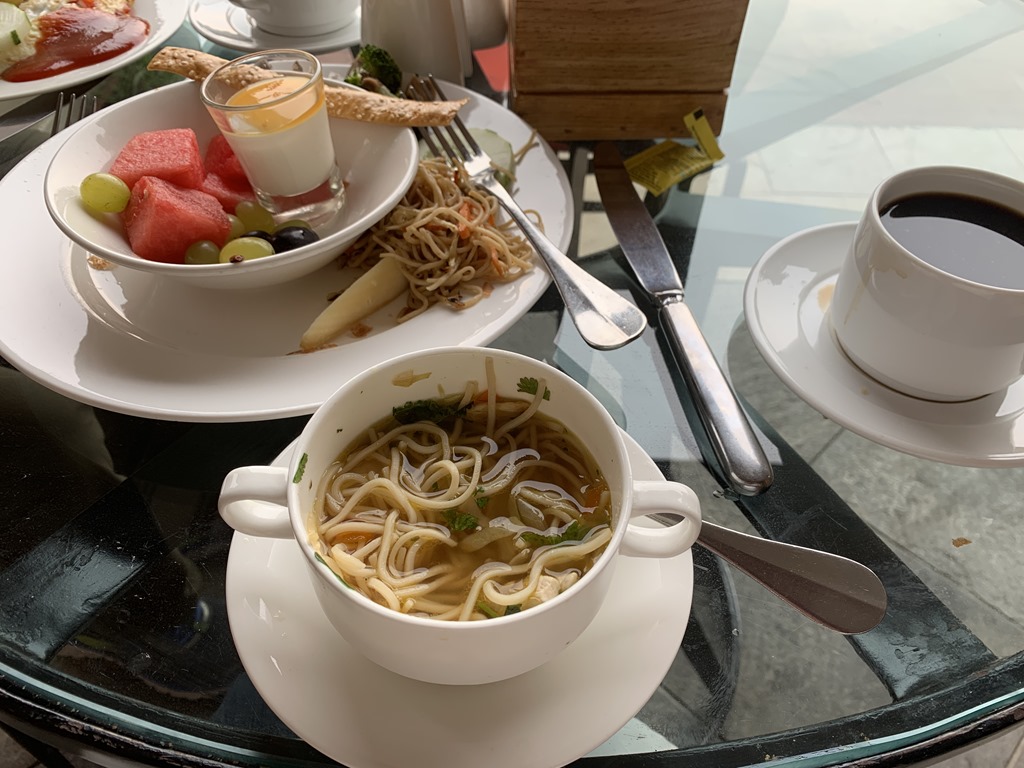
I have to say that I never get tired of noodles for breakfast!

IMG_6304

After breakfast, Sagar and our intrepid driver Zyanu picked us up at the Hyatt.  We checked out as we are going to Nagarkot for one night and returning to the Hyatt tomorrow.  As he did yesterday, Sagar had a paper prepared and told us the temperature expectations, the sunrise and sunset time and the plan for the day.

Here are some pictures from our trip there.

IMG_6307IMG_6308IMG_6309IMG_6310IMG_6312

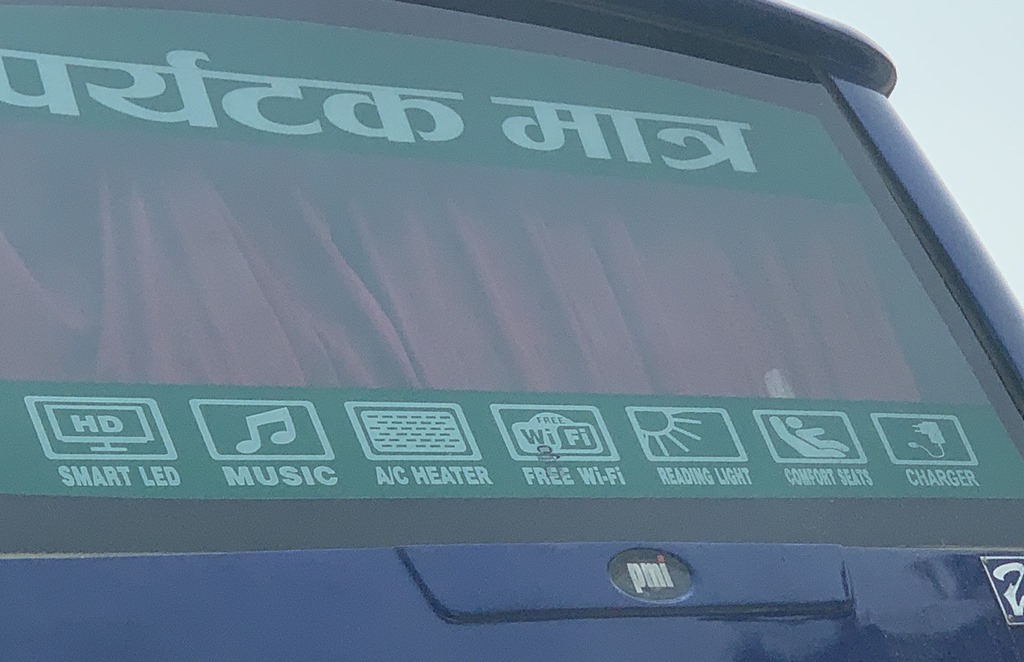
In case you think this country isn’t tech savvy – look at what they have in some of their buses.  Others are very primitive.

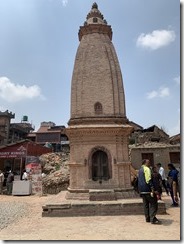
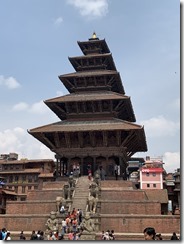
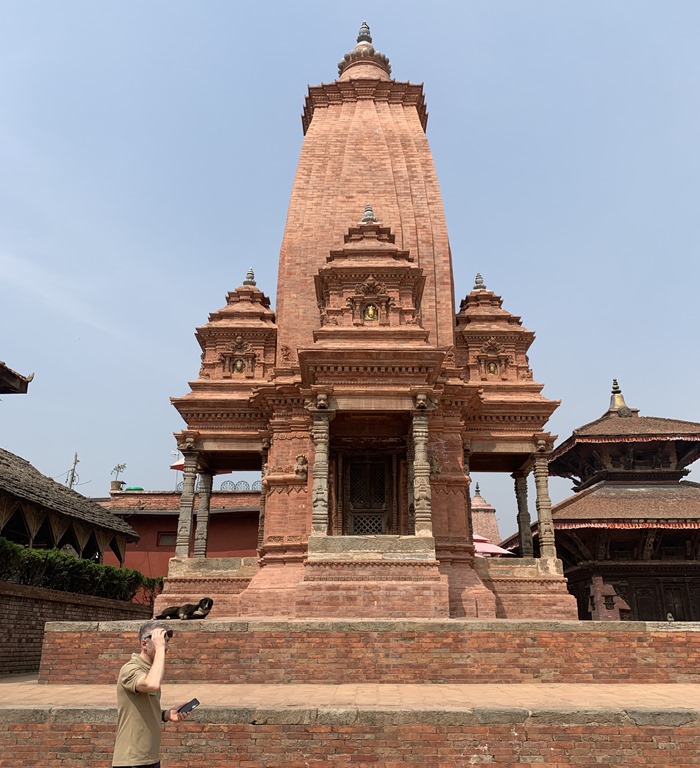
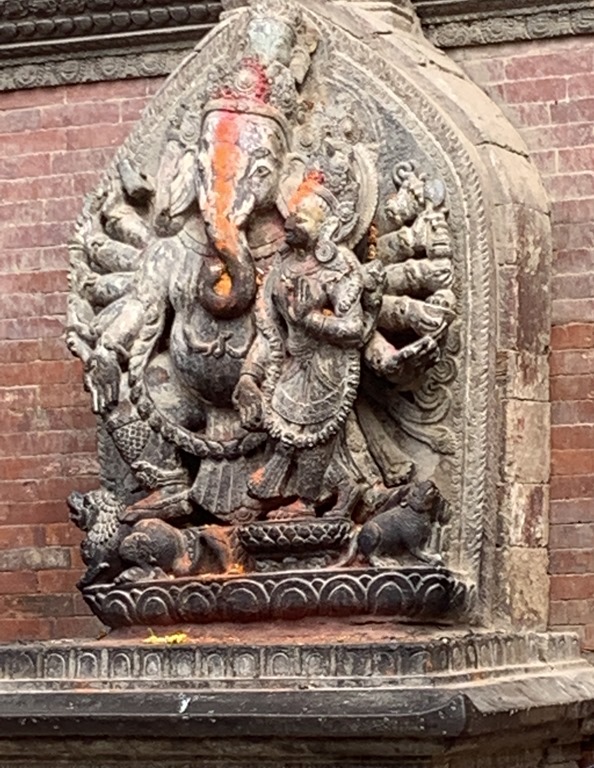
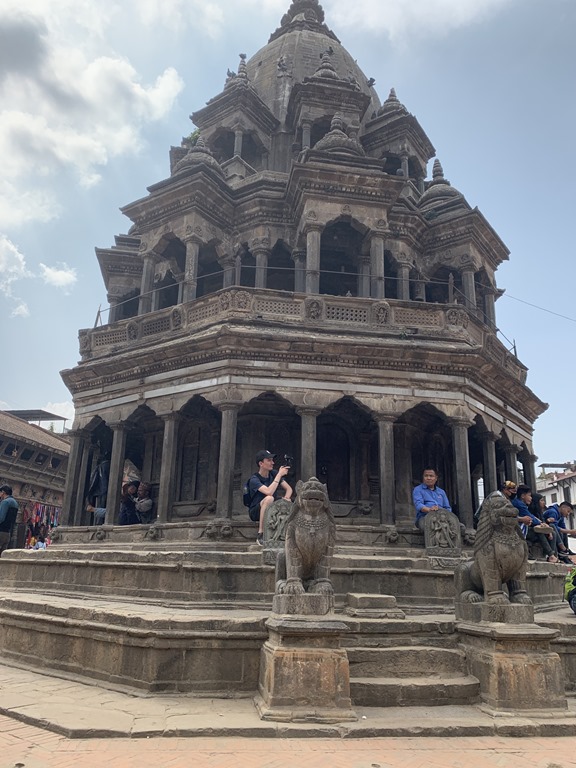
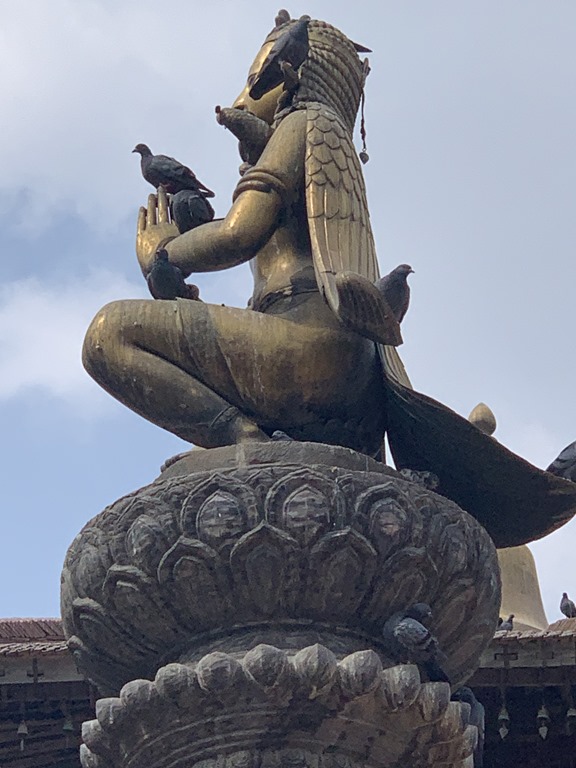
A few things we have learned from Sagar – there are 3 types of temples here.

Pagodas, shikharas and stupas.  I will highlight each one.

IMG_6311This one is a stupa

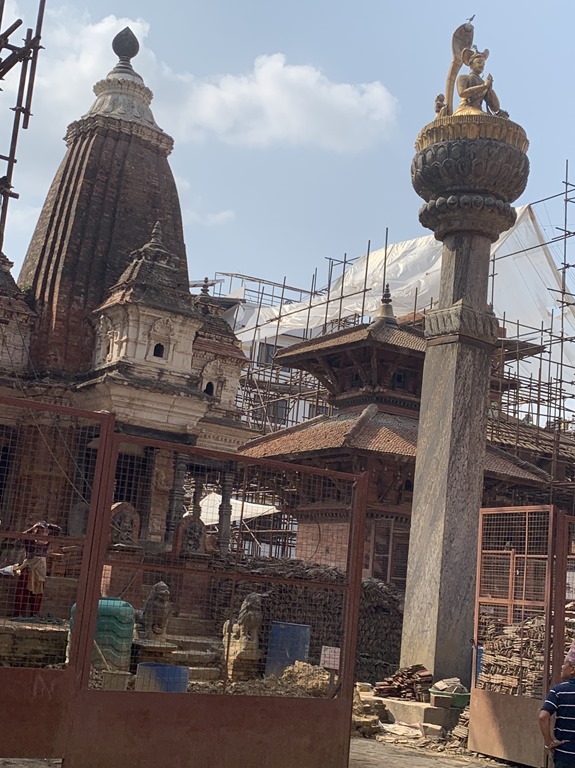
IMG_6474-copyThis one is a shikhara

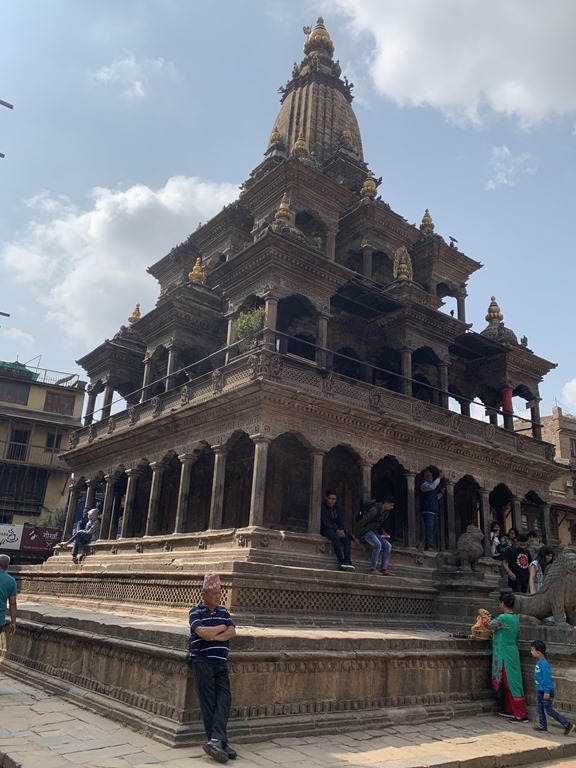
IMG_6457-copyThis one is a pagoda

There are 3 important Hindu gods:

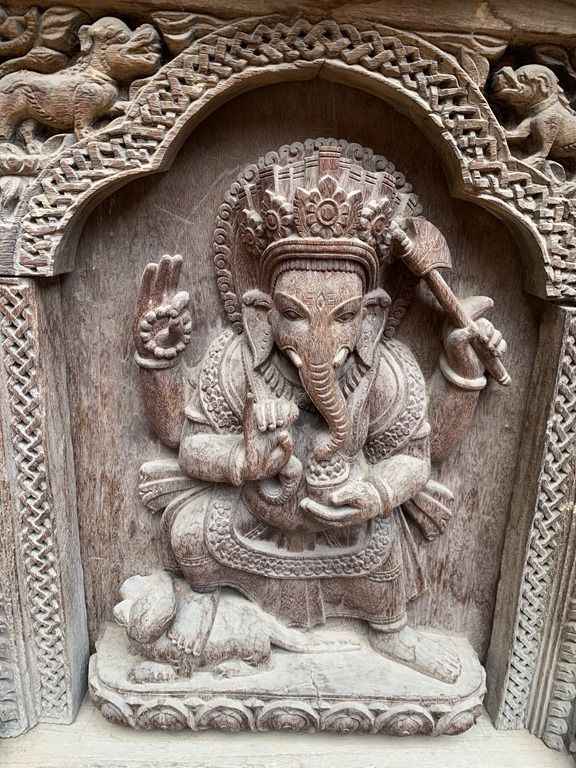
Brahma, the creator, Bhisnu/Bishnu, (or Vishnu), the protector and Shiva, the destructor (of bad people)

There are 5 elements of importance in Buddhism – air, water, fire, land and sky (space).

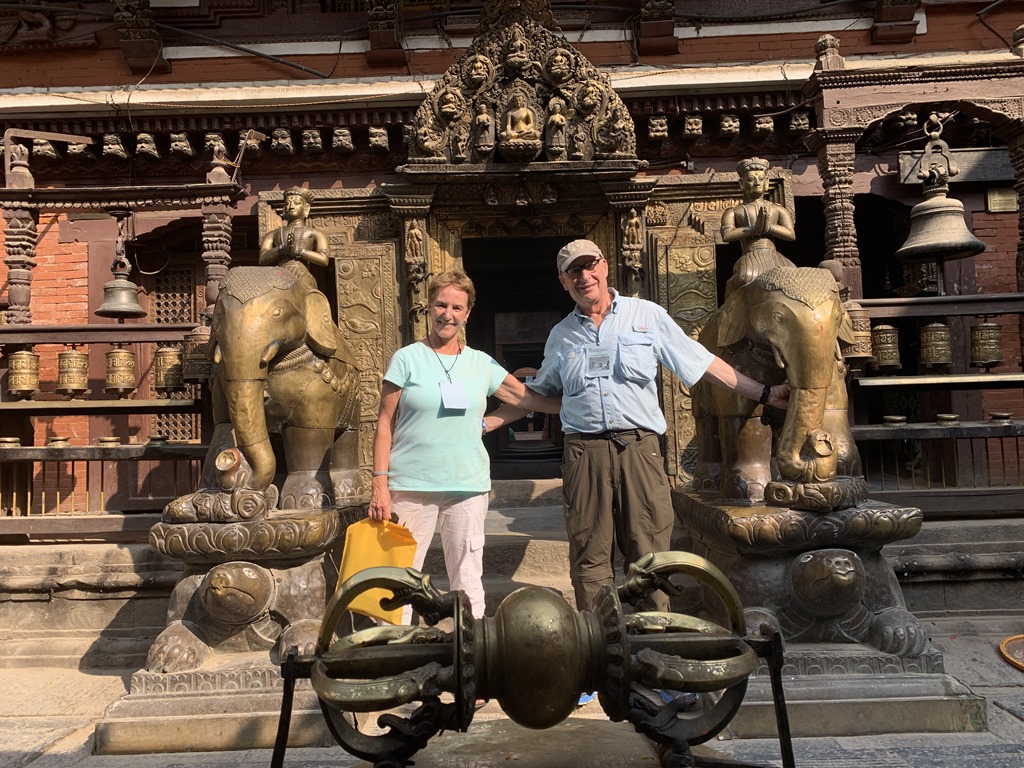
The dorje is the symbol of power. We are standing in front of one in this picture.

IMG_6259

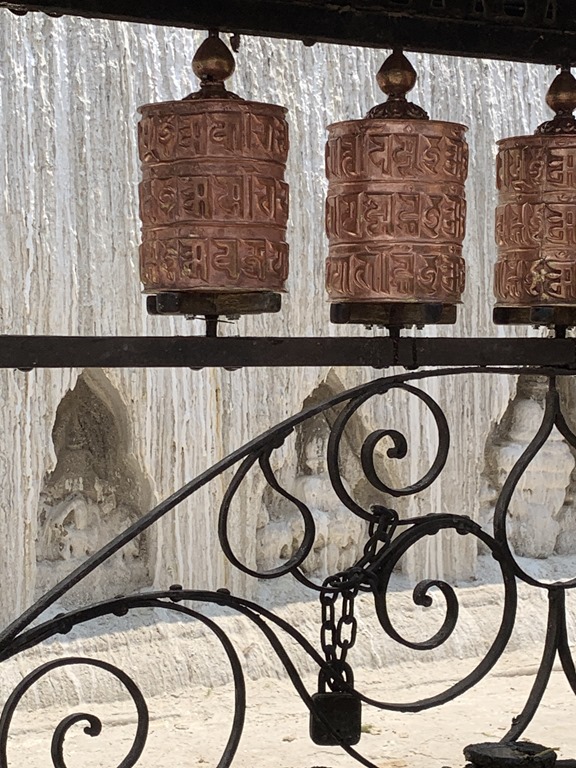
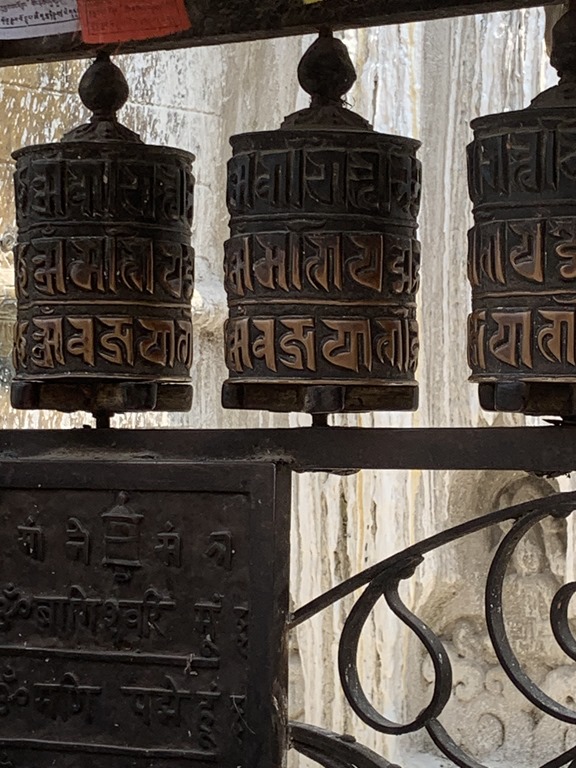
The Buddhist chant in Nepal (and we hear it playing in many places) is om ma ne pad me hum which means “I wish, no one has suffering in their life”.

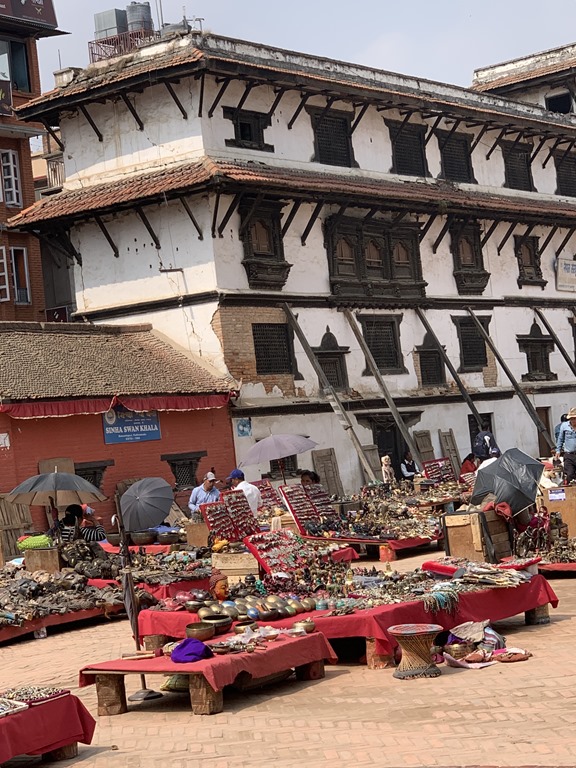
Our first stop was at Bhaktapur. This is the former capital of the valley and was an important city on the trade route to Tibet.  It has preserved its character better than the other two cities in the Kathmandu Valley due to its more isolated location.  It is about 14 km east of Kathmandu.

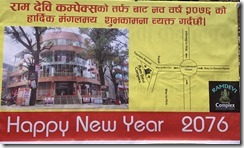
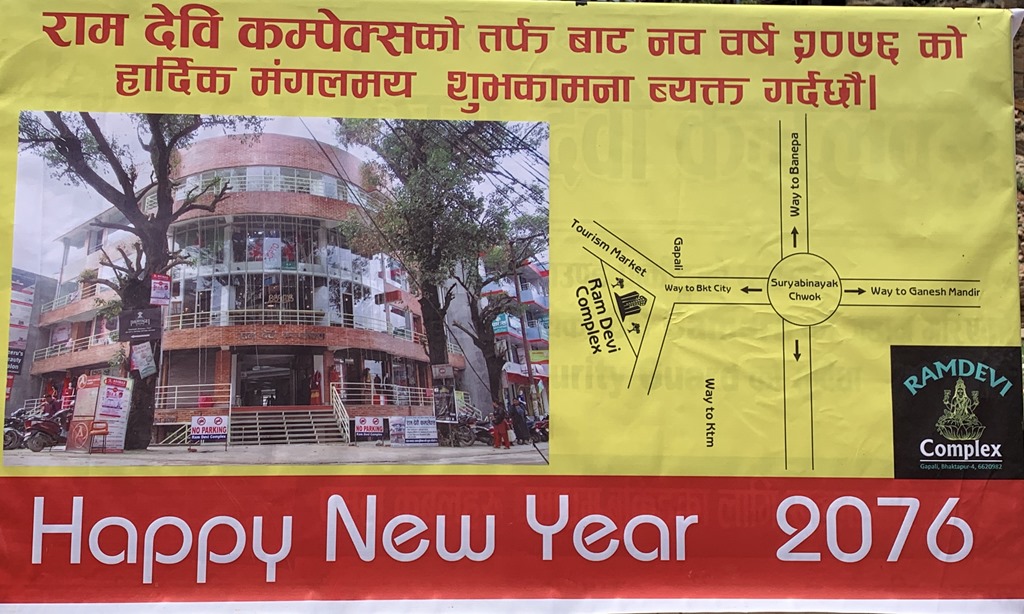
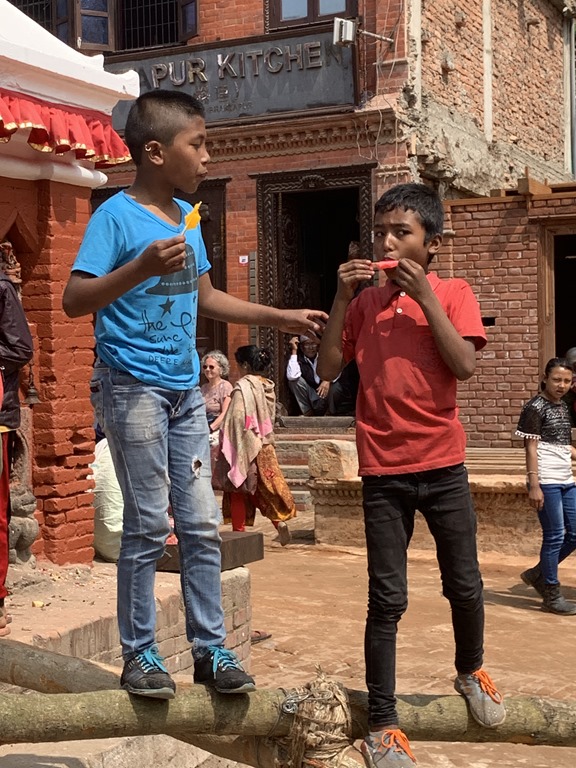
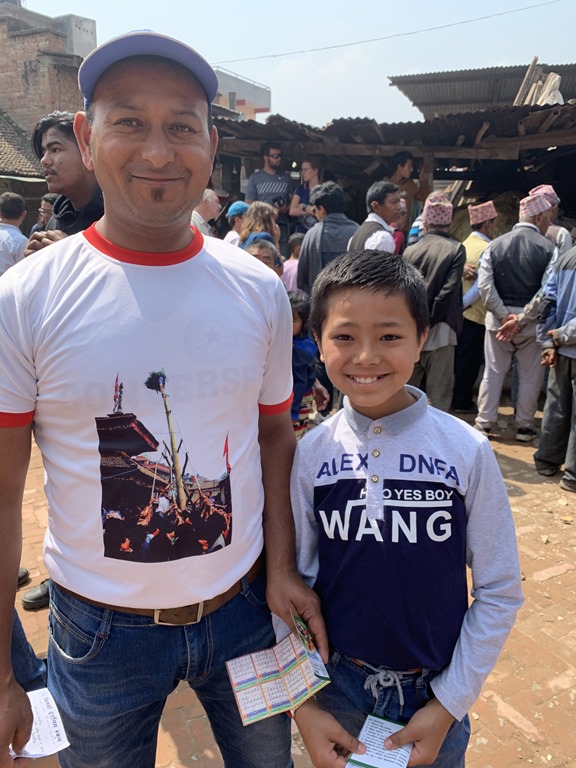
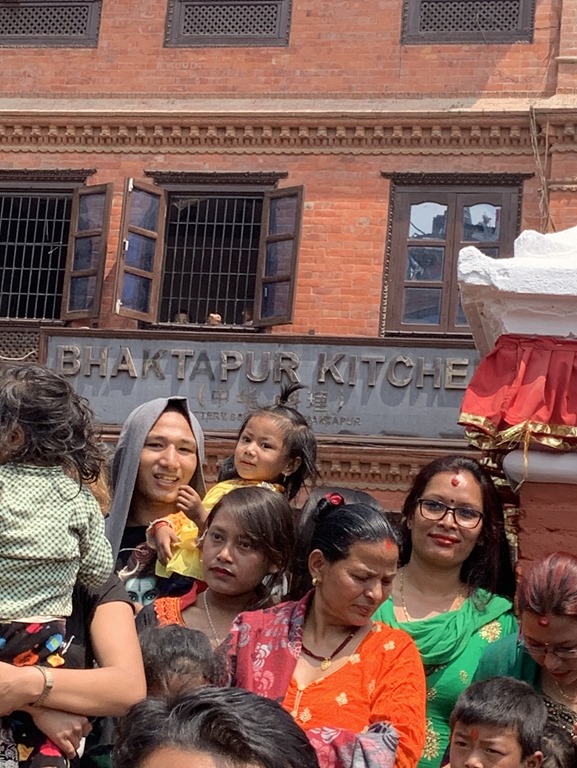
We really hit a great time to be here.  It is Nepal’s New Year!

IMG_6342IMG_6343IMG_6473-copy

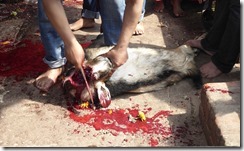
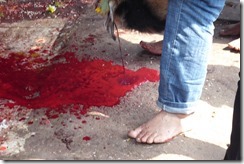
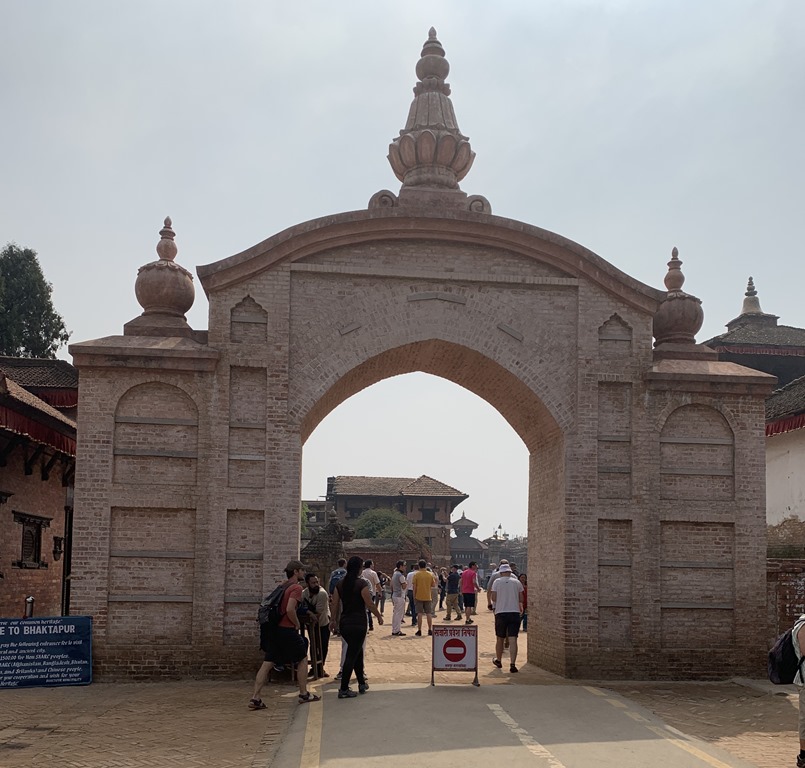
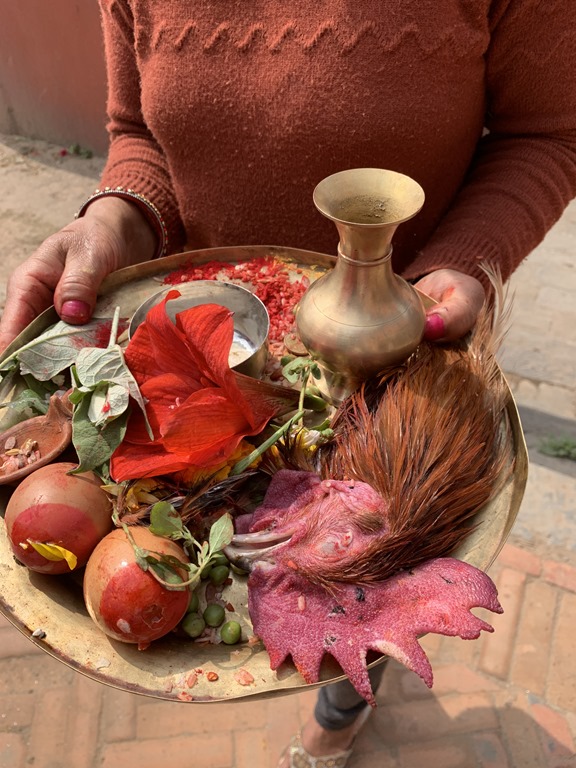
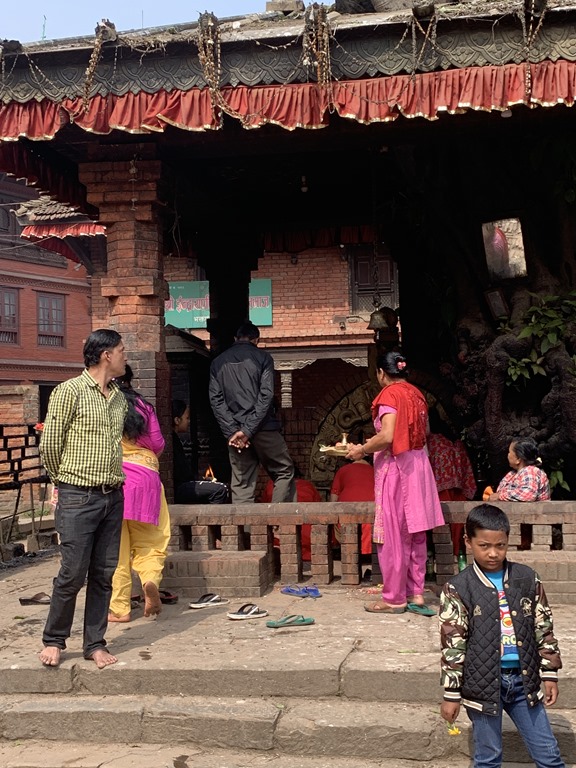
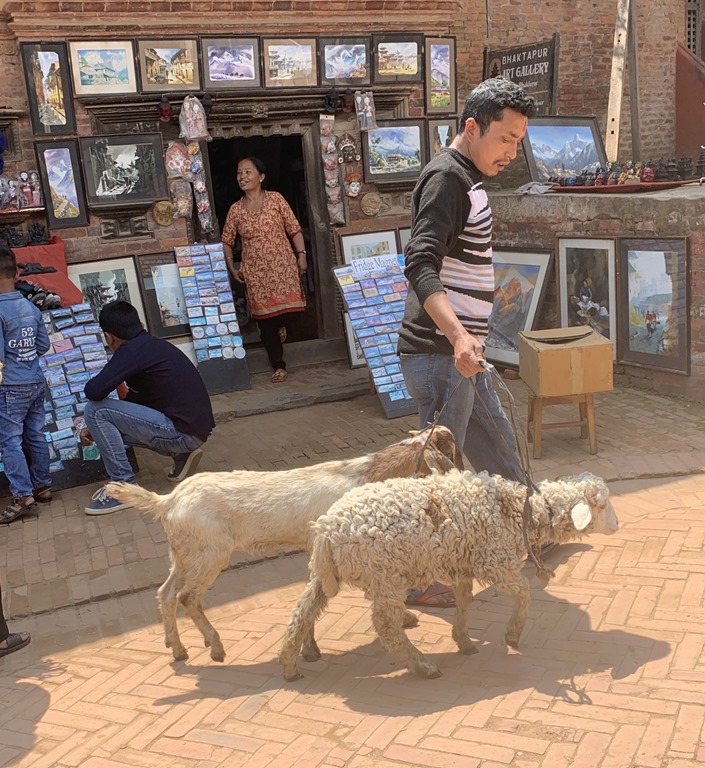
We passed through the city gates and the first thing we saw was a goat.  Sagar told us that due to the festival that was taking place, this goat was about to be sacrificed.  Many activists want animal sacrifice to be banned but that hasn’t happened so far.  108 is considered a sacred number in Hinduism and Buddhism, so for festivals, 54 goats and 54 bulls might be sacrificed.  Others sacrifice chickens or ducks. For those who don’t believe in animal sacrifice, they use the coconut water and sometimes eggs for the sacrifice. This woman has that type of sacrifice prepared.
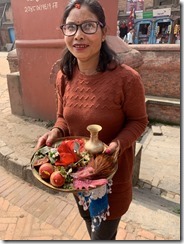
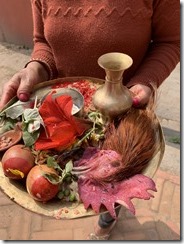
IMG_6333IMG_6332

Participants believe that animal sacrifices to the Hindu goddess Gadhimai will end evil and bring prosperity.

Warning:  we did take some pictures of this, and I might want to become a vegetarian now (almost there anyway).  I was very sad to see it but recognize that it is part of their culture.

IMG_6315IMG_6318IMG_6606IMG_6325IMG_6607

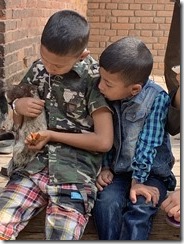
We later saw a chicken and a boy holding a duck that was to be sacrificed.  Sagar did become a vegetarian after witnessing animal sacrifice.
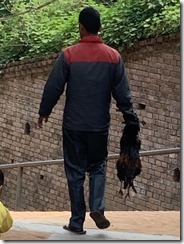
IMG_6327IMG_6335IMG_6336

I cannot imagine that these two boys want their duck to be killed.

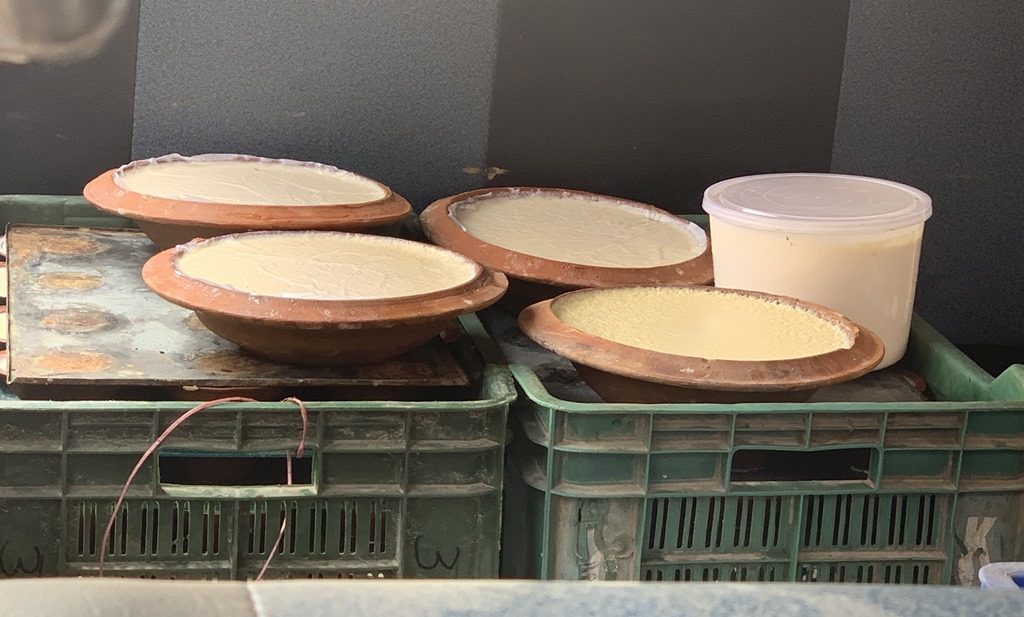
Anyway, on a brighter note, this area is known for its yogurt, which is called King Curd.  Kids here say it should be called President Curd now since they don’t have a king any more!
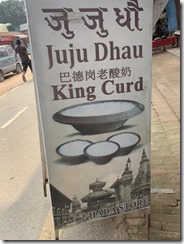
IMG_6340IMG_6338IMG_6339

There are three main squares here and we visited them all. Durbar Square is the main square of the city and with the festival going on, Sagar took us quickly through to the other two first. We will return later.

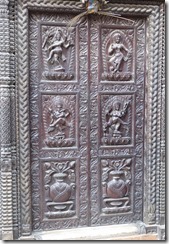
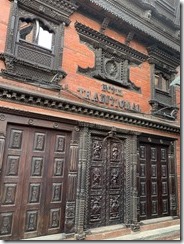
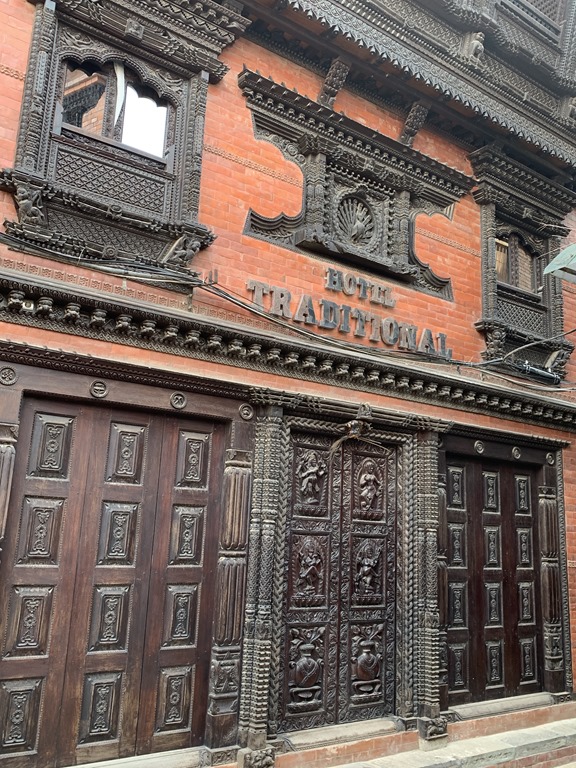
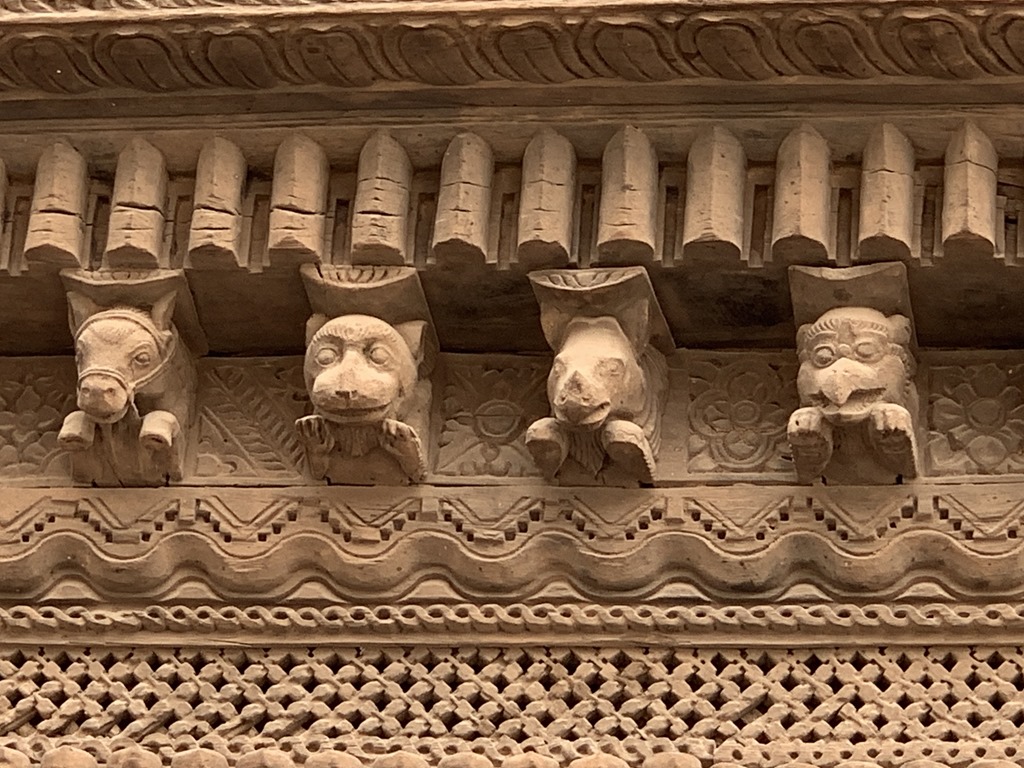
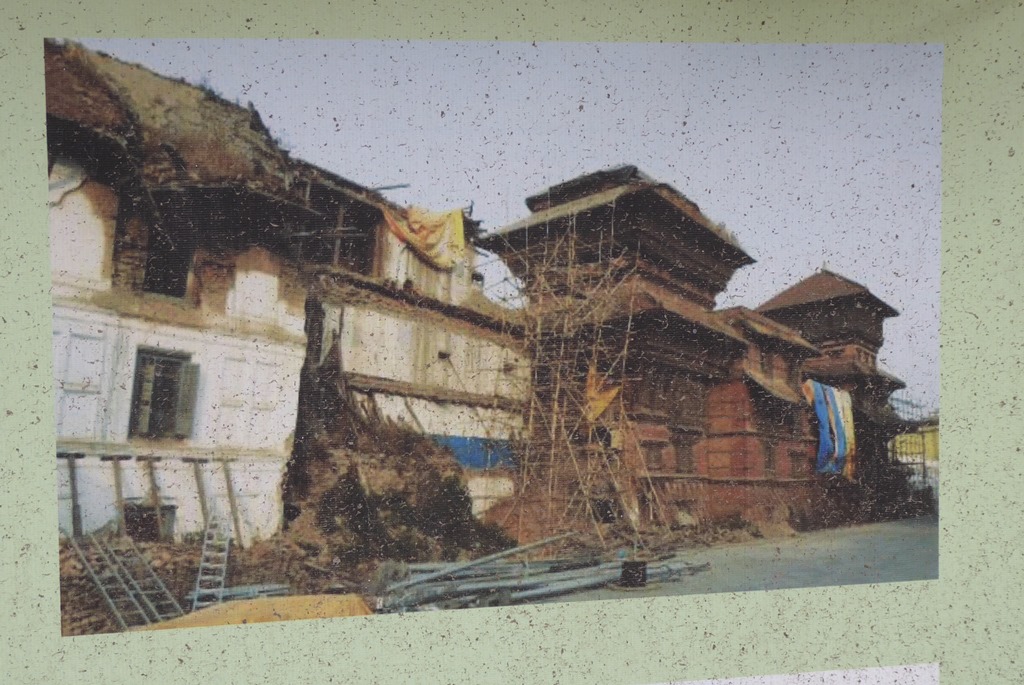
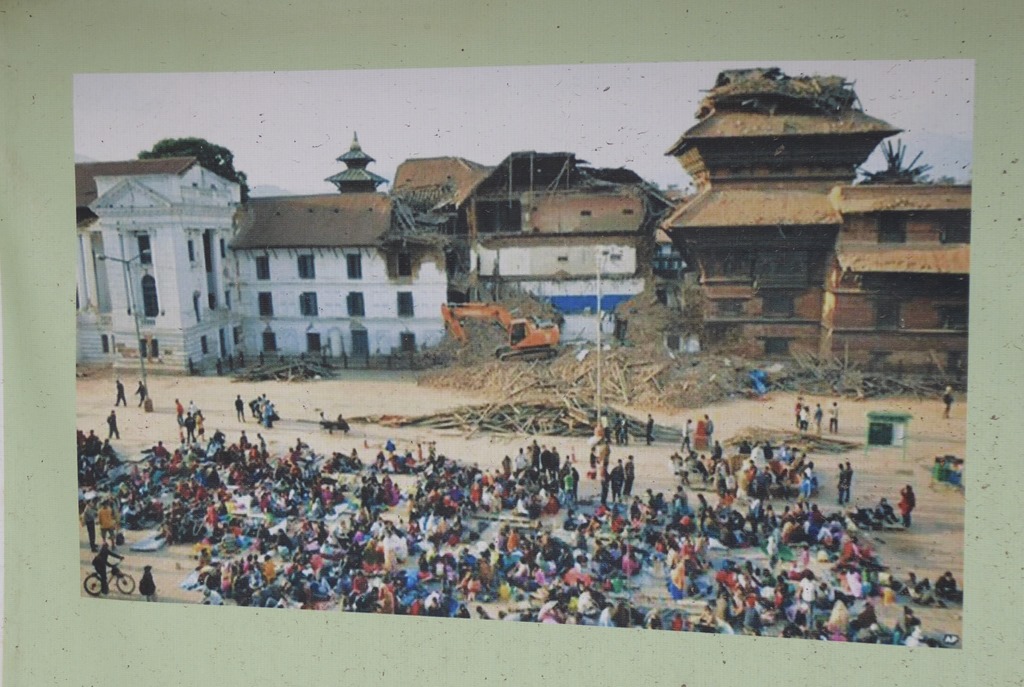
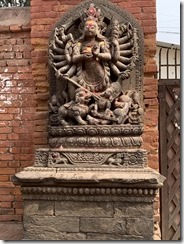
At Taumadhi Square, the second most important, there are many stone spouts, and fabulous wood and stone carvings like the ones we saw in Kathmandu yesterday. These are made of solid pieces of stone or wood. This area was hit hard by the 1934 earthquake and the 2015 one.  Sagar says that it is predicted that earthquakes come every 80 years here.  Most of the destruction in 1934 wasn’t reconstructed since historical significance wasn’t well understood then. Now, tourist entrance fees are collected for preservation of the culture, cleaning the city, and making it one of the best tourist destinations in Nepal.

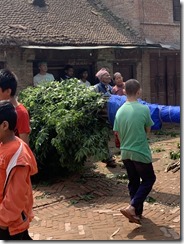
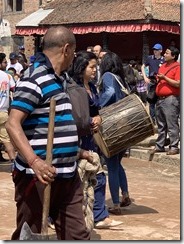
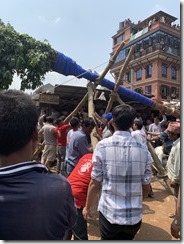
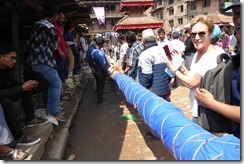
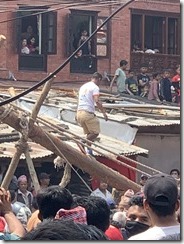
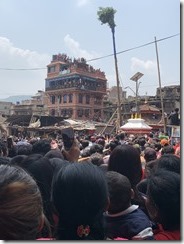
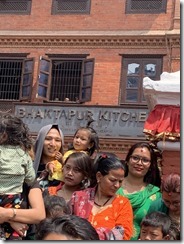
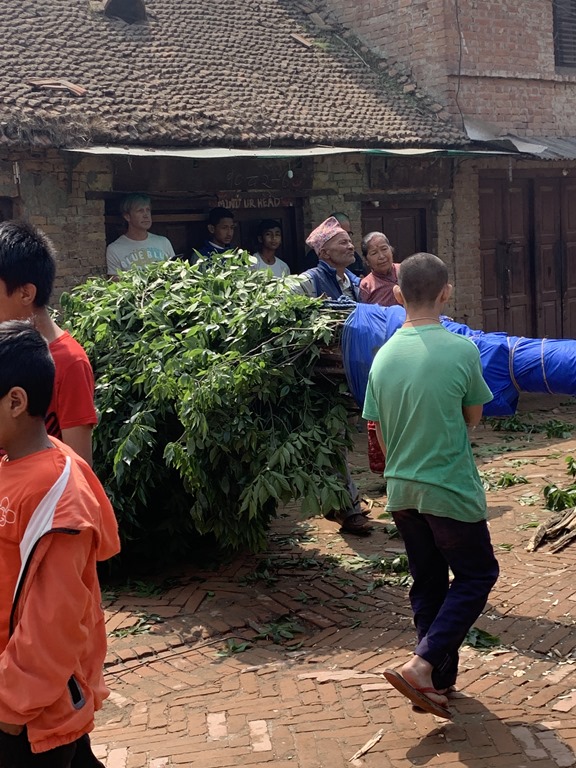
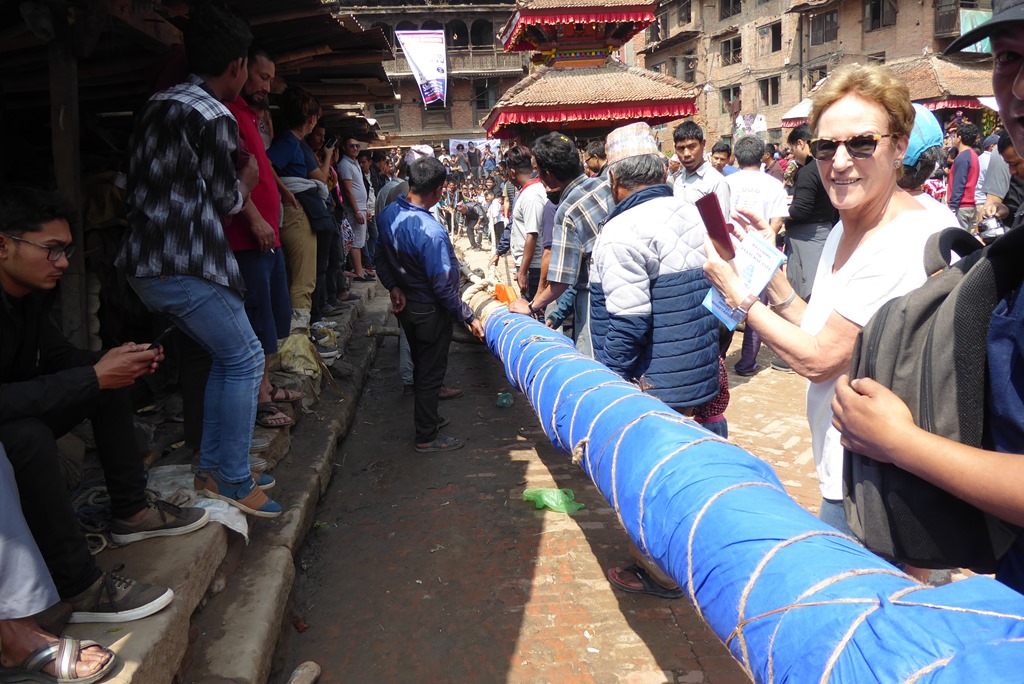
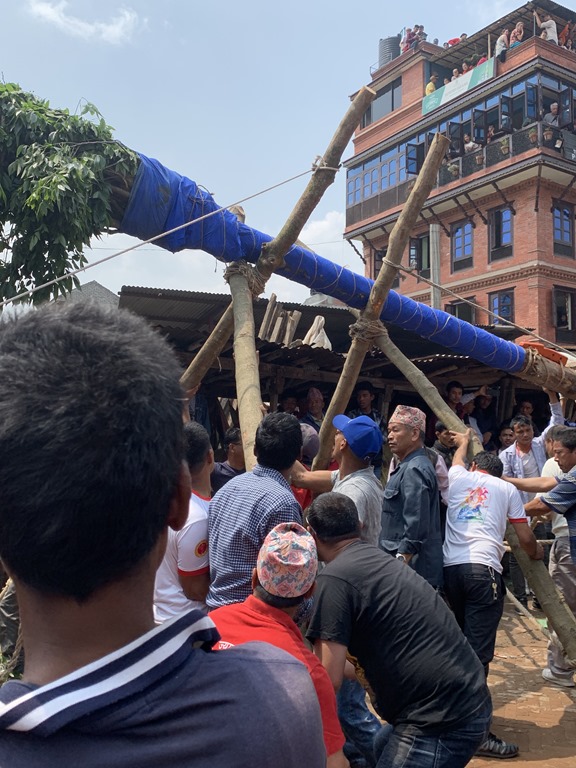
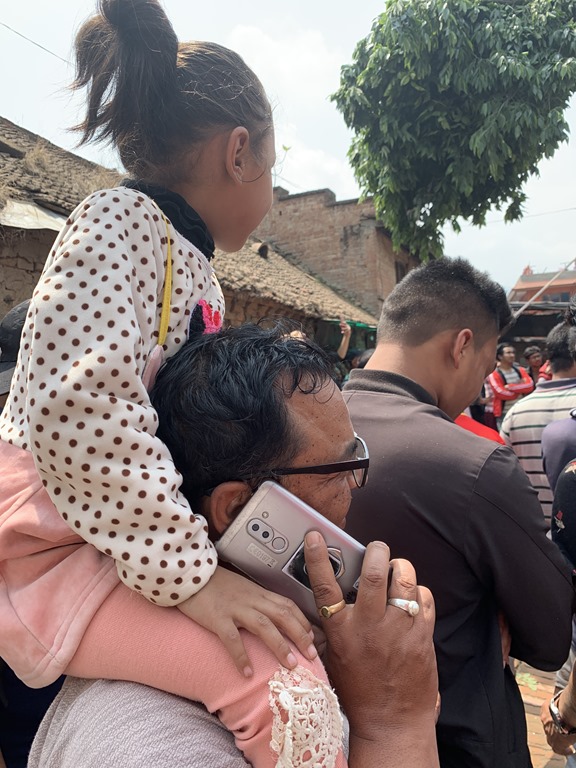
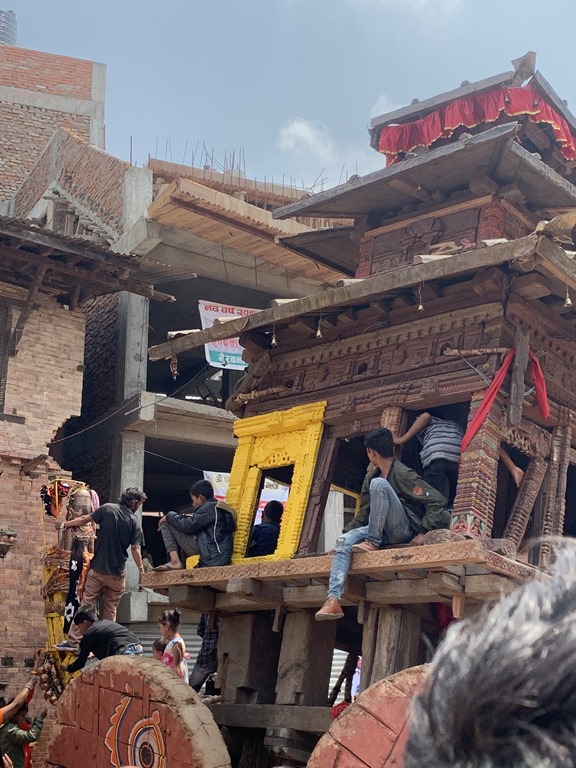
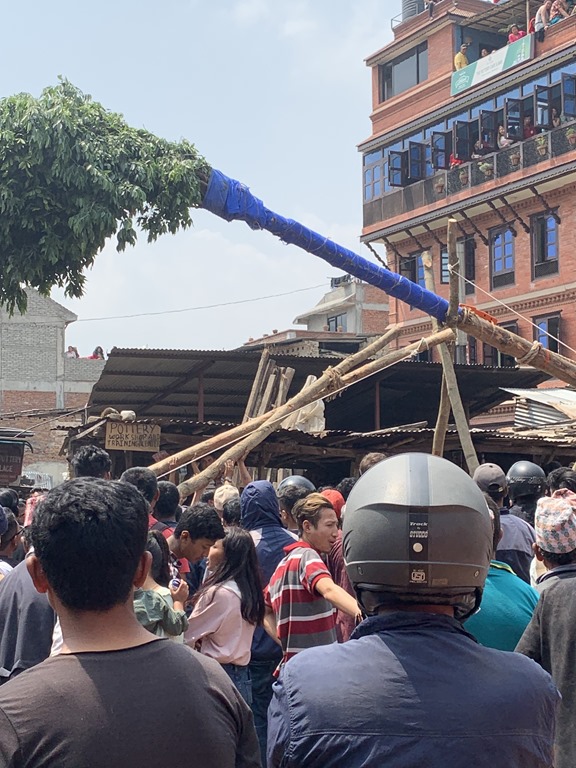
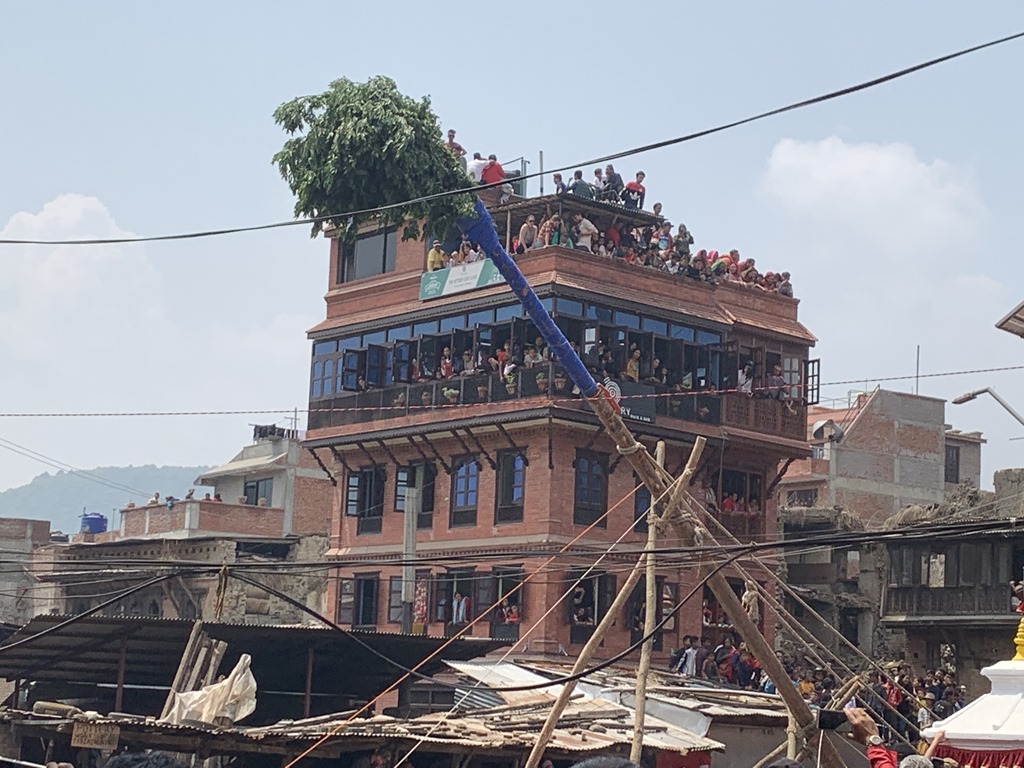
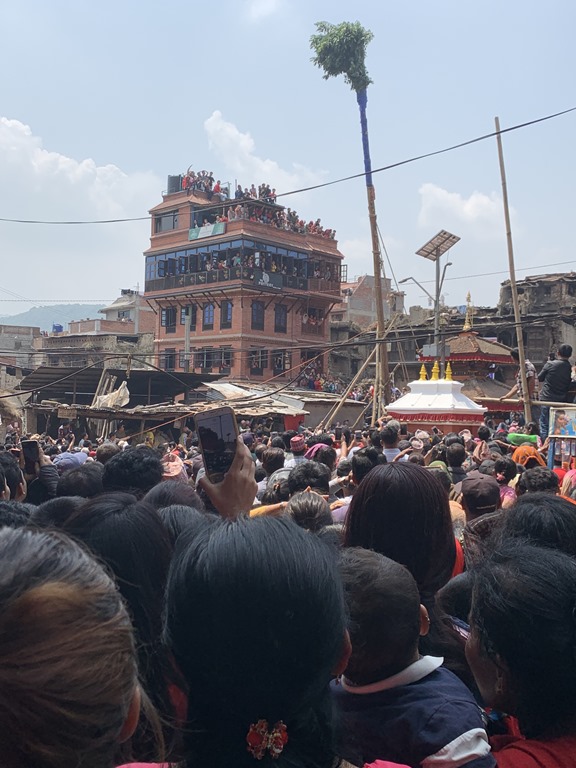
Today was the festival of Biska Jatra (New Year) and they raise a long pole with tree leaves attached – 90 degrees. This is done with ropes and logs – so amazing to see how they do it. It remains up for three days to a week and when it falls, it symbolizes the destruction of evil. We stayed in this area for almost 2 hours to watch this event.  The place was packed with families, and there was a constant drum and cymbal serenade during the raising of the pole. It was like NY Eve in Times Square with the crowds!

IMG_6367IMG_6370IMG_6379IMG_6394IMG_6395IMG_6422IMG_6596IMG_6599IMG_6601IMG_6424IMG_6428IMG_6432-copyIMG_6435-copyIMG_6438-copy

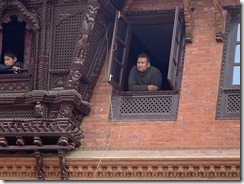
When the pole was all the way up, there was a huge cheer from the crowd, including the ones on the building in the distance!

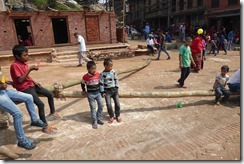
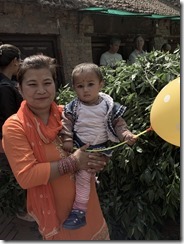
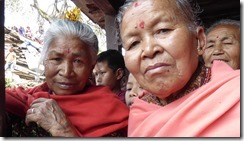
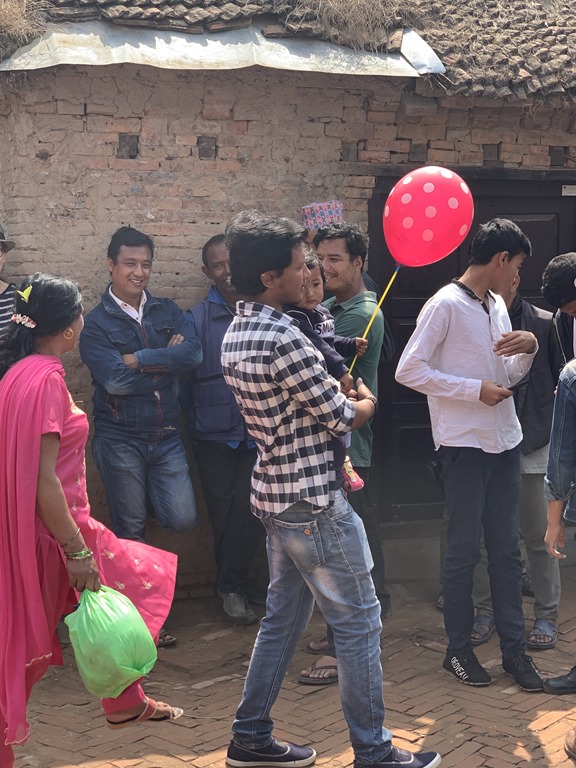
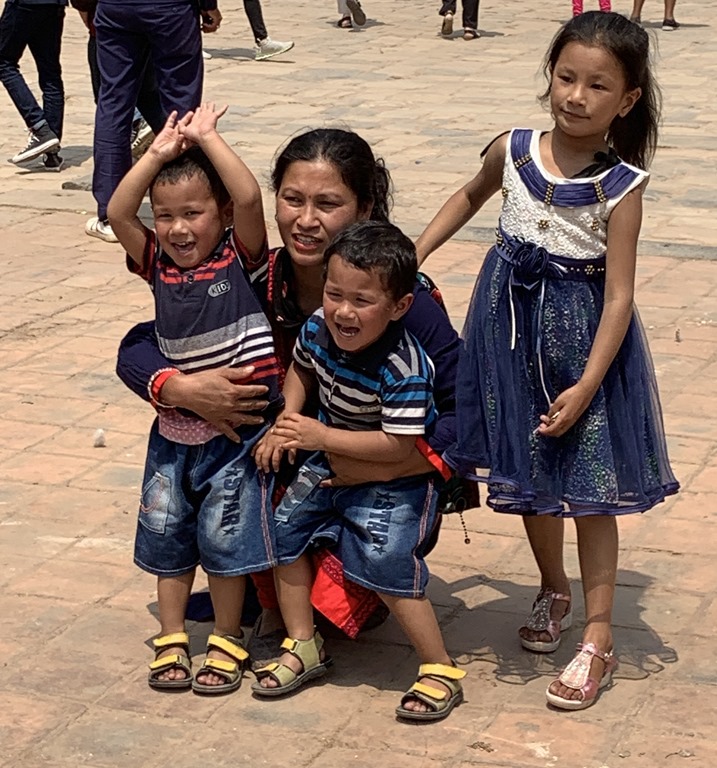
Some of the people and families we saw:
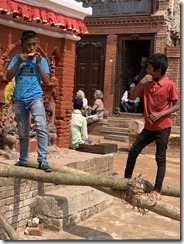
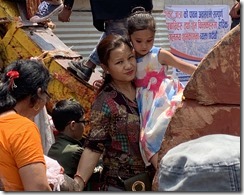
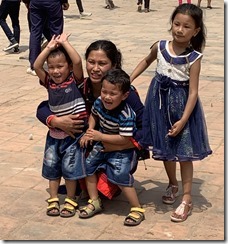
IMG_6381IMG_6382IMG_6385IMG_6387IMG_6390IMG_6392IMG_6396IMG_6417IMG_6419IMG_6420IMG_6426IMG_6446-copyIMG_6453-copyIMG_6471-copyIMG_6589

This chariot will be driven around the squares during the festival.

IMG_6449-copyIMG_6451-copy

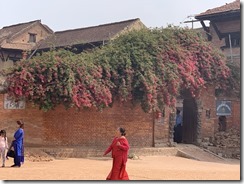
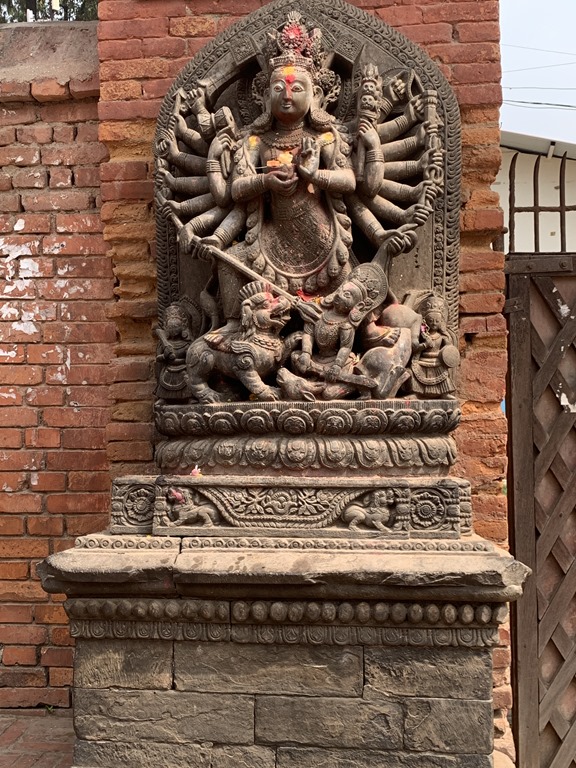
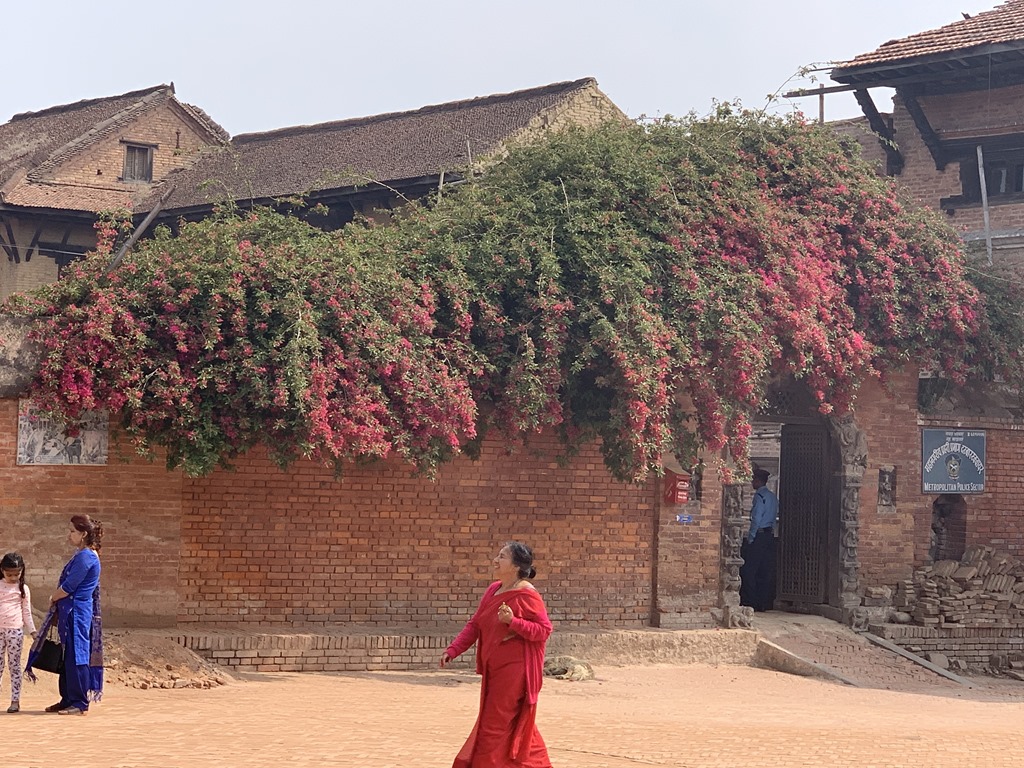
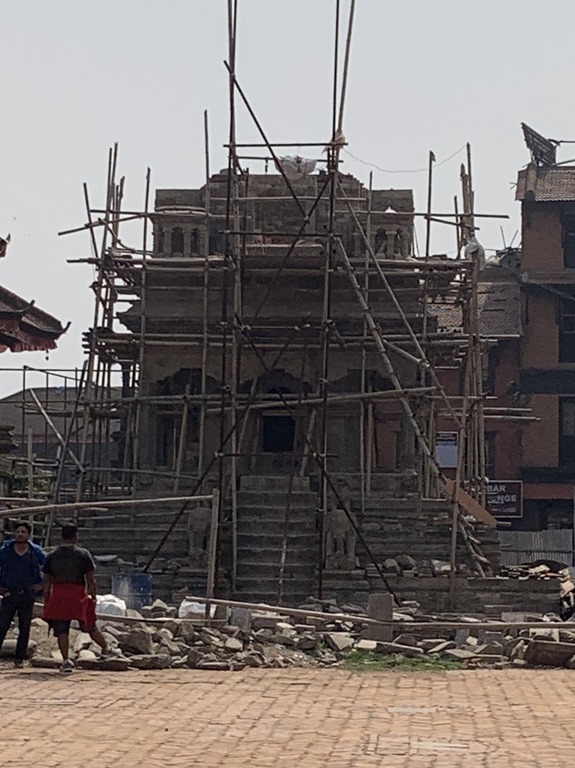
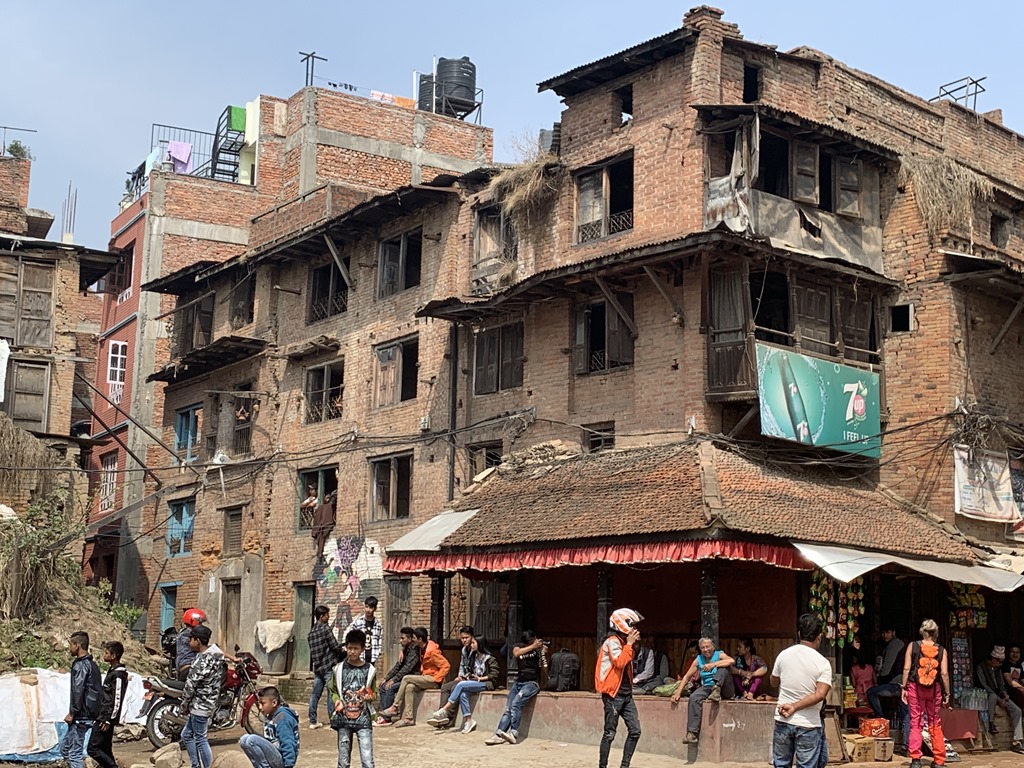
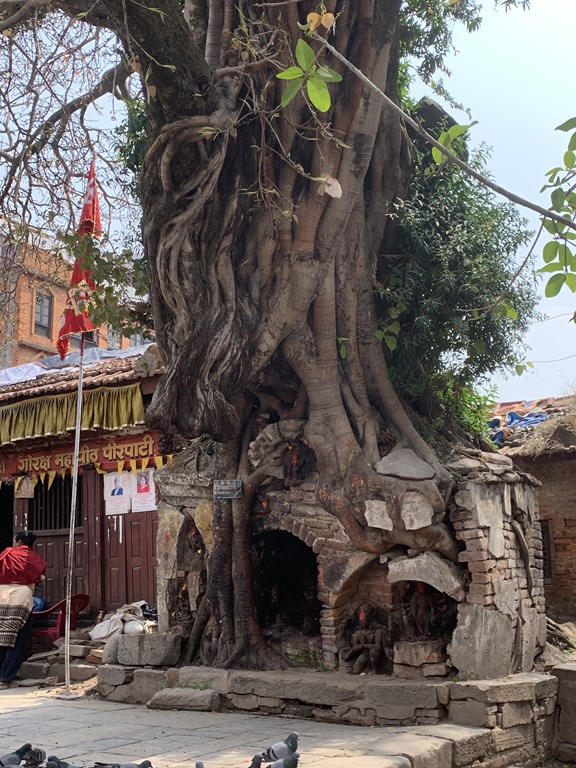
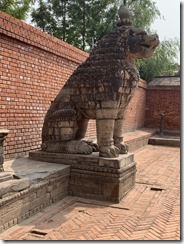
Other sights in the squares included the shops and many temples, some reconstructed, some still in pieces and some that withstood the earthquakes. The history here is just amazing.
IMG_6345IMG_6346IMG_6347IMG_6351IMG_6354IMG_6604IMG_6355IMG_6356IMG_6357IMG_6358IMG_6361

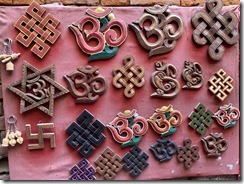
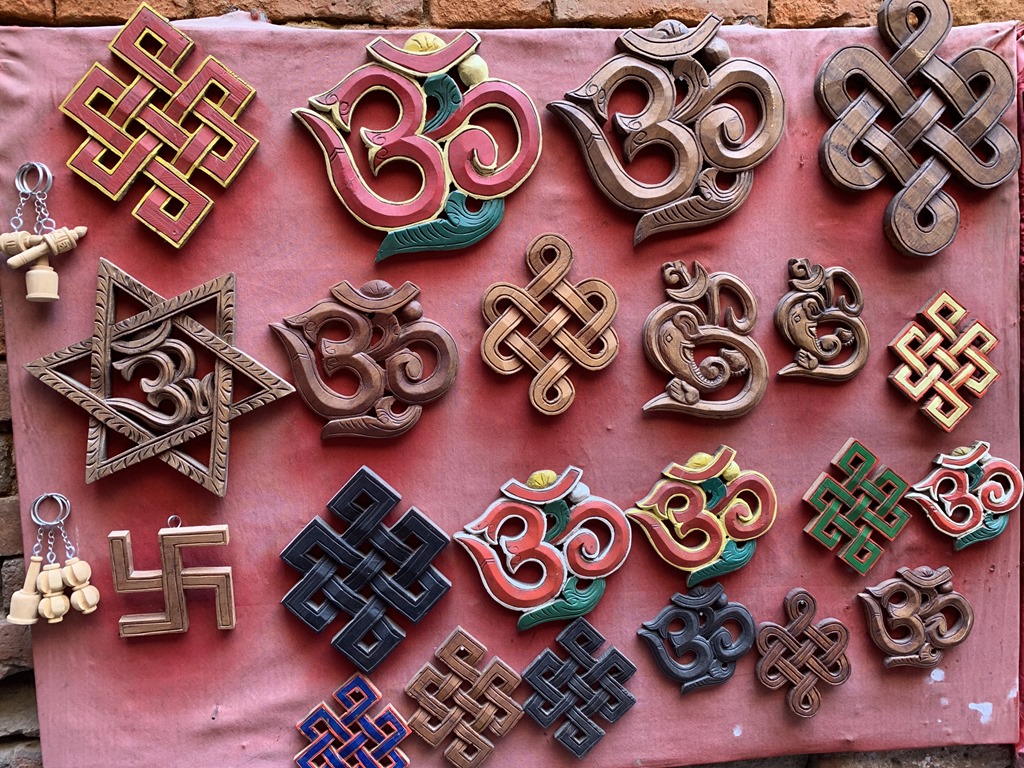
We asked about the 6 sided star that looks like the symbol or Judaism, but here it stands for education – 6 stages of wisdom.

The other ones are the om, and the backward swastika, which in Buddhism symbolizes the footprints of the Buddha and nothing to do with Hitler’s use.

IMG_6377IMG_6388

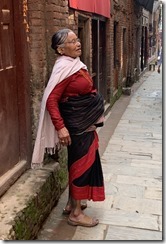
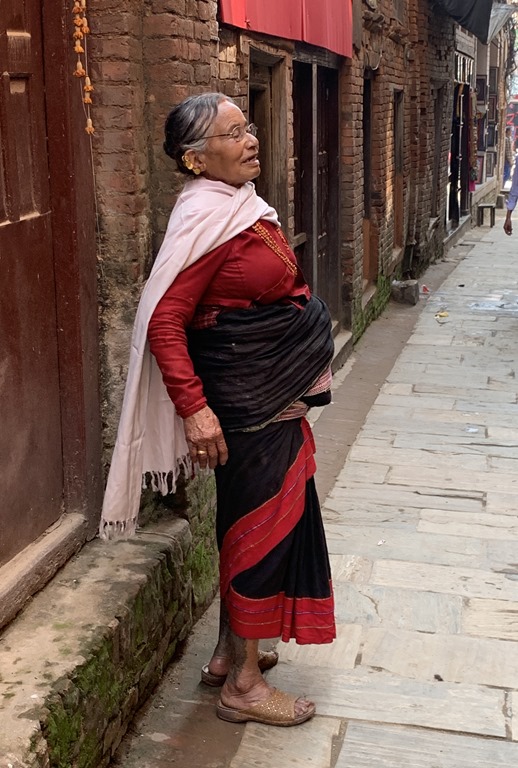
IMG_6363This is the traditional dress of the Newari (one of the ethnic groups) women, the red and black sari.  People are now wearing them a bit shorter, so this woman has tattoos on her legs below where the sari ends.  It is hard to see in this picture, Sagar says it is now common to see.
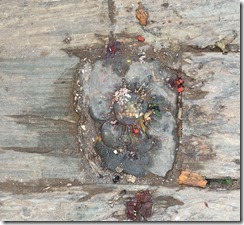
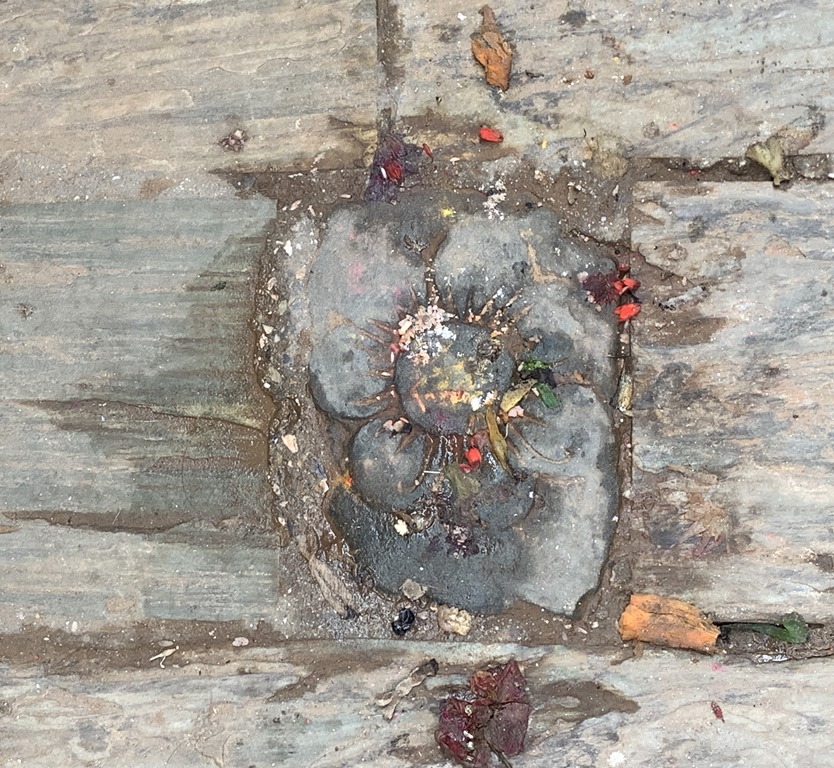
IMG_6360This is the offering you see in front of homes and shops.  First, cow dung is spread, then flowers, fruits, etc., are placed on the lotus stones.

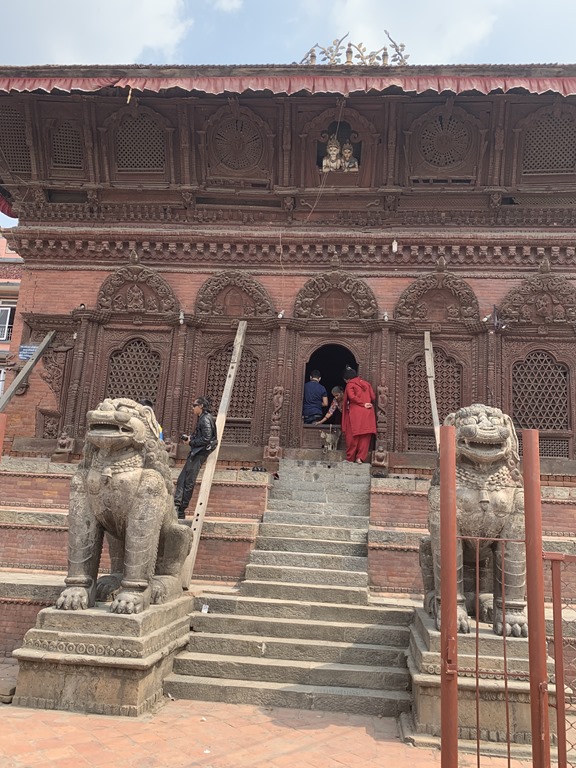
This temple is guarded by many animals, each one is said to be 10 times stronger than the former.

IMG_6464-copy

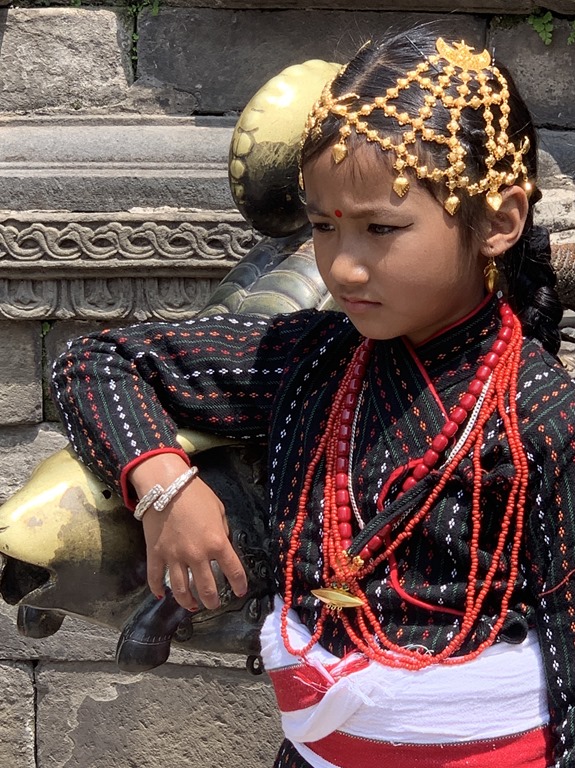
This young girl was having photos taken. We think she is in contention to be the next living goddess.

IMG_6492-copyIMG_6498-copy

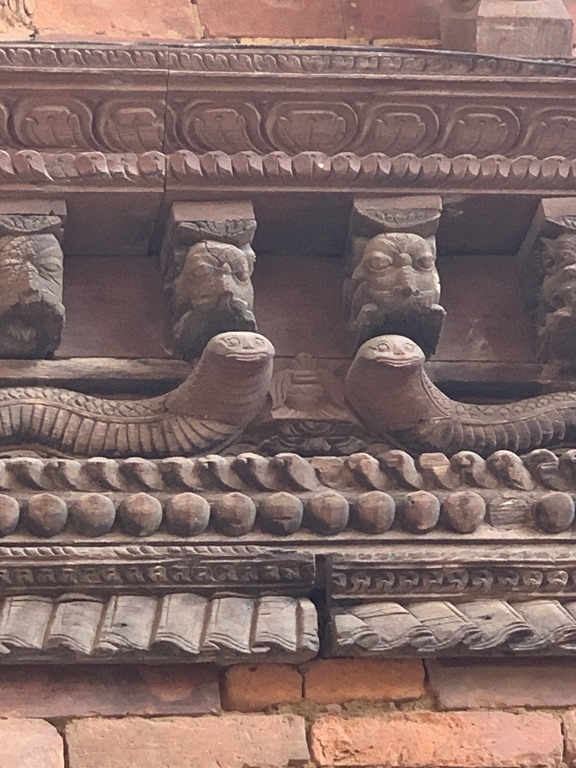
The water area was surrounded by cobras, very common to see them as they are valued by Hindus as protective.

IMG_6490-copyIMG_6499-copy

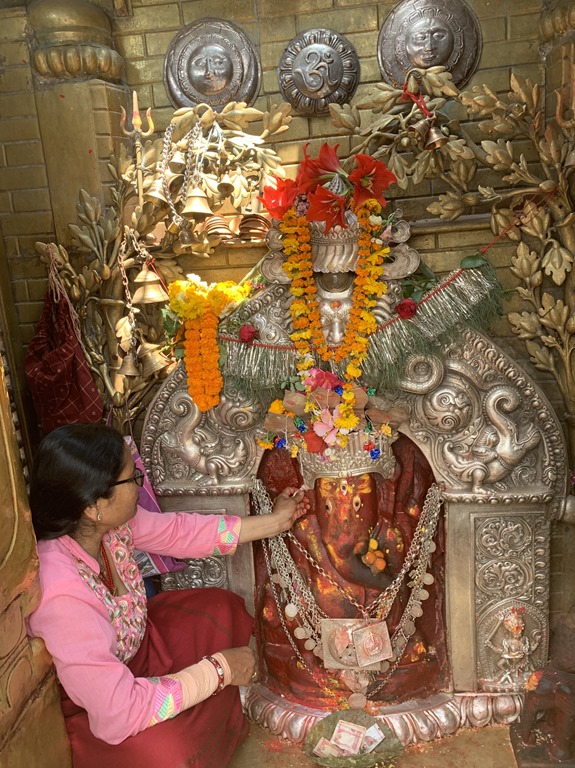
This is a lingum, it symbolizes the phallus and vagina as no life would be possible without both.  It is a common sight in the temple areas.
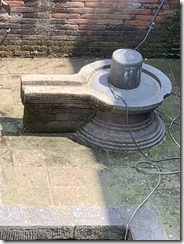
IMG_6530-copy

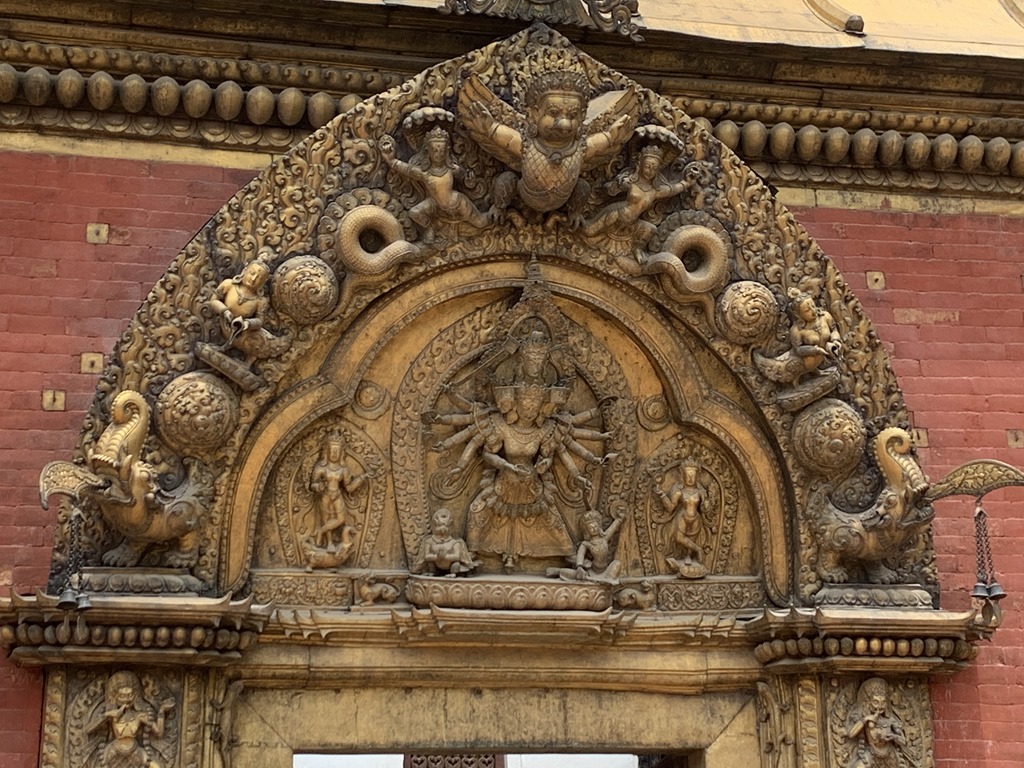
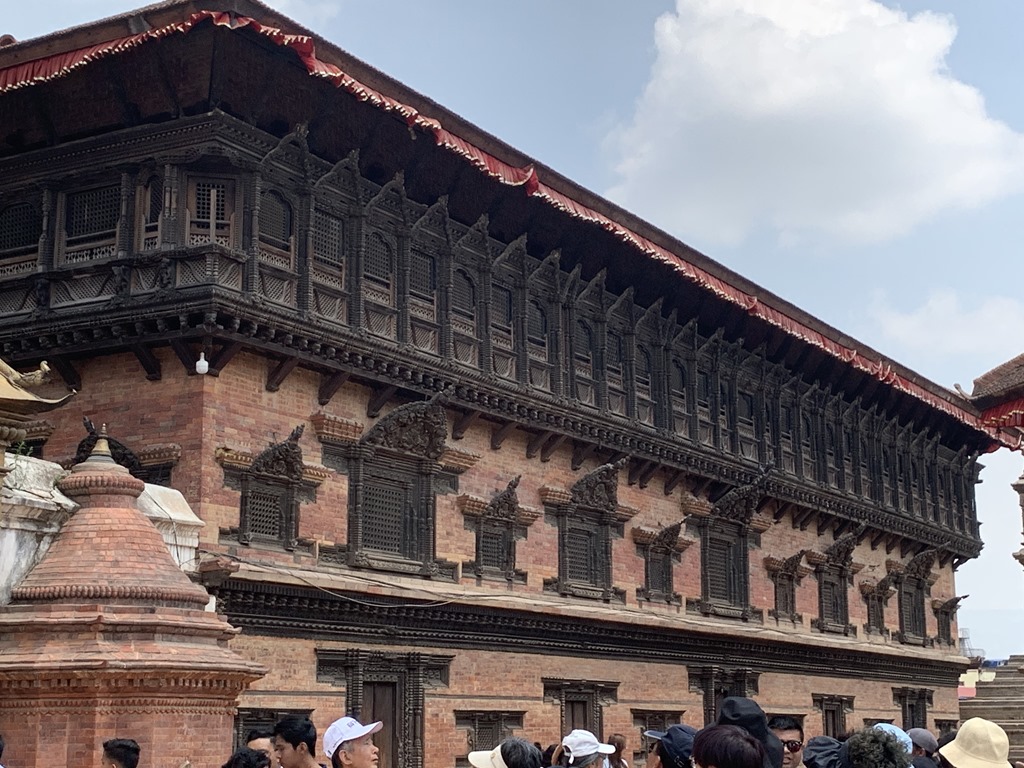
This is the gate to the royal palace.  The king wanted to have 108 windows but had to settle for 54 as the building wasn’t big enough for 108.

IMG_6481-copyIMG_6482-copy

IMG_6479-copy

We saw lots of  houses that you could see had been divided, not physically but with a different look.  Sagar described how sons live with their parents but reach a point where they don’t want to live so close, so parents divide the house to provide a separate space for each son.

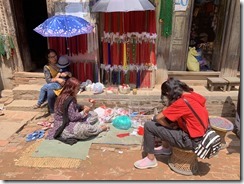
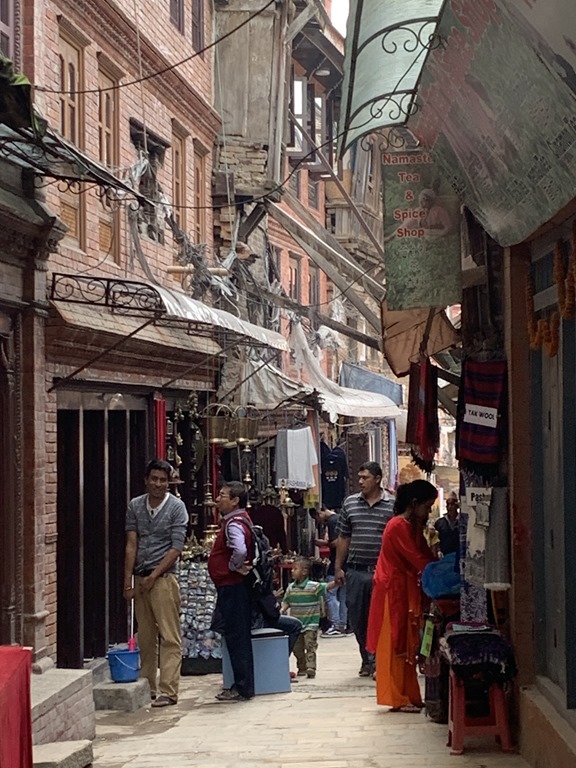
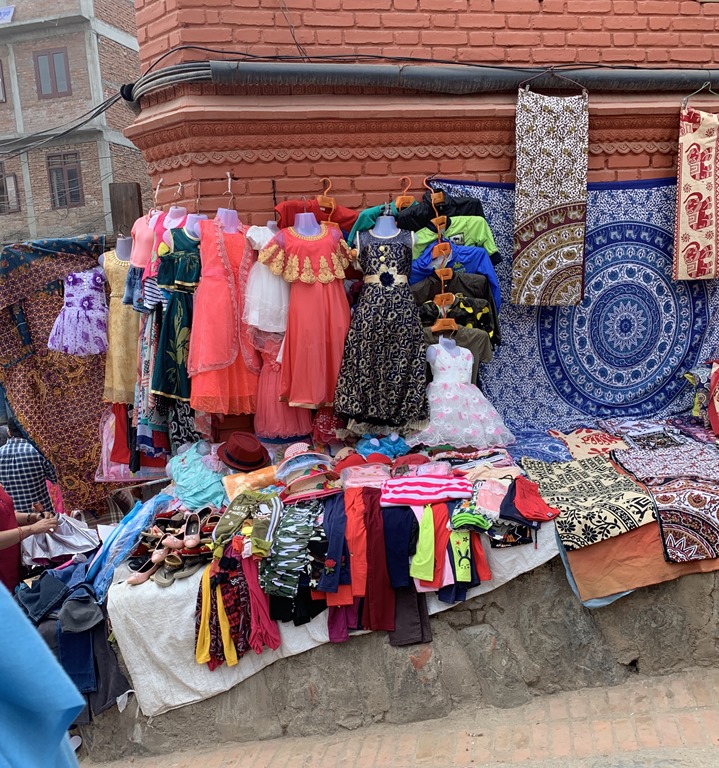
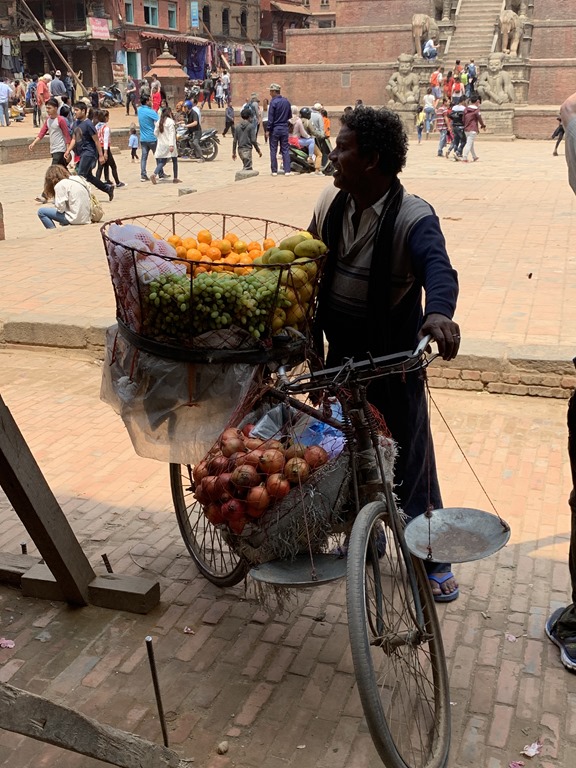
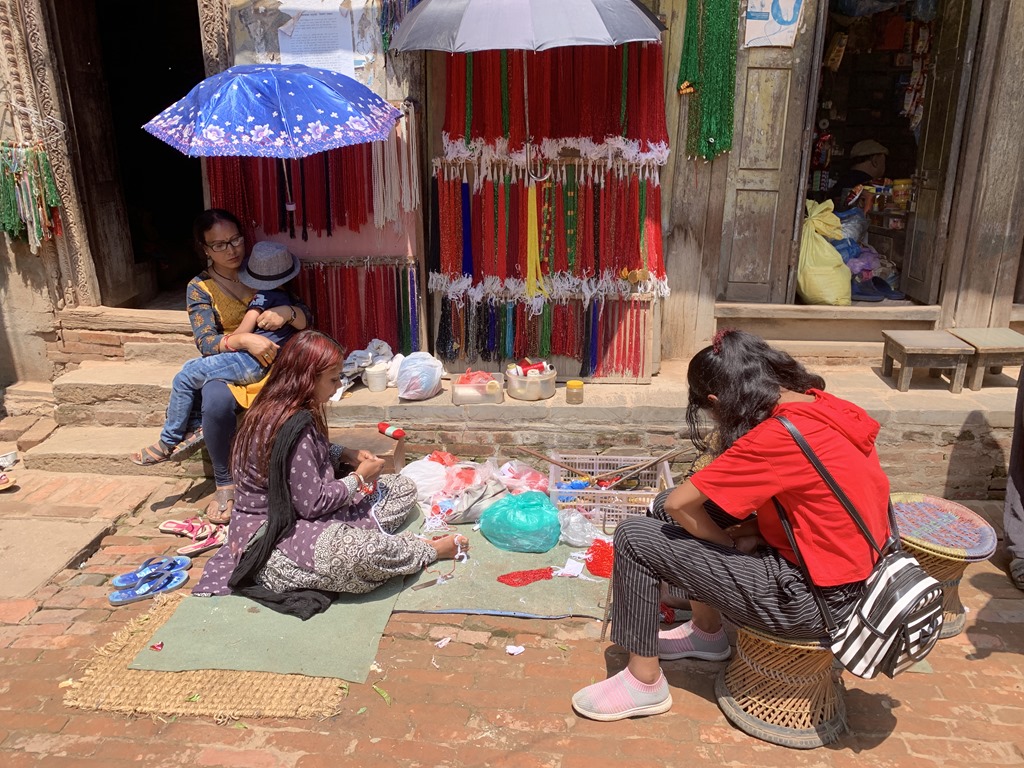
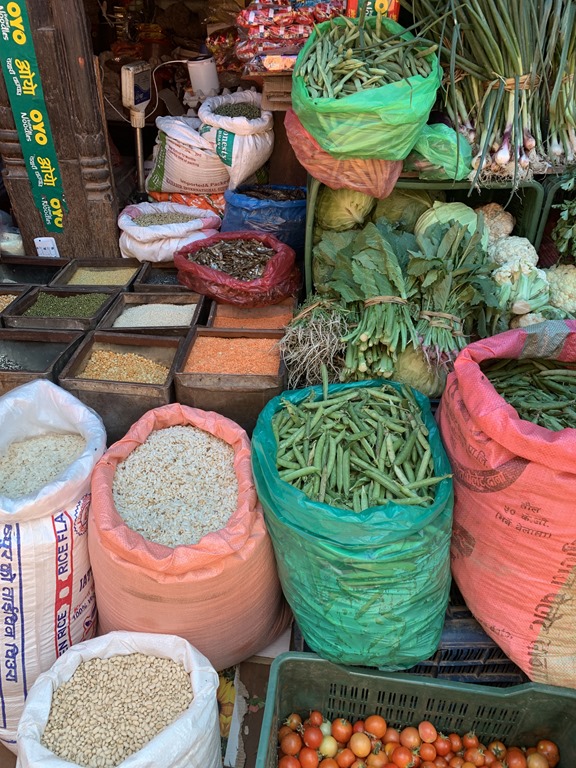
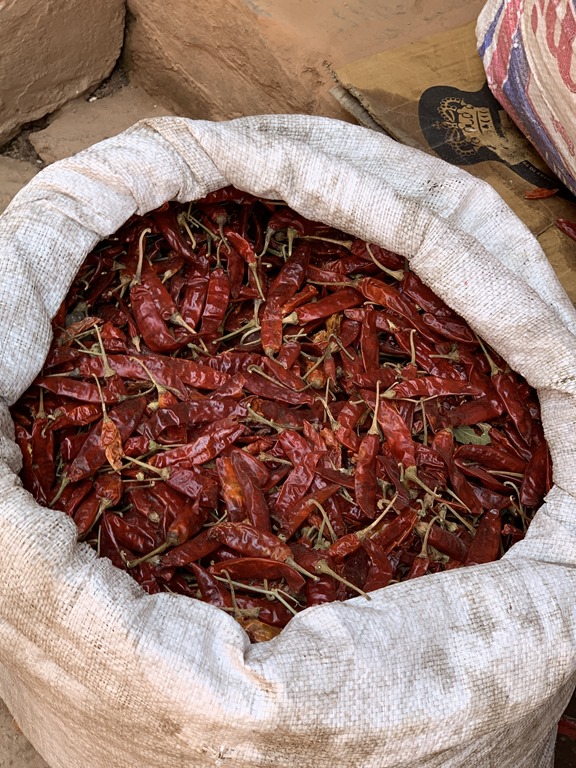
Markets are always interesting.
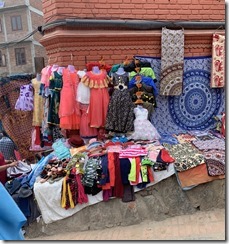
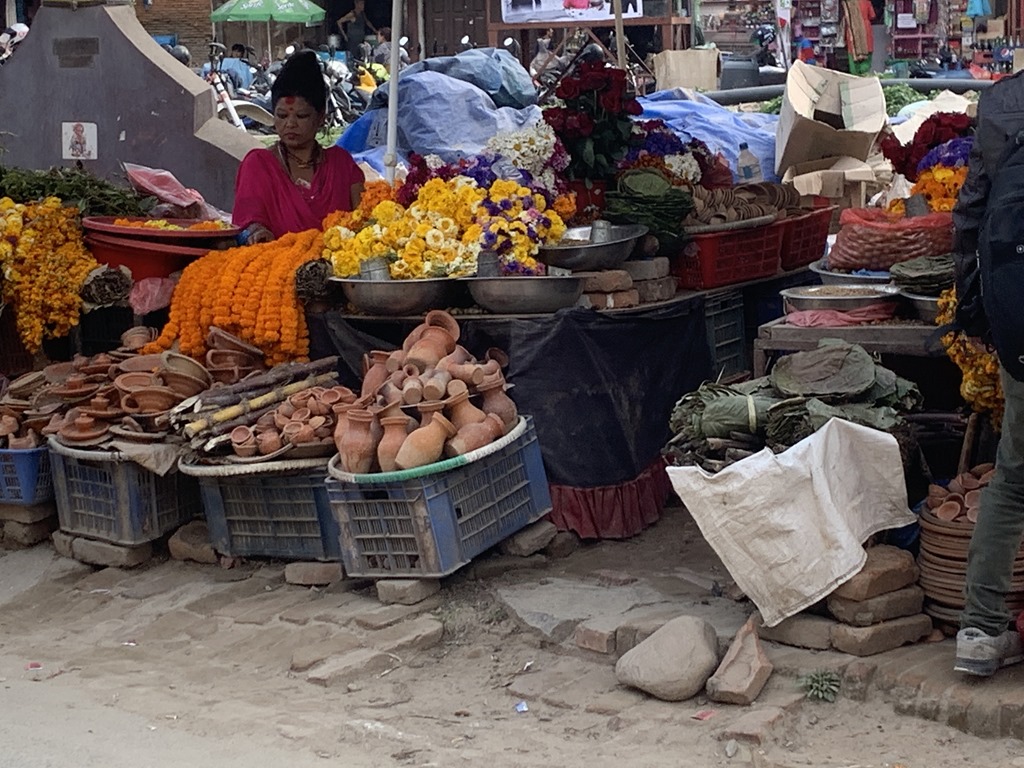
IMG_6445-copyIMG_6455-copyIMG_6456-copyIMG_6460-copyIMG_6461-copyIMG_6509-copyIMG_6513-copyIMG_6514-copyIMG_6517-copyIMG_6518-copyIMG_6521-copyIMG_6523-copyIMG_6524-copyIMG_6525-copyIMG_6526-copy

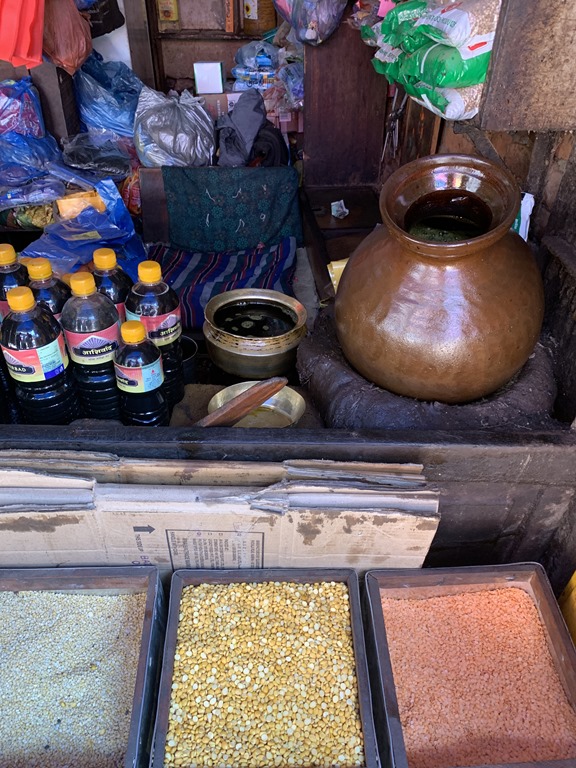
They use mostly mustard oil here for cooking and even for skin (never knew there was such a thing). Before electricity, they used it for oil in their lamps.  It is still used at some temples.
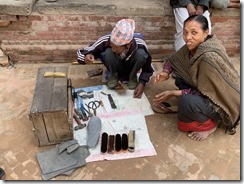
IMG_6532-copyIMG_6533-copyIMG_6534-copyIMG_6538-copy

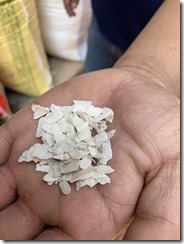
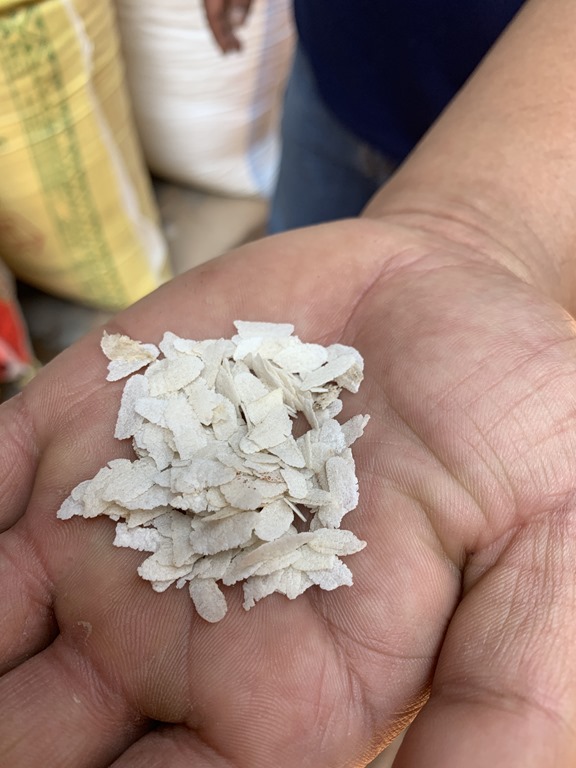
The last picture is beaten or flattened rice.

Rice leaves are also used to make these mats.

IMG_6560-copy

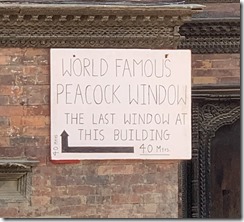
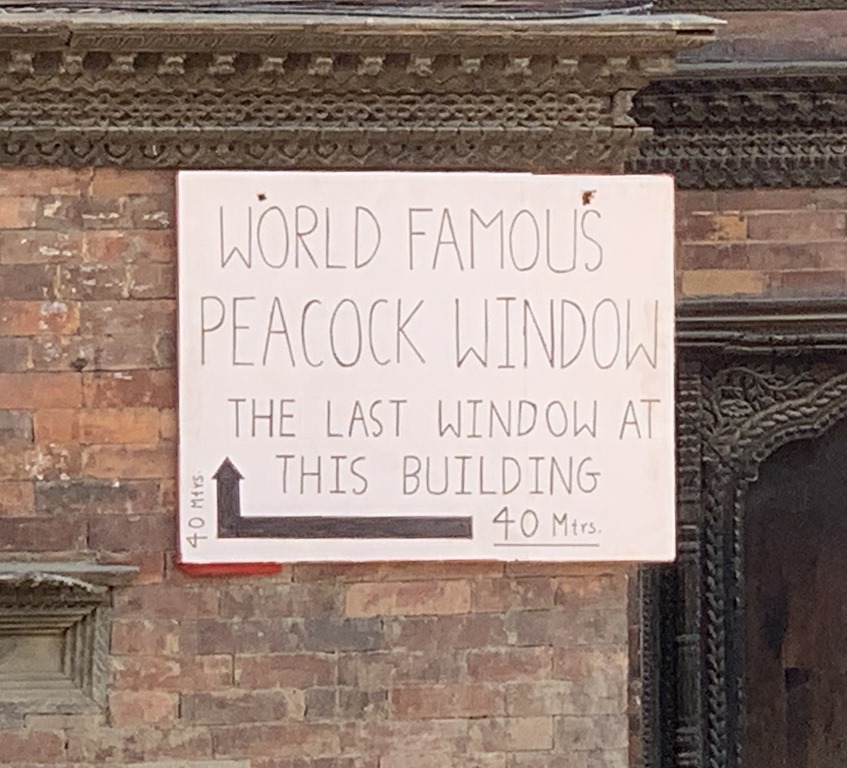
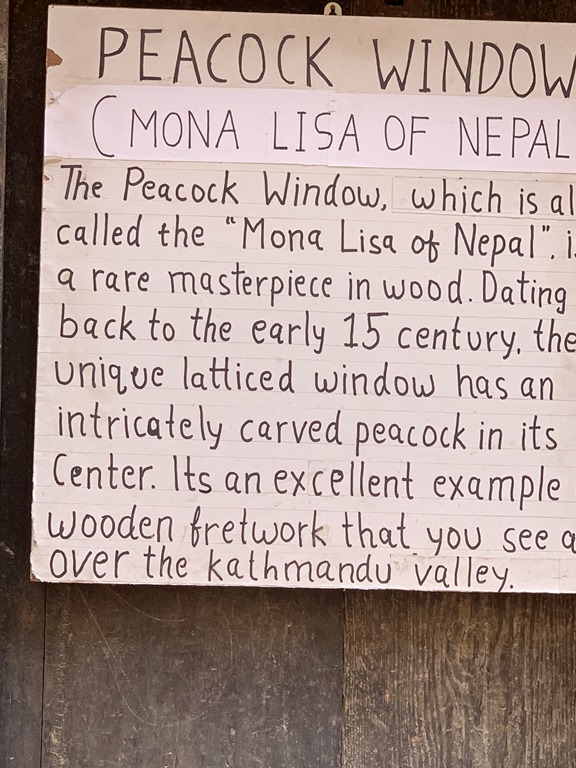
This is the famous peacock window.

IMG_6581


IMG_6547-copyIMG_6552-copyIMG_6553-copyIMG_6539-copyThis is a picture that resembles the mandala one that we bought yesterday.
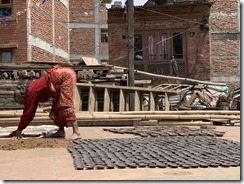
 

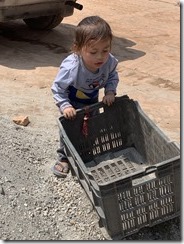
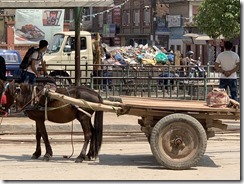
IMG_6562-copyThis is pottery square, because of the festival no one was making pottery but this woman was lining up some of the small bowls.
IMG_6563-copyIMG_6565-copyIMG_6569-copy

Sagar is vigilant about buying us water and also gives us hand sanitizer all the time. He has amazing energy and it is good that we are in good shape because we are on the go all day.  So much to see and learn.

We headed out of Bhaktapur to our next hotel in Nagarkot. They have different license plates here.  The green ones are for tourist vehicles which Sagar says have top priority for everything because tourism is such an important part of their economy.

He warned us that the roads would be very bumpy on the way to Nagarkot. That was an understatement to be sure.  If we thought they were bad, wow, these were terrible.  We went from 3000 feet above sea level to 6886 feet and the roads were dirt, pot holed, windy and dusty.  When motorbikes or buses came the other direction, there were times we just avoided a collision.  Very exciting to say the least and Zyanu is a great driver.

The pollution is quite bad  here, dust is part of that. We couldn’t really see the scenery well. There are lots of wheat fields, and both Bhaktapur and Nagarkot are farming areas.

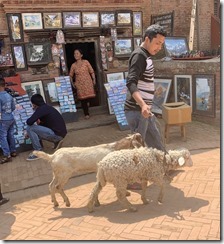
We saw marijuana plants growing along the road and lots of goats. Bet they are happy!

IMG_6572-copyIMG_6574-copyIMG_6576-copyIMG_6577-copy

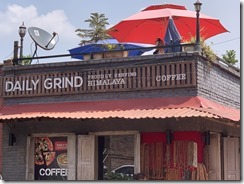
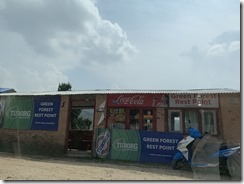
Every so often there would be a small store, bar, guest house or restaurant.

After about an hour we arrived at our hotel, the Mystic Mountain Hotel in Nagarkot.  The hotel is positioned so that you have views of the Himalaya Mountains and Mount Everest.

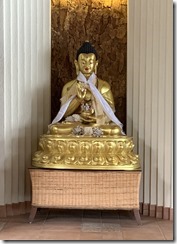
We were greeted with drinks and made comfortable for about 30 minutes as our room was not yet ready.
  IMG_6578-copy

When we got to our room, wow, how we wish it was clearer because supposedly the sunrise and sunsets here are quite spectacular. You can see how hazy it is, so no spotting of the Himalaya vista right now. And how this hotel is built right into the hills.

IMG_6579-copyIMG_6610-copyIMG_6611-copyIMG_6612-copyIMG_6613-copyIMG_6614-copyIMG_6615-copyIMG_6616-copy

Sagar said if it rains, the air will be clearer and we might have a better view.  Well, shortly after we arrived, we had a storm – with lots of hail! 

IMG_6619-copy

But it didn’t clear enough to see a sunset or much of the mountains.  We will hope for a clear morning, when we will go back to the Hyatt in Kathmandu for our final days in Nepal. We had the special New Year’s dinner in the hotel and it was delicious. We were told that there are leopards in this area and the people do not go out at night.  So we won’t either.  


Posted in April, Asia, Excursions, Food, World Cruise 3 | 2 Comments

Kathmandu, Nepal

April 12, 2019

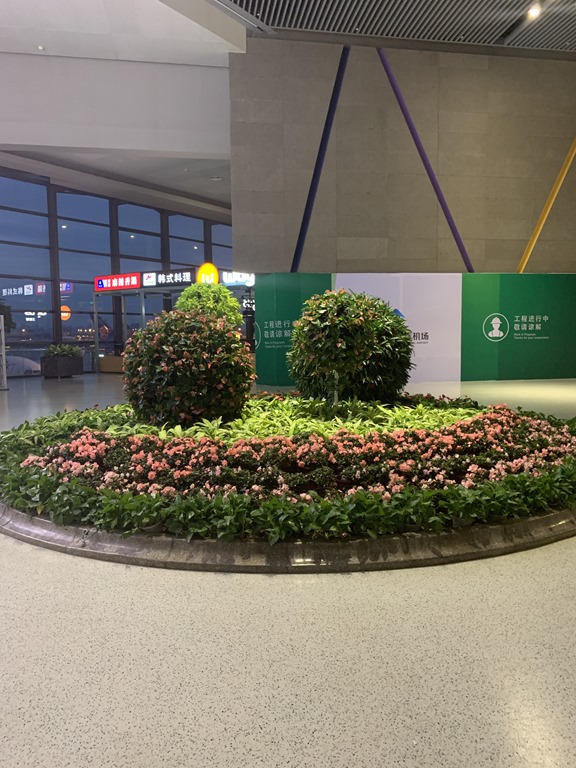
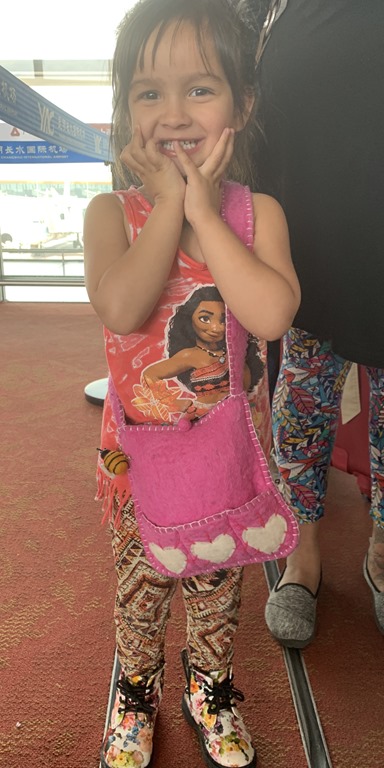
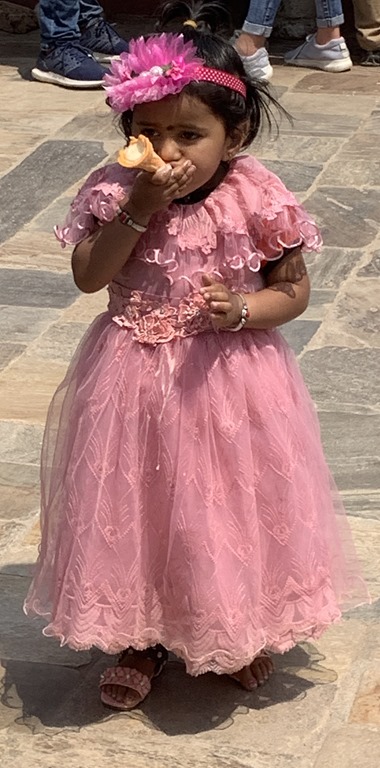
We left the ship in Shanghai yesterday morning at 4:30 AM and the port agent was there to escort us off the ship and to the waiting taxi.  The ship was leaving at 6 AM. Our flight was at 8:15 and we were a little delayed but not long.  I was hoping that I might buy from the Pandora shop but they didn’t open until 8 and we were on the plane by then.  We had a change of planes in Kumming, which is in the center of China and had to go through immigration then before boarding the flight to Kathmandu.  Both of the flights were fine, interesting Asian meals on both.  I saw this little sweetie at the airport and the flowers were beautiful.

IMG_5964IMG_5966

As I mentioned, China is all on one time zone so there was no change in time there, but Nepal is 2 hours and 15 minutes behind China time.

IMG_5976IMG_5973

The travel agency sent a representative, Ashish, and a driver to pick us up.  Ashish said that we were very quick to leave the airport, sometimes it takes people 3  hours!  I guess that is because we applied for our Nepal visa online instead of waiting till we got there, which is apparently the choice most people make.  There were long lines for that while it took only about 10 minutes for us to get the visa in our passports and for me to get local currency. Ashish greeted us with these scarves which is a typical welcome here.

IMG_6017

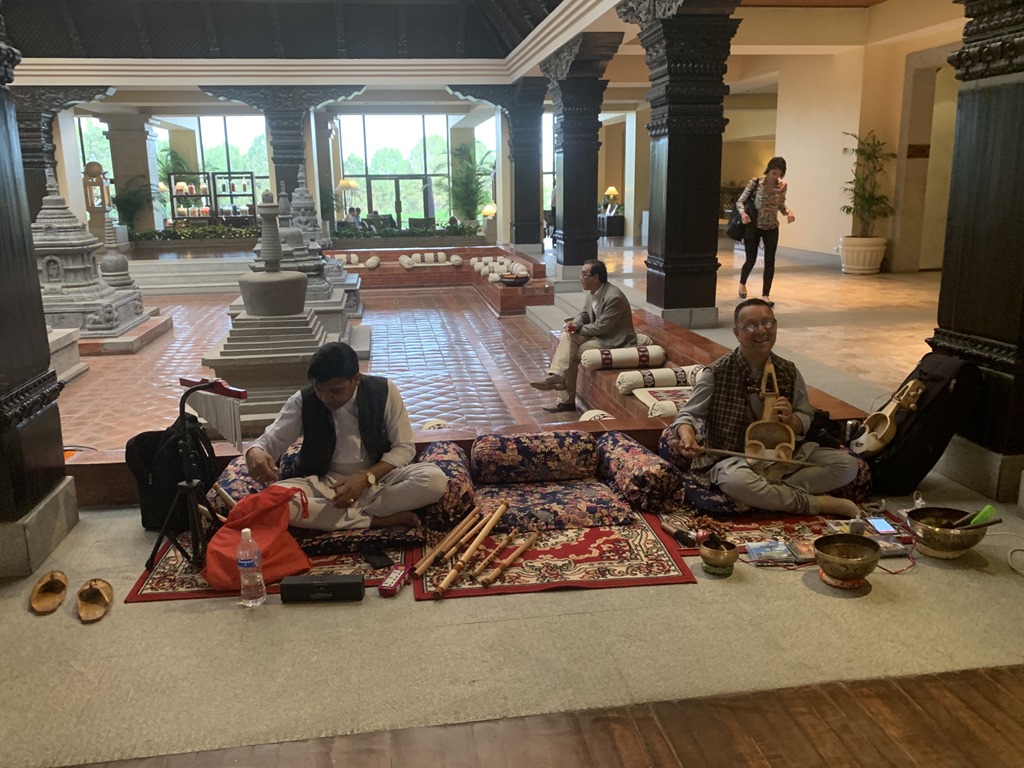
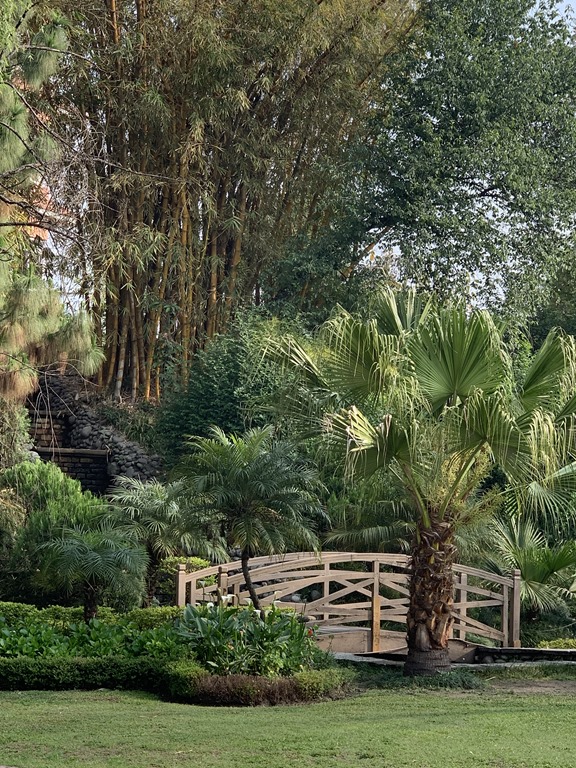
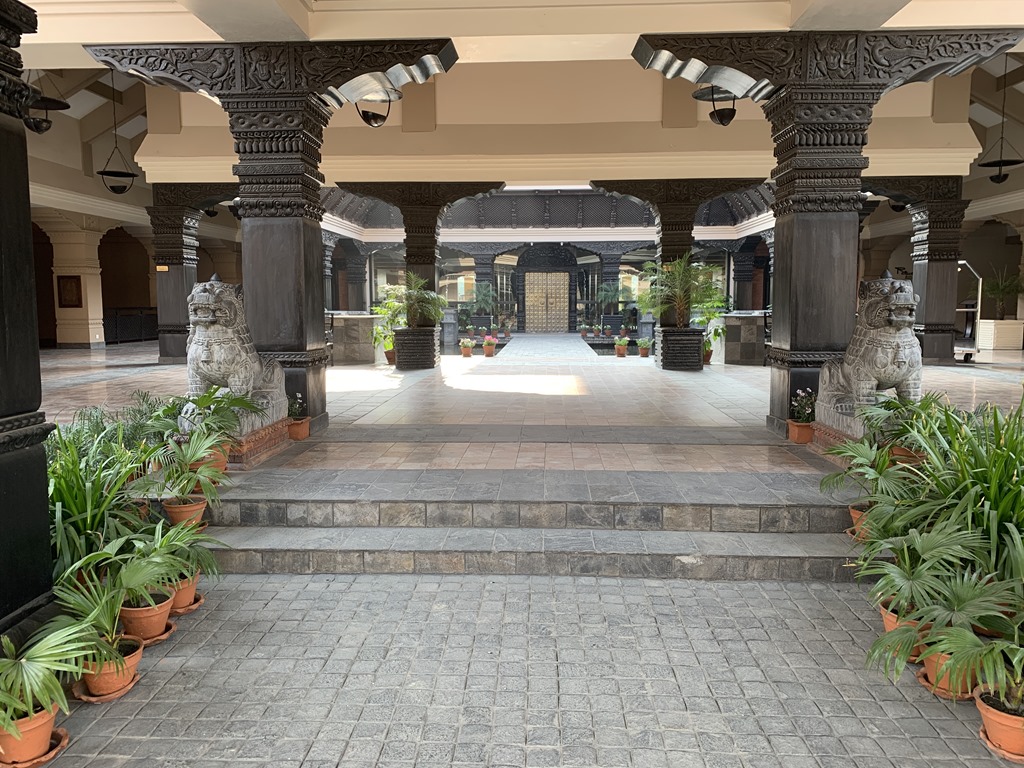
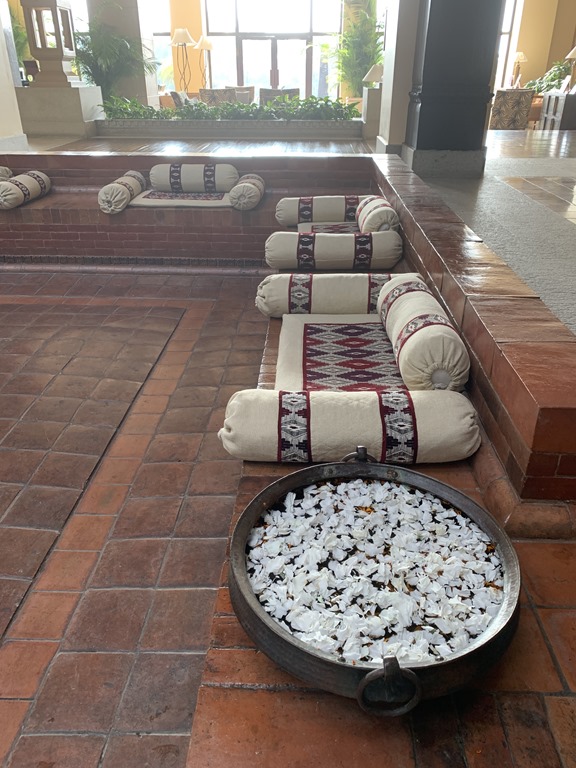
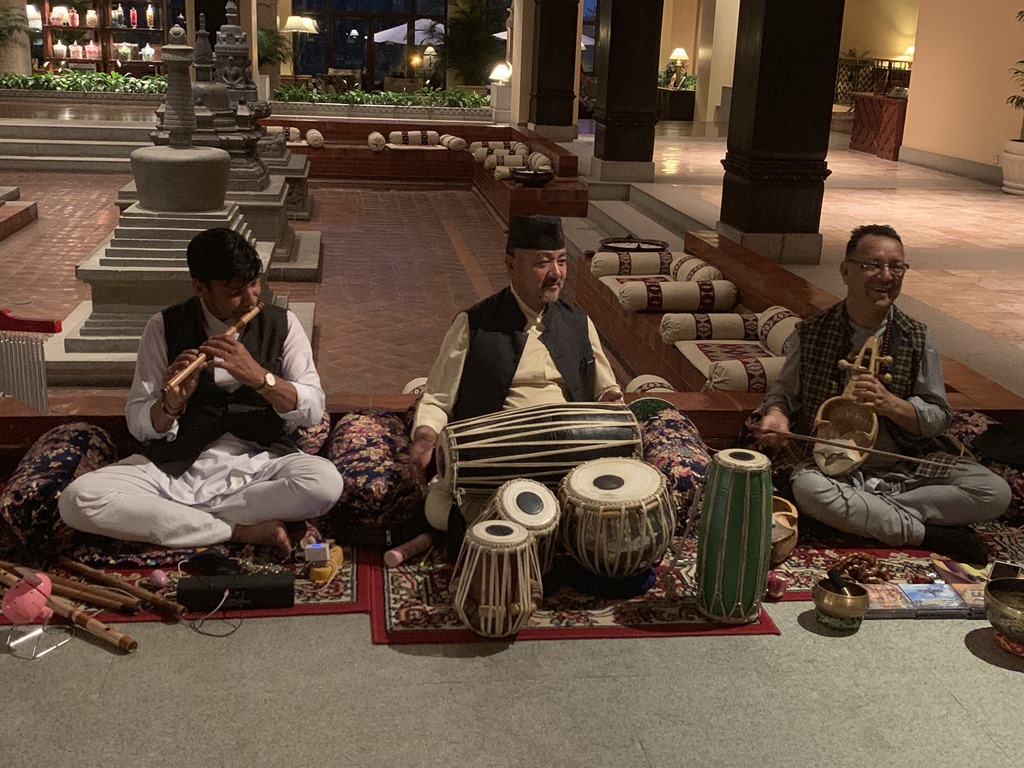
Then we were on our way to the Hyatt Regency and a nice dinner and rest.  The hotel is huge and beautiful.  We were greeted with beverages and there was traditional music being played in the lobby. Here are some evening pictures and some from this morning when we had a walk all around the property.

 IMG_5978IMG_5981IMG_5983IMG_6023IMG_6024IMG_6028IMG_6029IMG_6042IMG_6044IMG_6046IMG_6047

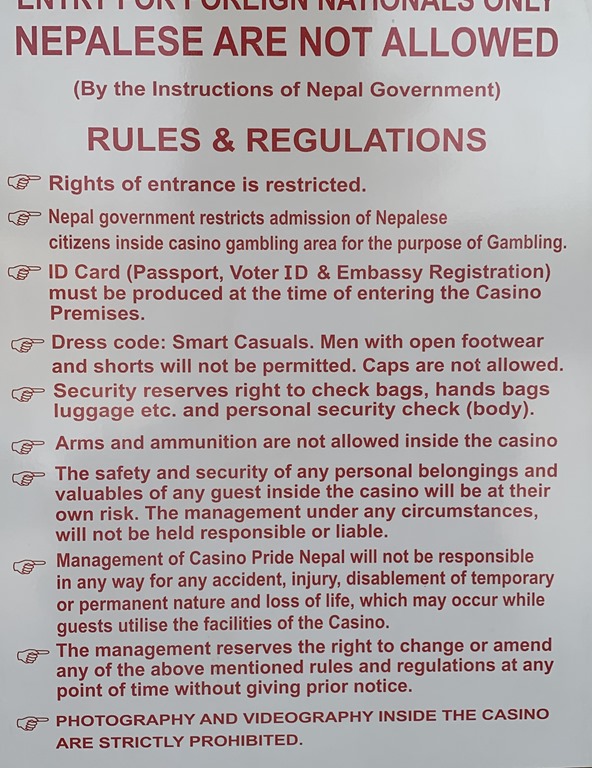
There is even a casino in one part of the hotel!

IMG_6038IMG_6039

Ashish and our guide, Sagar (Sagar is on the right) greeted us for the 9 AM start to our tour.  The weather is beautiful and we were ready to go.

IMG_6048

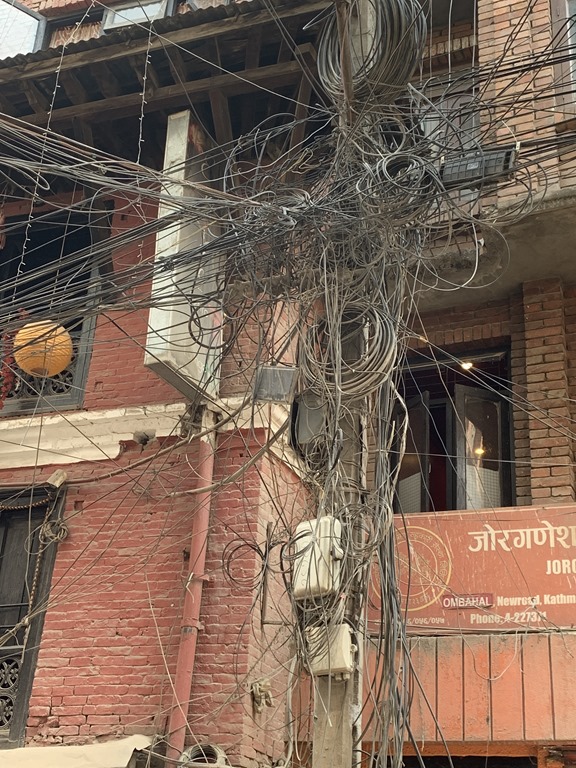
First of all, the traffic is CRAZY here. The roads are in terrible shape since the earthquake in 2015.  In some areas they are putting in water pipes and are going to also bury the electric wires.  I don’t know how they can figure out what they are all for! They drive on the opposite side and people cross just everywhere, there are motorbikes weaving in and out and goats along the side of the roads. I really admire our driver.

IMG_6057

Sagar is a great guide. We will have him for all of the days we are in Nepal and he is a wealth of information.  He talked about the earthquake in 2015 that destroyed many temples and homes.  9000 people died and 22,000 were injured.

Nepal is a Federal Democratic Republic and has a population of 28 million – 4.8 million live in the Kathmandu valley.  There are 101 different ethnic groups and 92 languages spoken in this country! The official language is Nepali and everyone learns English.  Most speak it incredibly well.

There are three cities inside the Kathmandu Valley – Kathmandu (Kantipur – the city of Glory), Patan (Lalitpur – the city of Art) and Bhadgau (Bhaktapur – The city of Devotees)

The currency is the rupee and right now the exchange rate is 111 rupees to $1 US.

This is the flag of Nepal.  It is unusual in that most flags are rectangular.

IMG_6051

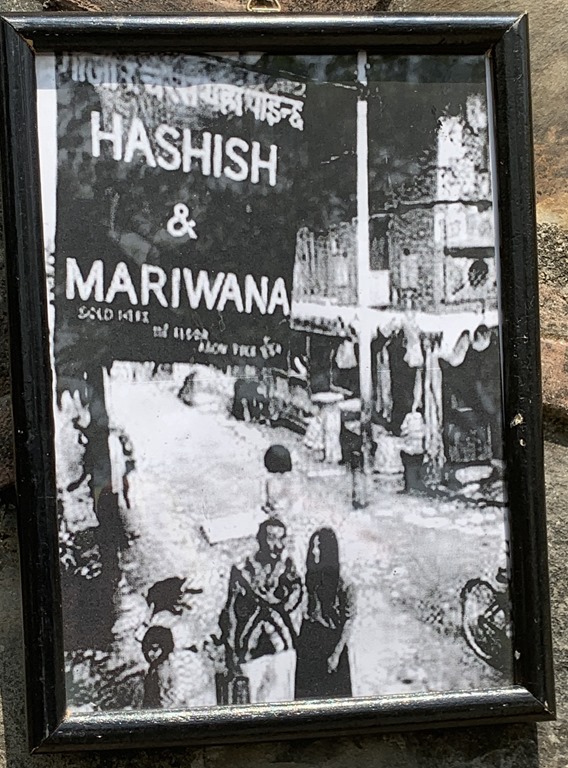
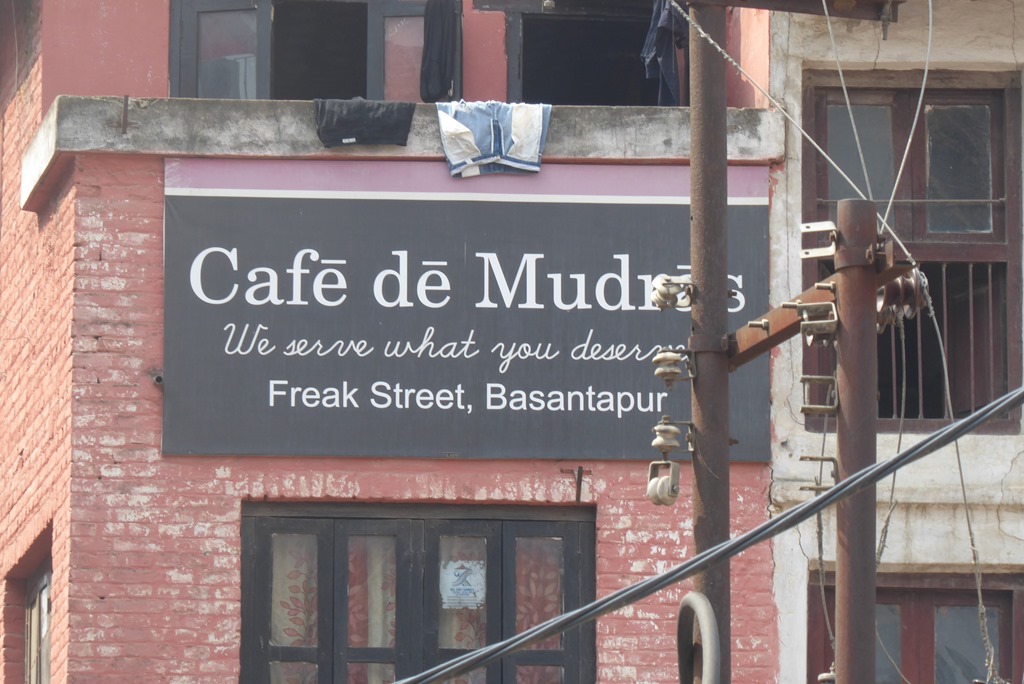
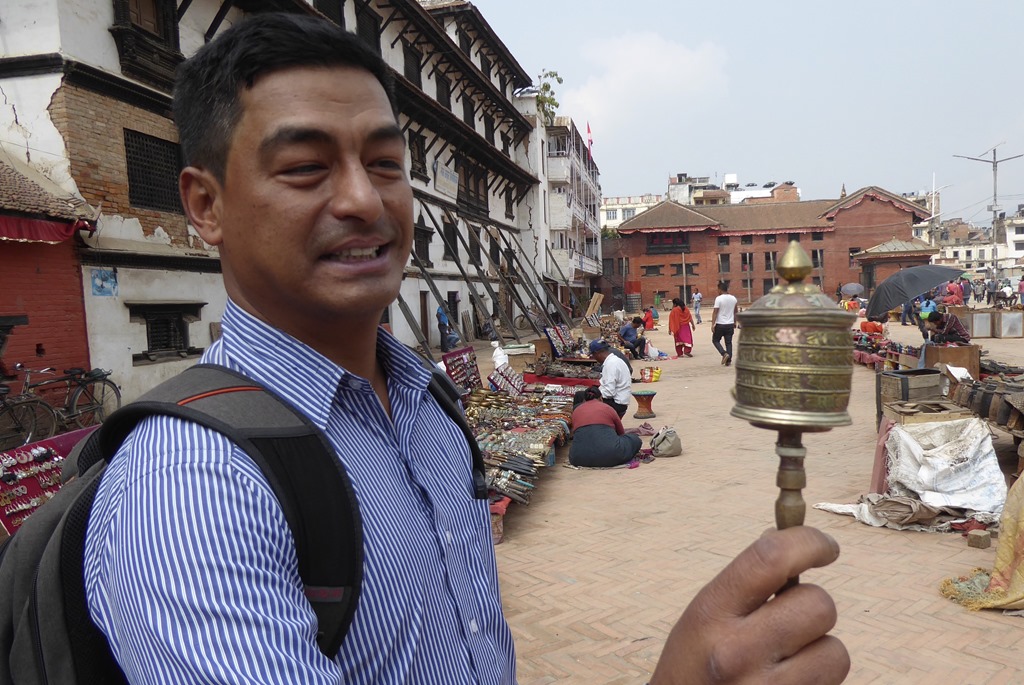
Sagar took us to “Freak Street” which was a drug and hippie haven in the 70’s.  It is just near Durbar Square.  There were many people selling their merchandise near this street and Sagar told us to just say no thank you and not to say, “later” because they will wait and hold you to it! The knife is a Gorkha knife – used by the Gorkha soldiers.  They are called to serve in many capacities around the world, and provided the security for the Trump – Kim summit in Singapore.

IMG_6053IMG_6054IMG_6055IMG_6058IMG_6199IMG_6281IMG_6282IMG_6283

The house with the orange areas is where Jimi Hendrix stayed!

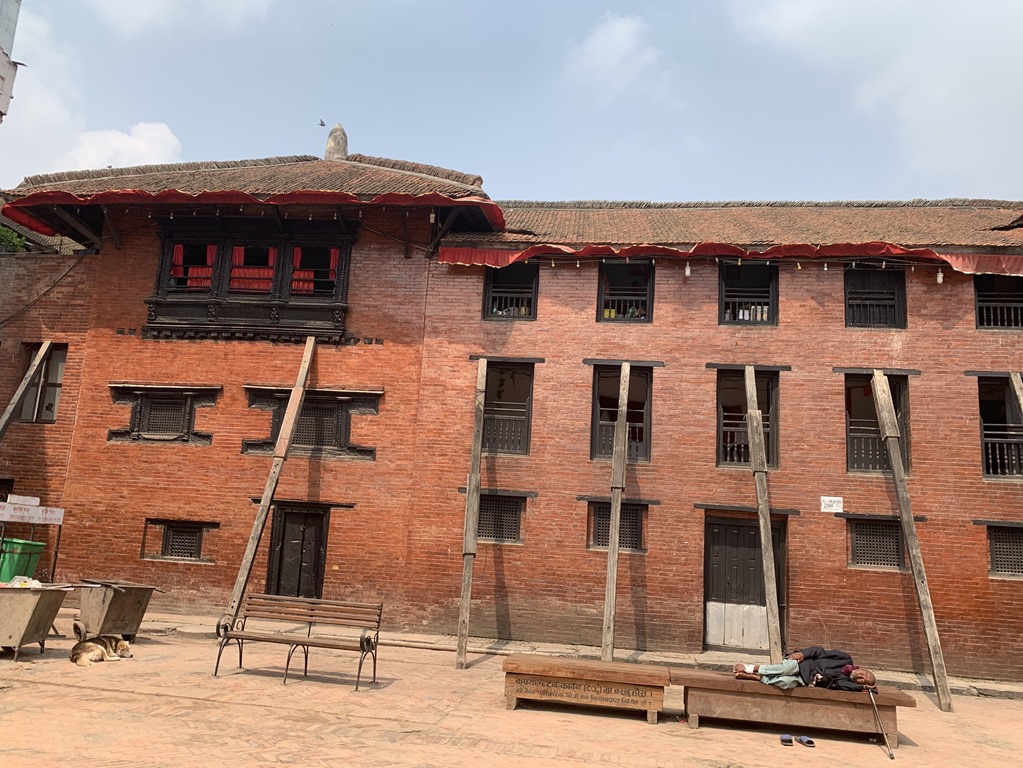
Next we went to Kathmandu Durbar Square.  It is famous for its exquisite architecture and artistic embellishment.  The complex of palaces, courtyards and temples that were built in 1200 to 1768 AD used to be the seat of the ancient kings of Kathmandu. There are 2300 temples in the Kathmandu valley.

Here are some pictures of this amazing site.

IMG_6063IMG_6064

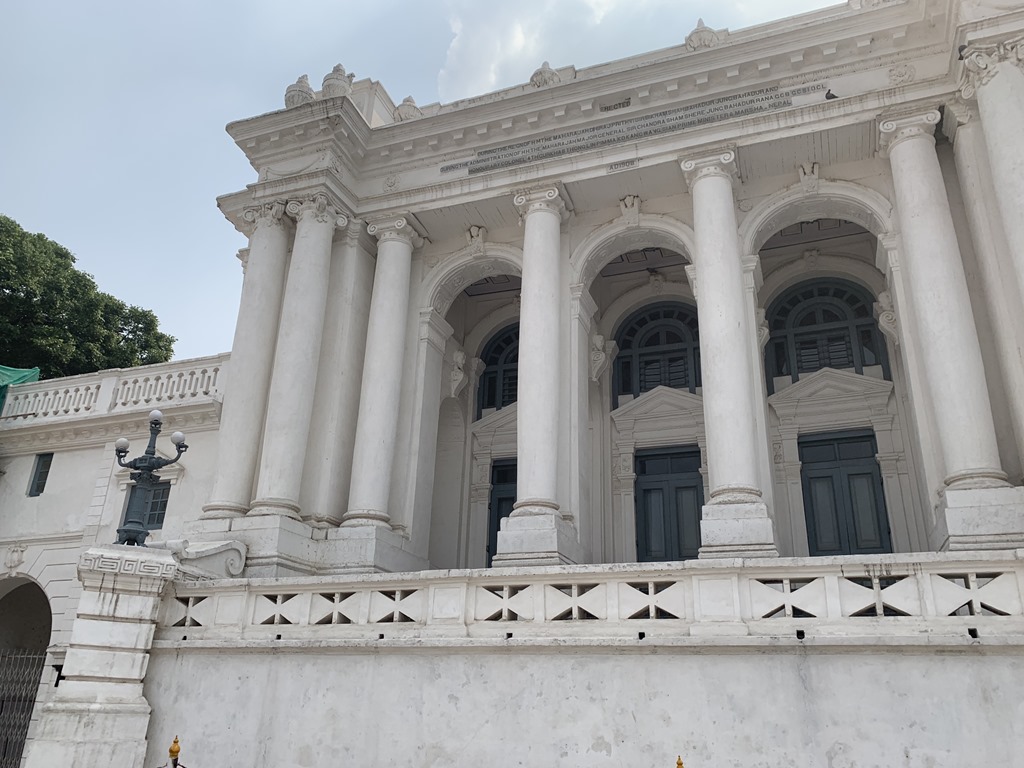
The old and the more modern are right next to each other. The white neoclassical building is the eastern side of the palace.  It is an imported European style building built as part of the palace in 1908.

IMG_6065IMG_6066IMG_6067IMG_6069IMG_6070IMG_6071IMG_6073IMG_6075IMG_6076IMG_6077IMG_6078IMG_6079IMG_6080IMG_6081IMG_6083IMG_6086IMG_6087IMG_6089IMG_6098IMG_6099IMG_6103

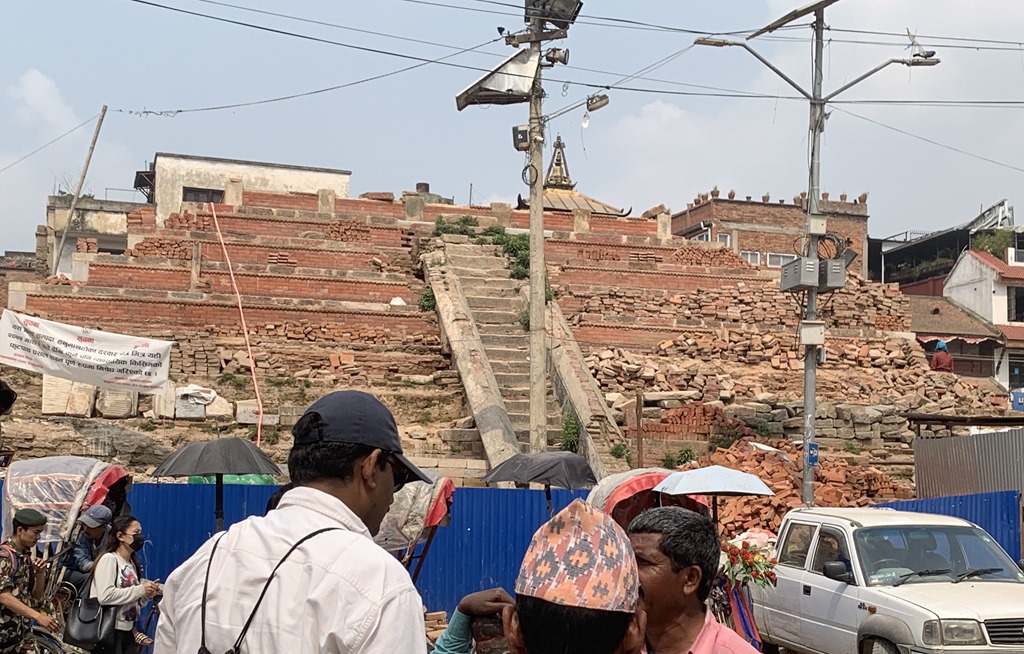
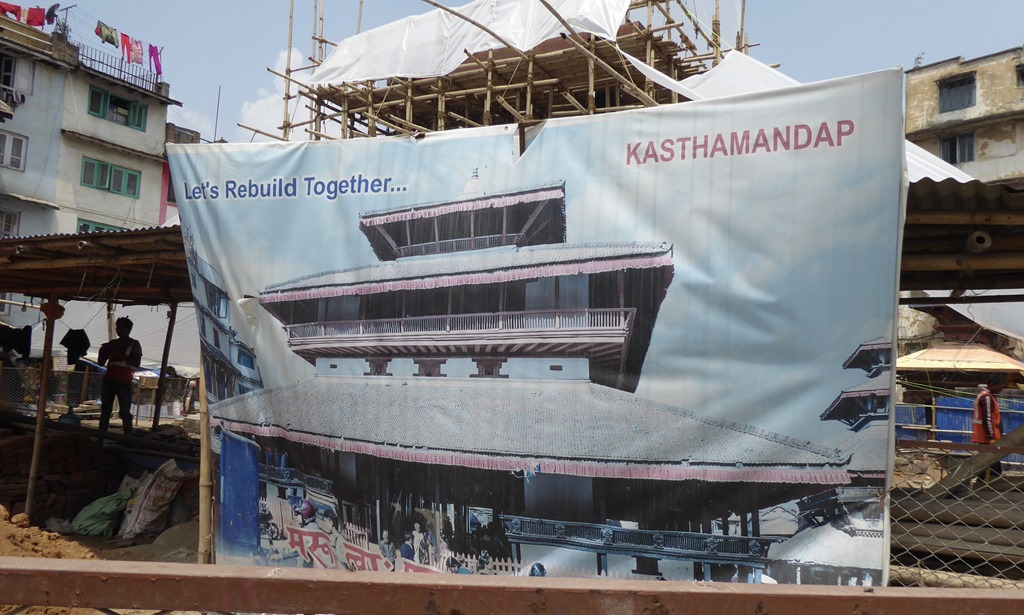
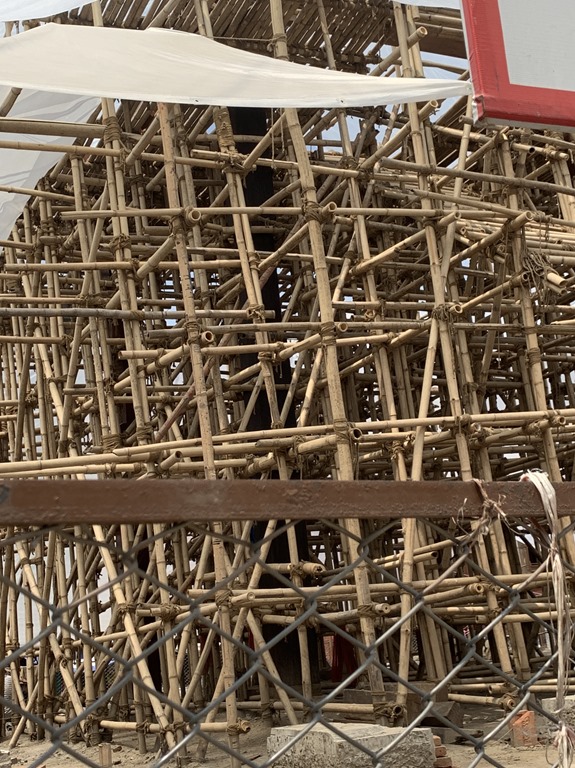
You can see that the temple in the middle picture was totally destroyed and is being rebuilt.  Many are in that state of rebuilding and they are often funded by other countries – China, Japan and the US are three of the countries that are helping.

Here are some pictures of the work.

IMG_6276IMG_6279IMG_6280

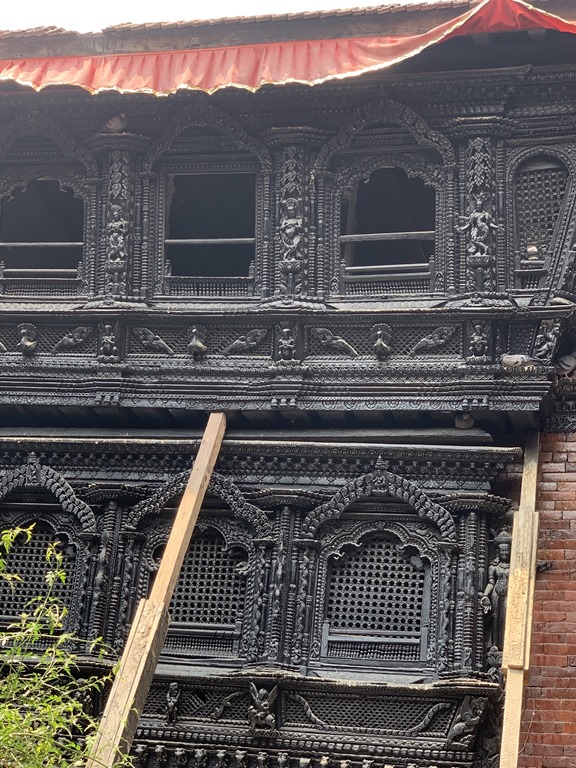
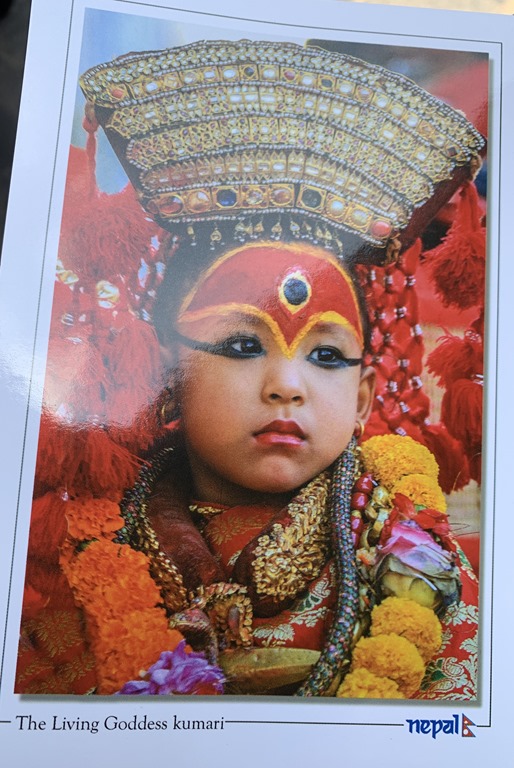
We went into the Kumari-ghar courtyard and waited for about 40 minutes hoping to get a glimpse of the Kumari, or living goddess who is considered to be an incarnation of the goddess Taleju.  She appears from time to time in the middle window in the company of her guardian priestess to see and be seen by her admirers.  You are definitely not allowed to take any photos of her and we were reminded many times.  Sagar says she doesn’t always appear.  She is selected for her physical attributes at age 5!  And she is sequestered in this building, only allowed out 13 times in a year. Once she begins to menstruate, a new living goddess is selected and the former one can go back to “real life”!  We did get to see her. Here is her picture.

IMG_6105IMG_6108

Some other sights we saw around this square:

IMG_6091IMG_6111IMG_6113IMG_6115IMG_6117IMG_6118IMG_6119IMG_6120IMG_6124IMG_6127IMG_6128IMG_6130

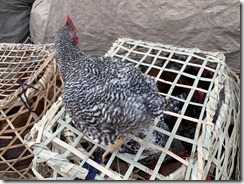
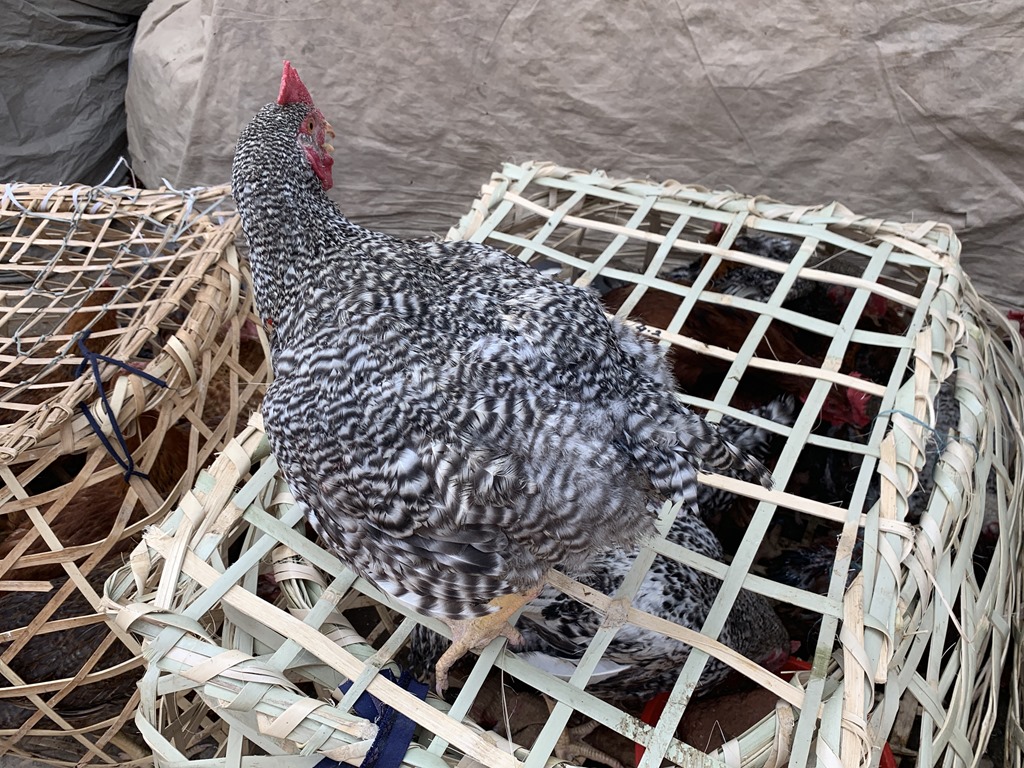
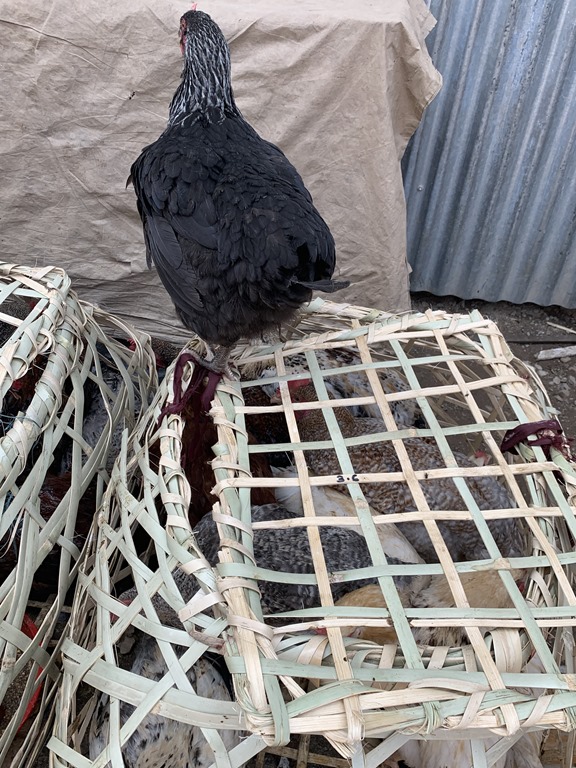
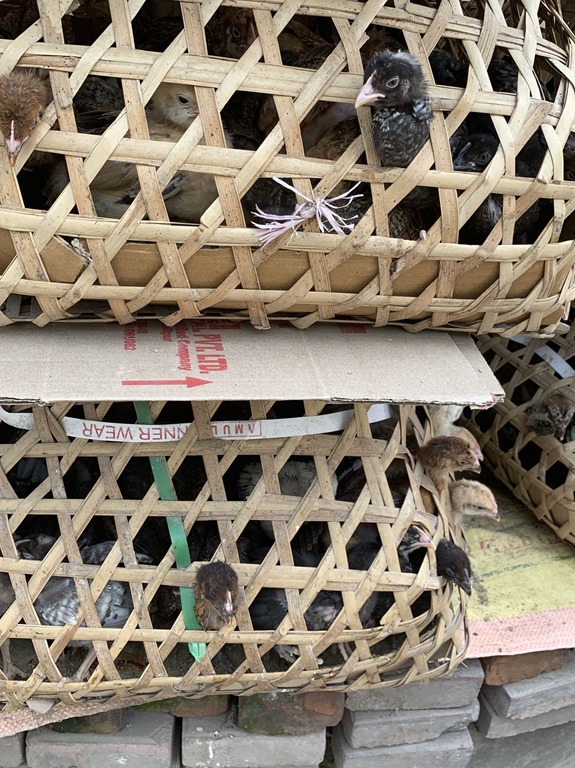
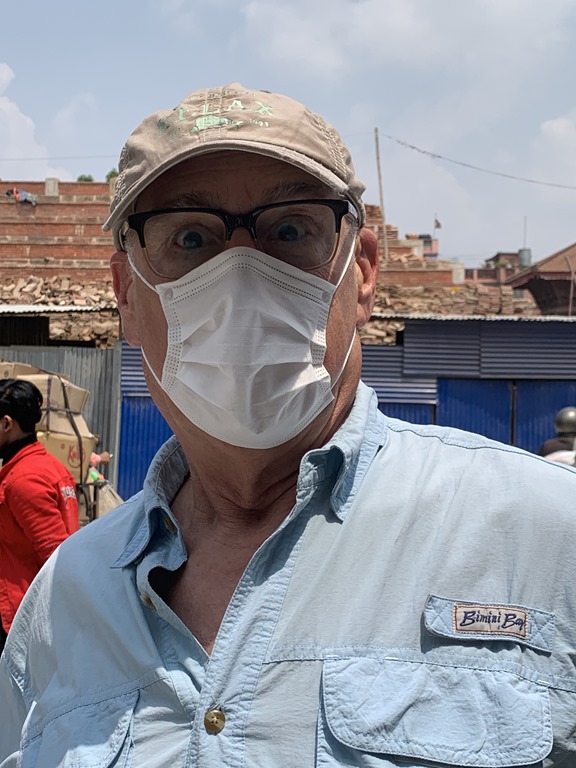
Yes, those are chickens in the basket.  It was so dusty on these roads that Sagar went into a drug store and bought us masks to wear.

IMG_6110

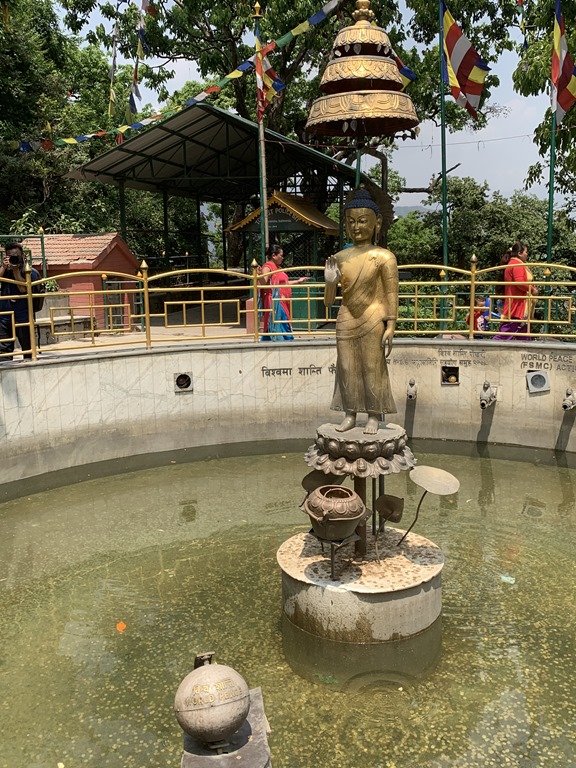
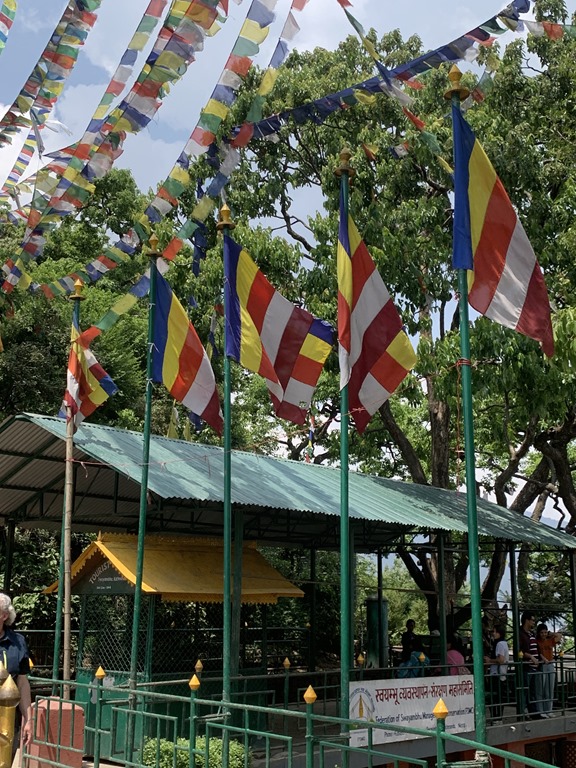
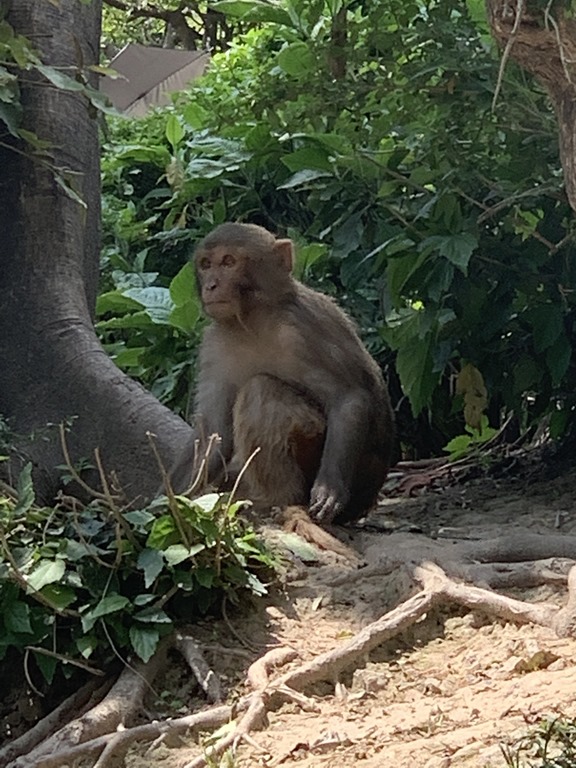
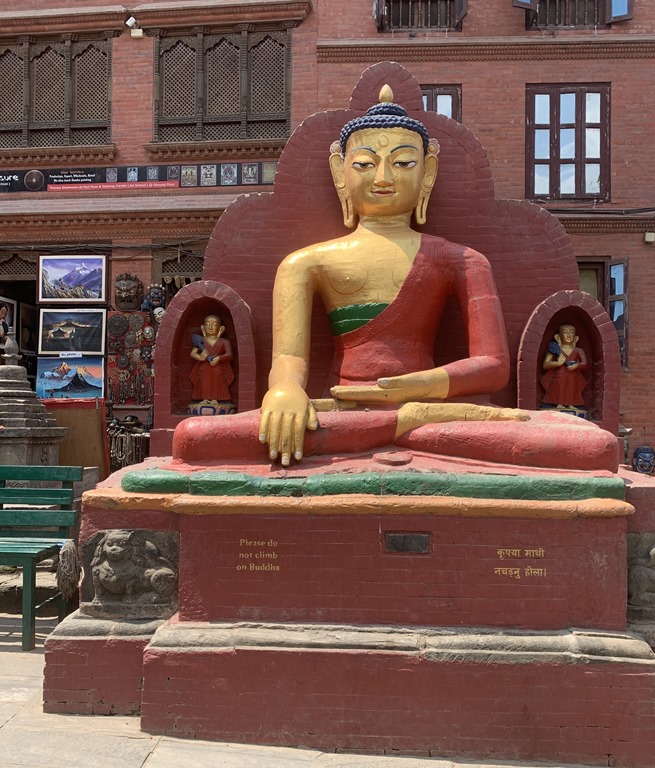
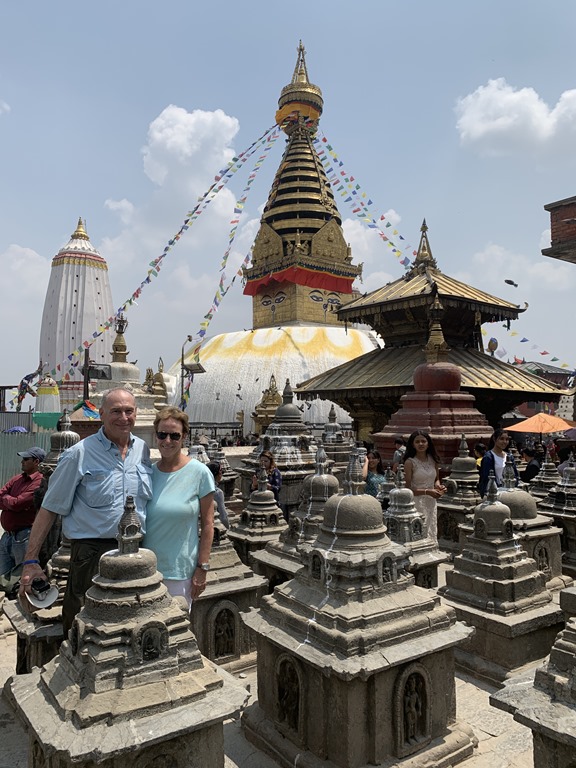
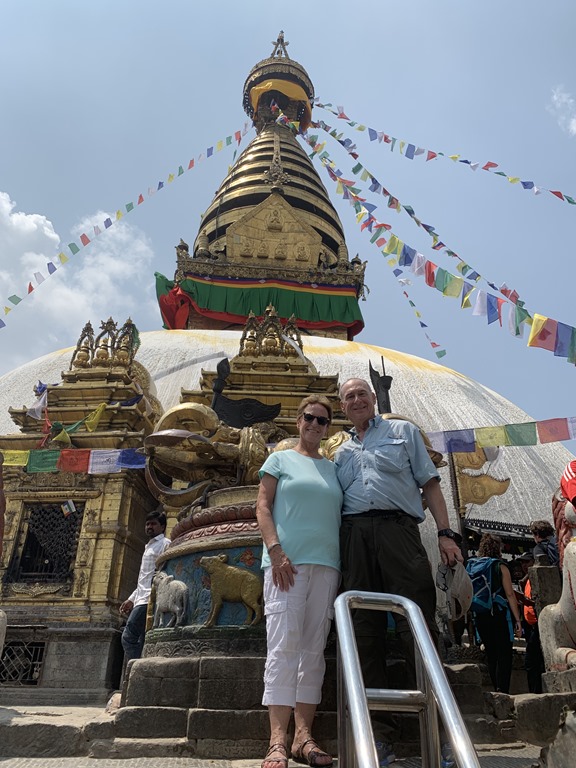
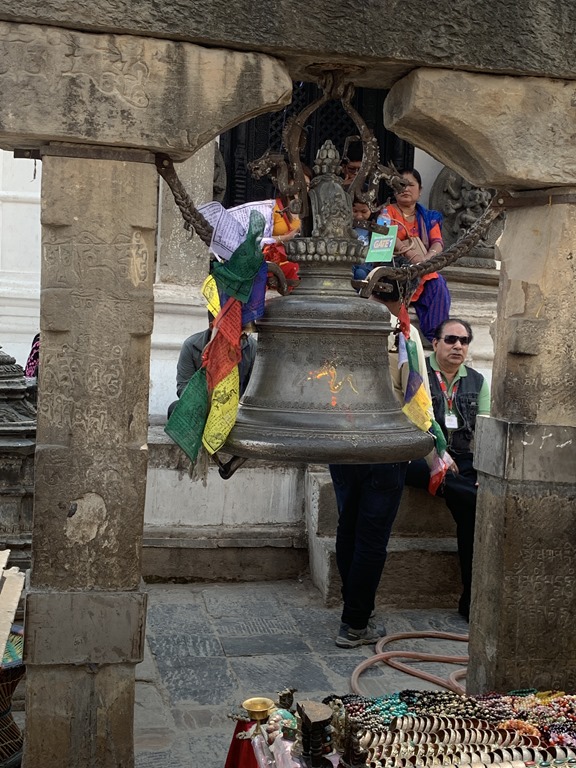
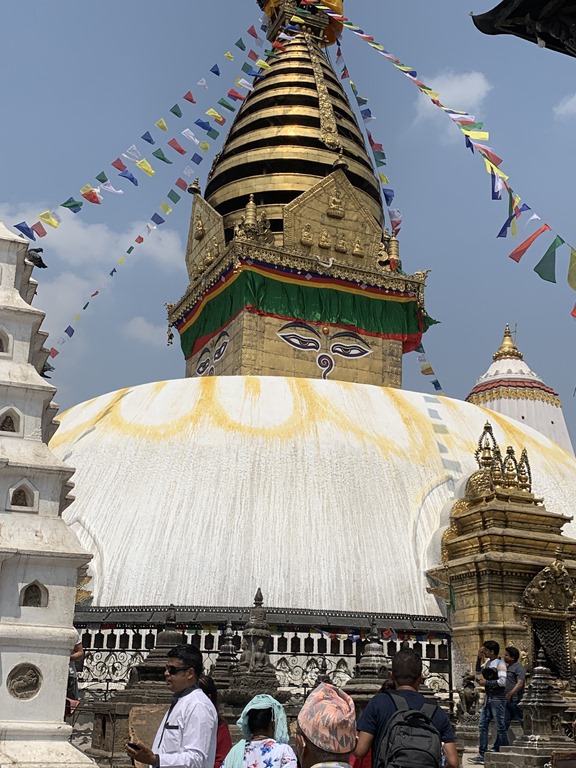
Next we went to the Swayambhunath Stupa which is also known as the monkey temple.  You will see why!  This temple is up a windy road on a hilltop west of Kathmandu.  It is considered to be over 2500 years old.  It marks the point where the lotus of the ancient valley lake was discovered. 

Sagar gave us coins to throw into this peace area.  You need to get it into a specific container.  He got 2/2 in and Norm and I didn’t get any in!

IMG_6132

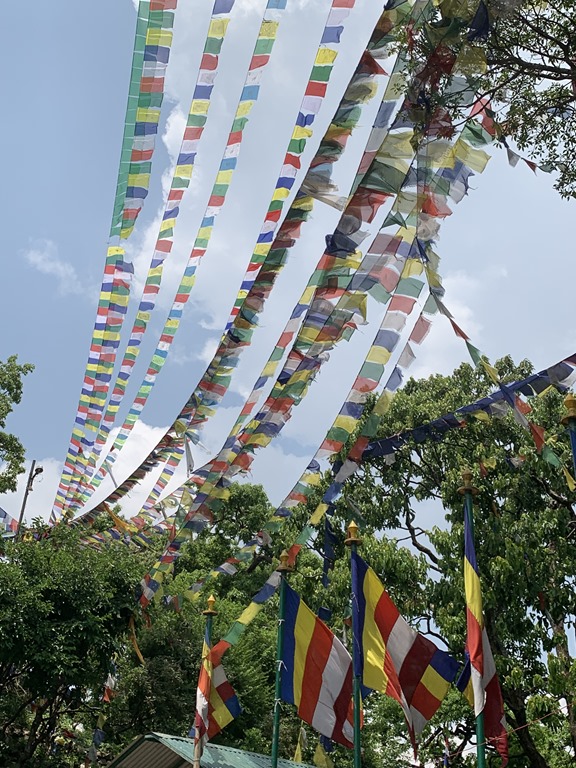
There are both types of Buddhist prayer flags here.  The 5 colors are meaningful.

Red – knowledge

White – purification

Blue – peace

Yellow – compassion

Green – prosperity

IMG_6139IMG_6140

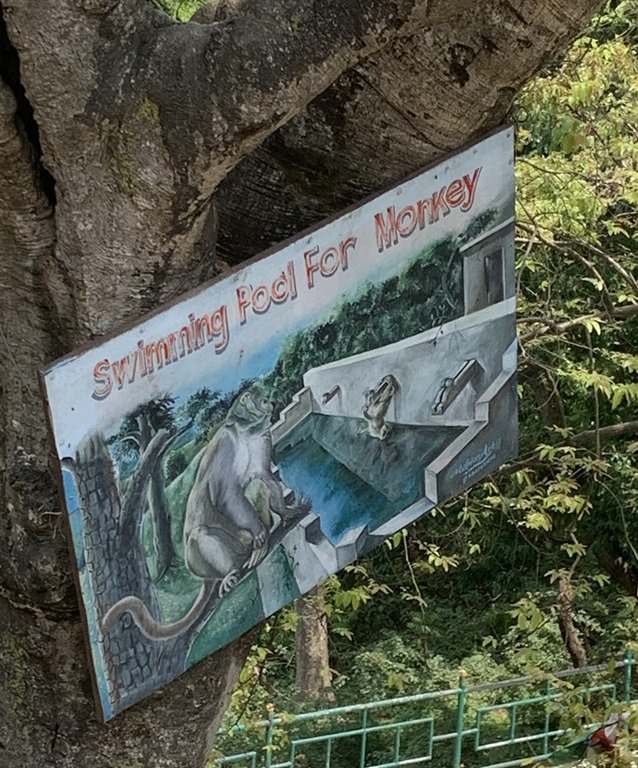
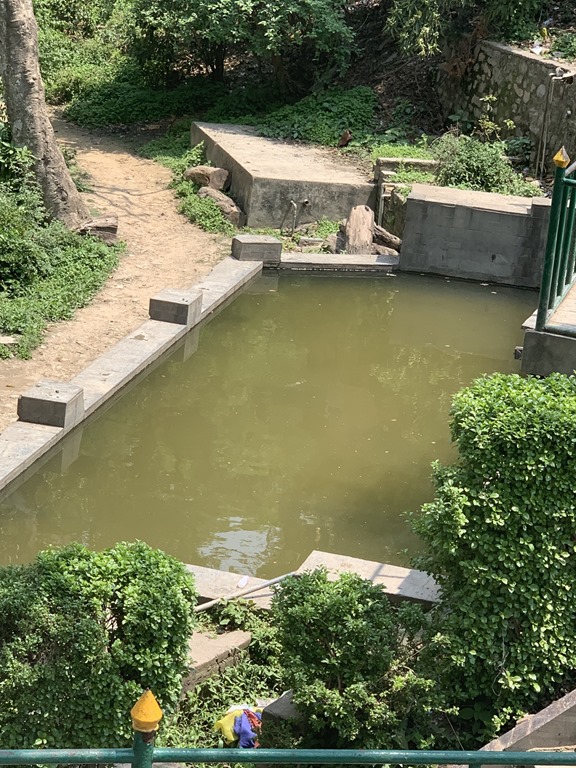
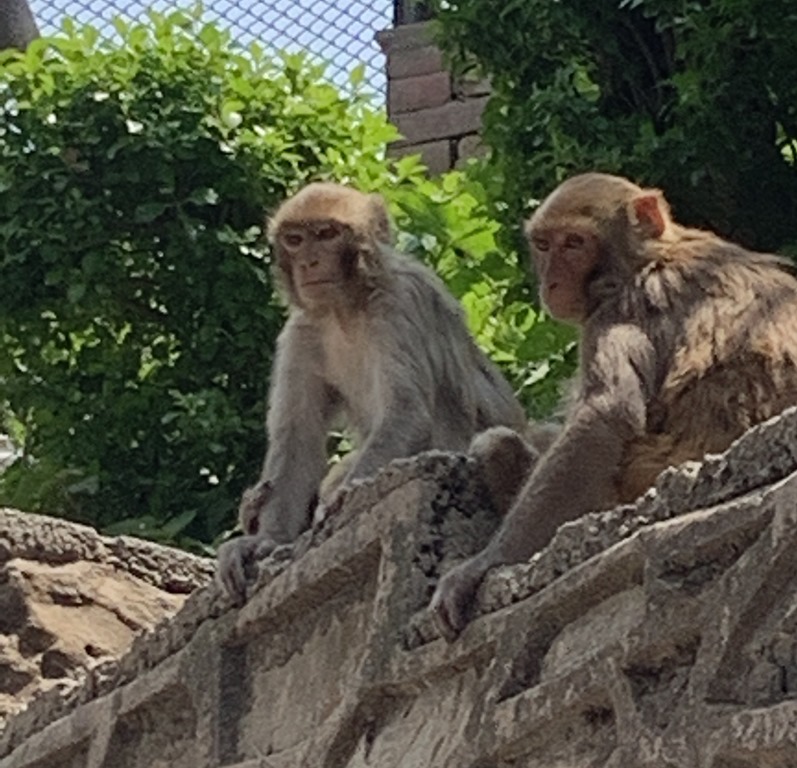
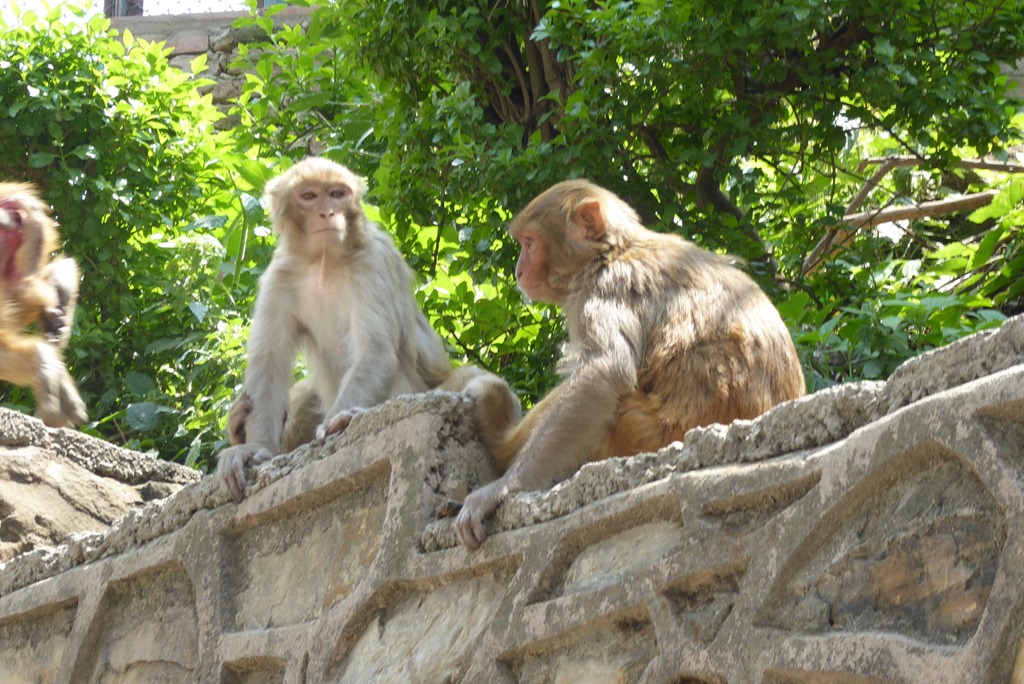
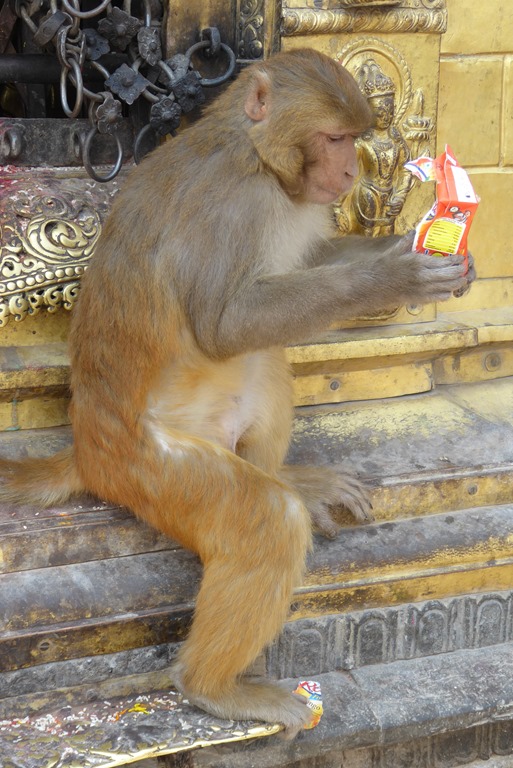
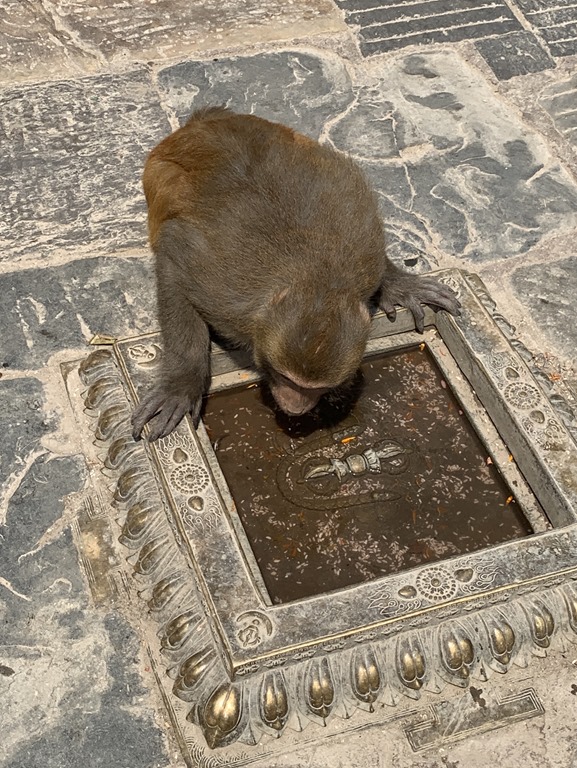
There are many monkeys and dogs here. The monkeys swim in this pool!

IMG_6134IMG_6137IMG_6138IMG_6143IMG_6290IMG_6292

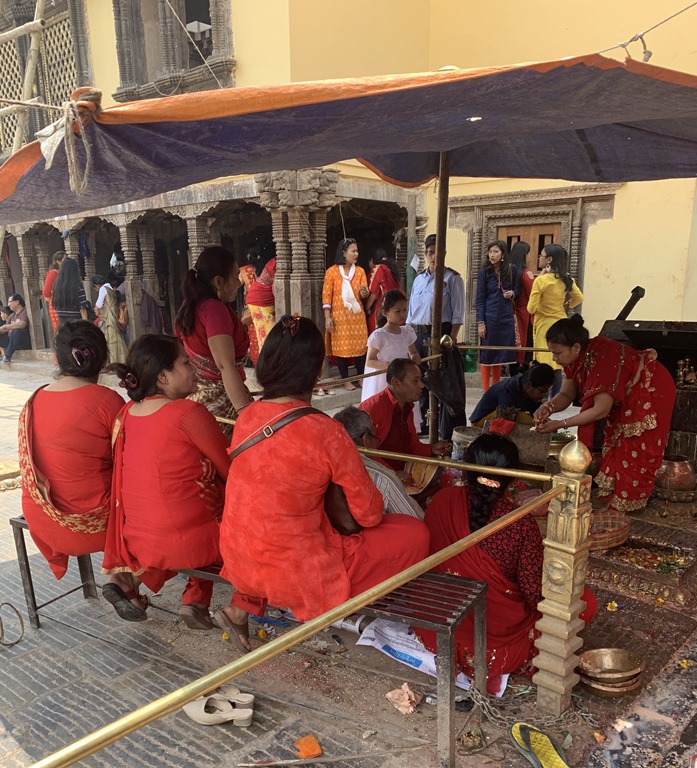
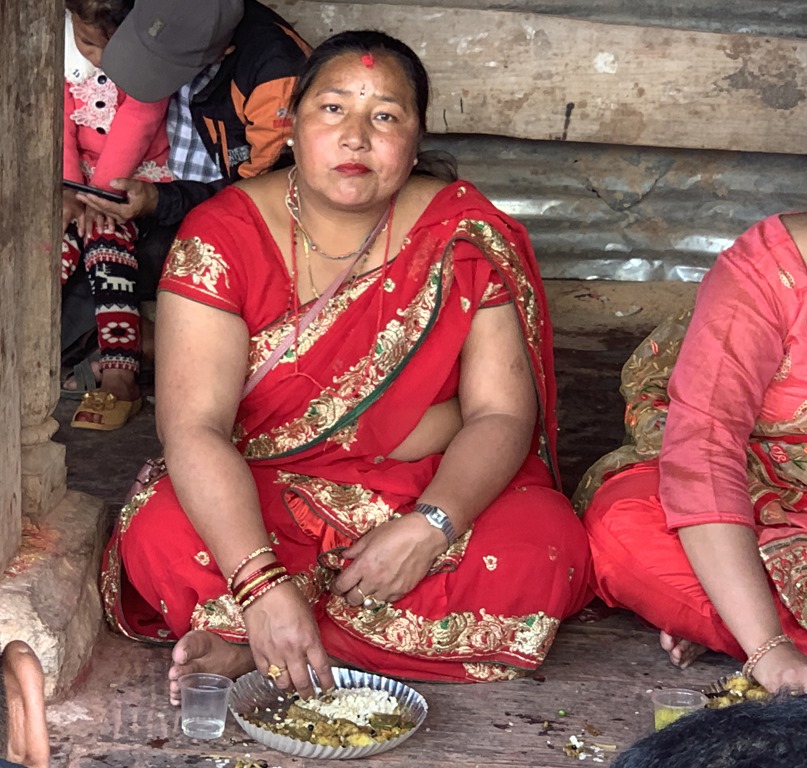
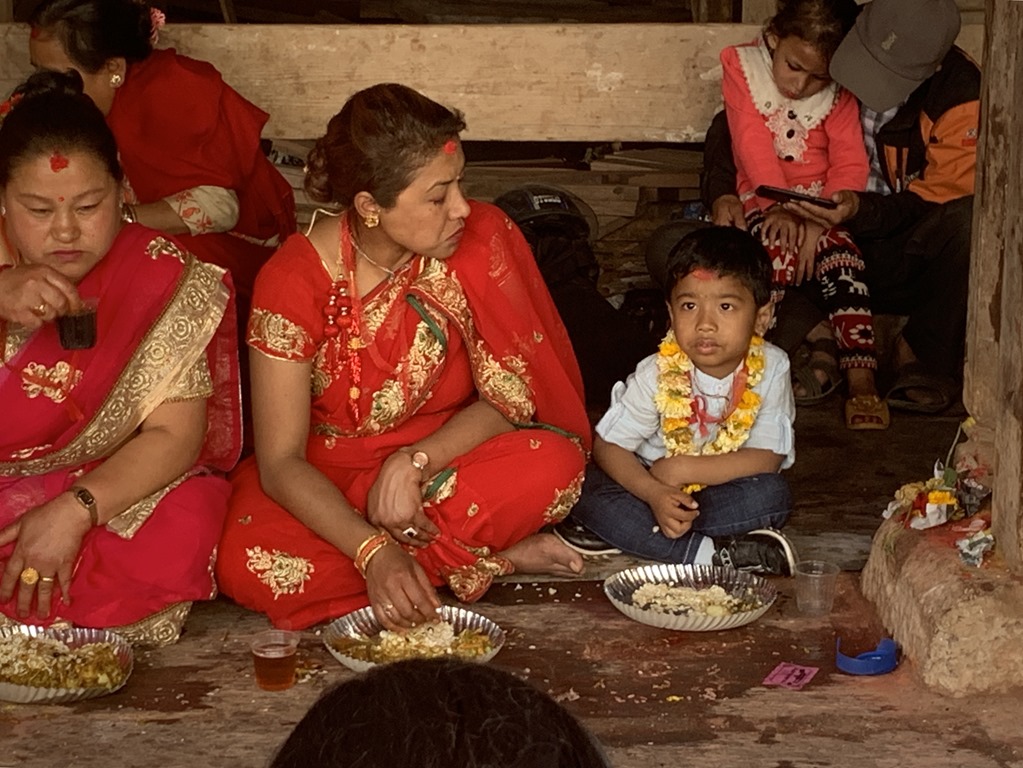
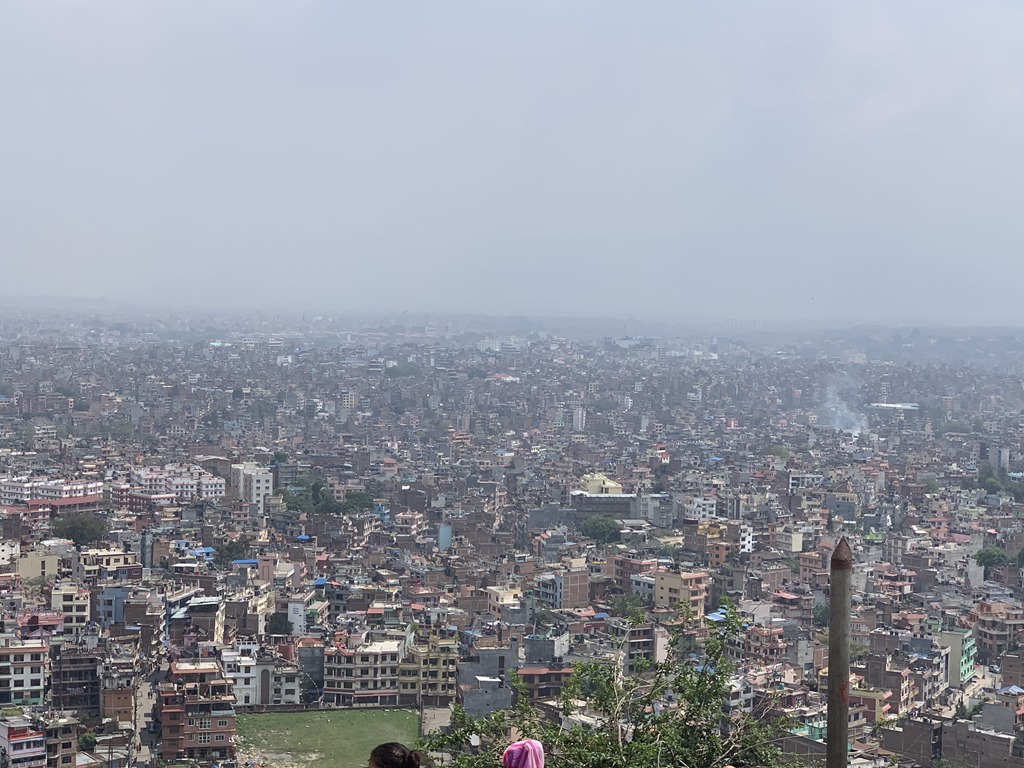
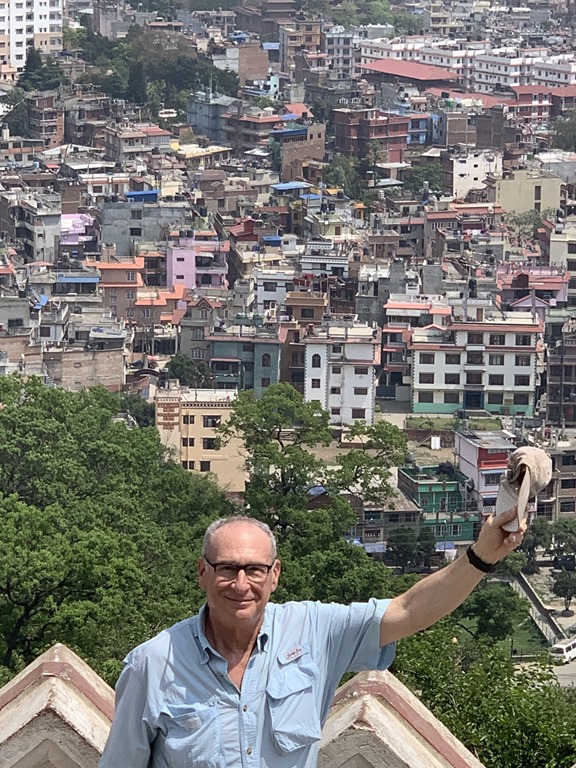
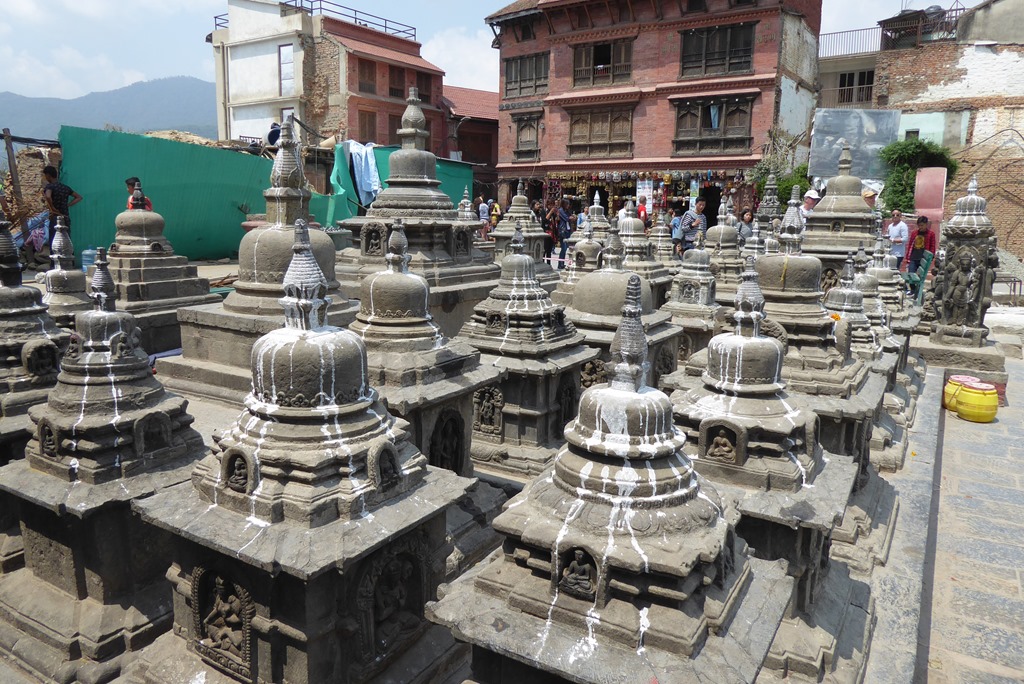
Some of the stupas as well as a beautiful view of the city. There is a temple dedicated to the health of boys.  There was a service going on there and an area nearby where people were eating.

IMG_6148IMG_6151IMG_6153IMG_6161IMG_6164IMG_6167IMG_6169IMG_6170IMG_6172IMG_6173IMG_6177IMG_6179IMG_6181IMG_6192IMG_6193IMG_6196IMG_6289IMG_6291

Our last visit of the day was to the Patan Durbar Square. It  has been acclaimed as one of the finest urban streetscapes in the world.  Most of the monuments were built between the 16-18th centuries.  It is known as the center of fine arts and for the wonderful craftsmanship of the artisans.  It is a Buddhist city and some inscriptions indicate the town may have been founded by Emperor Askoka in the 3rd century BC.

IMG_6296IMG_6297IMG_6298IMG_6295

IMG_6204IMG_6205IMG_6206IMG_6207IMG_6208IMG_6210IMG_6211IMG_6212IMG_6217IMG_6219IMG_6221IMG_6222IMG_6227IMG_6235IMG_6237IMG_6238IMG_6240IMG_6259IMG_6242IMG_6263IMG_6262IMG_6252IMG_6253IMG_6254IMG_6255

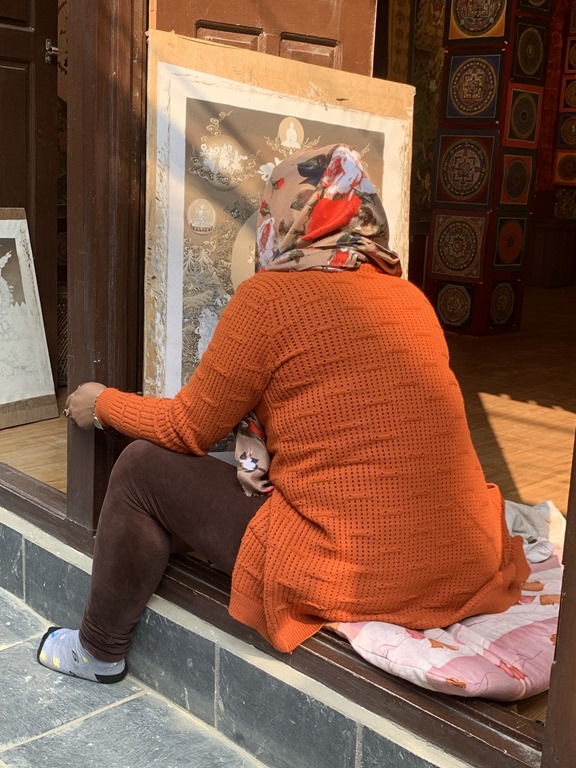
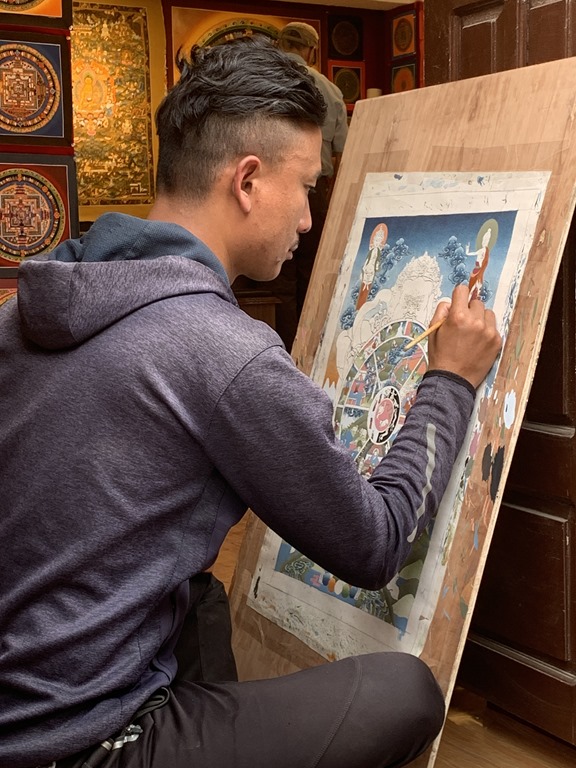
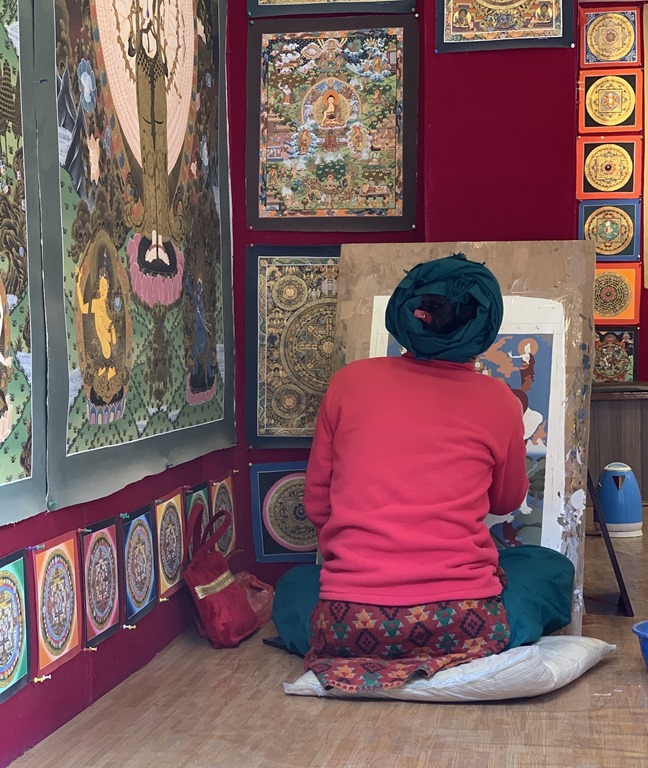
We bought one of the thanka art pieces – they are painted on cloth and we chose the mandala. You can see these artists at work on the intricate paintings.  Ours is wrapped for travel or I would have a picture here.

There is so much more to cover – Buddhists and Hindus co-exist very peacefully here.  The discussion of the gods, the elements, postures of Buddha, etc., will wait for another post.

We saw many markets and also bike markets on the way back to the hotel – they are mostly people from India.

IMG_6267IMG_6268IMG_6270IMG_6271

We were tired but thrilled with our first full day here and can’t wait till tomorrow.

Our day ended with dinner by candlelight on the terrace area of the hotel.

IMG_6299IMG_6300IMG_6301IMG_6302


Posted in April, Asia, Excursions, World Cruise 3 | 2 Comments

Shanghai, China

April 10, 2011

We were scheduled to arrive at 5 PM yesterday in Shanghai.  Well, at 10 AM the captain came on the intercom to tell us that the port in Shanghai was closed due to dense fog.  No surprise, we couldn’t even see out the windows!  He had to drop anchor and wait for the port agent to notify him that the port was open again.  Fog lifted a little, we could see other cargo ships all waiting too. Then, more fog.  Our ship is small enough to get up the Huangpu river to the very convenient port in the city, and it is a long trip (50 miles), so we pretty much knew we were not going to get in anytime before the morning.  Leslie and the staff put together a new Currents newsletter with all new activities for the day and evening.

For me it was an issue because I was scheduled to do a program in Shanghai for China Enrichment at 7:30 PM.  So, we were communicating via email all afternoon about what to do.  We agreed to move the program to tomorrow night.  So they needed to call each one of the participants to make that change and we had our fingers crossed that we would make it in.  About 100 people were off the ship for an overland tour in Beijing and Xian, so Oceania  had to find hotels for them as they were scheduled to get back on.

Amy did a cabaret in Horizons (normally the “room with a view”, Leslie called it “the room with no view” tonight! And my contact had let me know that our ship would be in the next morning.  Shortly after that, the captain made the same announcement, and we did get in early today.

Here is Amy doing her show…

IMG_5903

and some of our fine dining room staff.

IMG_5901

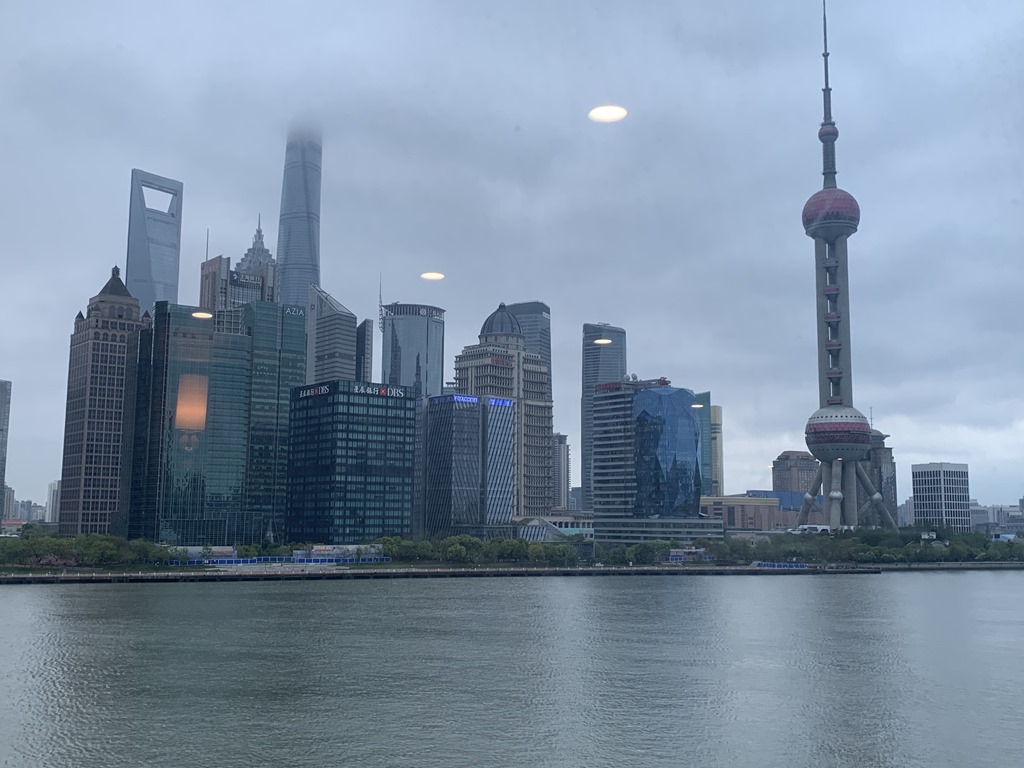
Our first glimpse of the city (we spent time here 7 years ago, so it wasn’t new to us, but we love it here.

IMG_5924IMG_5908IMG_5909IMG_5912

In colonial days, Shanghai was called the Paris of the East.  There are still some colonial buildings but much of the city is huge high rise buildings.  The flowers are beautiful and yes, there are blossoms here too.

IMG_5917IMG_5928IMG_5931IMG_5934IMG_5985

The Pudon New Area has developed in just 5 years so it wasn’t even created when we were last here.  Shanghai has the most modern stock exchange in the world and is the symbol of China’s rise to economic powerhouse status.  I am not sure if I mentioned that all of China is on the same time zone!

The city population is 8 million.  It is China’s largest city, its largest port and its largest industrial base.  It has the best shops and restaurants in the country and the most fashionable people.  It is called the “dragon head” of East China, the leading force driving the economy forward.

Due to the rescheduling of my program, I had to cancel the tour we had scheduled for the afternoon.  Norm went by himself, and I met a colleague, Connie, for some shopping and lunch and Marilyn joined us.  We had a great time and here we are with our shopping bags.  Connie helped us to find the shops and treated us to lunch at a restaurant she was familiar with. Marilyn and I shopped at the jade and pearl factory before Connie met us. We didn’t buy anything in these pictures, but they had some wonderful jade pieces.  Marilyn bought one and I got a necklace from the pearl side and bracelet from the jade side.

IMG_5942IMG_5935IMG_5936IMG_5937IMG_5939IMG_5947IMG_5948

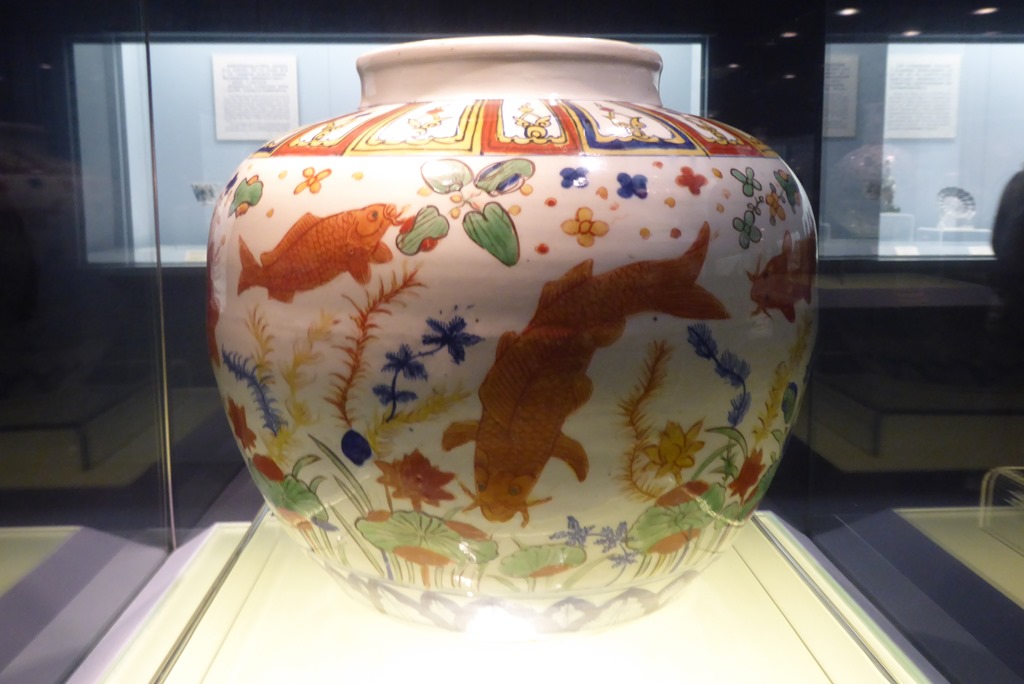
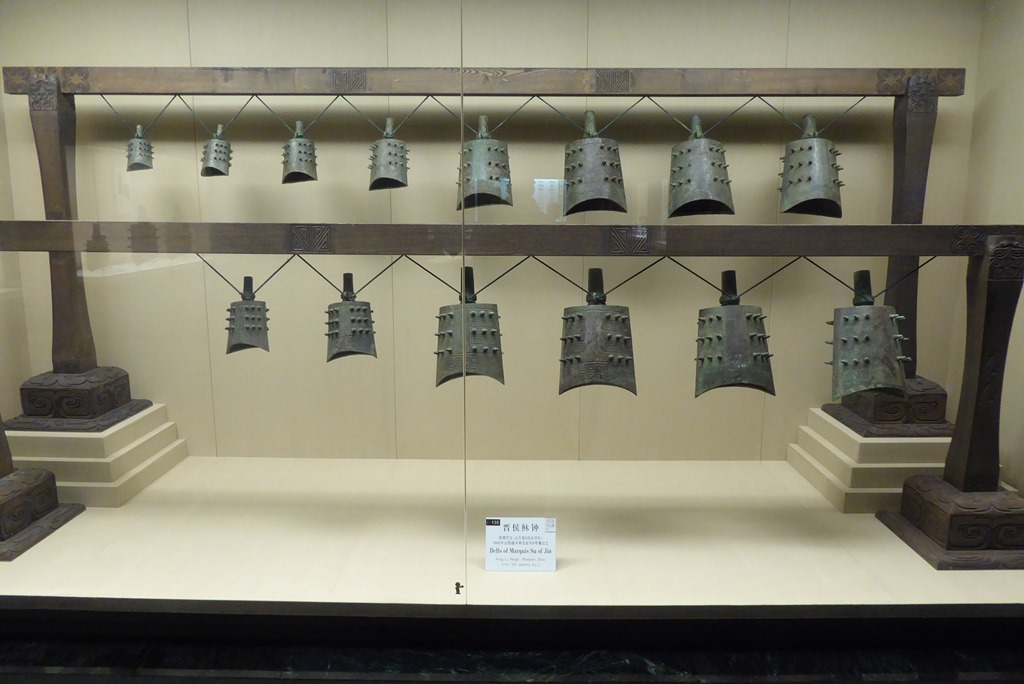
Norm’s tour took him to the Shanghai Museum, which we both loved on our last visit.  He said it didn’t disappoint this time either.  This museum is 5 stories high and has a round top and a square base, symbolizing the ancient Chinese perception of the world as “round sky, square earth.” Here are some of the beautiful items in the museum.

IMG_5986IMG_5987IMG_5988IMG_5989IMG_5990IMG_5991IMG_5992IMG_6015

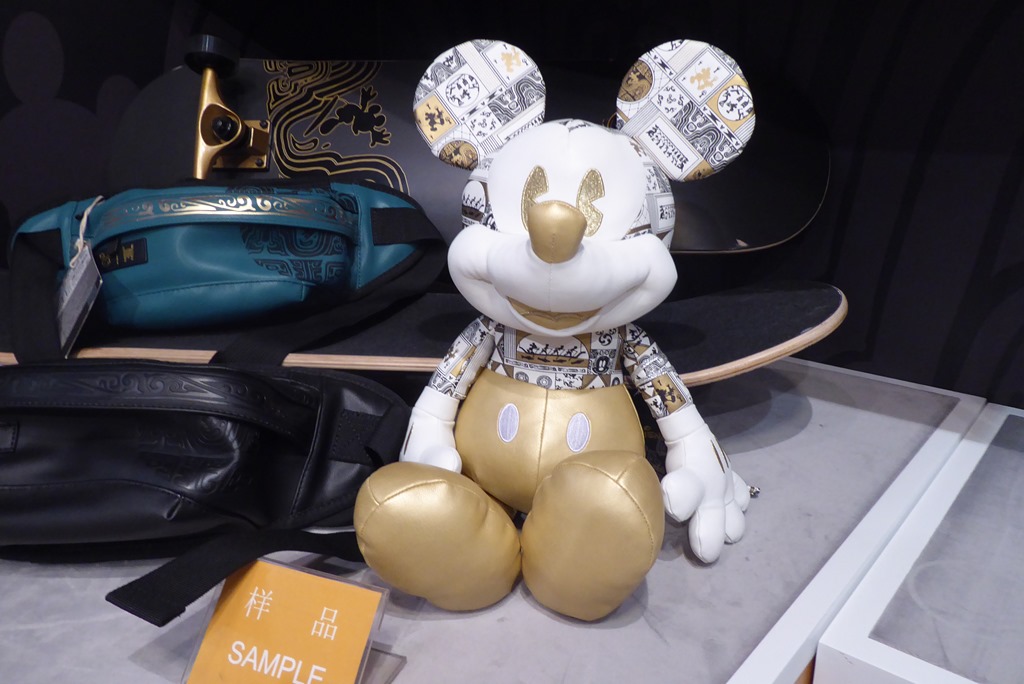
Mickey in the museum shop. Very expensive.

IMG_5994

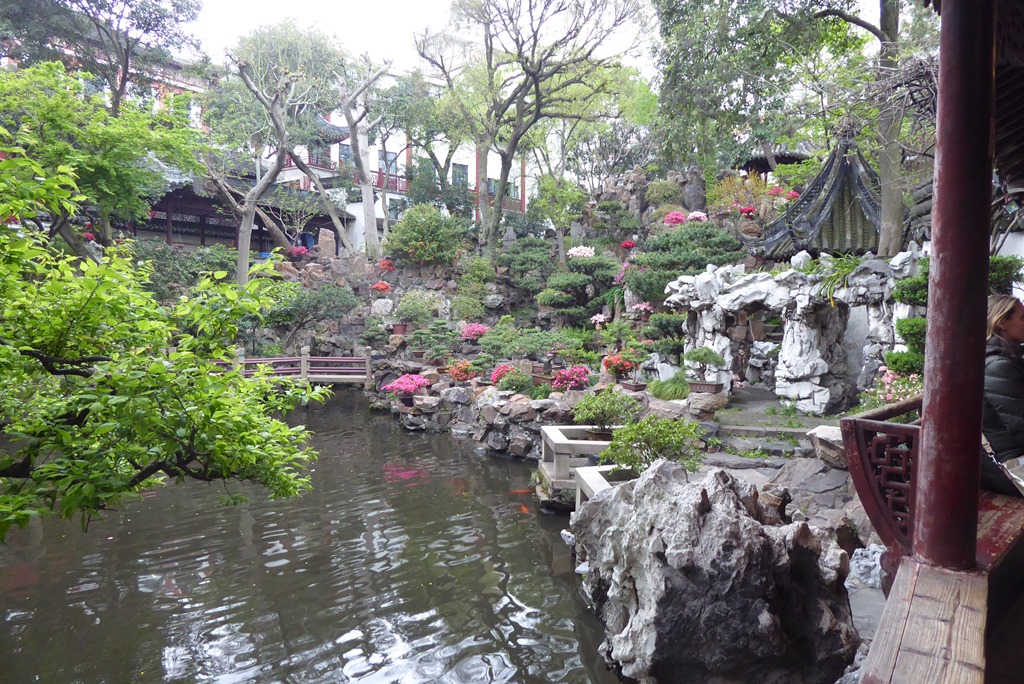
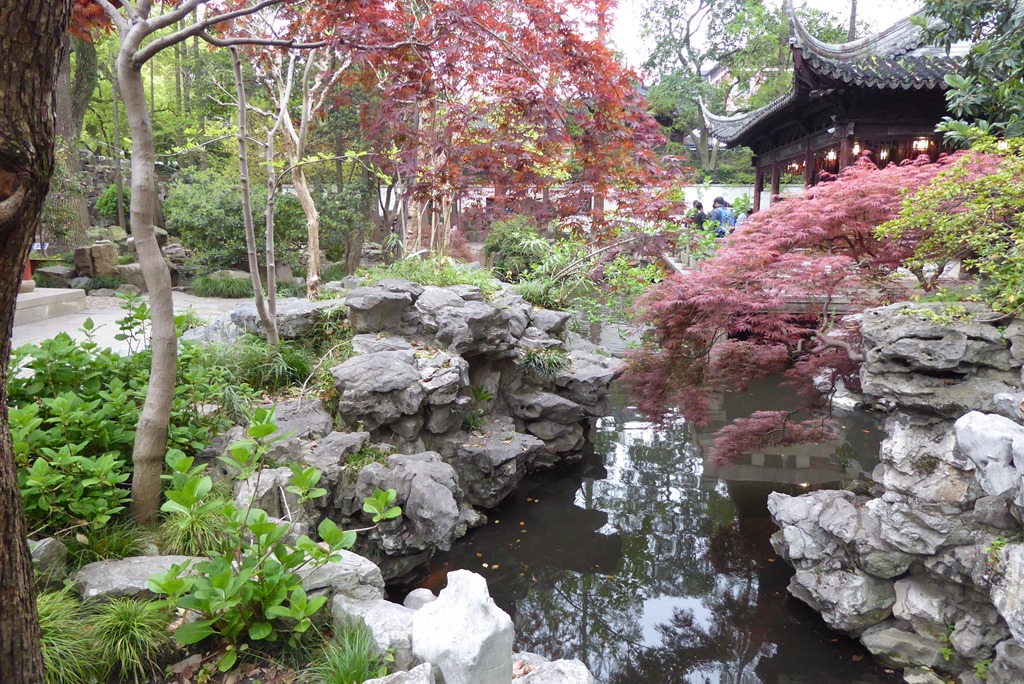
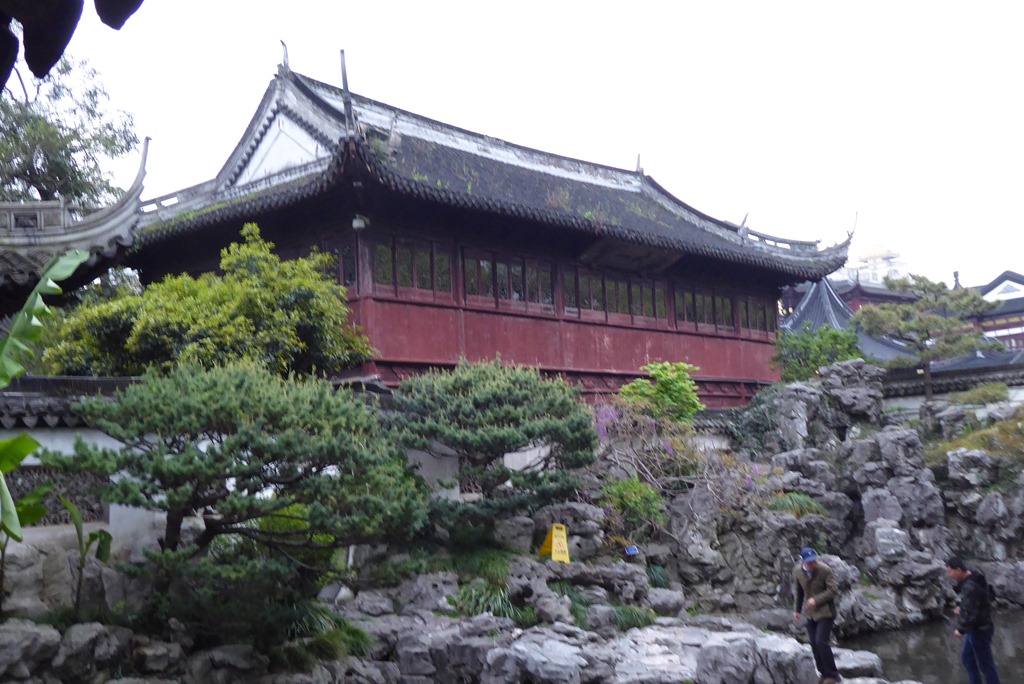
His second stop was the Yu yuan Garden located in the center of the Old City.  It is the largest of Shanghai’s ancient gardens.  The gardens were commissioned in 1559 , built over the course of 19 years, destroyed by the French during the first Opium War and later rebuilt.  The Grand Rockery in the center of the garden is the most renowned sight. The gardens are surrounded by the dragon wall.

IMG_5997IMG_5998IMG_5999IMG_6001IMG_6002IMG_6003IMG_6004IMG_6005IMG_6006IMG_6007IMG_6008IMG_6014

His last stop was the silk shop – and he bought me a beautiful scarf there.

In the meantime, Marilyn and I returned from our outing with Connie and I showered and dressed for my presentation.  Sarah picked me up and we had a delicious dinner with many of the people from the company.

IMG_5956

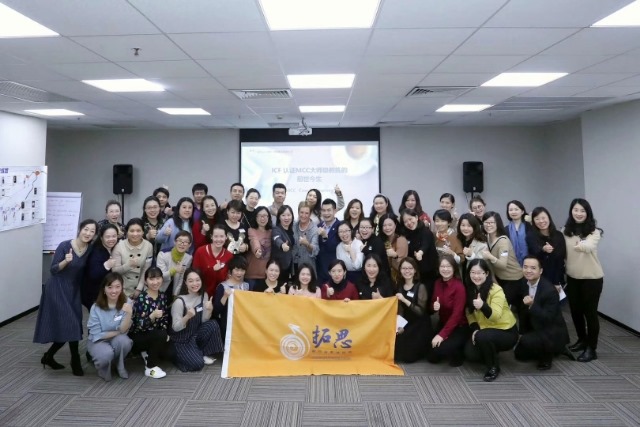
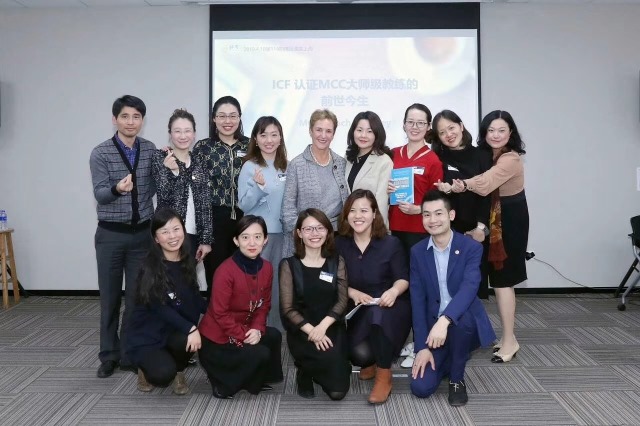
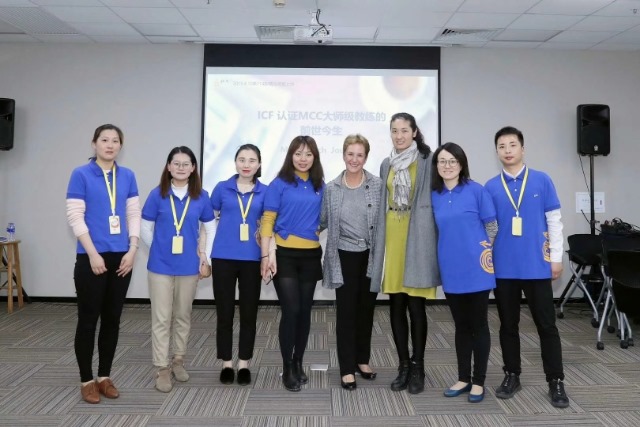
I have to say, they were very organized – and I was amazed that the attendees all came (about 75 people) even with the change in date.  They also live streamed the program and more than 100 attended.  They did a professional photo shoot, a live streamed interview and had Eric (who is a trainer with Nestle) do translation after each segment of the program.  They had copies of my book, which I signed, and many of the participants wanted pictures with me.  I felt like a rock star!  A really fun experience.

IMG_5967IMG_5968IMG_5970IMG_5971IMG_5972

I got back to the ship by midnight, and will need to leave the ship at 4:30 AM to go to the airport for our trip to Nepal and Bhutan – the ship leaves Shanghai at 6 AM.

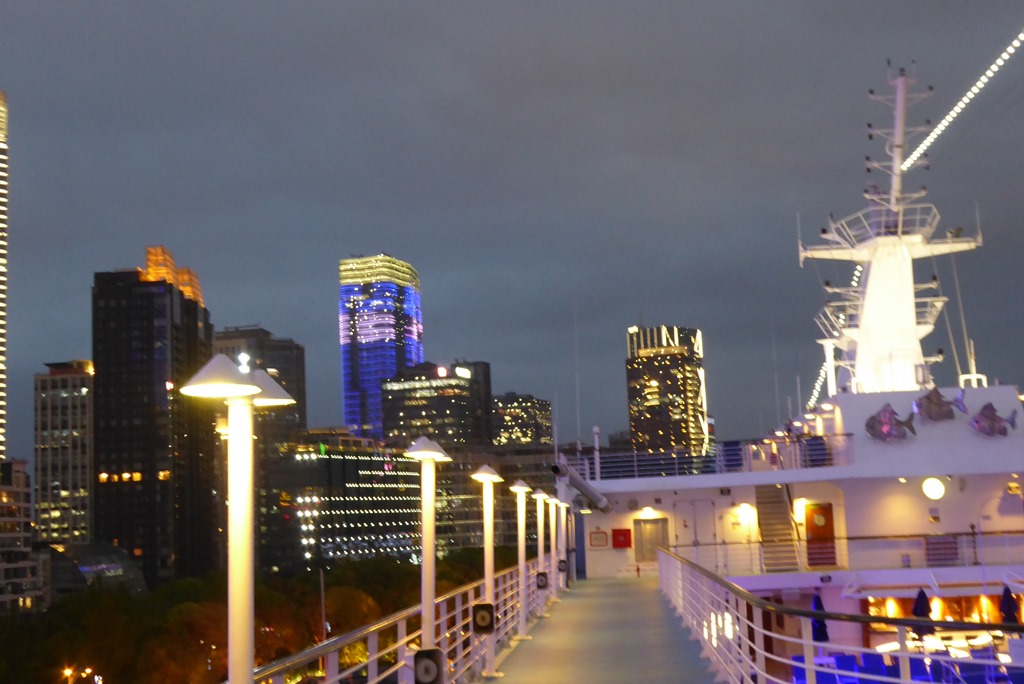
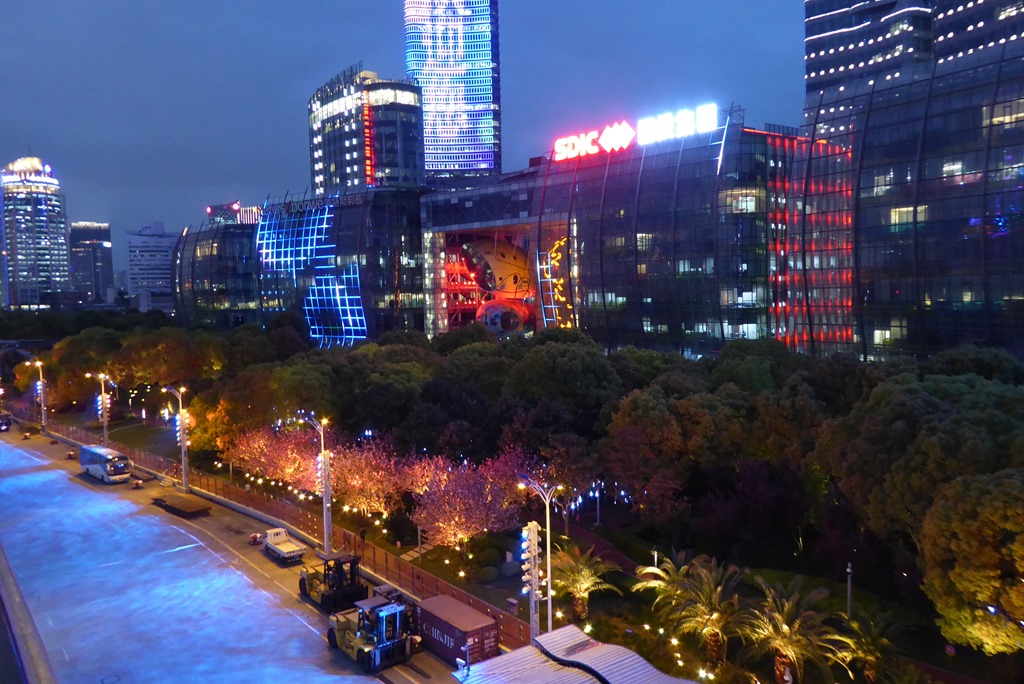
Norm got these great shots of Shanghai by night.

IMG_6009IMG_6010IMG_6011IMG_6012IMG_6013

Next – Nepal!


Posted in April, Asia, World Cruise 3 | 2 Comments

Tianjin/Beijing, China

April 7, 2019

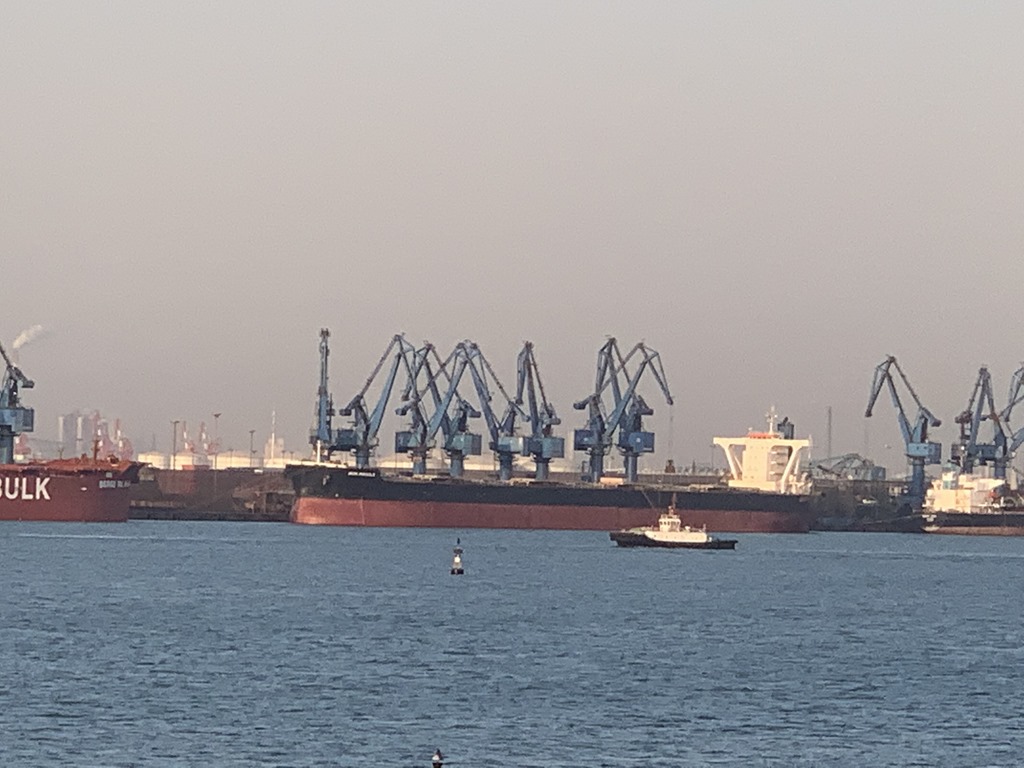
Here is our arrival into the port of Tianjin which is the port you go to for Beijing. It is a huge container port.

IMG_5786IMG_5787

Our morning started with a compulsory immigration face to face inspection.  Because we will be leaving the ship in Shanghai, the purser’s office instructed us to be in the reception area at 7 AM so they could escort us off the ship to go through immigration.  There were 6 of us in the same situation and we all walked out ahead of all of the other passengers, including those going on the 3 day overland in China.  That part worked OK, but when we got to the immigration officials, they were very confused and didn’t speak English and there was a big hold up. Finally I got through, but Norm was delayed.  Without going into too much detail, it turned out that the passport copies the ship provided to us to be stamped at immigration were from our old passport which we had to bring along because it has our India visa in it. They also did not give us arrival cards to complete.  Well, finally the immigration officials made a copy of the correct passport and we got through. We had to go back into the ship to get our things for our tour, and that caused another Chinese conundrum when we came back out as the official could not believe we already went through even though we showed him the stamp!

So now we were ready for the tour. But we waited for 45 minutes on the bus because the guide said they were waiting for 2 more people.  No one ever showed so we were on our way to Tianjin, our tour destination for the day.

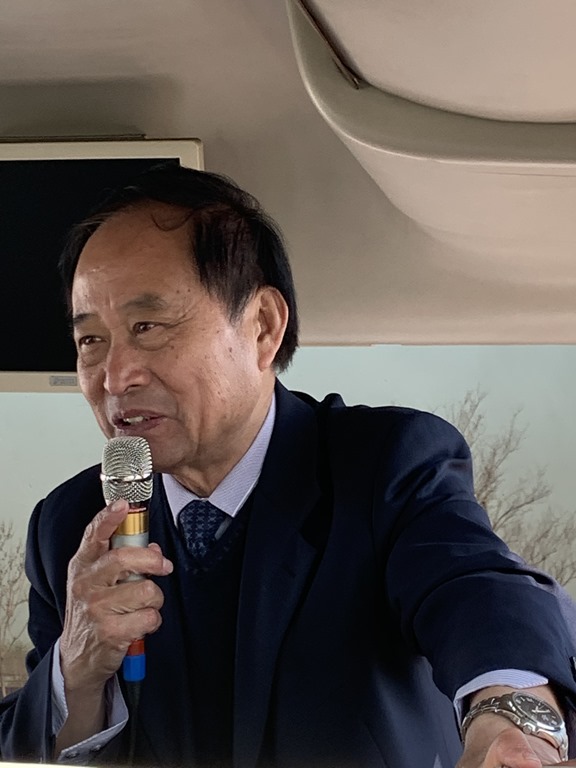
Our guide today was Liu and his English was actually very good.  He repeated everything and was concerned that we would understand him.  He taught us some Chinese words and even gave us his cell phone number in case of any emergency.  He said just to stop any Chinese person and ask him/her to call him!

IMG_5788

The seaport where we are docked is only about 6 years old, so it wasn’t here when we did our China trip in spring of 2012.  It is all built on reclaimed land and is quite massive.

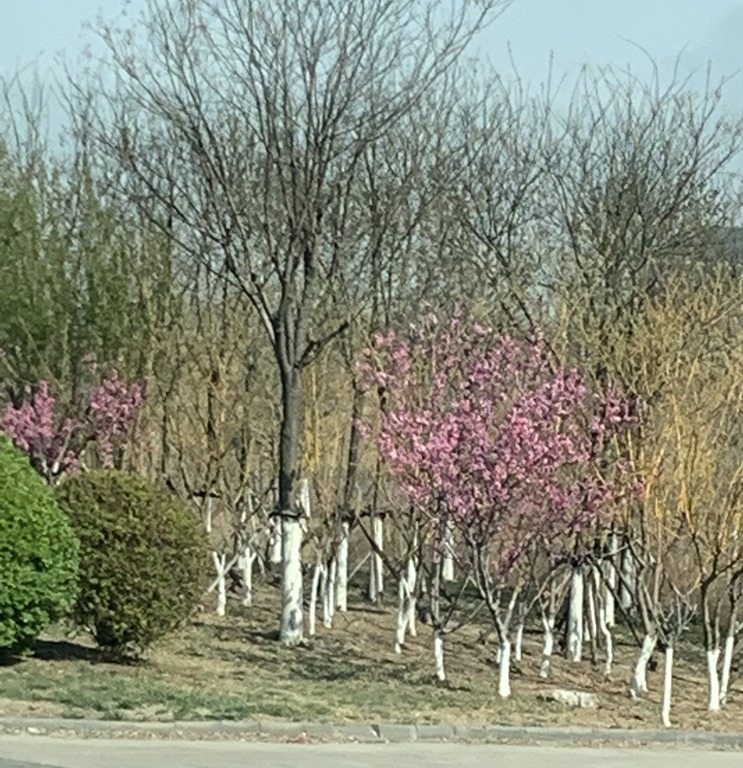
Our trip to Tianjin (we chose not to go to Beijing since we spent quite a bit of time there in 2012 and saw the Great Wall and all of the important sights in Beijing) took about an hour.  Along the way, it was impressive to see literally many thousands of trees of all sizes, some recently planted.  Lots of peach trees that were blossoming were spotted.  Liu explained that March 12 is tree planting day in China.  They are very committed to planting many trees as a wind break and way to prevent devastating dust storms.

IMG_5791IMG_5792

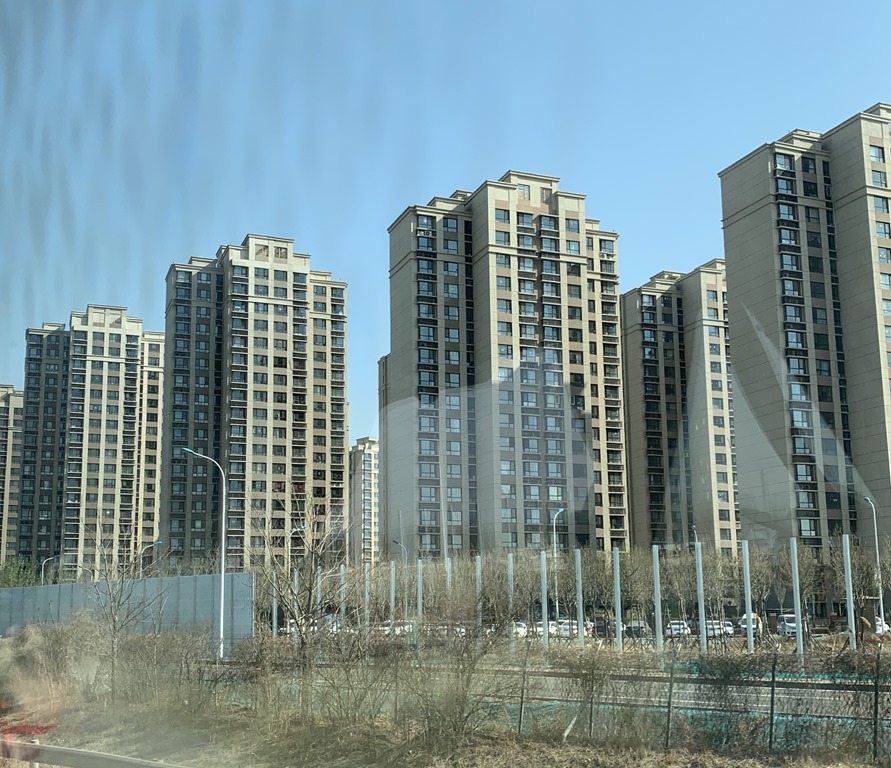
There were also many very tall apartment buildings as well as commercial buildings.

IMG_5789

China has 34 provinces and 1.4 billion people in 9.6 million square kilometers making it the 4th largest nation in area behind Russia, Canada and the US.  But it is the largest in population.There are 56 minority nationalities in China and so there are many language variations.  Liu said that all children in Chinese schools, starting in pre-school, learn both Mandarin which is the official language, and English.

The word Tianjin  – Tian means heaven and jin means ferry boat. 

We passed the rail for the bullet train which travels between 350 and 500 km/hour!  350 is about 217 mph. This has made travel in China very fast and accessible.

We saw a lot of fish ponds along the way – mostly for carp.  Liu said that many Buddhists stock the ponds as offerings, and then other people catch the fish.  He thinks this is kind of peculiar.

IMG_5892IMG_5894

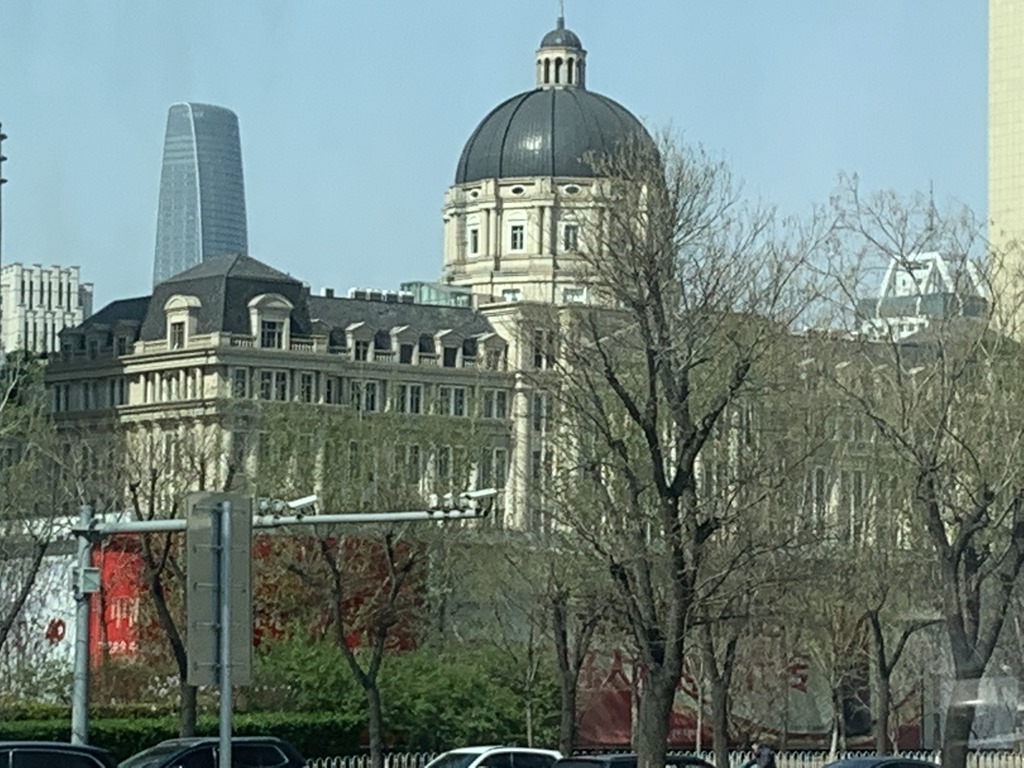
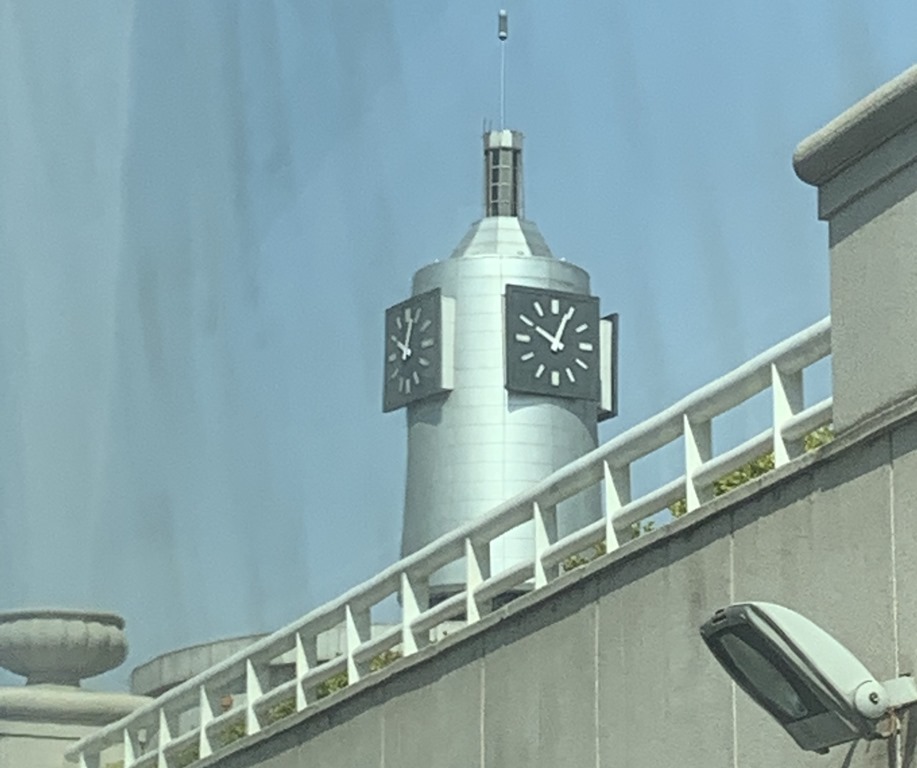
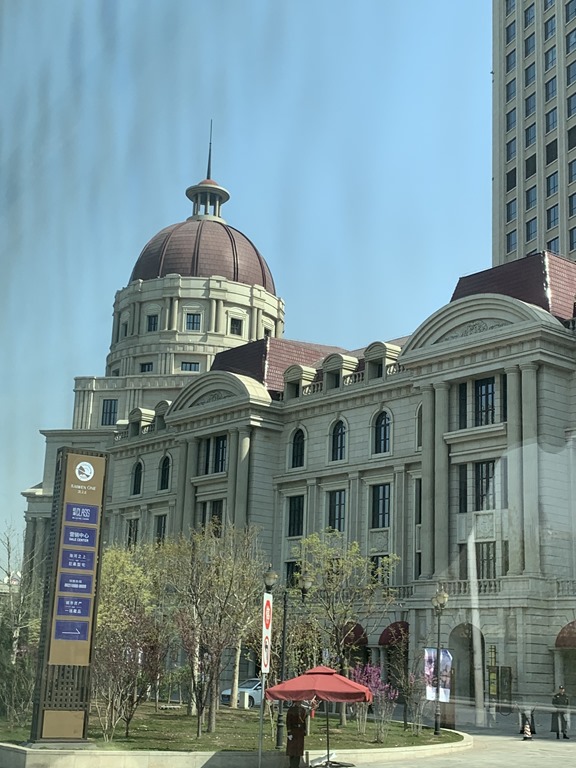
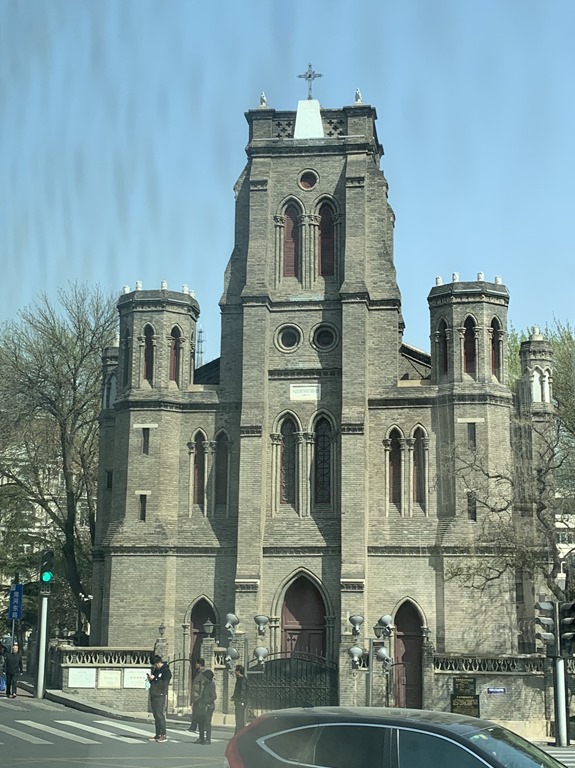
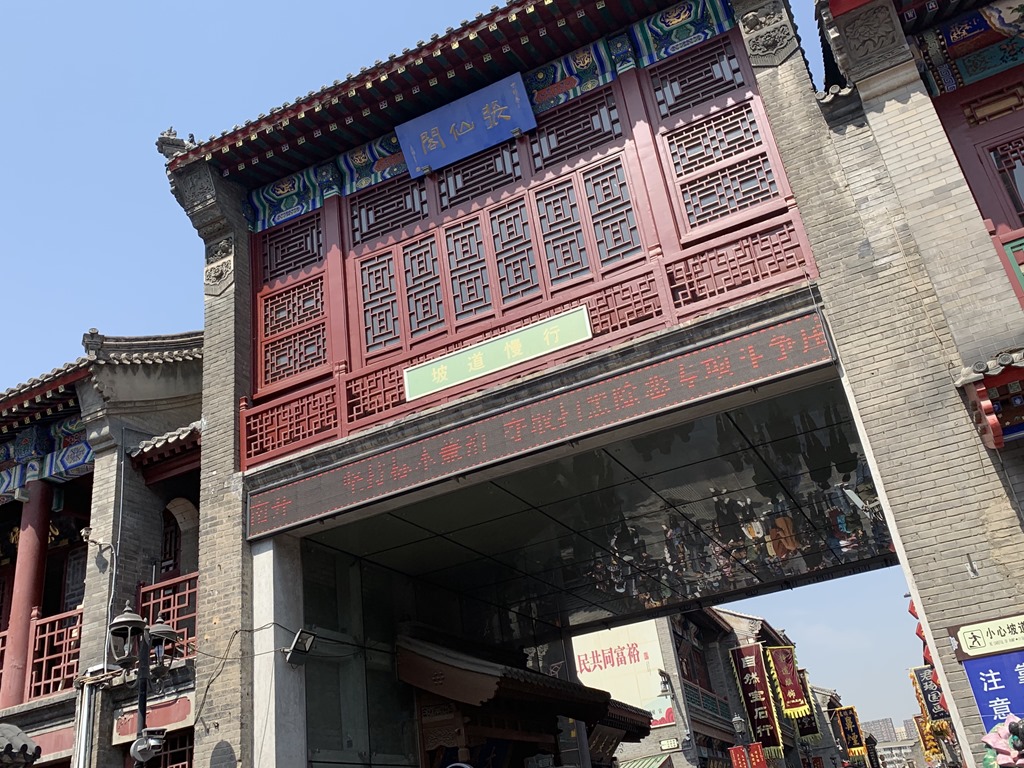
When we reached the city, here are some of the sights we saw along the route to our first stop, the Confucius Temple. There are many buildings that used to be concessions of other countries and there is a distinct European flavor to many of them. The silver clock is at the top of the huge railway station.  The ferris wheel is the only one in the world build on a bridge! And yes, they have Budweiser here along with McDonalds.

IMG_5793IMG_5795IMG_5796IMG_5800IMG_5803IMG_5804IMG_5809IMG_5810IMG_5811IMG_5813

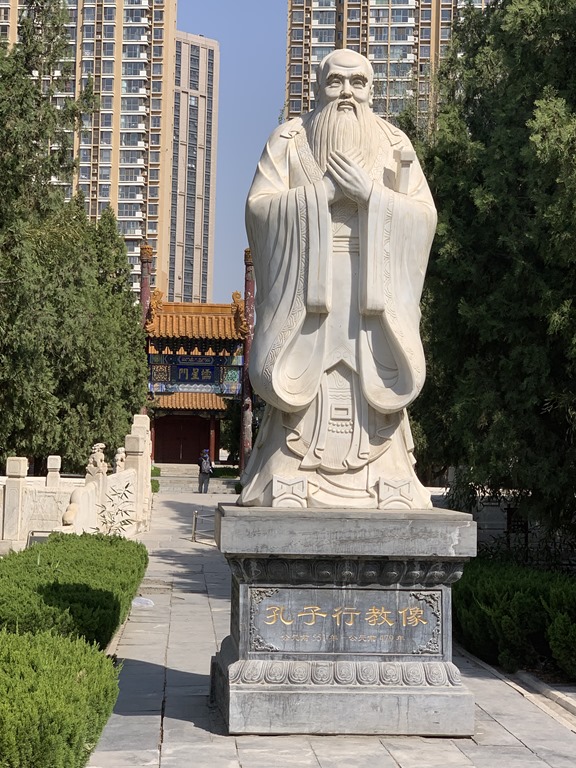
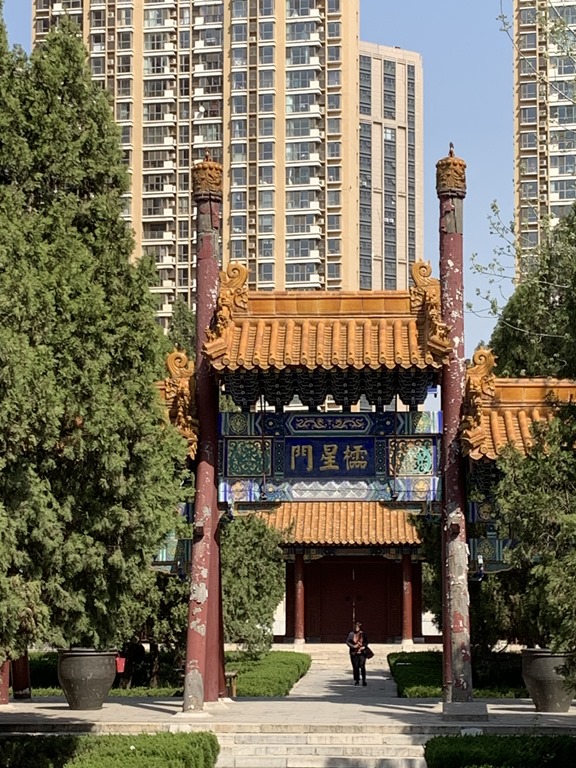
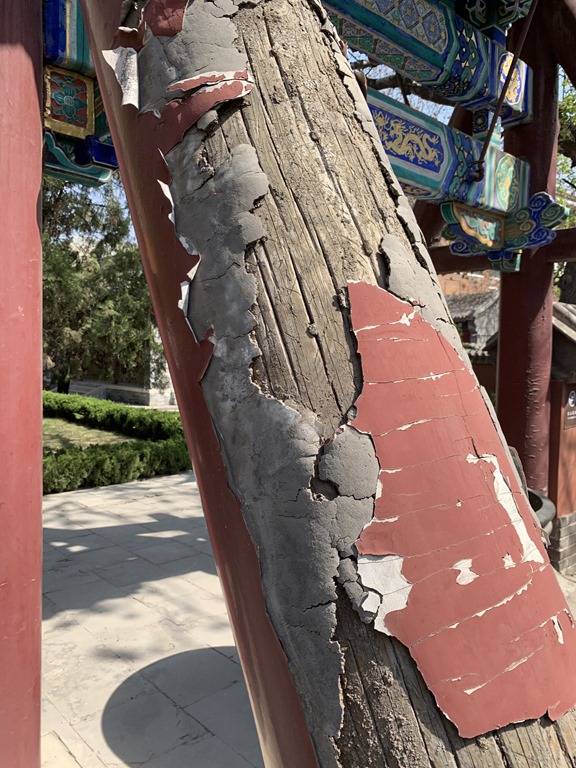
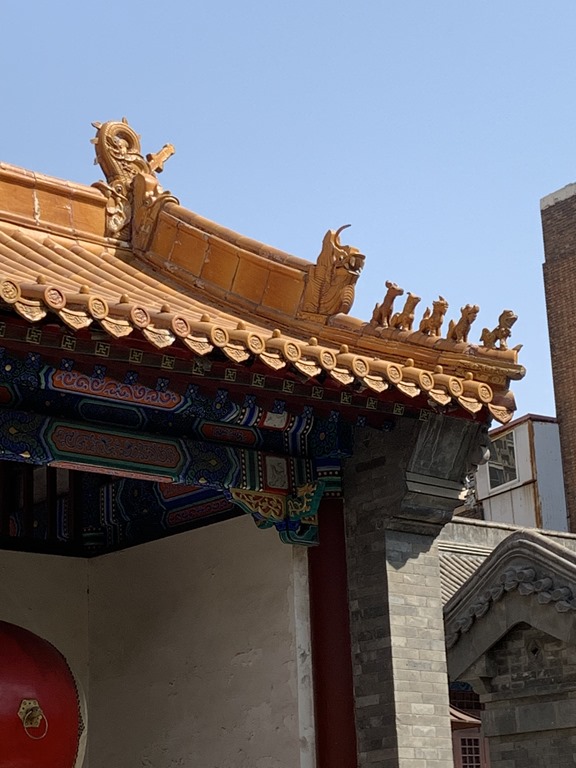
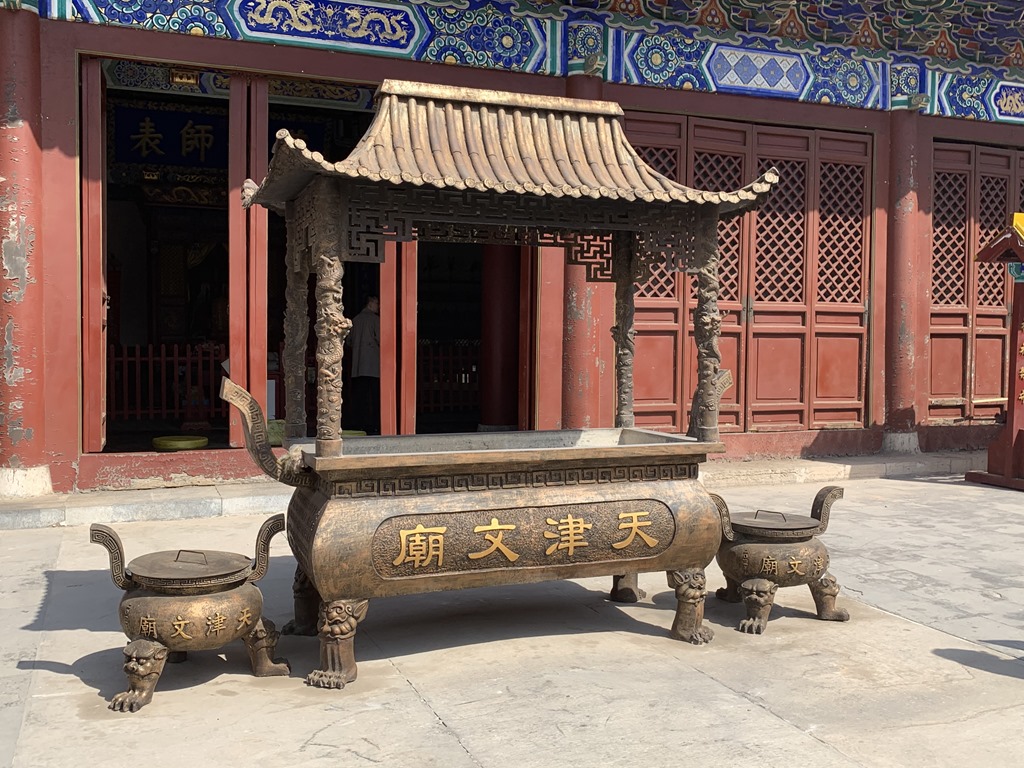
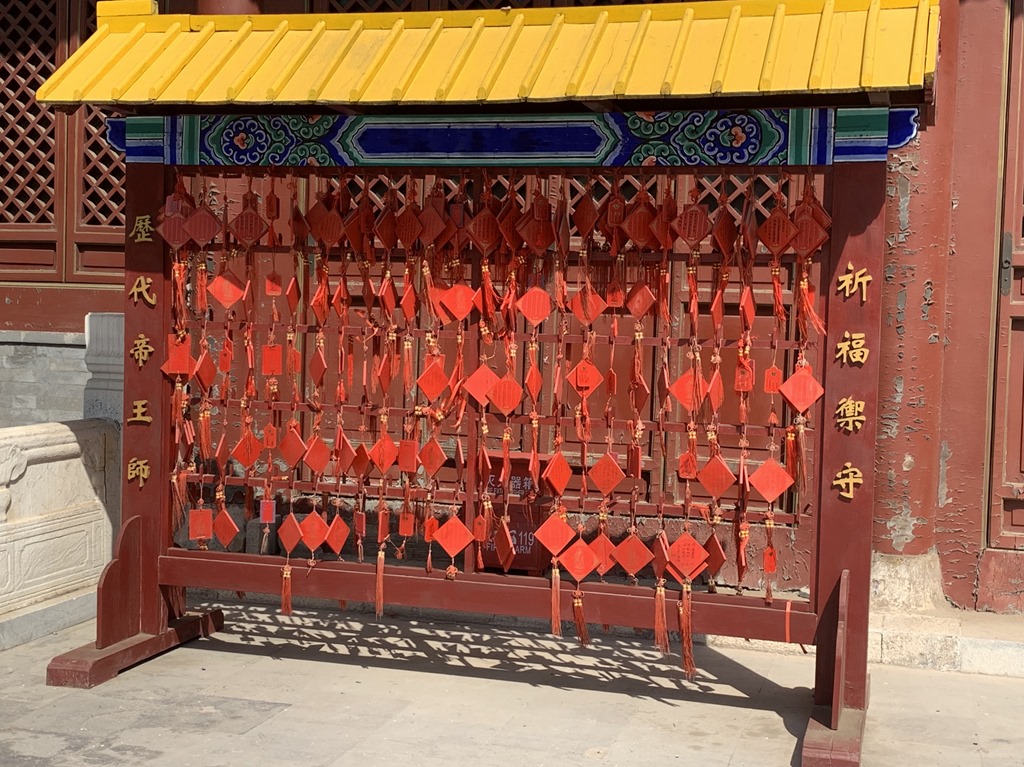
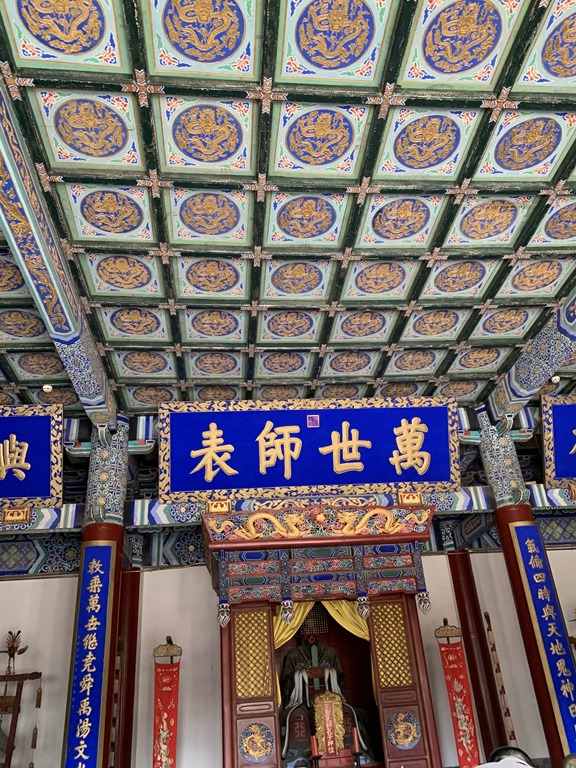
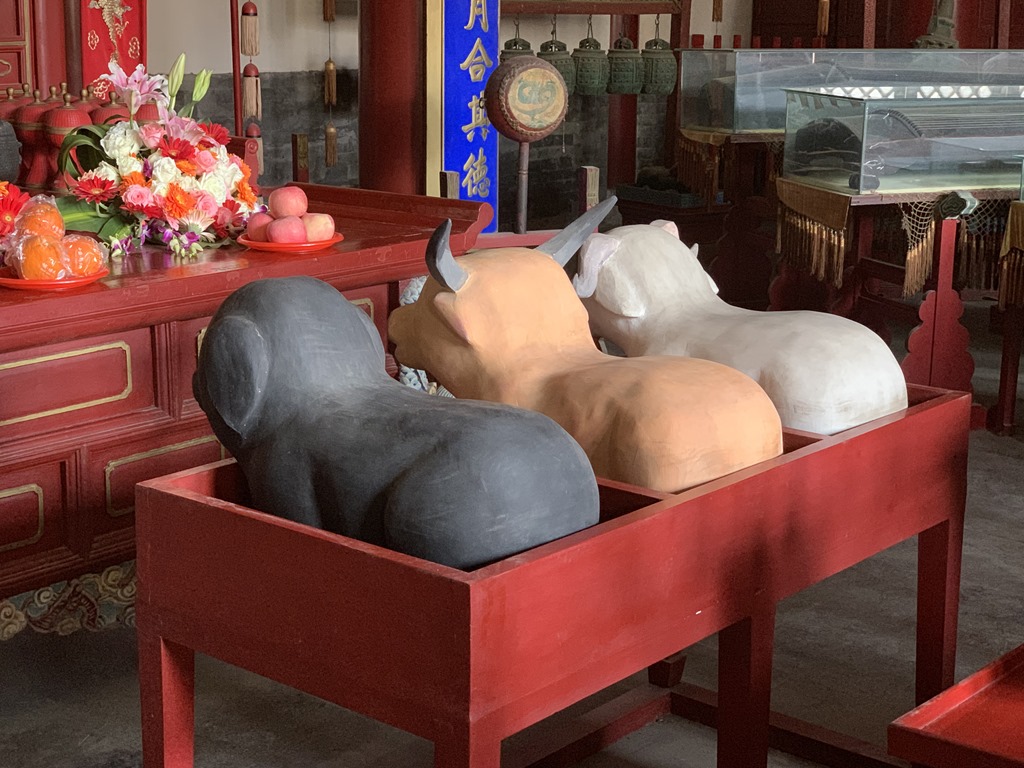
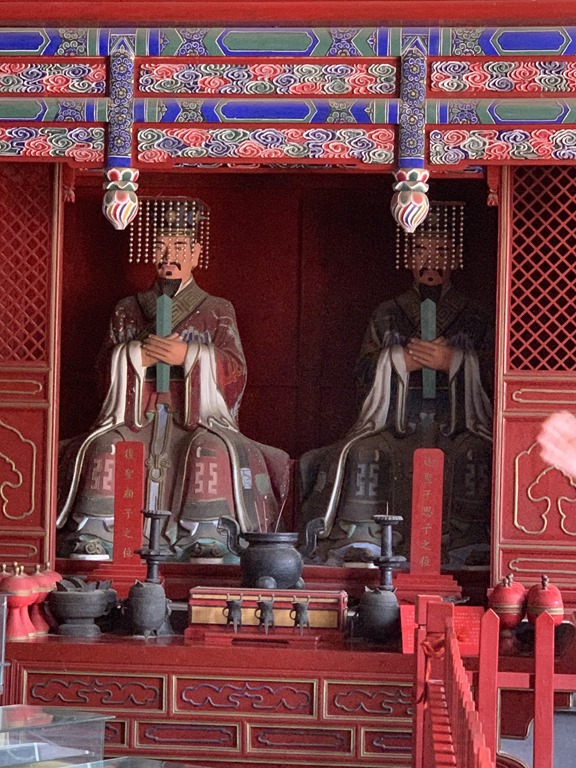
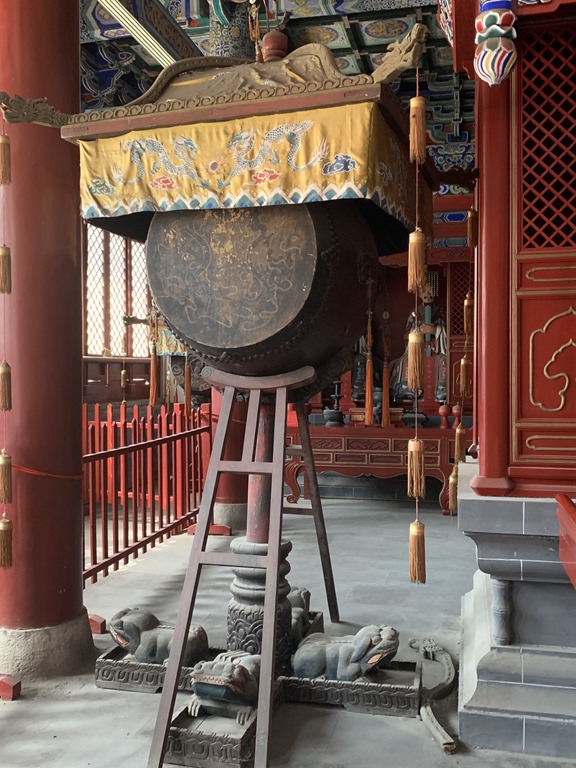
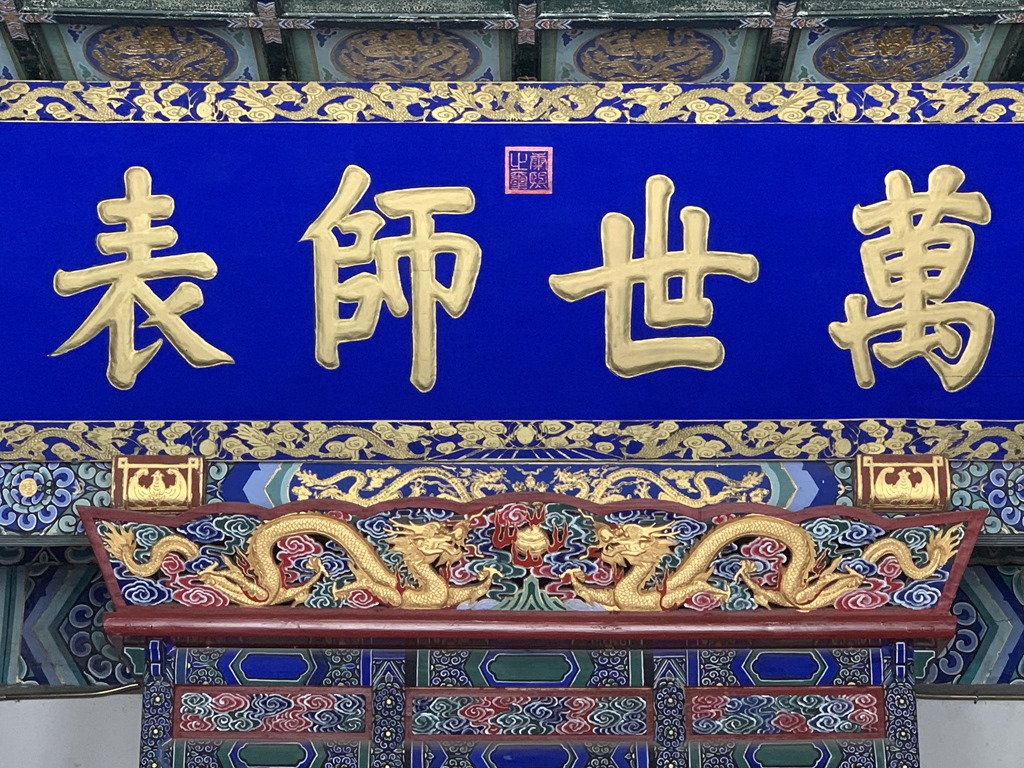
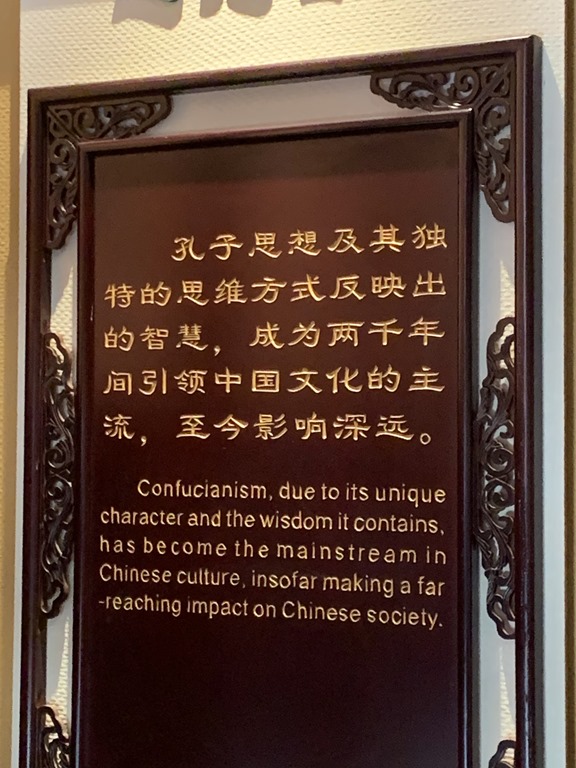
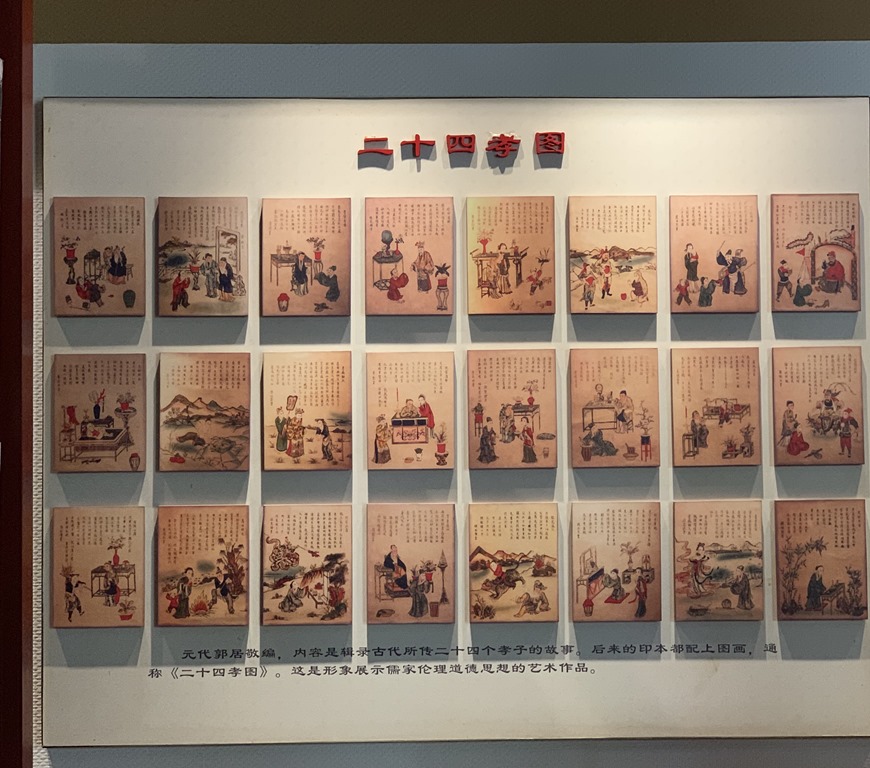
The Confucius Temple is the third largest temple in the country, where Confucius has been adored for centuries.  It was founded during the Ming Dynasty and is considered the greatest ancient architectural site in the city.  Within the temple grounds are the Dacheng Palace Hall, Shrine of the Great Wise Men and the Lingsing Gate. The archways are quite decorative but sadly in disrepair. There is a lot about Confucius and his writings and teachings but only a small amount is in English. 

IMG_5817IMG_5821IMG_5822IMG_5823IMG_5824IMG_5825IMG_5827IMG_5828IMG_5829IMG_5830IMG_5833IMG_5834IMG_5835IMG_5836IMG_5837IMG_5839IMG_5840IMG_5841IMG_5842IMG_5843IMG_5845

As you can see, photos were allowed here.

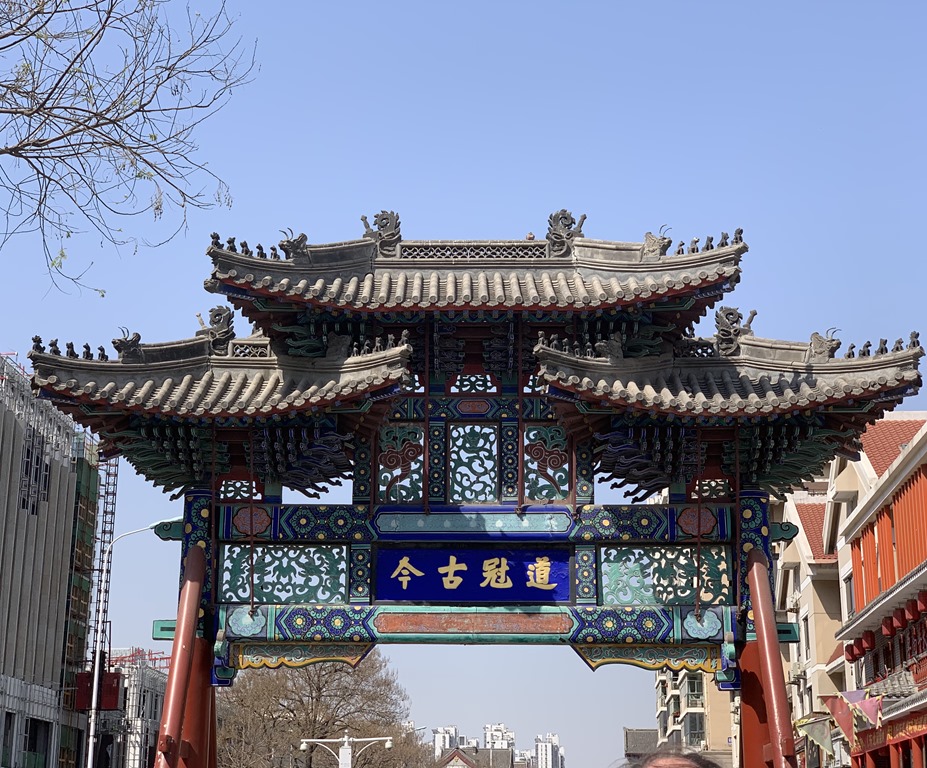
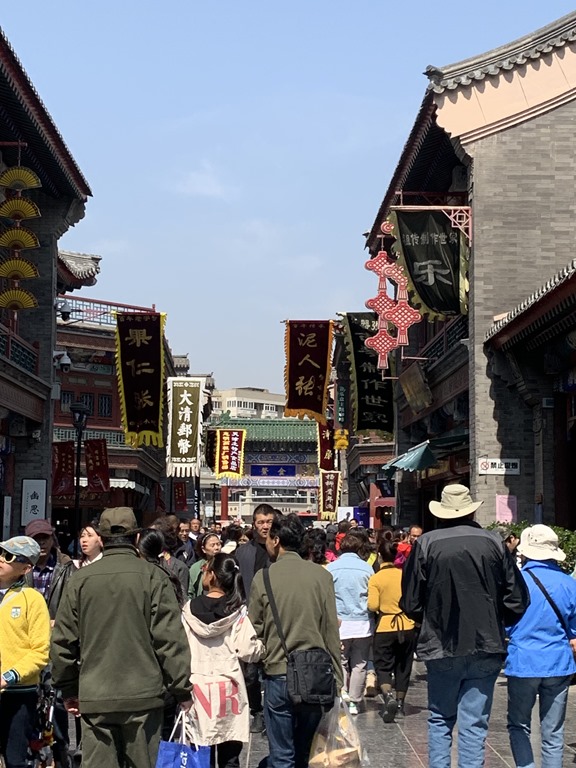
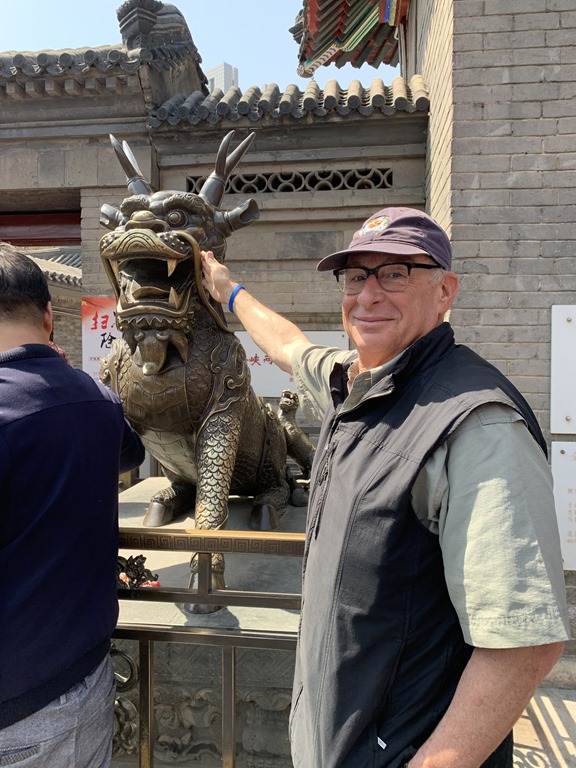
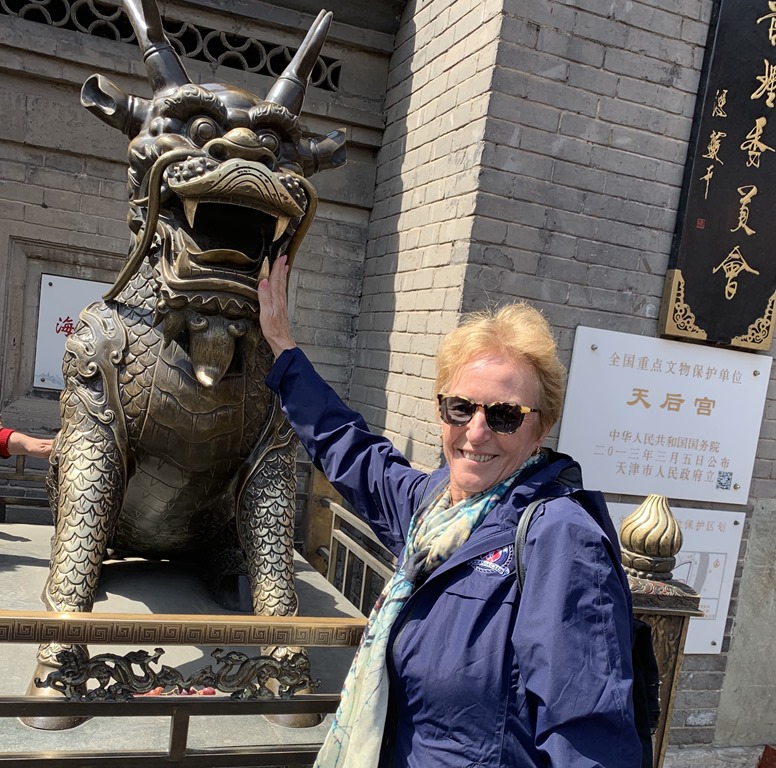
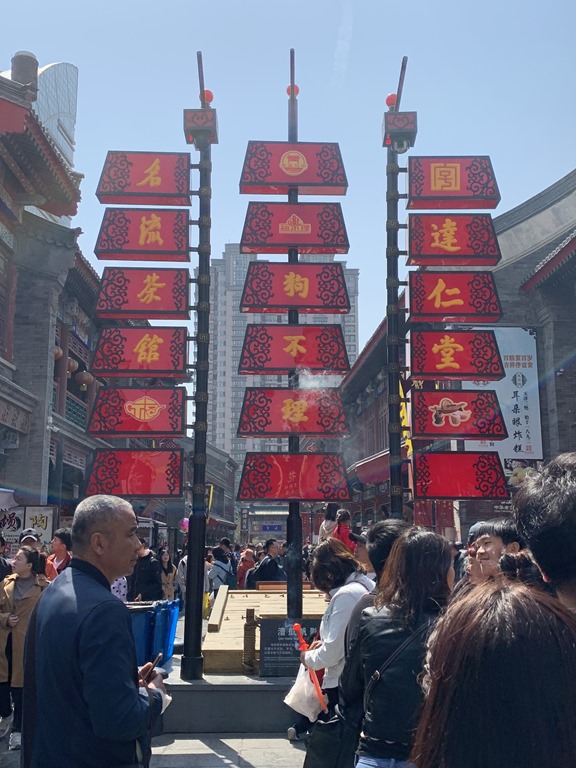
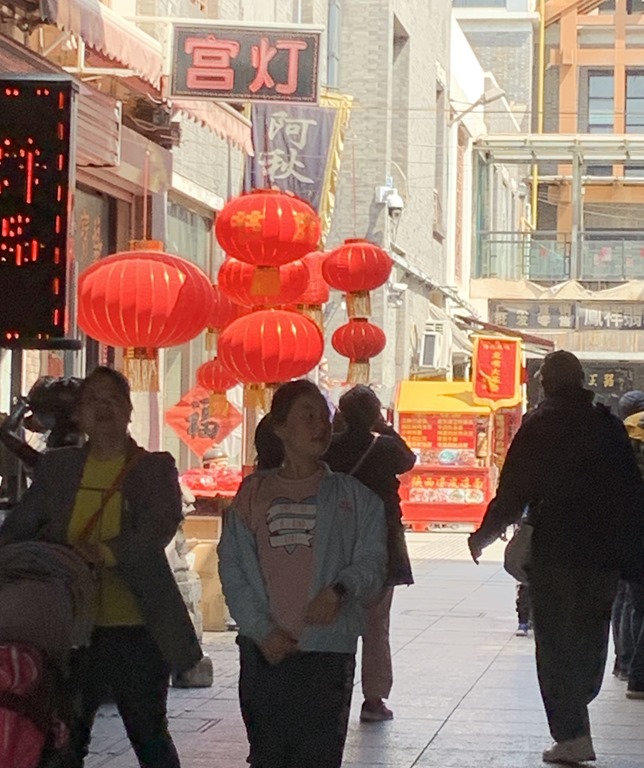
After our visit to the temple, we went to the Ancient Culture street.  Since it was Sunday, this area was very crowded with Chinese families enjoying the day. We noted that this city was not nearly as polluted as we found when we visited in 2012.

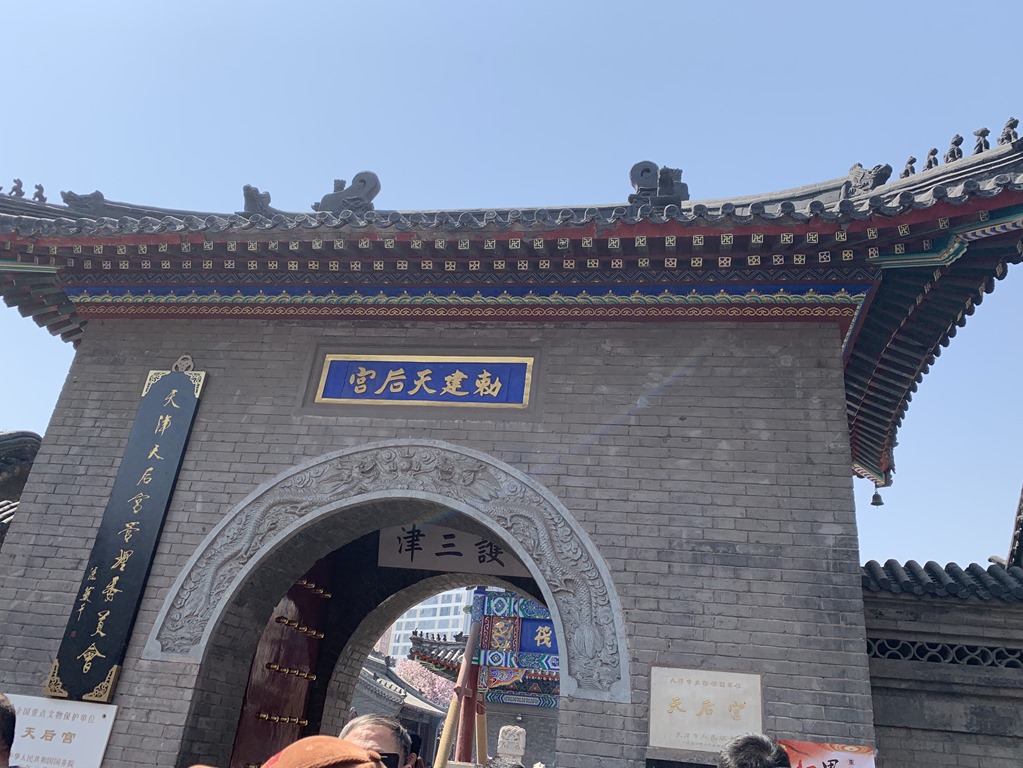
There is a temple to the goddess Lin who died at the age of 27.  She was a good swimmer and saved lots of people but unfortunately died at a young age trying to save someone. The people dedicated a temple to her.
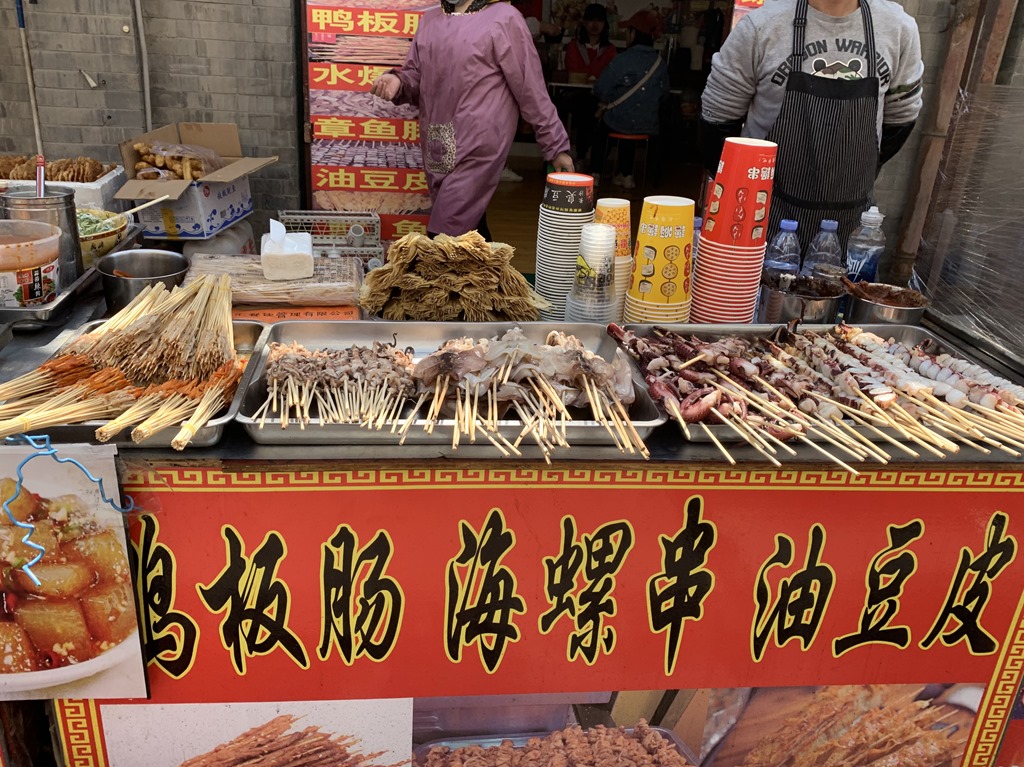
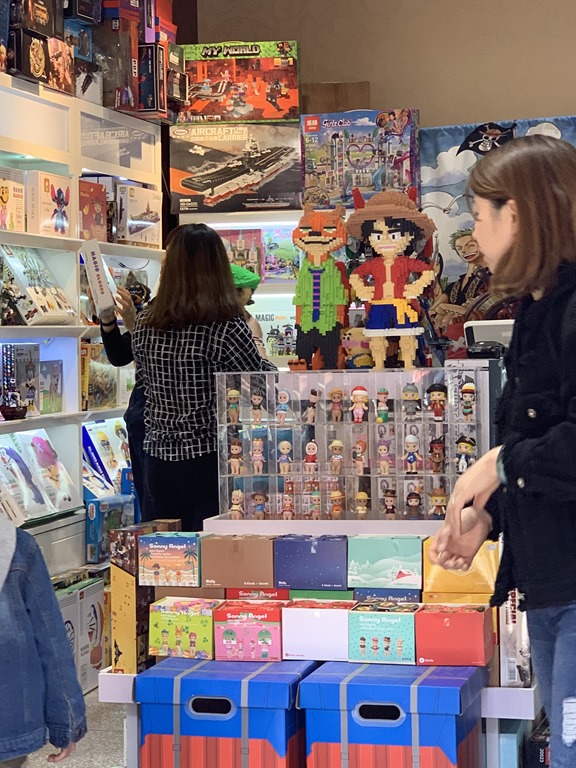
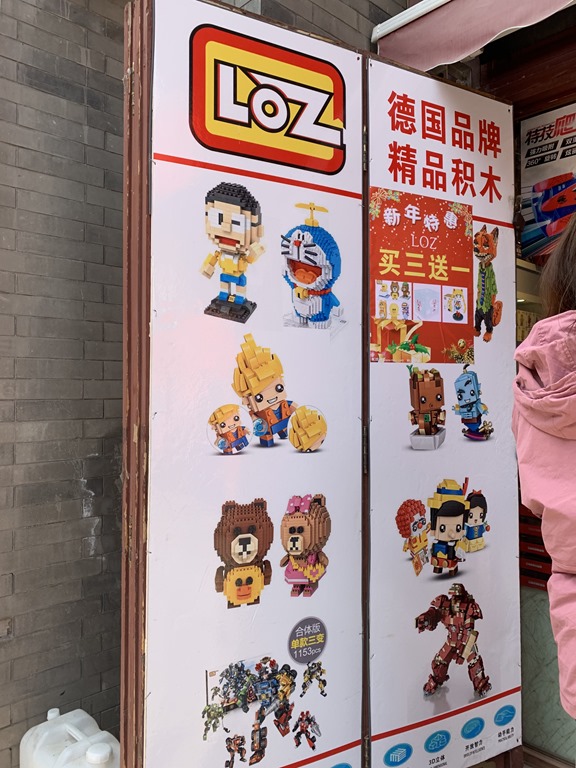
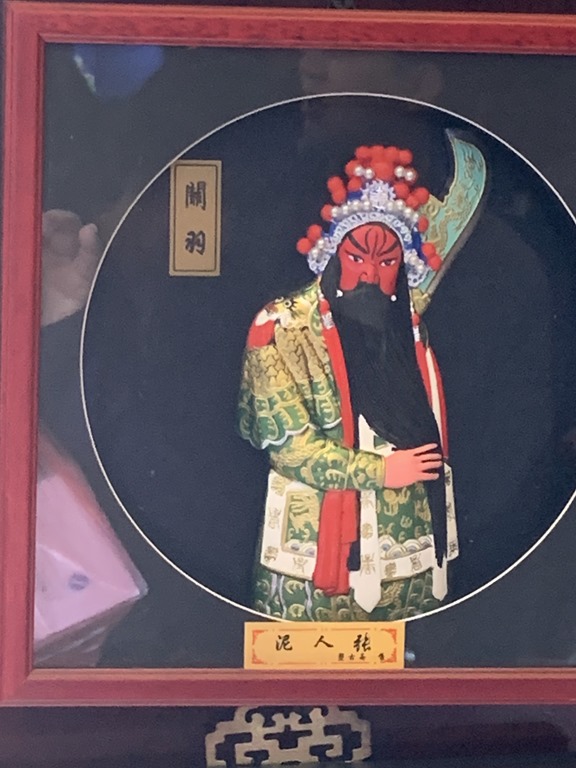
There are many shops selling mostly beautiful crafts and foods of all types.  Nearly all the buildings along the street are constructed with blue bricks and feature colorful pictures of historical figures, flowers and birds painted on their doors and windows. There was even a Lego store!

IMG_5851IMG_5852IMG_5853IMG_5854IMG_5855IMG_5856IMG_5859IMG_5860IMG_5861IMG_5862IMG_5863IMG_5865IMG_5866 IMG_5868IMG_5878IMG_5879IMG_5880IMG_5882IMG_5883IMG_5884IMG_5886IMG_5887

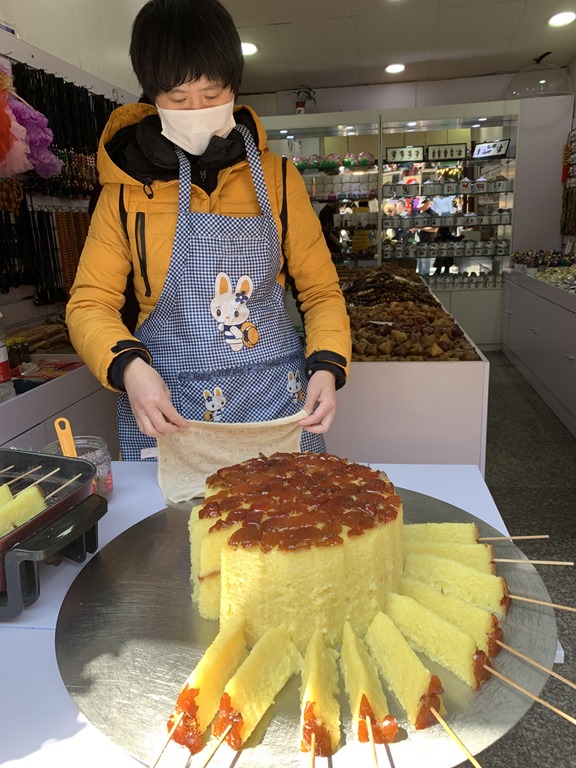
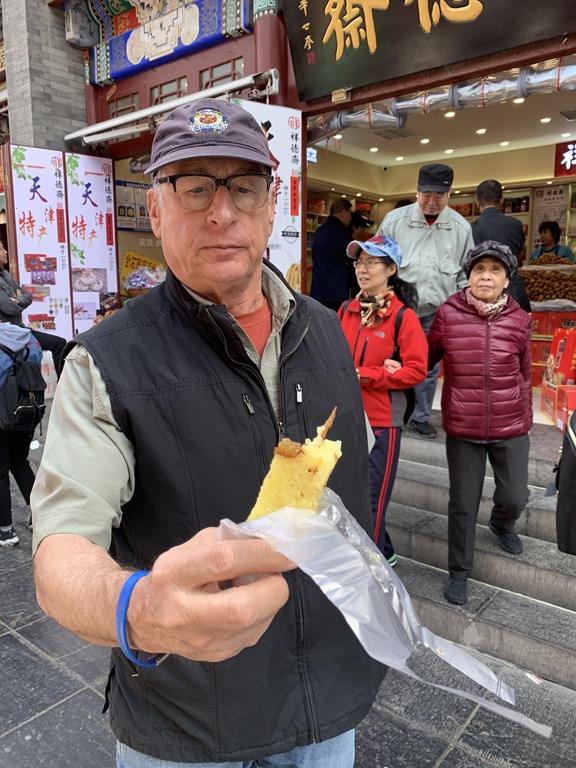
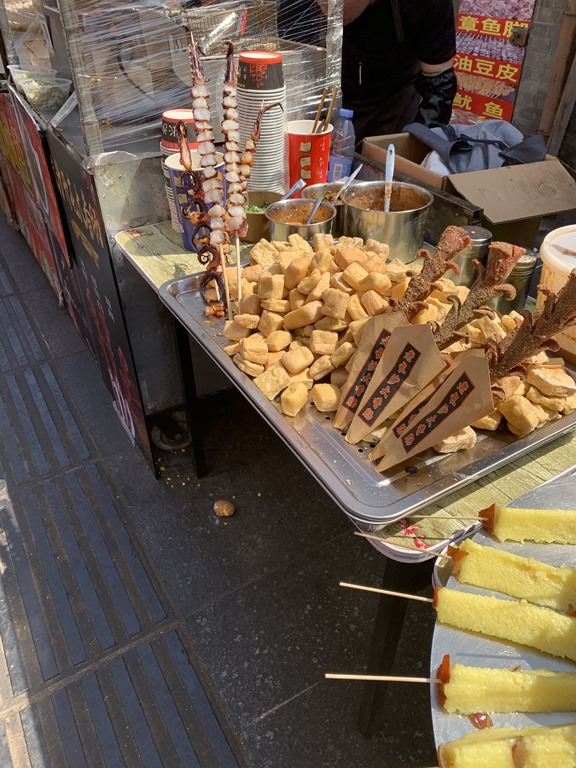
What Norm is eating looks a lot like pineapple but it is a type of lightly sweetened rice.

Here are some of the other street foods we saw. I ate some of the nougat squares they were selling.

IMG_5888IMG_5889

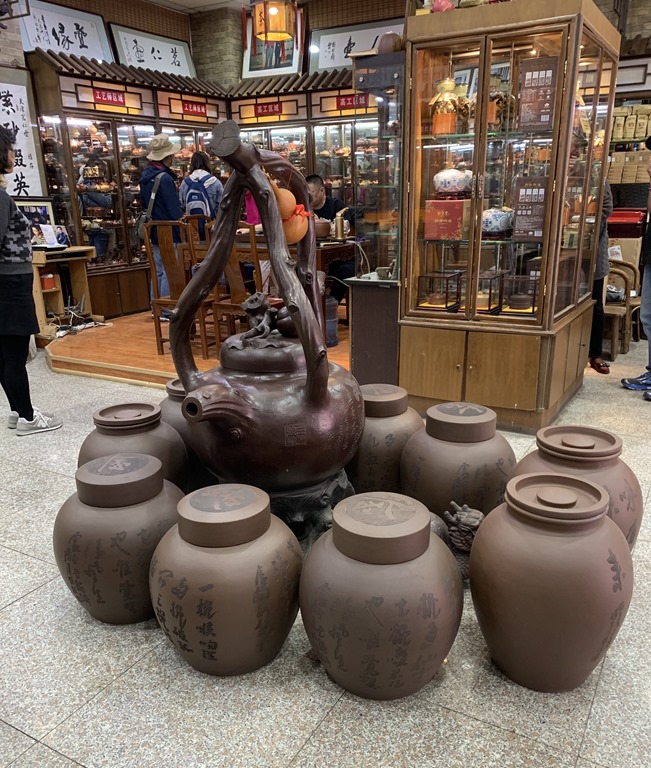
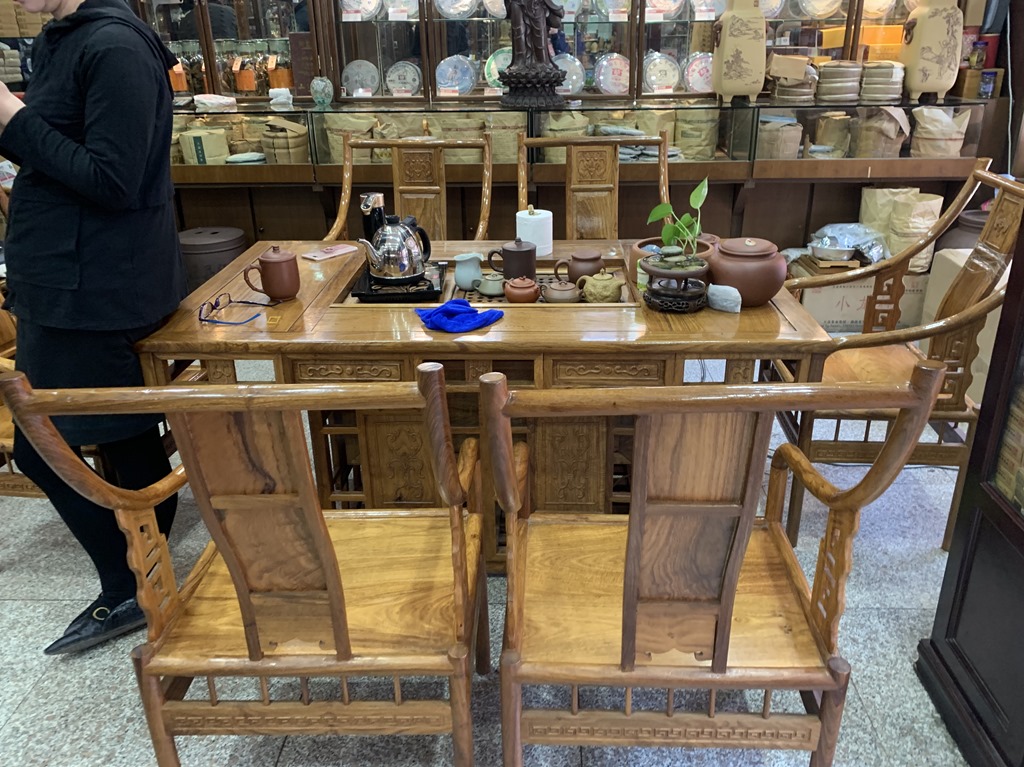
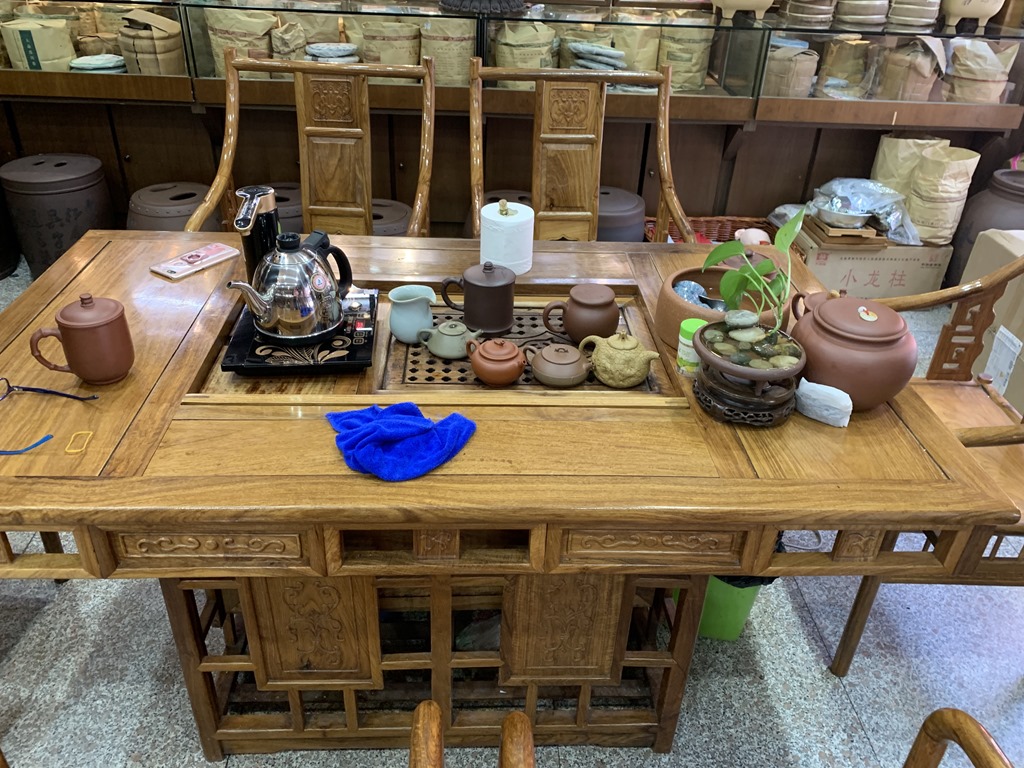
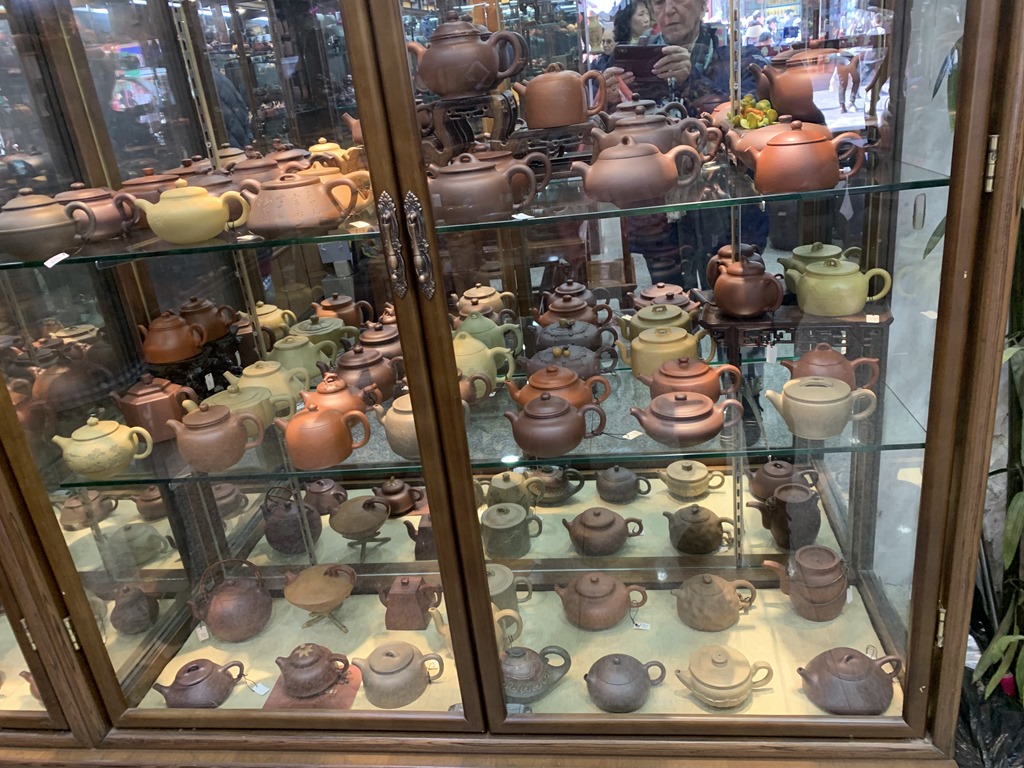
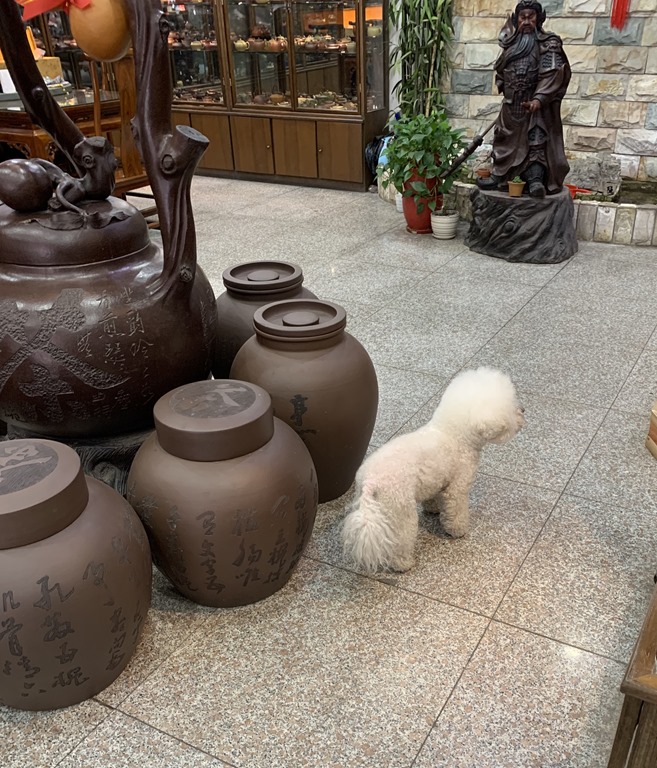
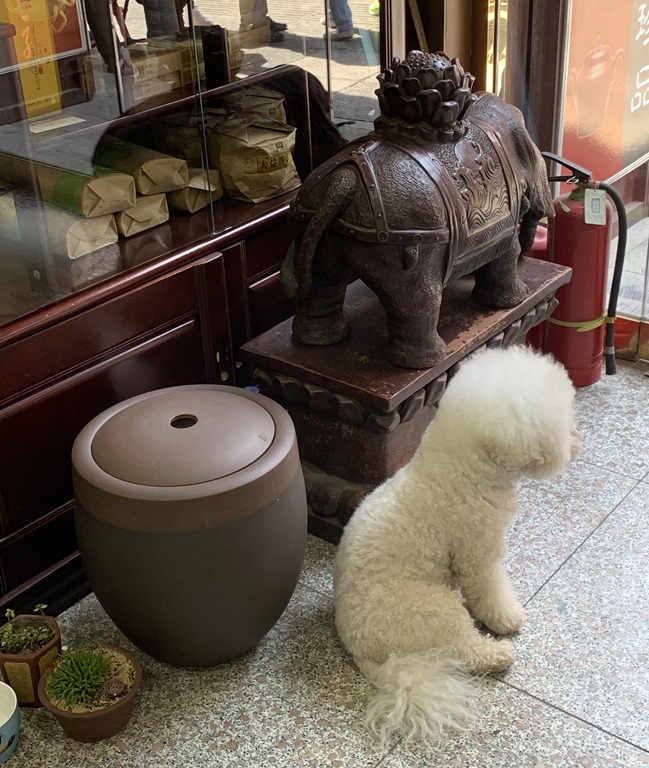
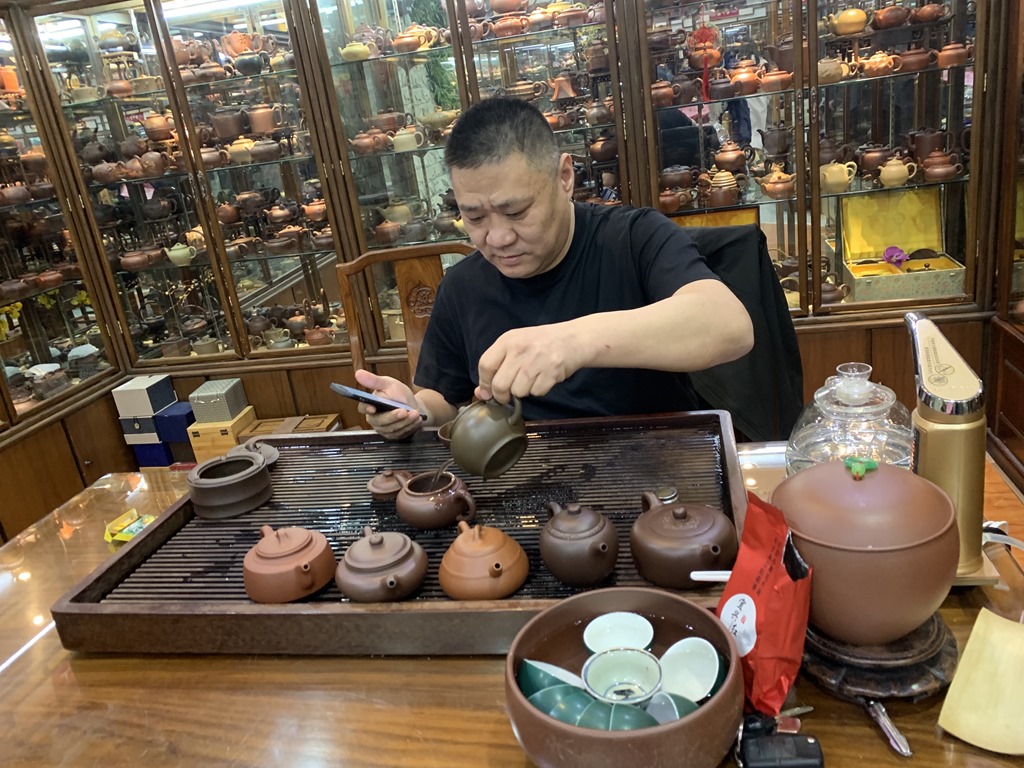
We went into a shop that had the most amazing selection of tiny tea pots and we saw the craftsman making them. They had a cute resident dog.

IMG_5869IMG_5870IMG_5871IMG_5872IMG_5873IMG_5874IMG_5875IMG_5876

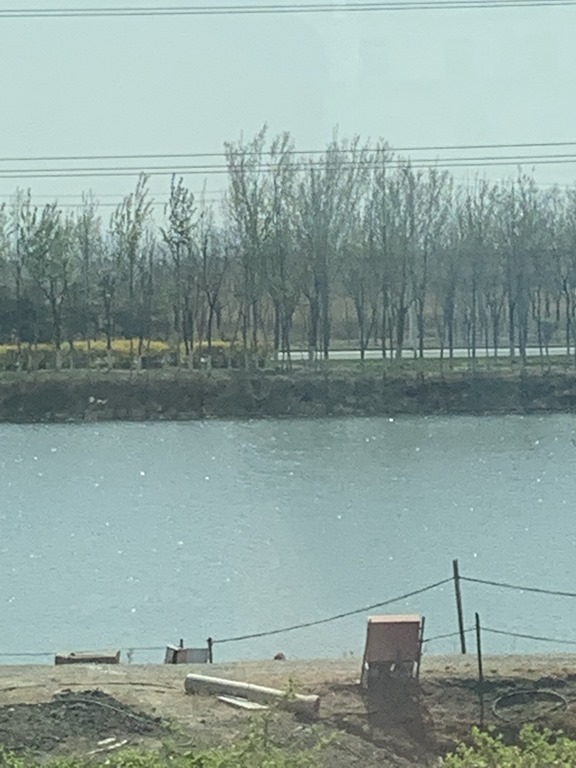
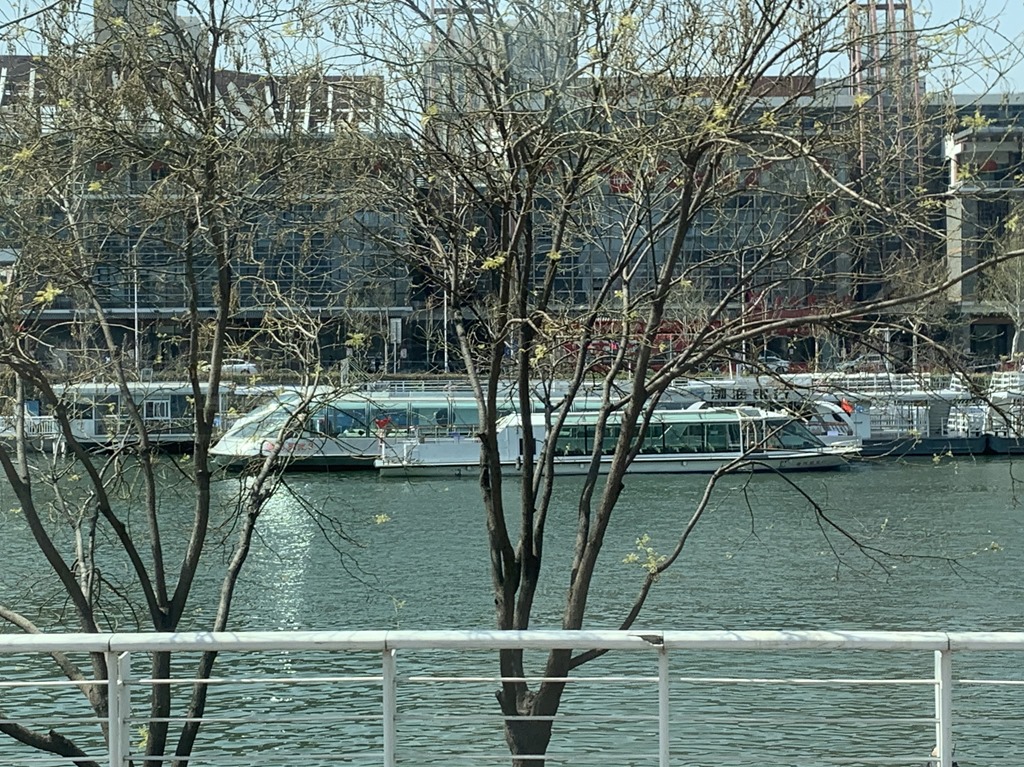
Tianjin has the Haihe river running through the city and the Ancient Culture Street is on the west bank of the river.  We didn’t have time for a river boat.

IMG_5891

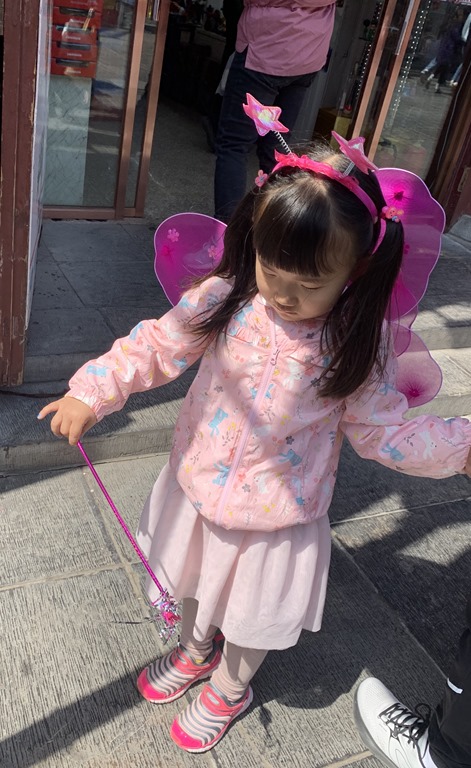
Some of the adorable children we saw.

IMG_5838IMG_5867


Posted in April, Asia, Excursions, Food, World Cruise 3 | Leave a comment

Cruising the Yellow Sea

April 6, 2019

I typically do not do a blog post while at sea unless something special is going on.  Well, today was something special.

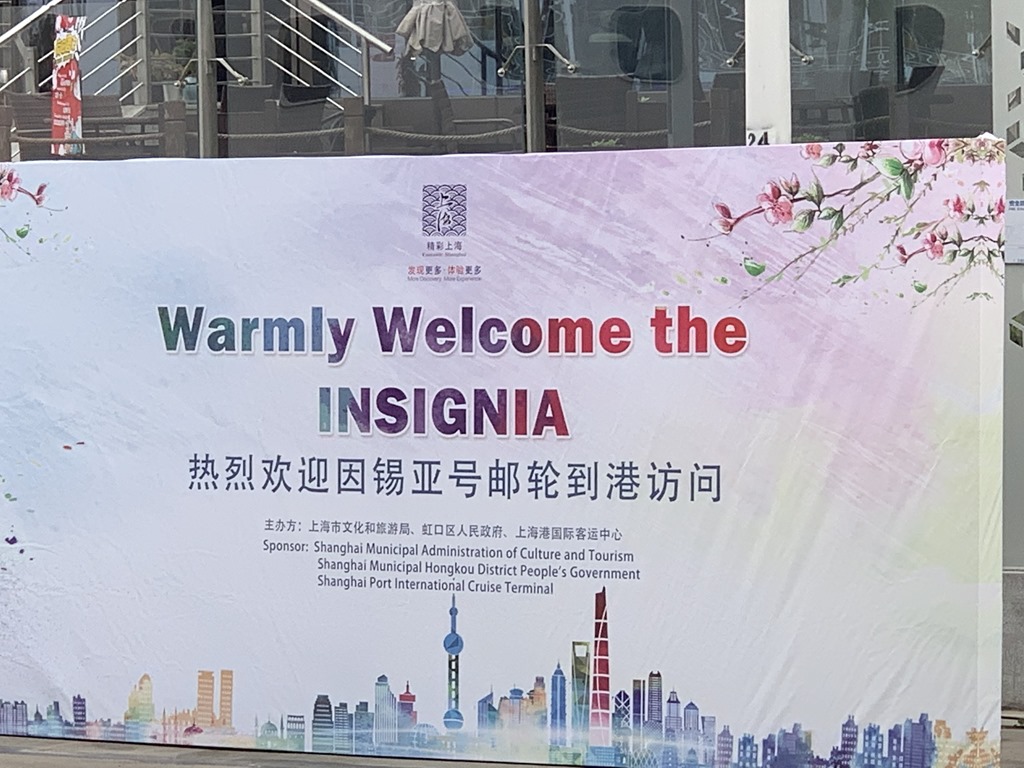
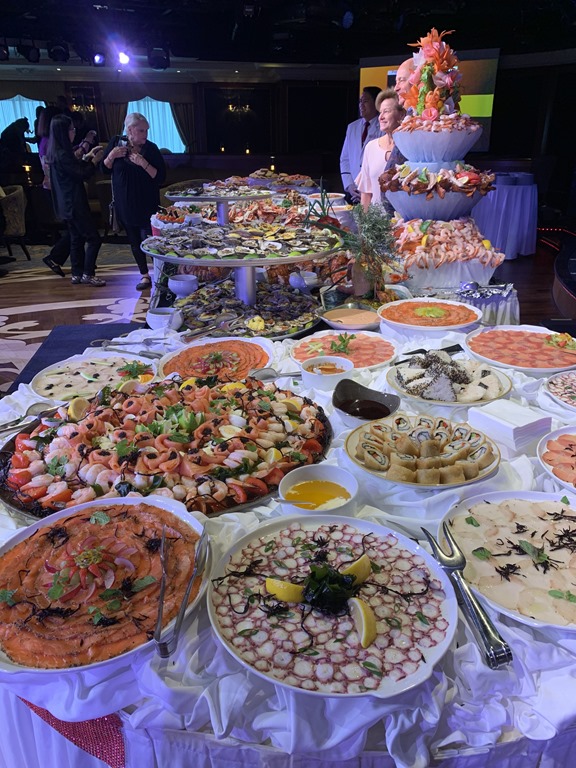
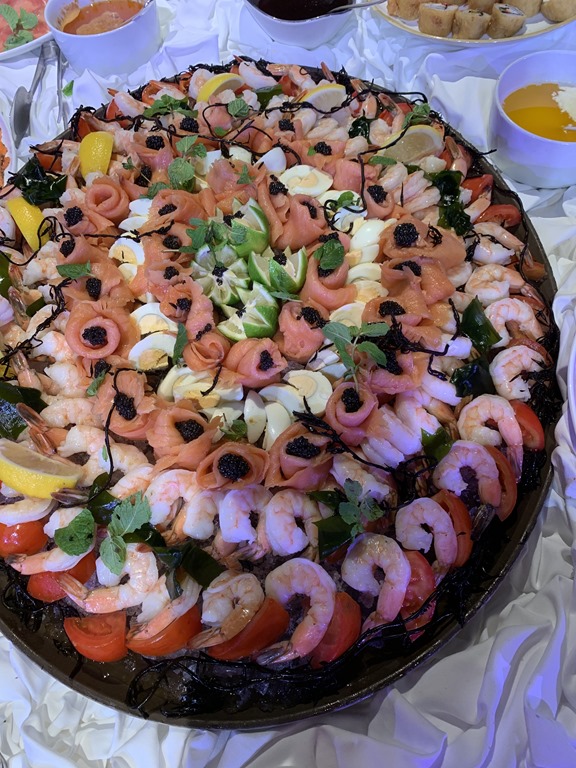
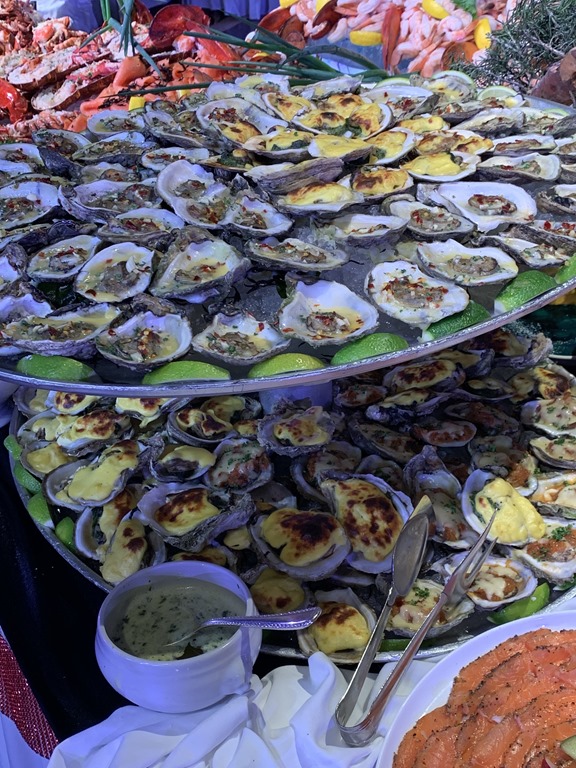
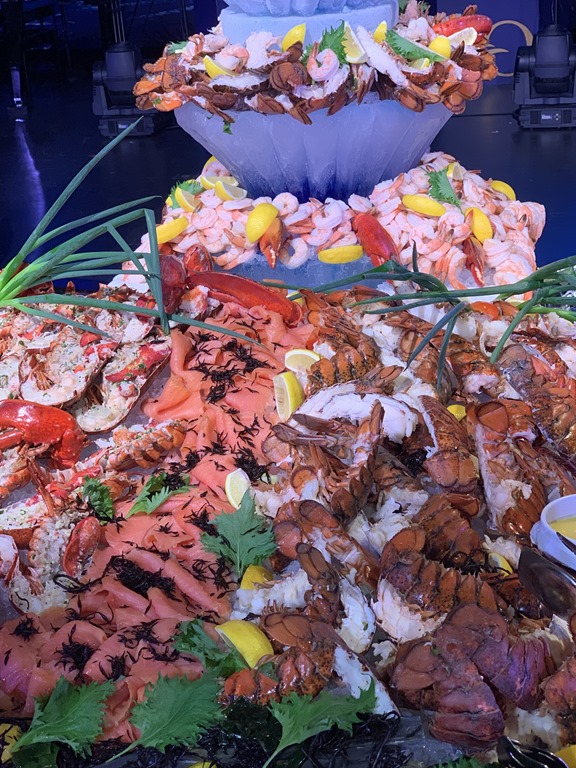
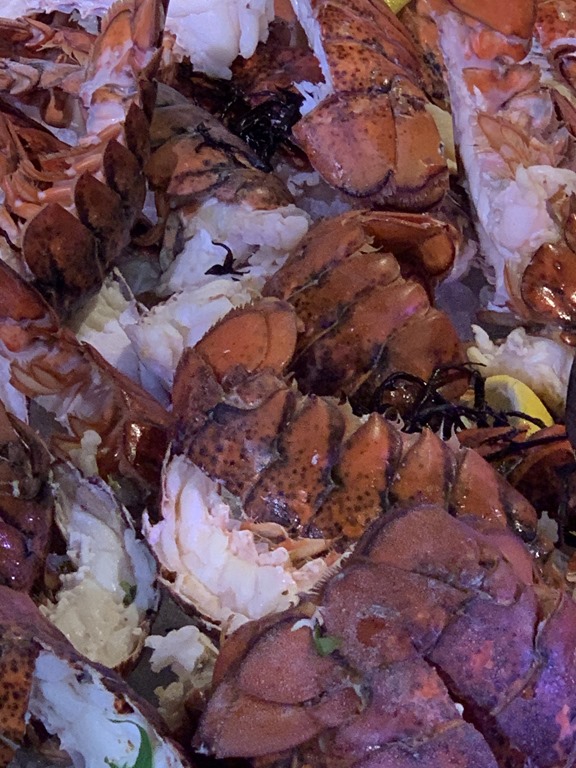
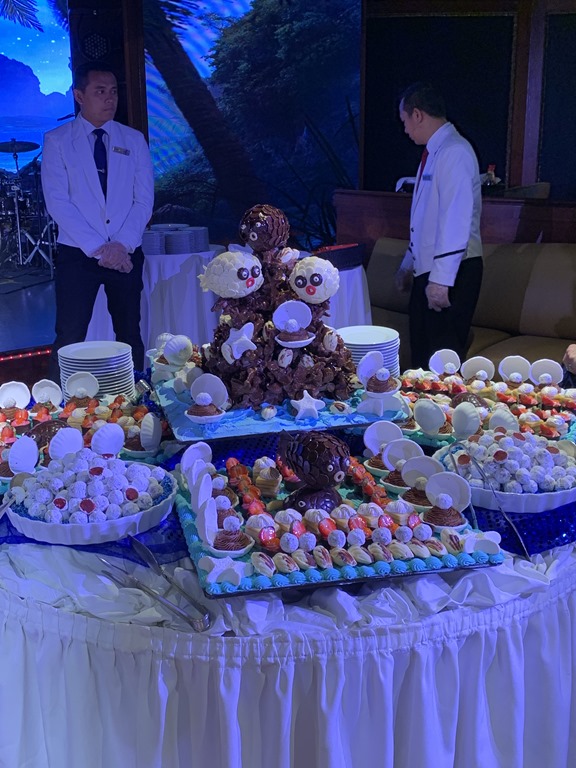
Each segment, there is a special ATW gathering.  Victor, our general manager, reminded us that on the first world cruise, the company didn’t really want to provide too many extras.  We were on that one, and really it was simply wonderful, but now with half the ship going around the world, these special events are, well, more than special.  You have seen the posts of the previous 3.  This one was kept a closely guarded secret, we weren’t told anything except we got an invitation for the date.  It was at 11 AM today in the Insignia Lounge, and was a seafood extravaganza.

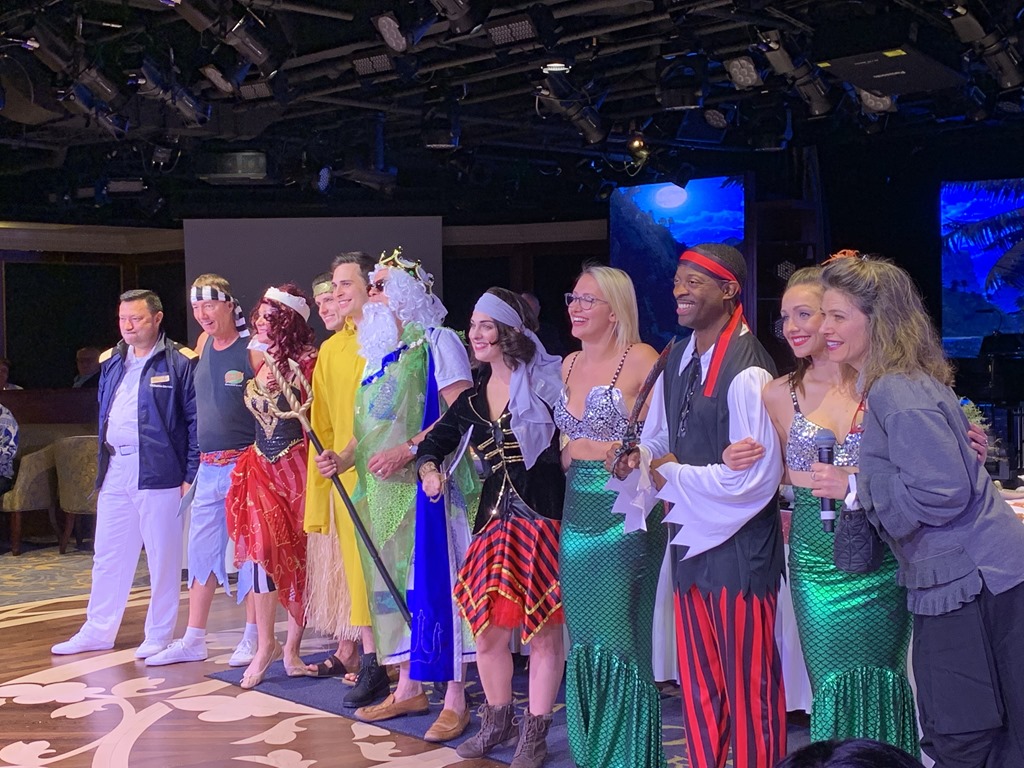
The entertainment staff dressed in their equator crossing attire and the seafood was nothing short of amazing.  Kudos to Mario and the entire culinary team!

IMG_5750IMG_5751IMG_5753IMG_5766IMG_5767IMG_5772IMG_5777IMG_5779IMG_5782IMG_5784

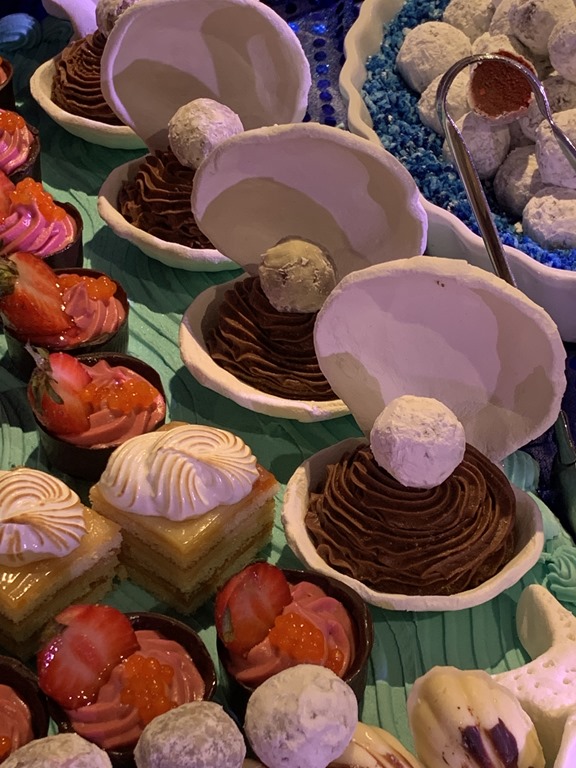
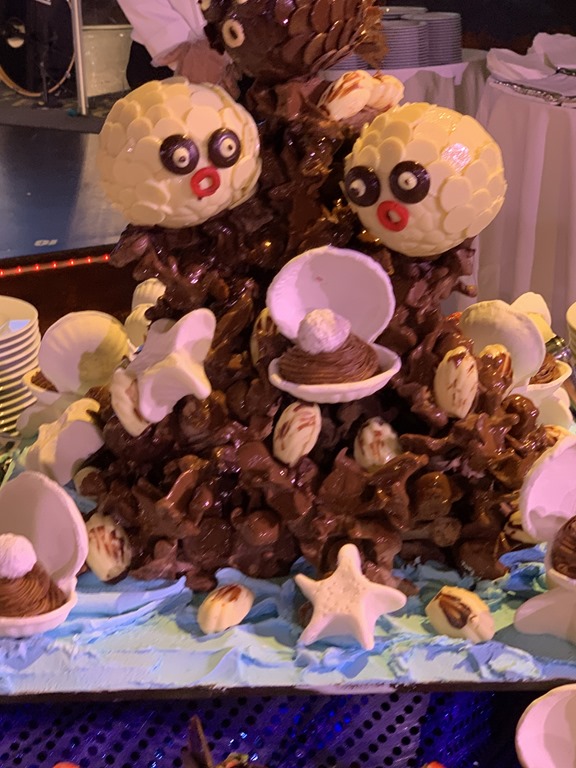
The drinks and desserts were great too.

IMG_5758IMG_5759IMG_5760IMG_5761IMG_5762IMG_5765IMG_5764IMG_5763IMG_5757IMG_5756IMG_5755IMG_5770IMG_5768IMG_5769IMG_5785

I ate a lot of shrimp and lobster but there was seafood of every variety.  It is hard to see how they might top this in the next segment.

As is typical at these events, there was also a short slide show of scenes from Japan.

It is on to Tianjin tomorrow.  90 people are leaving the ship for a 3 day overland trip in to Beijing and  Xian. We spent a week in China several years ago and are not going on this overland.

But, we are preparing for our 10 days off the ship to Nepal and Bhutan which will begin on April 11 from Shanghai.  Stay tuned.

Posted in April, Asia, At Sea, Food, World Cruise 3 | 2 Comments

Sasebo, Japan

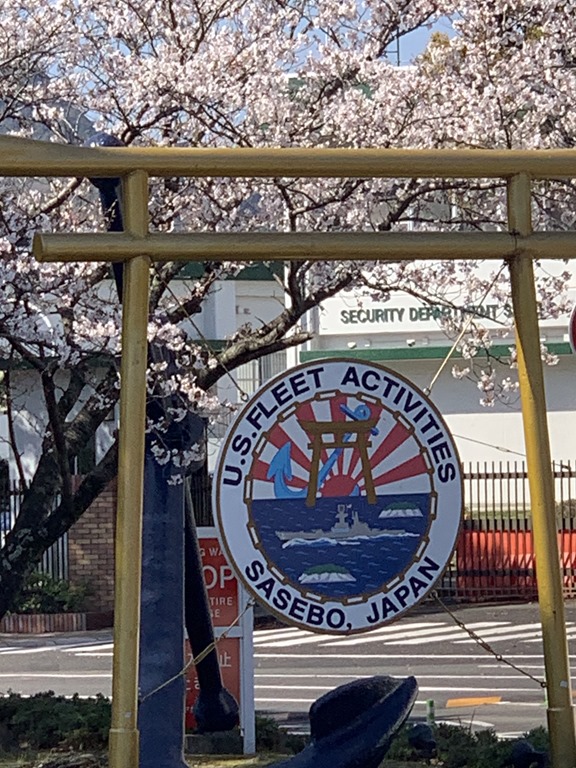
Well, here we are in our last Japanese port.  Sasebo is the second largest city in the Nagasaki prefecture, Nagasaki is the largest. Although it was spared an atomic bomb, Sasebo was one of the original 17 possible targets and suffered heavy damage during World War II. 

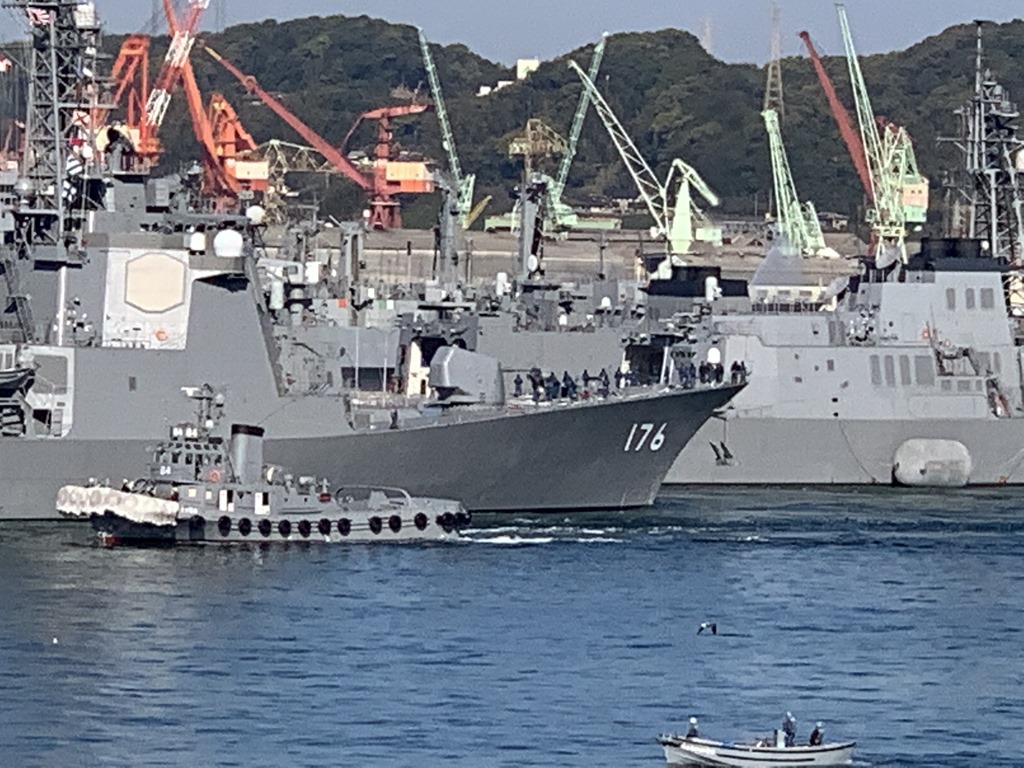
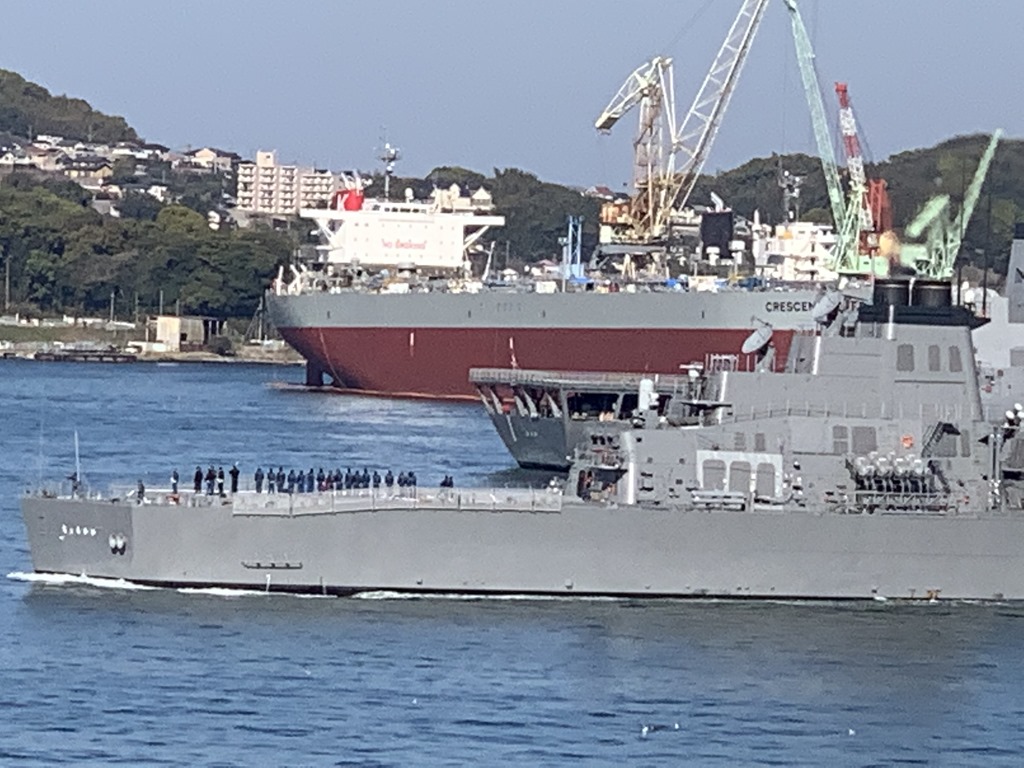
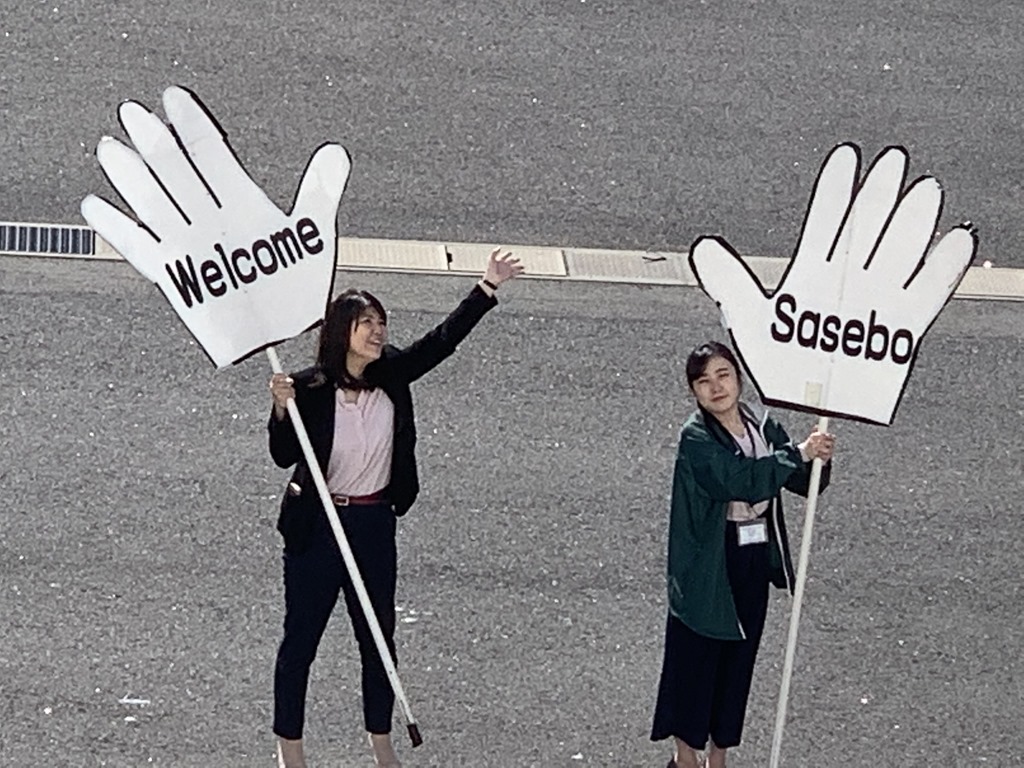
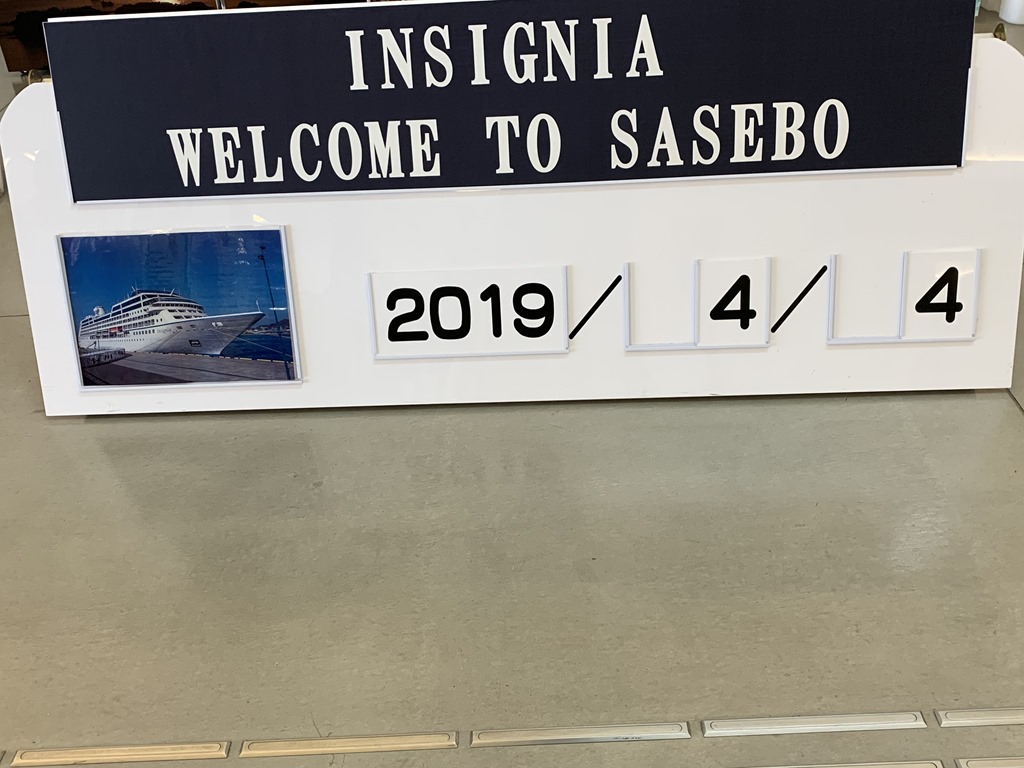
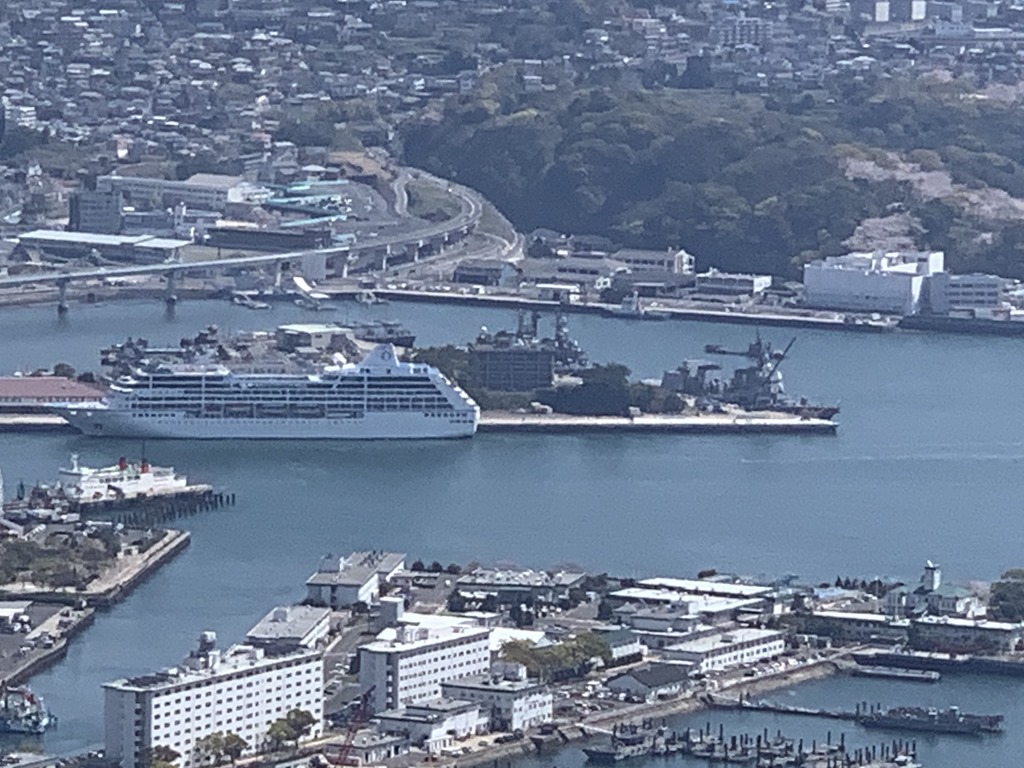
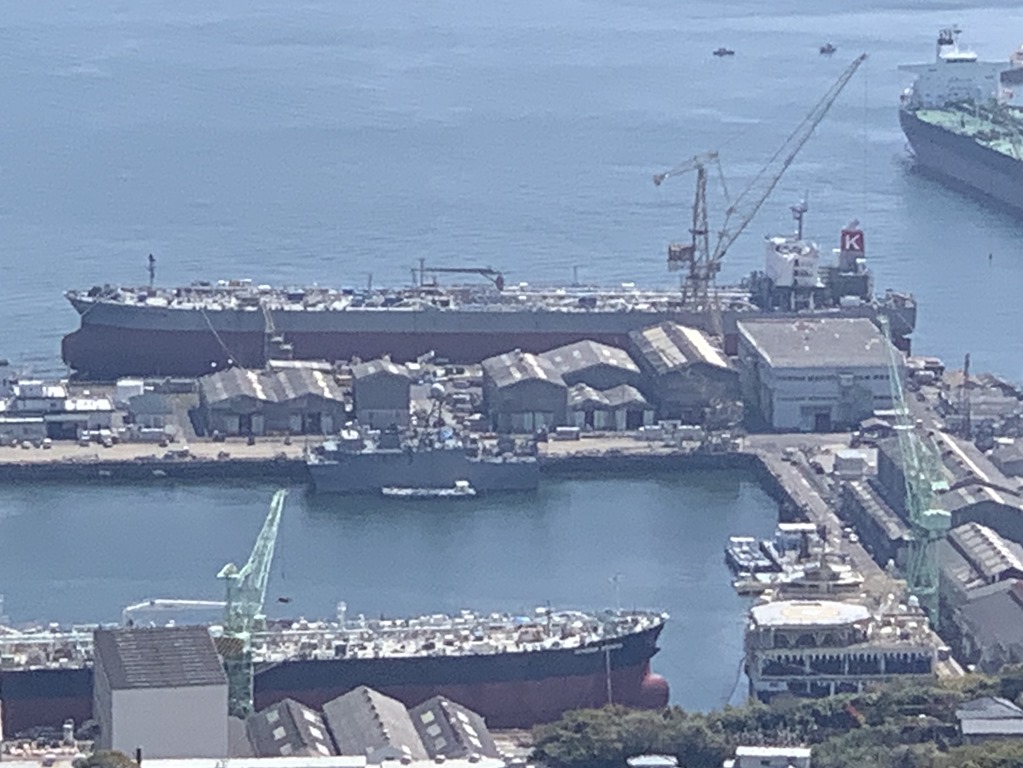
 Here are some shots of our sail in and arrival this morning. This is a big naval port – 80% of the port is a US Navy base and there is a Japanese base tool  Note the sailors on the deck of the ship.  We were again welcomed by a band.

IMG_5506IMG_5507IMG_5508IMG_5510IMG_5513IMG_5516IMG_5735IMG_5523IMG_5517IMG_5518IMG_5519IMG_5520

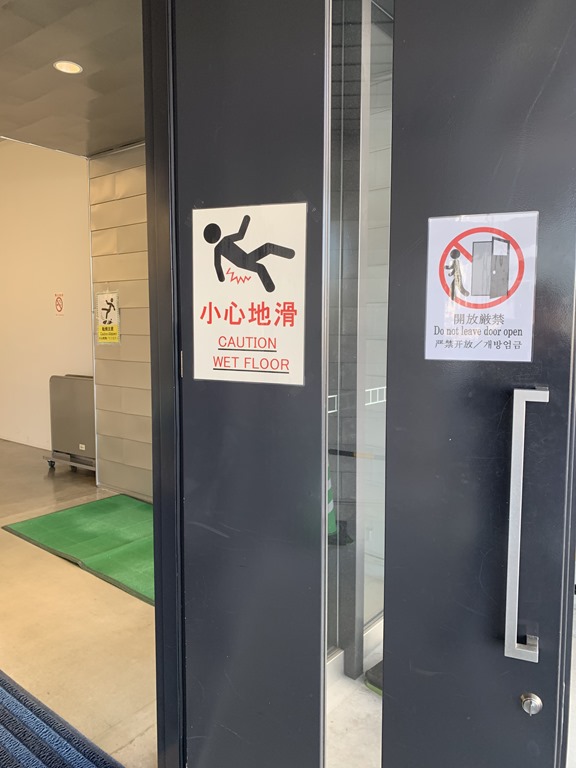
The amusing sign says “do not leave door open” and it is on an open door.

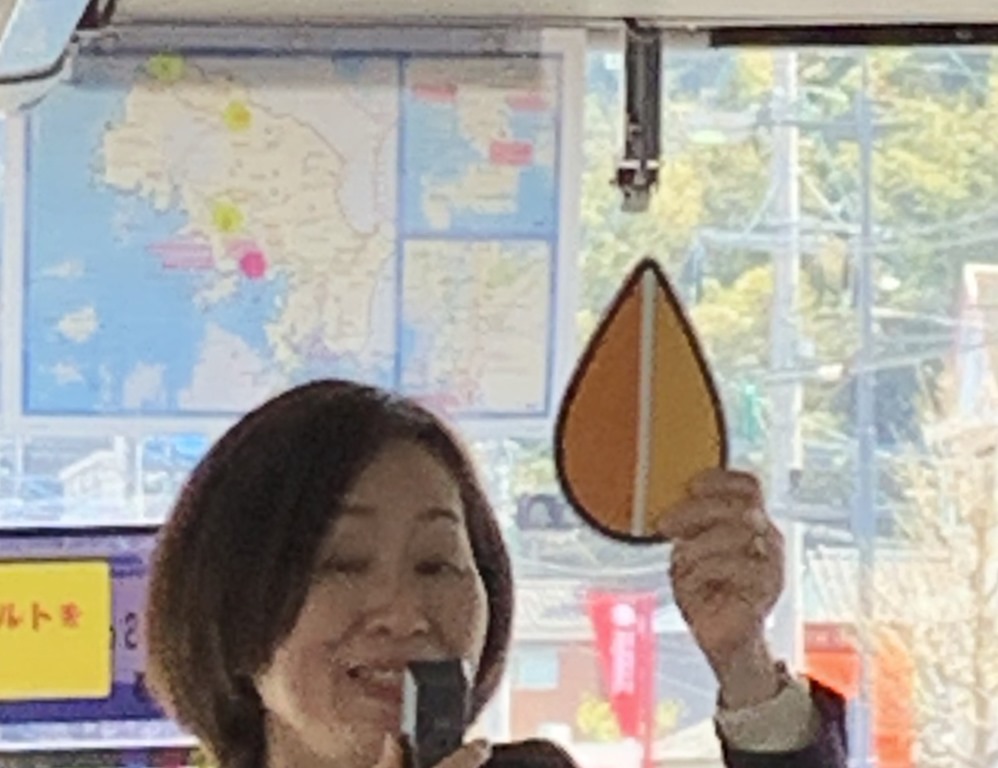
Our guide today was Maijumi.  She was excellent as all of our Japanese guides have been.  She talked about the bowing that is done out of respect and how the angle of the bow indicates the depth of the respect. The bow is 90 degrees for the emperor but just a slight bow as we greet people here.  We do bow as we greet people and they seem to really appreciate the gesture.  She explained the origin of the bow – in feudal days, the idea that you would bow before another person means that you trust that they won’t kill you.  She said it is like the origin of the handshake in the US, it shows that you don’t have a weapon.

She also stressed how much of a problem the aging population is for Japan.  Of the 126 million people in Japan, 28% are over 65 and only 12% under 15.

IMG_5542

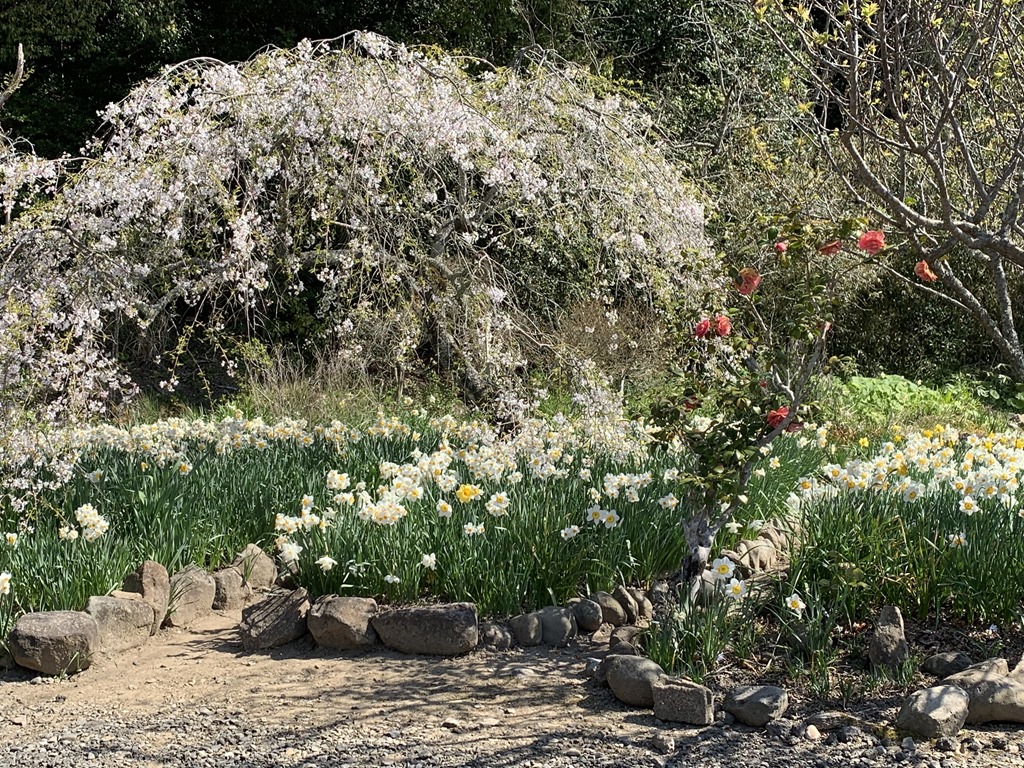
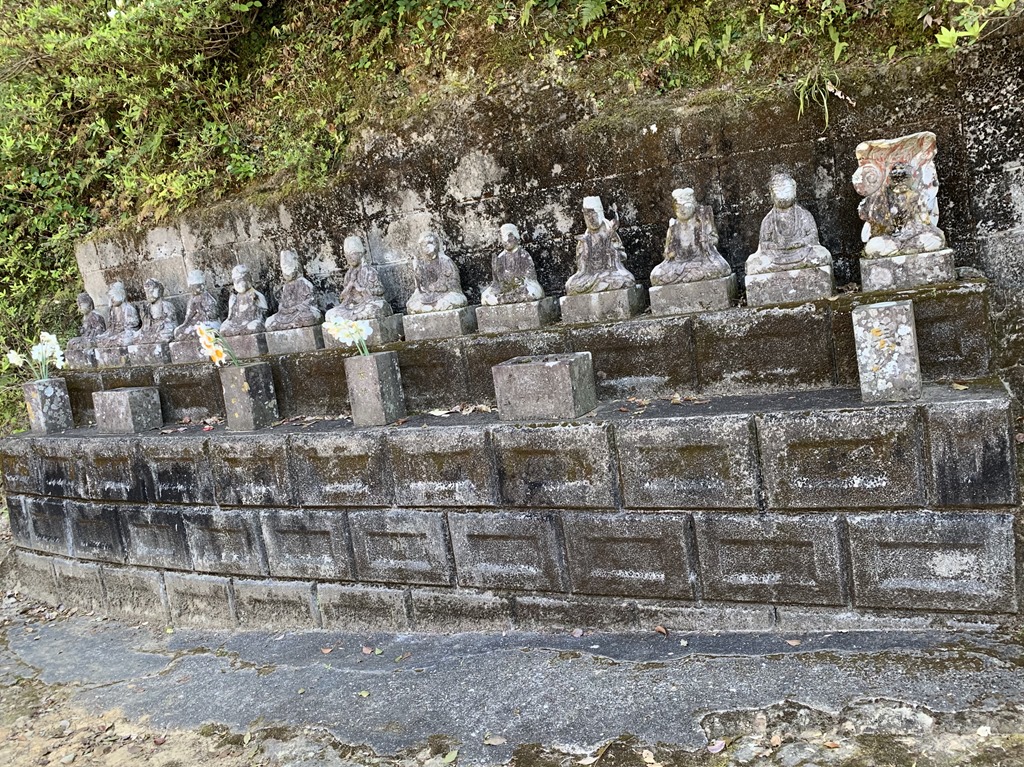
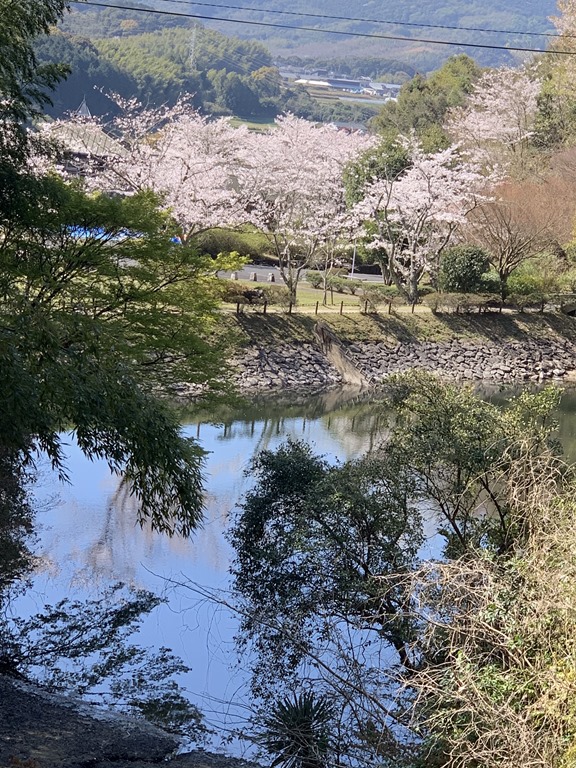
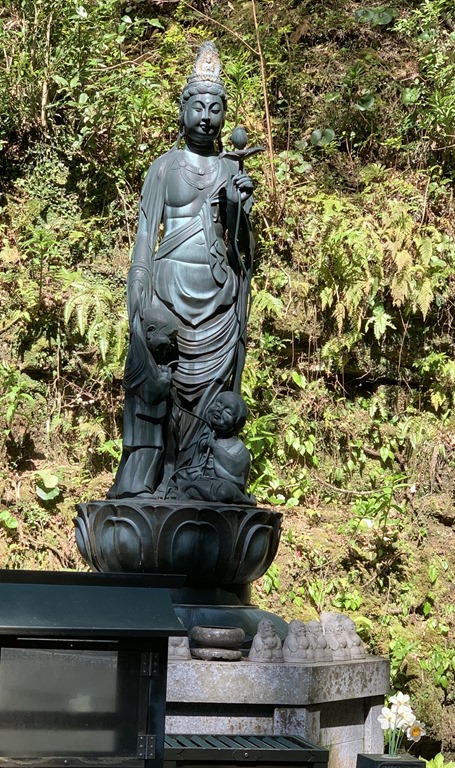
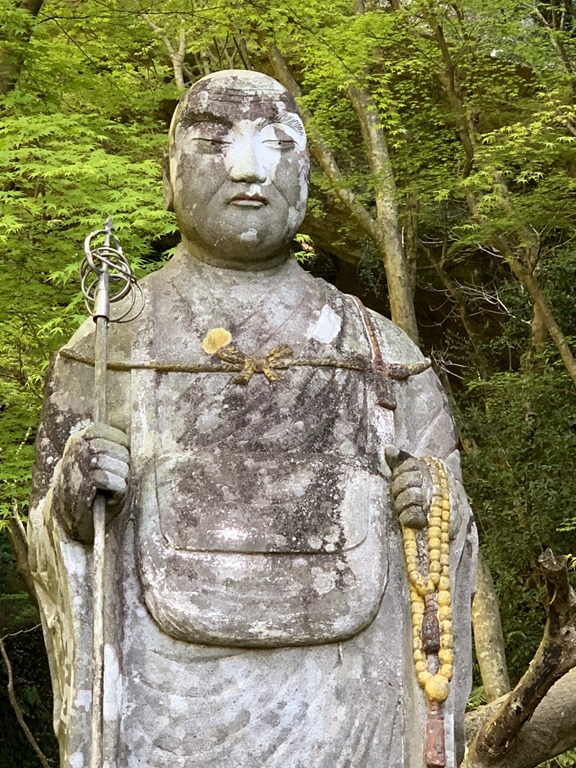
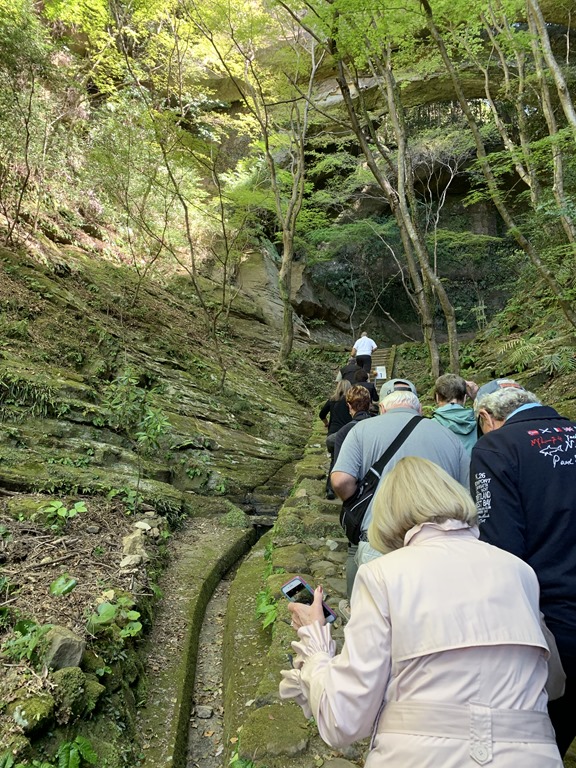
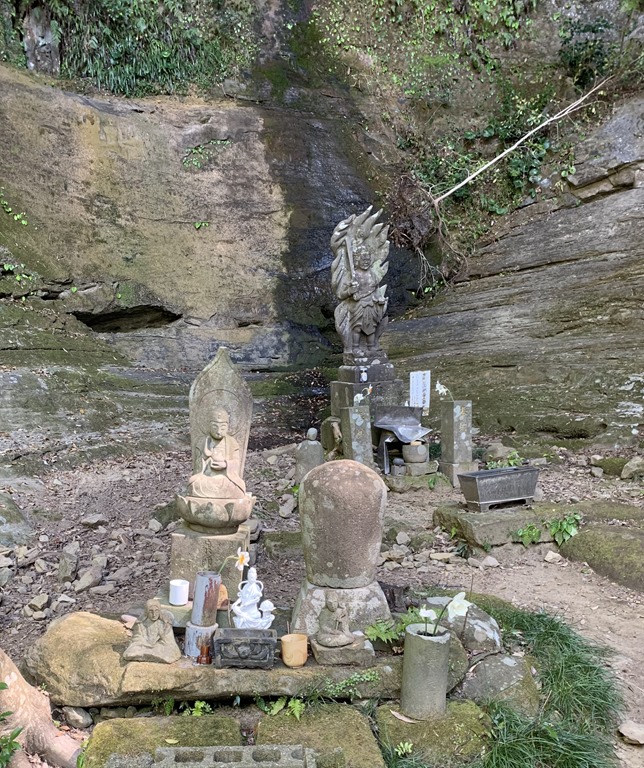
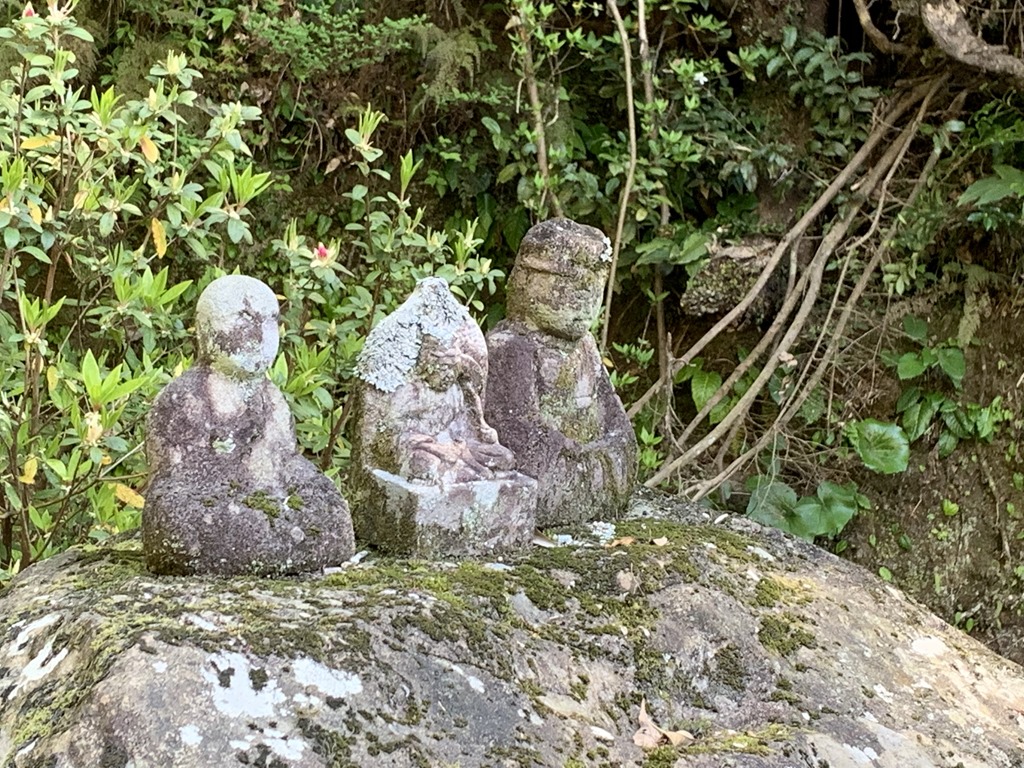
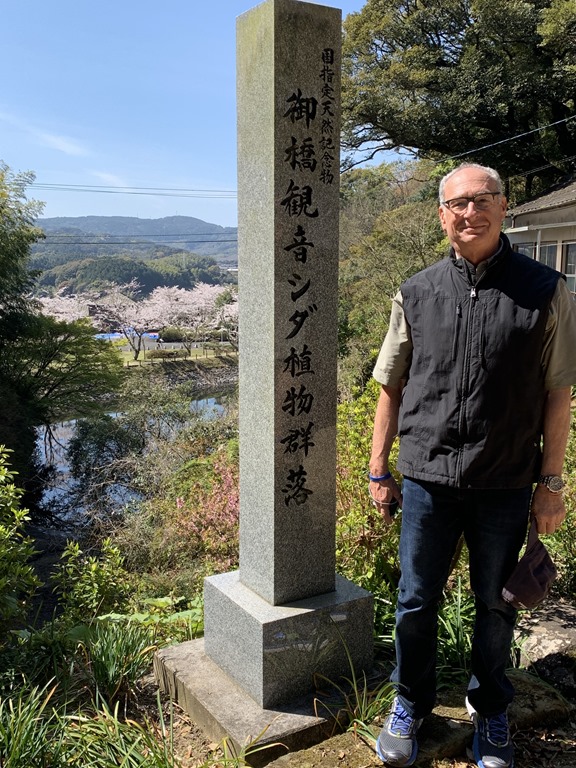
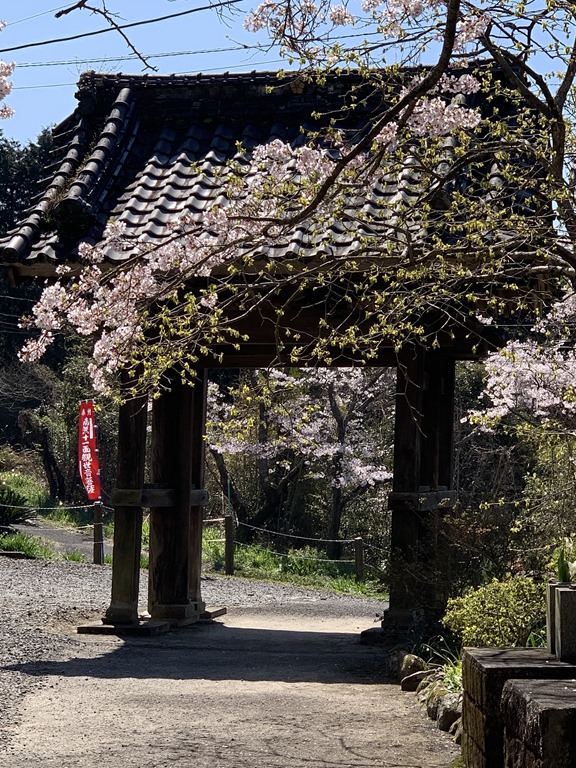
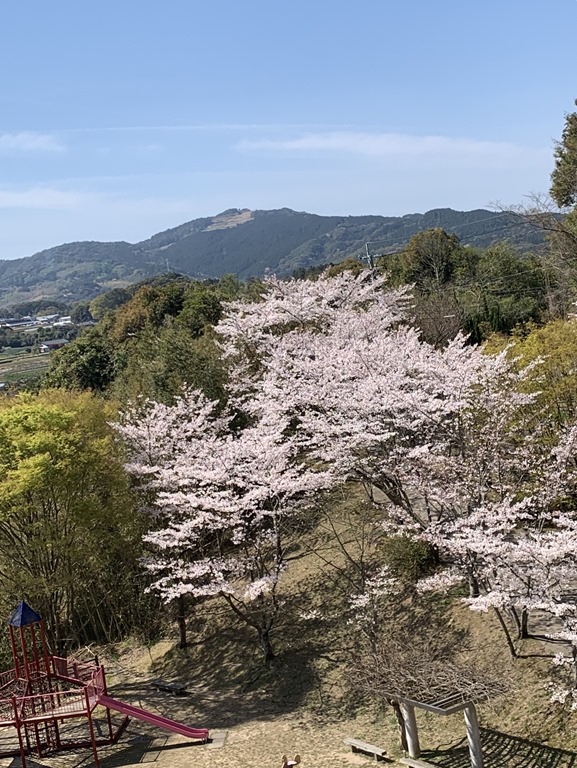
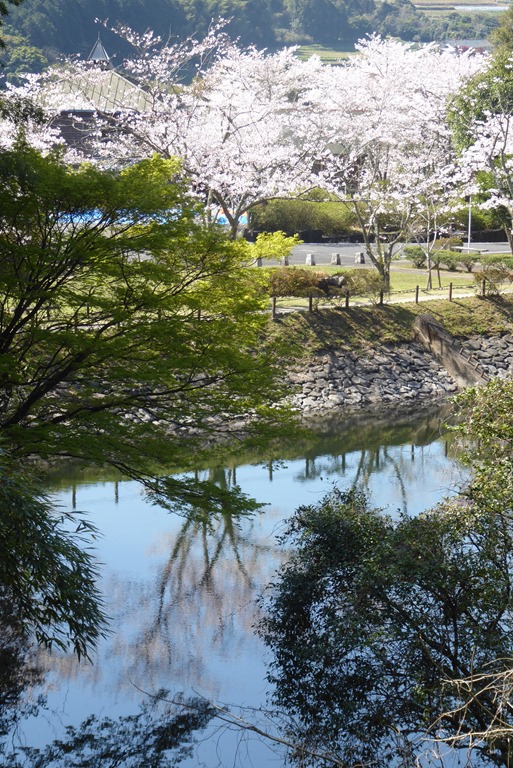
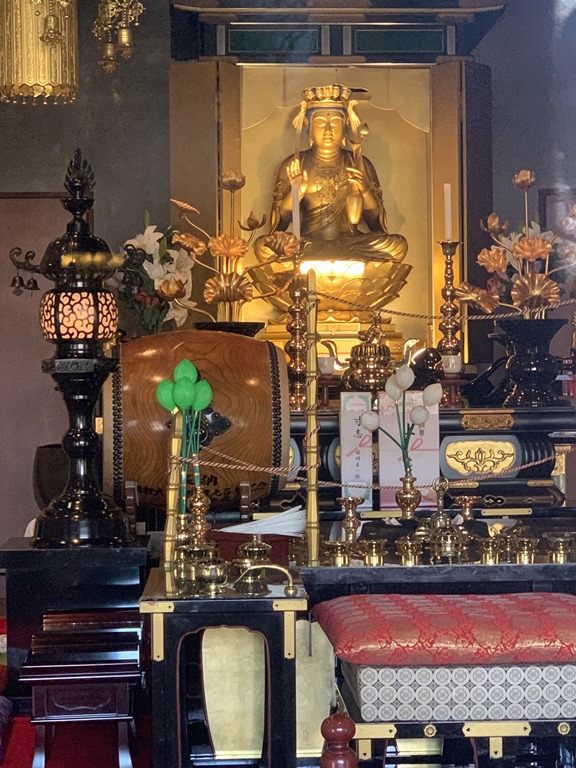
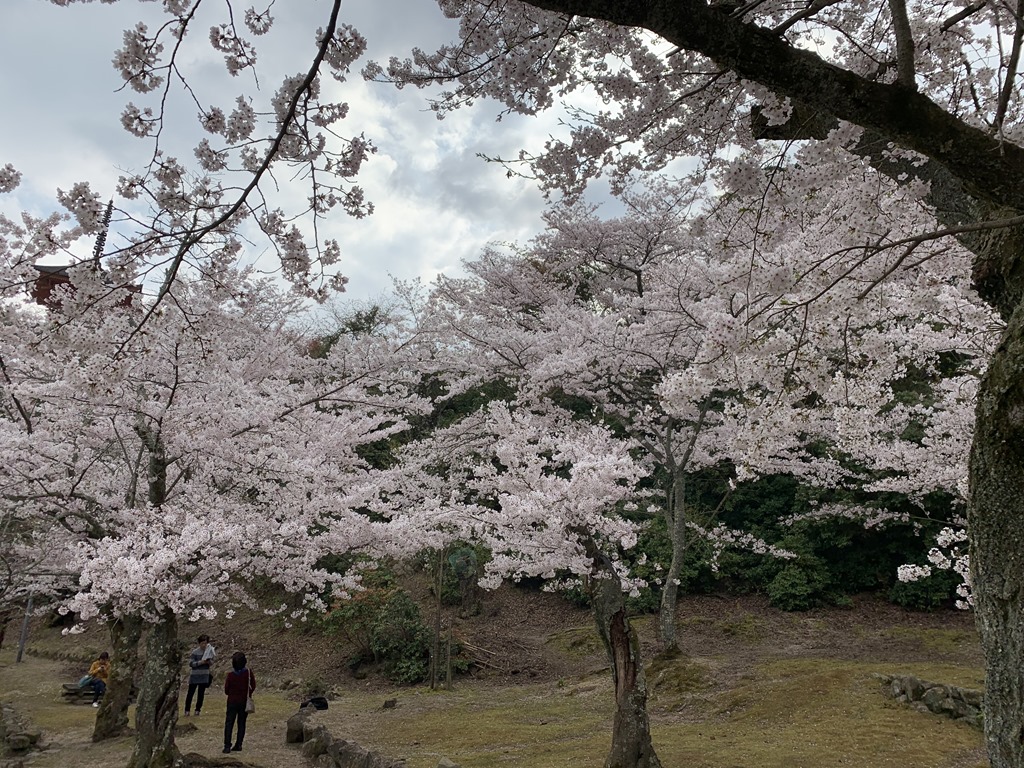
Our first stop was at the Ohashi Kannon, a beautiful Buddhist temple surrounded by forest.  The temple is one of many in Japan dedicated to Kannon, the goddess of mercy and compassion.  According to legend, the priest Gyoki founded Ohashi Kannon  in the 8th century.  The surroundings were really gorgeous, with forest and many cherry trees.  This is the peak week here for the blossoms and we feel so lucky to be in the presence of all this beauty. Daffodils are in full bloom too. We walked up some steep and slippery steps to get to the natural area with many old statues.  So serene and wonderous.


IMG_5528IMG_5530IMG_5532IMG_5533IMG_5535IMG_5536IMG_5537IMG_5539IMG_5540

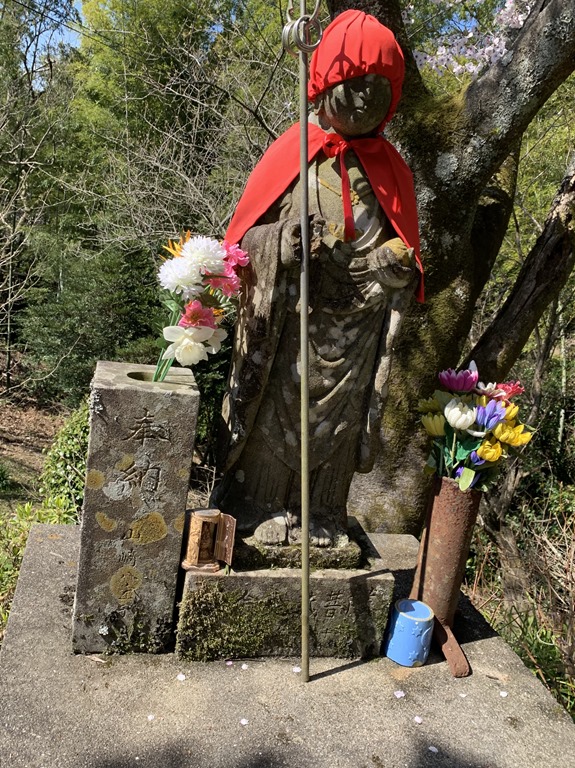
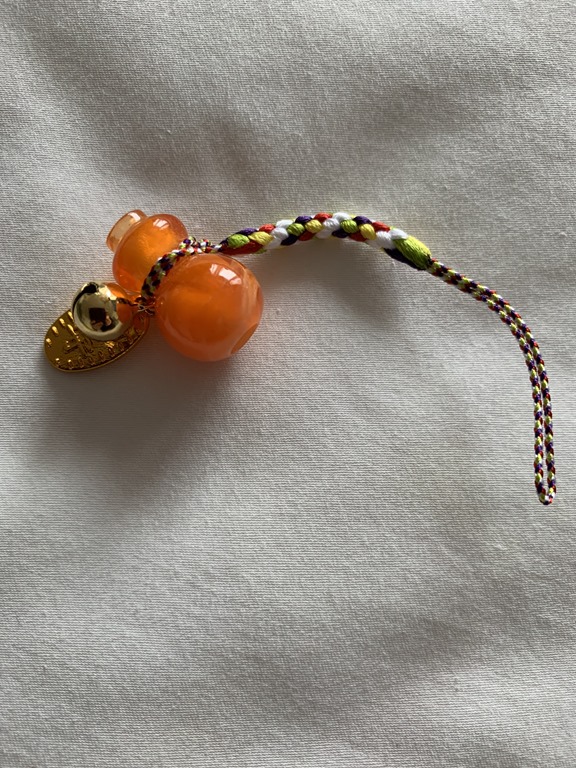
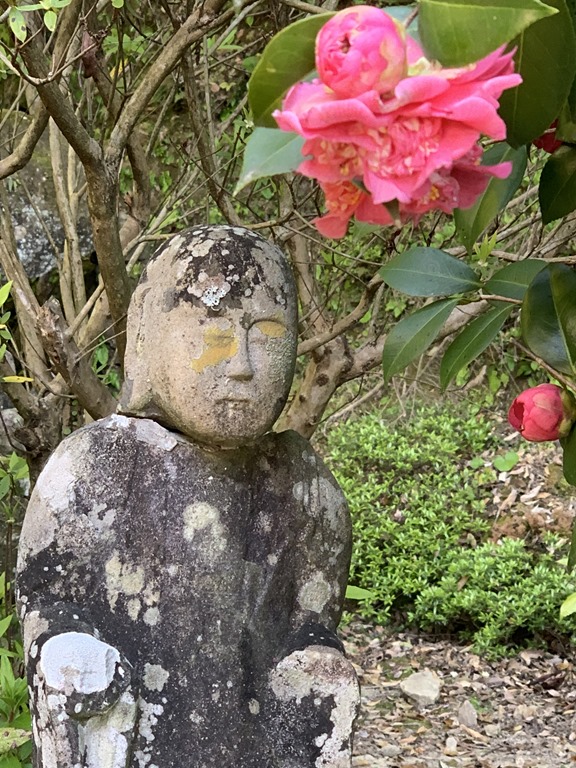
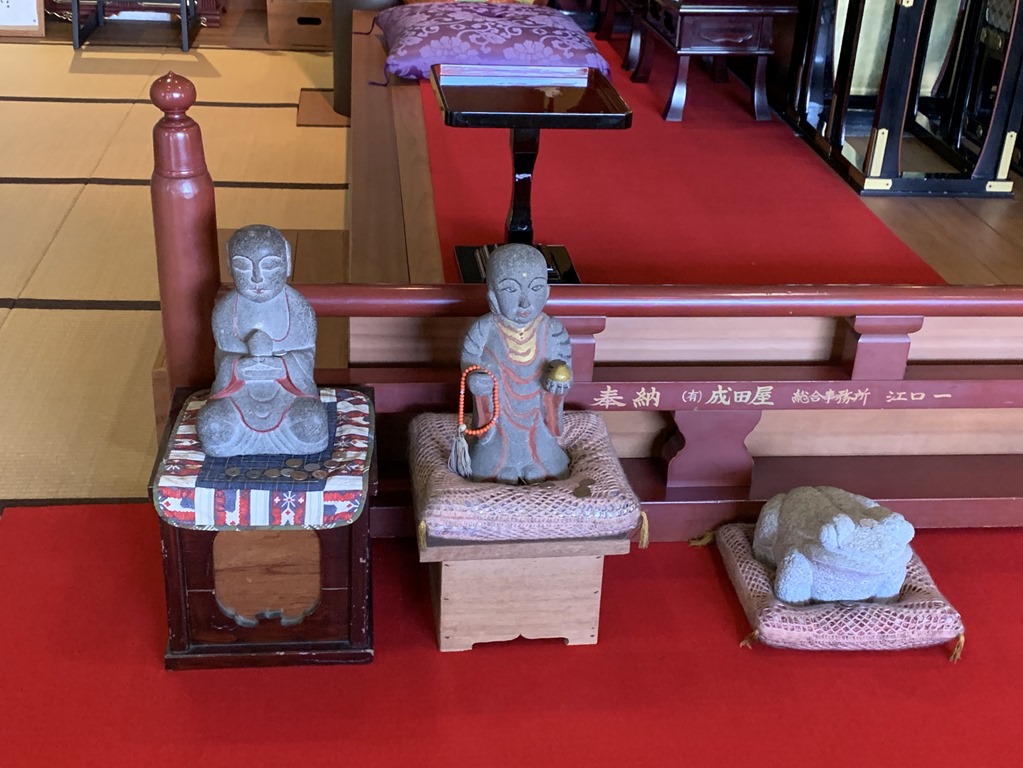
The last statue in this group is said to be about preventing senility. We bought a little trinket with a picture of this statue in it – we can only hope it works!

IMG_5749

The ancient figures in the woodlands are really a sight to see.

IMG_5541IMG_5544IMG_5545IMG_5546IMG_5547IMG_5548IMG_5549IMG_5551IMG_5744IMG_5747IMG_5559IMG_5561IMG_5564IMG_5565IMG_5566IMG_5568IMG_5569IMG_5570IMG_5572IMG_5584IMG_5585IMG_5745

We could take pictures in this temple so here are a few of the inside of the building.

IMG_5576IMG_5579IMG_5580IMG_5581IMG_5582IMG_5583

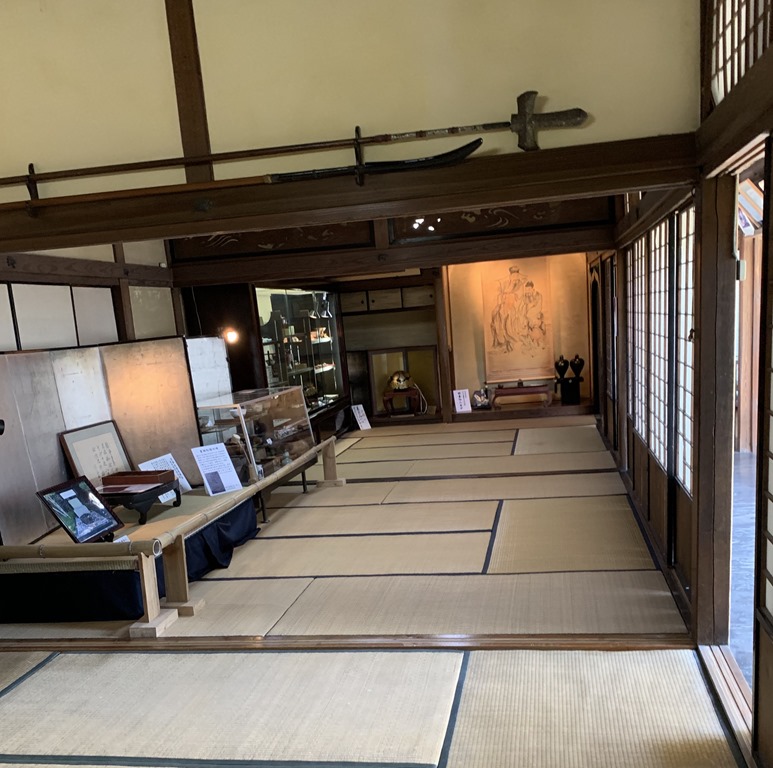
After leaving this area, we went to the Yamashita house, a traditional Japanese style guest house constructed in the 19th century.  It was constructed without a single nail! The result is that the house has stood the test of time as a testament to the highly skilled craftsmen that built it.  We were taken on a tour through the house by the owner of both the house and the sake brewery next door. More on the brewery later.  Maijima needed to translate as he spoke only Japanese.

Back in the days of the feudal lords, the Shogun wanted to be sure to keep power, so the lords were commanded to return to Edo (now Tokyo) to pay homage to the central ruler. This journey took 40 days of walking.  They then needed to live there for 1 year before returning.  This house that we visited served as a guest house along the way.

IMG_5605IMG_5606IMG_5614IMG_5619IMG_5620

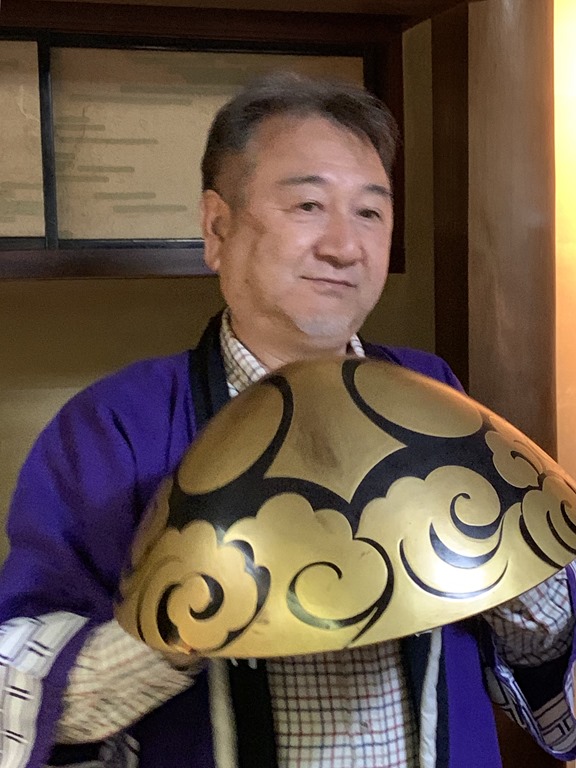
The hat is a metal rain hat!

IMG_5623IMG_5624IMG_5626IMG_5627IMG_5741

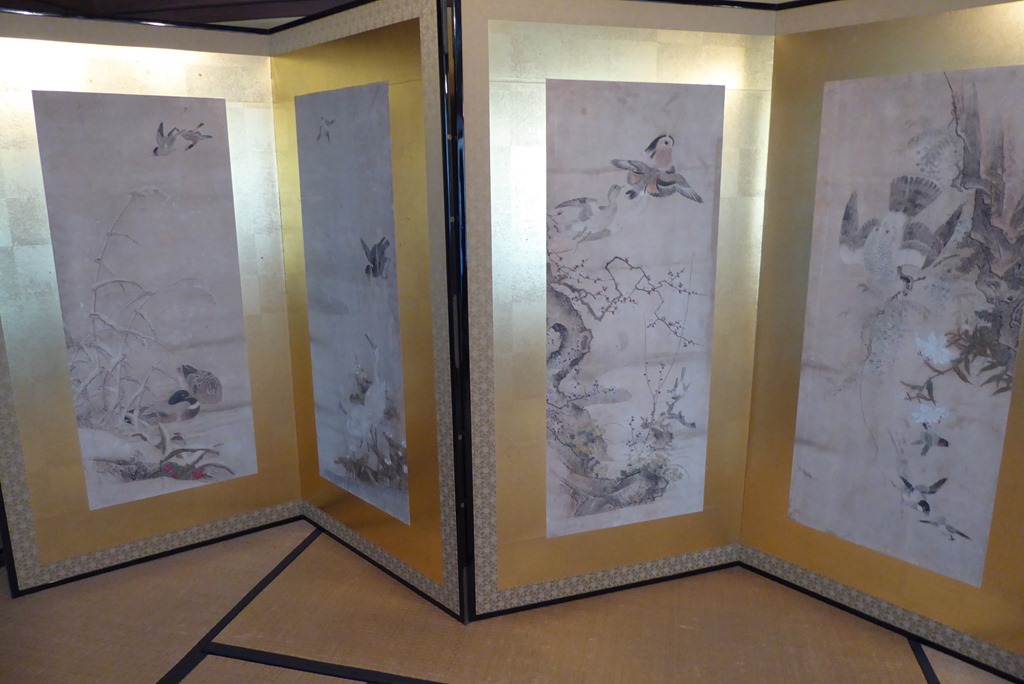
This folding divider depicts the four seasons in intricate drawings.

There was a small but beautiful garden where tea ceremonies are held.

IMG_5601IMG_5604IMG_5632IMG_5634IMG_5636IMG_5642IMG_5643IMG_5738IMG_5740

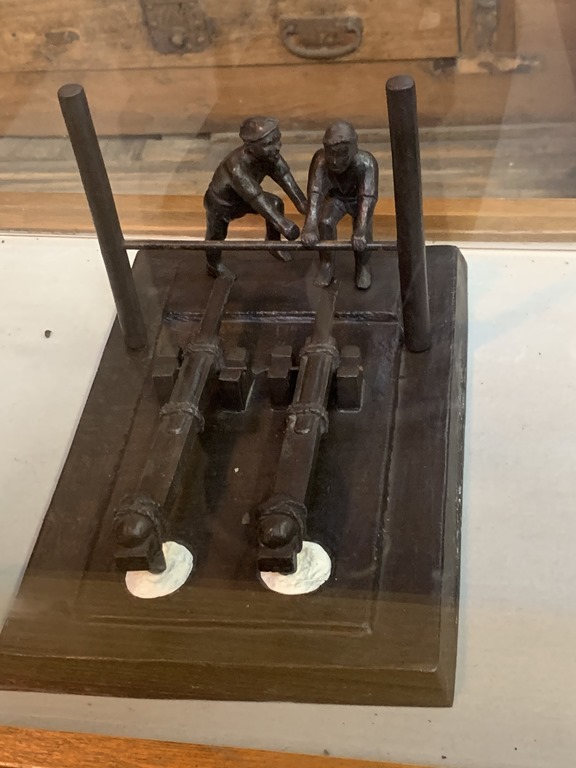
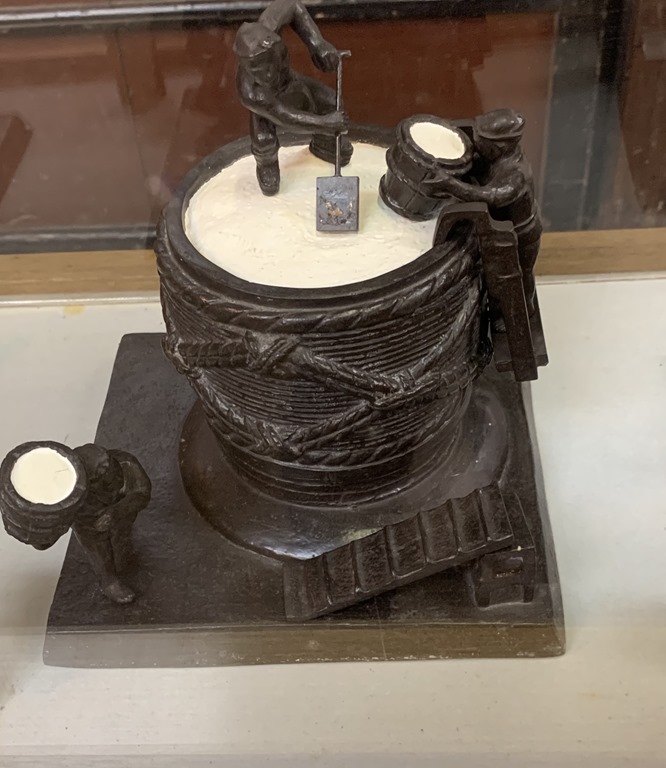
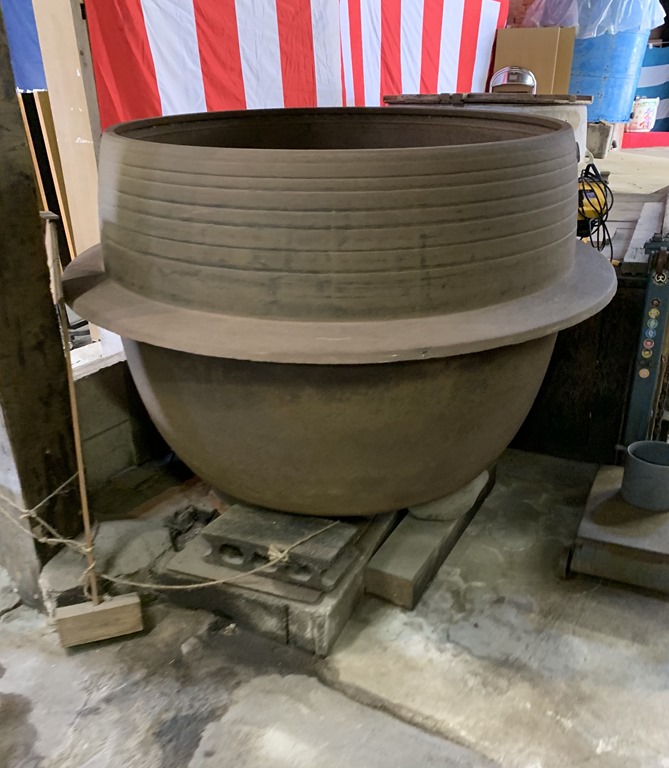
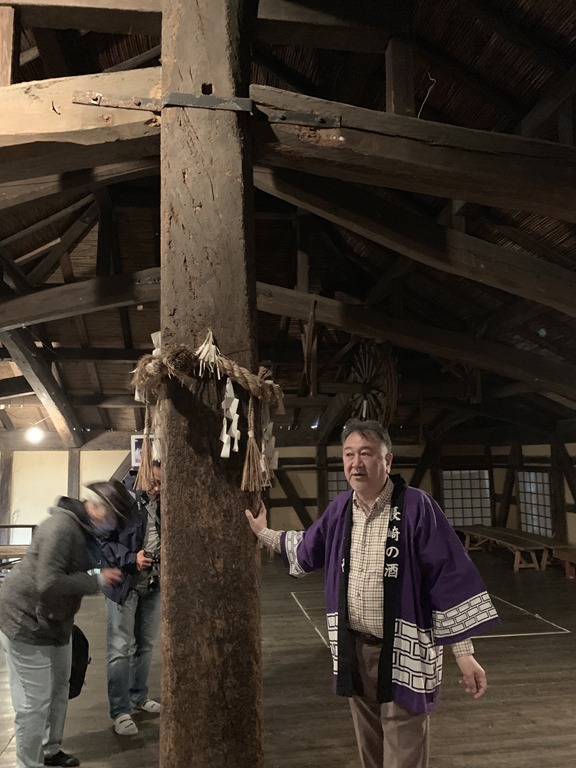
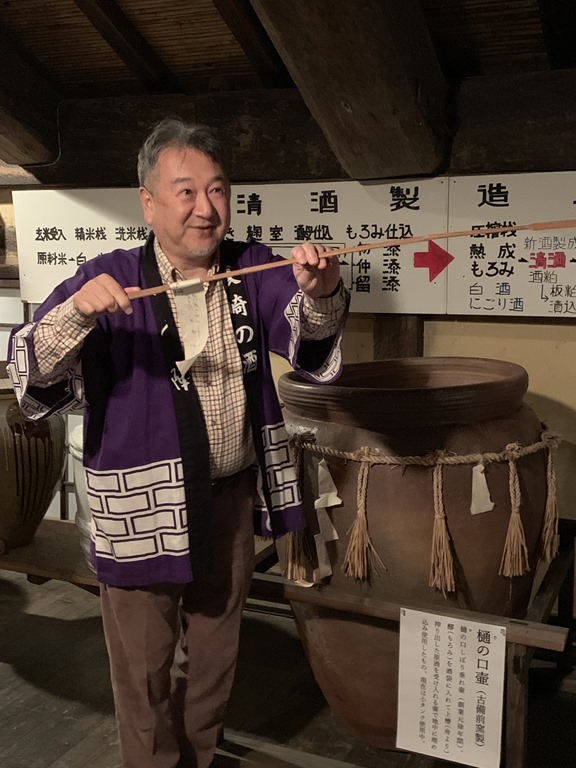
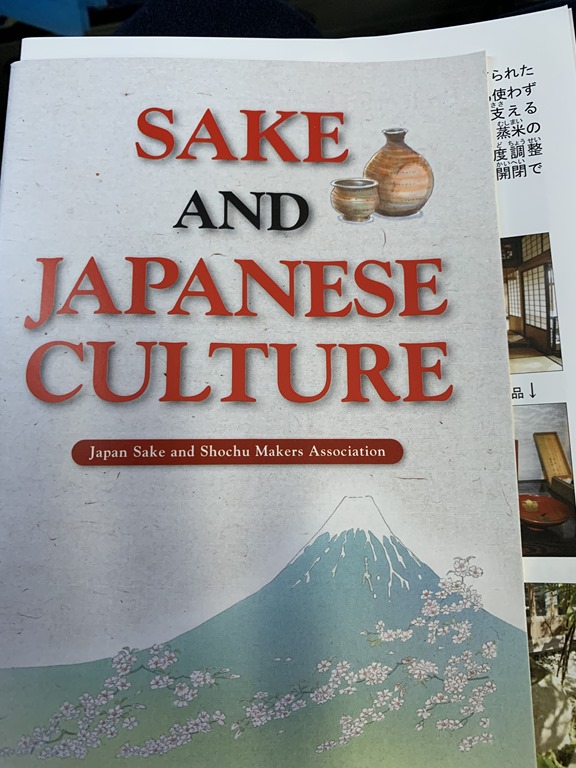
The sake shop was across the street and we enjoyed a tour of the brewery (which has only 10 employees) before going across for a tasting.  The round piece hanging from the ceiling was the sign that the sake was ready in early years.  Most people couldn’t read then so the branches started out green (early sake) and when it turned brown the more fermented sake was available! Sake is made from rice, and we heard about the whole process during this visit. We also got a brochure explaining it all.

IMG_5644IMG_5645IMG_5647IMG_5648IMG_5650IMG_5651IMG_5652IMG_5653IMG_5654IMG_5655IMG_5656IMG_5657IMG_5660IMG_5666IMG_5667IMG_5670IMG_5671IMG_5672IMG_5673IMG_5675

The back of the jacket is the crest of the family that owns the brewery.

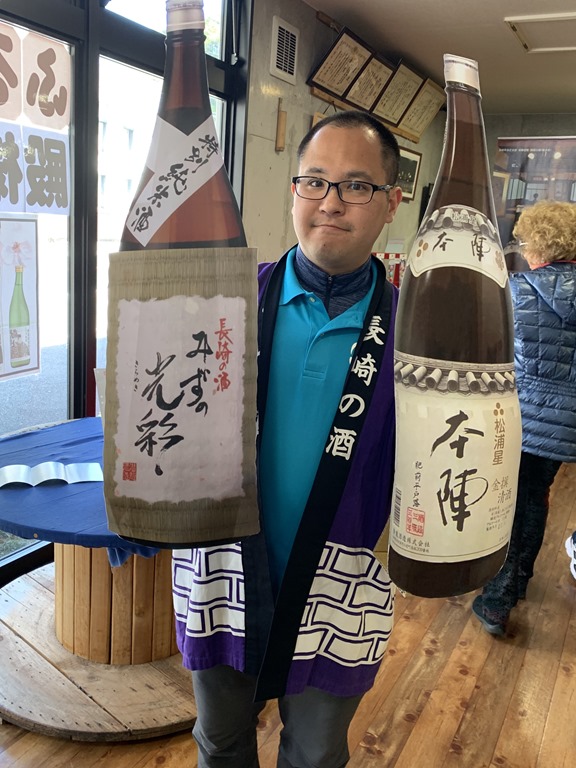
We enjoyed a tasting and bought a small container to take home.

IMG_5677IMG_5678IMG_5681IMG_5682IMG_5683IMG_5684

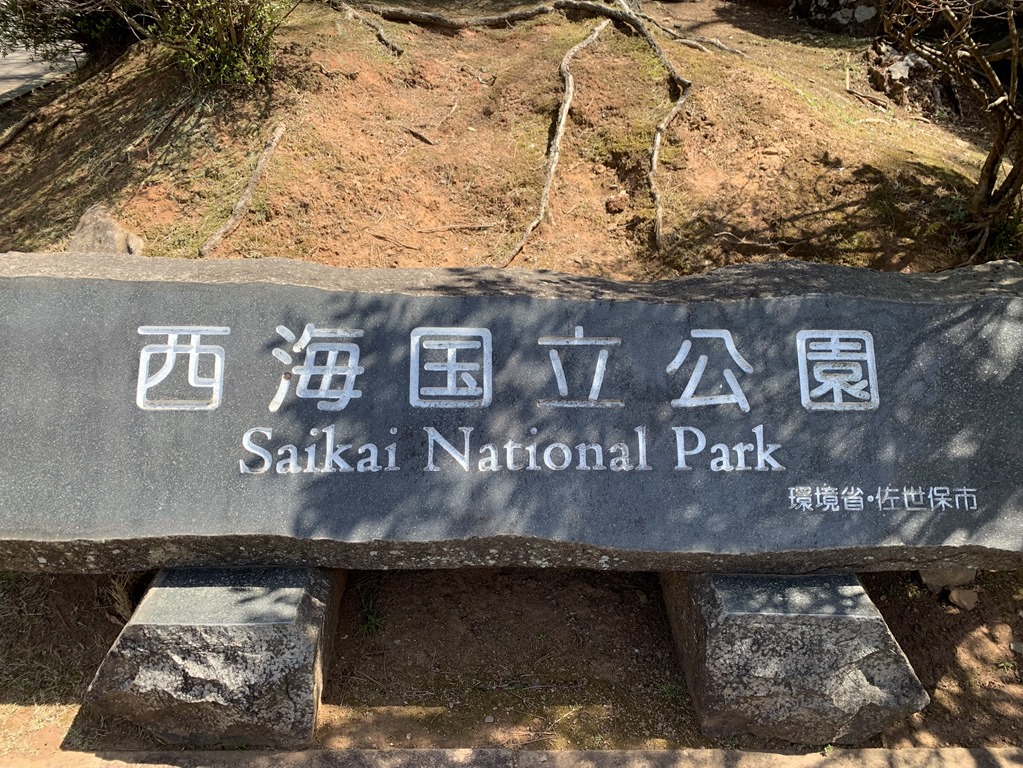
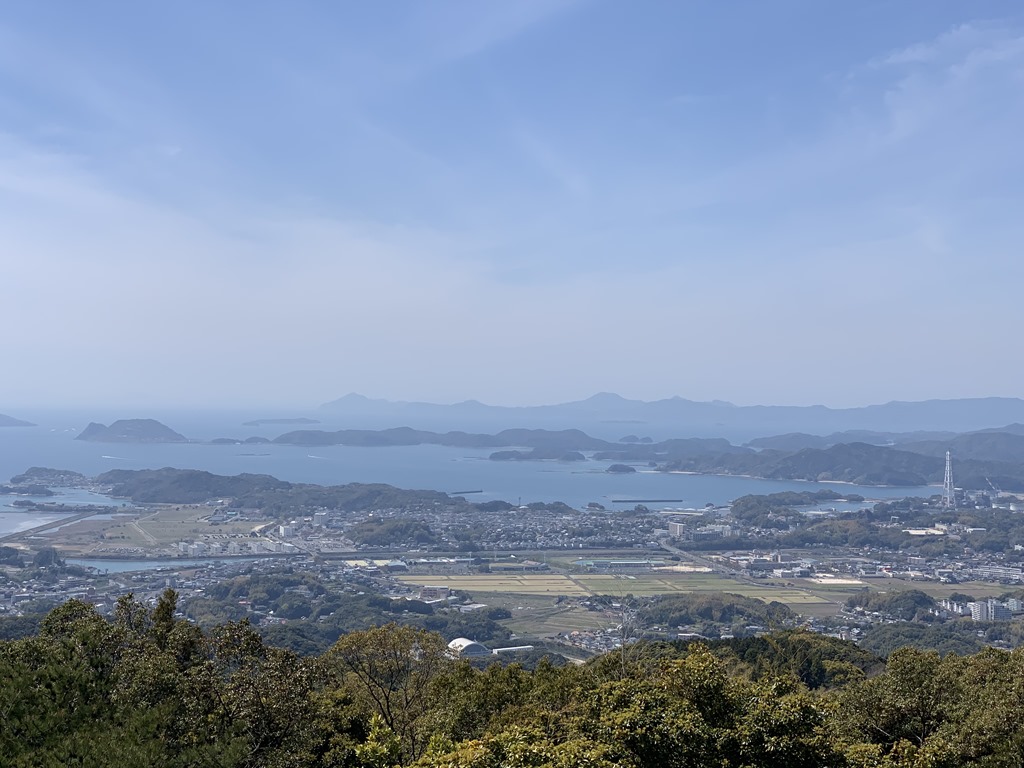
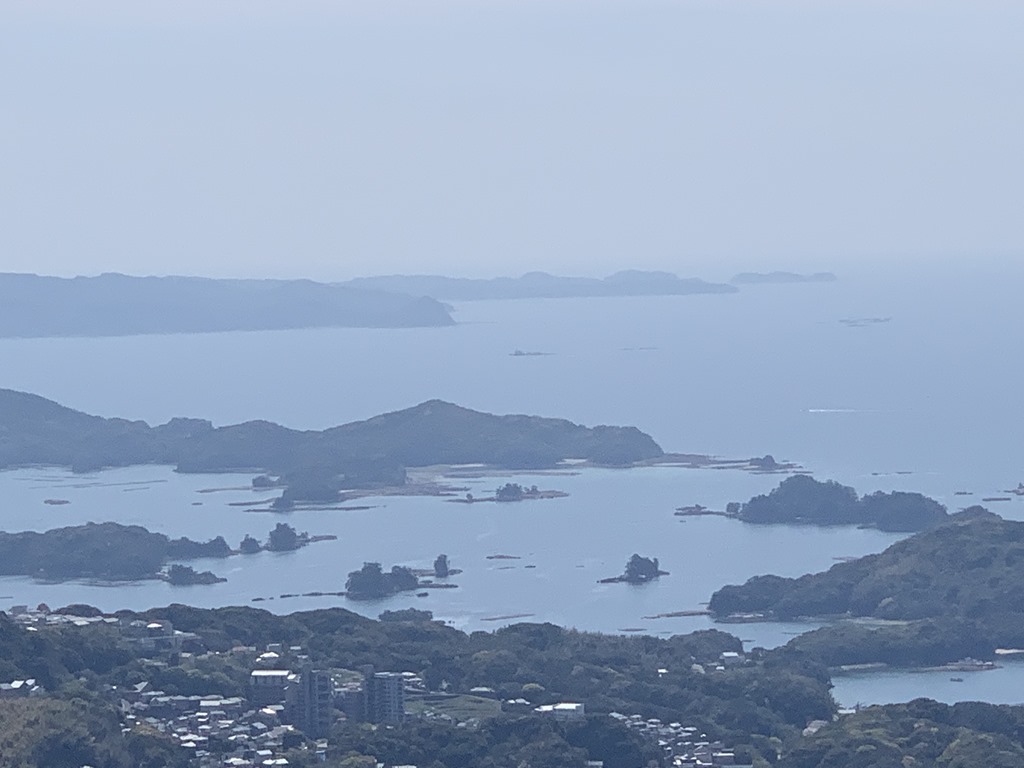
Our last stop on the tour was the Funakoshi Lookout where we had almost an hour to stroll around the grounds and observe the beautiful Kujuku islands.  Although Kujuku means 99, there are actually more than 200 islands in the group, most of them uninhabited because the area has been designated a national park. The islands are so undeveloped and photogenic that they were shown in the opening scenes of the movie The Last Samurai which was set in 1876.

IMG_5698IMG_5699IMG_5700IMG_5702IMG_5703IMG_5704IMG_5709IMG_5711IMG_5714IMG_5716IMG_5717

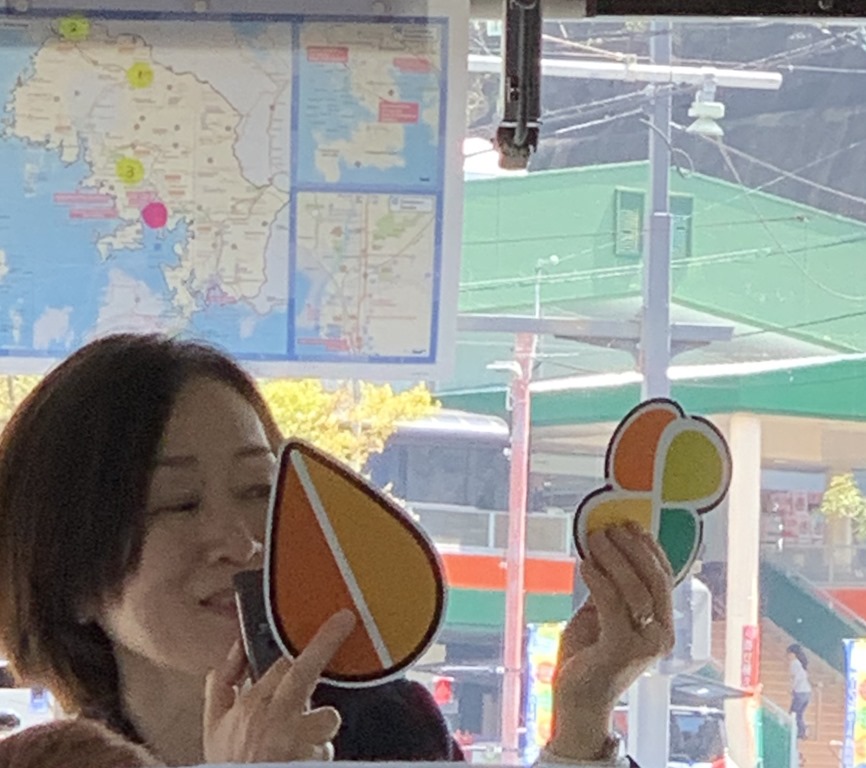
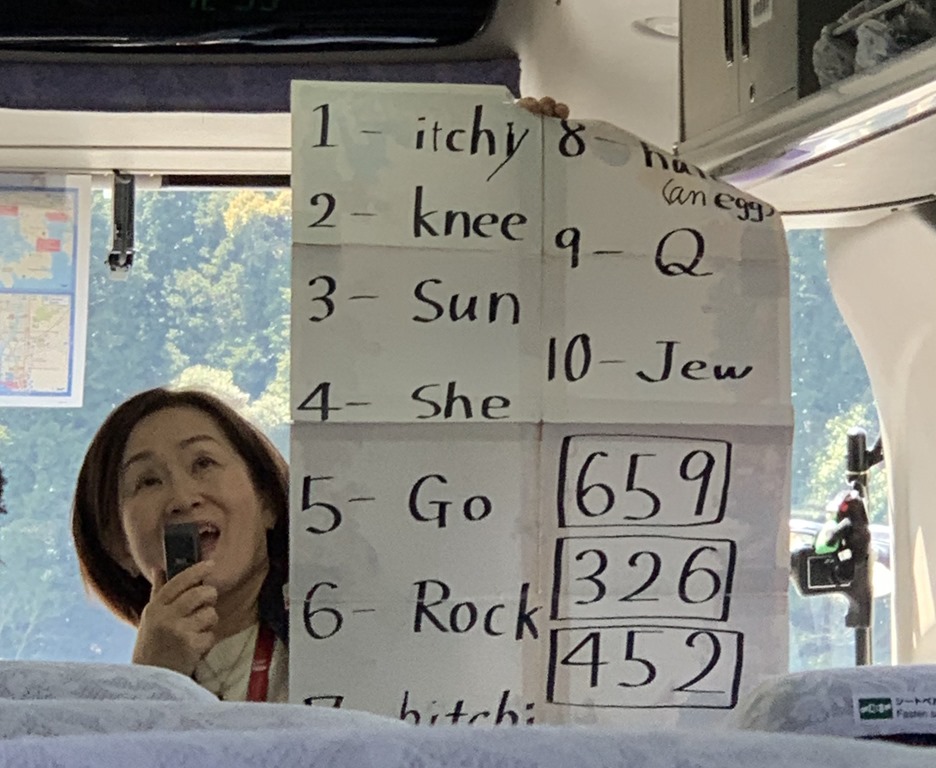
On our way back to the ship, Maijumi taught us some Japanese words and also how to count in Japanese!  She also gave us each one of the green tea Kit Kat bars.  She told us that they are very popular here because Kitto Katto means “surely you will win”.  So lots of students eat them before exams.

IMG_5697IMG_5685IMG_5686IMG_5687IMG_5689

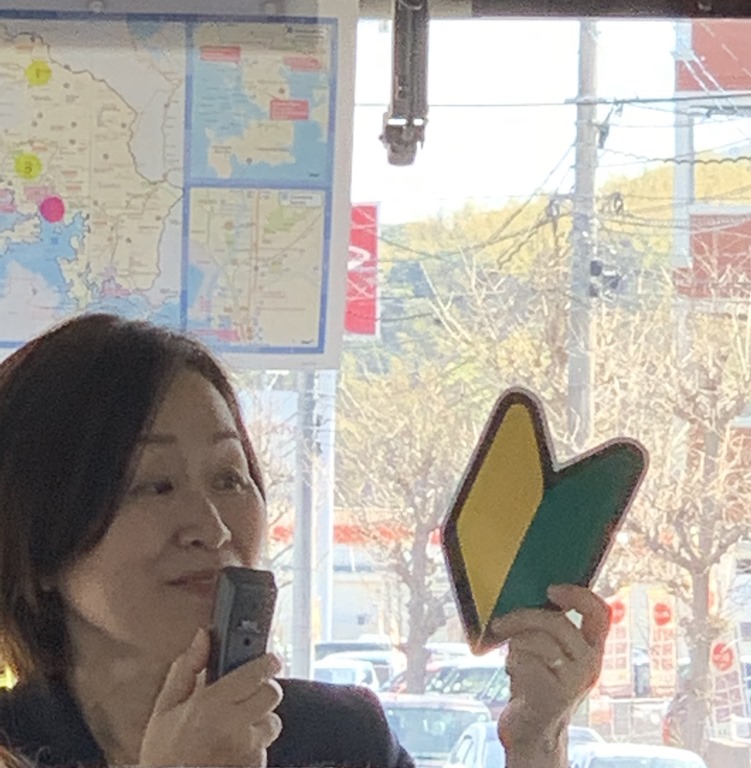
She also showed us the symbols that have to be on cars.  The first is for a student driver and the second is for a senior citizen.

IMG_5693IMG_5694

They have a new one for seniors now.

IMG_5697

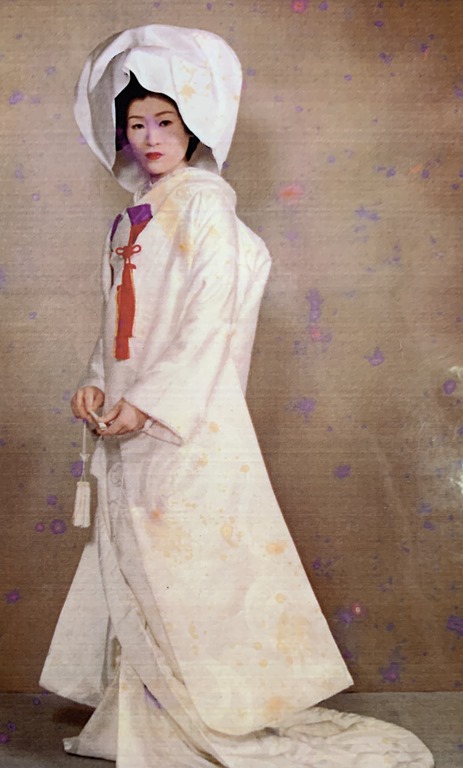
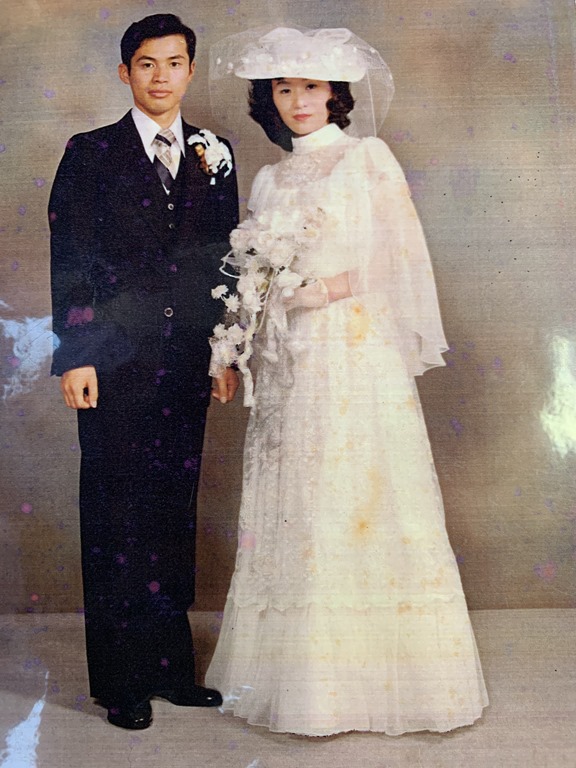
She showed us pictures of her wedding, too.

IMG_5720IMG_5721IMG_5722

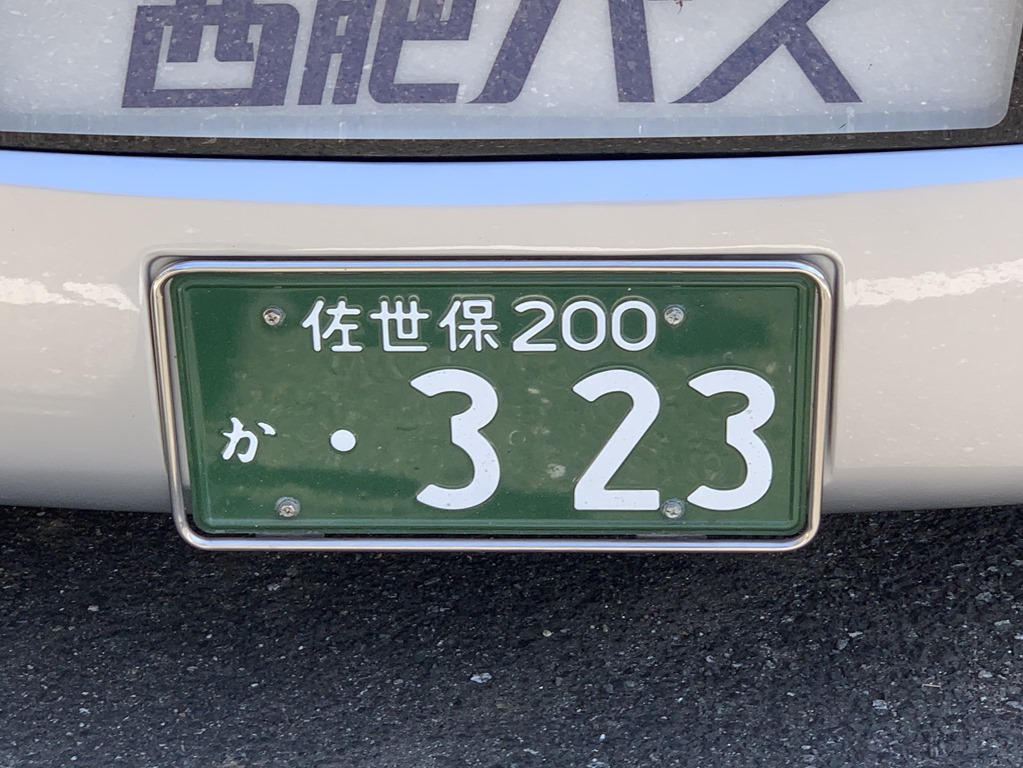
The license plates here are interesting.

White is for cars less than 600 cc, they pay only 7000 yen/year tax.  The yellow if for larger cars and they can pay 36-58,000 yen/year ( 322-519 US).  The green is for commercial vehicles like buses and taxis.

IMG_5596IMG_5597IMG_5598

We returned to the port and headed out to walk to the shopping area. The specialty here is the Sasebo Burger.  It’s a beef burger topped with bacon, lettuce, tomatoes and a sunny side up egg.  It was created in the 1950s when the local eateries tried to catered to the appetites of American servicemen.  It is very popular and people line up to taste them.  The egg is a stopper for me, though! I had an ice cream cone for lunch.

IMG_5723IMG_5726IMG_5727IMG_5728IMG_5729IMG_5733IMG_5734

But we had a good time, I found a couple of items that I wanted to buy and we were back in  time to line up for immigration before departing Japan.  Looking forward to our next visit.


Posted in April, Asia, Excursions, Food, World Cruise 3 | Leave a comment

Sasebo, Japan

Well, here we are in our last Japanese port.  Sasebo is the second largest city in the Nagasaki prefecture, Nagasaki is the largest. Although it was spared an atomic bomb, Sasebo was one of the original 17 possible targets and suffered heavy damage during World War II. 

 Here are some shots of our sail in and arrival this morning. This is a big naval port – 80% of the port is a US Navy base and there is a Japanese base tool  Note the sailors on the deck of the ship.  We were again welcomed by a band.

IMG_5506IMG_5507IMG_5508IMG_5510IMG_5513IMG_5516IMG_5735IMG_5523IMG_5517IMG_5518IMG_5519IMG_5520

The amusing sign says “do not leave door open” and it is on an open door.

Our guide today was Maijumi.  She was excellent as all of our Japanese guides have been.  She talked about the bowing that is done out of respect and how the angle of the bow indicates the depth of the respect. The bow is 90 degrees for the emperor but just a slight bow as we greet people here.  We do bow as we greet people and they seem to really appreciate the gesture.  She explained the origin of the bow – in feudal days, the idea that you would bow before another person means that you trust that they won’t kill you.  She said it is like the origin of the handshake in the US, it shows that you don’t have a weapon.

She also stressed how much of a problem the aging population is for Japan.  Of the 126 million people in Japan, 28% are over 65 and only 12% under 15.

IMG_5542

Our first stop was at the Ohashi Kannon, a beautiful Buddhist temple surrounded by forest.  The temple is one of many in Japan dedicated to Kannon, the goddess of mercy and compassion.  According to legend, the priest Gyoki founded Ohashi Kannon  in the 8th century.  The surroundings were really gorgeous, with forest and many cherry trees.  This is the peak week here for the blossoms and we feel so lucky to be in the presence of all this beauty. Daffodils are in full bloom too. We walked up some steep and slippery steps to get to the natural area with many old statues.  So serene and wonderous.


IMG_5528IMG_5530IMG_5532IMG_5533IMG_5535IMG_5536IMG_5537IMG_5539IMG_5540

The last statue in this group is said to be about preventing senility. We bought a little trinket with a picture of this statue in it – we can only hope it works!

IMG_5749

The ancient figures in the woodlands are really a sight to see.

IMG_5541IMG_5544IMG_5545IMG_5546IMG_5547IMG_5548IMG_5549IMG_5551IMG_5744IMG_5747IMG_5559IMG_5561IMG_5564IMG_5565IMG_5566IMG_5568IMG_5569IMG_5570IMG_5572IMG_5584IMG_5585IMG_5745

We could take pictures in this temple so here are a few of the inside of the building.

IMG_5576IMG_5579IMG_5580IMG_5581IMG_5582IMG_5583

After leaving this area, we went to the Yamashita house, a traditional Japanese style guest house constructed in the 19th century.  It was constructed without a single nail! The result is that the house has stood the test of time as a testament to the highly skilled craftsmen that built it.  We were taken on a tour through the house by the owner of both the house and the sake brewery next door. More on the brewery later.  Maijima needed to translate as he spoke only Japanese.

Back in the days of the feudal lords, the Shogun wanted to be sure to keep power, so the lords were commanded to return to Edo (now Tokyo) to pay homage to the central ruler. This journey took 40 days of walking.  They then needed to live there for 1 year before returning.  This house that we visited served as a guest house along the way.

IMG_5605IMG_5606IMG_5614IMG_5619IMG_5620

The hat is a metal rain hat!

IMG_5623IMG_5624IMG_5626IMG_5627IMG_5741

This folding divider depicts the four seasons in intricate drawings.

There was a small but beautiful garden where tea ceremonies are held.

IMG_5601IMG_5604IMG_5632IMG_5634IMG_5636IMG_5642IMG_5643IMG_5738IMG_5740

The sake shop was across the street and we enjoyed a tour of the brewery (which has only 10 employees) before going across for a tasting.  The round piece hanging from the ceiling was the sign that the sake was ready in early years.  Most people couldn’t read then so the branches started out green (early sake) and when it turned brown the more fermented sake was available! Sake is made from rice, and we heard about the whole process during this visit. We also got a brochure explaining it all.

IMG_5644IMG_5645IMG_5647IMG_5648IMG_5650IMG_5651IMG_5652IMG_5653IMG_5654IMG_5655IMG_5656IMG_5657IMG_5660IMG_5666IMG_5667IMG_5670IMG_5671IMG_5672IMG_5673IMG_5675

The back of the jacket is the crest of the family that owns the brewery.

We enjoyed a tasting and bought a small container to take home.

IMG_5677IMG_5678IMG_5681IMG_5682IMG_5683IMG_5684

Our last stop on the tour was the Funakoshi Lookout where we had almost an hour to stroll around the grounds and observe the beautiful Kujuku islands.  Although Kujuku means 99, there are actually more than 200 islands in the group, most of them uninhabited because the area has been designated a national park. The islands are so undeveloped and photogenic that they were shown in the opening scenes of the movie The Last Samurai which was set in 1876.

IMG_5698IMG_5699IMG_5700IMG_5702IMG_5703IMG_5704IMG_5709IMG_5711IMG_5714IMG_5716IMG_5717

On our way back to the ship, Maijumi taught us some Japanese words and also how to count in Japanese!  She also gave us each one of the green tea Kit Kat bars.  She told us that they are very popular here because Kitto Katto means “surely you will win”.  So lots of students eat them before exams.

IMG_5697IMG_5685IMG_5686IMG_5687IMG_5689

She also showed us the symbols that have to be on cars.  The first is for a student driver and the second is for a senior citizen.

IMG_5693IMG_5694

They have a new one for seniors now.

IMG_5697

She showed us pictures of her wedding, too.

IMG_5720IMG_5721IMG_5722

The license plates here are interesting.

White is for cars less than 600 cc, they pay only 7000 yen/year tax.  The yellow if for larger cars and they can pay 36-58,000 yen/year ( 322-519 US).  The green is for commercial vehicles like buses and taxis.

IMG_5596IMG_5597IMG_5598

We returned to the port and headed out to walk to the shopping area. The specialty here is the Sasebo Burger.  It’s a beef burger topped with bacon, lettuce, tomatoes and a sunny side up egg.  It was created in the 1950s when the local eateries tried to catered to the appetites of American servicemen.  It is very popular and people line up to taste them.  The egg is a stopper for me, though! I had an ice cream cone for lunch.

IMG_5723IMG_5726IMG_5727IMG_5728IMG_5729IMG_5733IMG_5734

But we had a good time, I found a couple of items that I wanted to buy and we were back in  time to line up for immigration before departing Japan.  Looking forward to our next visit.


Posted in April, Asia, Excursions, Food, World Cruise 3 | 1 Comment

Kagoshima, Japan

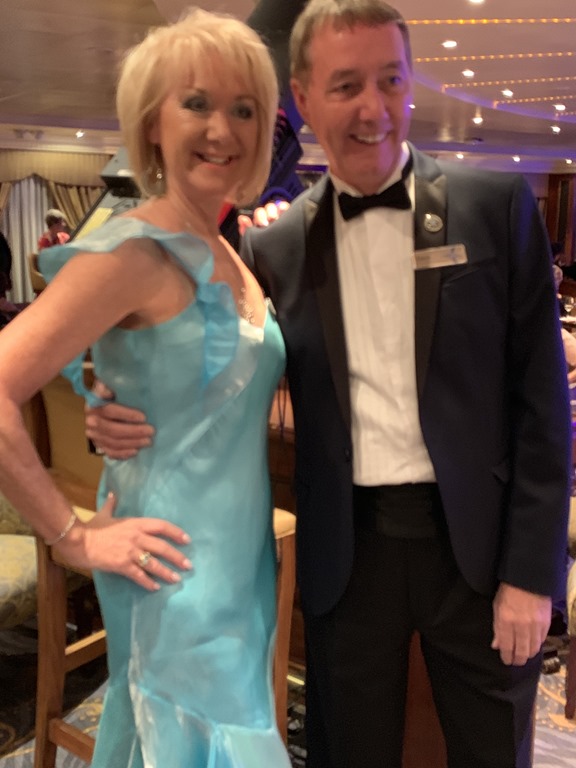
Last night was the captain’s cocktail party and Victor is back as our general manager.  So I needed a picture with Victor and Captain Kurilic

IMG_5397-copy

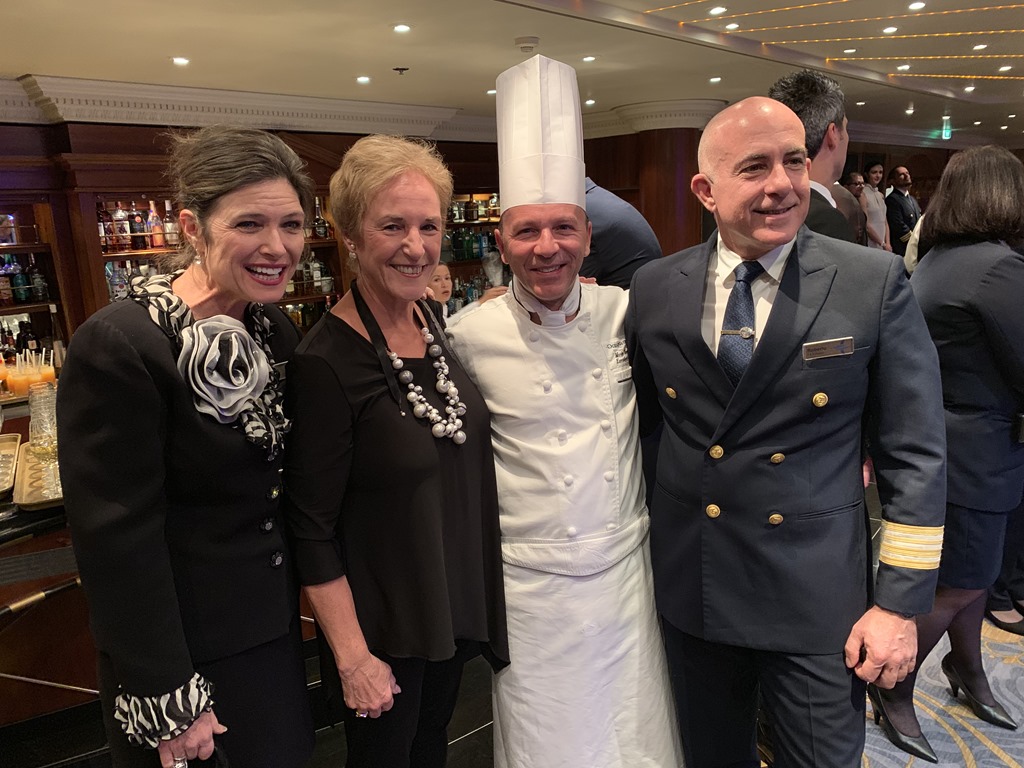
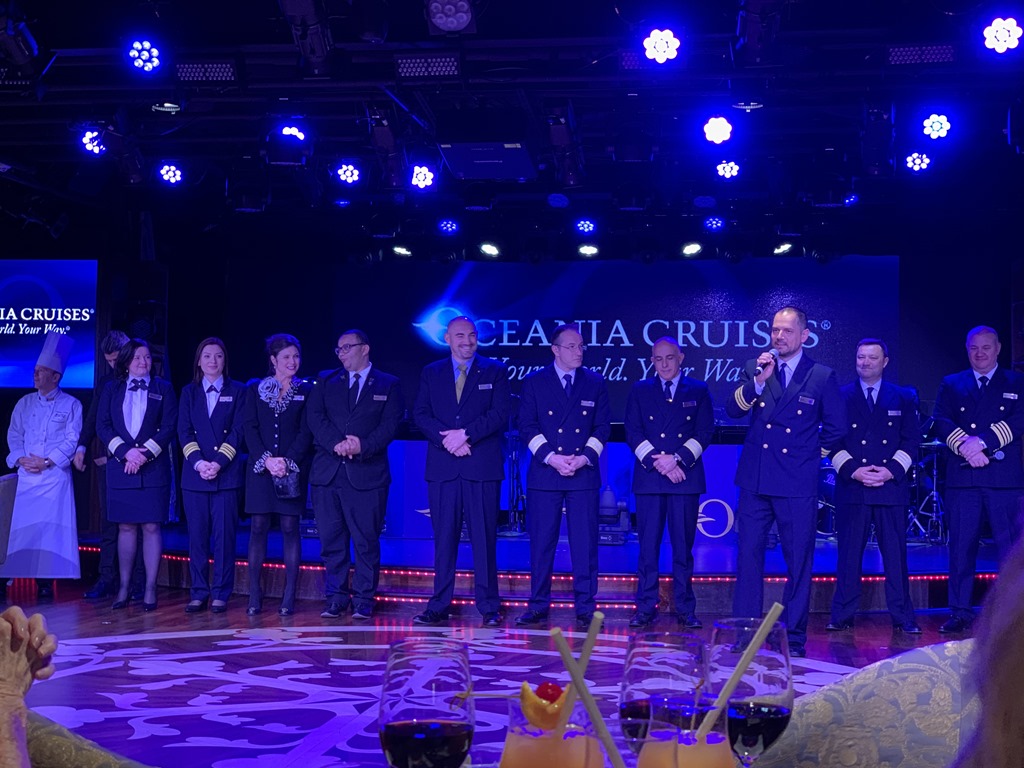
And here are a few more pictures from the event. The captain always introduces his senior officers and there were some new people who boarded in Tokyo. Amy, one of the singers, entertained and Steve and Tricia are our Around the World Ambassadors.  I am in the picture with Jennifer, chef Mario and Roberto.


IMG_5400-copyIMG_5401-copyIMG_5402-copyIMG_5403-copy

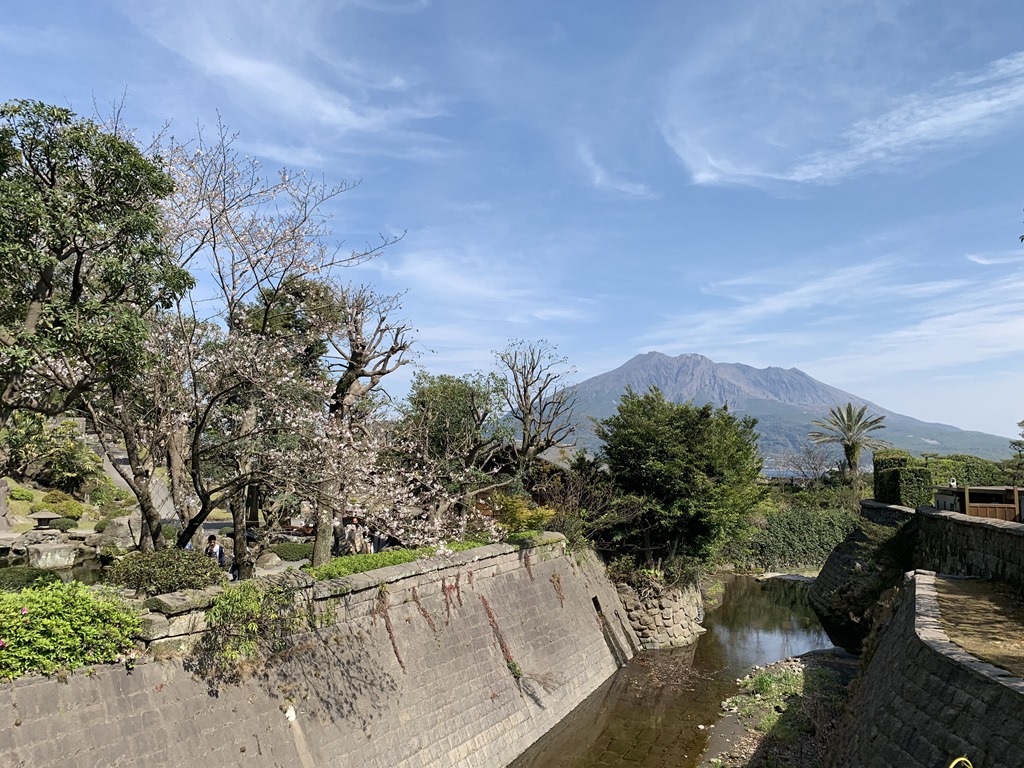
Kagoshima is not a port that gets too many cruises, and our port is quite near the city.  It is on the western shore of Kinkowan Bay and is the southernmost city on the southern island of Kyushu. Japan consists of 4 islands. The population of the city is 600,000.

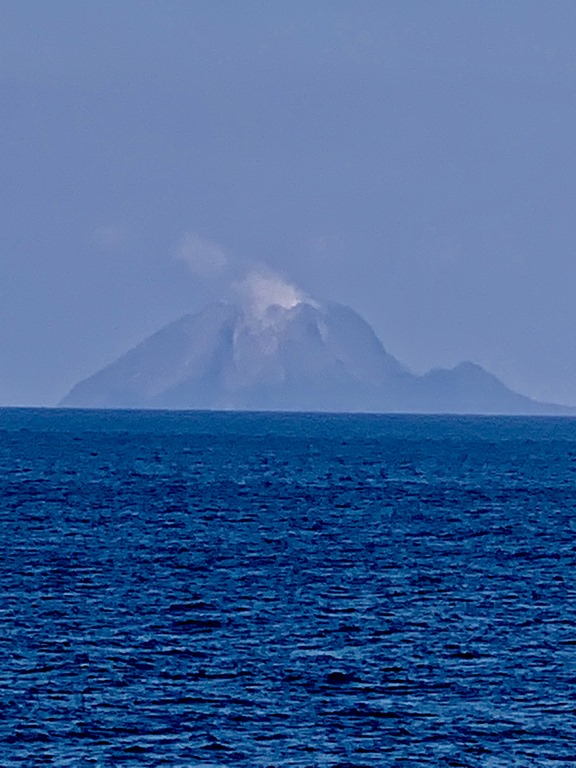
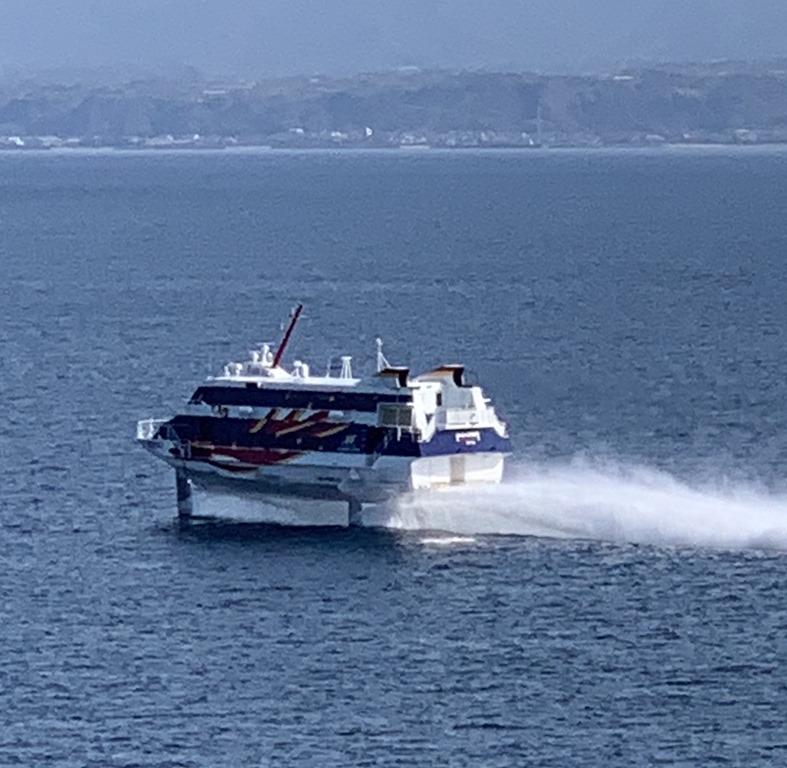
Here is our sail in this morning. We saw this volcano along the way but it is not Mount Sakurajima which we will see on our tour.

IMG_5405IMG_5406IMG_5407IMG_5408

We were met by our guide, Zenin Sumiko which means “child of goodness; beautiful child”.  She said her English name is Suzie and that is what we should call her.
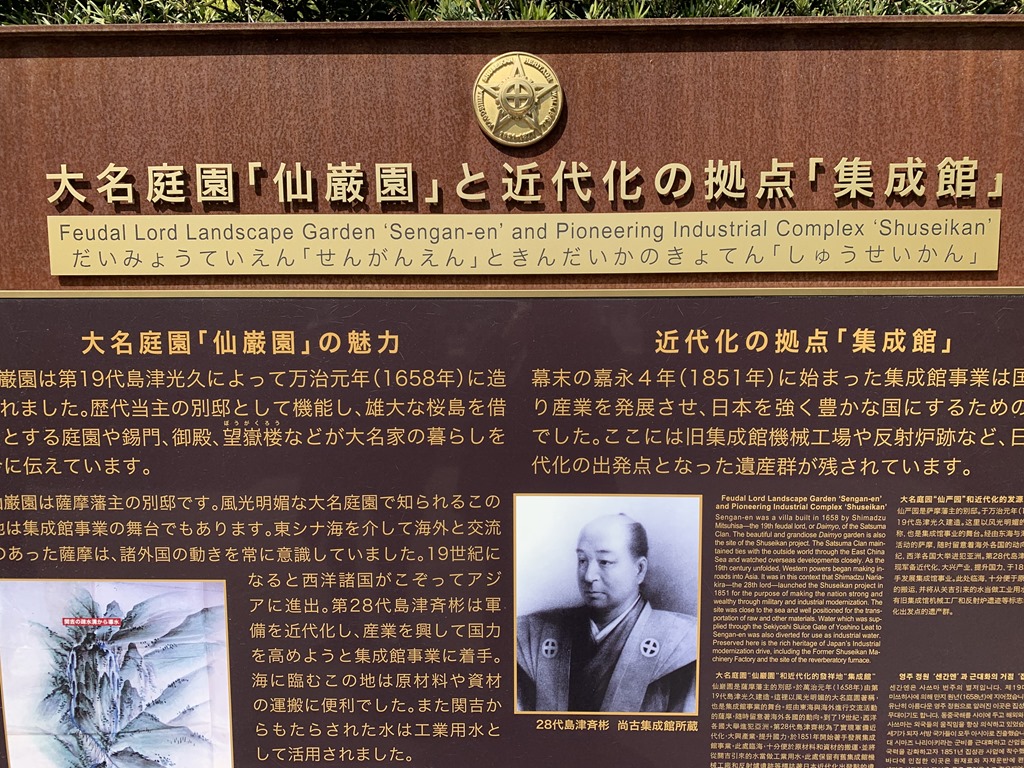
We headed on a short drive to the Shoko Shuseikan Museum and Senganen Garden. It was still chilly today but a lot warmer than the last few days. And the sun was out so it was beautiful for our outing.

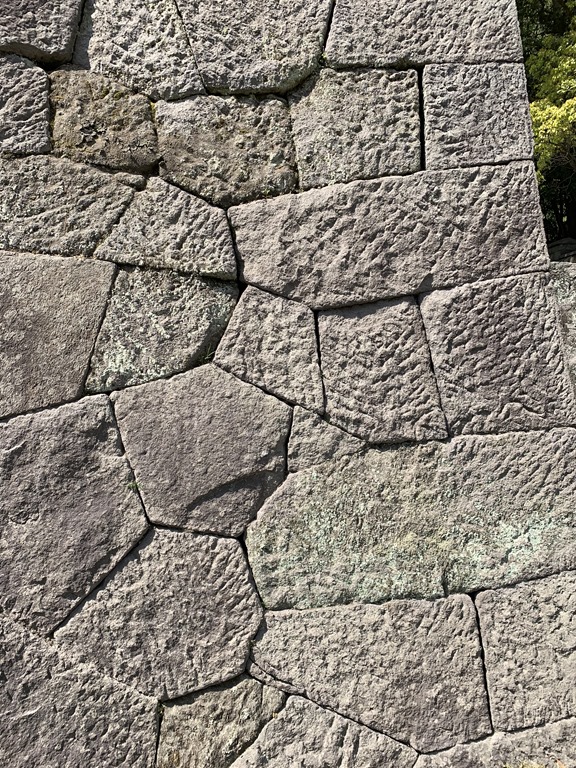
We could not take pictures in the museum.  It was established by Lord Shimazu in 1865 to produce armaments, glass, ceramics and farm tools and was Japan’s first Western style factory.  Now it is a museum detailing the 800 year Shimazu family history. This family helped to establish the city as a vital port for trade and commerce. It is also said that Kagoshima was the birthplace of Japan’s industrial revolution and there are many tools displayed in the museum.  The museum is small but interesting. The first picture is of a Starbucks near the museum!  The stone walls are built with no mortar at all.

IMG_5423IMG_5424IMG_5425IMG_5427IMG_5428

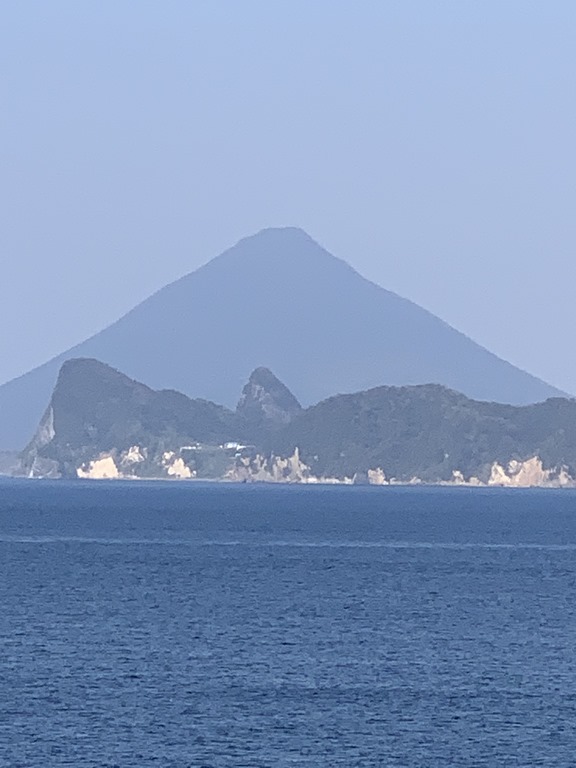
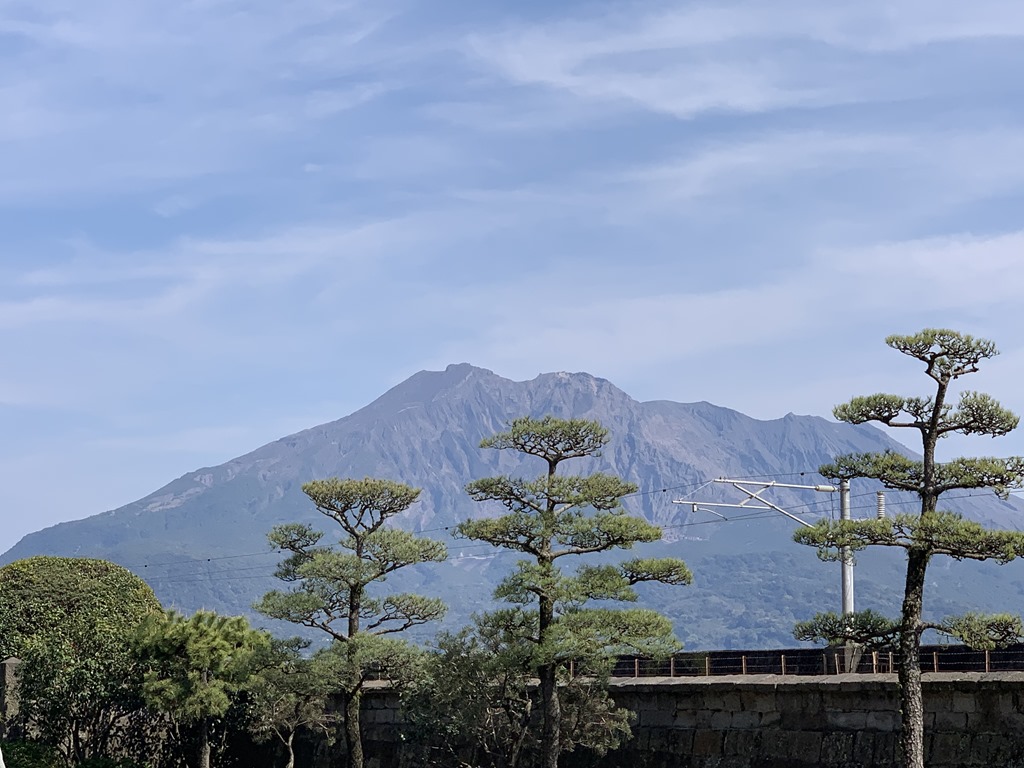
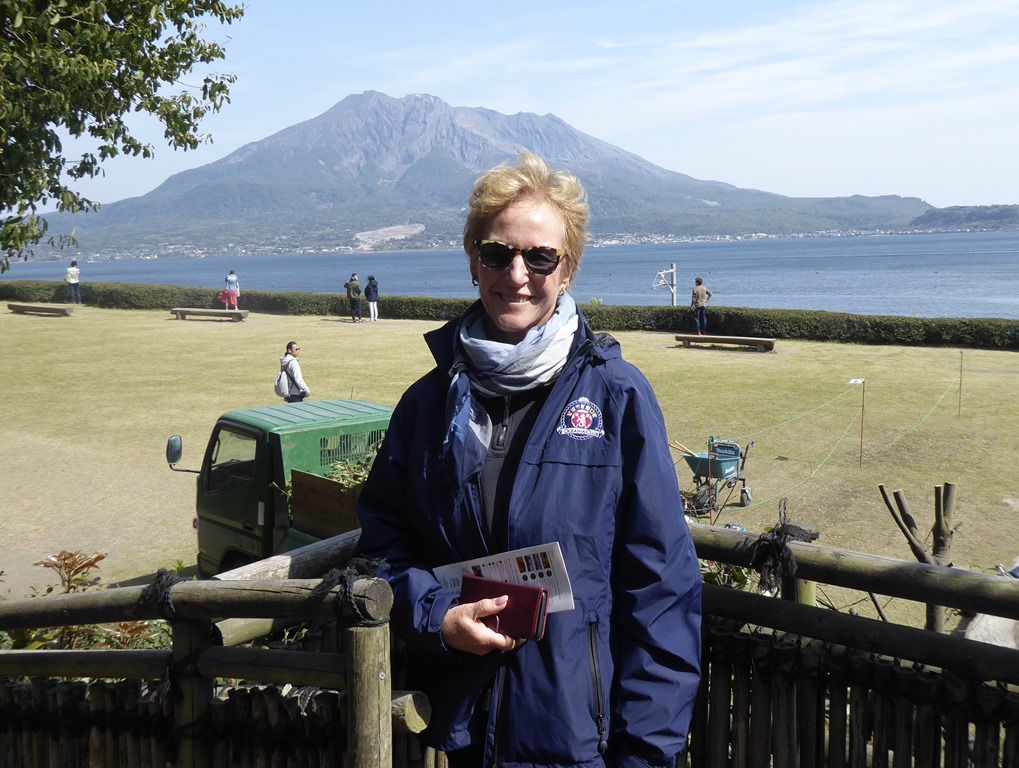
Most of our visit was spent in the serene Japanese landscape garden which was established in 1658. It is the site of the former summer villa of the Shimazu Clan.  The views of the bay and Mount Sakurajima are exquisite.

IMG_5416IMG_5431IMG_5434

The volcano’s eruptions have actually connected the island to a nearby peninsula.  It rises 3665 feet above the sea and last erupted in 1914, covering the Kagoshima city center with a deep level of ash.

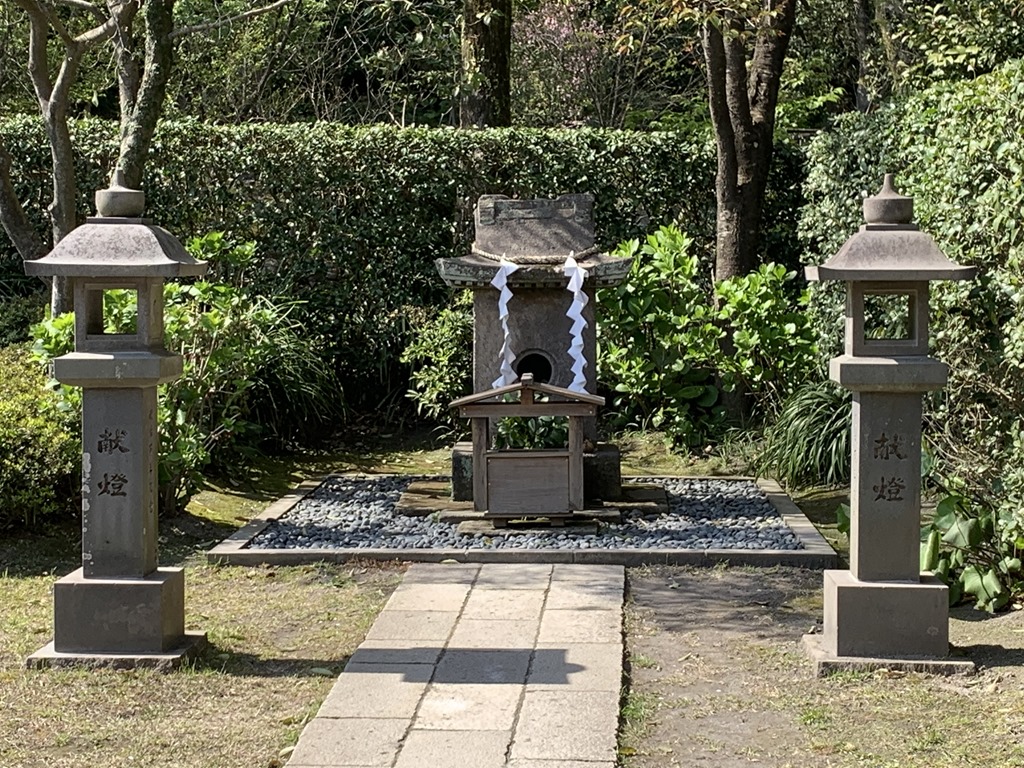
We have so many pictures of the gardens, here are some of them.  What a great way to spend the afternoon. There are several Shinto shrines in the gardens, you will notice features that I have written about in previous blogs.

The house on the property was used in the filming of The Last Samurai, the story of Saigo Takamori, one of the most influential samurai in Japanese history and a leader of the 19th century drive to modernize Japan.

IMG_5432IMG_5433IMG_5438IMG_5439IMG_5442IMG_5446IMG_5450IMG_5451IMG_5453IMG_5458IMG_5459IMG_5460IMG_5463IMG_5466IMG_5467IMG_5470IMG_5472IMG_5473IMG_5476IMG_5477IMG_5478IMG_5489IMG_5499-copyIMG_5497-copyIMG_5498IMG_5479IMG_5500-copyIMG_5504-copyIMG_5505-copyIMG_5488

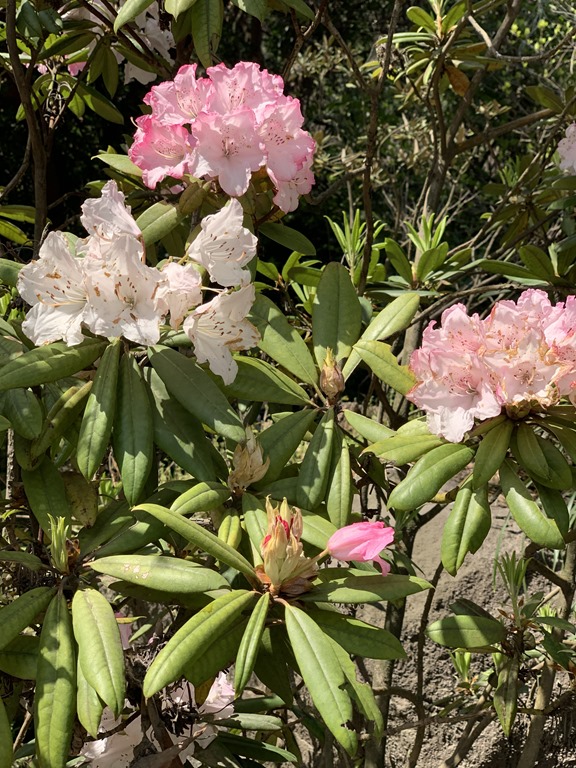
There were cherry blossoms, the azaleas and rhododendrons were in full bloom, and there is a bamboo forest too.

This was an interesting feature – this piece of wood is actually a tool used to remove the husks of rice- when the end fills with water, the wood moves down hard to remove the husks.

IMG_5484IMG_5485IMG_5486

We visited some of the shops in the gardens, tried some green tea (didn’t like the variety they gave us) and had to have some of their famous purple sweet potato ice cream, which was delicious!

IMG_5490IMG_5492

Some pictures of children, of course.

IMG_5412This family is looking up at the ship.

IMG_5495IMG_5496


Posted in April, Asia, Excursions, Food, World Cruise 3 | 1 Comment

Hiroshima, Japan

April 2, 2019

We missed Godzilla in Tokyo but our friend Mary Anne got a picture of him.

godzilla

Beautiful sunrise over Hiroshima this morning.

IMG_5092

And pictures from our sail in.

IMG_5090IMG_5091

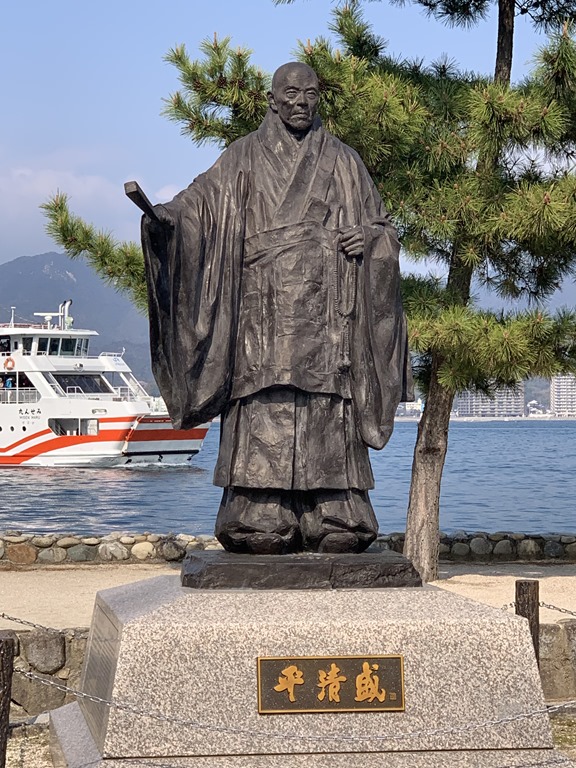
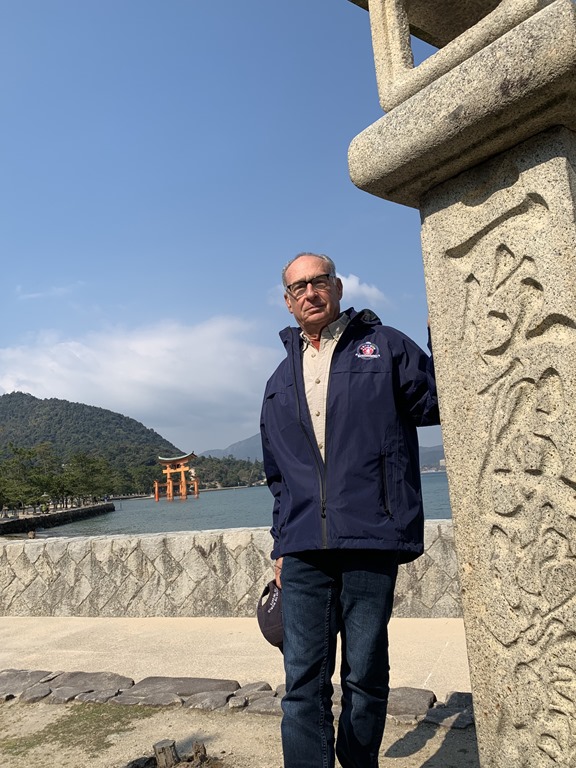
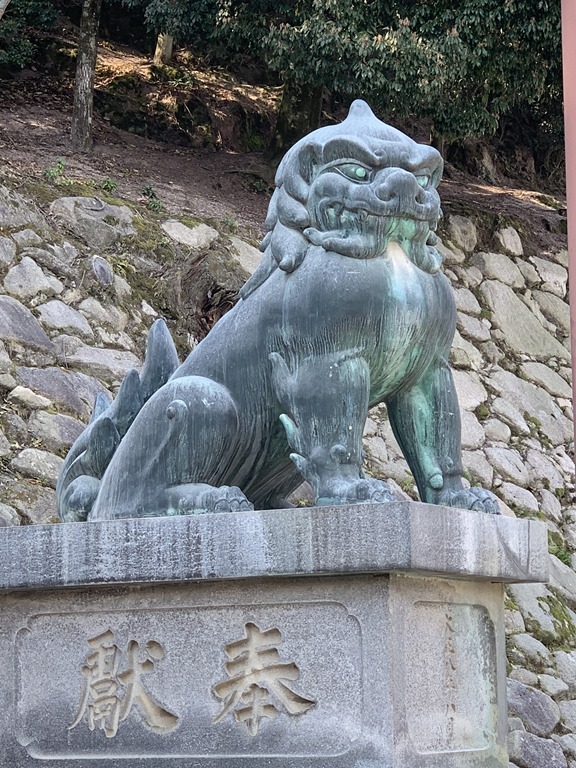
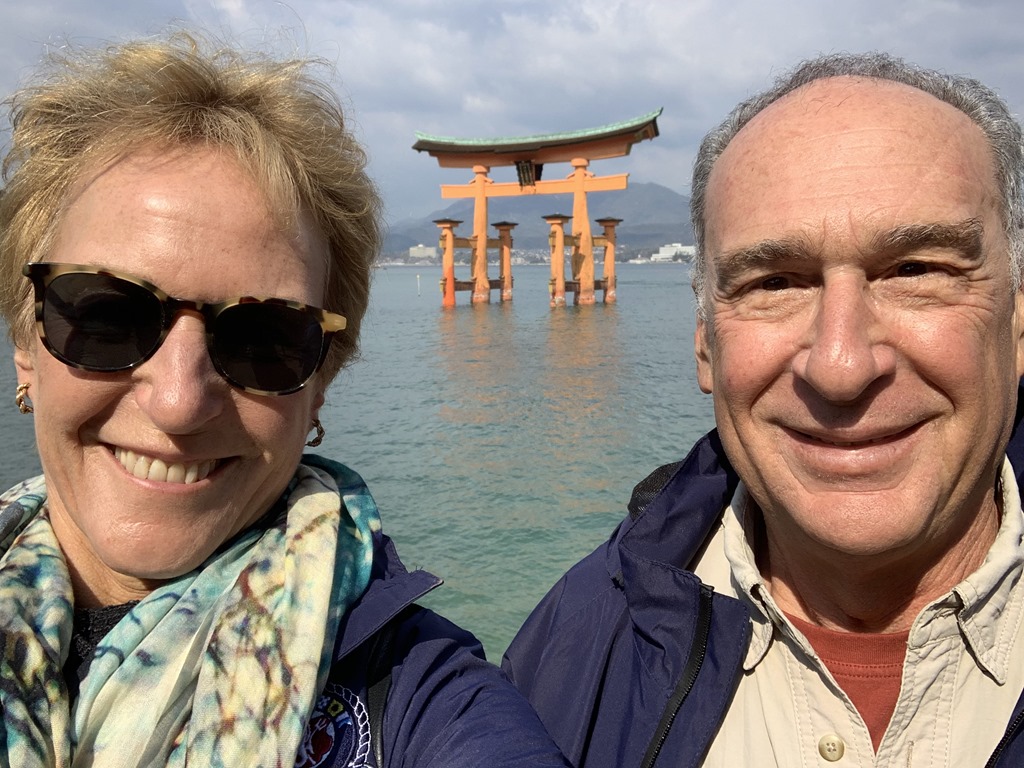
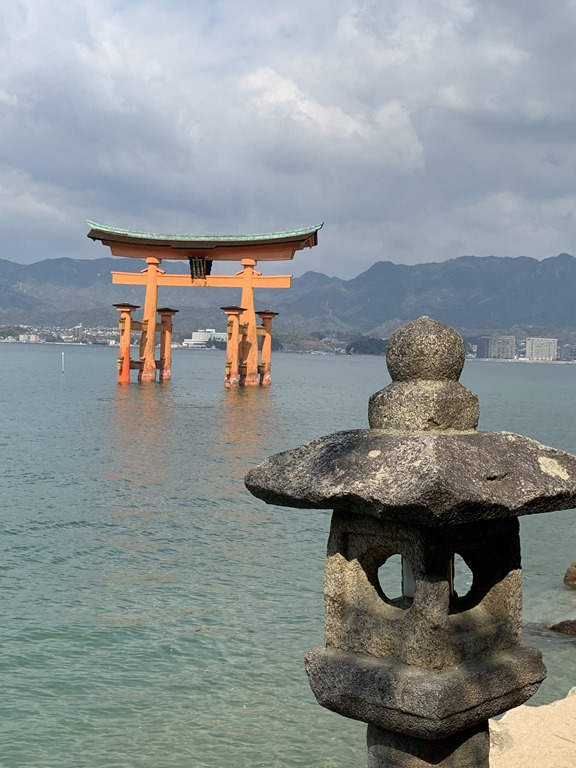
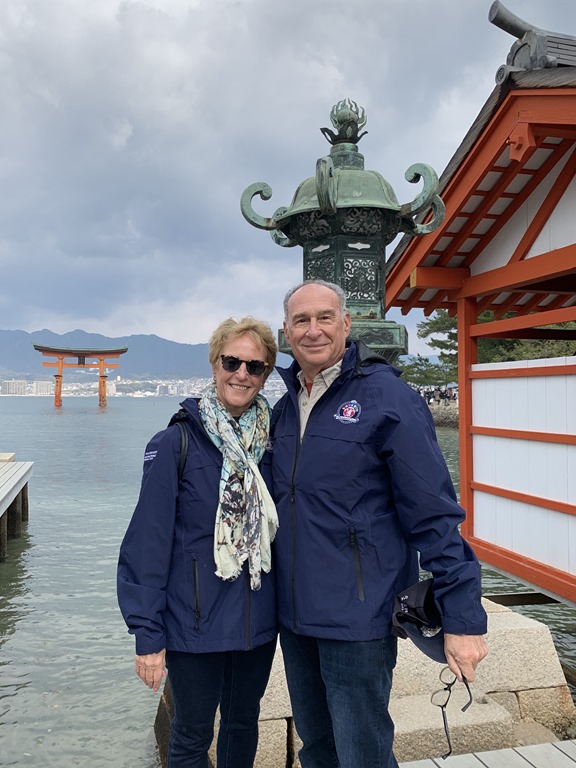
Today we chose to go on a tour to Miyajima.  This is a beautiful island, considered one of Japan’s most scenic destinations.  The main attraction is the Itsukushima Shrine with the famous large torii gate that rises up out of the Inland Seto Sea.

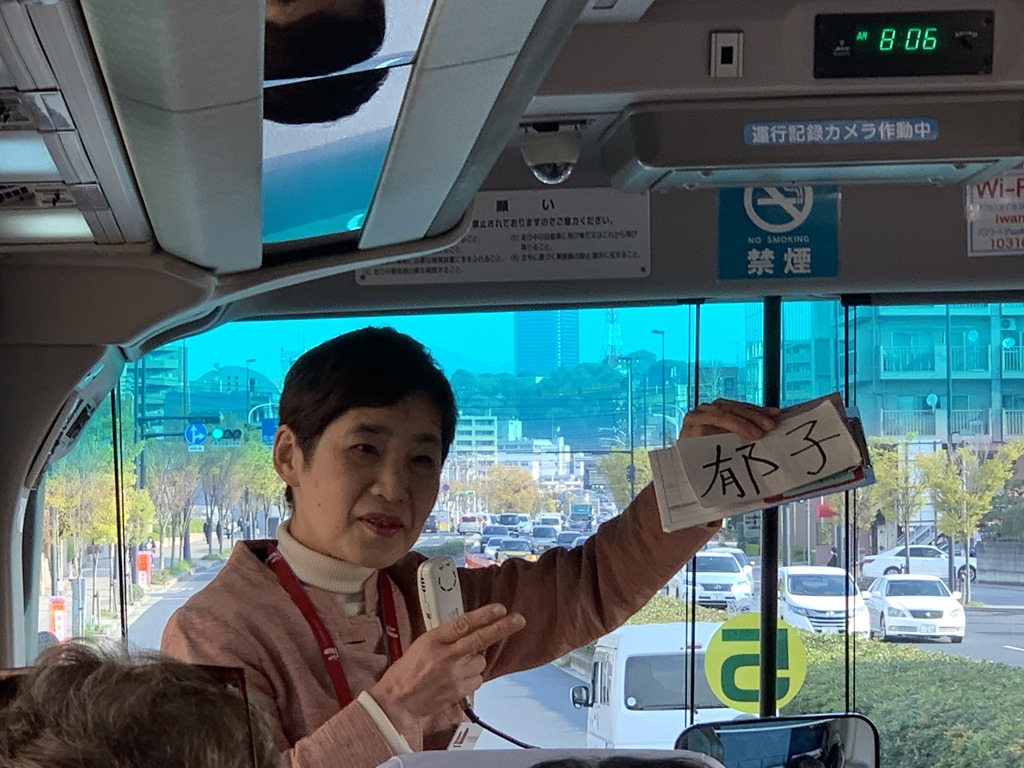
We boarded a bus with our guide Kuniko who said that we should call her by her English name, Kate.  She held up the characters that spell out her name in Japanese.

IMG_5099

As our other guides have been, Kate was fluent in English and very well informed. 

Japan consists of 2000 islands and all together is about the size of California.  70% of Japan is covered with mountains. As I have noted and you will see again in this post, spring is cherry blossom season and they are in full bloom here even though Hiroshima got some snow last night!  It is cold! Autumn is known for Maple leaves – they are most beautiful in November.

Hiroshima now gets about 4.5 million visitors a year and is, of course, most noted as the place the atom bomb destroyed near the end of WWII.  We visited the peace park after Miyajima and I will add information about that near the end of this post.

The bus was well equipped with wi-fi and it was only about a 30 minute ride to get the ferry to Miyajima. Kate advised us to sit on the right and told us that it is high tide which is the best time to view the O-tori Gate rising from the sea.

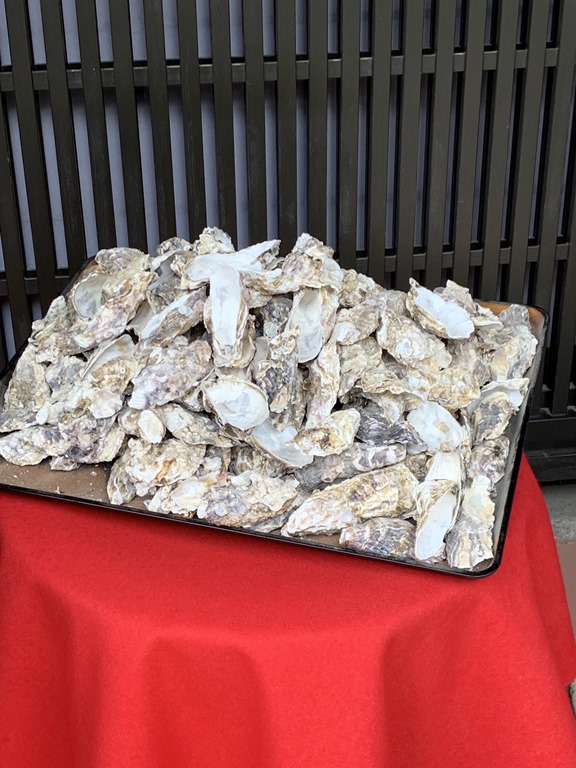
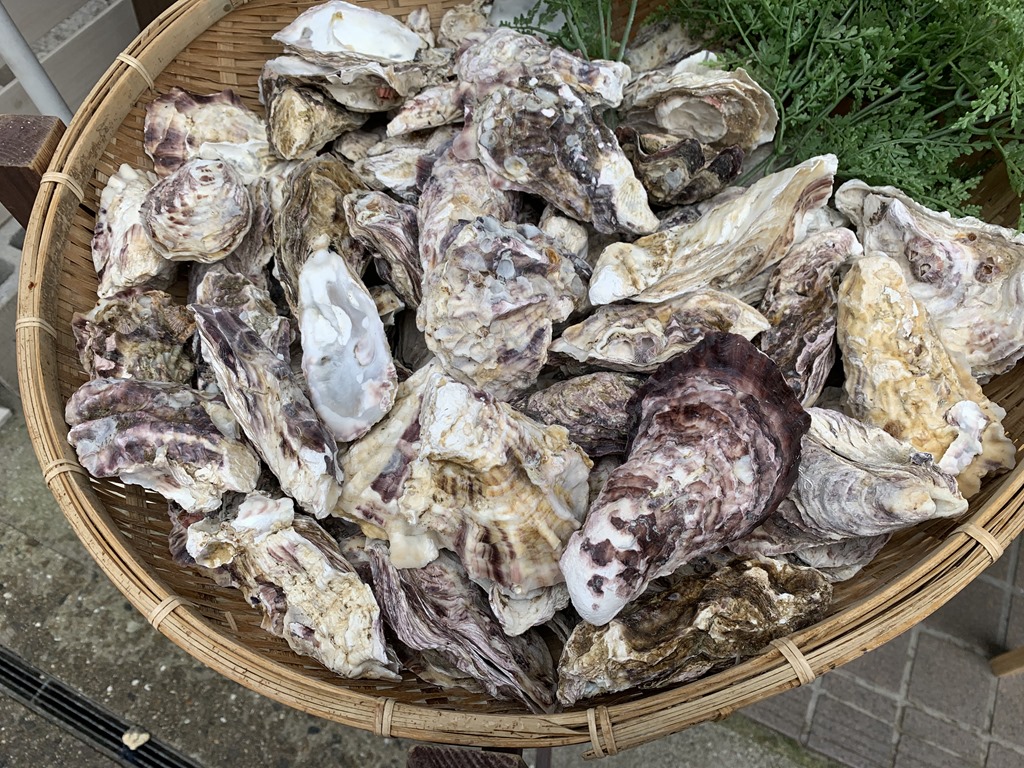
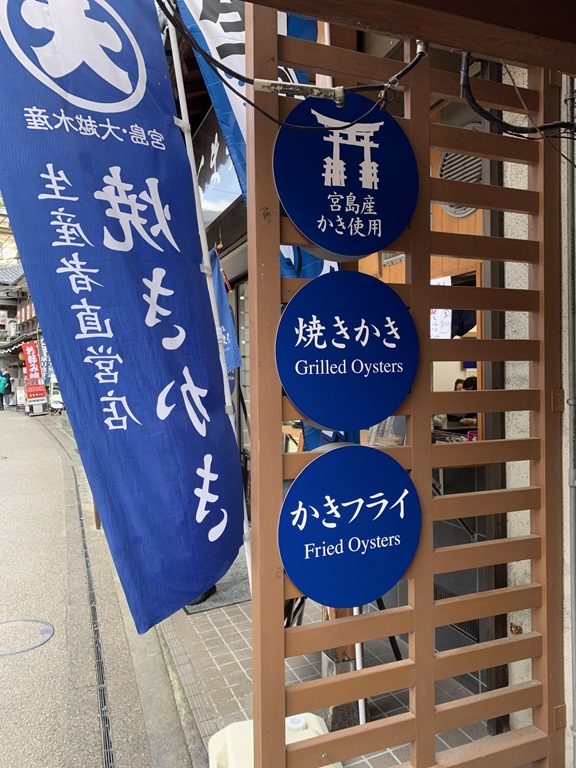
While on the ferry, we noted the oyster rafts.  Hiroshima is the biggest producer of oysters in Japan.

IMG_5296

The Itsukushima Shrine was established in 593, the first year of the reign of Empress Suiko and today is a UNESCO World Heritage Site.  The current torii was erected in 1875 after the original one was destroyed.  We got our first sighting of the torii from the ferry and it is beautiful.

IMG_5112

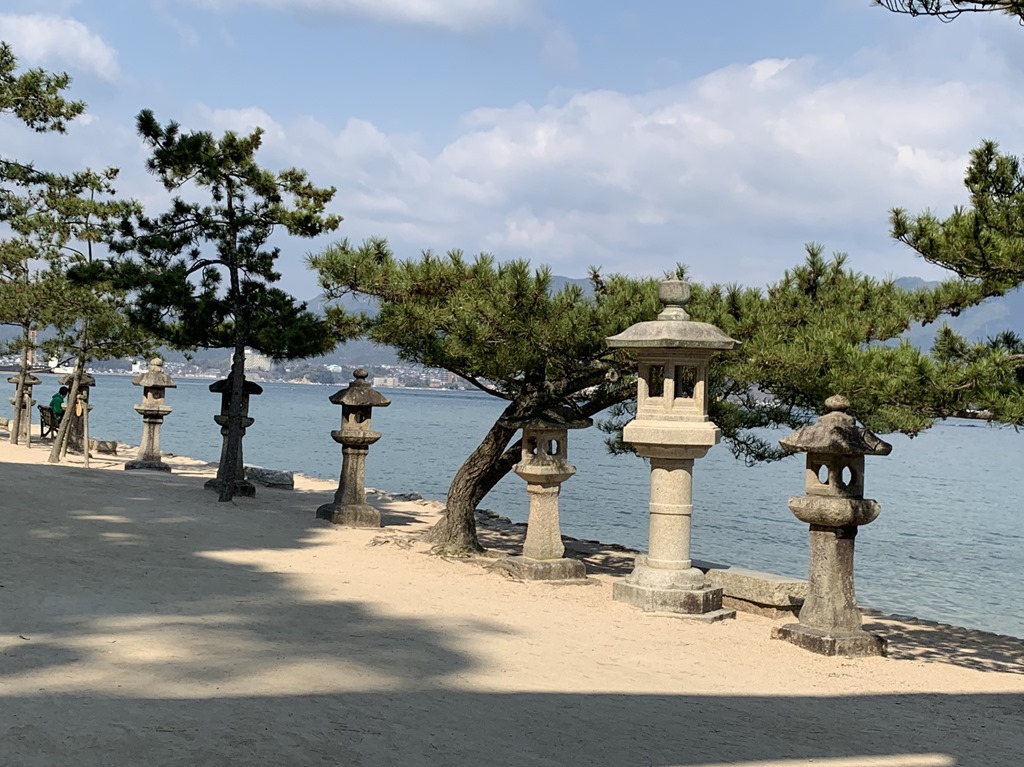
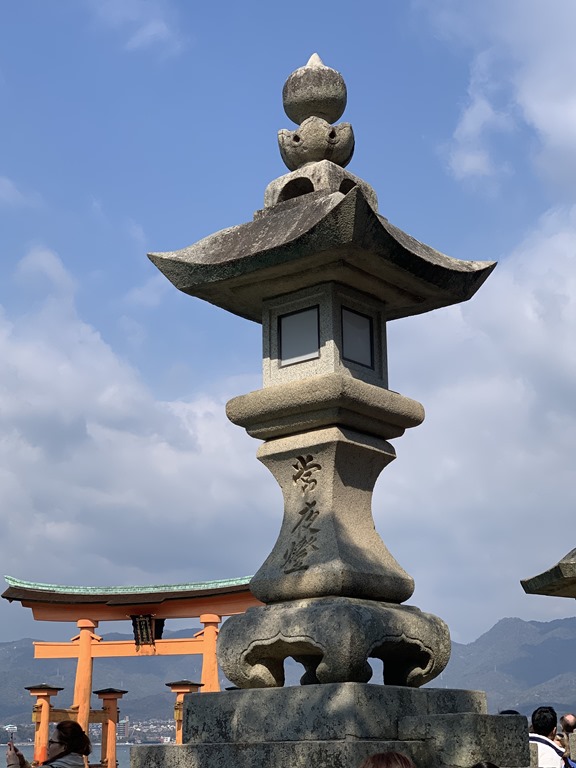
The entire shrine and surrounding area is so beautiful.  There are 108 lanterns surrounding the shrine which are lit up at night. This is said to be for enlightenment.

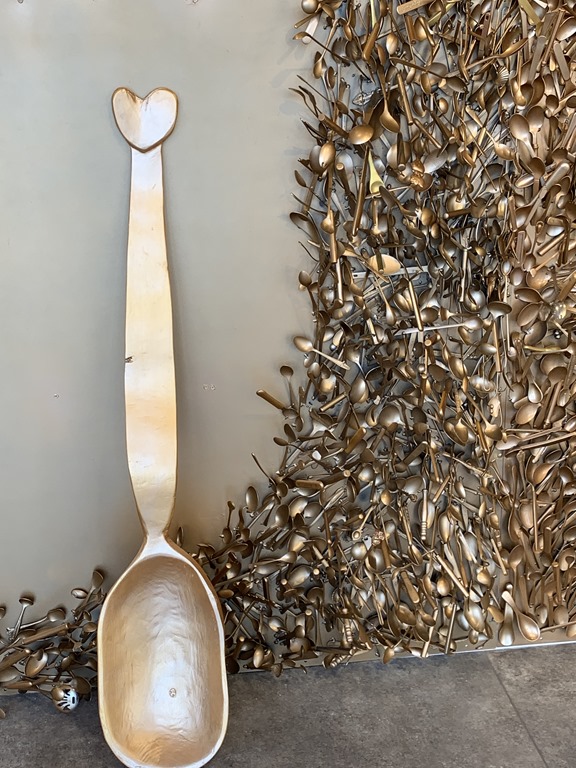
We wanted to look for several things in the shopping area – wooden rice spoons with sayings on them made from different woods and originally designed by monks, special cakes made in the shape of maple leaves and of course, the oysters, which we don’t eat but wanted to send pictures to our brother-in-law, Mike, who loves them.  But first we took in the beauty of the large and impressive shrine. The whole thing seems to be floating in the water.
IMG_5145IMG_5146IMG_5122IMG_5141IMG_5148IMG_5149IMG_5151IMG_5162IMG_5163IMG_5164IMG_5167IMG_5171IMG_5176IMG_5179IMG_5196IMG_5198IMG_5211IMG_5213IMG_5215

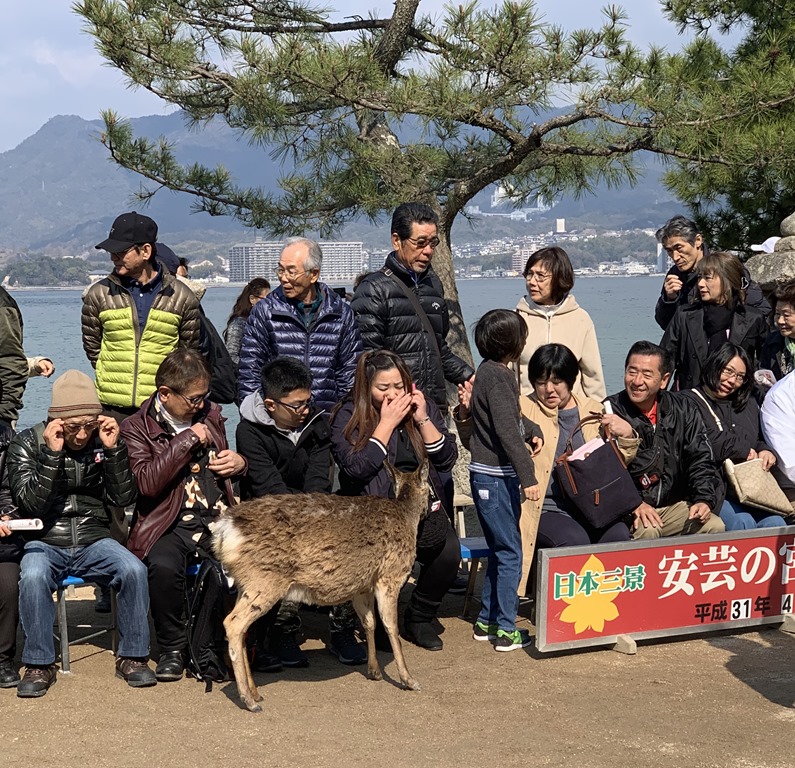
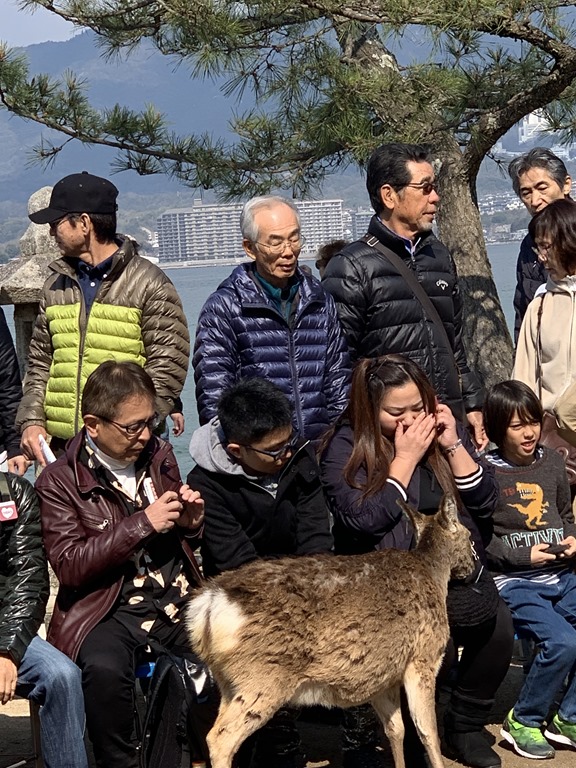
Only 1400 people live on this island and there are also 500 deer which are considered sacred.  We were given a map with specific instructions that warned us that deer will eat paper and cloth and to be sure to keep an eye on our belongings, especially tickets and souvenirs as the deer might eat them!
IMG_5288

IMG_5126IMG_5155IMG_5157IMG_5159IMG_5160IMG_5280IMG_5282

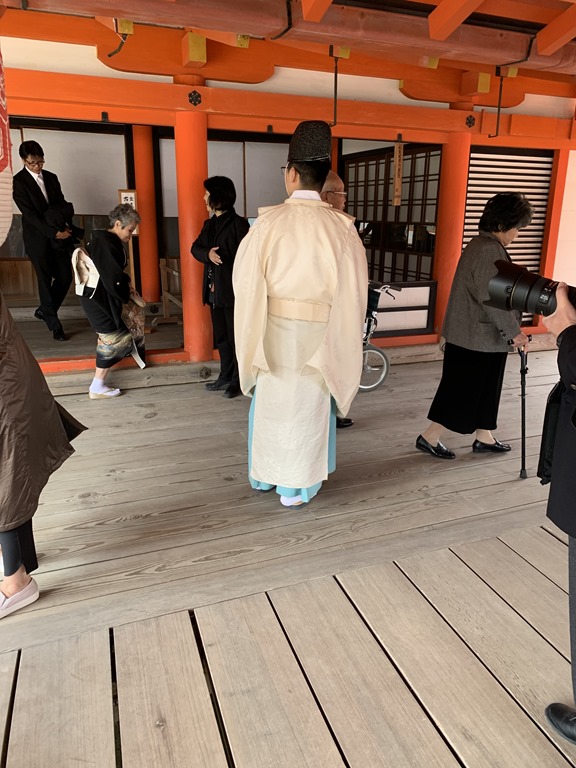
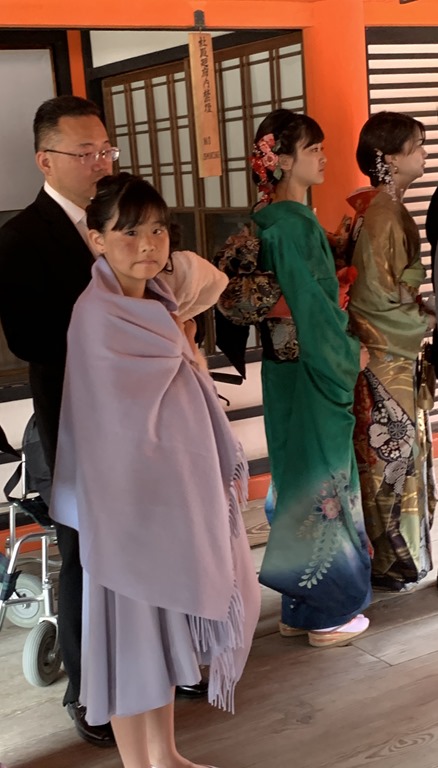
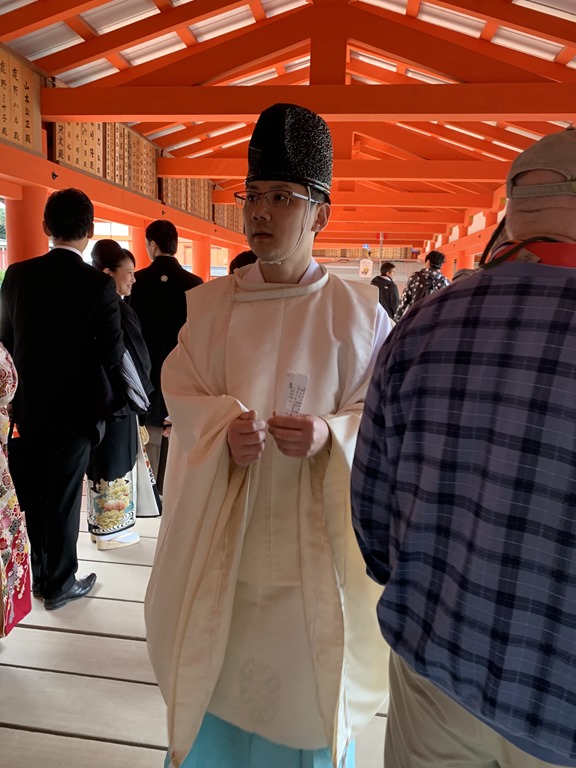
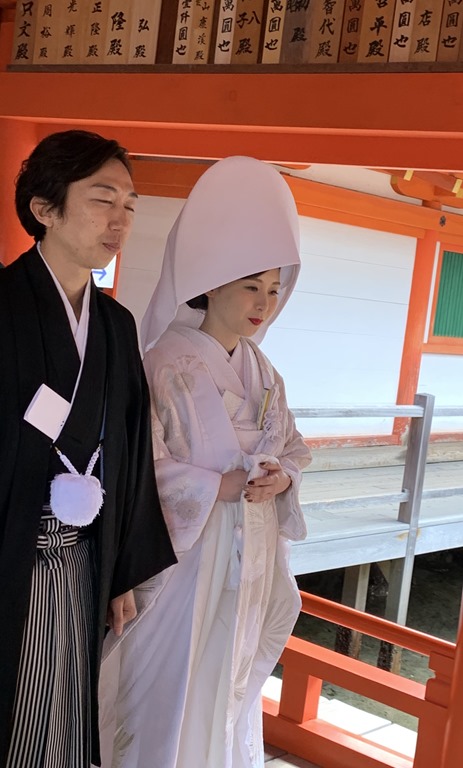
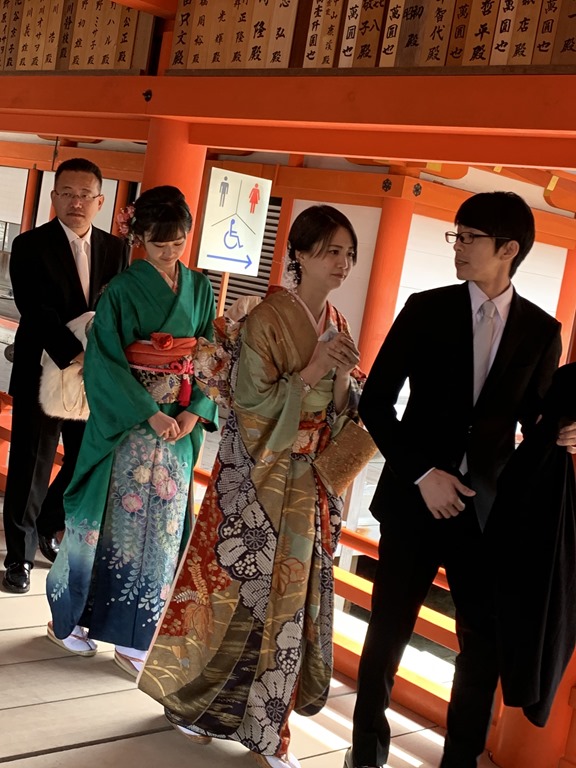
We were again fortunate enough to see a wedding procession and also part of the ceremony.  The family and guests wanted to pose for us.

IMG_5180IMG_5182IMG_5183IMG_5184IMG_5185IMG_5187IMG_5189IMG_5190IMG_5192IMG_5195IMG_5306IMG_5308

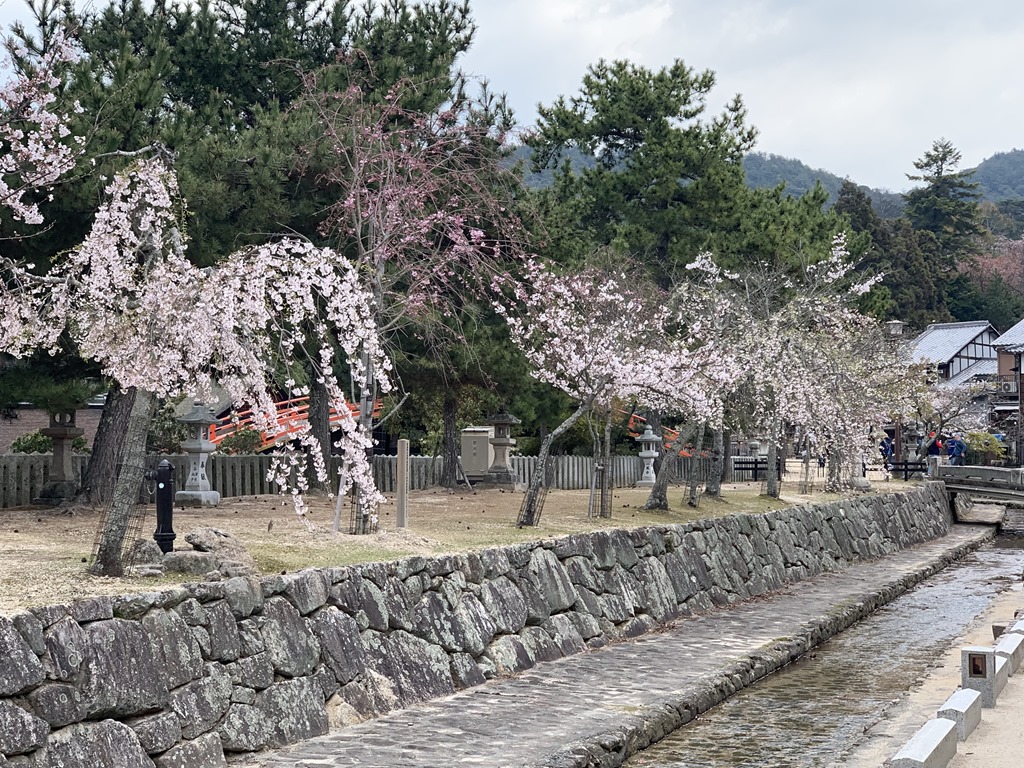
There was a beautiful area with lots of cherry trees in full bloom.  We just can’t get enough pictures of them!

IMG_5218IMG_5220IMG_5223IMG_5224IMG_5225IMG_5228IMG_5311IMG_5314

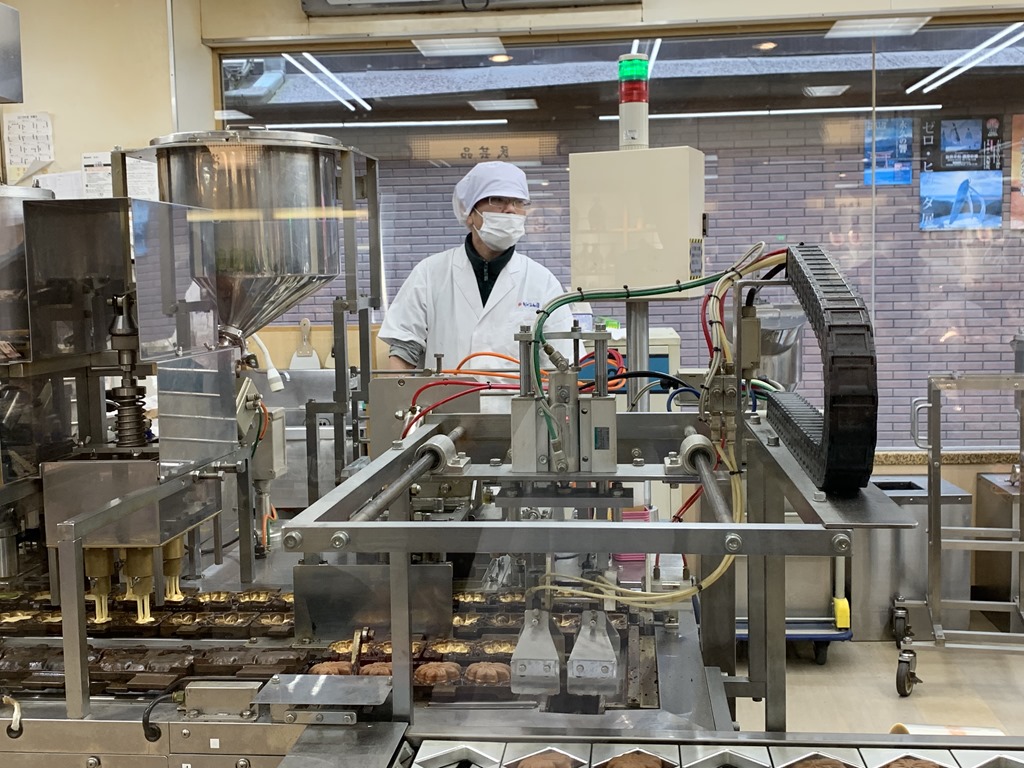
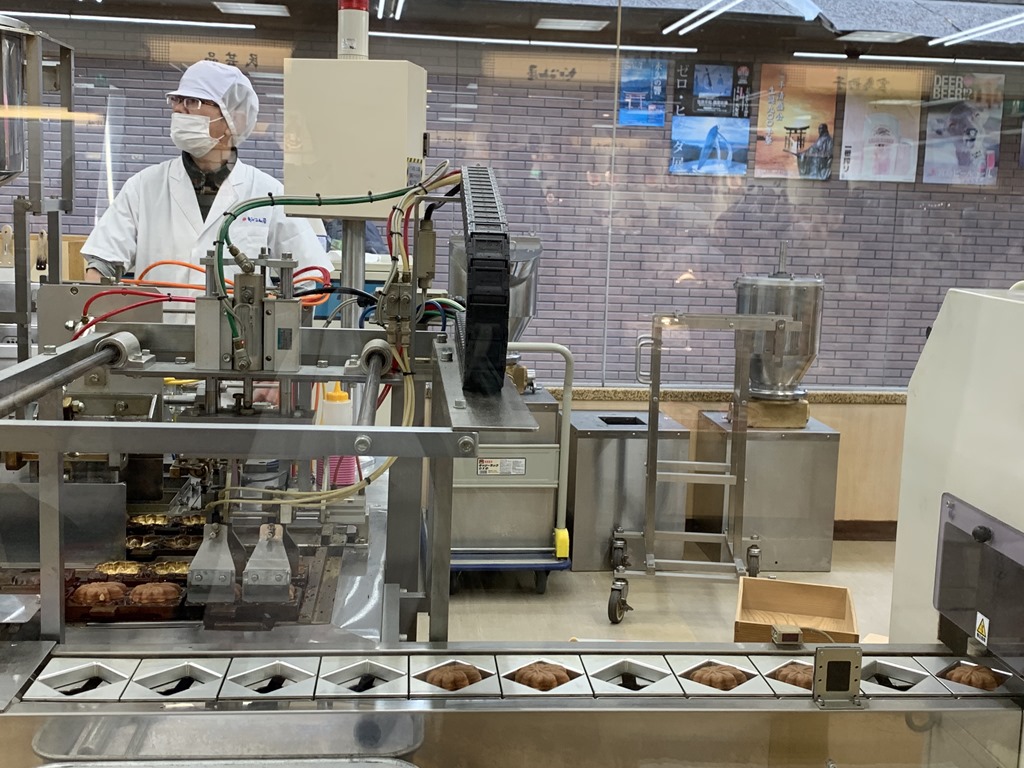
We still had a little time for shopping (would have loved to stay here longer, but had to get the ferry back).  We bought and ate some of the delicious maple shaped cakes.  They are filled with everything from chocolate to red bean paste – we loved the cream filled ones. There were many places to watch them being made. I did buy a wooden rice spoon. Mine says “excel mind.”

IMG_5395IMG_5249IMG_5250IMG_5133IMG_5139

And the oysters were everywhere..

 IMG_5245IMG_5254IMG_5231IMG_5233IMG_5255IMG_5257IMG_5258IMG_5273IMG_5275IMG_5274

A few other pictures that were just fun.

IMG_5132IMG_5135IMG_5143IMG_5208IMG_5239IMG_5251IMG_5252IMG_5261IMG_5272IMG_5276IMG_5271

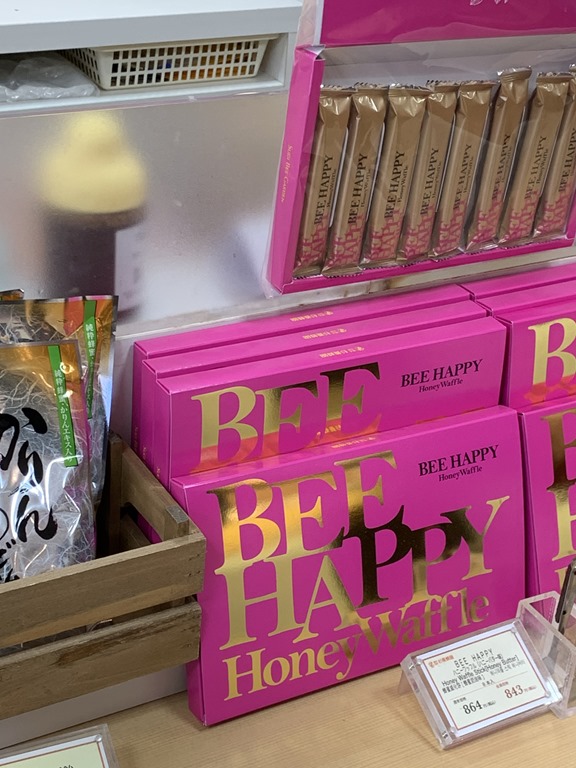
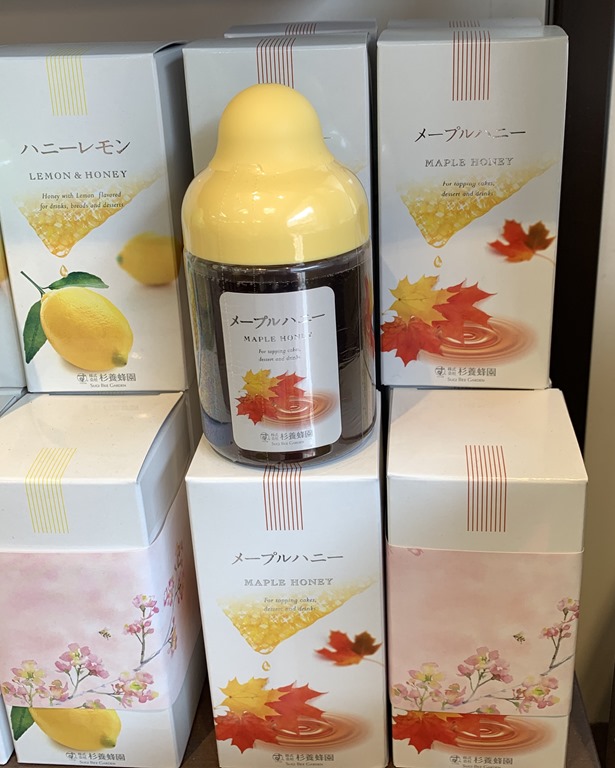
The last picture is of a kind of honey.  And who knew there would be that many kinds of soy sauce!  A whole shop full.  I also never saw peach Coke.

A few other facts we  have learned about Japan from our lecturers and various guides.

  • More people are killed by lightning in the US than are killed by guns in Japan.  That’s how rare it is.

  • There are more McDonalds in Japan than anywhere except the US.

  • KFC is the most popular dish at their main holiday of New Years.  They don’t celebrate Christmas and are unclear about Santa, they think Col. Sanders might be Santa.

  • There are all kinds of animal cafes here, cat cafes, hedgehog, owl…

  • There are about 3.7 million vending machines, one for every 35 people. It is like grocery shopping by machine – you can get underwear, ties, clothes for your pets, etc.  There is even a vending machine on top of Mt. Fuji (which we couldn’t see, rarely seen due to the clouds).

  • There are 300 varieties of Kit Kat bars here, Kitto Katto. Some of the types are wasabi, red bean, hot chile, sake, baked potato and ginger ale!

IMG_5246

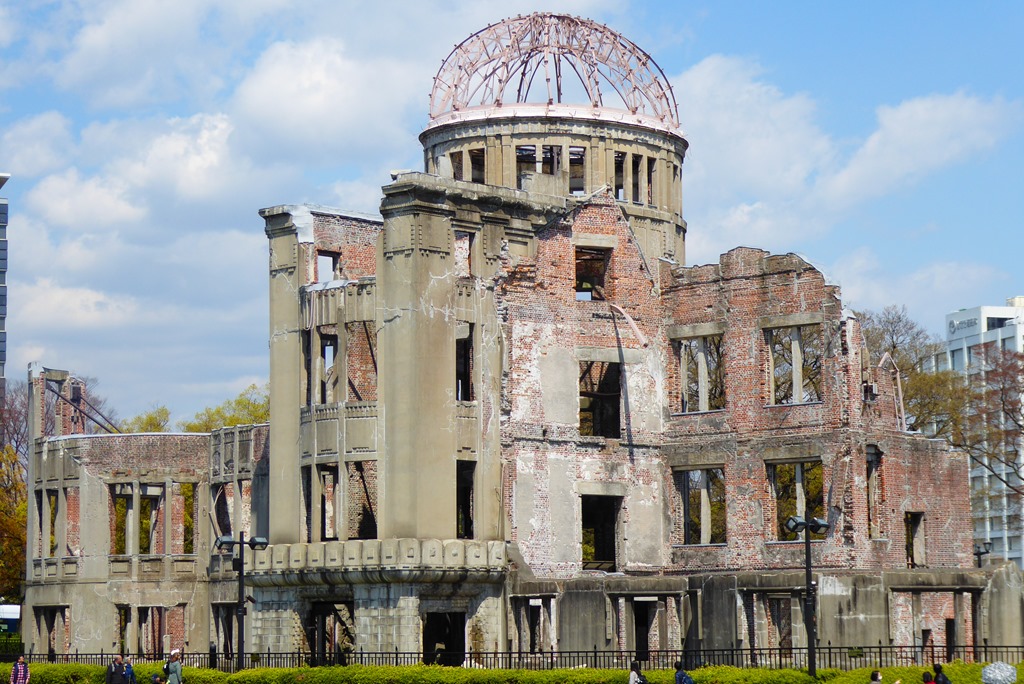
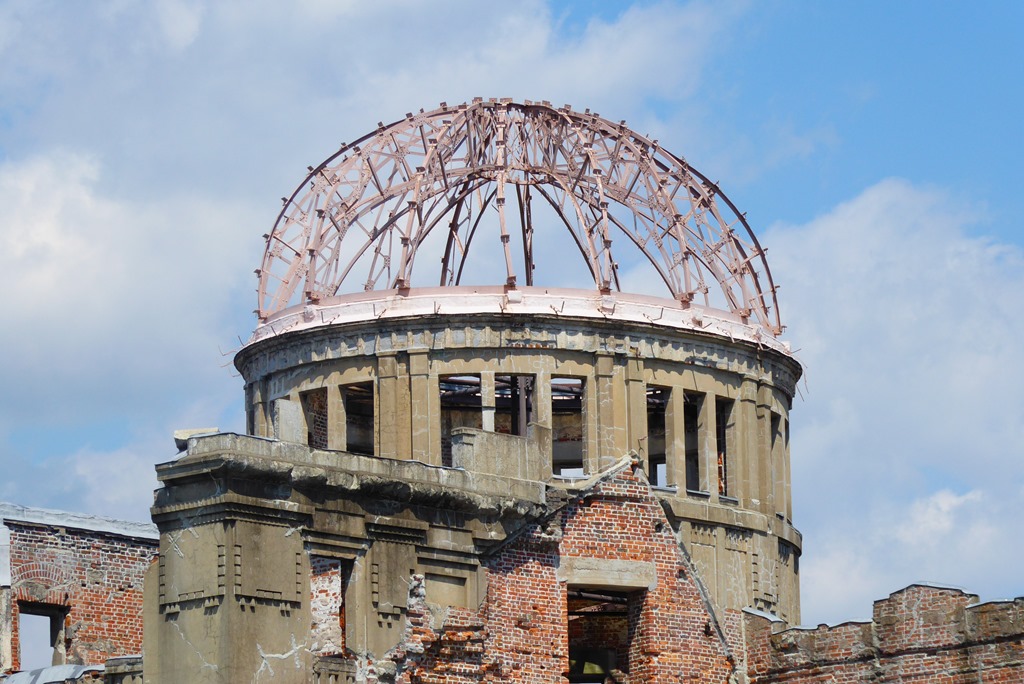
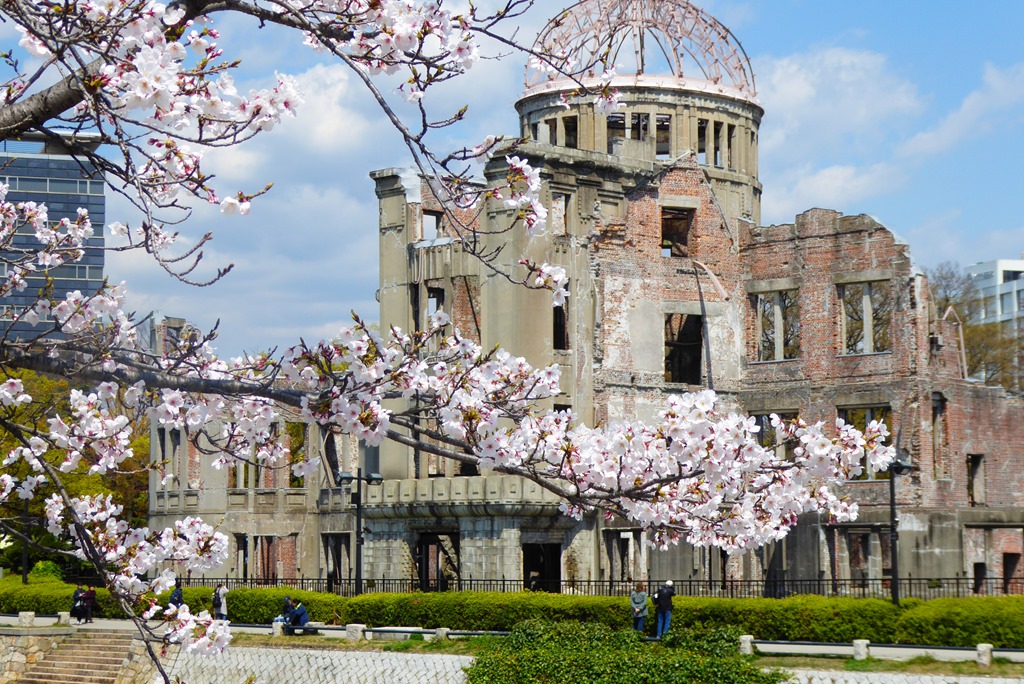
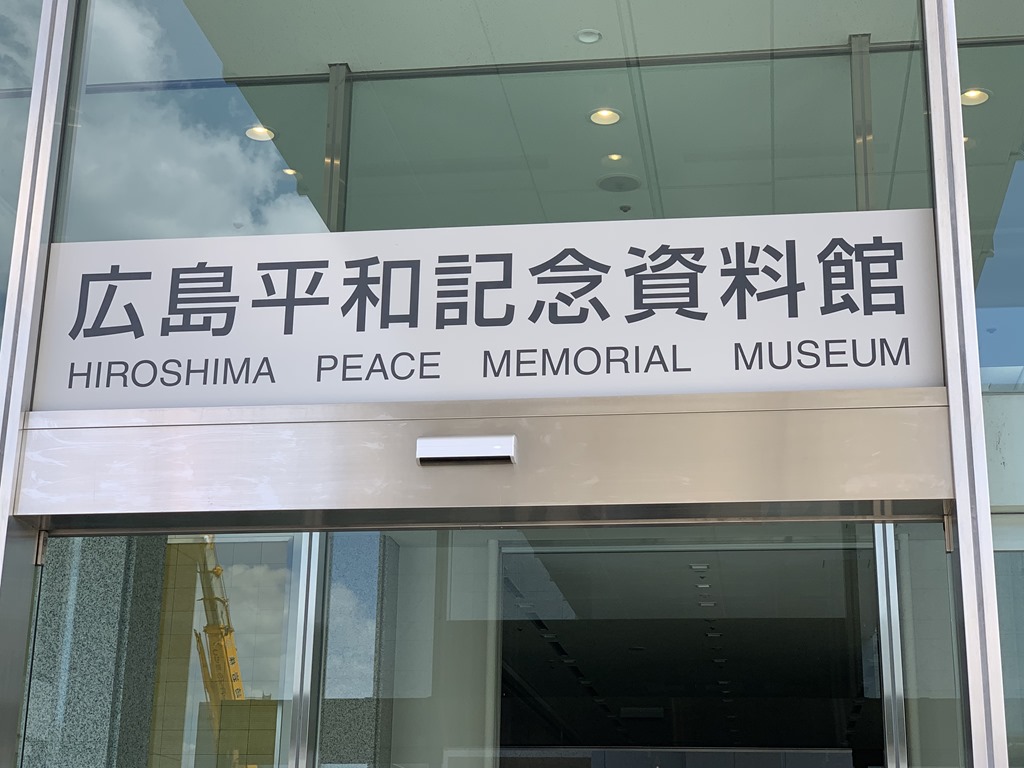
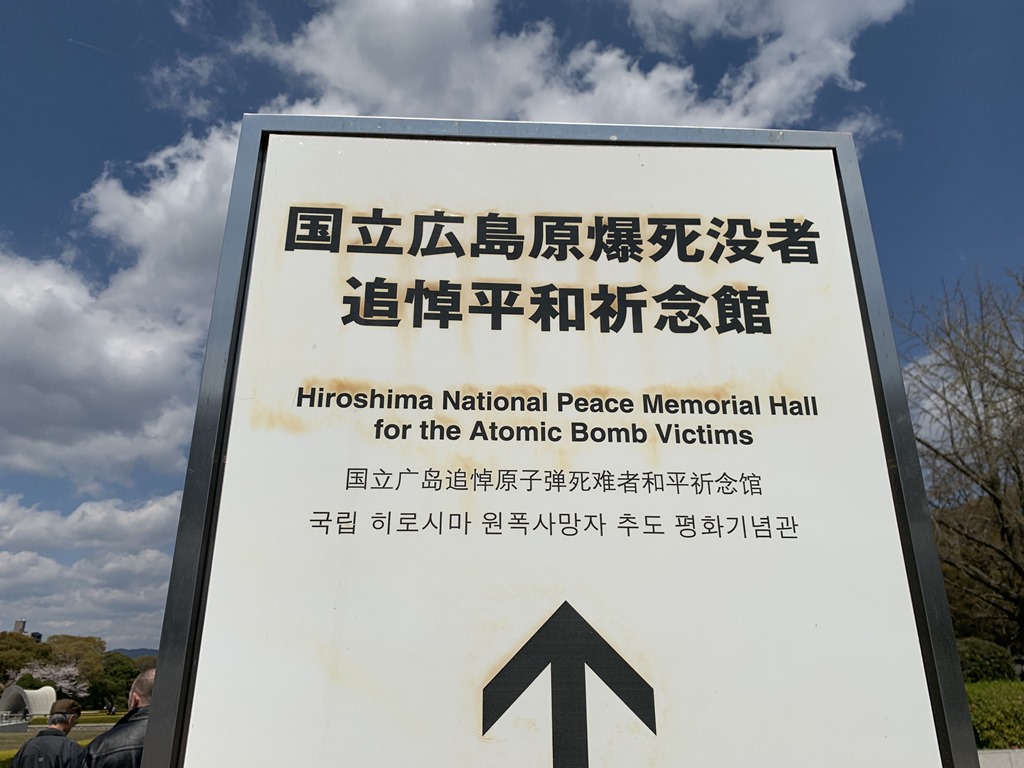
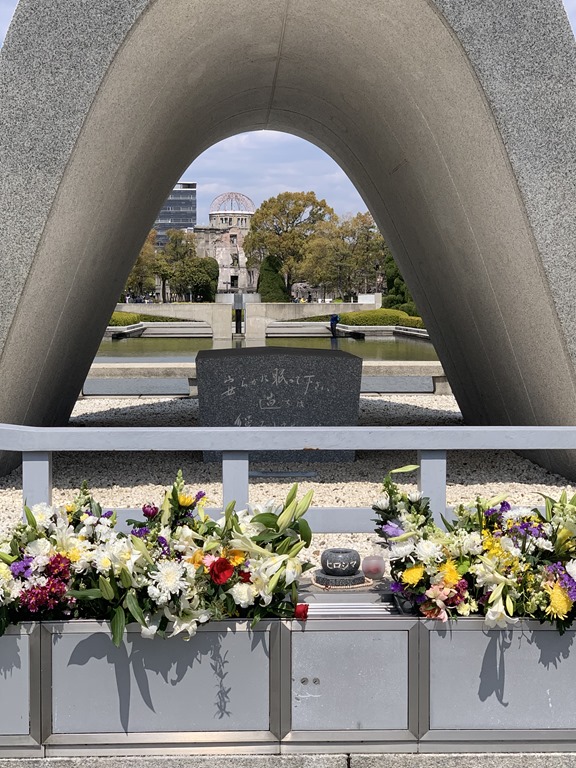
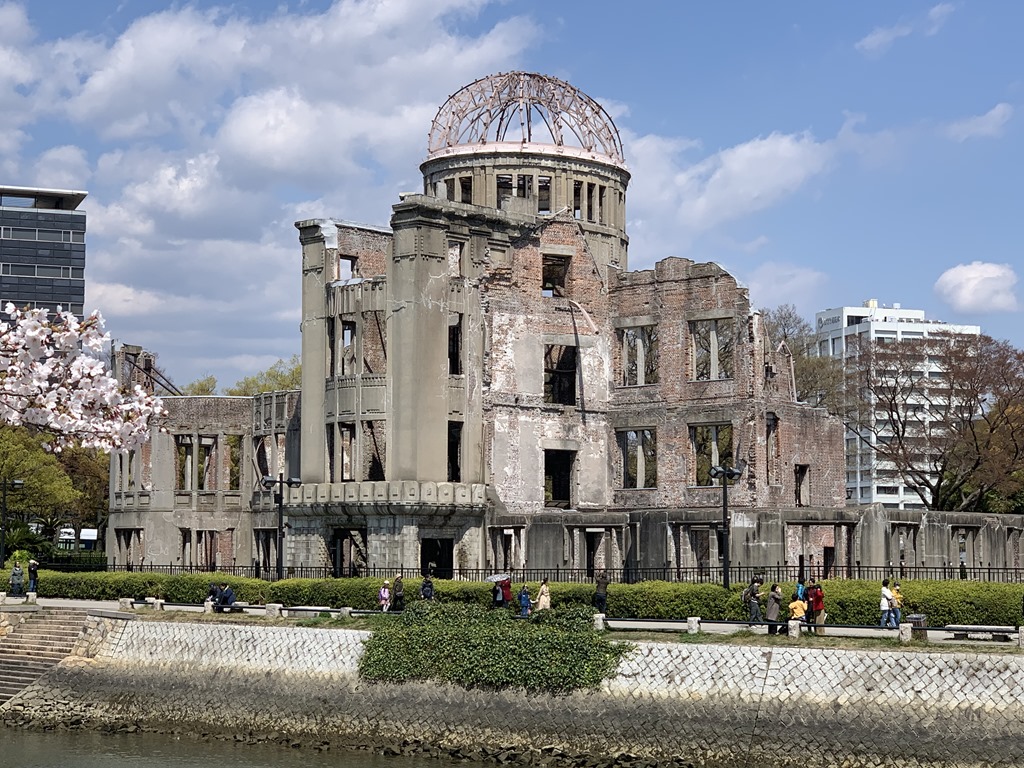
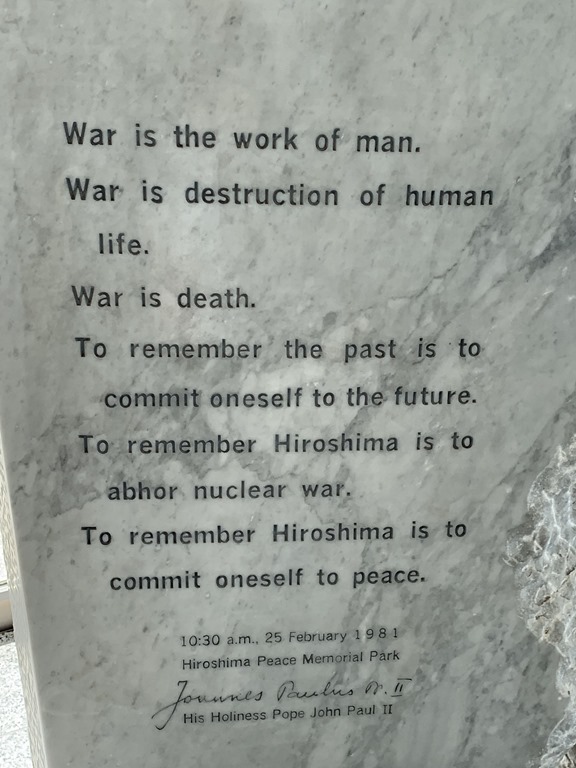
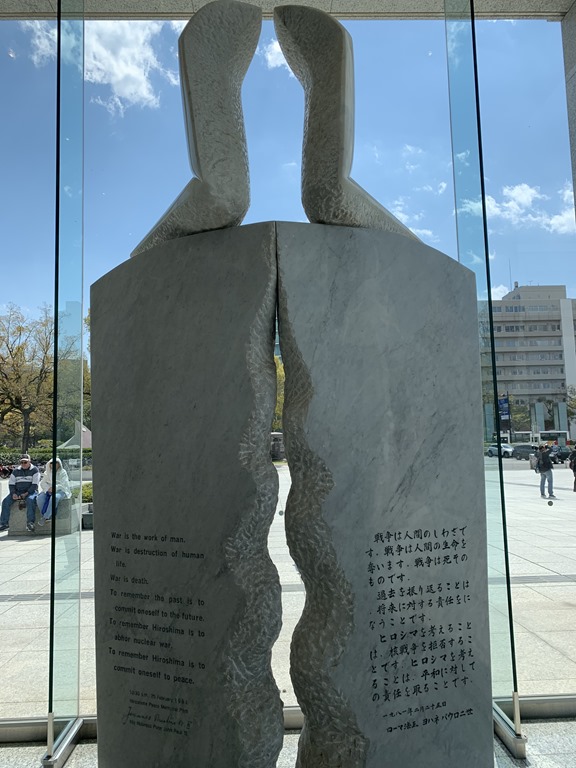
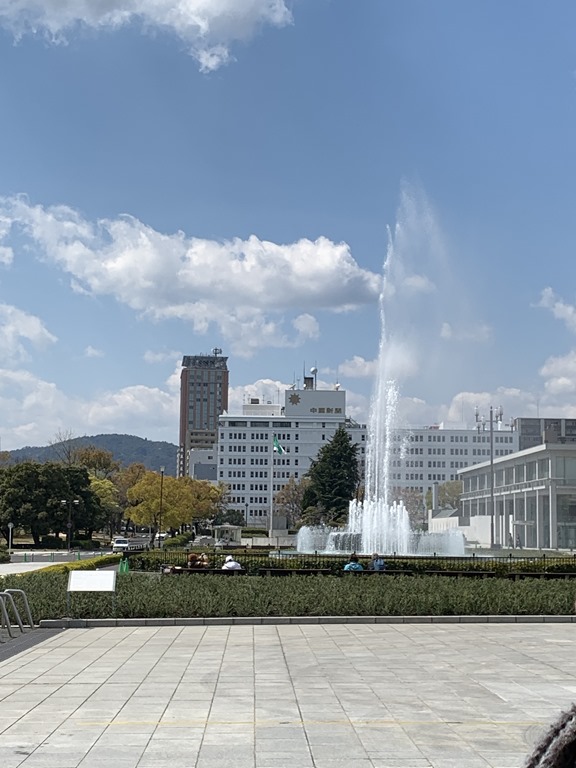
After our visit to the shrine, we took the ferry, then the bus back to the pier where we boarded the shuttle to see the Peace Memorial Park. The park is said to be a triumph of the human spirit, having been the site where the first nuclear weapon was used in war.  On August 6, 1945, the B-29 Superfortress Enola Gay unleashed the atomic bomb on the citizens of Hiroshima on ground zero which today is this park.  The explosion destroyed most of the city and only a few steel and concrete structures are still standing.  The most prominent was once the Hiroshima Prefecture Industrial Promotion Hall, the ruins of which are now a UNESCO World Heritage Site. 

IMG_5342IMG_5346IMG_5386IMG_5387IMG_5388

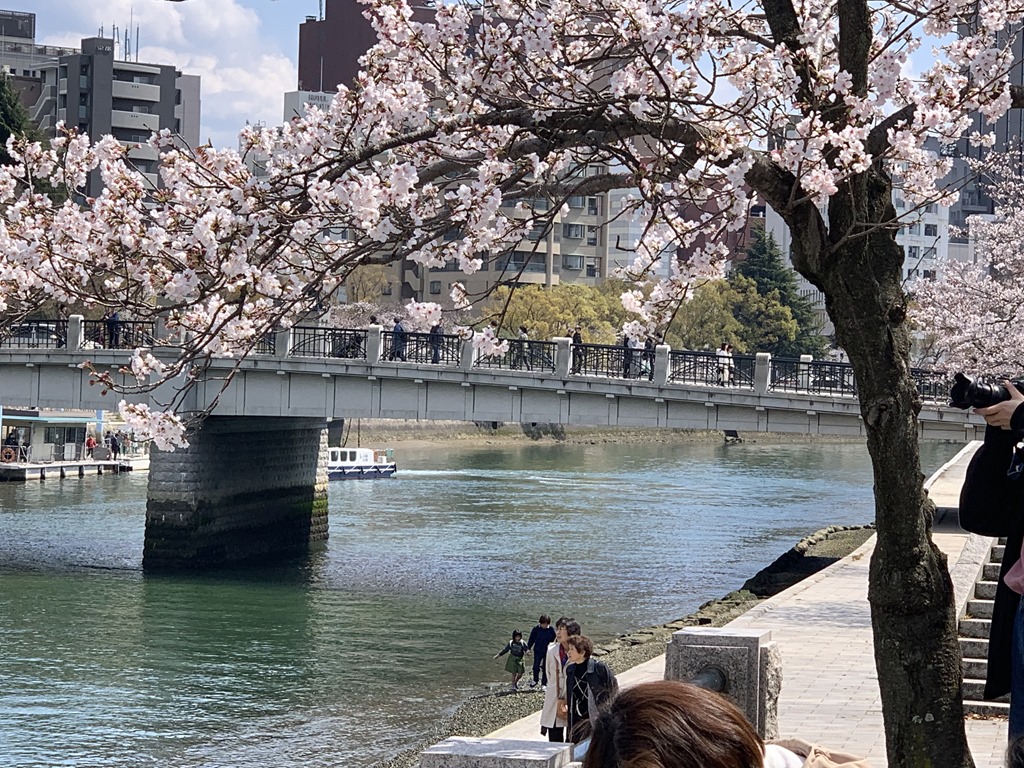
It is quite the sight to see the lovely living cherry blossoms against the wreckage of this building. 

The Atomic Bomb Memorial Mound contains the ashes of tens of thousands of victims who were too badly burned to be identified. 

IMG_5366IMG_5367

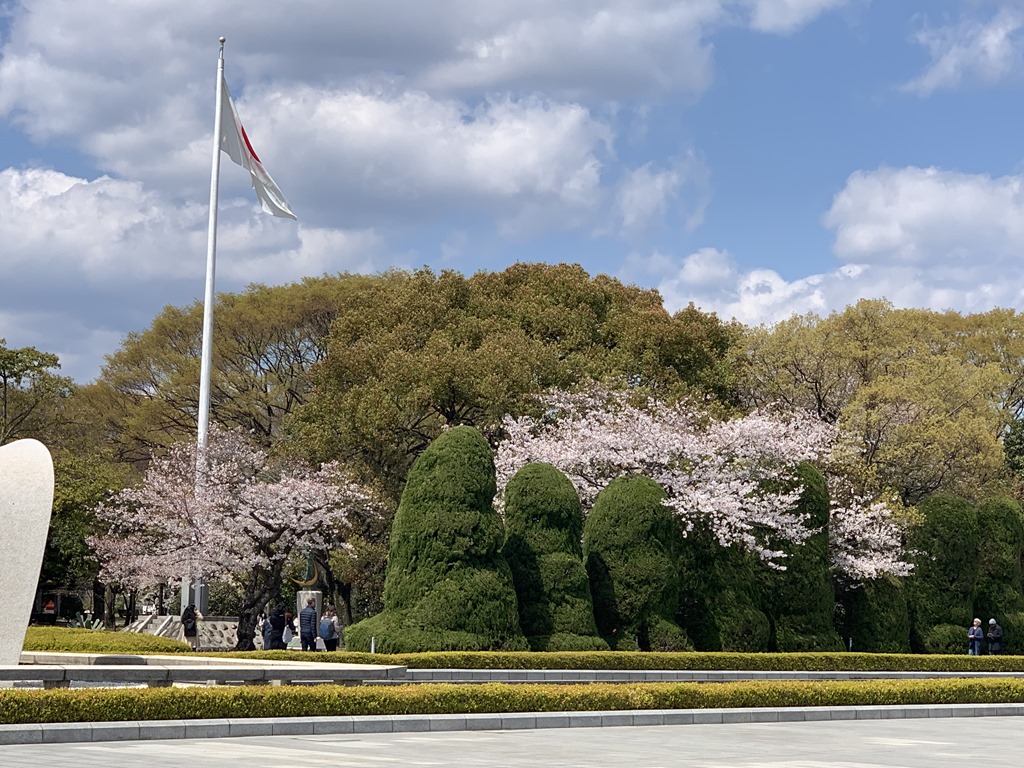
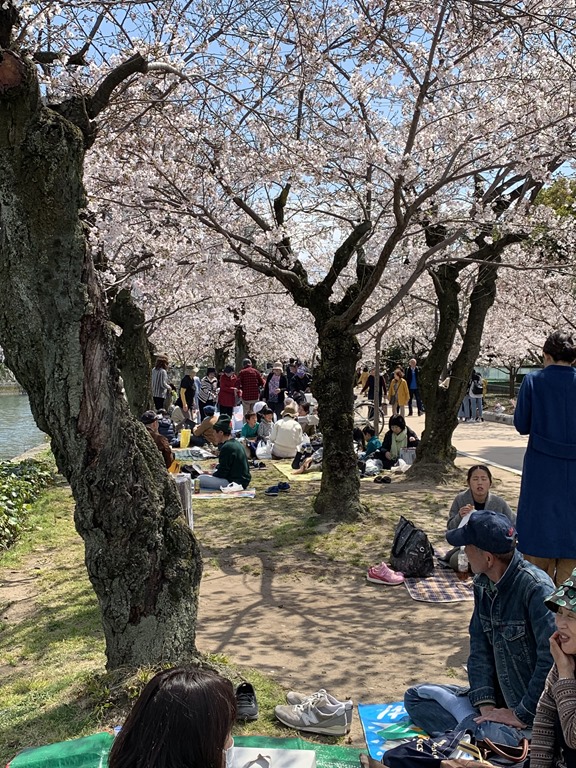
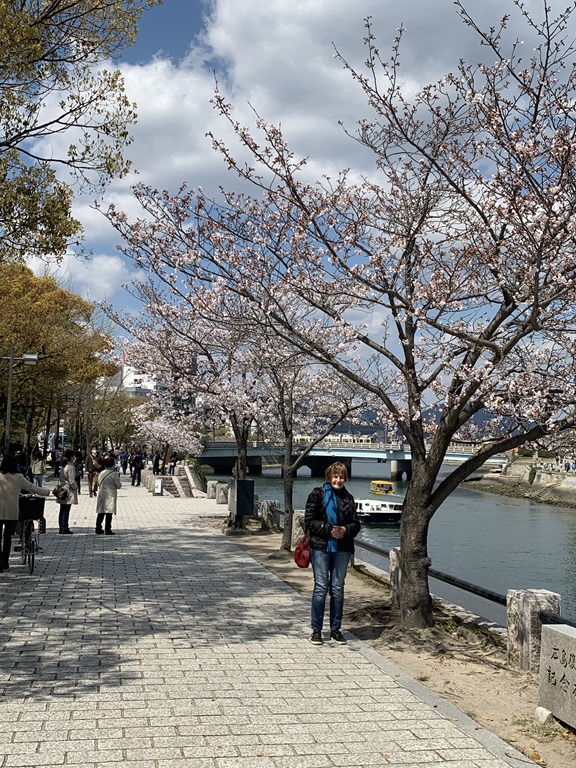
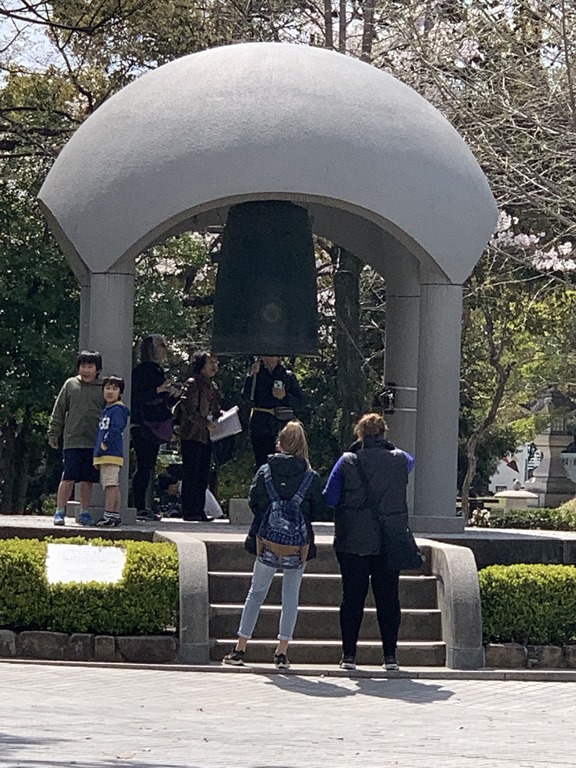
This is a huge park and there were people having picnics and generally strolling around but there was an air of reverence as if it was a shrine, which in some ways, it is.

IMG_5327IMG_5328IMG_5329IMG_5331IMG_5335IMG_5338IMG_5340IMG_5341IMG_5343IMG_5356IMG_5357IMG_5359IMG_5360IMG_5361IMG_5364IMG_5365IMG_5370IMG_5371IMG_5372IMG_5374IMG_5381IMG_5382IMG_5385IMG_5392

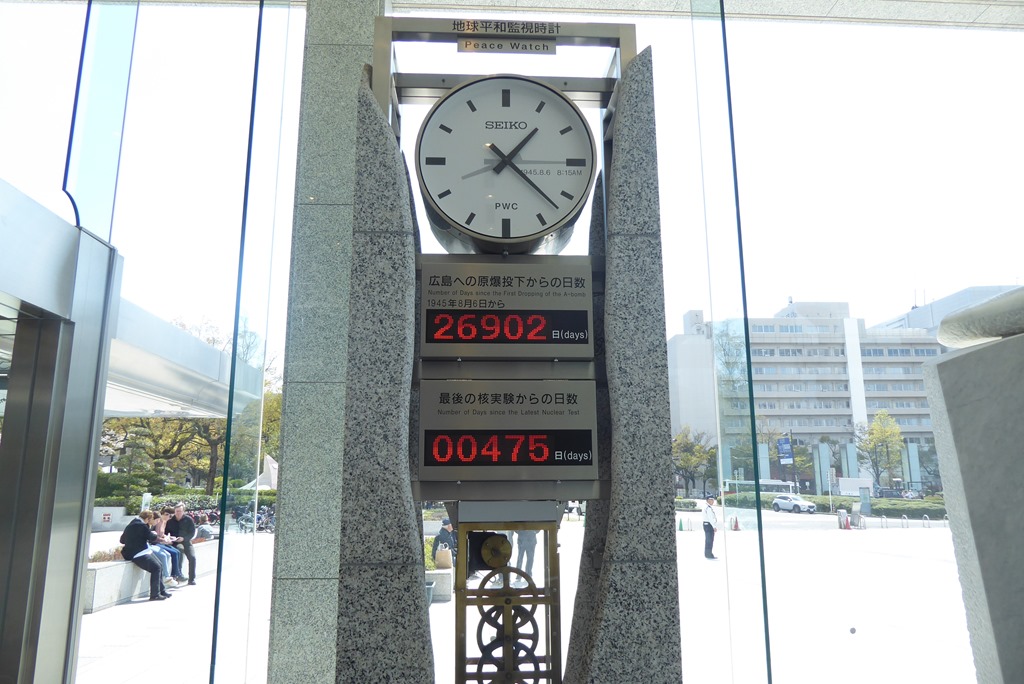
We saw the eternal flame and the Peace Watch which counts the number of days since the Hiroshima attack as well as the number of days since the last nuclear test.

 IMG_5333IMG_5383IMG_5384IMG_5394

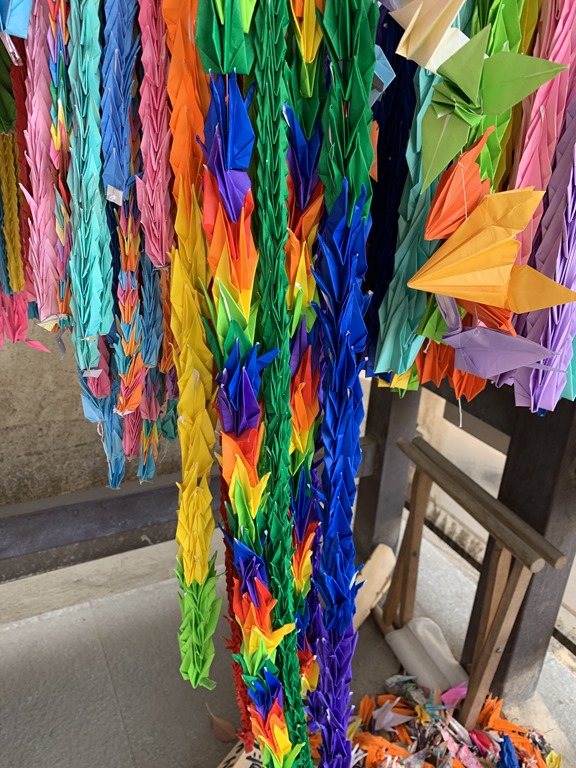
Also, the cranes are made for wishes to come true.  The legend from a 12 year old girl who made 1300 is that if you make more than 1000, your dreams will come true.

IMG_5368IMG_5369IMG_5371

It was a beautiful, chilly day with a lot of interesting and sobering things to see. We were glad for sun, Kate said they  had snow here yesterday.  We just wished for more time and will have to return.


Posted in April, Asia, Excursions, Food, World Cruise 3 | 2 Comments