Salalah, Oman

May 6, 2017

Unlike Muscat, Salalah faces the Arabian Sea.  The other side of the city faces the Dhofar Mountains.  It is the capital city of the Dhofar region and the largest port in Oman.  Oman has about 3 million people and Salalah has 300,000. Monsoon season is mid June to mid August and the landscape becomes green – unlike the dry city of Muscat.

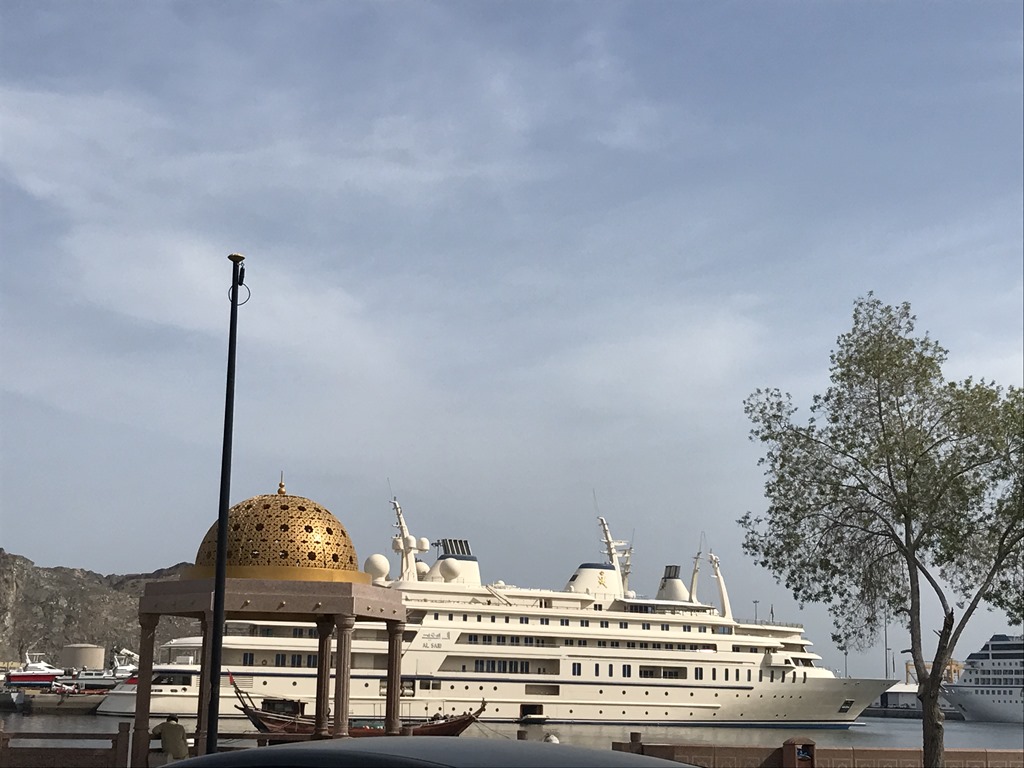
The Sultan has a palace here too – and both of the yachts in the harbor in Muscat belong to him – I forgot to mention that in the last posting.

Of course, we are thankfully not here in the monsoon  season.  We were here last year, discovered frankincense, the Al Husn souk, the Al Baleed archeological site as well as the grand mosque. The city is famous for its ancient frankincense trade and has several settlements on the World Heritage list.  It is appropriately named the “Land of Frankincense” and is still well known for the quality and quantity of the frankincense it produces.

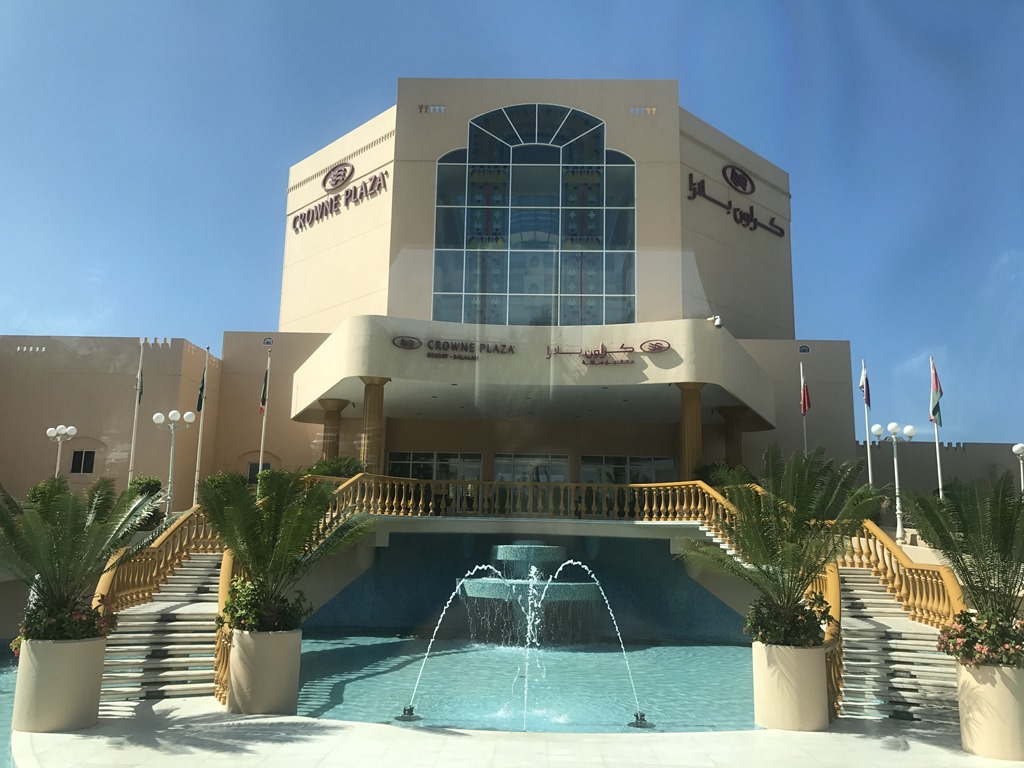
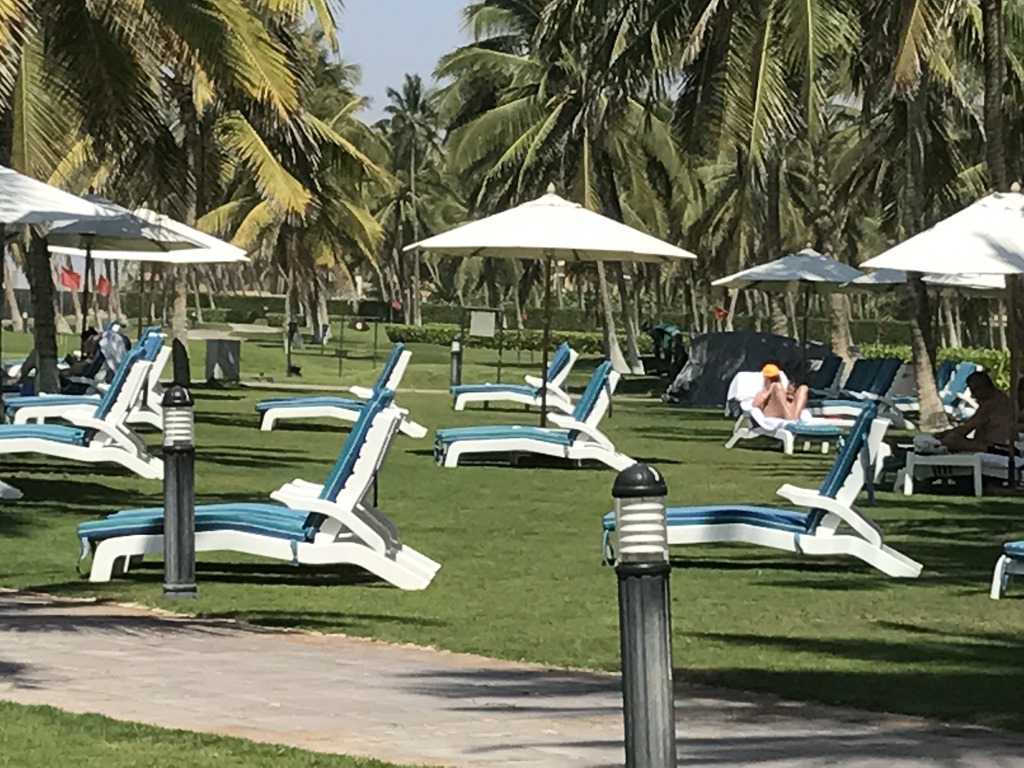
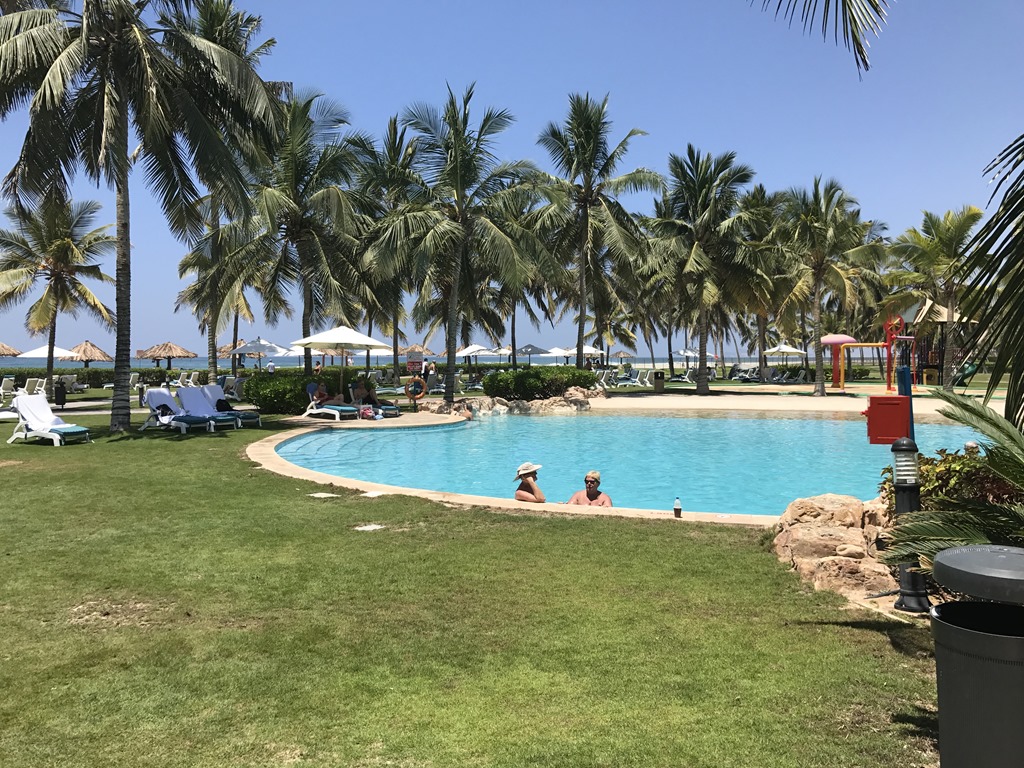
On this visit we decided to do a relaxing day and went with a group of about 30 to the Crowne Plaza resort to just relax by the sea and the three pools.

Our guide on the way there was Amon which he told us means love.

IMG_2187IMG_2235

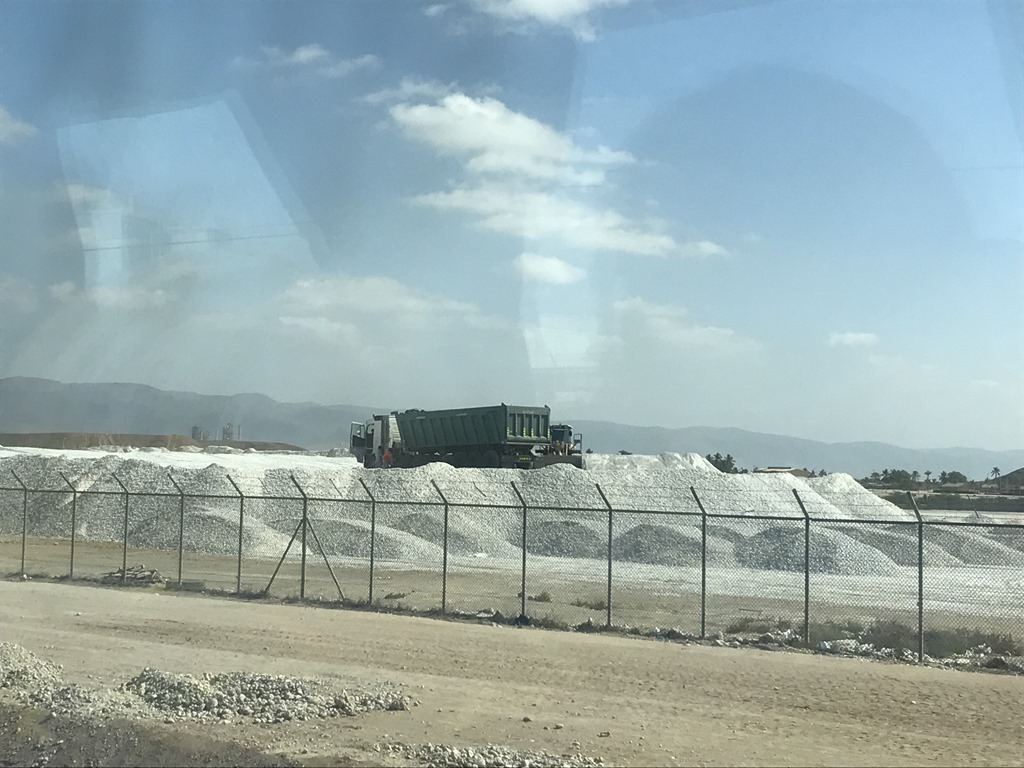
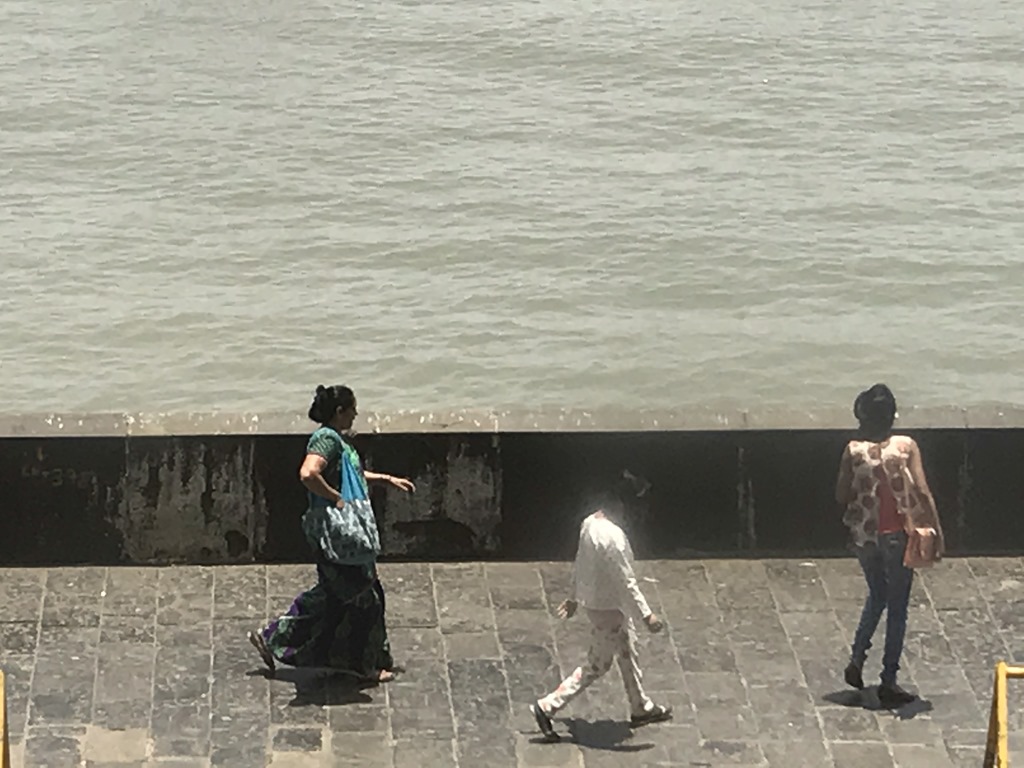
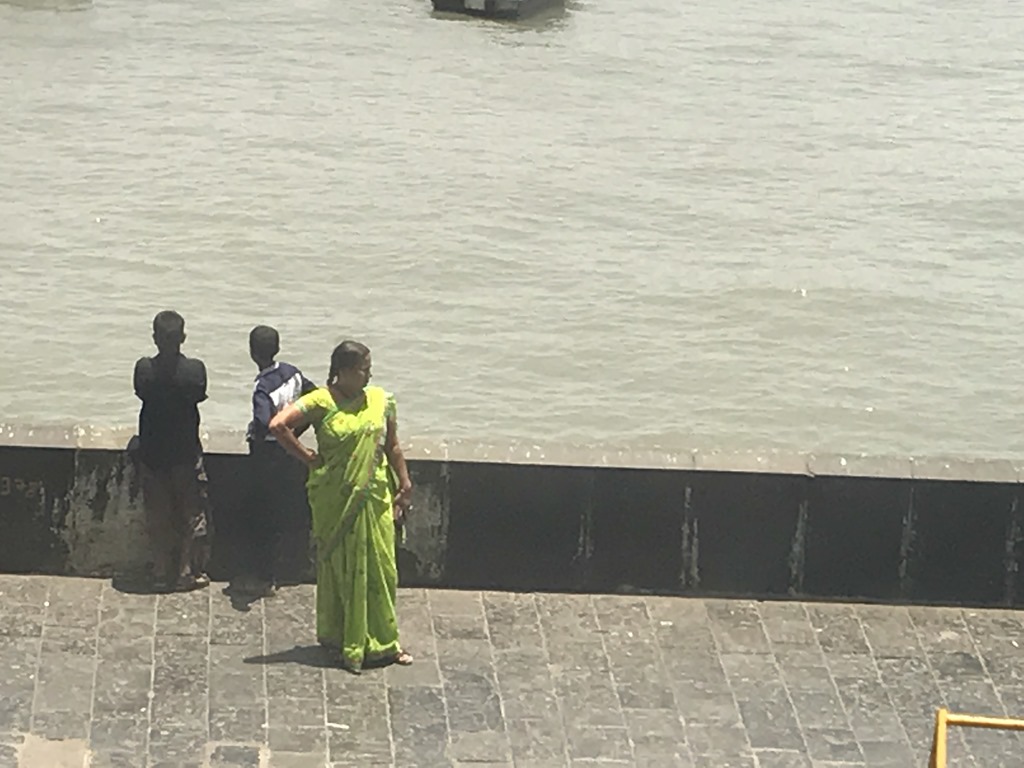
As we left the port, we passed by the town, the Sultan’s palace and the beautiful beach – the corniche, which spreads along the coast east from Salalah to the remains of the ancient cith of Zafar – now protected as the Al Baleed Archeological Park which, as I mentioned, we explored last time but just passed by this time.  The first photo is the limestone near the port.  Oil and limestone are their biggest exports. This city is very safe and spotlessly clean. Amon says that people from India and Pakistan do the cleaning of the city 24 hours a day and it really shows.

IMG_2190IMG_2191

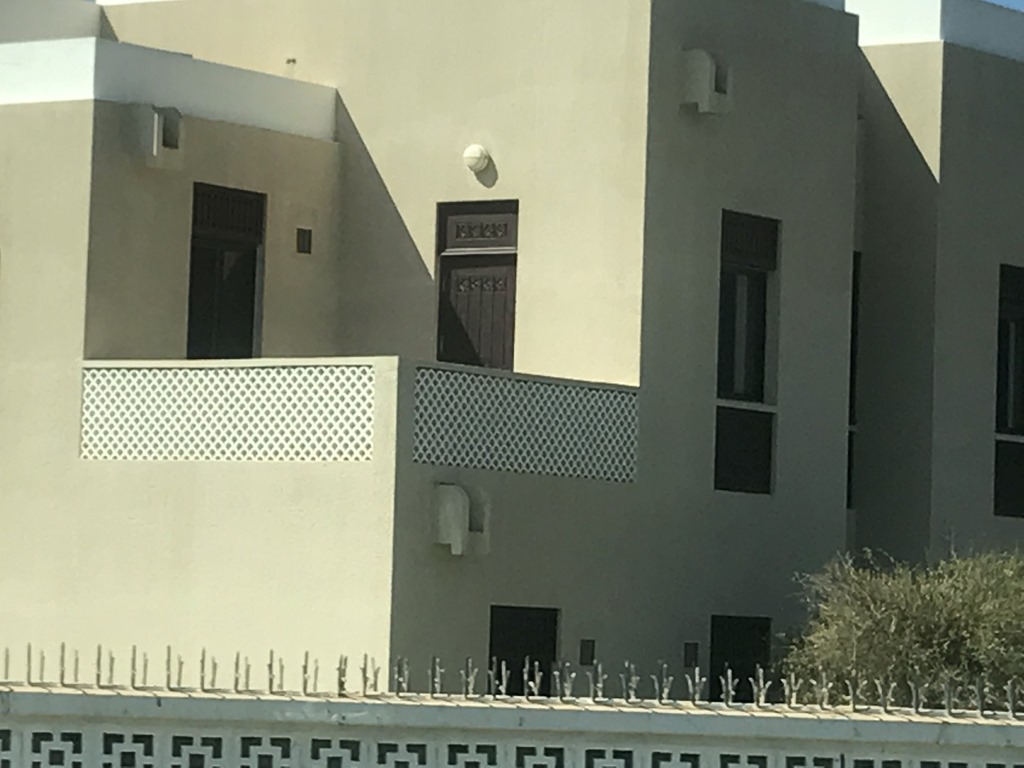
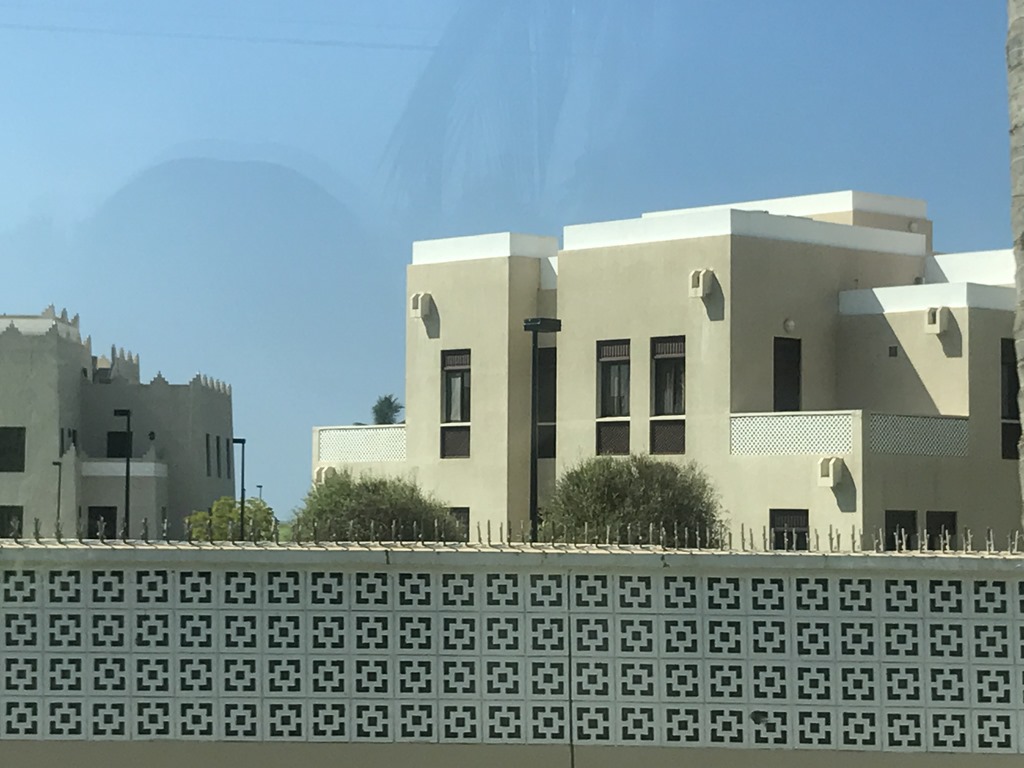
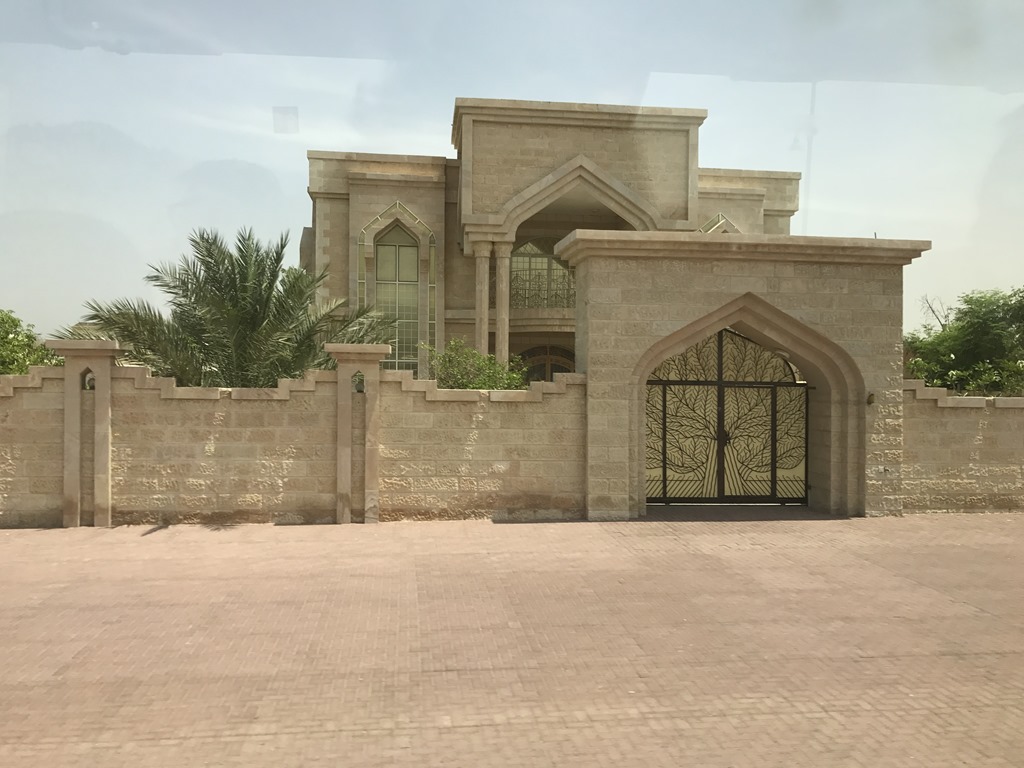
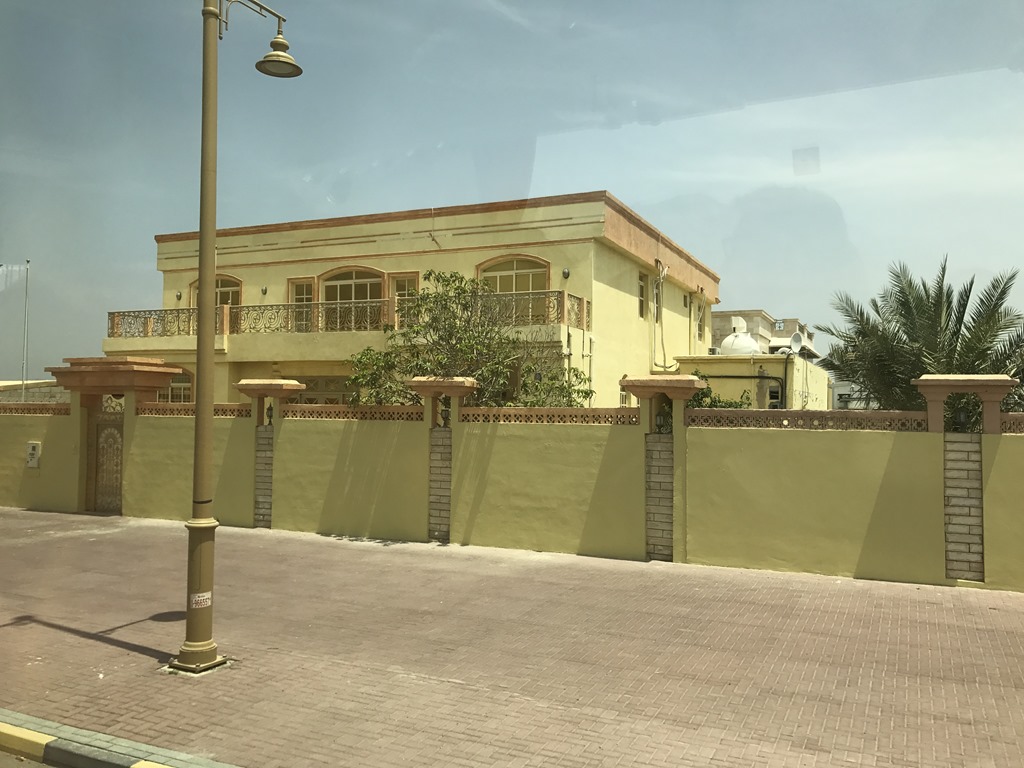
This is what some of the newly constructed homes look like.

IMG_2192IMG_2193

The Sultan’s palace is at the end of the street.

IMG_2196

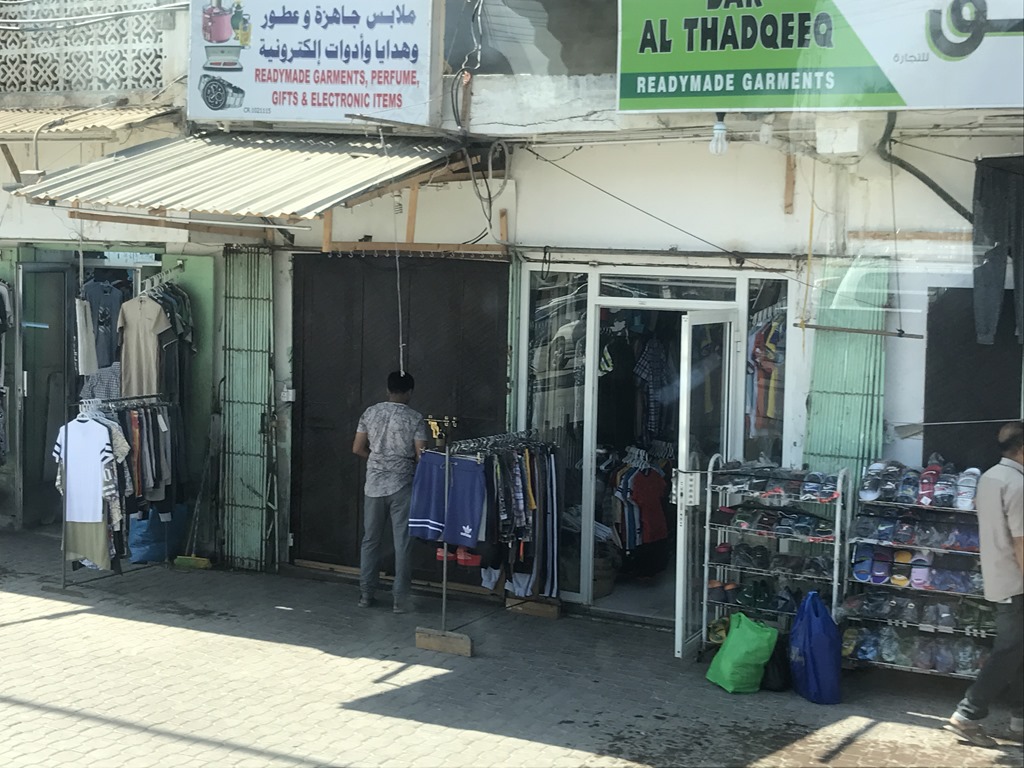
Here are a couple of the shops in the souk.

IMG_2198IMG_2200IMG_2201

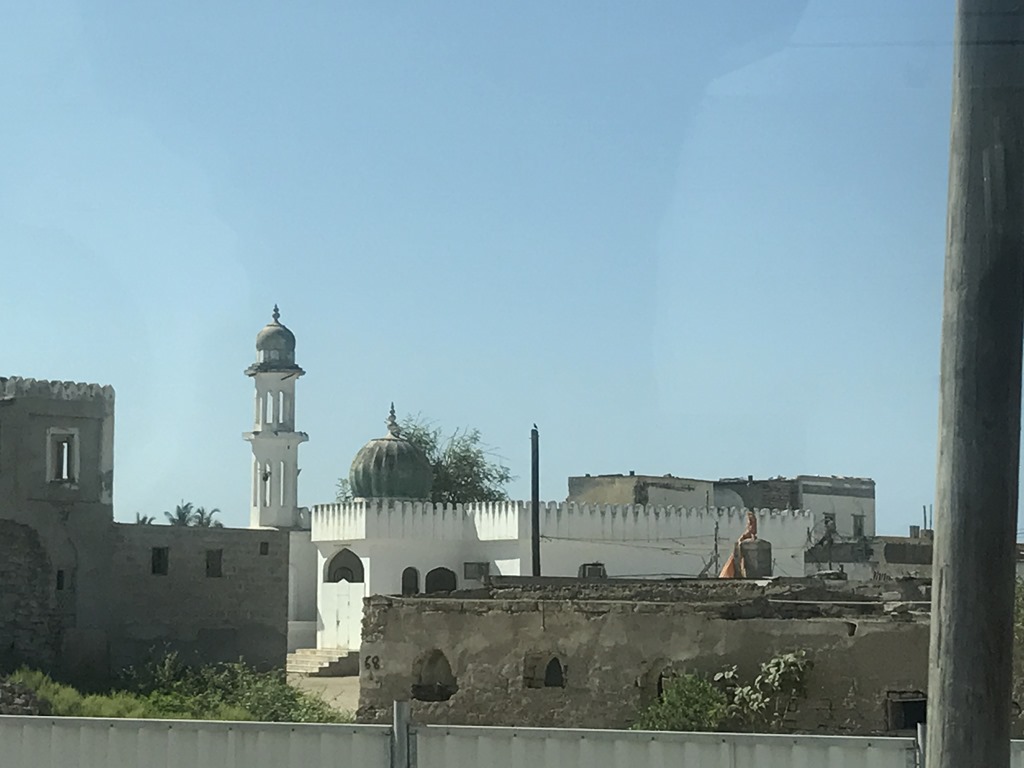
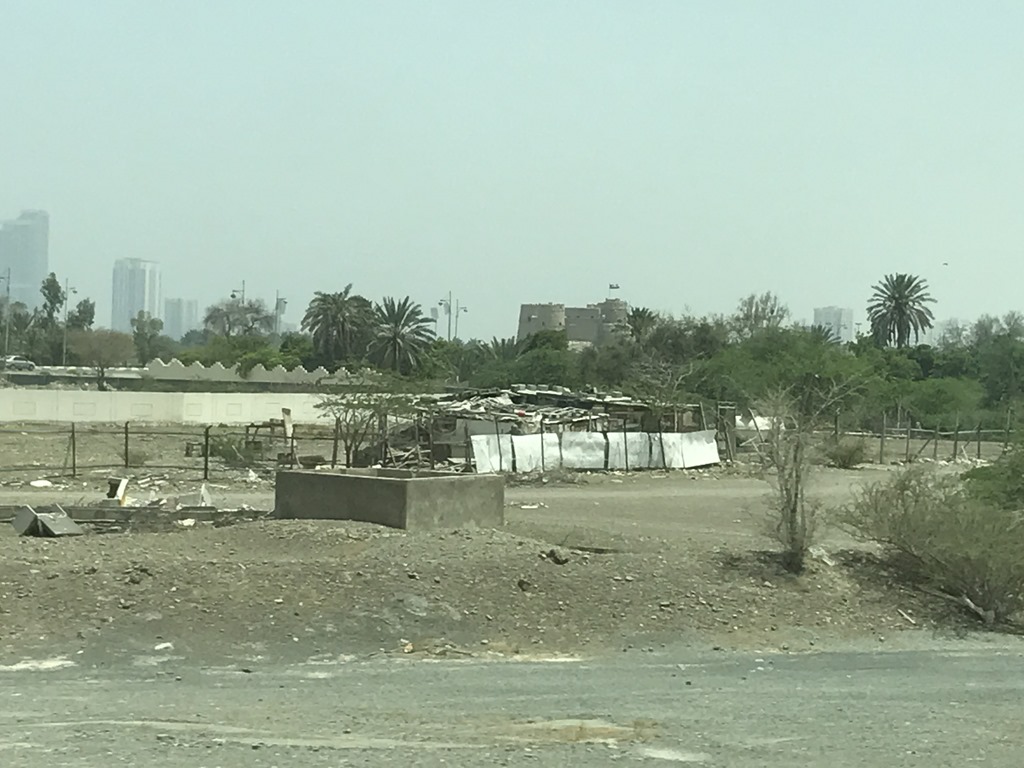
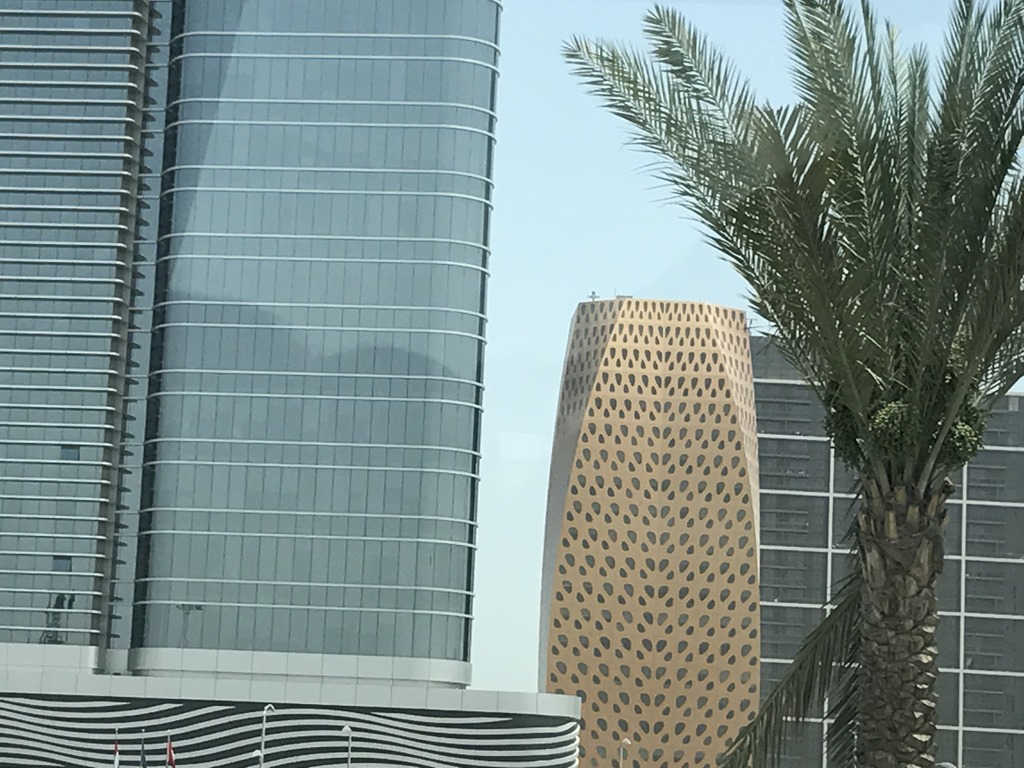
Oman has a lot of oil and the pipeline and the oil tanks surround the port.  But once you leave the port area, you see lots of new building – mainly hotels. Tourism is really exploding here and you can see it.  In one area they moved all of the people into new housing in another location and are tearing down the houses to allow new construction along the beach. I wondered if they will also tear down the mosque here but didn’t get an answer to that.

IMG_2202IMG_2203IMG_2204

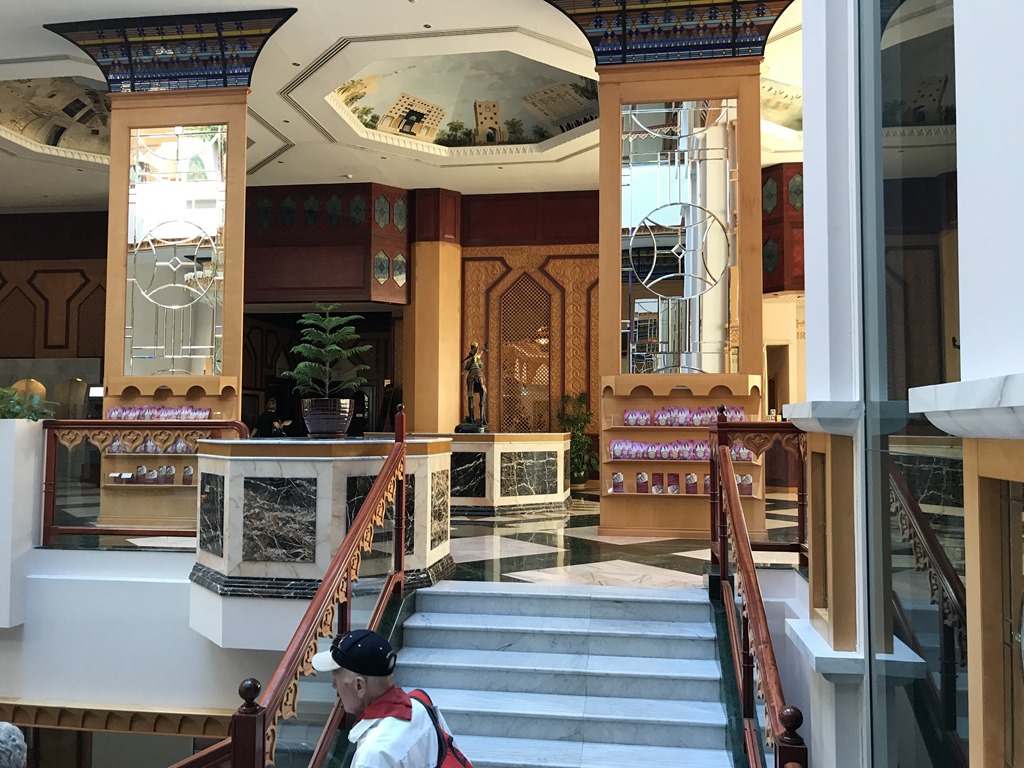
We arrived at the Crowne Plaza in about 20 minutes and really enjoyed our time there.  They didn’t serve alcohol until noon so we had soft drinks till then!

IMG_2207IMG_2209IMG_2210IMG_2212IMG_2215IMG_2216IMG_2218IMG_2219IMG_2223IMG_2228

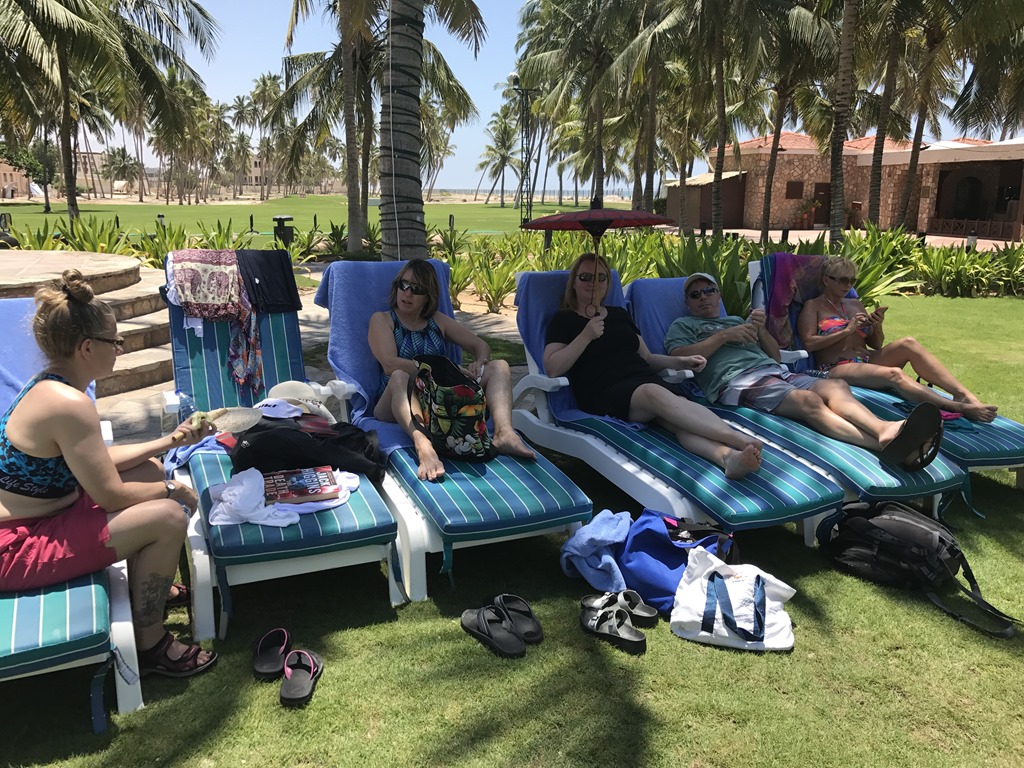
Some of our friends from the ship. The pool bar was wonderful!

IMG_2222IMG_2226

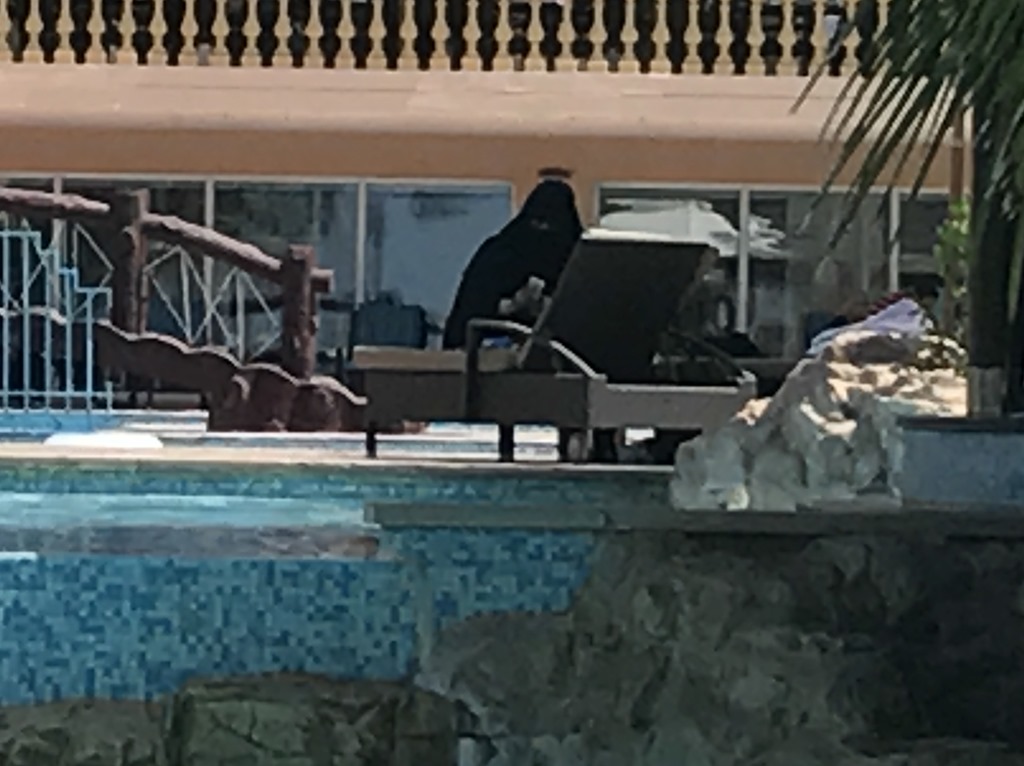
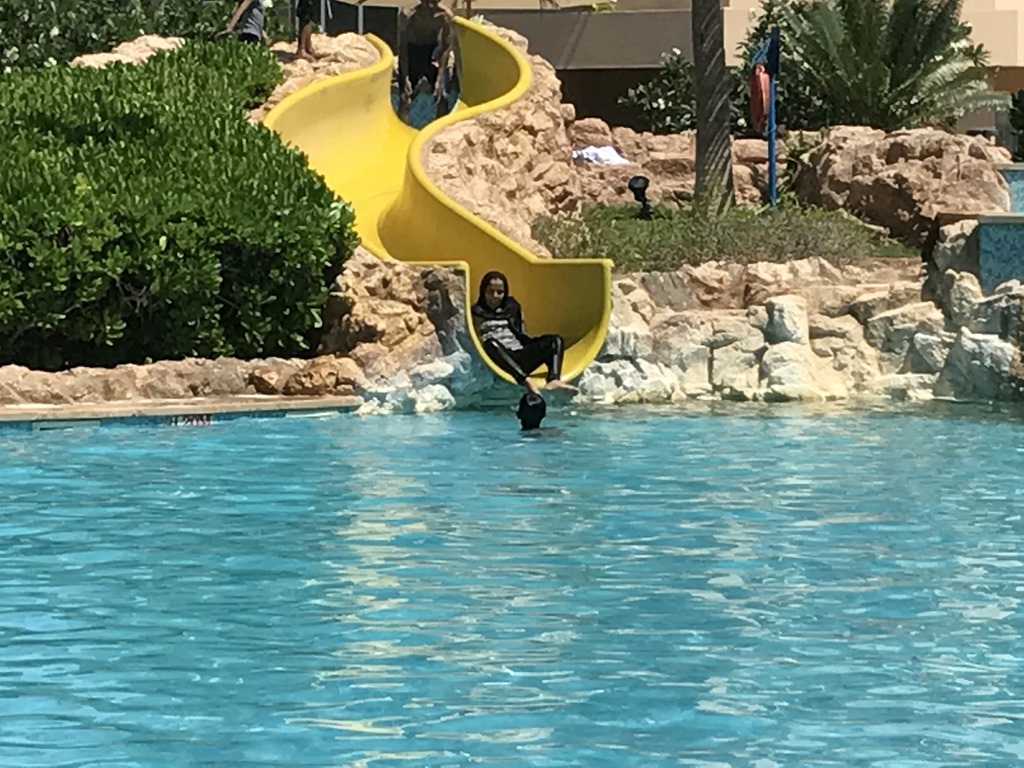
We saw women in full burkas as well as younger girls in the pool and on the slide fully covered in long sleeved tops, long pants and head scarves. There were a lot of westerners there and bathing suits were permitted although there was a sign asking you to be sure they were “discreet”.

IMG_2221IMG_2219

We are going to be in the Gulf of Aden and the Red Sea for 4 days. We had our pirate drill when we returned to the ship.  It was a party atmosphere out there sitting in the halls but I am sure it wouldn’t be the same if we ever got attacked!

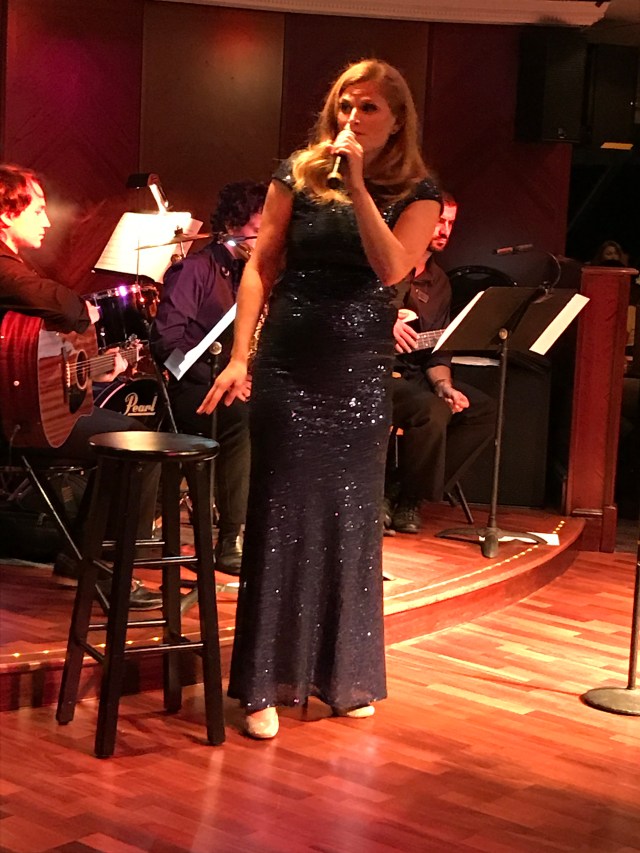
Our show tonight was the “Diva” of music and laughter, Beverley Davison.  What an excellent violinist and her “diva” presence was a real hoot!

Posted in Asia, Excursions, May, World Cruise 2 | 2 Comments

Muscat, Oman

May 4, 2017

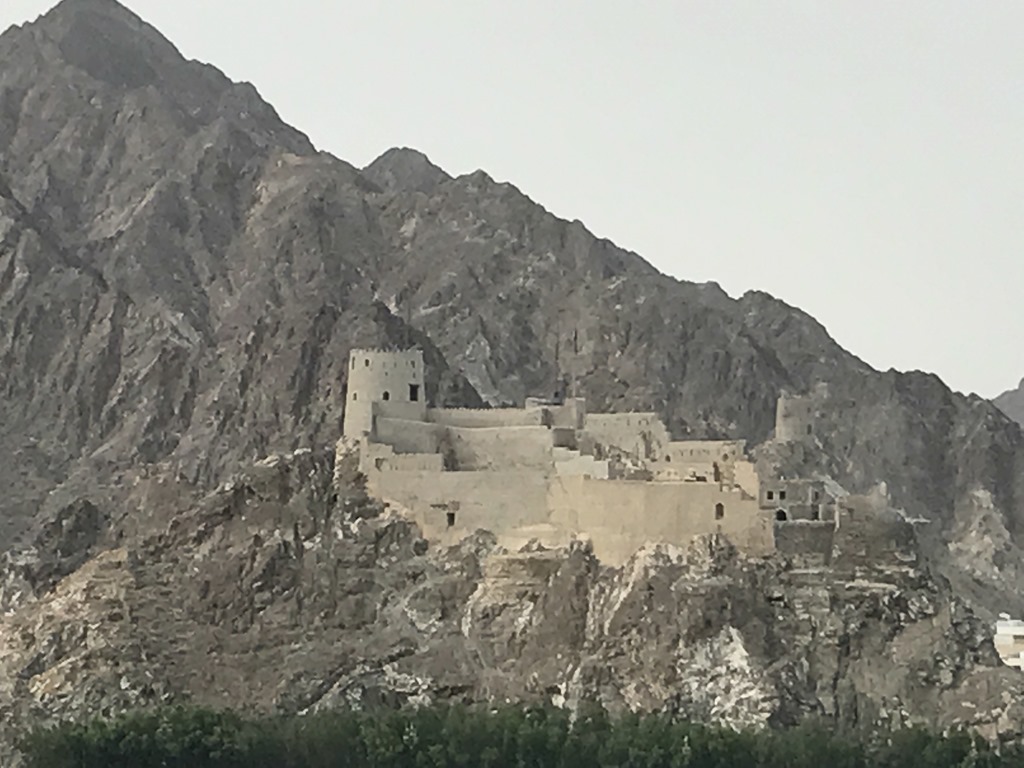
As we sailed into Muscat today, we saw that the rocky landscape looks much like Fujairah.  One difference you see are the Al Jalali and the Al Mirani forts.  They were designed and built to protect Muscat from invasion and construction began over 400 years ago.  They are not open to the public.

IMG_2155IMG_2174

Muscat is the largest city in Oman and offers a glimpse of past and present.  The Portuguese captured the town in 1508 and held it until 1650. A lot of destruction here and in neighboring ports happened during this time.  The most famous landmark is the Sultan Qaboos Mosque, which is one of the largest in the world.  We visited it last year and didn’t go again today.  It was built in 2001 because the Sultan insisted that Oman should have a Grand Mosque. We went on a tour of the sights last time we were here so we took the shuttle to the souk today.

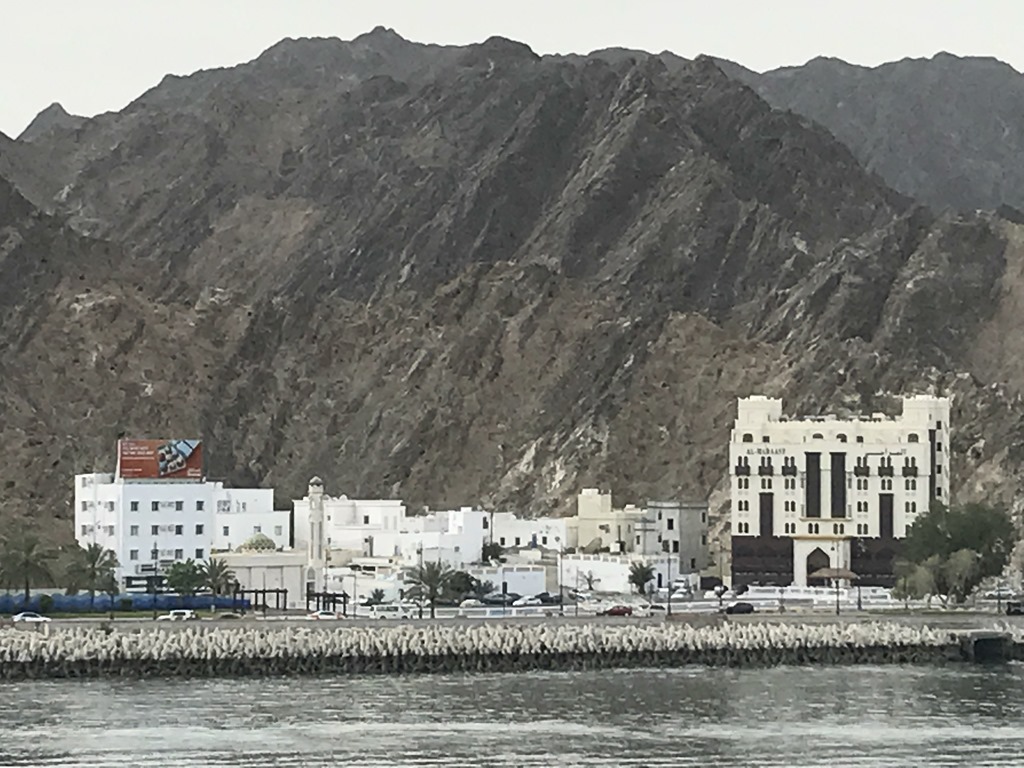
This winding marketplace along the corniche is just 15 minutes from the port.  It is a maze of shops that is known as one of the oldest and best markets in the region.  There are shops of all kinds!  Here are just a couple of pictures. I don’t know who uses these huge pots (Norm is in the photo for perspective!)  It was 103 degrees today so we walked through the souk and around the corniche for a while looking at the scenery including two huge yachts in the harbor.

IMG_2171market 2market

IMG_2156IMG_2157IMG_2159IMG_2162IMG_2163IMG_2164IMG_2165IMG_2172oman

Not much that we wanted to buy in the shops but I did get a couple of pairs of cotton pants that I liked.  You can really bargain here, and often I think about what a dollar or two means to the person and how little it really means to me (not even a cup of Starbucks) and I give them a bit more than I might have bargained for. All of the shops have men working in them.  We saw a few women and children shopping but none running the shops.  It is considered offensive to photograph Muslim women so I resisted even though the children were quite adorable.

So after a very hot morning, we returned to the ship to cool off, read and watch a movie! It was called Youth in Oregon and was one we hadn’t heard much about.  The topic is timely for our age group.  Check it out.

There are four new security people on board and today we will have our pirate drill.  Our captain sent a letter to our suite last night explaining it.  We have been through it before so no surprise but I think other passengers are a bit nervous. The fifth level deck has been closed off for a while and there are high speed hoses out.  We will need to keep our curtains closed at night and if needed, we would go into the hall and sit down – that is part of the drill. There are fewer pirate attacks in the last few years due to naval patrols, etc.  Also, they usually go for ships that are closer to the sea than cruise ships.  We will be in the area for about 5 days until we reach Jordan.

All seems to be back to normal on the ship and in the dining rooms particularly and the GI problem did not spread beyond the 6 people who are now all out of quarantine.  The word is that it was not contagious and came from some contaminated food or drink that they had in Agra, India.

Posted in Asia, May, World Cruise 2 | Leave a comment

Fujairah, UAE

May 3, 2017

This is another port we visited on our last trip and we did the same thing we did last time… we went on the shuttle to the mall.  Only this time our shuttle bus was stopped by the traffic police for an expired registration (or at least that is what we could comprehend!)  We were stopped at a gas station for about 30 minutes while they came to some agreement and we went on to the mall. 

There really is not much going on here.  It is the smallest of the Emirates, only 1.5% of the UAE’s total area. The landscape is very hilly and it all looks like stone. 

IMG_2139

There is a mosque but not as huge as the ones we have already seen.  It is also called the Sheikh Zayed Mosque and was recently built.  The older one, the Al Badiyah Mosque is 19 miles north of the city and is the oldest mosque in the UAE, built of mud and local stone. We chose not to make that trip.

IMG_2148

So it was the shopping mall for us where I had hoped to have my nails done but they didn’t have any places for that.  So we picked up some local dates (delicious) and a few other things we needed and headed to Starbucks for what we hoped would be free and fast wifi.  We were half right, it was free for an hour but really not fast, so we couldn’t back up our devices.  I did have a mango iced tea that was really good, and we observed many men in the white robes and women in the black.  Some of the women had their faces covered and others just covered their hair with scarves.  It is 103 degrees here.  Why is it that the women wear black and the men wear white, I wonder?

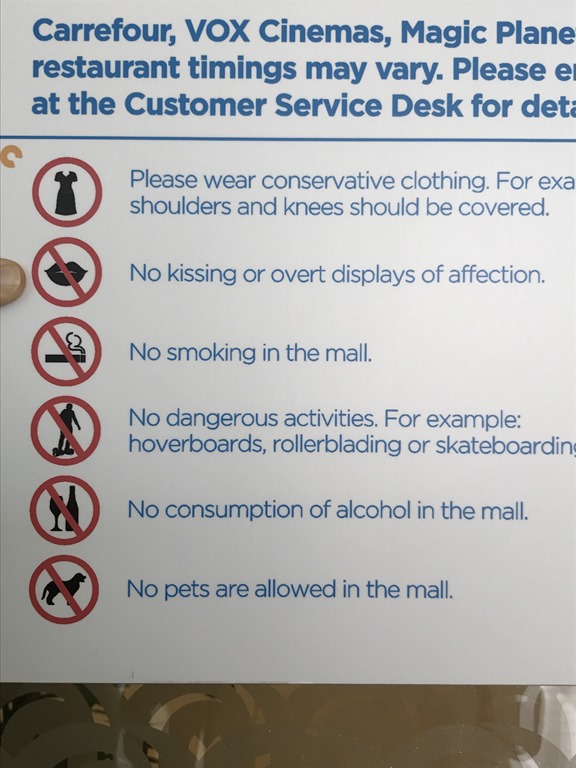
You are supposed to dress conservatively in public places here – this is the sign on the doors entering the mall.

IMG_2145

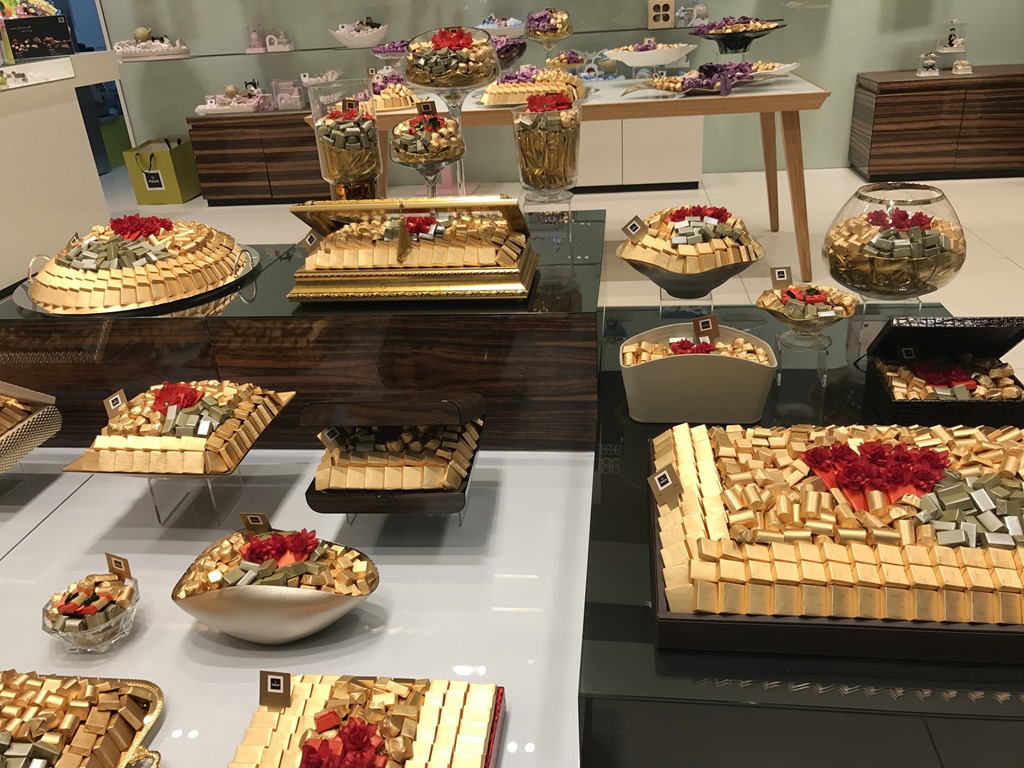
There was a beautiful candy shop.  We didn’t buy any but the shopkeeper let us take pictures anyway.

IMG_2143

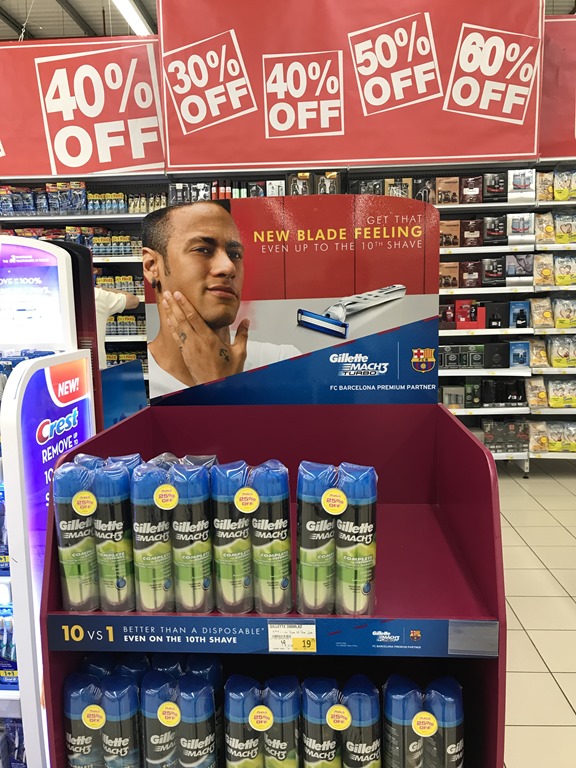
And, Mark, Gillette products are big here.

IMG_2141

Fujairah is the only one of the Emirates that is not on the Arabian Gulf, it faces east to the Indian Ocean (Gulf of Oman), so it is not as heavily developed.  Many visitors come from Dubai to experience the largely deserted beaches on the coast.  I don’t think anyone from the ship went to the beach though, you would definitely burn your feet on the sand! But you can wear swimsuits there.

We are in a shipping port and there are a huge number of tankers in the harbor (our neighbor on the ship – Winston – counted 89) and lots of circular oil storage containers in the port. You are not allowed to walk in the port and I can see why. They have almost completed an oil pipeline from Abu Dhabi to here.  The pipeline will allow them to import oil without having to send it by ship through the Strait of Hormuz, close to Iran.  They are afraid that Iran would be able to block the ships and thus cut off their supply of oil. So,this pipeline is critical for them as well as for much of the rest of the world. In March American warships here were harassed by Iranian forces, so this is timely.

To see the map, click here: Strait of Hormuz

On our way back to the ship, we passed some beautiful homes and also some slum like areas quite close to them.

IMG_2150IMG_2152IMG_2153

We had a nice surprise this morning at breakfast.  April and Robert, a couple we met on the last world cruise – and had a lot of fun with – joined the ship yesterday and will be on until Montreal!  We made so much noise in the dining room last time I thought they would throw us out.  So we are in for some good times.

Anna and David Smith are also back (photography lecturer- David-  and quilt expert – Anna).  It is really fun to see passengers and crew returning.  Our first captain, Maroje Brajcic, has also returned.  Oceania has loyal passengers.  At the cocktail party for returning guests they usually have to have it on two nights as almost 85% are returning guests.  Sometimes we get approached by people who remember us from previous trips or are readers of the blog and recognize us from that.  We love this cruise line, so it is not surprising there is such loyalty.

Posted in Asia, May, World Cruise 2 | 2 Comments

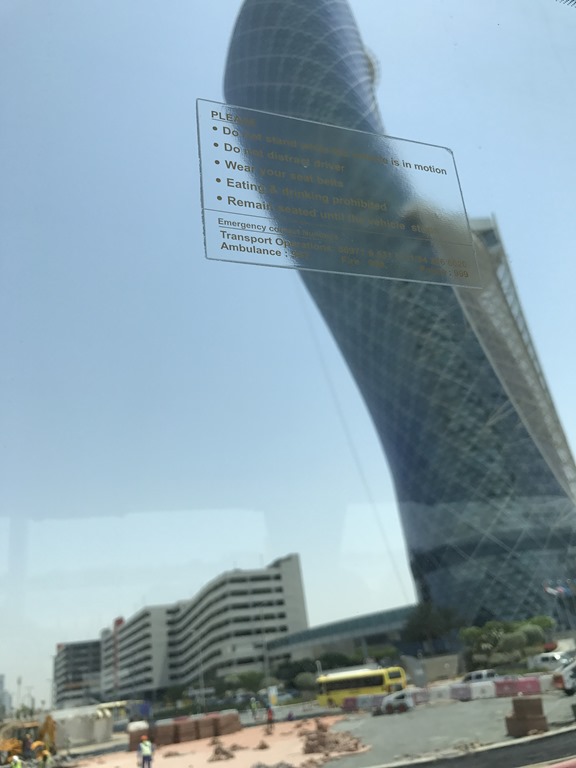
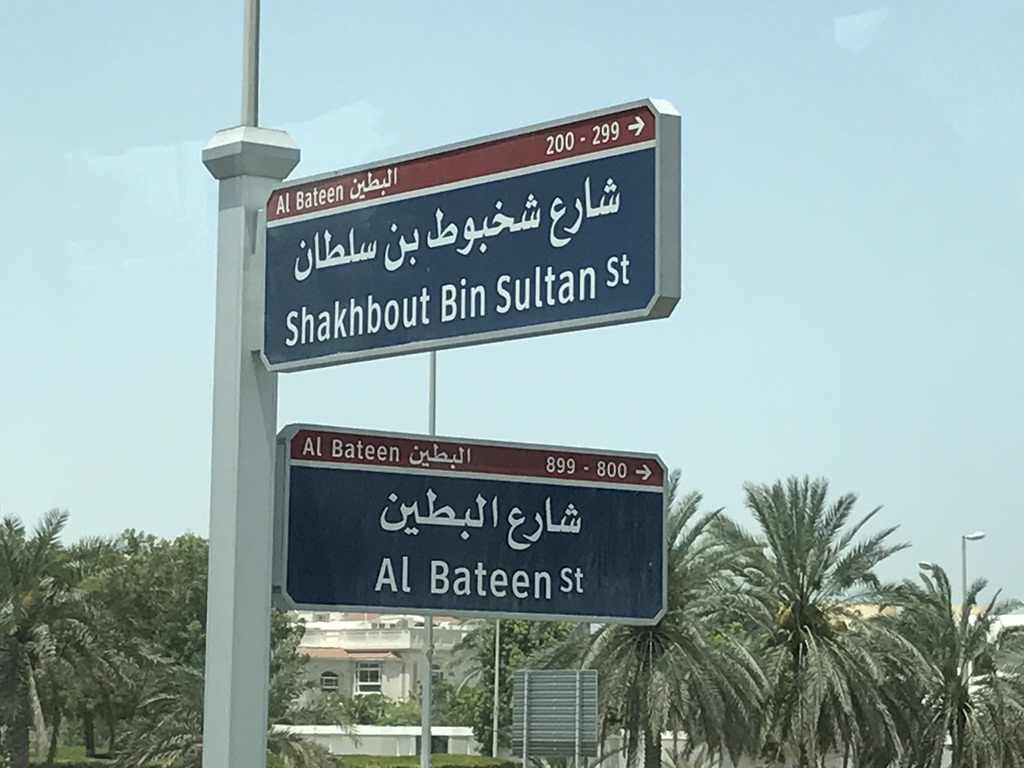
Abu Dhabi, UAE

May 2, 2017

As I mentioned in the previous blog post from Dubai, because of the cleansing of the ship, we were offered a complimentary tour here.  Last time we were here we did the desert safari, so this time we had planned to take the hop on hop off bus.  When we found we were getting this tour we decided  to take it.

Our guide was Marietta who is originally from Egypt but now lives in Dubai. Abu Dhabi is one of the 7 Arab Emirates.  It is the world’s richest city and is the biggest of the Emirates as well as being the capital city. It is on a peninsula and is surrounded by 200 islands.  The city was founded in 1761 but was really a Bedouin city of tents until about 1964.

On our drive out to the first stop, Marietta told us a lot about Abu Dhabi.  They have 96% of the oil in the UAE, so they are very generous to the citizens and to the other Emirates. Housing costs about $100/month and everyone has housing. It is supplemented by the government.  Education and health care are also free here.  There are no taxes.  If you take any money out of the country or make any investments outside Abu Dhabi you are heavily taxed.

The Sheikh is often seen out and about and the royal family here believes in being one of the people – as they are all descended from the Arabian Bedouins.  He gives out his phone number and residents can call him at any time and he also holds meetings with anyone who wants to come once a month.

They are in the Guiness Book of World Records for the largest number of palm trees – 45 million of them in the UAE.

It is very hot here -it can get up to 50 degrees celsius which is 122 fahrenheit – and it gets very humid.  Thank goodness it was only about 104 today.

80% of the people living here are foreigners.

We saw a lot of the buildings including businesses and apartments on our way.  Amazing!

IMG_2037IMG_2038IMG_2040IMG_2042IMG_2045IMG_2046IMG_2048IMG_2051IMG_2053

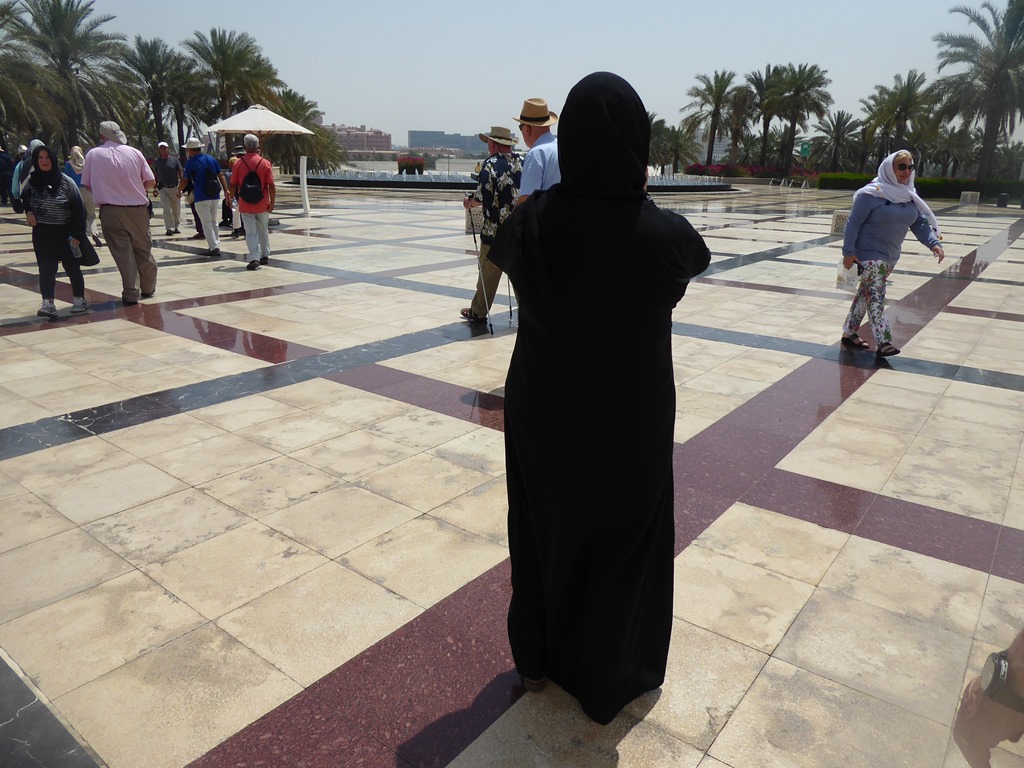
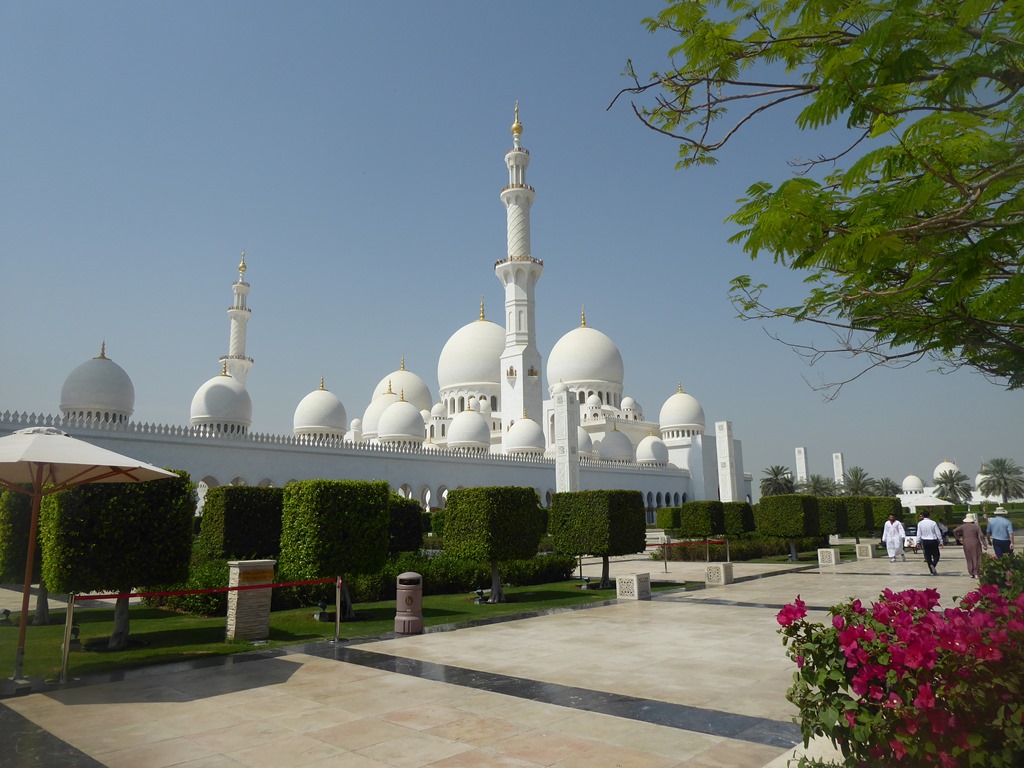
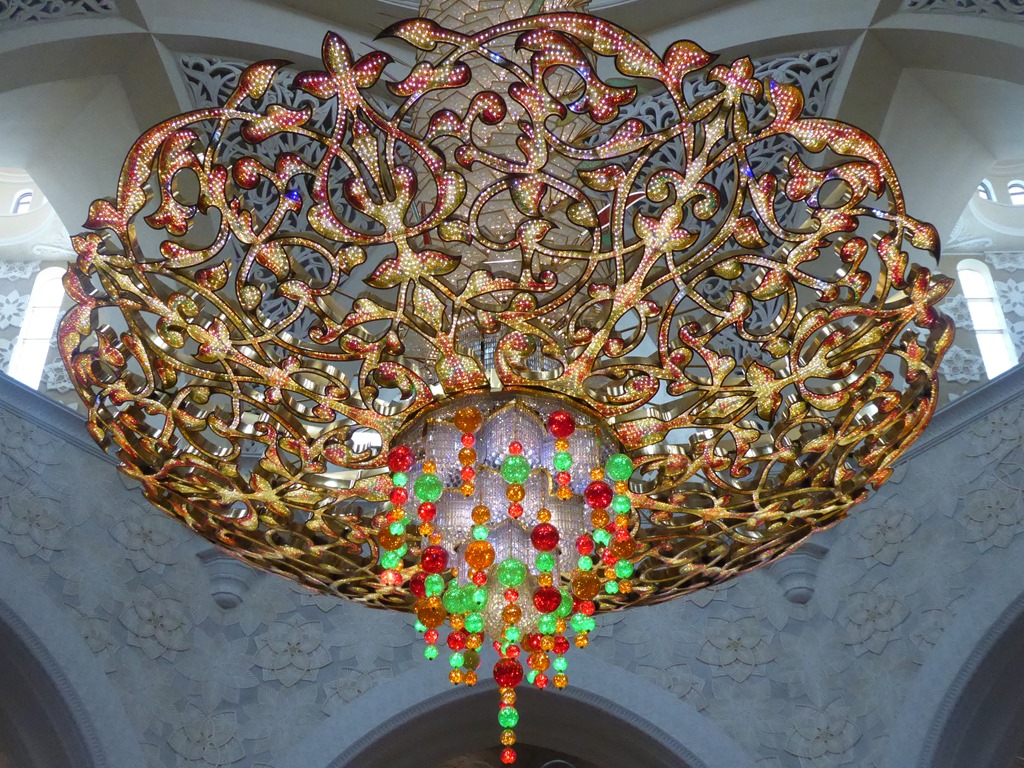
Our first stop was the Sheikh Zayed Mosque, named for the much loved Sheikh who was the one who had the vision for today’s Abu Dhabi.  The mosque is owned by the Sheikh and is the largest in the United Arab Emirates and the 8th largest in the world.

IMG_2110

Well, I used my shawl in all of the mosques we visited last year and had no problem, but at this one, the men would not let me in. They said the top I had on was too revealing, even though it was completely covered by the shawl.  Norm had already gone ahead. Men can go in looking like anything they want!   So Peter, our destination lecturer, went in and bought me this outfit so I could enter! When Norm spotted me, he didn’t know who it was at first!

Halloween costume anyone??

IMG_1895IMG_1896

IMG_1971

The mosque took 10 years to build and was completed and opened in 2007.  It is made almost entirely of marble from 12 different countries.  There are 82 domes and 4 towers. There is inlaid marble throughout. Over the 10 years, 30,000 workers were used. 

IMG_1876IMG_1877IMG_2035

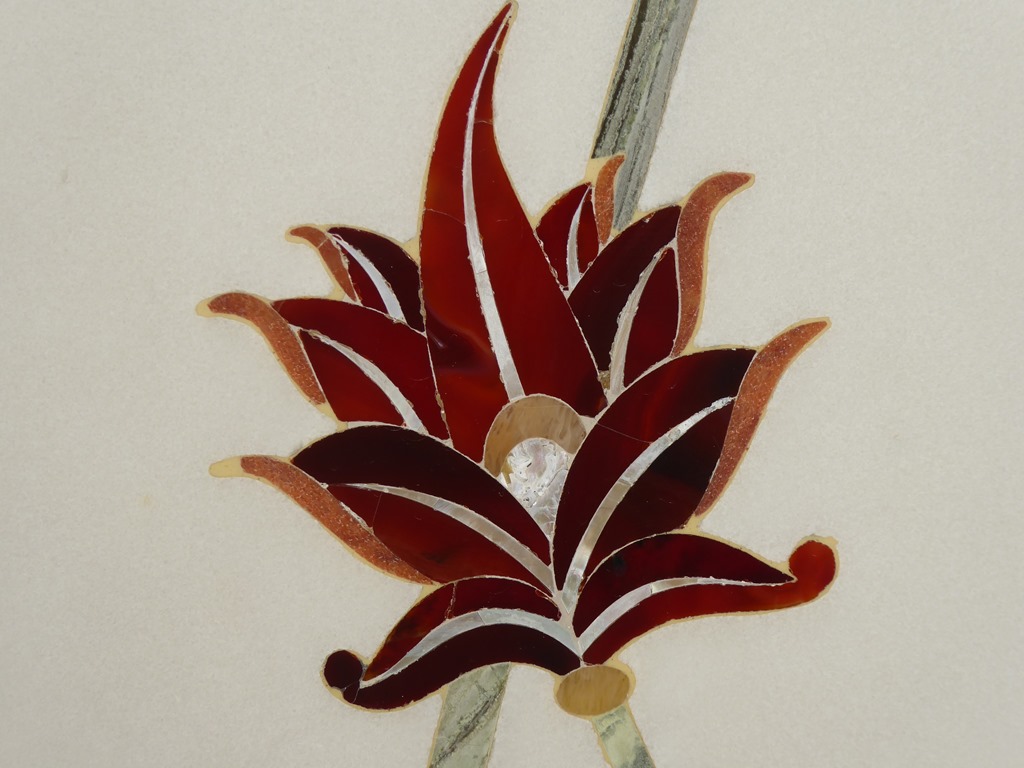
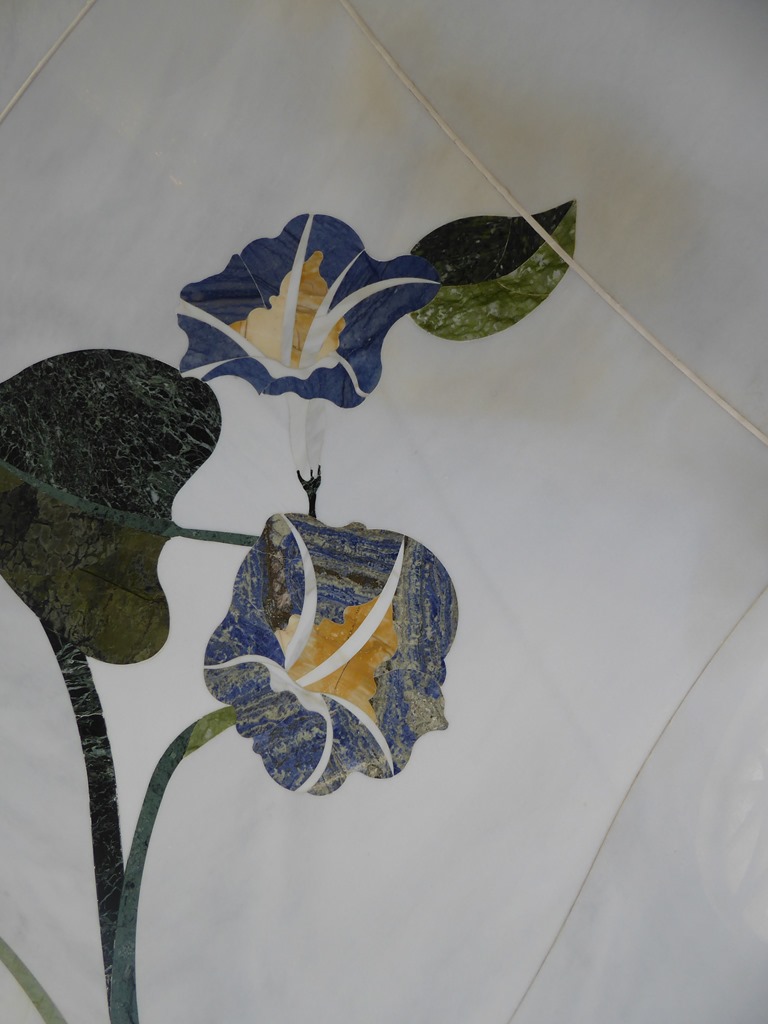
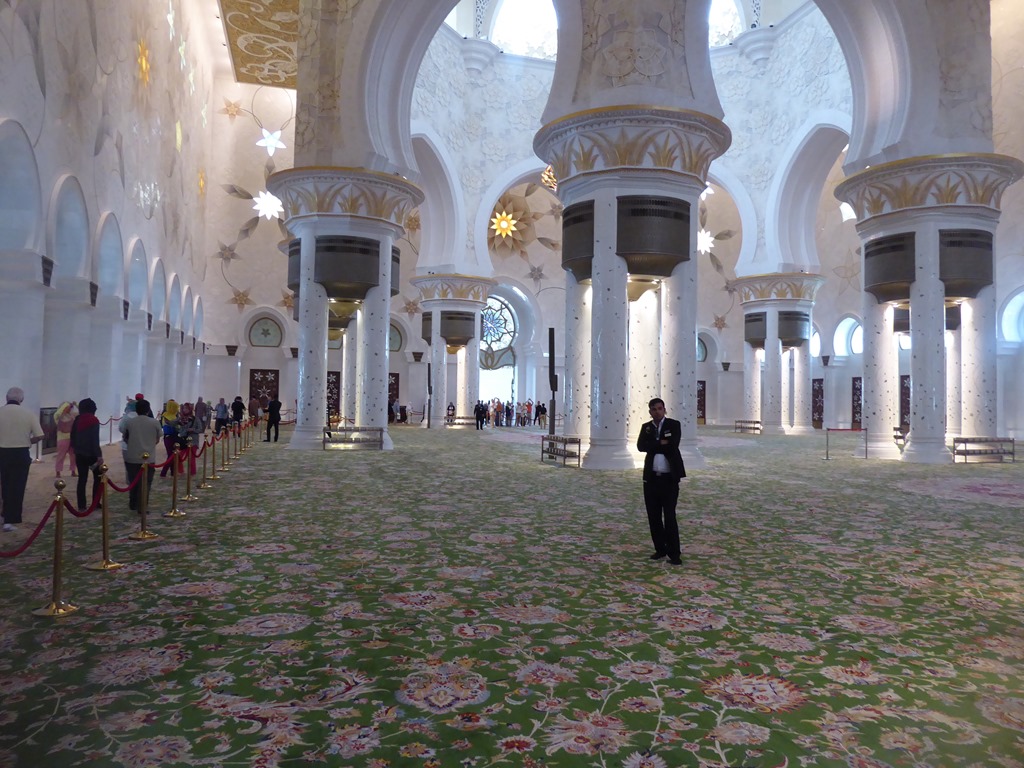
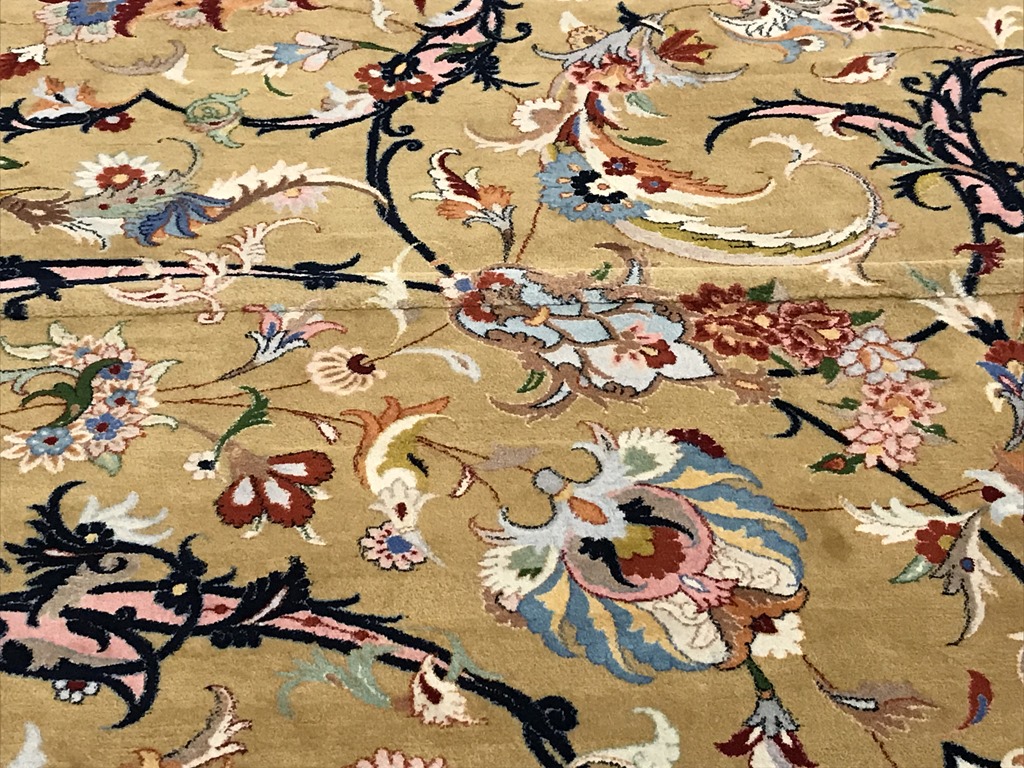
The carpets in the mosque took 2 years to weave by 1700 people in Iran and they are gorgeous. It is the only mosque decorated with flowers, all made of the inlaid marble.

IMG_1882IMG_1883IMG_1885IMG_1887IMG_1948

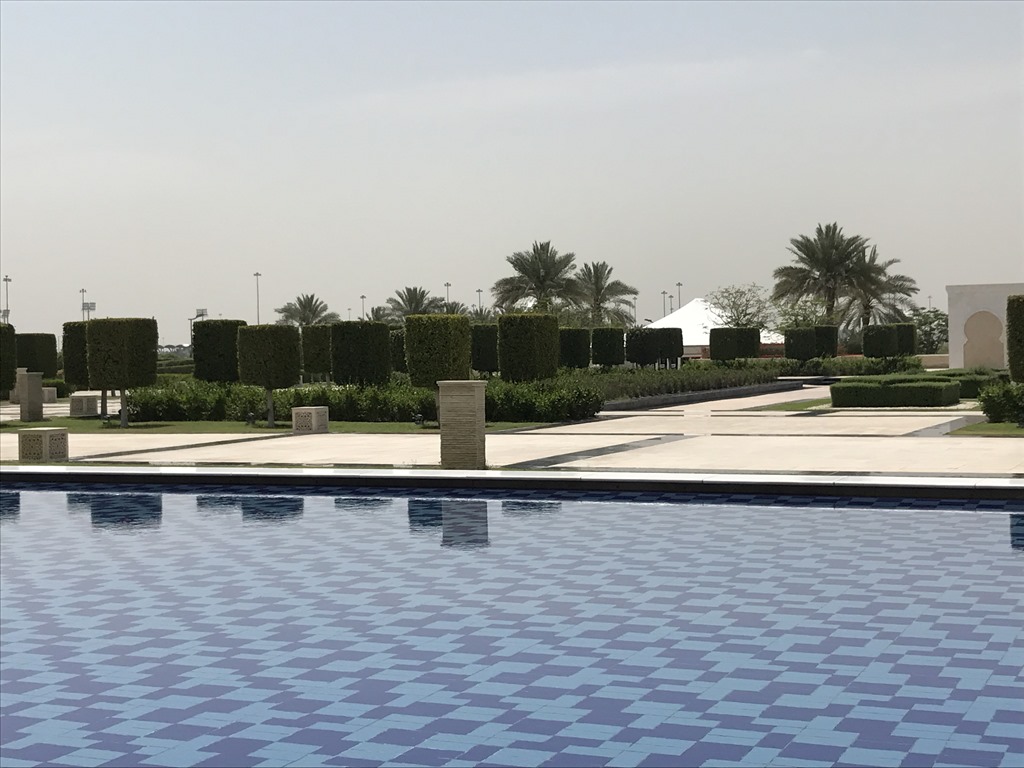
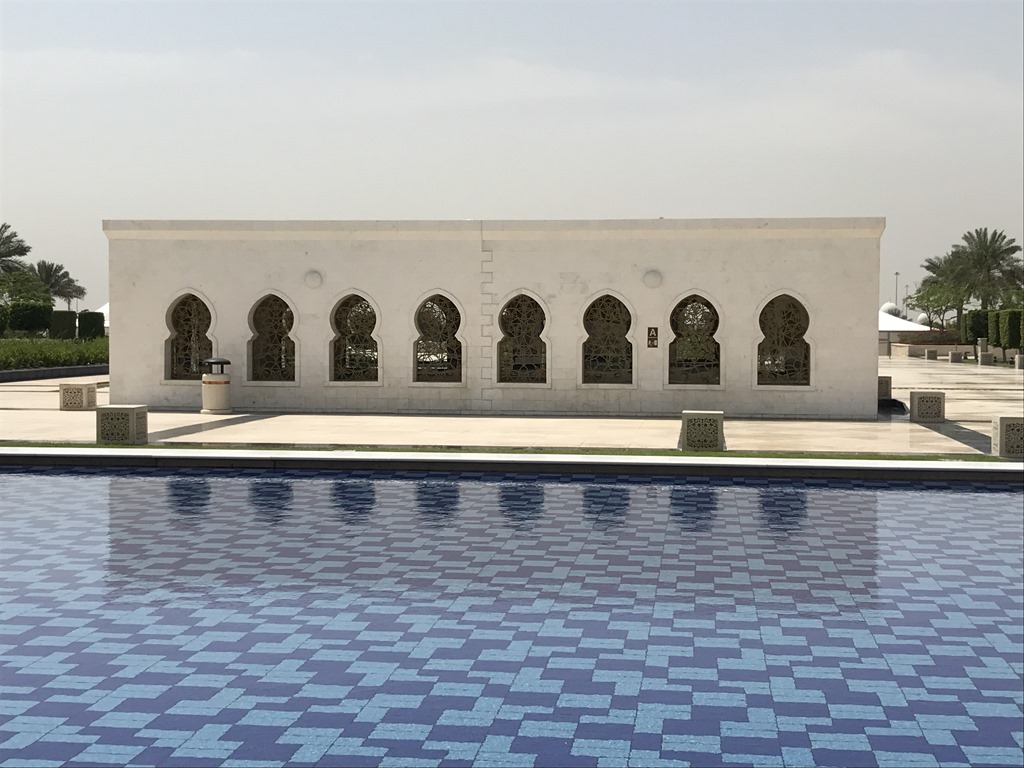
There are 6 large reflecting pools outside the mosque. 

IMG_1958IMG_1960IMG_1962

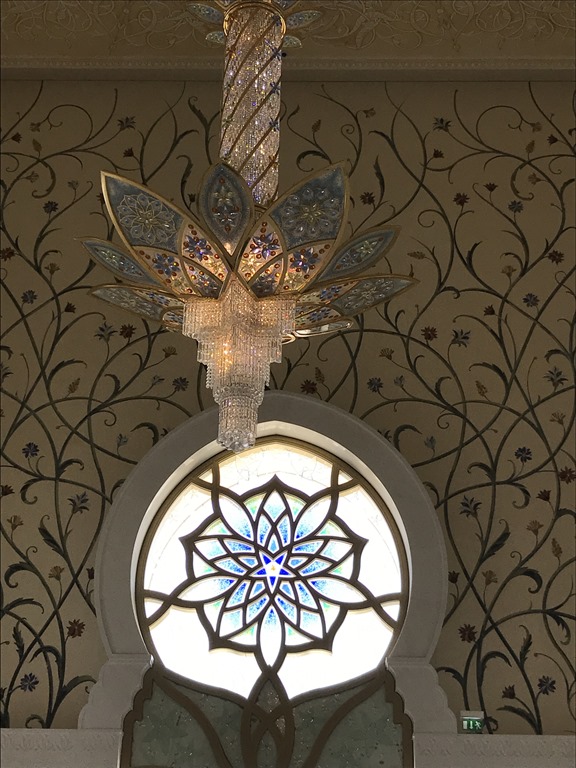
The chandeliers cost $12 million apiece and were created in Germany.  There are 4 of the big ones and 3 of the smaller ones. The overall cost of the mosque is unknown.

IMG_1950IMG_1954IMG_1957IMG_1884

It is quite a work of art and worth putting on that “costume” to get in to see it!

IMG_1879IMG_1880IMG_1886IMG_1949IMG_1953IMG_1959

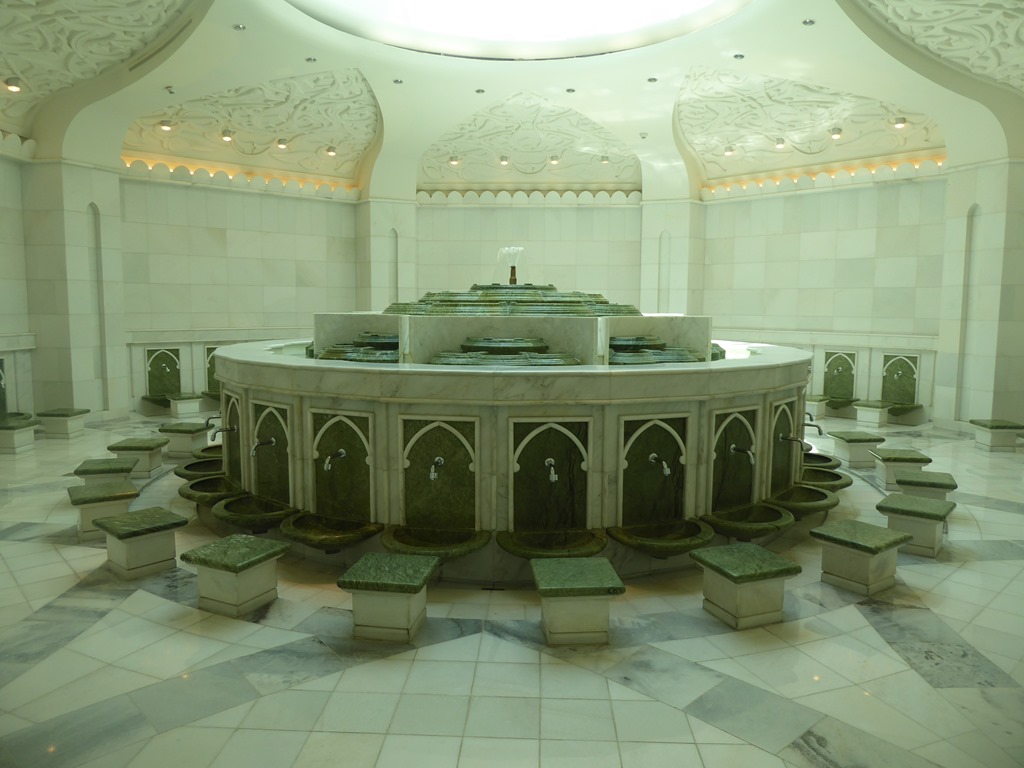
The bathrooms here are equally amazing!

IMG_1893IMG_1894

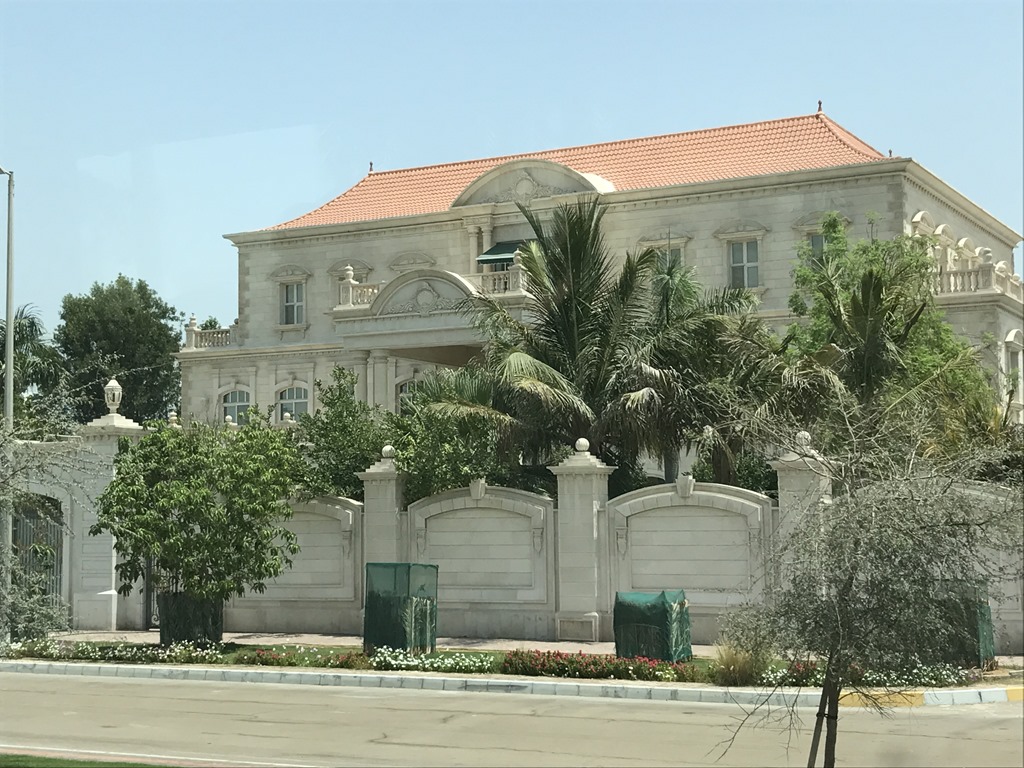
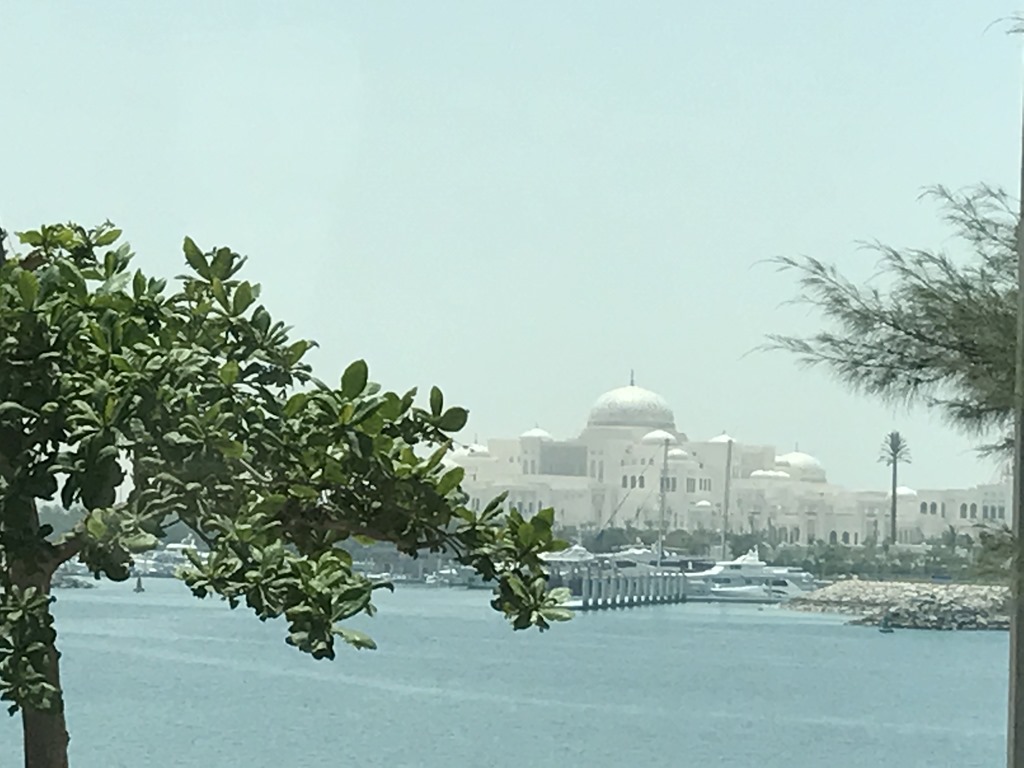
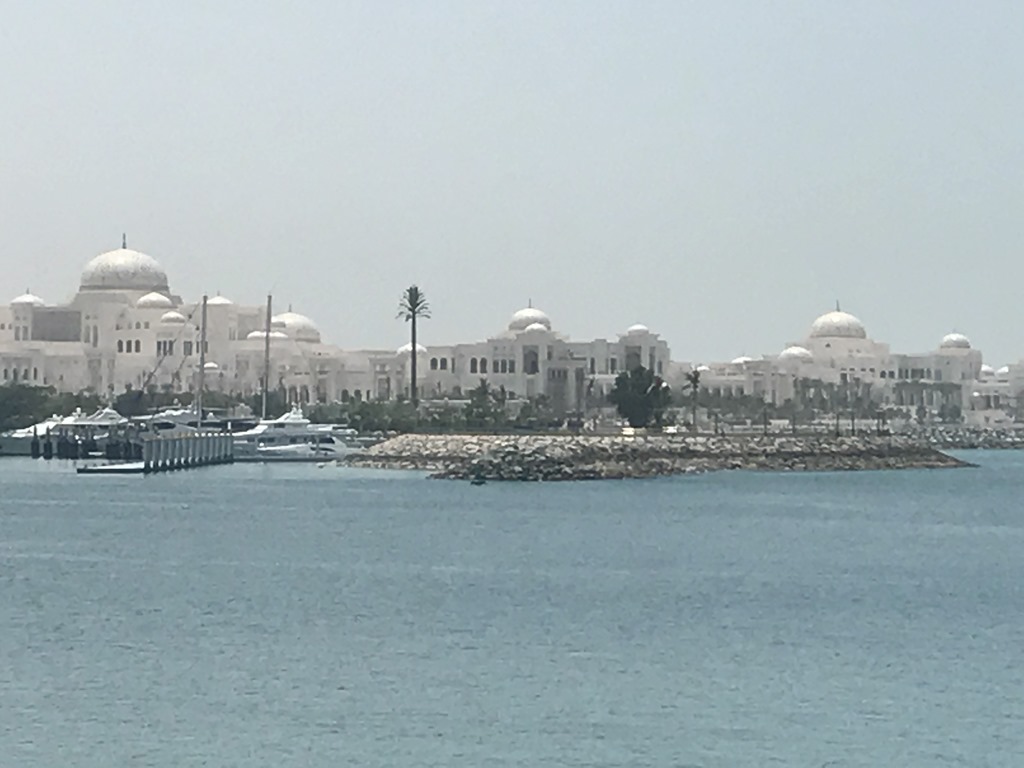
We then traveled past the Emirates Palace Hotel (we had a dinner there last year – you can’t get in without a reservation). This is the place that had that ATM like machine in the lobby that dispensed the gold bullion bars. We also went past the Royal Palace and all of the beautiful homes that surround it.

IMG_2055IMG_2056IMG_2099IMG_2100IMG_2101

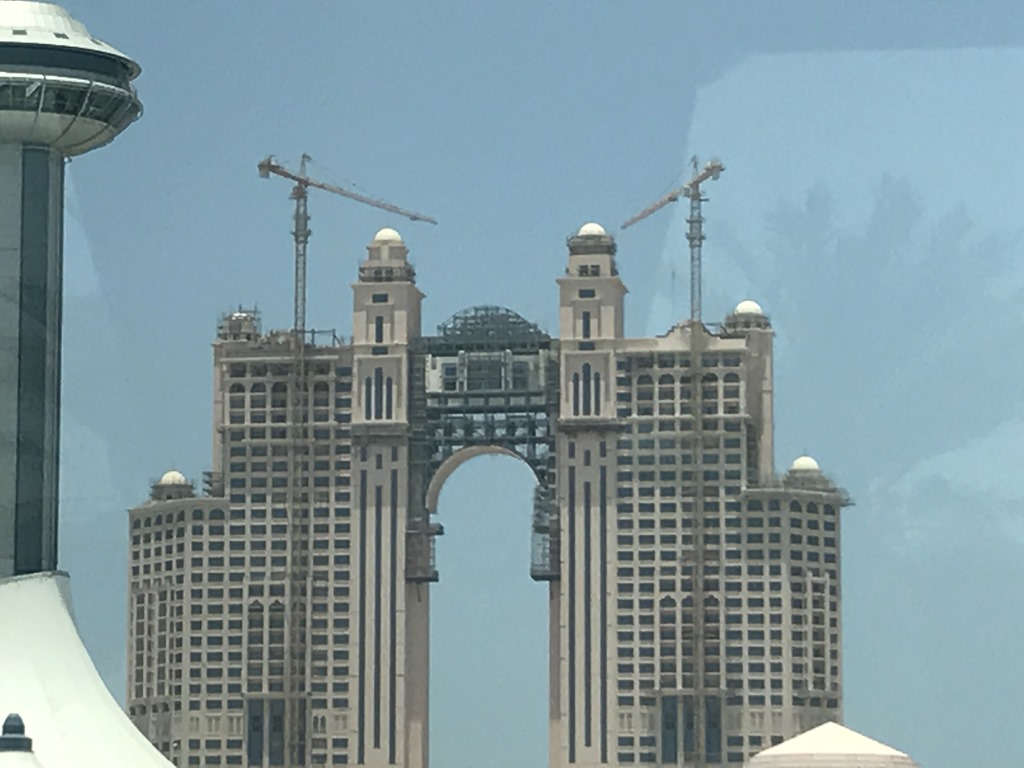
This building is being constructed and is the Fairmont hotel.

IMG_2097

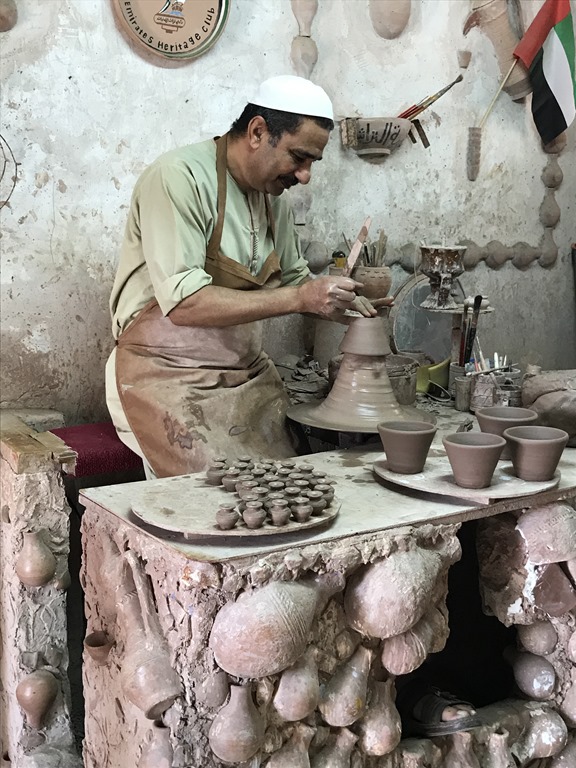
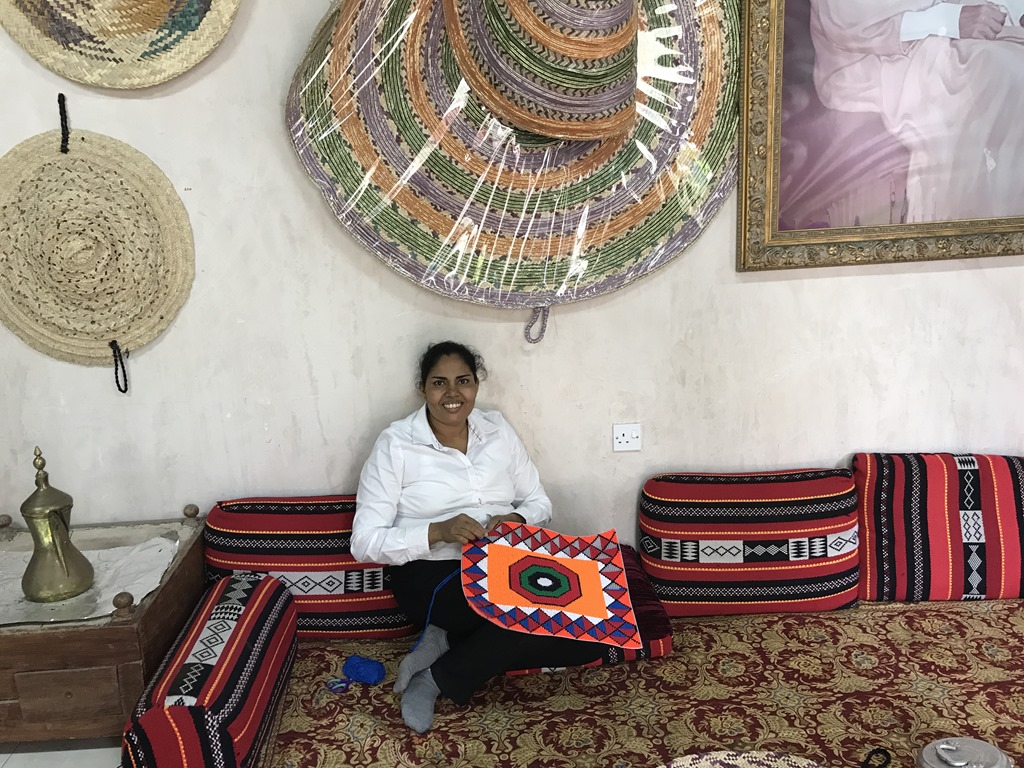
We visited the Heritage Village which had a small museum and demonstrations of the crafts and daily activities in the Arab community.  It was very interesting to see the 1964 pictures when there were only sand and tents in this now huge modern place.

IMG_2061IMG_2063IMG_2065IMG_2066IMG_2068IMG_2073IMG_2076IMG_2083IMG_2085

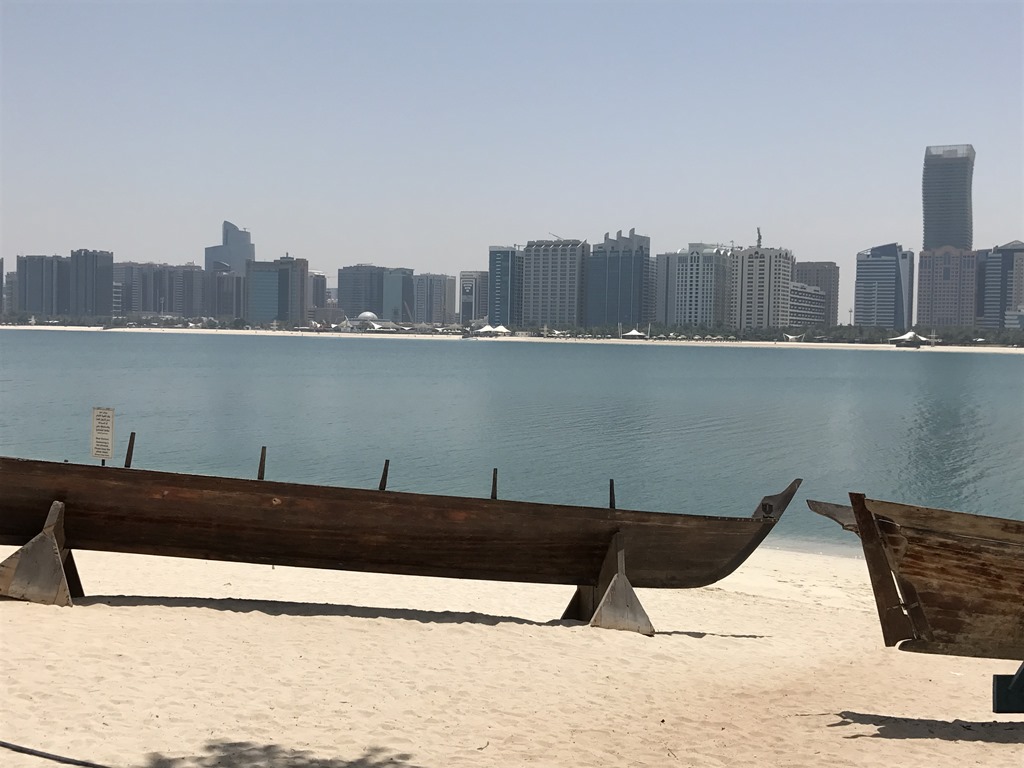
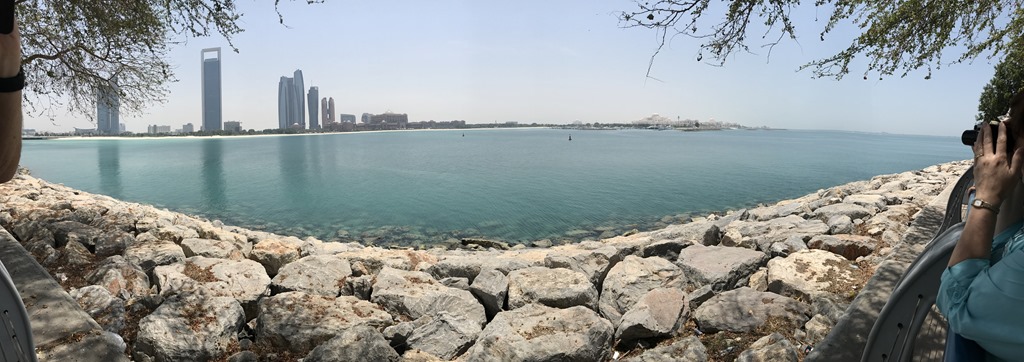
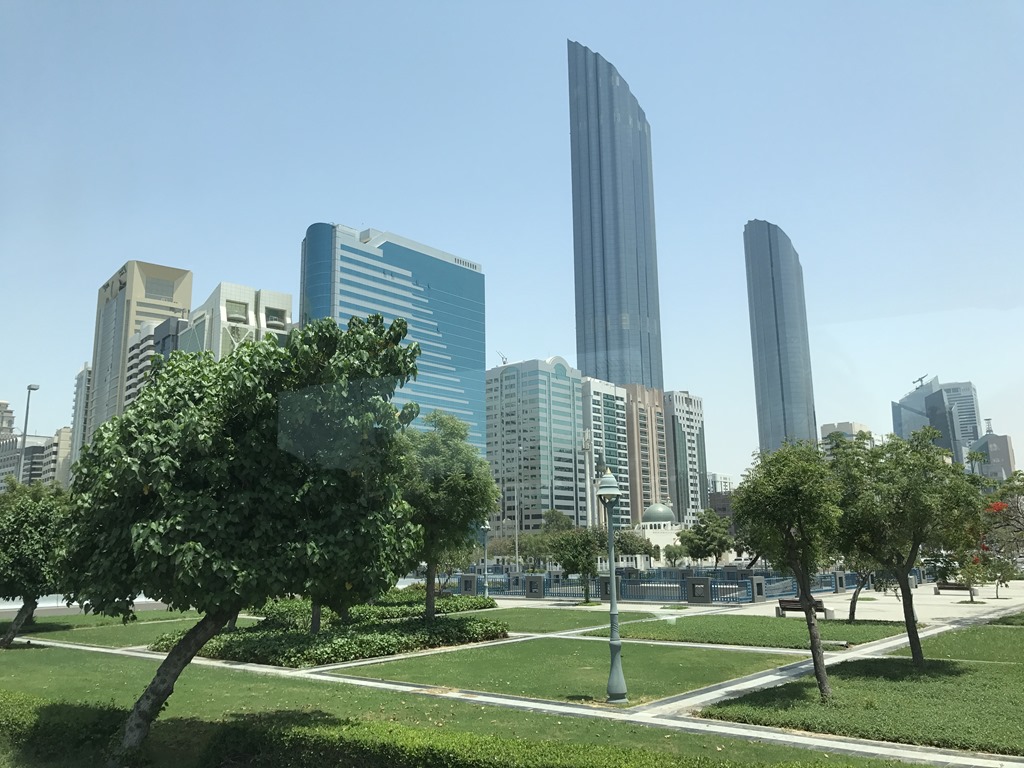
On our way back to the ship, we drove along the spectacular corniche and around the city – known as the Manhattan of the Gulf due to the ultramodern skyscrapers and high rise condominiums here.

IMG_2104IMG_2105IMG_2111

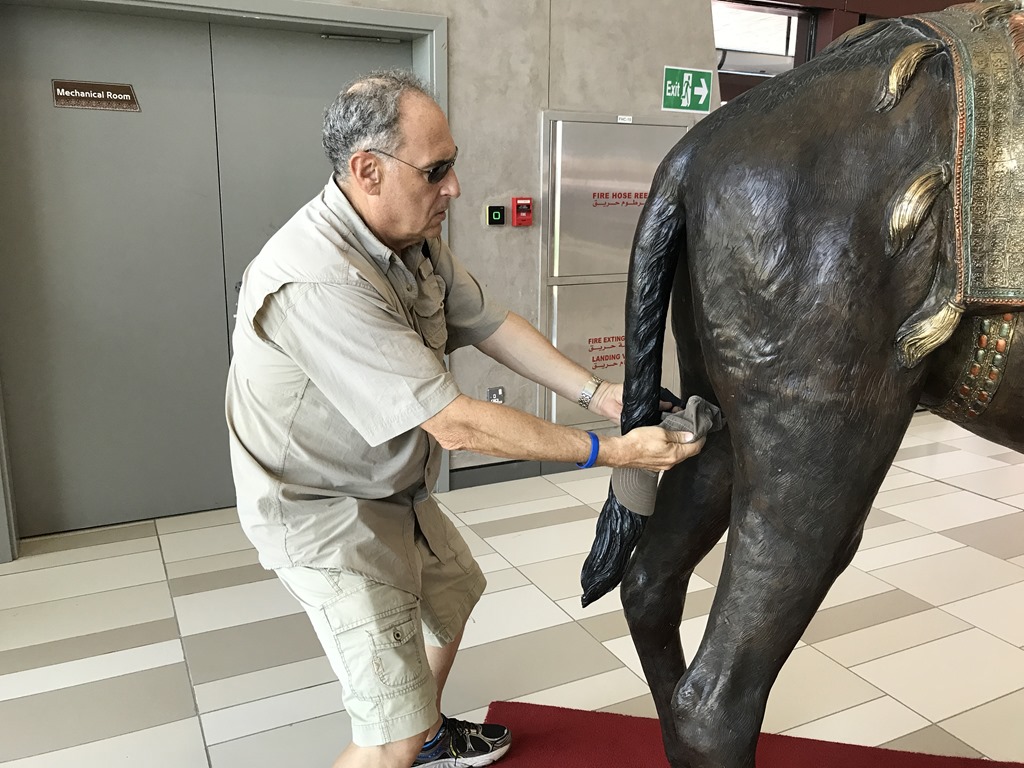
And, in the terminal, Norm couldn’t resist getting up close and personal with the camel!

IMG_2112IMG_2113IMG_2114

We got back to the ship and the many new guests had come on board.  All the cleaning had been completed and I am sure the crew was very tired!

Posted in Asia, Excursions, May, World Cruise 2 | 1 Comment

Dubai, UAE

May 1, 2017

This was our second visit to glitzy Dubai – it seems the purpose of this place is to get you into malls to spend money!  And there are so many malls.  Sheikh Mohammed is said to be a leader who doesn’t understand the word “no” and his building up of Dubai has made it a huge tourist destination.  We visited the tallest building in the world last time – the Burj Khalifa.  Now Dubai has no more oil so things have slowed down a bit but it is really a glamorous and futuristic destination. 30 years ago, it was just a desert where Bedouins roamed the sands.  Hard to believe.

So this time, because we enjoyed it so much in Abu Dhabi last time, we decided to do the Desert Dune Drive Safari. We were picked up at the pier by Farouk, our driver and guide in a nice air conditioned 4 wheel drive Toyota (yes, it had roll bars). It was 104 degrees so the air conditioning was great as we ventured out into the desert.  Brothers Tim and Larry shared our vehicle and were quite surprised at the luxury of air conditioning!  They envisioned an open jeep.  Well that wouldn’t work in the sand.  3 other vehicles joined us.

It took about an hour to drive out to the sand dunes in the desert.  On the way, Farouk told us some things about Dubai.  He is from Pakistan and has lived here for 10 years.

IMG_1842 (6)

On the way we passed many futuristic buildings like this one, the Dubai Mirror which will allow people inside to see every angle from one spot!

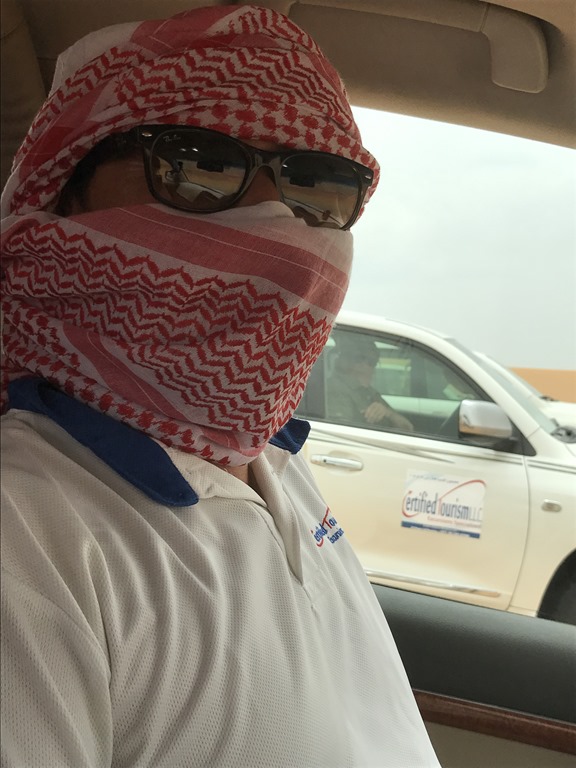
We stopped for a break before our guides let some of the air out of the tires in preparation for the dune adventure.  Sand was blowing already so now we know why the headresses are worn!

IMG_1802IMG_1803IMG_1804IMG_1805

IMG_1836 (3)IMG_1814

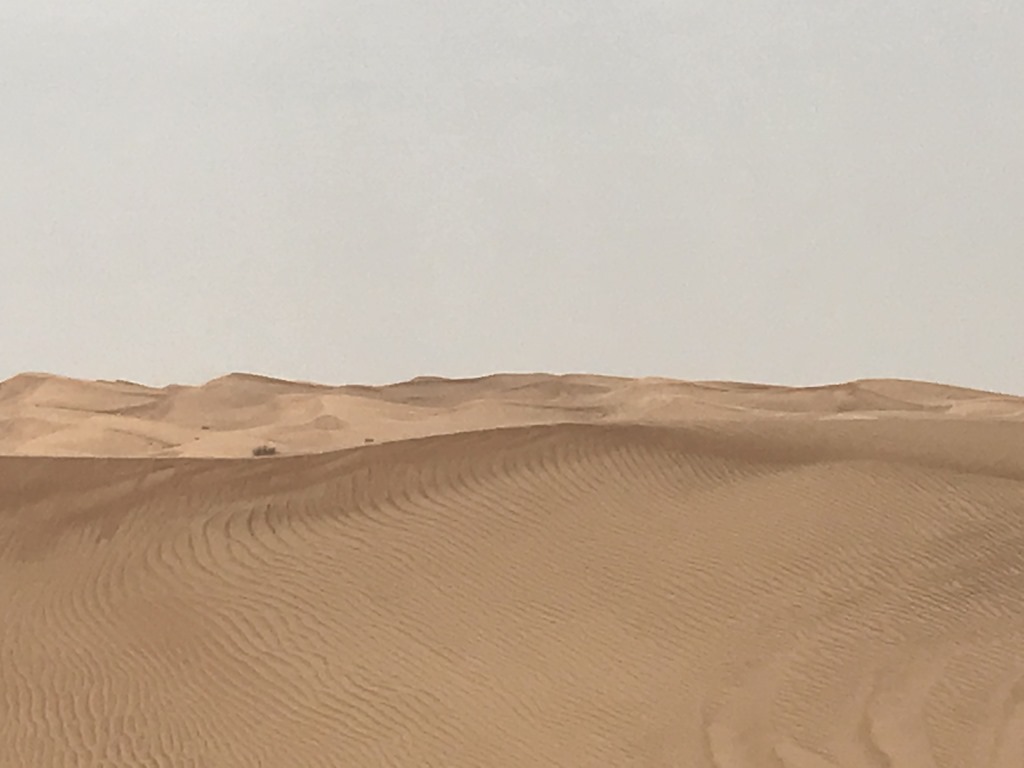
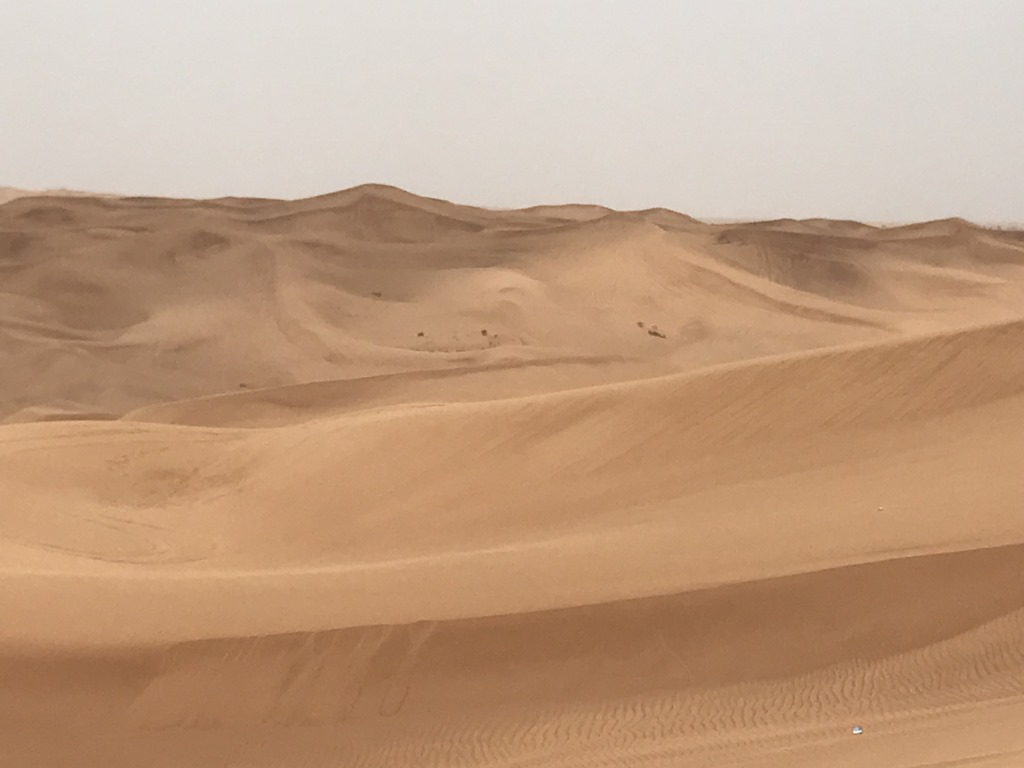
We had a fabulous time going up and down very high sand dunes.  At times we came down sideways or went up to the top without knowing what was on the other side.  I did use my go pro camera which I attached to the front handle in the vehicle so it had a view out of the front.  I haven’t figured out how to download it yet (stay tuned when I get home).

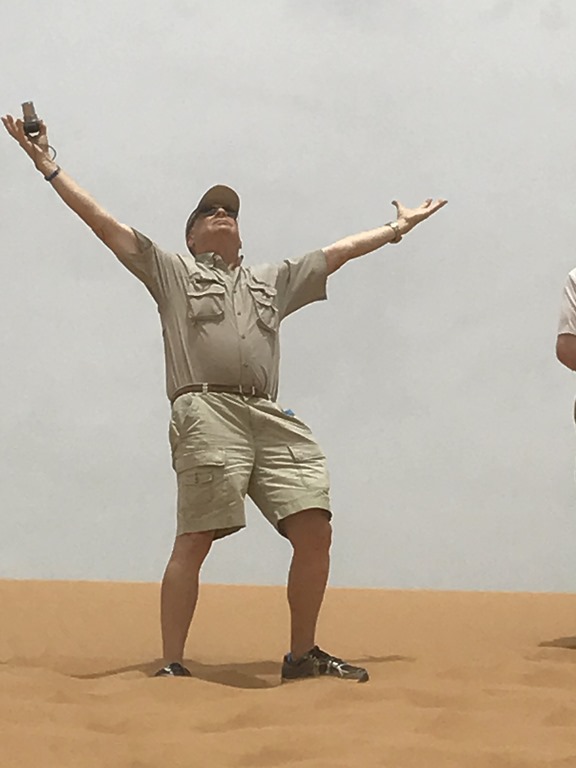
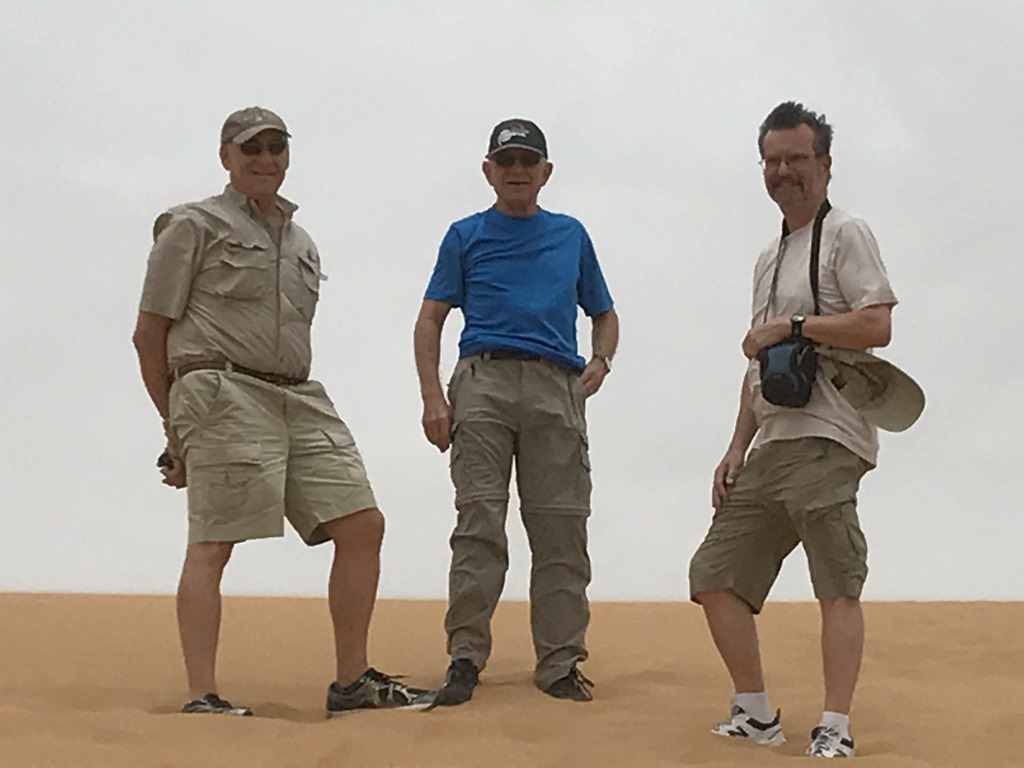
The desert sand was hot!  We did stop part way into our journey to take some photos.

IMG_1808IMG_1810IMG_1811IMG_1812IMG_1816IMG_1825IMG_1831IMG_1833IMG_1873IMG_1875

A very fun day!

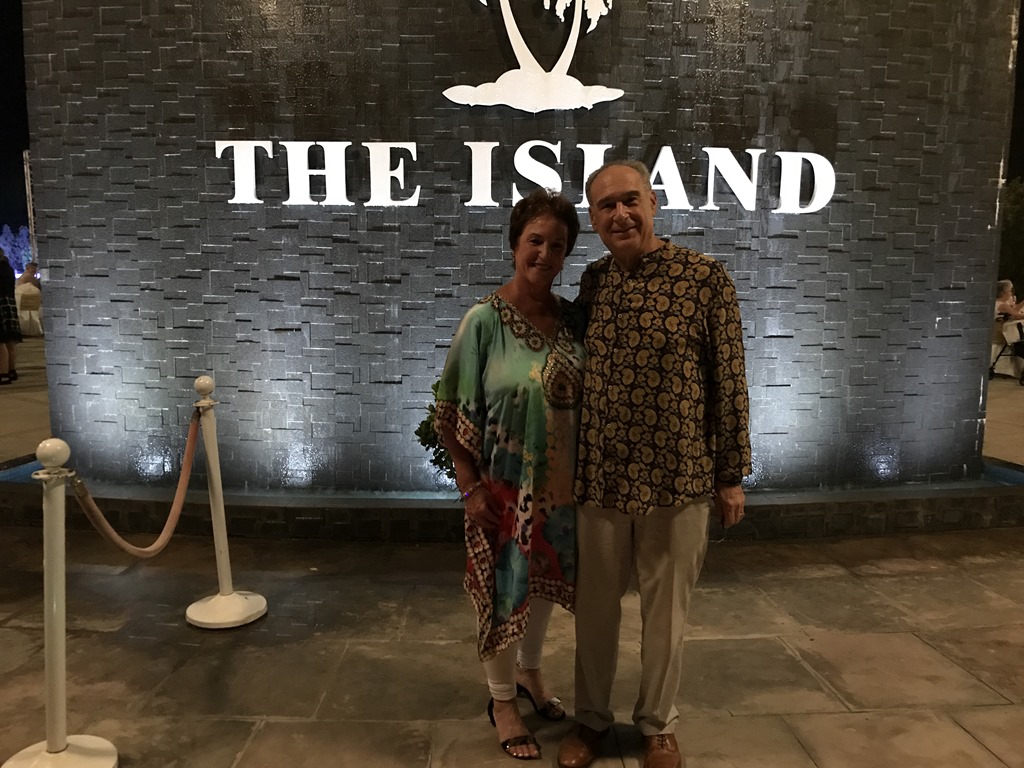
We came back to the ship to have a shower and get ready for our evening Around the World event on the World Islands – specifically the one named Lebanon. We had to take a bus to the waterfront then a ferry (very futuristic) to the Island.  This is an artificial archipelago of 300 small islands constructed in the rough shape of a world map, located in the waters of the Persian Gulf, 4.0 kilometres (2.5 mi) off the coast of Dubai.  The islands can only be reached by boat or helicopter and were intended to allow rich people say they owned a piece of the “world”.  As it turns out, they ran out of money, and while some islands are privately owned, most of them are just uninhabited.  Lebanon is the only one currently open to the public.

Dubai World Islands Lebanon World Island

Our ferry trip took an hour, it turned out to be a bit more because we were stopped by a police boat.  Who knows why – I thought that only happened in India!

IMG_1855

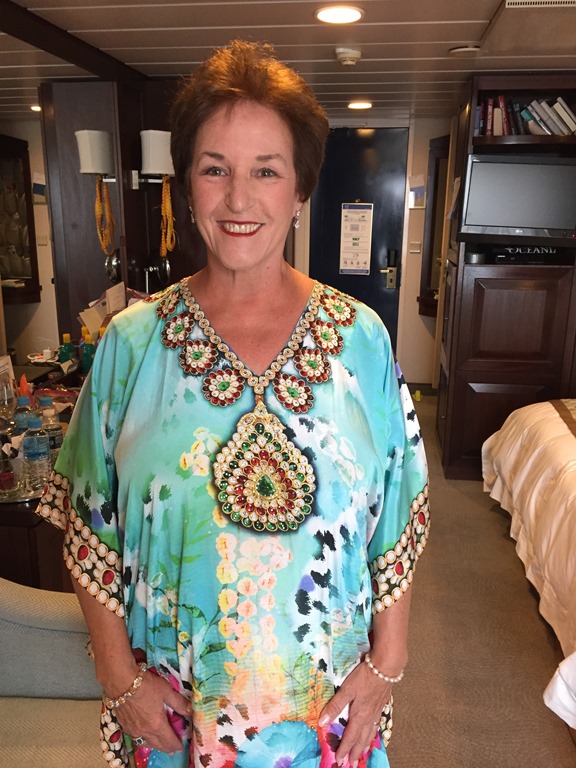
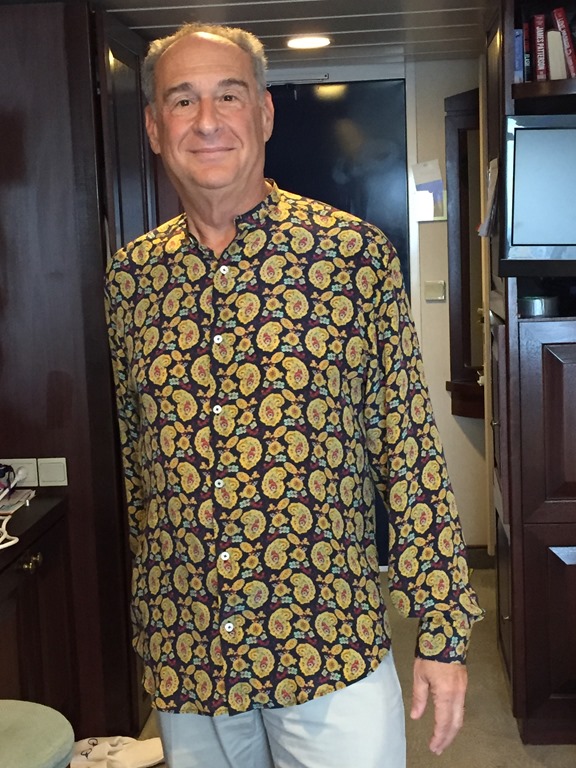
I wore my new silk caftan that I bought in the Taj Mahal Palace Hotel in Mumbai and Norm wore the shirt that he bought there.

IMG_1851IMG_1854IMG_1857

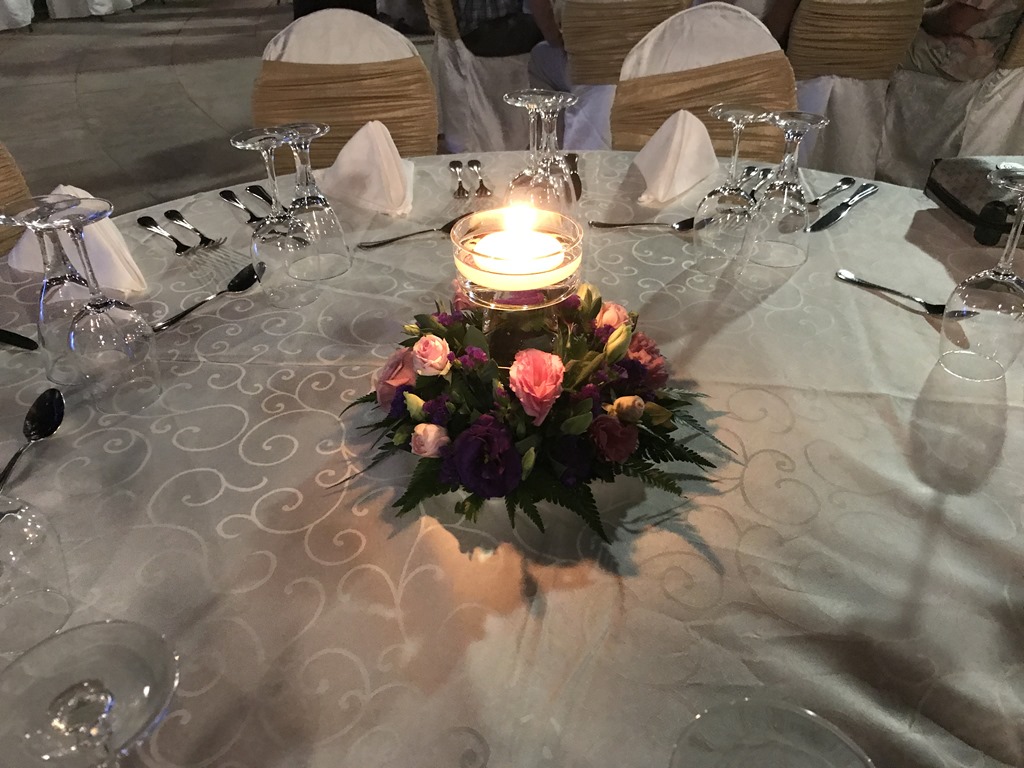
The event was beautiful – we had drinks and canapes then dinner. We were entertained with music by this musician – and later we saw a fire dancer show.

IMG_1875[1]

IMG_1897IMG_1899

The ship didn’t leave until midnight so we were back in enough time.  A very nice evening. We shared our table with Amanda and Corinne – the assistant cruise director and the social hostess – and also both are part of the production team and are wonderful singers. Alan and Beverly were also at our table.

IMG_1904IMG_1859

IMG_1862IMG_1864IMG_1865IMG_1869IMG_1871IMG_1872

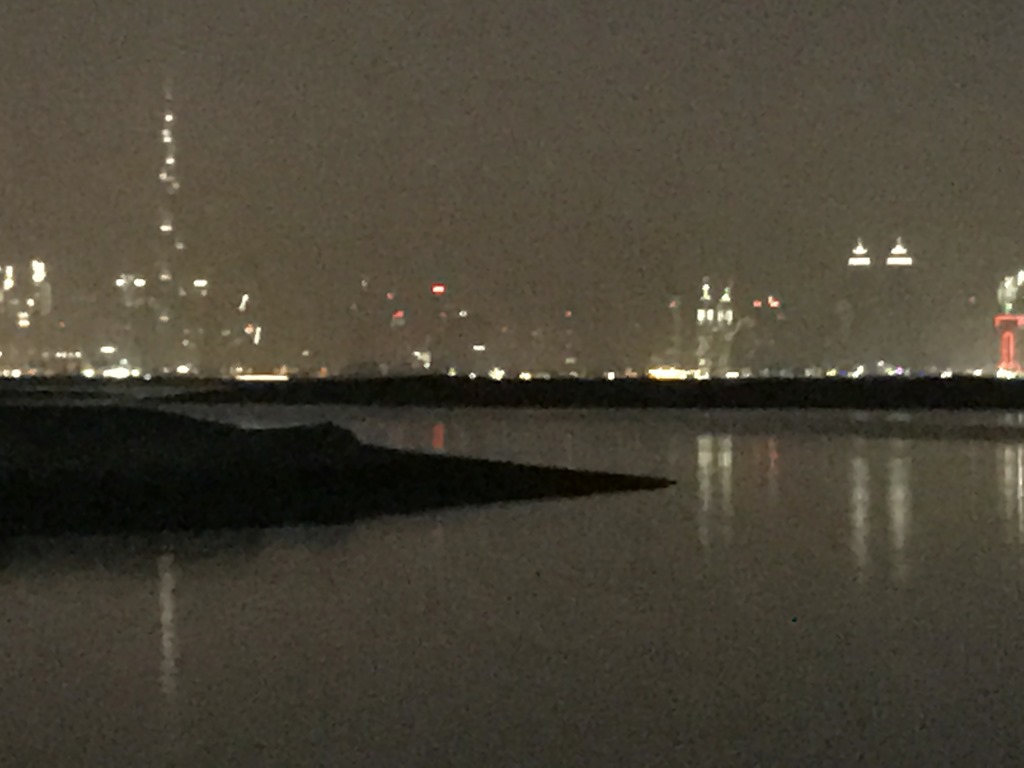
Some of the lights we could see from the island and then in Dubai as we returned.

IMG_1907IMG_1908

Of interest on the ship – several people who did the overland to Taj Mahal came back with GI problems.  The protocol (according to our cruise director Ray – we had dinner with him last night and again on the island) is that if 1% of passengers are affected, they go all out in treatment and institute strict cleansing until there are no new cases for 72 hours – and they of course quarantine those who are affected.  So, there are no dishes on the table until you sit down (different from the beautiful table settings), no salt and pepper shakers, etc.  You can never serve your own food at the buffet but now you cannot even add the condiments like catsup or oil and vinegar.  They clean the tables after people leave and you can’t sit at it for 15 minutes.  The handrails are disinfected constantly. And everyone has to vacate staterooms in Abu Dhabi for 4 hours while they do a deep cleansing.  It is a changeover day so about 350 new people will be coming on.  For those 260 or so who are staying, they arranged a complimentary city tour of Abu Dhabi which we will do tomorrow.  If you must stay on the ship during this time the only place you can be is a section on deck 10 in Horizons – for the whole 4 hours.  And all the ships crew is going to be involved in the cleaning.

Kudos to Oceania for this strict protocol!  And who knows, it might have just been some bad food in Agra and nothing contagious at all.

Posted in Asia, Excursions, Food, May, World Cruise 2 | 1 Comment

Mumbai, April 27 and 28, 2017

Before our last world cruise, we never thought we wanted to go to India, but then we had an incredible experience and were looking forward to returning this time.  Now that we have visited Cochin, Mangalore and Goa on this trip, we were waiting to explore Mumbai where we only spent one day last time.

What can I say about Mumbai?  It is a study in contrasts.  First of all, 22 million people live in the city, so it is a mass of humanity everywhere you go.  You see the world’s most expensive home with more than 800 rooms, worth 1 billion dollars, some of Asia’s biggest slums, fashionably dressed people and people sleeping on the streets. Like New York, Mumbai is a city that never sleeps. And it is safe to walk around anywhere at any time of day or night. It is illegal to own guns and street crime is minimal. While many people who have never visited here have seen Slumdog Millionaire and have their impression of the slums from that movie, it is both similar and different.  There are rich people living in the slums, this is what they know, and of course there are the very poor. Some of the places are just lean-tos and others have rooms but the conditions are very crowded.  These are mostly hard working people, though, you don’t see them lying about. We heard that many get up and go to work at 3 AM and work until 10 PM.

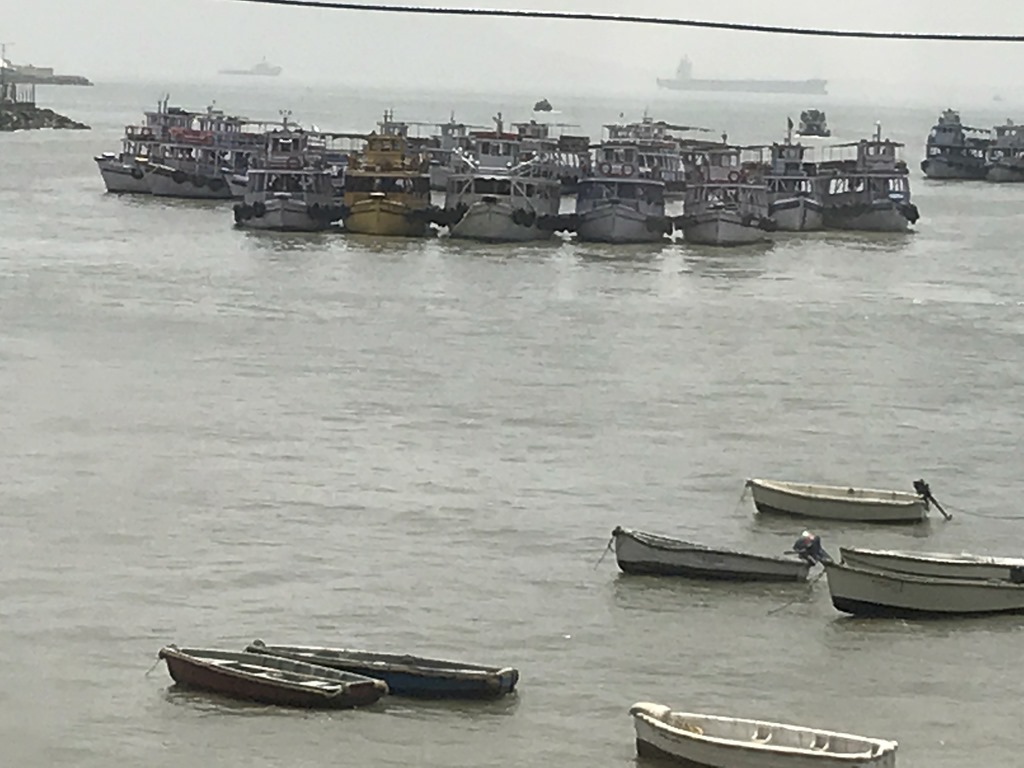
The city is the capital of Maharashtra and it came into existence by the clustering of seven swampy islands which were formed into one island during the British rule. The word Mumbai is derived from Mumba Devi, the patron Goddess of the Koli fisherfolk, the oldest inhabitants of Mumbai. Now there is not much fishing in the harbor as hundreds of container ships and other vessels are here and the waters are quite polluted.  The fishermen travel out to the sea for a week or more and then return with their catch.  The air is pretty polluted too, you can’t see across the massive harbor.  During monsoon season it can clear for days at a time.  Monsoon season starts next week and we are the last cruise ship to come here until September.  India is also home to the second largest Navy in the world, second only to the US.

The bureaucracy can drive you mad here.  We had another face to face inspection before we could get off the ship.  You need to have your yellow landing card and a copy of your passport and they were checked AGAIN three times before we could leave the port.  And this happens every time you leave and come back.

There are stray dogs everywhere and because the Hindu people believe that every living being has a soul, they are allowed to live wherever they want. The traffic is unbelievable and as one of our tour guides said “pretend it is music and you will get used to the honking!”  There are thousands of cabs and they maneuver around in ways that you wouldn’t believe! But somehow they don’t hit people or dogs or have accidents.

The train system is something to see.  Trains (about 3000 daily) arrive and depart every 3-4 minutes here and carry 7.5 million commuters each day, some people travel up to 5 hours to and from work.  There are separate cars for men and women and while the cars are made to carry 1700 passengers each, they are packed with 3x as many.  The trains are not air conditioned and have no windows and doors so people are seen hanging out of them as they flash by. It is estimated that if the train tracks were laid out, they would circle the equator three times.

In 1996 Bombay was renamed Mumbai as part of a wider policy to replace names of any places, roads and features in the city that had connotations to the Raj.  Because it was a decision by the state and not the nation, some of the Indian National buildings still have Bombay in their names.

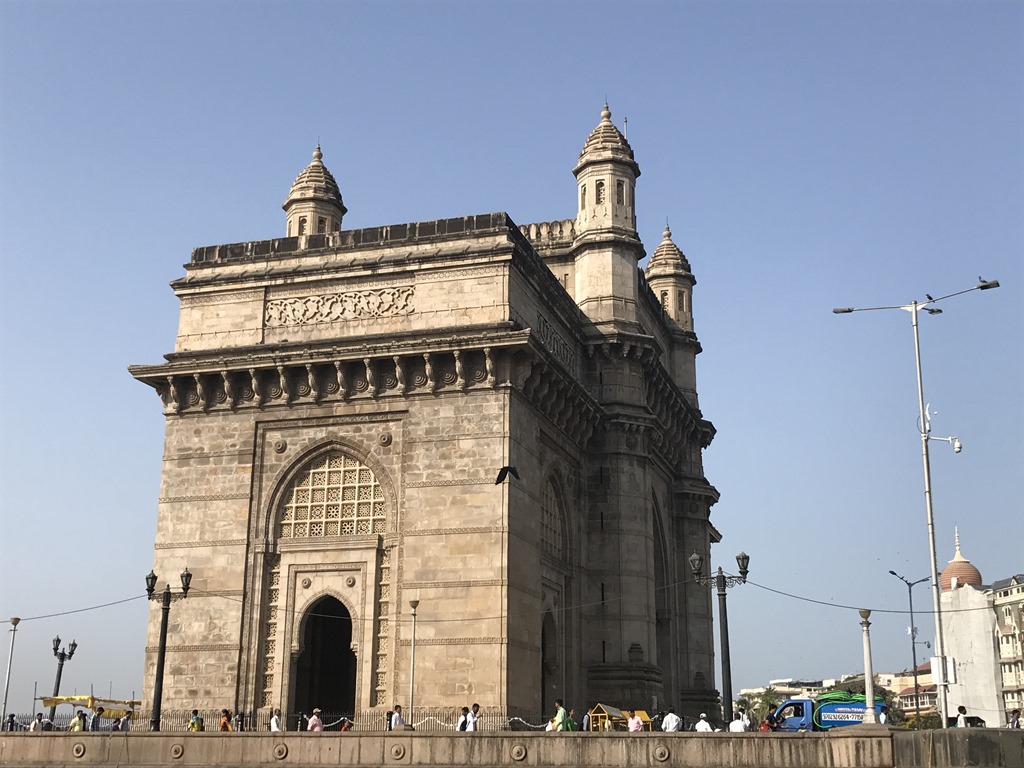
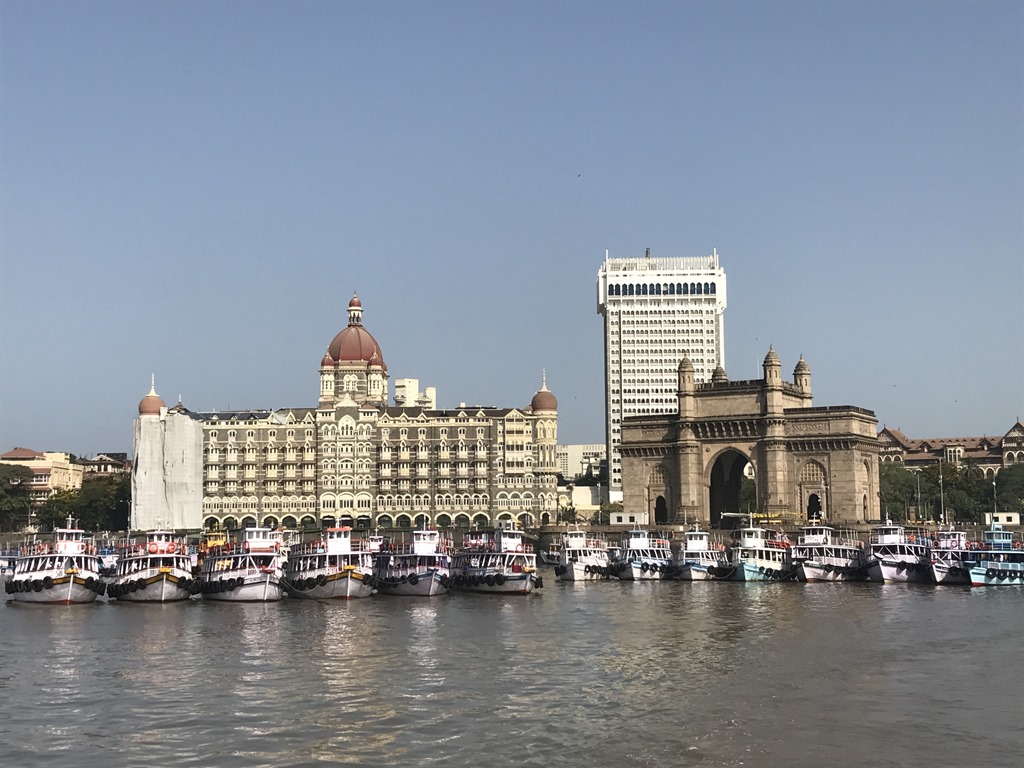
On our first day in Mumbai, we hoped to meet Bhaskar, an ICF colleague.  But as it turned out he was in an entirely different area of Mumbai and the timing didn’t work out as we had an evening tour scheduled.  So we took a cab and made our way to the Gateway of India, on the massive harbor of Mumbai. There are separate lines for ladies and men to get in, and we had our bags checked too. This structure was built to commemorate the visit of King George V and Queen Mary in 1911 and is considered the principal landmark of Mumbai.  It is over 85 feet high and has four turrets and intricate latticework carved into yellow basalt stone.

IMG_1534IMG_1598

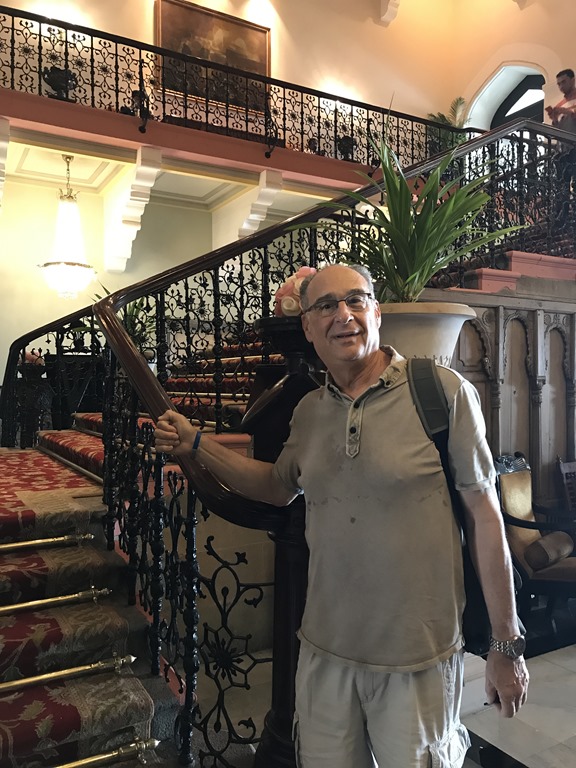
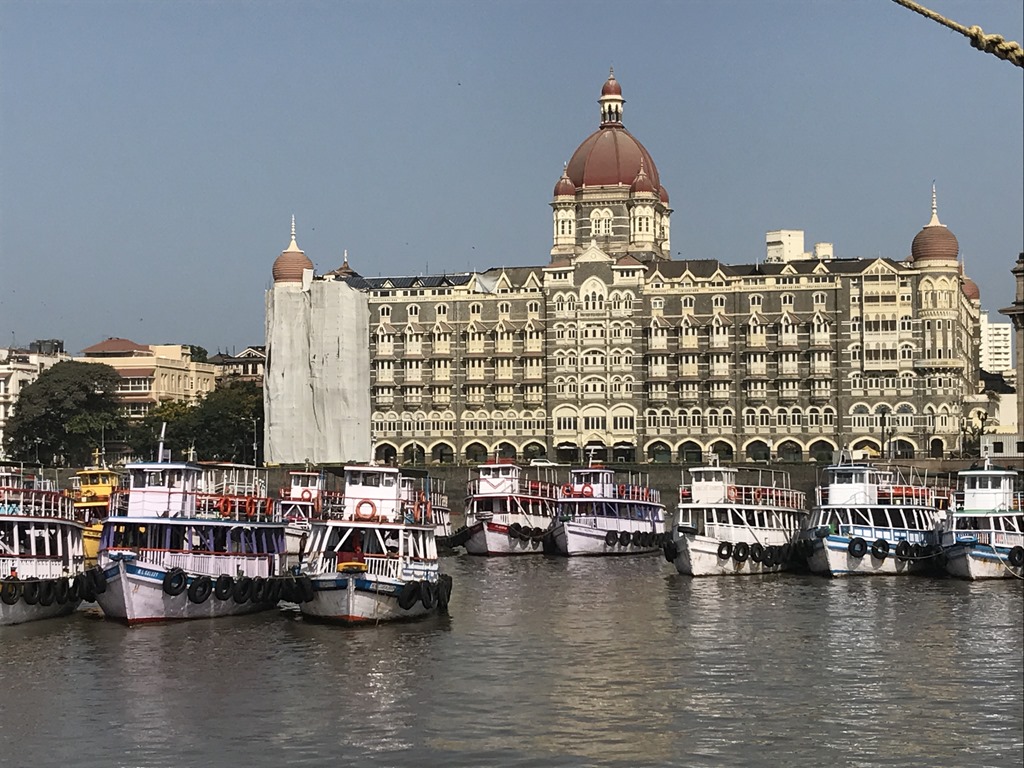
After a bit of walking and having people wanting pictures with us, we went to the Taj Mahal Palace Hotel, the first 5 star hotel in India.  It was also the site of the 2008 bomb attack and we saw them carefully checking cars up and down and sideways.  We had to go through a scanner to get into the hotel.

IMG_1540

The hotel is truly massive and beautiful.  This fresh flower arrangement in the lobby was just spectacular.

IMG_1843IMG_1602IMG_1622

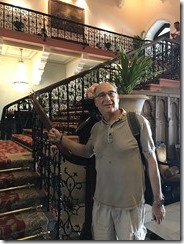
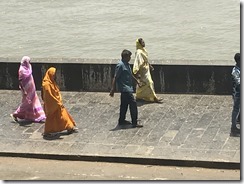
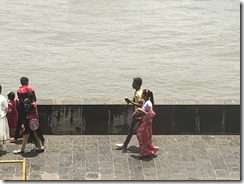
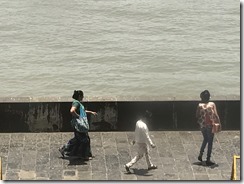
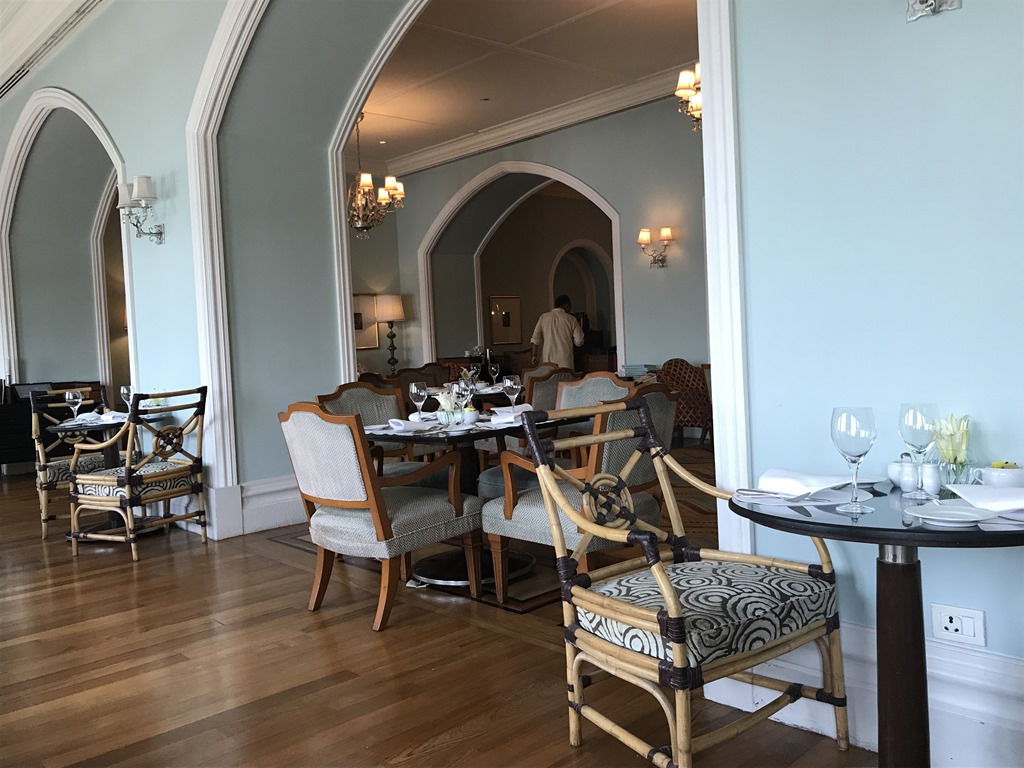
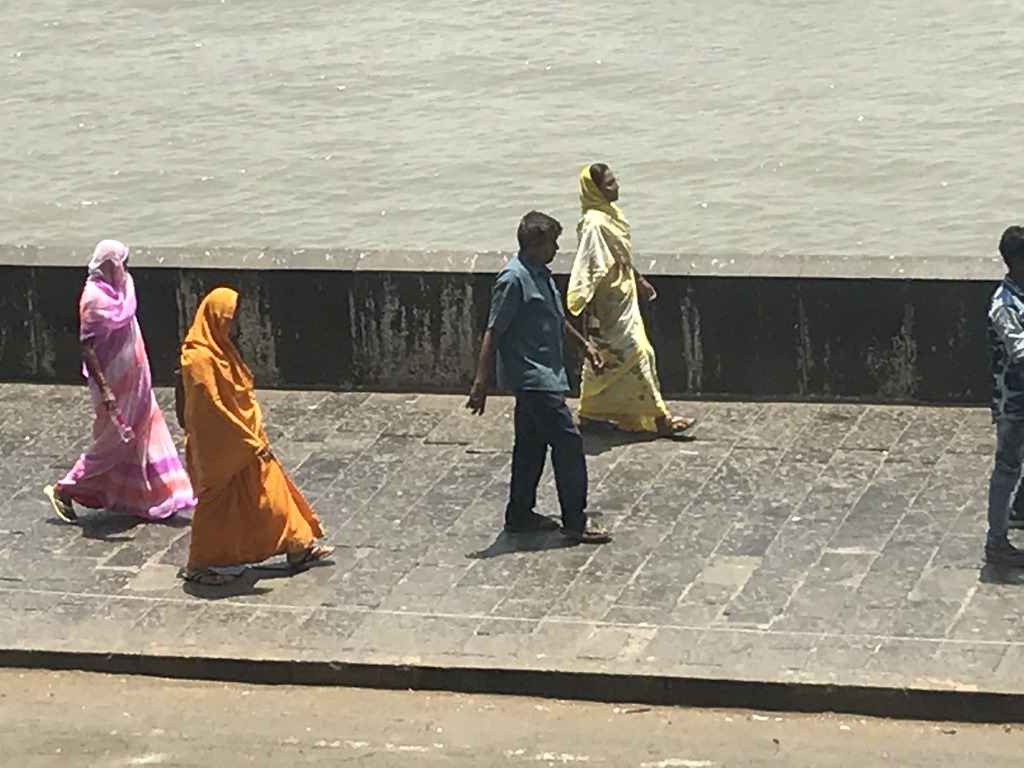
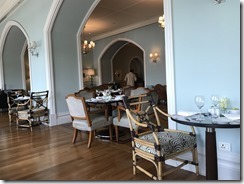
We did some shopping in the stores that are inside the hotel (pictures later as I wear the lovely caftan and the blouse that I bought).  We then decided to have lunch in the Sea Lounge restaurant in the hotel.  It was a beautiful place and we were seated by a window overlooking the harbor and harborwalk where we watched a colorful assortment of people pass by.
IMG_1606IMG_1607IMG_1608IMG_1610IMG_1613IMG_1614IMG_1615IMG_1619

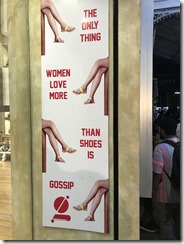
After our lunch, we shopped in the street markets where I bought a pair of shoes.  And how entertaining it was!  There are no shoe boxes on the display floor, just one of each of the shoes, presented beautifully.  When you choose one you want to try on, the man (and it was all men) who is waiting on you yells up to a loft and someone throws down the box or boxes of shoes.  When you don’t want one, the man tosses it back up.  It was fun to see.
IMG_1626

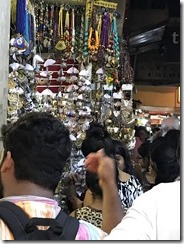
As you know, I love markets and here they sell anything and everything and it can be quite overwhelming, both the crowds and the merchandise.  But fun.
IMG_1627IMG_1628IMG_1630IMG_1631

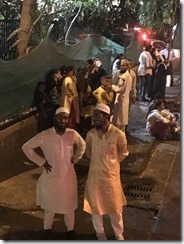
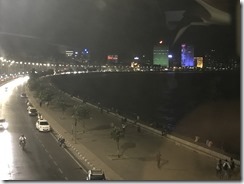
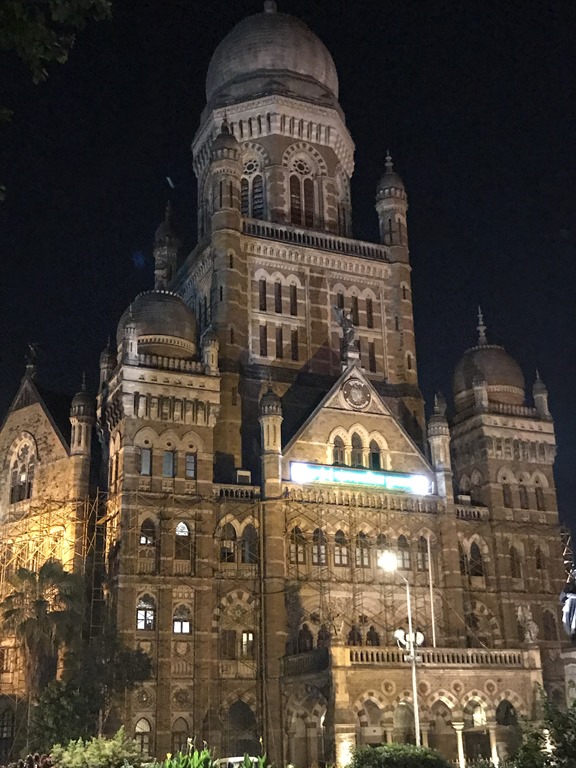
We returned to the ship to cool off, shower and dress for our evening excursion, Bombay by lights. When the sun goes down and the lights come on, Mumbai becomes quite an entertainment center.  Our guide was Maleini.  She pointed out many landmarks which are beautifully lit up at night. We traveled past the Taj Mahal Palace hotel, the Gateway to India, the Victoria Terminus train station and the Art Deco Marine Drive, referred to the Queen’s Necklace at night due to the vision it creates with the curved shape of the bay being accented by thousands of sparkling lights.  There were many people on the beach and Maleini said they mostly go at night, never dress in bathing suits or swim and completely cover up in the day since they think their skin is brown enough and they don’t want to be exposed to the sun.

IMG_1683IMG_1639

IMG_1643IMG_1646IMG_1656IMG_1657IMG_1659

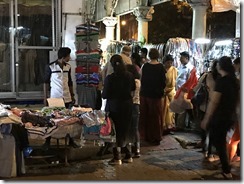
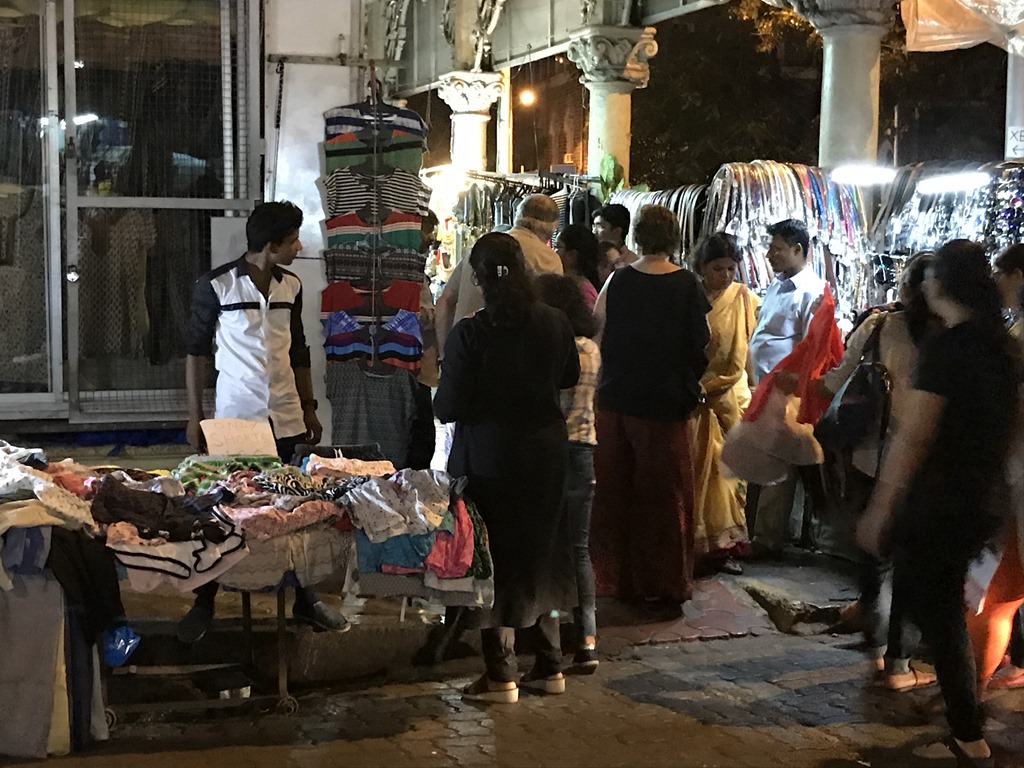
We also visited the night market which was the same market we went to during the day! It was busier, if you can believe it.  Friendly people but no time to bargain and buy because we were on our way to a Bollywood movie at the Regal Cinema Hall, Bombay’s first Art Deco theater.  We saw a movie, Noor, which was in “Hinglish”, a combination of Hindi and English.  Very interesting and it was enough for us to understand the story.  And they served us popcorn!  We didn’t get to finish the movie, though, because the port gates close at 11 PM and we had one more stop to make for drinks at a Mumbai bar. We intend to download the movie and finish it when back in the US so we can find out what happens.

Bollywood is the combination of Bombay and Hollywood and the motion picture industry here is the world’s largest.  Mumbai accounts for almost 60% of the Indian productions and they are really well done.

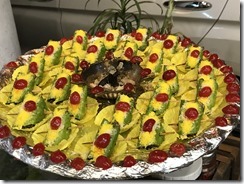
We stopped for drinks and snacks at Geoffrey’s and it is a good thing they poured the wine continuously because all of the snacks except one burned my mouth!  The innocent looking quiche like thing was a 5 alarm fire. We shared our table with this fun couple from Belgium.

IMG_1669IMG_1670IMG_1667IMG_1668IMG_1671IMG_1672

On the way back to the ship, we saw some of the crowds on the streets and the night vendors.  Limeade is very popular and they make it up fresh. And of course there are bananas everywhere.
IMG_1677IMG_1678

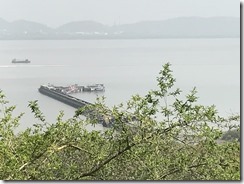
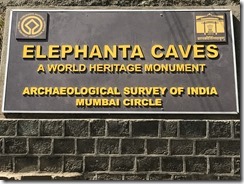
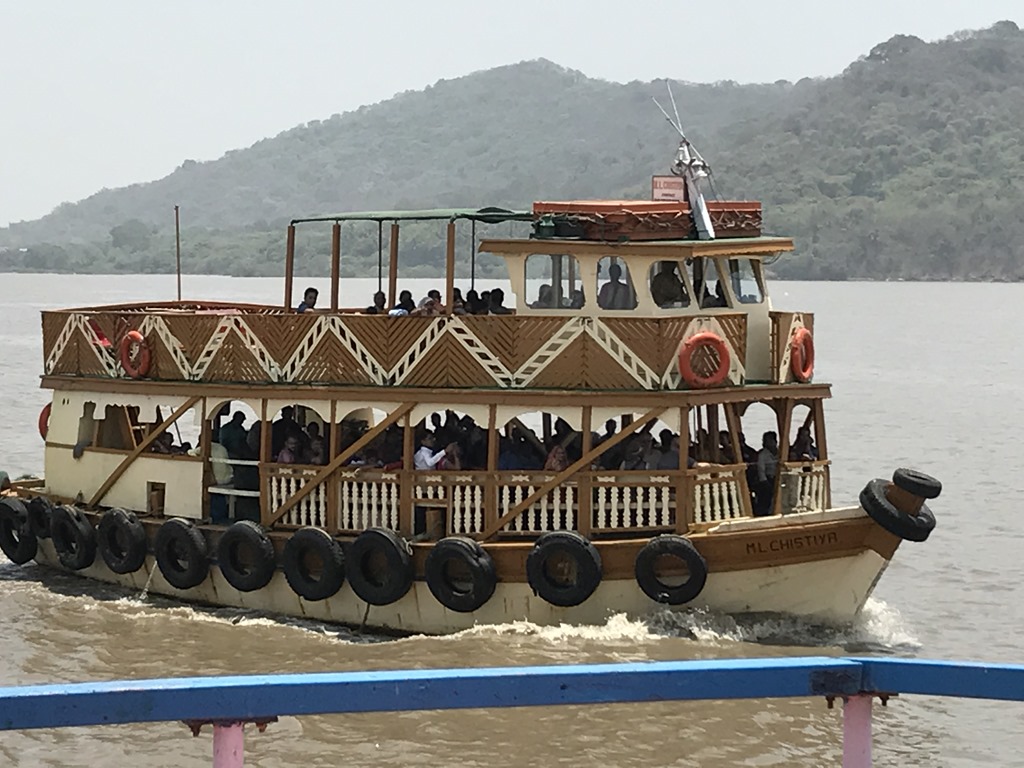
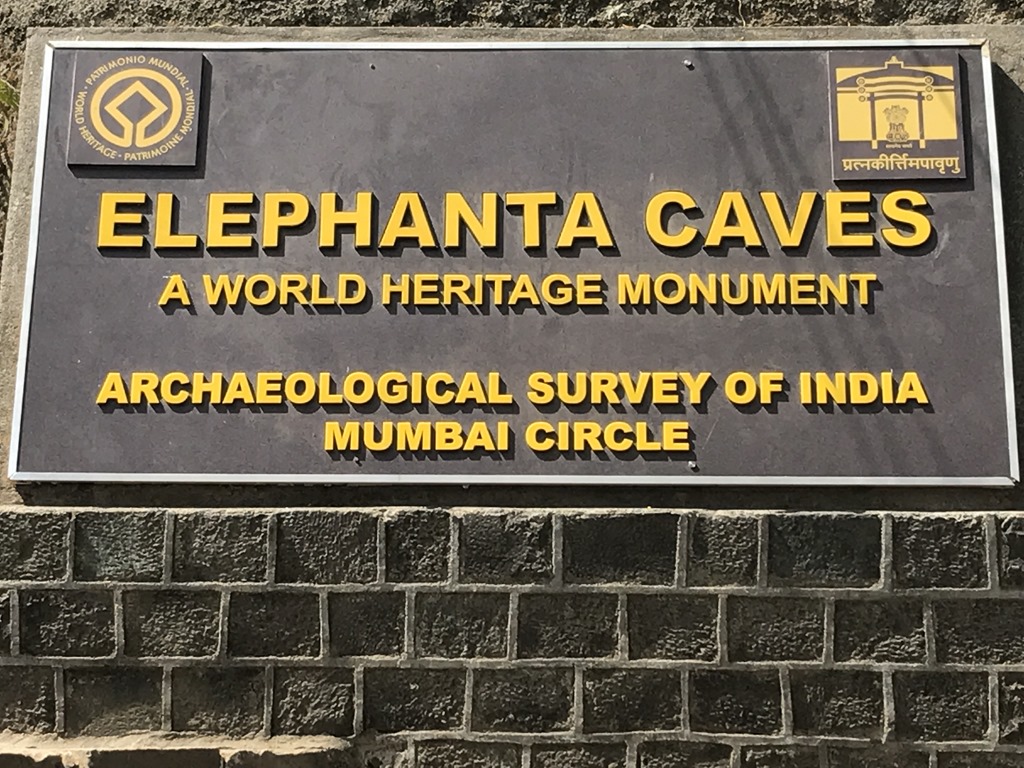
The next day we had a tour planned – the Elephanta caves.  Our guide was Sudha, which she told me means “nectar”.  We drove to the Gateway of India and boarded our boat to travel 9 nautical miles to the Gharapuri Island which took about an hour.  The view from the water was nice, but we were cautioned not to take any pictures of the Navy boats and the island just off the harbor which is now uninhabited but may serve some function for the Navy.  It was a museum for a time but only the Navy was allowed to enter which didn’t prove too lucrative!

IMG_1686IMG_1687IMG_1693IMG_1694IMG_1697IMG_1784

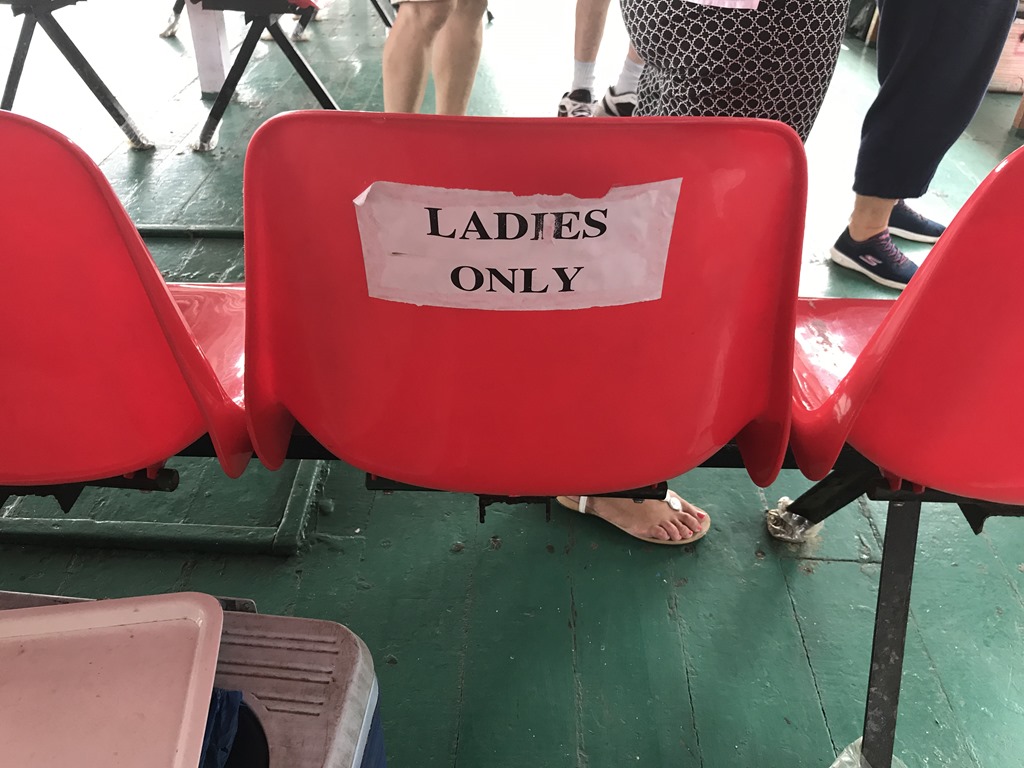
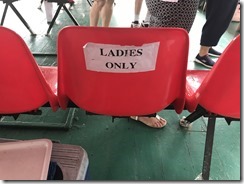
No one seemed to pay attention to this sign on the boat, and Sudha didn’t even know about it! We sat on the upper level of the boat and had a nice breeze all the way there.  Part way, we were stopped by a police boat (who knows why) but we were afraid to take any pictures.
IMG_1699

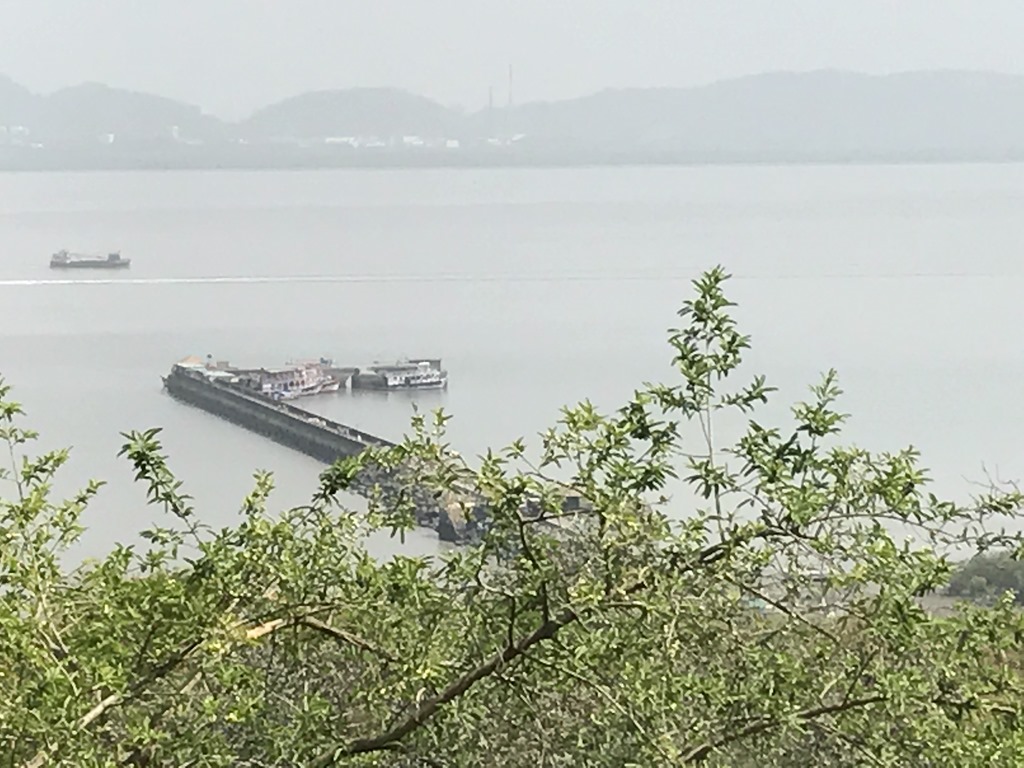
We arrived on the island to see a very long pier which had a train to take you to the island.  But the train wasn’t working. There are 2000 people living on the island in 3 villages.  There is no electricity on the island and they are dependent on Mumbai for everything.  During the monsoon season no boats can get there so they depend on dried food.
IMG_1698IMG_1714

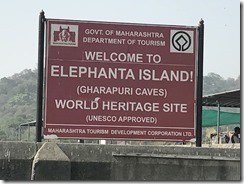
There is lots of trash around, and we were laughing at this sign with the trash right behind it.

IMG_1701

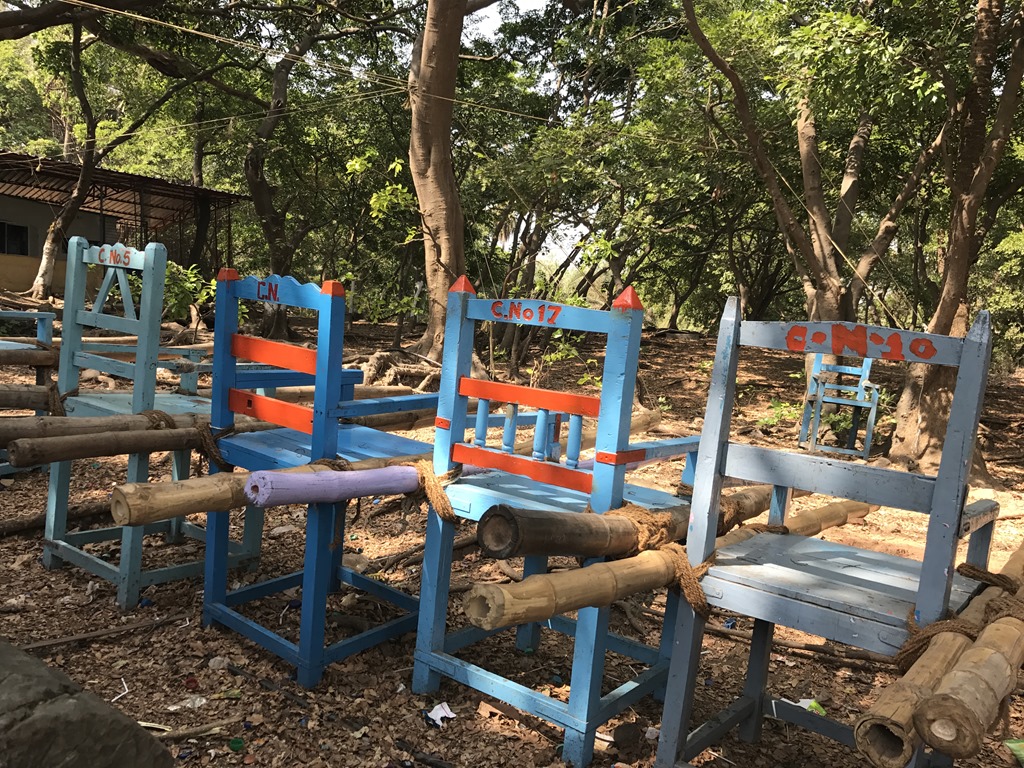
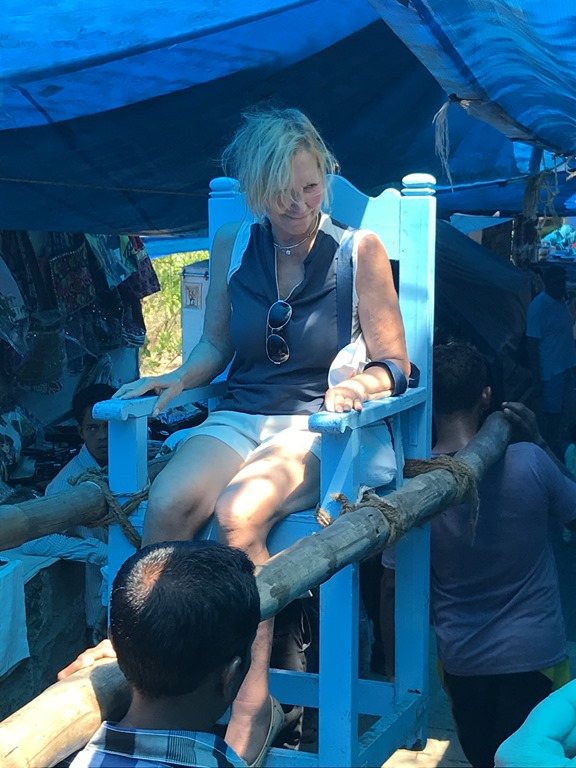
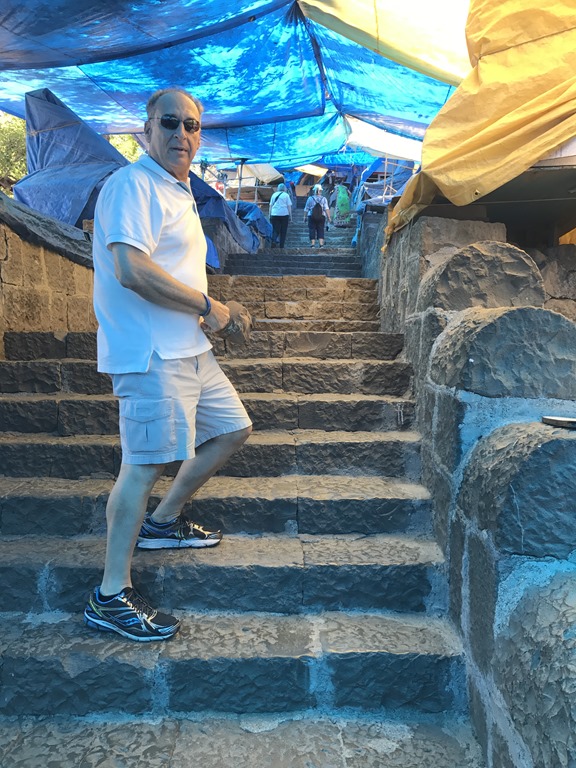
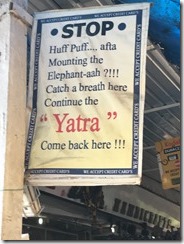
The island resembles twin hillocks rising from the sea with the caves located halfway up the higher of the two.  There are 120 steps to climb.  For $30 (plus tip) you could ride in one of these chairs with four men carrying you.  Not for us, but some people took advantage of it.

IMG_1703IMG_1760

Vendors lined the way up and some followed us to get us to buy, but Sudha told us to wait until the way down.

IMG_1705IMG_1706IMG_1707

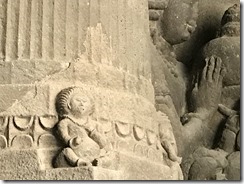
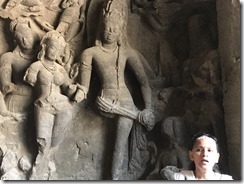
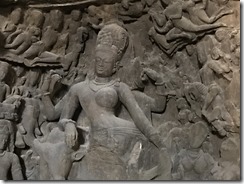
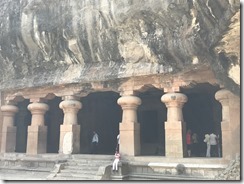
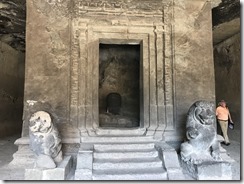
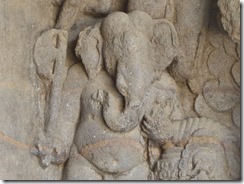
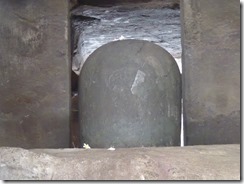
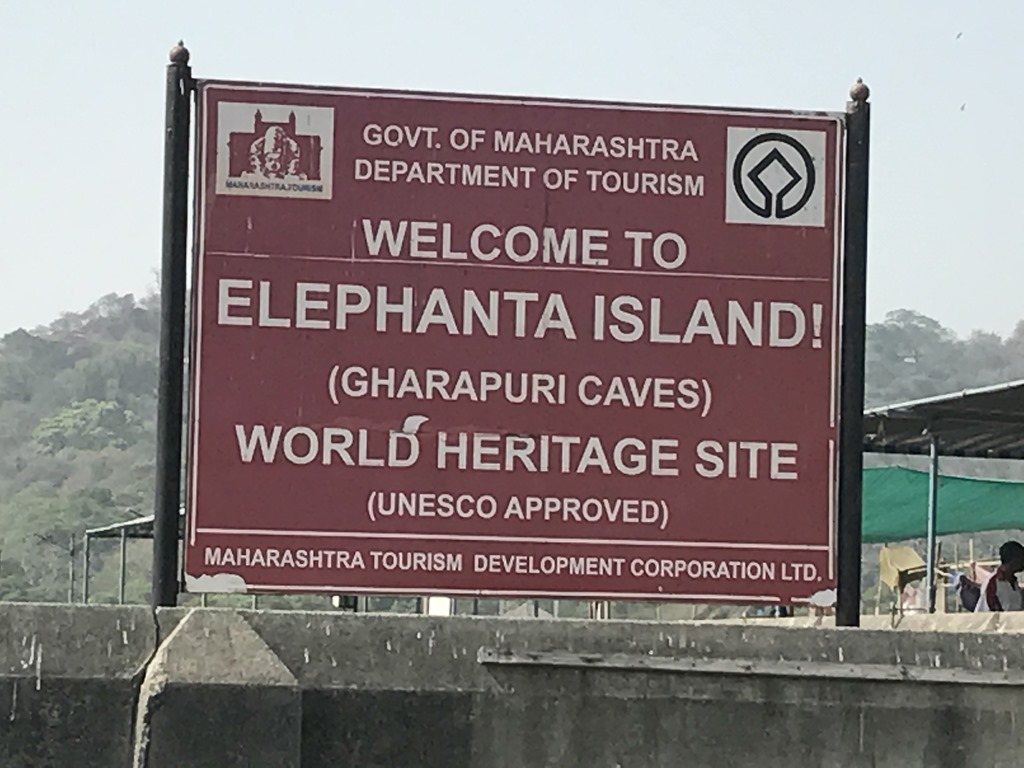
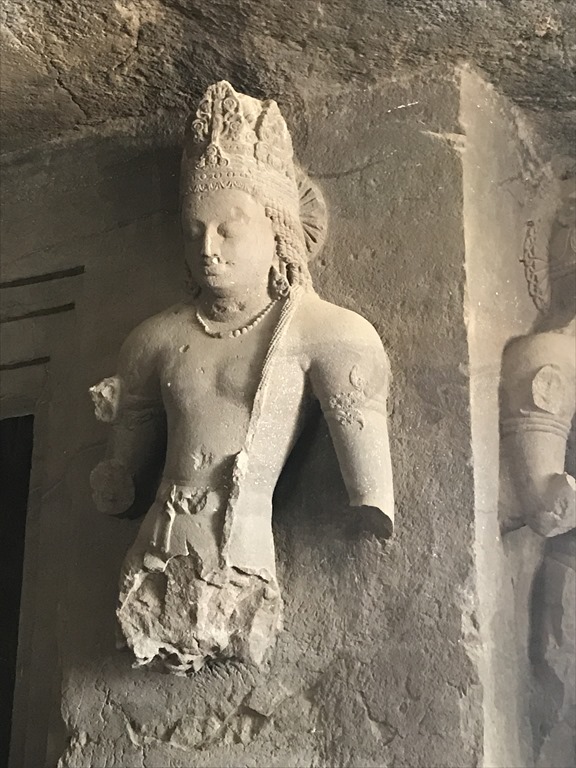
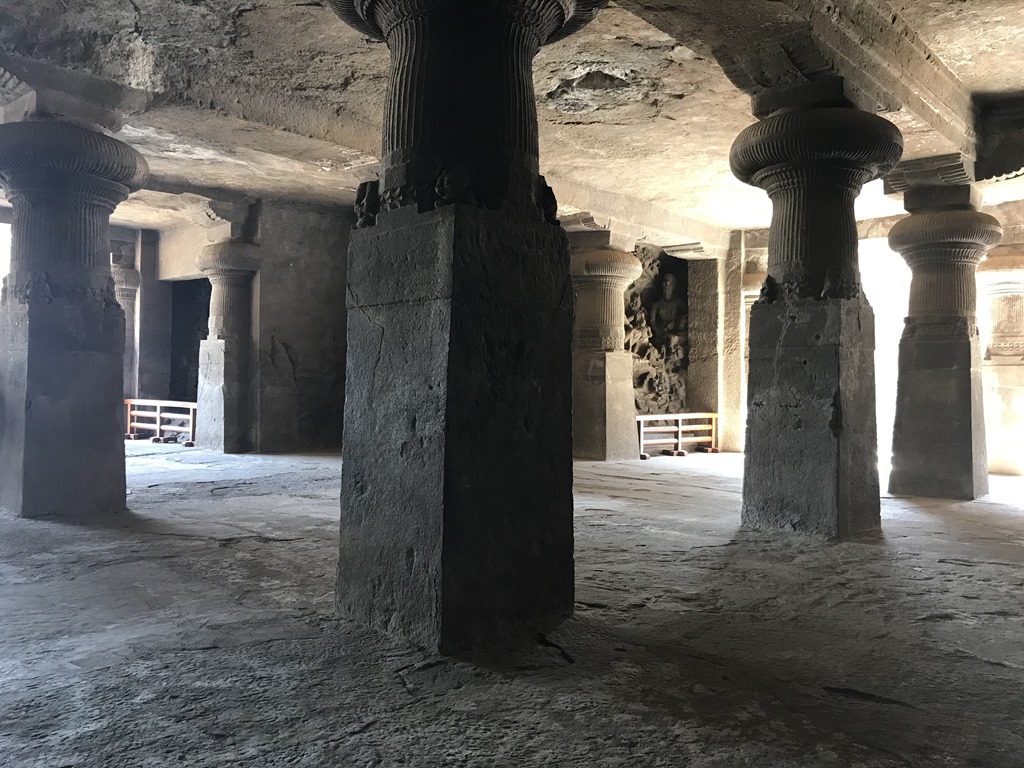
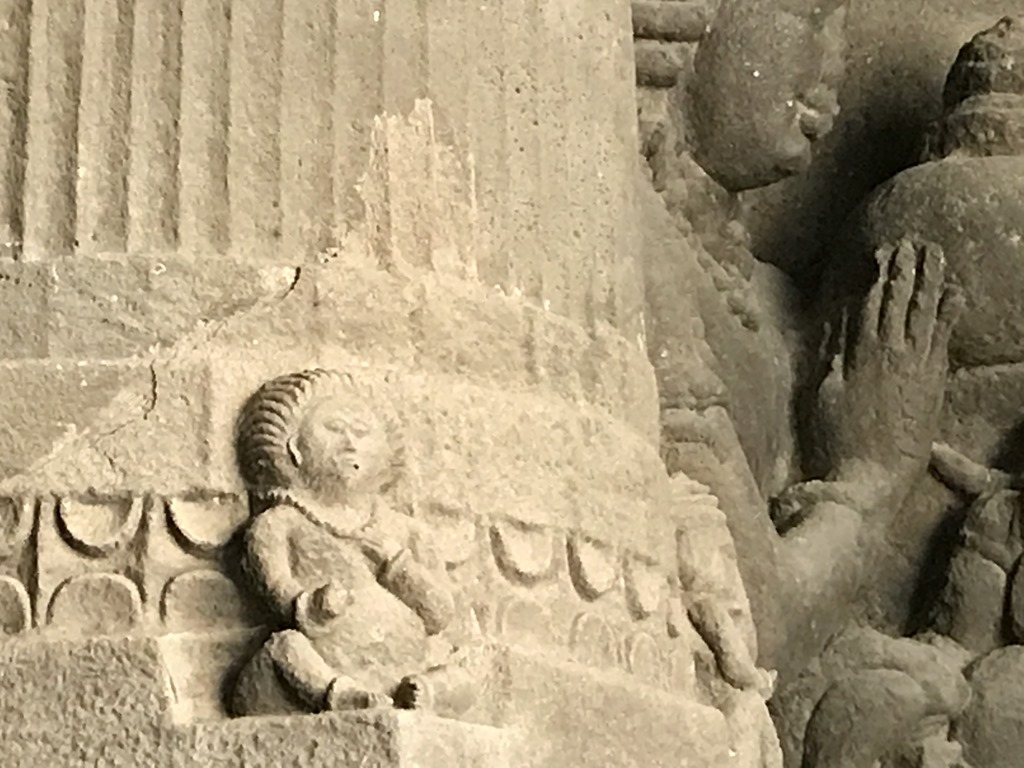
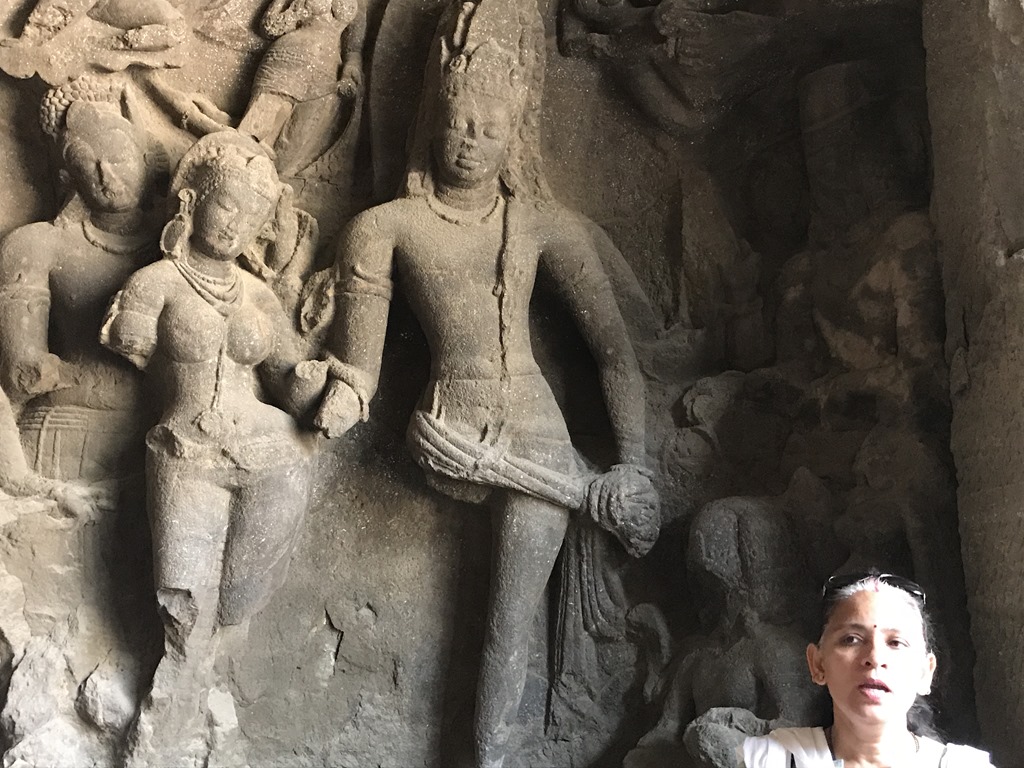
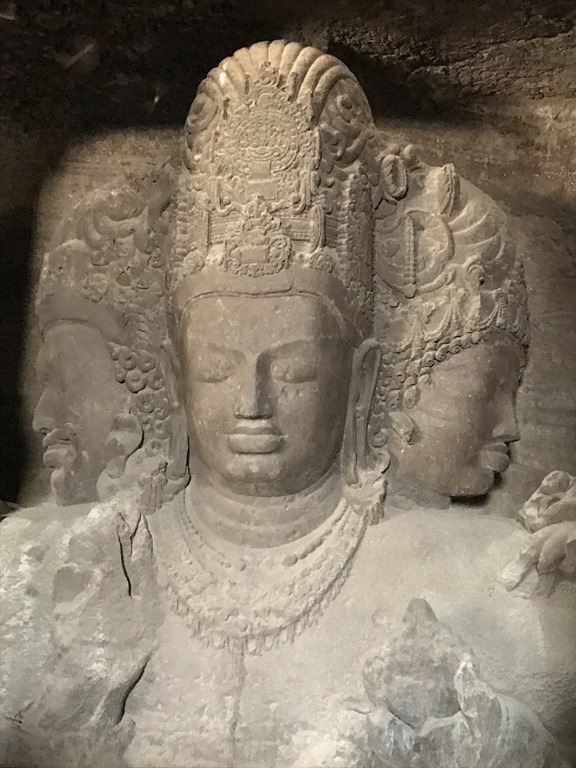
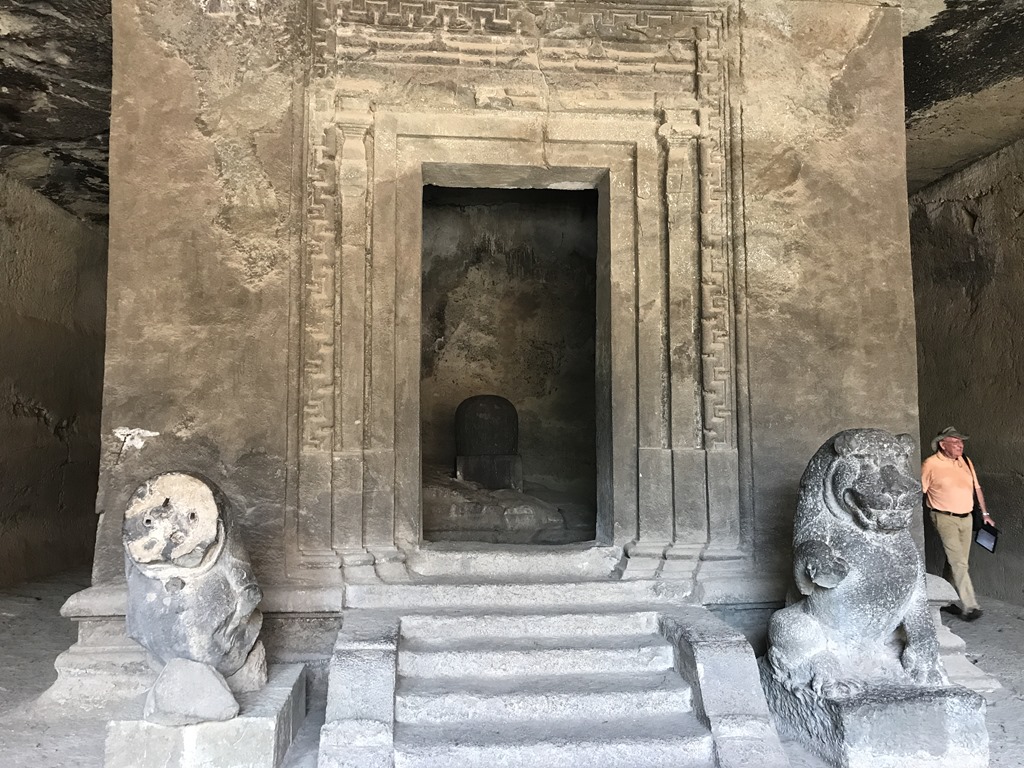
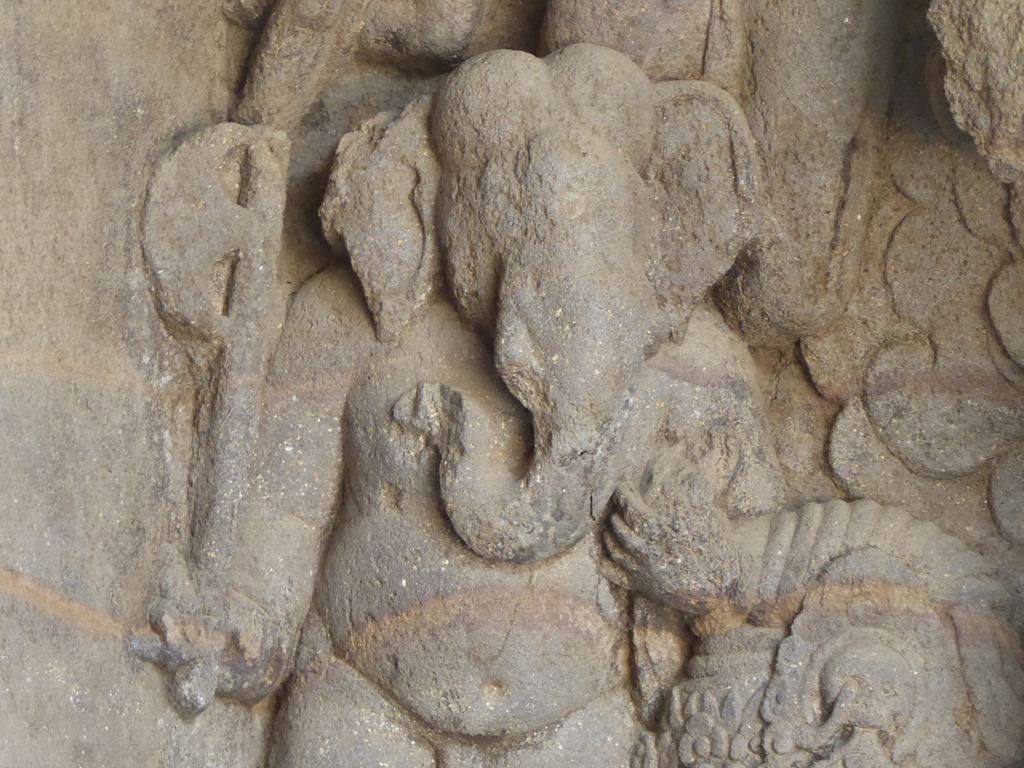
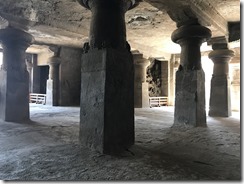
The cave is carved out of solid basalt rock and represents Mount Kailash, the heavenly mountain residence of Lord Shiva.  They were carved starting in the 5th century! The cave complex is a collection of shrines, courtyards and porticos filled with stone sculptures and reliefs of Hindu Gods and Goddesses.  The Portuguese renamed the island Elephanta after discovering a large stone elephant statue near the shore.  Unfortunately many of the sculptures inside were damaged by the Portuguese who took potshots at the Hindu Gods with their rifles but what remains is quite amazing.  It was designated a World Heritage Site in 1987.  Sudha took us around to each of the huge panels and described their meaning.  She says that she sees Hinduism as not a religion but as a way of life and each of the panels does have a story to tell.

IMG_1721IMG_1724IMG_1727IMG_1728IMG_1733IMG_1735IMG_1737IMG_1740IMG_1742IMG_1746IMG_1751IMG_1845IMG_1846IMG_1848

We were amazed by the quality of the carvings, the stories and the preservation over all these years.

Lots of monkeys live on the island and we saw other animals too!

IMG_1708IMG_1709IMG_1769IMG_1776IMG_1777IMG_1780IMG_1847

It was a great day.  On the way back, Sudha told us of her 13 years of trying to get her father to accept marriage to the man she loved.  When he finally agreed, they got married 18 days later!  She now has a 14 year old son and loves her career.

Back to the ship after a wonderful 2 days in Mumbai.  Now we have 2 days at sea before arriving in Dubai.  Tonight, dinner with two senior officers and milk and cookies with the captain!
Posted in April, Asia, Excursions, World Cruise 2 | 3 Comments

Goa, India

April 26, 2017

As I wrote before, on our last visit to India, we missed Goa because we spent several days at the Taj Mahal.  This time, we did a half day tour called highlights of Goa.

We were met at the pier with people handing out red roses and serenading us.

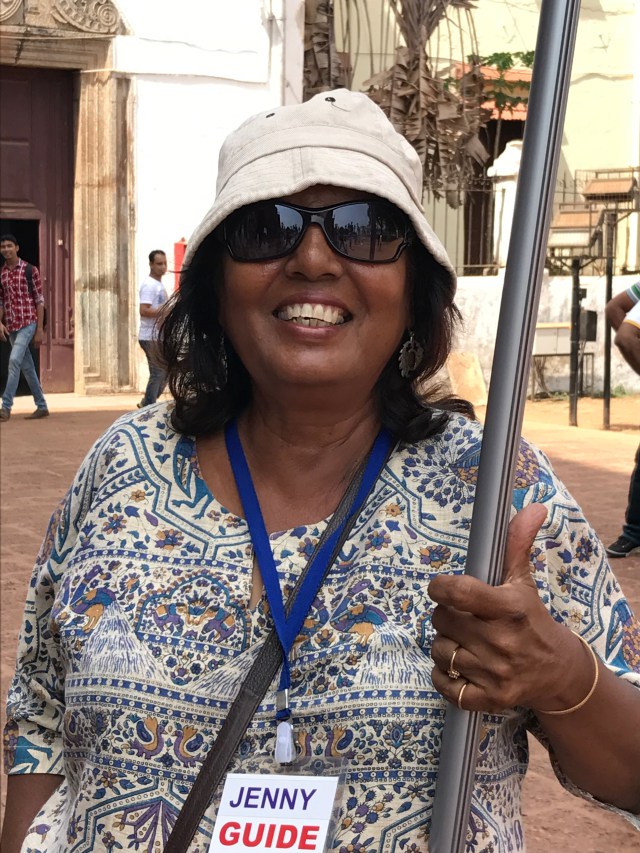
Our tour guide was Jenny and she was warm and informative.  Her English was perfect too.

IMG_1397

Goa is a lush and lovely port.  It has a history of British and Portuguese occupation until it was taken back from the Portuguese by India in 1961.  This didn’t end well for the Portuguese since they had to leave immediately or be militarily escorted out.  So most had to leave their ancestral homes and now many are just abandoned.  Those that are still occupied are often quite beautiful.  More about that later because we visited one.

It was shortly after the “Liberation” or “Occupation as some Goans still refer to it that the first hippie travelers came here.  Relieved to have found somewhere culturally undemanding to party, the “freaks” got stoned, watched the sunsets over the Arabian Sea and danced like lunatics on full moon nights.  Since then Goa has been trying to shake off it’s reputation as a druggy zone!
Goa is the state in India and the town we arrived in is Vasco de Gama named after the explorer.  While 66% of the population is Hindu, 28% is Catholic as compared to only 2% Catholic in the rest of India.  This is again due to the Portuguese missionaries who converted a lot of the people in this area.

People consider Goa to be the best state in India, and it has the highest GDP in India.  It is also the smallest state. There are 330 villages here in this area and it was the community system where the community owned the land. In 1962 Indira Ghandi took the land and gave it back to the farmers – social democracy.

Here in Goa, women are allowed to inherit property unlike in the rest of India where it had to go to the sons until recently. Now the rest of India is slowly starting to follow the trend in Goa.

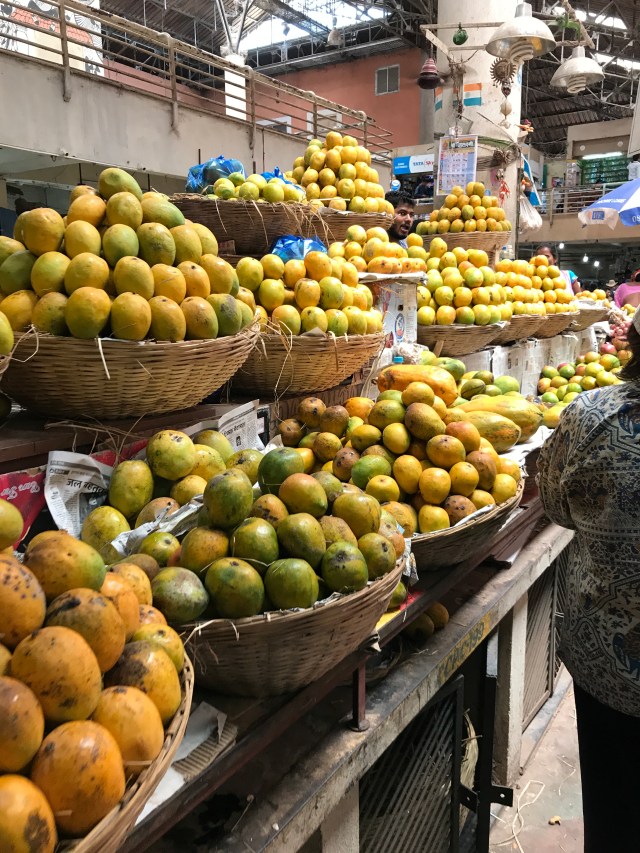
Mangoes are everywhere and they have 160 different varieties.  Every family grows their own rice. Cashews are grown here in the season from February to April.  Monsoon season is June – September and they get 300 cm of rain during that time.  No one gets married or does a lot of work outdoors during this time.  They are building a new 6 lane highway and work will need to stop.

Iron ore is the biggest export but tourism brings in the most money. Many families have one member working outside India, often in the Arabic countries, and they send the money home.

Coconut trees are everywhere and they collect the “sap” in clay pots up in the tree.  They make an alcohol called todi and it is also used to make vinegar.  Coconut oil is widely used both in cooking and for skin and hair. There is a research facility with one of the projects to shorten the coconut tree since they don’t have people willing and able to climb them to harvest the coconuts any more.  (Maybe they need to import those monkeys from Thailand!)

We traveled about an hour to Old Goa.  We saw a compound of three different churches here, the most important legacy of the Portuguese.  There is not really much of a town here anymore.

We went first to the Se Cathedral, dedicated to St. Catherine.  It was consecrated in 1640 and took over 80 years to construct.  It is a UNESCO World Heritage Site and is larger than any church in Portugal.  The church had 2 towers but one collapsed in 1776 and was never rebuilt.  You can see that on the right side of the photo. The remaining tower houses the Golden Bell, renowned for its melodic tone. We did hear the tone, but could not go inside as a wedding was taking place there. We didn’t see the wedding but caught a couple of guests on their way.  And I guess that tree bends with the winds!

We did get to visit the attached Church of St. Francis of Assisi which was built in 1661 and is also a UNESCO World Heritage Site.  This church features buttressed walls with frescoes and floral designs as well as a series of painted panels showing scenes from the life of St. Francis of Assisi.

Across the gardens is the Basilica of Bom Jesus. This is built of black laterite stone with marble and inlaid precious stones and is the most famous church in Old Goa.  It contains the tomb of St. Francis Xavier who spread Christianity in the Portuguese colonies and is the patron saint of Goa. Jenny told us that in every family one son is named Francis Xavier! The building is the first church in India to be elevated to the status of a minor basilica and is also a UNESCO World Heritage Site.  It was consecrated in 1605 and is the best example of Baroque architecture in India.

As we all gathered after visiting the basilica, many Indian people came up to us and asked to have their pictures taken with us.  Jenny said that Indian tourists come here partly to see westerners!

I captured a few photos of them, too but they were much less interested in that.

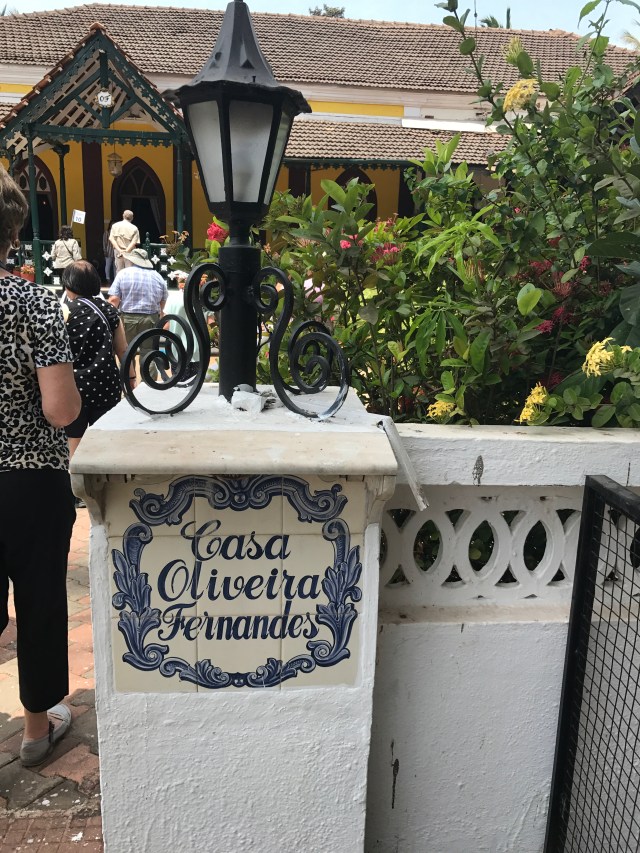
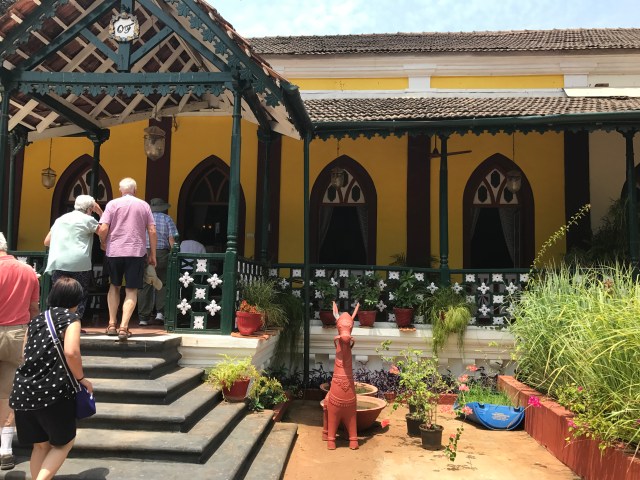
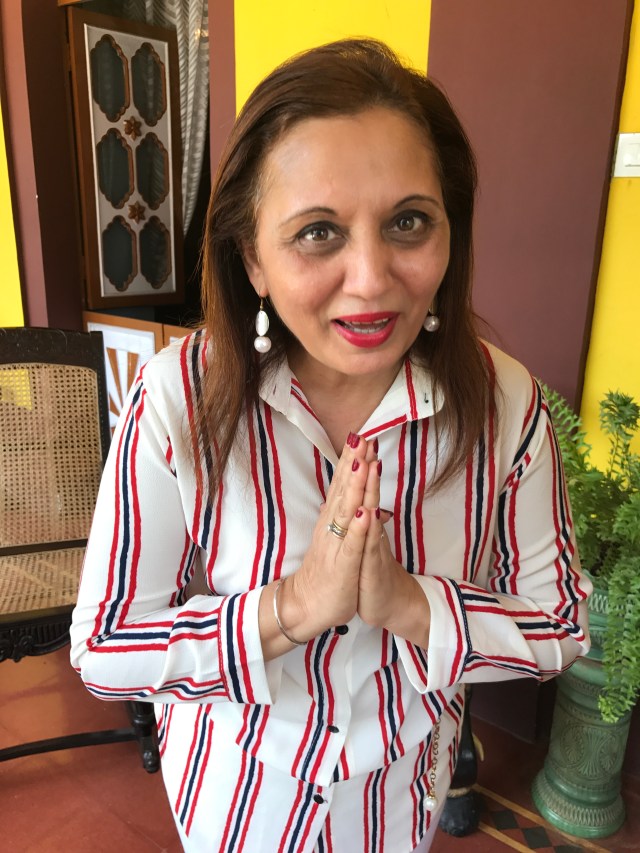
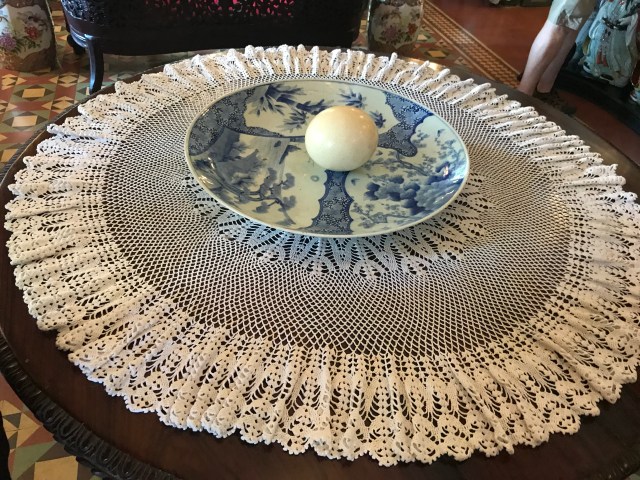
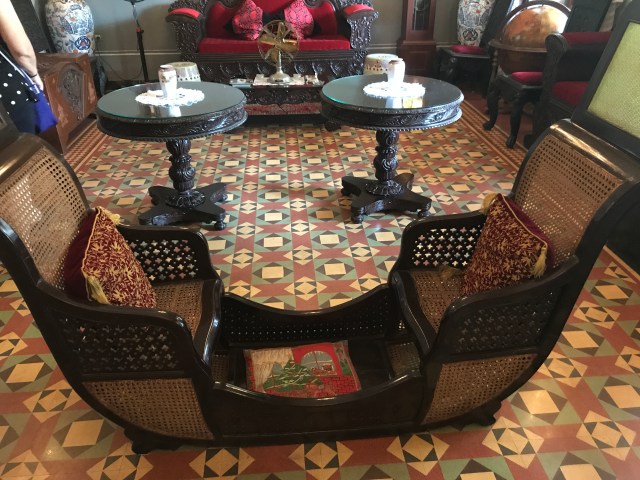
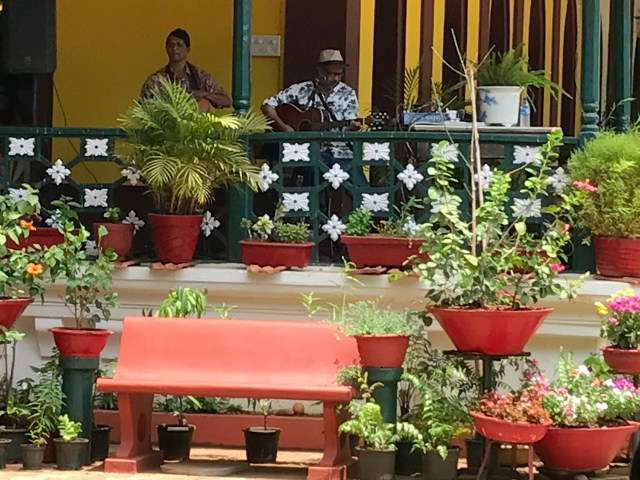
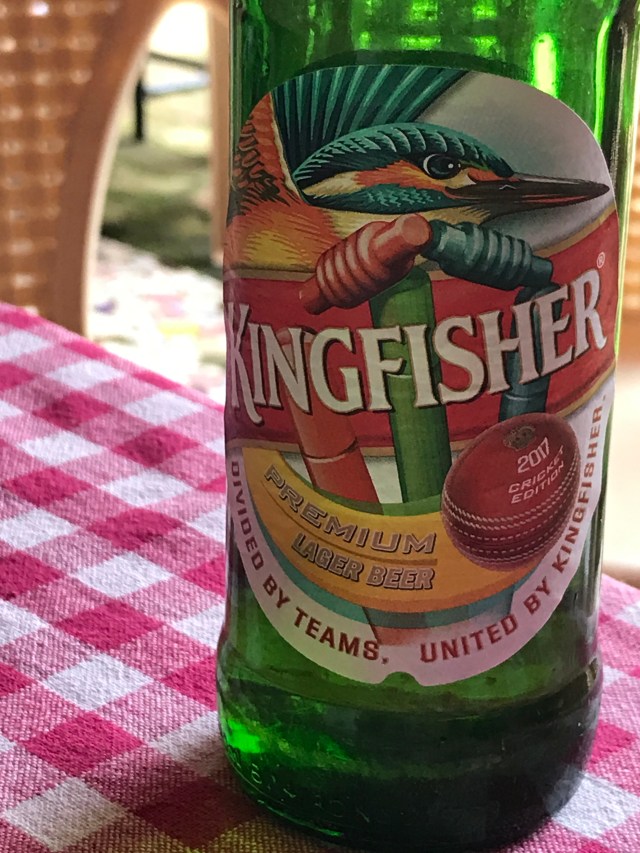
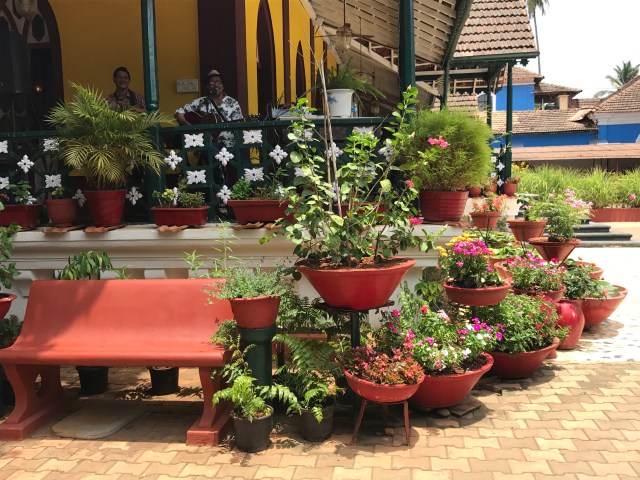
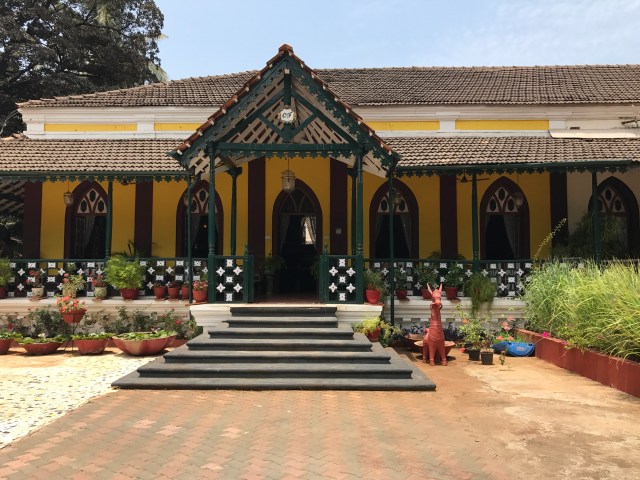
We went back to Merces where we visited the ancestral home of Otto de Oliveira Fernandez, a Goanese family.  The home was quite spectacular – an example of Goan-Portuguese architecture.  We met the family, had lovely refreshments (they have a bar in the courtyard and the Goan Kingfisher beer was one of the beverages served.  We were entertained by the many birds and the three family dogs -as well as two musicians who played and sang from the porch.  A delightful respite on a hot day!

IMG_1428IMG_1429IMG_1431IMG_1433IMG_1434IMG_1435IMG_1436IMG_1439IMG_1440IMG_1442IMG_1444IMG_1446IMG_1448IMG_1450IMG_1460IMG_1457

IMG_1461IMG_1464IMG_1466IMG_1467IMG_1469IMG_1473IMG_1474

Our last stop of the day was at a market in the capital city of Panjim.  The city is spread on the south bank of the Mandovi River.  This city has a relaxed and friendly atmosphere and lots of bakeries and taverns.  The market was as amazing as any we have visited – and I love markets – the displays are just beautiful and the people pretty friendly but sometimes don’t like their pictures taken.

IMG_1497

After a hot and interesting day, we relaxed in the cool comfort of the ship.  Next stop is Mumbai where we will spend 2 days.

Posted in April, Asia, Excursions, World Cruise 2 | 2 Comments

Mangalore, India

April 25, 2017

Mangalore was one of the most famous ports of south India. It was well known as a major source of pepper.  Today the main exports are coffee, cocoa beans and cashew nuts.

We had a tour today – highlights of Mangalore.  Ulchana was our guide, and she is a master’s degree prepared marketing executive for universities and hospitals. She lives in Bangalore now but is a native of Mangalore.  She started doing tours as a college student and returns to her hometown to do tours whenever she can.  She was a terrific guide.

IMG_1249

In this photo, she is explaining part of the process in the cashew nut factory, our first stop. Aschal Industries employs 500 people, mostly women.  They have a child care facility on site. We got to see almost all stages of the processing of the highly prized cashew nut, starting with the drying.  They don’t allow visitors to the final sorting and packaging due to cleanliness concerns. Cashews are the only nut that grows exterior to its “apple”.  The apple is used to make liquor and the shell of the actual nut is pressed to extract oil which is used in furniture polish.  Mangalore is recognized as the birthplace of organized cashew nut processing although the nuts are grown mostly in neighboring Goa.

220px-Cashew_apples[1]

It is a hugely labor intensive process. We bought some cashews and Ulchana also gave us each a package when we got back on our bus.

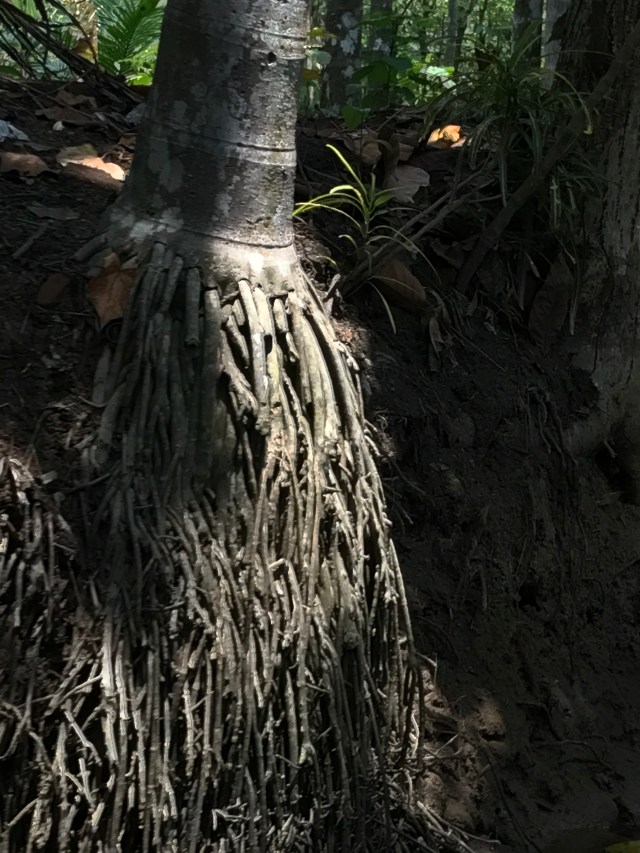
We learned that there are 3 nuts that form the basis of what is eaten here, coconut, cashew nut and areca nut. The coconut tree has thousands of roots and they do help on riverbeds to prevent erosion.

IMG_1077

Brown and red rice are also grown and there are typically 2 harvests a year. They export about 10,800 tons daily.

Mangalore has 500,000 population. There are 4 major universities and all have medical schools and are teaching hospitals.  Medical tourism is big as people come from all areas of the world and especially from southeast Asia for the quality medical care.

As in other areas of India, English is taught in schools and there is a 94 % literacy rate here. The local language is Tulu.

We visited the Gokarnath Temple.  It was built in 1912 and is dedicated to Lord Gokarnath and has recently been renovated.  It is considered to be an excellent example of the modern architecture created by the Billawa Community of Mangalore.

The red marks we have on our foreheads have nothing to do with the caste system but are blessings from the temple for good health and prosperity. In the temple you must go counterclockwise as you view the various statues, etc.

Speaking of the cultural norms – a law has recently been passed here that prohibits marriage before age 18 to stop the “child bride” trend.  Most educated young people don’t marry until 26 for girls and 28 – 34 for boys.  There are still mostly arranged marriages but now the young adults are free to say no or to have a love marriage.  There can be up to about 2000 guests at some of the weddings.  Young couples (the youngest son) brings the bride to live with the parents so it is common to have 3 generations living together.
Our next stop was the amazing St. Aloysius Chapel which is one of the most beautiful we have seen.  It was built in 1884 by the Italian Jesuit, Antonio Moscheni and  is often compared to the Sistine Chapel in Rome.  There is a remarkable series of intricate paintings that cover every square inch of the interior ceiling and walls. Brother Antonio Moscheni, who was also an Italian artist, painted it all in 2 1/2 years! The chapel is dedicated to Aloysius Gonzaga and one entire portion of the chapel tells the saint’s story through paintings. There is also a huge series of buildings, part of St. Aloysius College, which have a wonderful view of the sea.

Unfortunately they do not allow you to take pictures inside but here is a link to a series of photos that show the amzaing fresco, tempera and oil murals that adorn the entire inside of the chapel. St. Aloysius Chapel

There are beautiful gardens as well.

Our last stop was at the Belmnt House, which was built in the early 18th century by Michael Thomas Harris, the son of Lord Harris.  After his tragic death at age 40, it passed through several owners before being purchased by the Peres family who still own it. Joan Peres, now a widow (in the picture with me) and her son Greg (pictured with Norm) live in the house where Joan and her husband raised five sons and a daughter. Most of the children have left Mangalore but Greg is involved in the real estate business and stayed behind. One son, Joel, is the General Legal Counsel for Coca Cola in the Asia Pacific Region.  Joan was very proud of her family and showed me pictures of her children and grandchildren.  The home was beautiful and they were so hospitable, serving cookies and lemonade which we really appreciated as the temperature and humidity were very high – 96 degrees!

We enjoyed Mangalore and it is the home of our butler, Vishant.  He brought his family aboard but unfortunately only Norm saw them as I was getting my hair cut when they arrived.

Both Indian cities we have seen so far have a mixture of beautiful homes and apartments and also great poverty and trash.

So, the chicken stall was almost right outside of the lovely Belmont home!  Lots of diversity here in India, but I do have to say, all religions seem to live in peace here.  We see burkas, saris, Western clothing and no one seems to have guns or objections to other religions.  Maybe we have something to learn.

On to Goa tomorrow.

Posted in April, Asia, Excursions, World Cruise 2 | Leave a comment

Cochin, India

April 24, 2017
I have a tip from the new concierge on board who also does a blog. He says that he composes his blog in Word and then copies and pastes it into his blog. It saves the whole upload process for photos which takes forever on our ship wifi. So with this post I am going to try it and see how it works.

So, it didn’t work as planned!  The photos did not copy over to the site, so this is just the narrative.  But if you want to read the whole thing with photos, click here:

April 24 Cochin
On our last world cruise we visited Cochin and Mumbai in India but missed the ports of Mangalore and Goa since we chose to go on the overland trip to the Taj Mahal. So in the next five days you will have posts from Cochin, Mangalore , Goa and Mumbai.
In Cochin, we arrived early enough for our full day tour, but the pilot boat broke down before reaching the ship so we were delayed for about an hour and a half between boarding the pilot and the face to face immigration we always have in India. You can imagine the mass of humanity (some of the passengers want to be the first in line for everything) trying to get through the face to face and out to the tours. It is a good time to be “zen” or your day could start badly!
As we came into the port we saw the Chinese fishing nets that we got an up close look at on our last visit. This is the only place in the world that these nets are used and they are really unique to see.

There are also unique fishing boats on the shores and some old wooden ones as well as more modern ones competing with the ferries in the waterways. The port is on a manmade island, Willingdon.

We chose to take a tour called Traditional Sojourn. Since we saw a lot of the city on our last visit here, this tour took us out into rural India with a visit to the village of Vaikom. Our tour guide was Joe.

He told us a lot about Cochin (local name Kochi) which is in the state of Kerala. All students learn English in school as well as the national language of Hindi. However, India is a country of language based states and the local dialect is Malayala.
Cochin has the only airport in the world that is totally operated by solar energy!
There is a 95% literacy rate here and 99% of school graduates go on to university, so it is a very educated population. Castes are outlawed now but they are still considered when getting married or in government jobs.
There was a large Jewish population at one time but now there are only 52 Jewish people here. 52% of the population is Hindu and 20% Christian.
Our first stop of the day was at the Shiva Temple in Vaikom, believed to be the oldest in the country. We were given socks since in all temples you must remove your shoes. They don’t always give you socks, though!
We were lucky to see a wedding during our visit.
And of course, there were the usual groups of children who loved having their pictures taken.

The row of people behind the wedding party is there for the food that is given out at the temple.
We could take pictures outside the temple but were not allowed into the “sanctum santorum” which is the holiest place in the temple. Here are some pictures of the outside – the gold tower is filled with oil, there are bulls on all 4 corners and a statue of Shiva inside (where we could not go).

Next we had a tuk tuk ride to the canal where we boarded wooden boats for a leisurely trip down one of the 44 rivers. We saw people bathing, doing their wash and some children swimming. But the biggest surprise was people washing an elephant! Joe explained that every wedding here must feature an elephant or more, only in odd numbers. So some people own them for that reason.

We had the chance to taste the banana chips they make here – seasoned with turmeric. They also make tapioca chips which we had in Bali as well. Sometimes they have potato chips, but not often

After the boat ride, we headed to a local home set in the heart of the village. We had an Indian box lunch which was catered by the Taj Malabar hotel and it was wonderful. We had the chance to see a lot of the way they grow spices and other crops including papaya, mango, nutmeg, jack fruit, coffee and pepper. It was VERY hot and humid so we were glad to be back on the bus after that. Have a look at the bathroom facility with its outside sinks!

This is the nutmeg. The red part comes off and is mace!
We also saw demonstrations of making rice flour, mango chutney and of weaving the coconut strands into rope. And we got to taste the jack fruit and the chutney.

Our last two stops of the day were a pottery workshop and a weaving center. The pottery here is being made by a mother and son. The mother moves the wheel while the son shapes the pottery. Especially popular are banks that must be broken open when full. Those women in the weaving center work hard! Joe says they suffer from all kinds of orthopedic problems after a few years of doing that work. They were weaving white cotton to make school uniforms. Cotton weaving is the heart and soul of Indian textiles and there are 23 different varieties of cotton found in India. School is on holiday now until June so all of the weavers were working on the white fabric.

We truly got a feel for the rural areas of Cochin and had a wonderful day.

There are also unique fishing boats on the shores and some old wooden ones as well as more modern ones competing with the ferries in the waterways. The port is on a manmade island, Willingdon.

We chose to take a tour called Traditional Sojourn. Since we saw a lot of the city on our last visit here, this tour took us out into rural India with a visit to the village or Vaikom. Our tour guide was Joe.

He told us a lot about Cochin (local name Kochi) which is in the state of Kerala. All students learn English in school as well as the national language of Hindi. However, India is a country of language based states and the local dialect is Malayala.
Cochin has the only airport in the world that is totally operated by solar energy!
There is a 95% literacy rate here and 99% of school graduates go on to university, so it is a very educated population. Castes are outlawed now but they are still considered when getting married or in government jobs.
There was a large Jewish population at one time but now there are only 52 Jewish people here. 52% of the population is Hindu and 20% Christian.
Our first stop of the day was at the Shiva Temple in Vaikom, believed to be the oldest in the country. We were given socks since in all temples you must remove your shoes. They don’t always give you socks, though!
We were lucky to see a wedding during our visit.
And of course, there were the usual groups of children who loved having their pictures taken

The row of people behind the wedding party is there for the food that is given out at the temple.
We could take pictures outside the temple but were not allowed into the “sanctum santorum” which is the holiest place in the temple. Here are some pictures of the outside – the gold tower is filled with oil, there are bulls on all 4 corners and a statue of Shiva inside (where we could not go).

Next we had a tuk tuk ride to the canal where we boarded wooden boats for a leisurely trip down one of the 44 rivers. We saw people bathing, doing their wash and some children swimming. But the biggest surprise was people washing an elephant! Joe explained that every wedding here must feature an elephant or more, only in odd numbers. So some people own them for that reason.

We had the chance to taste the banana chips they make here – seasoned with turmeric. They also make tapioca chips which we had in Bali as well. Sometimes they have potato chips, but not often.

After the boat ride, we headed to a local home set in the heart of the village. We had an Indian box lunch which was catered by the Taj Malabar hotel and it was wonderful. We had the chance to see a lot of the way they grow spices and other crops including papaya, mango, nutmeg, jack fruit, coffee and pepper. It was VERY hot and humid so we were glad to be back on the bus after that. Have a look at the bathroom facility with its outside sinks!

This is the nutmeg. The red part comes off and is mace!
We also saw demonstrations of making rice flour, mango chutney and of weaving the coconut strands into rope. And we got to taste the jack fruit and the chutney.

Our last two stops of the day were a pottery workshop and a weaving center. The pottery here is being made by a mother and son. The mother moves the wheel while the son shapes the pottery. Especially popular are banks that must be broken open when full. Those women in the weaving center work hard! Joe says they suffer from all kinds of orthopedic problems after a few years of doing that work. They were weaving white cotton to make school uniforms. Cotton weaving is the heart and soul of Indian textiles and there are 23 different varieties of cotton found in India. School is on holiday now until June so all of the weavers were working on the white fabric.

We truly got a feel for the rural areas of Cochin and had a wonderful day.

Posted in April, Asia, Excursions, Food, World Cruise 2 | 1 Comment

At Sea on the way to India

April 23, 2017

We are at sea on the third sea day before our arrival in Cochin India.  Lots of activities on board and we do enjoy these sea days.  Today I learned some things about iphone photos that I didn’t know and the enrichment lecturers keep us learning about all sorts of things – today the lecture was about Hinduism, which I have heard John lecture on before. I went to the cooking demo yesterday and I learned that you should blanch your basil for a minute then shock in ice water before making pesto!  It keeps the pesto green.  So something new every day on all kinds of topics. Norm and I were talking about how much we have learned on these trips – and I joked that we probably already forgot half of it.  But the adventure continues.

I wanted to try a post from my laptop vs the ipad that I usually use since Ian directed me to the FAQ section about the wifi here.  It says that the ipad frequently cuts out, and that has certainly been true.  So we will see.

No winning at the blackjack tournament lately, actually no winning much at all in the casino lately.  Good thing I like the dealers.  And we finally are getting some gender equality, Tatiana from the Ukraine has joined the team.

Last night, Amanda Smith, our assistant cruise director and one of the entertainment team singers performed a late night jazz concert in Horizons.  She did a wonderful job!  She mentioned that she is looking for a boyfriend!  Any of my friends/family interested?? She just turned 32 and she is from Southern New Hampshire and went to Emerson College.

iphone back up 4.23.17 8275

And here are a couple more pictures from Mandalay.  The kind of truck that took us up the mountain, a local man greeting our bus as we traveled along, and the people making beautiful music in the hotel lobby in Mandalay.

We have a full 5 days in India to look forward to.  Stay tuned for the posts!

Posted in April, Asia, At Sea, World Cruise 2 | 1 Comment